
Particle Board Shelving Decks
Pre-cut 1/2" and 3/4" particle board and white melamine shelf decks that drop into boltless shelving, rivet shelving and bulk rack beams. Learn which thickness and finish to choose, how to measure a replacement deck and when wire or steel decking is the better call.
1/2" & 3/4"
Standard deck thicknesses
Pre-cut
Sized to the beam opening
Raw or white
Particle board or melamine
12"–48"
Common deck depths
Shop Particle Board and Melamine Shelf Decks
Online prices for single replacement decks, extra shelf levels and bulk rack decking. Each deck is listed by its actual cut size, so match it to your beam opening (see how to measure). Some common sizes are in stock at select manufacturers, subject to confirmation. For a full room or mixed sizes, request a quote.
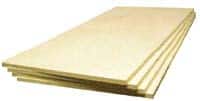
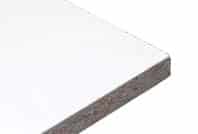
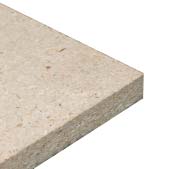

Complete units: boltless units with particle board decks · boltless units with laminated board decks · bulk rack with particle board decking.
What Particle Board Shelving Decks Are
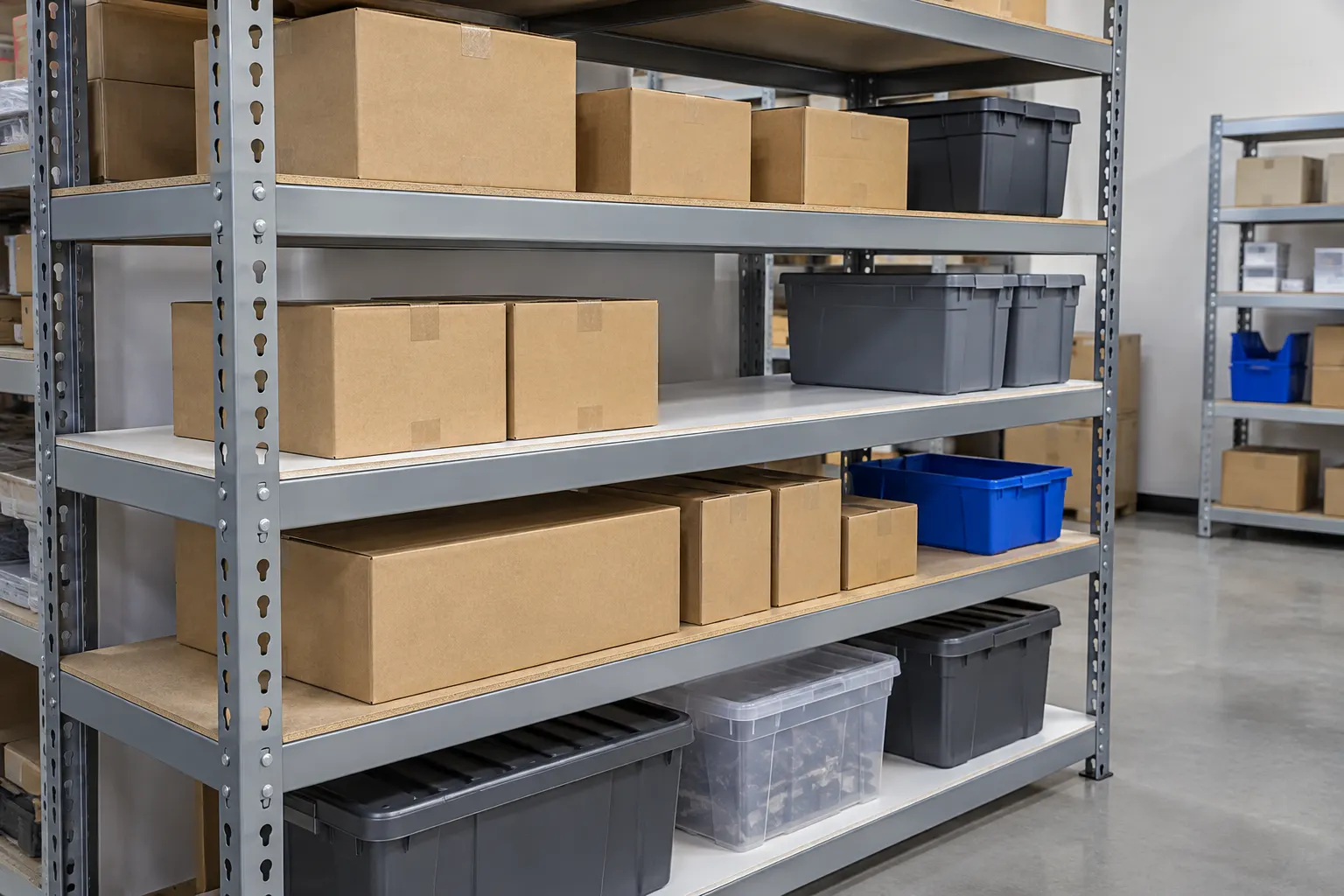
A particle board shelf deck is the flat panel that sits on a pair of shelving beams and becomes the shelf surface. On boltless (rivet) shelving and bulk rack, the front and back beams have a stepped inner ledge. The deck drops onto that ledge and sits flush with the top of the beam, so nothing needs screws, clips or glue.
Shelving decks are not the same as a 4×8 sheet from a lumber yard. They are cut a fraction under the nominal shelf size so they fit between the beams. They come in the depths shelving actually uses, such as 12", 18", 24", 30", 36", 42" and 48". If you cut your own sheet, you pay for the waste and the saw time, and an out-of-square cut leaves the board rocking on the ledge.
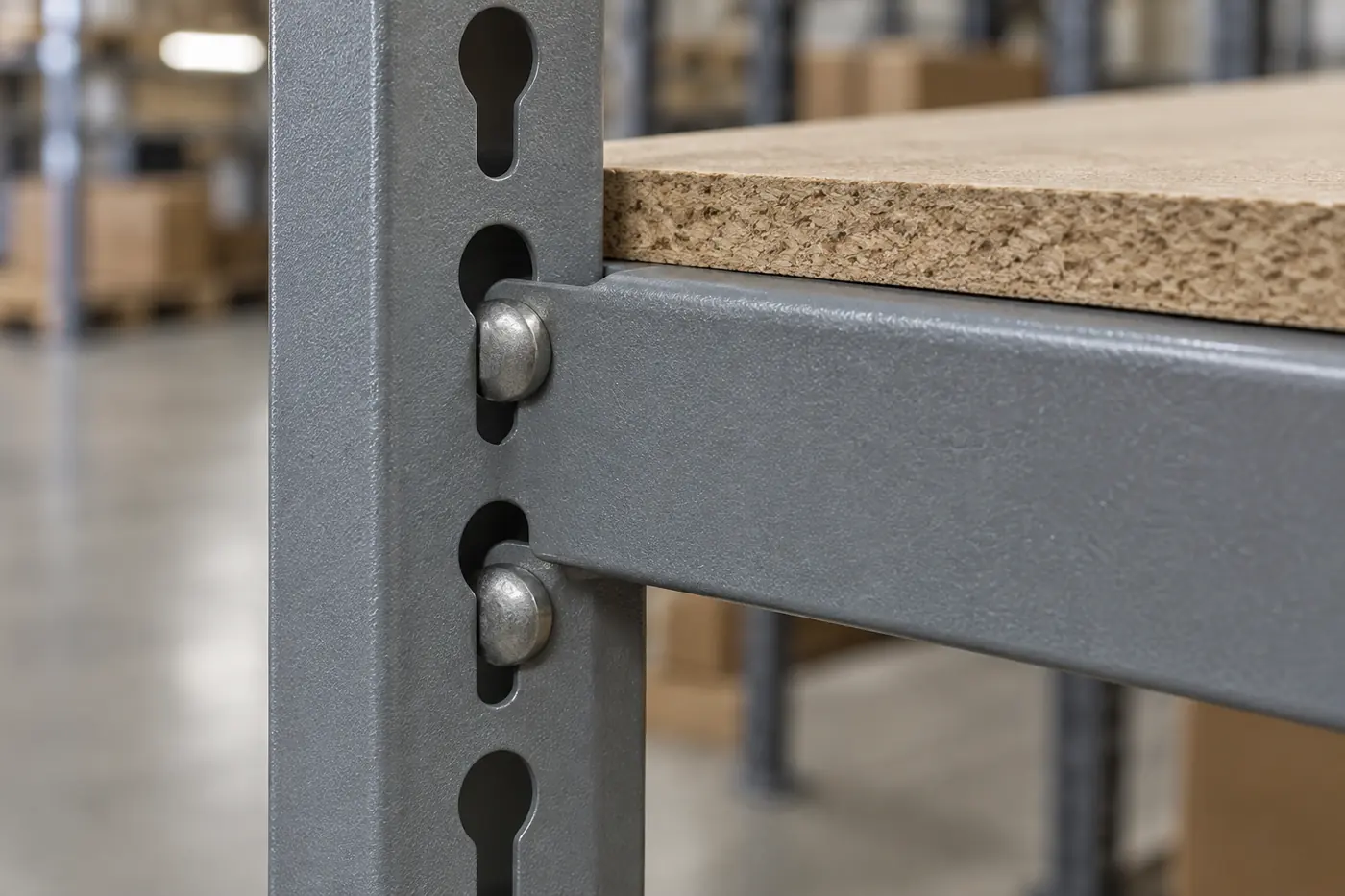
Particle board is the default deck on most boltless shelving because it is inexpensive, quiet, smooth enough for cartons and bins, and easy to replace one level at a time. It is the deck you will find on most boltless shelving, wide-span shelving and bulk rack shelving, and as the top on many boltless workbenches. This guide sits under our shelving solutions hub, which compares every shelving family we supply.
1/2" vs 3/4" Particle Board Decks
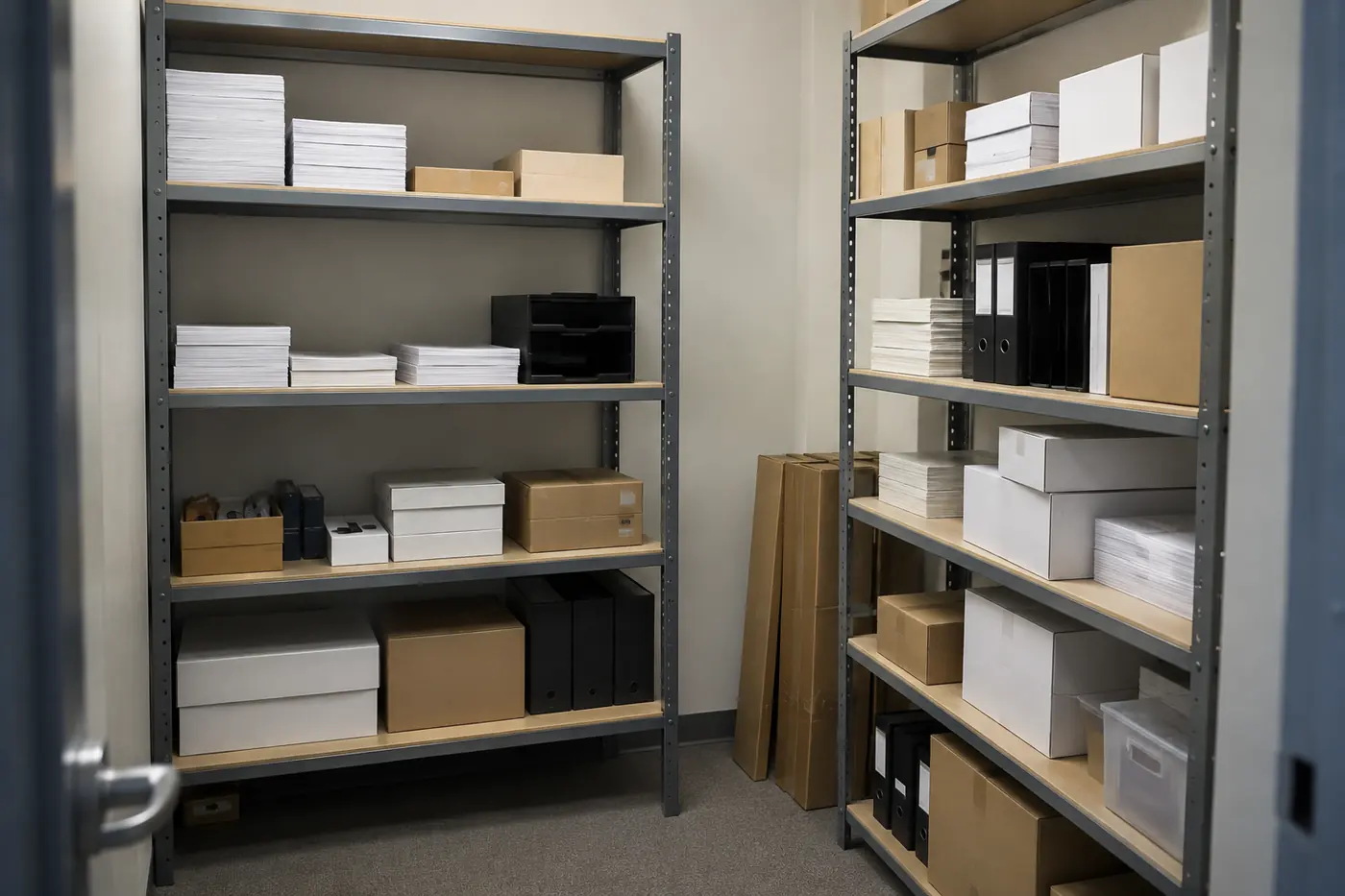
1/2" decks are standard on light- and medium-duty boltless units and low-profile levels that hold paper, binders, small boxes and bins. They are lighter to handle and cost less per shelf, which adds up across a long run with many levels.
3/4" decks are the choice for heavier cartons, deeper shelves, long spans and work surfaces. The extra thickness resists sagging between supports and gives screws and edge banding something to grip. It is the usual top on heavy-duty workbenches and on bulk rack levels that carry dense items.
| 1/2" particle board | 3/4" particle board | |
|---|---|---|
| Typical use | Light to medium loads, office and supply rooms, low-profile levels | Heavy cartons, parts, deep or wide levels, workbench tops |
| Sag resistance | Fine on supported, shorter spans | Better on long spans and deep shelves |
| Weight to handle | Lighter, easier to lift into upper levels | Heavier; two people for large decks |
| Cost per shelf | Lower | Higher |
| Common sizes online | About 24" to 96" wide, 12" to 48" deep | About 36" to 96" wide, 12" to 48" deep |
| Does it raise the rated capacity? | No. The beams and supports set the rating | Only within the beam and support rating for that level |
A thicker board does not turn a light-duty beam into a heavy-duty one. The rated capacity of a level comes from the beam profile, the span, the deck supports and the manufacturer's test for that combination. Our single vs double rivet beam guide explains how beams set capacity. Choose the beam for the load first, then the deck that suits the beam.
Raw Particle Board vs White Melamine vs Wire and Steel Decks
Raw particle board is the brown, unfinished board. It costs the least and works well for cartons, totes and parts in warehouses, garages and back rooms where looks don't matter.
White melamine (also sold as laminated board) is particle board with a fused white melamine face. It wipes clean, reflects light into dim aisles and looks finished in customer-facing stockrooms, offices, clinics and retail back rooms. Some white-face boards show a raw core at the cut edges, which is the part to keep dry.
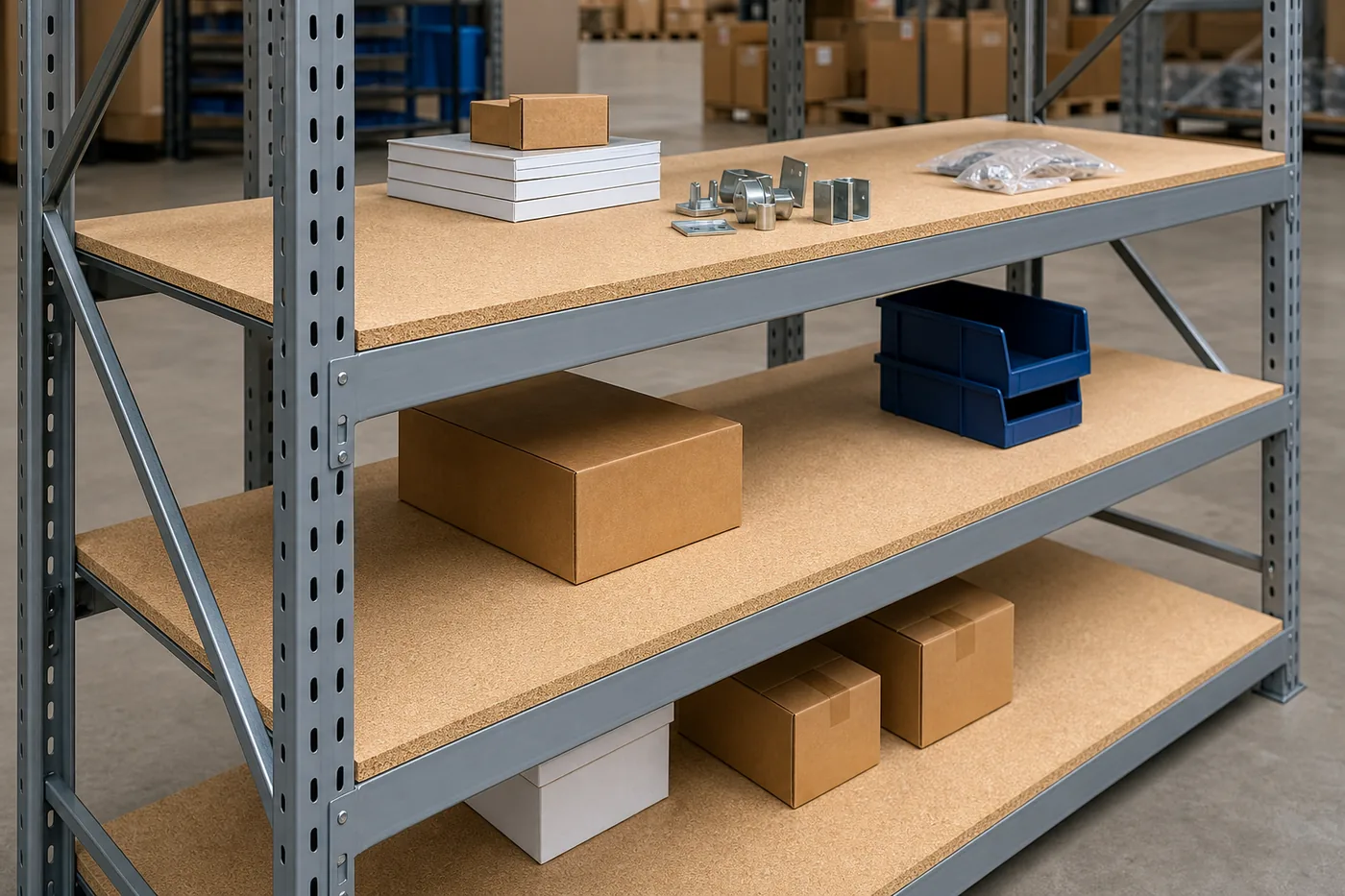

Wire mesh decks let light, air and sprinkler water through, and dust doesn't settle on them. Many fire marshals prefer them in sprinklered warehouses. Small loose items can fall through, so pair them with bins. Compare formats on our wire shelving page.
Steel or ribbed steel decks handle oily parts, rough castings and point loads that would dent or crush board. They cost more and weigh more, but they last in a maintenance shop.
| Deck | Best for | Watch for |
|---|---|---|
| Raw particle board | Cartons, totes, parts, general storage | Water, spills and heavy point loads |
| White melamine board | Clean rooms, retail back rooms, offices, records | Raw cut edges; same moisture limits |
| Wire mesh | Sprinklered warehouses, ventilation, visibility | Small items fall through; add bins or liners |
| Steel / ribbed steel | Oily, rough or heavy parts | Higher cost and weight |
You can mix decks in one run: white melamine at eye level where people pick, raw board on the upper overstock levels, and steel on the bottom level for heavy parts.
How to Measure a Replacement Shelf Deck
Most replacement orders go wrong because someone ordered a nominal size from memory. Shelving is named by its nominal width and depth (for example 48" × 24"), but the deck is cut smaller to fit between the beams. A deck for a nominal 48" × 24" level is often listed at about 47 7/8" × 23 7/8". Other beam styles take a different cut, such as about 71.5" × 34.25" for a 72" × 36" level.
So measure the opening, not the old board. A swollen or broken board will give you a wrong number.

Measuring checklist
- Width: measure across the beam ledge from the inside of one end to the inside of the other, then compare with the listed deck sizes.
- Depth: measure front-to-back between the inner ledges of the front and back beams.
- Thickness: check whether the existing deck sits flush with the beam top. A 3/4" deck in a ledge made for 1/2" will sit proud of the beam.
- Supports: count the front-to-back center supports under the level and note whether they are still there.
- Brand and series: photograph the beam end and the post. A label or part number, even a partial one, saves guesswork.
- Quantity: count levels per bay and bays per run. Damaged decks usually come in groups, such as the bottom level near a dock door.
Not sure what you have? Send photos of the beam end, the deck edge and a tape across the opening and we will match it. Brands do not always share ledge dimensions, which is one reason our boltless shelving parts guide warns against mixing brands in one bay.
Center Supports, Spans and Load Ratings

A particle board deck only carries what its supports let it carry. On narrow levels the deck spans from front beam to back beam on its own. Deeper and wider levels add one or more front-to-back center supports (steel channels that hook between the beams) so the board is supported in the middle and does not sag.
If supports go missing during a move or reconfiguration, the deck will sag and can break even though the beams are fine. When you order replacement decks for deep or wide levels, check the supports at the same time.
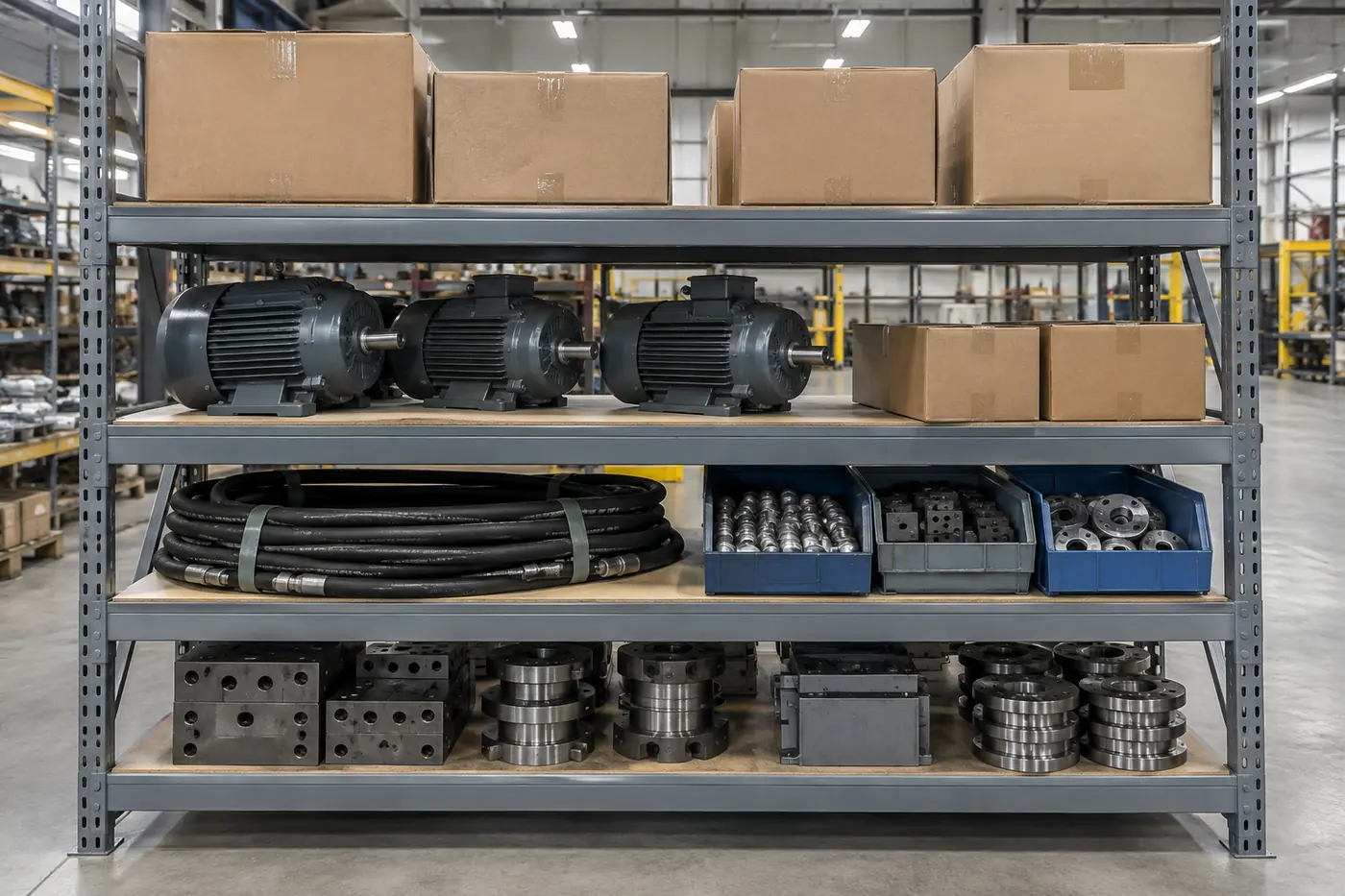
For heavy parts on long spans, such as motors, gearboxes and hose reels, use heavy-duty channel beams and 3/4" decks with supports at every level. Our custom boltless shelving guide shows how beam, span and deck choices work together when you size a non-standard bay.
Where Particle Board Decks Are the Wrong Choice
Particle board is wood fiber and resin. It swells when it gets wet and does not recover, and it is combustible. That rules it out in a few places:
- Wet areas: walk-in coolers, freezers, wash-down rooms, dock doors that take rain and unheated outdoor storage. Use wire, steel or stainless instead.
- Sprinklered high-piled storage: solid shelves can block water from reaching lower levels and may change sprinkler requirements. Ask your fire marshal before choosing solid decks for tall runs; our NFPA storage compliance guide covers the basics.
- Oily or chemical parts: oil soaks into raw board and weakens it. Use steel decks or put parts in bins.
- Food contact and clean rooms: use wire or stainless shelving that can be sanitized.
In dry warehouses, stockrooms, offices, archives and garages, particle board is a sensible, low-cost deck. For anything outside that, compare the alternatives on our industrial shelving and steel shelving pages.
Where Particle Board Shelving Decks Work Best
 Stockrooms and supply roomsMany closely spaced levels for boxes and bins on light-duty beams.
 Bulk rack levelsBoard or white laminated decks on long step-beam spans for bulky cartons.
 Adding levelsExtra beam pairs with decks add storage to an existing bay.
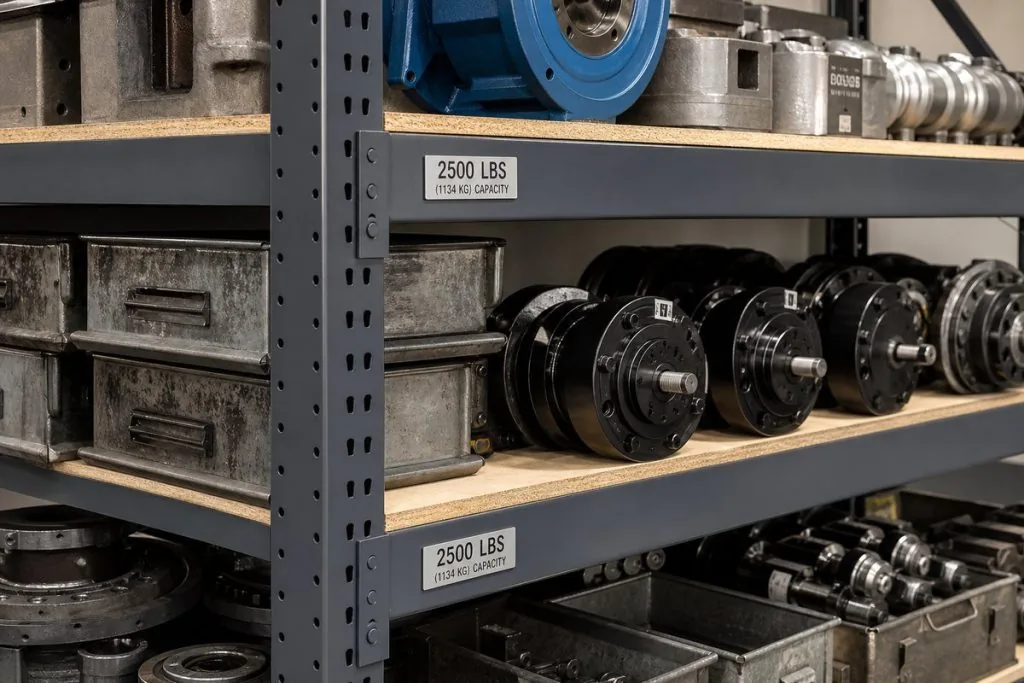 Parts and maintenance3/4" decks with supports for heavier parts on dry shop floors.
 Records, archive and building storageSmooth decks for record boxes, linens and supplies.
 Shops and schoolsDurable, replaceable decks for hardware bins, trim and tools.
Retail and customer-facing back rooms usually look better with white melamine decks; see our retail storage solutions. Records rooms and archives often use deep decks sized to the box. Our archive shelving page explains box-sized depths.
Ordering Decks: Replacements, Upgrades and New Units
Measure or photograph
Opening width and depth, deck thickness, supports, beam end and post photos.
Match the deck
We match the cut size, thickness and finish to your brand and series, or recommend wire or steel if board is the wrong fit.
Order online or quote
Common sizes can be ordered online. Mixed sizes, large quantities and full rooms are quoted with freight.
Drop in and load
Set decks on the ledge, check they sit flush and load evenly within the level rating.
Planning new shelving rather than replacing decks? Lay out a run in the Jaken shelving configurator, browse Jaken shelving, or start from Shelving Solutions. Utah buyers can also see Utah shelving. Some common sizes are in stock at select manufacturers, subject to confirmation; lead times are confirmed when you order. Call 800-326-4403.
Get a free quote
Tell us what you are storing, the room size and your timeline. A project specialist will follow up with layout options and pricing. Prefer to talk? Call (800) 326-4403.
Particle Board Shelving Deck FAQs
What thickness particle board is used for shelving?
Is melamine or particle board better for shelves?
Can I use a lumber yard sheet of particle board as a shelf deck?
How do I measure for a replacement shelf deck?
Why is my particle board shelf sagging?
Can particle board shelves be used in a cooler or outdoors?
Are solid particle board shelves allowed in sprinklered buildings?
Need Replacement or New Shelf Decks?
Send the opening size, thickness and a photo of the beam end, and we will match the deck or quote the full run.