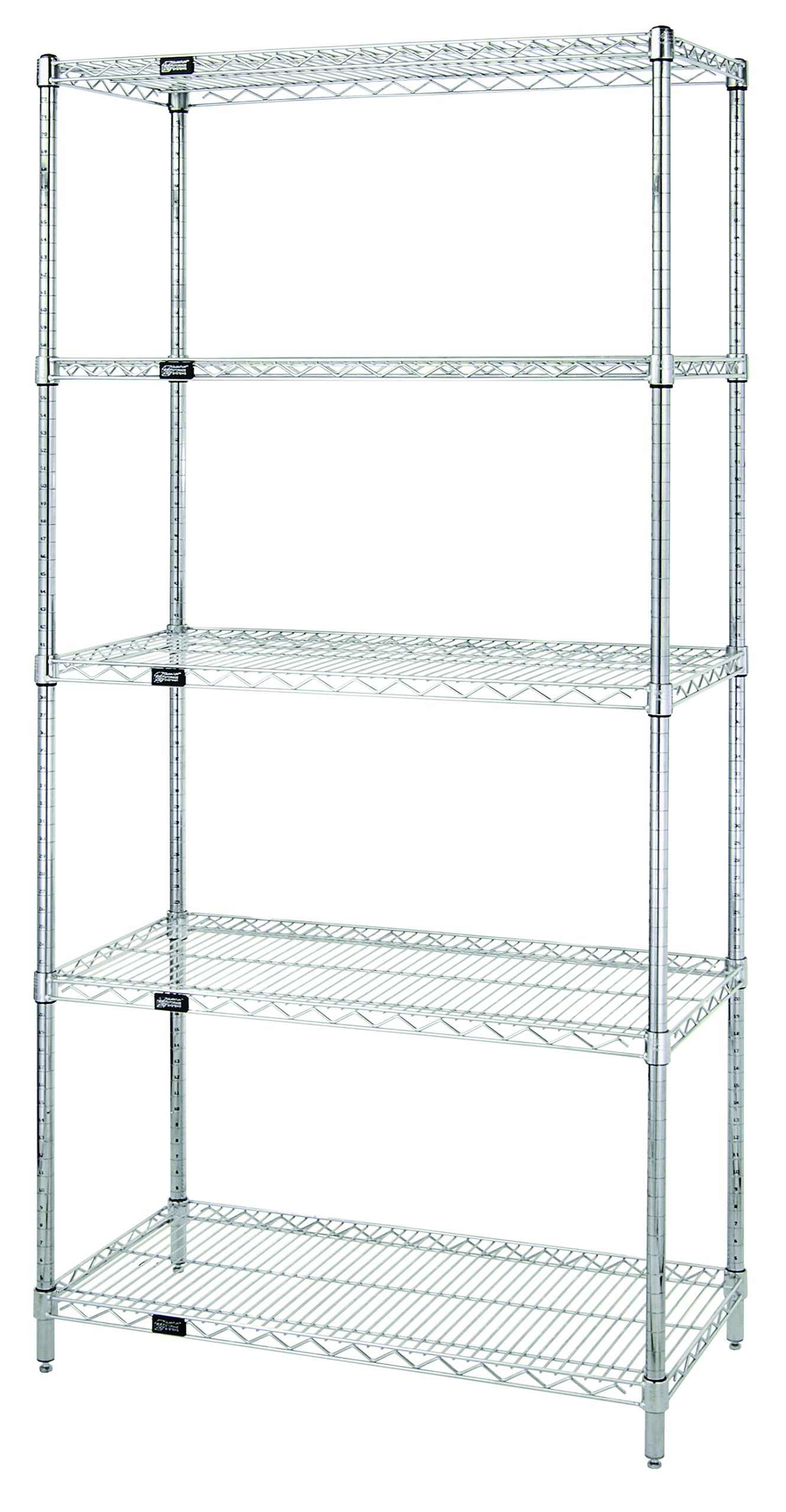
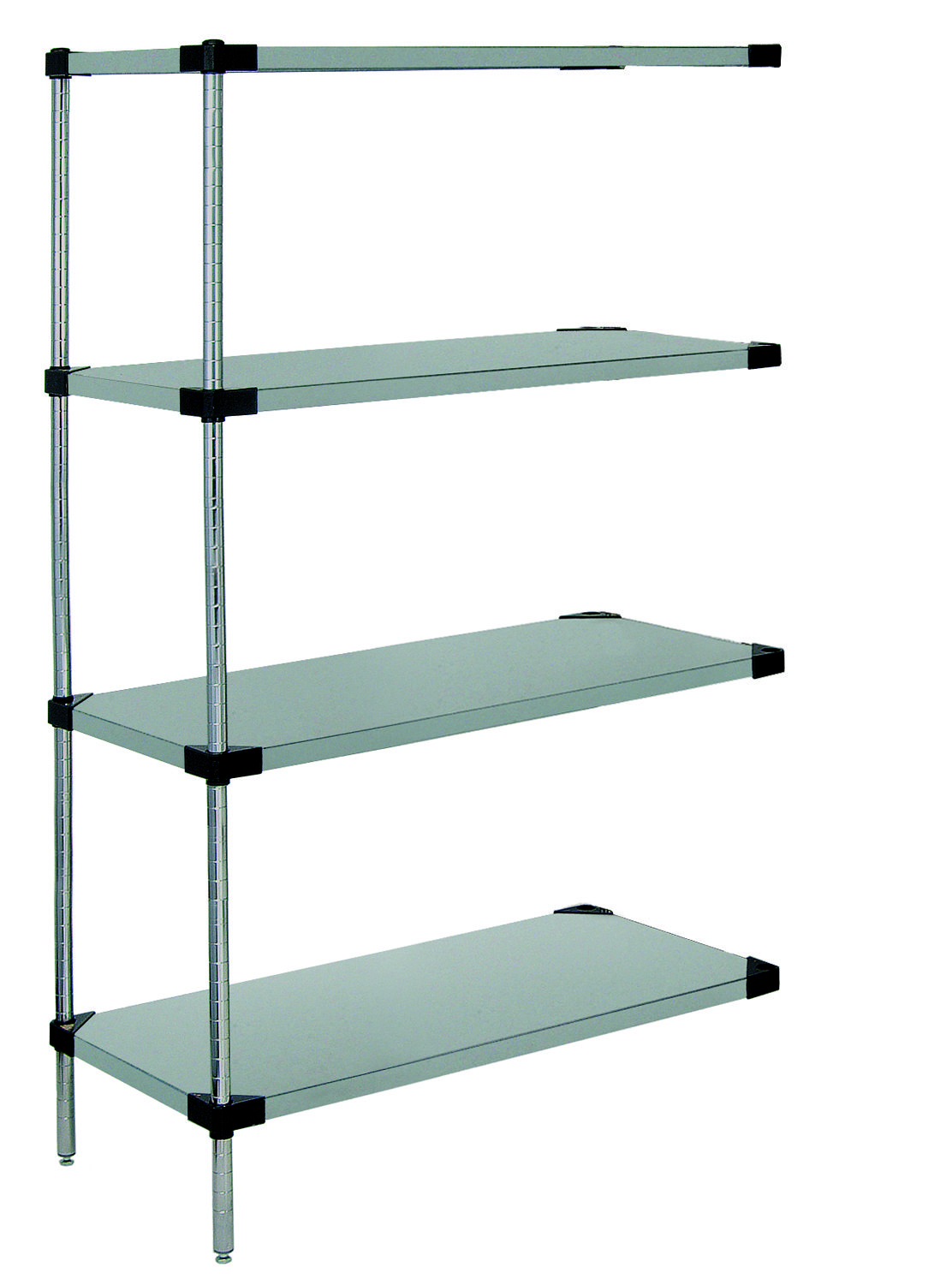
Warehouse Storage Shelves
Heavy-duty boltless shelving systems designed for commercial warehouse operations. Organize inventory, parts, and supplies across any size facility — from single stockrooms to multi-aisle distribution centers.
Talk with a storage specialist. Call (800) 326-4403 or Email Sales@MH-USA.com
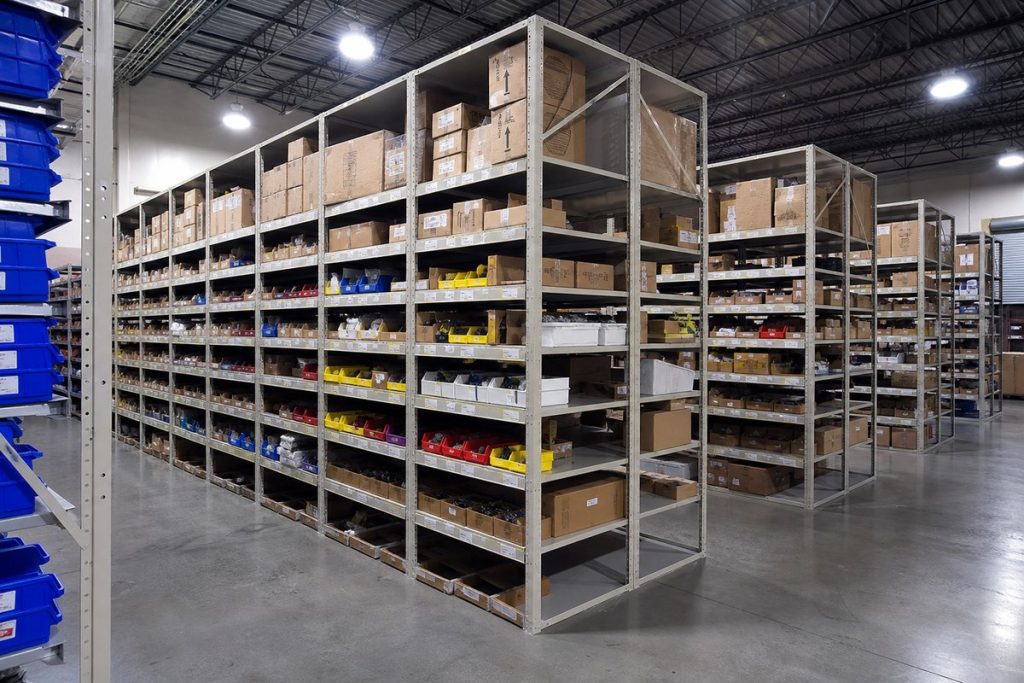
Warehouse Storage Shelves Built for Commercial Demands
Heavy-gauge boltless shelving engineered for the speed, volume, and weight demands of modern warehouse operations.
Material Handling USA supplies warehouse storage shelves designed to maximize vertical space, accelerate picking operations, and withstand the daily rigors of commercial distribution environments. Our boltless shelving systems eliminate the need for nuts, bolts, or special tools — shelving units assemble in minutes and reconfigure just as quickly when your layout requirements change.
Every warehouse storage shelf we sell is manufactured with 14-gauge to 18-gauge steel uprights, heavy-duty rivet connections, and industrial powder-coat finishes rated for corrosion resistance. Shelf capacities range from 500 lbs per level on light-duty models to over 2,000 lbs per level on our heavy-duty wide-span units. Whether you operate a single stock room or a 200,000-square-foot distribution center, our shelving experts will help you design a layout that delivers maximum storage density per square foot.
With free CAD layout services and nationwide installation, Material Handling USA takes warehouse shelving from concept to completion. We stock single-rivet, double-rivet, and wide-span configurations from trusted manufacturers including Jaken, Penco, Nexel, and Hallowell — ensuring you get the right shelving system for your load requirements, bay widths, and ceiling heights.
Warehouse Shelving Solutions
Choose from a complete range of boltless shelving systems built specifically for warehouse environments.
Maximizing Warehouse Storage Density
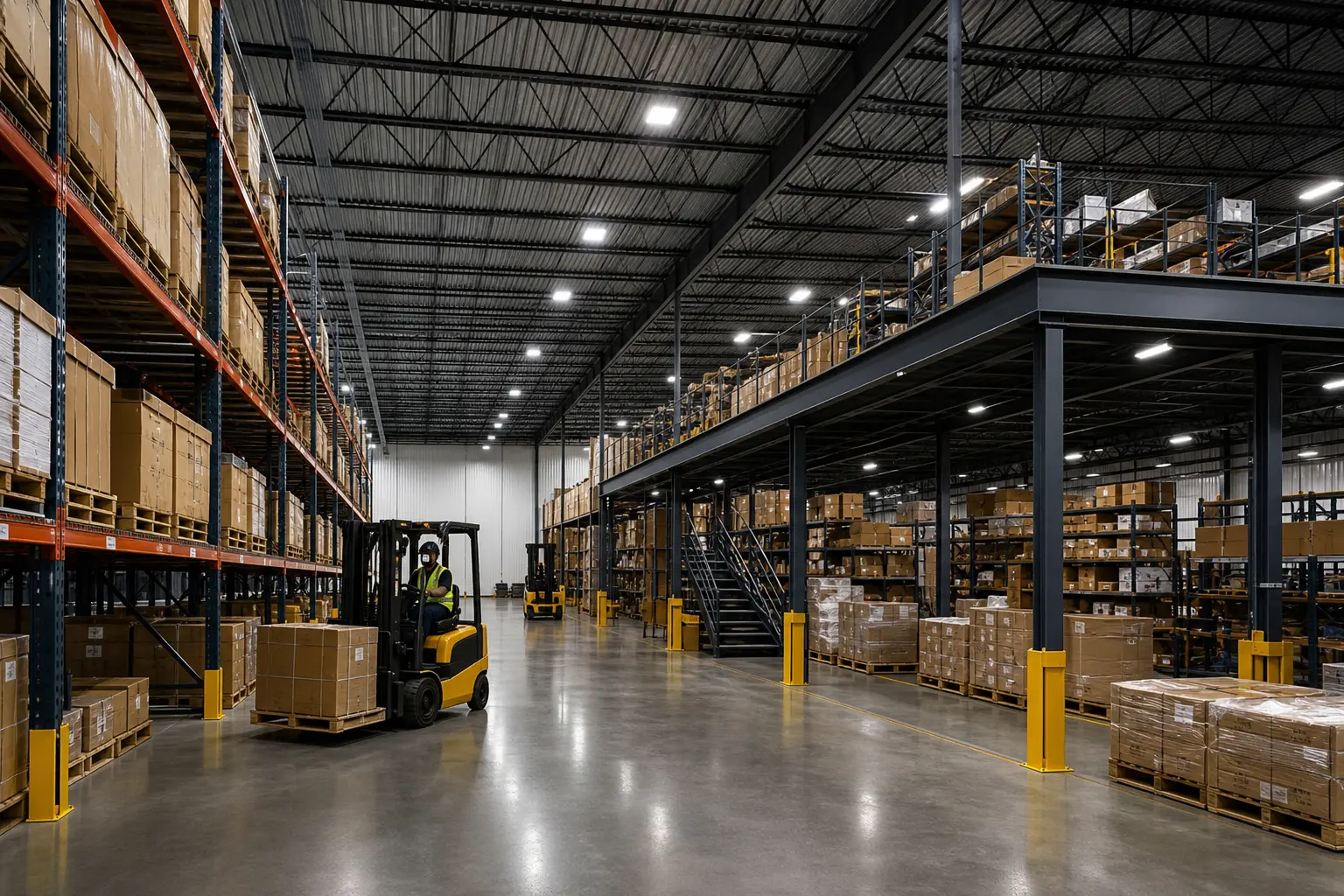
- Vertical Utilization — Shelving units from 6 ft to 12 ft tall capture overhead space that floor-level storage wastes, increasing usable capacity by 30–60 percent without expanding your building footprint
- Adjustable Shelf Heights — Beam levels adjust on 1.5-inch increments so you can fine-tune each bay to the exact carton, tote, or bin height you store — eliminating wasted airspace between shelves
- Aisle Width Optimization — Boltless shelving bays as narrow as 18 inches deep allow tighter aisle widths than pallet racking, letting you fit more rows into the same warehouse zone
- Modular Expansion — Add-on starter-adder configurations share uprights between adjacent bays, reducing steel costs by up to 25 percent on multi-bay runs
- Seismic Bracing Options — Cross-bracing and wall-anchor kits keep shelving stable in seismic zones and high-traffic environments where forklift vibration is a concern
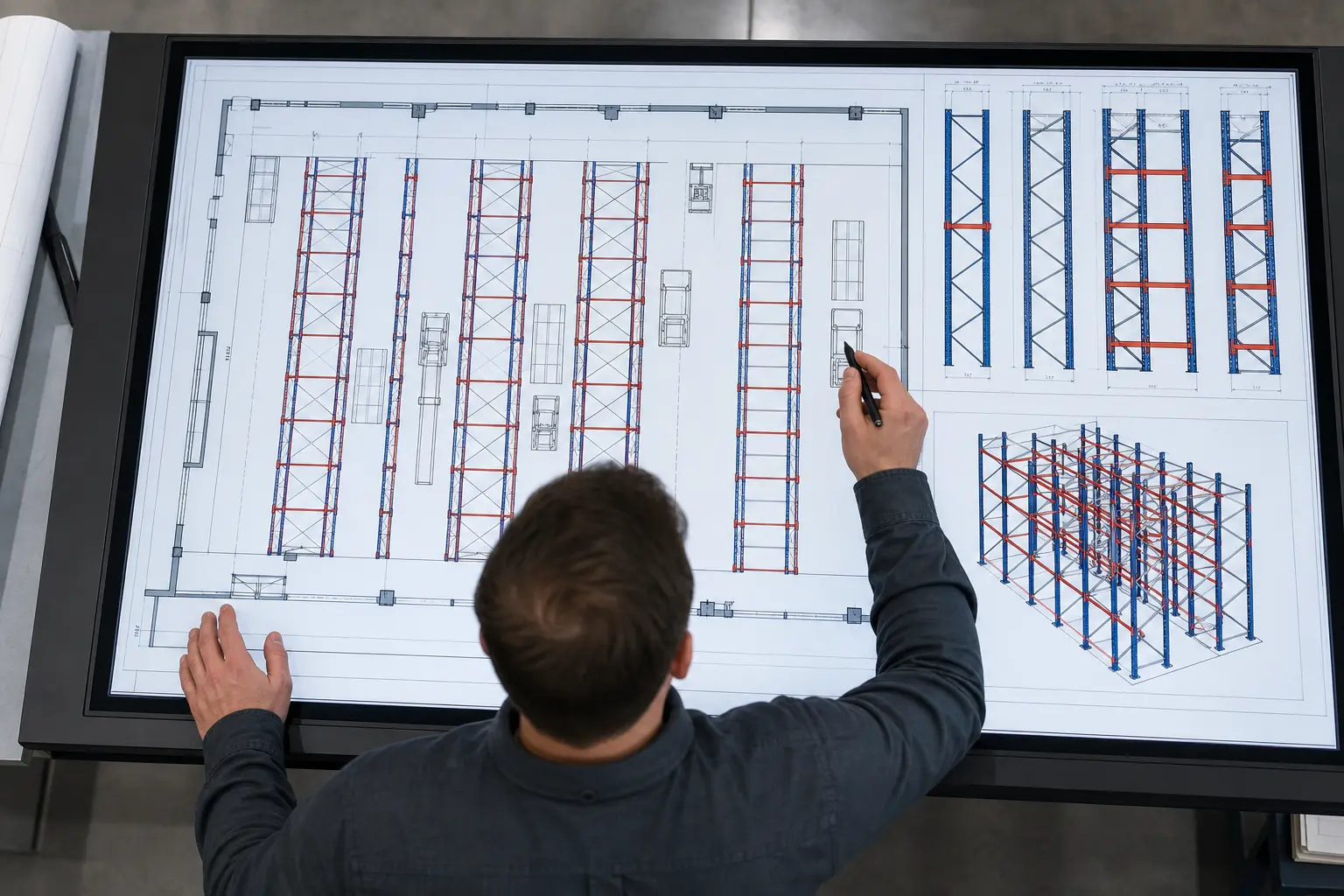
Our design team uses AutoCAD and 3D modeling software to create warehouse shelving layouts before any steel is ordered. We factor in column spacing, fire suppression clearances, dock door locations, and traffic flow patterns to give you a layout that maximizes every square foot of available warehouse space.
Durability and Load Performance
- 14-Gauge Steel Uprights — The thickest gauge uprights in the boltless shelving category provide rock-solid stability formulti-tier configurations and heavy loads up to 2,500 lbs per level
- Powder-Coat Finish — Industrial electrostatic powder coating resists scratches, chips, moisture, and chemical exposure — outlasting liquid paint finishes by 5–10 years in warehouse environments
- Rivet-Lock Connections — Tapered rivet pins lock beams into upright slots with positive engagement — no wiggle, no shift, no gradual loosening over time like nut-and-bolt systems
- Cross-Bracing Stability — Diagonal and horizontal cross braces distribute lateral loads across the entire shelving frame, preventing sway even when fully loaded on all levels
- Impact-Resistant Design — Heavy-gauge steel construction absorbs incidental contact from hand trucks, pallet jacks, and warehouse carts without deforming or losing structural integrity
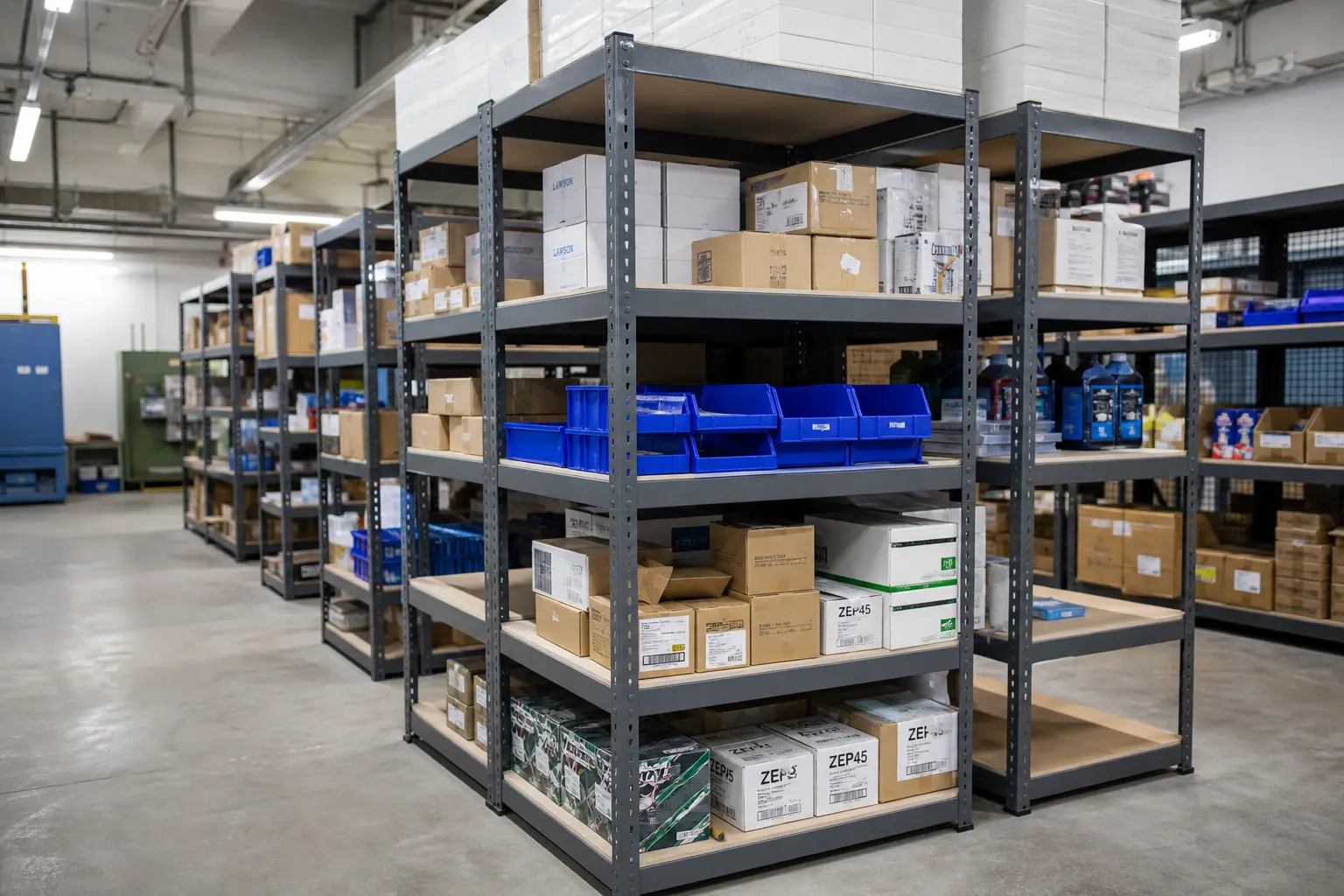
Material Handling USA only sells warehouse shelving manufactured to ANSI/MH28.1 standards. Every unit ships with rated load capacity labels, assembly instructions, and hardware — so your team can install with confidence and your facility stays compliant with OSHA storage requirements.
Industries That Rely on Warehouse Shelving
Boltless warehouse shelving serves every sector that stores, picks, and ships physical goods.
E-Commerce & Fulfillment
Pick-and-pack operations with high SKU counts and fast order turnaround requirements
Manufacturing
Raw material staging, WIP inventory, and finished goods storage on the production floor
Healthcare & Medical
Supply rooms, pharmacy storage, and sterile instrument staging in hospitals and clinics
Government & Military
GSA-approved shelving for armories, supply depots, and federal agency stock rooms
Retail & Wholesale
Back-of-store stock rooms, distribution warehouses, and regional replenishment centers
Maintenance & Repair
Spare parts, tools, fasteners, and consumable supplies organized for rapid retrieval
Choosing the Right Warehouse Shelf Configuration
Selecting warehouse storage shelves requires balancing four variables: load weight per shelf, bay width, shelf depth, and overall height. Single-rivet boltless shelving handles loads up to 700 lbs per shelf and works best for carton storage, parts bins, and archive boxes. Double-rivet shelving pushes capacity to 1,500 lbs per shelf and supports heavy automotive parts, bulk hardware, and industrial supplies.
For loads that exceed standard shelving capacities or require bay widths beyond 48 inches, wide-span boltless shelving is the right solution. Wide-span units span up to 96 inches between uprights — wide enough for palletized goods, long stock, and oversized cartons — while supporting 2,000 to 2,500 lbs per level. Material Handling USA stocks all three configurations and can mix them within a single warehouse layout to match the storage density requirements of each zone.
Decking material matters too. Wire decking improves fire suppression coverage and reduces dust accumulation. Particle board provides a flat, continuous surface for small items. Steel decking handles the heaviest unit loads. Our shelving specialists will recommend the right deck type for each application within your warehouse.
Why Choose Material Handling USA for Warehouse Storage Shelves Built for Commercial Demands
Decades of experience, manufacturer-direct pricing, and a commitment to getting every detail right.
Material Handling USA is more than a shelving supplier — we are a full-service storage solutions provider that handles every aspect of your project from initial consultation through completed installation. When you work with us on warehouse storage shelves built for commercial demands, you gain access to a team of shelving engineers, CAD designers, and installation professionals who have completed thousands of shelving projects across every industry and building type in the United States.
Our manufacturer-direct relationships with Jaken, Penco, Hallowell, Nexel, and other leading boltless shelving manufacturers allow us to provide competitive pricing without sacrificing quality. We do not sell consumer-grade shelving or unrated imports — every product we specify meets ANSI/MH28.1 industrial shelving standards and ships with documented load capacity ratings for OSHA compliance. When you buy shelving from Material Handling USA, you receive genuine industrial-grade products backed by manufacturer warranties and our own project satisfaction guarantee.
Free CAD layout design is included with every project. Our design team creates scaled AutoCAD drawings that show shelving placement, aisle widths, clearances, and integration points — giving you a complete visual of your new storage system before any steel is ordered. We coordinate with your facility team to ensure layouts account for structural columns, overhead utilities, fire suppression clearances, electrical panels, emergency egress paths, and material handling traffic patterns. Layout revisions are unlimited until the design meets your operational requirements.
Professional installation is available nationwide. Our installation crews assemble shelving per the engineered layout, install floor anchoring and seismic bracing where required, apply load-capacity labels per ANSI/MH28.1, and conduct a final walkthrough with your team. The result is a shelving system that is safe, code-compliant, and ready for immediate use.
We stand behind every project with ongoing support. If you need to reconfigure shelving, add new bays, replace damaged components, or expand into additional spaces, Material Handling USA provides responsive after-sale service that keeps your storage system performing at its best. Contact us at (800) 326-4403 or email Sales@MH-USA.com to get started on your project today.
Our Warehouse Shelving Process
From initial consultation to completed installation, we handle every step.
Consultation & Assessment
We review your inventory profile, throughput requirements, and facility dimensions to determine the ideal shelving configuration for your warehouse.
CAD Layout Design
Our design team creates scaled AutoCAD drawings showing shelving placement, aisle widths, and clearances — free of charge with every project.
Manufacturing & Delivery
Shelving is manufactured to specification, packaged, and shipped directly to your facility via common carrier or dedicated freight.
Professional Installation
Our nationwide installation crews assemble and anchor your shelving system, verify load capacities, and ensure code compliance.
Shelving Specifications and Industry Standards
Technical details and compliance standards for commercial boltless shelving systems.
All boltless shelving supplied by Material Handling USA is manufactured to ANSI/MH28.1 standards — the industry benchmark for industrial steel shelving design, testing, and labeling. This standard covers load rating methodology, structural design requirements, safety factors, and labeling requirements that ensure shelving performs safely at its rated capacity throughout its service life.
Standard boltless shelving is available in widths from 36 to 96 inches, depths from 12 to 36 inches, and heights from 72 to 144 inches. Shelf capacities range from 400 lbs per shelf for light-duty single-rivet models to 2,500 lbs per shelf for heavy-duty wide-span configurations. Upright gauges range from 18-gauge (light-duty) to 14-gauge (heavy-duty), with beam gauges typically matching the upright gauge specification. Shelf levels adjust in 1.5-inch increments for precise configuration of storage heights.
Powder-coat finishes are applied electrostatically and cured at 400°F for maximum adhesion, scratch resistance, and corrosion protection. Standard colors include gray, tan, and putty — custom colors are available for large orders. All finishes meet or exceed 500-hour salt spray testing per ASTM B117 for corrosion resistance in demanding industrial environments. For severe chemical or moisture environments, epoxy-coated and stainless steel shelving options are available.
Decking options include wire mesh (16-gauge welded wire supporting up to 250 lbs per panel), particle board (industrial-grade 5/8-inch thick), steel decking (20-gauge to 18-gauge corrugated), and laminate (high-pressure decorative surfaces for office environments). Wire mesh decking is the most popular commercial choice because it provides fire sprinkler penetration, airflow for climate control, and visibility of stored items.
Seismic bracing and floor anchoring are engineered to International Building Code (IBC) requirements for facilities in seismic design categories C through F. Material Handling USA provides stamped engineering calculations and bracing specifications for projects in seismic zones throughout the western United States — including California, Nevada, Utah, Oregon, and Washington. All floor anchoring uses concrete wedge anchors or epoxy anchors rated for the calculated uplift and shear loads specific to each installation.
Warehouse Storage Shelves — Frequently Asked Questions
How much weight can warehouse storage shelves hold?+
What is the difference between boltless shelving and pallet racking?+
How long does warehouse shelving installation take?+
Can warehouse shelving be reconfigured after installation?+
Do you offer free warehouse shelving layout design?+
What decking options are available for warehouse shelving?+
Is boltless shelving OSHA compliant?+
What sizes of warehouse storage shelves are available?+
Related Storage Solutions
Explore additional shelving and storage products that complement your project.
Material Handling USA provides a complete range of storage products and services beyond boltless shelving. Many of our clients combine multiple product lines to create integrated storage systems that address every requirement in their facility. Our design team can incorporate any of these solutions into your shelving project layout.
Boltless Shelving
Browse our complete line of boltless rivet shelving systems for every commercial and industrial application and budget level.
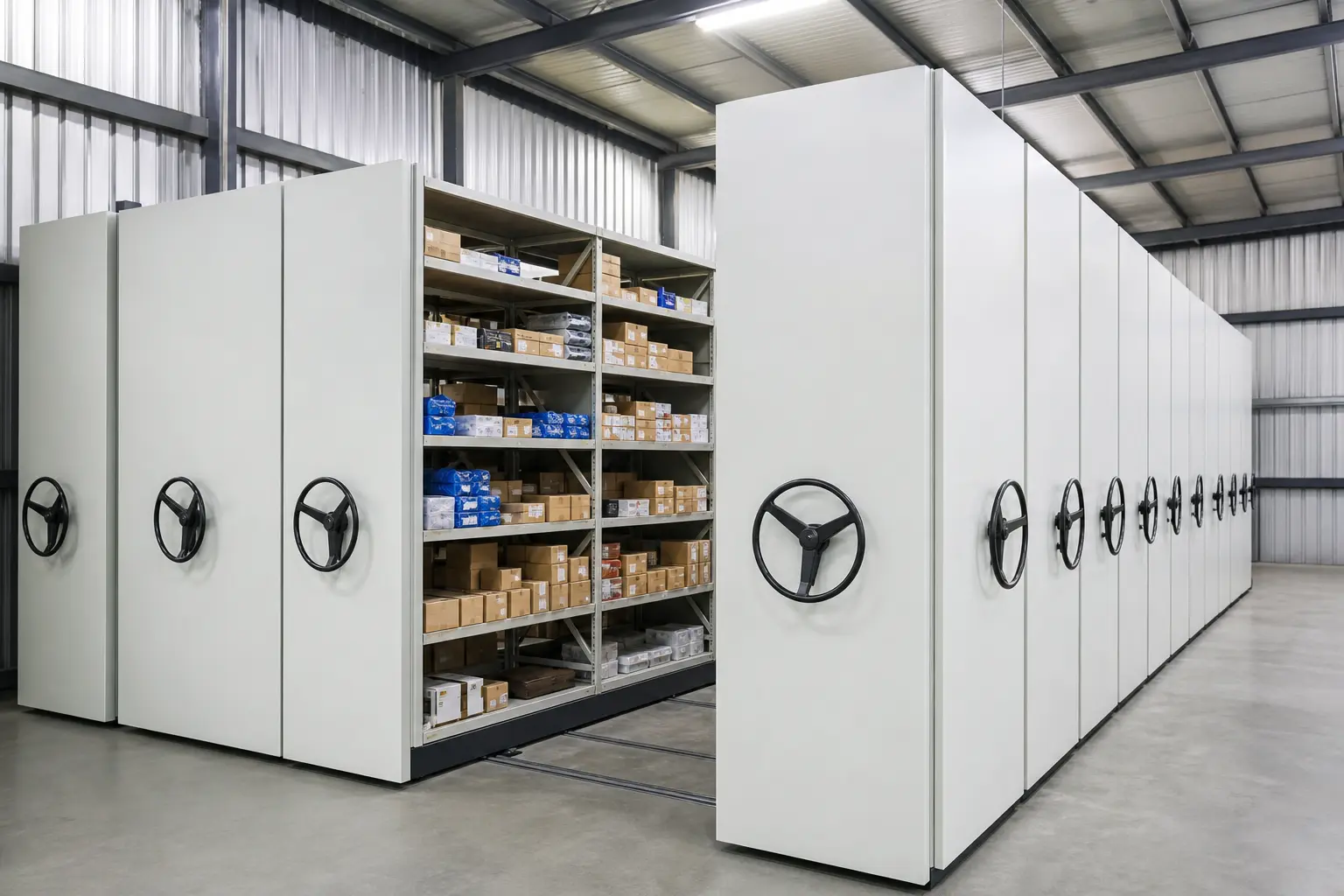
Mobile Shelving
Double your storage capacity with high-density mobile shelving systems that eliminate wasted fixed aisle space in any facility.
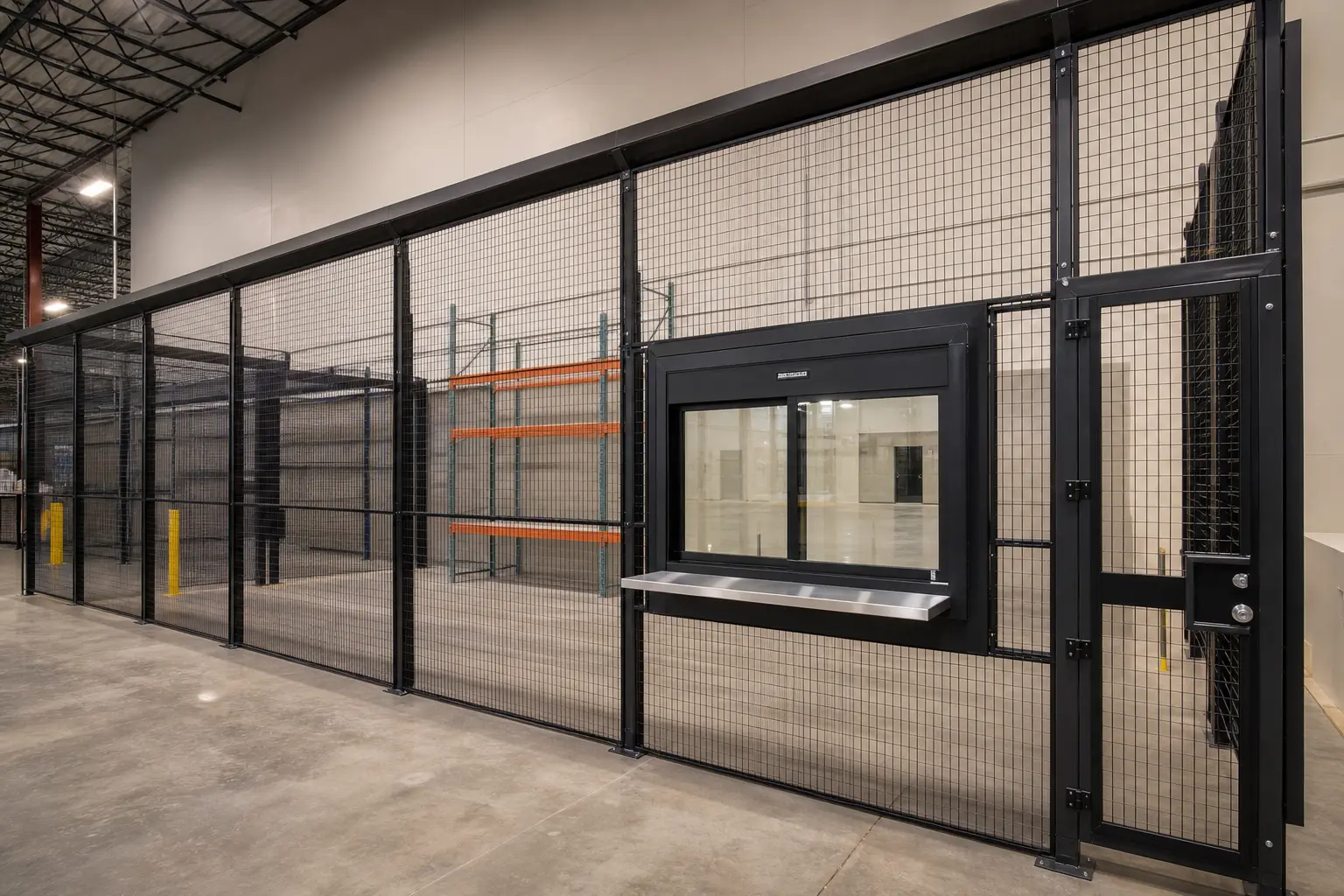
Security Cages
Secure your shelving with wire mesh enclosures, locking doors, and access control hardware for controlled-access storage areas.
Pallet Racking
Heavy-duty selective, drive-in, and push-back pallet racking for full-pallet warehouse storage and forklift operations.
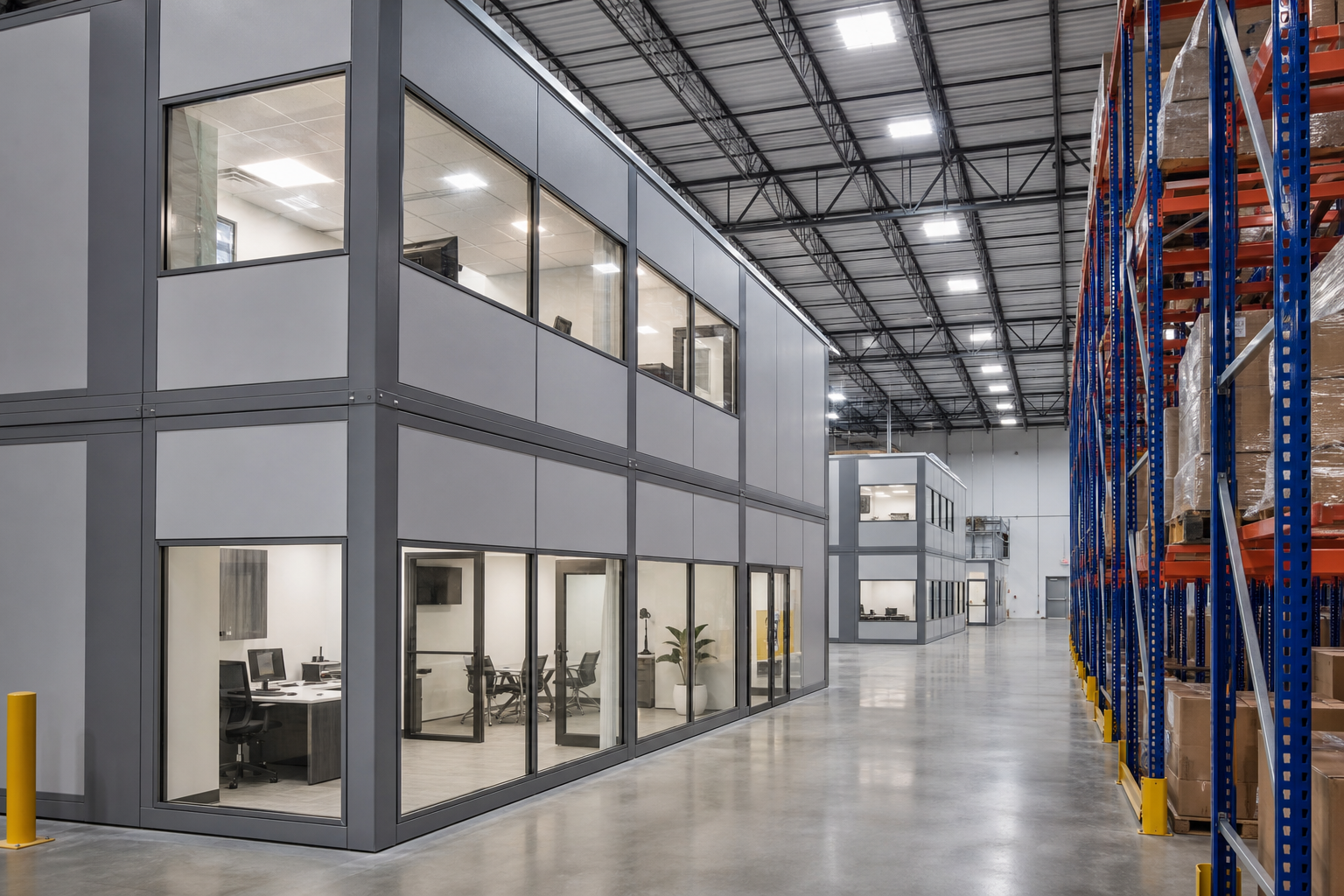
Mezzanine Platforms
Elevated structural platforms that create additional storage, office, or production space within your existing building footprint.
Accessories
Bin dividers, label holders, shelf liners, back panels, and other accessories to customize your boltless shelving system.
Ready to Upgrade Your Warehouse Shelving?
Get a free CAD layout and quote for your warehouse storage shelves. Our specialists design systems that maximize every square foot.
Shop Shelving Kits Online
Buy select items directly from our online store, or request a quote for volume, custom sizes and freight-rated orders.