
Home › Industrial Vending Machines
Industrial Vending Machines
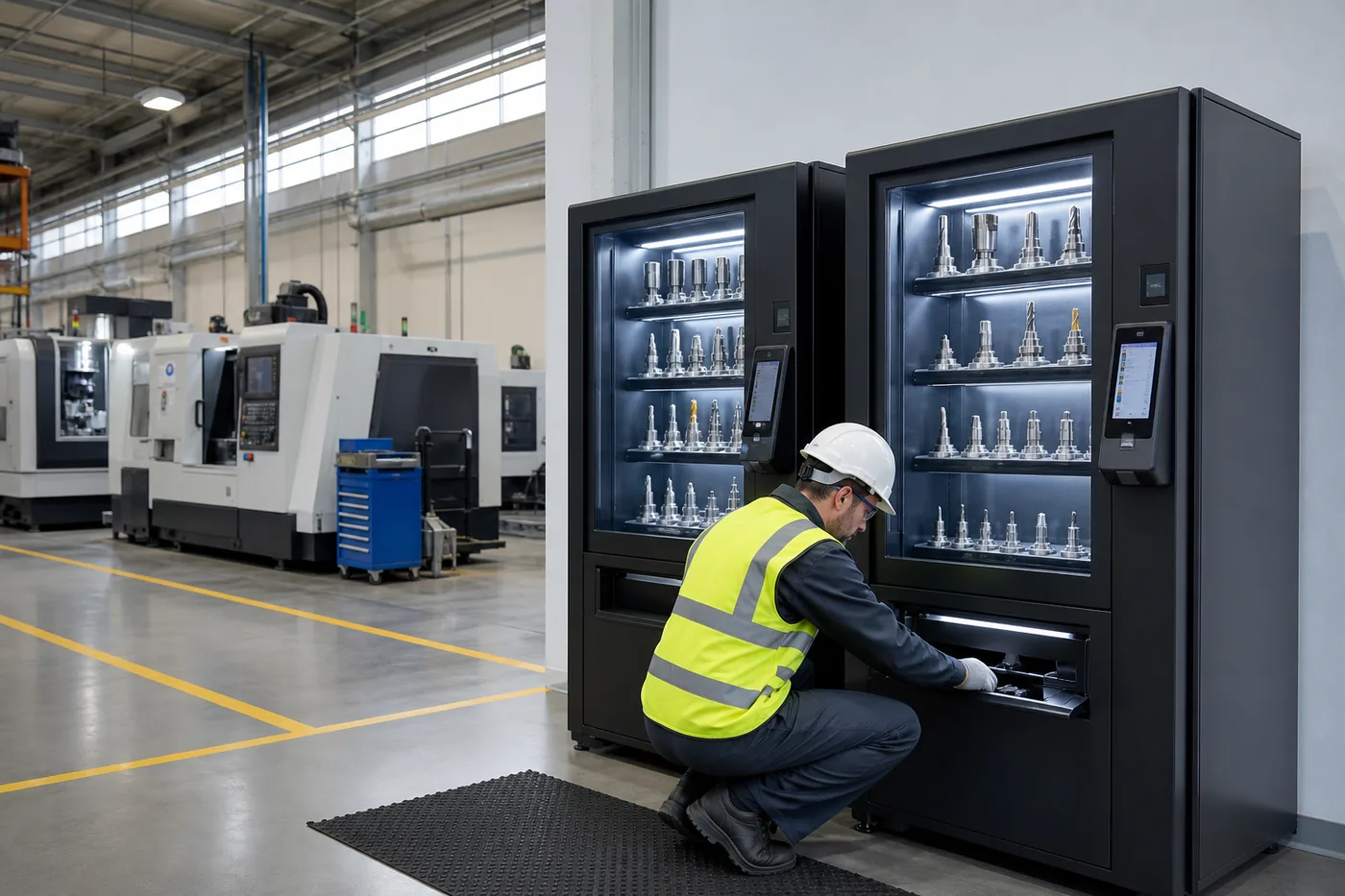
Stop losing tools, PPE, and consumables to uncontrolled crib access. Industrial vending puts supplies where the work happens and logs every item dispensed to a user, shift, cost center, or work order — typically cutting consumable spend 30–50%.
30–50%
Typical consumable cost reduction
24/7
Supply availability
100%
Dispenses logged to a user
Zero
Walk time to a central crib
The Problem Industrial Vending Actually Solves
Almost every plant has the same story. The tool crib is either staffed — which costs a
person and closes at shift change — or it is unlocked, which means it is not a crib, it is a
shelf. Consumables walk. Cutting tools get replaced long before they are worn out because
nobody is accountable for the one they already have. Operators hoard a personal stash in a
drawer because they cannot count on the crib having what they need at 2 a.m. And nobody can
say which cost center or job actually consumed the spend.
Industrial vending fixes the accountability problem rather than the storage problem. A
badge, a PIN, or a scan identifies the person; the machine dispenses exactly what they are
authorized to take; and the transaction is logged against a user, shift, cost center, or
work order. The behavior change is immediate and it is the entire source of the savings —
consumption drops when consumption is visible.
Identify
The user badges, scans, or enters a PIN. The machine knows who they are and what they are authorized to take.
Dispense
Only permitted items in permitted quantities are released — coil, locker, or carousel depending on the item.
Record
Every transaction is logged with user, time, quantity, cost center, and work order or job number.
Replenish
Software watches min/max levels and triggers restock or a purchase order before anything runs out.
Machine Types
Different items need different dispensing mechanisms. Most facilities end up with a combination, managed as a single inventory.
 Coil VendingTraditional spiral-coil dispensing for small packaged items: safety glasses, gloves, earplugs, respirator cartridges, drill bits, and packaged fasteners. The most cost-effective option for high-volume, low-value consumables. Multiple coil sizes handle different package dimensions.
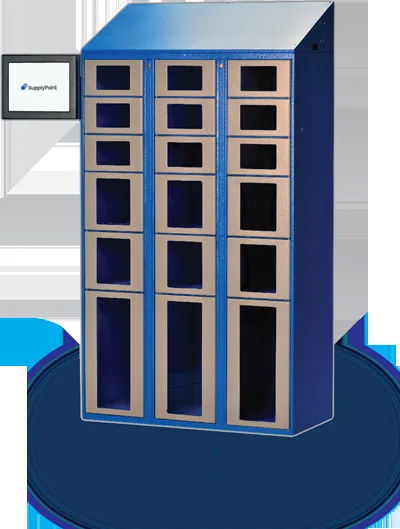 Locker VendingIndividually controlled compartments for larger items: power tools, meters, calibration instruments, and specialty equipment. Each locker is accessed and tracked independently, with check-in and check-out for reusable tools rather than one-way dispensing.
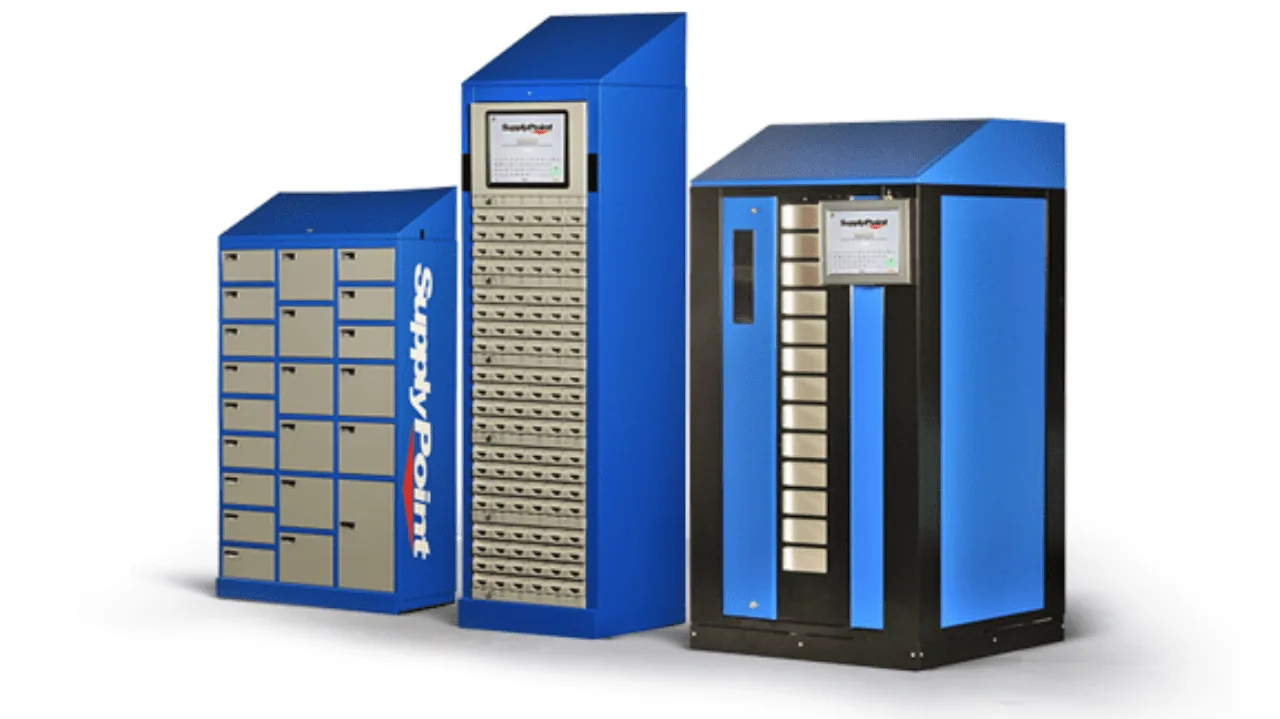
 Carousel VendingA rotating carousel with individually controlled bins for medium items: cutting tools, end mills, inserts, taps, dies, and precision instruments. Very high density in a small footprint, and weight-sensing shelves verify that checked-out items actually came back.
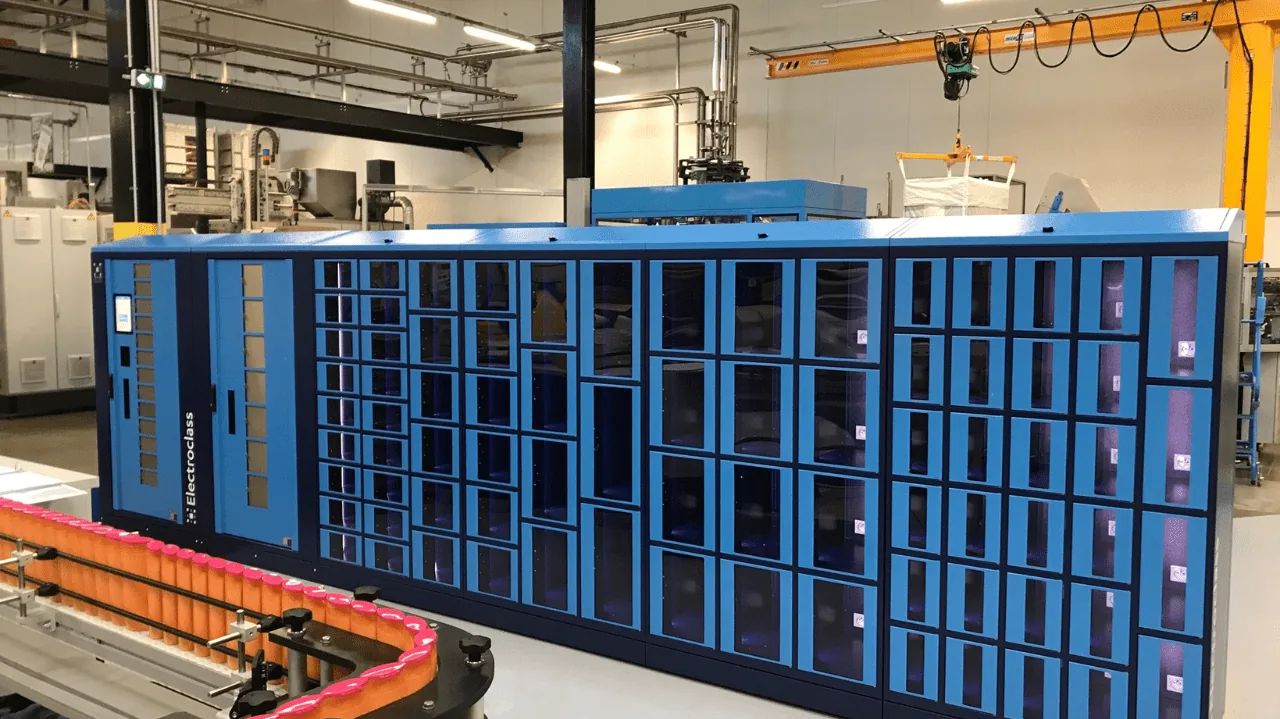
 Hybrid SystemsCoil, locker, and carousel modules connected as one system, with software managing all modules as a single inventory. This is what most facilities actually deploy, because a single mechanism never fits the whole item list.
| Item Type | Best Mechanism | Why |
|---|---|---|
| Gloves, glasses, earplugs, respirator cartridges | Coil | Packaged, high volume, low unit value |
| Cutting tools, inserts, taps, dies | Carousel | High density, moderate value, crib-controlled |
| Power tools, meters, gauges | Locker | Reusable — needs check-out and check-in |
| Calibrated instruments | Locker | Individual accountability and calibration tracking |
| Bulk fasteners and abrasives | Coil or scale bin | Packaged units or weight-based dispensing |
| Mixed item list | Hybrid | One inventory across multiple mechanisms |
Benefits and Where the ROI Comes From
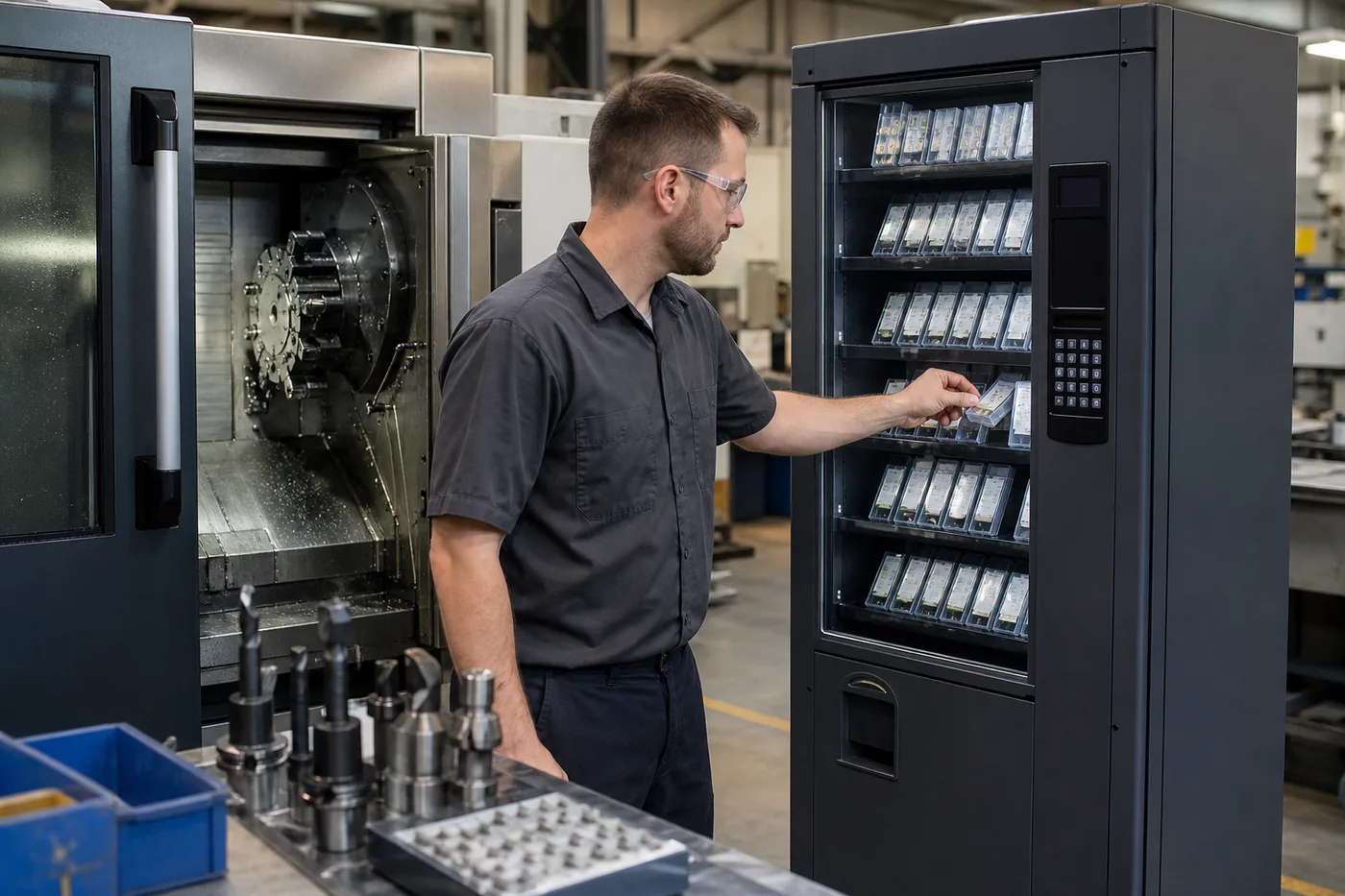
Building an honest business case
The consumable reduction is the headline number and it is real, but it is not the whole
case. Add the crib attendant hours you redeploy, the walk time you eliminate multiplied by
frequency and headcount, and the downtime you avoid by not stocking out of a critical item.
Then subtract the cost of the machines, the software, and the effort of setting up the item
master properly.
Be skeptical of a projection that assumes 50% savings across every category. The
reduction is largest on high-shrink items — gloves, glasses, blades, batteries, small cutting
tools — and much smaller on items already under tight control. We will build the case from
your actual consumption data rather than a vendor average.
Applications by Industry
 ManufacturingCutting tools, inserts, taps, dies, abrasives, and measuring instruments dispensed at the cell rather than from a central crib. Carousel modules handle the tooling; coil handles the consumables.
 Warehousing & DistributionPPE, labels, packing supplies, box cutters, batteries, and tape. High-volume, high-shrink items where accountability produces the fastest and largest reduction in spend.
 Automotive & Fleet MaintenanceShop supplies, specialty tools, diagnostic equipment, and calibrated instruments with check-out and check-in so tools return to the locker instead of a technician’s box.
 Government & DefenseSecure asset management with individual accountability and a complete audit trail — the tracking requirements that make manual cribs difficult to defend at inspection.
- Construction and field service — consumables staged at the jobsite trailer
- Food processing — sanitation supplies, gloves, and PPE with washdown-suitable placement
- Mining and heavy industry — high-value consumables at remote work locations
- Aerospace and precision machining — calibrated tooling with certification tracking
- Utilities — PPE and arc-flash equipment issued with individual accountability
Software, Data, and Integration
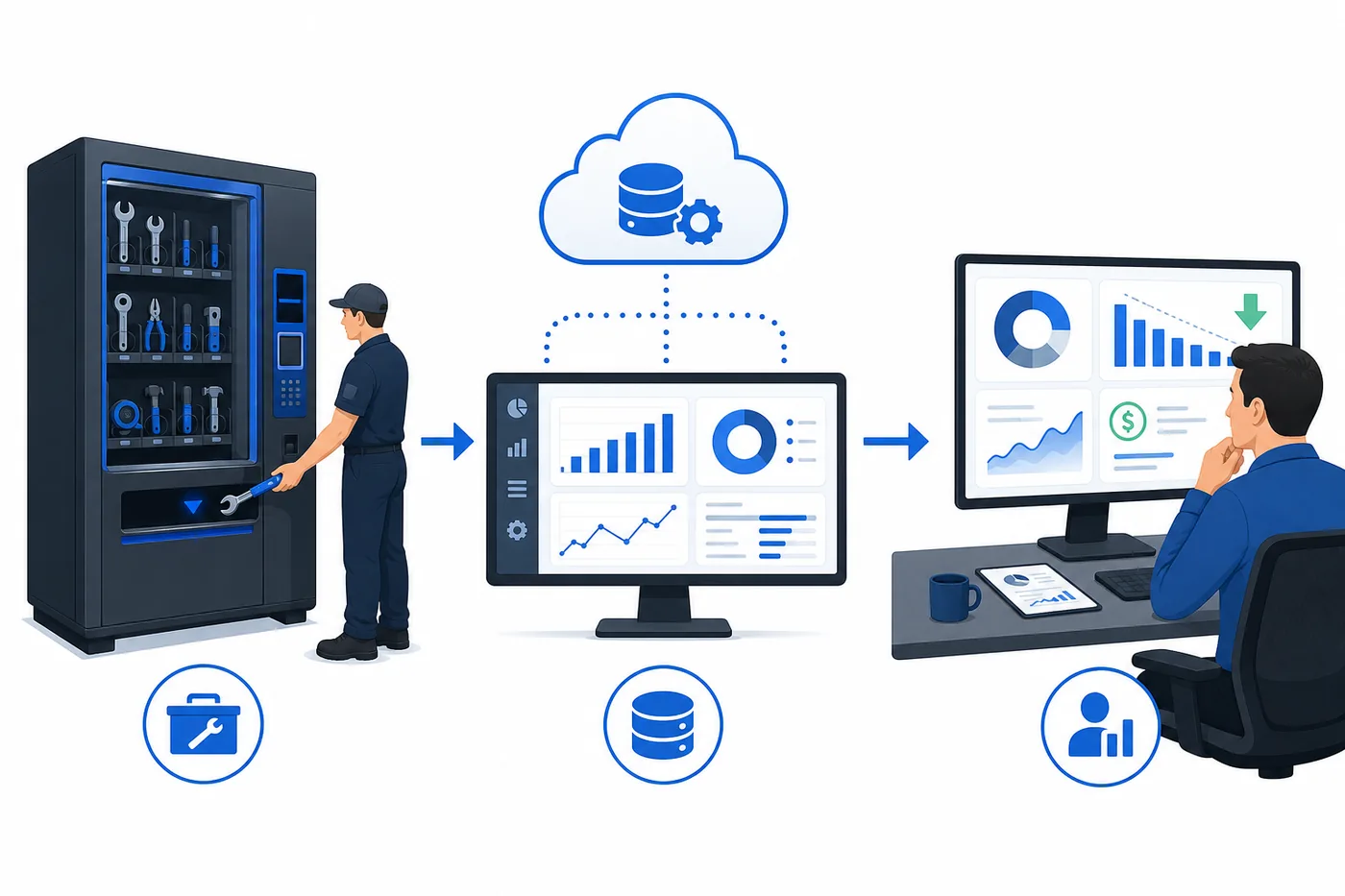
The machines are the visible part of an industrial vending deployment; the software is
where the value lives. Item master, user permissions, min/max levels, cost center mapping,
and reporting all live there, and a poorly configured system produces a very expensive
vending machine that dispenses whatever anybody asks for.
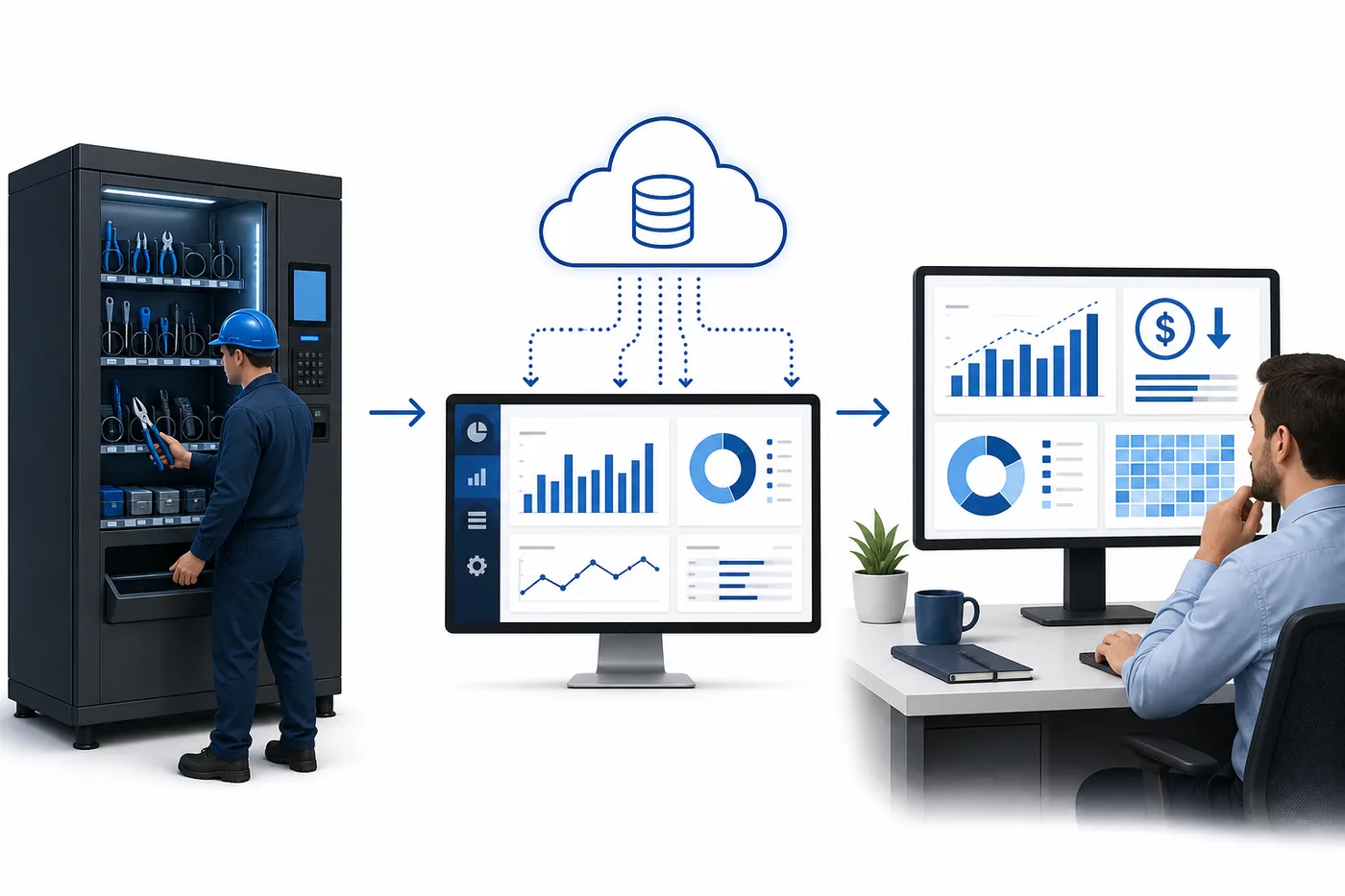
Practical integration matters too. Consumption data should feed your ERP or maintenance
system so purchase orders, job costing, and inventory valuation reflect reality. Badge
credentials should come from the systems your people already carry rather than a separate
card nobody remembers. And reporting should answer the questions your managers actually ask
— which cost center is consuming what, which items are trending up, and who is dispensing
outside normal patterns.
- Per-user and per-role dispensing permissions and quantity limits
- Cost center, department, and work order allocation on every transaction
- Min/max levels with automatic reorder triggering
- Existing badge and credential integration
- ERP and CMMS data feeds for purchasing and job costing
- Exception reporting on unusual consumption patterns
- Multi-site management from a single system
Configure the item master before you install
The most common cause of a disappointing industrial vending rollout is launching with a rushed item master and permissive access rules. Spend the time on item data, quantity limits, and who is allowed what — that configuration is the savings.
Placement, Sizing, and Utilities
Where you put the machine determines whether people use it or work around it. The rule is simple: put it where the work happens, not where there is convenient floor space.
| Consideration | What to Plan For |
|---|---|
| Location | At or adjacent to the work cell — every minute of walk time erodes the benefit |
| Power | Standard 120V circuit; confirm the receptacle location before delivery |
| Network | Wired Ethernet is preferred; verify Wi-Fi coverage if wireless is the only option |
| Footprint and clearance | Machine depth plus door swing plus room to restock without blocking an aisle |
| Environment | Dust, coolant mist, washdown, and temperature all affect machine selection |
| Lighting and visibility | People need to read the screen and see what they are taking |
| Forklift traffic | Protect the machine with bollards where lift trucks pass |

Start small, then scale
The deployments that succeed almost always start with one or two machines in a single
area, stocked with the twenty to fifty items that account for most of the shrink. That gives
you real data on your own consumption, exposes configuration problems while they are cheap
to fix, and produces a measured savings number to justify the next phase.
Facility-wide rollouts launched all at once tend to struggle for a predictable reason: the
item master and permission rules were built on assumptions instead of data. Systems scale
from one machine to dozens across multiple sites, so there is no penalty for starting
small.
Implementation
Analyze Consumption
Pull 6–12 months of consumable purchase history to find the items with the highest spend and the highest shrink.
Select & Configure
Machine mix, item master, user permissions, quantity limits, min/max levels, and cost center mapping.
Install & Integrate
Placement, power, network, badge integration, and ERP or CMMS data feed setup.
Train & Measure
Short operator training, then measure consumption against baseline at 30, 60, and 90 days before expanding.
Measure a baseline first
You cannot prove a 30–50% reduction without knowing what you spent before. Capture consumption by item and cost center for the months preceding installation — it takes an afternoon and it is the difference between a proven ROI and an anecdote.
Related Solutions
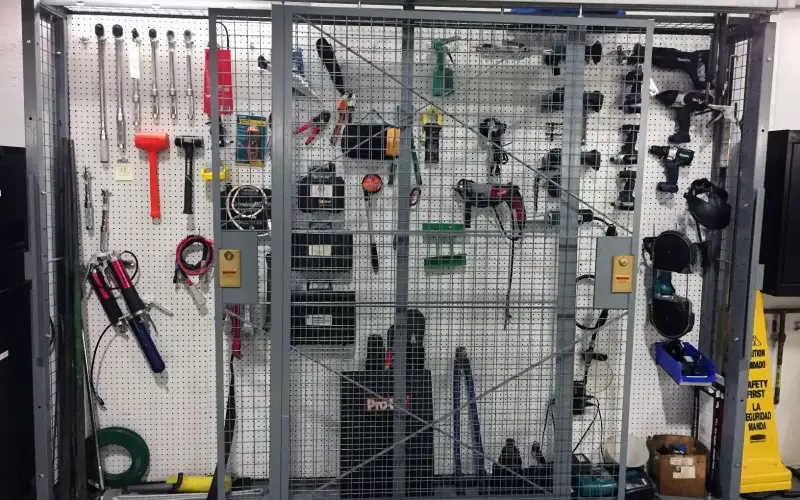 Tool Cribs & Security CagesPhysical enclosures for the items that are too large or too varied to vend.
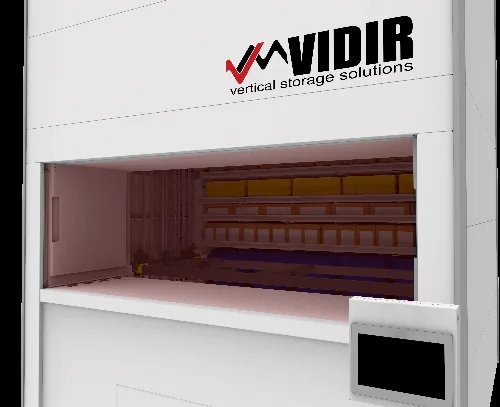 Vertical Lift ModulesAutomated goods-to-person storage for higher-volume parts and tooling inventories.
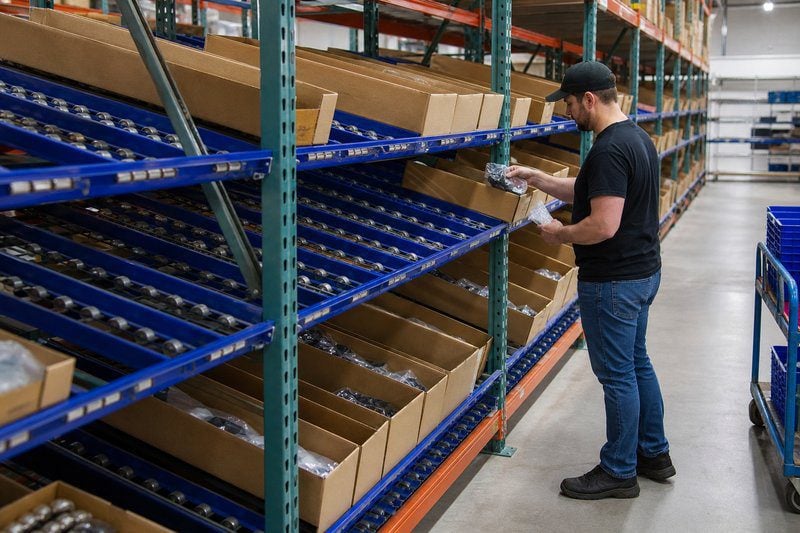 Carton Flow RackGravity flow lanes for consumables and case picking where vending is not the fit.
 Conveyor SystemsMaterial flow automation for operations scaling beyond manual handling.
Industrial Vending FAQs
How much can industrial vending actually save?
Which items should go in the machine first?
Can reusable tools be checked out and returned?
Does the machine integrate with our ERP?
What utilities does a machine need?
Can machines be placed in harsh environments?
How many machines will we need?
Who restocks the machines?
How do we prove the ROI?
See What Industrial Vending Would Save You
Send us 6–12 months of consumable purchase history and we will identify the items worth vending and build the business case from your own numbers.