
Home › Warehouse Conveyor Systems
Warehouse Conveyor Systems
Move cartons, totes, polybags, and pallets through your facility faster and more reliably than manual handling. We design, install, and service conveyor systems from simple gravity roller lines to zone-controlled MDR and automated sortation.

12–36 in
Standard conveyor widths
50%+
Typical trailer load time reduction
Zero-Pressure
MDR accumulation
WMS
Sortation integration
Conveyor Is a Labor Decision, Not a Machinery Decision
Conveyor rarely gets bought because someone wants conveyor. It gets bought because people are walking cartons across a building, because a trailer takes three hours to unload by hand, or because a pack line cannot keep up during peak. The right way to evaluate a conveyor project is to look at the touches you remove and the throughput you gain, then see what that is worth against the installed cost.
Material Handling USA designs, installs, and services warehouse conveyor systems across the Mountain West and nationally. We work the whole range — gravity roller for packing and shipping lanes, powered belt for irregular product, motor-driven roller for zero-pressure accumulation, flexible expandable conveyor for trailer loading, and automated sortation for high-volume fulfillment. Just as often, we tell a customer that a well-designed carton flow rack and a better pick sequence will solve the problem for a fraction of the cost.

Conveyor Types
Five technologies cover the great majority of warehouse conveyor applications. Each one has a job it does better than the others, and none of them is universally best.
 Gravity Roller ConveyorNo power required — product moves on a slightly declined roller bed. The lowest cost per foot and the least to maintain. Standard widths 12–36 in with roller centers of 1.5, 3, 4.5, or 6 in depending on the smallest carton you run. Ideal for packing stations, shipping lanes, and accumulation.
 Powered Belt ConveyorA continuous belt surface handles anything — polybags, irregular shapes, small parts, and product that will not track on rollers. Variable-speed drives give you process control, and belt handles incline and decline where roller cannot. The default choice for e-commerce mixed-item flow.
 Powered Roller (MDR)Motor-driven roller gives zero-pressure accumulation — cartons stop without touching each other, which protects product and eliminates line pressure. Each zone runs independently and only when product is present, so it is quiet and energy efficient. Common in fulfillment and cleanroom environments.
 Flexible & Expandable ConveyorAccordion-style conveyor that extends into a trailer and retracts out of the way. Gravity or powered, caster-mounted so it moves between dock doors. Routinely cuts hand load and unload times by half or more, which makes it the fastest-payback conveyor most operations can buy.
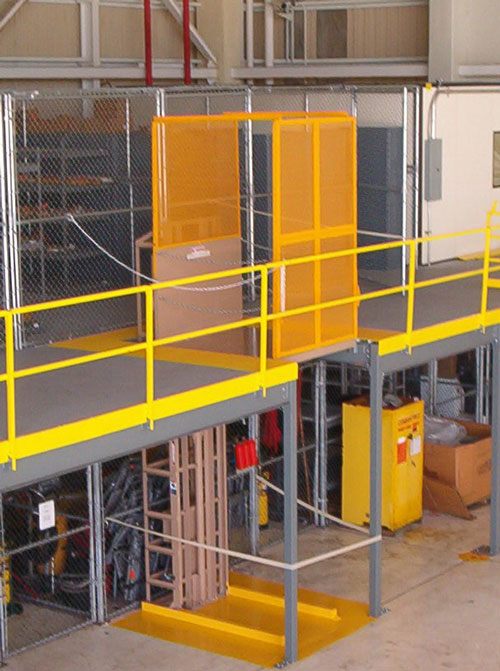 Vertical Conveyor (VRC)Vertical reciprocating conveyors move loads between floors and mezzanine levels. Far less expensive than a freight elevator and not subject to elevator code, because a VRC is material-only equipment — people never ride it.
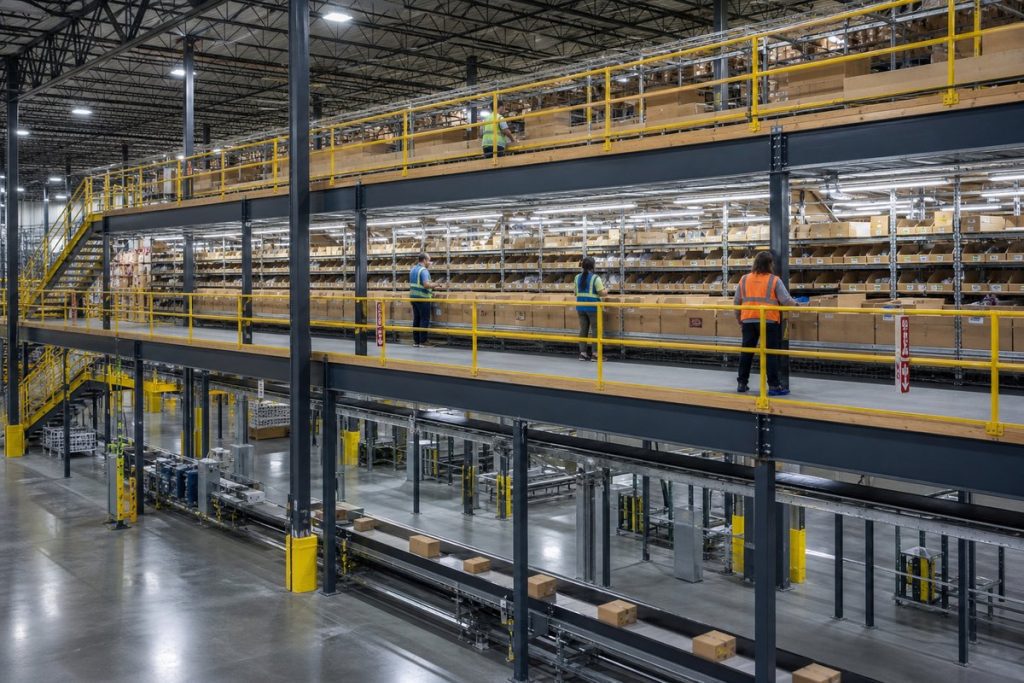 Pick Modules & Integrated LinesConveyor combined with carton flow rack and mezzanine levels into a complete picking structure. This is where conveyor delivers the largest gains, because picking, replenishment, and takeaway are designed as one flow instead of three.
Choosing the Right Conveyor
Match the technology to your product and your flow, not to what a competitor installed. The table below is how we narrow it down in the first conversation.
| If You Need To… | Best Fit | Why |
|---|---|---|
| Move cartons downhill between stations | Gravity roller | Lowest cost, nothing to maintain, no power |
| Handle polybags, small parts, irregular items | Powered belt | Continuous surface carries anything |
| Convey up or down a grade | Powered belt | Roller cannot hold product on an incline |
| Accumulate without product contact | MDR (powered roller) | Zero-pressure zones stop cartons independently |
| Load and unload trailers faster | Flexible expandable | Conveyor reaches into the trailer; fastest payback |
| Move loads between floor levels | Vertical conveyor (VRC) | Cheaper than an elevator, material-only code path |
| Route product to multiple lanes | Sortation | Barcode, weight, or dimension-based diverts |

When conveyor is the wrong answer
Conveyor is fixed infrastructure. It commits floor space, it constrains where forklifts can travel, and it is expensive to reroute. If your product mix, volume, or layout is likely to change substantially inside two or three years, a flexible solution — carton flow rack, mobile powered carts, better slotting — often delivers most of the benefit with none of the lock-in.
We will tell you when that is the case. A conveyor system that gets ripped out in eighteen months because the operation moved was a bad recommendation regardless of how well it ran.
- Low volume with high layout volatility — use flexible solutions
- Short-distance moves — powered carts often win
- Slow movers — conveyor rarely pays back on low pick frequency
- Seasonal-only peaks — consider rental or expandable units
Automated Sortation Systems
Sortation is what turns a conveyor line into a routing system. A scanner or scale reads each carton and the system diverts it to a lane based on barcode, weight, or dimension — carrier lane, store, zone, or exception. Once volume passes the point where people cannot reliably sort by hand, sortation is usually the difference between shipping on time and shipping late.
Technology choice follows throughput and product characteristics. Pop-up wheel diverts are cost-effective at moderate rates on flat-bottomed cartons. Shoe and sliding-shoe sorters handle higher rates and gentler diverts on mixed product. All of them depend on WMS or WCS integration to be worth anything — the mechanical divert is the easy part, and the data integration is where projects succeed or fail.

| Divert Technology | Relative Throughput | Best For |
|---|---|---|
| Pop-up wheel divert | Moderate | Flat-bottom cartons, cost-sensitive projects |
| Pusher / paddle divert | Moderate | Simple two-way sorts, rugged product |
| Shoe sorter | High | Mixed carton sizes, gentle handling |
| Sliding shoe sorter | Very high | High-rate parcel and DC sortation |
| Manual divert lanes | Low | Low volume, high variability, lowest cost |
Scan quality decides sort accuracy
Most sortation problems traced back to their root cause are read failures, not divert failures: labels in the wrong position, poor print quality, or a scan tunnel positioned for a carton size you no longer run. Fix labeling before adding hardware.
Applications

Where the savings actually come from
In our experience the three largest conveyor savings, in order, are trailer load and unload labor, walking distance in picking, and rework caused by product damage on high-pressure accumulation lines. Trailer conveyor is the easiest to justify because the before-and-after is measurable in a single shift.
The savings that get overestimated are usually headcount reductions in packing. Conveyor moves product between stations; it does not pack faster. If packing is your constraint, look at the station design and the packaging materials before you look at conveyor.
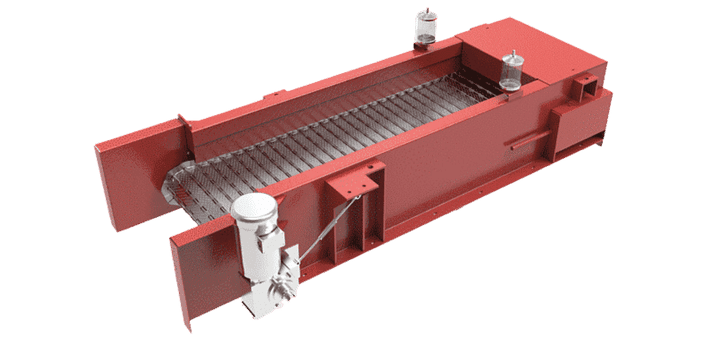
Conveyor Safety and Guarding
Conveyor introduces pinch points, nip points, and moving loads at body height into spaces where people work. OSHA and ANSI expectations are specific, and conveyor guarding is one of the more common findings in warehouse inspections — usually on lines that were extended or modified after the original installation without extending the guarding.
Design safety in from the beginning: guarding at nip points and under transfers, emergency stops within reach along the full line, warning devices at automatic starts, and proper crossovers where people need to get from one side to the other. Do not rely on a painted line and an instruction not to climb over the conveyor, because people will climb over the conveyor.
- Nip point and transfer guarding on all powered sections
- Emergency stops accessible along the entire line length
- Audible or visual warning at automatic start points
- Crossovers or under-passes where foot traffic crosses the line
- Lockout/tagout points designed in for maintenance
- Guarding extended whenever the line is extended
How We Design a Conveyor System
Measure the Flow
Volumes by hour and by peak, product dimensions and weights, current touches, and where the operation actually backs up.
Model the Layout
Line routing on your building footprint, accounting for columns, docks, forklift travel, sprinklers, and clear height.
Specify & Simulate
Technology selection, accumulation sizing, divert rates, and controls scope — sized to peak, not to average.
Install & Commission
Phased installation around your operating schedule, controls integration, run-in testing, and operator training.
Design to peak hour, not to daily average
The single most common conveyor design error is sizing on average daily volume. A system that handles the daily average comfortably and collapses in the two busiest hours of the day has failed. Give us your peak-hour numbers and your seasonal peak.
What Drives Conveyor Cost
Conveyor is priced per foot plus controls, supports, and installation, and the controls scope is frequently underestimated. These are the drivers that move a budget most.
| Cost Driver | Effect | Notes |
|---|---|---|
| Technology choice | Large | Gravity roller is the least expensive per foot; MDR and sortation the most |
| Total line length | Large | Straight runs are cheap; curves, merges, and transfers are not |
| Controls and integration | Large | Zone logic, scanners, and WMS/WCS integration are a real project, not an accessory |
| Elevation changes | Moderate | Inclines, declines, and mezzanine transfers add structure and drives |
| Supports and structure | Moderate | Ceiling-hung, floor-supported, and mezzanine-integrated differ substantially |
| Washdown / stainless | Moderate | Food-grade construction carries a significant premium |
| Installation window | Moderate | Nights and weekends around a live operation cost more |
Service, Parts, and Retrofits
Conveyor is one of the few material handling assets that genuinely rewards preventive maintenance. Belt tracking, roller bearings, drive chains, photo-eyes, and e-stop circuits all drift, and they announce themselves before they fail if someone is looking. A line that gets walked on a schedule runs for decades.
We service and retrofit existing conveyor as well as installing new — belt replacement, roller and bearing replacement, drive rebuilds, controls upgrades on older lines, extending or rerouting existing conveyor, and adding guarding to lines that have grown past their original scope. If you inherited a line with no documentation, we will map it and tell you what it is.

Related Solutions
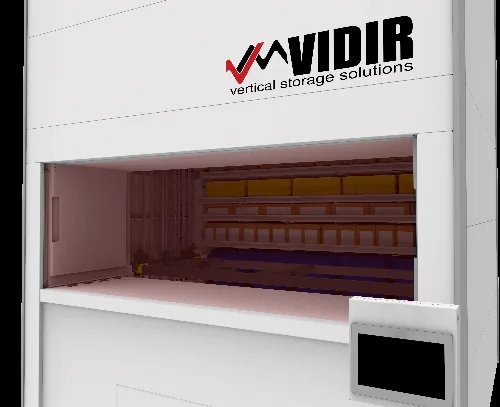 Vertical Lift ModulesAutomated goods-to-person storage that removes walking and recovers floor space.
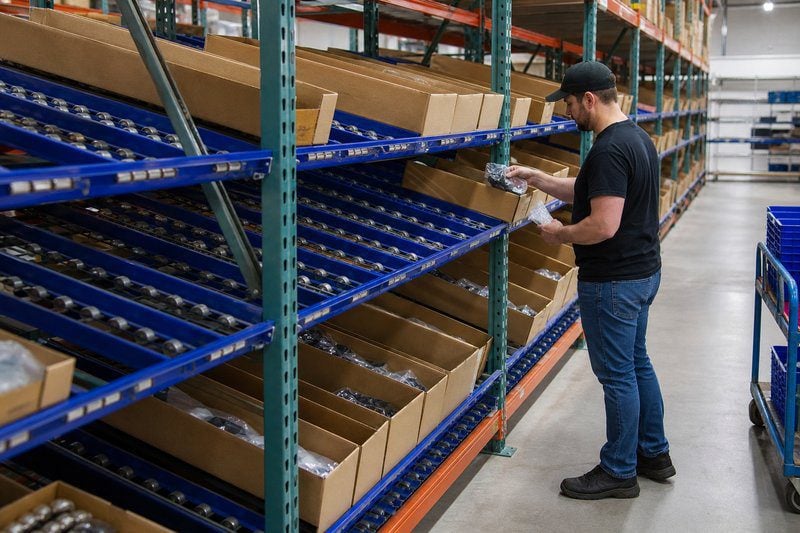 Carton Flow RackGravity flow lanes for high-velocity case picking, often a cheaper answer than conveyor.
 Mezzanines & CatwalksStructural platforms and pick modules that integrate directly with conveyor lines.
 Industrial Stairs & PlatformsOSHA-compliant stairs, crossovers, and work platforms for elevated conveyor access.
Conveyor Products and Related Guides
Conveyor lines, guarding and an integration project to help plan your system.
Warehouse Conveyor FAQs
What is the cheapest type of warehouse conveyor?
What is zero-pressure accumulation and do I need it?
How much faster is conveyor for trailer loading?
Can I convey product up an incline?
Do I need a WMS to use sortation?
What conveyor width should I specify?
Can you add to or modify our existing conveyor?
Is conveyor guarding an OSHA requirement?
How do I know whether conveyor will pay back?
Get a Conveyor System Design and Quote
Send us your product profile and peak-hour volumes and we will return a layout, a technology recommendation, and a firm installed price.