
Security Cages Inside Automated Conveyor and Sortation Systems
How a material handling systems integrator, Quintec Integration, specified a wire mesh security enclosure as part of a conveyor project so the automation stayed accessible and the inventory did not.
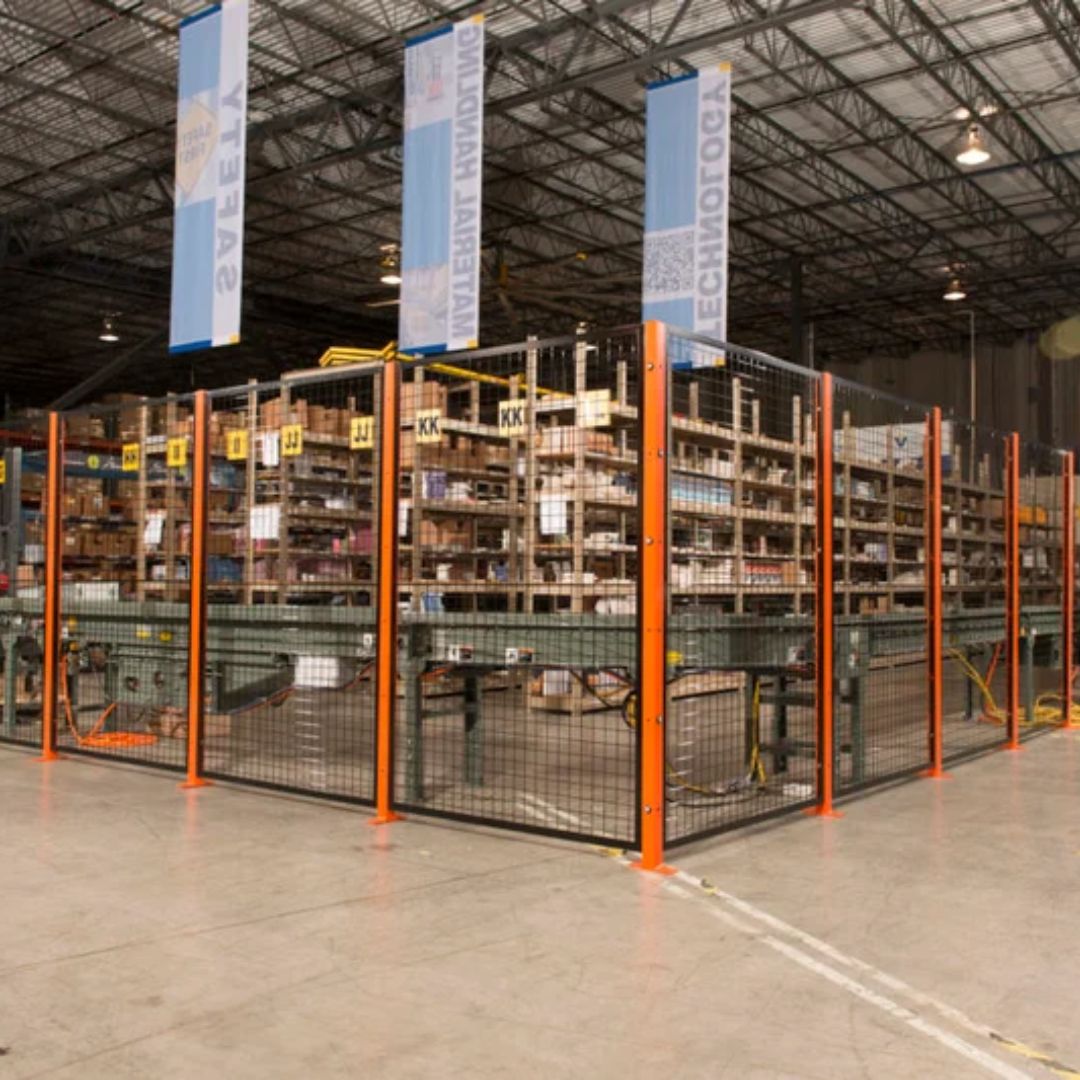
Quintec Integration
Conveyor and warehouse automation integrator, founded 1999, based in Waukesha, Wisconsin
The project
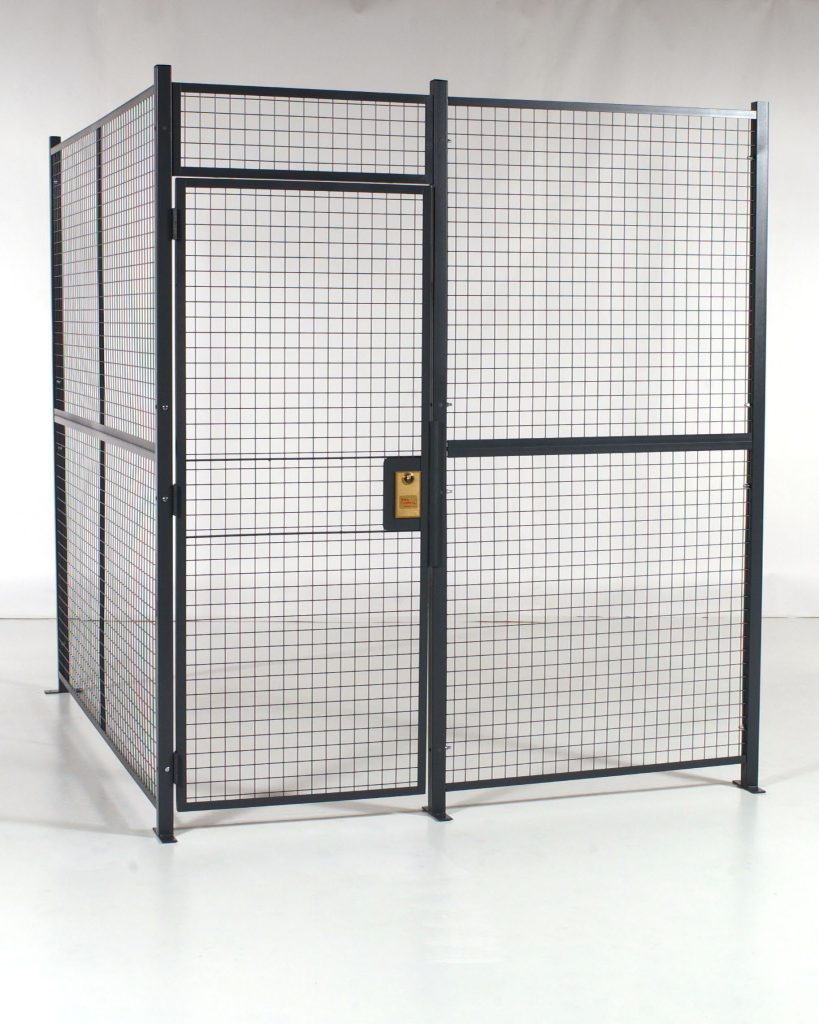
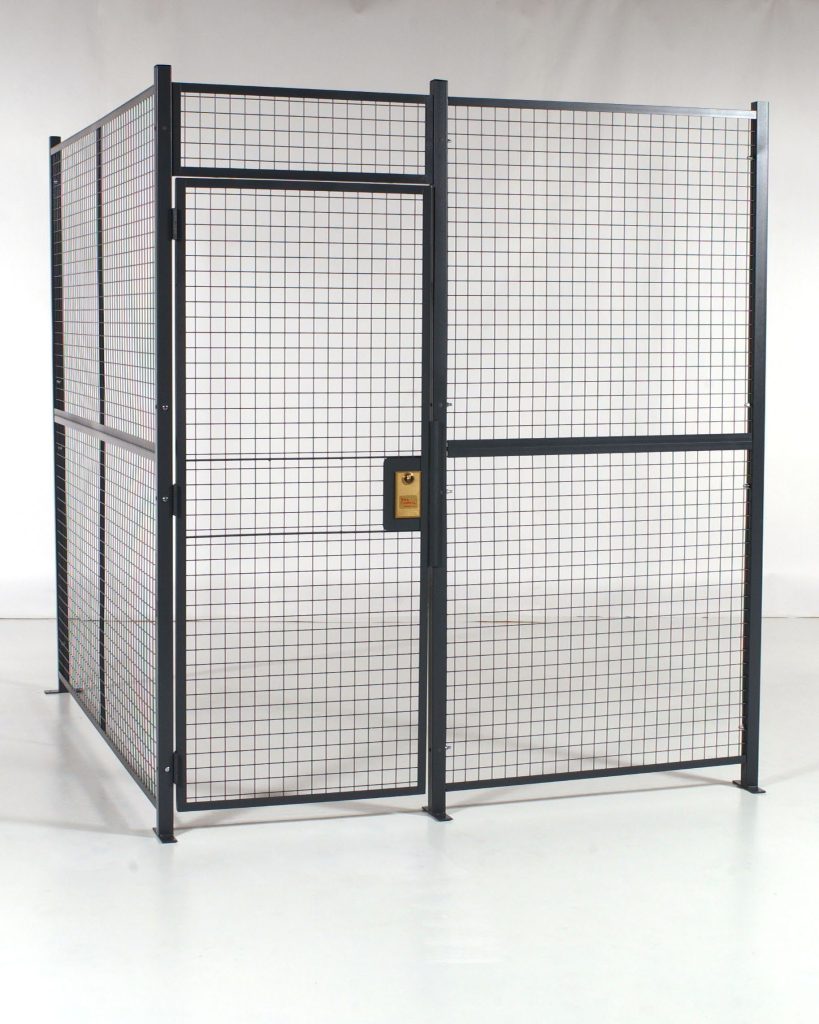
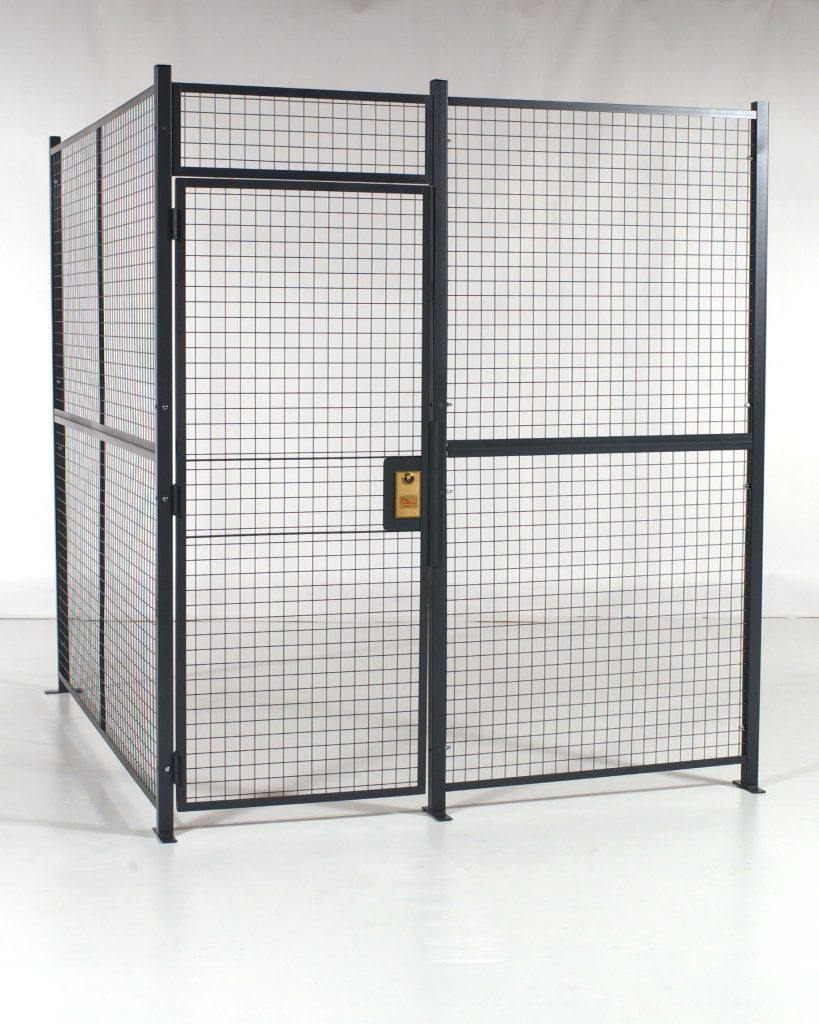
An enclosure supplied through a Quintec system project for an end customer in Hagerstown, Maryland
The problem
Automation, maintenance access and controlled inventory sharing one footprint
The answer
A mesh enclosure planned with the conveyor layout instead of around it afterward
An automation project creates a security problem it also has to solve
Quintec Integration is a material handling systems integrator. Founded in 1999 and based in Waukesha, Wisconsin, the company engineers, manufactures, installs and commissions conveyor and sortation systems — pallet handling, case handling, small-parts and parcel sortation — on greenfield and brownfield projects across the United States and Canada. Quintec bought this enclosure from us as part of a system project it was delivering for its own end customer at a facility in Hagerstown, Maryland.
That is a common pattern, and it explains why so many cages are ordered by integrators rather than by warehouse managers. When a conveyor line, sorter or goods-to-person cell lands in a building, it changes the geography of the floor. Aisles move. Walls that used to separate a stockroom from the working warehouse get demolished to make room for steel. Product that used to sit behind a door now travels on a belt through open space, and controls cabinets, drives and induct stations end up in places anyone can reach.
The fix is almost always a mesh enclosure, and it works best when it is drawn on the same layout as the conveyor. Our wire mesh security cage systems are used on projects like this because the panels are modular, they can follow an irregular footprint around equipment, and they can be extended or moved when phase two arrives.
What follows is the problem class, not one client’s floor plan. No dimensions, layouts or site details from this project are published here.
Machine guarding and security enclosures are not the same job
The first thing to settle on an automation project is which problem each barrier solves, because the two are frequently confused and the requirements are different.
A guard keeps people out of a hazard. Its job is to prevent contact with moving parts, nip points, transfers and robot envelopes. Opening height, mesh opening size and the distance from the hazard are governed by safety standards, and access points are usually interlocked so the equipment stops when a gate opens.
A security enclosure keeps material in. Its job is to control who can reach stock, tools, spares or customer-owned goods. It cares about door hardware, key control, visibility and how material is issued — not about stopping motion.
The same panel family can serve both, and that is exactly why the two get merged by accident. A guard panel with a padlock is not an inventory control. A security cage with an unswitched gate next to a sorter transfer is not a guard.
Where a barrier is genuinely protecting people from equipment, treat it as guarding and specify it that way; our wire mesh machine guarding pages and the notes on OSHA machine guarding requirements cover that side. Where it is protecting product from people, it is a security cage. Most automation projects need both, drawn separately.
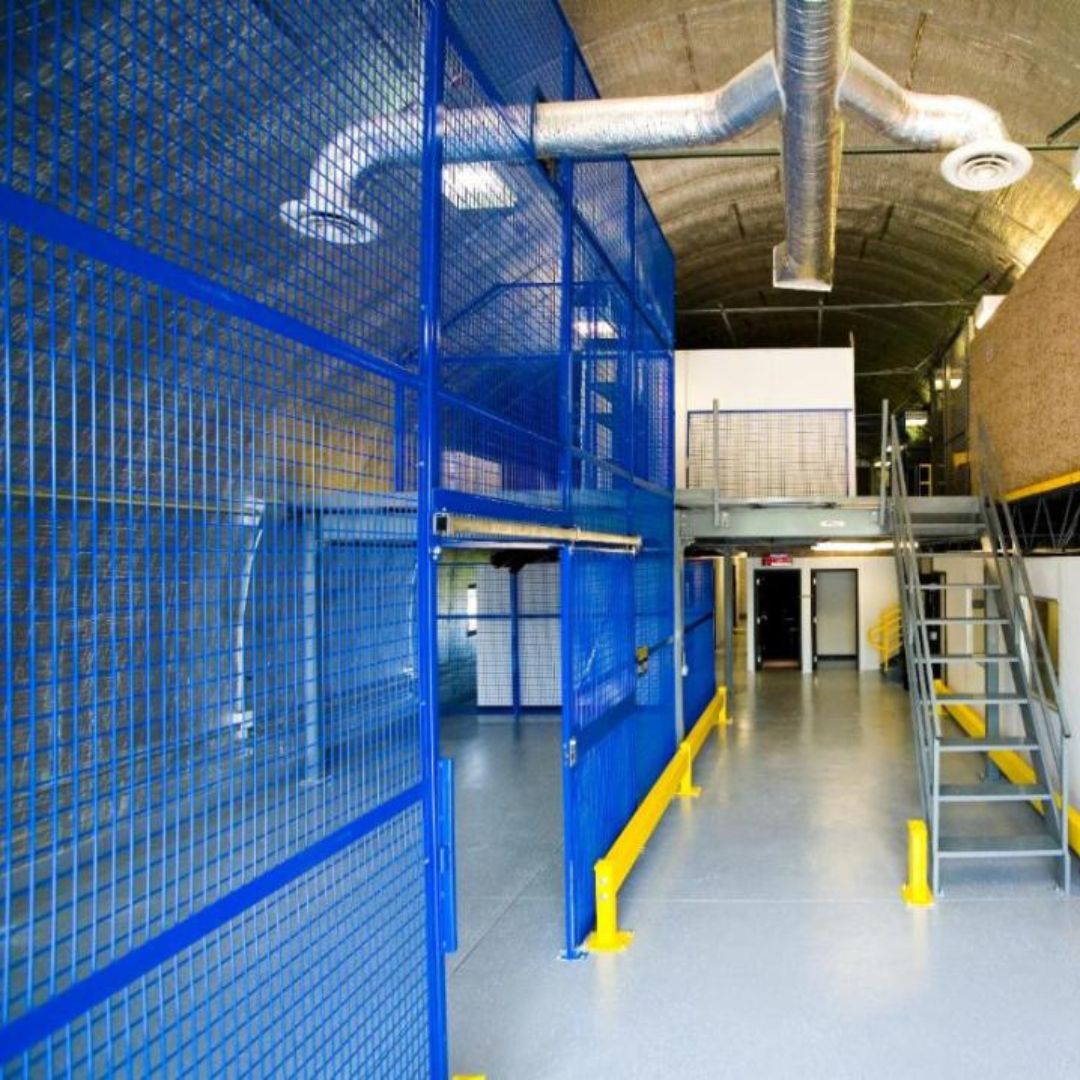
What actually goes inside the cage on an automated site
On a manual warehouse floor, the answer is usually high-value SKUs. On an automated site the list is longer, because the system itself has assets that walk.
| What | Why it ends up caged | Typical location |
|---|---|---|
| High-value or small-format SKUs | Easy to pocket, high resale, and now travelling on open conveyor | A caged pick or induct zone off the main line |
| Staged and consolidated orders | Once picked, a short is discovered by the customer, not the counter | Caged accumulation or staging lane before the dock |
| Conveyor spares and critical parts | Motors, gearboxes, photo-eyes, belts, PLC cards — the parts a line stops for | Maintenance spares cage near the mechanical room |
| Controls and drive cabinets | Not a theft target so much as a tampering and accident risk | Fenced controls corridor with its own door |
| Maintenance tools and calibration gear | Small, valuable, and worse, borrowed | Tool crib adjacent to the line |
| Returns and exception product | Should never merge back into good stock unexamined | Caged exception bay off the sort exit |
Bulk cartons, empty totes, pallets and packaging normally stay outside. Caging them adds door traffic without reducing any real risk, and door traffic is what kills a cage: an enclosure that gets propped open every hour has already failed.
Where the requirement is really a controlled parts room rather than a fenced zone on the floor, a tool crib layout is a better starting point, and for whole-aisle protection a warehouse security enclosure is the usual form.

Laying a cage out around conveyor instead of against it
A cage is cheap. Moving a conveyor to make room for one is not. Five layout rules save most of the trouble we see on integrator projects:
1. Draw the cage on the conveyor layout, not on the building plan. Panels have to clear supports, floor-mounted legs, drip pans, guard rails and the swing of every access gate the system already has.
2. Keep maintenance access on the outside where possible. If a technician has to enter the secure area to clear a jam at 2 a.m., the cage will be unlocked at 2 a.m. Put serviceable equipment outside the secure boundary, or give maintenance its own gate into a corridor rather than into the inventory zone.
3. Respect the flow, not the walls. The cage line should follow how product moves through the system so caged and uncaged product do not have to cross each other.
4. Leave room to work at the boundary. Panels tight against a belt make cleaning, belt tracking and roller changes miserable. A working clearance along the panel run is worth more than the floor it costs.
5. Plan the second phase now. Automation projects grow. A bolted framework with a straight run of panels and a spare door location turns the phase-two extension into a half day.
Openings: where conveyor crosses the cage line
The detail that separates a good automation cage from a bad one is what happens where the belt passes through the mesh. Every crossing is a hole in the boundary, and each one has a standard answer.
Two references are worth reading before you finalize openings: security cage service windows for issue-only traffic, and cage door types for the choice between hinged, sliding and double-leaf openings on tight aisles.
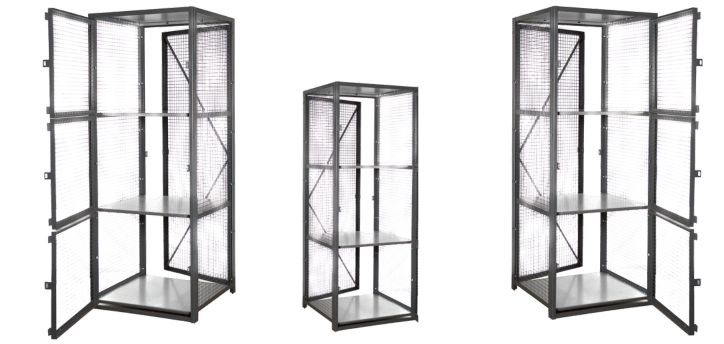
Specifying the enclosure
Specification on an automation project is driven less by security appetite and more by what the equipment and the building allow.
For the trade-off between a mesh top and an open top, see our guidance on security cage ceilings. Where the goal is to secure rack rather than build a room, pallet rack security enclosures are cheaper and less disruptive, and budget ranges are in the security cage cost guide.
Fire protection, egress and the controls conversation
Once it is standing, a wire enclosure is a building element, and on an automated site it also lives inside a safety system. Three conversations are worth having before the order, not after.
Sprinkler coverage. Mesh ceilings, in-rack storage and conveyor obstructions all change how water reaches the floor. NFPA 13 sets the design rules and the authority having jurisdiction applies them; confirm the arrangement with the fire protection engineer on the project.
Egress. A cage must never trap a person or block a required exit path. Doors on an egress route need hardware that opens from the inside without a key, and required aisle widths outside the cage still have to be there afterward. OSHA’s exit route rules in 29 CFR 1910.36 and 1910.37 are the floor, and the building code may be stricter.
Safety interlocks and lockout. If a gate gives access to moving equipment, it belongs to the machine safety design. Adding a security padlock to a guard door can defeat lockout procedure; adding a reader to a safety gate can confuse both systems. Decide which system owns each opening and label it that way.
Anchoring. Posts anchor to the slab, so slab thickness, post-tension cables, trench drains and seismic requirements all shape the detail — and on a live conveyor project, so does what is buried in the floor near the line.

Installing while the system runs
Enclosures on automation projects are almost never installed into an empty building. Either the conveyor is being commissioned around them or the site is already shipping. The sequence that works:
Phasing beats speed. Standing the spares and controls enclosure first typically removes the most urgent risk on a commissioning site, and the inventory zone can follow once the line is stable. Our cage installation guide covers site conditions, lead times and what a crew needs from the site to work efficiently.
Buying an enclosure through an integrator
A large share of the enclosures we ship go to integrators, contractors and OEMs who are delivering a wider system to their own customer. That changes a few practical things, and it is worth naming them.
We work either way: supply-only to the integrator’s crew, or supply and install alongside the mechanical installation. On this project the enclosure was supplied through Quintec as part of its system delivery.


Planning an enclosure for your own automated site
You do not need a finished design to get a useful quote. Five answers get you most of the way:
1. What has to be inside the boundary — product, spares, controls, tools or some combination. That decides whether you need one enclosure or two.
2. Where the conveyor crosses the line — how many crossings, what size, and whether anything larger than a case passes through.
3. Who needs access, and when — operators, maintenance, contractors and off-shift cleaning all argue for different door hardware.
4. What is above and below — mezzanines, catwalks, sprinkler heads, lighting, slab type, post-tension, trenches and floor drains.
5. What phase two looks like — even a rough answer keeps the framework and panel run extendable.
Send a conveyor layout or a rack plan with those five answers marked on it and we can size and quote an enclosure without a site visit in most cases.
Shop Pre-Configured Wire Mesh Cage Kits Online
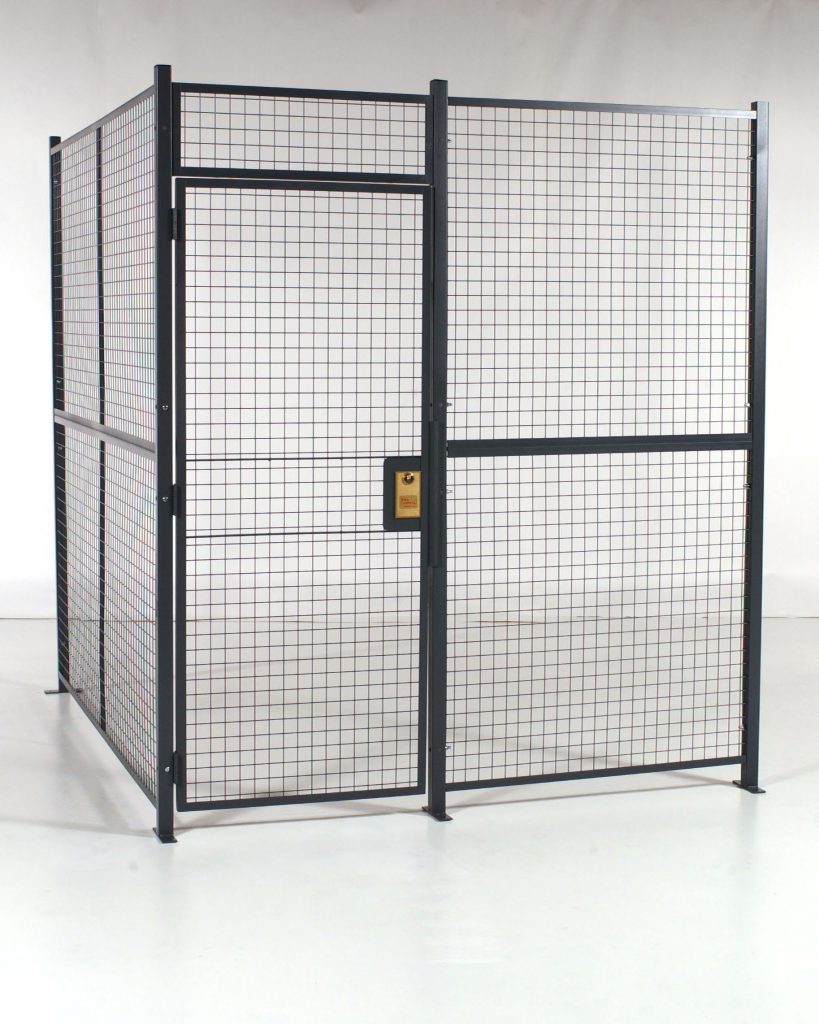
Standard-size welded wire cage kits, priced online, for smaller storage needs. Every kit still needs to be anchored to sound concrete — for tall, braced or engineered enclosures, request a quote with your building location and floor details.
Frequently asked questions
Can a security cage double as machine guarding?
How do you seal a cage where the conveyor passes through it?
Should the cage be installed before or after the conveyor?
Does a mesh enclosure interfere with sprinklers?
Can the enclosure be moved when we re-layout the system?
Do you supply to integrators and contractors, or only to end users?
What does an enclosure like this cost?
Looking for a project like yours? Browse more warehouse, distribution and retail security cage case studies, see all security cage case studies.
Caging an automated warehouse?
Send us your conveyor or rack layout and we will size the enclosure, detail the pass-throughs and quote it — supply-only or installed.