
Home › Security Cages › Cost Guide
Security Cage Cost Guide
Wire mesh security cages typically run $25–$55 per linear foot, with complete projects from about $3,000 for a small tool crib to $50,000+ for a large warehouse enclosure. Here is what actually drives the number, so you can budget before you get a quote.

$25–$55
Per linear foot, typical
15–25%
Installation as % of material
1–3 Days
Typical install duration
8–12 ft
Common panel heights
How Much Do Security Cages Cost?
For a standard woven wire mesh enclosure, budget $25 to $55 per linear
foot of panel, installed. That range is wide because a cage is an assembly, not a
product: the mesh style, panel height, door count, hardware, ceiling treatment, and site
conditions each move the number. Total project cost typically lands between $3,000 for a
small tool crib and $50,000 or more for a large multi-room warehouse enclosure.
The per-foot figure is useful for a first pass, but it stops being accurate as soon as
your project has an unusual feature — a floor-to-ceiling requirement, electronic access
control, a forklift door, or a partition that has to work around building columns and
sprinkler heads. This guide walks through each cost driver so you can build a realistic
budget and recognize whether a quote you receive is reasonable.

Linear feet, not square feet
Cages are priced by the perimeter you enclose, not the area inside. A long, narrow 200 sq ft cage costs meaningfully more than a square 200 sq ft cage because it needs more panel. If you are choosing between layouts, the squarer one is cheaper.
Cost by Cage Size
Size is the first-order driver. These are installed cost ranges for standard 8-foot woven wire construction with typical door hardware.
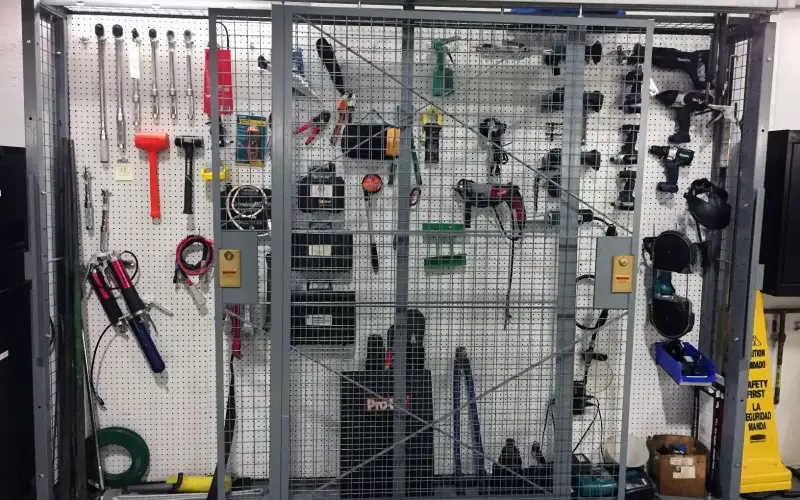 Small — Under 200 SF$3,000–$8,000 installed. Tool cribs, server closets, evidence rooms, and controlled-item storage. Usually one hinged door, standard 8-foot panels, and a single day of installation labor.
 Medium — 200 to 1,000 SF$8,000–$25,000 installed. DEA cages, tenant storage banks, and inventory cages. Often includes a sliding or double door for pallet access and may need ceiling panels.
 Large — 1,000+ SF$20,000–$60,000+ installed. Full warehouse partitions, data center cages, and multi-room enclosures. Engineering, seismic bracing, and coordination with sprinklers and lighting come into play.
Wire Mesh Gauge and Style
Mesh specification is where buyers most often either overspend or under-protect. Heavier
gauge welded wire genuinely resists attack better, and it costs more per panel. The
question is whether your threat justifies it.
Standard 10-gauge woven wire is the right answer for most general-purpose separation and
deterrence — keeping honest people honest, controlling access to a tool crib, and creating
an auditable boundary. Heavy 6- or 8-gauge welded wire is appropriate where a determined
attacker with hand tools is a realistic threat, or where a regulation effectively requires
it, as with DEA controlled-substance storage. Sheet-metal-backed panels add visual privacy
and cost more per panel while reducing airflow and sprinkler coverage.

| Mesh Type | Relative Cost | Security Level | Typical Use |
|---|---|---|---|
| 10-gauge woven wire | Baseline | Standard deterrence | General separation, tool cribs, tenant storage |
| 8-gauge welded wire | +15–25% | Elevated | High-value inventory, parts cages, evidence |
| 6-gauge welded wire | +25–40% | High | DEA storage, weapons, controlled items |
| Sheet-metal backed | +30–50% | Visual privacy | Cash rooms, records, sensitive operations |
| Expanded metal | +20–35% | High, low visibility | Anti-reach applications, secure corridors |
Panel Height
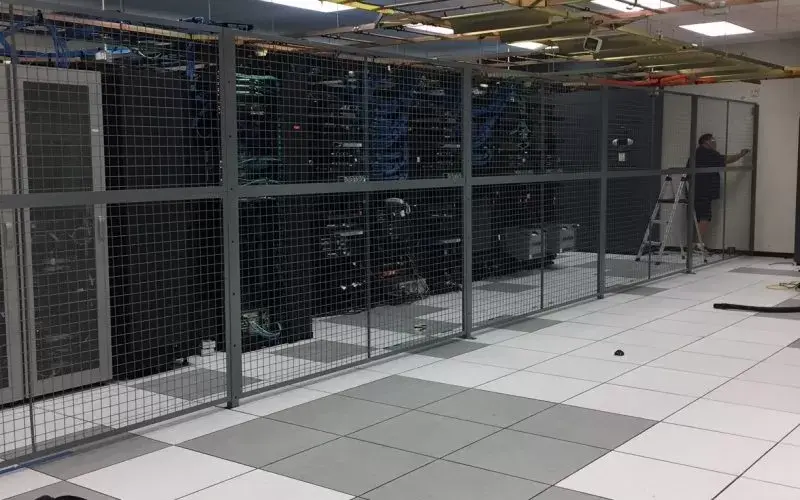
Height is a straightforward multiplier on panel cost, but the jump from a capped cage to
a floor-to-ceiling cage is a step change rather than an increment.
Eight-foot panels are the standard and the least expensive. Ten-foot panels typically add
15–20%. A ceiling panel or wire top adds material but is usually necessary — an open-top
8-foot cage next to a pallet rack is climbable, and auditors know it. True floor-to-ceiling
construction requires custom-height panels, deck attachment detailing, and coordination with
sprinklers, lighting, ductwork, and conduit, which is why it sits at the top of the cost
range.
- 8-foot panels — standard height, lowest cost
- 10-foot panels — typically 15–20% more than 8-foot
- Wire ceiling panels — required wherever the top is reachable
- Floor-to-ceiling — custom panels plus MEP coordination
- Partial-height — lowest cost, deterrence only, rarely compliant
Doors and Access Points
Doors are the most expensive square footage in any cage. They are also where budgets quietly inflate, because every additional access point adds hardware, a frame, and often an access control device. Fewer, better-placed doors is almost always the cheaper and more secure design.
| Access Type | Typical Cost Each | Notes |
|---|---|---|
| Hinged single door | $500–$1,200 | Lowest cost; needs swing clearance inside or out |
| Sliding door | $800–$2,000 | No swing clearance required; good in tight aisles |
| Double sliding door (forklift) | $1,500–$3,500 | Sized for pallet and lift truck access |
| Electronic access control | $1,000–$3,000 | Per door, including reader, strike, and power |
| Service window / pass-through | $300–$800 | Keeps traffic out of the cage entirely |
| Roll-up gate | $1,200–$3,000 | Where floor space forbids a swing or slide |
Access control and audit trail
If you need to know who entered and when — for DEA compliance, chain of custody, or
inventory shrink investigations — budget for electronic access control from the start.
Retrofitting a reader, strike, power, and network drop onto an installed cage door costs
more than specifying it up front, and it usually means running exposed conduit across a
finished panel.
A pass-through window is the most underused cost saver in cage design. If most
transactions are a person handing out a part, a window means fewer people inside the cage,
fewer doors, less access control hardware, and a cleaner audit trail.
Common Applications and Real-World Pricing
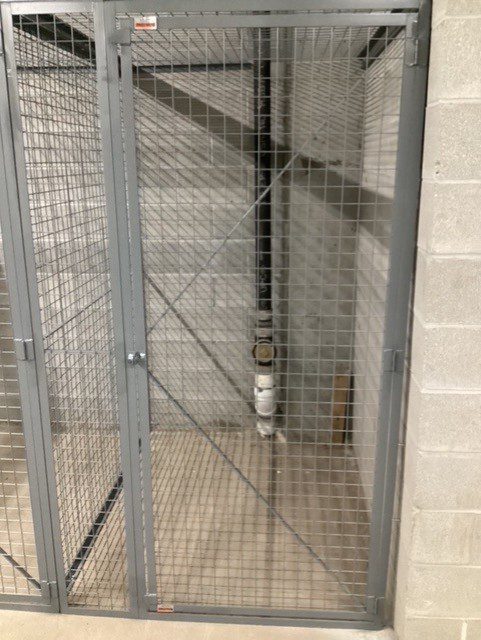
These installed cost ranges reflect projects of typical size and complexity. They assume a reasonably clear, level concrete floor and normal working hours.
| Application | Typical Size | Estimated Installed Cost |
|---|---|---|
| Tool crib | 100–300 SF | $4,000–$12,000 |
| Server cage / data center | 100–500 SF | $5,000–$20,000 |
| DEA drug storage cage | 50–200 SF | $4,000–$15,000 |
| Tenant storage (per unit) | 25–75 SF | $800–$2,500 per unit |
| Warehouse partition | 500–5,000 SF | $15,000–$60,000 |
| Evidence room | 200–800 SF | $8,000–$30,000 |
| Pallet rack enclosure | Per bay | $1,200–$3,500 per bay |
| Machine guarding enclosure | 50–400 SF | $3,000–$14,000 |
Why DEA cages cost more per foot
Controlled-substance storage requires heavier gauge welded mesh, a secure ceiling, hardened door hardware, and an access audit trail — on a very small footprint. The fixed costs get spread across few linear feet, so the per-foot number looks high even though the total is modest.
Installation Costs
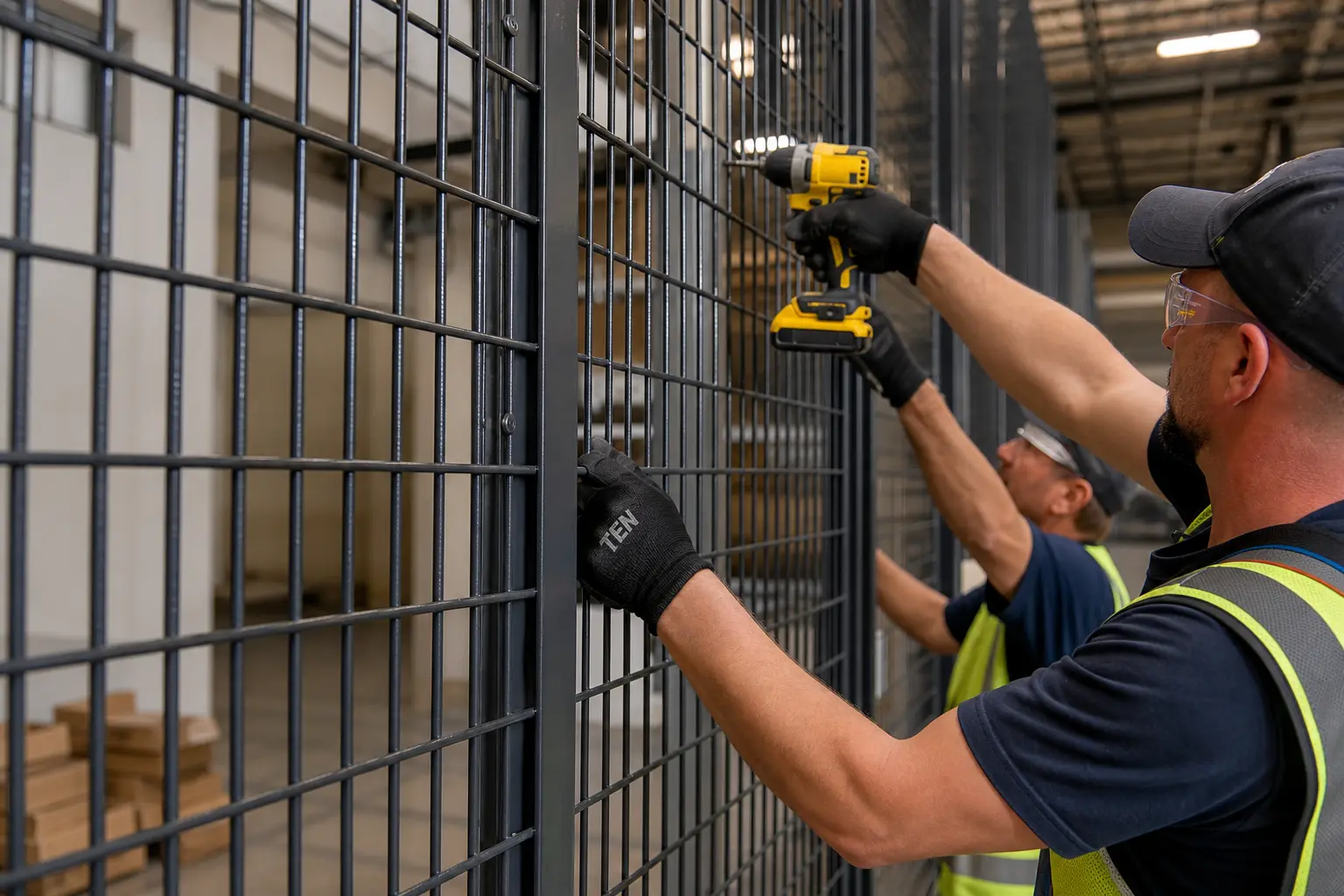
Professional installation typically adds 15–25% to material cost. That
covers layout, anchoring panels to the slab, leveling and plumbing the runs, hanging and
adjusting doors, and installing hardware. Most security cage projects install in one to
three days.
Installation can climb above that range for predictable reasons: after-hours or weekend
work to avoid disrupting operations, a floor that needs leveling or has post-tension cable
requiring scanning before anchoring, panels that have to be carried up stairs or into a
mezzanine, and layouts that weave around columns, drains, and low ductwork. None of these
are surprises if the site is walked before the quote — which is exactly why we walk it.
- Layout and marking from approved drawings
- Mechanical anchoring to the concrete slab
- Leveling and plumbing of all panel runs
- Door hanging, adjustment, and hardware installation
- Punch walk and adjustment before turnover
How to Reduce Security Cage Cost Without Losing Security
There is a lot of room to save on a cage project, and almost none of it involves buying
lighter mesh than your threat requires. The savings are in geometry, standardization, and
scope discipline.
Use building walls as cage walls wherever possible — a cage tucked into a corner needs
two sides instead of four. Keep the footprint square rather than long and narrow. Standardize
on stock panel widths and heights instead of custom sizes. Reduce door count and add a
pass-through window instead. Combine multiple small cages into one project so freight,
mobilization, and installation setup are shared. And specify the mesh to the actual threat,
not to the worst case you can imagine.
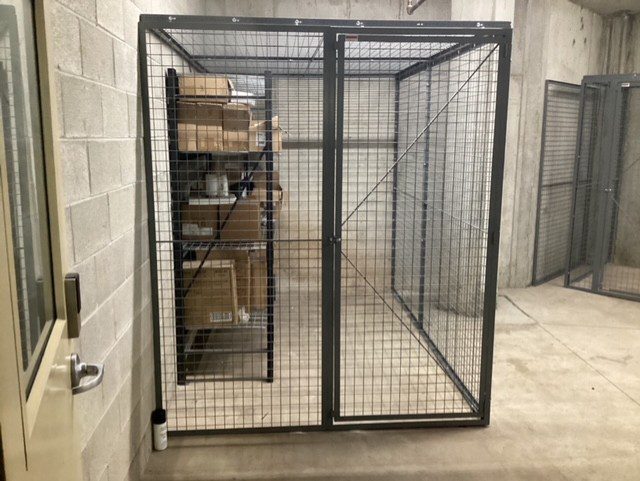
- Place cages in corners to borrow two existing walls
- Prefer square footprints over long, narrow ones
- Standardize on stock panel widths and 8-foot heights
- Minimize doors; add a pass-through window instead
- Bundle multiple cages into one mobilization
- Match mesh gauge to the real threat, not the worst imaginable one
- Schedule during normal hours if operations allow
Explore Security Cage Solutions
 Security Cages & PartitionsThe full line of wire mesh enclosures, partitions, and secure storage systems.
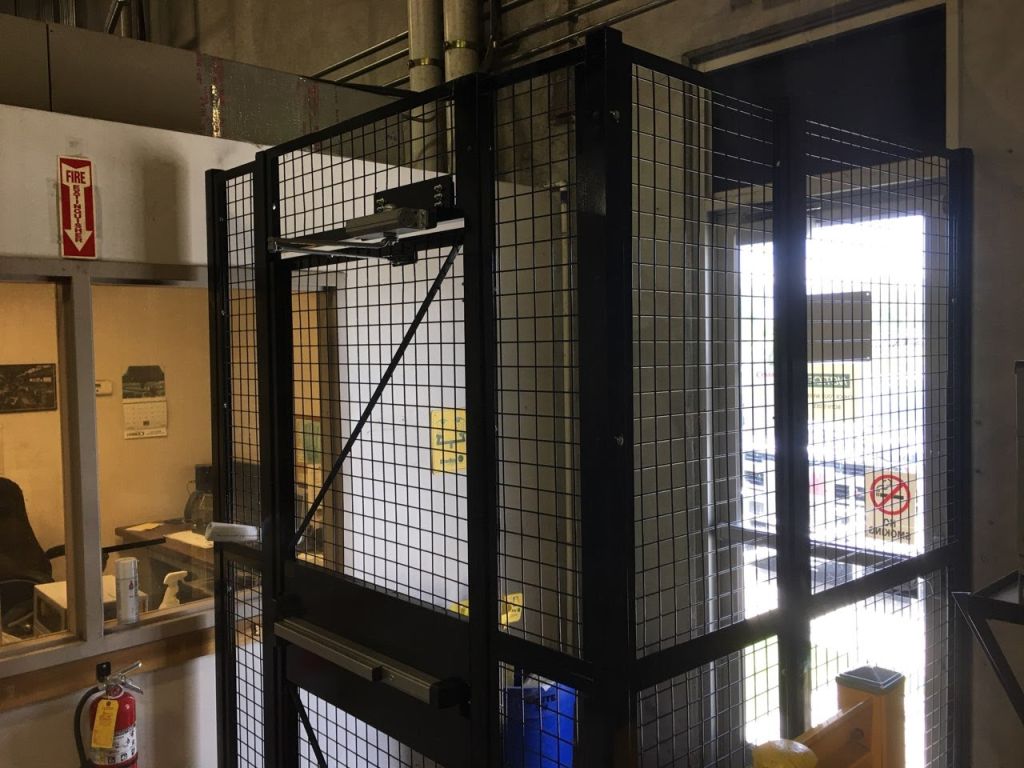 Tool Cribs & Parts CagesControlled tool and parts storage with pass-through windows and access control.
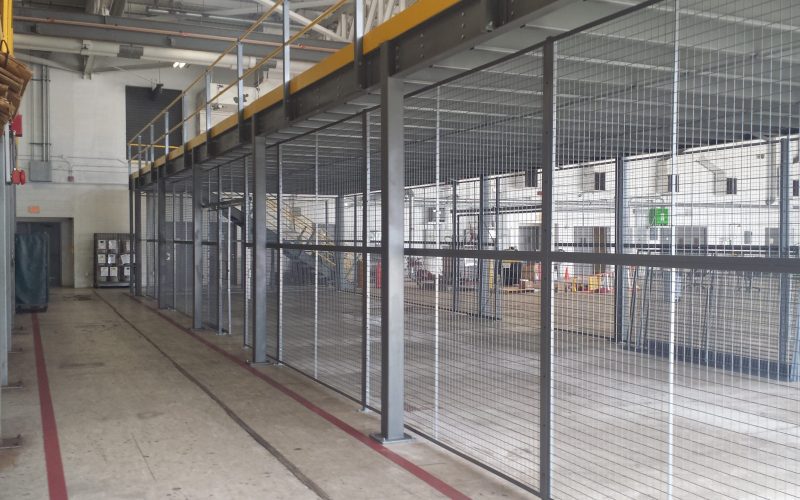 Server & Data Center CagesColocation and equipment cages with floor-to-ceiling options and audit trails.
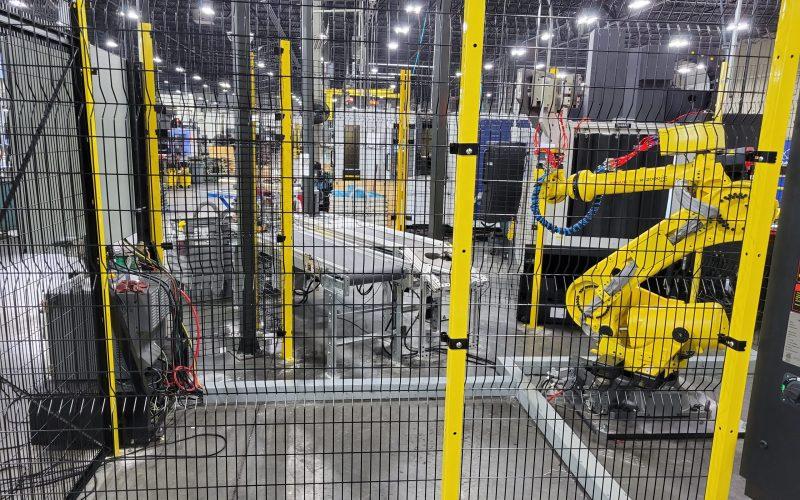 Machine GuardingOSHA-compliant wire mesh guarding for robotic cells and moving equipment.
Security Cage Cost FAQs
What is the cheapest way to build a security cage?
Do I need a ceiling on my security cage?
How much does installation add?
Is a permit required for a security cage?
Will a cage affect my sprinkler coverage?
How long does a security cage take to install?
Can I add to a cage later?
How do I get an exact number for my project?
Shop Online at MaterialHandling-USA.com
Need barriers, lockers, or secure storage you can buy today? Our e-commerce store carries stocked security and access control products with online ordering.
Get an Exact Security Cage Quote
Every cage is custom sized. Send us your dimensions and what you are protecting, and we will return a detailed quote with layout drawings — no obligation.