
Used vs New Security Cages: An Honest Comparison
Used wire mesh cages look cheap per panel. Here is where those savings usually go during teardown and installation, when reusing a cage you already own does make sense, and how a few photos can settle the question quickly.
Not sure? Call (800) 326-4403 and send pictures of what you have.

Teardown
Bends frames and shears bolts
Fit-up
Installer hours add up fast
Compatibility
Brands rarely mix
Photos first
The quickest way to decide
The short answer
In our experience, the savings on a used security cage are usually used up by installation. Panels and posts rarely fit well after they have been taken apart, and the installer time spent straightening, re-drilling and fitting them often costs more than installing new parts that bolt up the first time. Reusing a cage you already own can work, but even then new is sometimes the cheaper finished job. The fastest way to know is a quick call to our sales team with pictures of what you have.
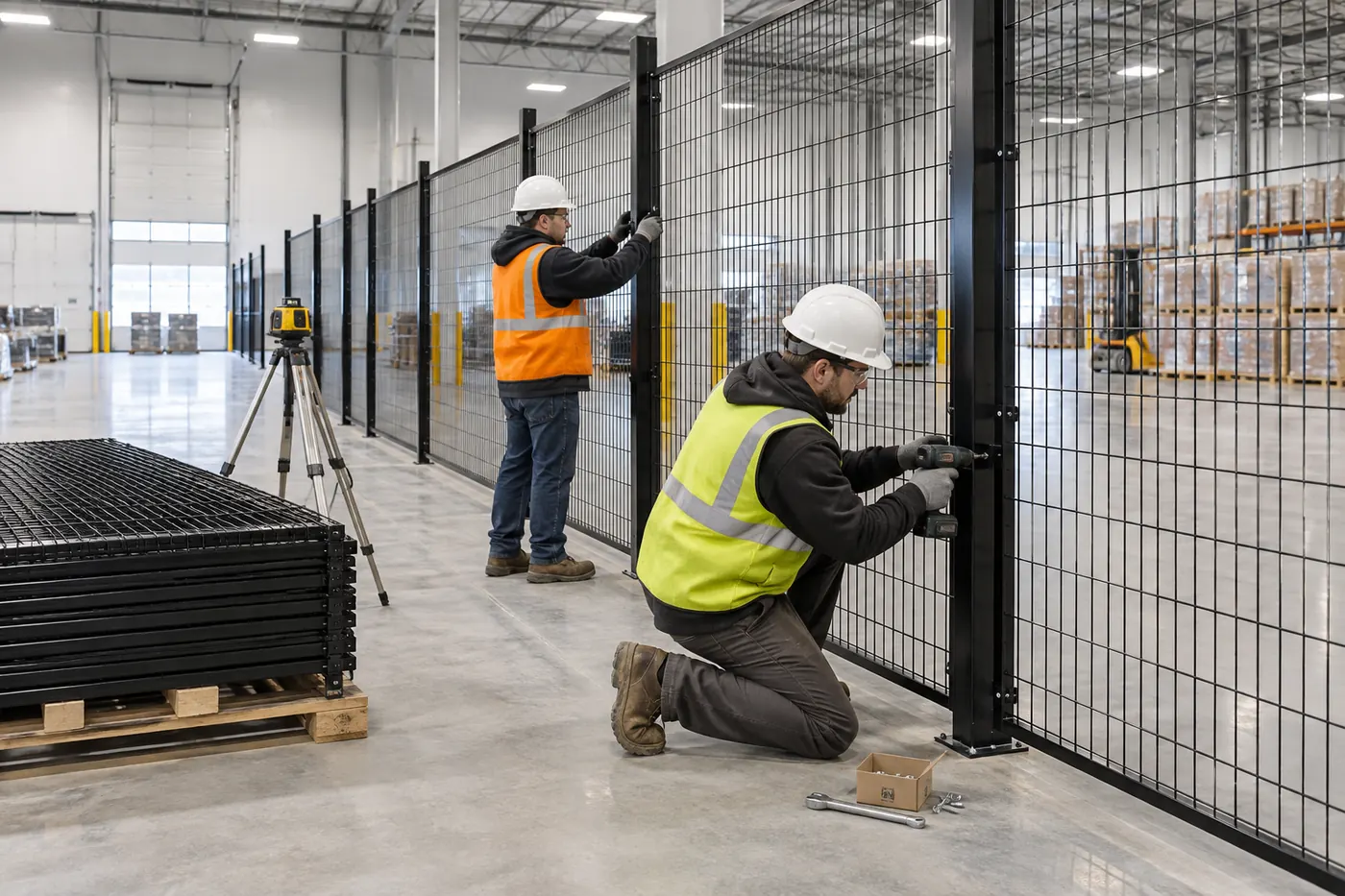
That is not a sales line against used equipment. Used cages are genuinely useful in a few situations, and we will say so when that is the case. The point is that the purchase price is only one line of the total. A security cage is an assembly that has to be anchored, aligned, latched and locked, and every part that does not fit cleanly turns into labor.
If you are early in the process, our wire mesh security cages overview covers the options, and the security cage cost guide explains what drives the price of a new installed cage.
Shop Pre-Configured Wire Mesh Cage Kits Online
Standard-size welded wire cage kits, priced online, for smaller storage needs. Every kit still needs to be anchored to sound concrete — for tall, braced or engineered enclosures, request a quote with your building location and floor details.

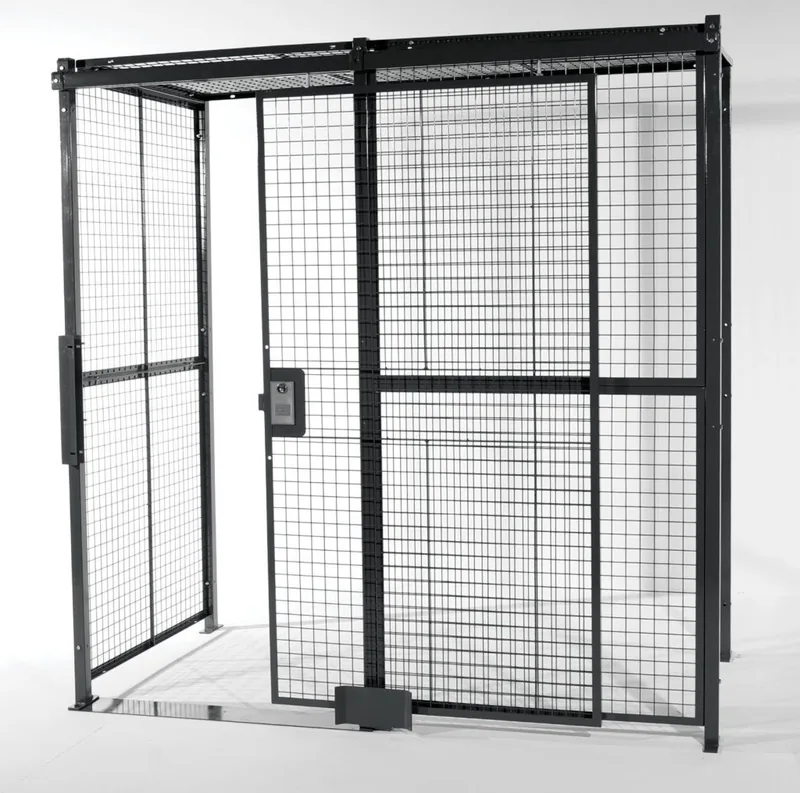
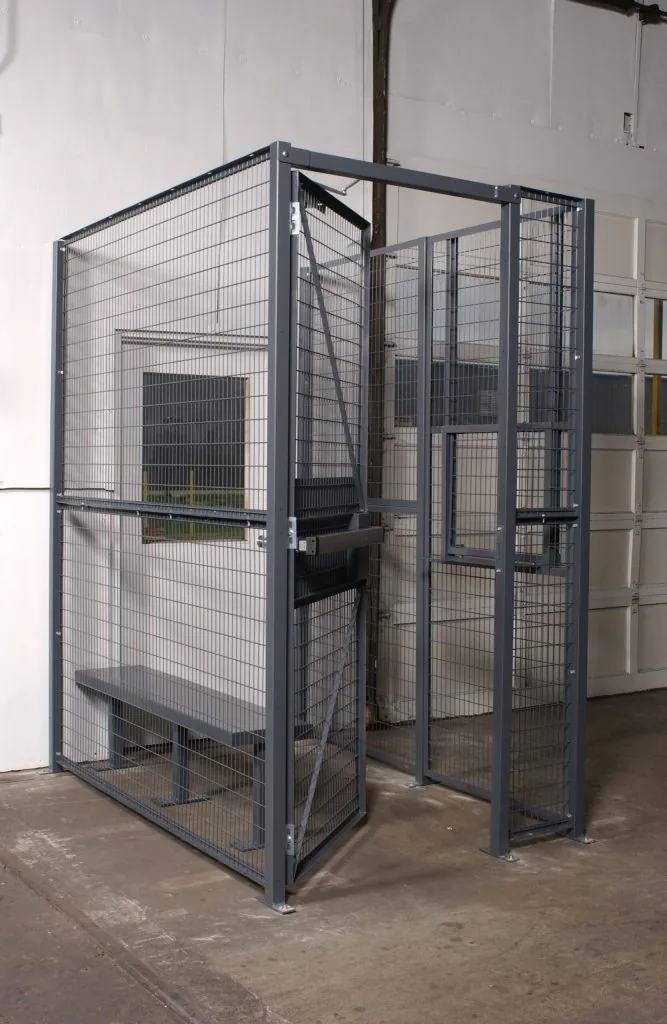
Prices are the current online prices. See all security cage kits · Need a custom size? Request a security cage quote.
Where the savings on a used cage usually go
1. Teardown damage
Cages are built to stay put. Taking one apart means cutting or backing out floor anchors, unbolting panels that have sat under load for years and lowering long sections without a plan. Frames bend at the corners, bolts strip or shear, base plates get pried off the slab and hinge pins get forced. None of that shows in a listing photo of a stacked pallet of panels.
2. Fit-up time on site
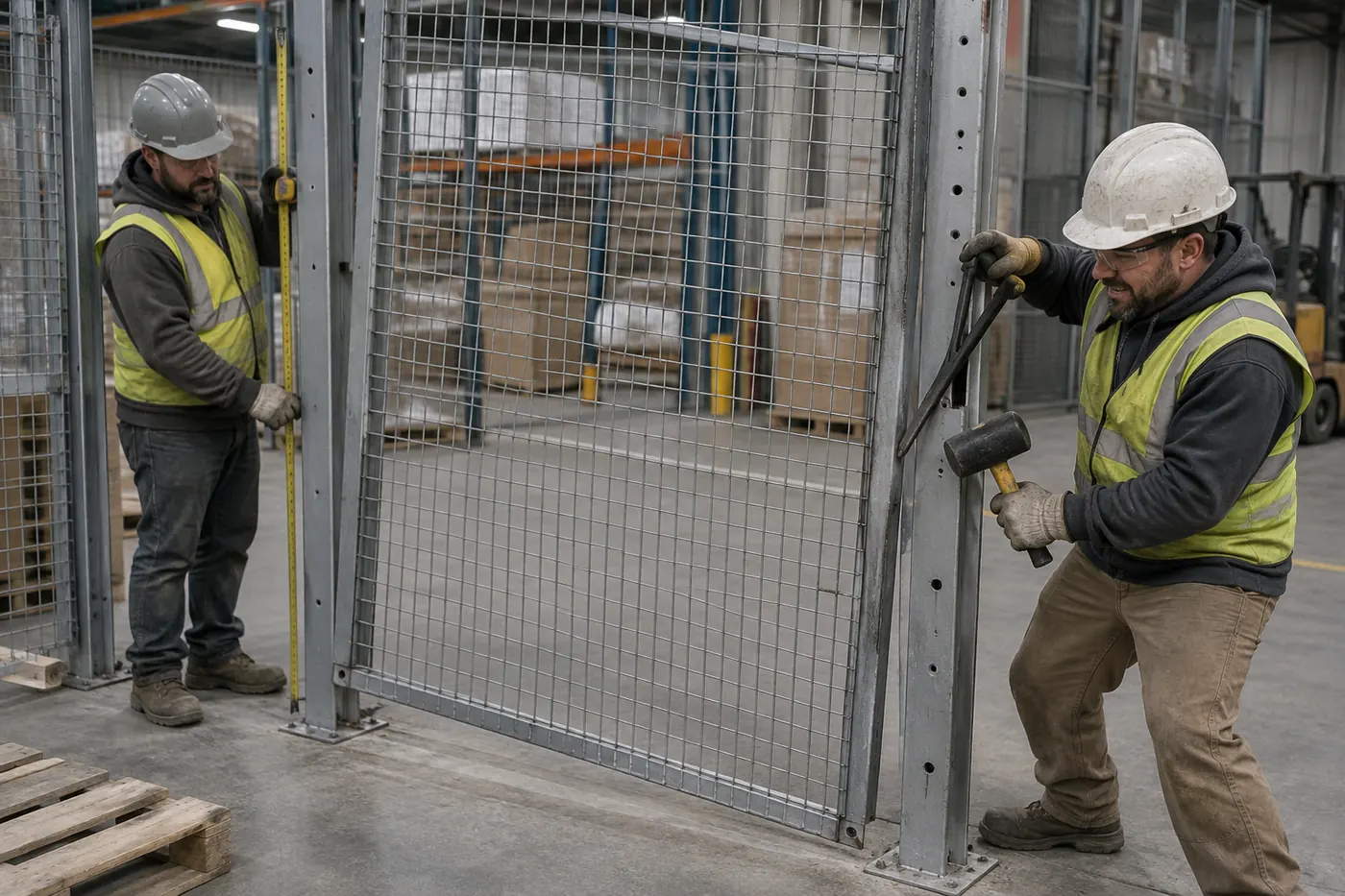
A slightly bent panel will not drop between two posts. Installers end up prying, shimming, re-drilling holes and making extra trips for hardware. A new partition goes up in a predictable sequence; a used one goes up one problem at a time, and that is where the budget goes.
3. Parts that do not match
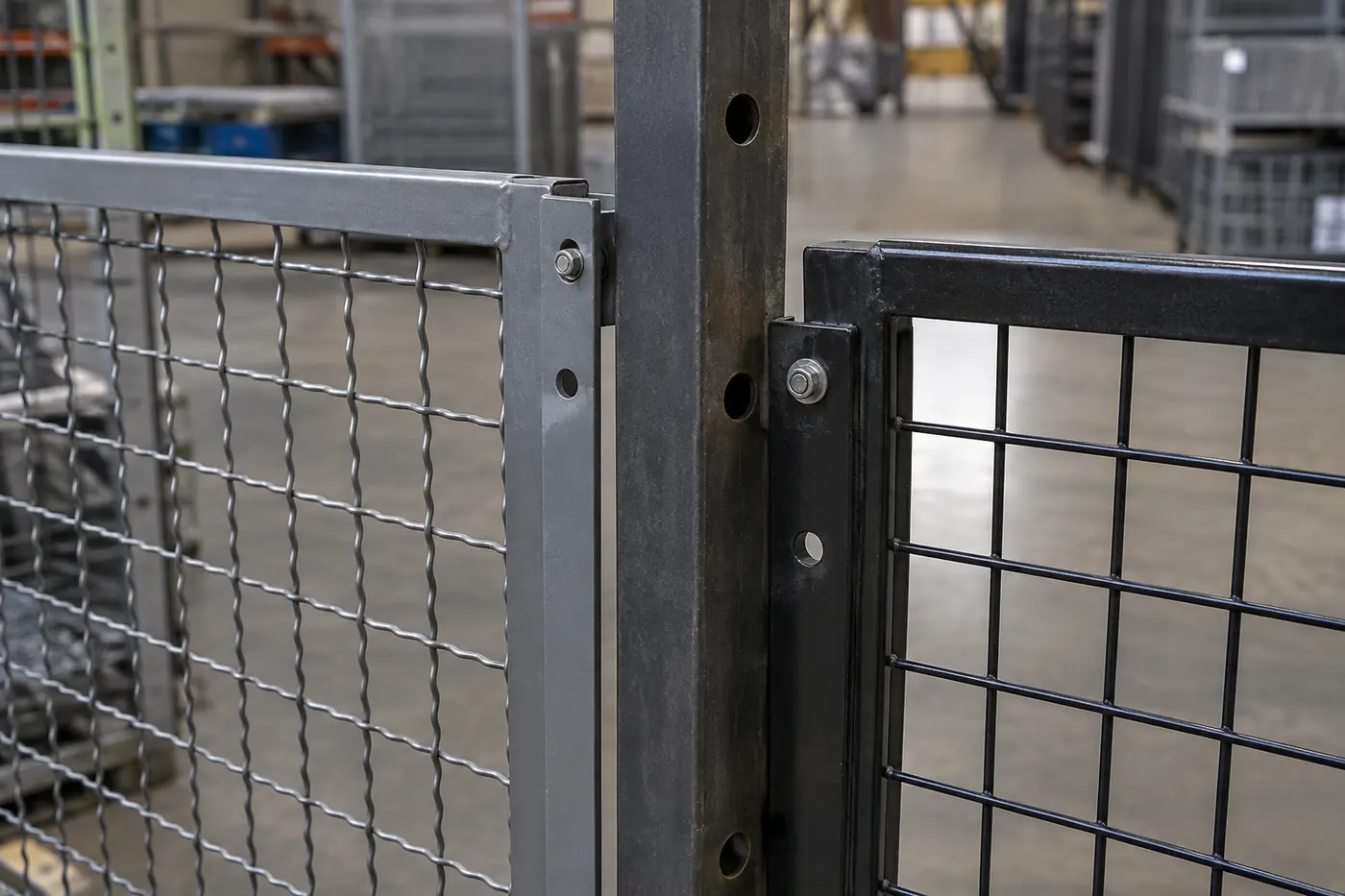
Every manufacturer uses its own panel heights, frame sizes, hole patterns and post spacing. A load of used panels often mixes brands or generations, and even same-brand parts were cut for someone else’s room. Your new layout rarely lands on the old bay widths, so filler panels or custom pieces end up on the order anyway.
4. Missing pieces
Doors, transoms, lock boxes, track and trolleys, ceiling supports and the right hardware are the first things to go missing. They are also the parts that matter most; see security cage doors and locks and access control for what a working opening needs.
Used vs new security cages, side by side
| Used / reclaimed cage | New cage | |
|---|---|---|
| Purchase price | Lower per panel | Higher per panel |
| Condition | Unknown until it arrives; teardown damage common | Known; parts arrive square and complete |
| Fit to your room | Built for another room; bay widths rarely match | Laid out to your measurements |
| Installer time | Often higher — straightening, re-drilling, shimming | Predictable — parts bolt up as drawn |
| Doors and locks | Often missing, mismatched or worn | Specified for your access and egress needs |
| Anchoring and engineering | Base plates and anchors may be damaged; little documentation | Anchors included; layout and bracing can be documented |
| Expansion later | Hard to match parts | Same system can be extended |
| Total installed cost | Often close to or above new once labor is counted | Known up front |

Tall cages and ceilings magnify the problem
On an 8 ft wall, a slightly bent panel is an annoyance. On a cage that runs to the roof deck or carries a mesh ceiling, every part has to line up over a much greater height, installers work from lifts, and the posts may need bracing. Misaligned used parts at that height cost lift time as well as labor, and an engineered ceiling or bracing plan is hard to base on parts with an unknown history.
That is why we steer tall, covered and regulated cages toward new components even when the customer already owns some equipment — the reused parts can often go into a simpler wall elsewhere in the building instead.
The row that decides most projects is installer time. Labor is billed by the hour, and used parts turn a planned installation into problem solving. Our security cage installation page explains what a normal install involves, so you can see where used parts add steps.
When used or reused equipment can make sense
Reasonable candidates
- You already own the cage and it is moving within the same building, to a similar layout
- The parts are all one brand and one generation, with doors and hardware complete
- The wall is short, low and simple — no ceiling, no tall runs, no access control
- The use is temporary and appearance does not matter
- Spare panels of the same system are needed to repair or extend an existing cage
Usually better new
- Controlled-substance, evidence or other regulated storage where the build has to be documented
- Cages with mesh ceilings, tall runs or seismic bracing
- Electronic access control or any cage people work inside
- Layouts that have to fit columns, sprinklers and aisles exactly
- Anything bought sight unseen from a listing photo
Even in the “reasonable” column, it is worth pricing both. Owned equipment can often be reused, and some jobs still come out cheaper with new parts once fix-up time is counted. The honest answer depends on the parts in front of you, which is why photos matter.
Reusing a cage you already own
Moving an existing cage is the most common used-cage question we get. It can work well when the parts are in good shape and the new space suits the old layout. A few things decide it:
Inventory what you have
Count panels by size, posts by height and type, doors, ceiling panels and lock hardware.
Check condition
Look for bent frames, cracked welds, damaged base plates and worn hinges or trolleys.
Compare to the new room
Measure the new space; note columns, sprinklers, exits and the floor slab.
Price both ways
We price reuse plus new fill-in parts against a new cage, including labor, so you see the real difference.
Plan the teardown as carefully as the install: label panels by position, bag hardware by bay, and keep doors and their posts together. New floor anchors are normal at the new site — see our security cage anchoring guide — and the maintenance and inspection guide covers what to check on older parts.
If you are buying a used cage anyway: checklist
- Ask for the manufacturer and model, and confirm every part is the same system
- Get a full parts list: panel sizes, post heights and types, doors, transoms, ceiling panels, hardware
- Ask how it was dismantled, and request close photos of panel corners, base plates and door hinges
- Confirm the door hardware and locks are included and work
- Check the panel height against the height you need — stacked panel heights differ by brand
- Budget for new anchors, touch-up paint, freight and extra installer time
- Compare the total installed cost against a new quote before committing
Send photos and get a straight answer
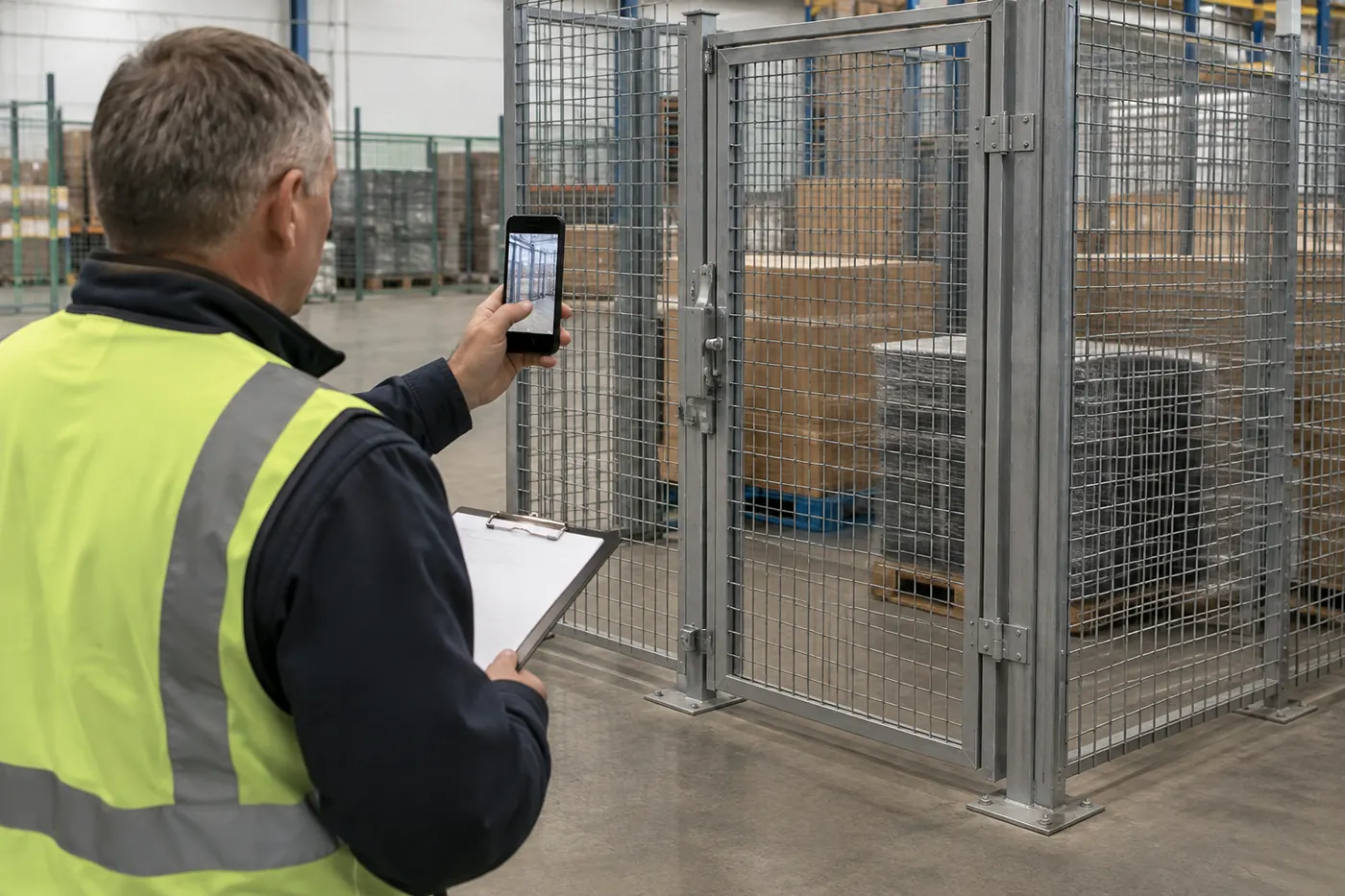
A few pictures tell us more than a description. Send them to our sales team and we will tell you whether the equipment is worth reusing, what it would need, and what new would cost for the same space:
- One full panel, front and back, showing the frame corners
- A post with its base plate and the floor around it
- Each door, open and closed, plus the lock or hasp
- Any label, stamp or tag showing the manufacturer
- A tape measure across a panel and up a post
- A sketch or photo of the room the cage needs to fit
For new parts, some common sizes are in stock at select manufacturers, subject to confirmation; most partitions are made to the layout.
New options at different budgets
- Pre-configured kits — standard sizes priced online in our security cage kits category
- Lockable cage kits — see lockable storage cages for sizes and lock choices
- Chain link cages — a lower-cost option for large, simple areas (chain link storage cages)
- Modular wire partitions — laid out to your room from Wire Crafters or SpaceGuard
- Plan it yourself — sketch a layout in the free security cage configurator
Get a free quote
Tell us what you are storing, the room size and your timeline. A project specialist will follow up with layout options and pricing. Prefer to talk? Call (800) 326-4403.
Used vs New Security Cage FAQs
Are used security cages cheaper than new?
Can I reuse my existing security cage in a new building?
Do panels from different cage manufacturers fit together?
What gets damaged when a cage is taken apart?
Is a used cage OK for DEA or evidence storage?
Does MH-USA sell used security cages?
What should I send to get an answer quickly?
Have a used cage, or thinking about one?
Call our sales team with pictures of what you have. We will tell you honestly whether reuse makes sense and what new would cost for the same space.