
Machine Guarding Systems — Industrial Safety Enclosures
OSHA-compliant machine guarding panels, robot cell enclosures, conveyor guards, and CNC safety barriers. Custom-engineered wire mesh and polycarbonate systems designed to protect your workforce and meet federal safety standards.
Talk with a specialist. Call (800) 326-4403 or Email Sales@MH-USA.com

Why Machine Guarding Matters
Protecting workers from mechanical hazards is not optional — it is a federal requirement and a smart business decision.

Machine guarding is one of the most critical safety measures in any manufacturing, warehouse, or industrial facility. According to OSHA, inadequate machine guarding is consistently among the top 10 most frequently cited violations, with thousands of preventable injuries occurring every year from unguarded machinery. Amputations, crush injuries, and lacerations are the most common consequences of missing or inadequate guarding.
At Material Handling USA, we design and supply complete machine guarding systems that meet or exceed OSHA 29 CFR 1910.212 and ANSI/RIA 15.06 standards. Our solutions include wire mesh panel enclosures, polycarbonate barrier systems, interlocked safety doors, and perimeter guarding for robotic work cells, CNC machines, conveyor lines, and industrial presses.
Every system is custom-engineered to fit your specific equipment layout, floor plan, and production workflow. We work with leading manufacturers to deliver heavy-duty guarding solutions that provide maximum protection without restricting operator visibility or material flow. Whether you need a single robot cell enclosure or a facility-wide perimeter guarding system, our team handles the entire process from design through installation.
Machine Guarding Product Types
From standard wire mesh panels to complete robotic cell enclosures, we supply the right guarding system for every industrial application.


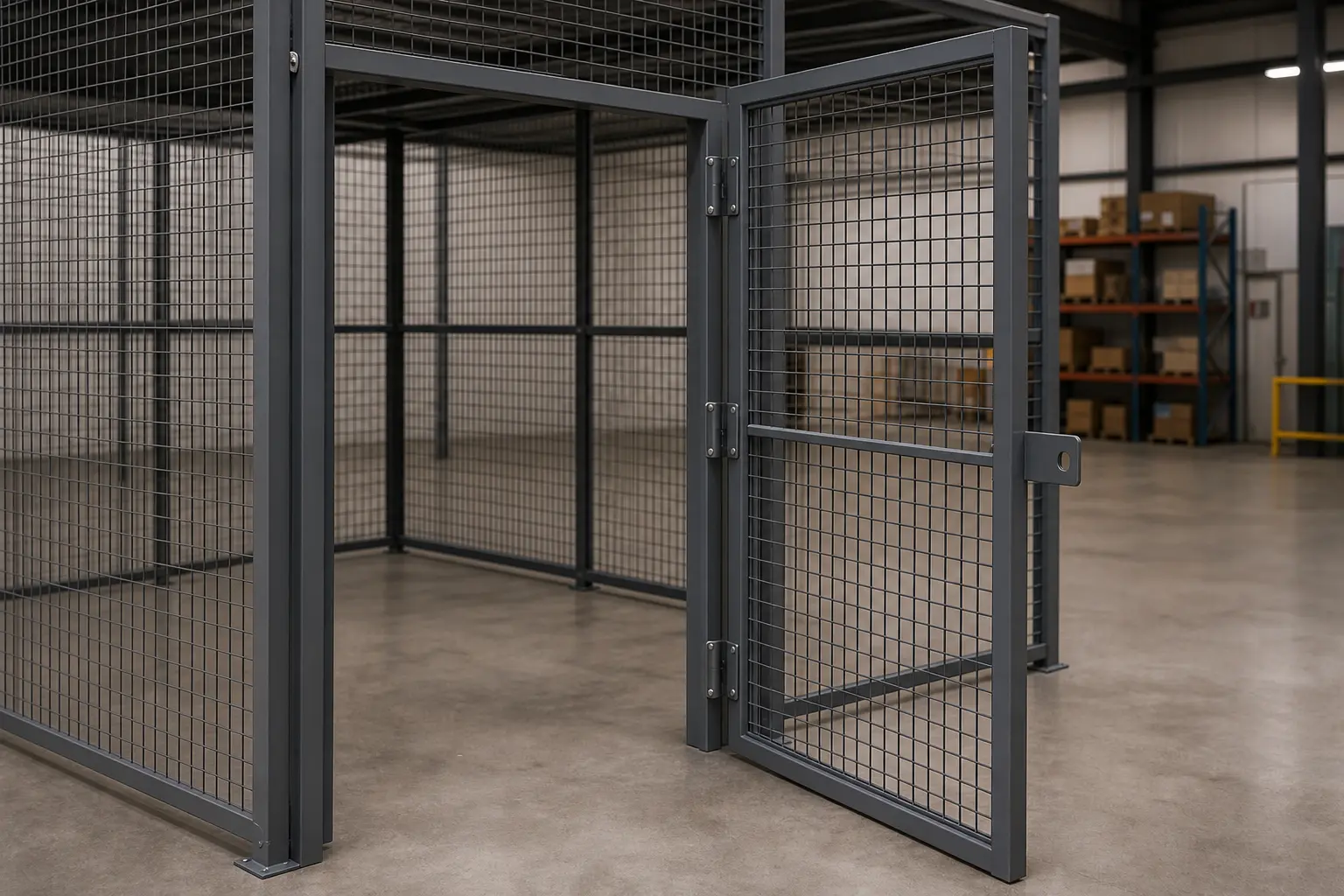
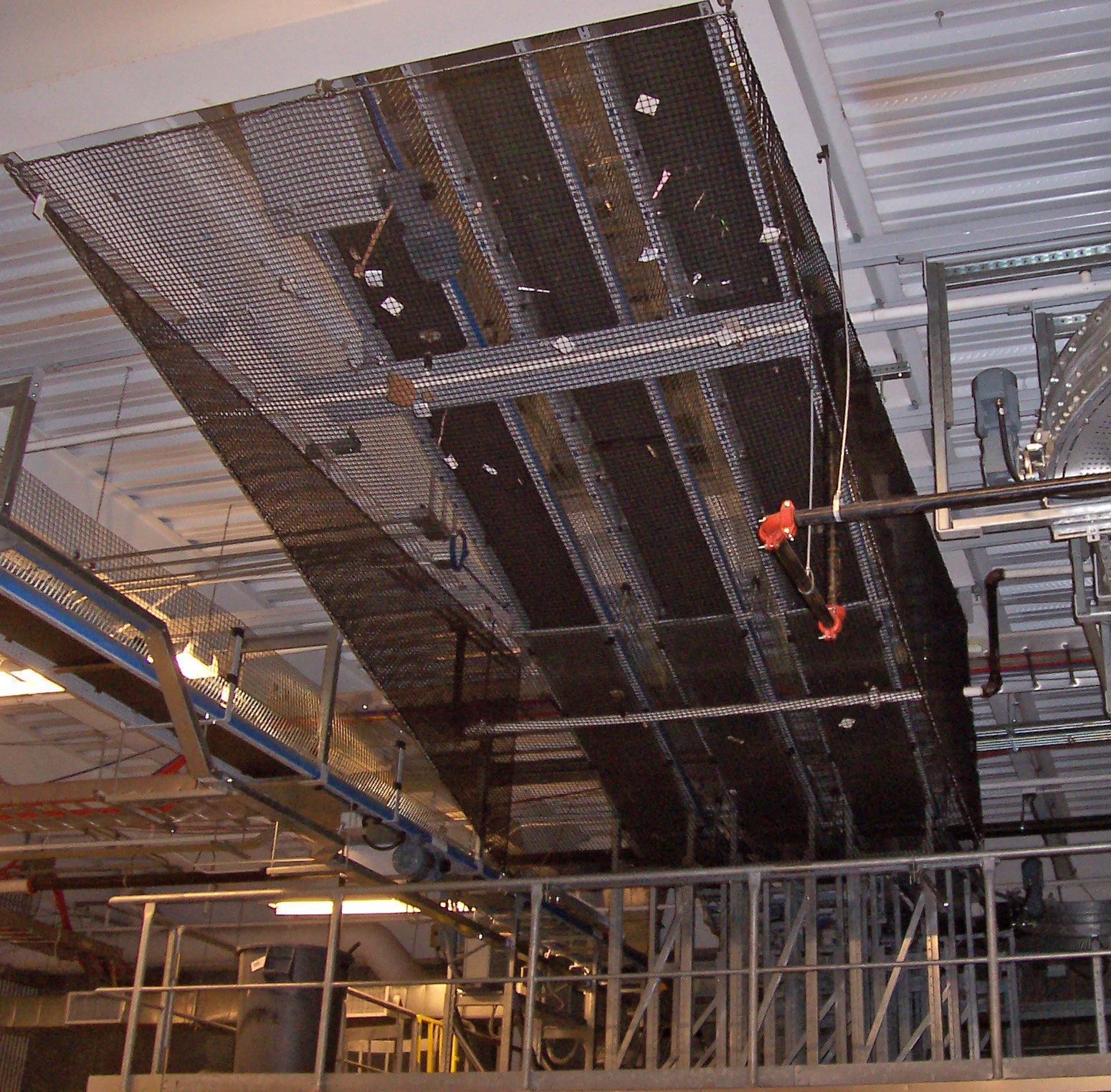


OSHA Compliance & Safety Standards
Our machine guarding systems are designed to meet all applicable federal and industry safety standards.
29 CFR 1910.212 — General Requirements for All Machines
OSHA’s general machine guarding standard (29 CFR 1910.212) requires employers to provide guards that prevent workers from contacting dangerous moving parts. The standard applies to all machines where employee exposure to moving parts, flying debris, or other mechanical hazards exists. Guards must be designed so they do not themselves create pinch points or shear hazards.
ANSI/RIA 15.06 — Robot Safety
For robotic installations, ANSI/RIA 15.06 establishes specific safeguarding requirements including minimum barrier heights, safe distance calculations based on robot speed and stopping time, and perimeter guarding specifications. Our robot cell enclosures are engineered with these calculations in mind, ensuring proper guard height, placement distance, and interlock response times.
ANSI B11 Series — Machine Tool Safety
The ANSI B11 series covers safety requirements for specific machine types including power presses (B11.1), hydraulic presses (B11.2), milling machines (B11.8), and grinding machines (B11.9). Each standard defines the types of guards and safeguarding devices acceptable for that machine category. Our guarding solutions are designed to satisfy these machine-specific requirements.
- Point of Operation Guards — prevent contact with the area where work is performed on material
- Power Transmission Guards — cover belts, pulleys, chains, gears, and shafts
- Perimeter Guarding — establishes a safe boundary around hazardous equipment
- Interlocked Guards — automatically shut down equipment when access doors are opened
- Presence-Sensing Devices — light curtains and area scanners that detect personnel entry
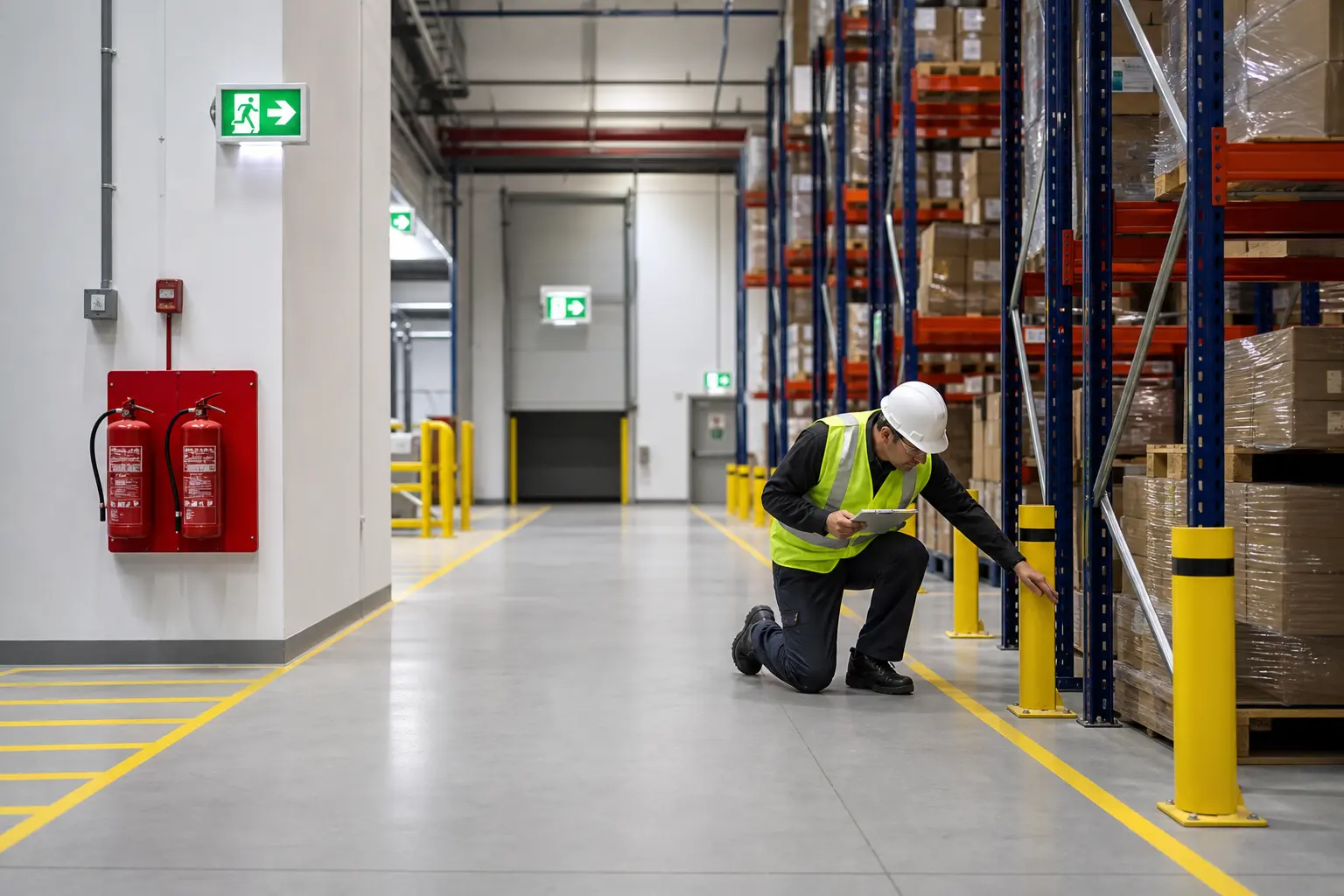
Machine Guarding Applications
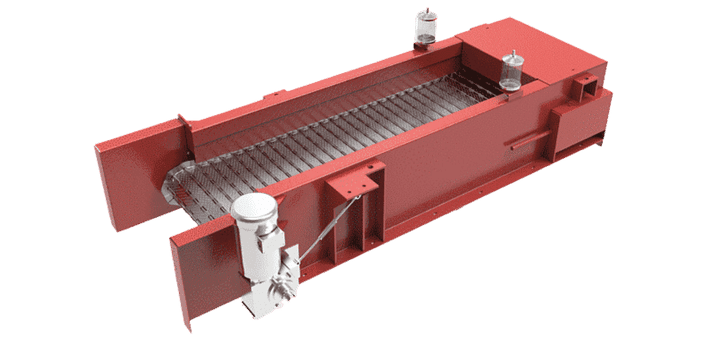
Our guarding systems protect workers across a wide range of industrial applications and equipment types.


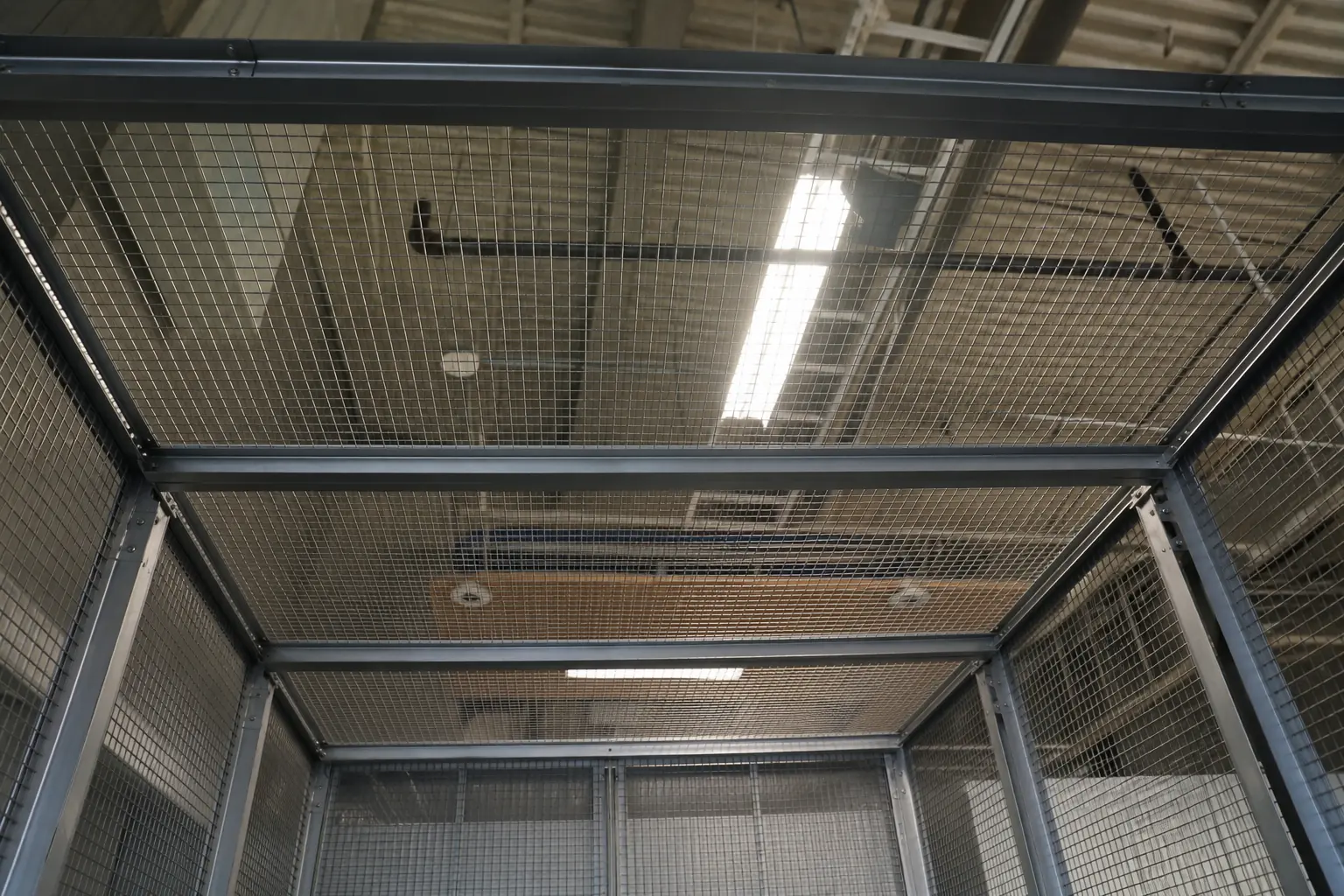
Guarding Material Comparison: Wire Mesh vs. Polycarbonate vs. Steel
Choosing the right guarding material depends on the specific hazards, visibility requirements, and environmental conditions of your application.
| Feature | Wire Mesh | Polycarbonate | Solid Steel |
|---|---|---|---|
| Visibility | Good — see-through mesh | Excellent — full clarity | None — opaque barrier |
| Airflow | Excellent — open mesh | None — sealed panel | None — sealed panel |
| Chip/Debris Containment | Partial — fine particles pass | Complete — sealed barrier | Complete — sealed barrier |
| Impact Resistance | High — heavy gauge wire | High — shatter-resistant | Highest — maximum strength |
| Cost | $ — Most affordable | $$ — Mid-range | $$$ — Premium |
| Best For | Robot cells, perimeter guards, security enclosures | CNC enclosures, inspection stations | Welding cells, press guards, blast areas |
| Coolant/Fluid Containment | No | Yes | Yes |
| Typical Panel Height | 4 ft – 10 ft | 3 ft – 8 ft | 4 ft – 12 ft |
Many machine guarding projects use a combination of materials. For example, a robot cell may use wire mesh panels for most of the perimeter with polycarbonate viewing windows at operator stations. Our design team helps you select the optimal material mix for your application. See also: wire mesh partitions for warehouse divider applications.
Why Choose Material Handling USA for Machine Guarding
Industry expertise, custom engineering, and nationwide service make us your complete machine guarding partner.
OSHA & ANSI Compliant
Every system designed to meet 29 CFR 1910.212, ANSI/RIA 15.06, and ANSI B11 safety standards. Reduce citation risk and protect your workforce.
Custom Engineering
No off-the-shelf compromises. Every enclosure is designed to your exact dimensions, equipment layout, and production requirements.
Fast Lead Times
Most systems ship within 3 to 4 weeks after design approval. Modular bolt-together construction means fast on-site installation with minimal downtime.
Modular & Reconfigurable
Bolt-together panel systems can be expanded, relocated, or reconfigured as your production needs change. No welding or cutting required.
Nationwide Installation
Professional installation services available across all 50 states. Our crews handle everything from anchor bolt layout to final interlock testing.
Free Site Surveys
Our team can visit your facility to measure, photograph, and assess your guarding requirements at no cost. We provide detailed CAD drawings with every proposal.
How It Works — From Consultation to Installation
Consultation & Hazard Assessment
We start by understanding your equipment, process flow, and specific hazards. Our team reviews your facility layout, identifies guarding requirements per OSHA standards, and recommends the optimal solution. Share your floor plan, equipment specifications, or schedule an on-site visit.
Custom Design & Engineering
Our engineering team creates detailed CAD layouts showing panel placement, door locations, post positions, and interlock wiring points. For robot cells, we calculate safe distances per ANSI/RIA 15.06 based on your robot’s reach envelope and speed ratings. You receive approval drawings before manufacturing begins.
Manufacturing & Quality Control
Panels, posts, doors, and hardware are manufactured to your specifications. All components are powder-coated in your choice of standard or custom colors for durability and corrosion resistance. Every system undergoes quality inspection before shipping. Most orders ship within 3 to 4 weeks.
Professional Installation & Commissioning
Our installation crews handle everything from concrete anchor bolt layout to final interlock switch testing. Modular bolt-together construction means no welding, cutting, or hot work in your facility. We verify all safety interlocks, test door switches, and provide documentation for your safety files. Installation is scheduled around your production to minimize downtime.
Industries We Serve
Machine guarding solutions for every industrial sector.

- Automotive Manufacturing — Robot welding cells, stamping press guards, paint line enclosures, assembly station barriers
- Aerospace & Defense — CNC machining center enclosures, composite layup cell guards, NDT inspection barriers
- Food & Beverage — Stainless steel guarding for packaging lines, washdown-rated enclosures, conveyor nip-point guards
- Pharmaceuticals — Cleanroom-compatible barriers, tablet press enclosures, packaging line guards
- Warehousing & Distribution — Conveyor guards, pallet rack end-of-aisle barriers, automated sorting system enclosures
- Metal Fabrication — Press brake guards, laser cutter enclosures, welding cell barriers, grinding machine shields
- Plastics & Rubber — Injection molding guards, extrusion line enclosures, blow molding safety barriers
Design Your Security Cage Online
Design your machine guarding enclosure with our free Security Cage Configurator. Configure wire mesh panels, doors, and safety barriers — see a top-down layout with auto-calculated panel counts and hardware.
Free online tool — no account required | View All Design Tools
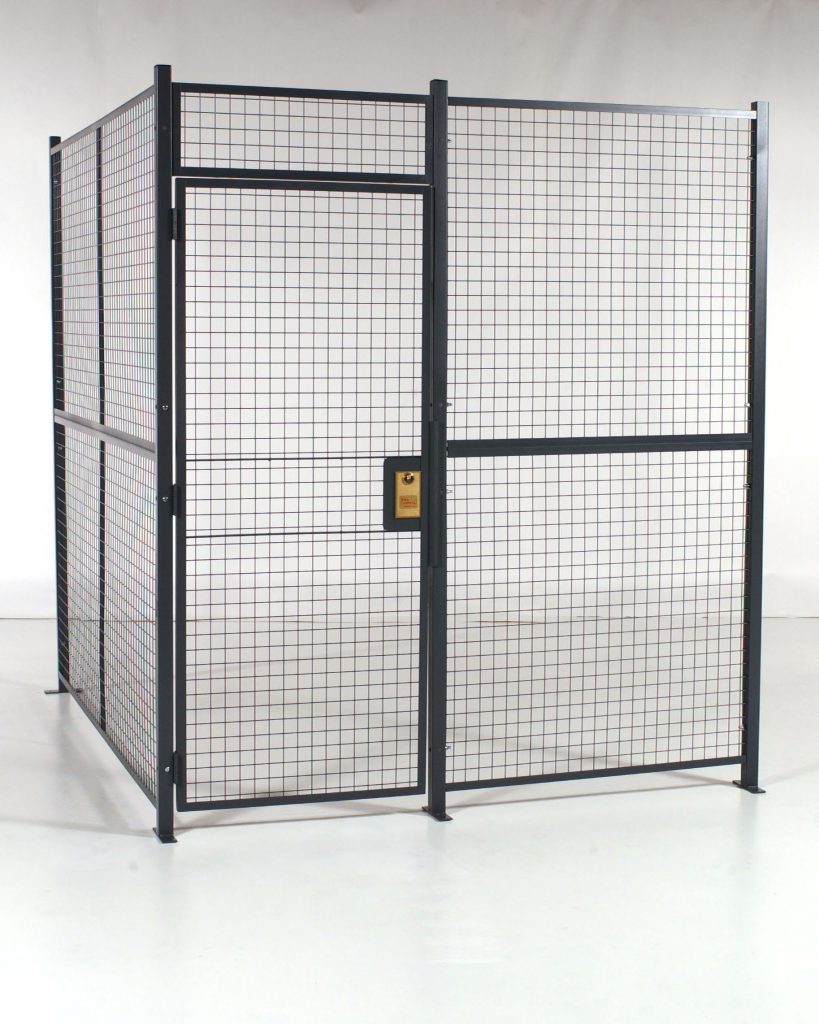
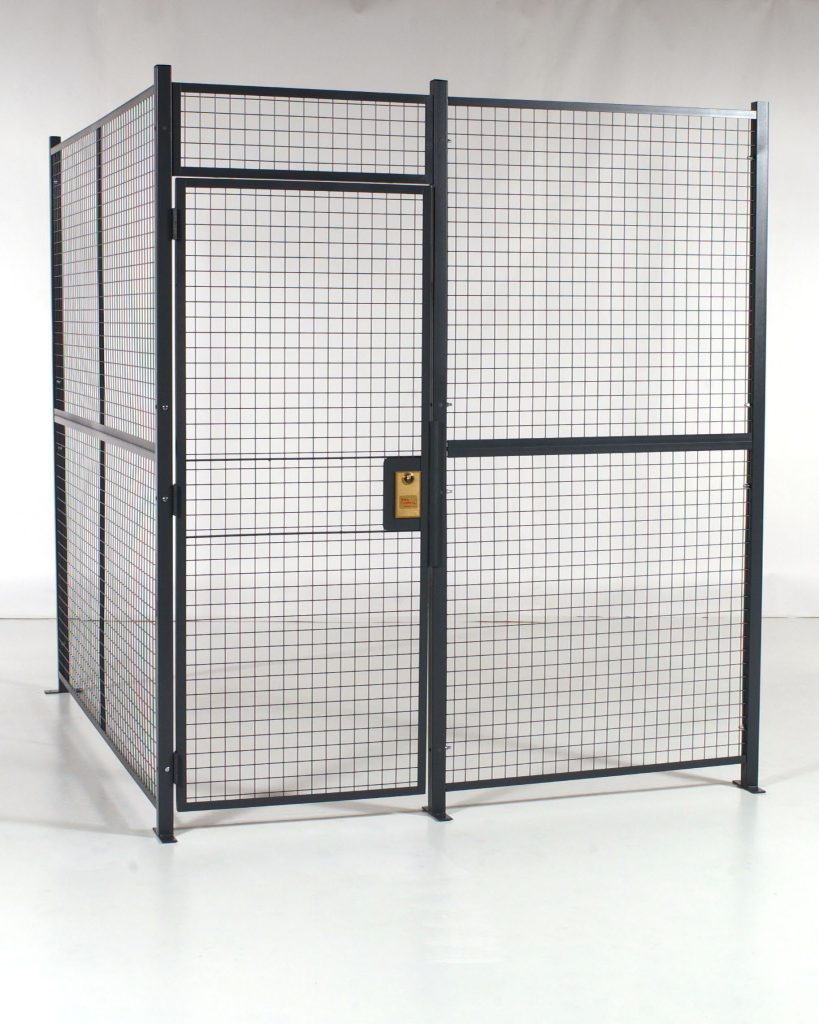
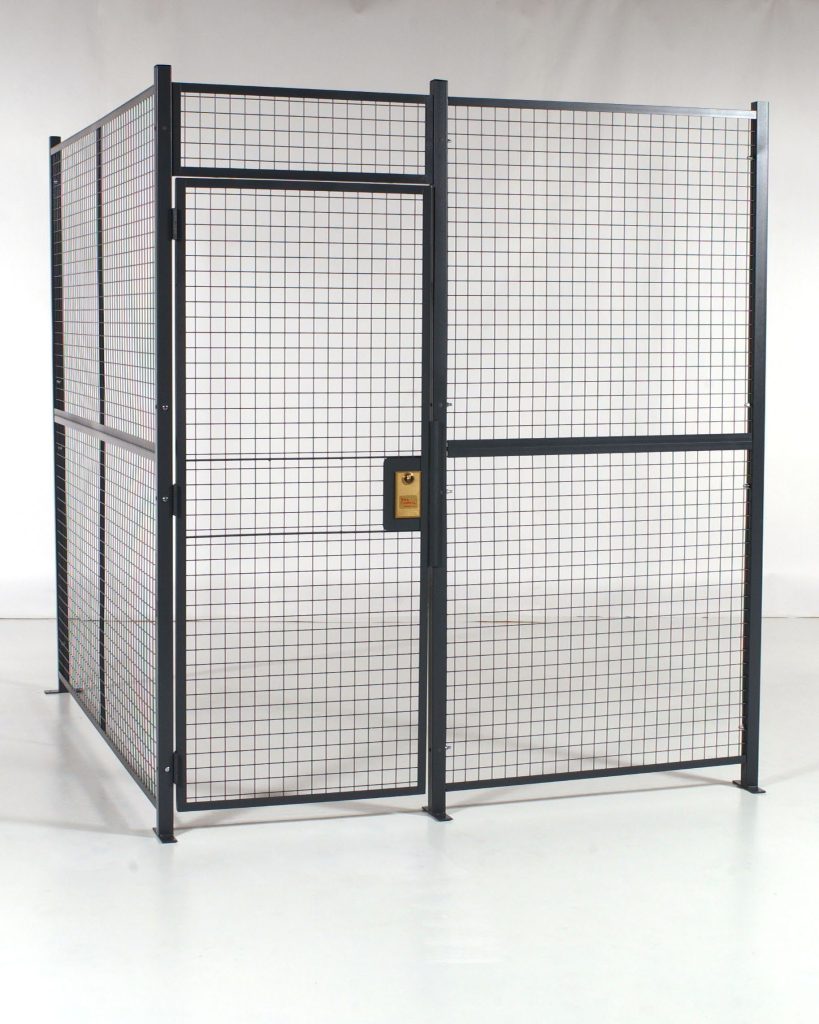
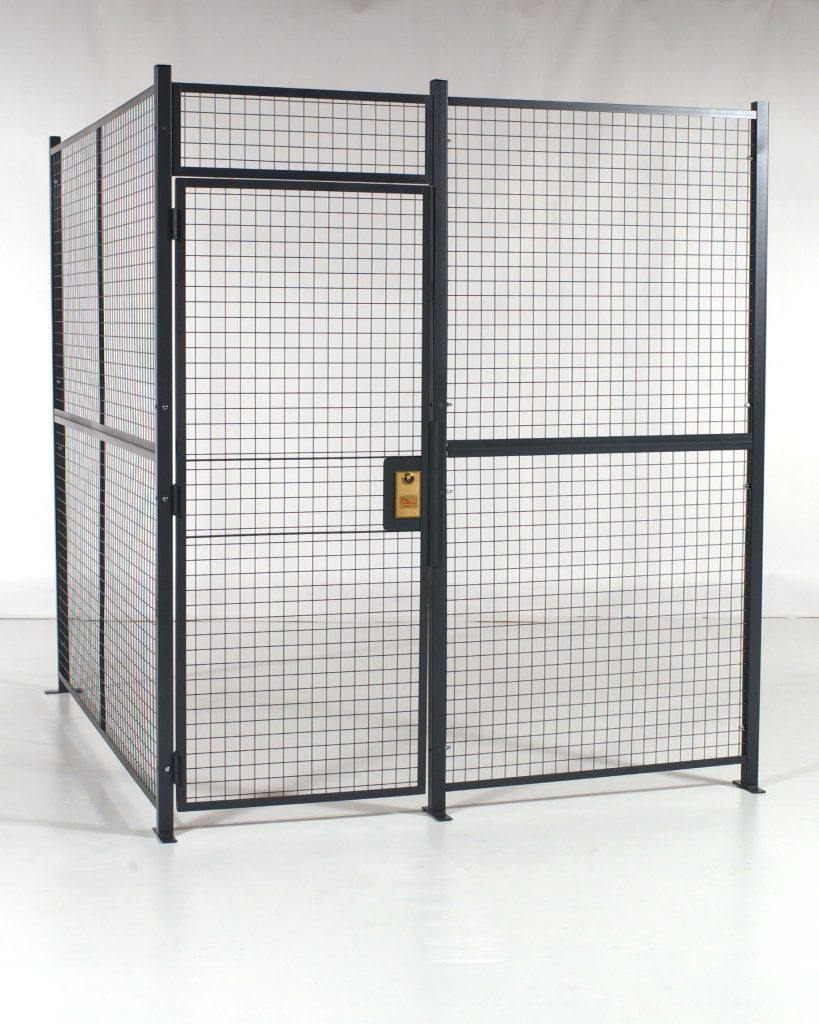
Shop Pre-Configured Wire Mesh Cage Kits Online
Standard-size welded wire cage kits, priced online, for smaller storage needs. Every kit still needs to be anchored to sound concrete — for tall, braced or engineered enclosures, request a quote with your building location and floor details.
Frequently Asked Questions About Machine Guarding
What are the OSHA requirements for machine guarding?
OSHA standard 29 CFR 1910.212 requires that one or more methods of machine guarding be provided to protect operators and other employees from hazards created by point of operation, ingoing nip points, rotating parts, flying chips, and sparks. Guards must prevent the worker from having any part of their body in the danger zone during the operating cycle. Machine guarding must be affixed to the machine where possible and secured elsewhere if attachment to the machine is not feasible. Guards should not create additional hazards such as shear points, jagged edges, or unfinished surfaces.
What types of materials are used in machine guarding systems?
The three most common materials for machine guarding are woven or welded wire mesh, polycarbonate panels, and solid steel sheet. Wire mesh panels (typically 10-gauge or heavier) offer excellent visibility and airflow while containing debris. Polycarbonate (such as Lexan) provides full transparency and high impact resistance, ideal for CNC enclosures where operators need to see the work. Solid steel panels offer maximum protection from heavy impacts and sparks in applications like press guarding and welding cells. Many systems use a combination of materials based on the specific hazards present.
How much does industrial machine guarding cost?
Machine guarding costs vary based on the system size, material type, and complexity of the application. Standard wire mesh panel systems typically range from $40 to $120 per linear foot for panels and posts. A basic robot cell enclosure (10 ft x 10 ft) may cost $3,000 to $8,000, while larger automated work cell enclosures can run $15,000 to $50,000 or more. Factors that affect price include door types (hinged, sliding, or bi-fold), interlock switches, panel height, material gauge, and powder coat finish options. Contact our team at (800) 326-4403 for a free custom quote.
Can machine guarding panels be customized to fit my equipment?
Yes. All of our machine guarding systems are custom-engineered to fit your specific equipment layout and floor plan. We design enclosures to accommodate existing utilities, cable runs, conveyors, and material flow paths. Panel heights range from 4 feet to 12 feet or more, and widths can be adjusted in 1-inch increments. Door openings are sized and placed exactly where your process requires access. Our design team works from your facility drawings or can conduct an on-site survey to ensure a perfect fit.
How long does machine guarding installation take?
Installation timelines depend on the scope of the project. Many installs take one to a few days depending on the size of the system and site conditions; larger perimeter guarding for entire production lines can take longer. We confirm the installation schedule with your quote. Our systems use modular bolt-together construction, so installation does not require welding, cutting, or specialized tools. Most projects ship within 3 to 4 weeks after design approval, and we coordinate installation scheduling to minimize production downtime.
What is the difference between fixed guards and interlocked guards?
Fixed guards are permanently attached barrier panels that require tools to remove. They provide continuous protection in areas where operator access is infrequent. Interlocked guards incorporate safety switches that automatically stop machine operation when a guard door is opened. Interlocked systems are required in areas where operators need regular access to the hazard zone for loading, unloading, or adjustment. Common interlock types include tongue-style safety switches, coded magnetic switches, and solenoid locking devices that prevent the door from opening until the machine has fully stopped.
Does machine guarding need to comply with ANSI/RIA standards for robots?
Yes. For robotic work cells, ANSI/RIA 15.06 (Safety Requirements for Industrial Robots and Robot Systems) establishes safeguarding requirements beyond the general OSHA 1910.212 standard. This includes minimum barrier heights based on the robot’s maximum reach, safe distance calculations for guard placement, and requirements for perimeter guarding with interlocked access gates. The standard also covers requirements for safety-rated control systems, presence-sensing devices, and risk assessments that must be documented for each robotic installation.
What maintenance is required for machine guarding systems?
Machine guarding systems require periodic inspection and minimal maintenance. Monthly visual inspections should verify that all panels are securely fastened, safety interlocks function correctly, and no panels have sustained damage. Door hinges and latches should be lubricated quarterly. Interlock switches should be tested monthly per OSHA requirements. Powder-coated wire mesh panels resist corrosion in normal indoor industrial environments; service life depends on the finish, the environment and impact damage. Damaged individual panels can be replaced without disassembling the entire system.
Get a Free Machine Guarding Quote
Our team designs custom machine guarding systems for any equipment, any facility, anywhere in the United States. Contact us for a free consultation and proposal.