
DEA Drug Storage Cages for Schedule III–V Controlled Substances
Wire mesh cages built to the 21 CFR 1301.72(b)(4) specification for distributors, manufacturers, reverse distributors and other non-practitioner registrants, designed, supplied and installed by MH-USA.
Talk with a cage specialist: (800) 326-4403 or sales@mh-usa.com
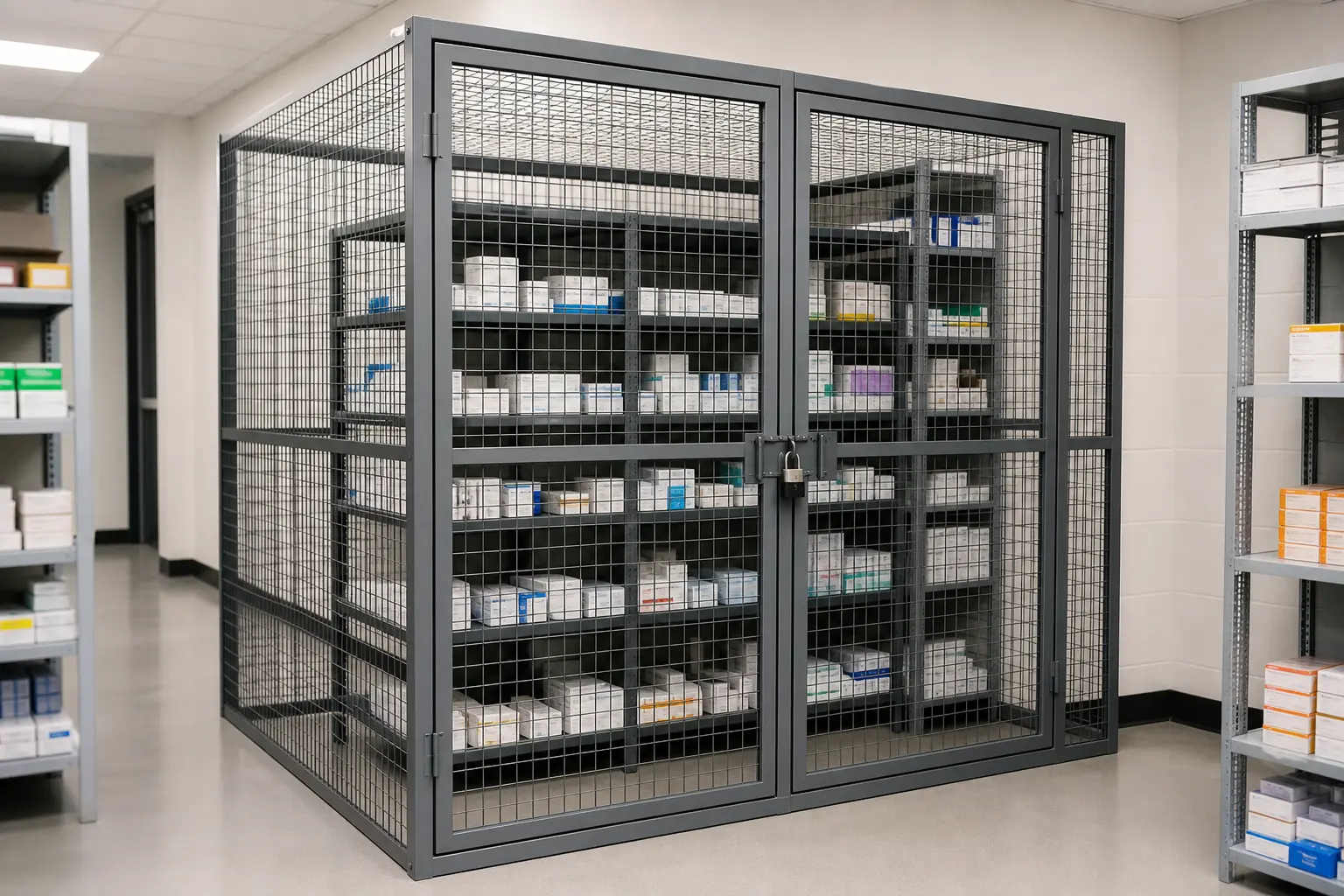
Shop Pre-Configured Wire Mesh Cage Kits Online
Standard-size welded wire cage kits, priced online, for smaller storage needs. Every kit still needs to be anchored to sound concrete — for tall, braced or engineered enclosures, request a quote with your building location and floor details.

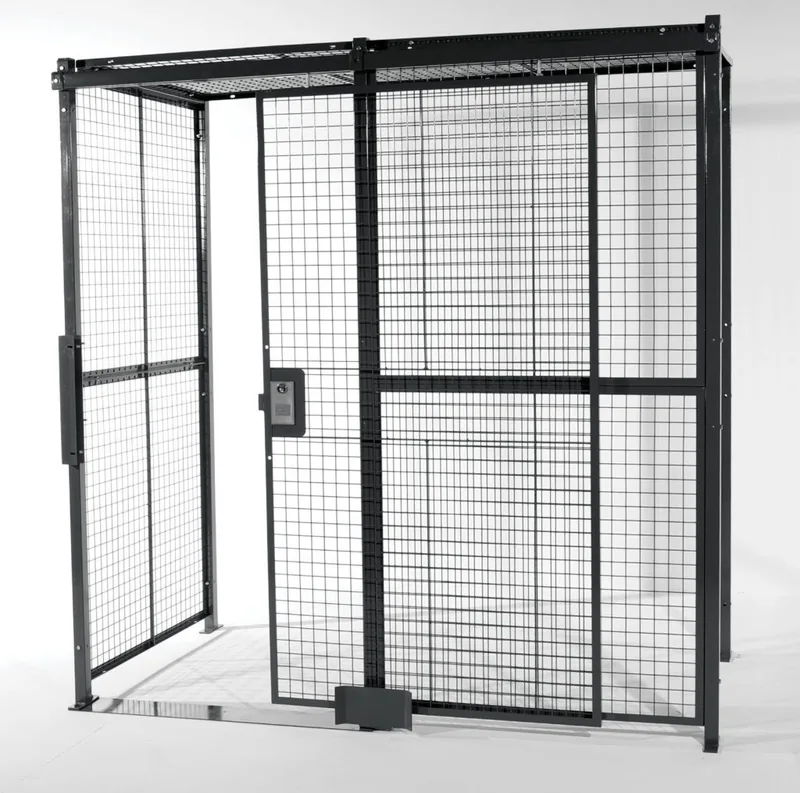
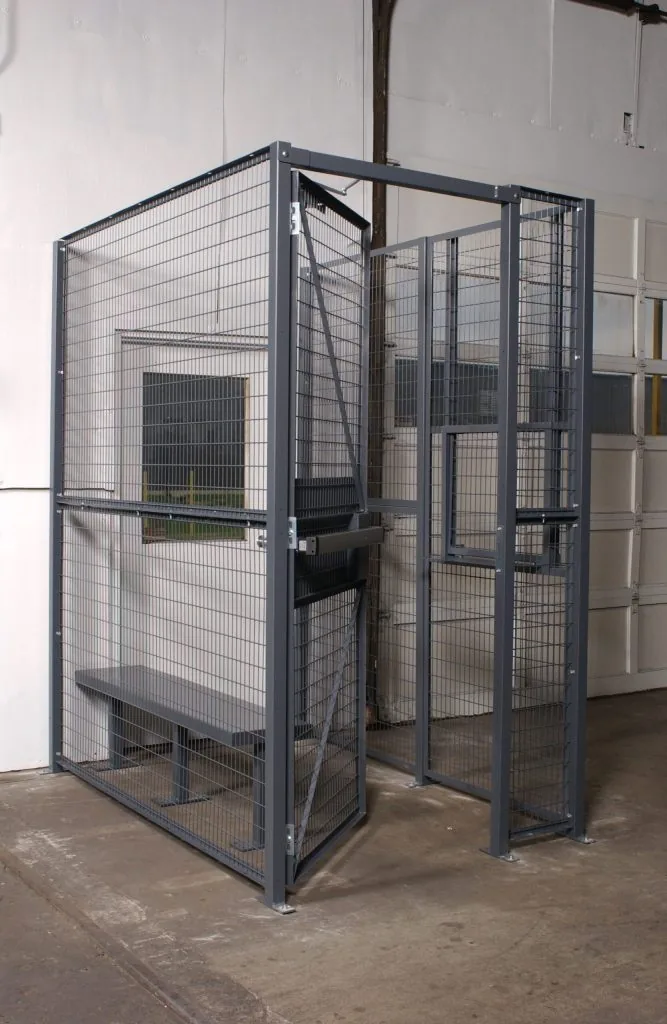
Prices are the current online prices. See all security cage kits · Need a custom size? Request a security cage quote.
Who can store controlled substances in a wire cage?
DEA physical security rules depend on what kind of registrant you are. A wire cage is one of the storage options the regulation gives non-practitioners: manufacturers, distributors, importers, exporters, reverse distributors and similar registrants handling raw materials, bulk product and finished goods.
For those registrants, 21 CFR 1301.72(b) allows Schedule III, IV and V substances to be kept in a cage that meets the specification in paragraph (b)(4). Schedule I and II substances are different: they belong in a safe, steel cabinet or vault as described in 1301.72(a), not in a wire cage.
Retail pharmacies, hospitals, clinics and other practitioners follow a separate rule, 21 CFR 1301.75, which calls for a securely locked, substantially constructed cabinet. More on that below.
| Registrant type | Schedule I–II | Schedule III–V | Rule |
|---|---|---|---|
| Manufacturer, distributor, reverse distributor (non-practitioner) | Safe, steel cabinet or vault | Safe, cabinet, vault, secured building or a wire cage to spec | 21 CFR 1301.72 |
| Pharmacy, hospital, clinic, practitioner | Securely locked, substantially constructed cabinet | Locked cabinet; pharmacies may disperse through non-controlled stock | 21 CFR 1301.75 |
Your DEA Diversion field office has the final say on any storage area, so we design every cage to the written specification and recommend you review the drawing with your compliance lead before installation.
The 21 CFR 1301.72(b)(4) cage specification, point by point
The regulation is short and specific. Here is what it requires and how we build to each line.
| Requirement in the CFR | How we meet it |
|---|---|
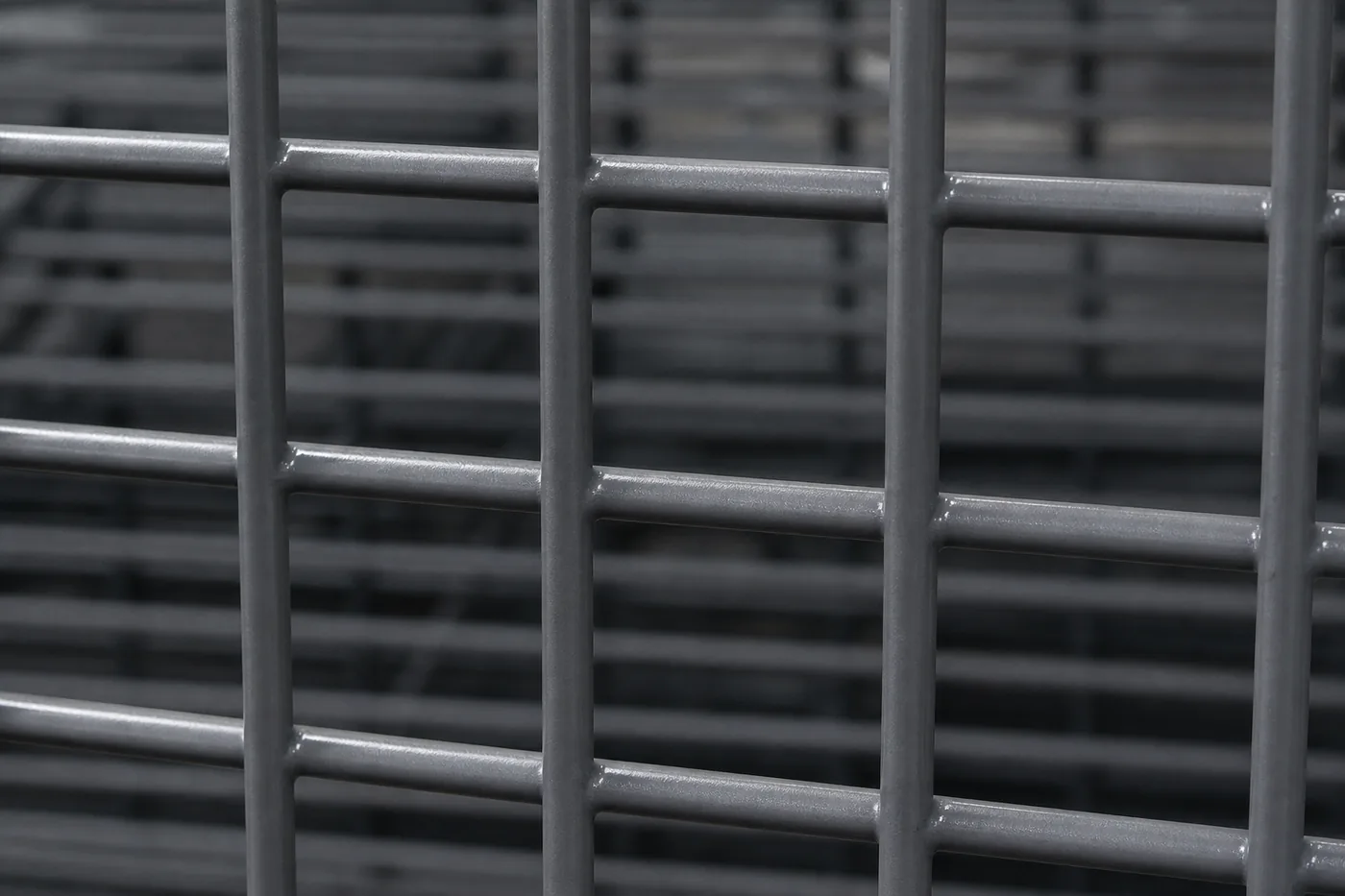
| Walls of not less than No. 10 gauge steel fabric | 10 gauge welded or woven wire panels; heavier wire is available on request |
| Mesh openings no more than 2-1/2 in. across the square | 2 in. x 1 in. woven or 2 in. x 2 in. welded mesh, well inside the limit |
| Steel posts at least 1 in. in diameter, no more than 10 ft apart | Steel tube posts on each panel joint; standard panel widths keep spacing under 10 ft |
| Posts set in concrete or installed with lag bolts that are pinned or brazed | Base plates anchored to the slab; anchors pinned or tack-welded so they cannot be backed out |
| Horizontal 1-1/2 in. reinforcement every 60 in. | Panel frames and stiffener channels placed to the 60 in. rule |
| A ceiling of the same material, or walls attached to the structural ceiling | Mesh ceiling panels, or walls run up and fastened to the deck or structure |
| Door of No. 10 gauge steel fabric on a metal frame in a metal flange | Framed mesh hinged or sliding doors with steel flanges and jambs |
| Self-closing, self-locking door (or kept locked and under direct observation) | Closers and self-latching locks, key-controlled or combination |
| Alarm that signals a central station, police, or a 24-hour registrant control station | Coordinated with your alarm contractor; we provide door contacts prep and cable routing |
Lighter ceilings for very large cages
The rule allows a lighter gauge mesh for the ceiling of a large enclosed area when the walls are at least 14 ft high. That matters for distribution centers caging whole rack aisles: it saves weight and cost on wide spans. We confirm wall height and span before choosing ceiling mesh.
Hardware on the inside
Panel clips, door hinges and fasteners are placed so they cannot be removed from outside the cage. Where hinges must sit outside, they are welded or sealed, which the door rule calls for.
Doors, locks and key control
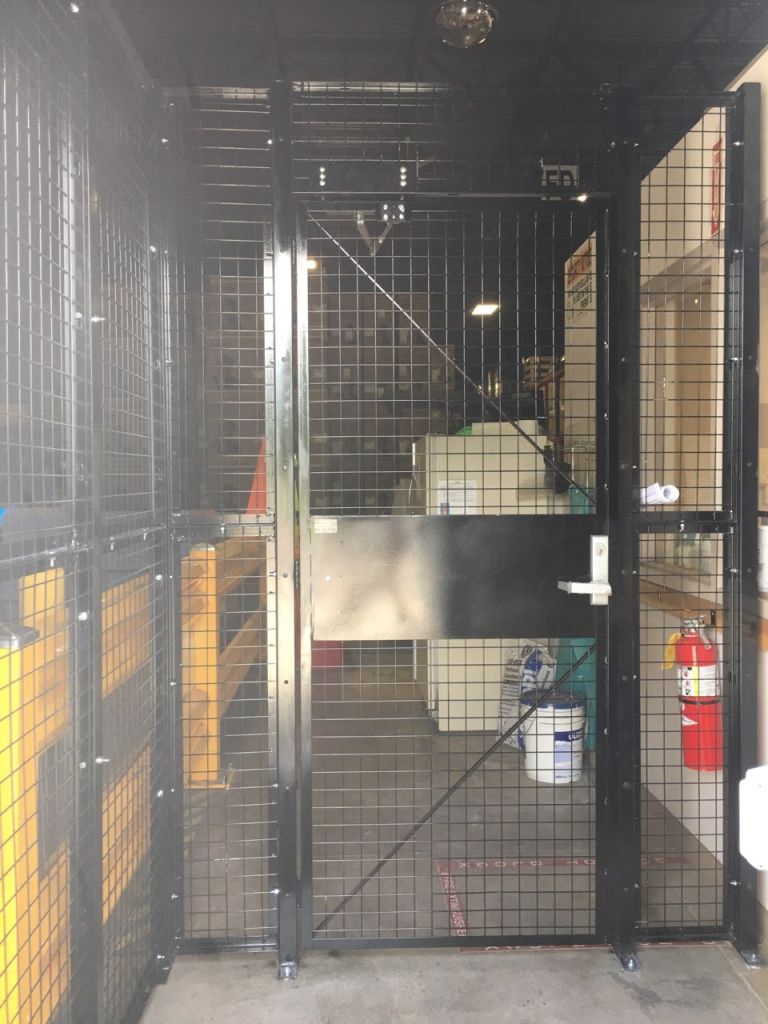
The door is where most findings happen. The cage door must be self-closing and self-locking, unless it is kept closed and locked whenever it is not in use and watched by a responsible employee when it is open. Doors may be sliding or hinged.
The rule allows multiple-position combination locks or key locks. With keys, key control must limit access to a small number of employees. With combinations, the code must be limited to as few people as practical and changed when someone who knows it leaves.
Many registrants add an electric strike and card reader so every entry is logged automatically. See our security cage locks guide for hardware options.
| Access method | Record it creates | Typical fit |
|---|---|---|
| Key lock with key log | Manual key issue and return log | Small cages with one or two key holders |
| Combination lock | Code assignment list, changed at turnover | Teams without an electronic system |
| Card reader with electric strike | Automatic time-stamped entry log | Distribution centers and multi-shift sites |
| Card plus PIN or biometric | Identity plus time stamp | High-volume or high-value inventory |
Alarm requirements for a DEA cage
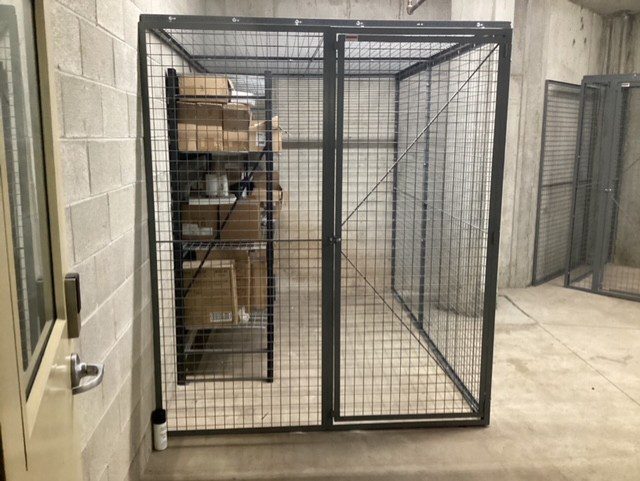
A cage that meets the wall, mesh and door rules is still incomplete without an alarm. The cage specification requires an alarm system that, on unauthorized entry, sends a signal directly to a central station protection company, or a local or state police agency with a legal duty to respond, or a 24-hour control station operated by the registrant.
We are not an alarm company. We coordinate with yours: door position switches, motion or vibration sensors on the mesh, and where the cabling enters the cage. Planning this before the panels go up avoids drilling and rerouting later.
Pharmacies, hospitals and clinics: what the rule actually says
Retail pharmacies, hospital pharmacies, clinics and veterinary practices are practitioners under DEA rules. 21 CFR 1301.75 requires controlled substances to be stored in a securely locked, substantially constructed cabinet. Pharmacies and institutional practitioners may also disperse controlled substances throughout their non-controlled stock to obstruct theft.
That means a wire cage is not the standard compliance solution for a pharmacy. Where pharmacies and hospitals do use cages, it is usually for access control around bulk supply, a central receiving area or a storeroom, with the controlled substances themselves still in locked cabinets or automated dispensing units inside. State boards of pharmacy can add their own rules, so check yours.
For hospital supply rooms that hold non-controlled stock, see our hospital supply security cage case study.
Layout and sizing for a controlled-substance cage

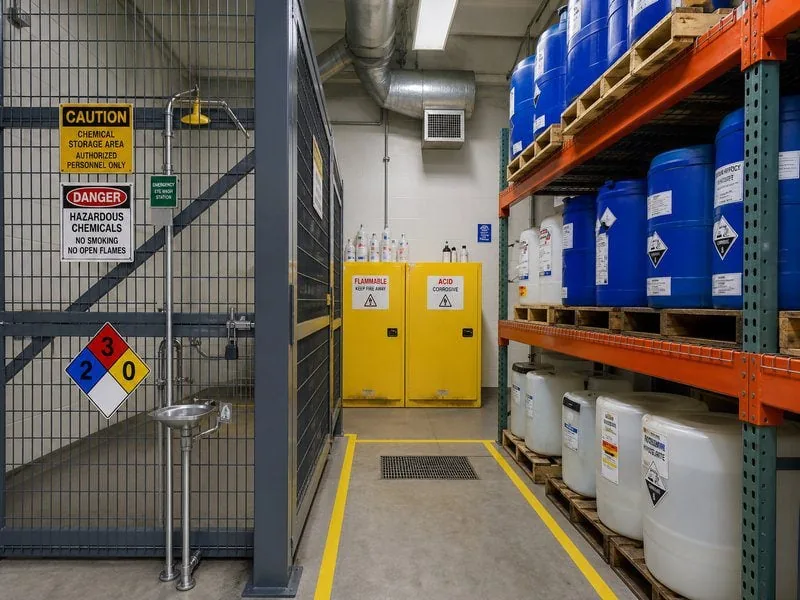
Most registrants size a cage for today’s inventory and then outgrow it. Expanding later means reopening the secured perimeter and reworking the alarm, so plan for growth on day one.
- Separate by schedule and status: keep quarantined, returned or expired product apart from saleable stock with interior partitions.
- Plan the work zone: leave room inside for counting, packing and a scale so product is not handled at the door.
- Shelving inside: decide on shelving or rack height before ordering the ceiling.
- Receiving and shipping: a service window can hand out orders without opening the door.
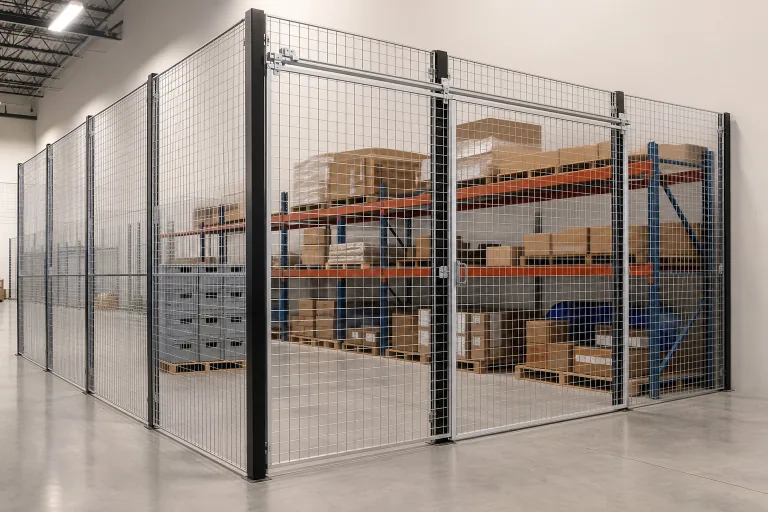
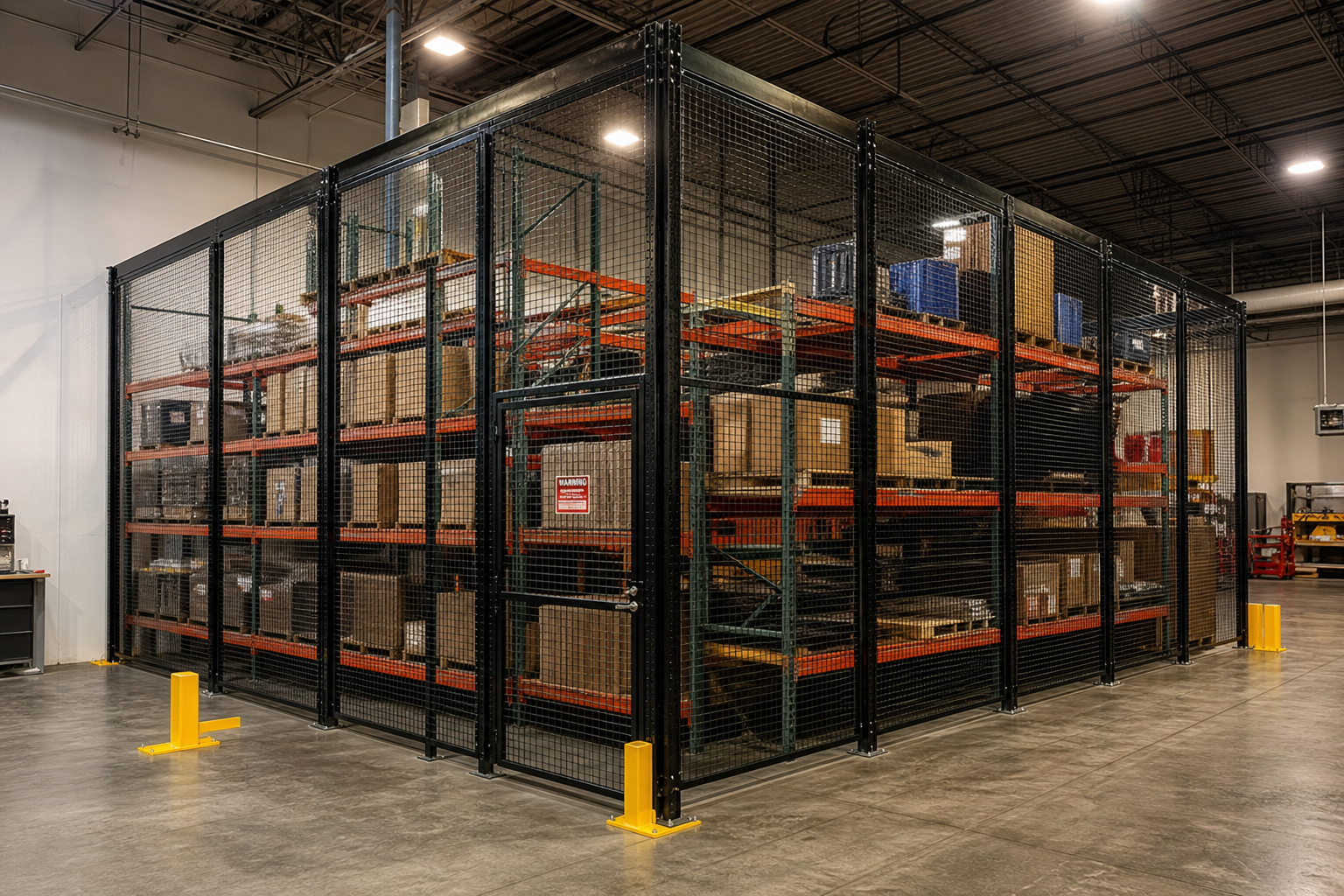 Rack-aisle cagesMesh walls and ceilings around whole pallet rack aisles for large distribution inventories.
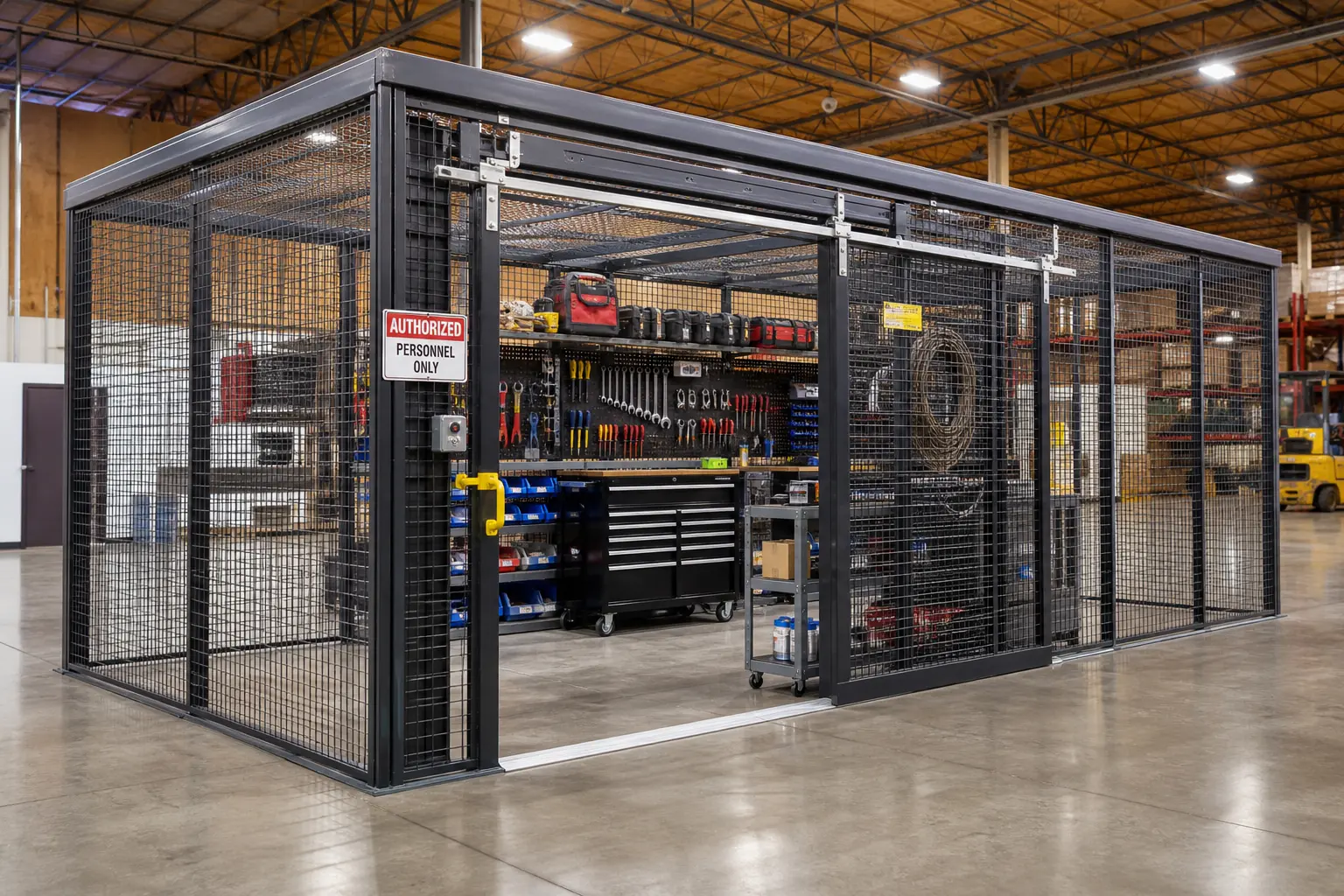 Service-window cagesSmall issue or pick cages that pass product through a window instead of the door.
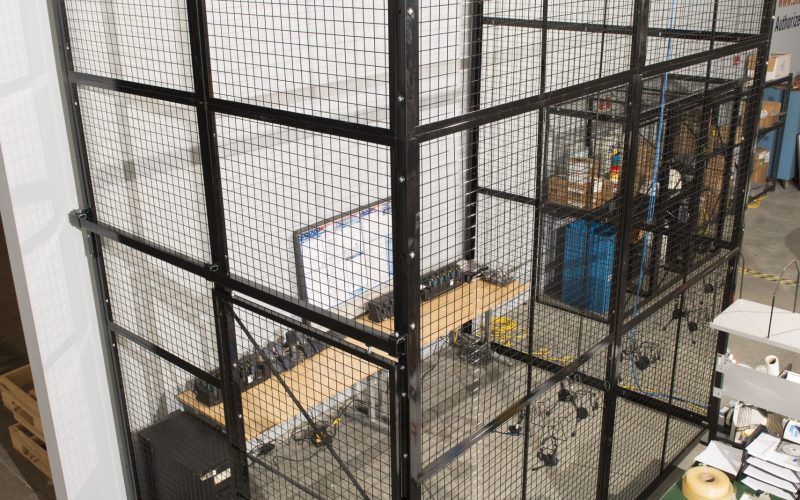 Ceiling optionsMesh ceilings, or walls run to the structural ceiling, as the rule requires.
Getting ready for a DEA inspection
DEA Diversion investigators can review your storage at registration, at renewal or without notice. A cage that was built right can still draw a finding if it has been damaged or the paperwork has drifted. Walk the cage regularly and keep it inspection-ready:
- Panels and posts: no bent, cut or missing mesh; no gaps at the floor or ceiling; posts plumb and anchors tight.
- Doors: the door closes and latches on its own every time; hinges and hardware cannot be removed from outside.
- Keys and codes: a short, current list of key holders; combinations changed when someone leaves.
- Alarm: tested, with the monitoring contract and response contact on file.
- Records: inventories and receiving records reconcile with what is on the shelves.
Forklift strikes are the most common cause of damaged panels. Post protectors and guard rail at corners prevent most of them; see our anchoring guide for impact protection.
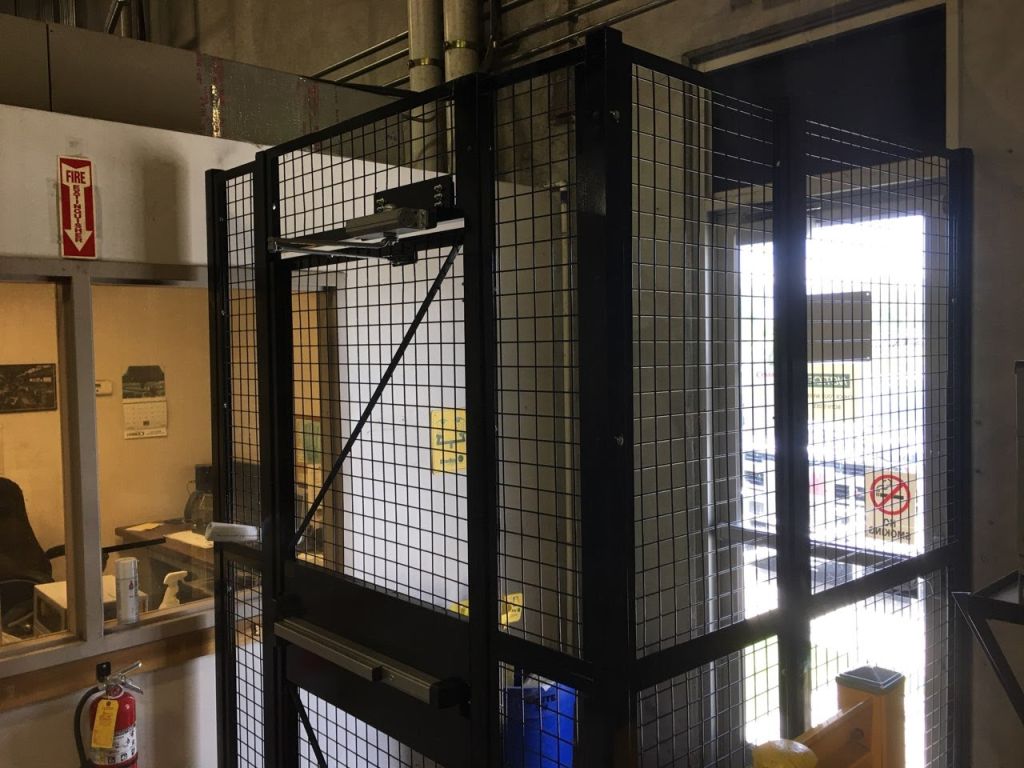
Installation and what to send us for a quote
Installation is usually one to a few days once panels arrive, depending on size, ceiling work and anchoring. Posts are anchored to sound concrete; the anchors are pinned or brazed as the CFR requires. See security cage installation for what to expect.
To quote a DEA cage quickly, send:
- Your registrant type and the schedules you will store
- Room or floor dimensions, clear height and what is overhead
- Door type and the access control you want
- Your alarm company contact
- Floor type and slab condition

Budget ranges are on our security cage cost guide. For standard sizes and smaller stockrooms, the pre-configured kits above are priced online; a kit must still meet every line of the CFR spec, including the alarm, before it can be used for controlled substances.
DEA Drug Storage Cage FAQs
Can Schedule II drugs be stored in a wire cage?
Does a pharmacy need a DEA cage?
What wire gauge and mesh does a DEA cage need?
Does a DEA cage need a ceiling?
Is an alarm required?
Who approves the cage?
How long does installation take?
Plan a DEA-spec storage cage
Send us your registrant type, schedules and floor plan and we will draw a cage to the 21 CFR 1301.72(b)(4) specification.