
Conveyor Guard Netting
Plan InCord Conveyor Guard containment netting around your conveyor route, conveyed products and the areas below. Define the application, access requirements and installation scope before selecting a net system.

Identify the falling-product exposure
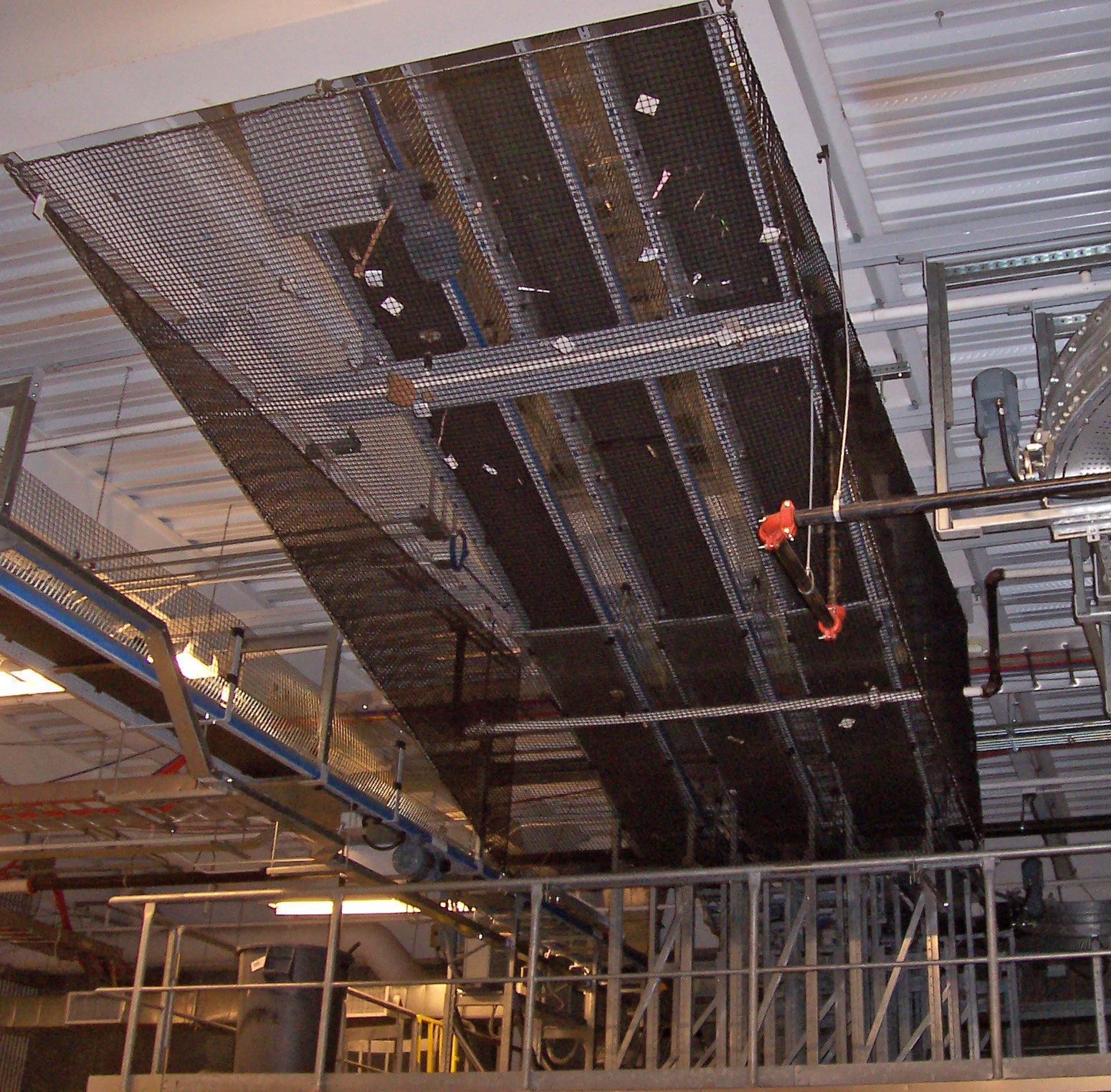
Conveyor Guard netting addresses a specific material-handling problem: products can leave a conveyor and enter an area where people, equipment or other operations are present. The first planning step is to identify those areas and describe the products involved. Buying netting by length alone does not establish an appropriate containment system.
InCord’s Conveyor Guard range includes netting arrangements for several conveyor configurations. The equipment discussed here is containment netting. It should not be treated as proof that exposed moving parts are guarded, that a walkway has fall protection or that every possible dropped object will be retained.
Map the conveyor route and the activity below and beside it. Note workstations, aisles, crossings and equipment that may be affected by a falling product. Ask the facility’s responsible safety and engineering personnel to review the exposure before defining the proposed netting boundaries.
Review straight runs, curves and transfer points

Different parts of a conveyor route can create different containment questions. A straight run, a change in direction and a transfer between equipment should be reviewed individually. Include the places where products enter, accumulate or leave the system, rather than focusing only on its most visible elevated section.
Describe the condition that prompts concern. It may involve a package arriving out of alignment, an unusual product shape or material escaping at a transition. Containment planning should accompany investigation of the conveyor issue itself. A net should not become the reason an unresolved operating problem is ignored.
- Mark changes in elevation and direction on the route drawing.
- Identify transfers, merges and discharge locations.
- Show areas where staff normally work or pass underneath.
- Record planned conveyor changes that could affect the scope.
Photographs are useful, especially at complex transitions. Pair them with dimensions and a clear location reference so the supplier knows which part of the route each image represents. Include views from both sides where practical, taken from approved access positions. Identify anything hidden by surrounding equipment so an incomplete photograph is not mistaken for a complete description of the location.
Describe the complete range of conveyed products
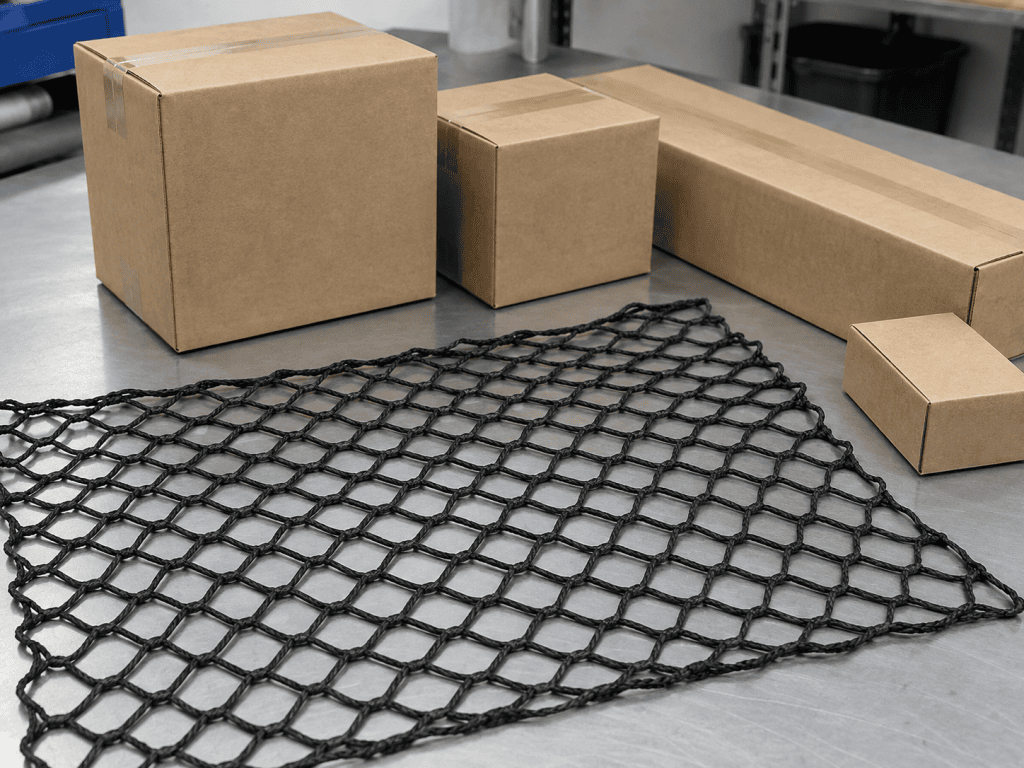
Provide more than the average carton size. The smallest item can affect the mesh discussion, while an unusually heavy or awkward package may affect the application review in another way. Include loose contents that could escape a damaged package if that is part of the identified exposure.
Describe package dimensions, intended weights, shapes and the condition in which products travel. Note whether rigid containers, soft packages or irregular items share the same line. Ask the supplier how those characteristics affect the proposed system and what limitations remain.
InCord offers different netting selections within the Conveyor Guard range and an optional Spillex liner for certain applications. A finer barrier or liner changes the design discussion; it should not be added informally after the support system is chosen. Confirm the complete assembly and its intended use with the supplier.
Treat mesh and ratings as application-specific
A mesh opening describes only one characteristic of a net. The material, construction, boundary details, supports and installation also affect the assembly. Do not convert a published net rating into a general allowable dropped weight without a qualified review of the application.
Ask which product and rating apply to the proposed arrangement, what assumptions were used and which conditions are excluded. Keep those answers with the approved drawing. If the conveyed product range changes later, the facility should have a basis for deciding whether the containment system needs reassessment.
Request current documentation for any special requirement, such as a particular material treatment or environmental exposure. A feature available somewhere in a product family is not automatically included in every quoted net. Have the actual selection named in the proposal.
Coordinate netting with supports and clearances
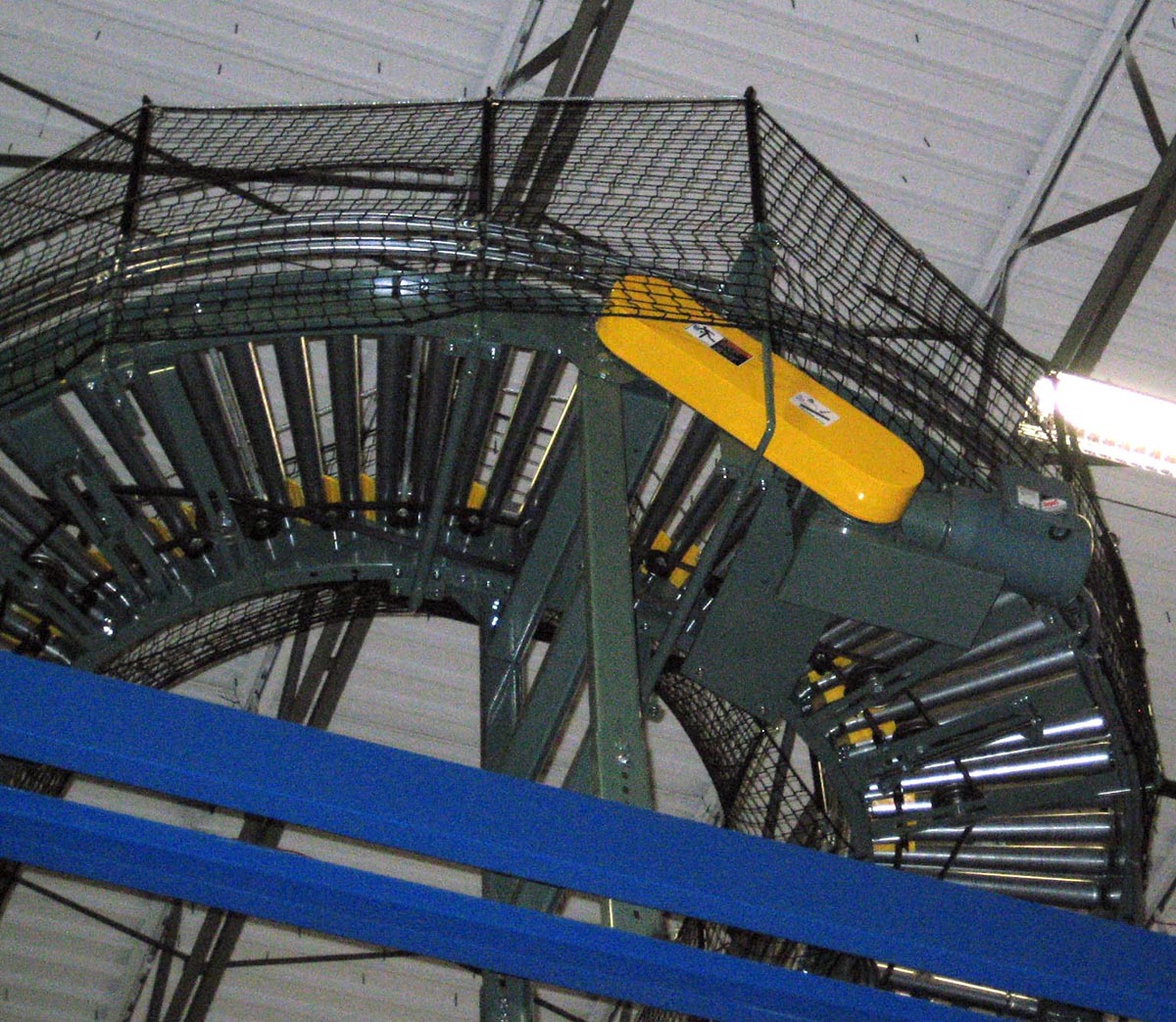
The net and its attachments form a system. Provide information about the conveyor structure and any proposed attachment locations, but do not assume that an existing beam, rack or building member is suitable simply because it is nearby. The responsible designer must review how loads are transferred.
Include operating and maintenance clearances. The conveyor may need space for adjustments, component replacement or access to equipment above it. Netting and hardware should be coordinated with those needs before installation, rather than repeatedly removed because they obstruct normal work.
Show lighting, sprinkler components, electrical equipment and other services near the proposed system. Have the relevant facility specialists review potential conflicts. The final drawing should identify the arrangement that is approved for the site, including where access is required and who is responsible for each interface.
Plan safe access before the installation

Installation planning needs to address how workers will reach the proposed locations and how nearby operations will be controlled. Ask the installation provider to define the work area, access equipment and required coordination with the facility. Equipment supply and installation responsibilities should be clear before the order is placed.
Agree on shutdown and isolation requirements with the people responsible for the conveyor. Do not assume that a netting installation can proceed while the line operates, or that a visual pause in product movement establishes a safe working condition. Follow the facility’s applicable procedures.
Include delivery, staging and removal of packaging in the schedule. Where access is shared with another trade, coordinate the sequence so that completed work does not have to be disturbed. Resolve site access hours and any restrictions that could affect the installation plan.
Separate conveyor containment from other guarding needs
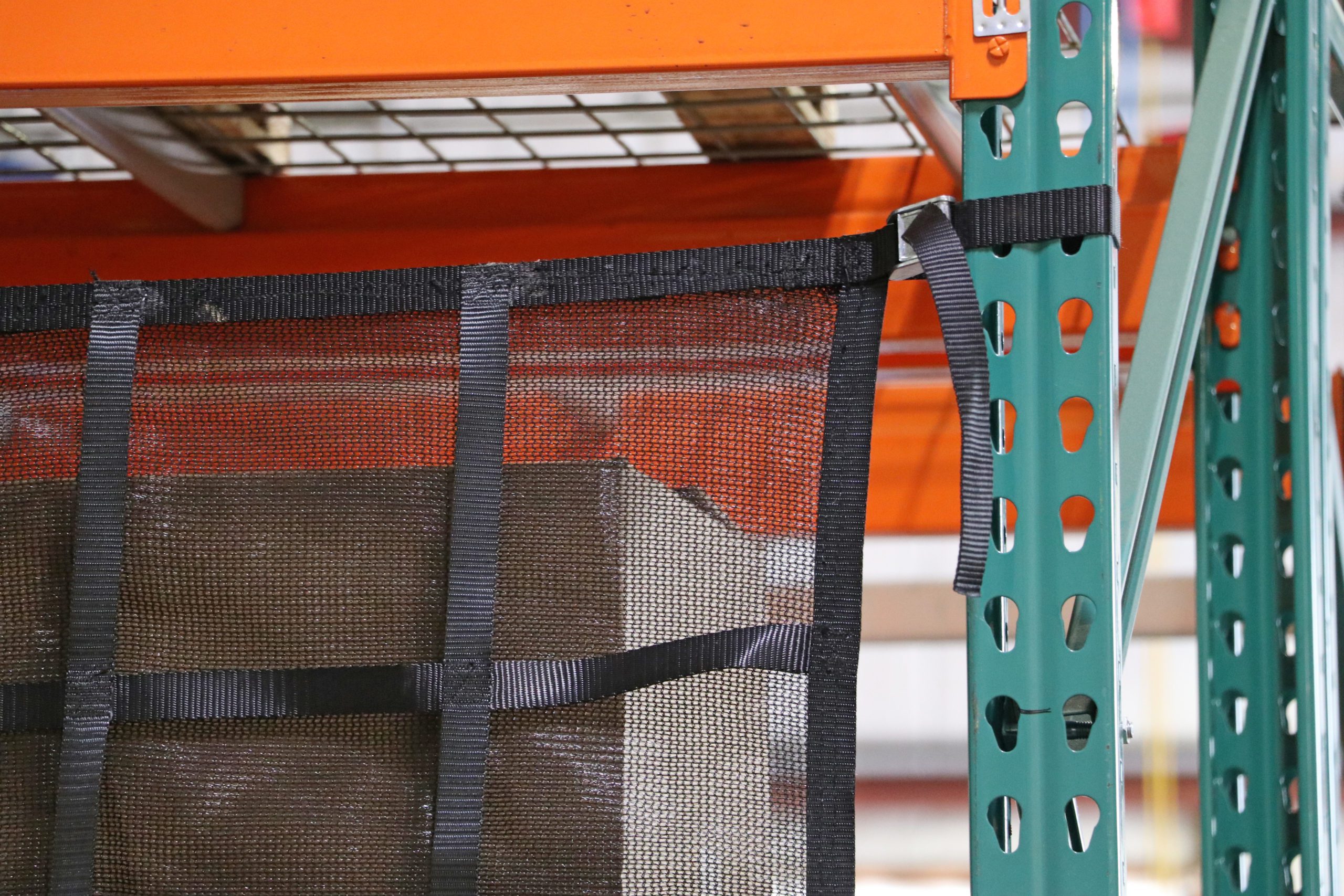
A facility may need several kinds of protection around the same operation. Product containment, machine guarding, rack containment and pedestrian traffic controls address different exposures. Identify the purpose of each system so that one purchase is not assumed to solve an unrelated problem.
| Application | Planning focus |
|---|---|
| Conveyor containment netting | Products leaving the conveyor and the area they could enter |
| Machine guarding | Access to hazardous moving parts and other machine hazards |
| Rack containment | Stored material at an identified rack location |
| Pedestrian routing | How people and material-handling activity move through the area |
The rack photo in this section shows a different containment application. Its hardware and arrangement should not be copied onto a conveyor. Ask the responsible team to review each exposure and select the appropriate system for that location.
Define inspection and incident response

An installed system needs an assigned owner. Obtain the manufacturer’s inspection and maintenance instructions, identify who performs the checks and agree on how a concern is reported. Keep the system identification and supplier contact details accessible to the maintenance team.
Have the instructions address the net, edges, fasteners, supports and any access components. The required inspection frequency and acceptance criteria should come from the applicable documentation and site review. Avoid creating an informal checklist that omits parts of the assembly.
After a significant event or a reported defect, follow the supplier’s instructions and the facility’s procedure for controlling the affected area. Do not assume that a net is ready for continued use merely because the caught product has been removed. Record the event and the assessment before returning the arrangement to normal service.
Compare proposals using the same scope
Prepare a common scope so competing proposals can be evaluated fairly. A price for net material alone is not equivalent to a complete designed and installed arrangement. Ask each proposal to identify the included components, design responsibilities and site work.
- Application: describe the conveyor route, products and identified exposure.
- Assembly: identify net selection, boundary details, hardware and proposed supports.
- Access: explain how maintenance and other required activities will be accommodated.
- Installation: define delivery, site access, shutdown coordination and exclusions.
- Handover: request drawings, instructions and a record of the accepted installation.
Resolve unclear language before approval. A proposal should not rely on a generic image to define attachment details or coverage. Discuss the project through our conveyor netting inquiry form or call (800) 326-4403.
Accept the installation against the approved plan
Use the approved drawings and component schedule during handover. Check that the installed coverage matches the agreed boundaries and that access features are present. Have the installation provider explain any departure from the plan and obtain the appropriate review before accepting it.
Confirm that the maintenance team has the information needed to identify components and request replacements. Photographs of the completed installation can help future reviewers understand the arrangement, but they should accompany the drawings and instructions rather than replace them.
Document unresolved items and the party responsible for closing them. If a conveyor expansion or product change is already planned, include a reminder that the containment arrangement must be reviewed with that change. Keeping the scope current is part of managing the system over its service life.
Keep a record of changes around the conveyor
Changes outside the net can matter as much as changes to it. A new workstation below the line, a revised discharge point or an added maintenance platform can alter the original assumptions. Include containment in the facility’s review of conveyor and layout changes.
Record the reason for a modification, the applicable drawing revision and the supplier’s response. Avoid treating a replacement panel with a similar appearance as automatically equivalent. Use the system identification to confirm material, construction and compatibility.
For related facility planning, see our warehouse design and layout services. Coordinating the conveyor with nearby work areas can make the containment requirements clearer before equipment is ordered.
Frequently asked questions
What is Conveyor Guard netting intended to do?
It is used for falling-product containment around an identified conveyor application. The product range, route and exposed areas must be reviewed with the supplier. It should not be assumed to retain every possible object or address unrelated hazards.
Does netting replace guards around moving conveyor parts?
No. Product containment and machine guarding address different exposures. Have the responsible safety and engineering team review hazardous moving parts separately and determine the required guarding arrangement.
Can we choose netting from mesh size alone?
No. Mesh opening is only one part of the specification. Product characteristics, net construction, attachments, supports and installation all require review. Ask the supplier to identify the complete assembly for the application.
Can small pieces pass through a conveyor net?
That depends on the objects and the selected mesh. Describe loose contents and small products during the application review. Ask whether a different mesh or compatible liner is appropriate, and have the complete system evaluated together.
Can existing conveyor supports be used for attachment?
Possibly, but suitability must be reviewed. Provide drawings and information about the existing structure. Do not assume a nearby member can accept the proposed attachment loads without the responsible designer’s approval.
What happens after a net catches a product?
Follow the manufacturer’s instructions and the facility’s incident procedure. Control the affected area, report the event and have the system assessed as required. Removing the product alone is not proof that the system is ready for continued use.
What should we send for a quote?
Provide a conveyor layout, representative photographs, product dimensions and weights, exposed areas, access requirements and the intended installation scope. Call (800) 326-4403 to discuss the application with Material Handling USA.
Define the right conveyor containment scope
Send your conveyor layout, product information and site photographs. We can help organize a supplier review of the netting, supports, access and installation requirements.