
Auto Body Shop Parts Carts
Collision repair parts carts that keep every removed panel, clip and new part with its repair order, from teardown to delivery. Sized for your stalls, padded for painted parts and supplied by MH-USA.
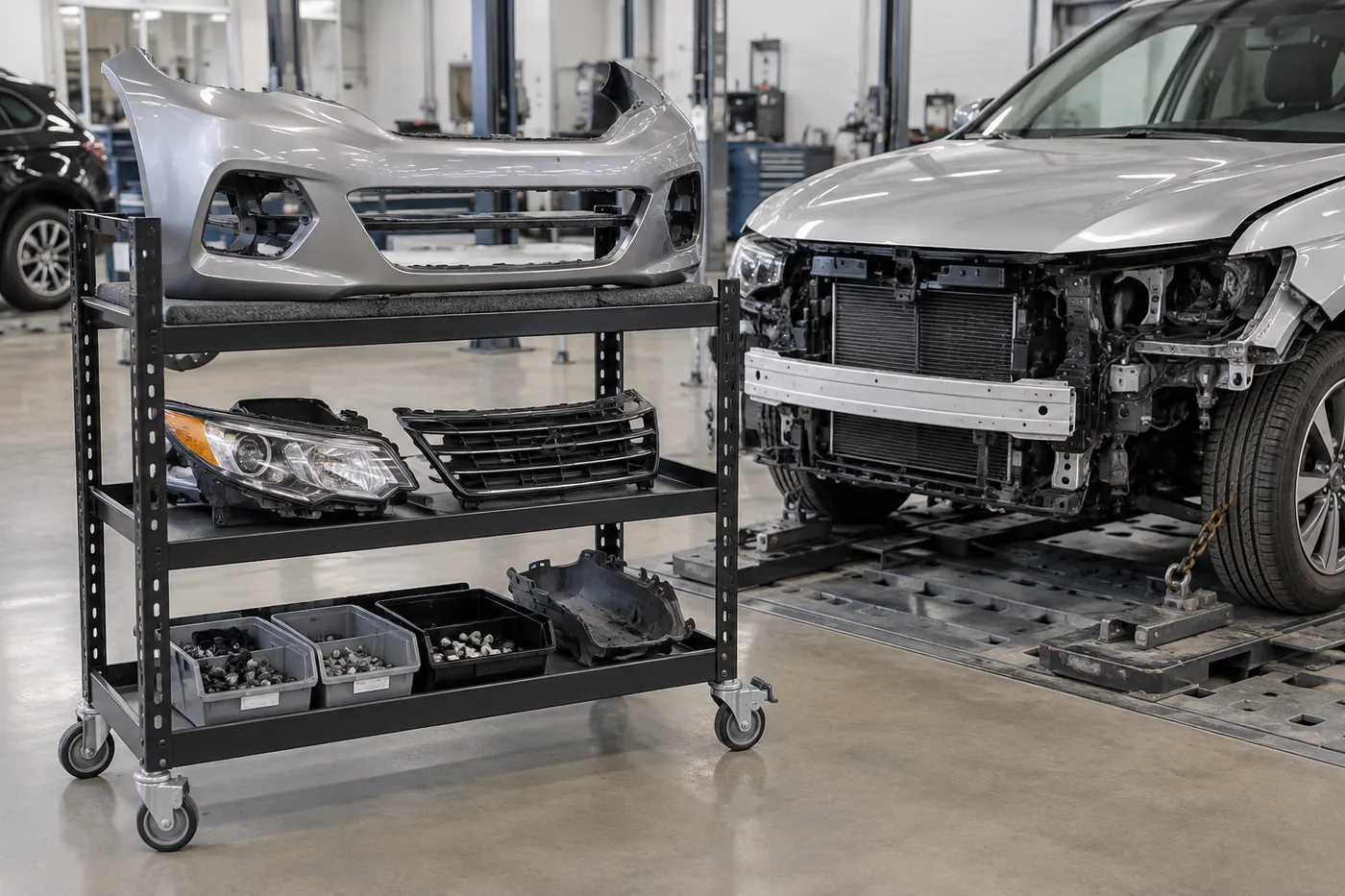
Shop Parts Carts Online
Mobile wire carts, enclosed carts, bin carts and tray trucks that work as collision repair parts carts. Order online, or ask us to quote a fleet of matching carts with padding and casters for your shop.
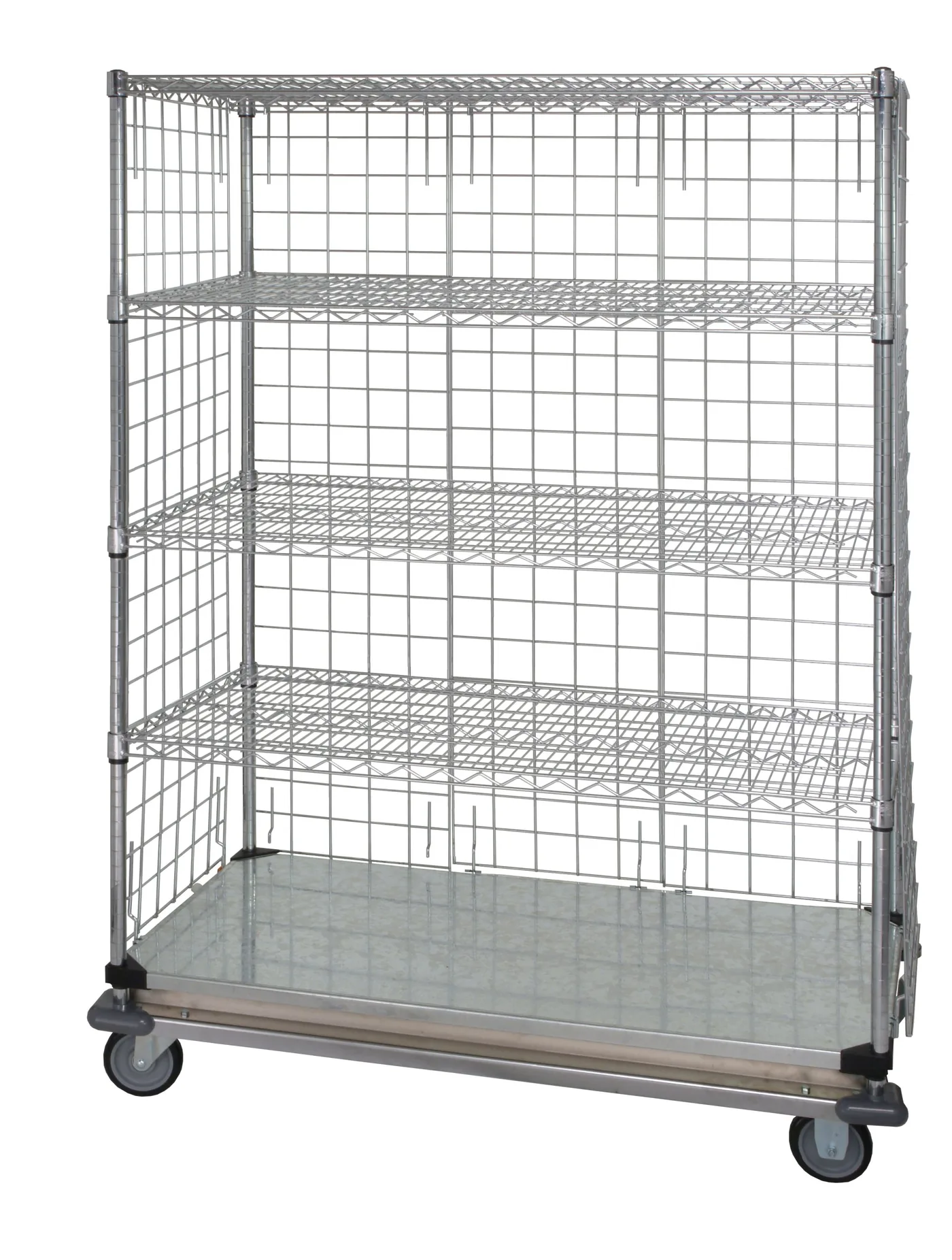
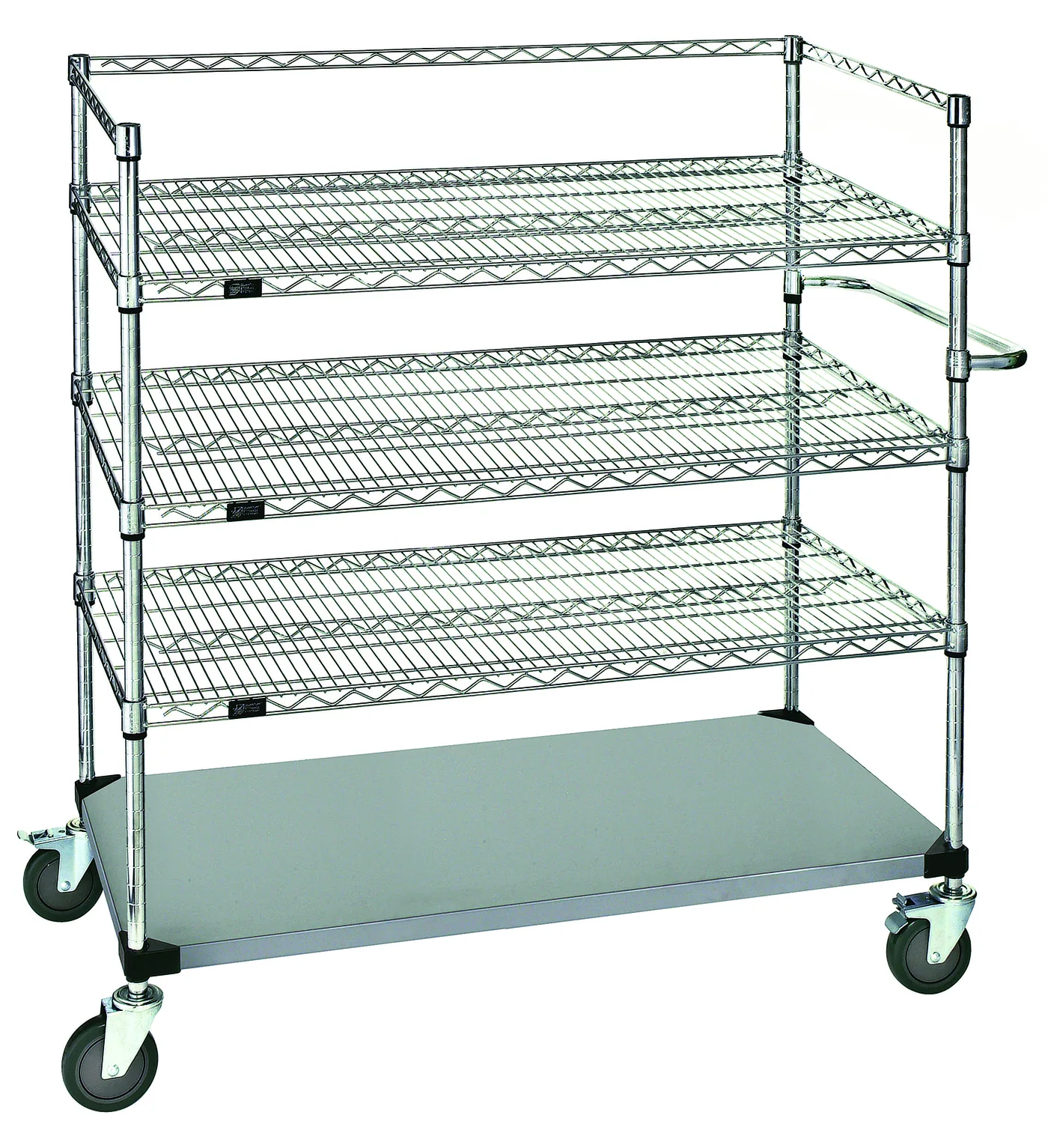
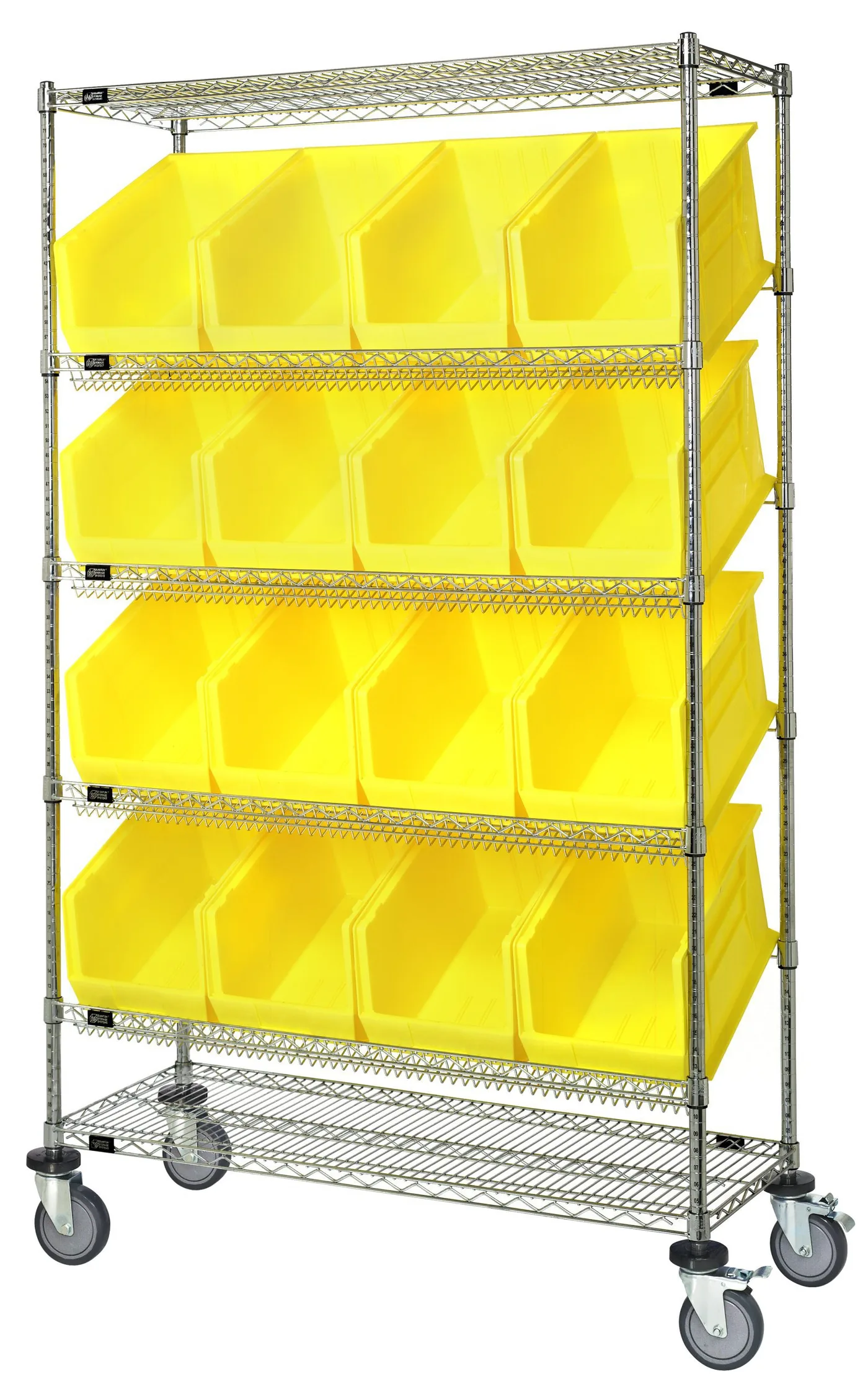
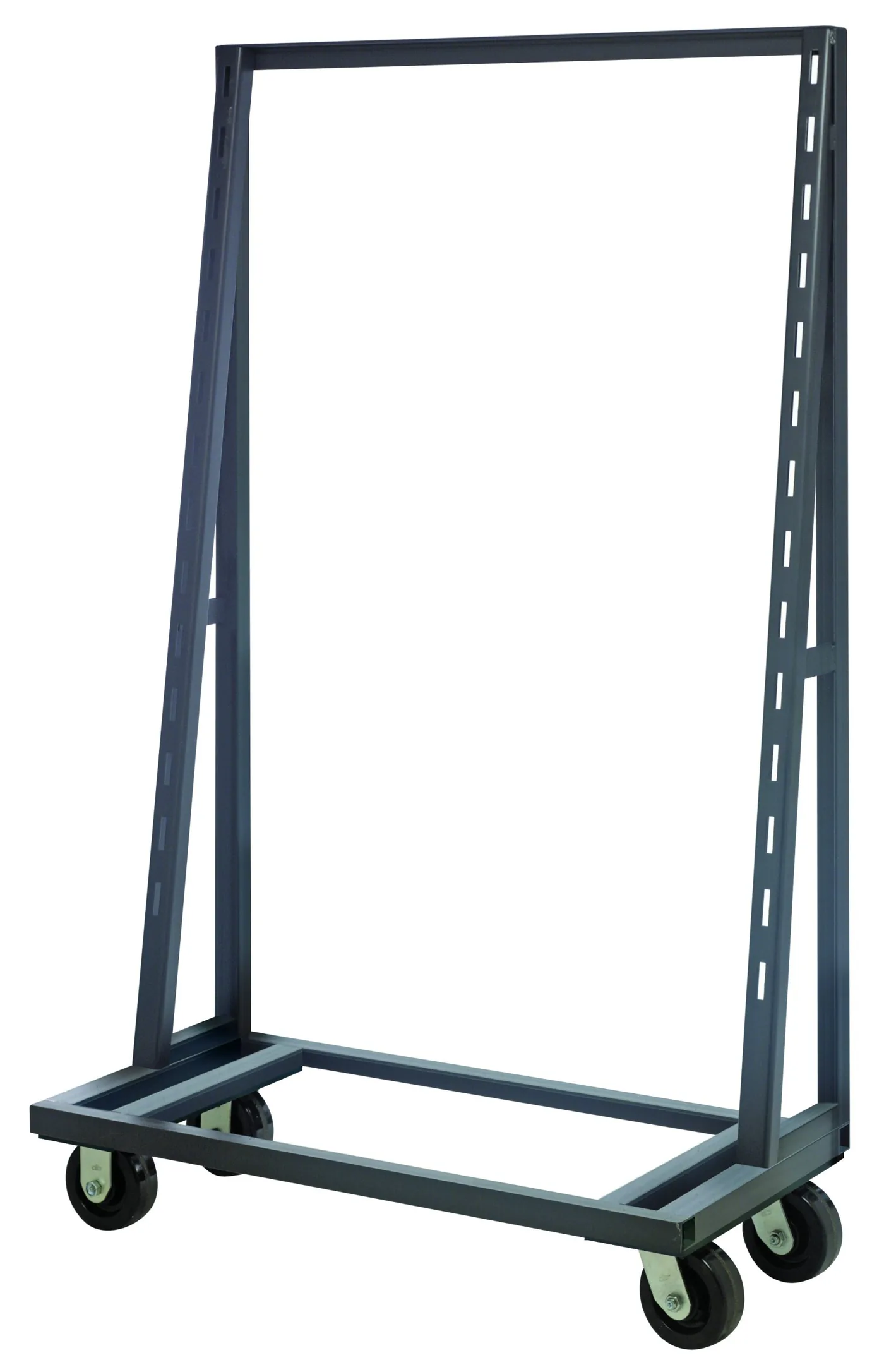
Browse all: enclosure carts · wire utility carts · tray trucks · utility cart guide
Why Body Shops Run on Parts Carts
In a collision repair shop, the parts that come off a car are as important as the parts that go back on. Bumper covers, lamps, moldings, trim panels, brackets and a few hundred clips all need to wait somewhere while the vehicle is repaired and refinished. When they end up on the floor, on a bench or in a corner, they get scratched, mixed with another job or lost.
A body shop parts cart solves that with one simple rule: one cart per repair order. Everything that belongs to that vehicle lives on its cart and moves with it through the shop.
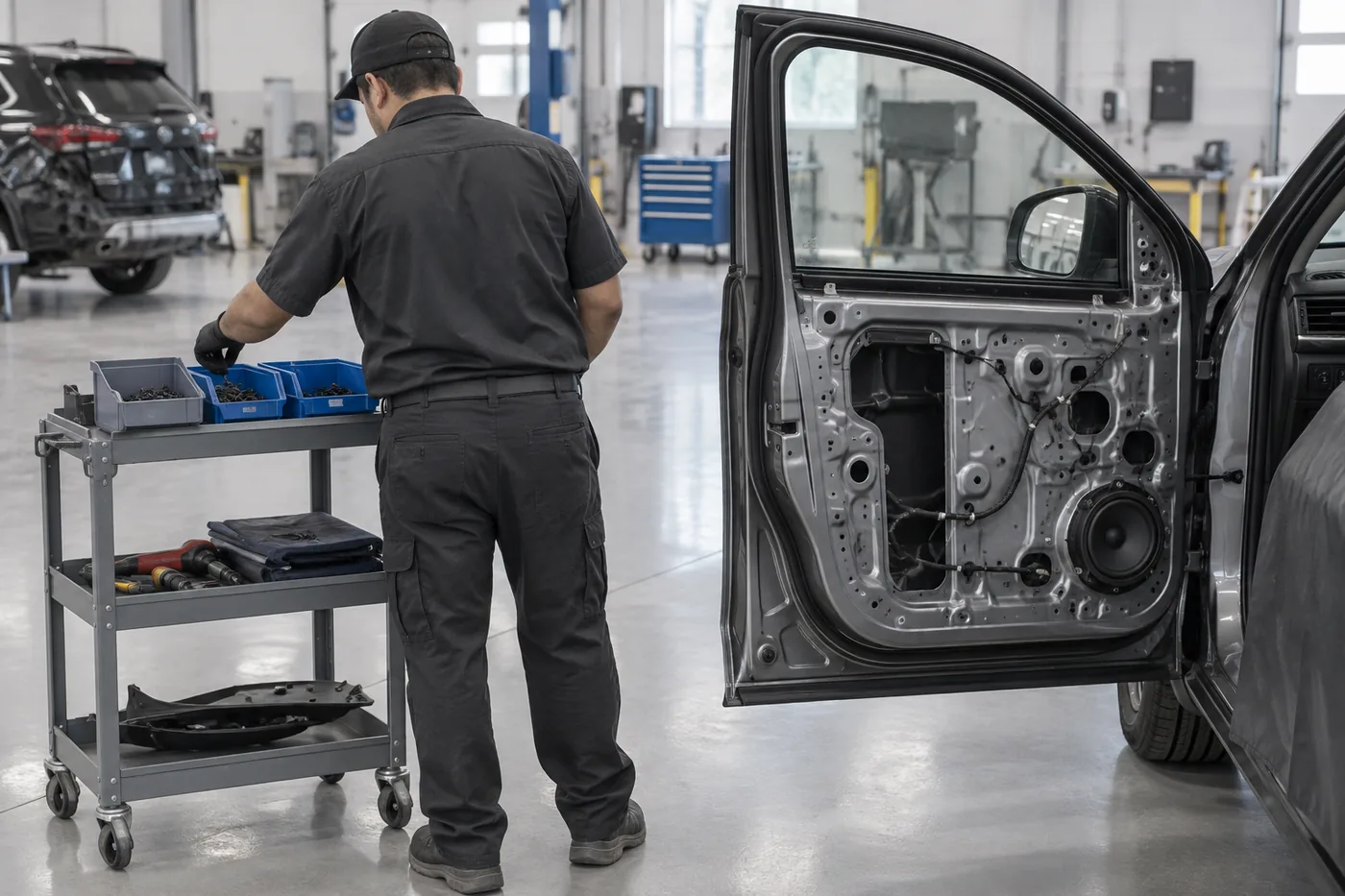
Parts carts are one of the most practical pieces of automotive storage solutions for collision repair, because they turn a pile of loose parts into a visible, mobile record of the job. A technician can see at a glance whether the new headlamp has arrived, a parts manager can match new parts against the old ones before the car is reassembled, and the estimator can walk the cart during repair planning instead of hunting through the shop.
Fewer lost and damaged parts
Removed parts stay together, off the floor and padded, so clips, emblems and sensors are not swept up or stepped on.
Faster reassembly
Hardware is bagged or binned in the order it came off, so the technician who puts the car back together is not guessing.
Cleaner stalls
Parts roll out of the way during structural repair and paint prep, and roll back when the car is ready.
Visible job status
A cart with the repair order card on the end shows what is missing before anyone has to ask.
How a Parts Cart Moves Through a Collision Repair
The cart follows the vehicle. In most shops, that path looks like this:
Teardown and repair planning
The technician removes damaged parts onto the cart and bags the hardware. The estimator uses the cart to write a complete repair plan and parts list.
Parts ordering and receiving
New parts are checked in against the repair order and placed on the same cart, or on a matching cart staged beside it.
Parts check
Before repairs start, new parts are compared side by side with the removed parts so wrong or damaged parts are caught early.
Repair and refinish
The cart rolls to the staging area while body and paint work is done, then returns with the car for reassembly.
Reassembly and QC
Parts go back on in reverse order. An empty cart, apart from returns and scrap, is a simple sign the job is complete.
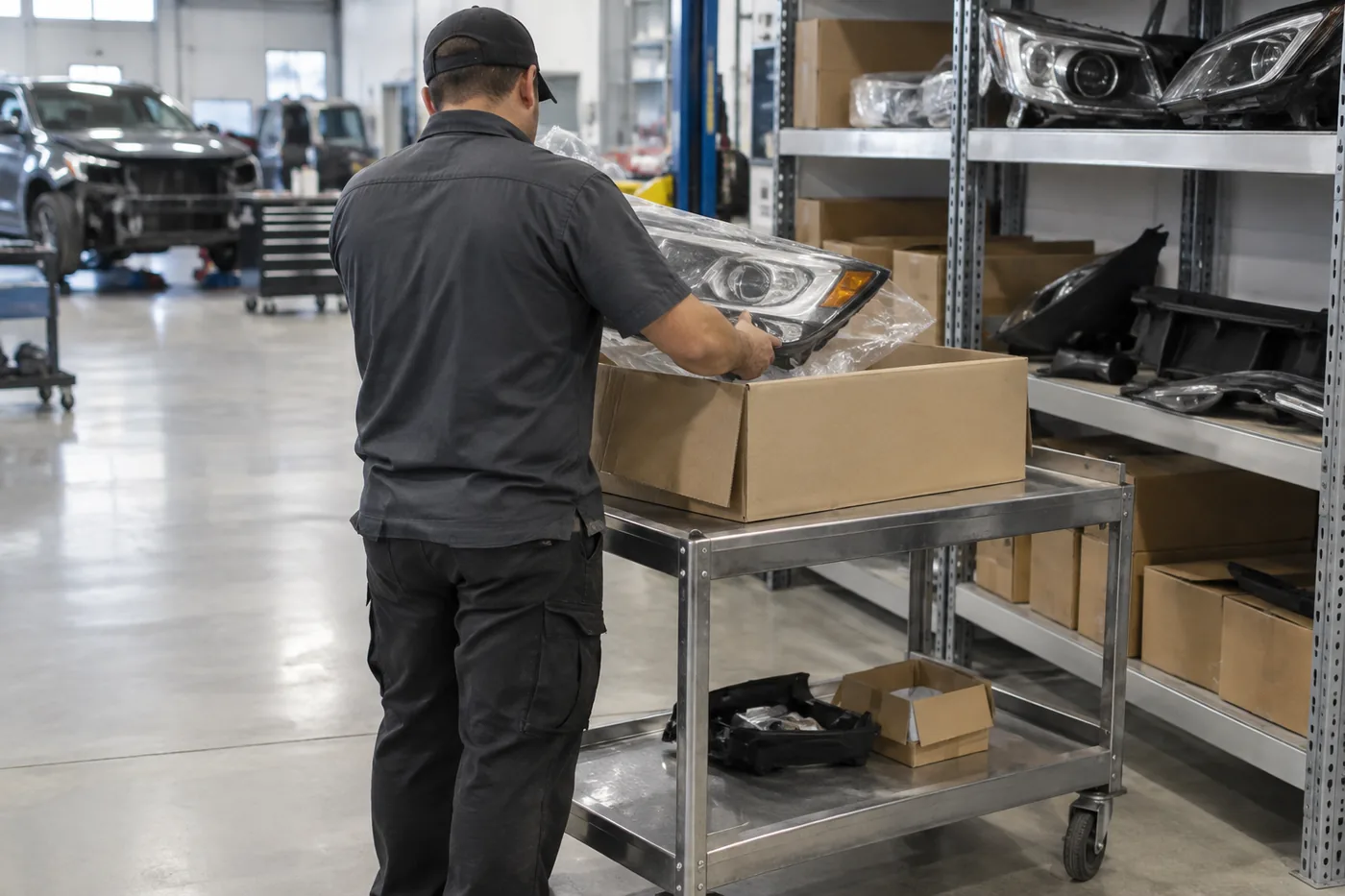
Receiving is where most parts mix-ups start. When new parts arrive, put them straight onto the right cart instead of a general shelf. A clear repair order holder on each cart, and a staging lane for carts waiting on parts, makes it obvious where each box goes. Our guide to parts receiving and put-away storage covers the check-in area itself.
Wrong or damaged parts that must go back to the supplier should leave the cart quickly and move to a returns area, so they are not reinstalled by mistake. See returns and core storage.
Types of Auto Body Parts Carts
Most body shops use more than one kind of cart. The right mix depends on the work you do and the size of the parts you handle.
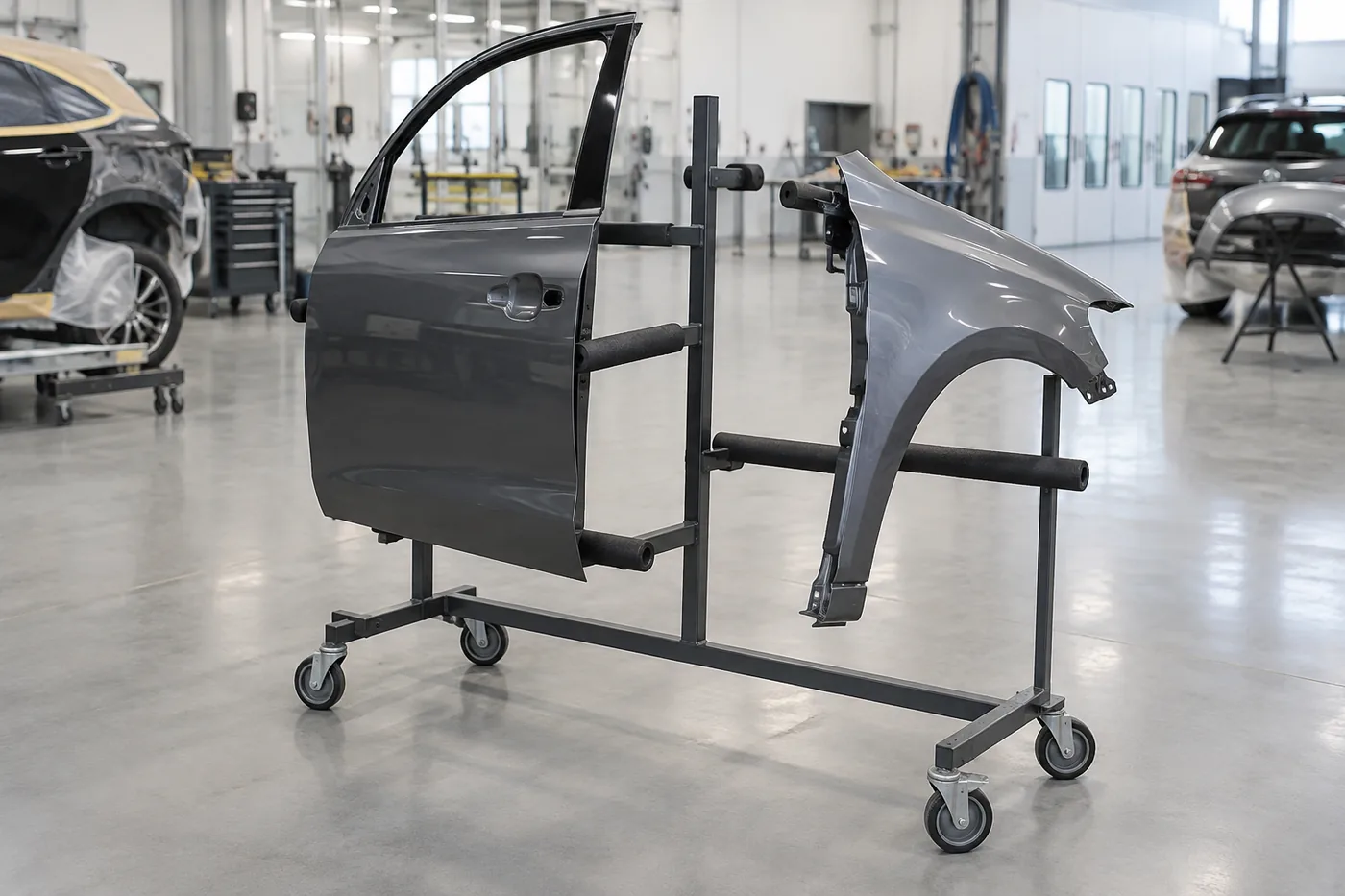
Panel carts (door and fender carts)
Vertical frames with padded arms or slots hold doors, fenders, hoods and quarter panels upright and apart so painted surfaces never touch. They are the best way to store large panels during refinish and blending, and they take far less floor space than laying panels flat.
Look for adjustable arms, soft padding that will not mark fresh paint, and a footprint that rolls through your booth doors.
Bumper carts and stands
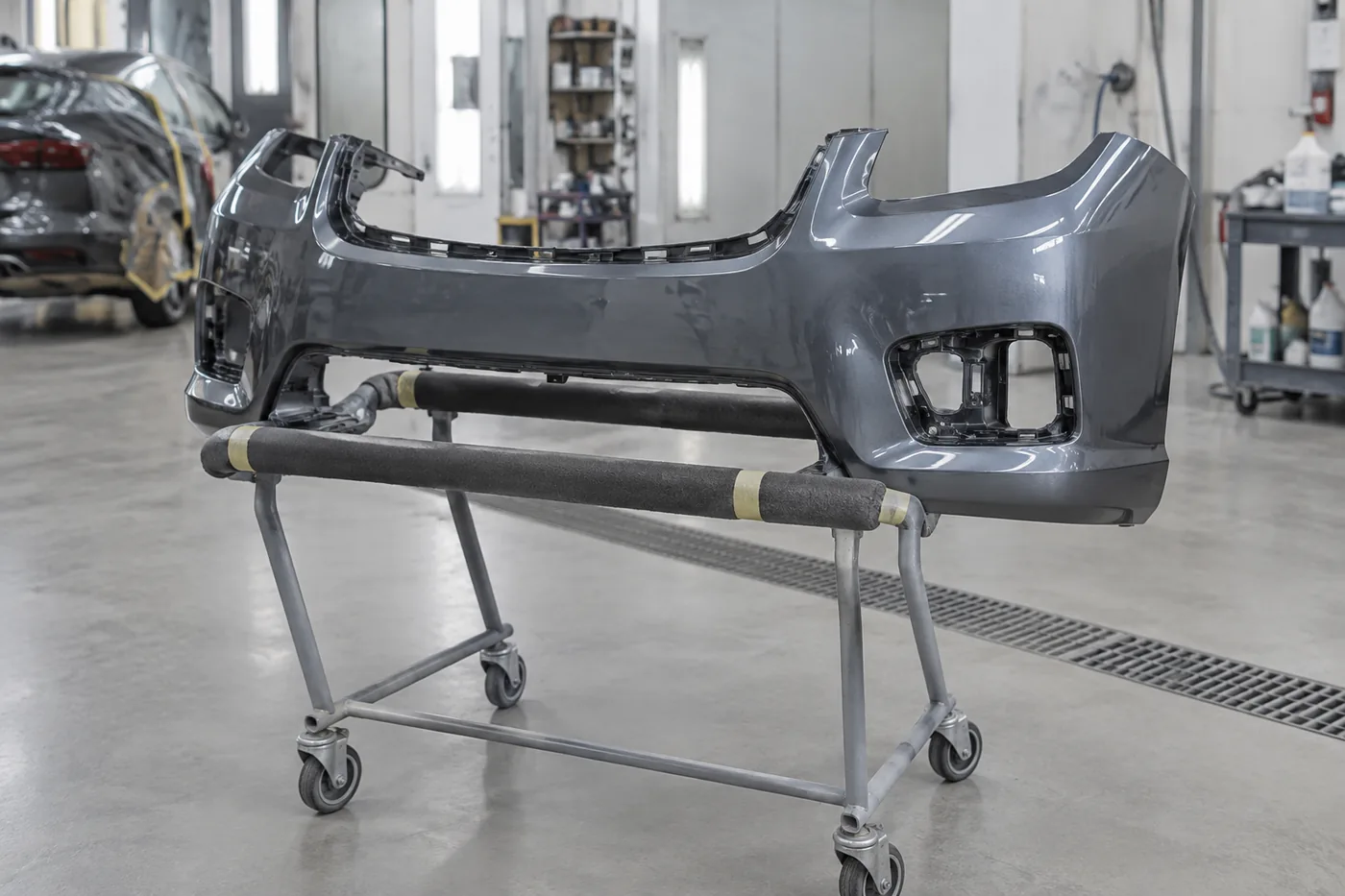
A bumper cover is long, flexible and easy to scratch or distort. A padded bumper cart supports it at several points, at a comfortable working height, so it can be stored, repaired, prepped and even painted on the same stand. Many shops keep one bumper cart per active bumper job.
Shelf and enclosed parts carts
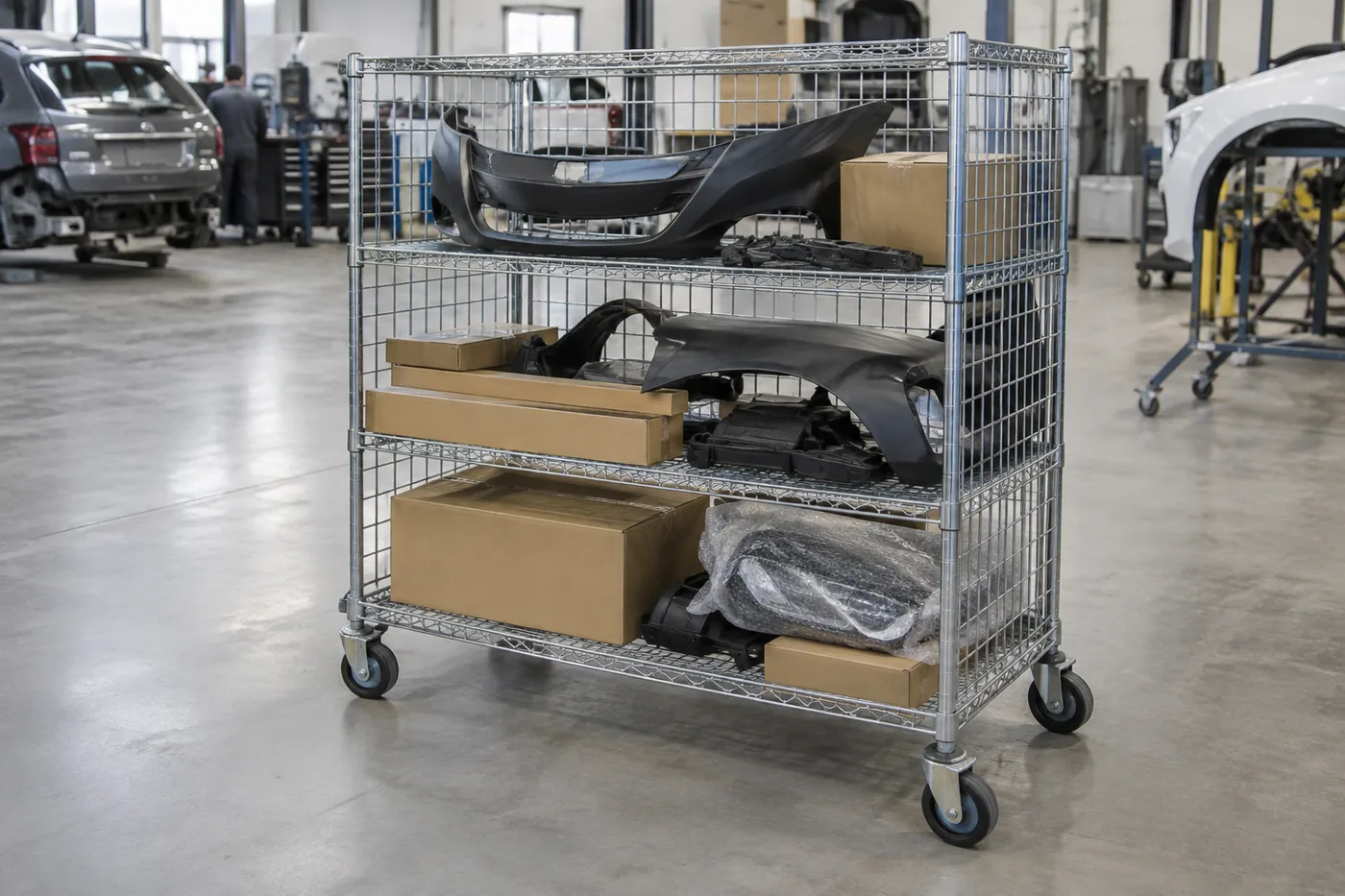
Three- to five-shelf carts are the general-purpose repair order cart: lamps, grilles, moldings and boxed new parts on the shelves, smaller parts in bins. Enclosed wire carts add side and back panels so parts cannot slide off in transit and the load stays visible. Quantum’s wire enclosed carts, for example, are rated at 1,200 lb on a 24-inch-deep footprint.
Bin carts and hardware trays
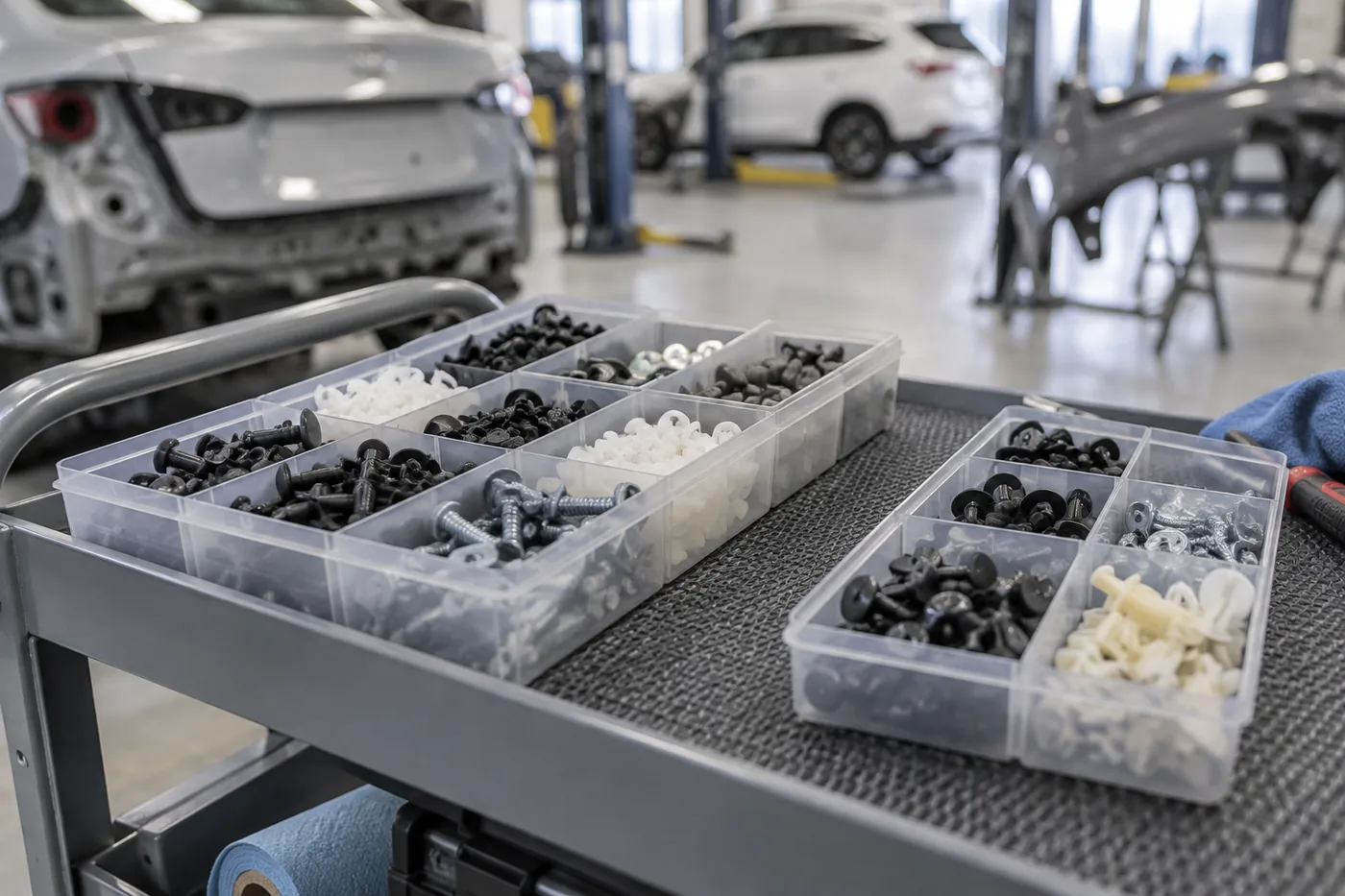
Clips, push pins, bolts and brackets are the parts most often lost. Compartment bins or a slanted-shelf bin cart keep them sorted by area of the car. Label each bin by location, such as front bumper or left door, so reassembly follows the same order as teardown.
For bulk clips and fasteners used across many jobs, a fixed bin shelving unit in the parts room is better than a cart.
The table below summarizes where each cart type fits:
| Cart type | Best for | Watch for |
|---|---|---|
| Shelf parts cart | Mixed loose and boxed parts for one repair order | Parts sliding off open shelves in transit |
| Enclosed wire cart | Visible, contained loads; carts that travel between buildings or bays | Overall height and access through the open side |
| Panel cart | Doors, fenders, hoods and quarter panels, especially after paint | Padding condition and spacing between panels |
| Bumper cart | Bumper covers during repair, prep and refinish | Support points that match the bumper shape |
| Bin or slanted-shelf cart | Clips, fasteners and small brackets sorted by location | Bins left unlabeled or reused without emptying |
| Tray truck | Heavy components on removable trays that go to the bench | Tray depth versus part size |
Parts Cart Specs That Matter in a Body Shop
Two carts that look alike can work very differently on a shop floor. Check these details before you order a set:
| Spec | Why it matters | What to look for |
|---|---|---|
| Footprint | The cart has to sit beside the car in the stall without blocking a lift arm, frame machine or walkway | Measure the space beside the vehicle with doors open; 24 in. deep carts are common |
| Overall height | Tall carts hide the far side and can tip when pushed | Keep heavy parts low; choose a height people can see over when pushing |
| Load capacity | Doors, hoods and radiator supports add up quickly | A published manufacturer rating, not an estimate; spread the load across shelves |
| Casters | Carts are pushed over drains, cords, air hoses and booth thresholds many times a day | Swivel casters with brakes, sized for your floor; non-marking treads |
| Padding | Painted and chrome parts scratch on bare wire or steel | Foam, rubber or carpeted arms and shelf liners that can be replaced |
| Shelf type and spacing | Small parts fall through open wire; tall parts need clearance | Adjustable shelves, solid liners or bins for small items |
| Repair order holder | Each cart must be tied to one vehicle | A card holder or clip at the push end, visible from the aisle |
| Finish | Shop floors see solvents, water and cleaners | Chrome, epoxy or powder-coated finishes that wipe clean |
Buy matching carts. A shop with identical carts can stage them in neat lanes, swap them between jobs and train everyone on one system. Mixed carts collected over time tend to end up as storage for whatever does not fit anywhere else.
How Many Parts Carts Does a Body Shop Need?
There is no universal number, but the planning method is simple. Start from the vehicles you actually have in production:
| Step | What to count | Example planning logic |
|---|---|---|
| 1. Active repair orders | Vehicles torn down and waiting for parts, in body repair, in paint or in reassembly on a typical busy day | Each one needs at least one shelf cart |
| 2. Large-part jobs | Jobs with doors, fenders or bumpers off the car | Add panel carts and bumper carts for these, shared across jobs |
| 3. Parts waiting to be matched | New parts received before the car is ready | Add carts or a staging lane so new parts are never left on the floor |
| 4. Spares | Carts in cleaning, repair or on loan to detail and mechanical | Add a small buffer so a new job never waits for a cart |
Plan the floor space at the same time. Every cart needs a parking spot beside its car and a place in a staging lane when the car is in the booth or on the frame machine. If the carts have nowhere to go, they end up in walkways. Our team can lay out stalls, cart lanes and parts shelving together as part of a body shop storage plan.
Parts Cart Staging and Storage
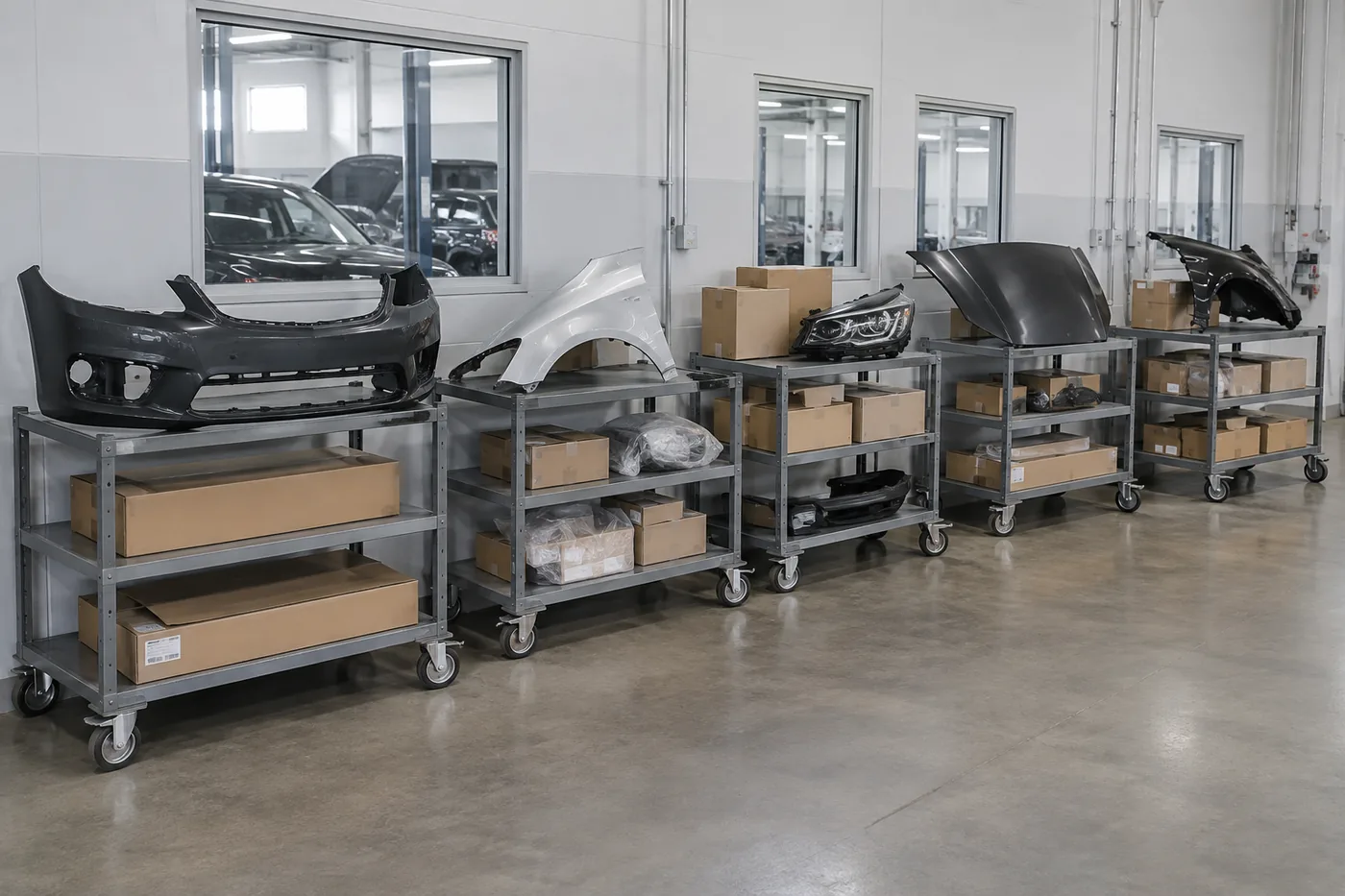
A staging area is a marked lane or wall where carts wait while their vehicles are in paint or structural repair. Keep it close to the production line and the parts room, out of the main traffic aisle, and mark one position per cart so missing carts stand out.
Line carts up with the repair order holders facing the aisle. Some shops color-code carts or holders by stage, such as waiting for parts, in repair or ready for reassembly, so the staging lane doubles as a production board.
Carts work best alongside fixed storage. A few pieces usually complete the system:
Parts room shelving
Boltless or wire shelving for stocked parts, reserve hardware and supplies. See parts room shelving and wire shelving.
Drawer cabinets
Lockable modular drawers for small, high-value or frequently used parts and tools. See automotive drawer cabinets.
Paint and refinish storage
Toners, reducers and solvents belong in their own room and safety cabinets, not on parts carts. See paint mixing room storage.
Technician tool carts
Tool carts and workstations are different from parts carts and should not share space. See automotive rolling tool carts.
Safety and Ergonomics for Parts Carts
Parts carts are pushed hundreds of times a week, often around lifts, frame machines and open floor drains. A few habits prevent most problems:
- Keep aisles clear. OSHA’s materials-storage rule (29 CFR 1910.176) requires clearances where mechanical handling equipment is used and aisles kept clear and in good repair. Parked carts should not narrow an aisle or block an exit.
- Keep floors orderly. OSHA’s walking-working surfaces rule (29 CFR 1910.22) requires floors to be kept clean, orderly and free of hazards. Parts on carts instead of the floor helps directly.
- Load heavy parts low. Put doors, hoods and radiator supports on lower shelves or panel carts and lighter parts above, so the cart stays stable when pushed.
- Respect the rating. Never exceed the manufacturer’s published capacity, and spread weight evenly across shelves.
- Lock casters when parked beside a lift or on a sloped floor near a drain.
- Lift smart. NIOSH’s lifting equation uses 51 lb as the load constant for ideal conditions; heavy or awkward panels should be handled by two people or with an assist, and carts at waist height reduce bending.
Reference: OSHA’s 29 CFR 1910.176 and NIOSH’s Applications Manual for the Revised NIOSH Lifting Equation.
Common parts cart mistakes
- Sharing one cart between two repair orders.
- Leaving clips loose on a shelf instead of bagged or binned by location.
- Bare wire shelves under painted parts.
- No staging lane, so carts drift into walkways.
- Buying carts too tall to see over or too wide for the stall.
Request a Parts Cart Quote
Tell us how many cars you typically have in production, the parts you handle most and the size of your stalls. We will recommend a matching set of parts carts, panel carts and staging, and quote them with freight.
Auto Body Shop Parts Cart FAQs
What is a parts cart in a body shop?
Why should each repair order have its own parts cart?
What is the difference between a parts cart and a panel cart?
How many parts carts does a collision shop need?
What size parts cart fits beside a car in a stall?
How do you protect painted parts on a cart?
How should small clips and fasteners be stored on a parts cart?
Can MH-USA supply parts carts for a whole body shop?
Organize Every Repair Order
Tell us about your shop and we will recommend the right parts carts, panel carts and staging layout, then quote them.