
Heavy-Duty Truck Dealer Parts Department Storage
Class 6–8 truck and trailer parts do not fit a car dealership’s parts room. Here is how to plan shelving, cantilever, pallet rack and drawer storage for a commercial truck dealer, and where the weight, length and volume actually change the design.
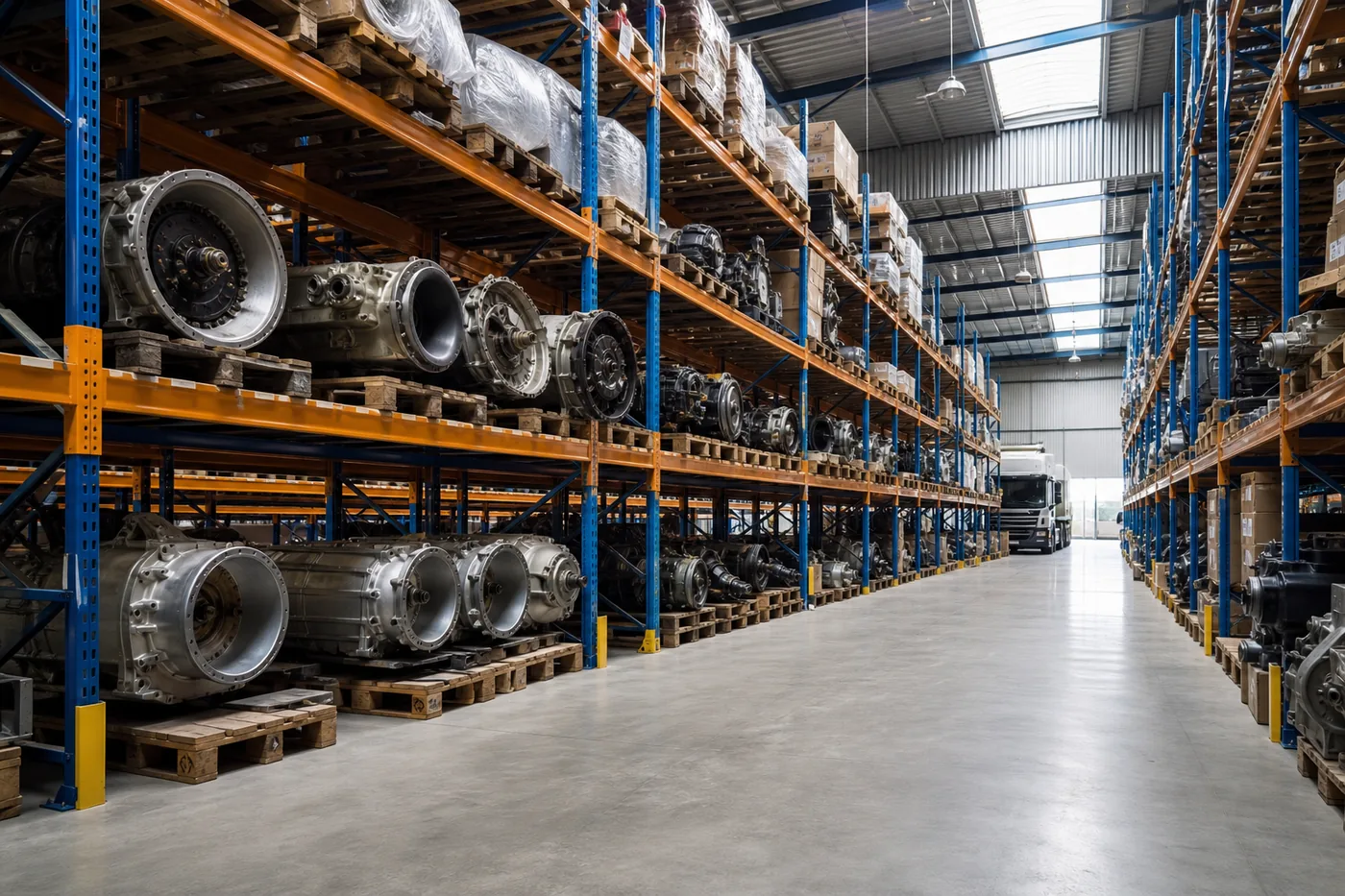
Longer parts
Driveshafts, exhaust, leaf springs and rails need cantilever or long-span, not shelving
Heavier parts
Brake drums, hubs and castings drive shelf capacity and handling equipment, not just cube
Deeper inventory
Multiple chassis makes, engine families and vocational configurations multiply SKUs
Longer counter hours
Extended and second-shift service means storage has to work without the parts manager present
A truck parts department is not a scaled-up car parts room
The equipment catalog looks similar — shelving, drawers, rack — but the mix is completely
different. In a passenger-car parts department the majority of the inventory fits comfortably in shelf
openings and drawers, and the exceptions are bumpers, exhaust and glass. In a Class 6 to Class 8 truck or
trailer dealership, the exceptions are a large share of the department: leaf springs, driveshafts, exhaust
stacks and pipes, air tanks, radiators, charge air coolers, hoods, fairings, fifth wheels, brake drums and
hubs, plus filters and fluids in case and drum quantities.
Weight is the second difference. A shelf level holding cartoned car filters and a shelf level holding truck
brake drums are not the same engineering problem. Rated uniformly distributed shelf capacity, level spacing,
anchoring and the way material gets lifted onto and off the shelf all change, and OSHA 29 CFR 1910.176(b)
requires stored material to be stacked, blocked, interlocked and limited in height so it is stable and secure
against sliding or collapse — a requirement that gets harder to satisfy casually as unit weights climb.
The third difference is breadth. A truck dealer often supports several chassis makes, multiple engine and
aftertreatment families, trailer and body components, and vocational configurations for dump, mixer, refuse,
utility and highway applications. That produces a long slow-moving tail alongside a fast-moving core of
filters, brake, air system and electrical parts. This page is the truck-specific companion to our
dealership parts room storage guidance, and to our
fleet and municipal garage parts storage page, which covers in-house fleet shops rather than
selling dealers.
Matching the storage system to the part family
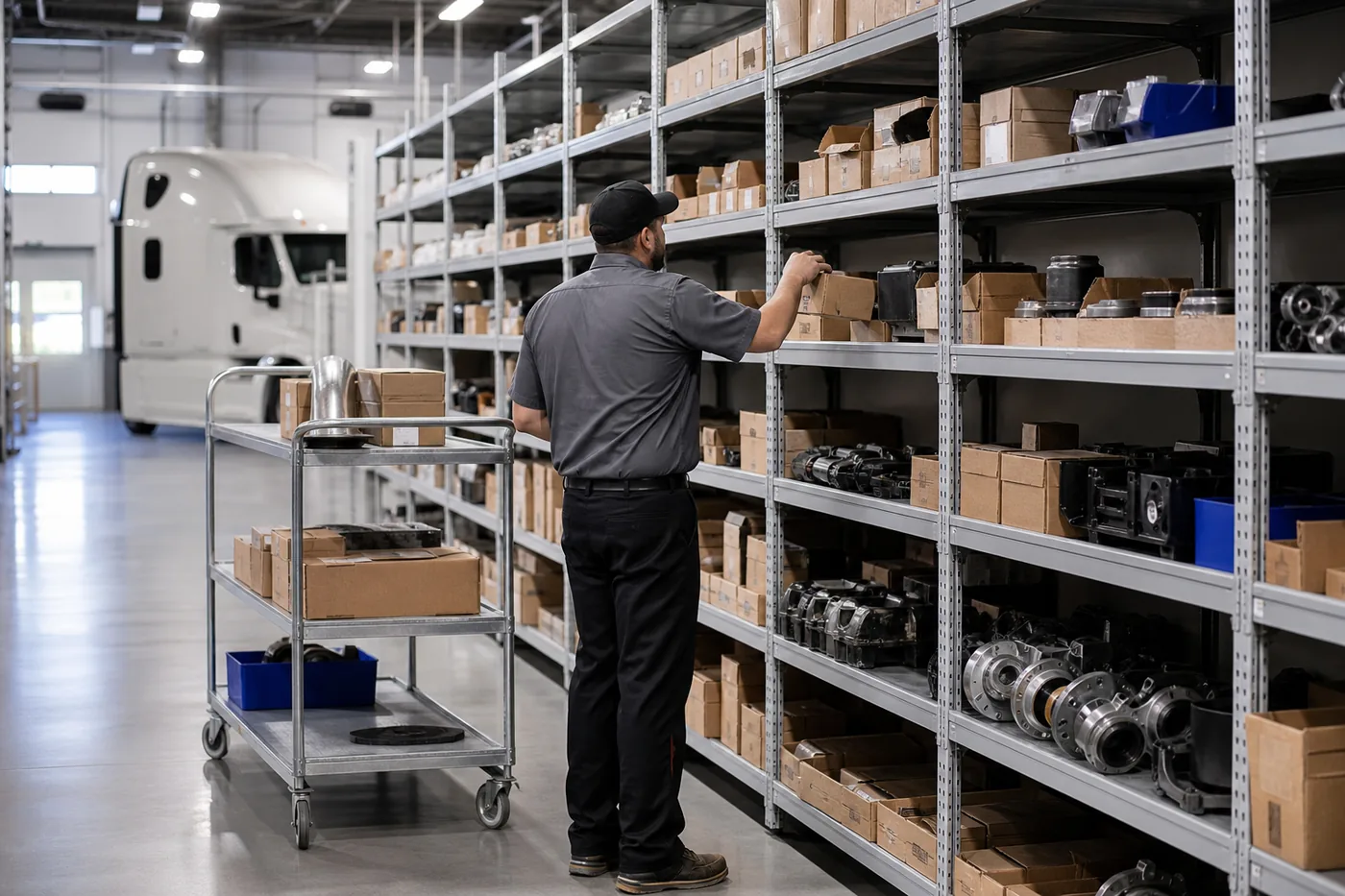
Most truck parts departments can be planned as five storage populations. Sizing each one honestly, from
your own inventory data, is more useful than picking a system first.
| Part family | Typical characteristics | Storage that suits it |
|---|---|---|
| Small parts, fasteners, fittings, seals, electrical | High SKU count, low cube per SKU, frequently picked, easily lost on an open shelf. | Modular drawer cabinets with dividers, and bin storage on shelving. Drawers convert shelf openings into many addressable locations without adding footprint. |
| Filters, belts, hoses, brake and air system components | The fast-moving cartoned core of the department, picked all day, replenished weekly. | Steel shelving in the primary aisles at the shortest walking distance from the counter, with shelf levels set to the carton heights actually stocked. |
| Heavy castings: drums, rotors, hubs, calipers, clutches | Concentrated weight in small cube, awkward and unsafe to lift above waist height. | Low, heavy-duty shelf levels or rack beam levels reachable without lifting overhead, with a cart or lift assist planned into the aisle rather than improvised. |
| Long parts: driveshafts, exhaust, springs, tubing, rails, bumpers | Length that no shelf opening handles, prone to damage if leaned against a wall. | Cantilever rack, which stores long material on unobstructed arms. Cantilevered racks are addressed by ANSI/RMI MH16.3, and ASCE/SEI 7 treats steel storage racks as nonbuilding structures for seismic design. |
| Bulk and reserve: cases of filters, fluids, drums, tires, cab and hood panels | Palletized, replenished in volume, low pick frequency per unit. | Pallet rack with a defined replenishment routine into the pick faces, plus a plan for oversized body panels that pallet rack does not suit. |
Get the inventory profile before the layout
Export your parts inventory with dimensions where available, unit weight, movement class and on-hand quantity. The number of long parts, the number of parts over a manual-handling weight threshold and the true carton height distribution will decide the layout more than any general rule about truck dealers.
Long and heavy: the part of the department most often under-planned
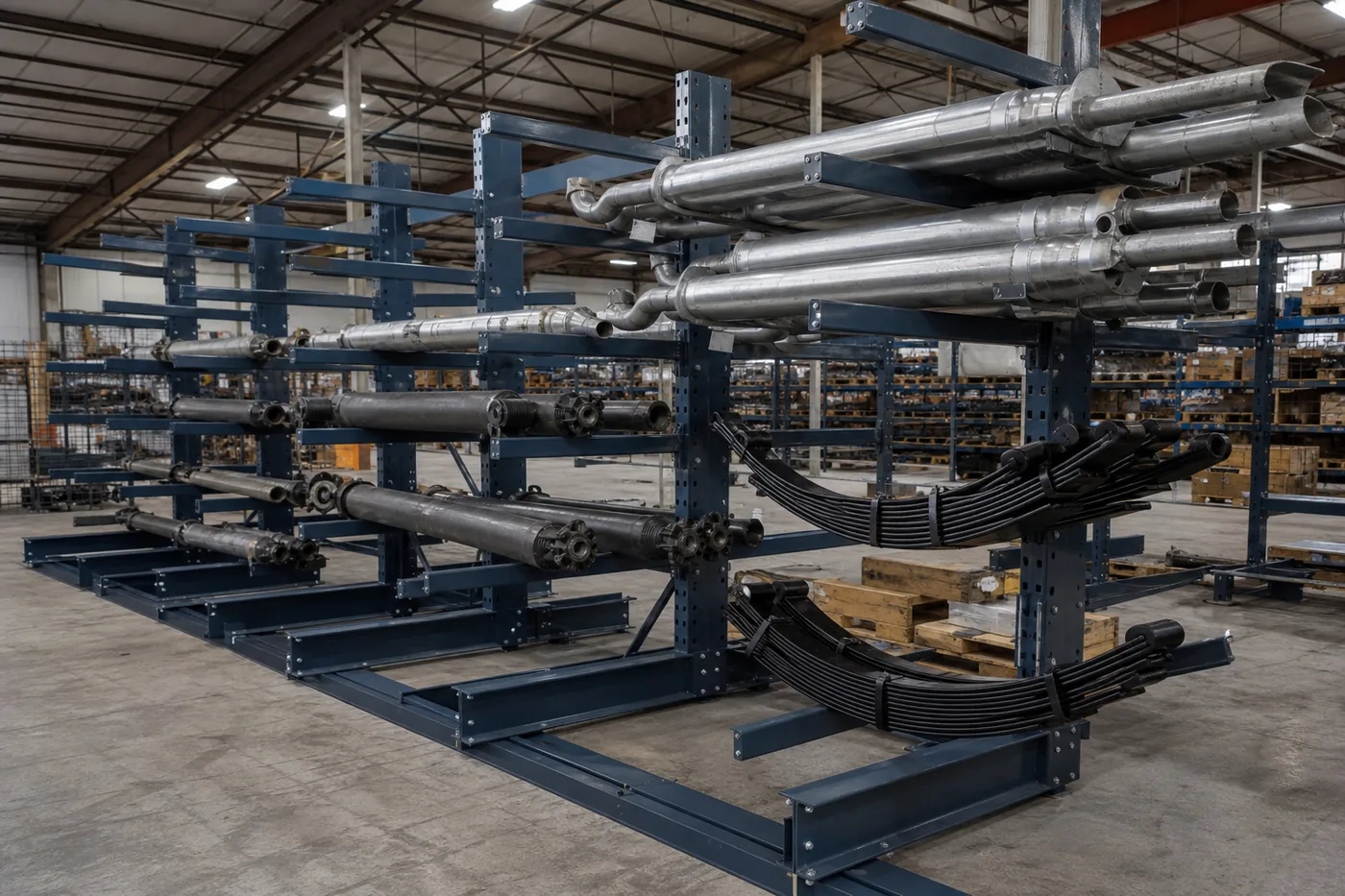
The long-parts problem is what separates a truck dealer’s parts building from a car dealer’s parts room. It
is also what usually gets solved informally — leaned in a corner, laid across the tops of shelving, or
stacked on the floor along an aisle — which damages inventory, blocks aisles and creates the exact
condition OSHA’s aisle and housekeeping requirements in 1910.176(a) address.
- Cantilever arms are sized as a system. Arm length, arm capacity, column spacing and the
number of levels come from the load profile, not from the longest part alone. Two shorter loads on one arm are
a different case than one long load spanning three columns. - Plan the retrieval, not just the storage. A driveshaft stored eight feet up needs a way
down that is safe every time, at any staffing level. - Protect the ends of runs. Long parts are handled with the body, and the ends of racks are
where carts and forklifts make contact. End protection is cheaper than upright replacement. - Keep heavy castings out of overhead positions. Weight belongs in the band a person can
reach without lifting overhead; the upper positions are for light bulk. - Match the handling equipment to the aisle, before the aisle is fixed. If a forklift or
order picker will serve the rack, the aisle width is set by the equipment’s turning requirements, and OSHA
1910.176(a) requires sufficient safe clearances for aisles where mechanical handling equipment is used. - Anchoring and seismic design are part of the quote. In the Intermountain West, rack and
tall shelving anchorage follow an engineered design. Our
parts room anchoring and seismic compliance page covers what that involves.
Laying out a commercial truck parts department
The layout question is where the department earns or loses hours every day: how far a counter person walks
for a common filter, how a delivery driver loads, and whether service technicians serve themselves or wait.
Establish the demand points
A truck dealer usually serves four demand points at once: the service floor, the retail and fleet counter, wholesale delivery, and the shop’s own consumables. Each one pulls from a different part of the inventory and each deserves its own consideration in the layout.
Slot by movement, then by weight
Fast movers go closest to the counter and the shop door at the easiest reach height. Heavy items go low regardless of movement. Everything else fills outward. Our slotting guidance for parts warehouses covers the method in more detail.
Give long parts a dedicated run with real access
Cantilever placed along a wall with a clear approach for a forklift or a long-load cart, not squeezed into a leftover corner where it cannot be loaded.
Separate wholesale staging from the pick aisles
Route deliveries need staging space with lane identification. If the staging happens in the aisles, the aisles stop working — and stay blocked for the rest of the day.
Plan vertical before planning an expansion
Truck parts buildings usually have height that is not being used. A mezzanine or a second level over the slow-moving tail is often cheaper than square footage, though it is a structure with its own permitting and guarding requirements.
Make the department work at 6 a.m.
Extended hours and second-shift service mean stock has to be findable by someone other than the parts manager. Location labeling, a consistent addressing scheme and clean put-away discipline are what make that true.
Design for the next chassis line, not just this one
Adding a make, an engine family or a vocational segment adds SKUs. Leave planned empty locations rather than filling the room on day one.
Planning a truck dealer parts department?
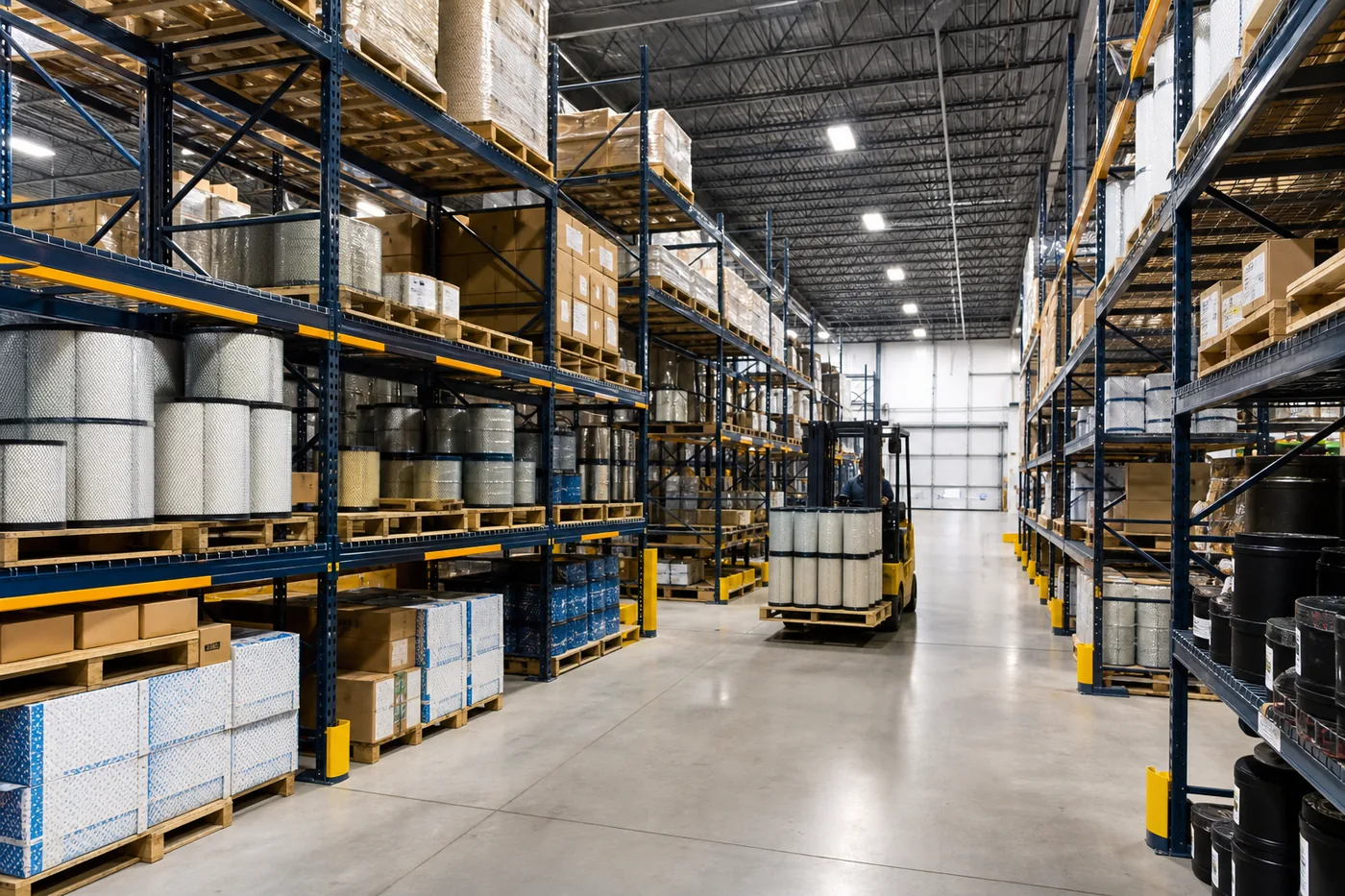
MH-USA lays out and installs shelving, cantilever, pallet rack, drawer storage and mezzanines for commercial truck and trailer dealers across Utah, Idaho, Nevada and the Mountain West.
Safety, handling and compliance items that recur in truck parts rooms
Shop Boltless Shelving and Pallet Rack Online
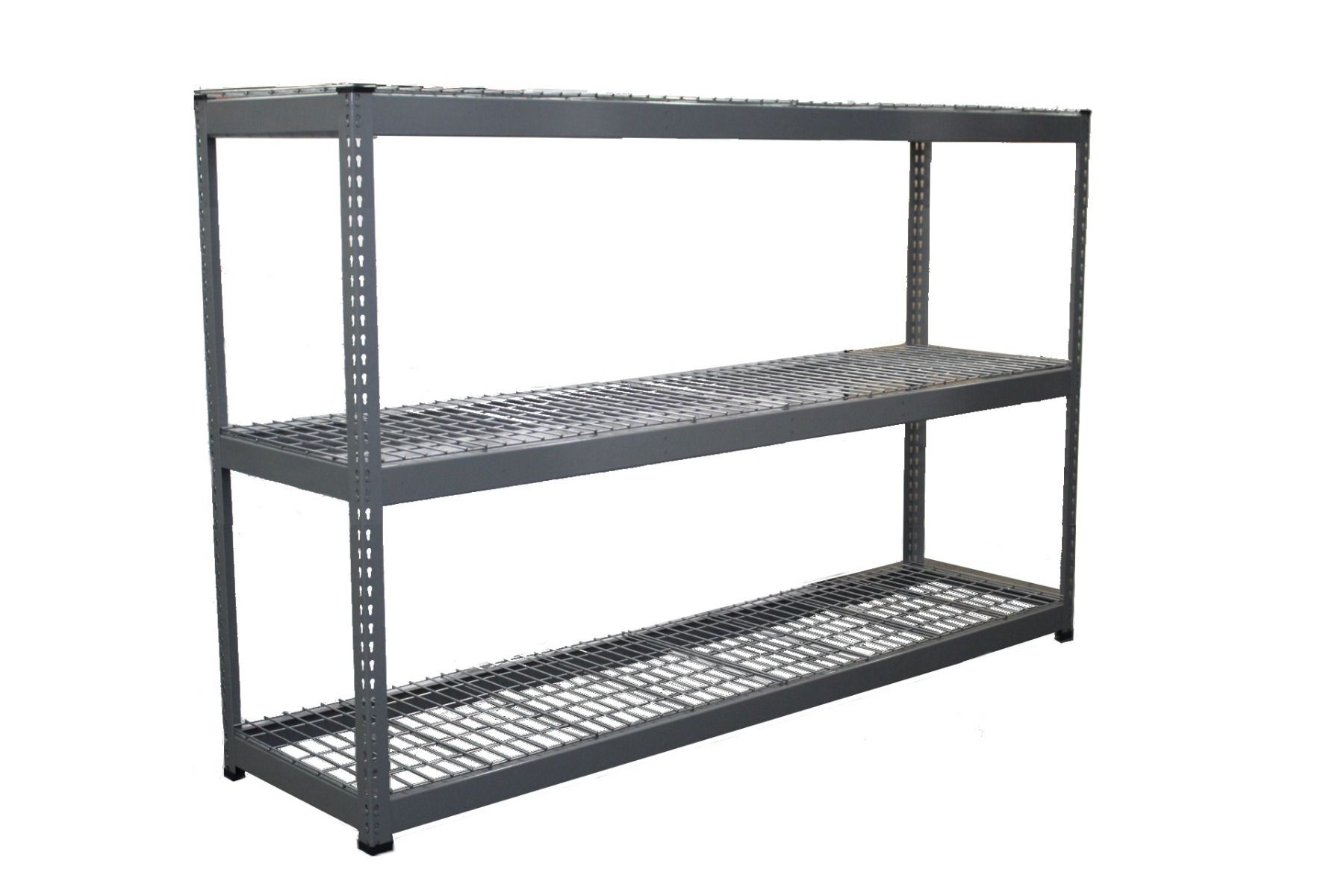
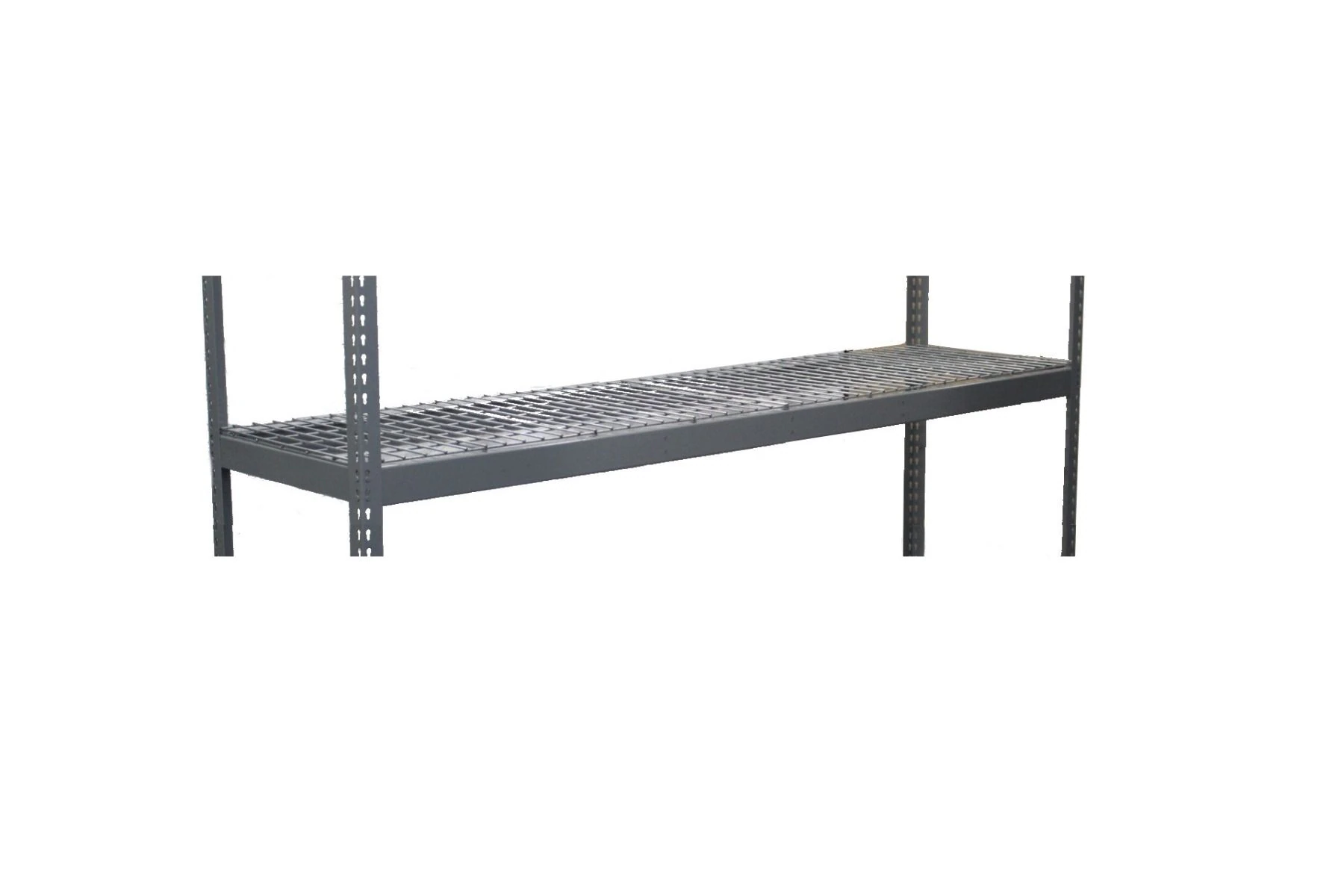
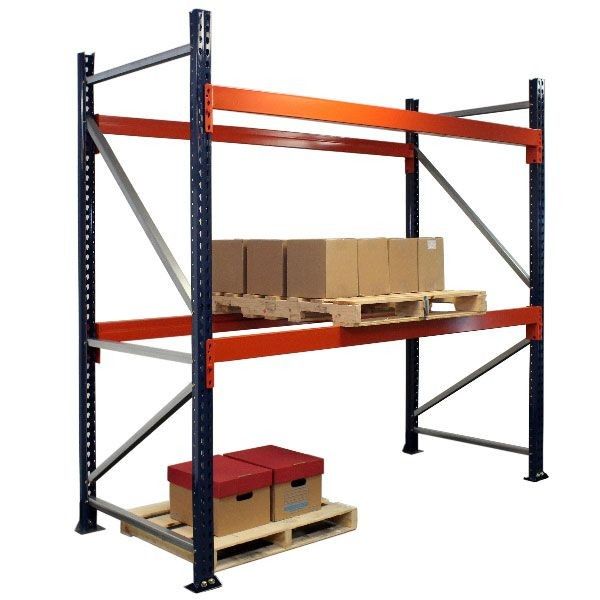
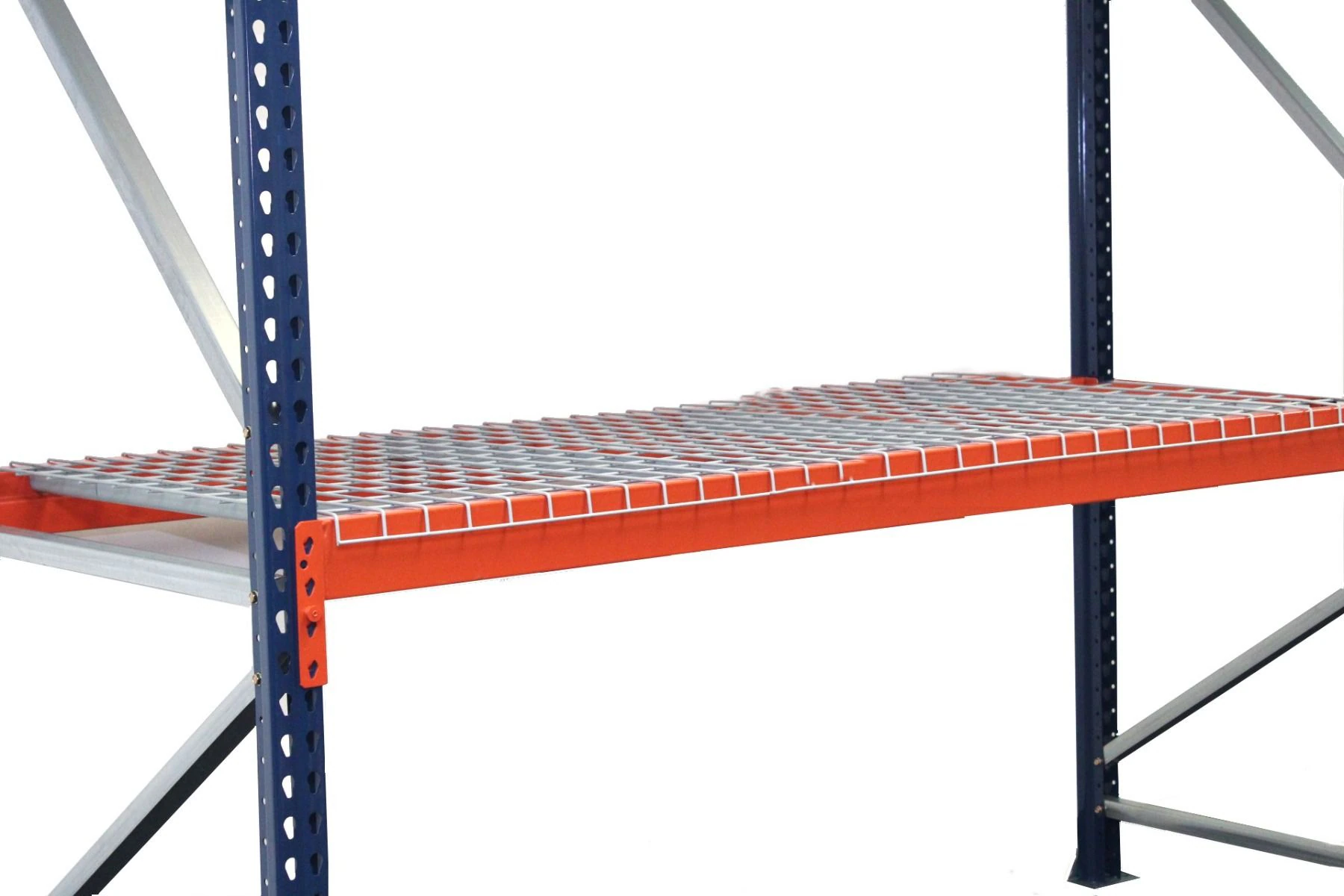
Heavy-duty boltless shelving and pallet rack starter units suited to truck parts departments. Buy online, or request a quote for a full department layout with freight and installation.
How is a heavy-duty truck parts department different from a car dealership parts room?
What kind of rack do you use for driveshafts, exhaust and leaf springs?
How much weight can parts shelving hold?
Should heavy truck parts be stored high or low?
Is a mezzanine worth it in a truck parts building?
How do we handle a wholesale delivery operation without blocking the parts room?
What should we do before adding another chassis make or vocational line?
Get your truck parts department planned around what you actually stock
Send us the building dimensions and an inventory export. MH-USA will lay out shelving, cantilever, rack and drawer storage for your commercial truck or trailer dealership and quote the whole package.