
Parts Warehouse Racking for an Equipment Dealer: Total Warehouse
A dealer parts operation lives or dies on one number — how often the counter says “we have it here”. Here is how we plan pallet racking and parts shelving so a service and rental business can say it more often. Not every equipment dealer operation is a parts-counter warehouse — a rental division’s attachment fleet needs cantilever storage for buckets, forks and ground-engaging tools; see our heavy equipment rental fleet attachment storage case study.

2023
Year Total Warehouse worked with us on rack
Equipment dealer
Rental, service and parts operation
Pallet rack + boltless
Product categories we supplied
Two pick units
Pallets in bulk, pieces at the counter
Plan your layout before you buy
Configure upright height, beam width, bay count, and load levels in our free 3D Pallet Rack Designer, then get an instant bill of materials and request a quote.
The project
Total Warehouse is an equipment dealer and rental operation. Material Handling USA supplied pallet rack in 2023, and boltless shelving alongside pallet rack in the same year. The client, that year and the product categories supplied are the only project details we publish.
Parts warehouses for equipment dealers, rental fleets and service businesses have a distinctive economic shape. A large majority of the line items on the shelf are slow movers that exist purely so a machine is not down waiting for them, while a small minority of items move constantly. Storage that treats those two populations the same is either enormous or permanently out of stock.
So the design problem is a sorting problem before it is a steel problem: separate the inventory into populations that behave differently, then give each one a storage medium that suits it. Below is how we do that, and what a dealer should insist on when specifying pallet rack systems and parts storage.
What we publish
We publish the client, the year we worked together and the product categories supplied. We never publish facility layouts, room dimensions, inventory quantities or contract values.
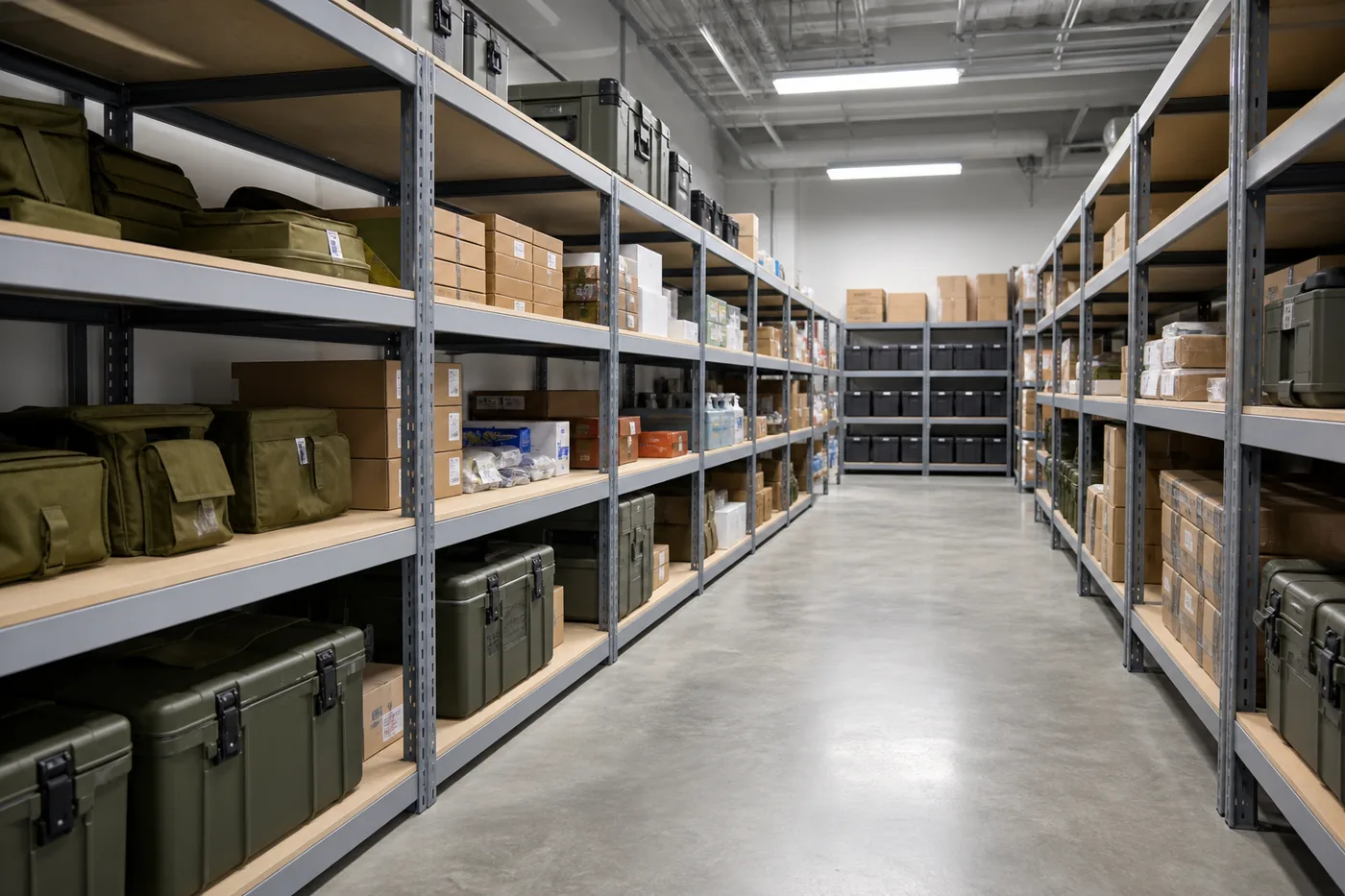
Why a parts warehouse is not a small distribution centre
Dealers often plan parts storage by copying a distribution warehouse at reduced scale. It rarely works, for four reasons.
The pick unit is a piece, not a pallet. Most transactions are one or two items pulled for a work order or a counter customer. A pallet position is an expensive, slow way to store an item that leaves the building one at a time.
The demand curve is brutally uneven. Fast-moving consumables, filters and wear parts turn constantly; a large share of the catalogue may move a handful of times a year. Storing both populations in identical locations means the fast movers are scattered across the building and the picker walks for a living.
Physical variety is extreme. The same parts department holds seals and o-rings, hydraulic hose, batteries, tyres, forks, mast sections and cabinet-sized assemblies. No single medium handles that span.
Downtime is the real cost. A missing $40 part can hold a machine — and a technician — for a day. That asymmetry justifies carrying and storing slow movers properly rather than squeezing them out of the layout.
Zoning by velocity, not by product line
The most useful thing a dealer can do before buying any steel is to split the catalogue into three populations and assign each one a home. This is the step that turns a storage purchase into a productivity gain.
| Population | Typical share of picks | Storage medium | Where it goes |
|---|---|---|---|
| Fast movers — filters, fluids, wear parts, consumables | The large majority of daily picks | Shelving, bins or flow at the pick face | Closest walking distance to the counter and the technician door |
| Mid movers — common service assemblies, kits | A steady middle band | Shelving with a pallet-rack reserve above | Behind the fast zone, still in the pick loop |
| Slow movers — the long tail of the catalogue | A small share of picks, a large share of line items | Dense shelving or high-level rack | Furthest from the counter; height is acceptable here |
| Bulk and backstock — full cases and pallets | Replenishment, not picking | Selective pallet rack with wire decking | Above and behind the pick zone, reachable by forklift |
| Long and awkward — hose, forks, mast sections, tubing | Occasional but disruptive | Cantilever rack | Its own run with clear forklift access, out of the pick aisle |
Two rules follow. First, height is a storage resource, not a picking resource: put reserve stock and slow movers up, and keep everything a person touches many times a day between knee and shoulder. Second, every location needs an address, and the addressing scheme should survive growth — adding a bay should not renumber the building.
Reorganising a parts department?
We plan pallet rack, parts room shelving and pick-face layouts together, so the steel matches the way your counter actually works.
Bulk storage: selective pallet rack with full decking
For the pallet and full-case side of a dealer warehouse, selective pallet racking is almost always the right structure. Density systems such as drive-in or push-back reward operations with many pallets of the same item; a parts warehouse is the opposite — many items, few pallets each. Selective rack gives one hundred per cent selectivity, which is what a parts operation needs.
Three specification points matter more here than in general distribution.
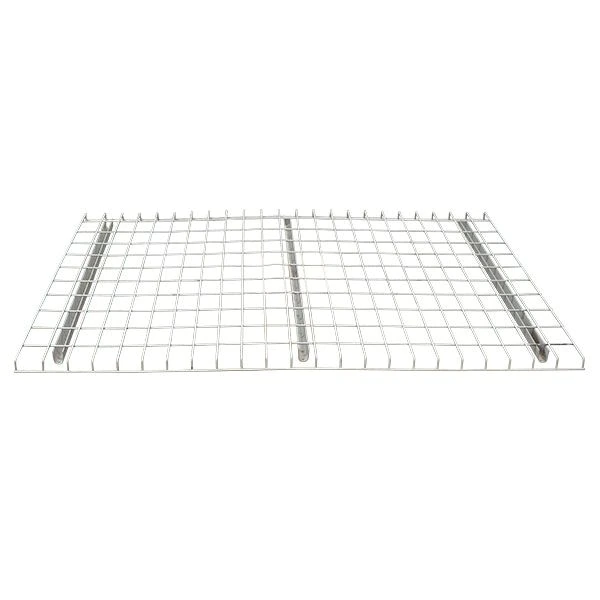
Deck every level. Parts pallets are mixed, part-picked and reshaped constantly. Full-width wire decking supports an uneven load, stops small cartons falling through, and lets staff hand-place a case into a bay without a pallet. In many jurisdictions open wire decking is also preferred by the fire protection design, because it does not obstruct sprinkler discharge the way a solid deck can.
Set the low levels for hands, not forks. The first and second levels of a parts rack get hand-loaded whether or not they were designed for it. Setting those elevations at practical working heights — and decking them — makes the inevitable safe.
Leave a growth column. Dealers add product lines. A layout that can extend a run by adding frames and beams, rather than by relocating the whole aisle, is worth planning for on day one: keep a run end free and keep the aisle width consistent so the same equipment still works.

Shelving: where a parts department actually earns its money
Most of a dealer’s picks come off shelving, and boltless rivet shelving is the workhorse. It goes up quickly, adjusts on a close pitch, and carries far more than the light-duty shelving many parts rooms inherit.
Shelf pitch beats shelf count. The single biggest capacity gain in a parts room is tightening vertical spacing to the actual product height instead of leaving a hand’s width of dead air on every level. Adjustable rivet shelving makes that a five-minute change rather than a rebuild.
Divide the shelf. Bins, dividers and labelled sub-locations turn one shelf into several addressable locations. Without them, small parts migrate, get mixed, and are declared “out of stock” while sitting fifteen inches from where they were sought.
Decking choice matters. Particleboard decks are cheap and fine for boxed goods; steel or wire decks handle oily, heavy and awkward items and clean up. In a service environment where parts arrive greasy, that difference shows up within a year.
Where the catalogue tail is very long and the items are small, high-density media such as spare parts and MRO storage systems compress a large number of line items into a short walking distance — useful when the counter and the technicians share one aisle.

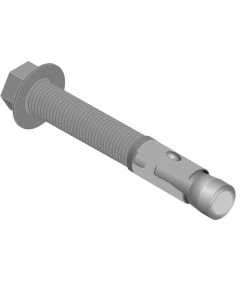
Boltless shelving gets its capacity from the rivet connection between beam and post. That connection is also the reason boltless goes up without hardware, and the reason it should be inspected like any other structure: a beam that is not fully seated in its slot has not developed its rated capacity. On installation and after every reconfiguration, the check is simple — every beam seated, every unit plumb, every tall unit tied or anchored per the manufacturer’s instructions.
Tall shelving units in a seismic region deserve the same attention as rack. Height-to-depth ratio, anchoring and top ties are what keep a loaded run standing, and they are specified rather than improvised.
Long, bulky and awkward parts
Every dealer parts department has a category that defeats both rack and shelving: hydraulic hose lengths, tubing, forks, mast sections, extrusions, guarding and cut stock. Stored on the floor, this material takes an aisle hostage and becomes the single most common source of manual handling injuries in the building.
Cantilever racking is the correct home for it. A short run — even a single double-sided run against a wall — converts a chronic floor pile into addressable locations with open front access. Two design points apply: support each load on at least two arms sized for the least rigid item stored, and use lip stops or inclined arms wherever round stock could roll toward the aisle.
Heavy service items such as batteries, counterweights and drive assemblies are the mirror image: compact but dense. They belong low, in bays specified for the point load, close to the door the technician uses.
Layout, protection and growth
A parts warehouse has more foot traffic in its rack aisles than a distribution centre does, because people are picking pieces there all day. That changes the safety emphasis.
- Separate the forklift replenishment path from the picker walking path wherever the layout allows.
- Deck every level people can reach, and every level holding mixed or part pallets.
- Post capacity information per configuration — and reissue it whenever a beam level moves.
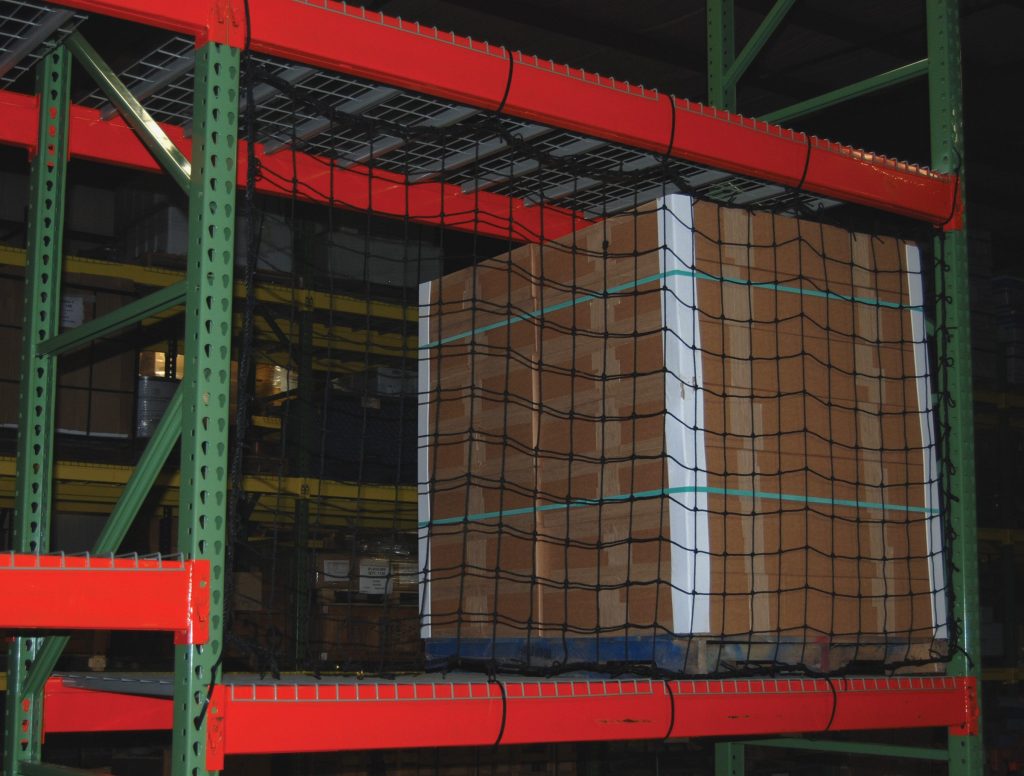
- Guard the predictable impact points: first upright inside each door, aisle ends, corners, and anywhere a forklift reverses.
- Anchor and tie tall shelving runs; treat the height-to-depth ratio as a specification, not a preference.
- Keep an aisle-width standard so future bays work with the same equipment.
Installation and inspection follow the same logic as any engineered storage system. Plumb, anchored, torqued and documented at handover — see rack installation — then walked on a documented interval, with an immediate report-and-unload rule for damage. A bent upright has already lost capacity, so rack inspection and repair restores the engineered capacity rather than patching around it.
Protection is the cheapest line on a parts warehouse quote and the one most often removed. In a building where a forklift shares aisles with people carrying parts, column guards and end-of-row protection are not an upgrade.
Shop Pallet Rack Accessories Online
Protect and finish your pallet rack installation with these in-stock accessories, or request a quote for custom-sized rack, freight and volume pricing.

Dealer parts warehouse racking FAQs
How should an equipment dealer organise a parts department?
Should parts go on pallet rack or shelving?
What kind of pallet rack suits a parts warehouse?
Why use boltless shelving in a parts room?
How do you store hose, tubing, forks and other long parts?
How much space should be left for growth?
Does shelving need anchoring in a seismic area?
Planning a parts and service warehouse?
We design, supply and install selective pallet racking, parts shelving and cantilever rack across the Intermountain West, including Utah.
Utah pallet rack project: This case study supports our Utah pallet rack design and installation guide and, at the top level, our main pallet rack systems hub.
Fewer Backorders, Shorter Walks
Material Handling USA designs, supplies and installs pallet rack, shelving and cantilever systems for dealer, rental and service parts operations across Utah and the Intermountain West.