
Home › Mobile Shelving › Utah Department of Natural Resources
State Agency Records Storage Mobile Shelving: Utah Department of Natural Resources
How one of Utah’s largest state agencies consolidated decades of records, maps, permits and field documentation into high-density mobile shelving — purchased on state contract, installed in occupied offices.

Utah DNR
State of Utah agency
2021
Project completed
State contract
Purchased without a separate bid cycle
Records, maps & permits
Multi-format document storage
Why State Agencies Run Out of File Space First
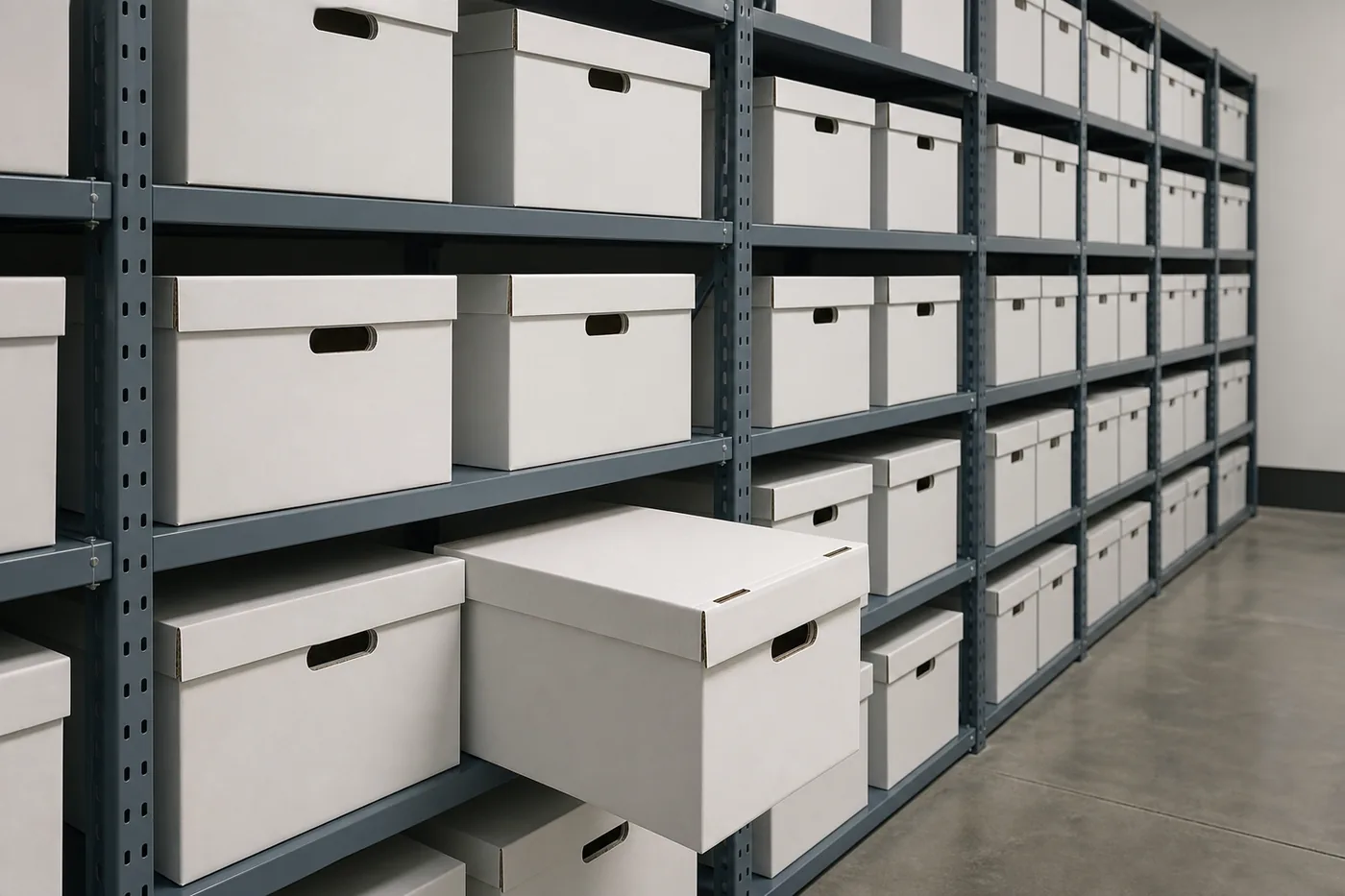
A state natural-resources agency generates paper that has to be kept. Water rights files, mineral and oil and gas permits, wildlife survey data, dam safety and engineering records, land ownership documents, historic maps and aerial imagery, contracts, grant files and litigation records — each with its own retention schedule under state records law, many of them permanent.
Digitization helps at the margin, but it does not empty the room. Original signed and sealed documents, recorded plats, historic maps and legally significant originals stay. Meanwhile the agency’s office footprint is fixed by a lease or by a state building, and every square foot given to a file room is a square foot not available for staff.
What usually happens next is the expensive version of a storage decision: overflow boxes move to a commercial records center at a recurring monthly cost, retrieval becomes a next-day request instead of a two-minute walk, and staff time is quietly consumed chasing files that used to be down the hall. If you are weighing that option, our guide to off-site records storage versus an on-site high-density room sets out the cubic-foot math and the retrieval costs that decide it.
- State records retention schedules require many document classes to be kept permanently
- Originals, sealed drawings and recorded documents cannot be replaced by a scan
- Off-site records centers convert a one-time storage problem into a permanent operating cost
- Office square footage is the most expensive place in the agency to store a box
The Project: Utah Department of Natural Resources
The Utah Department of Natural Resources manages the state’s water, wildlife, land, mineral and outdoor recreation resources through its divisions, and holds the records those responsibilities generate. In 2021 MH-USA supplied a high-density mobile shelving system for the agency, purchased through a Utah state contract vehicle.
It is one of the larger state-government mobile shelving projects MH-USA has delivered, and it is a clean example of the pattern we see across public agencies: the problem is framed as “we need more space,” and the answer turns out to be that the existing room was never storing at anything close to its potential density because most of its floor was permanently committed to aisles.
What we publish
MH-USA does not publish room dimensions, layouts, contract values or internal document detail for government clients. This page describes the storage engineering approach applied to state agency records rooms.
What a Records Room Conversion Actually Involves
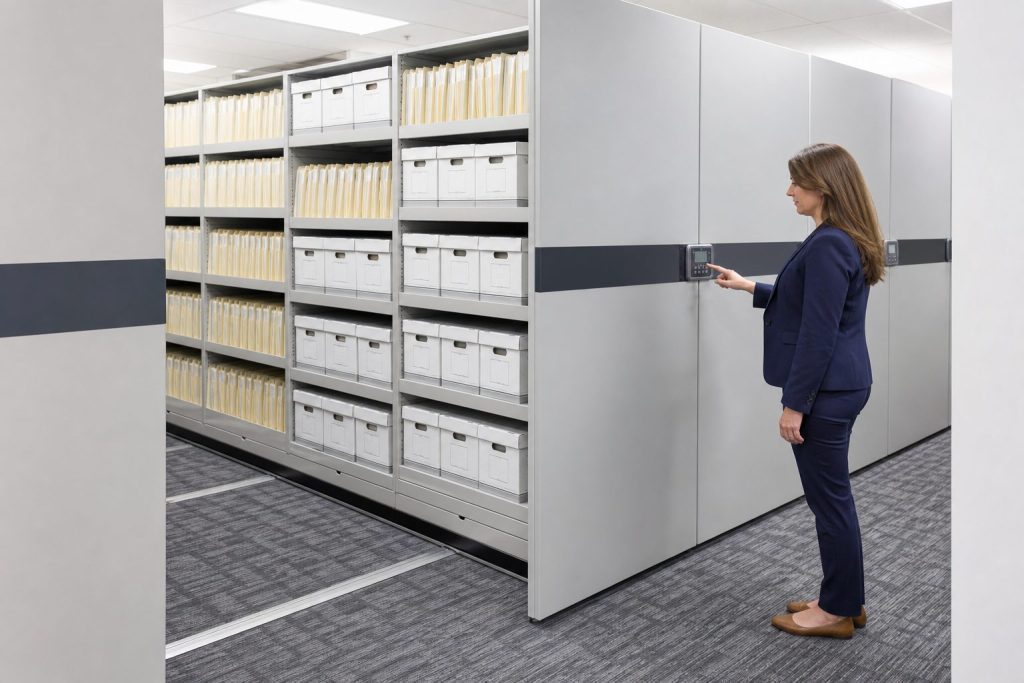
Converting static file shelving to high-density mobile shelving is a planning exercise before it is a product purchase. The steps below are what MH-USA works through with an agency records manager.
Inventory the formats
Letter and legal files, standard archive boxes, bound volumes, rolled and flat maps, media, samples. Each format has a different optimal shelf depth and height.
Measure the room honestly
Clear ceiling height, column locations, HVAC and sprinkler positions, door swings, existing floor condition. Columns inside the storage envelope decide where fixed ranges have to sit.
Set the aisle requirement
How many staff work in the room at once, whether carts are used, and whether more than one aisle needs to be open simultaneously. This single number drives the capacity result.
Run the two calculations
Same room, more capacity; and same capacity, smaller room. Agencies frequently choose the second and hand the recovered square footage back for offices.
Choose the drive
Powered for daily-traffic file rooms and heavy ranges, mechanical assist for retrofits without power, manual for light annex storage.
Plan the move and re-label
Sequence the load-out so the room stays usable and file location IDs remain valid throughout.
Get the space math for your records room
Send dimensions and formats. We return a same-room and same-capacity analysis, plus what the recovered square footage is worth against your lease or building cost.
Request a Free Space Analysis Mobile shelving overview Call (800) 326-4403
Maps, Plans and Oversized Documents
Natural resource agencies hold formats that a standard file room ignores. Historic survey maps, water rights plats, aerial photography, geologic cross-sections and engineering drawings do not fit letter-size shelf and are destroyed by being folded and stacked.
Mobile carriages are format-agnostic — the carriage carries whatever is mounted on it. That means a single high-density block can combine:
- Flat files and plan drawers for maps, plats and drawings stored flat and unfolded
- Roll storage tubes or vertical hanging systems for rolled plans
- Adjustable shelf sized to the agency’s standard archive box so no vertical space is lost
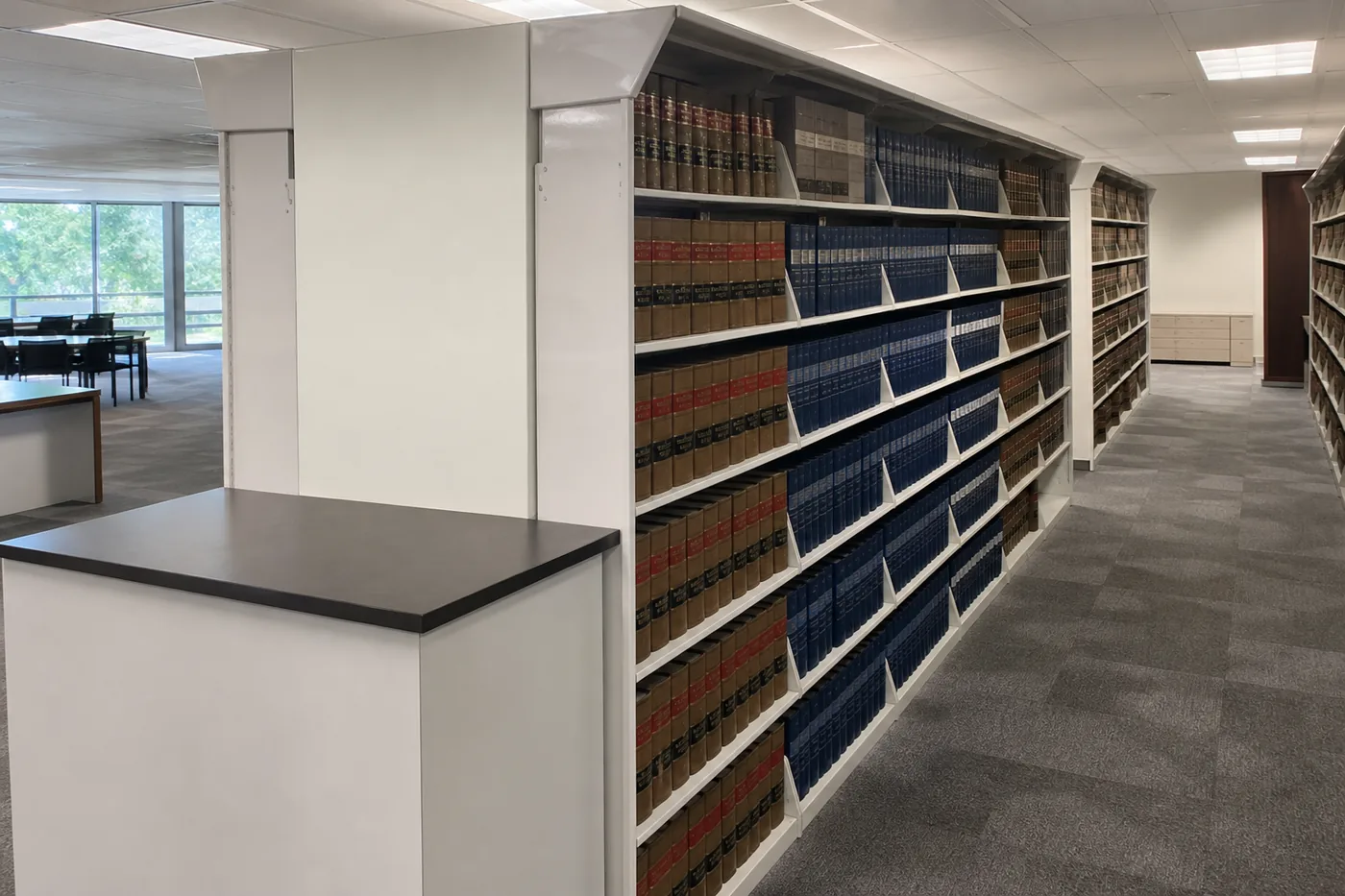
- Bound volume shelving for reference sets, code books and historic registers
- Media and sample storage in drawers or bins on the same carriages
- Locking end panels where a division’s records require restricted access
Buying It: State Contract and Cooperative Purchasing

The Utah DNR system was purchased on a state contract vehicle. For a public agency this is often the difference between a project that happens this fiscal year and one that slips two cycles waiting on a formal bid.
MH-USA sells to public agencies through state contracts, cooperative purchasing programs and federal schedules depending on the buyer. Practically, that means an agency records manager with an approved budget can move from space analysis to a signed order without running a solicitation, as long as the vehicle covers the product category.
We will tell you which vehicle applies to your agency before you spend time on paperwork — and if none does, we will quote it as a straightforward bid response instead.
Architects and facility planners specifying a system for a public project can request a full specification package — see mobile shelving for architects for CSI-format specs, CAD blocks and load data.
Floor Load, Seismic Detailing and Occupied-Building Installation
Paper is heavy. A fully loaded records range concentrates far more weight per square foot than the office it sits in was designed for, and compacting the ranges puts that weight onto the rail lines. Any records conversion above grade needs the slab checked first — our floor load requirements guide explains the calculation and when a structural engineer has to sign off.
In Utah, seismic detailing is the second gate. State buildings along the Wasatch Front are reviewed against high seismic demand, and loaded mobile shelving has to be anchored and braced so ranges cannot leave the rail during ground motion. See seismic anchoring and bracing for mobile shelving for what plan reviewers expect.
| Requirement | Why it applies to a state records room | How it is handled |
|---|---|---|
| Slab capacity | Compacted paper ranges are one of the heaviest live loads in an office building | Structural review before order; ranges positioned over capable structure |
| Rail installation | Recessed rail is flush with the floor; surface rail needs a compliant ramp | ADA-compliant approach so carts and all staff can enter the aisle |
| Seismic anchoring | Utah high-seismic zone; state building plan review | Anchorage engineered to local code and documented for review |
| Occupied building | Staff keep working during installation | Phased, sectioned install with staging and re-labeling built into the schedule |
| Records continuity | Files must stay findable throughout | Location IDs mapped before the move and re-applied section by section |
What Agencies Get Out of a High-Density Records Conversion
Other public-sector projects: Unified Police Department evidence storage in Salt Lake County and City of South Jordan City Hall.
For Utah State Agencies, Counties and Cities
MH-USA is headquartered in Salt Lake City and has supplied storage to Utah state divisions, counties, cities, school districts, universities and public safety agencies for decades. For a public records project that means local site visits, seismic detailing our plan reviewers already accept, installation crews who can phase work around a working office, and purchasing through vehicles your procurement office already recognizes.
Frequently Asked Questions
How much more can a state records room hold with mobile shelving?
Can we buy mobile shelving on state contract instead of going out to bid?
Do we have to move out while it is installed?
What about maps, plats and oversized drawings?
Will our office floor support a compacted records system?
Does digitization make this unnecessary?
Is Utah’s seismic requirement a problem for mobile shelving?
How long does a project take?
Planning a Records Storage Project?
MH-USA plans, supplies and installs high-density records storage for state, county and city agencies across Utah and the Mountain West. Free space analysis, no obligation.