
Home › Mobile Shelving › Unified Police Department Evidence Storage
Police Evidence Storage Mobile Shelving: Unified Police Department, Salt Lake County, Utah
How the largest law-enforcement mobile shelving project in MH-USA history added years of evidence capacity inside an existing property room — without a new building, and without breaking chain of custody. For the wider decision about which layers a room needs, see our guide to security and controlled access for mobile shelving.
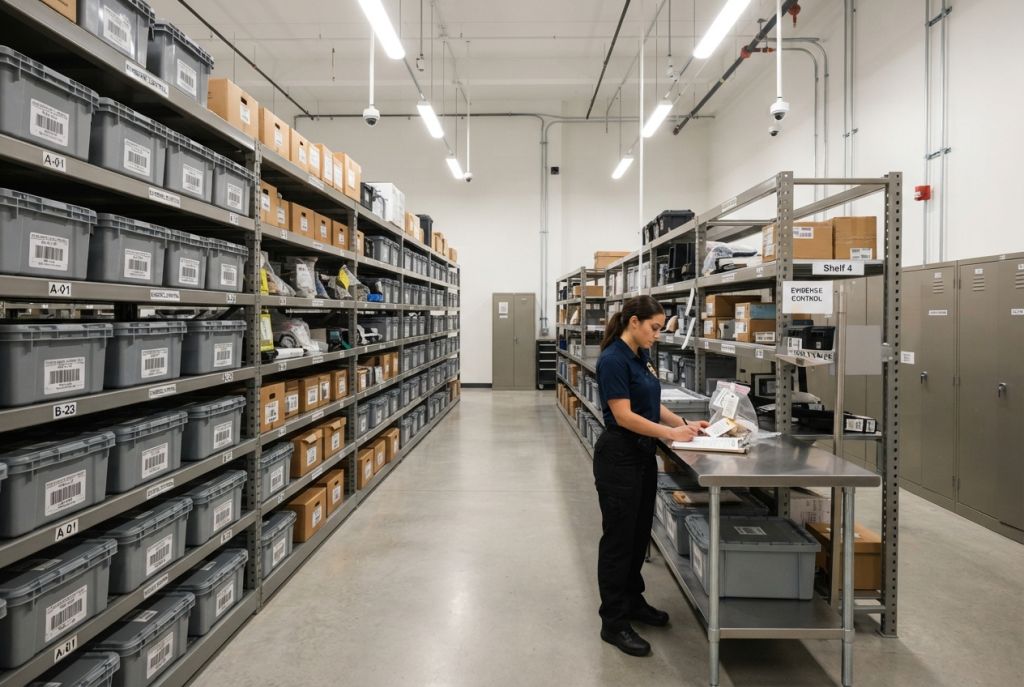
Salt Lake County, UT
Unified Police Department
2025
Project completed
Evidence & property
Long-term retention storage
Largest on record
MH-USA mobile shelving project for law enforcement
Why Evidence Rooms Run Out of Space Before Anything Else Does
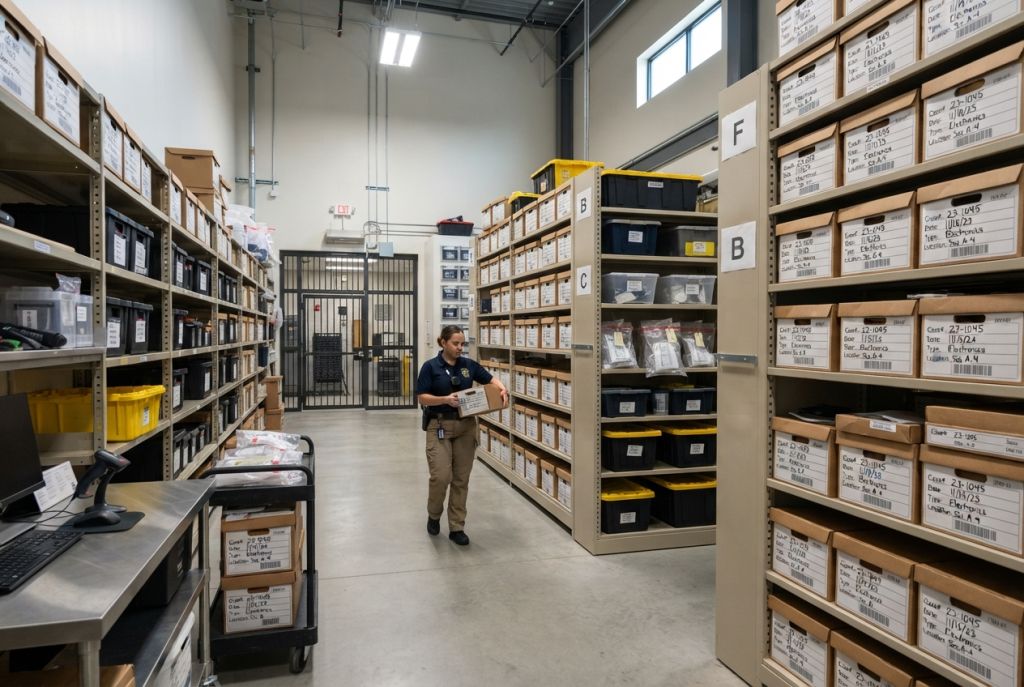
No storage room in a police facility grows the way an evidence room does. Property intake is driven by case volume, and retention is driven by statute — not by how much shelf a department happens to own. Homicide and unresolved sexual assault evidence is held indefinitely in most jurisdictions. Biological evidence carries its own retention rules. Firearms, narcotics awaiting destruction orders, digital devices, bicycles, and found property all pile up on the same finite footprint. Case and offender files follow a different set of rules again — our page on mobile shelving for corrections and inmate records rooms covers retention-driven capacity and confidential access for that side of the building.
The result is familiar to every property and evidence manager: aisles narrow into walking lanes, boxes stack on the floor, overflow migrates into hallways, trailers and off-site units, and a technician who used to retrieve an item in two minutes now spends twenty. Worse, every item that lives outside the designed, access-controlled space is a chain-of-custody exposure that a defense attorney can question in court.
Agencies facing this usually price a building addition first. A new evidence wing is measured in millions of dollars and years of design, bond approval and construction. High-density mobile shelving solves the same capacity problem inside the walls that already exist, on a timeline measured in weeks after delivery.
- Retention schedules keep evidence long after cases close — capacity demand only goes one direction
- Floor-stacked overflow is a chain-of-custody and officer-safety problem, not just a tidiness problem
- Off-site storage adds transport time, second custody transfers and recurring lease cost
- A building addition costs orders of magnitude more per square foot than converting an existing room to high density
The Project: Unified Police Department, Salt Lake County
The Unified Police Department serves communities across Salt Lake County, Utah, and operates the property and evidence function for a service population far larger than any single small-city department. In 2025 MH-USA completed a high-density mobile shelving project for the agency — the largest mobile shelving system this company has supplied to a law-enforcement client.
MH-USA has worked with Utah public-safety agencies for decades, and the department came to the project as a returning customer. The scope was straightforward to state and demanding to execute: convert existing evidence storage area into a track-mounted high-density system that would absorb years of future intake, keep every category of property in its correct security tier, and stay operational for technicians who process evidence every single day.
What we publish and what we don’t
MH-USA does not publish room dimensions, run counts, layout drawings, camera positions or security detail for any evidence facility. Those details belong to the agency. What is described on this page is the storage engineering approach we apply to property rooms — the same approach used on this project.
How High-Density Storage Works in a Property Room
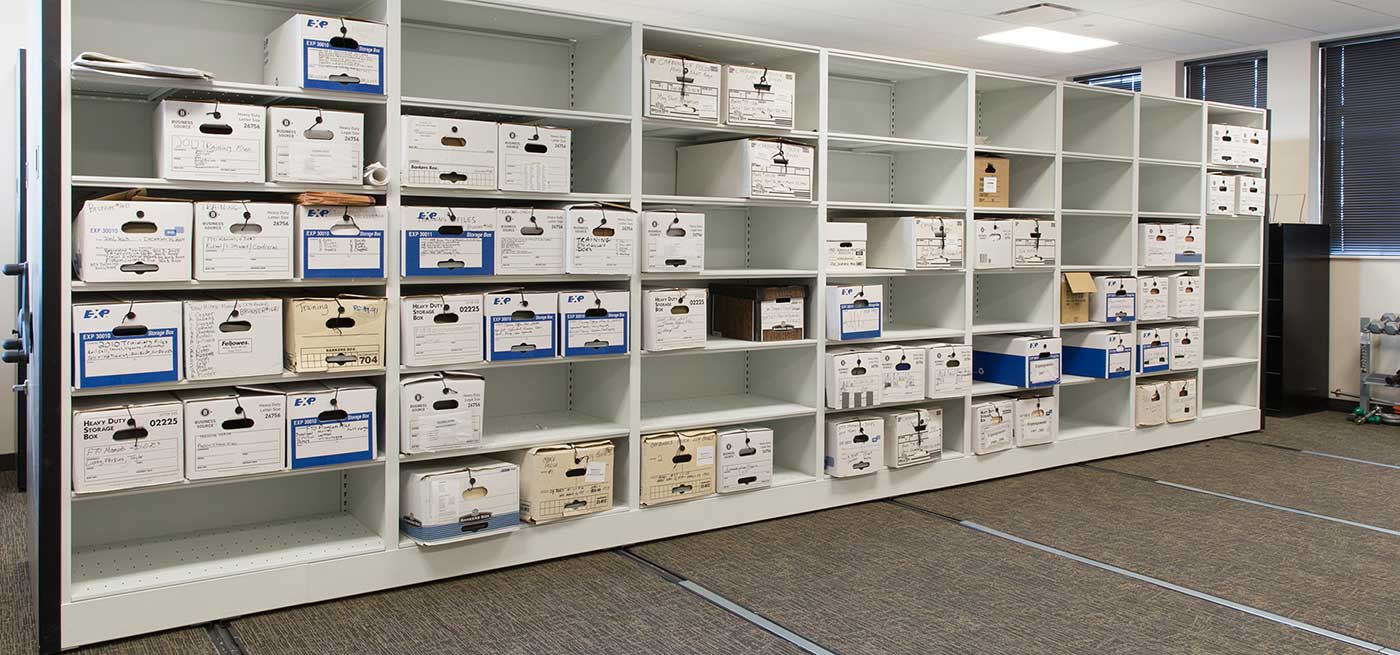
A conventional evidence room is mostly aisle. Every static range needs a permanently open aisle beside it so staff can reach the shelf, and in a room with, say, eight ranges, that is eight strips of floor that hold nothing. Mobile shelving puts each range on a wheeled carriage that rides on floor-mounted rail. The ranges nest against one another, and staff open a single aisle exactly where the item they need is stored.
The capacity gain is not a marketing percentage — it is arithmetic that depends on your room. The variables are shelf depth, required clear aisle width, ceiling height, how many fixed (non-moving) ranges the room needs, and whether a powered, mechanical-assist or manual drive is appropriate. MH-USA calculates two numbers from your actual dimensions before any pricing: how much more you can store in the same room, and how much smaller the room could be at your current capacity.
Find out what your evidence room could hold
Send us the room dimensions and what you store. We return a same-room and same-capacity analysis showing the realistic capacity gain before you talk about budget.
Request a Free Space Analysis See the mobile shelving overview Call (800) 326-4403
Chain of Custody, Access Control and Security Tiers

Capacity is only half the requirement in a property room. The other half is proving that every item was under continuous, documented control. High-density systems support that rather than complicating it, because the entire holding area becomes one enclosed, lockable block of storage instead of a sprawling open floor.
Typical controls MH-USA specifies with law-enforcement systems:
- Locking end panels on each carriage, so a range can be secured independently of the room
- Keypad, card or key access at the room enclosure, with logged entry where the agency requires it
- Separate tiers for high-value property — narcotics, currency and firearms in vaults, safes or dedicated locking cabinets rather than open shelf
- Pass-through intake lockers so officers deposit evidence without ever entering the secure room
- Barcode-friendly shelf and range labeling, so location IDs stay stable when ranges move
- Refrigerated and climate-controlled positions for biological evidence, kept inside the same access-controlled envelope
 Pass-through intakeOfficers secure evidence into a one-way locker at end of shift. Technicians retrieve from the secure side. Two custody events, one clean record.
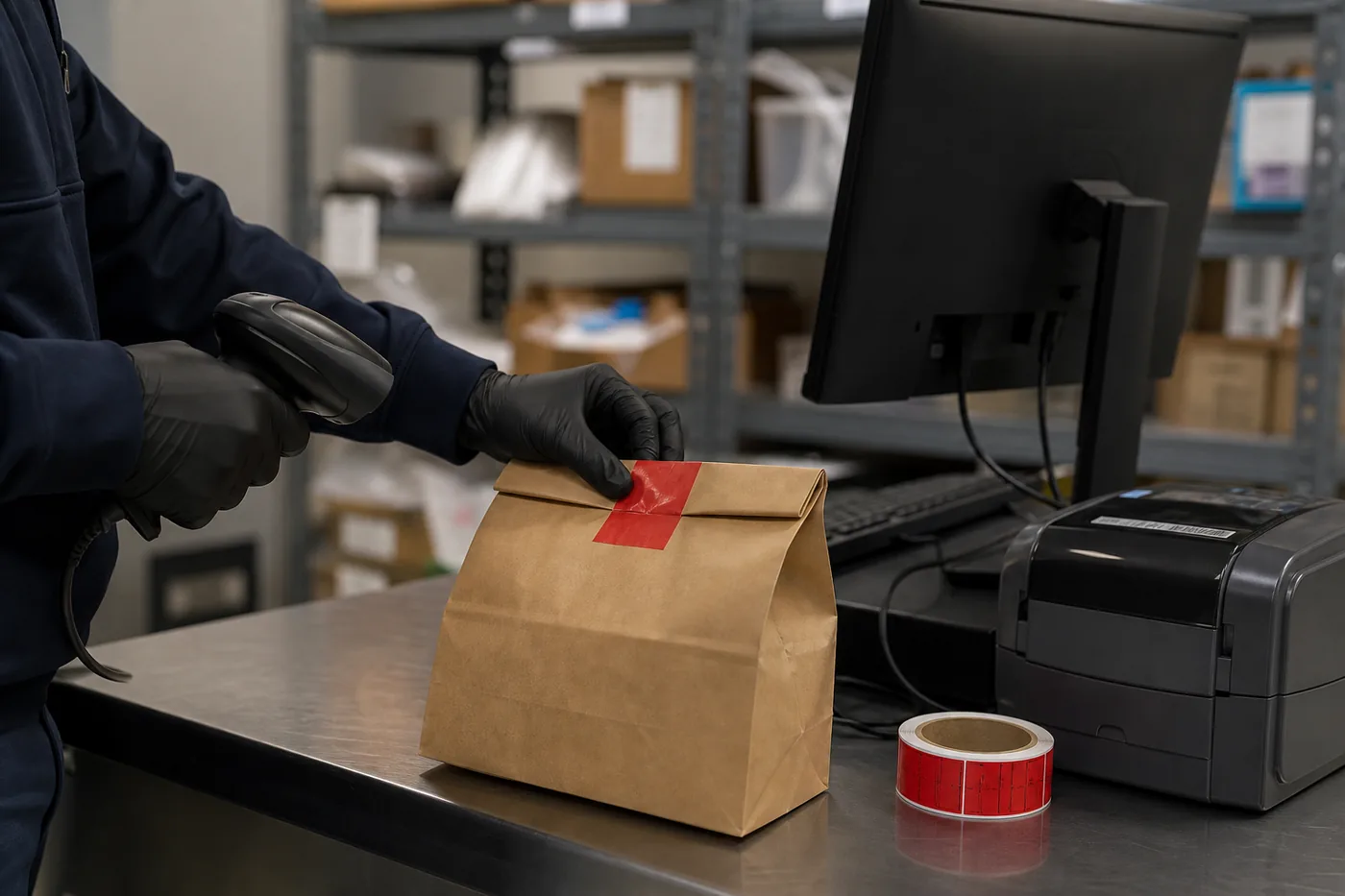 Barcode location controlEvery shelf position keeps a fixed location ID. Because the carriage moves and the shelf address does not, moving to high density does not invalidate your evidence management system.
 High-value tieringNarcotics, currency and firearms belong behind a vault or in a dedicated safe — high-density shelving takes the bulk volume so the vault holds only what truly needs it.
Designing the Room: What Actually Gets Planned
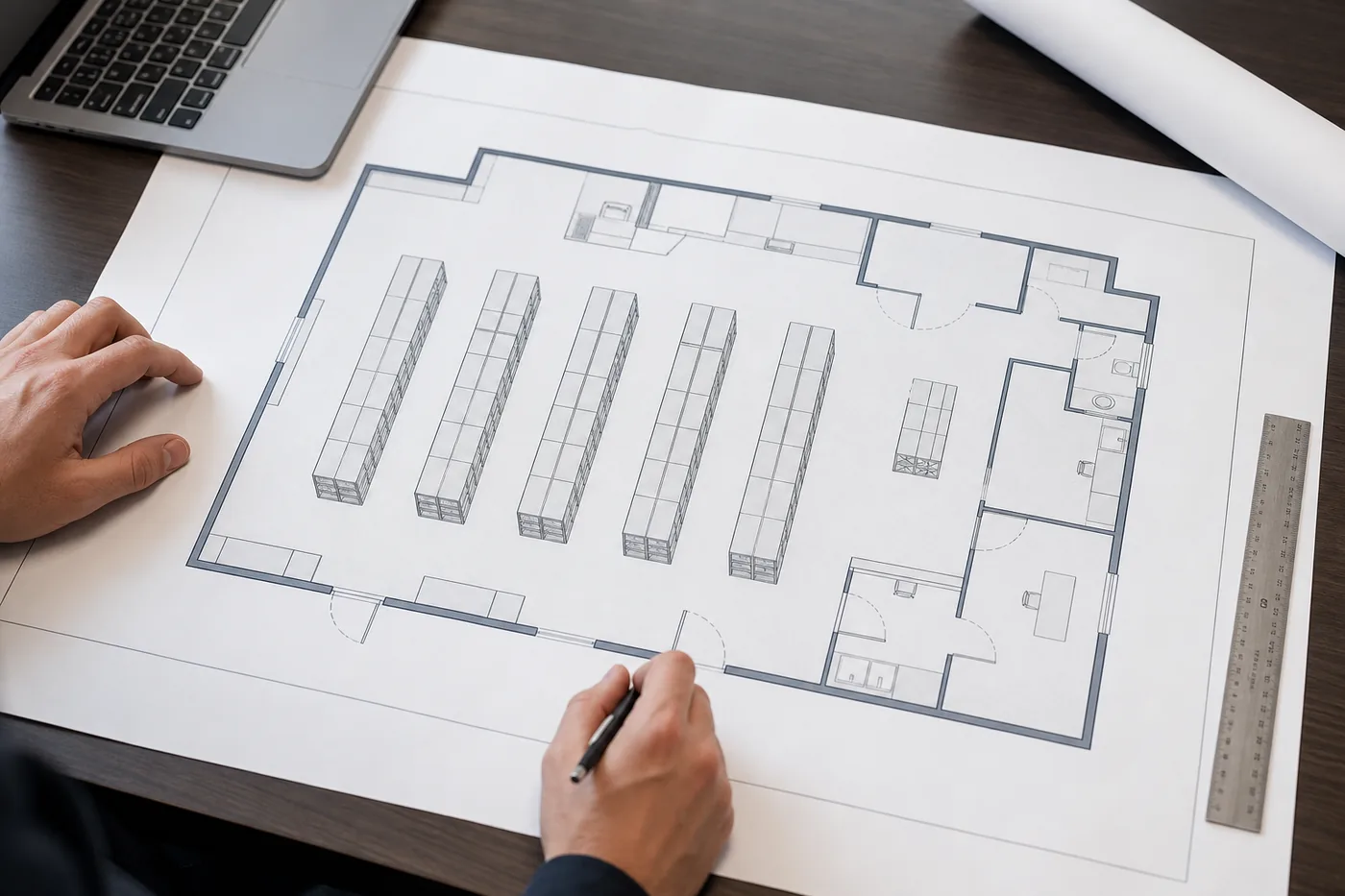
A property room is not a warehouse. The design has to accommodate several different physical categories at once, all governed by the same custody rules. MH-USA plans the room around the property mix, not around a standard shelf.
Common zones in an evidence layout:
Boxed case evidence on adjustable shelf, sized to the department’s standard evidence container so no vertical space is wasted between shelves. Bulk and oversized property — bicycles, tires, tools, seized equipment — on cantilever or heavy-duty rack, often outside the mobile block. Firearms in dedicated racks or cabinets with muzzle-safe orientation. Biological evidence in refrigerated or freezer units with temperature monitoring. Narcotics and currency in a vault or safe. Digital devices in Faraday-appropriate or locker storage. Drying cabinets for wet evidence, exhausted to the outside.
Shelf depth is decided by the largest routine container, not the biggest item that ever arrives — oversized property goes to the bulk zone. That single decision determines the aisle count, the carriage length and ultimately how much the system holds.
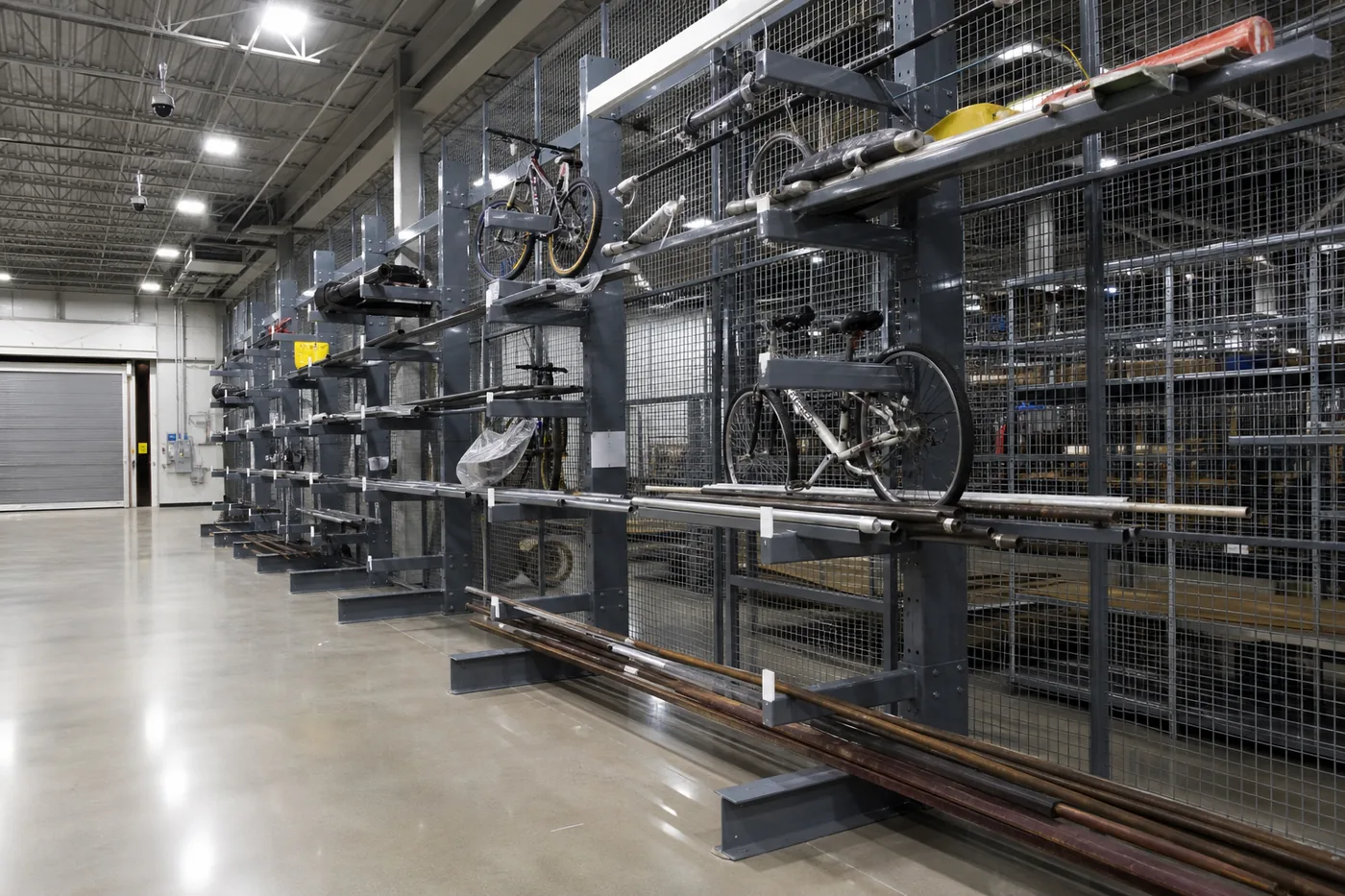 Bulk and oversized propertyBicycles, ladders, long guns and seized equipment do not belong on case-evidence shelf. Cantilever rack inside the secure envelope keeps them off the floor and out of the aisle.
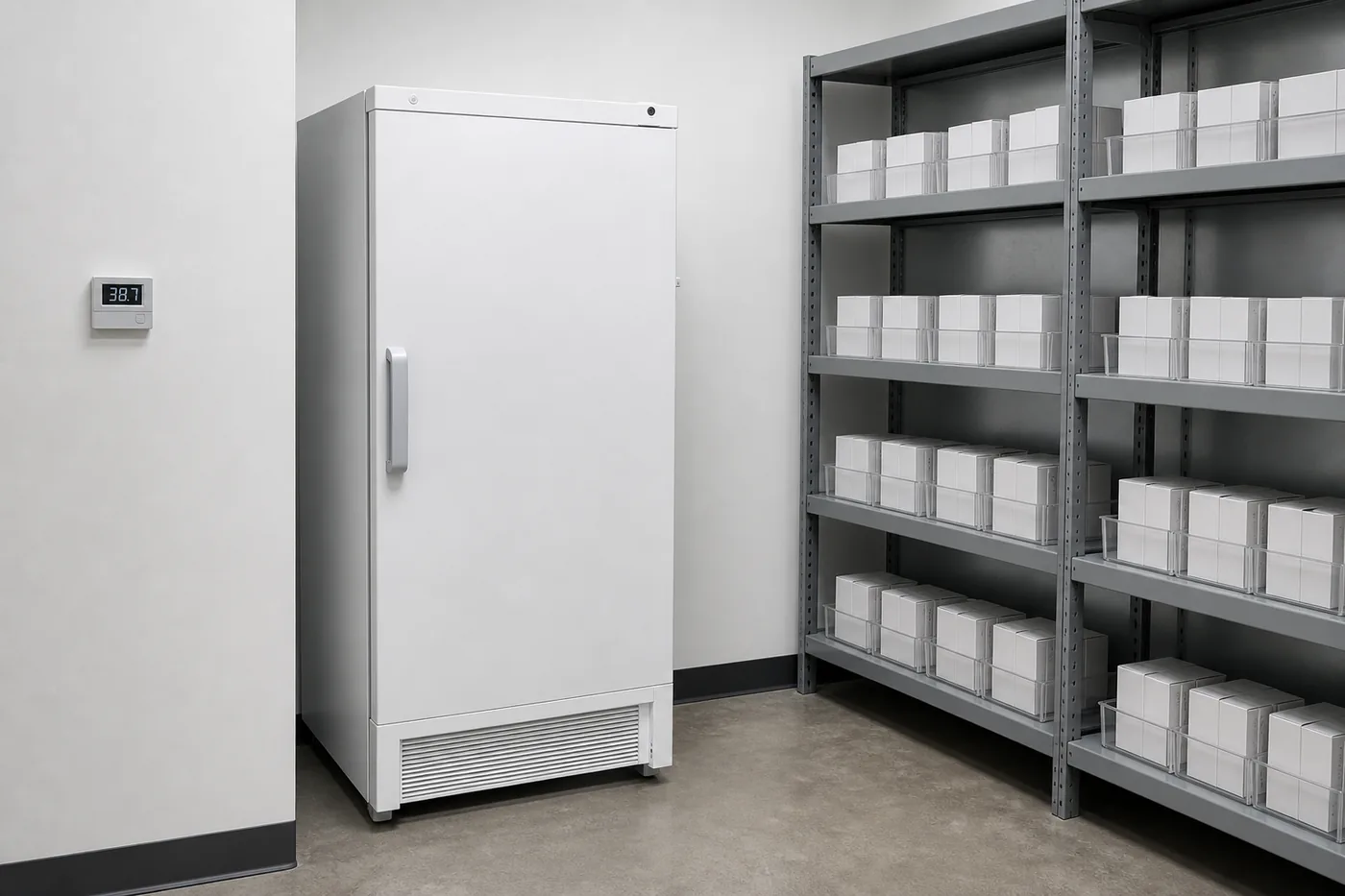 Biological and refrigerated evidenceKits and biological samples need controlled temperature, monitoring and their own retention tracking — planned as part of the room, not bolted on afterward.Working surfacesIntake, packaging and re-sealing need bench space with power and light. Squeezing it out to gain shelf is the most common evidence-room design mistake.
Floor Capacity, Seismic Requirements and Installation
Compacting storage concentrates load. Where static shelving spreads weight over the whole room including the aisles, a mobile system puts the entire contents of the room onto the rail footprint when the ranges are closed. On an upper floor or an older slab, that has to be checked before anyone orders steel — see mobile shelving floor load requirements for how the calculation is done.
Utah adds a second requirement. The Wasatch Front is a high-seismic region, and shelving that stores heavy material has to be anchored and braced to resist lateral forces, with the system engineered so ranges cannot walk off the rail during ground motion. Our seismic anchoring and bracing guide covers what the code expects and how mobile systems are detailed for it.
| Design item | Why it matters in an evidence room | What MH-USA checks |
|---|---|---|
| Slab capacity | Compacted ranges concentrate load onto the rail lines | Existing slab rating or structural engineer sign-off before order |
| Rail type | Recessed rail is flush; surface rail needs a low-profile ramp | ADA-compliant approach for carts and hand trucks |
| Floor flatness | Carriages bind on an out-of-tolerance floor | Survey before install; shim or grind as required |
| Seismic anchoring | Utah is a high-seismic zone | Anchoring detail engineered to local code |
| Aisle width | Technicians move carts, not just hands | Clear aisle sized to the actual cart and container |
| Phasing | The evidence room cannot close | Sequenced install so custody is never interrupted |
The last row is the one that matters most operationally. An evidence room in an active agency cannot go dark for a week. Installations are phased: a section is emptied to temporary staging under custody control, rail and carriages go in, that section is reloaded and documented, then the next section starts. Property never leaves the secure envelope and every move is recorded.
What Agencies Get Out of It
MH-USA has delivered the same approach at other agencies — see the Roy Police Department evidence storage case study in Utah and the Weslaco Police Department project in Texas for smaller-department versions of the same problem.
For Utah and Mountain West Agencies
MH-USA is based in Salt Lake City and has supplied storage to Utah police departments, sheriff’s offices, state agencies, correctional facilities and crime labs for years. That matters for three practical reasons: we know the seismic detailing local plan reviewers expect, we can walk the room instead of quoting from a sketch, and our installation crews are local — which is what makes phased, custody-safe installation possible in the first place.
Public agencies can also purchase through cooperative and state contract vehicles, which removes a formal bid cycle from the schedule. Ask us which vehicle applies to your agency.
Frequently Asked Questions
How much extra evidence capacity does mobile shelving actually add?
Can we install high-density shelving without shutting the evidence room down?
Does moving to mobile shelving break our evidence management system’s location IDs?
Is powered or manual better for an evidence room?
How do you handle narcotics, firearms and currency in a high-density system?
Will our floor support it?
Does Utah’s seismic code affect the design?
Can a public agency buy this without going out to bid?
Planning an Evidence Room Project?
MH-USA plans, supplies and installs high-density evidence storage for agencies across Utah and the Mountain West. Free space analysis, no obligation.