
Law Enforcement Storage Products for Police Agencies
Duty gear lockers, weapon racks, temporary evidence lockers, property cages and equipment charging lockers, specified to fit your station and quoted by one team.
Shop Law Enforcement Storage Online
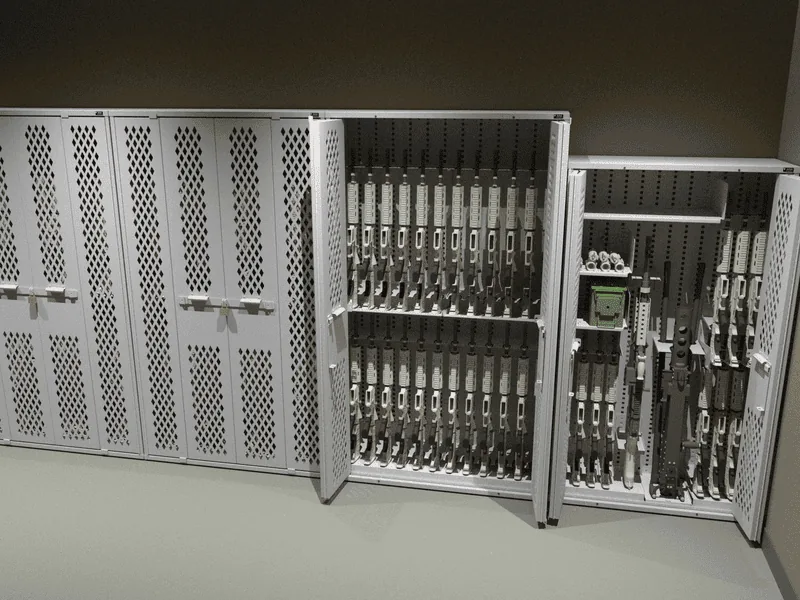
Weapon racks, evidence lockers and tactical gear lockers are quoted per project because door counts, locks and compartments change by agency. These related products are sold online at the listed starting prices. Freight is quoted by destination, and some common sizes are in stock at select manufacturers, subject to confirmation.



What Law Enforcement Storage Covers
One agency, many storage problems: this guide matches each one to the product that solves it.
Law enforcement storage is not one product. A single police department may need a locked armory, duty gear lockers for every officer, after-hours drop lockers for property, a long-term property room, a cage for narcotics or cash, charging lockers for radios and body cameras, and plain shelving for uniforms and supplies. Sheriff’s offices add inmate property and civil process files. Campus, transit, port and tribal police have the same needs at a smaller scale. Each of those storage jobs has different security, ventilation and audit requirements, so buying one product line for all of them usually means paying for security where you do not need it and missing it where you do.
The table below is the short version. Each row links to a deeper page, and the sections that follow explain what to look for in each product type. If you are planning a new station or a full remodel rather than buying individual products, start with our police station material handling guide, which walks through the building room by room.
| Storage need | Product type | Typical location | Security level |
|---|---|---|---|
| Rifles, shotguns, pistols | Weapon racks and armory cabinets | Armory, sergeant’s office | High: locked cabinet inside a locked room |
| Tasers, magazines, ammunition | Taser cabinets, magazine drawers, ammo cabinets | Armory, patrol staging | High |
| Duty bags, vests, helmets | Tactical and gear lockers | Locker room, patrol hallway | Medium: personal lock |
| Uniforms and personal items | Single-tier steel lockers | Locker rooms | Medium |
| Property and evidence intake | Pass-through and electronic lockers | Report room wall to property room | High with audit trail |
| Long-term property | High-density mobile shelving | Property room | High: room plus aisle locks |
| Narcotics, cash, firearms held as property | Wire mesh security cages | Inside the property room | High: cage inside a room |
| Radios, body cameras, laptops | Charging cabinets and smart lockers | Patrol staging, briefing | Medium to high |
| Bikes, tires, bulky items | Bulk rack, cantilever, pallet rack | Bulk property bay | Medium: fenced bay |
Weapon Racks and Armory Cabinets
Secure long guns, sidearms and less-lethal tools in cabinets sized to your actual inventory.
Cabinets built around the weapon count
Armory storage is sized from the weapon list, not the floor plan. We start with how many patrol rifles, shotguns, sidearms and less-lethal launchers you hold, whether optics and lights stay mounted, and which items are issued per shift. That count sets the cabinet type: open racks inside a vault room, bi-fold or double-hinged door cabinets in a shared space, or individual weapon lockers where each officer keeps an assigned firearm. Datum and Dasco both build modular interiors, so saddles, pistol pegs and shelves can be rearranged when the inventory changes.
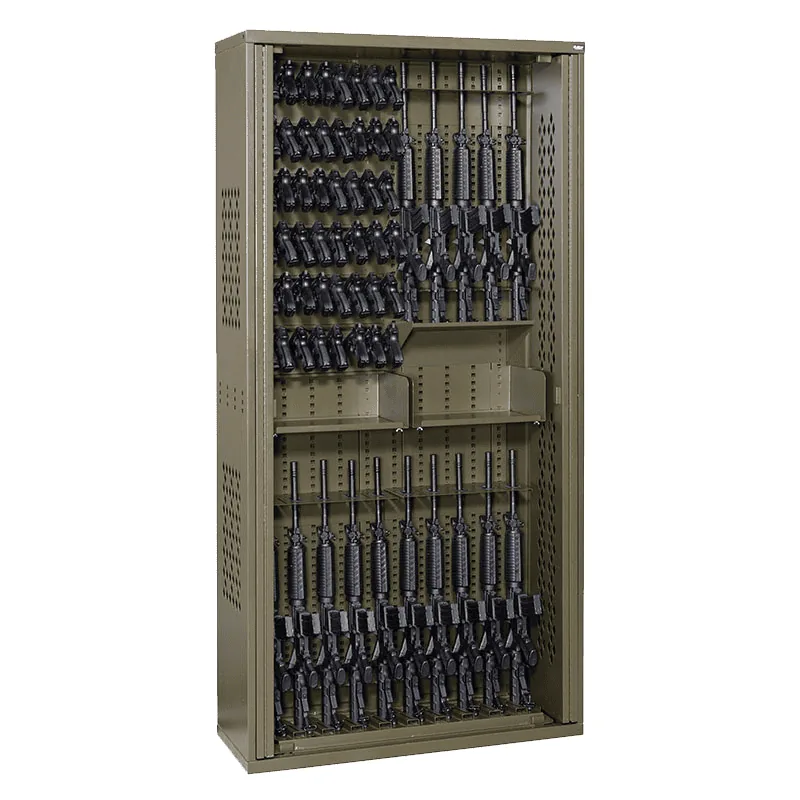

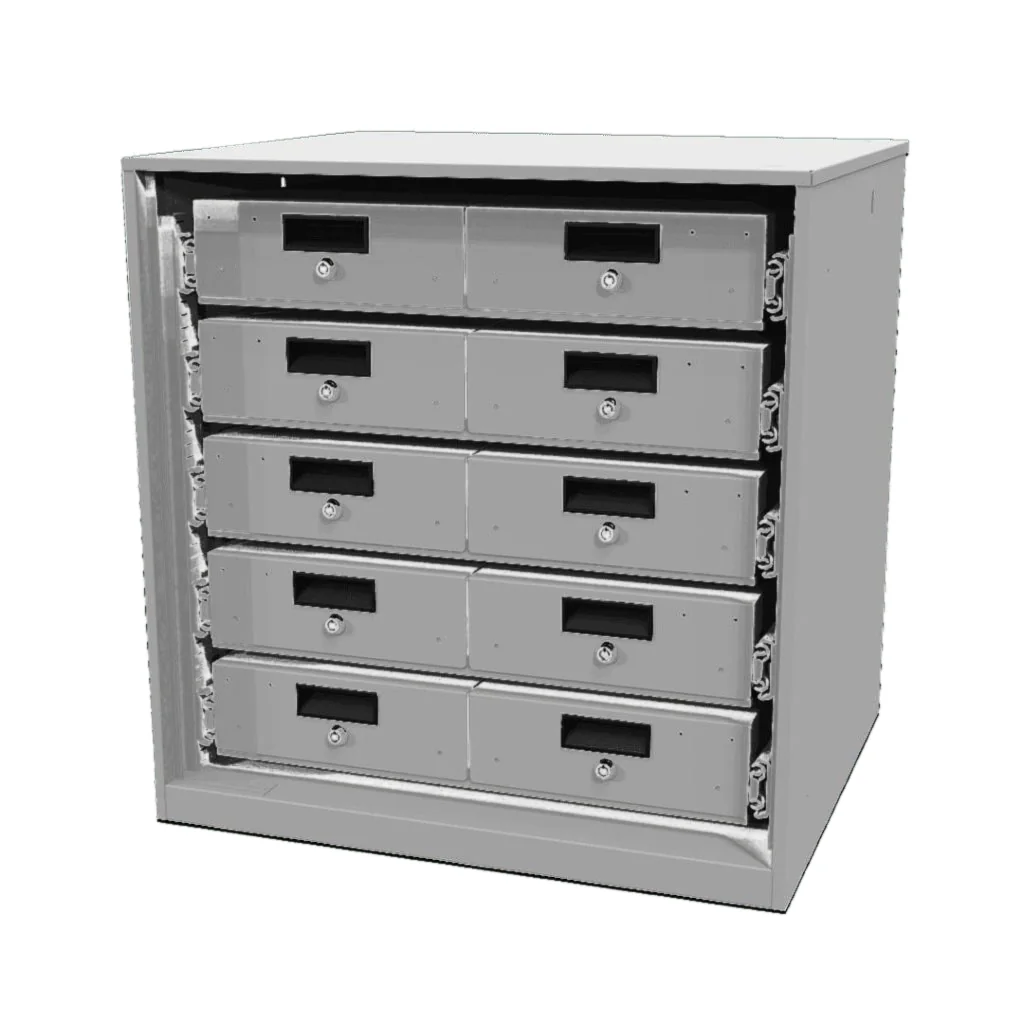

For a deeper look at armory layout, vault doors and audit procedures, see our police weapons storage page and the gun vault planning guide.
Duty Gear, Tactical and Personal Lockers
Lockers sized for body armor, duty belts and patrol bags, not office coats.
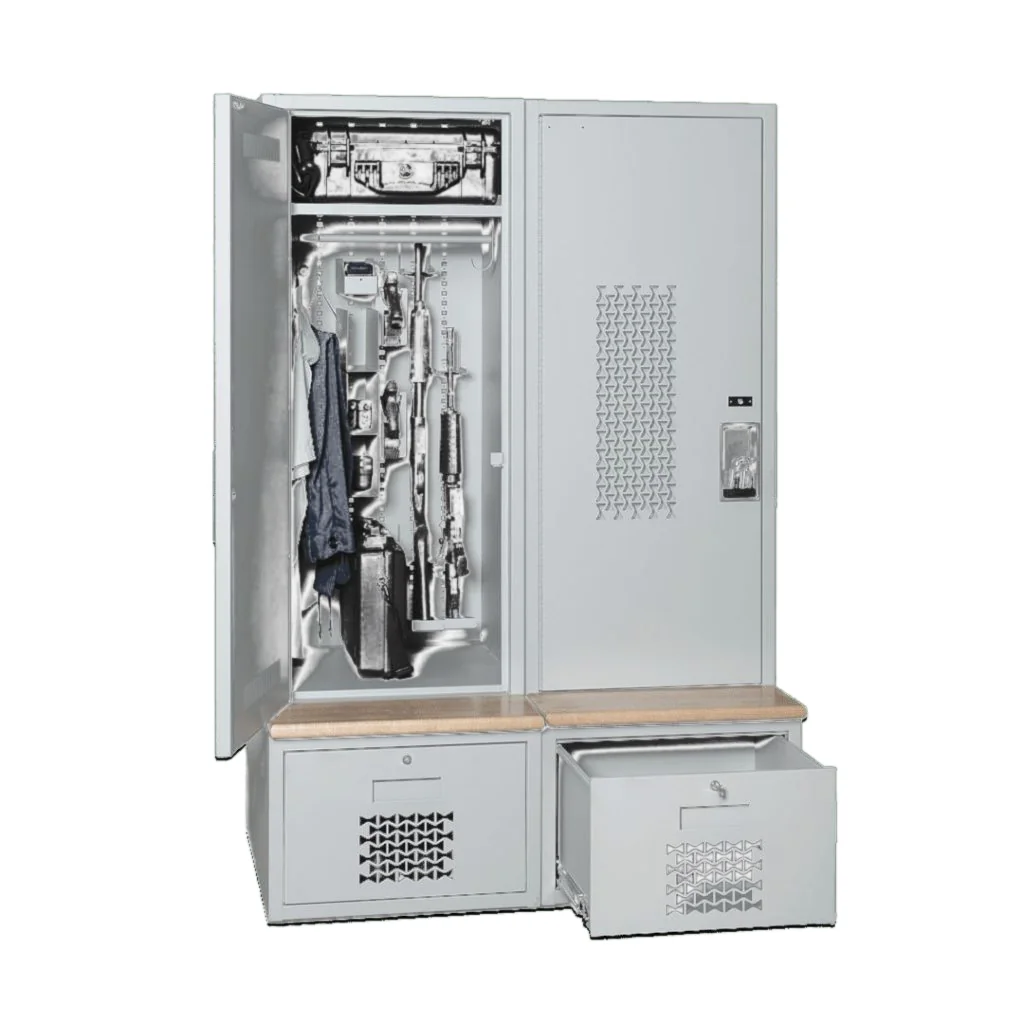
Tactical lockers with a bench and drawer
A standard 12-inch office locker will not hold a patrol bag, a plate carrier and a long gun. Tactical lockers are wider and deeper, often 24 inches wide, with a lockable upper compartment, a hanging space for uniforms and armor, and a pull-out bench drawer for boots or a go-bag. Some models add a rifle mount inside the door so an officer can secure an assigned long gun at the end of a shift. Ventilated doors and frames let wet gear dry instead of mildewing behind a solid door.
Ventilated gear lockers for shared spaces
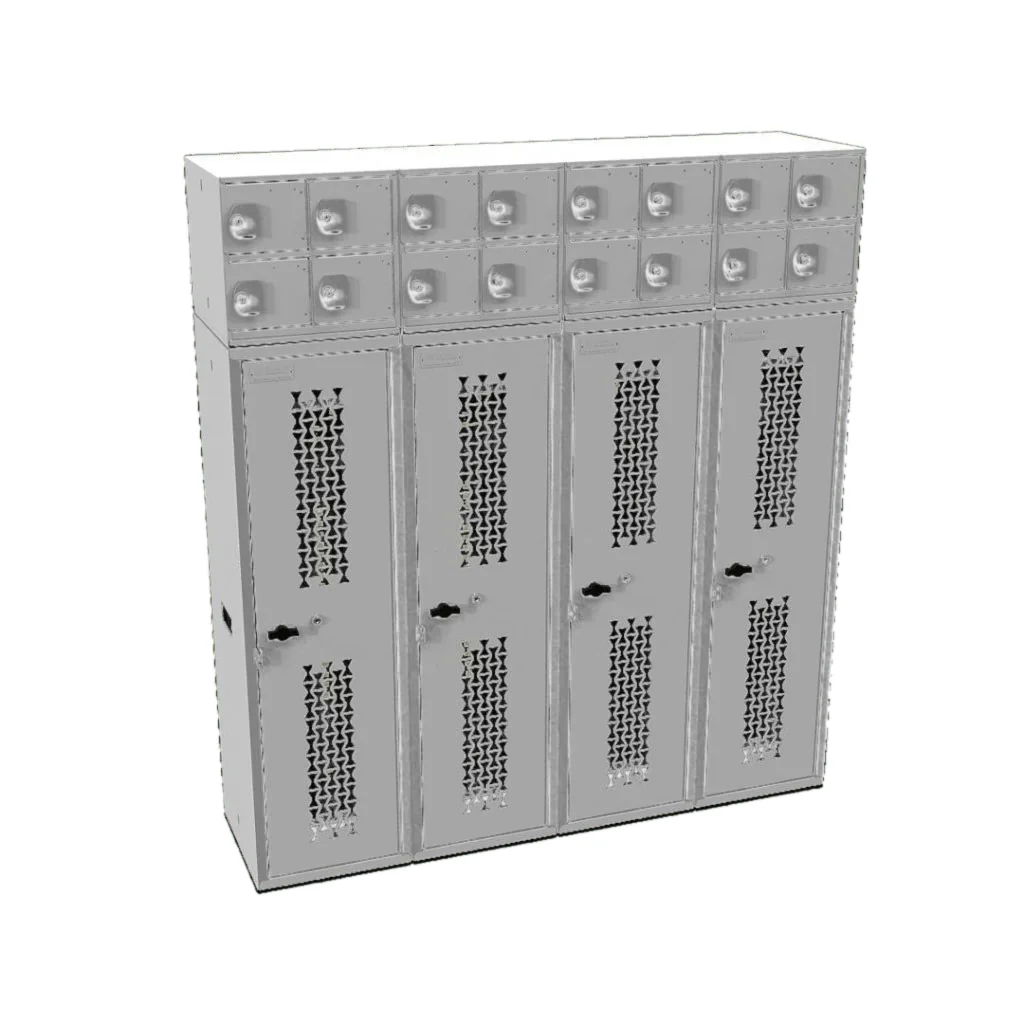
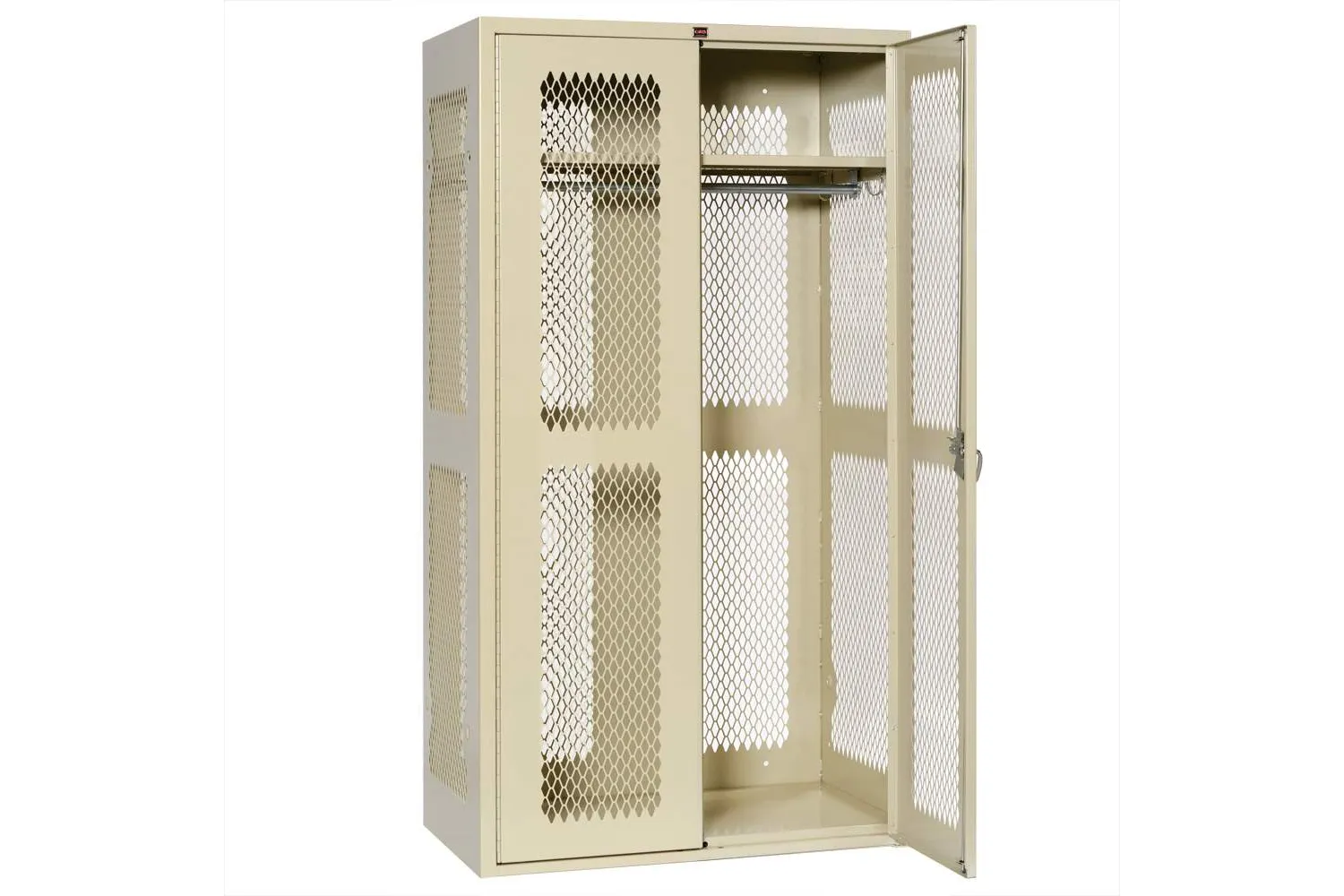
Diamond-perforated gear lockers, such as the Lyon TA-50 style, are a good fit for SWAT gear rooms, reserve officer areas and training buildings where gear is stored wet or rotated between users. The open pattern gives airflow and lets a supervisor see contents without opening every door. For everyday uniforms, single-tier and double-tier steel lockers in the locker room cost less and fit more people per wall. See our police and fire station locker guide and the locker size chart to size a locker room by headcount.
What to decide before ordering lockers
- Headcount and growth: count sworn, civilian and reserve staff separately, then add room for the next hiring class.
- Gear profile: list what each officer stores: armor, helmet, patrol bag, rifle, rain gear, boots.
- Locks: built-in combination, keyed, padlock hasp or electronic access, and who holds override keys.
- Ventilation: perforated or louvered doors for gear that comes back wet or sweaty.
- Benches and base: integral bench drawers or separate benches, plus legs or a closed base for cleaning.
- Anchoring: wall and floor anchoring for tall lockers, and seismic bracing where your local code requires it.
Temporary Evidence, Property Intake and Long-Term Storage
Products that keep chain of custody intact from the report room to the property shelf.
Pass-through and electronic intake lockers
Officers submit items into a locker from the report-writing side, and property staff remove them from the secure side, so no one but the custodian handles an item after it is sealed. Electronic systems such as the Dasco E-Locker add a touchscreen, user log-in and a time-stamped record of each deposit and release. Refrigerated lockers handle biological items. Sizing comes from your daily submission count and the largest item you take in, with a few oversize doors for bags and boxes.

High-density shelving for the property room
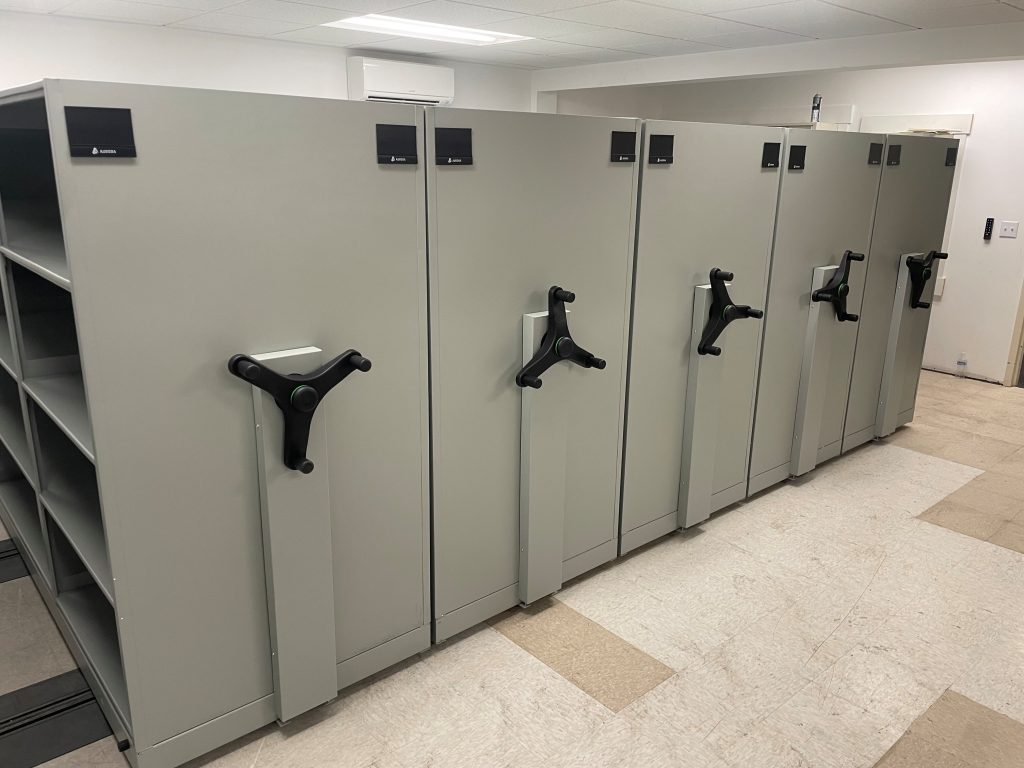
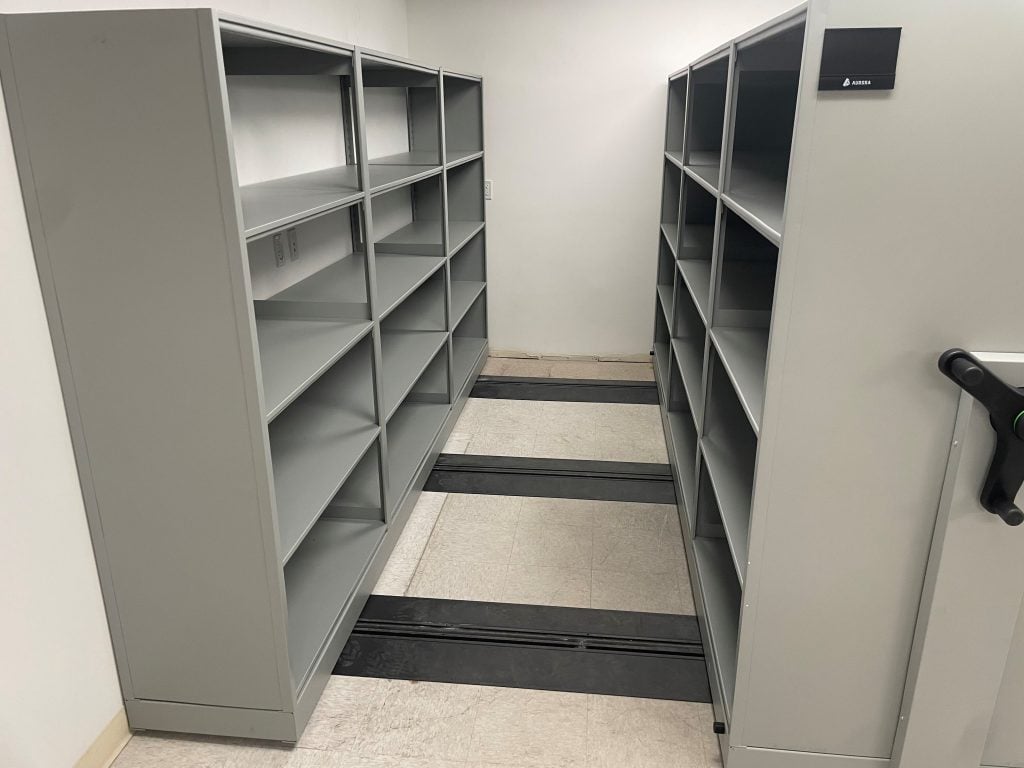
Long-term property grows every year and rarely leaves. High-density mobile shelving puts rows of shelving on carriages that roll on floor rails, so one moving aisle replaces many fixed aisles and the same room holds far more cartons. Aurora mobile shelving is installed at police departments in Roy, Utah and Weslaco, Texas, and we installed police evidence storage mobile shelving at the Unified Police Department. Room design, retention rules and audits are covered on our evidence storage room design page.
Wire mesh cages inside the property room
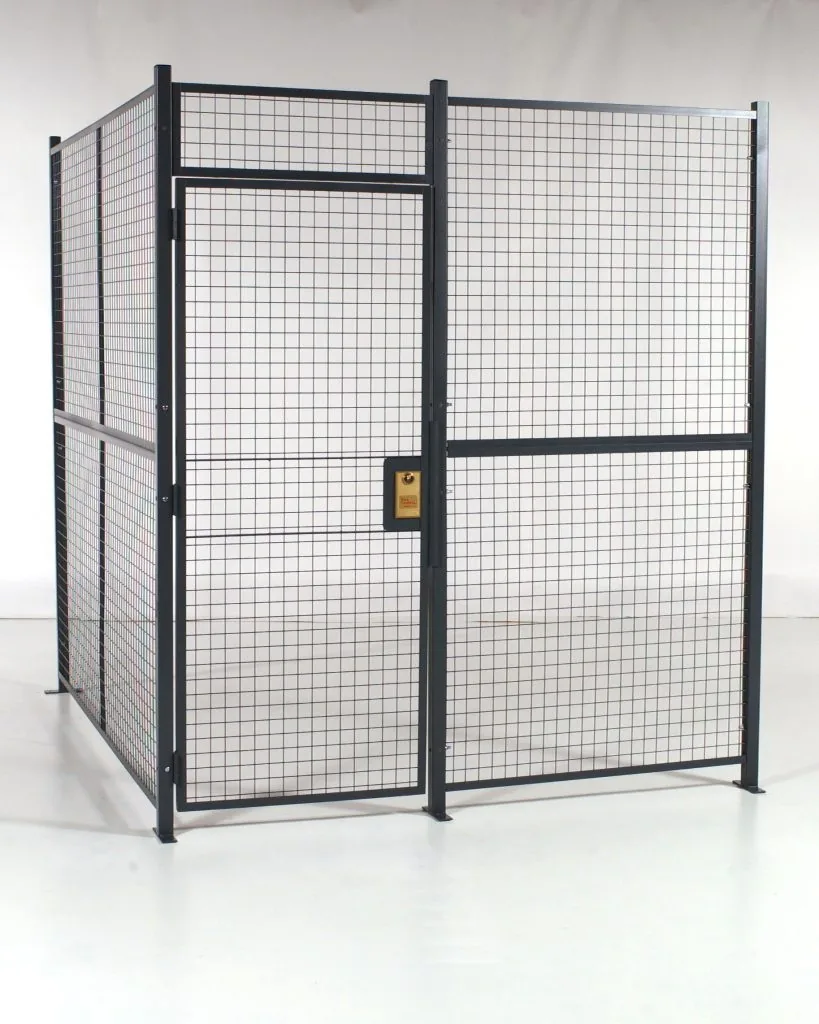
Narcotics, currency, jewelry and firearms held as property usually need a second layer of security inside the property room. A welded wire mesh cage with a keyed or electronic lock gives that layer while keeping contents visible for audits and letting sprinkler water and air through. Cages can include shelving inside, a ceiling panel, and a service window for controlled release. The same panels build quartermaster cages for uniforms and equipment, and Wire Crafters panels also build temporary holding cells.

Bulky and oversized property
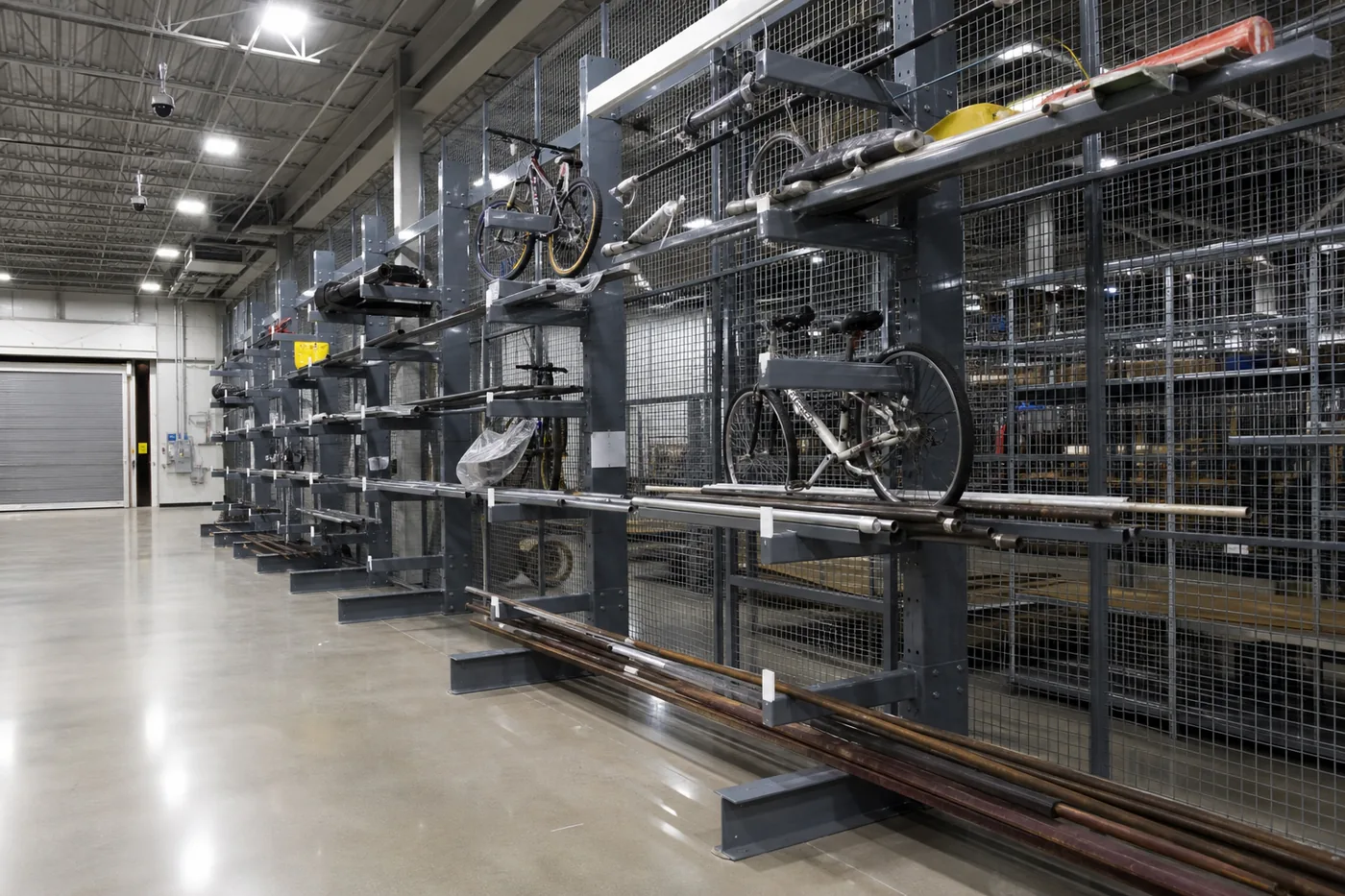
Bicycles, tires, car parts, lumber and long items do not belong on shelving. A fenced bulk bay with cantilever arms, bulk storage rack or pallet rack keeps them off the floor, tagged and countable. Cantilever racking suits bikes and long items; bulk rack with solid decking suits boxed and odd-shaped items. Plan the bay near a roll-up door so large items never travel through the main property room. Our cantilever rack design guide covers arm length and capacity.
Radio, Body Camera and Equipment Checkout
Charged, counted and signed out: storage for the shared gear that goes out every shift.
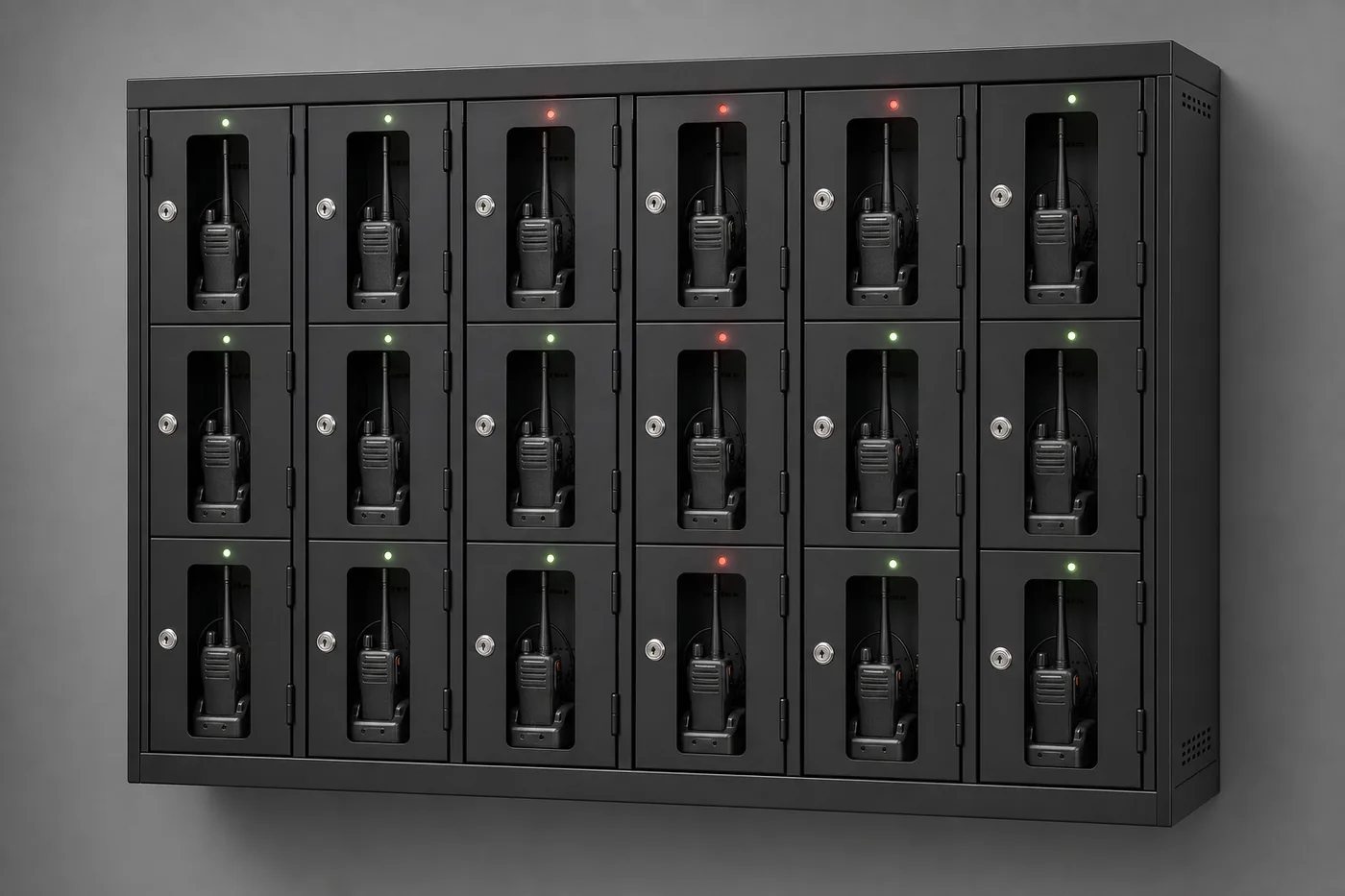
Locking charging cabinets
Portable radios, body-worn cameras, tasers and patrol laptops come back at shift change and must be charged for the next shift. Locking charging cabinets give each device its own compartment with power, so a missing radio is obvious and a dead battery is rare. Wall-mounted units save floor space in briefing and patrol staging rooms. Dasco also builds secure electronics and laptop storage cabinets with internal power.
Smart lockers for sign-out and returns
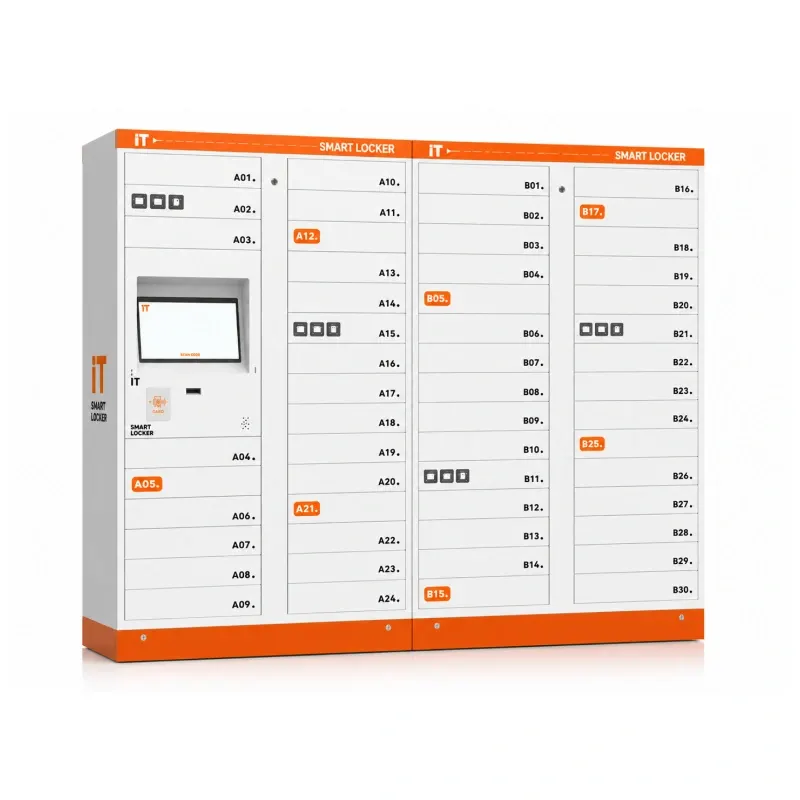
Smart lockers add software to the checkout: an officer badges in, the assigned door opens, and the system records who took which item and when it came back. Agencies use them for spare radios, keys, loaner laptops, fleet keys and found property released to the public after hours. Pair them with the console and dispatch furniture covered on our Law Enforcement Dispatch Consoles from E-Systems Group page and our smart locker systems overview.
Shared Public Safety Buildings and Support Spaces
Many stations share a roof with fire, EMS or a 911 center. Storage should work for every tenant.
Fire and EMS gear in a combined station
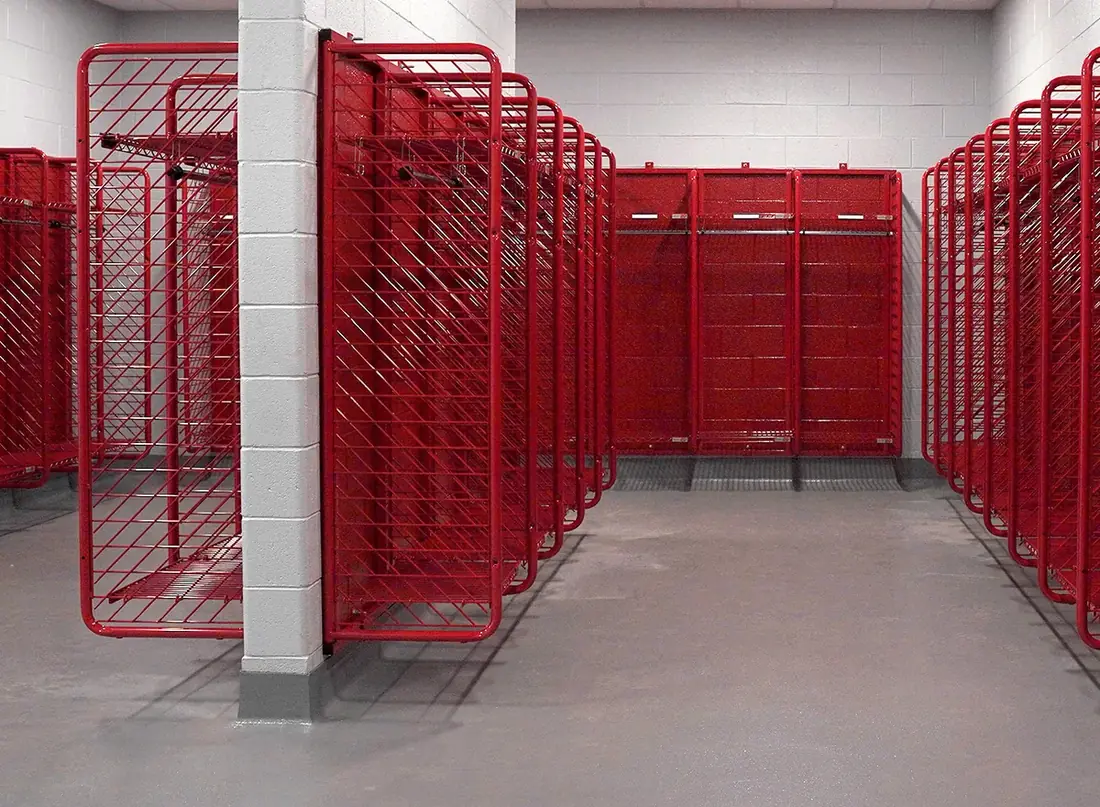
When police share a public safety building with fire and EMS, the gear rooms sit side by side but need different products. Firefighters store bunker gear on open, ventilated turnout gear racks away from sunlight and diesel exhaust, while officers need locked lockers. Planning both rooms together keeps corridors clear and lets one installer handle the project. Records rooms, supply rooms and quartermaster stock usually move to closed steel shelving or mobile shelving.
Need a quiet report-writing room, property office or armory office inside a larger warehouse or training building? Prefabricated modular in-plant offices go up in days and can be relocated, which helps agencies working out of temporary or leased space. For records rooms, our A Manager’s Guide to Mobile Shelving for Public Safety covers file and box storage in more depth.
Sheriff’s offices that run a jail have one more storage job: inmate property. Clothing, wallets and phones taken at booking must be bagged, numbered and returned at release, often for hundreds of people at once. Hanging bag systems, numbered bins on shelving and secure lockers each work at different volumes; see our inmate property storage page for sizing by bed count.
Who Uses Law Enforcement Storage
The same product families, scaled and secured differently for each type of agency.
- Municipal police departments: armory, locker rooms, property room and patrol staging, often squeezed into an older city building.
- Sheriff’s offices and jails: everything a police department needs plus inmate property, civil process records and correctional armories.
- State patrol and state police: district offices with vehicle equipment, radar and radio checkout, and regional property storage.
- Federal field offices: higher-security weapon and property storage, usually with electronic access control and detailed audit trails.
- Campus, transit, port and airport police: smaller armories, gear lockers and lost-and-found or property storage in shared buildings.
- Crime labs and medical examiners: sample, reagent and case-file storage; our sister company Labs USA plans crime lab design and equipment.
Training centers and ranges
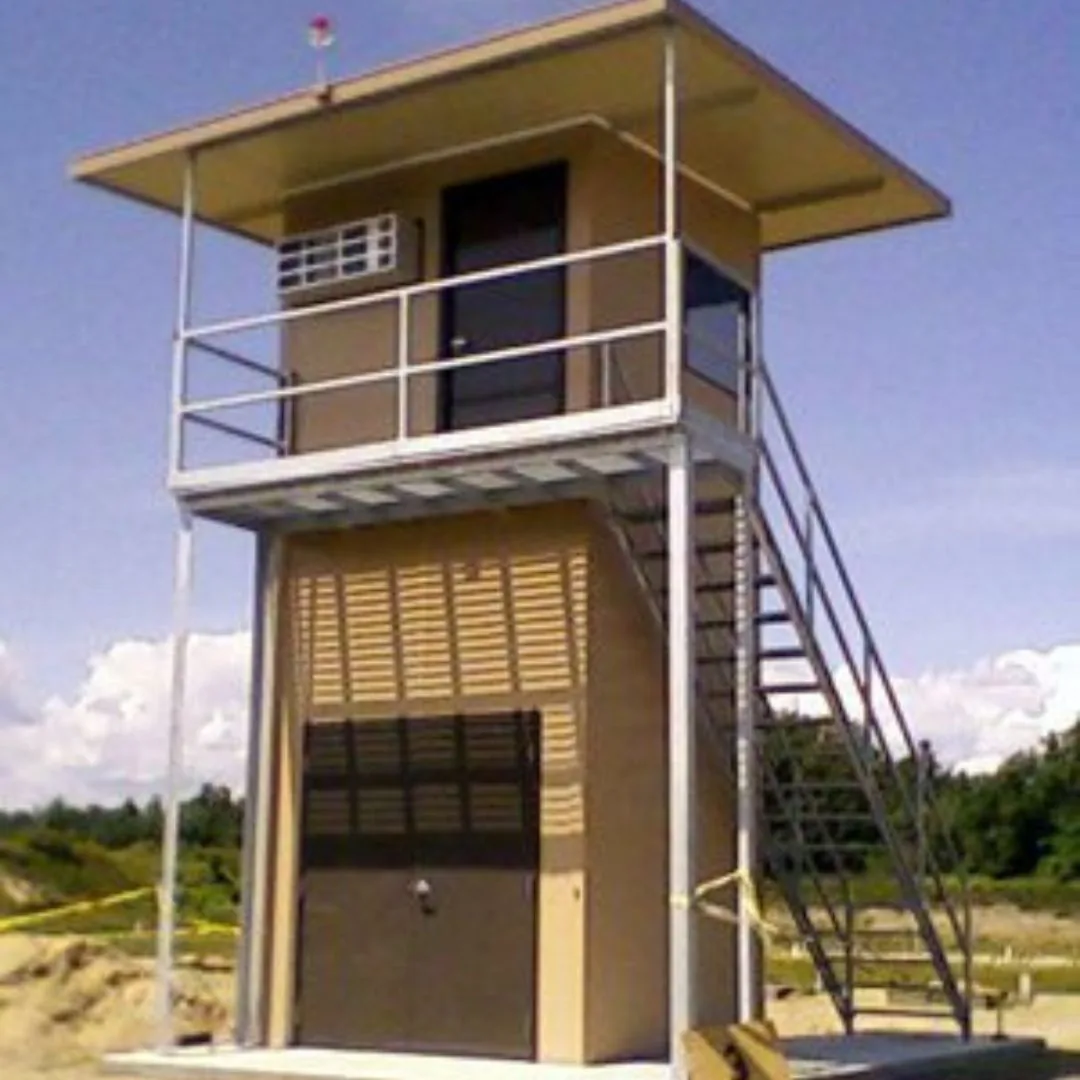
Training ammunition, targets, simulators and loaner gear need lockable shelving, ammo cabinets and wide bulk racks, and many agencies add a military-style arms room layout for issued training weapons. Range towers and scenario buildings also need gear storage close to the drill area so equipment is not carried across the site between evolutions.
Security, Safety and Compliance Considerations
What reviewers, auditors and building officials will ask about your storage.
Storage that supports your procedures
Storage choices affect more than space. Property and evidence storage should support the written chain-of-custody procedures your agency follows, and many property units benchmark their rooms against best practices published by the International Association for Property and Evidence (IAPE). The products cannot make a room compliant on their own, but they make the procedures easier to follow: pass-through lockers that lock automatically when closed, separate secure areas for drugs, money and guns, and numbered, labeled locations that match the records system.
- Layered security: high-risk items sit in a locked cabinet or cage inside a locked room, with keys or credentials limited to named staff.
- Access records: electronic locks and smart lockers log who opened what and when, which helps during audits and internal reviews.
- Mobile shelving safety: powered and mechanical-assist systems can include aisle safety sweeps, sensors and aisle locks so carriages cannot close on staff.
- Fire and life safety: wire mesh lets sprinklers reach stored items, and flammable or hazardous property belongs in approved safety cabinets.
- Seismic and anchoring: tall lockers, cabinets and shelving should be anchored, and seismic design zones in the Mountain West often require engineered anchoring.
- Ergonomics: heavy armor, ammunition and boxed property belong between knee and shoulder height, with step stools or rolling ladders for upper levels.
Specification Checklist for Law Enforcement Storage
Use this list when you write a bid spec or compare quotes.
| Feature | Options to specify | Why it matters |
|---|---|---|
| Steel and construction | Welded vs. knock-down frames; door and body gauge | Welded units resist prying and stay square when moved. |
| Locks | Keyed, combination, padlock hasp, electronic or RFID | Decides who can open what, and whether you get an access log. |
| Ventilation | Solid, louvered, perforated or wire mesh doors | Wet gear needs airflow; sensitive property may need solid doors. |
| Interior fit-out | Saddles, pegs, shelves, drawers, foam, power | Matches the actual weapon or gear inventory. |
| Anchoring and seismic | Floor and wall anchors, bracing, engineered calcs | Required for tall units in many jurisdictions. |
| Finish and color | Powder coat colors, stainless or epoxy for wash-down | Durability and a consistent look across rooms. |
| Labels and numbering | Number plates, card holders, barcode labels | Supports audits and inventory systems. |
Planning tip
Write the security level into the spec for each room, not just the product. A locked cabinet inside a locked room with an access log is a very different requirement from a padlocked locker in a hallway, and bidders price them differently.
How a Law Enforcement Storage Project Works
Inventory and walkthrough
We review headcount, weapon lists, property volumes and room drawings, on site or from plans.
Layout and product match
We lay out each room and match products to security level, budget and growth.
Quote and purchasing
You receive an itemized quote that fits your agency’s procurement rules and bid process.
Delivery and installation
Installers anchor, level and test every unit, then walk your staff through locks and access.
Material Handling USA works with police departments, sheriff’s offices, campus police and state agencies nationwide, with installers based in Utah, Idaho and Nevada and partner crews elsewhere. Call (800) 326-4403 or request a quote to start with a free layout review.
Roll-up shutters for property and supply rooms
A second lock inside shared rooms
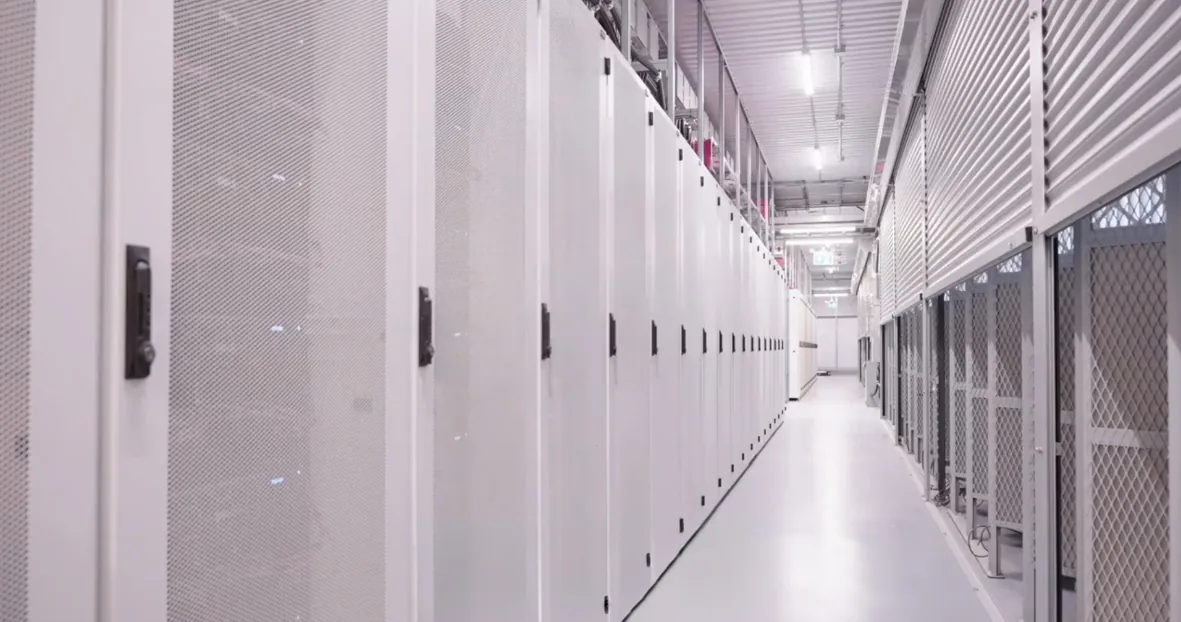
Property rooms, quartermaster stores and armories are often shared by several units. A roll-up storage shutter lets one bay of shelving be locked while the rest of the room stays open. Pentagon Shutters builds TambourGuard shutters that mount on static or high-density shelving, new or retrofitted, with key-switch, remote or app operation. For long guns, see the armory section of our weapons storage solutions guide. Counter and opening shutters are on our roll-up security shutters page.
Photo: Pentagon Shutters
Frequently Asked Questions
What storage does a police department need?
What is the difference between a tactical locker and a regular locker?
Do you sell weapon racks online?
How do pass-through evidence lockers work?
Can mobile shelving be used in a police property room?
Can you install storage for a combined police and fire building?
Do you work with government purchasing rules?
Plan Your Agency’s Storage
Free layout review and an itemized quote for lockers, weapon storage and property rooms.