
Employee Lockers & Steel Lockers
Steel employee lockers for plants, warehouses, shops, hospitals and offices — single-tier, double-tier, triple-tier, box and cubby styles, sized to your headcount and laid out by our team. Shop Lyon and Tennsco lockers online or request a quote for a full locker room.
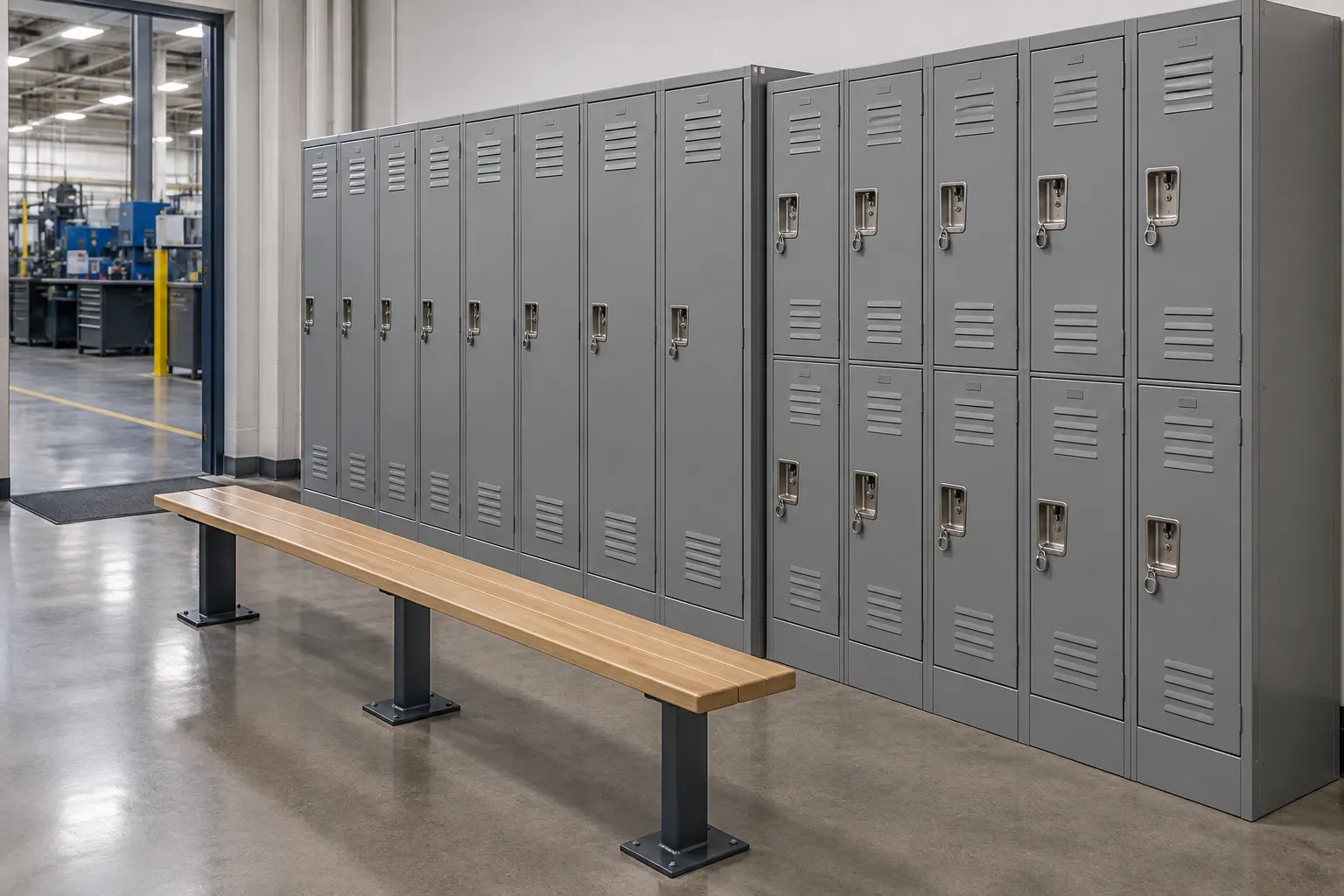
1–6 Tiers
Single-tier to six-tier box lockers
2 Brands
Lyon and Tennsco listed online
Free Layout
Headcount, sizing and placement
One Quote
Lockers, freight and install
Shop Steel Lockers by Tier
Prices below are current online prices for the lowest-priced one-wide locker in each style. Wider units, more colors, Lyon models and assembled options are in each category. Freight is quoted by destination; some common sizes are in stock at select manufacturers, subject to confirmation.


More locker guides: heavy-duty lockers · cubby lockers · Lyon lockers · Tennsco lockers · locker accessories
Need a full locker room? See how to plan headcount and layout or request a free layout and quote.
Workplace Lockers and Staff Lockers for Every Kind of Employer
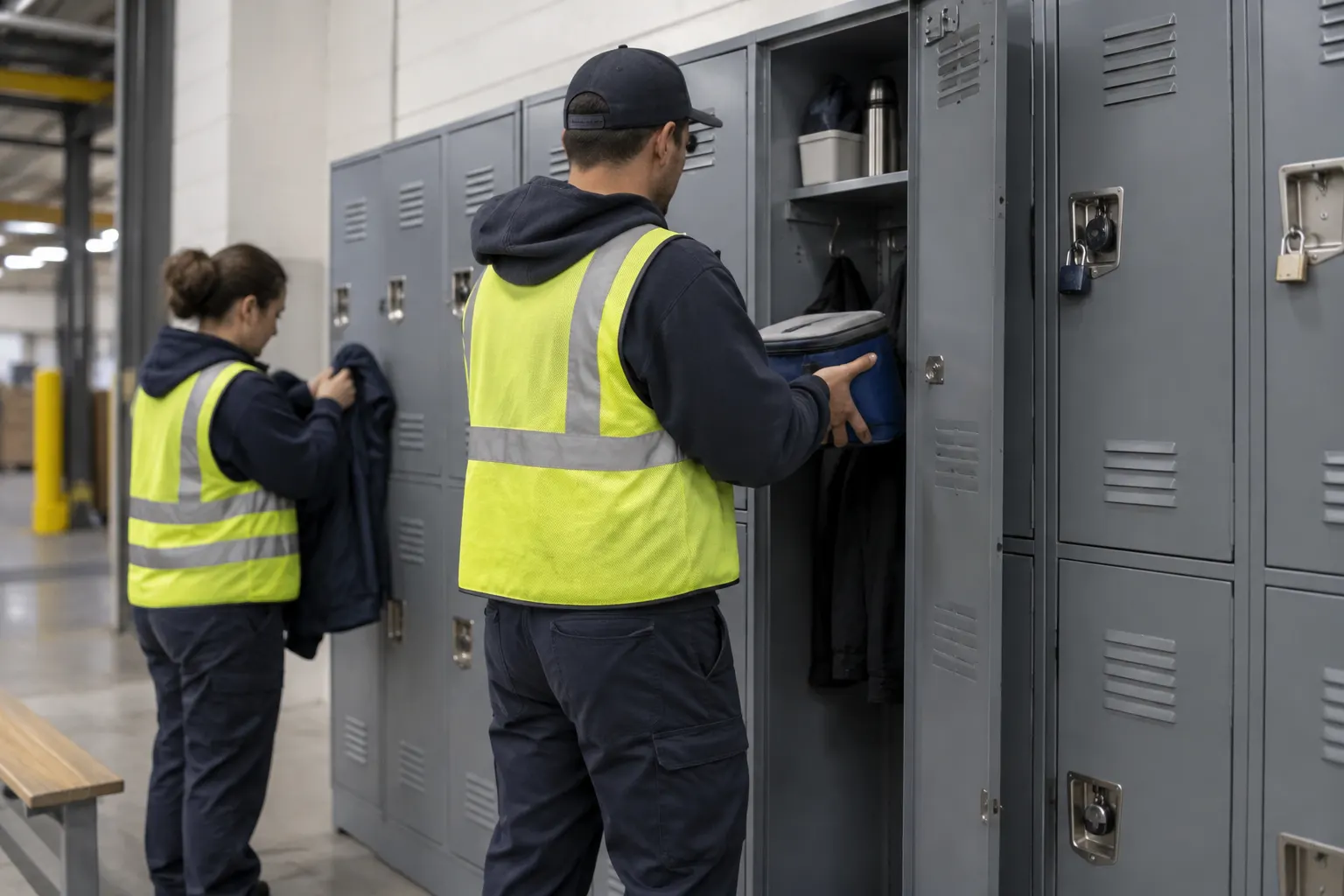
Employee lockers give every worker one secure place for a coat, a phone, a lunch, a change of clothes or a set of work boots. Done right, they keep personal items off the production floor, out of break-room chairs and away from the stockroom, and they make shift change faster because everyone knows exactly where their things go.
This page covers traditional steel lockers — the powder-coated metal lockers with padlock hasps or built-in locks that you see in plant break rooms, warehouse change areas, retail back rooms, hospital staff areas and fire stations. We explain the locker types by tier, the sizes and construction details that matter, and how to plan how many lockers you need and where they go.
Looking for something else? Our lockers directory covers every locker category and brand we work with, including plastic, wood, evidence, weapon and wire lockers.

Need keyless or electronic access instead?
If you want PIN, RFID badge or app-controlled lockers with an audit trail, day-use assignment or parcel pickup, see our smart locker systems. Steel employee lockers on this page use padlocks or built-in mechanical locks and are usually assigned to one person.
Types of Steel Lockers by Tier
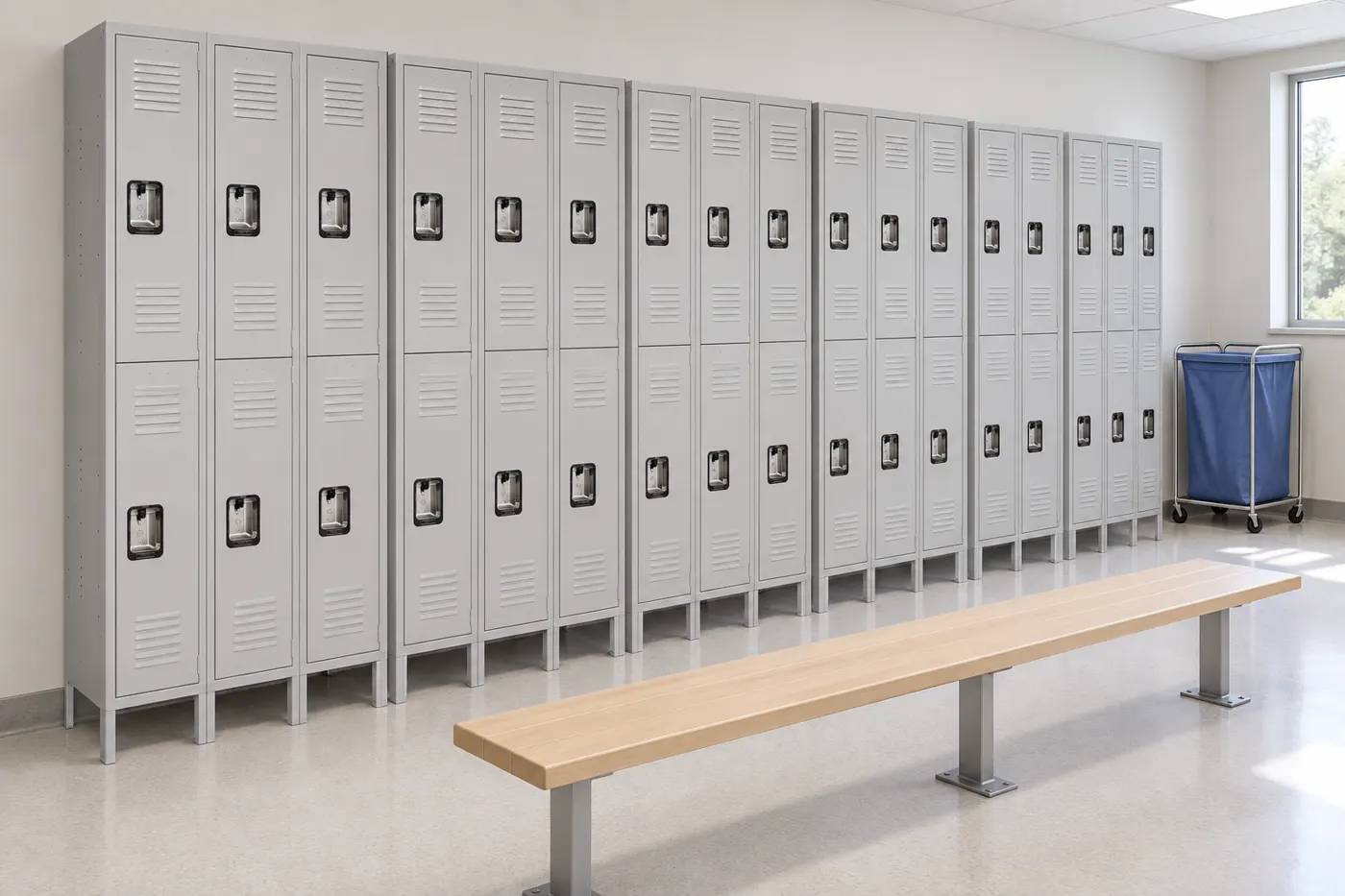
Most steel lockers are built on the same idea: a standard-height column divided into one or more doors. The more tiers, the more people you can serve in the same wall space — and the smaller each compartment gets. Here are the configurations buyers compare most often.
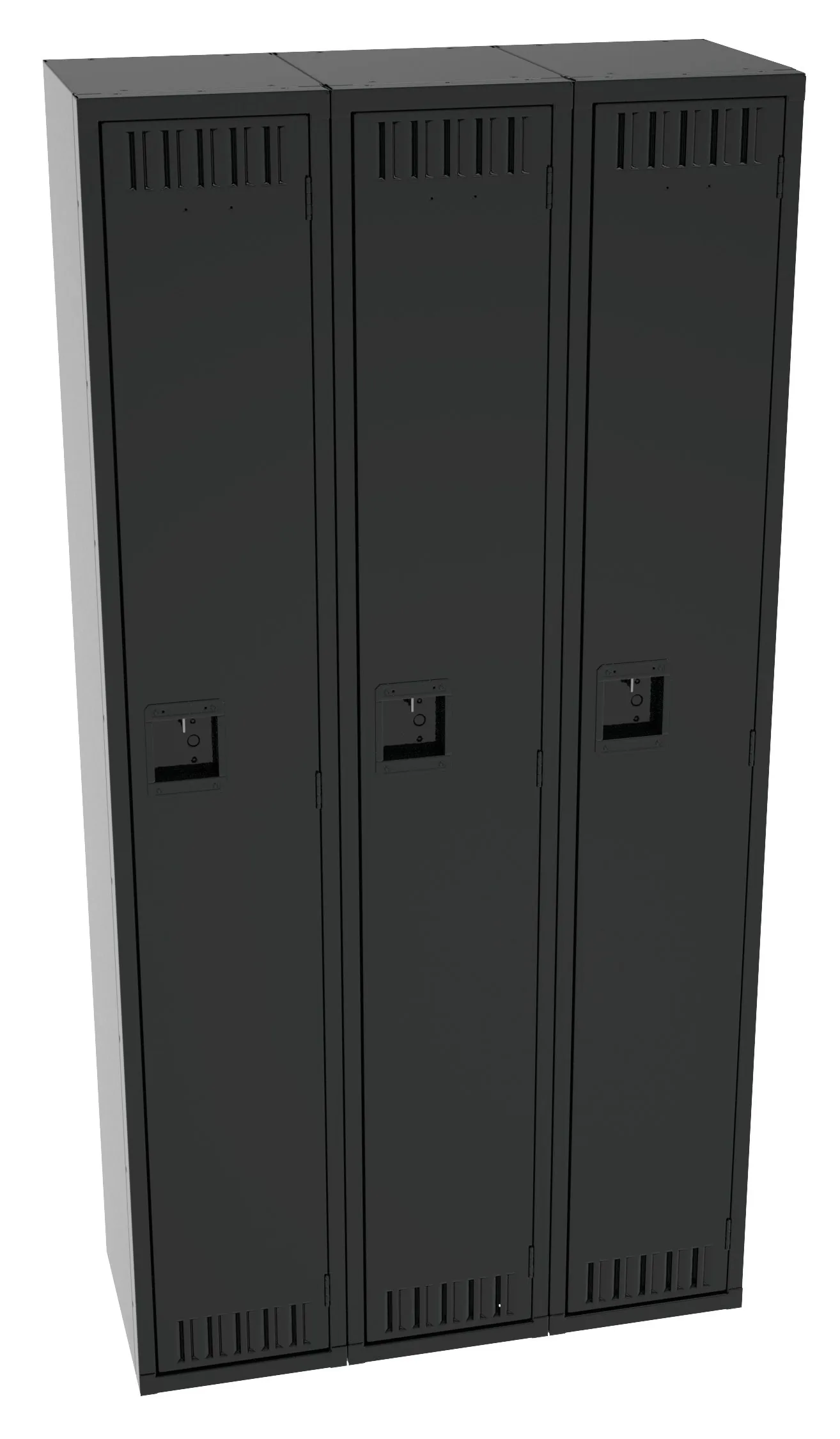
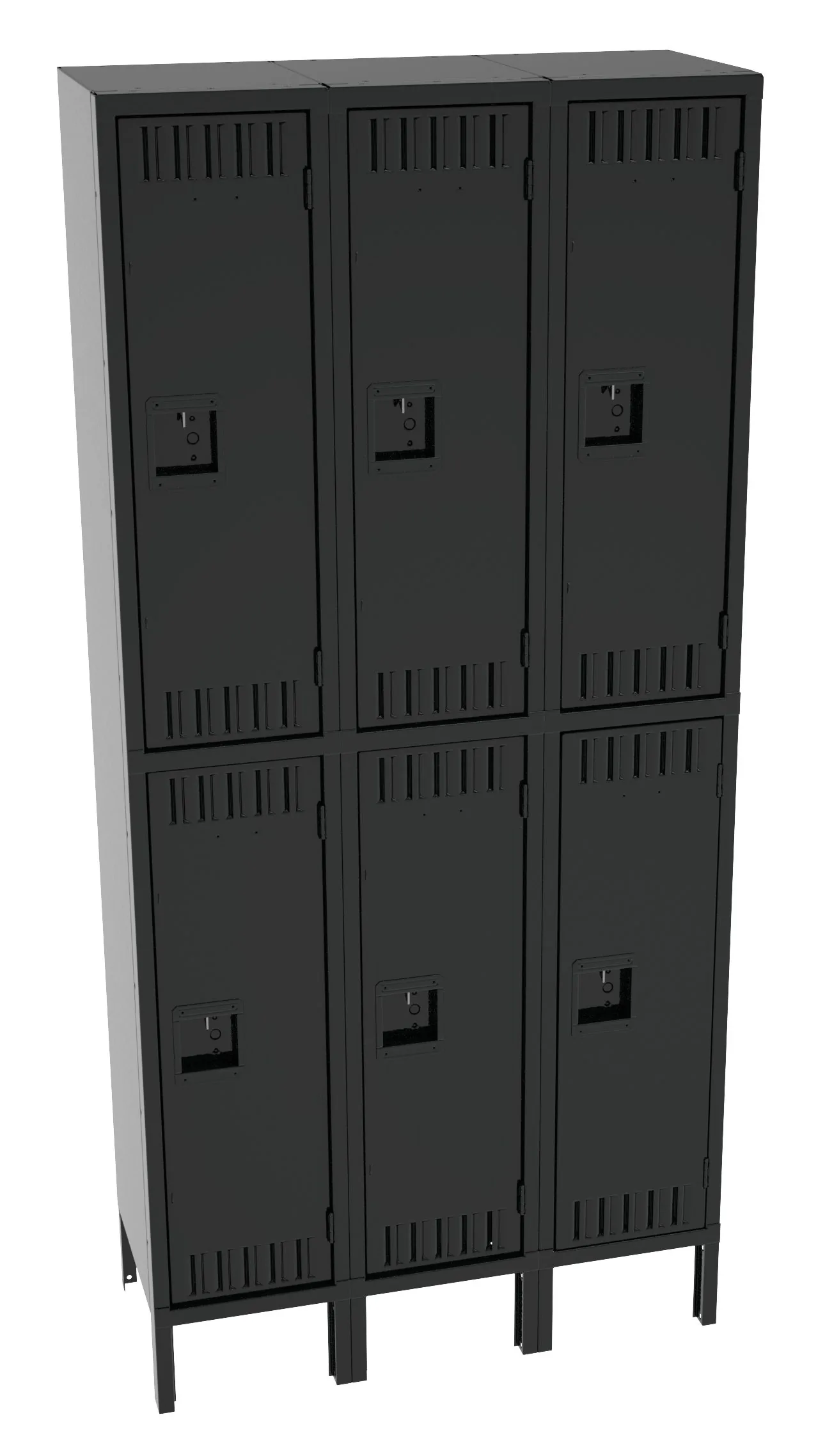
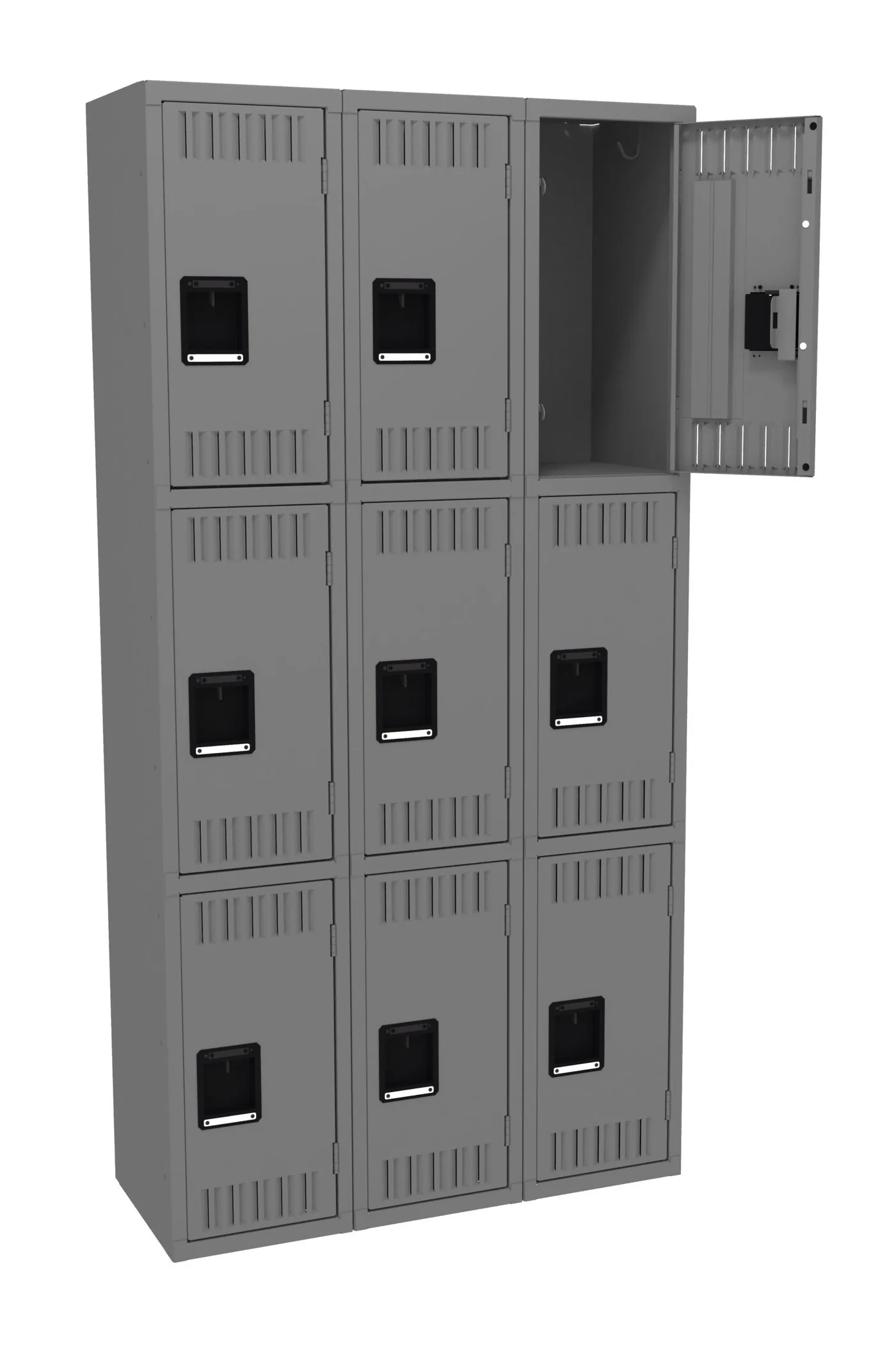
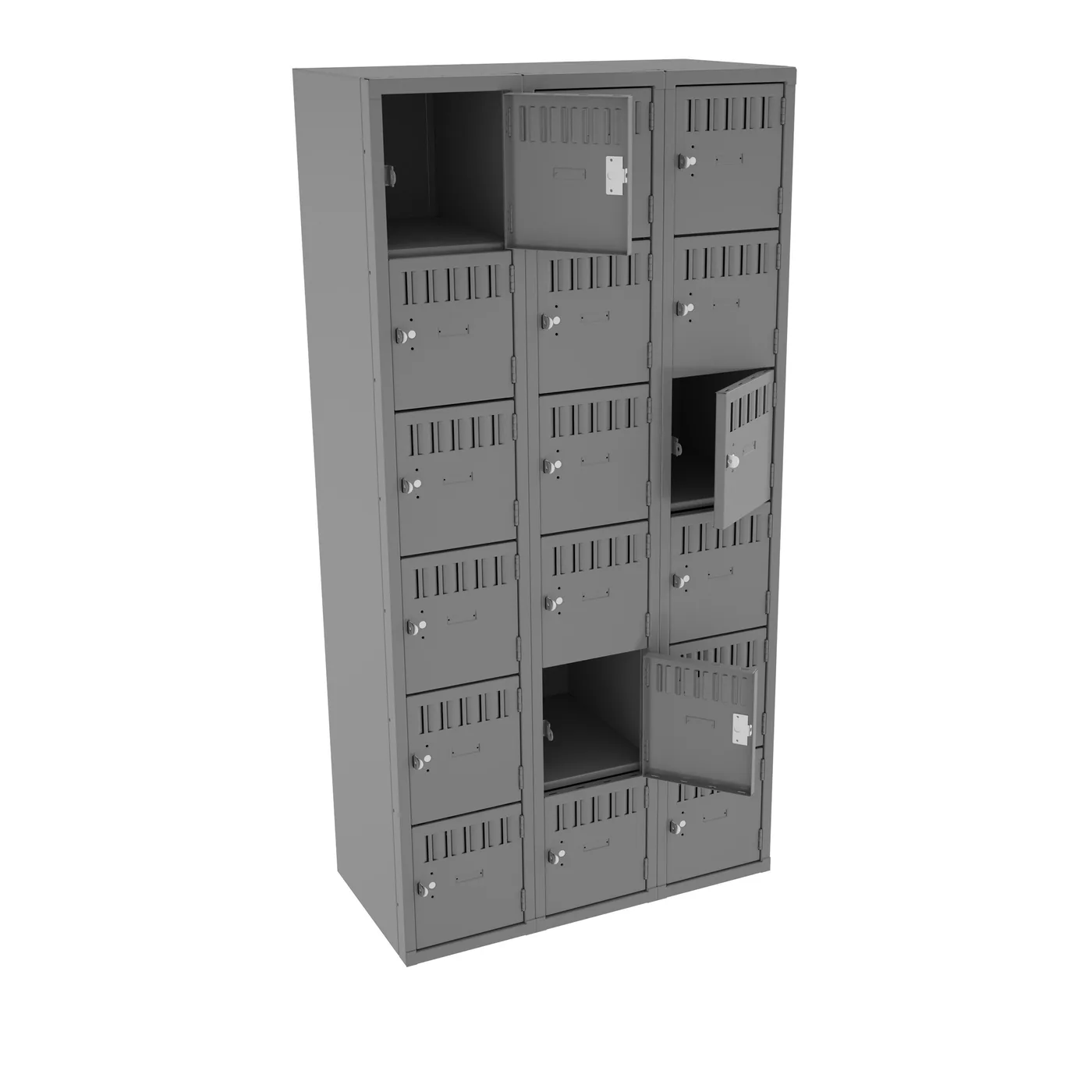
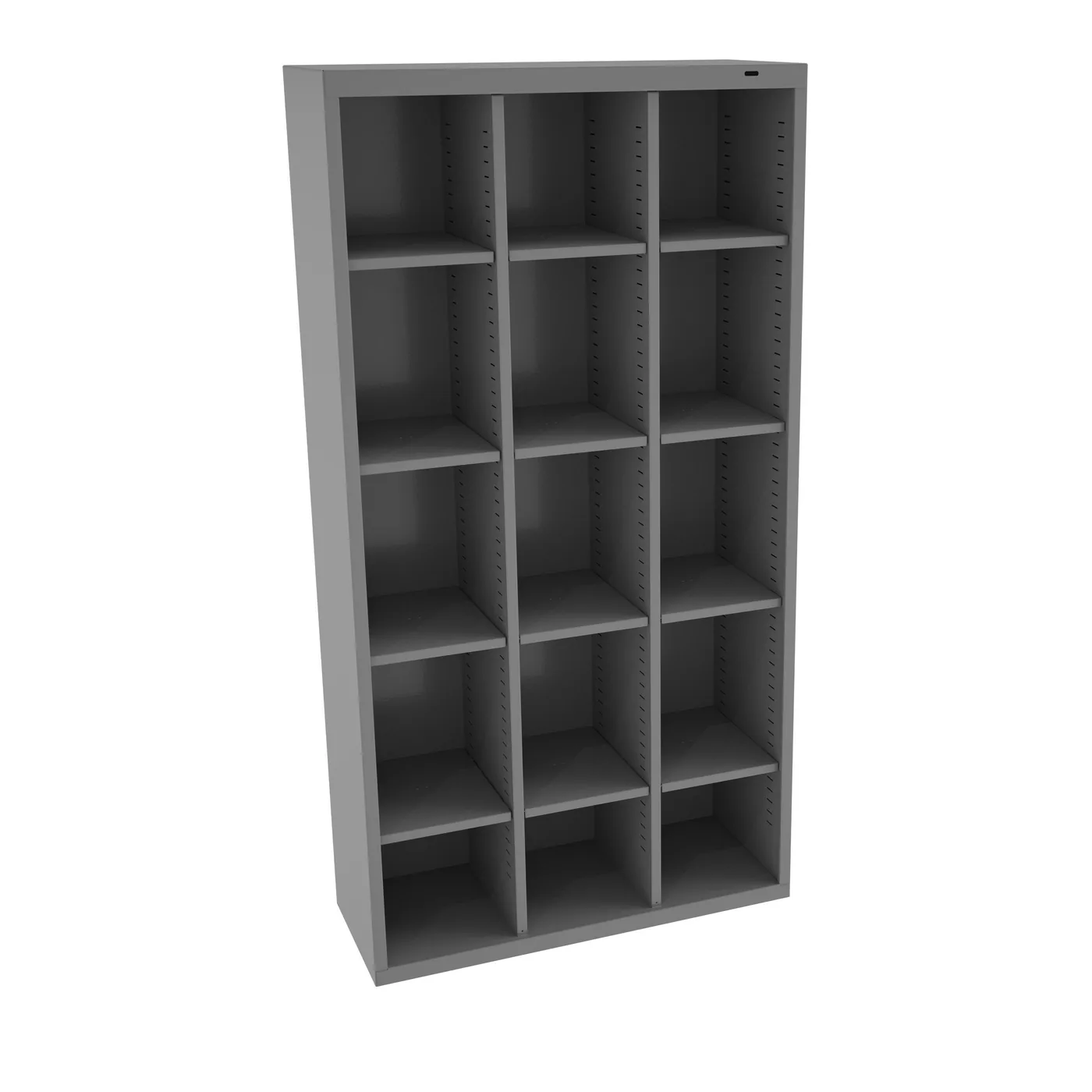

Steel locker configurations at a glance
| Configuration | Doors per column | Typical door opening height* | Best for |
|---|---|---|---|
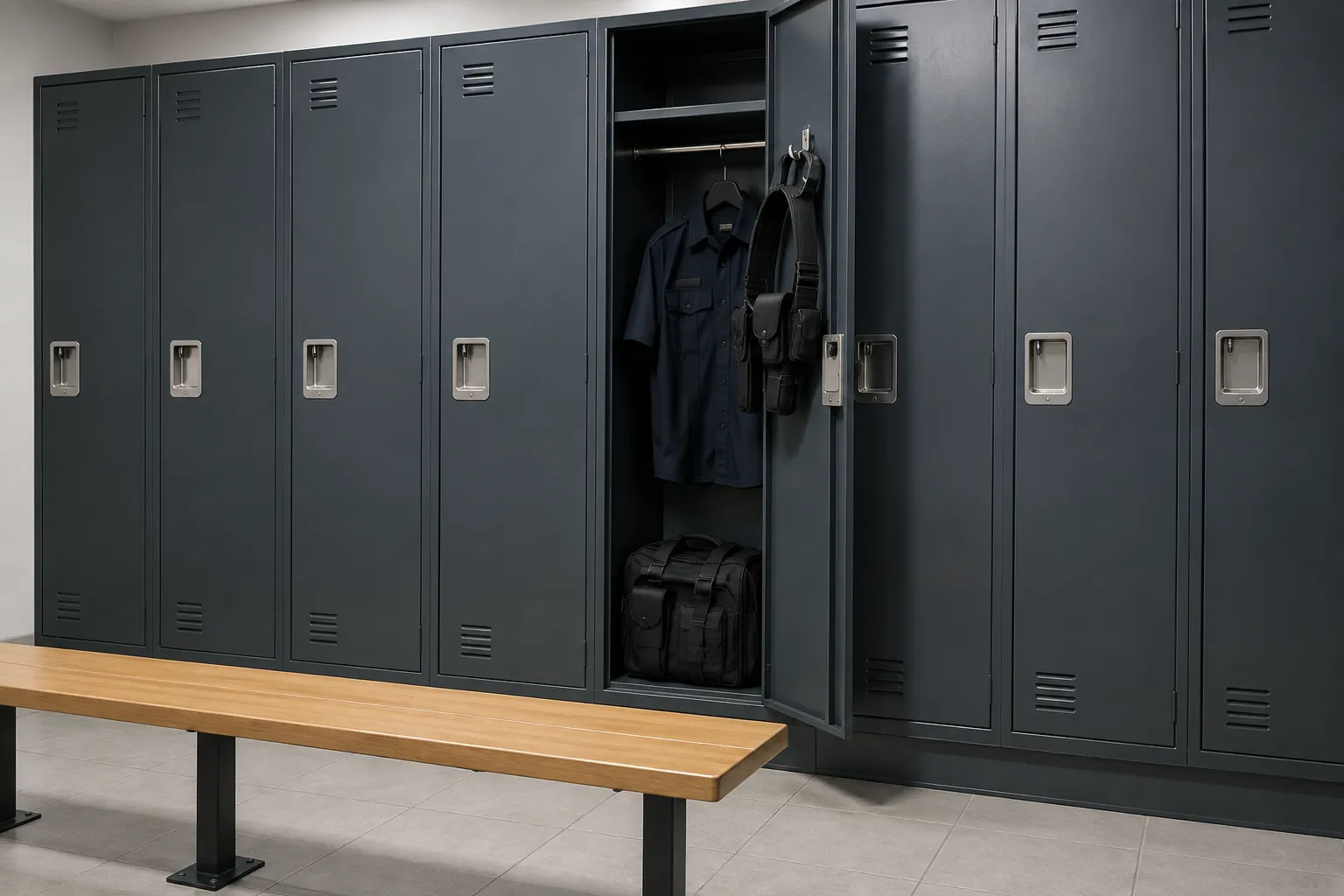
| Single-tier | 1 | 60″ or 72″ | Full-length clothing, uniforms, PPE |
| Double-tier | 2 | 30″ or 36″ | Coats, bags, lunch; doubles capacity |
| Triple-tier | 3 | 20″ or 24″ | Personal items for larger crews |
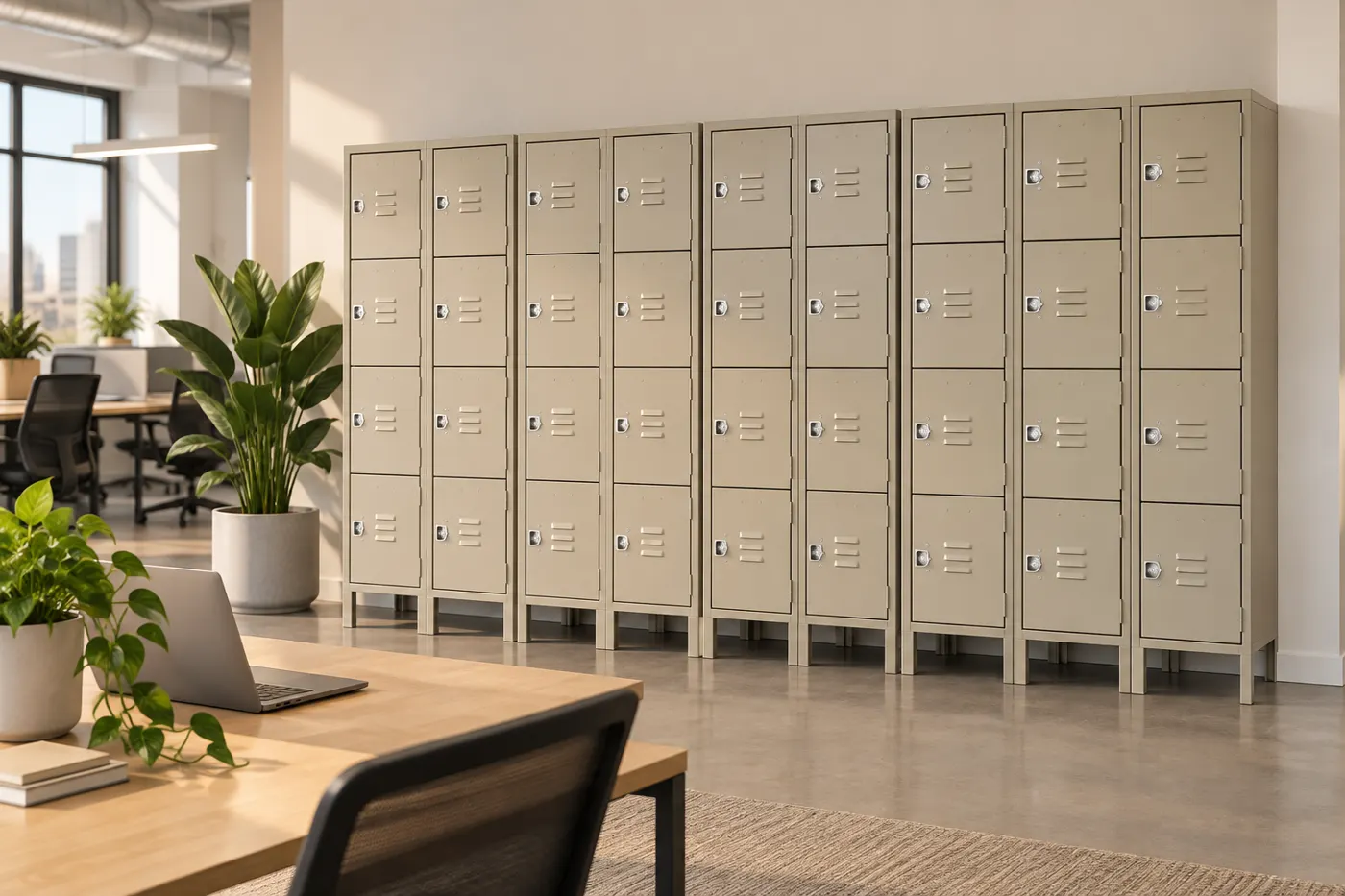
| Four-tier | 4 | 15″ or 18″ | Small bags, tablets, lunch |
| Five- and six-tier (box) | 5–6 | About 12″ | Phones, wallets, keys, small items |
| Cubby | No doors | Open compartments | Supervised gear drop areas |
*Opening heights are from Lyon’s published standard steel locker specifications for 60″ and 72″ bodies; add about 6″ to the overall height when legs are included. Other manufacturers publish similar, but not identical, sizes — we confirm exact dimensions for the model you choose.
Employee Lockers by Application
Different workplaces store different things. These guides cover locker sizing, construction and layout for the settings we quote most often. For exact dimensions and how-many-do-I-need math, see our locker sizes, dimensions and specifications guide.
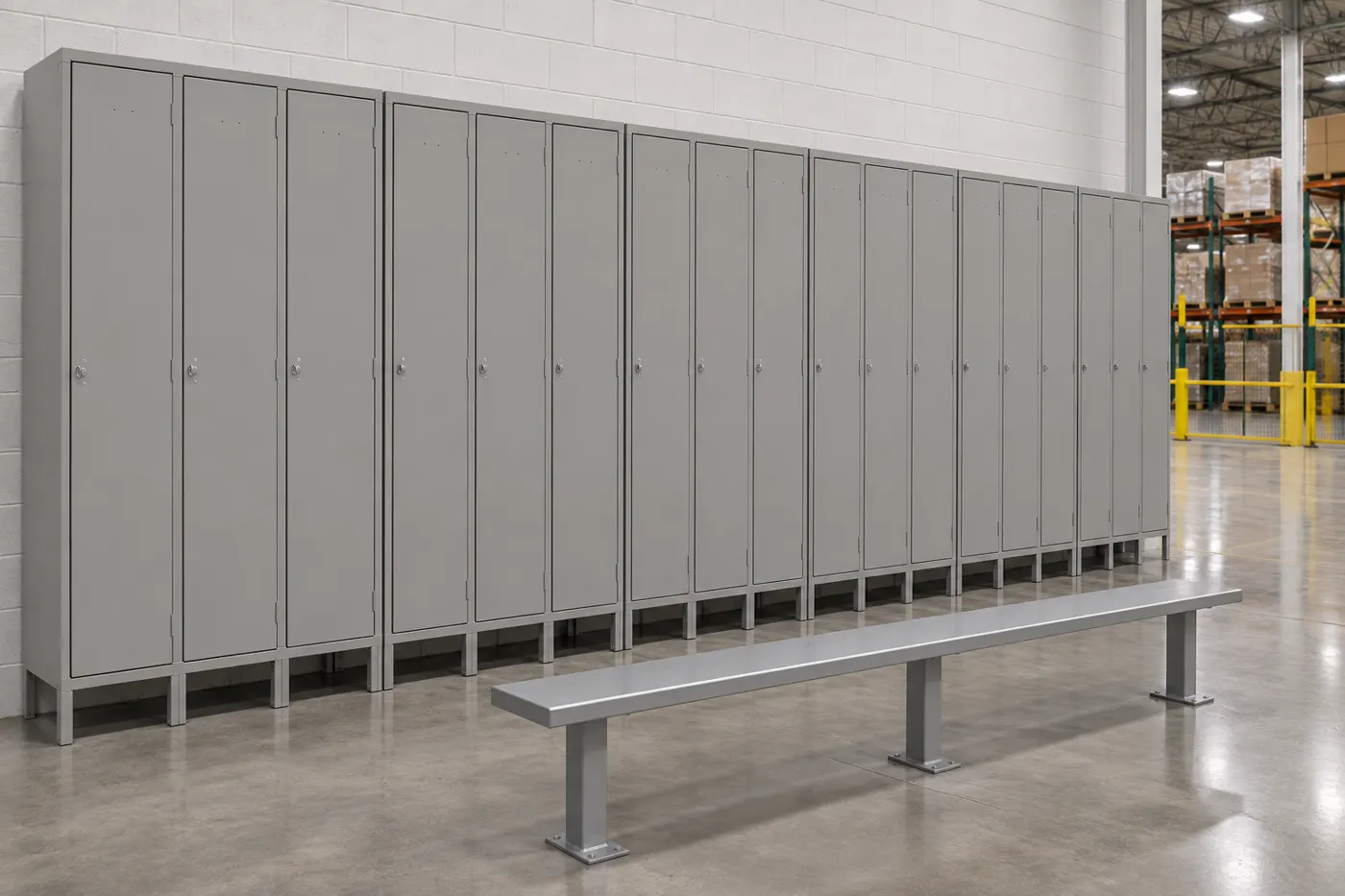
Choosing seating for the room? Our locker room benches guide compares hardwood, aluminum and ADA benches, pedestal spacing, aisle widths and per-foot prices.
Outfitting a military unit, armory or tactical team? Our TA-50 gear lockers guide covers 42″ × 24″ × 78″ ventilated lockers, single and two-tier models and readiness-center planning.
Setting up an evidence intake wall at a police station? Our evidence lockers guide covers pass-through, refrigerated and electronic evidence lockers, compartment sizes and wall planning.
Finishing a locker room? See locker accessories and parts — benches, sloped tops, closed bases, end panels, locks and number plates.
Buying for students or athletes? Our school lockers guide covers hallway lockers by grade level, recessed installs and locks, and our athletic lockers guide covers ventilated gym lockers and open-front team lockers.
Outfitting a school or team facility? Our athletic and team lockers guide covers locker rooms and equipment rooms. For fire stations, bunker gear that should dry in the open goes on turnout gear racks sized per firefighter.
Staff Lockers and Workplace Lockers
Whether you call them employee lockers, staff lockers or workplace lockers, the job is the same: give each person a secure, assigned place for a coat, a bag, a phone and a lunch while they work. The right setup depends on the room the lockers go in.
- Offices and hybrid workplaces: box and double-tier lockers in office-friendly colors hold laptop bags and coats for hot-desking staff. See our guide to office lockers for employees.
- Break rooms and change rooms: double-tier lockers for jackets and bags, or single-tier lockers where uniforms must hang full length.
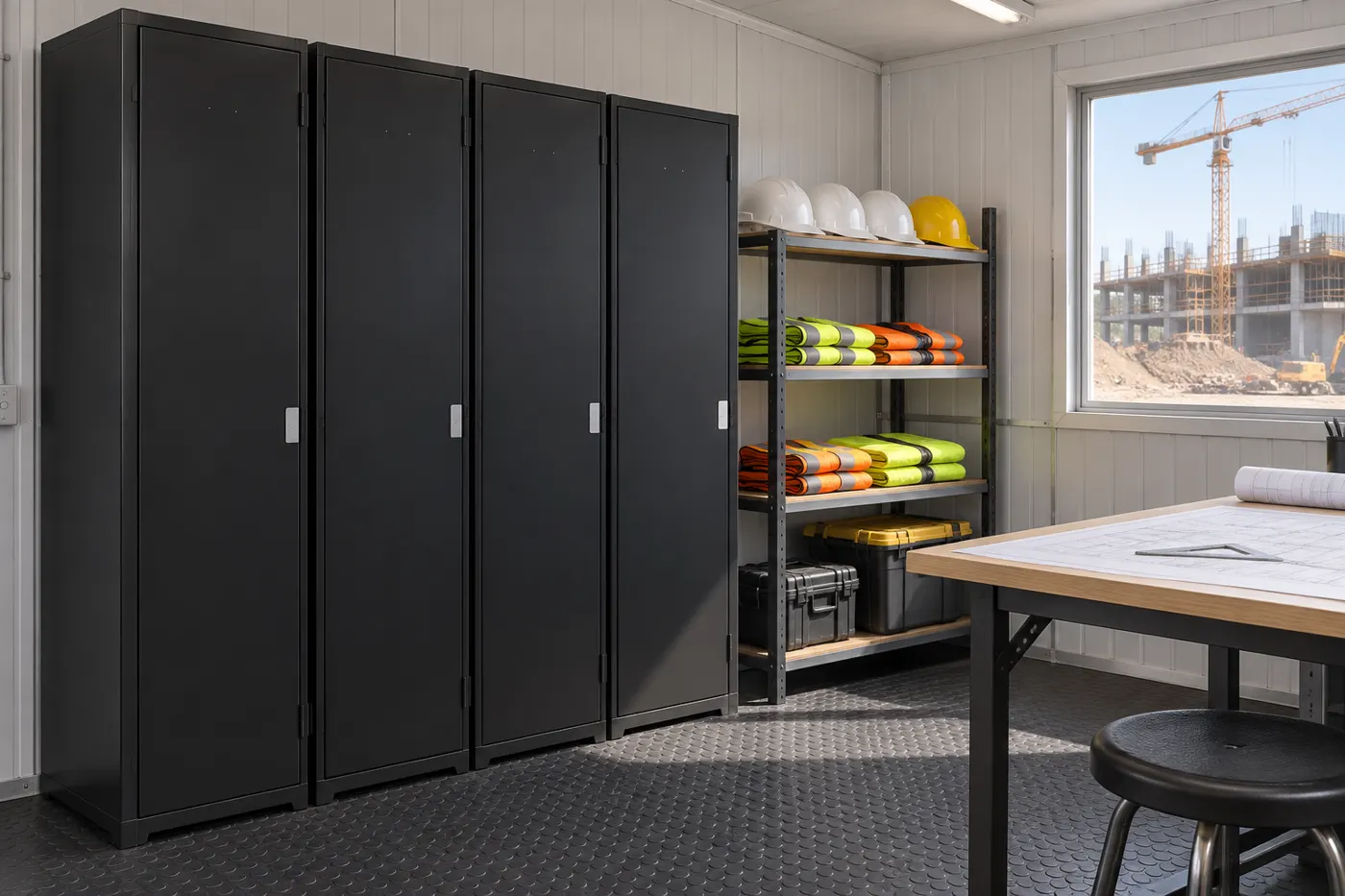
- Plants, warehouses and jobsites: ventilated or welded steel lockers stand up to heavy use; see warehouse and industrial lockers and construction site lockers.
- Badge access: standard steel staff lockers use padlocks or mechanical locks. If you want employees to open lockers with the ID badge they already carry, look at smart lockers with employee badge access.
How to Choose Employee Lockers: Start With What People Store
The fastest way to pick the right locker is to ask what a typical employee will put in it on an ordinary day, and what they will put in it on the worst day of the year — a winter coat, wet rain gear, a hard hat, a gym bag.
If clothing must hang full length — uniforms, lab coats, coveralls, high-visibility outerwear — go single-tier. If people bring a jacket, a bag and a lunch, double-tier usually covers it at half the wall space per person. If it is a backpack, gym bag or lunch, triple-tier fits three people per column. If the locker only needs to hold a phone, keys and a wallet while staff are on the floor, box lockers put five or six doors in one column.
Many facilities mix types: single-tier for the maintenance crew, double-tier for production, and a bank of box lockers by the entrance for visitors, contractors or phone-free work areas.
Questions to answer before you order
- How many people change or store items at the same time? Plan for peak shift overlap, not just total headcount.
- Does anything stored need ventilation? Damp work clothes and boots call for louvered or perforated doors.
- Padlock or built-in lock? Standard recessed handles take a padlock; built-in combination or key locks remove the need to manage padlocks.
- Assigned or shared? Mechanical steel lockers work best when each locker belongs to one person; frequent reassignment points toward electronic access.
- How hard is the environment? High-traffic or high-abuse areas justify heavier gauges and welded construction.
- Is there a separate requirement for work clothing? Some operations keep street clothes and protective clothing apart — that can mean two lockers per person or a divided locker.
Steel Locker Sizes and How Many Lockers Fit
Steel lockers are sold by width, depth and height, and in one-wide or three-wide units that bolt together into longer banks. Common widths are 12″, 15″ and 18″, with 9″ and 24″ available in some lines. Common depths run from 12″ to 21″ (24″ in some lines), and the most common overall heights are 66″ and 78″ with legs.
Width sets how many people fit along a wall. Depth decides whether a coat hangs on a rod facing forward or on hooks: Lyon includes a coat rod in 18″-deep single-tier lockers, and Tennsco adds coat rods to single-tier lockers 18″ and deeper. Height is usually set by ceiling, sightlines and whether the top of the bank needs to stay within reach.

Quick capacity math per foot of wall
| Locker (12″ wide column) | Users per column | Users per 12 ft of wall (12 columns) |
|---|---|---|
| Single-tier | 1 | 12 |
| Double-tier | 2 | 24 |
| Triple-tier | 3 | 36 |
| Six-tier box locker | 6 | 72 |
Wider 15″ or 18″ lockers give each person more room but reduce the count along the same wall. Remember to leave space at the ends of each run for end panels and to keep doors from swinging into walkways, and to plan an open aisle in front of the lockers so people can stand at an open door while someone passes behind them.
Steel Construction: Gauge, Latching and Ventilation
Two lockers that look the same in a photo can be built very differently. These are the details worth comparing on a spec sheet, with examples from the manufacturers in our online catalog.
| Feature | What to look for | Published example |
|---|---|---|
| Steel gauge | Lower gauge number = thicker steel. Doors and frames take the most abuse. | Lyon standard lockers: 16-gauge one-piece doors and frames, 24-gauge body (Lyon). Tennsco ventilated lockers: 14-gauge doors, 16-gauge frames and sides (Tennsco). |
| Welded vs. knock-down | Welded (assembled) units are more rigid and install faster; knock-down units ship flat and cost less to freight. | Both Lyon and Tennsco offer assembled and unassembled versions. |
| Latching | Multi-point latching resists prying and keeps tall doors aligned. | Three latch points on Lyon single-tier doors, two on double and triple tier; Tennsco single-tier uses a three-point latch. |
| Handle | A recessed handle keeps padlocks from sticking into the aisle. | Recessed lift handles with padlock hasp on Lyon and Tennsco standard lockers. |
| Hinges | Full-height or multi-knuckle hinges carry heavy doors better. | Tennsco specifies five-knuckle hinges, three per door on doors over 42″ high. |
| Ventilation | Louvers at top and bottom move air; perforated or diamond-vent doors move more. | Lyon and Tennsco standard lockers use door louvers; Tennsco also offers fully ventilated lockers. |
| Noise | Bumpers and quiet latches matter in break rooms next to offices. | Tennsco lists rubber door bumpers and nylon latches for quieter operation. |
Specifications summarized from Lyon’s standard steel locker specifier’s guide and product pages and Tennsco’s locker brochure and ventilated locker specification. Manufacturers change specifications; we confirm the current sheet for your exact model before you order.
Legs, Bases, Assembly and Finishes
Legs or a closed base
Lockers with 6″ legs leave toe room and let you clean underneath; they add about 6″ to the overall height. Lockers without legs sit on a closed base or a raised concrete or wood base so dirt cannot collect underneath. Front and end base panels are available to close in the gap on legged units.
Assembled or unassembled
Assembled (welded) lockers arrive ready to set in place and bolt together. Unassembled (knock-down) lockers cost less to ship and suit projects with a crew on site to build them. For large locker rooms we help you weigh freight savings against install labor.
Colors and finishes
Standard steel lockers are powder coated. Lyon standard lockers in our catalog come in Dove Gray and Putty; Tennsco lockers in our catalog are listed in colors such as black, light grey, medium grey, sand and champagne/putty. Ask about other colors for larger orders.
Anchoring and add-ons
Tennsco recommends anchoring lockers to the floor or wall for safety, and tall banks should always be secured. Number plates, built-in locks, extra shelves, coat hooks, sloped tops and locker room benches can be added to most lines — ask us which fit the model you choose.
Planning Your Employee Locker Area

A good locker plan starts with the room, not the catalog. Measure the wall runs you can use, note doors, windows, outlets, fire extinguishers and floor drains, and check the ceiling height and any soffits. Then work out the peak number of people who need their lockers at the same time.
From there, choose the locker type for each group, set the aisle in front of the lockers, and place benches where they do not narrow the route to the door. If you are building or remodeling a full locker room, our locker room design guide walks through layout and accessible-locker planning in detail. For warehouses and plants, these warehouse locker room layout ideas cover the best location for employee lockers, aisle widths and how many lockers you need.
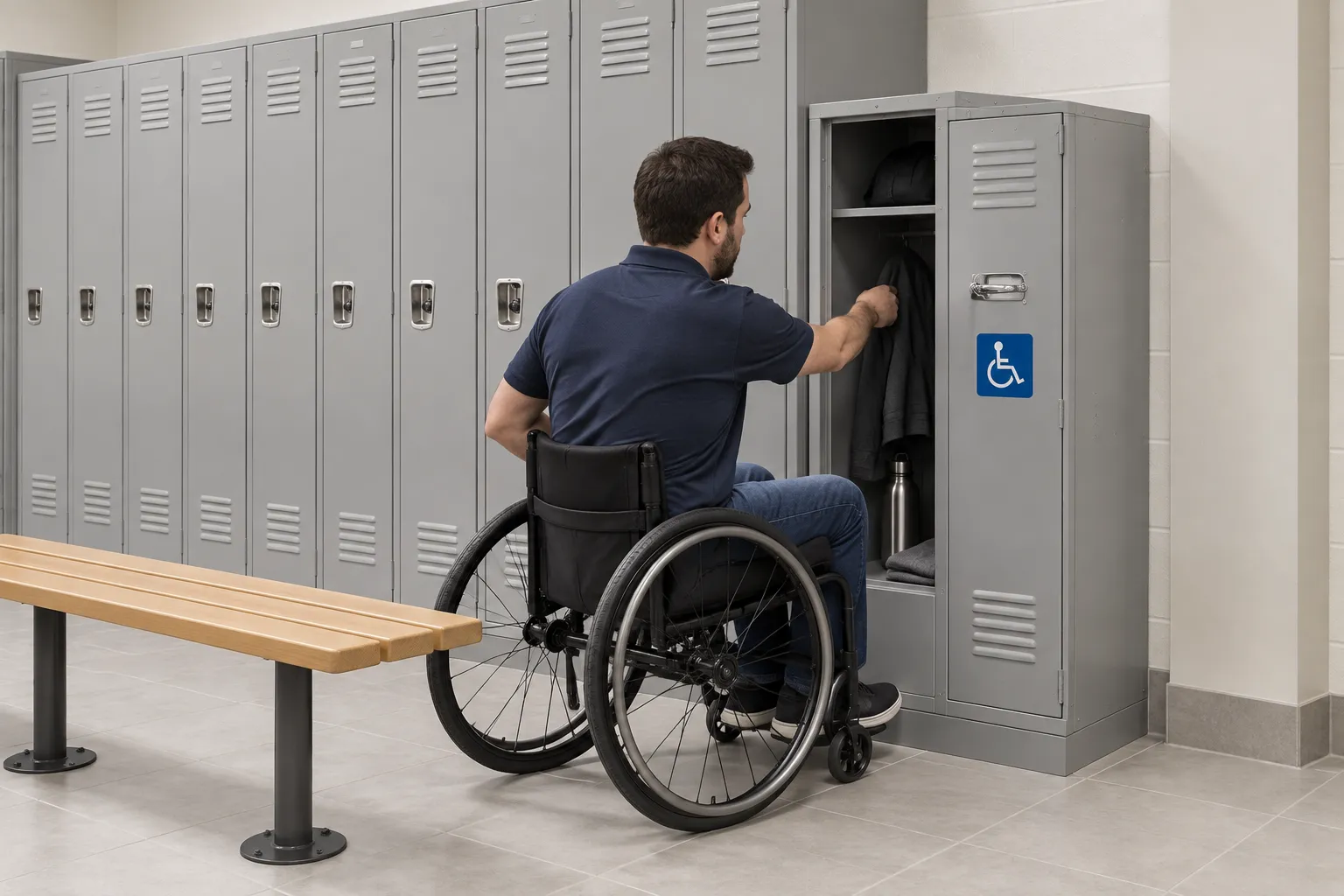
Accessibility and fire-egress requirements depend on your jurisdiction and building; we lay out lockers to the criteria your architect, facility team or code official provides.
Send the space and headcount
Wall dimensions or a floor plan, ceiling height, and how many people use lockers at once by shift or department.
Get a locker plan
We recommend types, sizes and bank lengths, place aisles and benches, and flag anchoring and base details.
Confirm and quote
One quote for lockers, locks, benches and add-ons, with availability and lead time confirmed for each model.
Deliver and install
Freight to your dock and optional installation, anchoring and bank assembly coordinated to your schedule.
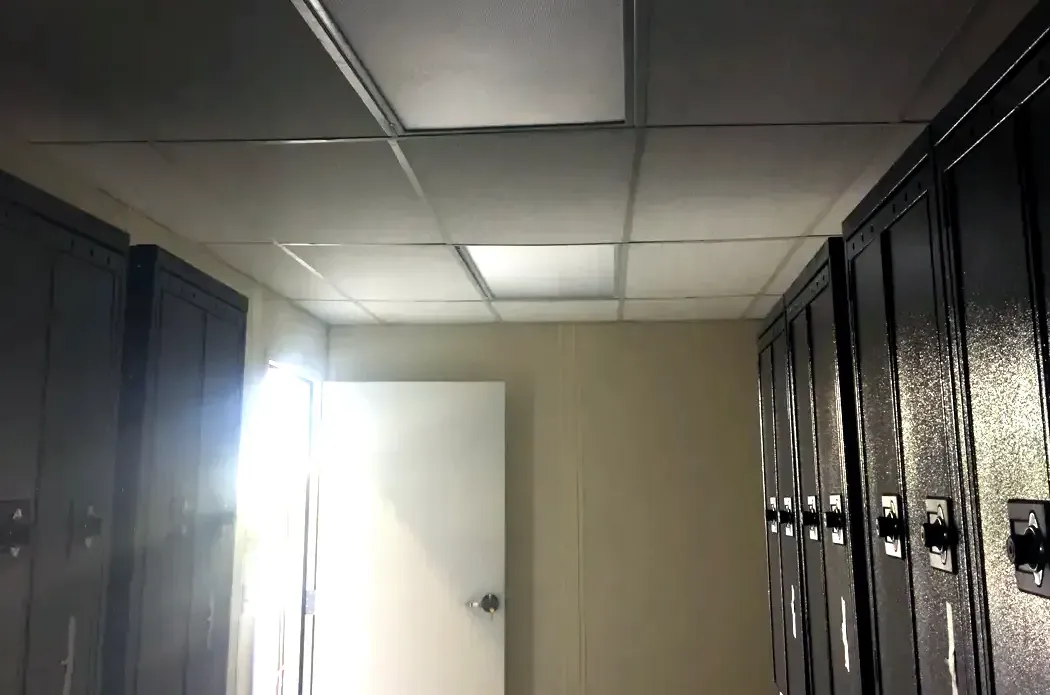
Project example: a modular change room in Salt Lake City. For a maintenance operation whose technicians arrive in street clothes and leave in work clothing, we delivered a modular change room fitted with rows of full-height employee lockers along the walls and a clear aisle between them, with storage on the deck above.
Read the full modular change room project to see how the locker plan drove the room size, and why the lockers were chosen before the building was sized.
Steel Locker Brands and Where to Compare Them
Our online store lists steel lockers from Lyon and Tennsco across single, double, triple, multi-tier, box and cubby styles. We also quote lockers from other manufacturers for projects that need a specific line. A catalog listing is not a stock guarantee: some common sizes are in stock at select manufacturers, subject to confirmation, and we confirm availability and lead time on every quote.
| Where to go | What you will find |
|---|---|
| Tennsco lockers | Tennsco lockers by tier and style: sizes, gauges, welded vs. unassembled, prices |
| Lyon lockers | Lyon standard, ClearSight, LockeRack, ADA and antimicrobial lockers |
| Locker accessories | Benches, sloped tops, bases, end panels, locks and parts |
| Penco lockers | Penco Vanguard, Guardian, Invincible II, Stadium and Patriot lines |
| Hallowell lockers | Hallowell wardrobe, box, quiet and specialty lockers |
| Dasco heavy-duty corridor lockers | Dasco’s heavy-duty corridor locker line |
| All lockers | Every locker category and brand, including non-steel lockers |
| Utah lockers | Locker supply and installation for Utah facilities |
| Tulsa lockers | Locker planning and freight for Tulsa and northeastern Oklahoma |
In Utah? Our Salt Lake City team plans and installs lockers along the Wasatch Front and statewide — call 801-328-8788 or visit our Utah lockers page.
In the Tulsa area or eastern Oklahoma? Our Tulsa lockers page covers local applications, planning and nearby projects.
Shop Steel Employee Lockers Online
Order single, double and six-tier steel lockers online, or request a quote for a full locker room, freight and installation.


Employee Locker FAQs
What is the difference between employee lockers and smart lockers?
What size locker do employees need?
How many lockers do I need?
What gauge steel should employee lockers be?
Should I buy assembled or unassembled lockers?
Do steel lockers need to be anchored?
What lockers work best on a construction site?
Do you have lockers in stock?
Plan Your Employee Lockers
Send your headcount and space, and we will recommend locker types, sizes and a layout with a free quote.