
Warehouse & Industrial Lockers for Workers
Steel employee lockers sized for shift change, built for forklifts, dust and work boots. Compare welded heavy-duty and ventilated lockers, choose the right tier for what your crews actually carry, and get a free layout and quote for your warehouse, factory or plant.
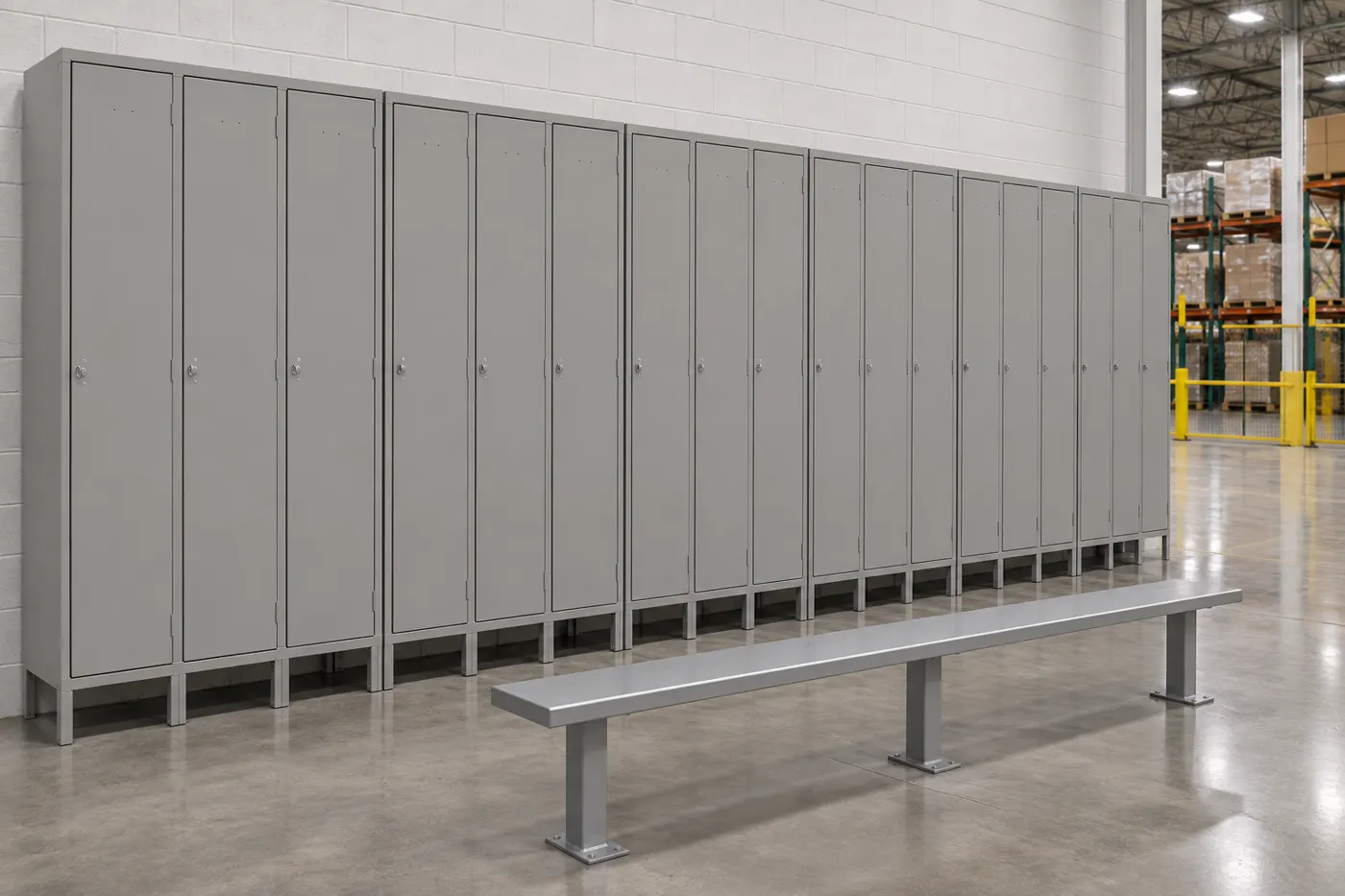
Shift Change
Sized to peak overlap
14-Gauge
Doors on welded heavy-duty lines
Clean / Dirty
Separate storage where OSHA requires
Free Layout
Headcount and room planning
Shop Warehouse Lockers by Tier
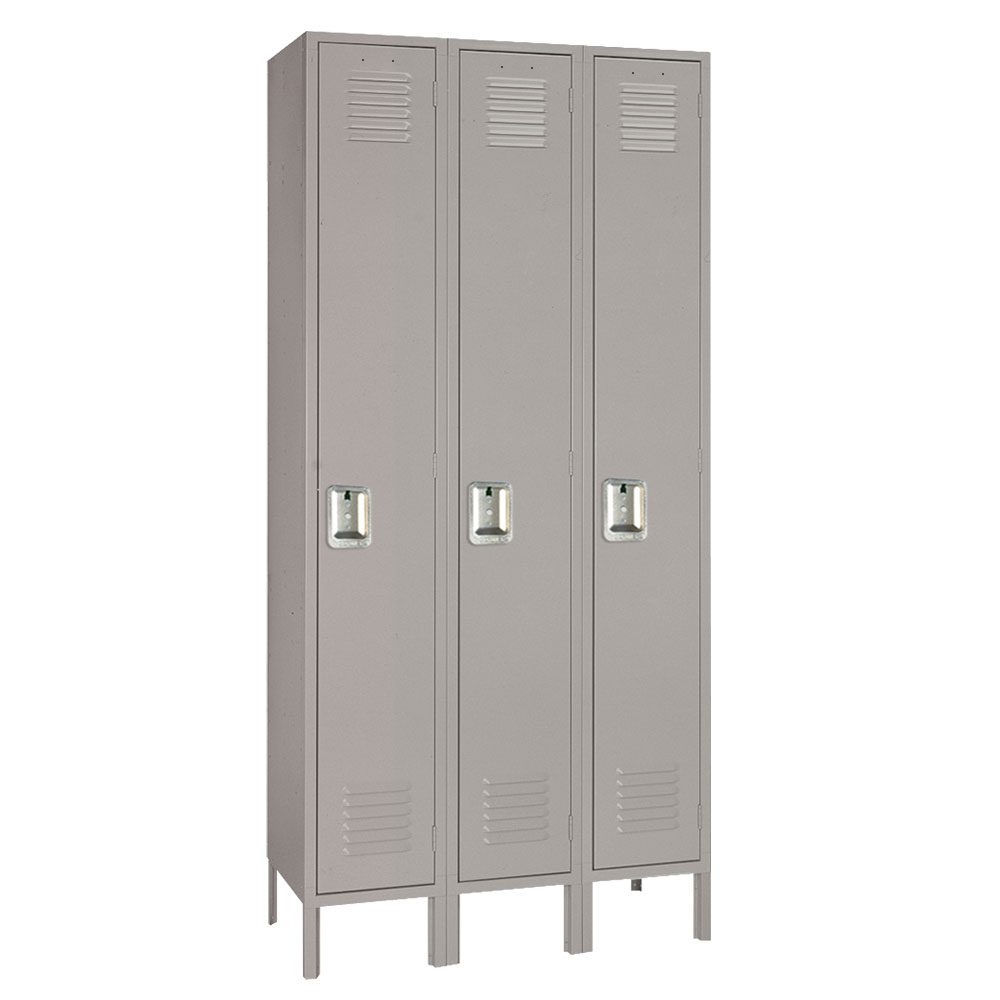
Pick the tier by what your crews store: single-tier for uniform changes, double- or triple-tier for jackets, bags and lunch, and box lockers at the entry for phones. Prices are current online prices for the lowest-priced one-wide locker in each style; heavy-duty, wider units and Lyon models are quoted. Freight is quoted by destination; some common sizes are in stock at select manufacturers, subject to confirmation.


Need a full plan? See how to plan your order or request a free layout and quote.
What Makes a Locker a Warehouse or Industrial Locker?
Warehouse and industrial lockers are steel personal lockers for the people who work on a distribution, manufacturing or plant floor — not the parcel lockers or scanner-charging cabinets that also show up when you search “warehouse lockers.” They hold street clothes, boots, lunch, a phone and personal protective equipment while workers are on shift.
What sets them apart from office or school lockers is the environment. Doors take hits from carts and pallet jacks, dust settles on every flat surface, work clothes come back damp or dirty, and a whole crew uses the room in the same ten minutes at shift change. That pushes buyers toward welded construction, heavier-gauge doors, ventilation, sloped tops and anchoring, and toward a locker count based on peak overlap rather than total headcount.
This page is part of our employee lockers guide. It covers how to choose and spec lockers for industrial workers; for room layout patterns, aisle widths and bench spacing, see our warehouse locker room layout ideas.
Personal lockers, not asset lockers
If you need to issue and track scanners, radios, tablets or tools, that is a different product: see smart locker systems for electronic issue/return with an audit trail, or security cages for a lockable tool crib. Many plants use both — a smart locker for shared devices and steel lockers for each worker’s own things.
How Many Lockers Does a Warehouse Need? Plan for Shift Change
The most common sizing mistake in warehouses and plants is counting lockers for one shift. At shift change the outgoing crew has not emptied its lockers yet and the incoming crew needs somewhere to put its things, so both crews need a locker at the same moment.
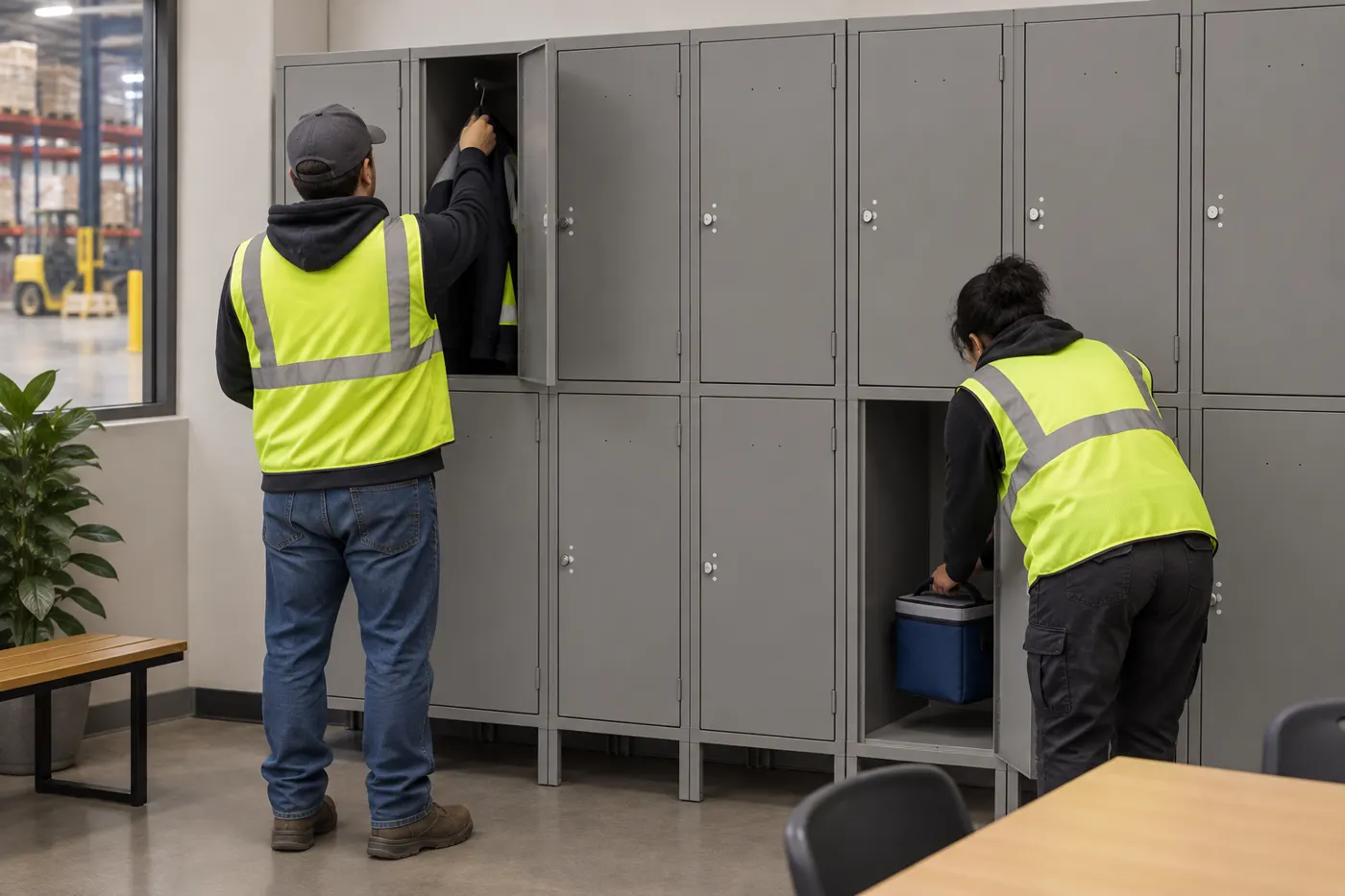
Assigned lockers: if each person keeps a locker for the job, the count is simply every employee across all shifts who needs one, plus temps and seasonal peak staff, plus a few spares for new hires. This is the norm wherever people change clothes or keep PPE at work.
Shared lockers: if lockers are used only during a shift (day-use padlocks or electronic locks), size to the largest overlap — typically the two crews at handover — plus contractors and visitors on site at that time. Shared use only works if the lock system lets the next person take over the locker cleanly.
Then look at the door. Fifty people arriving at once need more than one aisle and one bench; our layout ideas for warehouses article walks through single-sided runs, facing rows, back-to-back islands and entry box lockers for exactly this rush.
| Situation | How to count | Example |
|---|---|---|
| Assigned lockers, 2 shifts | All employees on both shifts + seasonal peak + 5–10% spares | 2 × 60 workers + 15 seasonal + 10 spares = 145 lockers |
| Shared day-use lockers | Largest number on site at once (outgoing + incoming) + contractors | 60 + 60 at handover + 8 contractors = 128 lockers |
| Assigned full locker + phone box | Full lockers for staff who change; box lockers for everyone else at the entry | 40 single-tier + 120 box openings |
Worked examples only; your counts depend on scheduling, turnover and policy. We confirm counts and layout with your quote.
Choose the Tier by What Workers Store
More doors per column means more lockers per foot of wall, but less height in each one. Match the tier to the biggest thing each worker has to put away, not to the cheapest price per opening.

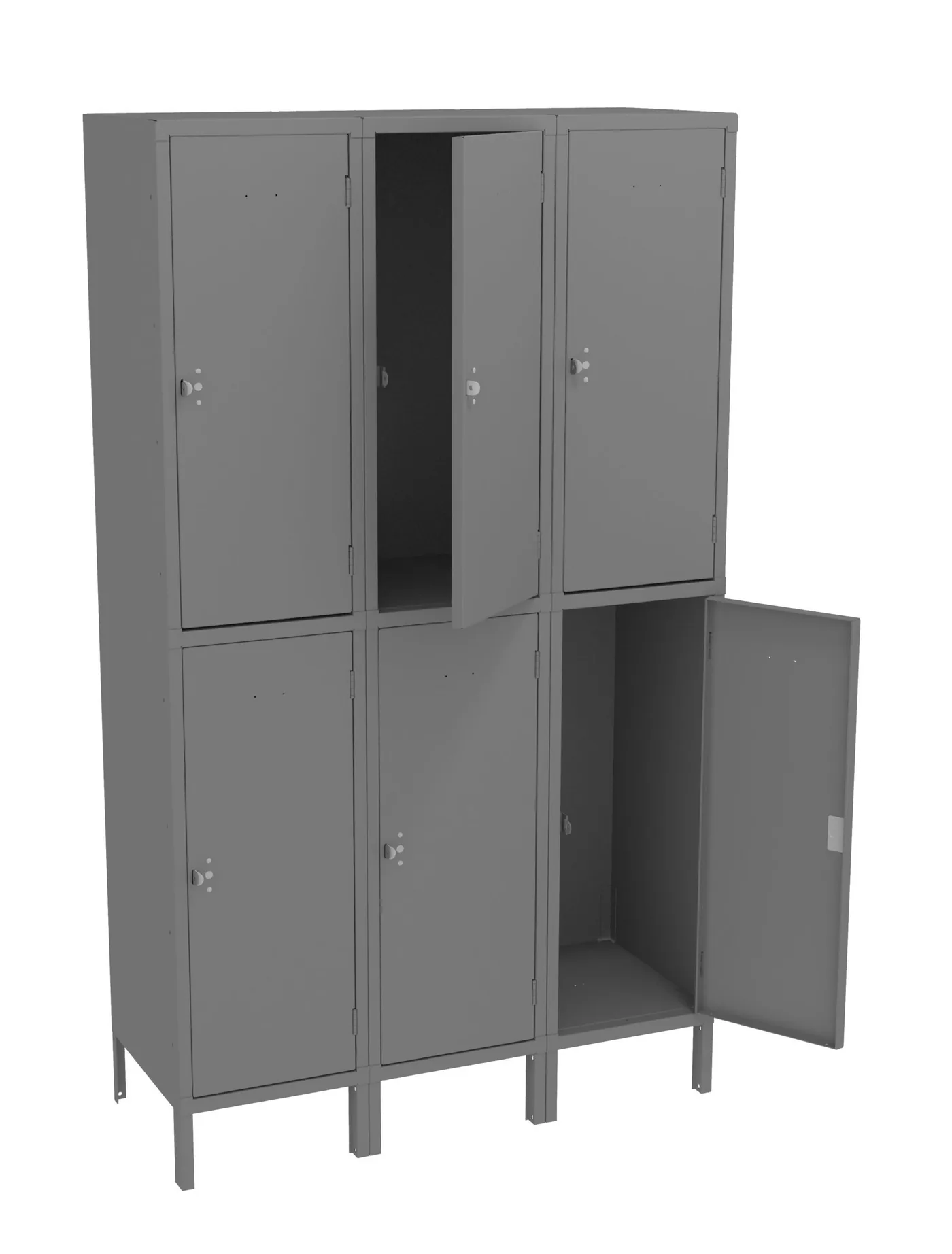
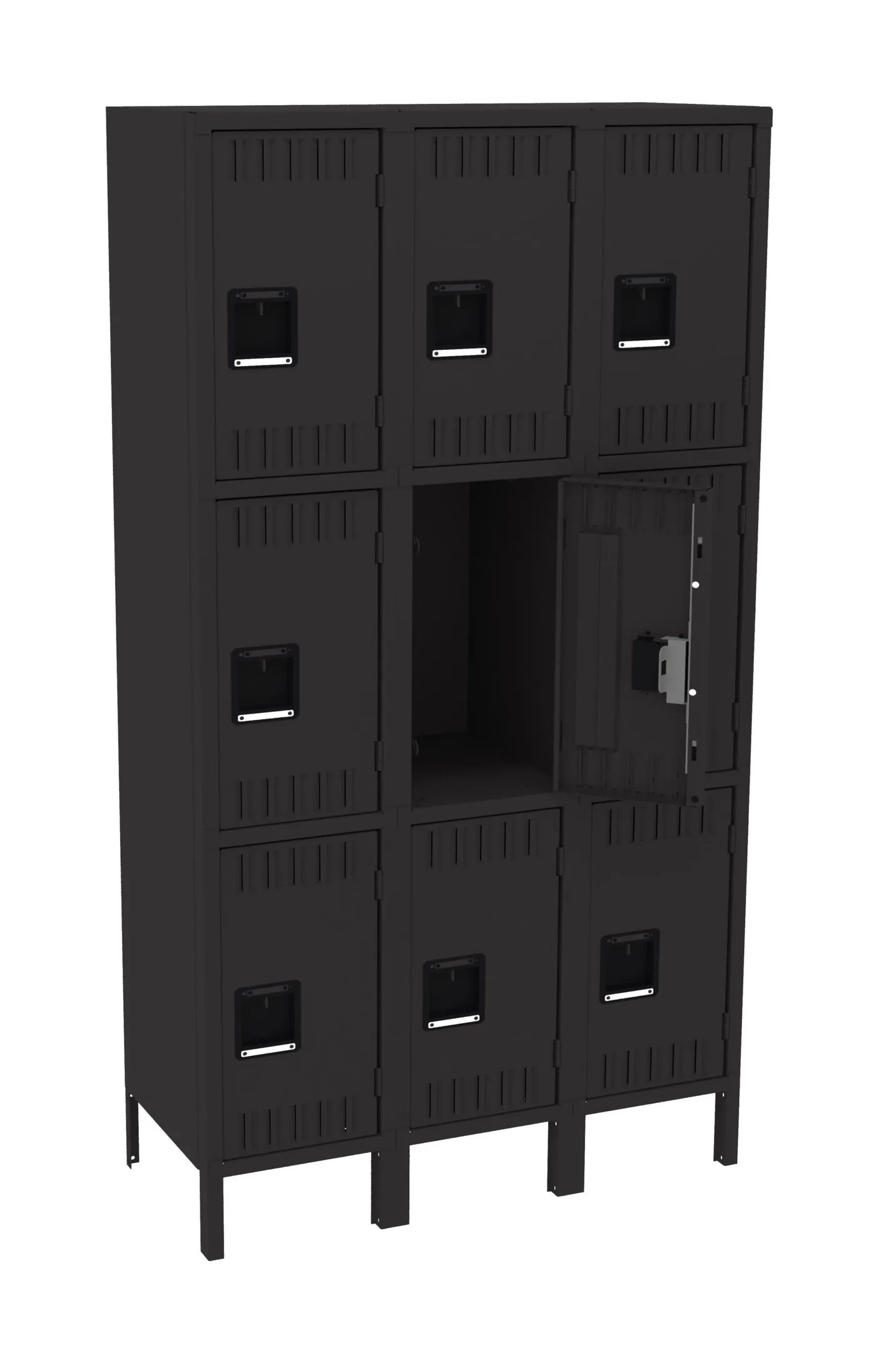
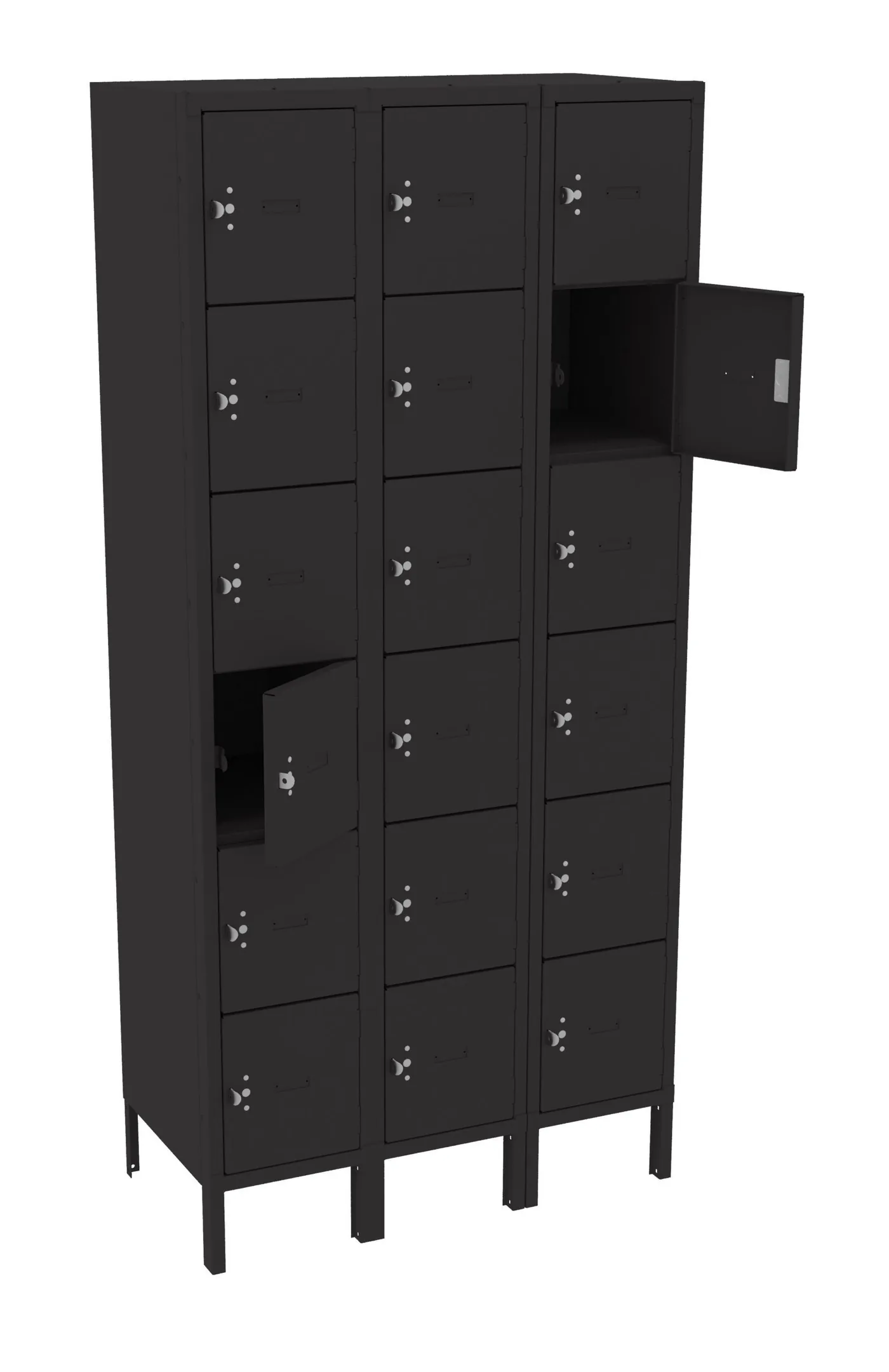
Hard hats, insulated jackets and large lunch coolers need 15″ or 18″ depth; 12″ deep lockers suit lighter loads. Ordering mixed tiers as one plan keeps colors, bases, sloped tops and numbering consistent — a typical distribution center runs single-tier lockers for maintenance and uniformed staff, double-tier banks for the main crews, and box lockers by the turnstiles. Exact published sizes are in our locker specifications guide.
Heavy-Duty and All-Welded Industrial Lockers
Standard lockers work in clean break rooms. On or next to a production floor, buyers usually step up to welded or heavy-duty construction. Here is what the manufacturers’ published specifications say, so you can compare like with like.
| Feature | Standard locker (example) | Heavy-duty / all-welded (example) |
|---|---|---|
| Doors | 16-gauge one-piece doors (Lyon standard lockers in our catalog) | One-piece 14-gauge doors (Lyon heavy-duty and all-welded specs; Tennsco ventilated spec and heavy-duty listings) |
| Body | 24-gauge body parts (Lyon standard) | 16-gauge body with 18-gauge backs (Lyon heavy-duty spec; Tennsco 133 ventilated spec) |
| Construction | Assembled or knock-down | Welded body and frame; Lyon all-welded door frames are lapped and welded into a rigid unit |
| Latching | Recessed lift handle with padlock hasp | Lyon: single-tier latch engages the frame at three points, double and triple tier at two, catching a 12-gauge jamb. Tennsco heavy-duty listings: slot and lock hasp with no moving parts. |
| Ventilation | Door louvers | Diamond-perforated doors and sides on ventilated heavy-duty models (Lyon, Tennsco) |
From Lyon’s Heavy Duty and Heavy Duty Ventilated Locker specifications and all-welded specifier guide, Tennsco’s ventilated locker specification, and the Lyon and Tennsco listings in our catalog. Specifications change; we confirm the current sheet for your exact model.
Where heavy-duty pays off: lockers along forklift and cart traffic, plants where lockers are reassigned often, high-turnover temp crews, and anywhere doors get kicked shut with boots. Tennsco describes its heavy-duty slot-and-hasp latch as having no moving parts, which suits manufacturing and low-maintenance areas.
Heavy-duty lines usually ship assembled and are built to order, so lead times run longer than standard lockers. Some common sizes are in stock at select manufacturers, subject to confirmation — ask for current lead time with your quote, or browse heavy-duty lockers and our Tennsco lockers page.
Clean and Dirty Separation: OSHA Change Room Rules
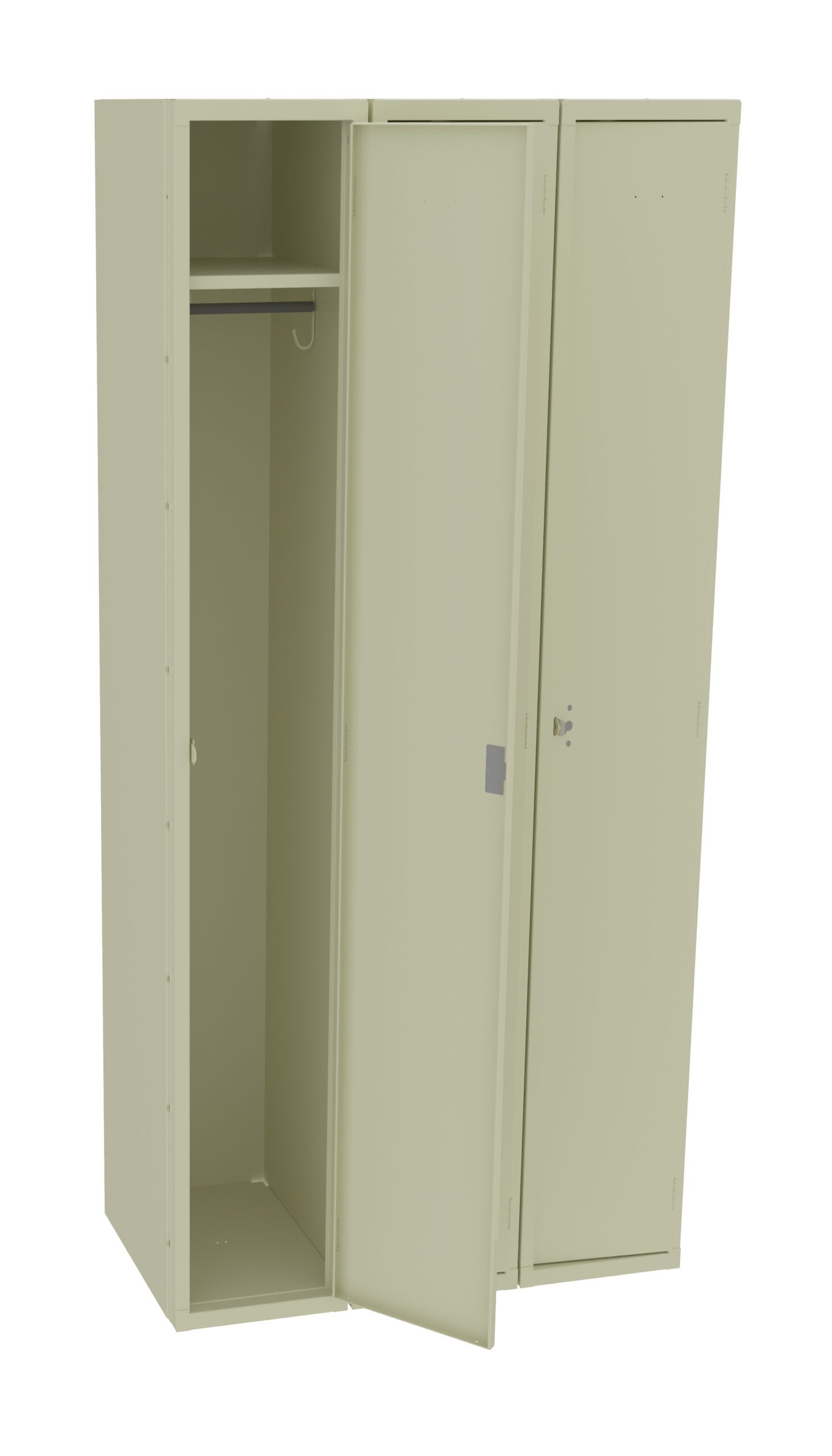
Most warehouses have no legal requirement for lockers at all. The obligation starts when a standard requires protective clothing because of contamination with toxic materials. OSHA’s general industry sanitation standard, 29 CFR 1910.141(e), says that in that case employers must provide change rooms equipped with storage facilities for street clothes and separate storage facilities for the protective clothing.
- When it applies: a specific OSHA standard requires protective clothing due to possible contamination with toxic materials — for example the lead (1910.1025) and cadmium (1910.1027) standards, which also require separate storage that prevents cross-contamination.
- What it means for lockers: two storage places per worker — one for street clothes, one for work clothing — usually two lockers in separate clean and dirty rooms, or a double-door / two-compartment arrangement where the contaminant allows it.
- Where it does not apply: a typical distribution center with no toxic exposure. Many still split clean and dirty sides for food safety, hygiene programs or customer audits.
- Confirm with your safety lead: the governing standard and your exposure assessment decide the requirement; we plan the lockers to match it.
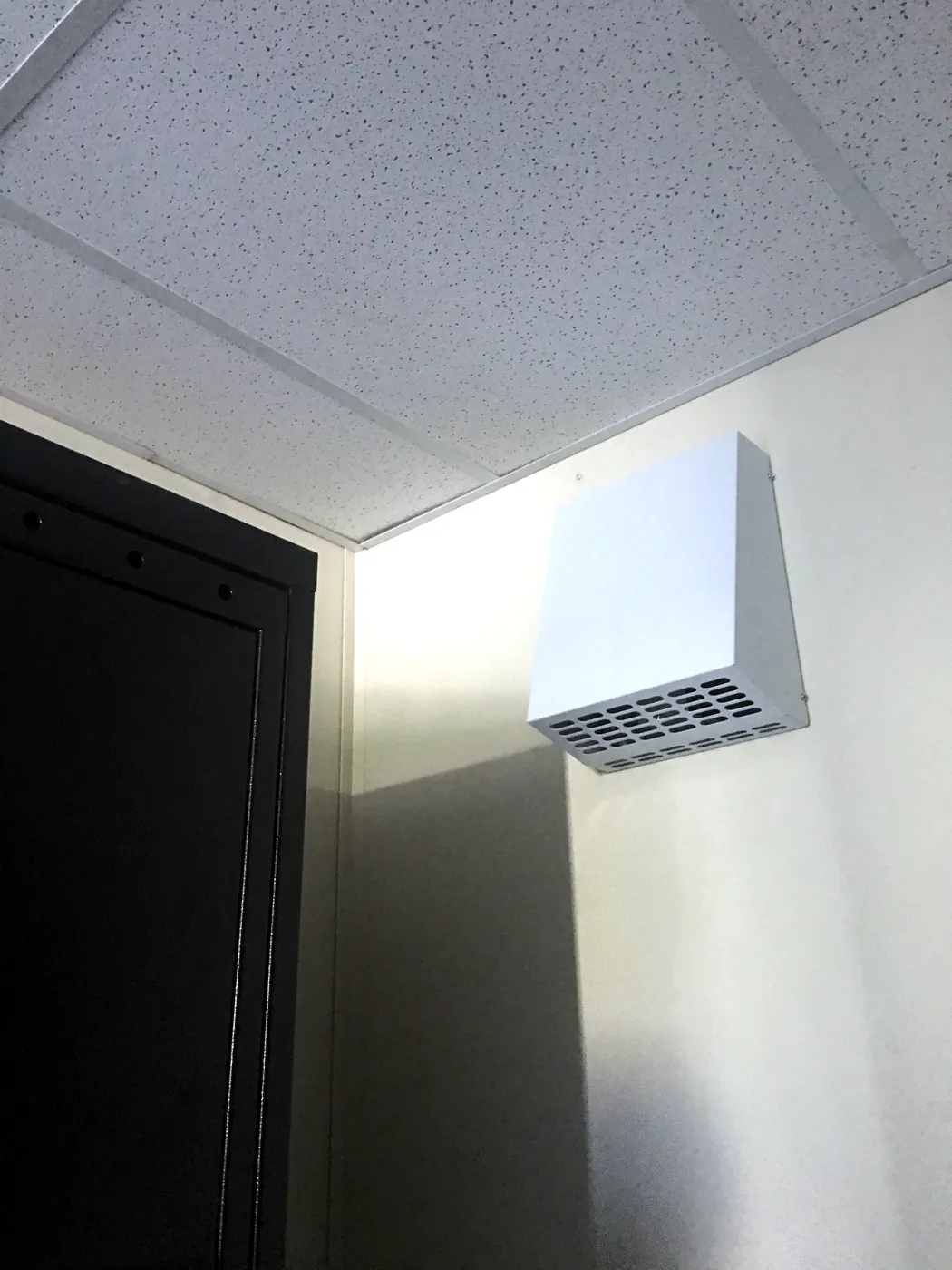
A practical clean/dirty layout puts street-clothes lockers on the entry side and work-clothes lockers on the plant side, with handwashing or showers between them where the standard calls for it. Ventilated lockers on the dirty side let work clothing dry between shifts; solid or louvered lockers on the clean side keep dust off street clothes.
If you have no room to build one, a modular building can create a change room inside the plant. Our Stork change room case study shows a modular change room with employee lockers and storage above, installed in Salt Lake City.
Regulatory text quoted from OSHA 29 CFR 1910.141(e), 1910.1025 and 1910.1027 at osha.gov. This is a planning summary, not legal advice.
Ventilation, Sloped Tops and Dust Control
Ventilated lockers matter when work clothes go in sweaty or damp — dock crews in summer, freezer and cooler staff, wash-down areas. Standard lockers breathe through door louvers; fully ventilated industrial models use diamond-shaped perforations on the doors and sides, as listed in both Tennsco’s ventilated specification and Lyon’s heavy-duty ventilated specification.
Trade-off: perforated doors show what is inside and let dust in. On a dusty production floor, louvered doors in a room with good air exchange are often the better choice; on the dirty side of a change room, perforated is usually worth it.


Sloped tops close the flat top of a locker bank with an angled steel cap. In warehouses they stop dust from piling up, stop workers from throwing hard hats, boxes and coffee cups on top, and remove a hiding place for contraband. They are sold as kits sized to one-, two- or three-wide units.
Pair them with a closed base or legs. Legs (usually 6″) make it easy to sweep or scrub under the bank; a closed base or a concrete curb keeps debris out entirely. Pick one approach per room so cleaning crews know what to expect.
Anchoring and Installing Lockers in a Warehouse
Tennsco strongly recommends that all lockers be anchored to the floor or wall, and multi-wide units are bolted together so a bank acts as one piece. In a warehouse that matters more than in an office: a 72″-tall bank on a sealed slab, loaded unevenly and bumped by equipment, can rack or tip.
- Anchor every bank to the wall or floor using the manufacturer’s holes, and bolt adjacent units together.
- Protect exposed ends along traffic aisles with bollards or guardrail — a locker end panel is not a forklift barrier.
- Check the floor — warehouse slabs slope to drains; shim so doors stay aligned and latch.
- Keep egress clear — open doors and people on benches must not block exits or fire equipment.
- Number and key lockers before handover; built-in combination or key locks simplify reassigning lockers after turnover.
Planning Your Warehouse Locker Order
A good warehouse locker order is mostly decided before anyone picks a color. Get these answers from operations and safety first: peak headcount at shift change, whether people change clothes at work, whether any standard requires separate clean and dirty storage, and where the room sits relative to the time clock and the floor. Then measure every usable wall run and note doors, drains, outlets and columns.
Send headcount and space
Peak overlap, shifts, what workers store and a sketch or photos of the room.
Pick tiers and construction
Standard, ventilated or heavy-duty, and the tier mix that fits what people carry.
Layout and quote
Unit counts, locks, numbering, sloped tops, bases, benches, freight and installation options.
Deliver and install
Freight to your dock and optional installation, bank assembly and anchoring.
A catalog listing is not a stock guarantee. Some common sizes are in stock at select manufacturers, subject to confirmation, and we confirm availability and lead time on every quote. If you also need the room designed — benches, ADA lockers, aisles — our locker room design service handles it, and every locker category is in our lockers directory.
Shop Steel Lockers for Warehouse Crews
Order common single-tier, double-tier and six-tier box locker sizes online, or request a quote for heavy-duty lockers, sloped tops, benches, freight and installation.


Get a free quote
Tell us what you are storing, the room size and your timeline. A project specialist will follow up with layout options and pricing. Prefer to talk? Call (800) 326-4403.
Warehouse and Industrial Locker FAQs
What are industrial lockers?
What size lockers do warehouse workers need?
How many lockers does a warehouse need?
Does OSHA require lockers in a warehouse?
What is the difference between heavy-duty and standard lockers?
Should warehouse lockers have sloped tops?
Do warehouse lockers need to be anchored?
Do you have warehouse lockers in stock?
Plan Your Warehouse Locker Room
Send your shift headcount and wall space, and we will recommend lockers and a layout with a free quote.