
Single-Tier Lockers: Full-Height Steel Employee Lockers
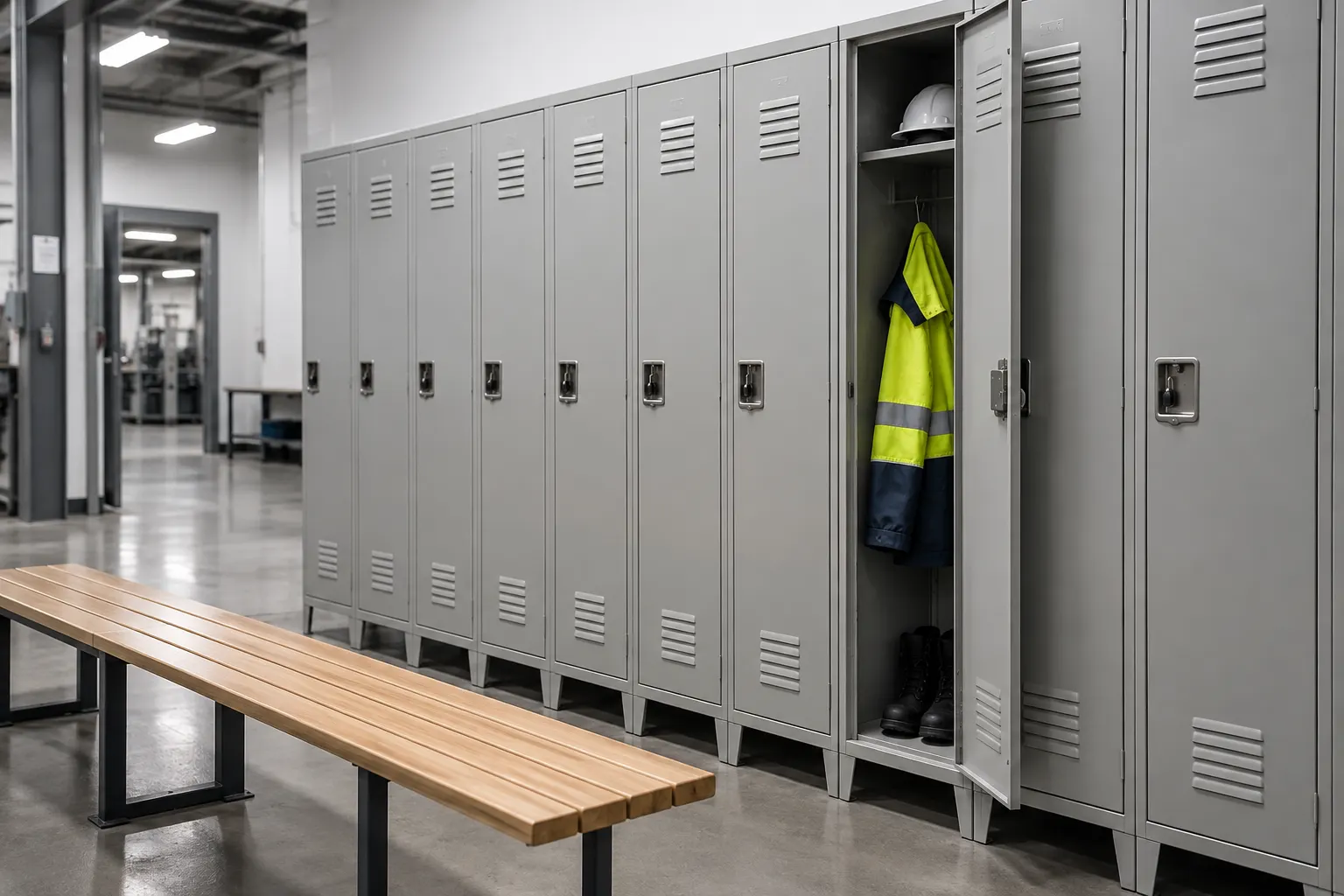
One tall door, one person, room for a full-length coat, a uniform, a hard hat and boots. Compare single-tier steel locker sizes, door styles and construction from Lyon and Tennsco, shop common sizes online, or send us your headcount for a free layout and quote.
1 Door
Full-height space per person
66″ or 78″
Common overall heights listed
12″–24″
Opening widths published
Free Layout
Headcount and room planning
What Is a Single-Tier Locker?
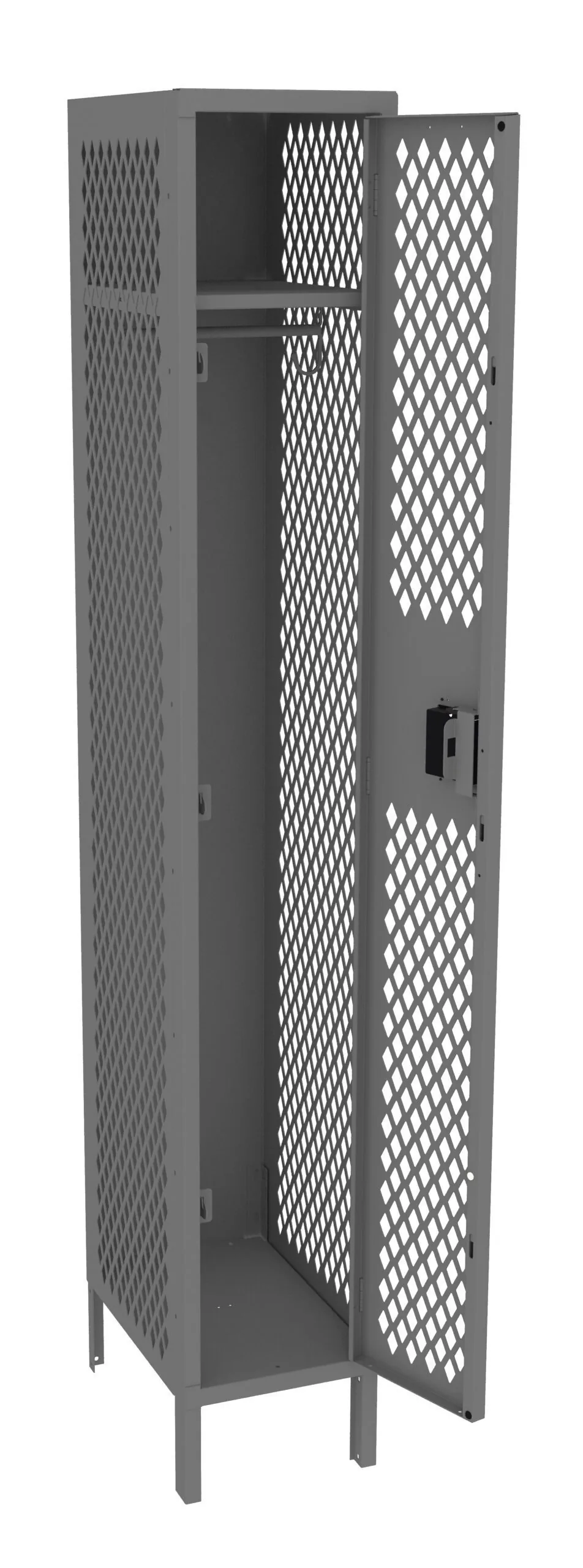
A single-tier locker is a steel locker with one full-height door per column. Each person gets the entire compartment, usually about 60″ to 72″ tall inside the body, with a hat shelf near the top and coat hooks below it. It is the locker people picture when they think of a plant locker room: tall, narrow and long enough to hang a jacket or a set of work clothes without folding them.
You will also see single-tier lockers called full-height lockers, one-tier lockers, 1-tier lockers or full-length lockers. Tennsco describes its single-tier locker as its most popular general-purpose locker, used in factories, schools and hospitals wherever coats and clothing are stored.
This page is part of our employee lockers and steel lockers guide. If people only need a spot for a wallet, phone and lunch, compare box lockers first — they fit up to six times as many users on the same wall.
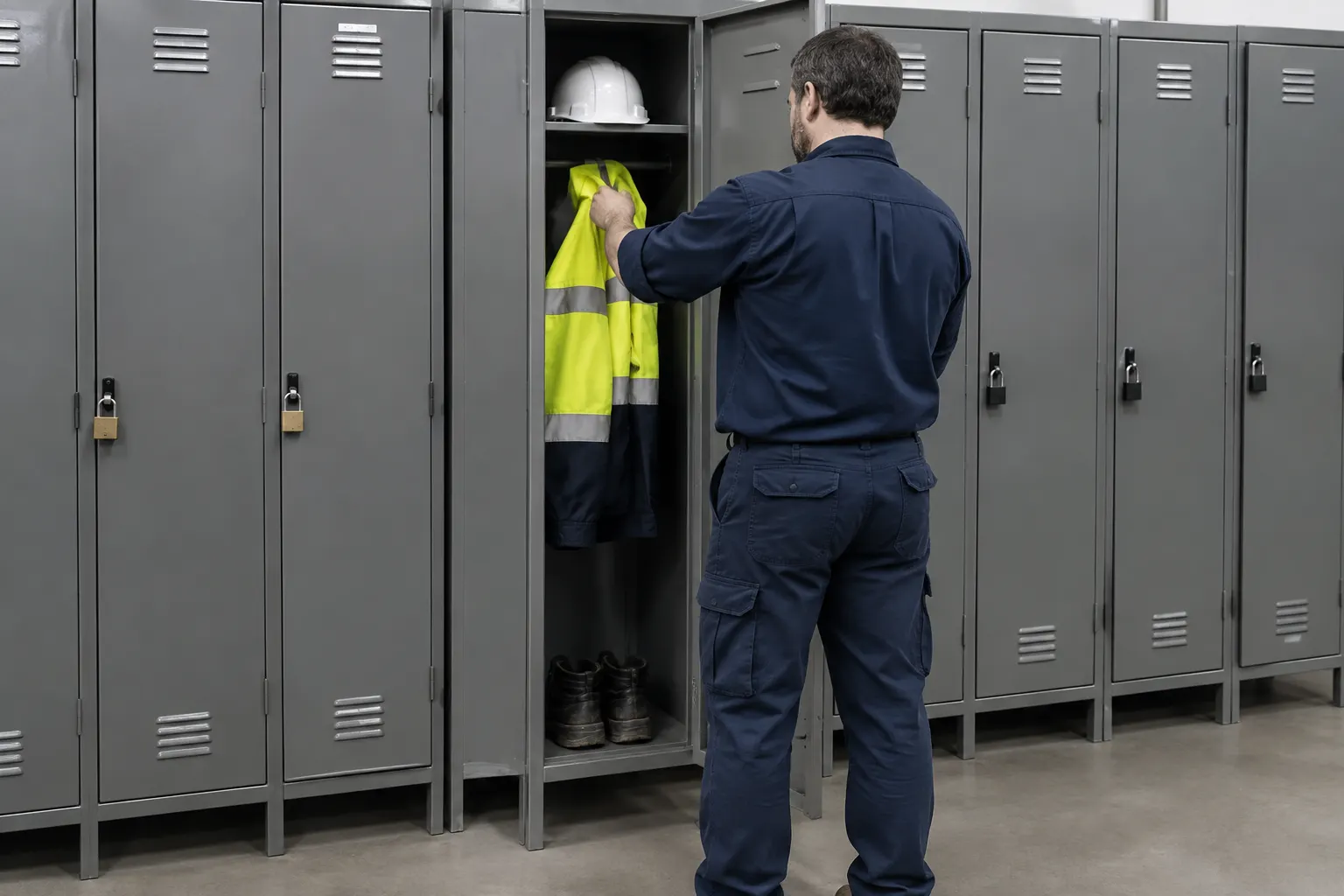
Who needs a single-tier locker?
Choose single-tier when employees change into uniforms, hang a full-length coat, store PPE such as hard hats, harnesses and boots, or leave a tool bag at work. If lockers change hands every day or you need PIN or badge access, compare our smart locker systems instead.
Single-Tier Locker Styles
All single-tier lockers share the one-door, full-height layout. What changes is the door, the width, the finish and how the unit ships. These are the single-tier styles listed in our online catalog from Lyon and Tennsco.
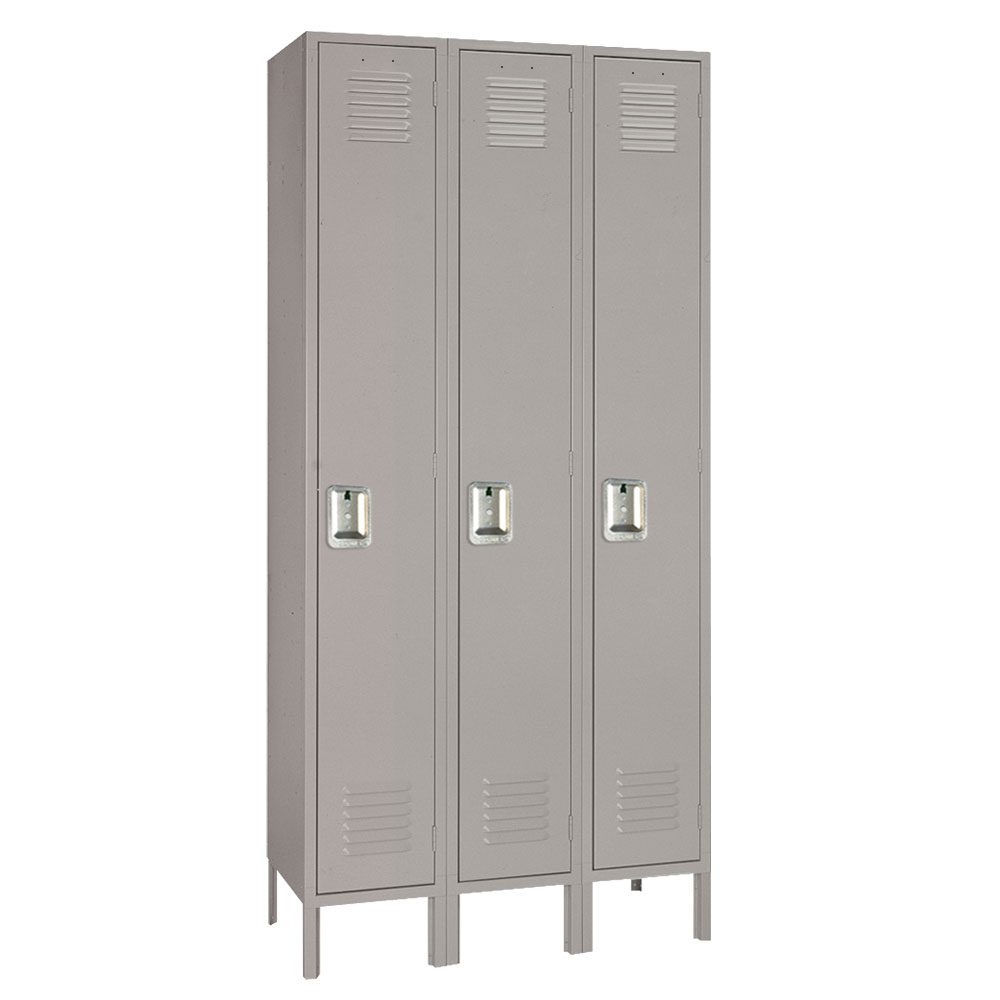
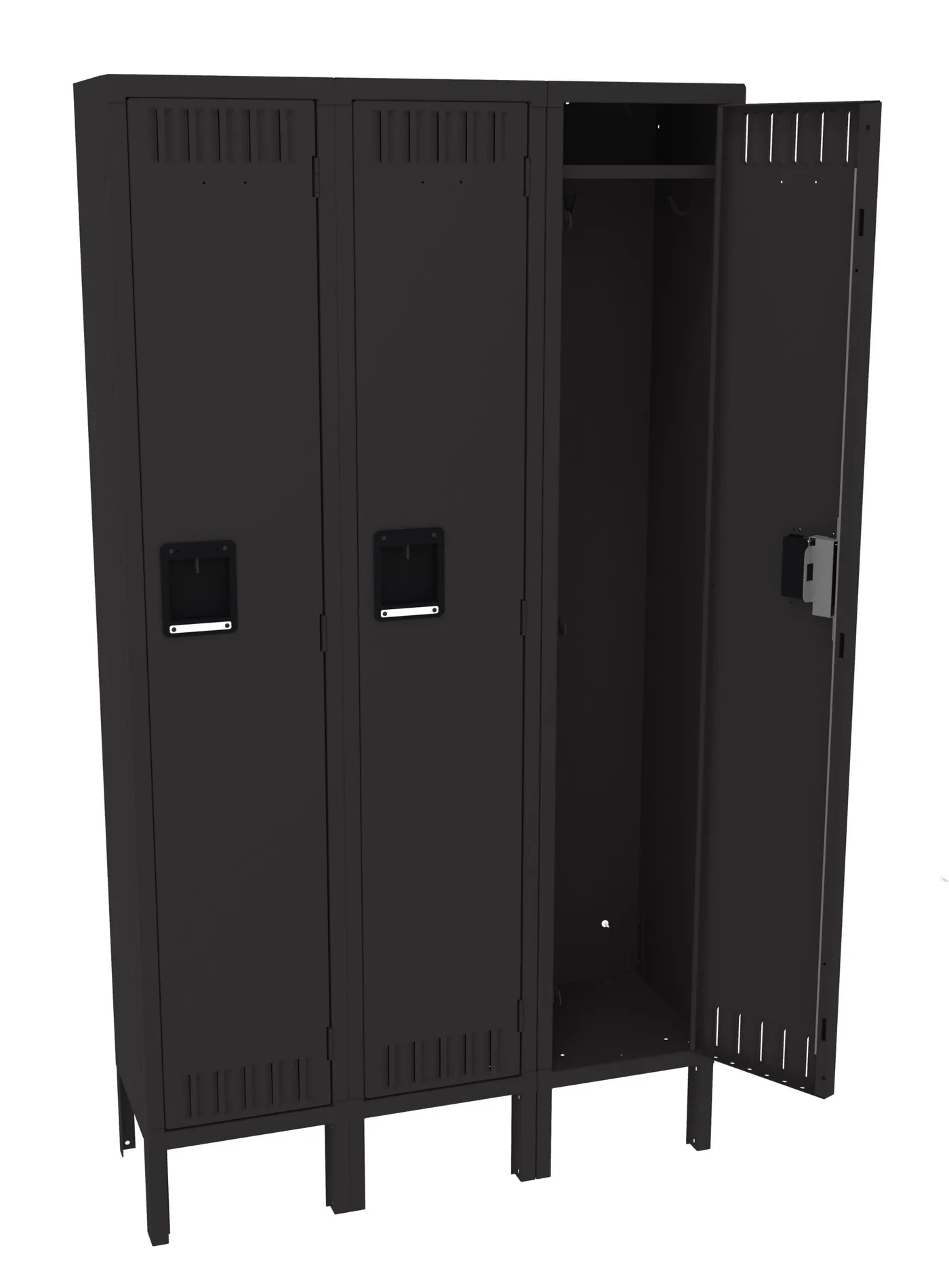
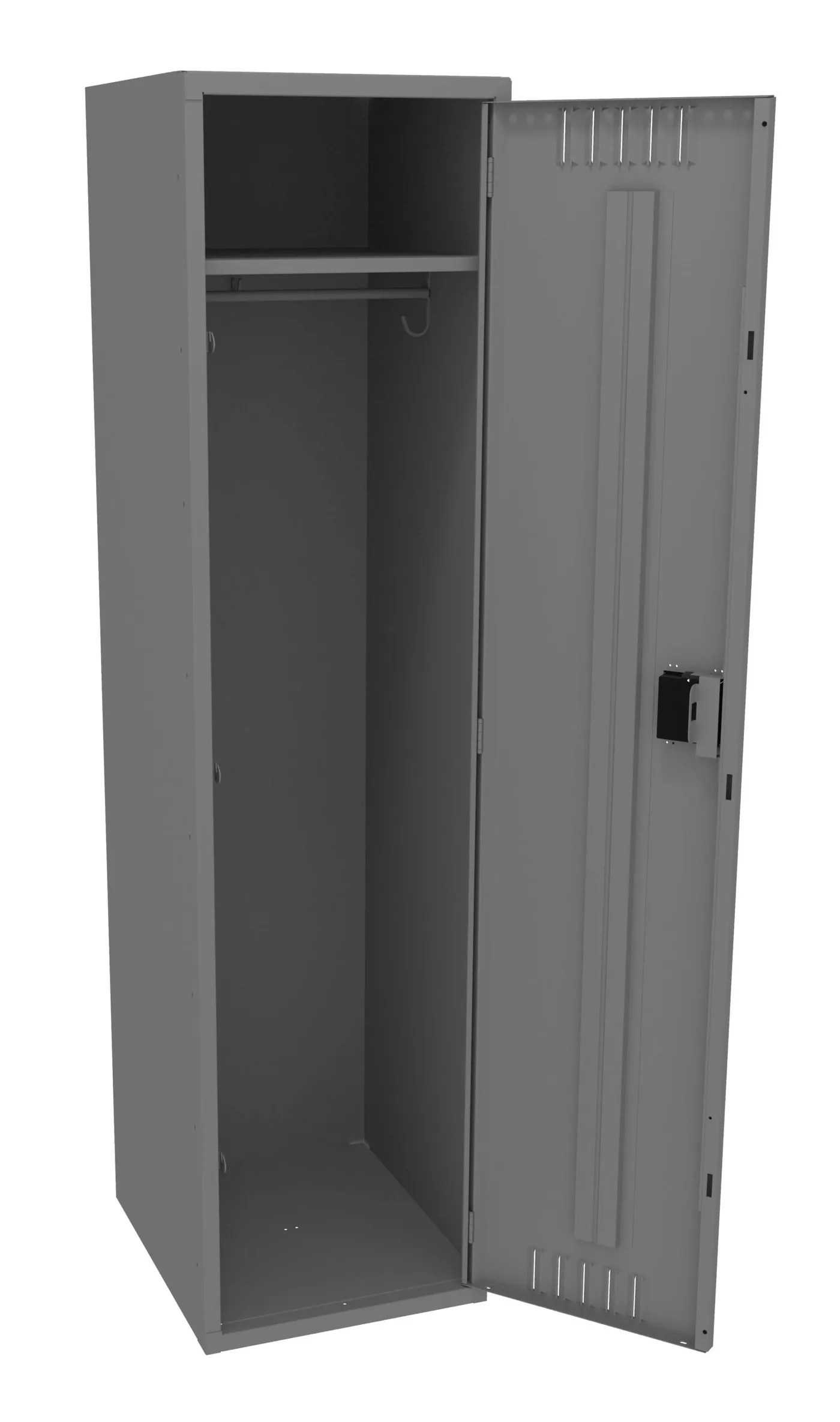

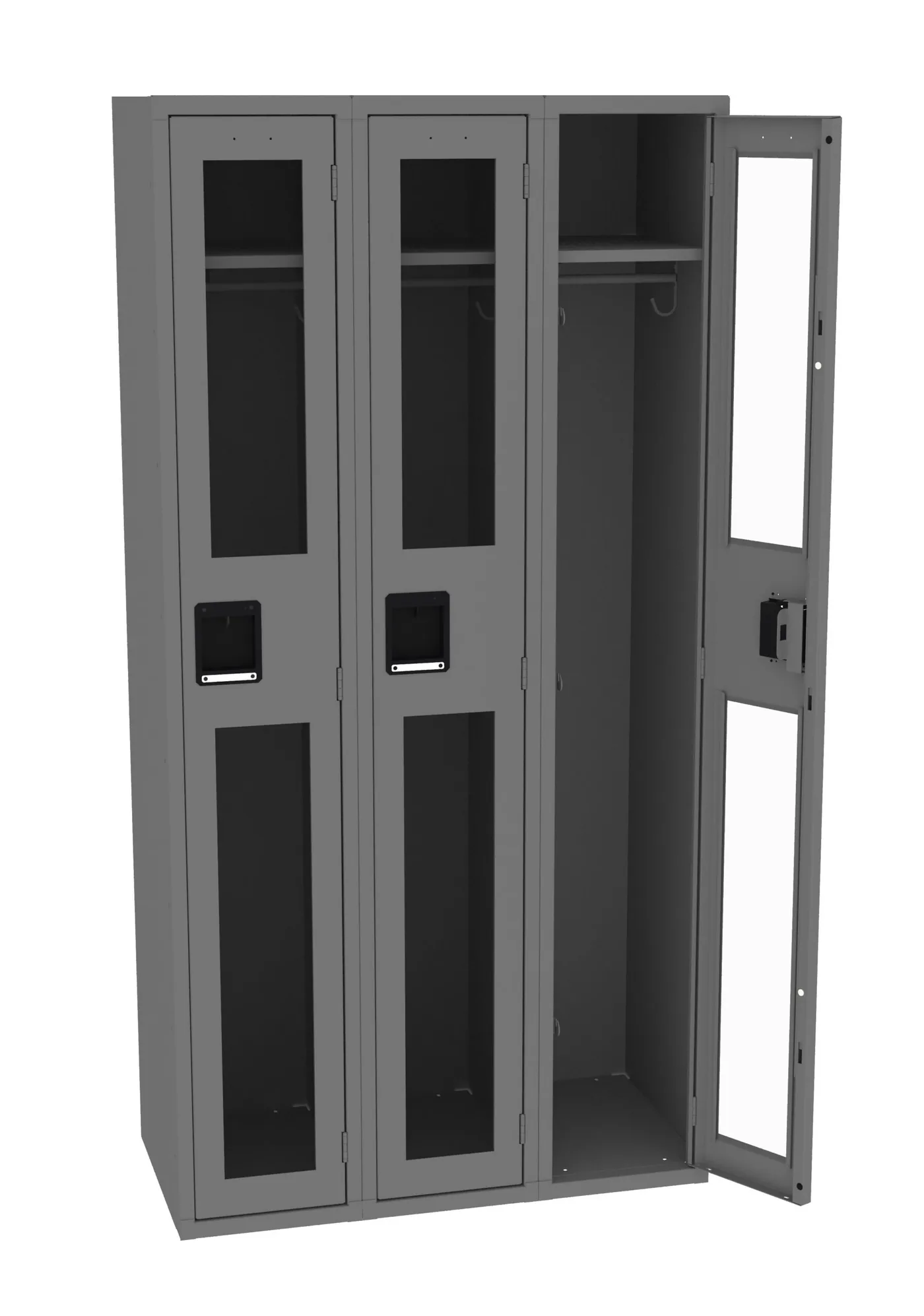

Styles and features summarized from Tennsco’s steel locker brochure and the Lyon and Tennsco single-tier listings in our online catalog. A listing is not a stock guarantee — we confirm model, color and lead time on every quote.
Single-Tier Locker Sizes and Dimensions
Single-tier lockers are sized by width × depth × height of each compartment, and by whether the unit is one, two or three lockers wide. Height is usually quoted two ways: the body (60″ or 72″) and the overall height with 6″ legs (66″ or 78″).
| Dimension | Published options | What it changes |
|---|---|---|
| Opening width | 12″, 15″, 18″ or 24″ (Tennsco); 12″, 15″ or 18″ (Lyon) | Room to hang a coat flat, and how many lockers fit on the wall |
| Depth | 12″, 15″, 18″, 21″ or 24″ (Tennsco); 12″, 15″, 18″ or 21″ (Lyon) | Whether hangers face forward, and whether a gear bag or boots fit |
| Body height | 60″ or 72″ body | Hanging length for coats, coveralls and uniforms |
| Overall height | 66″ or 78″ with 6″ legs | Reach to the hat shelf and the look of the room |
| Units | One-wide, two-wide or three-wide | Three-wide units bolt into long banks with fewer seams |
| Assembly | Welded (assembled) or unassembled (knock-down) | Setup time and freight cost |
Size ranges from Tennsco’s steel locker brochure (it notes some combinations only, per its price list) and Lyon’s standard steel single-tier locker listings. Nominal sizes describe the outside of the compartment; the clear door opening is smaller. If a specific item has to fit — a tool bag, a respirator case or a long parka — we confirm the manufacturer’s clear dimensions before you order.
- 12″ wide × 12″–15″ deep is the compact choice for offices, schools and retail staff who hang a jacket and a bag.
- 12″–15″ wide × 18″ deep is the common plant and warehouse size: hangers fit front-to-back and boots sit on the floor.
- 18″–24″ wide × 18″–24″ deep suits heavy winter gear, fire and safety PPE, or two uniforms at once.
- 66″ overall keeps the hat shelf in easy reach; 78″ overall gives the longest hanging space for coats and coveralls.
Single-Tier vs. Double-Tier vs. Box Lockers
The biggest decision is not the brand or the color — it is how many doors go in each column. More doors means more people per foot of wall, but less hanging space for each of them.
| Single-tier | Double-tier | Box (4–6 tier) | |
|---|---|---|---|
| Doors per 12″ column | 1 | 2 | 4 to 6 |
| Lockers per 12 ft of wall (12″ columns) | 12 | 24 | 48 to 72 |
| Hanging space | Full length coats, coveralls, uniforms | Shirts, jackets, short coats | None — small items only |
| Hat shelf | Yes (Tennsco: single tier only) | Varies by line | No |
| Typical user | Changes clothes or stores PPE at work | Hangs a jacket, shorter stay | Wallet, phone, lunch, small bag |
| Best for | Plants, trades, public safety, healthcare staff | Gyms, schools, shift workers | Retail, offices, high headcount |

Mixing tiers is normal. Many facilities run a bank of single-tier lockers for employees who change into uniforms and a denser bank of box lockers for everyone else. That keeps the locker room from outgrowing the wall while still giving production, maintenance or clinical staff the hanging space they need.
Our employee lockers guide compares every tier, and the box lockers page covers four-, five- and six-tier units in detail.
Single-Tier Locker Construction and Security
A full-height door is a long lever. It gets pulled, slammed and leaned on thousands of times, so frame gauge, latching and hinges decide how long a single-tier locker stays square. These are the published details for the lines in our catalog.
| Feature | What to look for | Published example |
|---|---|---|
| Steel gauge | Lower number = thicker steel. Doors and frames take the most wear. | Lyon standard and healthcare single-tier lockers: 16-gauge doors, 24-gauge body (Lyon listings). Tennsco: welded 16-gauge frame and door (Tennsco brochure). |
| Latching | Multi-point latching holds a tall door tight top to bottom. | Tennsco single-tier lockers use a positive three-point locking system; double-tier doors use two-point. |
| Hinges | Continuous or multi-knuckle hinges resist sagging and prying. | Tennsco lists a double-leaf five-knuckle hinge with a secured pin. |
| Handle and hasp | A recessed handle keeps padlocks out of the aisle. | Lyon: recessed lift handle with padlock hasp. Tennsco: recessed handle and optional built-in locks. |
| Ventilation | Louvers for general use; perforated steel for damp clothing. | Lyon lists 6″-wide door louvers; Tennsco offers fully perforated ventilated single-tier lockers. |
| Interior | Hat shelf, coat hooks, and a coat rod on deeper lockers. | Tennsco: built-in top shelf and three coat hooks, plus a coat rod on lockers 18″ and deeper. |
| Assembly | Welded units are rigid and fast to set; unassembled units ship flat. | Both Lyon and Tennsco list assembled and unassembled single-tier lockers; ventilated and C-Thru Tennsco lines are welded. |
Summarized from Tennsco’s steel locker brochure and the Lyon and Tennsco single-tier listings in our catalog. Manufacturers update specifications; we confirm the current sheet for your exact model.
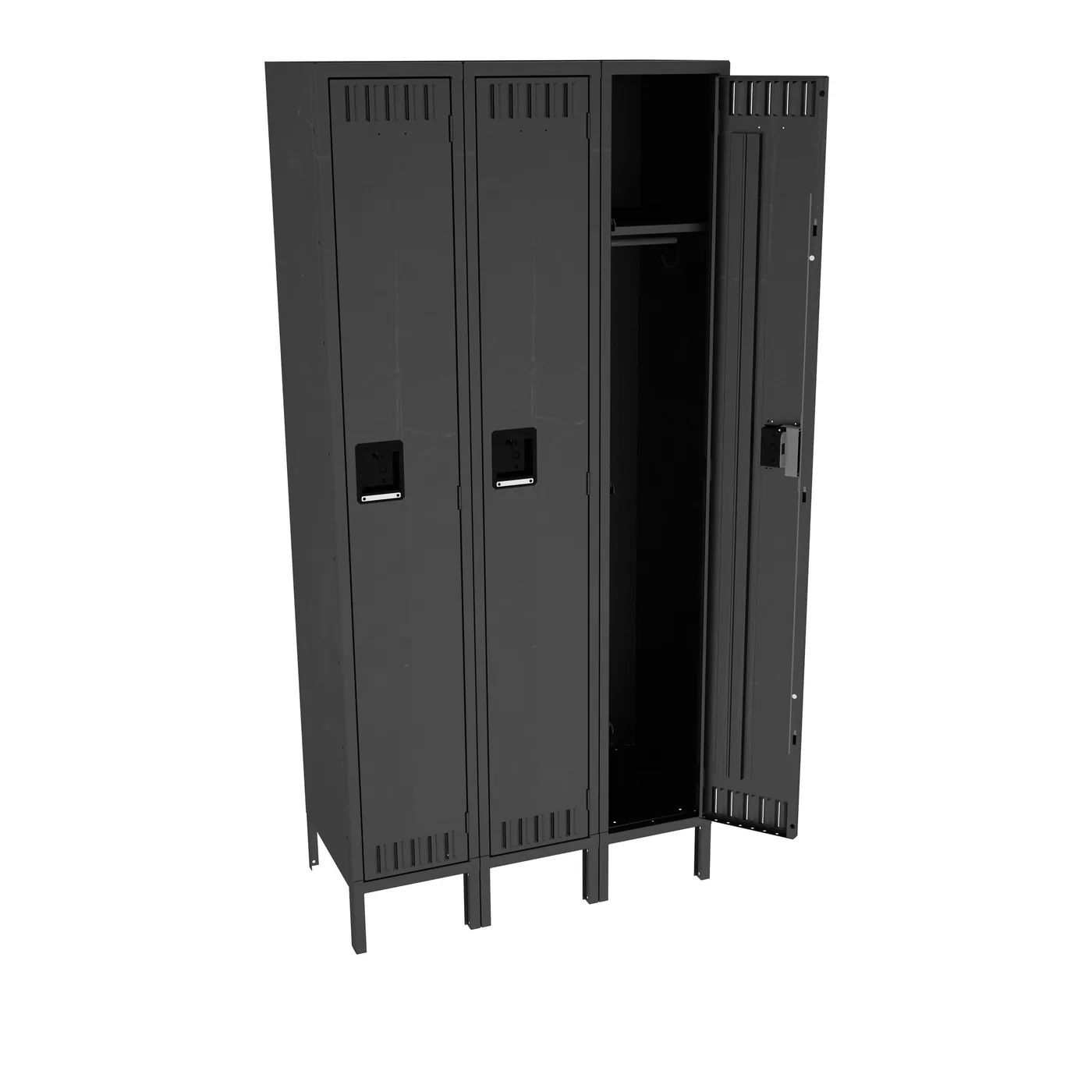
Louvers and legs. Standard single-tier doors are vented with pressed louvers near the top and bottom so air can move through a locker full of work clothes. Six-inch legs raise the bank for cleaning underneath and add toe room at the door; lockers without legs sit on a closed base, which keeps dirt and debris from collecting under the bank.
If uniforms come back from the floor damp or sweaty, step up to perforated ventilated lockers rather than relying on louvers alone.

Padlocks, built-in locks or electronic access?
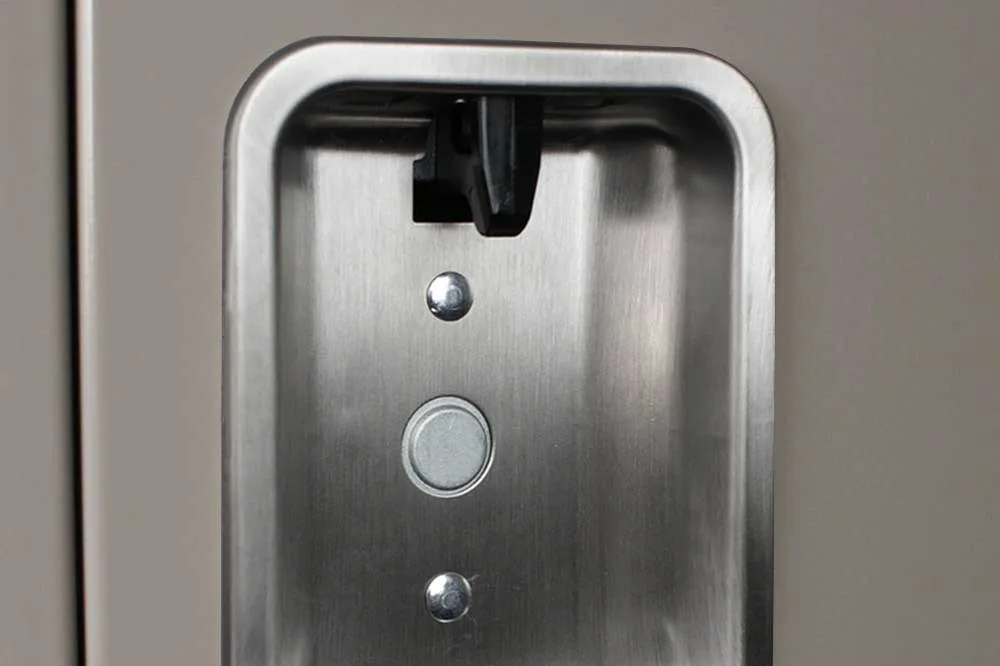
Padlock hasps are standard on most single-tier lockers and let each employee bring or be issued a lock. They work well when lockers are permanently assigned. Built-in combination or key locks keep the door front flush and give supervisors a master key or control code, which makes reassigning a locker after turnover simple.
Electronic access fits when lockers are shared by shift or by day, or when you want an access record. That moves you from standard steel lockers to smart locker systems. Whichever you choose, add number plates — they make assignment lists and audits far easier.
Where Single-Tier Lockers Work Best
Single-tier lockers belong wherever people arrive in street clothes and go to work in something else, or carry gear that will not fit in a small box.
Planning and Installing a Single-Tier Locker Room
Start with headcount and the room, not the catalog. Count the people who will change clothes at peak shift overlap, add seasonal staff and contractors, and measure each usable wall run. Note doors, windows, outlets, drains and anything mounted on the wall, and check that the floor is level.
Because a single-tier locker is tall and narrow, it must be secured. Tennsco strongly recommends that all lockers be anchored to the floor or wall, and three-wide units are bolted together so a bank acts as one piece. Plan for end panels, a closed base or legs, and sloped tops if you want to keep clutter and dust off the top of the bank.
Benches, aisle widths and accessible locker placement are covered in our locker room design guide. Tennsco also offers ADA-compliant single-tier lockers with a lowered shelf and hooks.

Send headcount and space
Tell us how many people change at peak, what they store, and the wall runs available — a sketch or photos are enough to start.
Choose width and depth
We match opening width, depth and height to the clothing and PPE your people actually bring, and mix in box lockers where full height is not needed.
Layout and quote
You get a layout with unit counts, locks, numbering, bases, end panels and benches, plus freight and optional installation.
Deliver and install
Freight to your site and optional installation, bank assembly and anchoring coordinated to your schedule.
A catalog listing is not a stock guarantee. Some common single-tier sizes are in stock at select manufacturers, subject to confirmation, and we confirm availability and lead time on every quote. In Utah, our Salt Lake City team plans and installs lockers statewide — see our Utah lockers page or call 801-328-8788. For the Tennsco range, visit our Tennsco lockers page, or browse every locker category in our lockers directory.
Shop Single-Tier Steel Lockers Online
Order common single-tier sizes online, or request a quote for a full locker room with numbering, bases, benches, freight and installation.

More steel locker guides: double-tier lockers · triple-tier lockers · box lockers · heavy-duty lockers · cubby lockers · Lyon lockers · Tennsco lockers · locker accessories. Start from the employee lockers overview to compare every type.
Get a free quote
Tell us what you are storing, the room size and your timeline. A project specialist will follow up with layout options and pricing. Prefer to talk? Call (800) 326-4403.
Single-Tier Locker FAQs
What is a single-tier locker?
What sizes do single-tier lockers come in?
What is the difference between single-tier and double-tier lockers?
How deep should a single-tier locker be?
Do single-tier lockers need to be anchored?
Should I buy assembled or unassembled lockers?
Do you have single-tier lockers in stock?
Plan Your Single-Tier Locker Room
Send your headcount and wall space, and we will recommend sizes and a layout with a free quote.