
Heavy-Duty Lockers: Welded Steel Lockers for Hard Use
All-welded, 14-gauge-door steel lockers for plants, shops, crews and anywhere standard lockers get dented, pried or kicked shut. Learn what actually makes a locker heavy-duty, compare sizes, and get a free quote and layout.
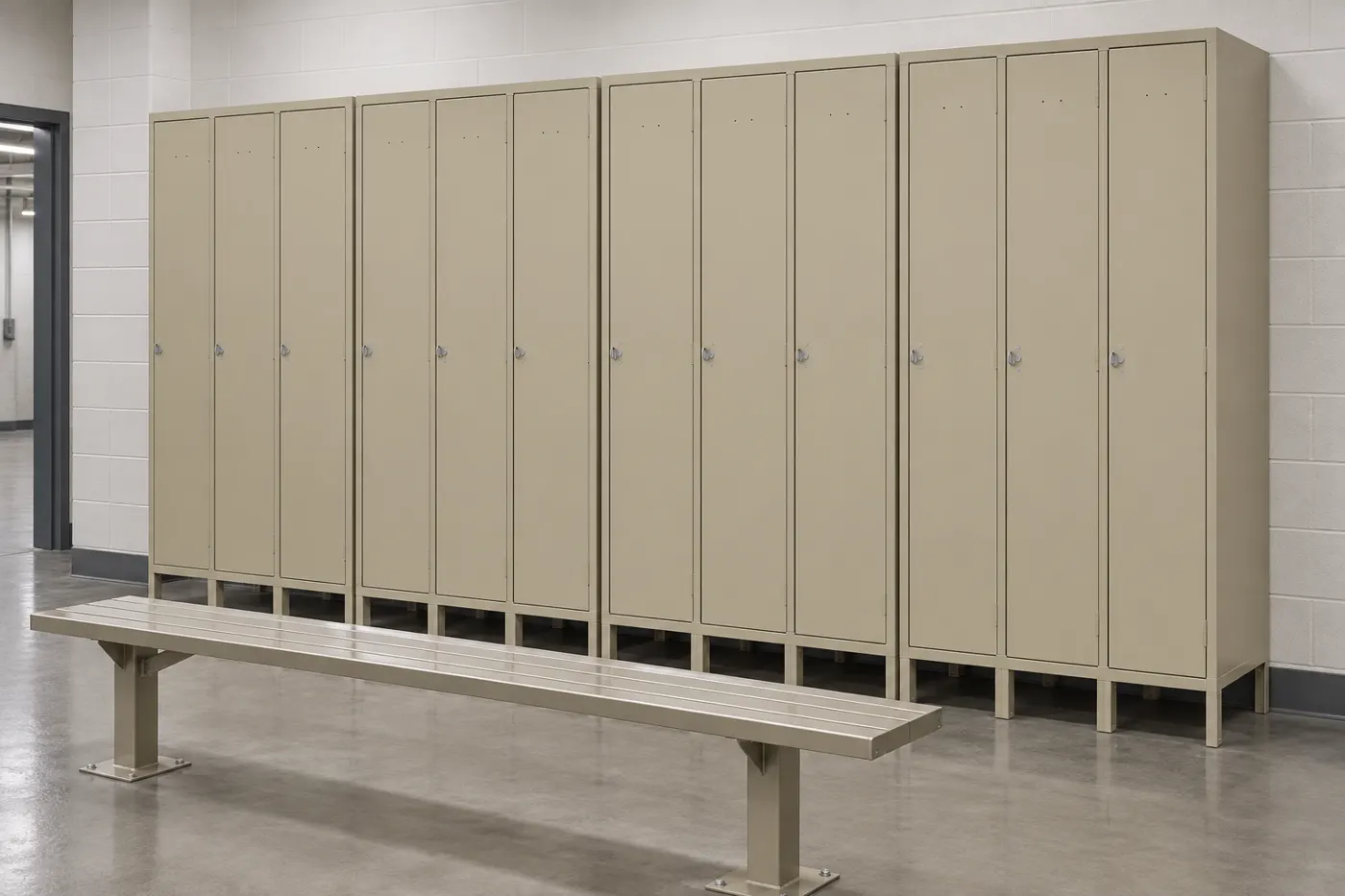
14-Gauge
One-piece steel doors
All-Welded
Ships assembled, ready to use
24 Configurations
Single, double & box tiers
Free Quote
Layout, freight & lead time
Shop Heavy-Duty Lockers by Tier
Every heavy-duty locker in our catalog is a welded Tennsco unit built to order, so pricing is quoted rather than listed: tell us the sizes, color and quantity and we will confirm price, freight and current lead time. Some common sizes are in stock at select manufacturers, subject to confirmation.
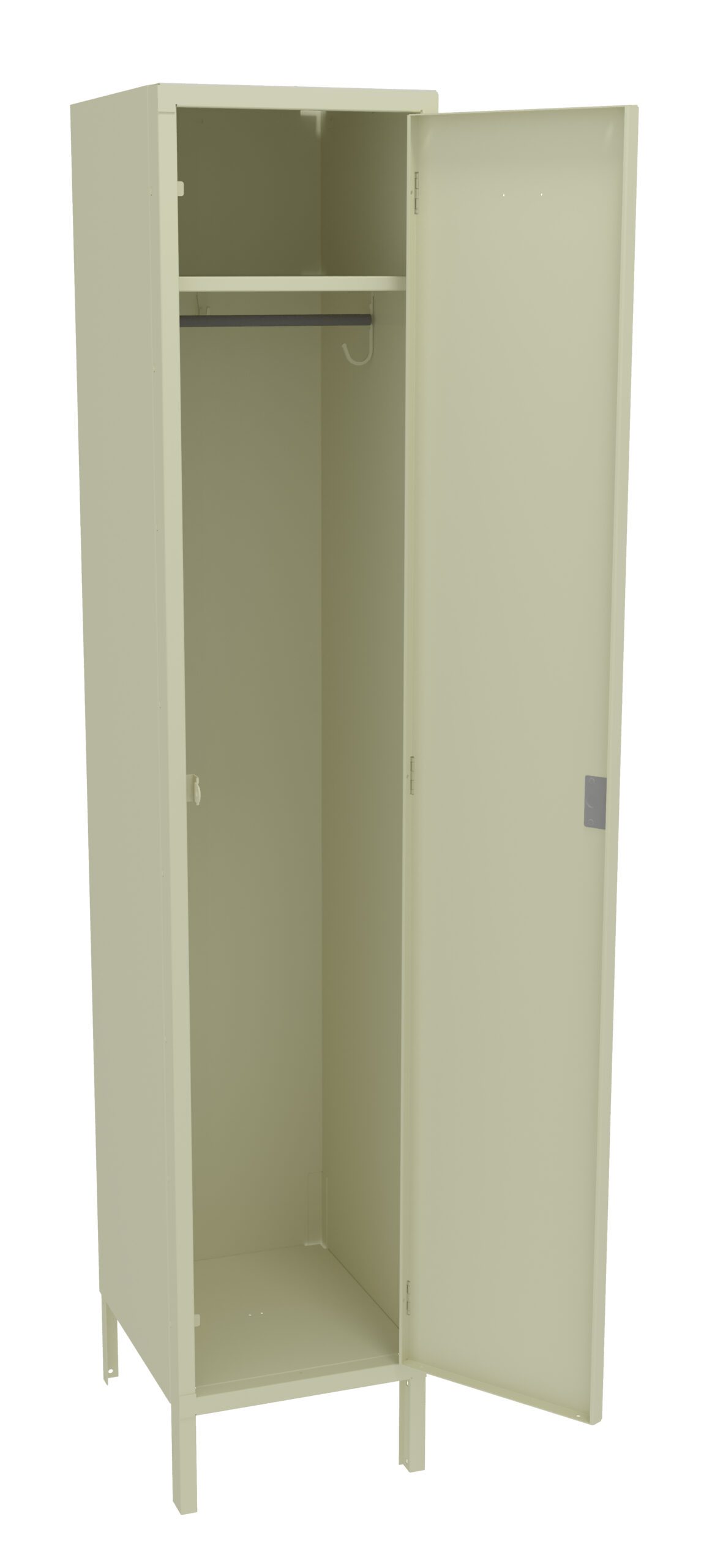
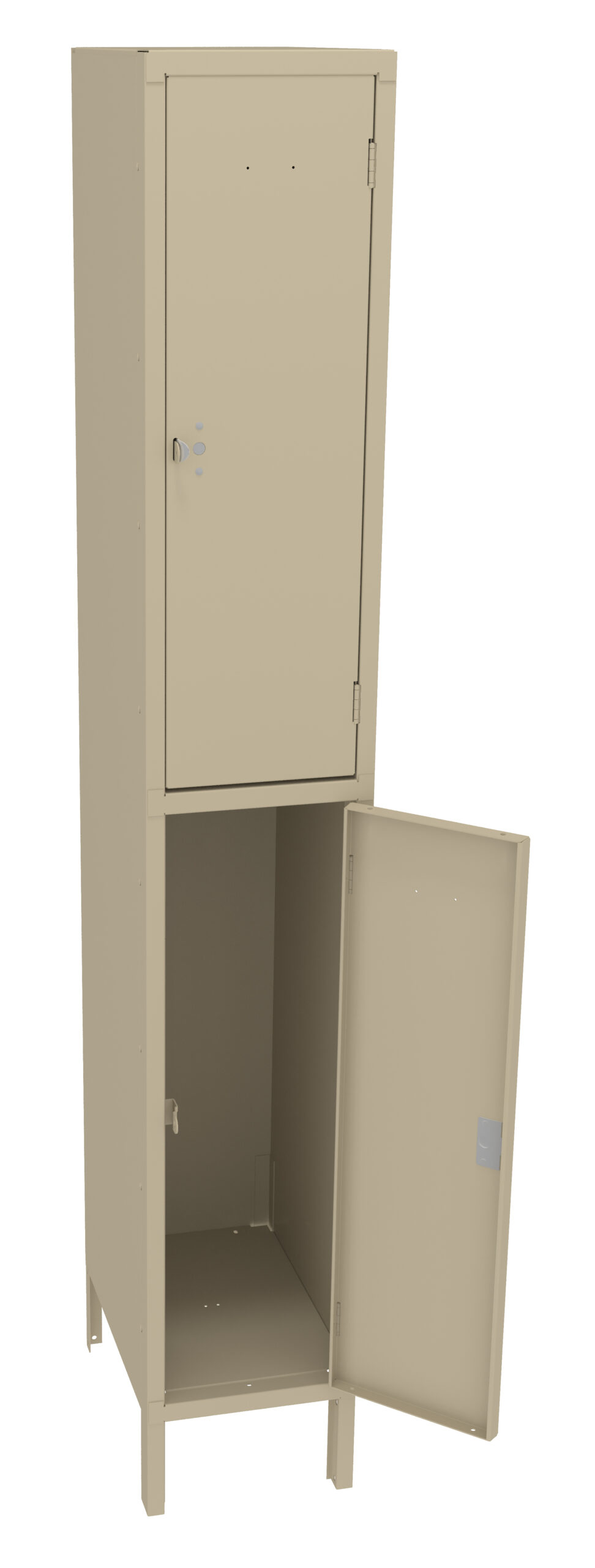
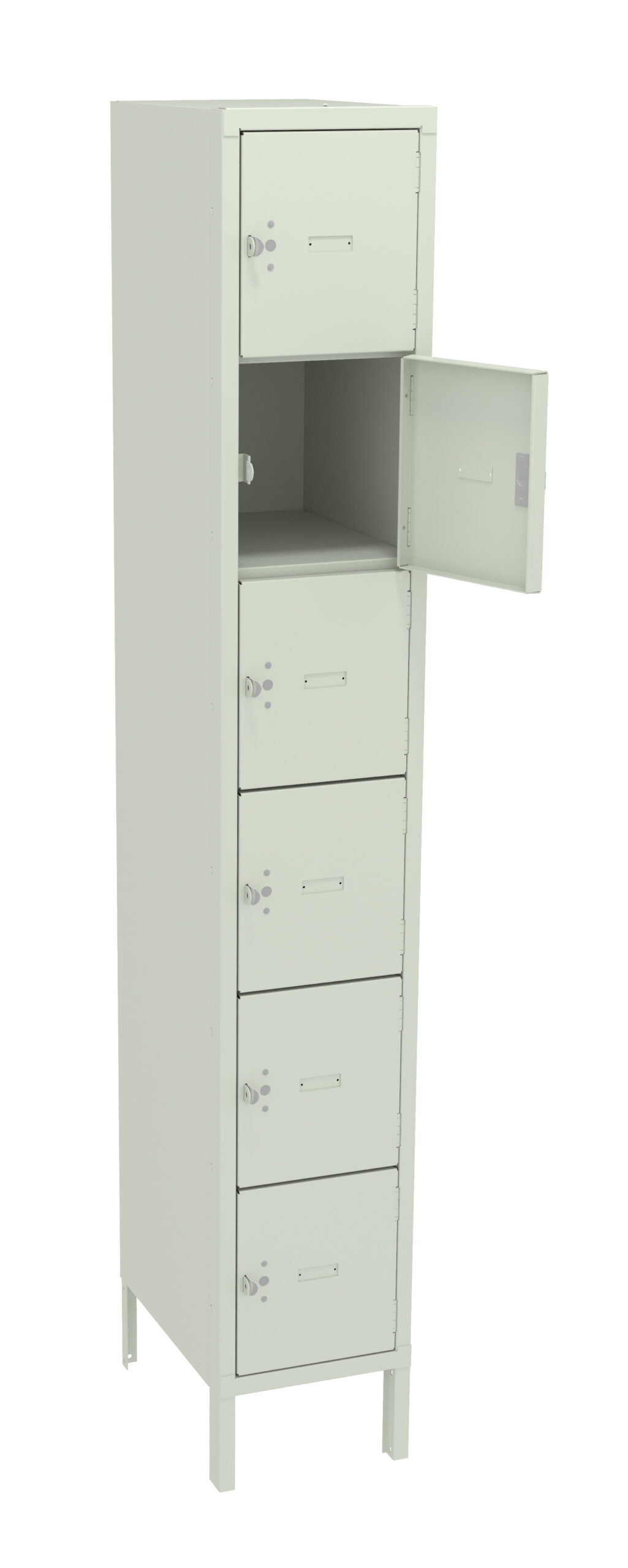
Need lockers sooner? Standard-duty single-tier, double-tier and box lockers are priced online. Or request a quote for a mixed order.
What Makes a Locker “Heavy-Duty”?
“Heavy-duty” is not a marketing color. It describes a locker built from thicker steel, joined by welding instead of nuts and bolts, with a stronger door, frame and latch than a standard locker. On the Tennsco heavy-duty lockers we quote, the body, frame and shelf are welded 16-gauge steel and the door is 14-gauge steel — the thickest part of the locker is the part that takes the abuse.
A standard locker is perfectly fine in an office, a clean break room or a quiet hallway. Heavy-duty construction earns its cost where lockers are hit by carts, kicked shut with work boots, pried at, reassigned every few weeks, or loaded with heavy gear: factories, maintenance shops, distribution centers, crew rooms, athletic facilities and public buildings.
This guide is part of our employee lockers section. It covers construction, sizes and buying; for tier-by-tier detail see the single-tier, double-tier, triple-tier and box locker guides.
Looking for school corridor lockers?
Heavy-duty corridor lockers for K-12 hallways are a different product family with recessed handles, built-in locks and sloped tops sized for students. See our Dasco heavy-duty corridor lockers page. This page focuses on heavy-duty lockers for employees, crews and work areas.
Steel Gauge Explained: Why 14-Gauge Doors Matter
Sheet steel is specified by gauge, and the scale runs backwards: the lower the number, the thicker the steel. A 14-gauge door is about three times as thick as the 24-gauge body panels used on many standard lockers. The door matters most because it is the part that gets slammed, leaned on and pried, and it carries the latch.
| Gauge | Nominal thickness | Where you see it on lockers |
|---|---|---|
| 14-gauge | 0.0747″ (about 1.9 mm) | Heavy-duty and all-welded locker doors (Tennsco heavy-duty, Lyon all-welded and heavy-duty) |
| 16-gauge | 0.0598″ (about 1.5 mm) | Heavy-duty bodies, frames and shelves; doors and frames on many standard lockers |
| 18-gauge | 0.0478″ (about 1.2 mm) | Backs on Lyon all-welded and heavy-duty lockers |
| 24-gauge | 0.0239″ (about 0.6 mm) | Body parts (sides, top, bottom, back) on standard knock-down lockers such as Lyon standard |
Thickness per the manufacturers’ standard sheet-steel gauge. Locker gauges from Tennsco’s heavy-duty listings and locker brochure, Lyon’s All-Welded and Heavy Duty Ventilated locker specifications, and the Lyon standard lockers in our catalog.
All-Welded vs Knock-Down Construction
Knock-down (KD) lockers ship flat and are bolted together on site. They are economical, but every bolted joint is a place that can loosen, rack out of square and let doors sag over years of hard use.
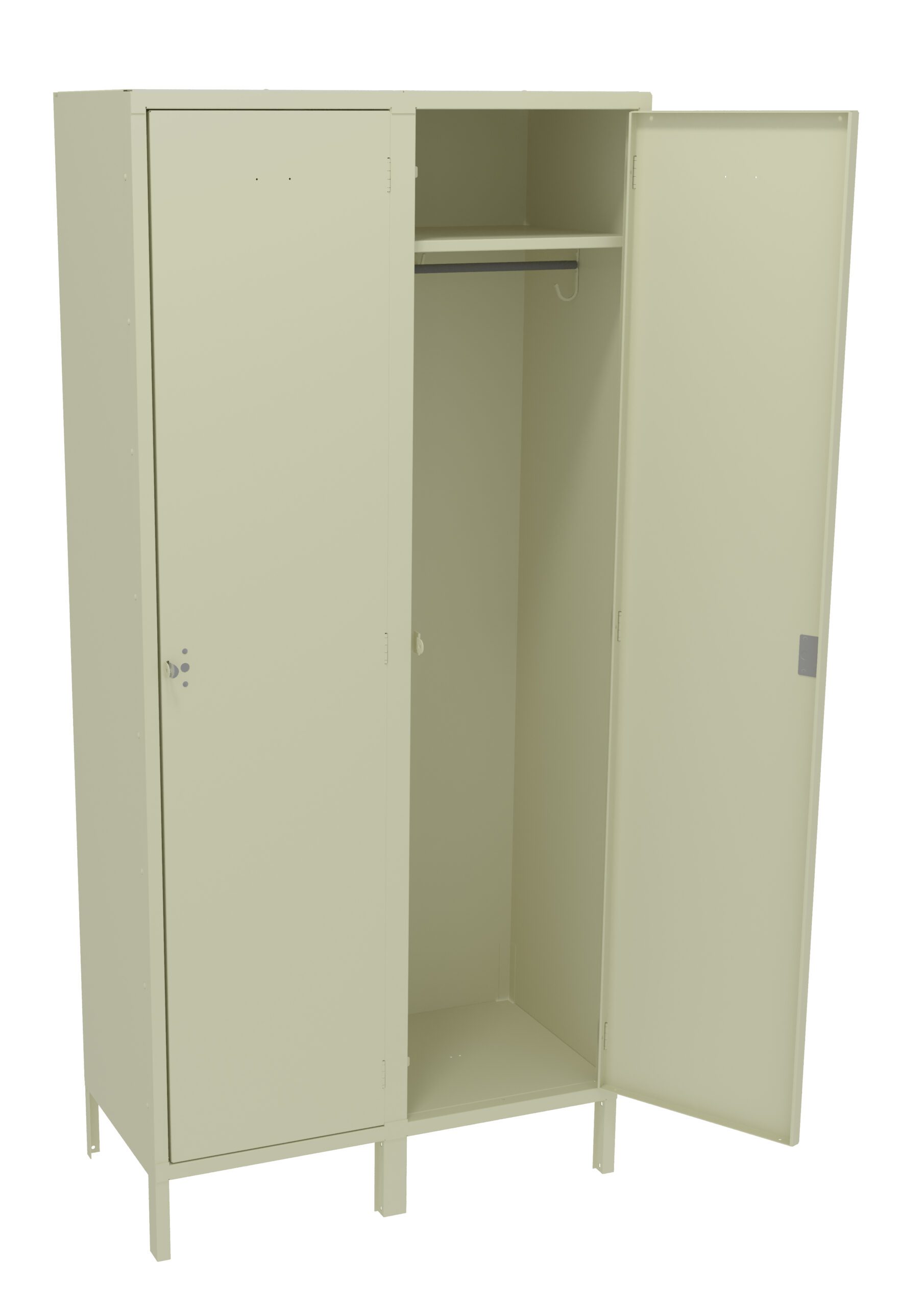
All-welded lockers are welded into a rigid unit at the factory and ship assembled. Tennsco describes its heavy-duty lockers as “welded and ready-to-use”; Lyon’s all-welded specification calls for every seam and joint to be welded for rigidity and durability, with the body flanged to double the metal thickness at the back corners. The result stays square, keeps doors aligned and leaves no fasteners for anyone to back out.
The trade-off is shipping: welded lockers travel as finished cabinets on a pallet, so freight costs more and you need a way to unload and move them into place. We plan that with your quote.
Latching: fewer moving parts, fewer service calls

Heavy-duty lines take two different approaches to the latch, and both are about surviving abuse:
- Slot and lock hasp (Tennsco heavy-duty): the door closes over a slot and the user’s padlock goes through the hasp. Tennsco notes there are no moving parts, which suits manufacturing and low-maintenance areas — nothing to bend, jam or replace.
- Multi-point lock bar (Lyon all-welded and heavy-duty): a channel-shaped lock bar engages the frame at three points on single-tier doors and two points on double and triple tier, with nylon guides to reduce clanging and a soft rubber bumper on each jamb.
Ventilated heavy-duty models add diamond-shaped perforations on the doors and sides so damp work clothing and gear can air out between shifts — useful on the dirty side of a change room.
| Feature | Standard locker (typical) | Heavy-duty / all-welded |
|---|---|---|
| Door | 16-gauge, one piece | 14-gauge, one piece |
| Body | 24-gauge parts, bolted (KD) or welded | 16-gauge, welded; 18-gauge backs on Lyon all-welded |
| Shelf | Lighter shelf, hat shelf on single tier | 16-gauge welded shelf (Tennsco heavy-duty) |
| Latch | Recessed lift handle and lock bar | Slot and hasp with no moving parts (Tennsco) or multi-point lock bar into 12-gauge jamb (Lyon) |
| Hinges | Knuckle hinges | Lyon: full-loop 5-knuckle hinges, three per door on 48″–72″ single tier |
| Shipping | Flat (KD) or assembled | Assembled and welded, ready to use |
| Lead time | Some common sizes in stock at select manufacturers, subject to confirmation | Usually built to order; confirmed with quote |
Heavy-Duty Locker Sizes and Configurations
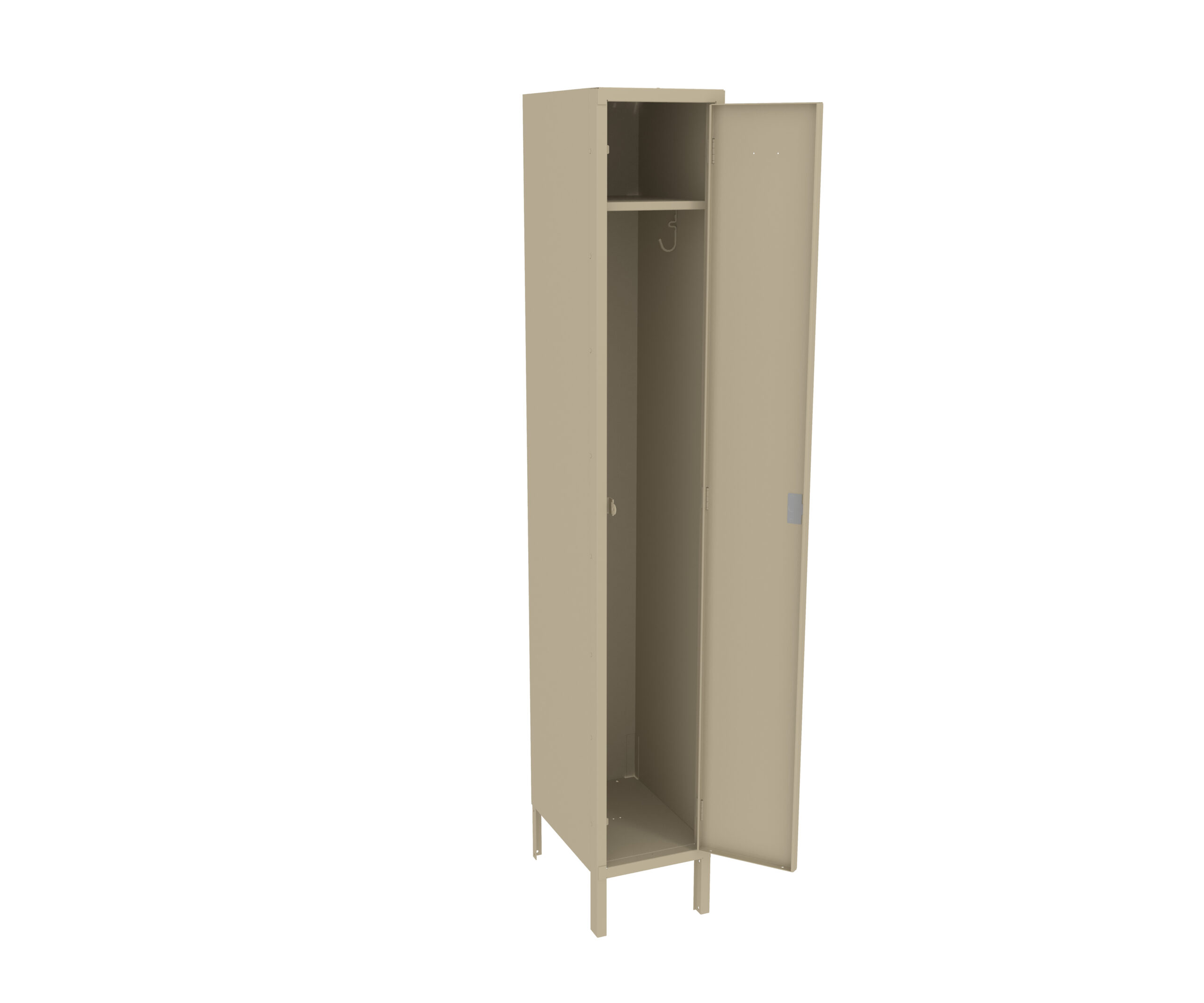
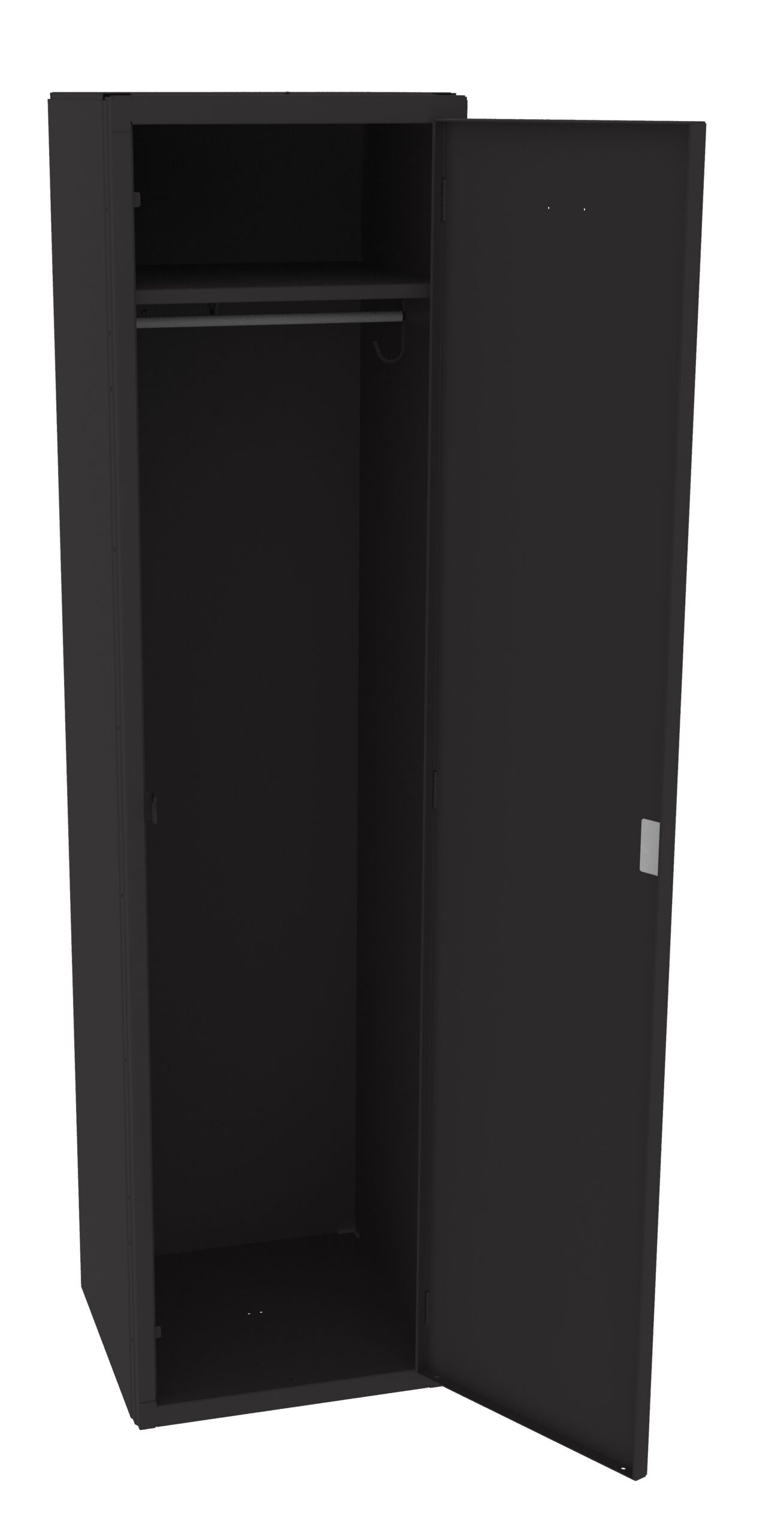
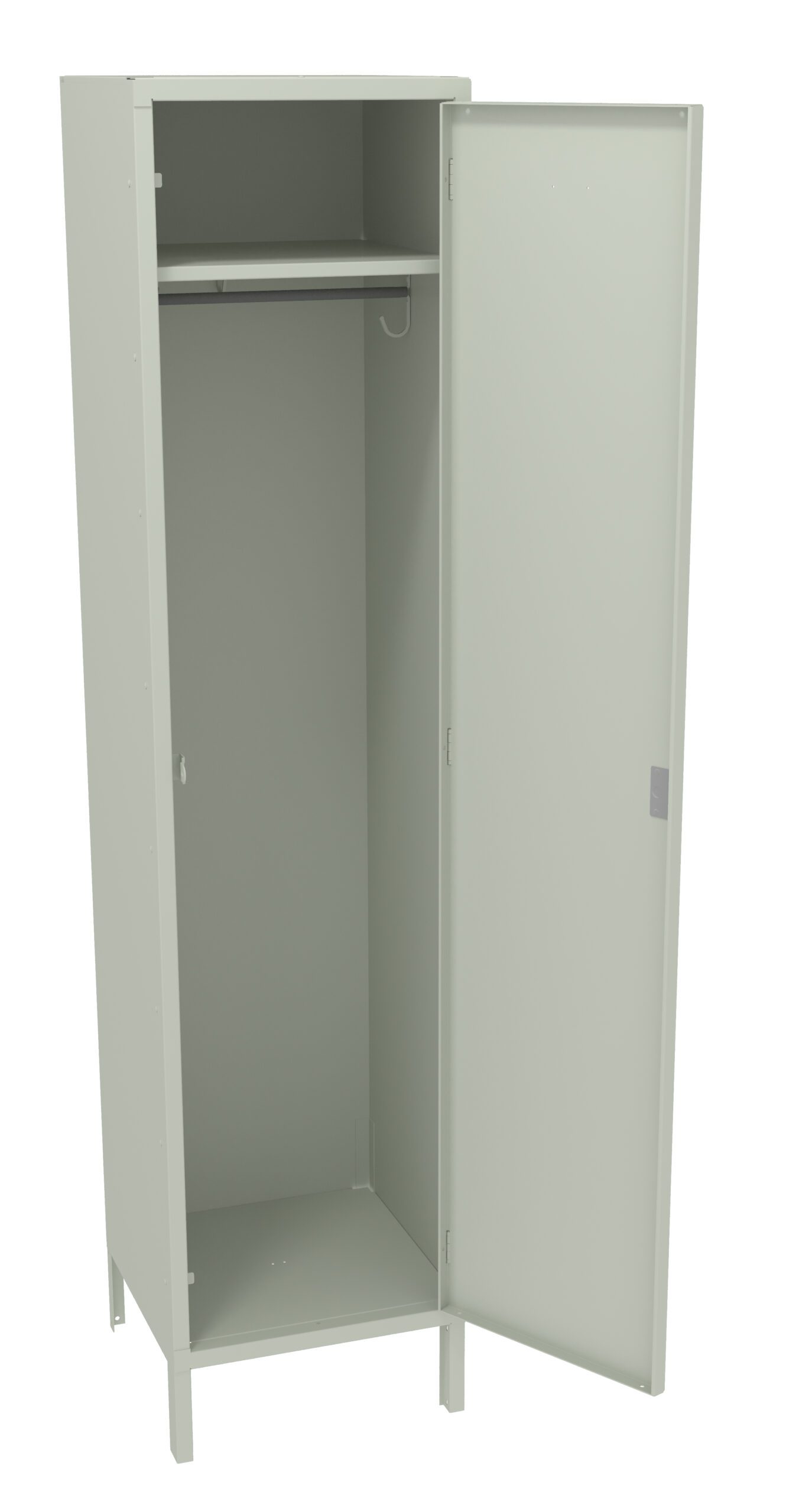
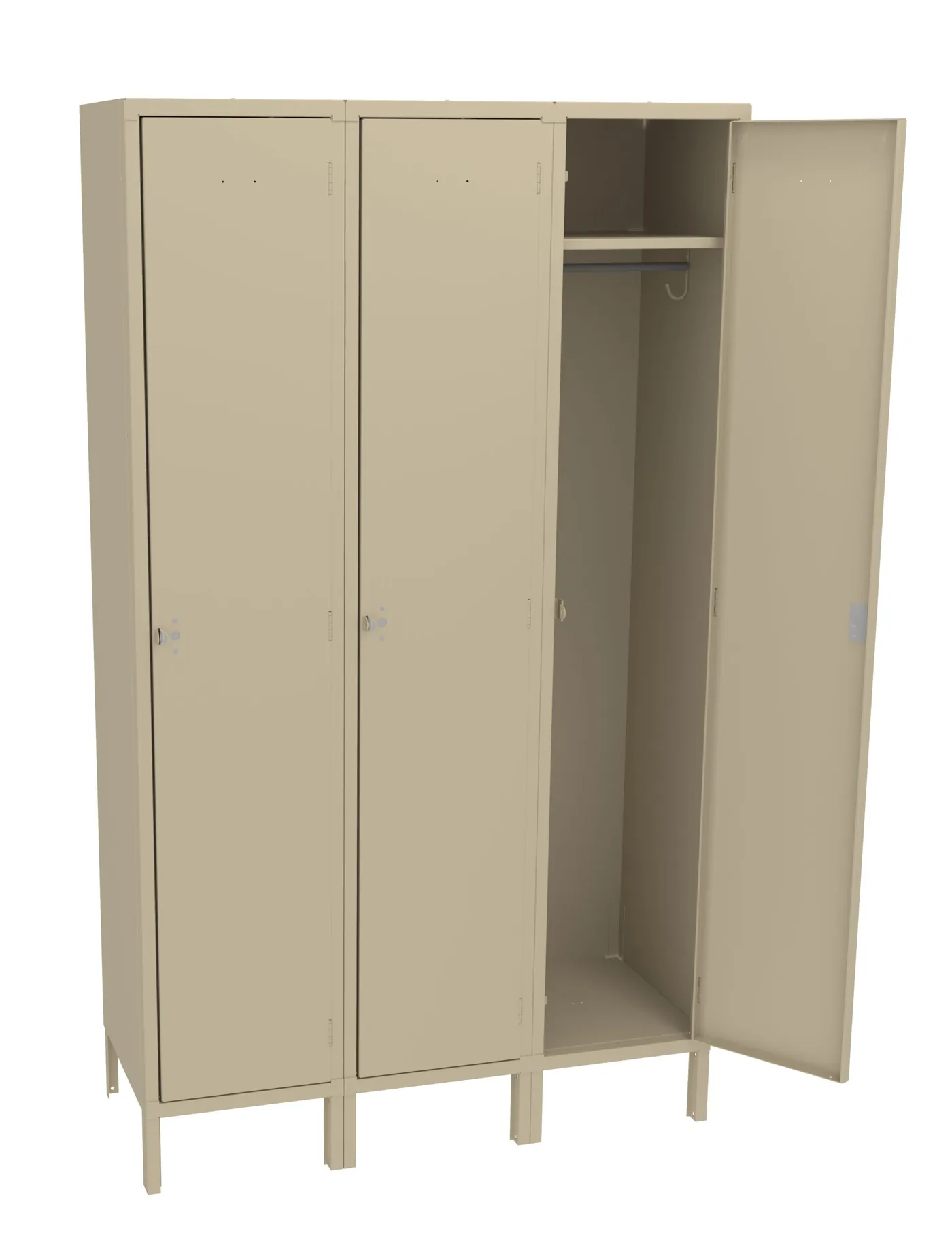
Our heavy-duty catalog covers 24 Tennsco configurations, each in five standard colors: Black, Champagne/Putty, Light Grey, Medium Grey and Sand. Every unit comes either with legs (easy floor cleaning, the 78″ overall height Tennsco lists on its heavy-duty one-wide models) or without legs for a closed base or a concrete curb. Tennsco also offers premium colors at an upcharge.


| Tier | One-wide widths | Multi-wide units | Legs |
|---|---|---|---|
| Single tier | 12″, 15″, 18″ | 36″ two-wide; 36″ and 45″ three-wide | With or without |
| Double tier | 12″, 15″ | 36″ and 45″ three-wide | With or without |
| Six-tier box | 12″ | 36″ three-wide | With or without |
Need triple tier, wider 24″ openings or a ventilated version? Those are available in heavy-duty and all-welded lines from other manufacturers we work with, and we will quote them alongside the Tennsco units. Full opening heights and depths for every tier are in our locker specifications guide, and the brand line-up is on our Tennsco lockers and Penco lockers pages.
Where Heavy-Duty Lockers Pay Off
A good rule of thumb: if your standard lockers have dented doors, broken latches or bent frames within a few years, the next set should be heavy-duty. Spending more once is cheaper than replacing a bank of lockers twice. The places we see that happen most:
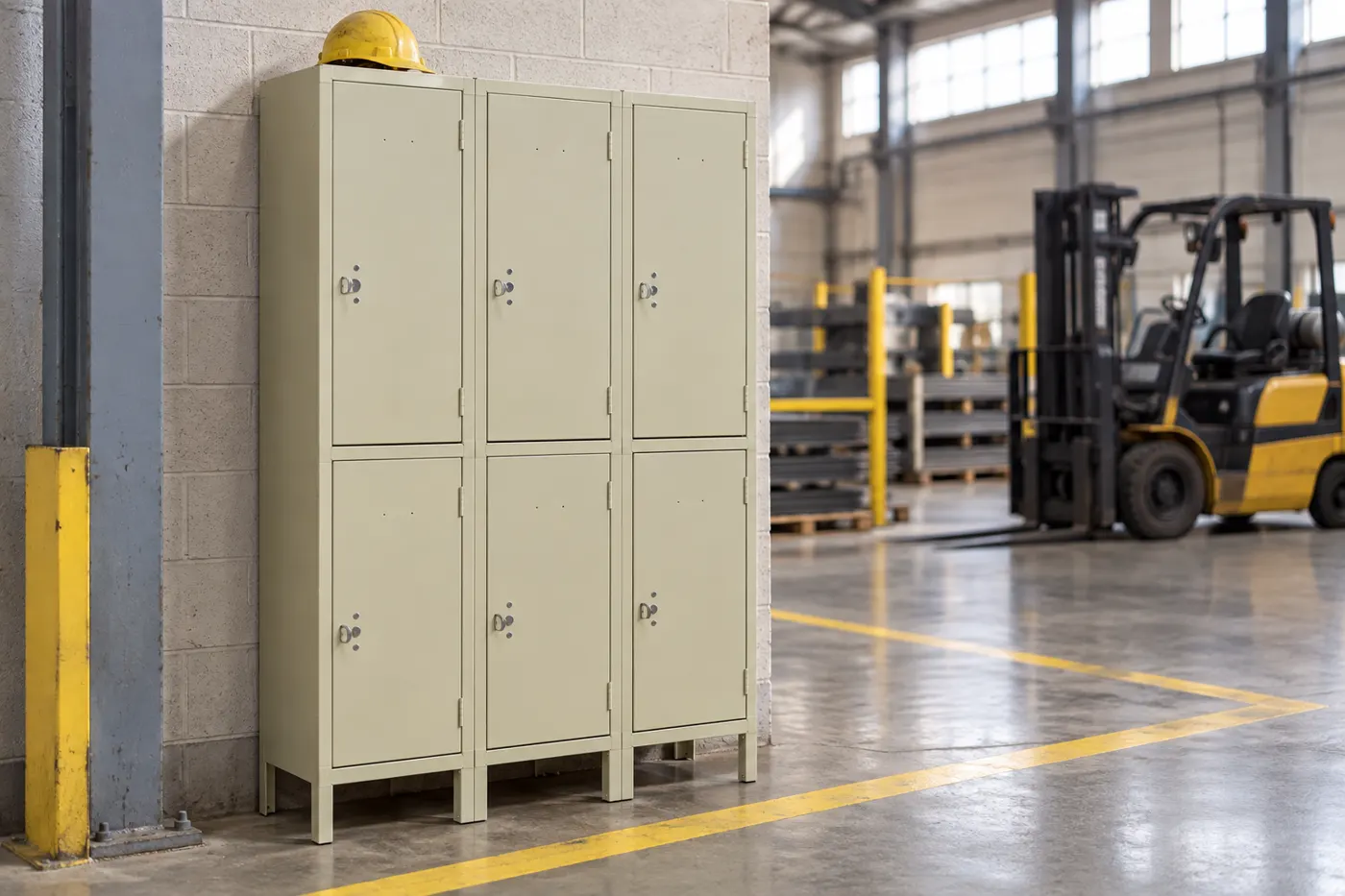
Production floors and aisles. Lockers along forklift, cart and pallet-jack routes take impacts a break-room locker never sees. Pair heavy-duty units with a curb or closed base and anchor them. Our warehouse and industrial lockers guide covers shift-change sizing and OSHA clean/dirty change rooms.
Ordering Heavy-Duty Lockers: Pricing and Lead Times
Heavy-duty lockers are built to order, which is why the cards above say request pricing instead of showing a price. Factory schedules and steel costs move, and an assembled welded locker ships by truck freight, so an honest price depends on your sizes, quantity, color and delivery address.
Send us the list and we will confirm the current price, freight to your dock or jobsite and the lead time before you commit. Some common sizes are in stock at select manufacturers, subject to confirmation; most heavy-duty orders are produced after you approve the quote, so plan ahead of a move-in or a new shift.
If you need lockers sooner, a mixed plan often works: heavy-duty units where the abuse happens (production side, entry by the time clock) and standard lockers in the quieter break room.
What drives the cost of a heavy-duty locker
- Tier and width: more doors per column and wider openings add steel, hinges and latches.
- One-wide vs multi-wide: two- and three-wide welded units usually cost less per opening than the same number of one-wide lockers.
- Legs, bases and sloped tops: closed bases and sloped tops keep dust and clutter off; they are quoted as accessories.
- Color: the five standard colors are the baseline; premium colors carry an upcharge.
- Freight and delivery: assembled lockers ship on pallets; liftgate, inside delivery and installation are quoted separately.
- Locks: heavy-duty Tennsco units take the user’s padlock; built-in or keyless locks change the model.
Installing Heavy-Duty Lockers Safely
Anchor every bank. Tennsco strongly recommends that all lockers be anchored to the floor or wall. A loaded, full-height steel locker is top-heavy, and a door used as a step or a bank bumped by equipment can tip. Anchor through the back into the wall or through the base into the floor, and bolt adjoining units together.
Plan the path in. Welded lockers arrive assembled. Measure doors, corridors and elevator openings, and make sure there is a dock, forklift or liftgate at delivery.
Finish the run. Closed bases, end panels, fillers and sloped tops make a bank easier to clean and stop it becoming a shelf for clutter — see locker accessories. Leave bench and aisle space for shift change; our warehouse locker room layout ideas show common patterns.

Count and measure
Headcount per shift, what people store, and the wall length you have.
Pick tier and width
Single tier for changing, double or box for bags and lunch; widen openings for bulky gear.
Confirm quote
We confirm models, color, freight and lead time in writing before you order.
Deliver and anchor
Unload, set, level, bolt together and anchor; add bases and sloped tops.
Need accessible units in the same bank? Heavy-duty runs still need accessible lockers where lockers are provided — see our ADA lockers guide. For a complete room with benches and layout drawings, our locker room design service plans it with you, and a modular building can create a change room inside a plant.
Heavy-Duty Locker FAQs
What is the difference between heavy-duty and standard lockers?
Are heavy-duty lockers the same as all-welded lockers?
Is a 14-gauge locker stronger than a 16-gauge locker?
Why don’t heavy-duty lockers show a price online?
Do you have heavy-duty lockers in stock?
What sizes do heavy-duty lockers come in?
Do heavy-duty lockers need to be anchored?
What locks work with heavy-duty lockers?
More in this section: employee lockers · cubby lockers · hospital staff lockers · all lockers · locker specifications
Get a Quote on Heavy-Duty Lockers
Send your sizes, headcount and delivery address. We confirm price, freight and lead time, and lay out the room for free.