
Dasco Storage Solutions / Heavy-Duty Corridor Lockers
Dasco Heavy-Duty Corridor Lockers
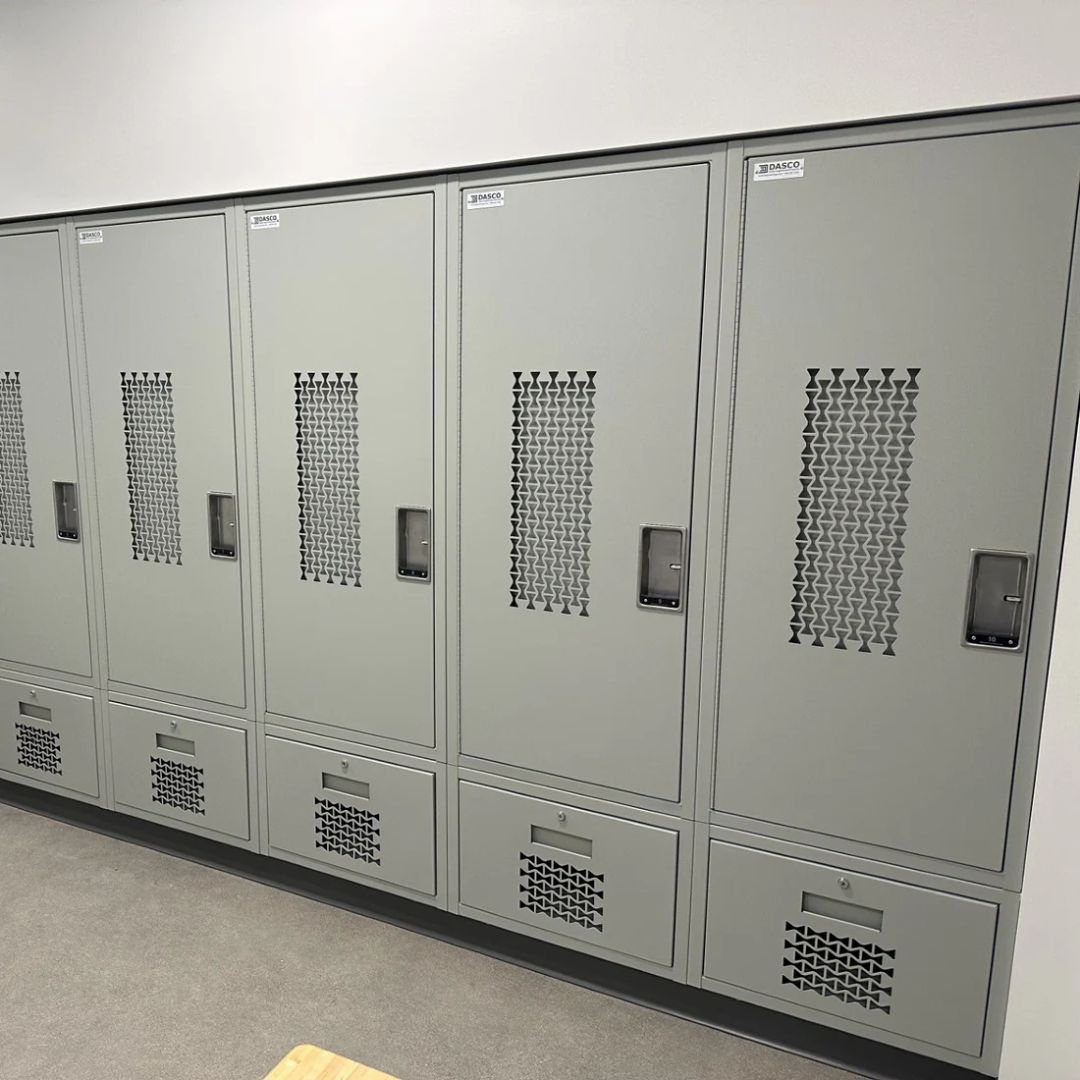
Box-welded 14-gauge steel doors, a full-length integral hinge and a graffiti-resistant powder-coat finish — the Elite and Excalibur lines from Dasco Storage Solutions, specified, supplied and installed by Material Handling USA.
14 ga
Outer door panel steel
1.1″
Box-welded door thickness
300 hr
Salt-spray tested finish (ASTM B117)
6
Tier configurations available
A Corridor Locker That Stops Being a Maintenance Line Item

Facility managers in high-traffic buildings fight the same battle every year. Standard lockers built from thin, riveted sheet metal cannot take the daily load, and the failures are predictable: dented doors, latches that no longer line up, doors that sag off short hinges, and a hallway that sounds like a machine shop between classes. Each repair is small. Together they consume a maintenance budget and a lot of staff time.
Dasco corridor lockers attack that cycle at the two places conventional lockers fail first — the door and the hinge. The door is a full double-pan box-welded assembly, not a single pan with a partial reinforcing panel. The hinge is one continuous piece running the full height of the door and frame, not three small leaves that work loose. Everything else on the locker — the vented frame, the stainless latch pocket, the galvanneal bottom — follows from treating a locker as building infrastructure rather than a consumable fixture.
Material Handling USA is a Dasco dealer and an award-winning member of the International Systems Dealers Association. We specify, supply and install both Dasco corridor locker lines, handle the CSI Section 10 51 13 submittals your architect needs, and do the field work — measuring the run, closing out the ends with trim, anchoring the banks and adjusting every door.
Two Lines: Elite and Excalibur
Both lines share the same box-welded door, integral hinge, stainless latch pocket and graffiti-resistant finish. You are choosing how much steel goes into everything behind the door.
 Dasco Elite LockersThe everyday heavy-duty corridor locker. Doors are full double-pan box-welded assemblies 1.1″ thick, built from a 14-gauge outer panel interlocked and MIG welded to a full-width 20-gauge inner panel. Bodies are 20-gauge prepainted steel in standard #223 Oyster; shelves, tops and bottoms are 16-gauge galvanneal. Available 48″, 60″ and 72″ high in 1, 2, 3, 4 and 6 tiers.
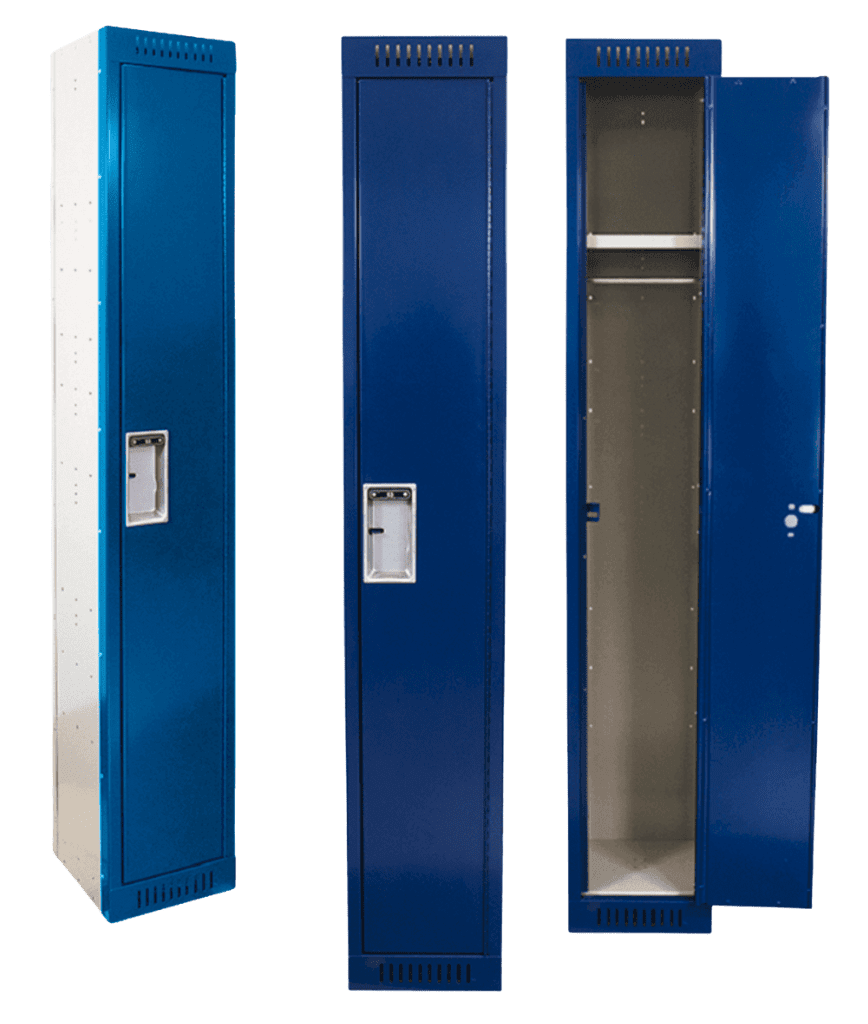 Dasco Excalibur LockersThe same box-welded 14-gauge door, but every other component steps up to a minimum of 16-gauge — sides, backs, tops, bottoms and shelves. Dasco states the result is 25% heavier than any other locker on the market in North America. Specified for the hardest-used corridors, athletic rooms, industrial plants and mining facilities.
| Decision factor | Choose Elite | Choose Excalibur |
|---|---|---|
| Traffic level | Standard corridors, classrooms, offices, staff areas | Hardest-used corridors, athletics, plants, change houses, mining |
| Body steel | 20-gauge prepainted, #223 Oyster | 16-gauge cold rolled, powder coated |
| Impact from carts and equipment | Handles normal hallway contact | Preferred where carts, hand trucks and gear hit the sides |
| Tier options | 1, 2, 3, 4 and 6 tier | Single and double tier |
| Weight and freight | Lighter unit, lower installed cost | Roughly 25% heavier than comparable lockers — plan the freight |
| Typical specification | Schools, government, commercial, sports facilities | Educational, institutional, industrial, commercial, mining, golf, government |
Not sure which line your building needs?
Send us the corridor length, ceiling height and what gets stored in each opening. We will come back with a locker count, a tier and depth recommendation, the accessible units and an installed price — usually the same week.
How a Dasco Corridor Locker Is Built
Rivets are fast and cheap, which is exactly why most lockers use them. Every rivet is also a stress point. Repeated impact works them loose, the door drops, the latch stops meeting the strike, and the gap that opens up is what somebody pries on.
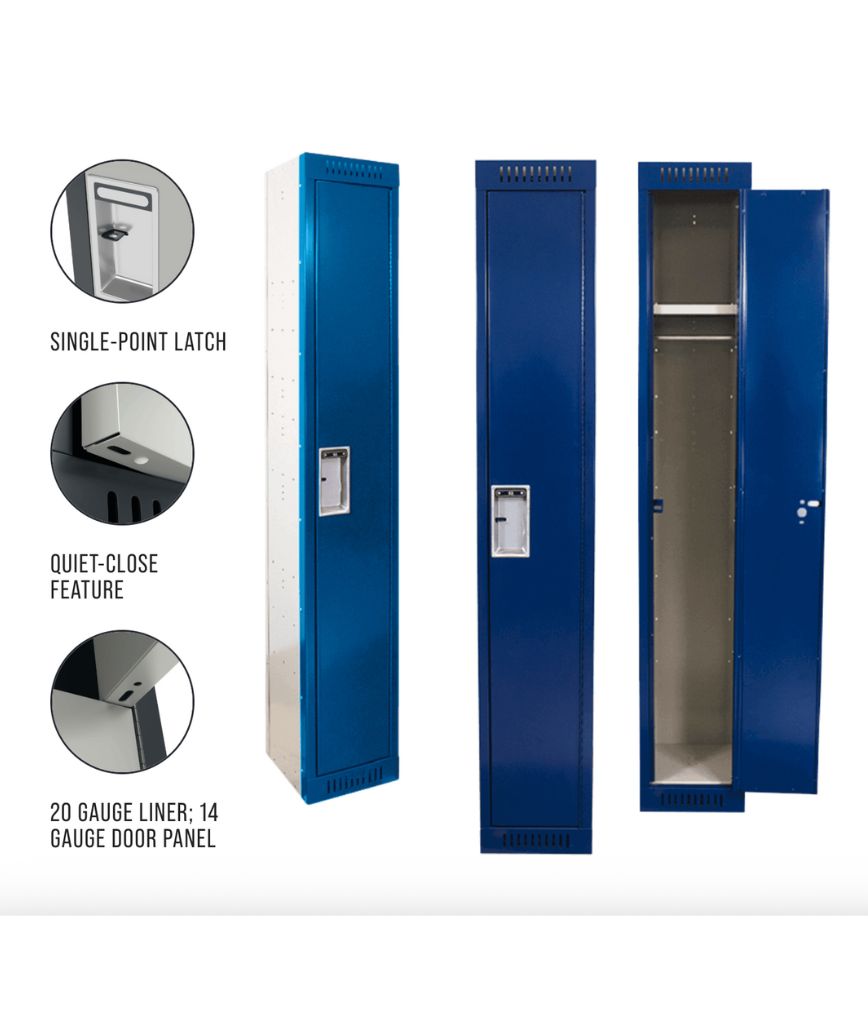
Dasco removes those failure points from the door entirely. A 14-gauge outer panel is formed with channels on all four sides, interlocked with a full-width 20-gauge inner panel that covers the back of the latch pocket, and MIG welded together at the top, bottom and both sides on the back edges of the door. The finished assembly is 28 mm — about 1.1″ — thick. Dasco’s own specification states plainly that single-pan outer doors with partial inner reinforcing pans are not acceptable.
The door then closes against a 16-gauge frame member with a 0.63″ wide closure strike running the full height of the door, and it sits flush with the outside of the frame — there is no protruding edge for a foot or a cart to catch. Frames themselves are welded from formed channel sections of prime cold rolled steel.
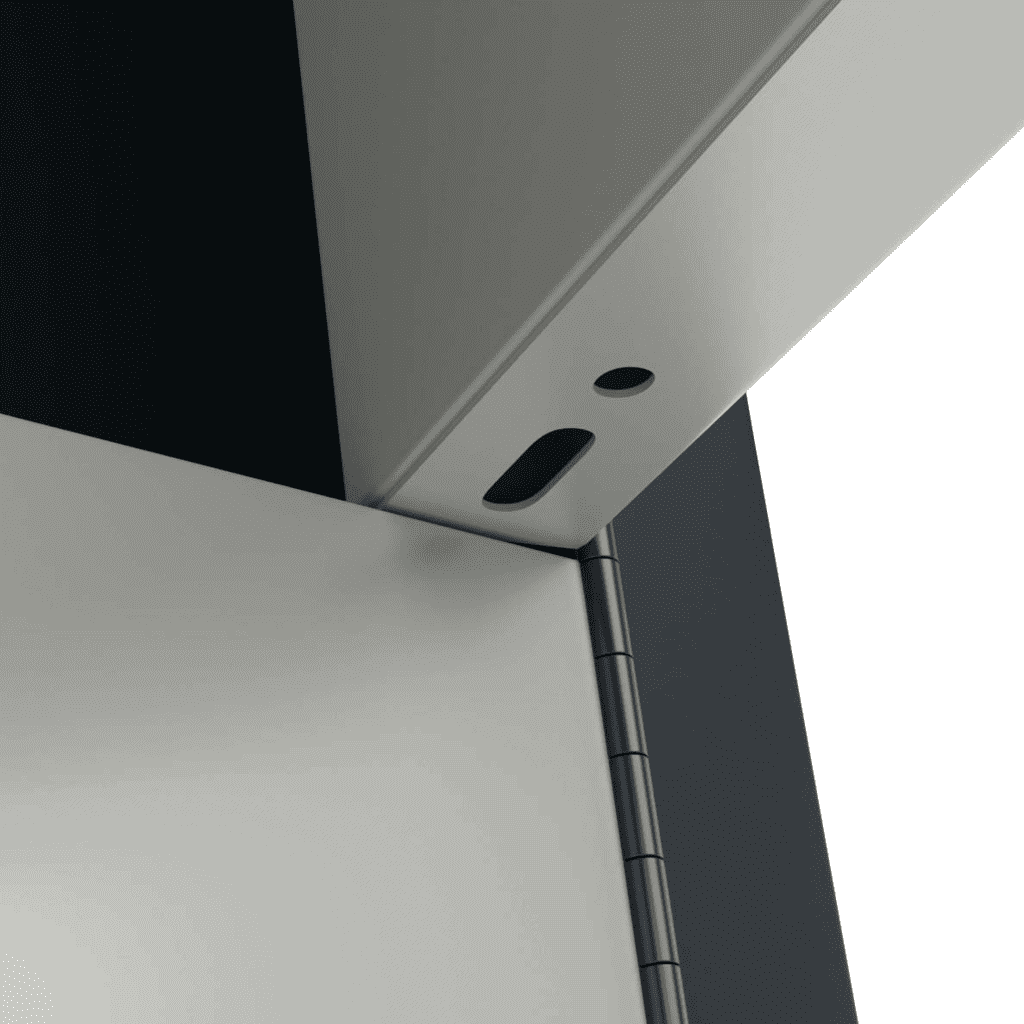 Full-Length Integrated HingeDoors hang on a 16-gauge continuous one-piece integral right-hand hinge and frame instead of three small butt hinges. Every other knuckle is staked to the 0.12″ steel hinge pin so the pin cannot be pulled out, and there is no short hinge leaf to tear loose. The hinge is the only moving part on the locker.
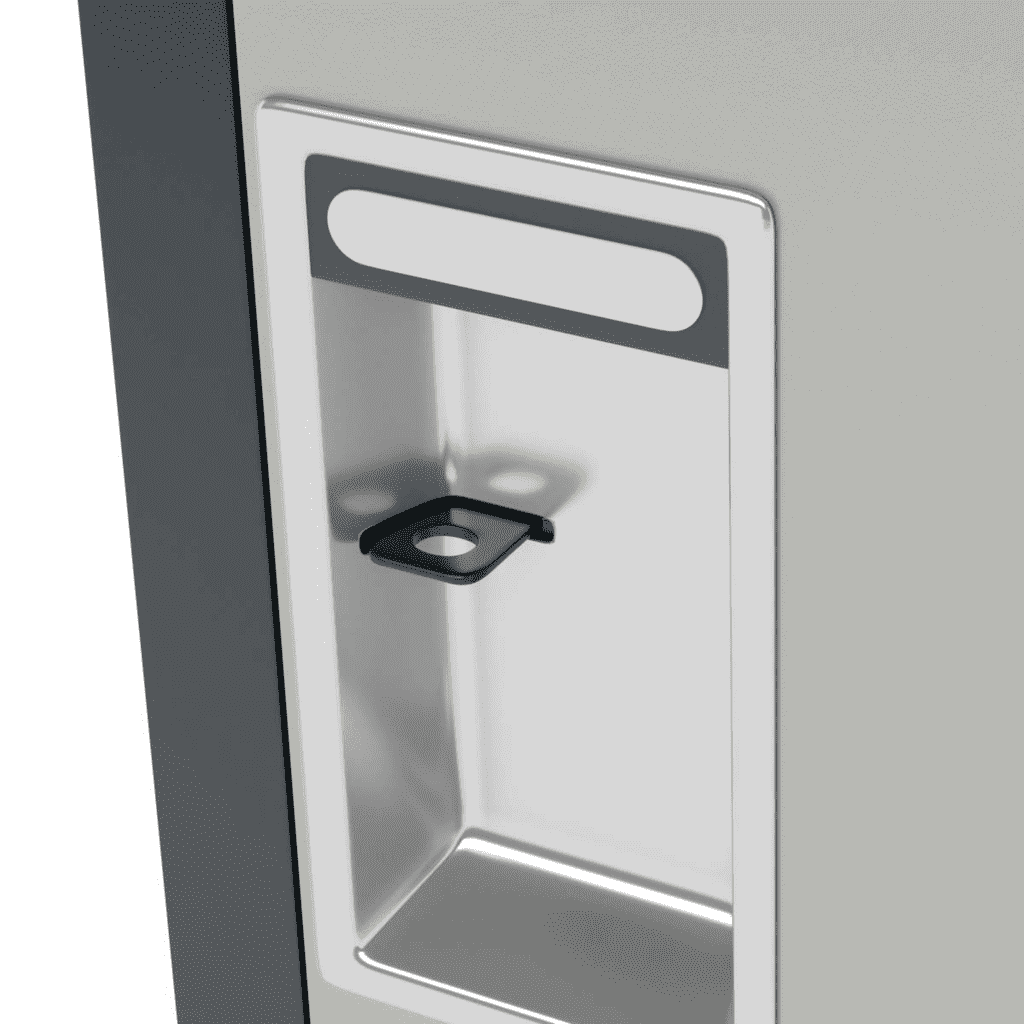 Single-Point Latch in a Stainless PocketLatching runs through a single-piece deep-drawn 304 stainless steel recessed pocket. The 12-gauge channel-formed hasp is welded to both legs of the 16-gauge channel frame member — riveted hasps are not accepted on either line. One moving latch point means far less to misalign or replace than a multi-point gravity-lift mechanism.
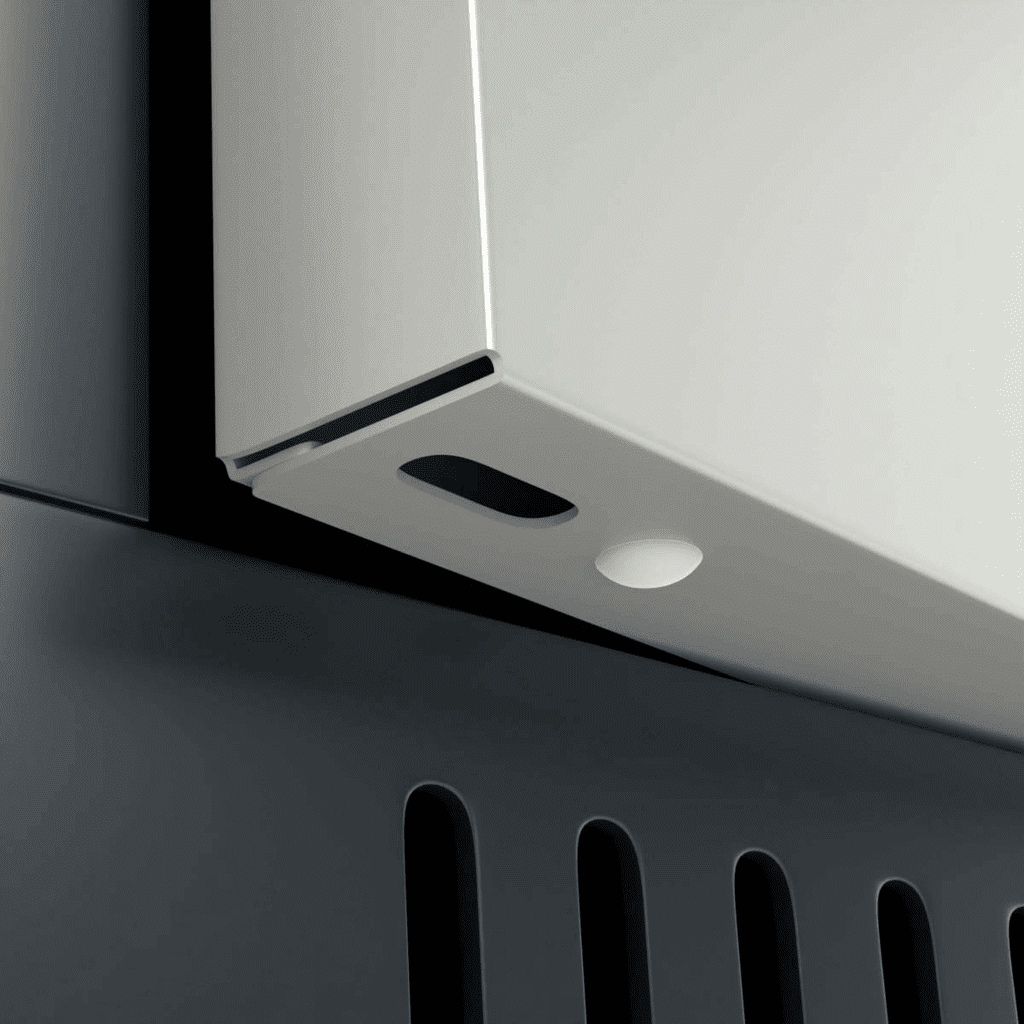 Vented Frame, Not Louvered DoorsVentilated slots are formed into the top and bottom frame members, so air moves through the locker without punching louvers through the door face. That keeps the door panel solid, keeps sight lines into the locker closed, and removes the sharp louver edges that get bent in a busy corridor.
Why one latch point beats four
Multi-point gravity-lift latching gives you three or four more places to bind, bend and fall out of adjustment — and it is the number one source of “my locker will not open” work orders. Dasco latches once, through a deep-drawn 304 stainless pocket with a welded 12-gauge hasp, and lets the box-welded door provide the rigidity that multi-point latching is trying to compensate for.
Gauges, Sizes and Specifications
Everything below comes from Dasco’s published CSI Section 10 51 13 product specifications and current brochures for the two lines. Ask us for the full submittal package for your project — it includes shop drawings showing every gauge.
Component gauges
| Component | Elite | Excalibur |
|---|---|---|
| Outer door panel | 14 gauge (1.90 mm) cold rolled steel | 14 gauge (1.90 mm) cold rolled steel |
| Inner door panel | 20 gauge (0.91 mm), full width, MIG welded to the outer panel | 20 gauge (0.91 mm), full width, MIG welded to the outer panel |
| Assembled door | Box-welded, 28 mm (1.1″) thick, double channels on both vertical edges | Box-welded, 28 mm (1.1″) thick, double channels on both vertical edges |
| Sides and backs | 20 gauge (0.91 mm) prepainted steel, #223 Oyster | 16 gauge (1.52 mm) cold rolled steel |
| Tops, bottoms, shelves | 16 gauge (1.52 mm); 16 gauge galvanneal bottom shelf | 16 gauge (1.52 mm); 16 gauge galvanneal bottom shelf |
| Hinge and frame | 16 gauge continuous one-piece integral hinge and welded channel frame | 16 gauge continuous one-piece integral hinge and welded channel frame |
| Latch hasp | 12 gauge channel, welded to both legs of the frame member | 12 gauge channel, welded to both legs of the frame member |
| Trim, slope tops, end panels, bases | 16 gauge; bases 16 gauge galvanneal | 16 gauge; bases 16 gauge galvanneal |
Elite available sizes
| Height | Tiers | Widths | Depths |
|---|---|---|---|
| 72″ | 1, 2, 3, 4 and 6 tier | 12″, 15″, 18″ | 12″, 15″, 18″ |
| 60″ | 1 and 2 tier | 12″, 15″, 18″ | 12″, 15″, 18″ |
| 48″ | 1 and 2 tier | 12″, 15″, 18″ | 12″, 15″, 18″ |
Excalibur available sizes
| Height | Tiers | Widths | Depths |
|---|---|---|---|
| 72″ | Single or double tier | 12″, 15″ | 12″, 15″, 18″ |
| 60″ | Single or double tier | 12″ | 12″, 15″, 18″ |
| 48″ | Single tier | 12″ | 12″, 15″, 18″ |
Included on both lines
- Single-tier lockers get a shelf about 15″ below the top; single and double tier compartments get three zinc-plated round-tipped coat hooks fastened to the body
- Triple-tier compartments get a double-prong ceiling hook under each shelf
- Recessed anodized aluminum number plates riveted to the heavy-duty nylon door pull, numbered to your sequence
- Two sound-deadening rubber door grommets on the lock side of every frame
- Ventilated slots formed into the top and bottom frame members
- Sloping tops, bases, finished end panels and filler trim available in 16 gauge
- Multi-compartment lockers available on both lines
- LEED® submittal documentation (recycled content, regional materials, VOC emissions) available on request
Quiet Operation in Buildings Where Noise Costs You Something
Locker noise is the complaint nobody specifies against and everybody hears. In a school, dozens of doors slamming at the same moment carries straight through classroom walls. In a clinic or hospital corridor, the same sound turns a recovery floor into an institutional one. In a plant, it is one more thing competing with shift-change communication.
Dasco addresses it mechanically rather than with a gasket kit added later. Every frame carries two sound-deadening rubber grommets on the lock side, so the door lands on rubber instead of steel. The box-welded door has no loose panel to ring, and the quiet-close design plus a single latch point turns the traditional metal clang into a much shorter, lower “click.” Because the hinge is continuous and the door is rigid, that behavior does not degrade after a year of use the way a sagging door on short hinges does.
- Two sound-deadening rubber grommets per frame, standard on both lines
- Quiet-close door design with a single latch engagement point
- No louvered door panels to rattle — ventilation is in the frame
- Doors field-adjusted at installation so no metal contacts metal
Graffiti-Resistant, Corrosion-Resistant Finish
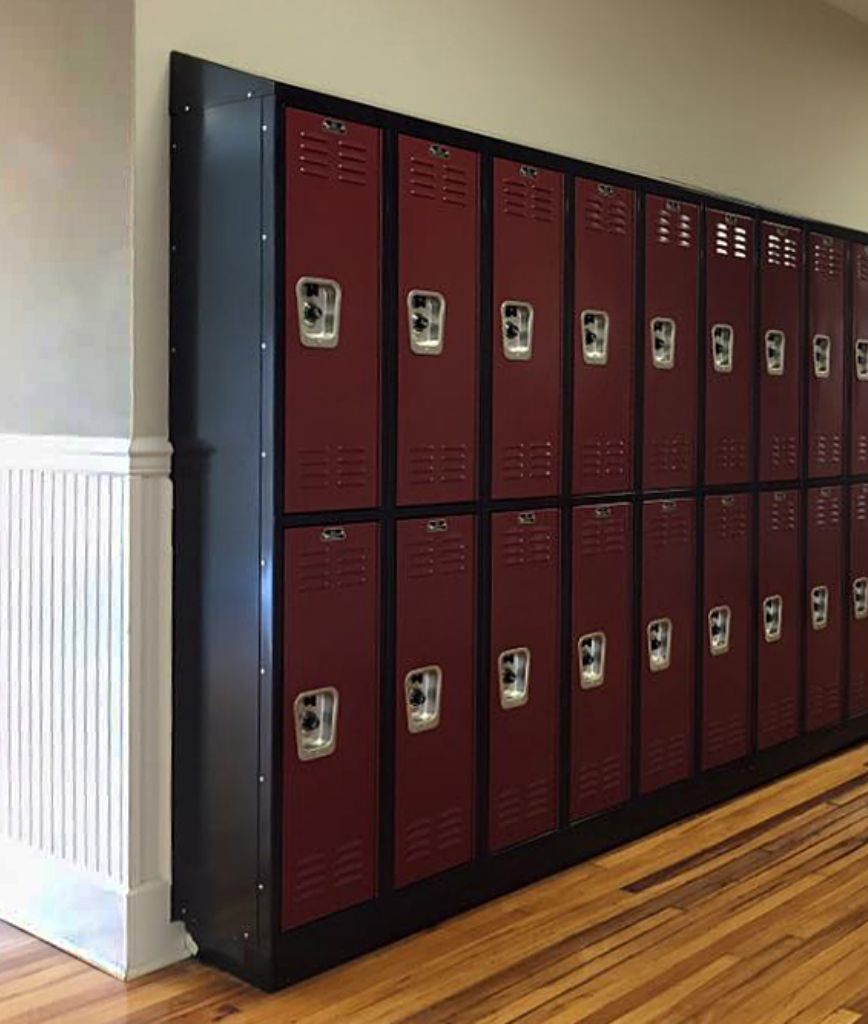
A chipped, rusted or tagged locker makes an entire corridor look neglected, and it is usually the finish that fails long before the steel does. All cold rolled surfaces are pretreated with an iron phosphate corrosion inhibitor, then finished with an abrasion- and graffiti-resistant polymer powder coating that is heat cured — a bonded shell rather than a surface film of liquid paint.
Dasco publishes a measurable standard for that finish: all surfaces meet or exceed 300 hours of salt-spray resistance with a maximum of 3 mm creepage from scribe, tested to ASTM B117. That is the number to ask a competing locker quote for. Bodies are standard #223 Oyster and every other component can be selected from the current Dasco color chart, including contrasting door and frame colors.
The practical payoff is a non-porous surface that most markers and spray paint wipe off, and a galvanneal bottom shelf and base where water, mop buckets and wet gear actually sit. Minor field scratches are touched up at installation with factory color-matched coatings.
Ask for the salt-spray number
Almost every locker on the market is “powder coated.” Far fewer publish a salt-spray hours figure and a creepage limit tested to ASTM B117, or use galvanneal steel at the bottom shelf and base where corrosion actually starts. Those two details, plus the door construction, explain most of the price difference between locker lines.
Locking and Access Options
The locker body rarely changes between projects; the locking does. All of these options work with the same recessed stainless pocket, so you can standardize the locker and vary the hardware by building or by user group.
| Option | How it works | Where we specify it |
|---|---|---|
| Padlock (owner supplied) | The recessed stainless pocket and 12-gauge hasp take a standard padlock | Schools running a district padlock program; lowest cost per opening |
| Built-in combination lock | Factory-installed in the door pocket | Corridor lockers where nothing should be carried by the user; master-keyed override |
| Cylinder lock | Keyed cylinder in the door pocket | Staff, faculty and clinical lockers where keys are already issued |
| Digilock electronic lock | Battery-powered keypad or credential lock | Shared-use and day-use lockers, athletics, staff shift lockers |
| SAFE-O-MAT coin and card locks | Coin-return or card operated | Public recreation centers, pools, ski and leisure facilities |
Standardizing lockers across a district or campus?
We will build a locker schedule by building — tier, depth, color, locking and accessible units — so future purchases match what is already installed. Talk it through with a specialist before you write the spec.
Where Heavy-Duty Corridor Lockers Earn Their Cost
Dasco lists schools, locker rooms, industrial environments, government, sports facilities, educational, commercial and mining applications for these lines. These are the specifications we write most often.
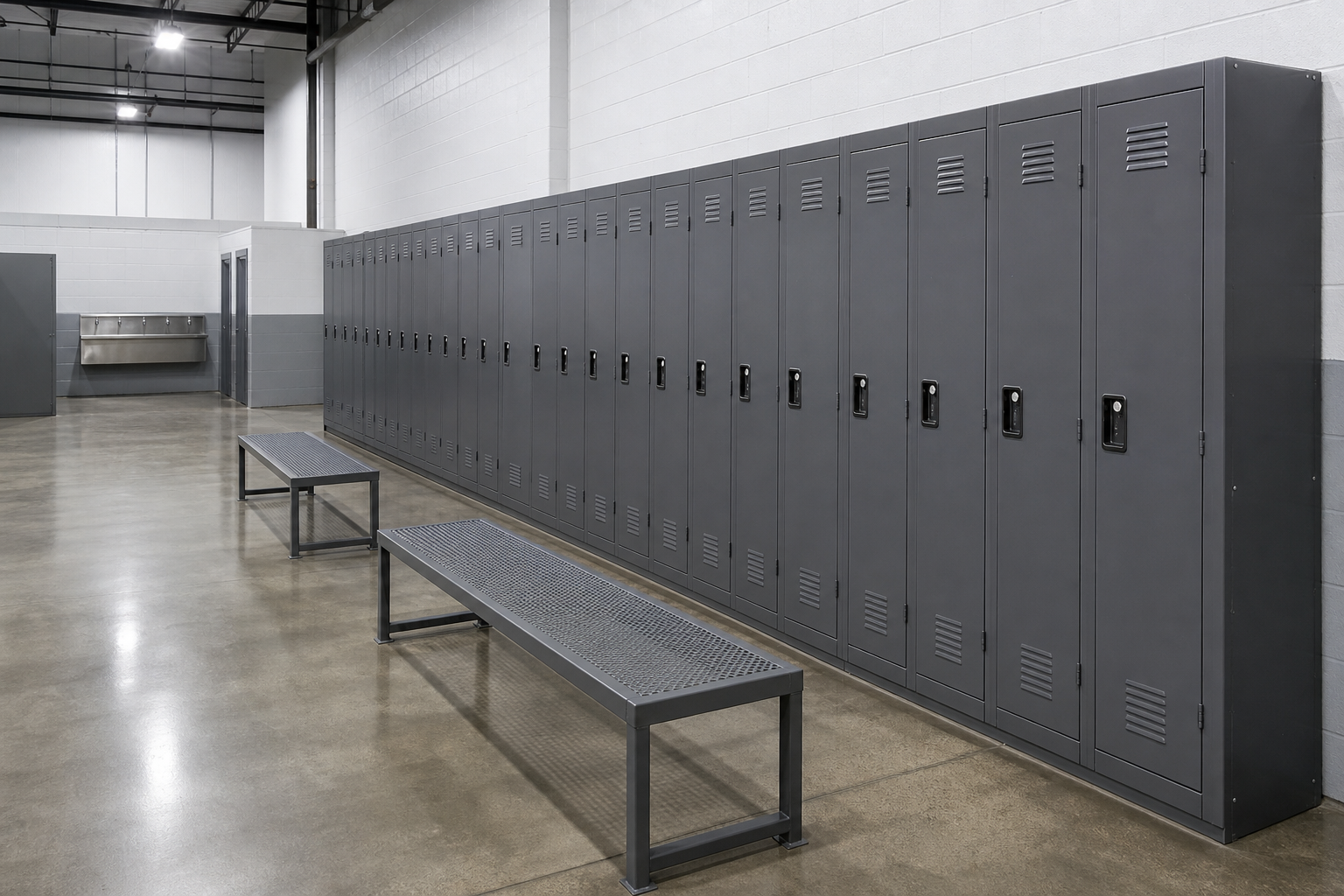
Industrial and plant changing areas
Plant lockers fail differently than school lockers. Instead of one hard hit a year they take constant contact from carts, hand trucks, tool bags and wet gear, and the floor they stand on gets washed. That combination is what pushes a specification from Elite to Excalibur: 16-gauge sides and backs to resist the day-to-day denting, and the galvanneal bottom and base for standing water.
Where employees need more than a coat and a lunch box, multi-compartment configurations and 18″ depths keep gear separated inside a single opening instead of pushing you into a second bank of lockers you do not have wall space for.
Specifying and Installing a Locker Run
Measure the run, not the locker
We take the clear wall length, ceiling height, door swings, fire-alarm devices and any existing curb. Filler trim and end panels close out the run so the last locker does not land four inches short of the corner.
Pick tier and depth by what is stored
Books and backpacks fit a 12″ deep double tier. Coats, helmets and gear bags need 15″ or 18″. Six-tier boxes suit staff and day use. This decision drives your locker count more than anything else.
Choose locking and numbering
Padlock, built-in combination, cylinder, Digilock or coin-operated, plus recessed anodized aluminum number plates riveted to the door pull and numbered to your sequence.
Finish, trim and accessibility
Body and door colors from the current Dasco chart, plus sloping tops, bases, finished end panels and filler trim. We confirm the accessible locker count and shelf heights with your architect before release.
Delivery and installation
Lockers are assembled on site with security bolts or rivets, fastened to each other and anchored to the wall. Our crews handle the install, then adjust every door so no metal contacts metal.
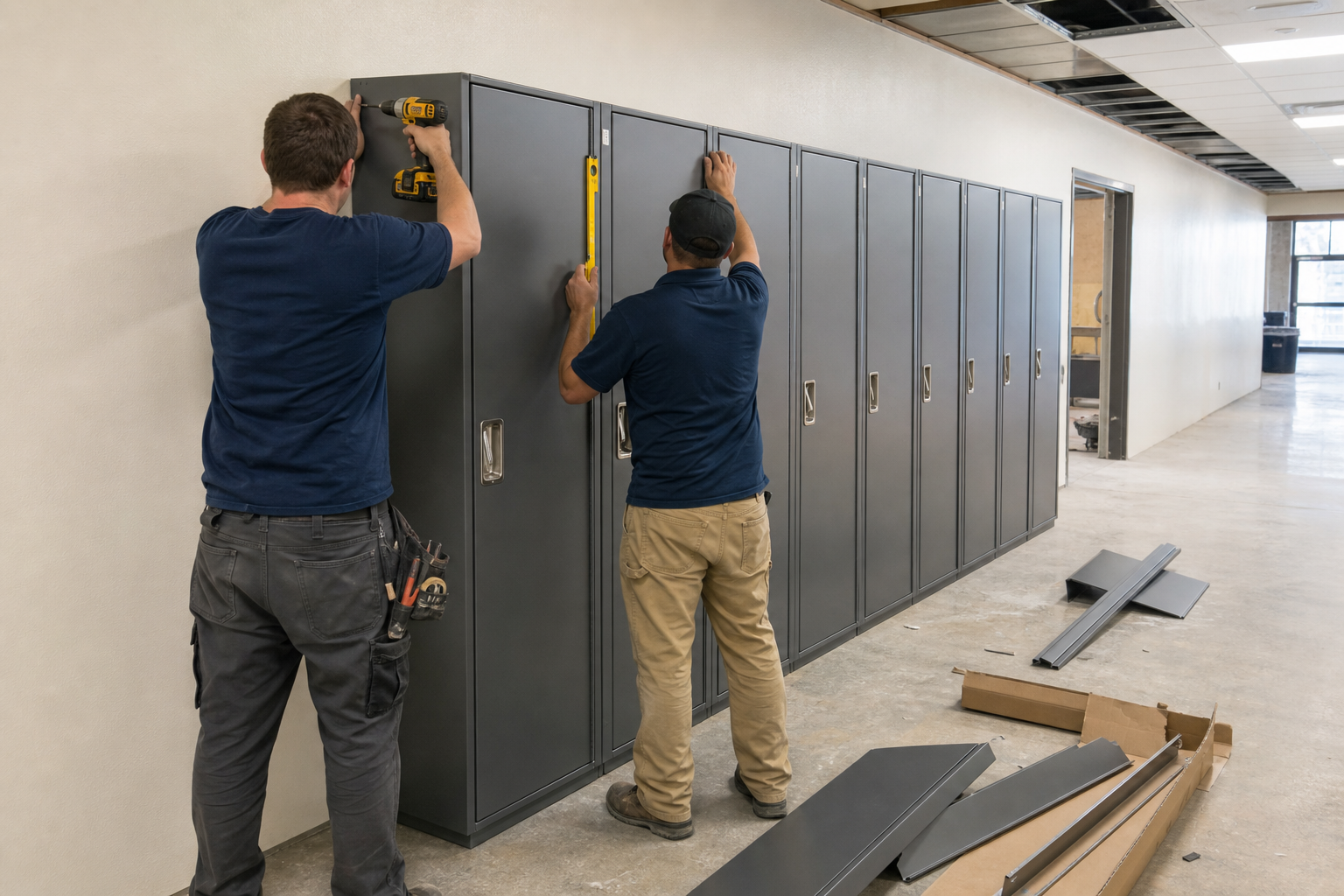
Accessibility, submittals and field work
Two things get missed on locker packages more than anything else: the accessible locker count and the close-out at the ends of a run. Under the 2010 ADA Standards, section 225.2.1 requires at least 5 percent of the lockers provided, and no fewer than one of each type, to comply with section 811 — which sends you to the reach ranges in section 308 for shelf and hardware heights. Those units also have to sit on an accessible route. We plan them into the layout up front and confirm the heights with your architect; your authority having jurisdiction makes the final determination.
On the submittal side, Dasco documents these lockers under CSI Section 10 51 13 with shop drawings showing every gauge, installation instructions for wall attachment, and LEED documentation on request. In the field, our crews assemble the bodies with security bolts or rivets, fasten adjoining lockers to each other, anchor the run for rigidity, conceal fasteners behind trim where possible, and adjust every door before we leave. Field touch-up is done with factory color-matched coatings.
Send us your corridor dimensions
Give us the wall lengths, ceiling height and what each opening has to hold. You will get a locker schedule, tier and depth recommendation, accessible unit count, finish options and an installed price — plus the submittal package your architect needs.
Warranty and Real Lifecycle Cost
Dasco’s published Elite and Excalibur specifications carry a two-year warranty against defective materials and workmanship. Like every locker warranty, it excludes damage from environment, ventilation, vandalism, abuse, fire and water. We send the current warranty document with every quote instead of quoting a number from memory — and we will tell you when a competing “lifetime” claim covers less than this one does.
The warranty term is not the same thing as service life, and it is not where the money is. Over a ten-year window the cost of a corridor locker is dominated by what happens after the invoice: replacement doors and latches, staff hours writing and closing work orders, temporary fixes, and the partial re-buys that happen when one damaged bank cannot be matched. That is the cost heavier steel, a welded door, a continuous hinge and a tested finish are actually buying down.
| Lifecycle cost driver | Thin riveted locker | Dasco box-welded locker |
|---|---|---|
| Door construction | Single pan, riveted, flexes and dents | 14 ga outer + 20 ga inner, MIG welded, 1.1″ box assembly |
| Hinges | Two or three short leaves that work loose and sag | One continuous full-length integral hinge with a staked pin |
| Latching | Multi-point gravity lift — more points to bind | Single point through a 304 stainless pocket with a welded 12 ga hasp |
| Finish failure | Chips expose steel; rust starts at the bottom | ASTM B117 300 hr salt spray, 3 mm max creepage; galvanneal bottoms |
| Typical work orders | Latch alignment, sagging doors, replacement doors | Occasional door adjustment; the hinge is the only moving part |
| Ten-year outcome | Partial replacements and mismatched banks | Same lockers, repainted or re-numbered if the building changes use |
Compare employee, correctional, tenant and smart lockers on our main lockers page.
Dasco Corridor Locker FAQs
What gauge steel are Dasco corridor lockers?
Are these welded lockers or knock-down lockers?
How long is the warranty?
Do the doors have louvers?
What locks can we use?
How many lockers have to be accessible?
What sizes are available?
Can you replace one damaged bank without redoing the corridor?
Related Products & Resources
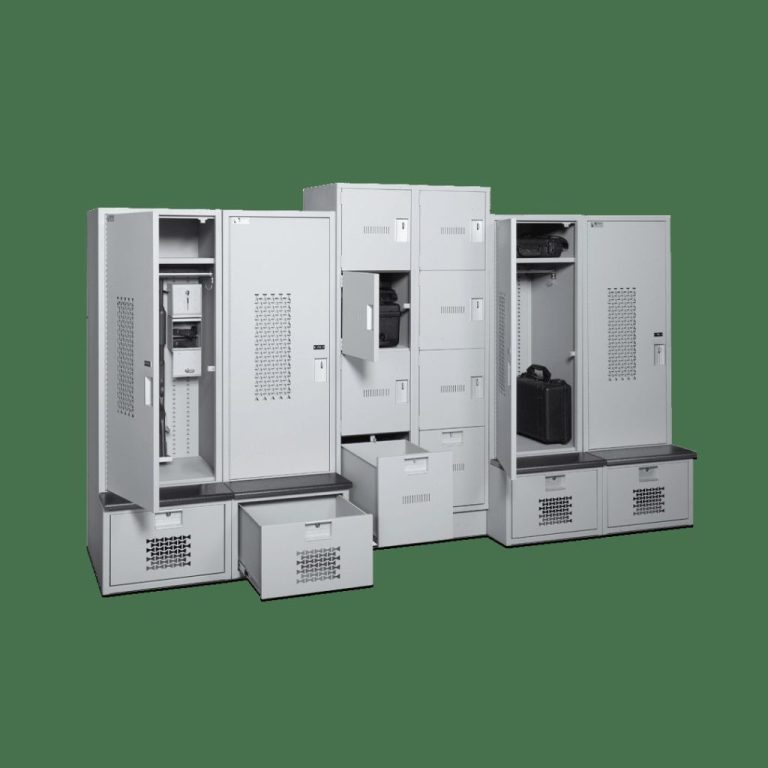 Dasco Storage SolutionsThe full Dasco line we supply — lockers, weapon storage, evidence storage and custom-engineered steel storage systems.
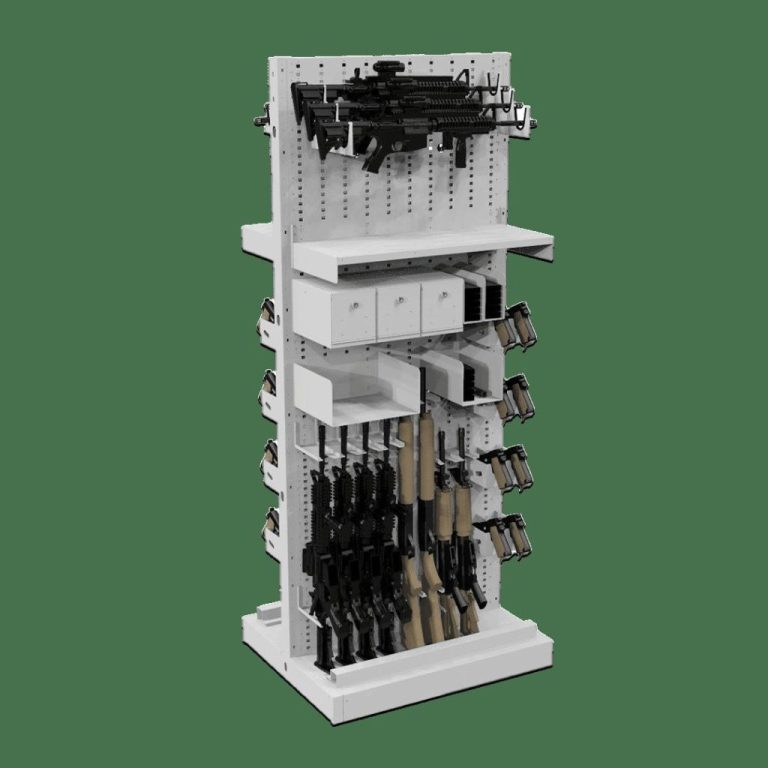 School & Campus StorageCorridor lockers, athletic storage, band and shop rooms, and secure campus storage planned as one package.
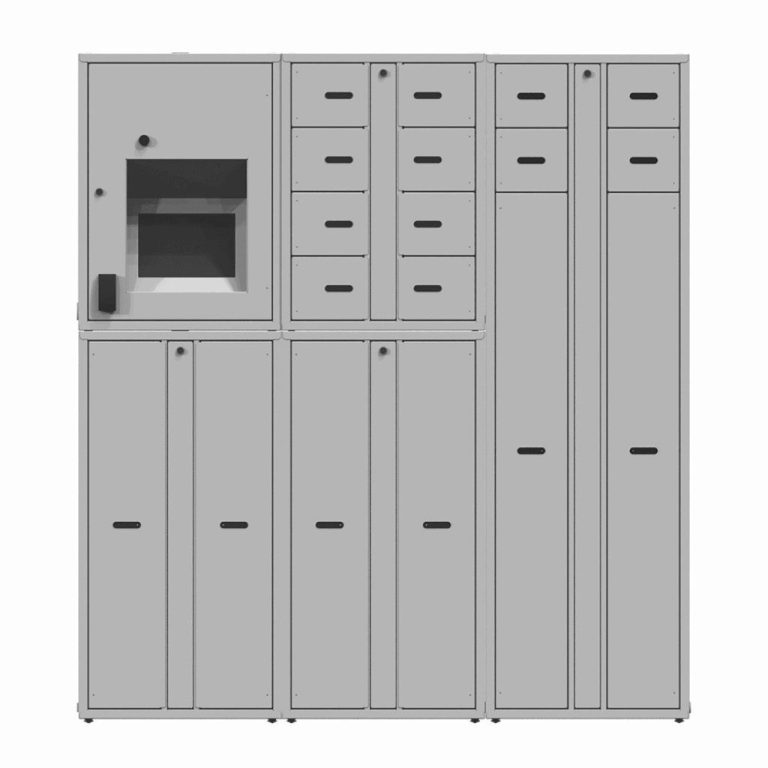 Locking Systems & Access ControlPadlock, combination, cylinder, electronic and coin-operated locking options across the Dasco line.
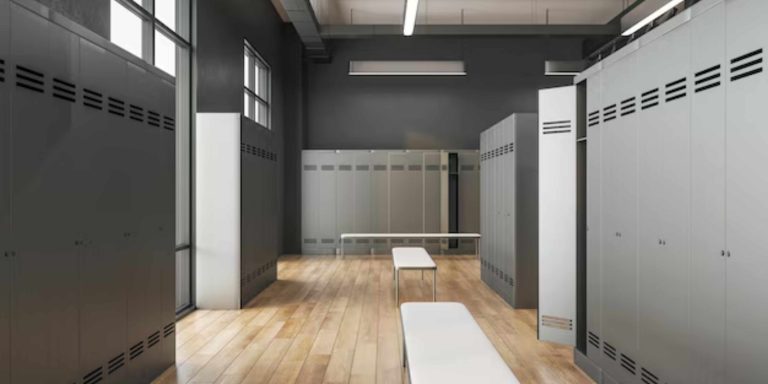 Locker Room DesignLayout help for team rooms and changing areas — bench spacing, aisle widths, tier mix and ventilation.
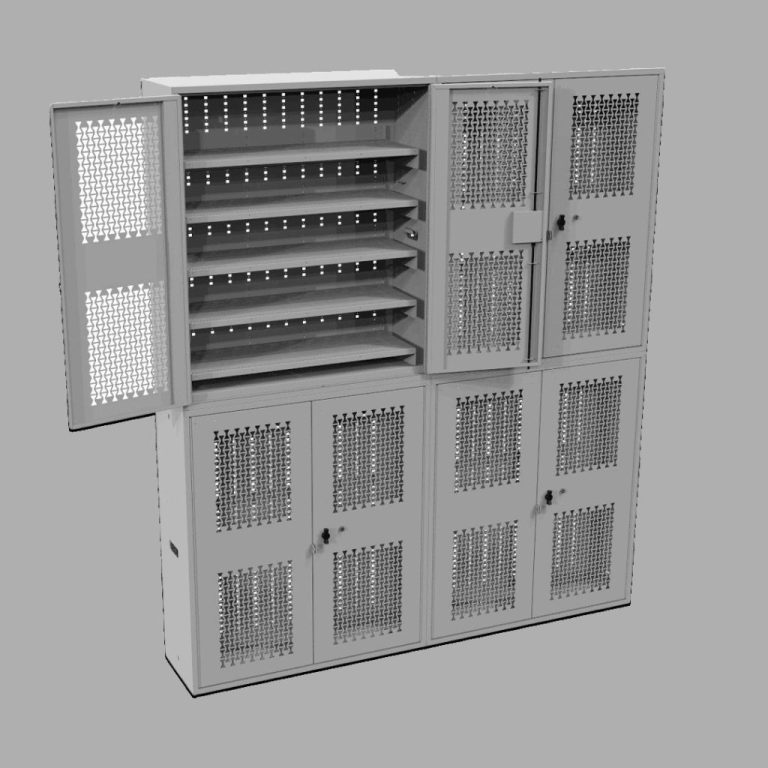 Dasco Installation ServicesField measurement, delivery, on-site assembly, anchoring and door adjustment by our own crews.
 Military TA-50 Gear LockersVentilated heavy-gauge gear lockers for TA-50 issue, readiness centers and armories.
Shop Online at MaterialHandling-USA.com
Need storage and facility products you can buy online today? Our e-commerce store carries shelving, safety and facility supplies with published pricing.
Ready to Replace That Locker Run?
Send us your corridor dimensions and what each opening has to hold. We will quote the lockers, trim, locking, accessible units and installation — and tell you honestly whether Elite or Excalibur is the right call for your building.