
Hospital Staff Lockers: Nurse, Scrub & Clinic Locker Systems
Steel lockers for nurses, physicians, techs and lab staff, from antimicrobial-finish wardrobe lockers in staff change rooms to small box lockers by the nurse station. Compare tiers, finishes, ventilation and accessible units, shop common sizes online, or send your staffing plan for a free layout and quote.
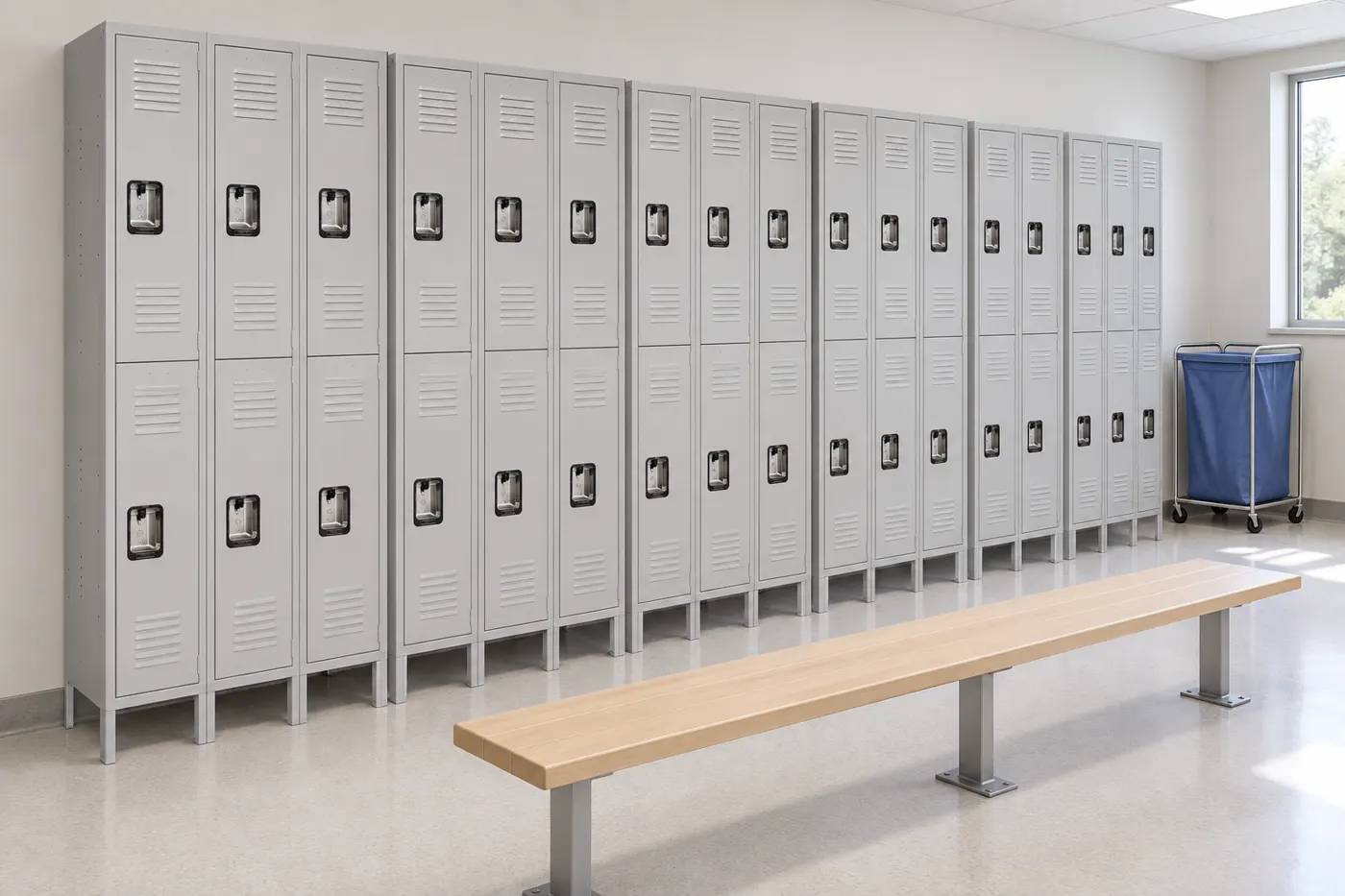
Antimicrobial
Silver-ion powder coat option
5%
Accessible lockers (ADA min.)
1–6 Tiers
Wardrobe to box lockers
Free Layout
By unit, shift and room
Shop Hospital Staff Lockers by Type
Prices are current online prices for the lowest-priced one-wide locker in each style. Single-tier for staff change rooms, double-tier for unit break rooms, box lockers for personal items by the nurse station. Lyon antimicrobial healthcare lockers, wider units and more colors are in each category. Freight is quoted by destination; some common sizes are in stock at select manufacturers, subject to confirmation.


What Hospital Staff Lockers Need to Do
A hospital runs around the clock, and every shift brings street clothes, bags, phones, lunches and coats into a building where clinical areas are no place for them. Hospital staff lockers give nurses, physicians, therapists, techs, environmental services and lab staff one secure, assigned or shared spot to change, store personal items and get back to the floor quickly.
Health facility planning guidance treats staff change areas as the place where staff change into work clothing, store their street clothing and keep personal property secure. Where employees must wear protective clothing, OSHA 29 CFR 1910.141(e) also calls for change rooms with separate storage for street clothes. Lockers are how most facilities meet both needs.
This page is part of our employee lockers guide. Below we cover the locker types hospitals use, antimicrobial finishes, cleanability, ventilation, placement around nursing units, day-use versus assigned lockers, accessible units and how many to plan for.
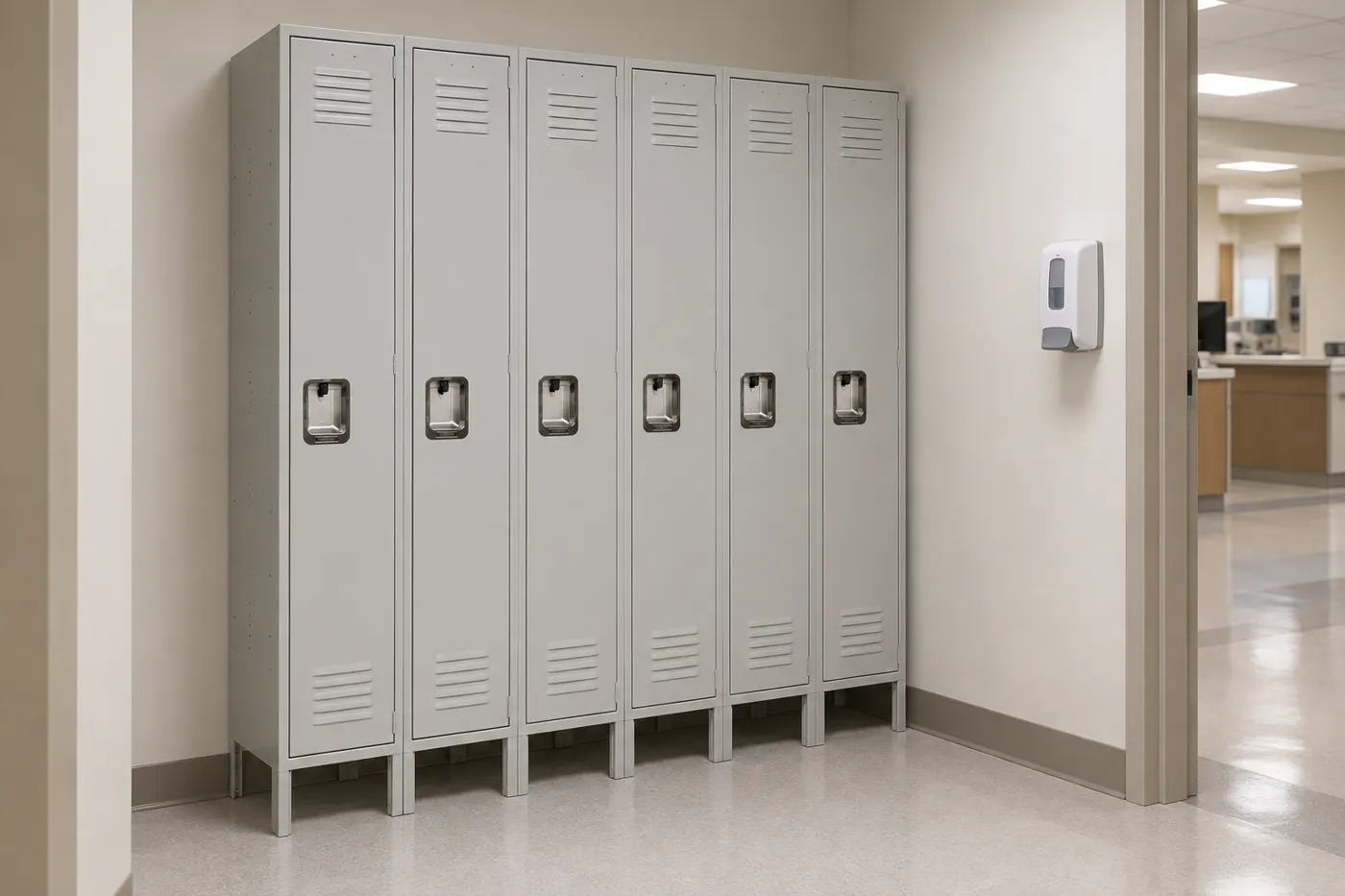
Steel lockers here, electronic lockers there
This guide covers steel staff lockers with padlocks, built-in combination or key locks. If you need badge, PIN or app-controlled day-use lockers with an access log, see our smart locker systems page, which covers electronic hospital locker systems in depth.
Types of Hospital Lockers by Department
Most hospitals use more than one locker type. The decision comes down to what each group stores and whether they change clothes on site. These are the configurations we quote most for healthcare, all built from the steel locker lines in our catalog.


Antimicrobial Hospital Lockers: What the Finish Does

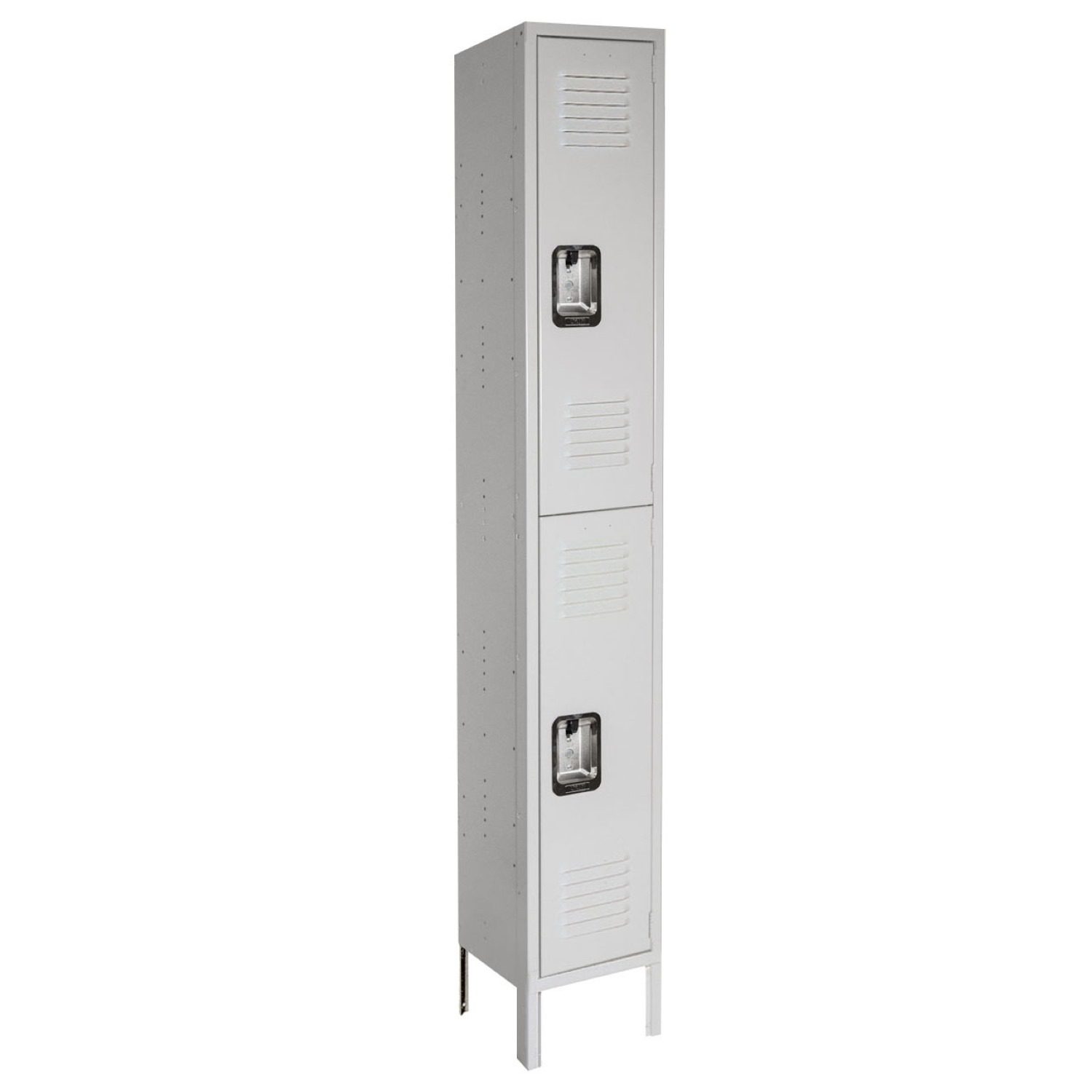
Lyon builds a line of antimicrobial healthcare lockers with a silver-ion powder coat. According to Lyon, moisture on the surface triggers a controlled release of silver ions, which inhibits bacterial growth on the locker surface and helps resist mold and bacteria colonizing corners, seams and hidden surfaces behind and under the locker. Lyon says the antimicrobial compound is built into the powder coat itself rather than applied as a separate top layer, and recommends these lockers for healthcare, food processing and educational facilities.
The Lyon antimicrobial single-tier locker is listed with 16-gauge one-piece doors, 24-gauge body parts, lapped and welded door frame corners, 6″-wide door louvers, 6″ legs, and a shelf, coat rod and three single-prong hooks in each opening, in Monorail Gray. Our catalog lists Lyon antimicrobial single-tier lockers in 15″ and 18″ widths and double-tier lockers 12″ wide, 12″ or 18″ deep, all 78″ tall.
What an antimicrobial finish is not
An antimicrobial powder coat protects the locker surface itself. It is not a substitute for your facility’s cleaning and disinfection protocol or infection prevention program, and we make no health claims beyond the manufacturer’s published description. Ask your infection prevention team which finishes and cleaning products they approve before you specify.
| Feature | Standard steel locker | Antimicrobial healthcare locker (Lyon) |
|---|---|---|
| Finish | Powder coat | Powder coat with silver-ion antimicrobial additive |
| Surface protection | Cleanable steel surface | Inhibits bacterial growth on the locker surface between cleanings (Lyon) |
| Construction | 16-ga doors, 24-ga body (Lyon standard) | 16-ga one-piece doors, 24-ga body, welded door frame corners |
| Colors | Wide color range | Monorail Gray listed; other colors by request per Lyon |
| Interior (single tier) | Shelf, coat rod or hooks | Shelf, coat rod and three single-prong hooks |
| Typical use | General staff areas | Hospitals, clinics, nursing homes, food processing |
Summarized from Lyon’s antimicrobial healthcare locker sell sheet, Lyon’s knowledge hub article on silver-ion antimicrobial powder coat, Lyon’s 1T HC 3W product page and our WooCommerce listings. We confirm current specifications for your exact model on every quote.
Cleanability, Ventilation and Quiet Operation
Even without an antimicrobial finish, the details of a steel locker decide how easy it is for environmental services to keep clean, and how pleasant it is for staff to use at 3 a.m.
- Sloping tops stop staff from piling bags and boxes on the bank and keep dust from collecting where nobody wipes. Lyon’s healthcare locker literature pairs antimicrobial lockers with sloping tops.
- Closed bases or legs. Legs (6″ on most units) let floor machines clean underneath; a closed base or curb removes the gap entirely. Choose one approach per room and stick with it.
- Recessed handles sit flush with the door, so there is less to snag scrubs on and fewer crevices to wipe. Both Lyon and Tennsco use recessed handles on standard lockers.
- Louvered or perforated doors move air through damp clothing and shoes; solid doors look cleaner and are easier to wipe. Ventilated box lockers suit lunches and gym bags.
- End panels and fillers close the exposed sides and gaps where dust and lost items collect.
- Quiet hardware. Tennsco lists rubber bumpers, door stiffeners and cushioned locking channels that cut the clanging of doors — worth having near patient rooms and call rooms.
Plan the room around the lockers, too. Leave space between benches and locker fronts so carts and floor scrubbers can pass, keep laundry hampers for used scrubs at the exit side of the change room, and keep clean scrub dispensing away from the hamper.
Mark each locker with a number plate rather than tape or paper labels that peel and trap dirt. If staff rotate frequently, built-in combination locks with a manager control key are easier to reset between users than collecting padlocks. Our locker specifications page covers gauges, latches and lock options in detail.

Where to Put Lockers in a Hospital
Placement matters as much as the locker itself. A bank that is a long walk from the unit gets ignored, and bags end up under the nurse station. Think about where each group starts and ends its shift.
| Location | Best locker type | Why |
|---|---|---|
| Central staff change rooms | Single-tier wardrobe lockers | Staff change into scrubs once and walk to their unit |
| Nursing unit staff lounge / break room | Double-tier or box lockers | Personal items stay close to the floor during a 12-hour shift |
| Nurse station alcove | Small box lockers | Phone, keys and wallet for float, agency and student staff |
| Outside labs and pharmacy | Box or double-tier lockers | Bags and outerwear stay out of controlled spaces |
| Physician lounge / call rooms | Single-tier lockers | Overnight call staff store a change of clothes |
| Staff entrance | Box lockers or shared banks | Quick drop for contractors, volunteers and visiting staff |
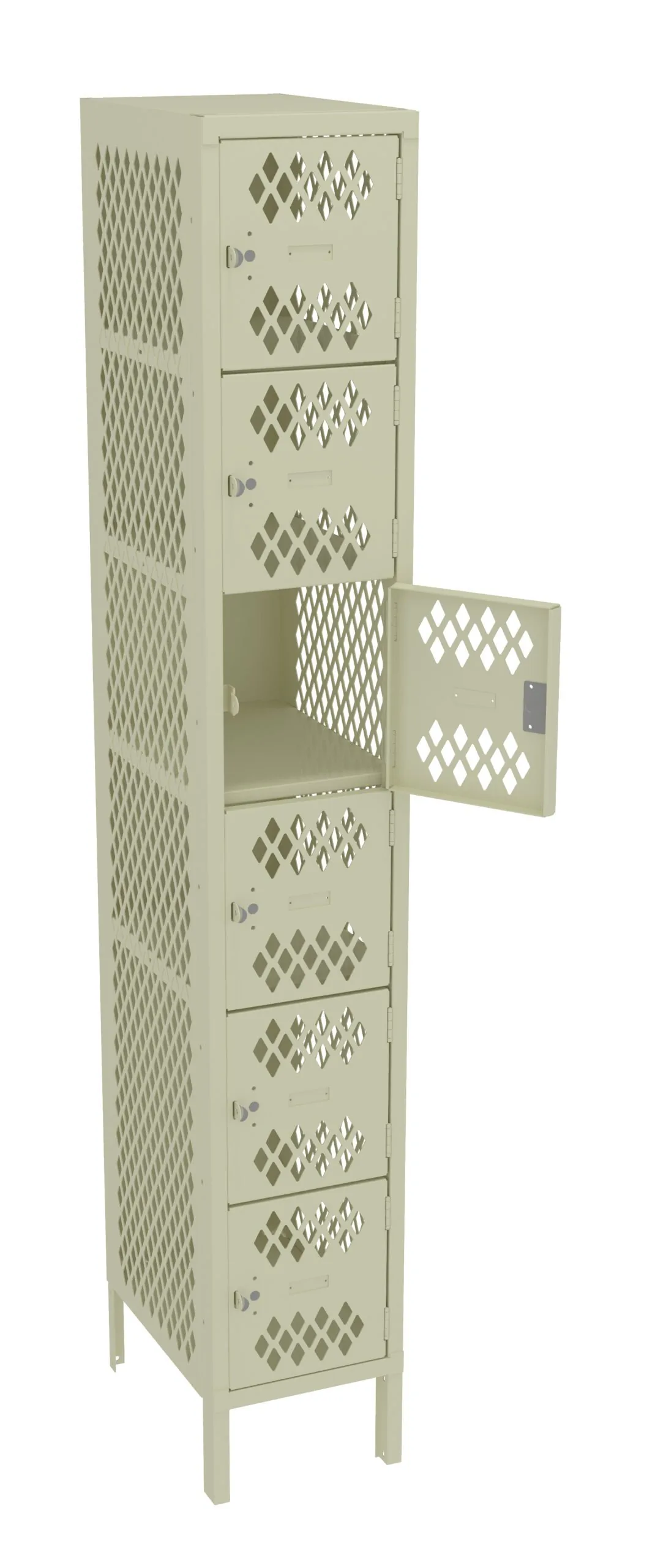
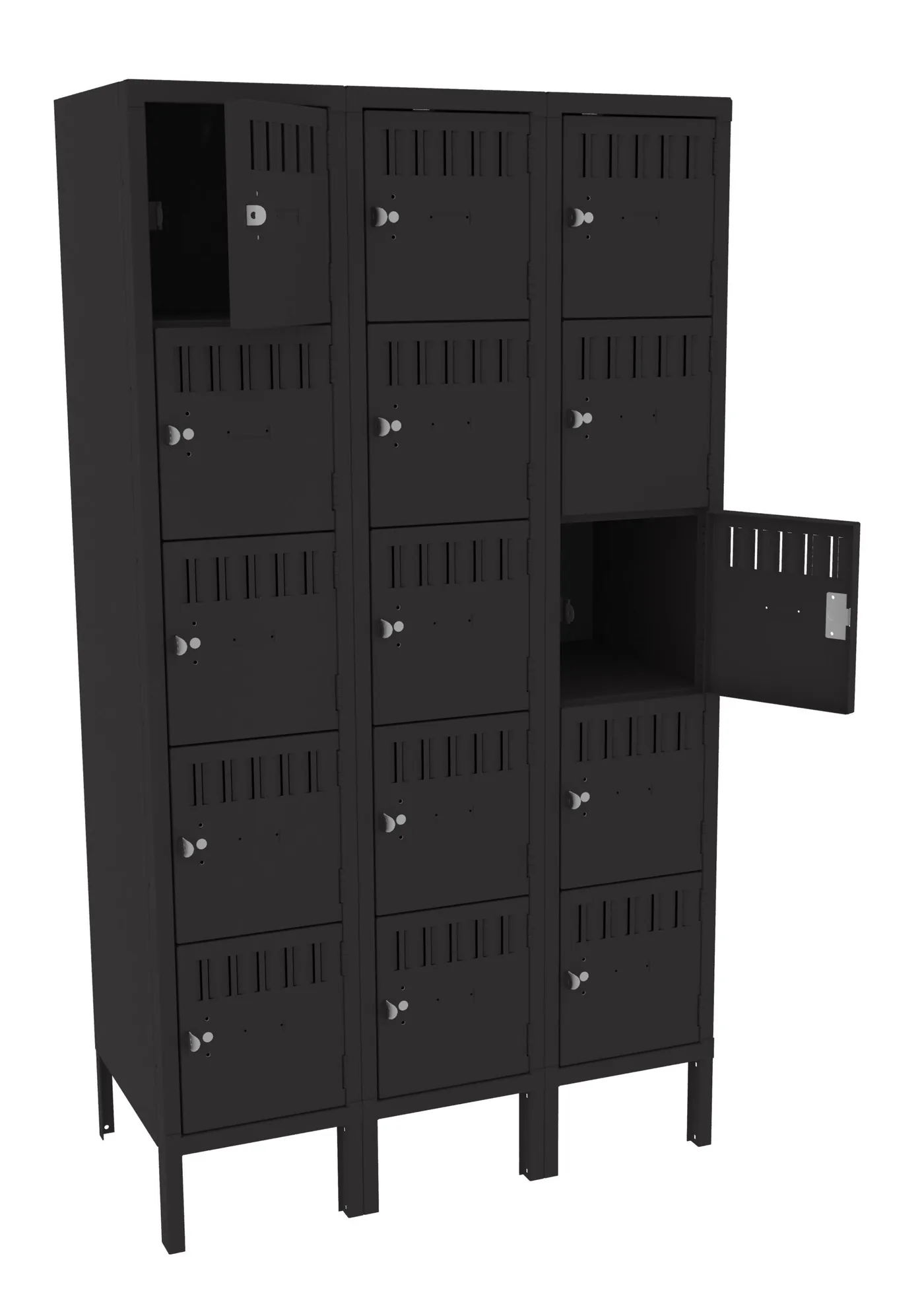
Box lockers by the nurse station. A short bank of five- or six-tier box lockers fits on a few feet of wall in a staff-only alcove or break room. Each person gets a lockable spot for a phone, wallet, keys or a small bag without walking back to the main change room during a break.
Box lockers are covered in detail on our box lockers page. For shared lockers that assign themselves per shift with a badge tap, see smart locker systems.
Day-Use vs. Assigned Lockers for Hospital Staff
Assigned lockers give every staff member a permanent locker. Day-use (shared) lockers are claimed at the start of a shift and released at the end. Many hospitals use both.
| Assigned lockers | Day-use / shared lockers | |
|---|---|---|
| Who | Full-time core staff | Per-diem, agency, float, students, rotating residents |
| Count | One per person on the roster | Sized to peak staff on site, not total roster |
| Locks | Padlock, built-in combination or key | User padlock, resettable combination, or electronic |
| Admin | Reassign when people leave | Clear out daily; policy for items left overnight |
| Space | More lockers, more wall | Fewer lockers serve more people |
Steel lockers handle both models: a resettable built-in combination lock or a staff-supplied padlock works well for shared lockers when you have a simple daily clear-out rule. If you need automatic assignment, an audit trail or remote release, that is where electronic smart lockers come in.
Accessible (ADA) Hospital Lockers
Under the 2010 ADA Standards for Accessible Design (section 225.2.1), where lockers are provided, at least 5 percent, and no fewer than one, of each type must be accessible. Accessible lockers need a clear floor space in front, operable parts within the accessible reach range (section 308, generally 15″ to 48″ above the floor) and hardware that works without tight grasping or twisting (section 811 and 309).
In practice that means a dedicated accessible locker in each locker type and each room — for example a 48″-tall ADA unit at the end of a bank, or the lower openings of a multi-tier locker with the shelf and hooks in reach. Lyon lists an ADA-compliant locker 12″ × 18″ × 48-5/8″ with an accessibility symbol on the door.
Bench and clear floor space planning are covered in our locker room design service. Your architect or code official has the final word on your project.

How Many Hospital Lockers Do You Need?
Count lockers by the busiest overlap, not by beds. At shift change the outgoing and incoming staff are both in the building, so a unit with 20 staff on each 12-hour shift needs room for at least 40 people’s belongings if lockers are shared, and every rostered person if lockers are assigned.
- Assigned: one locker per rostered staff member in that area, plus 10–15% for growth and new hires (a common planning allowance, not a code number).
- Shared/day-use: peak on-site headcount at shift overlap, plus agency, students and contractors.
- Accessible: at least 5% of each locker type, minimum one per type (2010 ADA Standards 225.2.1).
- Wall length: 12″-wide columns give 12 single-tier, 24 double-tier or 60–72 box lockers per 12 feet of wall.
| Usable wall | Single-tier (12″) | Double-tier (12″) | Six-tier box (12″) |
|---|---|---|---|
| 6 ft | 6 | 12 | 36 |
| 12 ft | 12 | 24 | 72 |
| 24 ft | 24 | 48 | 144 |
| Both sides of a 20 ft aisle | 40 | 80 | 240 |
Nominal 12″ column widths; end panels and fillers add length. 15″ and 18″ widths hold fewer lockers per wall. We confirm counts in your layout.
Planning and Installing Hospital Lockers
Send staffing and rooms
Headcount by unit and shift, who changes on site, and floor plans or photos of the rooms available.
Choose types and finish
We match tiers, widths and depths to what each group stores and flag where an antimicrobial finish or clear doors make sense.
Layout and quote
A layout with counts, accessible units, locks, numbering, bases, sloped tops, end panels and benches, plus freight and installation.
Deliver and install
Delivery and optional installation scheduled around clinical operations and infection control requirements for work in occupied areas.
Tennsco strongly recommends anchoring all lockers to the floor or wall, and multi-wide banks are bolted together. In occupied hospitals, installers typically follow the facility’s construction and infection control rules for dust, noise and working hours, so share those with us early. Some common sizes are in stock at select manufacturers, subject to confirmation; we confirm availability and lead time when we quote.
Not sure where to start? Browse the full lockers directory or the employee lockers hub, then send us your staffing plan.
Hospital Staff Locker FAQs
What kind of lockers do hospitals use for staff?
Are antimicrobial lockers worth it for a hospital?
What size locker do nurses need?
How many accessible lockers does a hospital need?
Should hospital lockers have legs or a closed base?
Do you sell electronic hospital locker systems?
Do you have hospital lockers in stock?
Plan Your Hospital Staff Lockers
Send your staffing plan and rooms, and we will recommend locker types and a layout with a free quote.