
Construction Site Lockers for Crews
Steel crew lockers for site trailers, modular field offices, change rooms and contractor yards — a locked place for street clothes, boots, PPE, phones and lunch. Choose rugged welded lockers that survive moves between jobs, and get a free layout and quote.
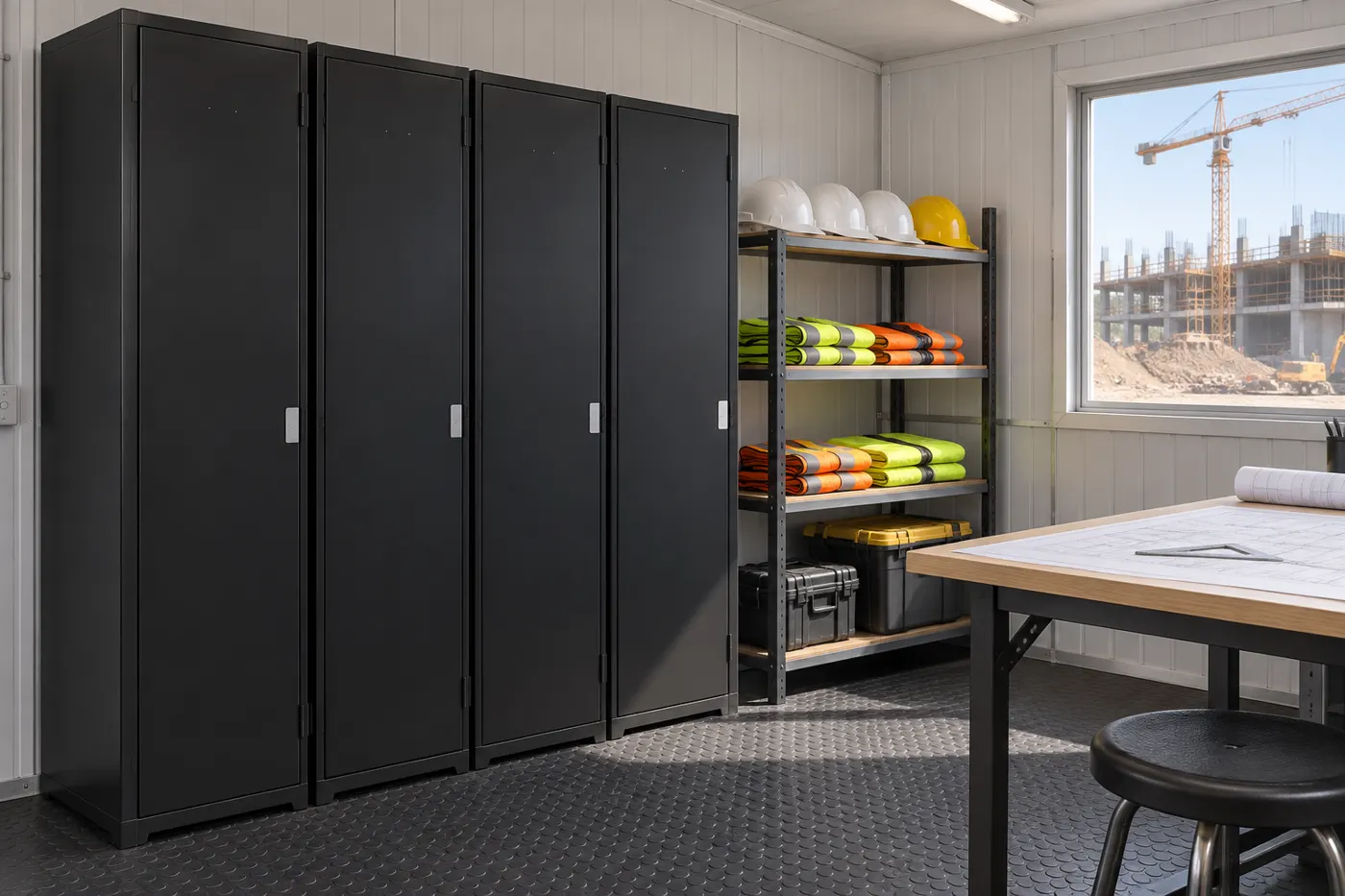
Crew Lockers
Personal storage, not tool boxes
Welded
Heavy-duty options for site moves
1926.51
Change room rules where they apply
Free Layout
Trailer, office or yard
Shop Crew Lockers by Tier
For site trailers, field offices and change rooms: single-tier for crews who change or store rain gear, double-tier for a bag and jacket on a short wall, and box lockers at the gate for phones and keys. Prices are current online prices for the lowest-priced one-wide locker in each style; heavy-duty welded lockers are quoted. Freight to site is quoted by destination; some common sizes are in stock at select manufacturers, subject to confirmation.


Need a full plan? See how to plan your order or request a free layout and quote.
Construction Site Lockers: Crew Lockers vs. Jobsite Boxes
Search for construction site lockers and you will see two very different products. One is the jobsite box — a heavy steel chest or site vault that locks up power tools and gang boxes on the deck. The other is the crew locker: a steel employee locker in the site trailer, field office or change room where each worker keeps street clothes, boots, rain gear, a phone and lunch while on shift.
This page is about crew lockers. We supply steel employee lockers from Lyon and Tennsco, the modular buildings that can house a change room, and wire-mesh security cages for shared tool storage. We do not sell jobsite tool boxes or rent locker trailers, so we will not pretend otherwise.
For the full range of locker types and sizes, start at our employee lockers guide; for plants and distribution centers see warehouse and industrial lockers.

Why crews need lockers at all
Without lockers, personal belongings end up in truck cabs, on trailer floors or in a pile by the door. That means theft, lost phones and keys, clutter in egress paths, and wet gear that never dries. A locked steel locker per person also makes it easy to keep street clothes away from dirty work clothing at the end of the day.
Where Construction Crew Lockers Go
Most crew lockers end up in one of four places. Each one shapes the size, tier and construction you should choose.
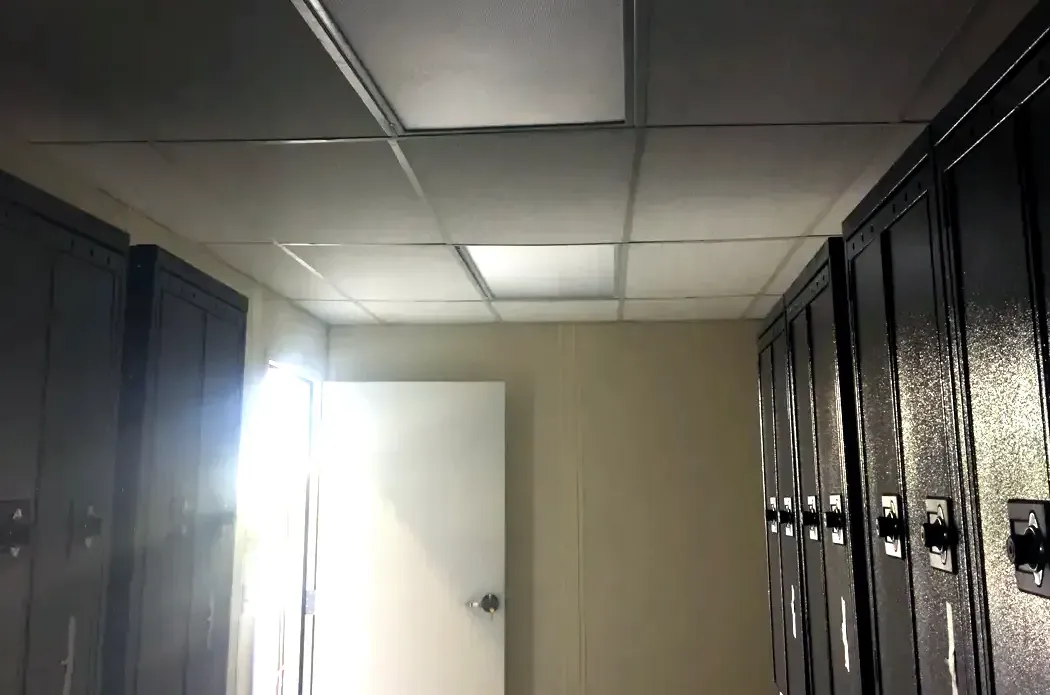
A change room on a long job. When a project or shutdown runs for months, a modular building set up as a change room gives crews benches, lockers, lighting and ventilation in one enclosure. Our Stork modular change room case study shows one: a factory-built room lined with full-height steel lockers, installed inside an industrial facility in Salt Lake City with storage above.
See modular buildings for room sizes and options, or modular offices if the same structure also needs a superintendent’s office.
Which Locker Type Fits a Construction Crew?
Pick the tier by the biggest thing each person stores. Construction crews usually carry more than office staff: a hard hat, a hi-vis jacket, rain gear, a hydration pack and a lunch cooler.
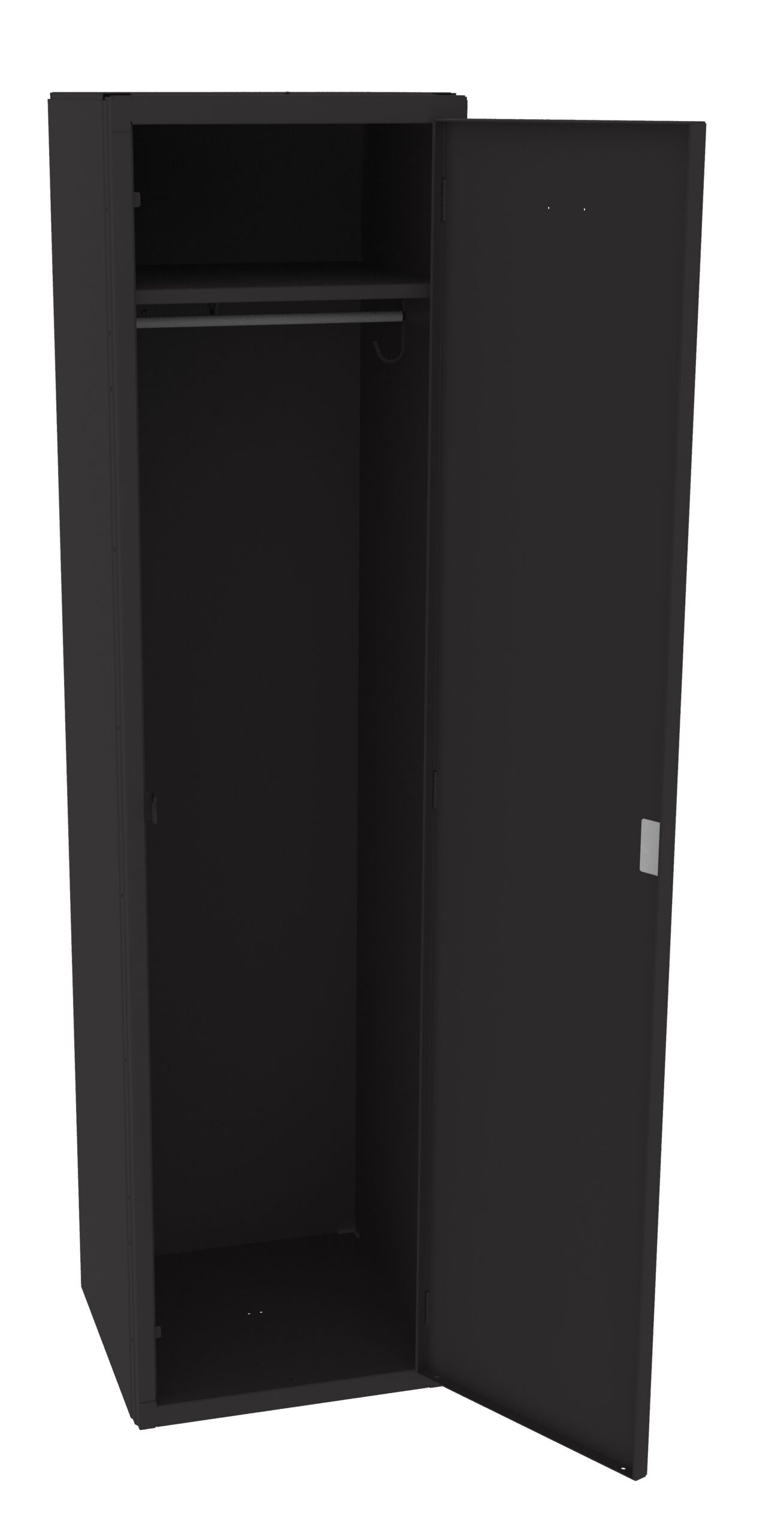

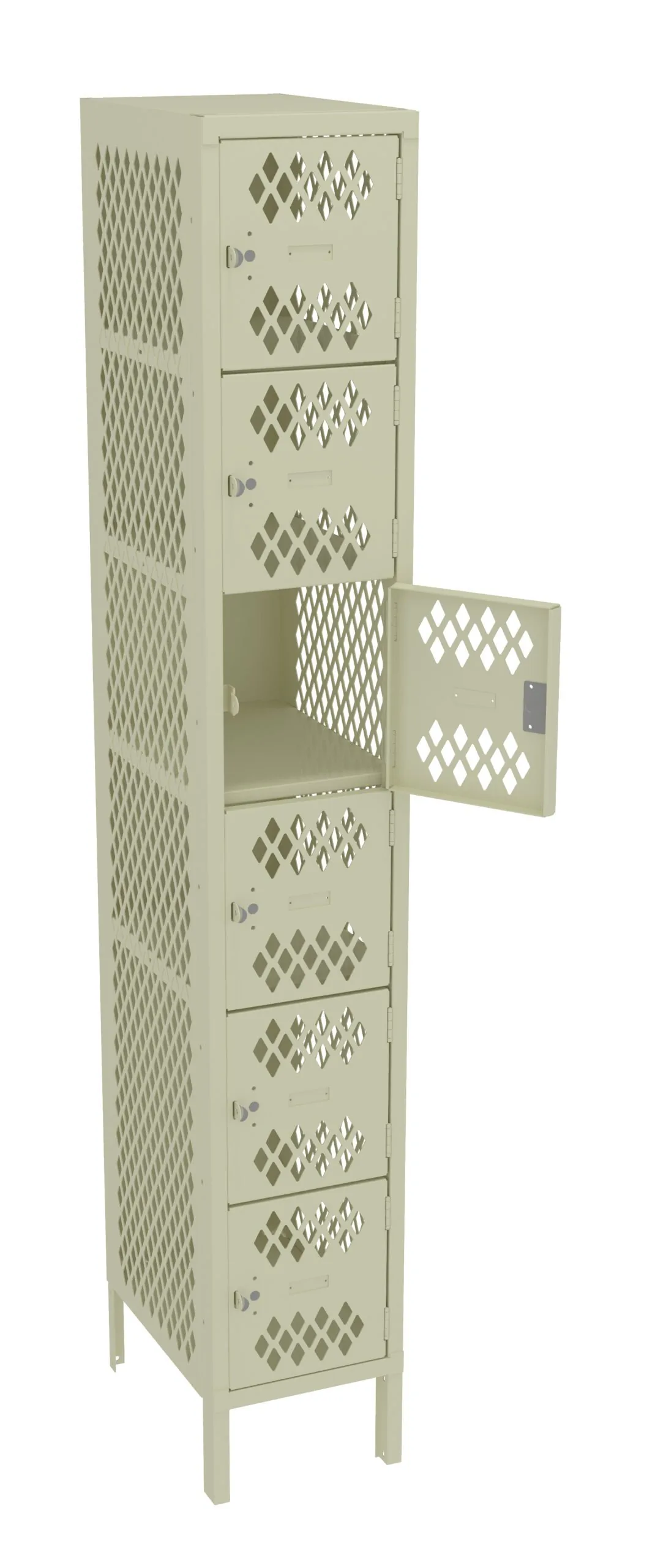
Mixed crews are normal: foremen and trades who change clothes get single-tier lockers, laborers who arrive dressed for work share a double-tier bank, and a short run of box lockers covers visitors and inspectors. Exact published widths, depths and heights are in our locker specifications guide.
Rugged, Welded Lockers for Jobsite Conditions
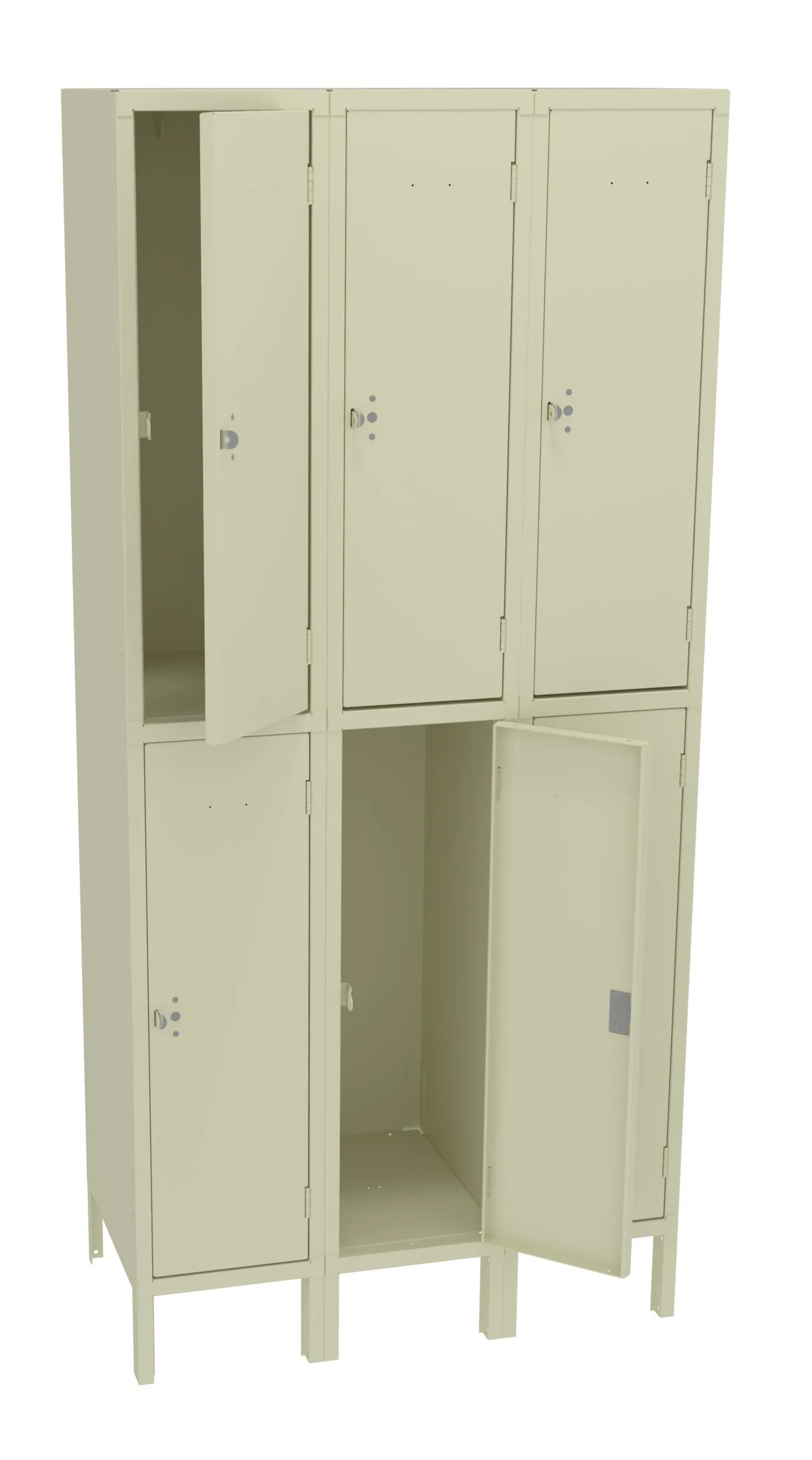
Site trailers and change rooms are hard on lockers: muddy boots kick doors shut, trailers rock when they are towed, and lockers get loaded on a truck at the end of every job. That is where welded heavy-duty construction earns its price.
| What to look for | Why it matters on a jobsite | Published example |
|---|---|---|
| Welded body and frame | Holds square when the bank is moved between sites instead of racking like a knock-down unit | Tennsco heavy-duty listings: welded body, frame and shelf, shipped ready to use |
| 14-gauge doors | Resists dents from boots, tools and carts | Lyon heavy-duty spec and Tennsco heavy-duty listings: 14-gauge doors; 16-gauge welded body (Lyon: 18-gauge backs) |
| Simple latch | Fewer parts to jam with grit and dust | Tennsco heavy-duty: slot and lock hasp with no moving parts, for user padlocks |
| Hooks and coat rod | Wet gear hangs to dry instead of lying in a pile | Tennsco heavy-duty double tier: coat rods and hooks |
| Legs or closed base | Legs lift lockers off a wet trailer floor; a base keeps mud out underneath | Most lines offer 6″ legs or no-leg units for a base |
From Tennsco heavy-duty locker listings in our catalog and Lyon’s Heavy Duty Locker Specifications. Heavy-duty lines are typically built to order; we confirm the current specification and lead time for your exact model.
Standard or heavy-duty? A standard locker with 16-gauge doors (such as the Lyon lockers in our online shop) is fine for a permanent change room or a contractor’s shop where the bank never moves. For trailers, mobile change rooms and lockers that go from job to job, specify welded heavy-duty lockers.
Ventilation helps where wet rain gear and sweaty work clothes go in at the end of the day. Louvered or perforated doors let gear dry overnight; pair them with an exhaust fan in an enclosed change room.
OSHA Change Room Rules for Construction Sites
OSHA’s construction sanitation standard, 29 CFR 1926.51(i), works like the general industry rule: whenever employees are required by a particular standard to wear protective clothing because of the possibility of contamination with toxic materials, change rooms equipped with storage facilities for street clothes and separate storage facilities for the protective clothing must be provided.
- Lead work: the construction lead standard, 1926.62, requires clean change areas for employees exposed above the PEL, equipped with separate storage for protective work clothing and street clothes that prevents cross-contamination.
- What it means for lockers: two storage places per worker — typically a locker for street clothes on the clean side and a separate locker or storage for work clothing on the dirty side.
- Most sites: ordinary new construction without toxic exposure has no locker requirement, but crews still need a secure place for belongings — and many owners and GCs require it in their site rules.
- Check with your safety lead: the governing standard and exposure assessment set the requirement; we size the lockers and room to it.
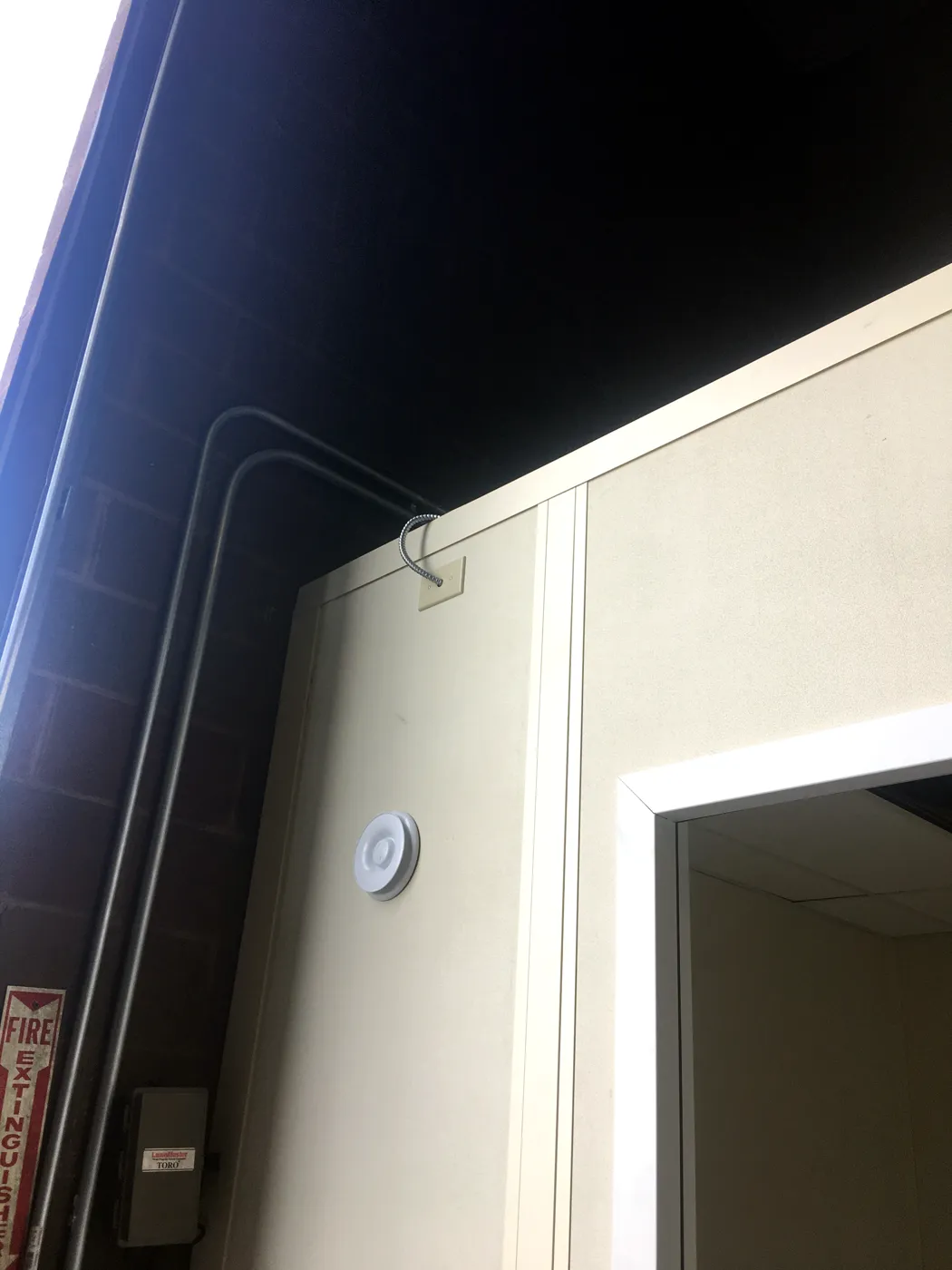
Power, light and air. An enclosed change room needs lighting, outlets and ventilation like any occupied room. In our Stork project the modular change room was fed with surface conduit and fitted with an exhaust fan, and the lockers went in after the electrical tie-in.
For a temporary building on an open site, plan the electrical feed and anchoring with your site logistics plan. Our team can quote the room and lockers together.
Regulatory text summarized from OSHA 29 CFR 1926.51 and 1926.62 at osha.gov. This is a planning summary, not legal advice.
Installing Lockers in Trailers and Moving Them Between Jobs

Tennsco strongly recommends anchoring all lockers to the floor or wall, and on a jobsite that is not optional. A 72″-tall locker in a trailer can tip when the trailer is towed, when someone climbs it, or when one loaded locker sits at the end of an empty bank.
Bolt multi-wide units together, anchor the bank into wall studs or the floor structure, and keep the bank clear of the trailer door swing and egress path. When the job ends, unbolt, empty and move the bank as a unit — welded lockers handle this far better than knock-down units, which loosen with every move.
- Measure the trailer interior, including wall height under the ceiling, window sills and heater locations; a 78″ locker with legs will not fit under every trailer ceiling.
- Keep doors clear of egress: open locker doors and people changing must not block the exit.
- Use legs or a base to keep lockers off wet floors and mats.
- Number and key lockers before crews arrive; built-in combination locks avoid lost padlock keys on high-turnover jobs.
- Plan the next site: order the same width units so banks recombine on the next job.
Tool Storage: Use a Security Cage, Not a Clothing Locker
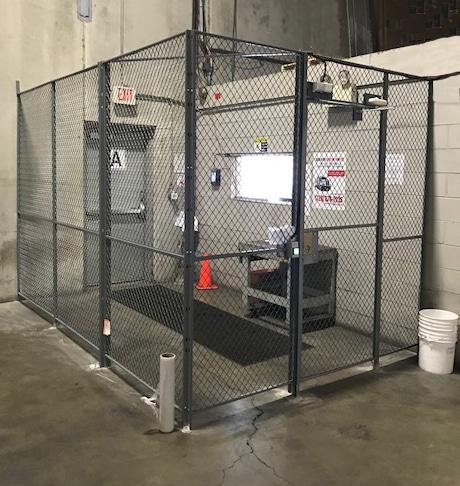
Employee lockers are for personal belongings. Shared tools, cords, small equipment and materials need a different answer. In a contractor shop, warehouse or a large site building, a wire-mesh security cage creates a lockable tool crib with a door, room for shelving and visibility for the foreman.
For the rest of your shop and yard — cantilever rack for long material, pallet rack, shelving and staging — see our construction company storage ideas. Need a staffed gate on site? We also supply guard booths.
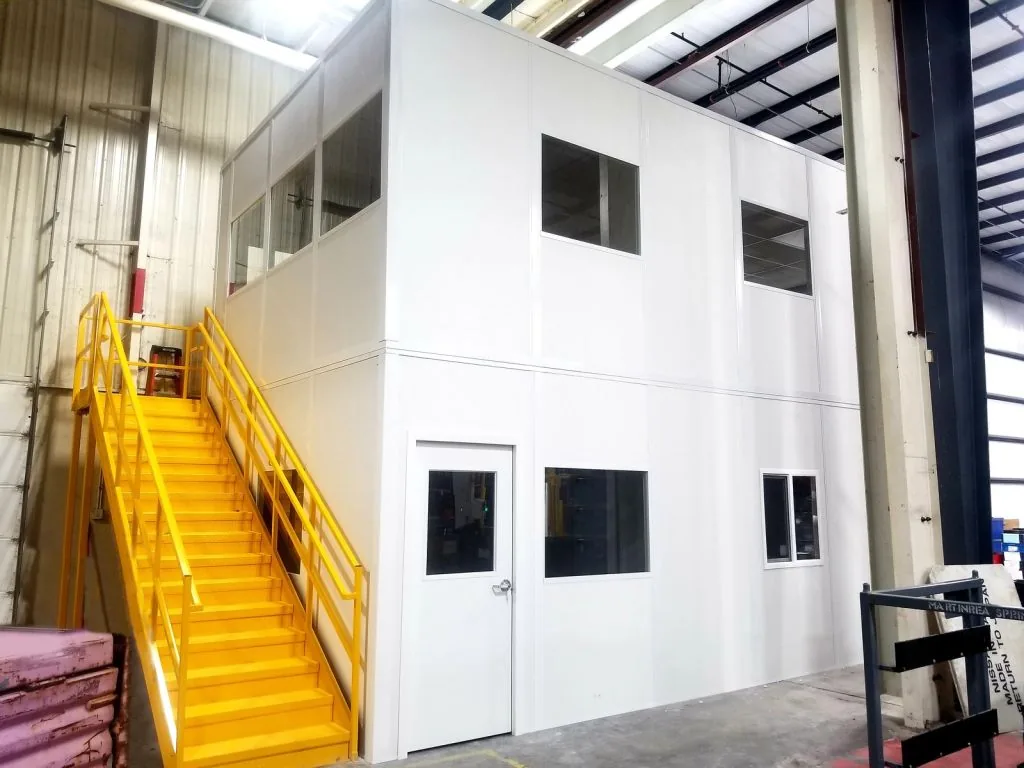
Field office plus lockers. On longer projects the superintendent’s office, plan room and crew lockers often share one building. A modular office can be configured with a separate locker or change area, and it can be disassembled and relocated when the project closes.
Ask us to quote the building, the lockers and the benches as one package so dimensions, power and anchoring line up.
Planning Construction Site Lockers
Count the largest crew on site at one time, including subcontractors who will use the room, then add spares for turnover. Decide whether lockers are assigned for the whole job or shared by shift, which sets the lock type. Measure each wall you can use and note doors, windows, heaters and electrical panels.
Send crew size and location
Peak headcount, trailer or room dimensions, photos, and how long the job runs.
Choose lockers
Tier, width and depth for the gear your crews carry; standard or welded heavy-duty.
Layout and quote
Unit counts, locks, numbering, benches, bases and anchoring, plus freight to site.
Deliver and install
Freight to the jobsite or yard, with optional installation and anchoring.
A catalog listing is not a stock guarantee. Some common sizes are in stock at select manufacturers, subject to confirmation, and we confirm availability and lead time on every quote. For permanent locker rooms at your shop, our locker room design team plans benches, aisles and ADA lockers; in Utah see Utah lockers; and every locker category is in our lockers directory.
Shop Steel Crew Lockers Online
Order common single-tier, double-tier and box locker sizes online for your field office or shop, or request a quote for heavy-duty lockers, freight to site and installation.


Construction Site Locker FAQs
What are construction site lockers?
What size locker does a construction worker need?
Can steel lockers go in a construction trailer?
Does OSHA require lockers on construction sites?
Are heavy-duty lockers worth it for jobsites?
Where should tools be stored on a jobsite?
Do you rent locker trailers?
Do you have construction lockers in stock?
Plan Lockers for Your Crew
Send your crew size and trailer or room dimensions, and we will recommend lockers with a free quote.