
Athletic Lockers: Gym, Sports & Team Locker Room Lockers
Ventilated gym lockers, heavy-duty welded lockers, open-front team lockers with security boxes and footlocker seats, and wood athletic lockers for showcase rooms. Compare styles by sport and room, size them for real gear, and get a free locker room layout and quote.
Ventilated
Perforated doors and sides
Open-Front
Team lockers with seats
18-28 in
Team locker widths
Free Layout
Locker room planning
Shop Ventilated Gym Lockers
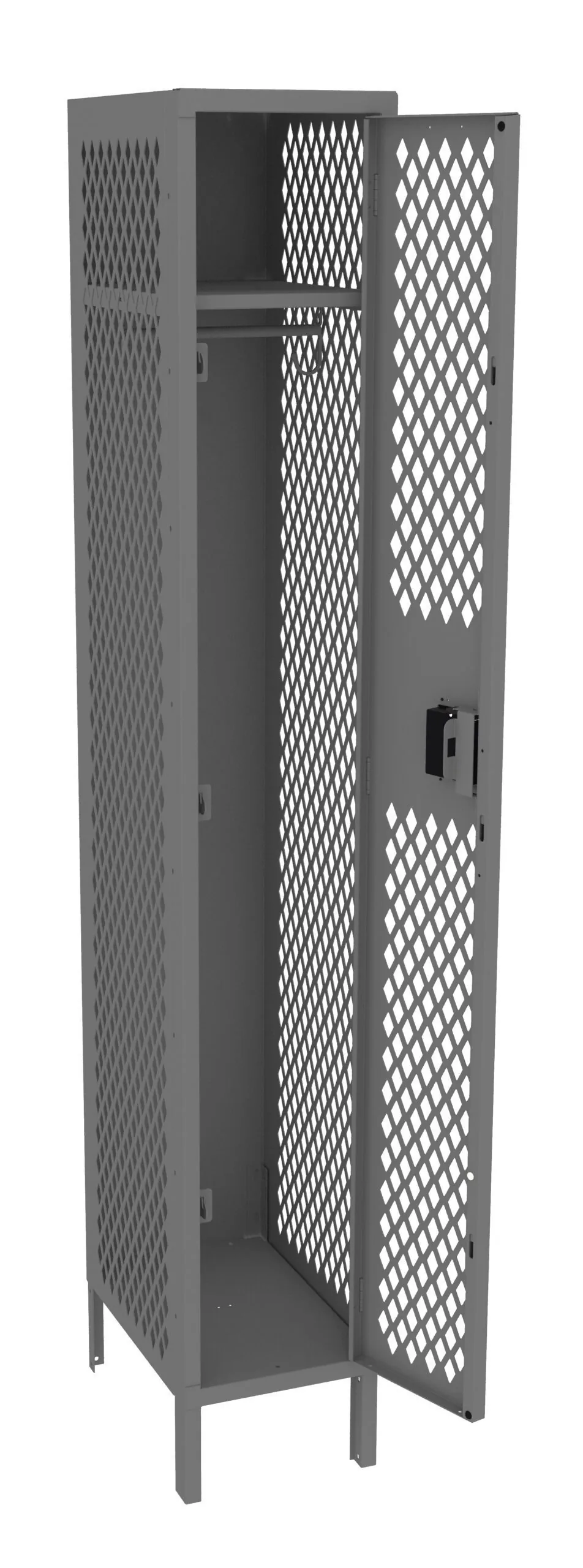
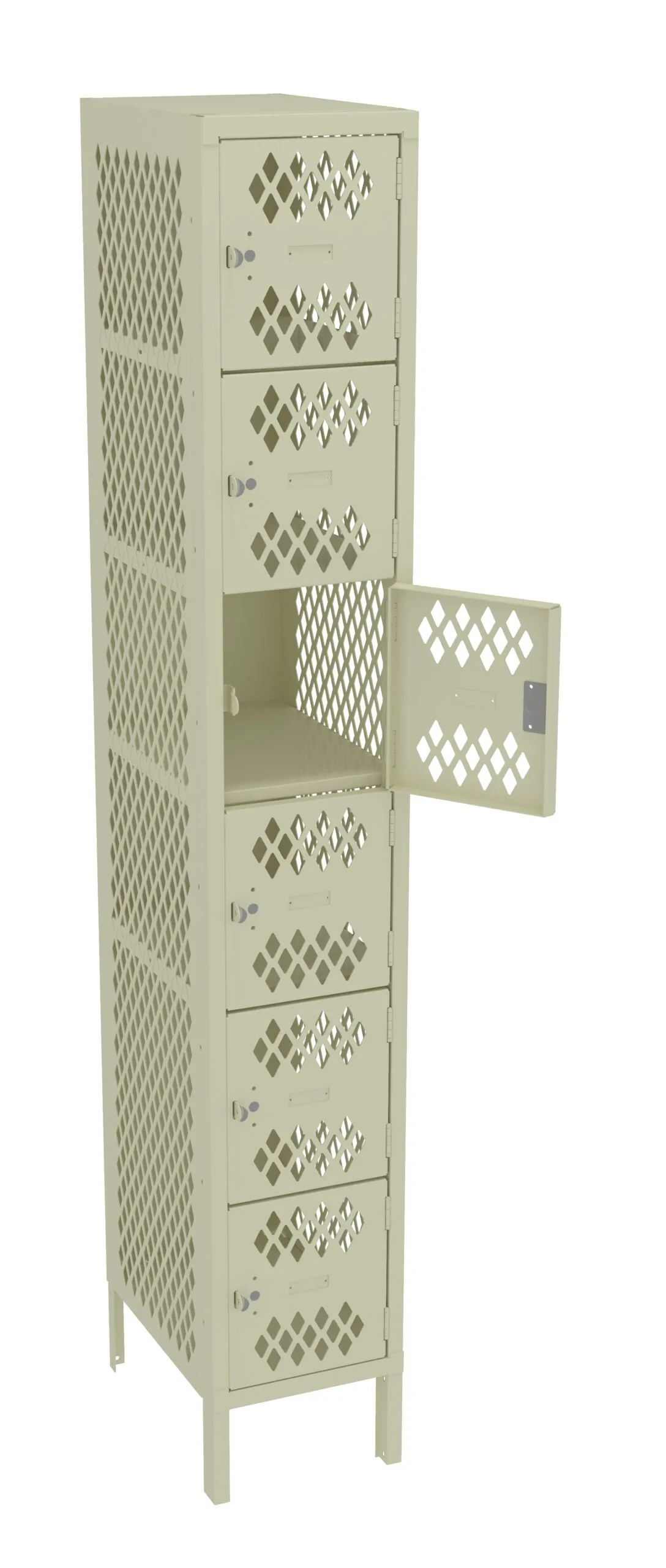
Diamond-perforated Tennsco ventilated lockers in single-tier, double-tier and six-tier box styles, sold online with legs in five colors. For open-front team lockers, wood lockers or a full locker room, request a quote.


What Makes an Athletic Locker Different?
An office locker holds a coat and a bag. An athletic locker holds wet practice gear, cleats, pads, a helmet and a uniform, and it gets used hard twice a day. That changes three things: airflow, so sweaty gear dries instead of growing mildew and odor; strength, because athletes kick, slam and hang on lockers; and size, because football shoulder pads and hockey bags do not fit a 12″ locker.
The words overlap. Most buyers say gym lockers for ventilated steel lockers in PE rooms and fitness centers, sports lockers or team lockers for wide open-front stalls in varsity and college rooms, and athletic lockers for both. This guide covers all of them and helps you pick by sport, room and budget.

Material Handling USA designs, supplies and installs locker rooms for high schools, colleges, recreation centers, fitness clubs and public safety teams. We size lockers to the gear, lay out aisles and benches, and quote lockers from Penco, Lyon, Tennsco, Hallowell and other lines. Every style we carry is on our lockers page.
Planning hallway lockers too? See school lockers. Running a fitness club with day-use, keyless lockers? Our gym smart lockers page covers PIN, RFID and app access. For equipment rooms, ball cages and uniform storage, see athletic storage solutions.
Types of Athletic and Gym Lockers

| Style | Best for | Typical widths | Security |
|---|---|---|---|
| Standard louvered steel | Hallways, staff, light PE use | 12–15″ | Full door, padlock or built-in lock |
| Ventilated steel (perforated) | PE rooms, fitness centers, pools | 12–18″ | Full door; contents visible through perforations |
| Heavy-duty welded / ventilated | High-traffic team and public rooms | 12–24″ | Thicker doors, multi-point latch |
| Open-front team (stadium) locker | Football, hockey, varsity and college | 18–28″ | Lockable security box and footlocker |
| Wood or laminate athletic locker | Showcase rooms, clubs, pro facilities | Built to order | Lockable upper or seat box |
| Smart / electronic locker | Day-use fitness clubs | Varies | PIN, RFID or app; see gym smart lockers |
Ventilated Gym Lockers: Louvers vs. Perforations
Standard lockers breathe through a few louvers stamped at the top and bottom of the door. That is fine for a dry coat, but not for a sweaty practice uniform left overnight. Ventilated lockers punch the door, and often the sides, with diamond-shaped or rectangular perforations so air can pass through the whole bank.
Heavy-duty ventilated lockers add strength to the airflow: Lyon’s heavy-duty ventilated specification calls for a 16-gauge body, one-piece 14-gauge doors and diamond perforations in the sides and doors, with solid sides available. The Tennsco ventilated lockers in our shop use diamond-perforated doors and sides and come in single-tier, double-tier and six-tier box versions.

- Pick perforated sides as well as doors where gear is stored wet; door-only vents leave dead air at the back.
- Remember visibility. Perforations let people see what is inside, which helps staff spot food and wet towels but means valuables belong in a solid security box or a separate box locker.
- Room airflow still matters. Ventilated lockers move air through the bank; the locker room’s exhaust has to carry the moisture out. Coordinate with your mechanical engineer on new rooms.
- Finish: powder-coated steel is standard; for pools and wet decks ask about corrosion-resistant finishes, plastic or phenolic options before you order.
Heavy-duty welded lockers for rough use
Heavy-duty welded lockers are the right call where lockers get abused: public recreation centers, high school team rooms and fire and police stations. Penco’s Patriot line, for example, uses a welded body with 16-gauge tops, bottoms, sides and shelves, an 18-gauge back and 14-gauge doors, with louvers standard and diamond-perforated ventilation as an option.
Welded lockers arrive assembled and square, so they also install faster and stay aligned. Compare gauges and options on our heavy-duty lockers guide, or see the full range on our Penco lockers page.
Open-Front Team Lockers With Security Box and Footlocker
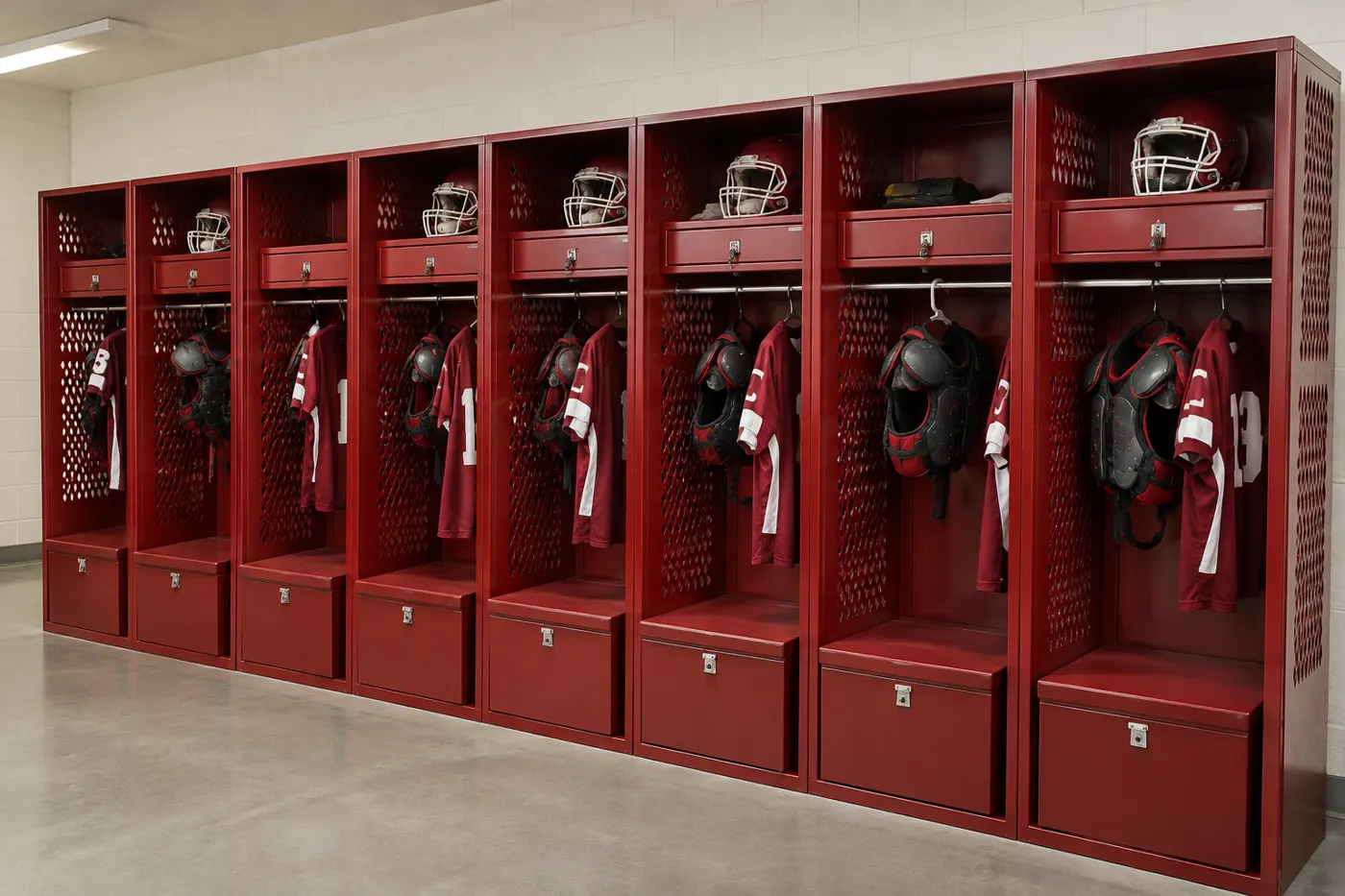
Open-front team lockers (often called stadium lockers or sports lockers) drop the main door entirely. Each athlete gets a wide stall with a top shelf for a helmet, a coat rod for uniforms, hooks for pads, and perforated sides so everything dries. Valuables go in a small lockable box under the shelf, and a lockable footlocker at the bottom doubles as a seat.
Sizing and finishing team lockers
Sizing team lockers. Width follows the sport. Basketball, baseball and soccer usually fit an 18″ or 24″ stall; football and hockey, with shoulder pads, helmets and big bags, push toward 24″ to 28″ wide and 21″ to 24″ deep. Depth also sets how far the stall projects into the room, so aisle width and locker size have to be planned together.
Name plates and colors. Most team locker lines take name or number plates on the shelf or frame, and powder-coat colors can match school or team colors. Lead time for custom colors is longer than for stock colors; we confirm it on every quote.
Wood and Laminate Athletic Lockers
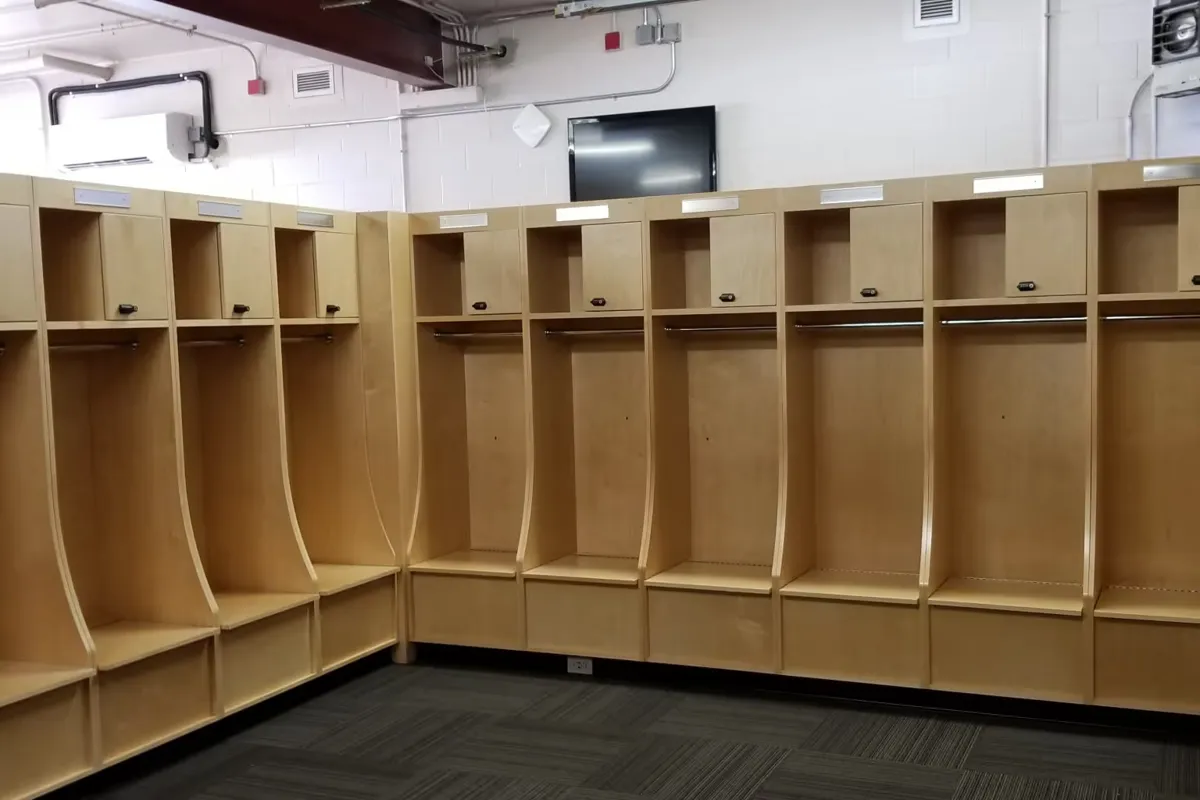
When a program wants a showcase room for recruiting, wood or laminate lockers replace rows of steel. They do not dent like thin sheet steel or rust in humid rooms, and finishes can carry school colors and wood tones that match benches and trim.
We quote ICI Olympian wood athletic lockers, built in Henry County, Tennessee, in open team, enclosed and seat-box styles with curved or straight side panels and nameplate rails. Hallowell also builds wood open-front sport lockers with a footlocker seat and upper security box. Details and planning tips for Olympian rooms are on our athletic storage page.
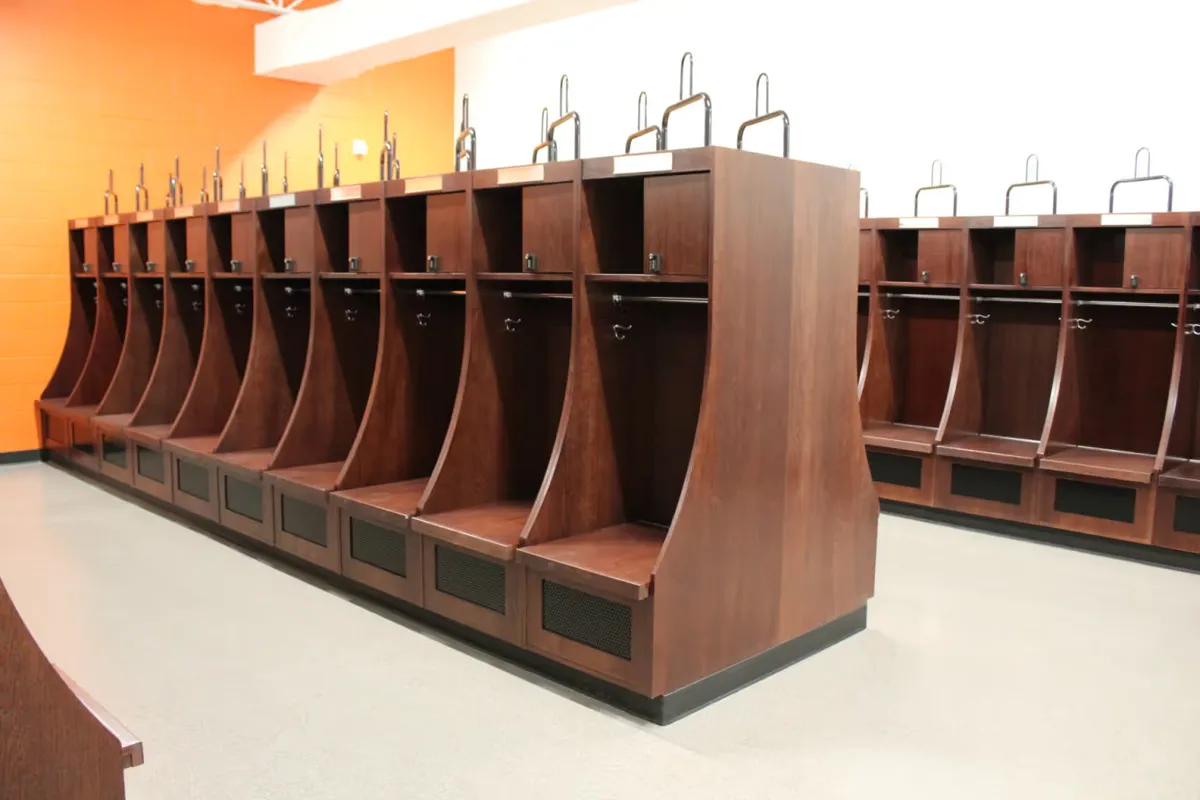

Ventilated seat boxes. The lower compartment of a wood team locker usually has a lift-up or drop front with perforated panels, so shoes and pads can air out while staying locked. Open upper sections let jerseys hang and dry.
When steel still wins. Wood and laminate cost more per athlete and are made to order. For PE rooms, public pools and rooms that get hosed down, ventilated or heavy-duty steel is usually the better value. Many schools put wood in the varsity room and steel everywhere else.
Choosing Lockers by Sport and Room
| Sport or room | What players store | Recommended locker | Notes |
|---|---|---|---|
| Football | Helmet, shoulder pads, cleats, practice and game uniforms | Open-front team locker 24–28″ wide, 21–24″ deep, footlocker seat | Widest stalls in the building |
| Hockey | Large gear bag, skates, sticks, pads | Open-front 24″+ wide with footlocker; stick racks nearby | Gear must dry between sessions |
| Basketball, volleyball, soccer | Shoes, uniforms, bags | Open-front 18–24″ or ventilated single-tier | Name plates popular |
| Baseball and softball | Bats, gloves, cleats, helmets | Open-front with security box; bat storage separate | Upper box for phones and keys |
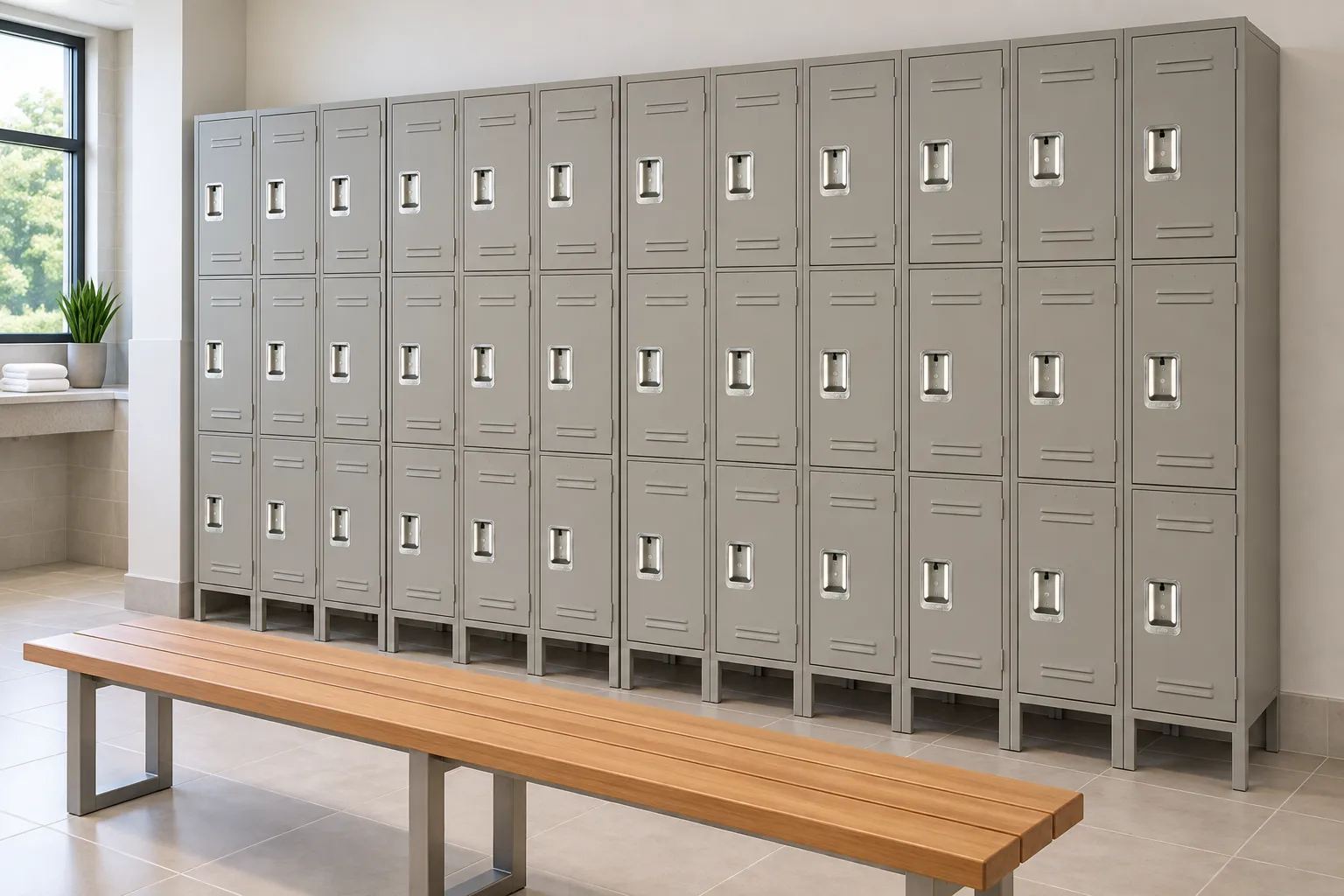
| PE classes | Street clothes and shoes for one period | Ventilated box or triple-tier lockers | Most students per foot; see triple-tier |
| Fitness clubs and rec centers | Day-use bags, phones | Ventilated or wood double-tier, or smart lockers | Gym smart lockers for keyless use |
| Coaches’ offices | Clothes, bags, personal items | Single-tier or wardrobe lockers | Single-tier guide |
Locks and security in team rooms and gyms
Athletic rooms are where most locker theft happens, because doors are open during practice and the room is shared with visiting teams and camps. Plan security by what is stored, not by the locker alone:
- Valuables in a solid compartment. On open-front lockers, phones, wallets and keys go in the lockable security box; on ventilated lockers, add a bank of small solid box lockers near the entrance.
- Padlock hasps or built-in locks. Most steel athletic lockers accept a padlock on the handle hasp; built-in combination or keyed locks give coaches a control key and fewer cut locks.
- Keyless day use. Fitness clubs and rec centers that rent lockers by the visit usually move to electronic locks; see gym smart lockers.
- Lock the room, too. A locked team room door between sessions protects open-front stalls better than any single locker lock.
Public safety teams have similar needs: wet turnout gear and duty uniforms. See our police and fire station lockers guide. For team gear that should stay visible and ventilated, wire mesh lockers are another option.
Athletic Locker Applications
Planning an Athletic Locker Room
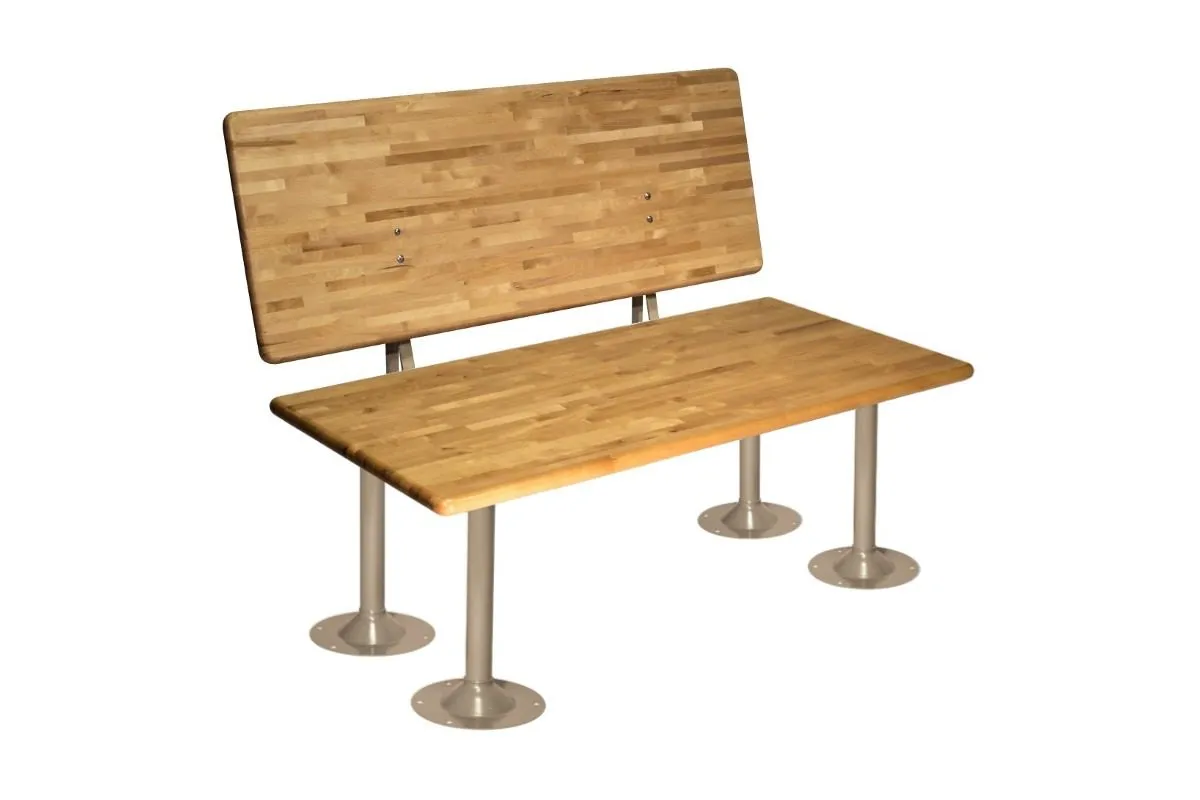
Accessibility. The 2010 ADA Standards require at least 5 percent of lockers, and no fewer than one of each type, to be accessible (225.2.1), and the advisory treats lockers designed for sports equipment as their own type. Each locker room also needs an accessible bench: 42″ long minimum, 20–24″ deep, 17–19″ high, with back support or set against a wall (section 903). See our ADA lockers guide.
Benches and aisles. Footlocker seats can replace benches in team rooms; PE rooms still need benches between rows. Our locker room benches guide covers bench types and spacing, and locker room design covers full layouts, aisle widths and accessible routes.
- Count athletes per room at peak, including visiting teams and summer camps, then add spares.
- Anchor every bank to the wall or floor and bolt units together; open-front lockers with footlockers carry a lot of weight up front.
- Plan the base. Many team lockers sit on a raised base built by the contractor; wood lockers often ship fully assembled and need a clear delivery path.
- Finish the room: sloped tops, end panels, fillers and number plates are on our locker accessories page; sizes are on locker specifications.
Send the room
Room dimensions or plans, sport and athlete counts, and photos of the current room. Call (800) 326-4403.
Pick the styles
We match ventilated, heavy-duty, open-front or wood lockers to each team and room.
Layout and quote
You get a layout with locker counts, seats or benches, accessible units, bases and freight.
Deliver and install
Lockers ship from the manufacturer; we install around your season and school calendar.
Buying in Utah? See our Utah lockers page. Browse brands on our Tennsco lockers, Lyon lockers and Hallowell lockers pages. Catalog listings are not a stock guarantee; we confirm lead time and freight on every quote.
Get a free quote
Tell us what you are storing, the room size and your timeline. A project specialist will follow up with layout options and pricing. Prefer to talk? Call (800) 326-4403.
Athletic Locker FAQs
What is the difference between gym lockers and regular lockers?
What are open-front athletic lockers?
How wide should football lockers be?
Are wood athletic lockers worth it?
What lockers work best for PE classes?
How many athletic lockers must be ADA accessible?
Can I buy gym lockers online?
Do you install athletic lockers?
Plan Your Athletic Locker Room
Send your room size and team counts for a free locker layout and quote.