
Cage Door Access Control for an IT Depot: Unisys Case Study
How an IT field-services depot keeps laptops, spare parts and data-bearing devices behind welded wire mesh with a controlled, auditable door — and still turns technician kits around the same day.
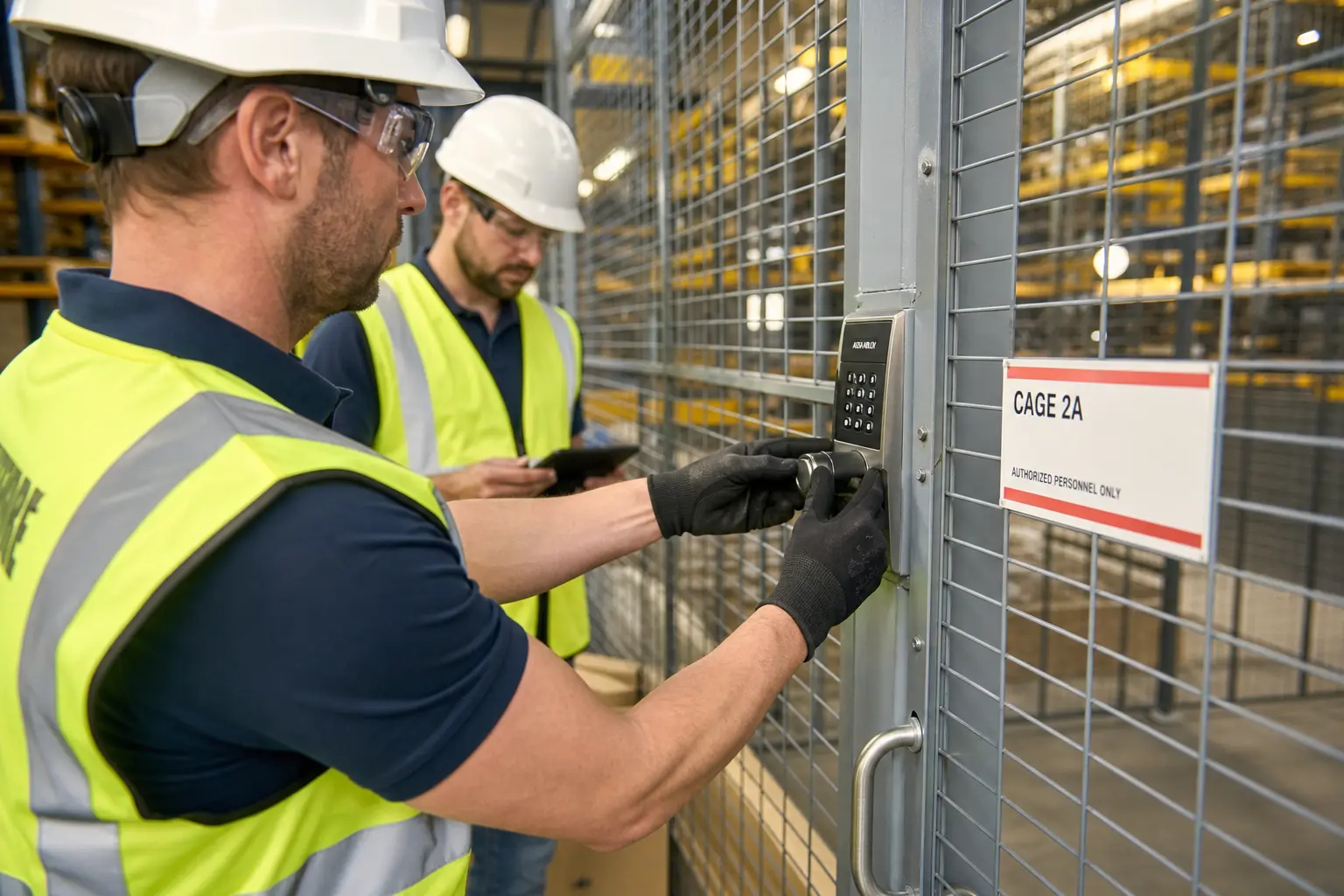
2016–19
Years Material Handling USA supplied security cage and wire mesh partition product to Unisys
IT services
Unisys runs field services, depot, staging and parts logistics for enterprise clients
Chain of custody
Depot inventory is customer-owned, serialized and often data-bearing
Audit trail
Access control turns a locked door into a record of who entered and when
The project
Unisys is a global information technology company headquartered in Blue Bell, Pennsylvania. Alongside its solutions work it runs field services and device lifecycle operations for enterprise clients — on-site technicians, depot and staging services, and supply-chain parts logistics. Material Handling USA supplied welded wire security cage and partition product to Unisys across three projects between 2016 and 2019.
This page sits under our security cage systems hub and describes a problem class, not one customer’s building: how an IT depot or staging area is enclosed and how the door is controlled. It contains no facility layout, no dimensions, no inventory values and no security detail specific to this customer.
An IT depot is an unusual warehouse. Most of the inventory does not belong to the company holding it. Much of it is serialized down to the individual unit. A meaningful share of it stores data, which means a missing item is not only a financial loss but a reporting problem. And the people who need access — technicians collecting a kit before a site visit — are in a hurry by definition. That combination is why depot operators cage the storage and then spend most of their design effort on the door.
Why IT depots end up behind wire mesh
Density of value. Laptops, handhelds, docking stations, network gear and spare components pack more replacement cost into a pallet position than almost anything else stored in a general warehouse, and they fit in a coat.
Customer-owned inventory. Depot stock is usually held under contract for a client. The obligation is not just to keep it safe but to be able to demonstrate that it was kept safe — a different standard than protecting your own goods.
Data-bearing devices. Returned drives, laptops and phones awaiting sanitization or disposal carry risk long after their resale value has gone. NIST’s media sanitization guidance (SP 800-88) is about the process; the enclosure is what keeps units under control until that process runs.
Serialized accountability. A shortage of a consumable is an inconvenience. A shortage of a serialized asset is an investigation, because someone has to say where a specific unit went.
Mixed traffic. Depots share buildings with receiving, staging, refurbishment and shipping, and often with other tenants or business units. The boundary has to separate functions inside one open floor, which is exactly what mesh partitions do well.

What actually goes behind the mesh
Caging an entire depot is usually the wrong instinct: it slows every transaction to protect items that do not need protecting. The categories that repay a boundary are narrower:
Everything else — packaging, consumables, bulk media, furniture — is usually better left outside the boundary, where it can be handled without opening a controlled door.
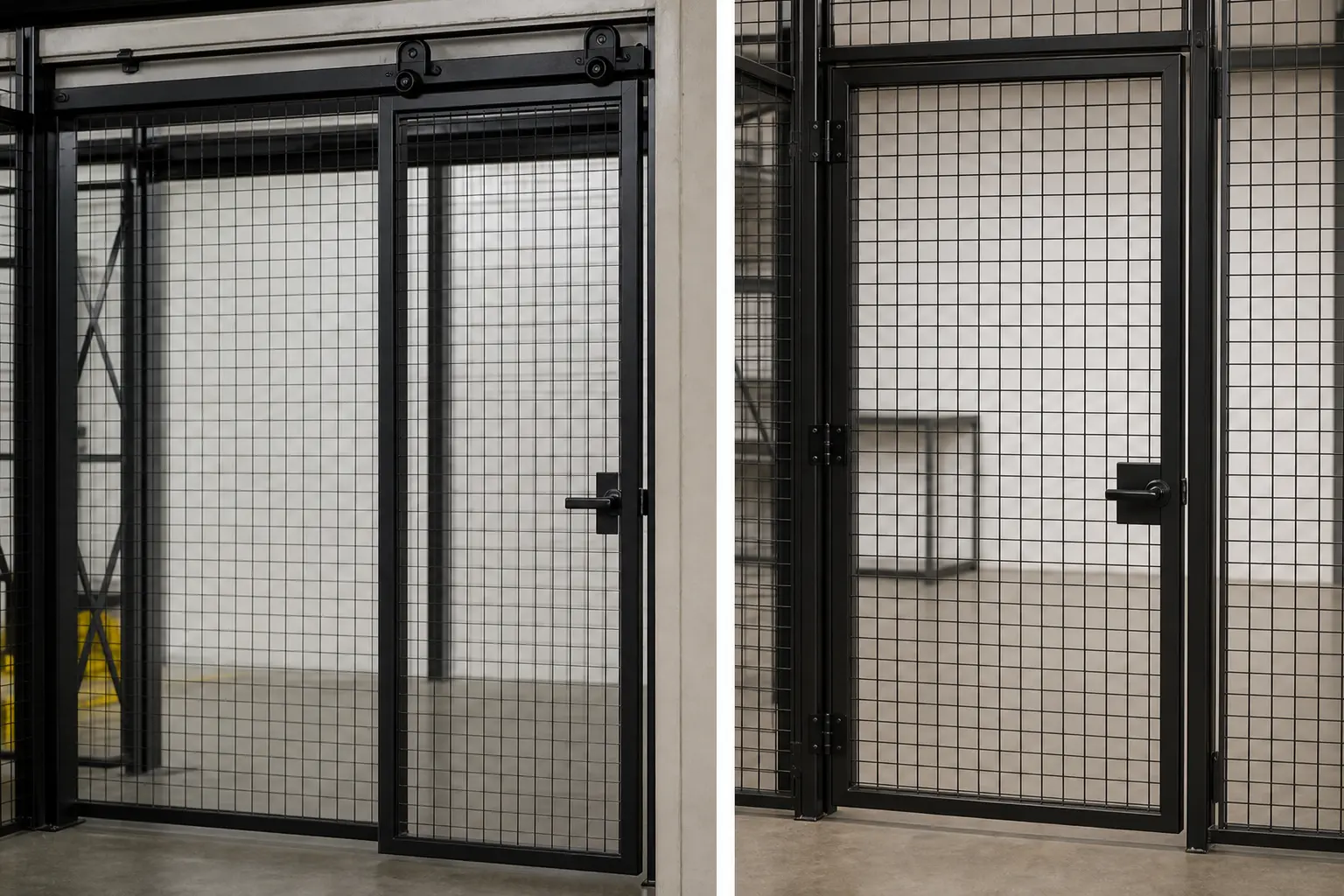
Cage door access control: what the options actually buy you
A wire enclosure is a boundary. The door is the control. Four levels are common on wire mesh enclosures, and the right one depends on how many people need entry and what has to be provable afterwards.
Keyed cylinder. Cheapest and completely adequate where two or three named people enter. Weakness: keys are copied, lent and lost, and there is no record of entry.
Keypad. No credentials to issue, which is why it spreads to twenty users in a month. Codes are shared and rarely changed. Useful for low-risk areas, weak where accountability matters.
Card or mobile credential reader. Individual credentials, instant revocation when someone leaves, and a per-person record of entry. This is the level most depot and contract-storage operations end up at, because it is the first option that produces evidence.
Reader plus door position monitoring. Adds the answer to the question the log otherwise cannot answer: was the door actually closed afterwards? A propped door defeats every credential in the system.
Electrified hardware on a mesh door needs power routed to the frame, so it is planned before panels are ordered rather than retrofitted. Hardware options are compared on our security cage locks and access control and security cage doors pages.
One rule overrides all of it: whatever is fitted must fail in the direction of egress. A person inside the enclosure has to be able to get out without a credential, a code or a key.
Designing the flow, not just the fence
The depots that keep their discipline are the ones where the controlled area sits on the natural path of work. The ones that fail are the ones where the cage is an obstacle between receiving and the bench.
- One defined issue point. Technicians draw from a single window or counter rather than walking the enclosure. Fewer entries means a shorter log and fewer open-door minutes.
- Receiving outside, put-away inside. Deliveries are counted and recorded outside the boundary so an inbound truck never requires the secure area to be opened.
- Separate holds. Quarantined, customer-owned and disposition stock benefit from their own bays inside the enclosure, so a picker cannot reach them by accident.
- A wide opening for palletized movement. Personnel doors do not pass pallets; a sliding or double door sized to the handling equipment prevents the propping habit.
- Visibility preserved. Mesh keeps the area supervised and lit by the building’s own lighting, which a stud wall does not.
- Room to grow. Contract wins change volumes quickly. Bolted panel systems extend; deciding the growth direction early avoids replacing the enclosure.
Specifying a depot enclosure
Depot specification is driven by reach-through and accountability rather than by heavy abuse. The items are small, so mesh opening matters more here than almost anywhere else.
| Decision | Typical depot answer | Why |
|---|---|---|
| Panel type | Welded or woven wire mesh partition panels in a bolted steel frame | Open to light, air and sprinkler discharge, and modifiable as the operation changes |
| Mesh opening | Smaller openings than a general warehouse cage | Devices and components are small enough to pass through a coarse mesh |
| Height | Full height to structure, or partial height with a mesh top | A partial-height enclosure beside racking can be reached over or climbed |
| Doors | Personnel door on the issue path, plus a wide door for pallets | One opening cannot serve a technician and a pallet jack |
| Hardware | Credential reader where entries must be attributable; keyed where two people enter | Access control is chosen from the accountability requirement, not the threat level |
| Internal division | Separate bays for customer-owned, quarantine and disposition stock | Segregation obligations are usually contractual, and mesh divides cheaply |
| Finish | Powder-coated steel | Clean, durable and easy to keep presentable in a client-visited facility |
Mesh, gauge and frame choices are compared on our wire mesh panel options page. Where the requirement is to enclose existing rack bays instead of building a room, see pallet rack security enclosures, and for non-standard shapes and multi-zone builds, custom security cages.
Code and site constraints to check first
A wire enclosure is not a building, but it lives inside one and interacts with several building systems. Depots are frequently in leased multi-tenant space, which adds a landlord to the list.
- Sprinkler coverage and clearance. A mesh top or added shelving changes how water reaches storage below; NFPA 13 and the building’s fire protection design govern. OSHA has addressed the familiar 18-inch clearance to sprinkler deflectors in its interpretation of 29 CFR 1910.159(c)(10).
- Egress. The enclosure must not block a required exit route or door swing, and doors on an egress path must open without special knowledge or effort.
- Fire equipment and panels. Extinguishers, hose stations, electrical panels and disconnects all have required clear access.
- Power for electrified hardware. Readers, strikes and door contacts need a route to the frame and a tie into the building’s access-control system.
- Lease and anchoring limits. In leased space, anchoring into the slab and running conduit usually need landlord approval, and the enclosure may have to be removable.
- Overhead services and seismic anchorage. Lighting, tray, ductwork and sprinkler mains set the achievable height; where local code requires it, anchorage is engineered.
Industry-by-industry compliance notes are collected on our security cage regulations page.
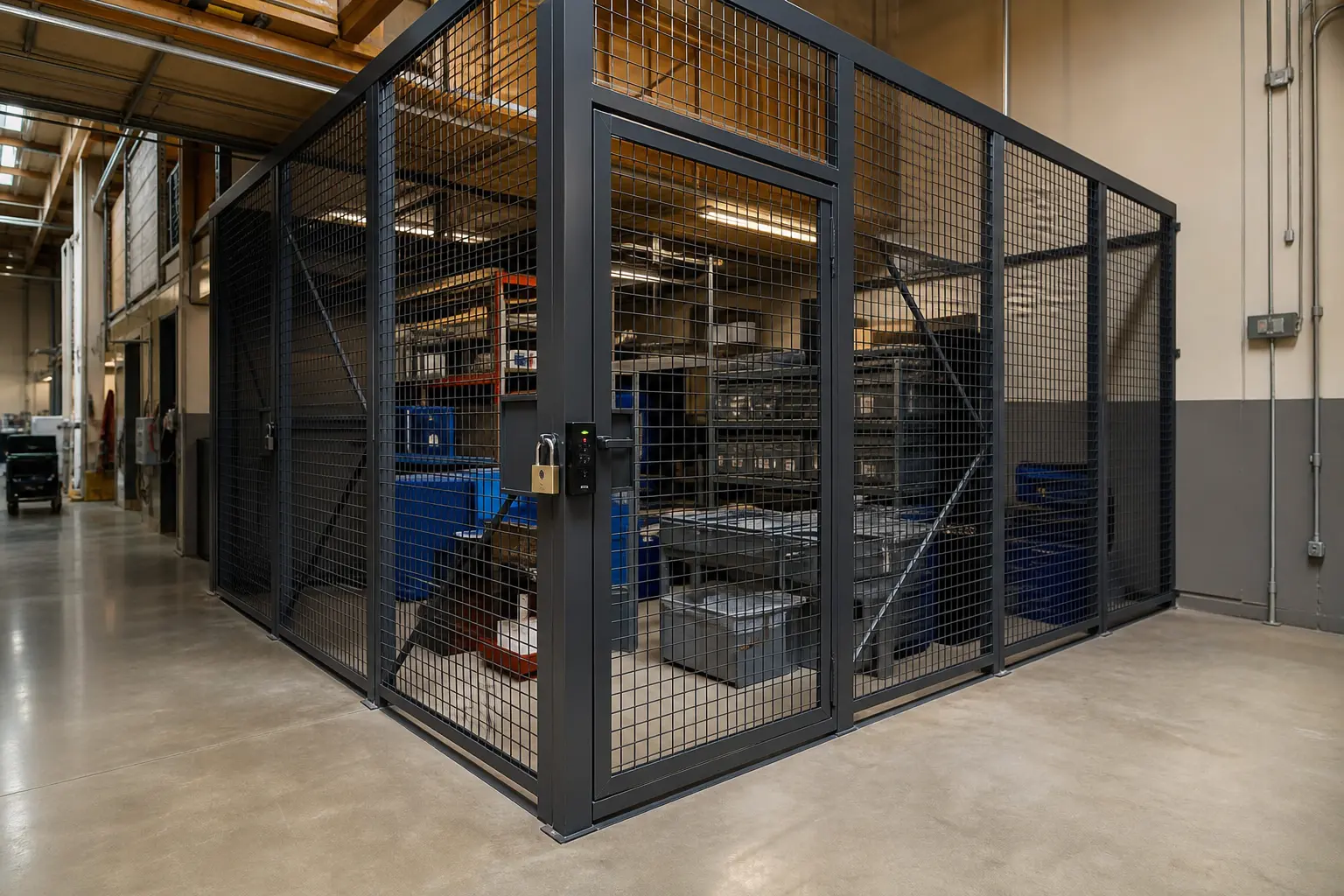
Installation, commissioning and handover
Depots rarely stop shipping, so the build is sequenced around the work rather than the other way around.
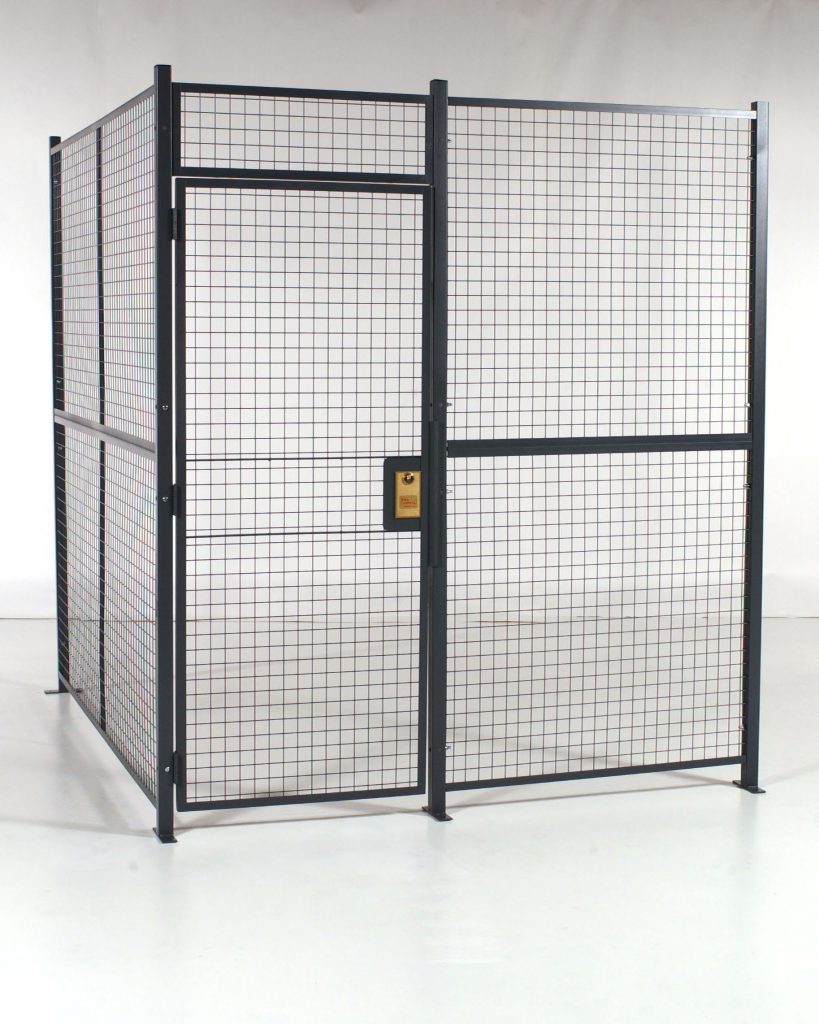
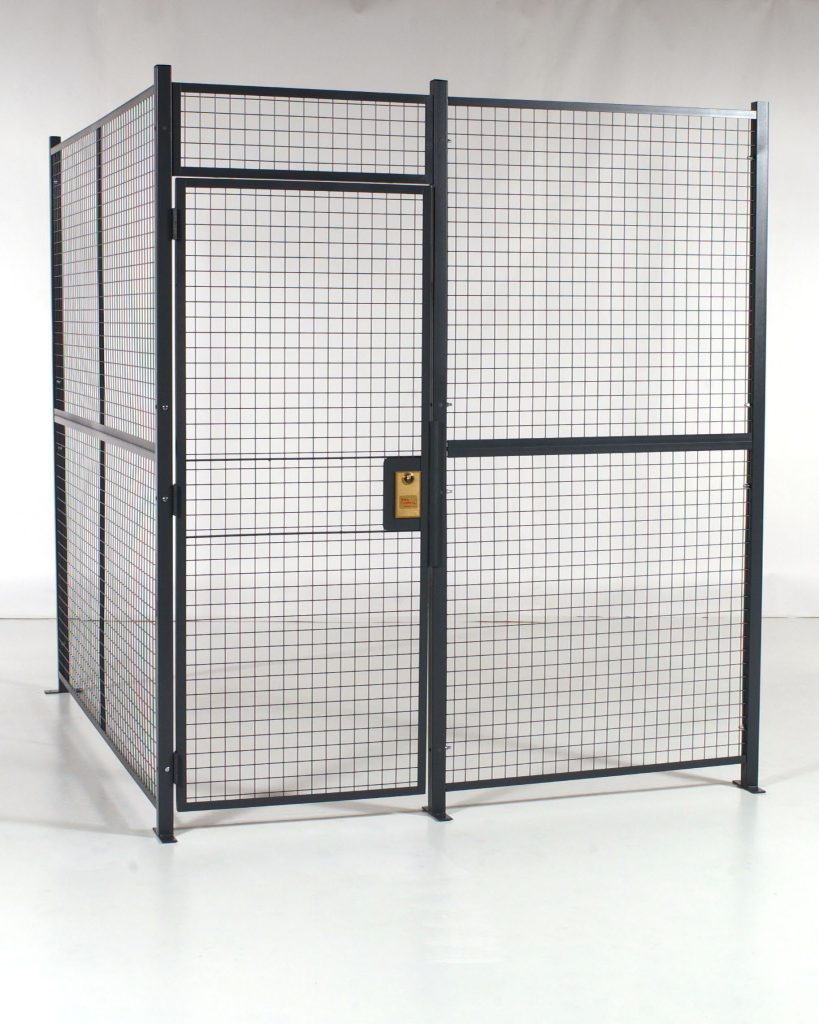
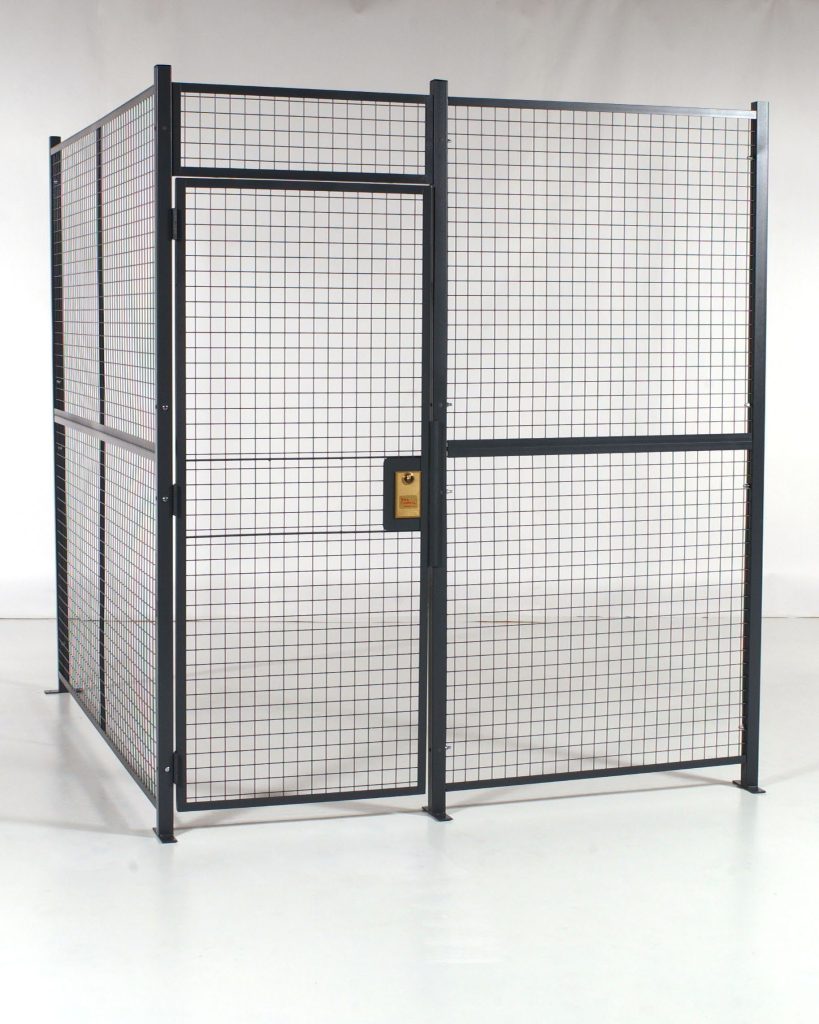
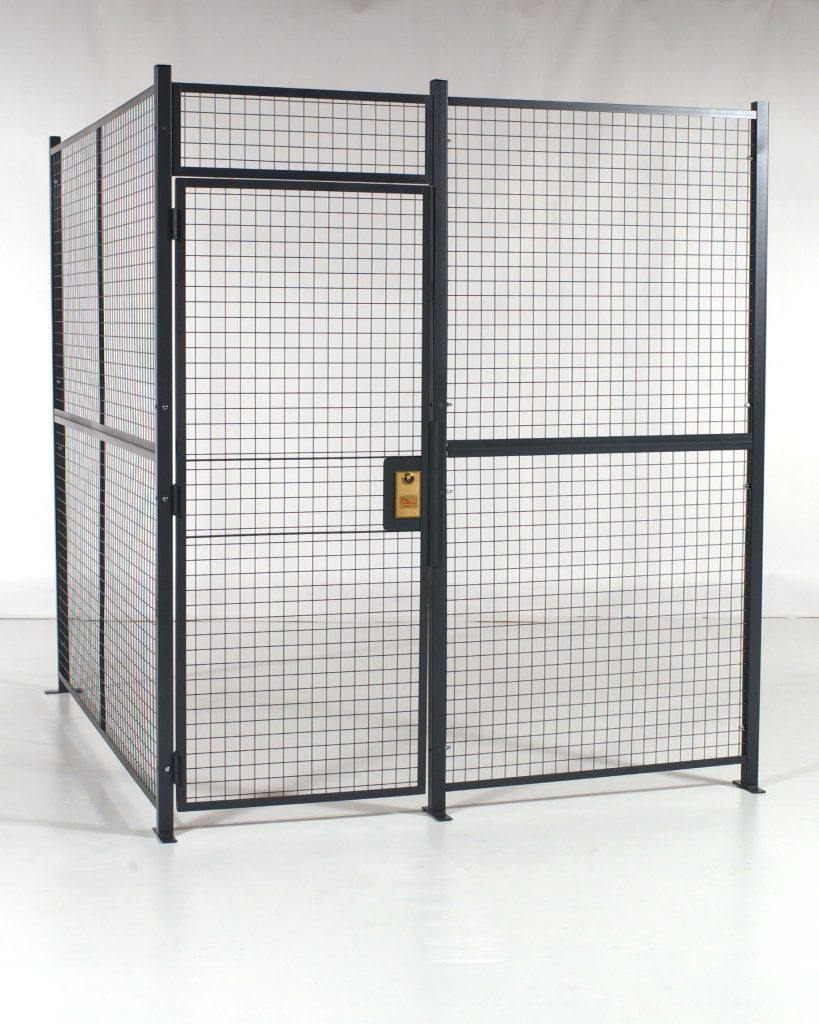
Shop Pre-Configured Wire Mesh Cage Kits Online
Standard-size welded wire cage kits, priced online, for smaller storage needs. Every kit still needs to be anchored to sound concrete — for tall, braced or engineered enclosures, request a quote with your building location and floor details.
Frequently asked questions
What is cage door access control?
Can a wire mesh cage door take a card reader?
Does an access-controlled cage door still allow exit in an emergency?
Is a keypad good enough for a depot?
How do you keep an access-controlled cage from slowing technicians down?
Should data-bearing devices be stored in a wire cage?
Can one enclosure separate customer-owned stock from general inventory?
Can the enclosure be expanded when volumes change?
Secure the depot without slowing the bench
Material Handling USA designs, supplies and installs welded wire security cages, tool cribs, staging enclosures and access-controlled cage doors for depots and warehouses nationwide.