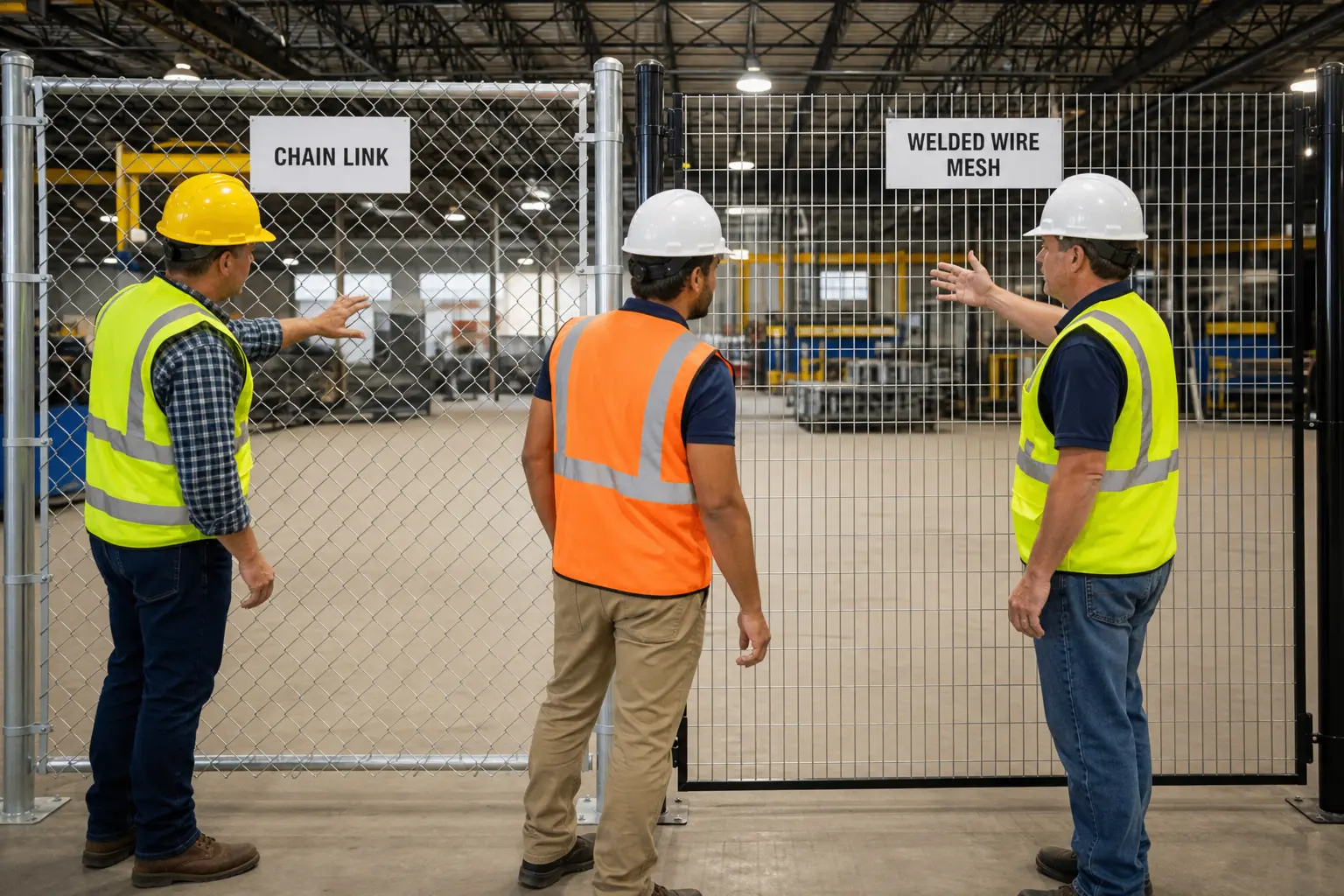
When it comes to securing inventory, equipment, or restricted areas inside a warehouse or facility, two solutions dominate the conversation: chain link cages and wire mesh partitions. Both create physical barriers, but they differ significantly in security, aesthetics, durability, and cost. This guide breaks down the real differences so you can choose the right solution for your application.
What Is a Chain Link Storage Cage?
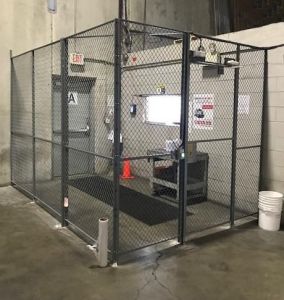
Chain link cages use woven diamond-pattern wire fabric (typically 11.5-gauge or 9-gauge) stretched between tubular steel posts. They’re the same material you see in outdoor fencing — adapted for indoor security enclosures. Chain link is familiar, widely available, and generally less expensive upfront. For the full lineup of panel systems, door options and applications, see our main chain link storage cage page.
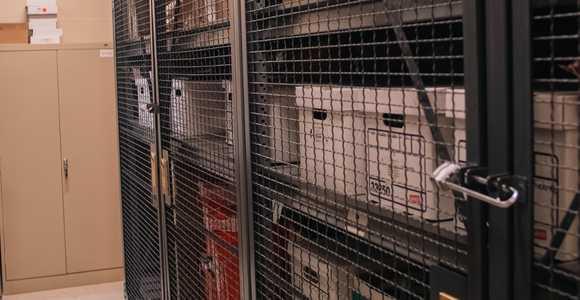
Common Chain Link Cage Applications
- Outdoor equipment storage yards
- Temporary construction site security
- Basic inventory separation
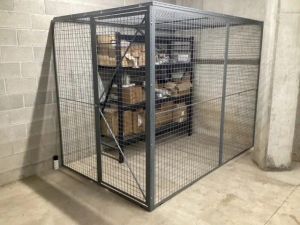
- Parking garage storage units
- Low-security warehouse cages
What Are Wire Mesh Security Partitions?
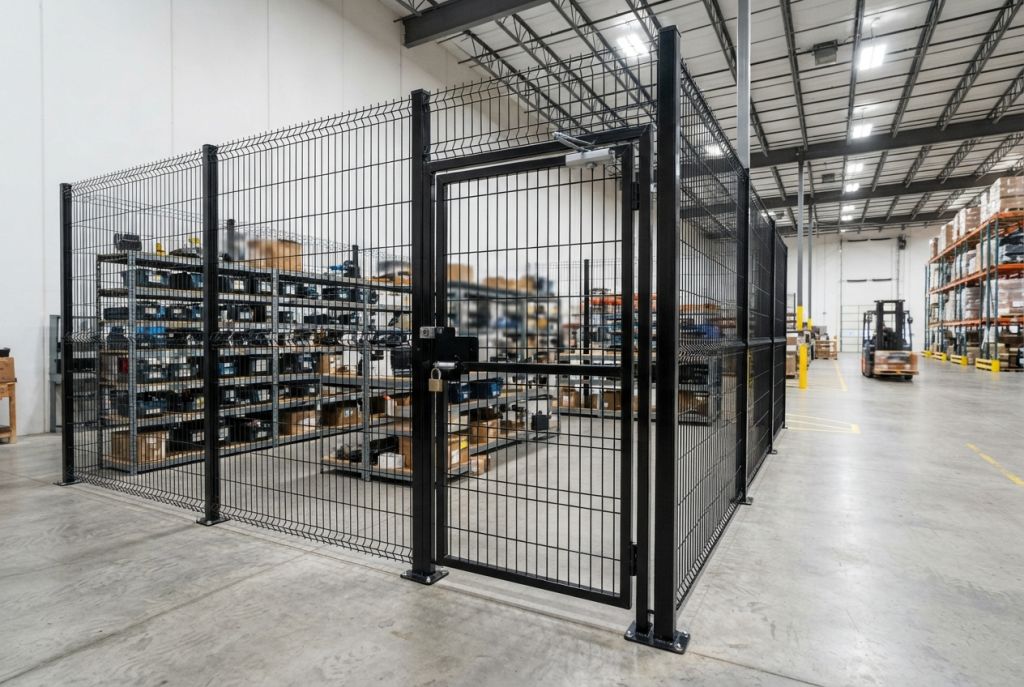
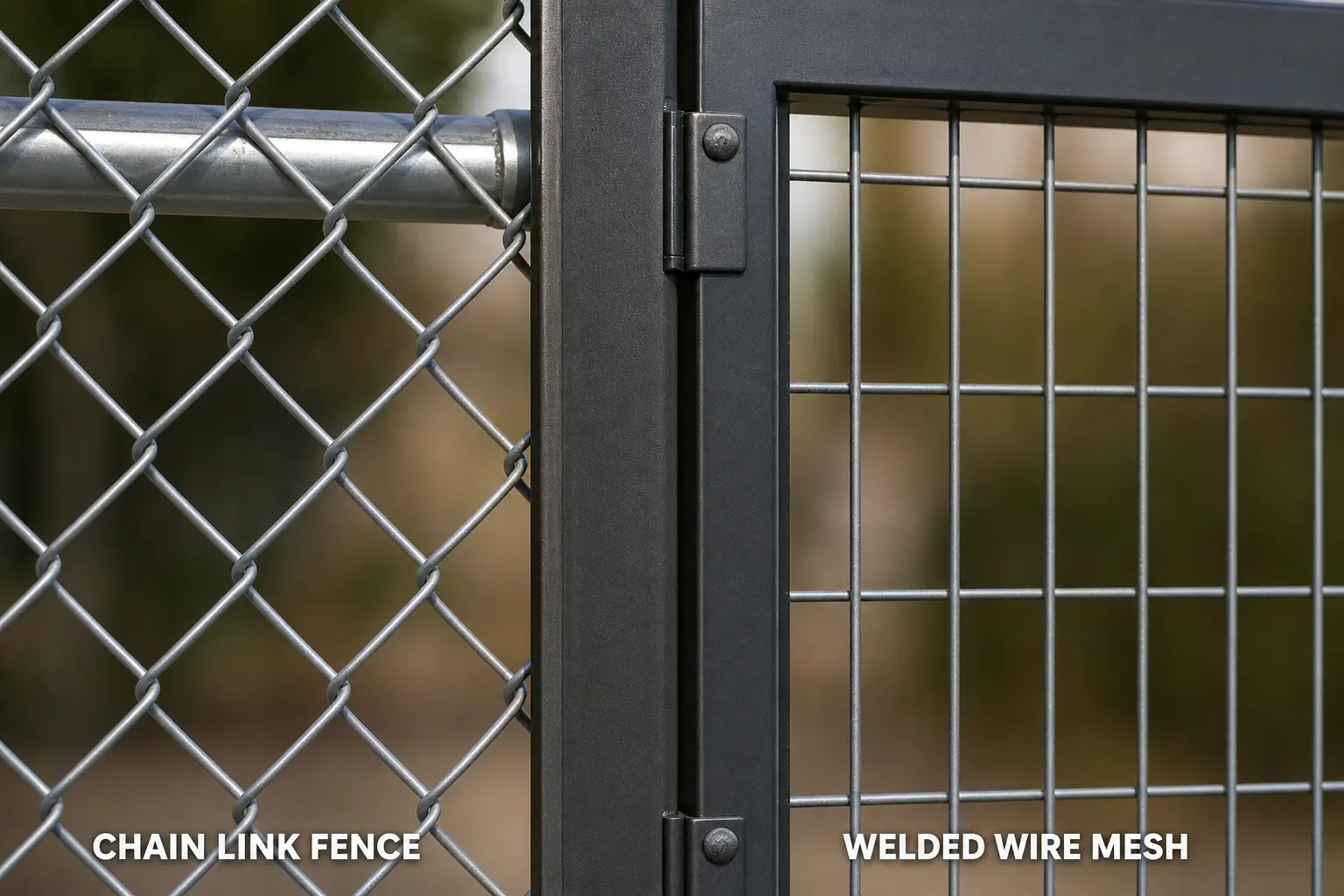
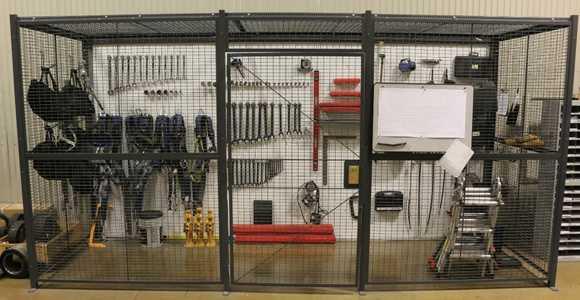
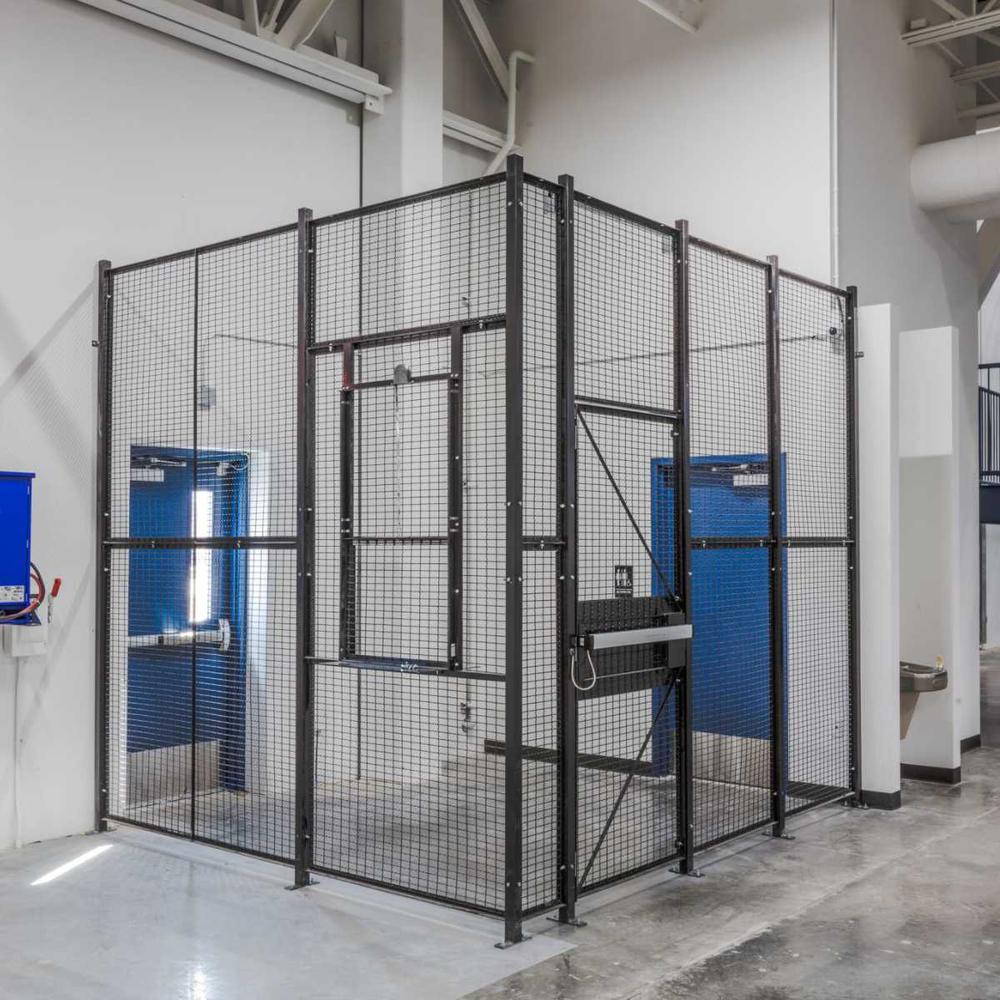
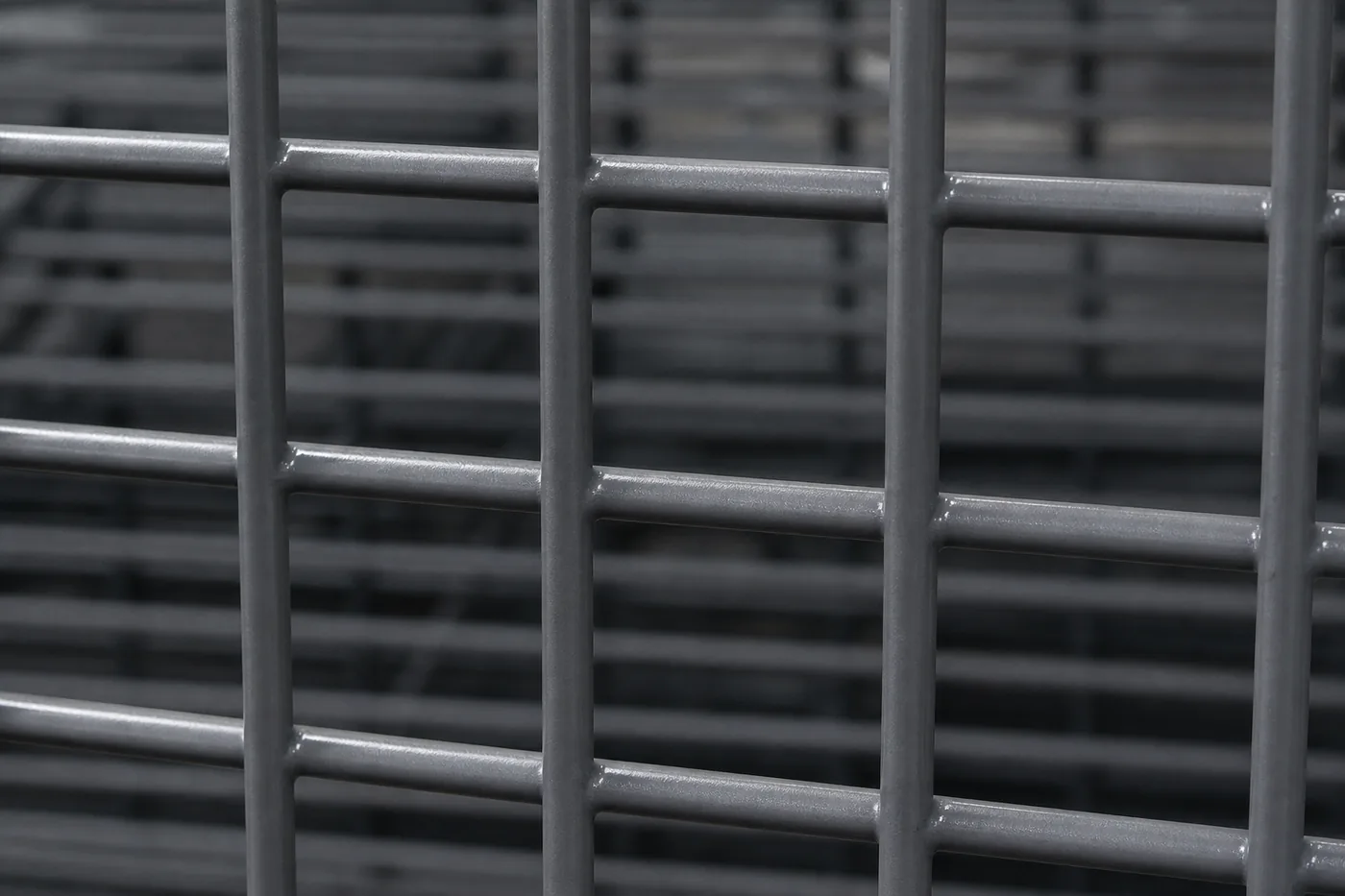
Wire mesh security cages use welded wire panels (typically 10-gauge wire in a 2″ x 1″ rectangular pattern) attached to heavy-gauge steel posts. Manufacturers like our manufacturing partners build panels that bolt together into rigid, modular enclosures. The welded construction makes them significantly harder to breach than woven chain link.

Common Wire Mesh Applications
Head-to-Head Comparison
| Feature | Chain Link Cage | Wire Mesh Partition |
|---|---|---|
| Wire Type | Woven diamond pattern | Welded rectangular grid |
| Typical Gauge | 11.5–9 gauge | 10–6 gauge |
| Cut Resistance | Low — bolt cutters work easily | High — welded joints resist cutting |
| Climb Resistance | Low — diamond pattern = footholds | High — smooth surface, no footholds |
| Rigidity | Flexible, rattles | Rigid, solid feel |
| Appearance | Industrial/outdoor look | Clean, professional |
| Modularity | Limited — custom fabrication | Highly modular — bolt-together panels |
| Ceiling Option | Difficult to enclose top | Standard ceiling panels available |
| Door Options | Basic swing/slide gates | Hinged, sliding, Dutch, service windows |
| Lock Compatibility | Padlock hasps | Full range: padlocks to card readers |
| Cost (installed) | $15–35/linear ft | $30–75/linear ft |
| Relocatable | Difficult | Yes — unbolt and reconfigure |
| Code Compliance | Rarely meets DEA/IAPE specs | Meets DEA, IAPE, UL standards |
When to Choose Chain Link
Our chain link cages are built to size for these situations. Chain link cages make sense in limited situations:
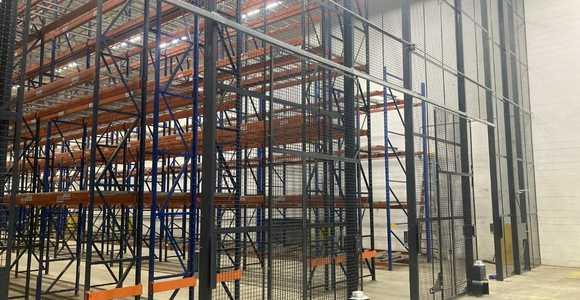
- Outdoor applications where weather exposure and aesthetics aren’t priorities
- Temporary security — construction sites, event perimeters
- Very large perimeters where cost per linear foot matters mostandsecurity risk is low
- Basic visual deterrence — situations where you need to mark a boundary, not stop a determined intruder
When Wire Mesh Is the Clear Winner
For any application where real security matters, wire mesh partitions outperform chain link:
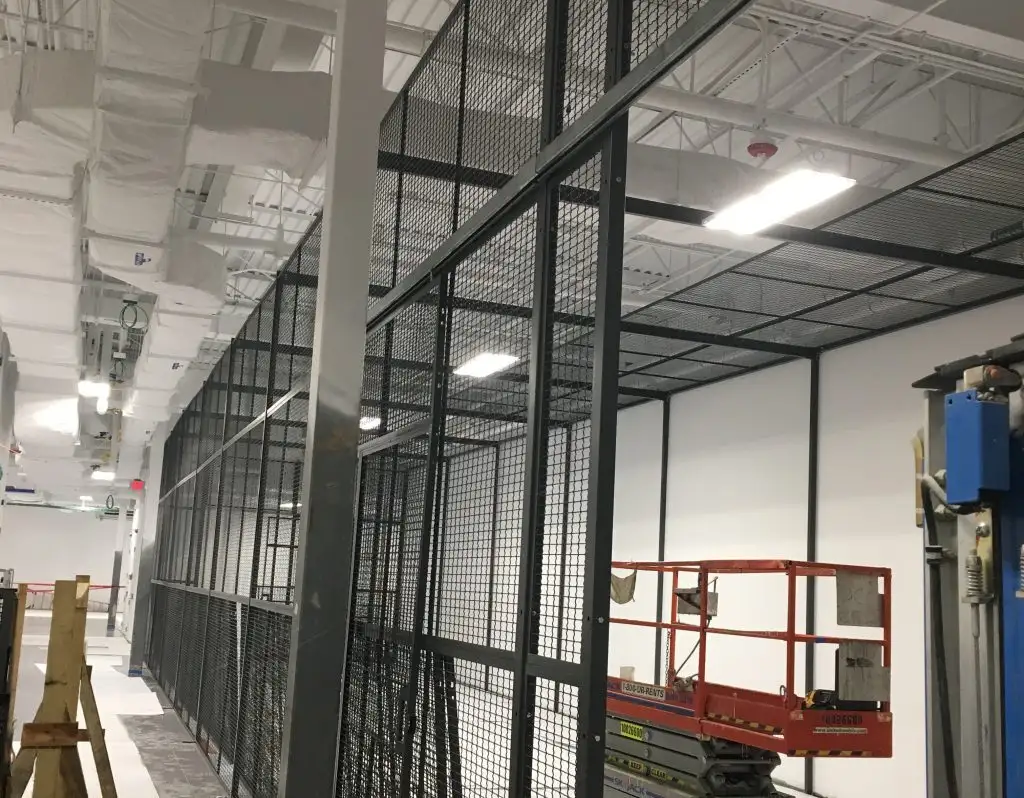
- Warehouses with valuable inventory — The welded wire resists bolt cutters and can’t be pried apart
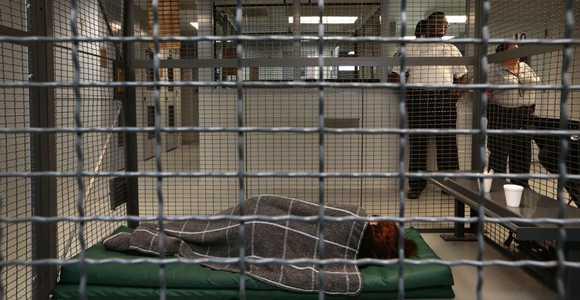
- Compliance-driven environments — DEA drug storage, evidence rooms, and government facilities require welded wire
- Data centers — Colocation cages need professional appearance and exact sizing
- Tenant-facing installations — Apartment storage lockers need to look clean, not like a junkyard fence
- Reconfigurable layouts — Wire mesh panels unbolt and relocate as your needs change
- Insurance requirements — Many insurers specify welded wire mesh for inventory protection
Cost Comparison: Total Cost of Ownership
While chain link has a lower upfront cost, the total cost of ownership often favors wire mesh:

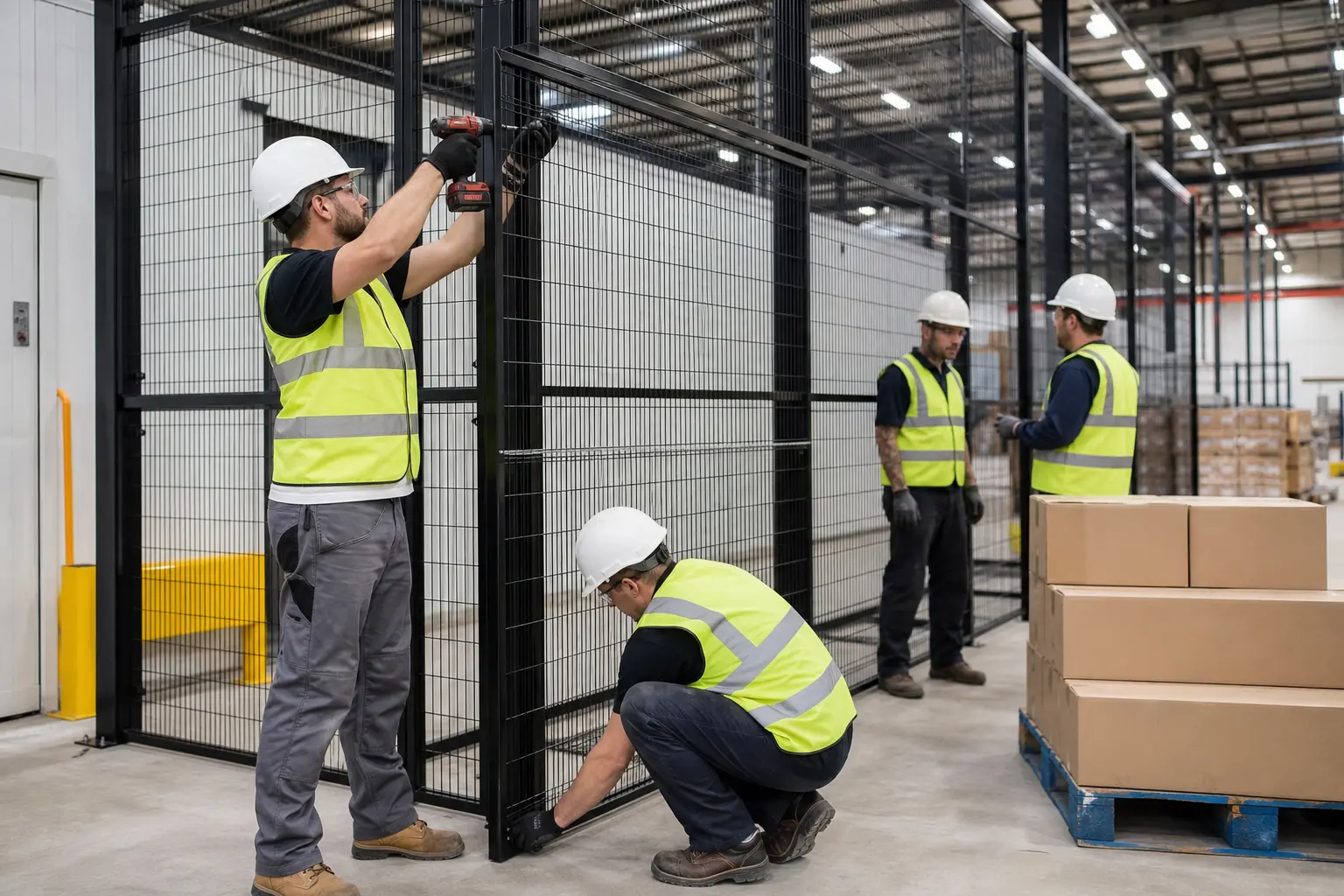
- Installation: Wire mesh modular systems install faster (bolt-together vs. custom fabrication)
- Maintenance: Chain link sags, rattles, and needs tensioning. Wire mesh stays rigid for decades.
- Reconfiguration: Moving chain link means demolishing and rebuilding. Wire mesh unbolts and reassembles.
- Security incidents: One break-in through chain link costs more than the mesh upgrade
- Insurance: Some carriers offer lower premiums with welded-wire security enclosures
Making the Right Choice
Ask yourself three questions:
- What am I protecting? High-value items = wire mesh. Low-value visual barrier = chain link may suffice.
- What standards must I meet? Any compliance requirement (DEA, IAPE, insurance) usually requires wire mesh.
- Will my layout change? If yes, wire mesh’s modularity saves money long-term.
Not Sure Which Solution You Need?
MH-USA’s team can evaluate your space, security requirements, and budget to recommend the right system. We install both chain link and custom wire mesh solutions across the Western U.S.
Call (800) 326-4403 or request a free quote
Detailed Comparison: Chain Link vs Wire Mesh
Structural Engineering Differences
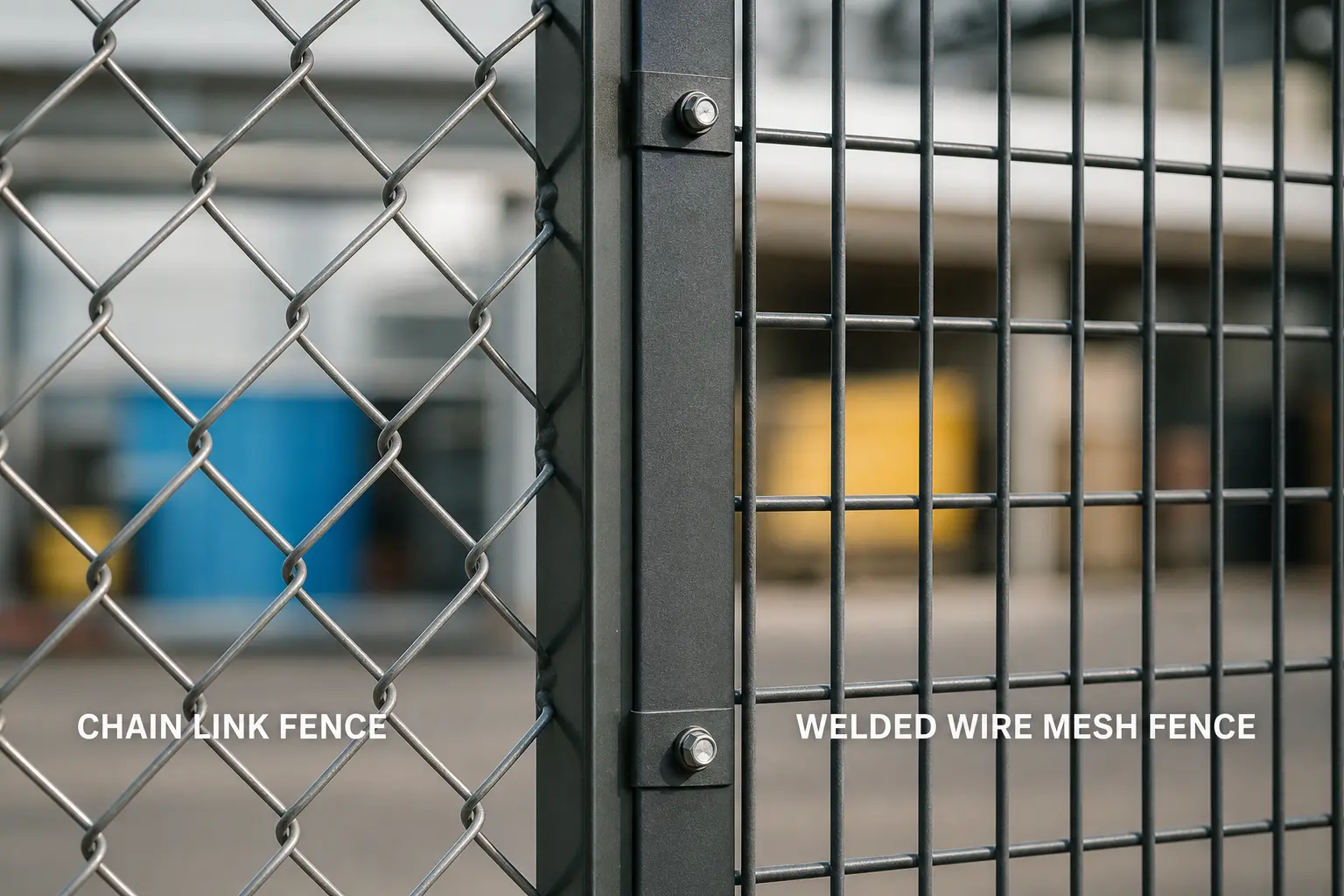
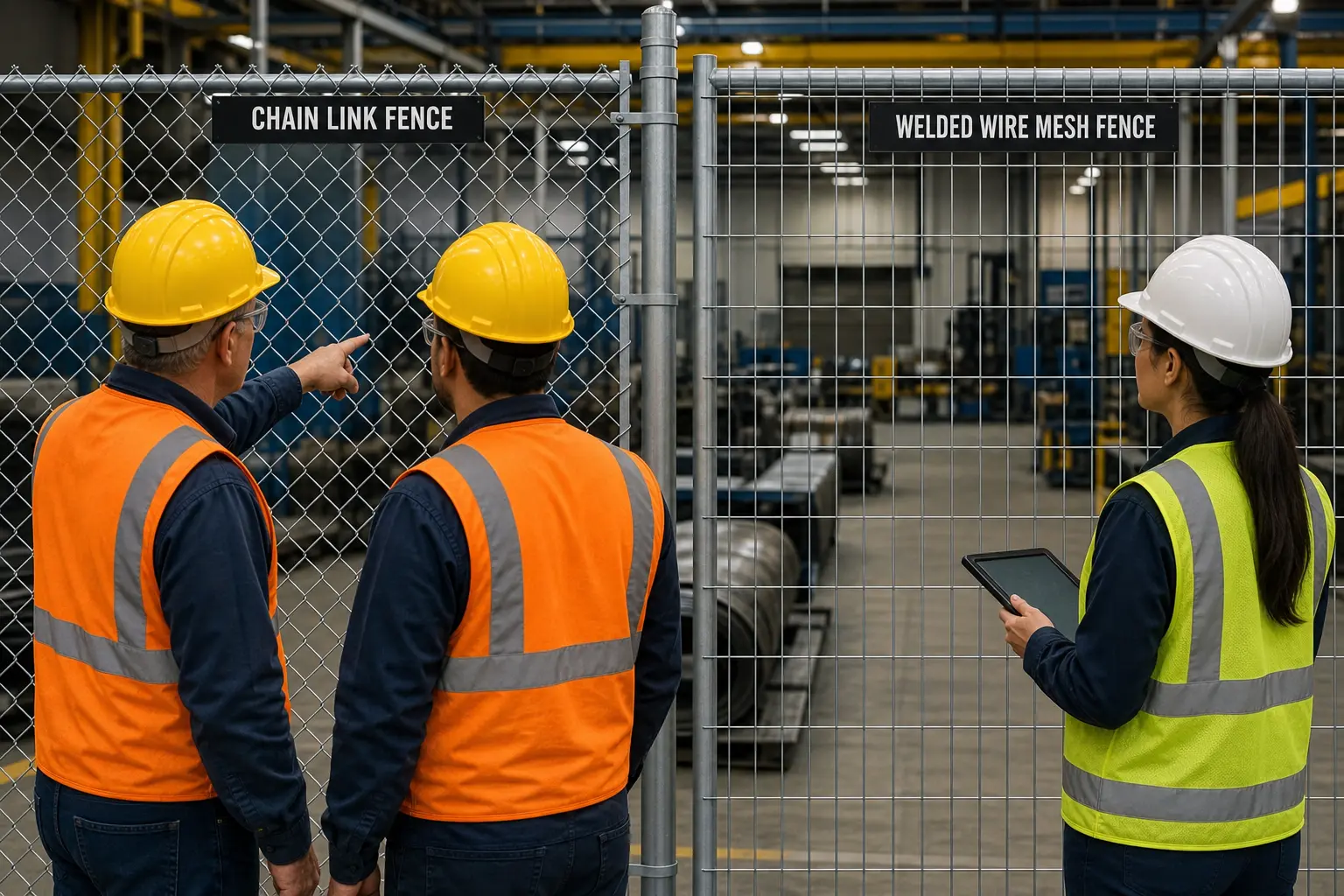
The fundamental engineering difference between chain link and wire mesh determines their performance across every metric. Chain link uses a diamond-pattern weave of helically wound wires hooked together at each intersection — creating a flexible fabric that deforms under force rather than fracturing. Wire mesh uses straight wires woven or welded in a grid pattern, creating a rigid panel that maintains its shape under impact and resists cutting.
This structural difference has practical implications. Chain link fence fabric flexes when struck or pushed, making it possible to create gaps at the bottom for crawl-through access or to bend the fabric enough to pass items through. Wire mesh panels maintain their rigid form — the only way through is cutting individual wires, which requires bolt cutters or an angle grinder and leaves obvious evidence of tampering.
Security Rating Comparison
Independent security testing shows wire mesh panels provide 60–80% greater resistance to penetration than equivalent-gauge chain link. A 10-gauge wire mesh panel with 2″ × 2″ openings requires approximately 250 lbs of concentrated force to deform — versus 90–120 lbs for 10-gauge chain link. For DEA, evidence storage, and high-security applications, wire mesh is the only option that satisfies compliance requirements and passes regulatory inspection.
Appearance & Professional Image
Wire mesh partitions project a professional, industrial image appropriate for client-facing areas, colocation data centers, and corporate warehouses. The clean lines and powder-coated finish communicate intentional security investment. Chain link, by contrast, carries an outdoor/temporary connotation that may undermine professional appearance — particularly in data centers, pharmaceutical facilities, and multi-tenant buildings.
Total Cost of Ownership
While chain link has a lower initial material cost (typically 20–30% less than wire mesh), total cost of ownership often favors wire mesh. Chain link requires tension wires, rail pipes, post caps, and tension bands — adding installation complexity and labor. Wire mesh panels clip directly to posts with simple hardware. Wire mesh requires less maintenance, has longer service life, and better preserves facility appearance over time. For a worked example in an exterior trade yard, read our roofing contractor shop and yard security cage case study.
Replacement and repair costs also differ significantly. Damaged chain link sections require re-stretching or complete fabric replacement. Damaged wire mesh panels can be individually replaced without affecting adjacent panels. For facilities planning 10+ years of use, wire mesh total cost of ownership is typically lower despite higher upfront material costs.
When Chain Link Makes Sense
Chain link remains appropriate for outdoor perimeter fencing, temporary construction security, parking lot enclosures, and outdoor equipment yards where appearance is secondary to basic perimeter control. For indoor applications, data centers, compliance-driven installations, and any environment where security or professional appearance matters, wire mesh partitions are the superior choice.
Why Choose Material Handling USA for Chain Link Cages vs Wire Mesh Partitions: Which Security Solution Is Right?
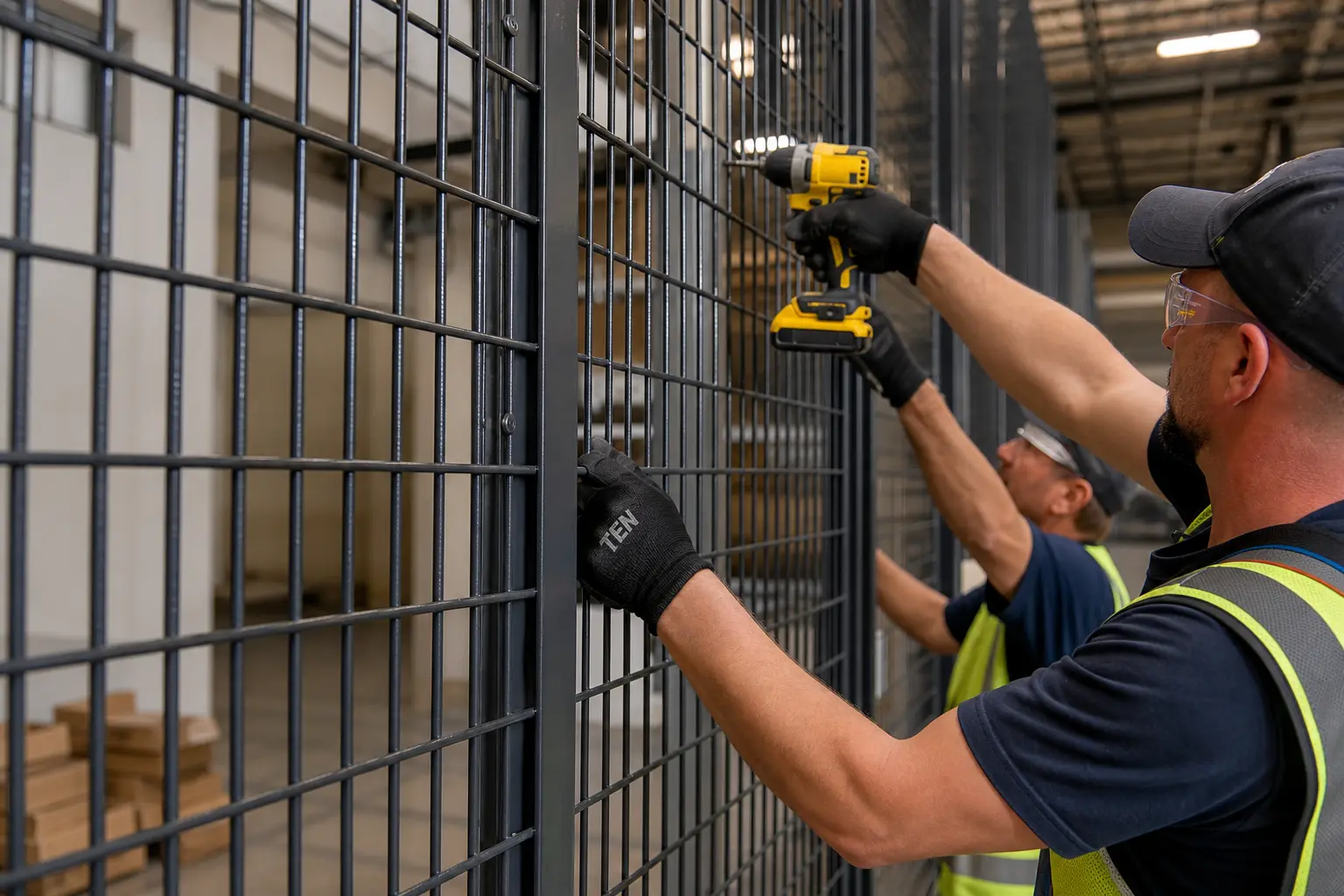
Material Handling USA brings over 30 years of experience to every security cage project. Our team has designed and installed thousands of security enclosures across warehouses, distribution centers, manufacturing plants, healthcare facilities, law enforcement agencies, and data centers throughout the Intermountain West and nationwide.
Our Process
Every project begins with a thorough understanding of your requirements. We conduct on-site assessments (or virtual consultations for initial planning), capture detailed measurements, and discuss your security objectives, workflow needs, and budget parameters. Our engineering team creates custom CAD layouts showing exactly how your cage system will look and function — you review and approve the design before we proceed.
We source panels, doors, locks, and accessories from leading American manufacturers Products — the industry’s most trusted manufacturers. Both offer comprehensive product lines with rapid availability and proven quality. Our bulk purchasing relationships deliver competitive pricing that individual buyers can’t achieve on their own.
Professional Installation & Support
Our trained installation crews handle every aspect of cage assembly — from floor anchoring to door hanging to access control integration. We work around your schedule to minimize operational disruption. Every installation concludes with a formal inspection and documentation package. Post-installation, we remain available for adjustments, expansion, and ongoing maintenance support.
Serving the Intermountain West & Beyond
Headquartered in Salt Lake City, Utah, Material Handling USA provides direct service throughout Utah, Idaho, Colorado, Nevada, Arizona, Wyoming, and Montana. Nationwide projects are supported through our network of installation partners and direct-ship capabilities. Wherever your facility is located, we deliver the same quality, attention to detail, and customer service that has built our reputation over three decades.
Request Your Free Quote
Ready to secure your facility? Contact Material Handling USA for a free, no-obligation consultation and quote. Our team responds within one business day with a preliminary assessment and next steps.
- Phone: (800) 326-4403 or (801) 328-8788
- Email: sales@mh-usa.com
- Online: Request a Quote
We look forward to helping you design the right security cage solution for your facility.
Frequently Asked Questions
How much do chain link cages vs wire mesh partitions: which security solution is right? cost?
Pricing depends on the size, configuration, wire gauge, door type, and accessories required for your specific application. Material Handling USA provides free, no-obligation quotes that include CAD layout design, material specifications, and professional installation costs. Contact us at (800) 326-4403 or email sales@mh-usa.com for a detailed estimate within 1–2 business days.
What is the installation timeline?
Most security cage projects follow a 2–3 week timeline from initial contact to completed installation. Week 1 covers site assessment and design. Week 2 handles order processing and material preparation. Week 3 is delivery and professional installation. Expedited timelines are available for urgent security needs — some projects can be completed in as little as 5 business days from initial contact.
Do you provide free site assessments?
Yes. Material Handling USA provides complimentary on-site measurements and CAD layout design for all security cage projects. Our assessment includes detailed measurements, obstacle identification, workflow analysis, and a complete proposal with pricing. For projects outside the Wasatch Front, we can conduct virtual assessments using photos and measurements you provide.
Can security cages be customized?
Absolutely. While standard panel sizes handle most configurations, our custom security cage capabilities include non-standard dimensions, angled walls, multiple door types, height transitions, and integration with existing structures. Custom powder coat colors, galvanized finishes, and specialized hardware are also available. Our engineering team designs custom solutions that meet your exact specifications.
What warranty do security cages carry?
All security cages from Material Handling USA include manufacturer warranties covering defects in materials and workmanship. our manufacturing partners both stand behind their products with comprehensive warranty programs. Our installation workmanship is warranted for one year, including a 90-day adjustment period where we return to tighten hardware and verify door alignment at no charge.
Do you serve locations outside Utah?
Yes. While headquartered in Salt Lake City, Material Handling USA serves the entire Intermountain West including Utah, Idaho, Colorado, Nevada, Arizona, Wyoming, and Montana with direct installation crews. Nationwide projects are supported through our installation partner network and direct-ship capabilities. Contact us to discuss your project location.