
Roofing Contractor Security Cages for Shop and Yard Storage
How Lloyd Roofing Company approached caged storage for coil stock, fasteners, fall-protection gear and small equipment across a commercial roofing shop and outdoor yard.
Lloyd Roofing Company
Family-owned commercial and industrial roofing contractor, in business since 1965
Greenwood, South Carolina
Headquarters; the enclosure shipped to Aiken, South Carolina
The problem
High-theft materials and safety-critical gear stored across a shop, a yard and trucks
The answer
Separate caged zones for materials, fall-protection equipment and hot-work gear
A roofing contractor’s inventory lives in three places at once
Lloyd Roofing Company is a family-owned commercial and industrial roofing contractor that has been in business since 1965, working across South Carolina and neighboring states on built-up, modified bitumen, single-ply and metal roof systems. Its enclosure shipped to Aiken, South Carolina.
Roofing is a trade where the material is the margin. Metal coil and flashing stock, fasteners and plates, membrane and adhesive, insulation board, hand tools, seam welders, blowers, kettles and fall-protection gear all move constantly between a shop, an outdoor or covered yard, and a fleet of trucks and trailers. Nothing sits still long enough for a stockroom to feel like a stockroom.
Three problems come out of that. Scrap-value materials — copper, aluminum and steel coil, fasteners, offcuts — are attractive to thieves and hard to trace. Safety-critical equipment such as harnesses and lifelines has to be findable, inspected and in known condition, which loose storage quietly undermines. And crews load out early, in the dark, in a hurry, which means any control that slows load-out will be defeated within a week.
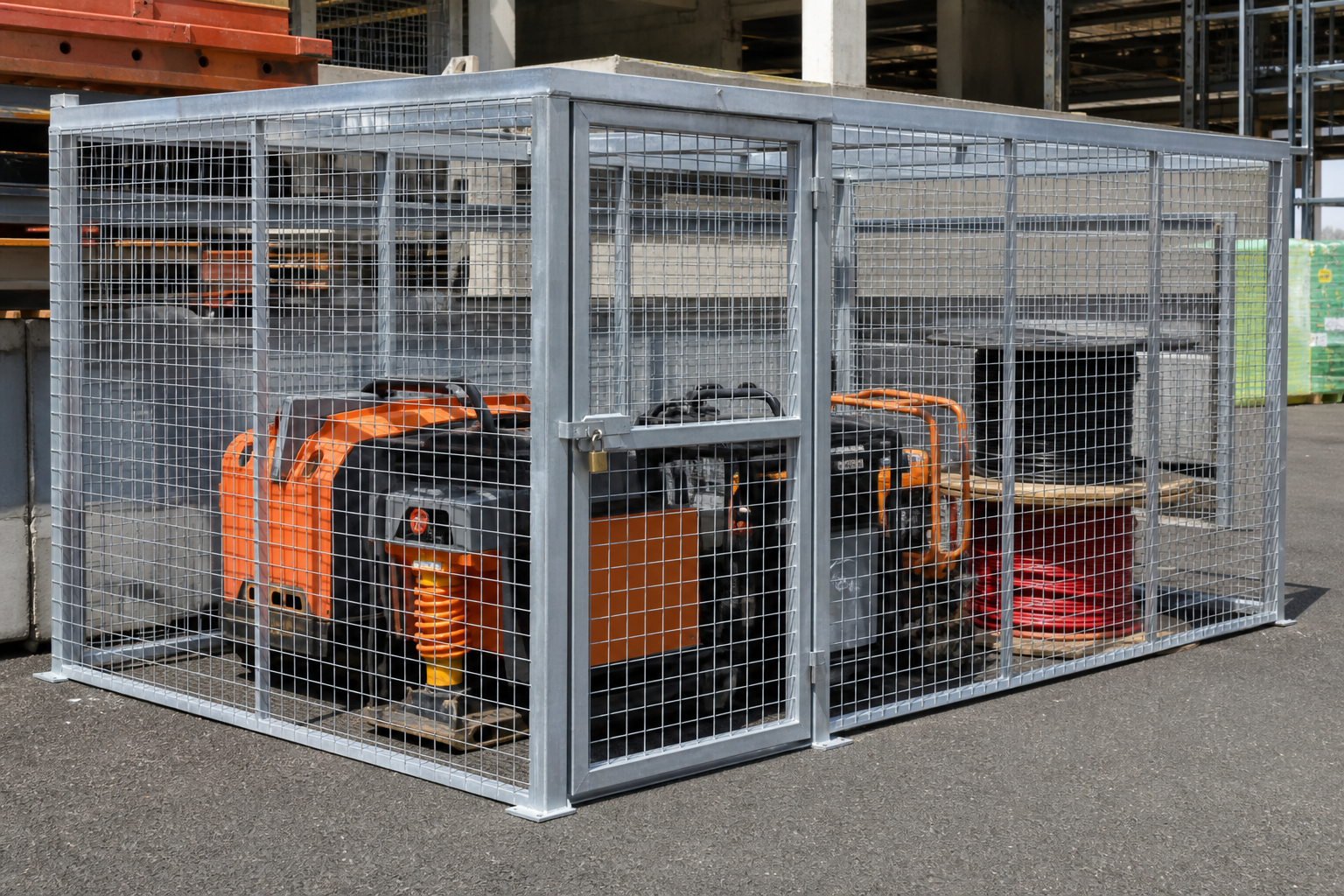
The approach that works is not one big locked room. It is a small number of purpose-built caged zones on the path the crews already walk. Our wire mesh security cages and partitions suit that because they are modular, they can be sized to a bay or a corner, and they can be installed indoors, under cover, or outside in a fenced yard.
What follows describes the problem class for roofing and exterior-trade contractors generally. No layouts, dimensions, quantities or site details from this client are published here.
What is worth caging in a roofing operation
Value is a poor sorting rule on its own. The better test is how quickly does its absence cost a day of work, and how easily does it leave the site?
Metal coil, flashing and sheet stock. High scrap value, awkward to mark and easy to cut down. Caging a coil rack or a cantilever bay protects the most stealable material in the yard.
Fasteners, plates and termination bar. Small, repetitive, expensive in aggregate, and the single most common reason a crew turns around mid-morning.
Powered hand tools and seam equipment. Welders, screw guns, blowers and vacuums: small, valuable, resaleable, and the things borrowed between crews without a word.
Fall-protection equipment. Harnesses, lanyards, SRLs, anchors and rope grabs need a controlled home for inspection reasons as much as security reasons.
Site consumables worth protecting. Coatings, sealants and primers in pail quantities walk easily and are expensive to re-buy.
Bulk insulation board, ballast, membrane rolls and pallets of accessories usually stay outside the cage. They are too big to pocket and caging them just narrows the yard.
Fall-protection gear: a cage with an inspection purpose
This is the part of a roofing storage plan that a general warehouse cage never has to think about, and it is worth designing deliberately.
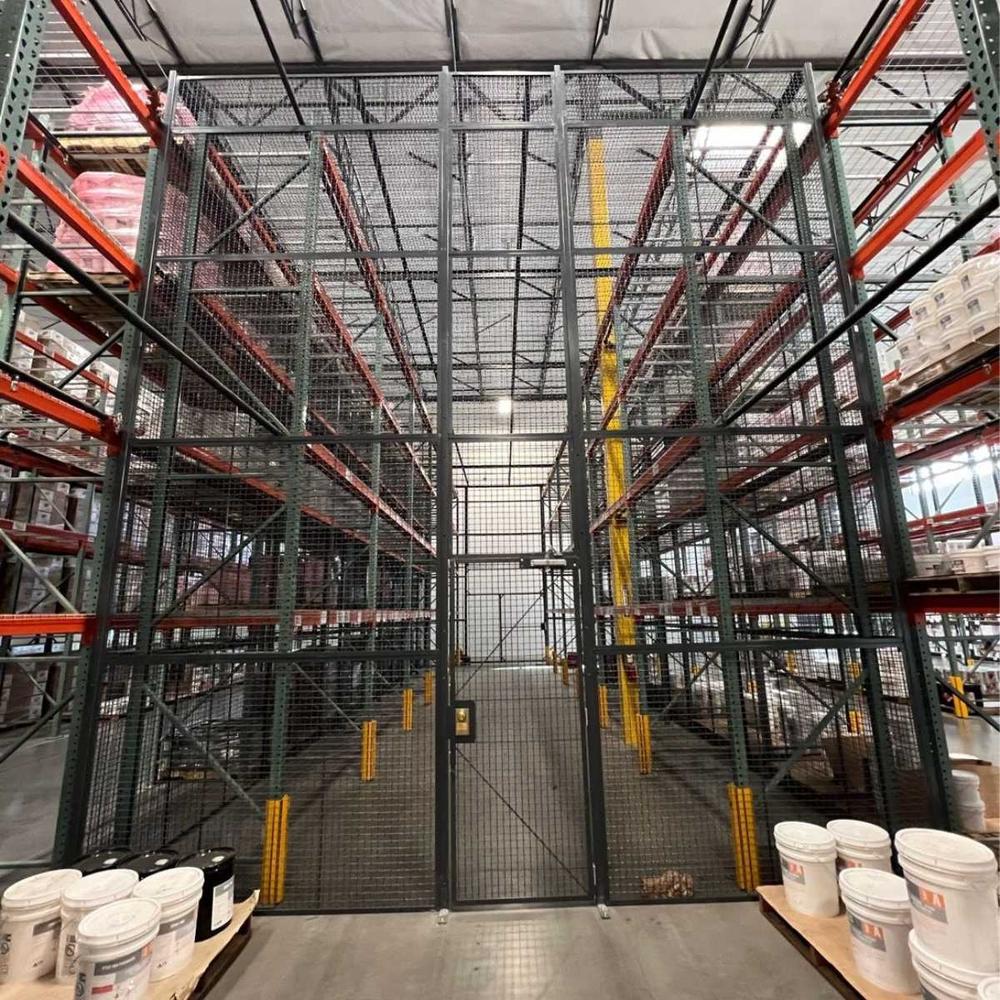
Fall-protection equipment is inspected before use and on a periodic schedule, and any component subjected to a fall or found damaged has to be removed from service. That means a roofing contractor needs, at minimum, two physically separate places: gear in service, and gear removed from service. If both live in the same bin, a damaged harness will eventually go back up on a roof.
| Zone | What it holds | Why it is separate |
|---|---|---|
| In-service gear | Harnesses, lanyards, SRLs and anchors currently fit for use | Hung, labeled and findable so crews take the right item |
| Quarantine / removed from service | Anything damaged, fall-arrested or overdue for inspection | Physically separated and clearly marked so it cannot be picked up by mistake |
| New / unissued | Gear not yet assigned | Keeps issue records meaningful |
| Documentation point | Inspection log or tablet at the door | Custody and inspection are recorded where the gear moves |
OSHA’s fall protection requirements for construction in 29 CFR 1926 subpart M and the personal fall arrest criteria in 1926.502 set the duty to inspect and to remove damaged equipment from service; manufacturer instructions set the specifics for each product. A caged, hung, labeled storage zone with a quarantine section is simply the physical shape of that requirement.
Practical detail: hang harnesses rather than stacking them, keep them out of direct sunlight, and do not store them where hot work, solvents or standing water can reach them. Mesh partitions make that easy because you can subdivide without building walls.
Cylinders, kettles and hot work do not go in the cage
The most important line in a roofing storage plan is the one that keeps certain things out of the enclosure entirely.
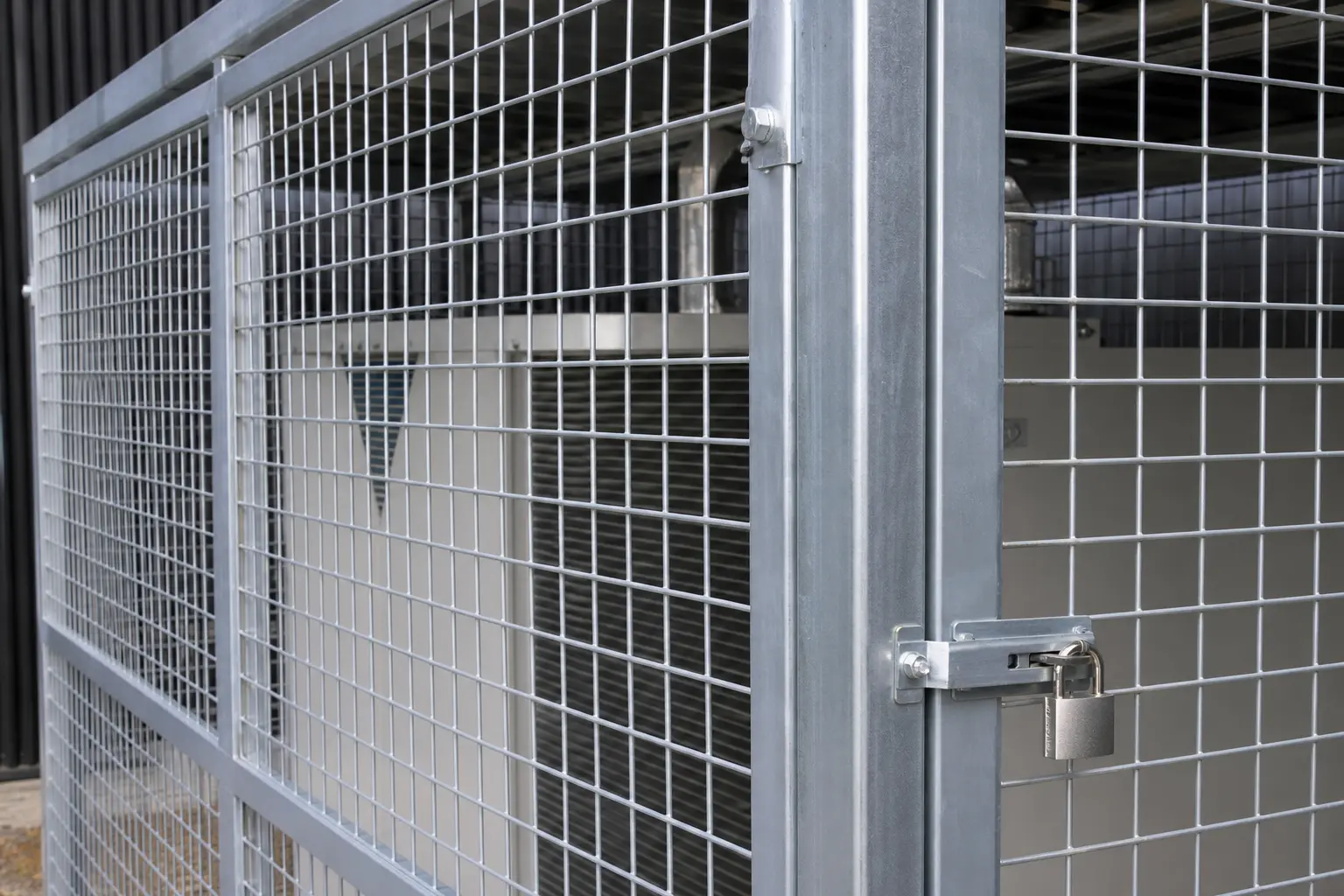
Compressed gas cylinders. Propane and other fuel gas cylinders have their own storage rules: outdoors or in approved locations, upright and secured, valve protection in place, separated from oxidizers, and away from ignition sources and exits. OSHA’s requirements in 29 CFR 1910.101 and 1910.253 and the fire code govern; a wire mesh cage inside a shop is not the answer. Where a mesh enclosure is used, it is a dedicated, ventilated outdoor cylinder enclosure sited per code, not a shelf inside the tool cage.
Flammable adhesives, solvents and primers. Quantities above the small amounts kept for daily use belong in an approved flammable liquid storage cabinet or room. Mesh contains nothing — it controls reach, not vapor or spill.
Kettles, torches and hot-work equipment. Store cold equipment sensibly, but keep the hot-work staging area away from combustible storage and never inside the same enclosure as membrane, insulation or fall-protection gear.
Being explicit about exclusions is what makes the rest of the plan credible. A cage that is advertised as solving chemical or cylinder storage is a compliance problem waiting to be written up.
Cages in the yard and under cover
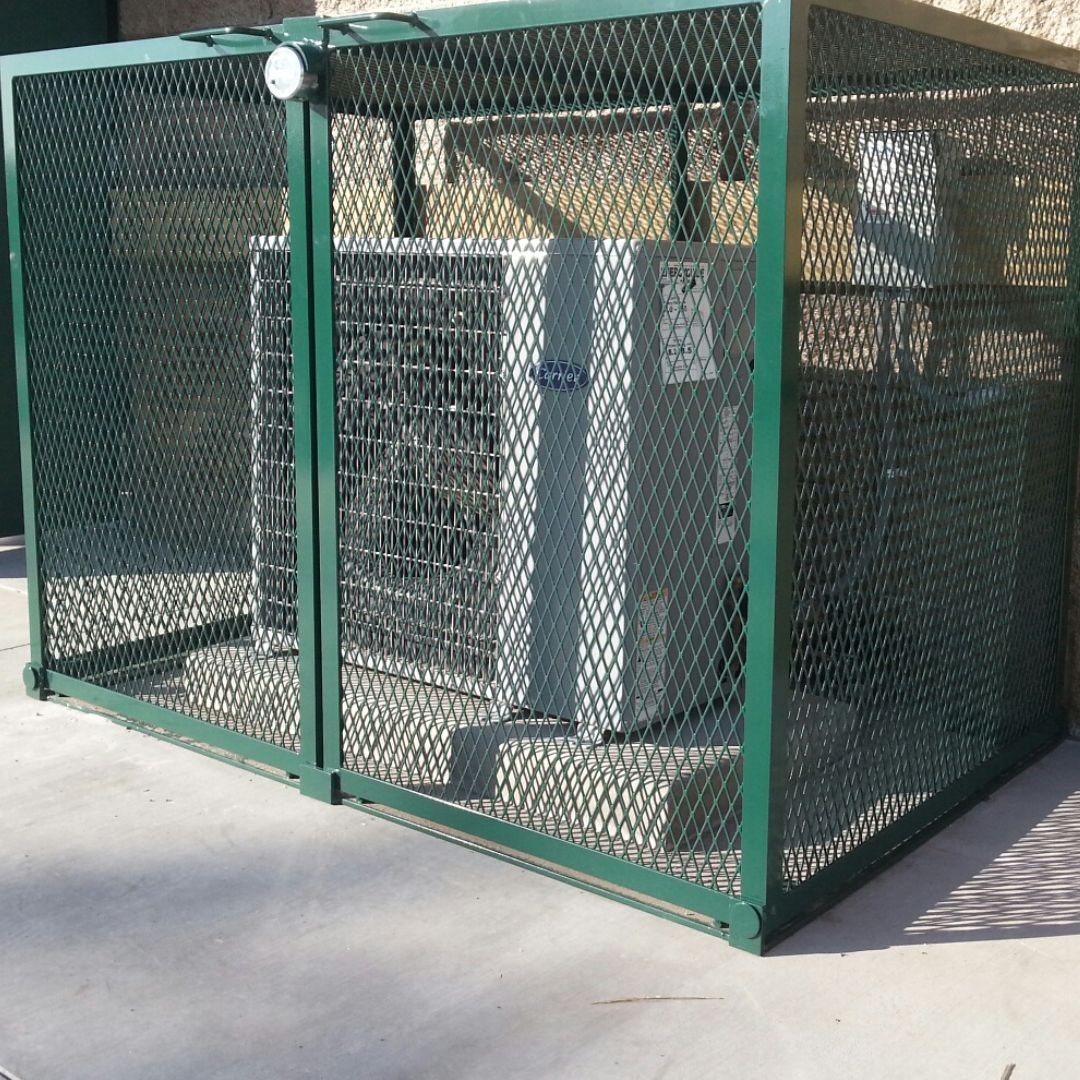
Most roofing contractors need at least one enclosure that is not in a heated building, and outdoor cages have their own specification.
For finish and material selection outdoors, our comparison of steel and aluminum security cages is the place to start, and outdoor security cages for equipment protection covers exposed installations in more detail. Where the requirement is a simple fenced compound rather than a storage enclosure, a chain link storage cage is often the more economical route.
Designing around a 5 a.m. load-out
The fastest way to waste money on a contractor cage is to build something that makes the morning slower. Crews load in the dark, often before any office staff arrive, and if the cage is a bottleneck it gets propped, blocked or bypassed.
Put the cage on the walk. Between the shop door and the truck line — not in the back corner where the space happened to be free.
Pre-stage by crew, not by SKU. A short caged staging run where tomorrow’s kit sits ready means the cage is opened once, not fifteen times.
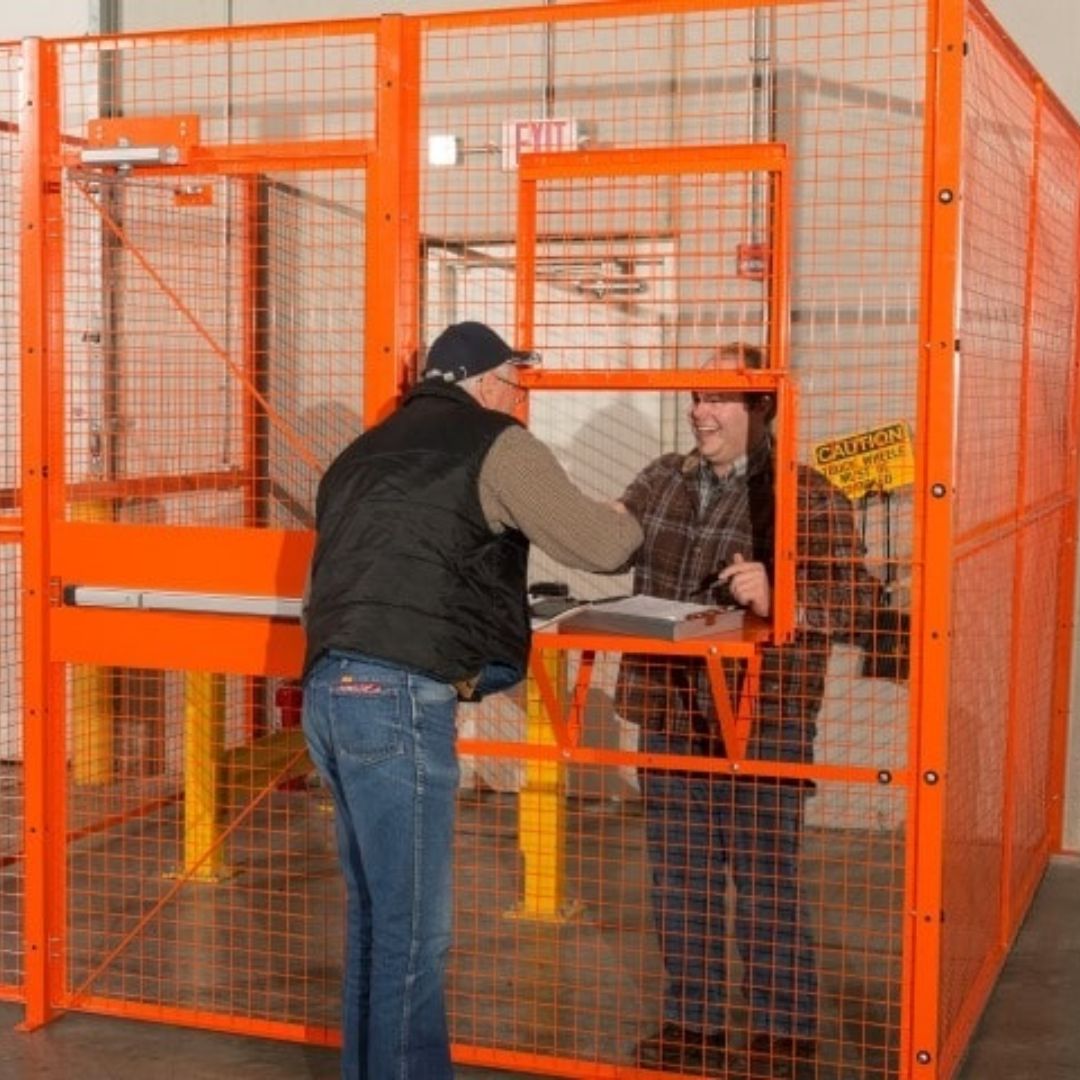
Use a window for the small stuff. Fasteners and blades handed through a service window keep the main door shut and the count honest.
Decide who has access before dawn. Foremen with codes, everyone else through a foreman, is the arrangement most contractors settle on. Card readers earn their cost when you need to know who opened what.
Light it. Mesh casts shadow and a dark cage at 5 a.m. is a cage nobody uses properly.
Leave room for the widest thing that moves. Carts, coil, ladders and long stock all set the opening width; a door sized for a person is a door that will be left open.
Specifying the enclosure
For a shop-and-yard contractor, specification comes down to four choices, and none of them are exotic.
Where the goal is to secure racked material rather than build a room, pallet rack security enclosures are the cheaper route, and for a dedicated shop tool room our tool crib layouts cover shelving, issue windows and zoning. Budget ranges are in the security cage cost guide.

Code, egress and anchoring
A wire enclosure is a building element once it is standing, indoors or out, and three questions come up every time.
Egress. A cage must never trap a person or block a required exit path. Doors on an egress route need hardware that opens from the inside without a key, and required aisle widths have to survive the install. OSHA’s exit route rules in 29 CFR 1910.36 and 1910.37 are the baseline; the building code may be stricter.
Fire protection. In a sprinklered shop, mesh ceilings and stacked storage change how water reaches the floor. NFPA 13 governs the design and the authority having jurisdiction applies it, so a mesh top over storage is a question for a fire protection engineer.
Anchoring. Slab thickness, post-tension cables, seismic requirements and, in the yard, the difference between a proper slab and a patch of asphalt all shape the anchor detail. In leased space, the landlord may restrict penetrations, which favors a bolted, removable system.
None of this is a reason to avoid a cage. It is a reason to draw it before you buy it.
Installing without losing a working day
A roofing shop cannot shut down in season. Installations are sequenced so the yard keeps functioning:
Phasing beats speed: standing the fall-protection and small-tool zones first usually removes the most urgent risk, and the coil or yard enclosure can follow. Our security cage installation guide covers site conditions, lead times and what an install crew needs from the yard.
Planning a cage for your own shop and yard
Five answers get you a realistic quote:
1. What has to be behind mesh — coil and fasteners, small tools, fall-protection gear, or all three in separate zones.
2. What must stay out — cylinders, flammable adhesives, hot-work gear. Naming these first keeps the design compliant.
3. How material leaves in the morning — hand carry, cart, coil rack, telehandler. That sets the opening.
4. Indoor, covered or open yard — which decides finish, top and anchoring.
5. Who opens it before dawn — which decides the hardware.
Send a yard sketch or a photo with those five answers marked on it and we can size and quote an enclosure without a site visit in most cases.
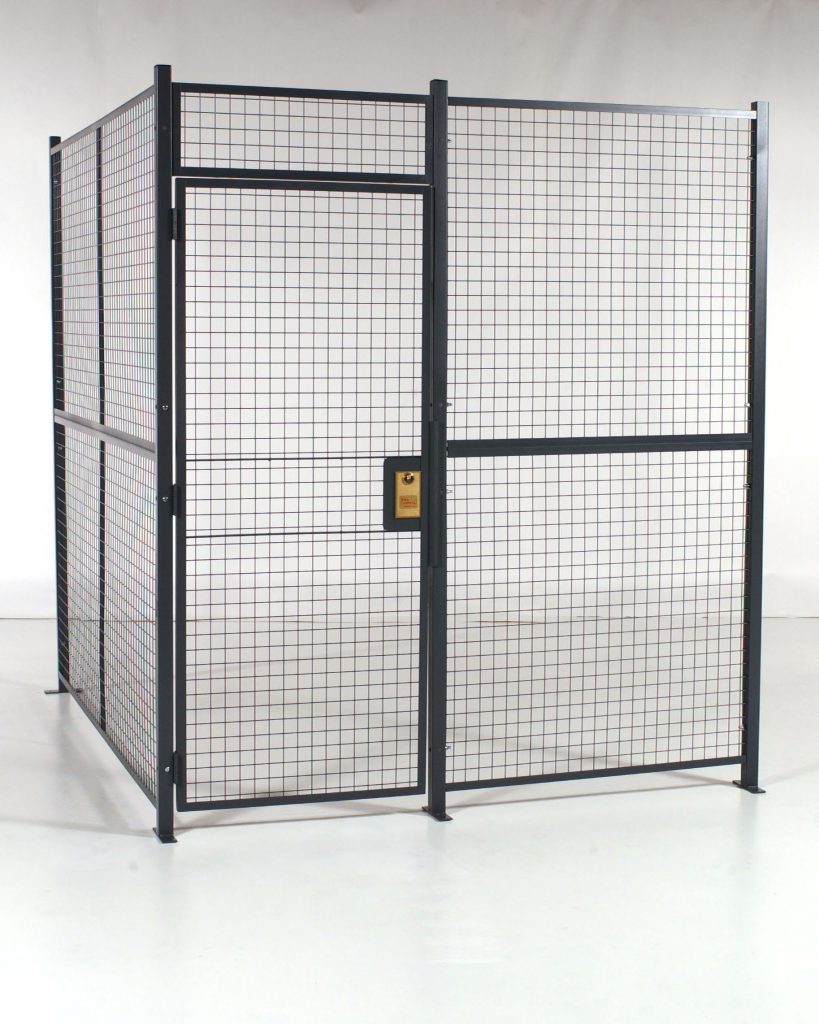
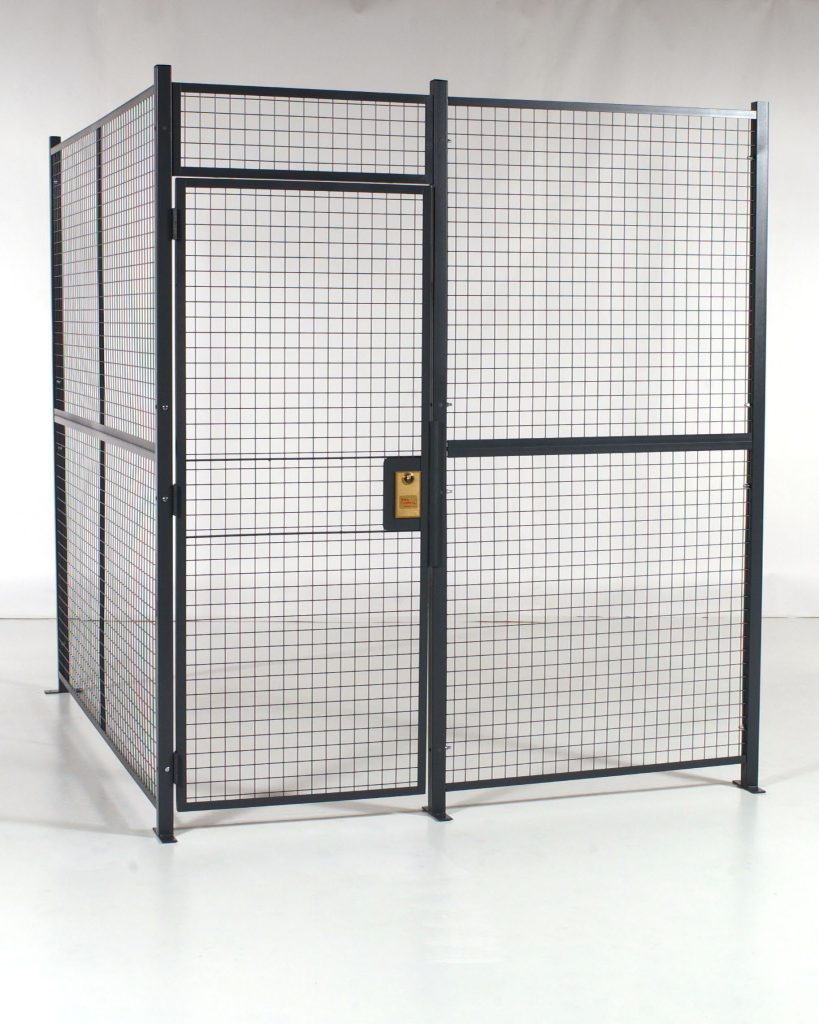
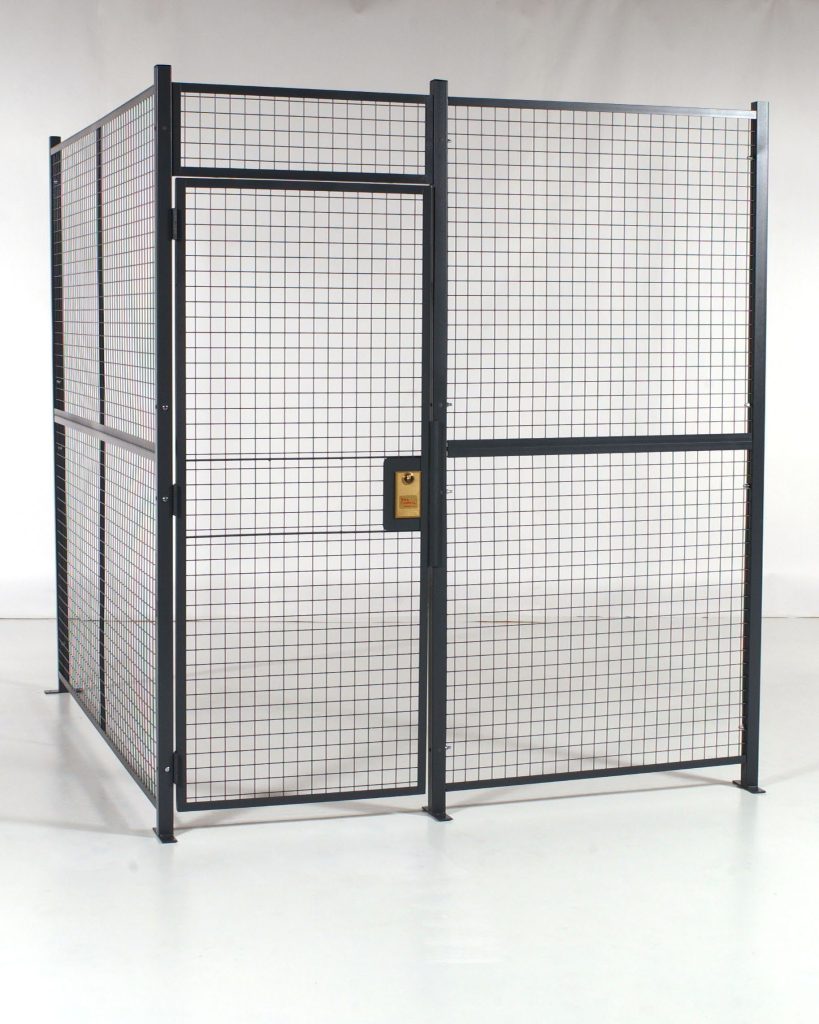
Shop Pre-Configured Wire Mesh Cage Kits Online
Standard-size welded wire cage kits, priced online, for smaller storage needs. Every kit still needs to be anchored to sound concrete — for tall, braced or engineered enclosures, request a quote with your building location and floor details.
Frequently asked questions
What should a roofing contractor cage first?
Can we store propane cylinders in a wire mesh cage?
How should fall-protection equipment be stored?
Is a wire cage suitable for an outdoor yard?
Won’t a cage slow down our morning load-out?
Can panels be added to an existing rack instead of building a room?
What does a shop and yard cage cost?
Looking for a project like yours? Browse more contractor and fleet security cage case studies, see all security cage case studies.
Securing a roofing shop or yard?
Send us a sketch or a few photos of the shop and yard and we will size the enclosures, separate the zones properly and quote it — supply-only or installed.