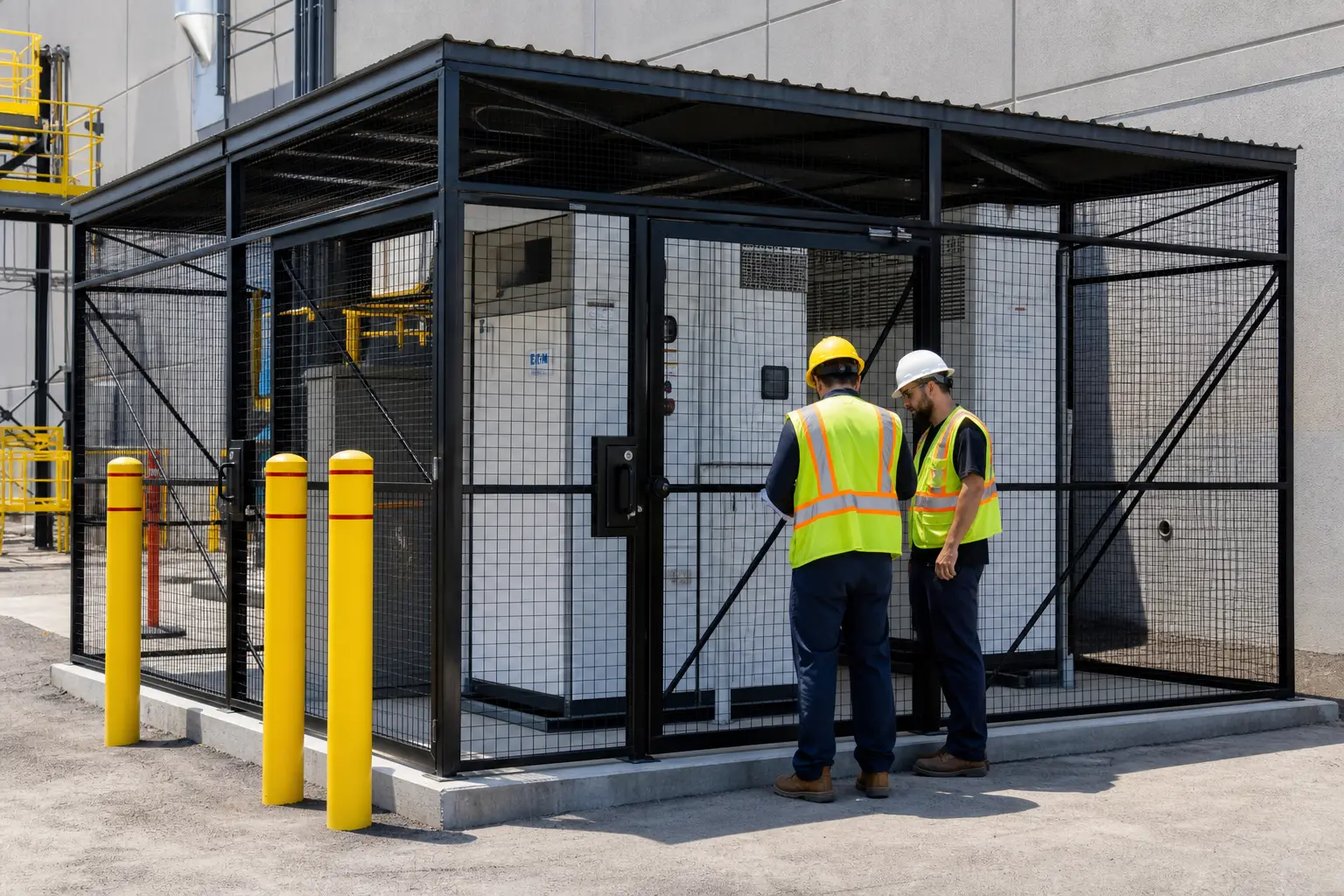
Not all security cages live inside a climate-controlled warehouse. From HVAC equipment on rooftops to generator compoundsand telecom sites, outdoor security cages protect high-value equipment that sits exposed to weather, vandalism, and theft. But designing an outdoor enclosure requires different considerations than an indoor cage. This guide covers what you need to know.
Why Outdoor Equipment Needs Caging
- Copper theft: HVAC condensers, transformers, and telecom equipment contain valuable copper that attracts thieves
- Vandalism: Unsecured outdoor equipment is an easy target — especially at unstaffed sites
- Liability: Exposed electrical or mechanical equipment creates safety hazards for trespassers
- Insurance requirements: Carriers often require enclosures for outdoor equipment in high-risk areas
- Compliance: Telecom, utility, and government sites mandate physical security barriers
Outdoor Cage Design Considerations
1. Material & Finish
Indoor cages use powder-coated carbon steel. Outdoor cages need more protection:
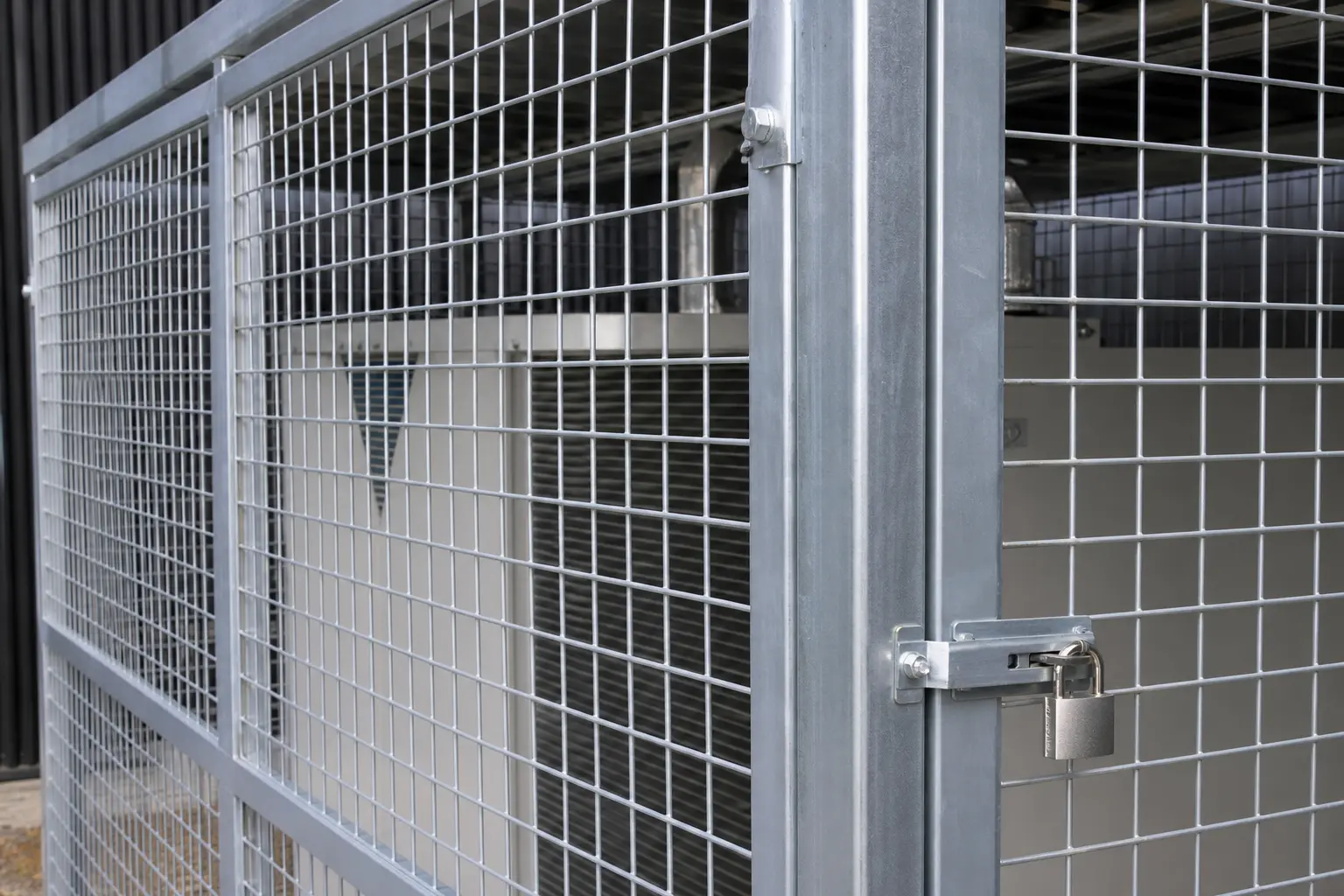
- Galvanized steel: Hot-dip galvanizing provides the best corrosion resistance for outdoor wire mesh panels
- Stainless steel: For coastal or chemical-exposure environments
- Powder coat over galvanized: Maximum protection plus color options
- Aluminum: Lightweight, corrosion-resistant, but lower security than steel
2. Foundation & Anchoring
Outdoor cages face wind loads that indoor installations never see. Anchoring options include:

- Concrete pad mounting: Bolt posts directly to a poured concrete pad
- In-ground posts: Embed post bases in concrete footings (best for high-wind areas)
- Ballast-weighted bases: For rooftop installations where penetrating the membrane isn’t an option
3. Gate & Access Design
Outdoor cages often need larger access points for equipment servicing:
- Double swing gates: For forklift or equipment access
- Sliding gates: When swing clearance is limited
- Personnel doors: Separate man-door for daily access without opening the main gate
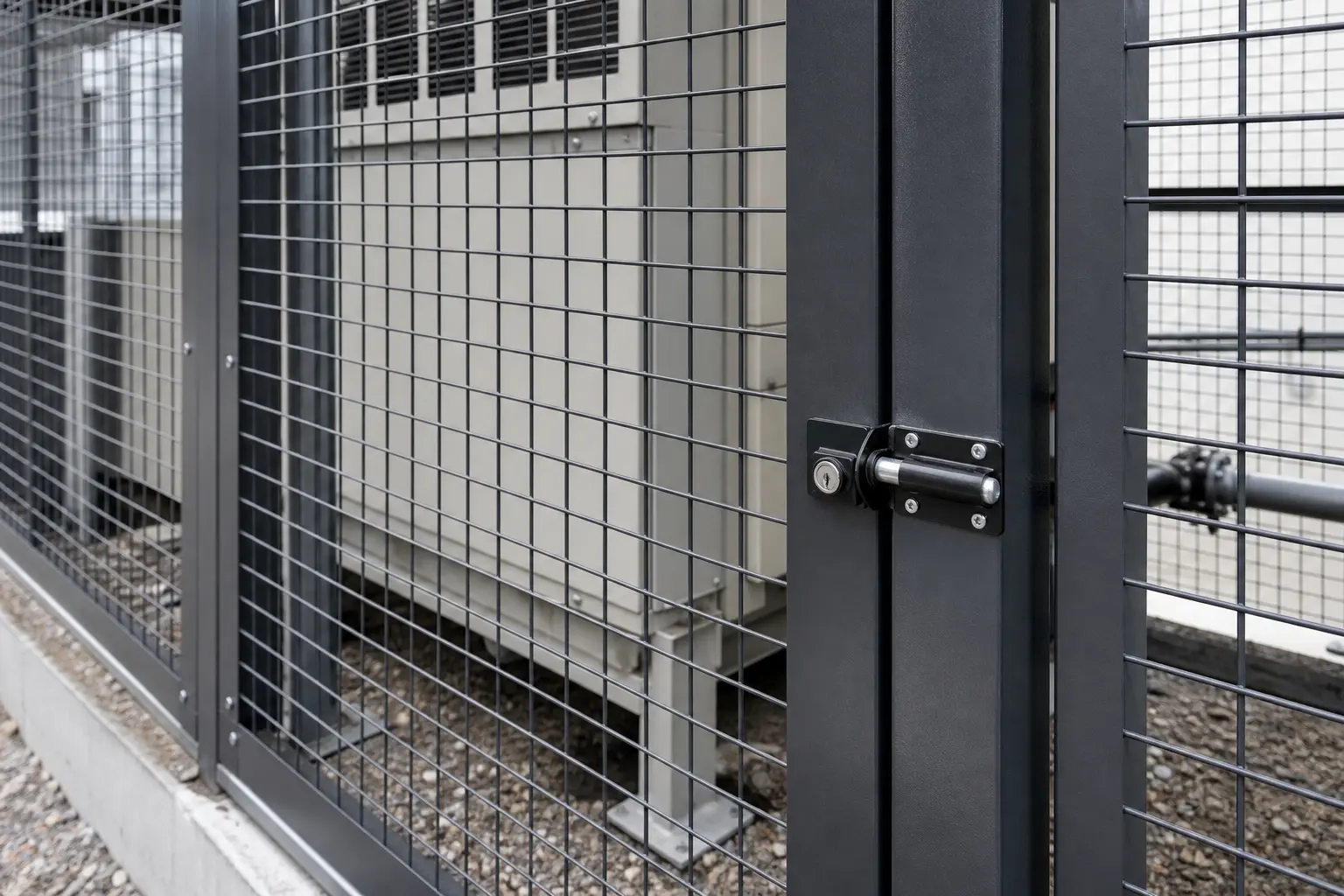
- Weatherproof locks: Stainless steel padlocks, covered lock boxes, or electronic keypads rated for outdoor use
View our full range of security cage door options and lock systems.
4. Roof & Top Enclosure
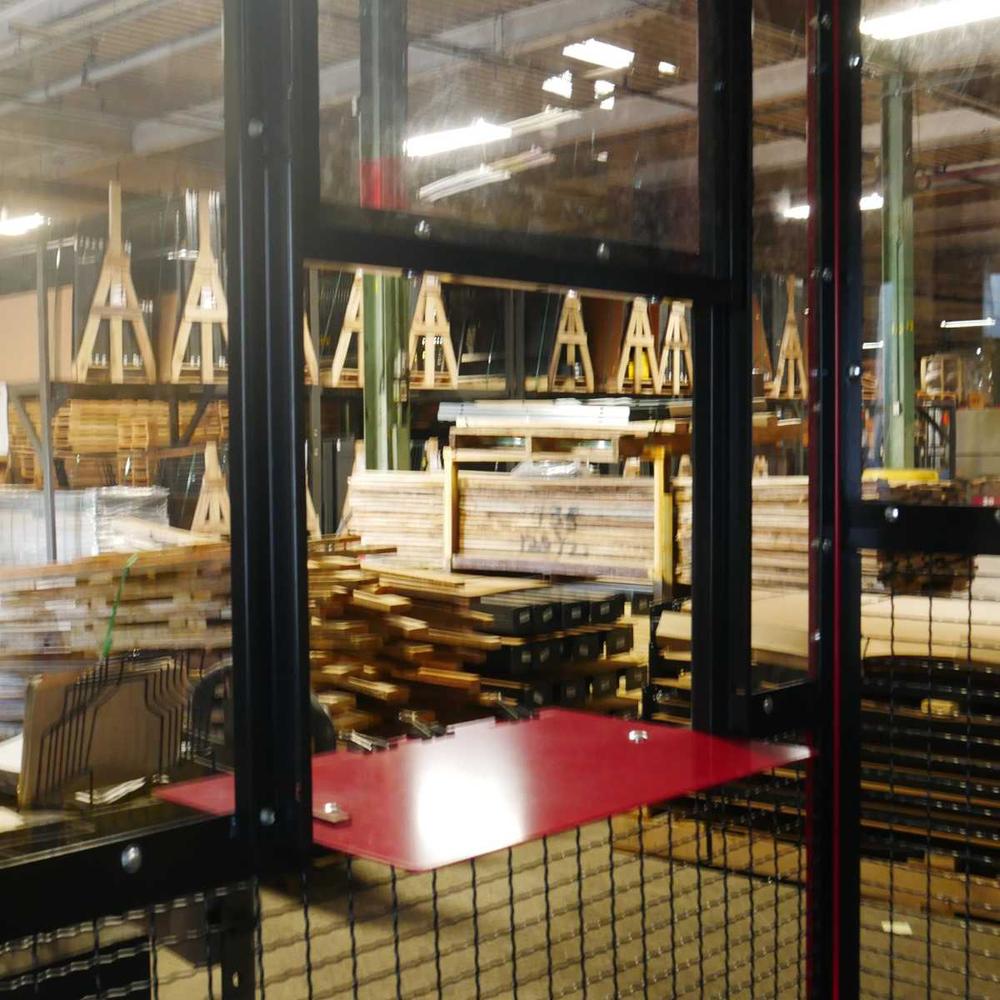
Most outdoor cages need a top enclosure to prevent climbing. Options include:
- Wire mesh ceiling panels: Standard security cage ceilings — allows rain drainage and light
- Solid metal roof: Adds weather protection for equipment that can’t get wet
- Razor wire or barb arm: Cost-effective climb deterrent without a full roof
Common Outdoor Security Cage Applications
HVAC & Mechanical Equipment
Rooftop condensers, chillers, and RTUs are prime targets for copper theft. A galvanized wire mesh cage around the equipment pad deters thieves while allowing full airflow for the equipment. Standard wire mesh panels provide 80%+ open area — more than enough for condenser airflow.

Generator & Transformer Compounds
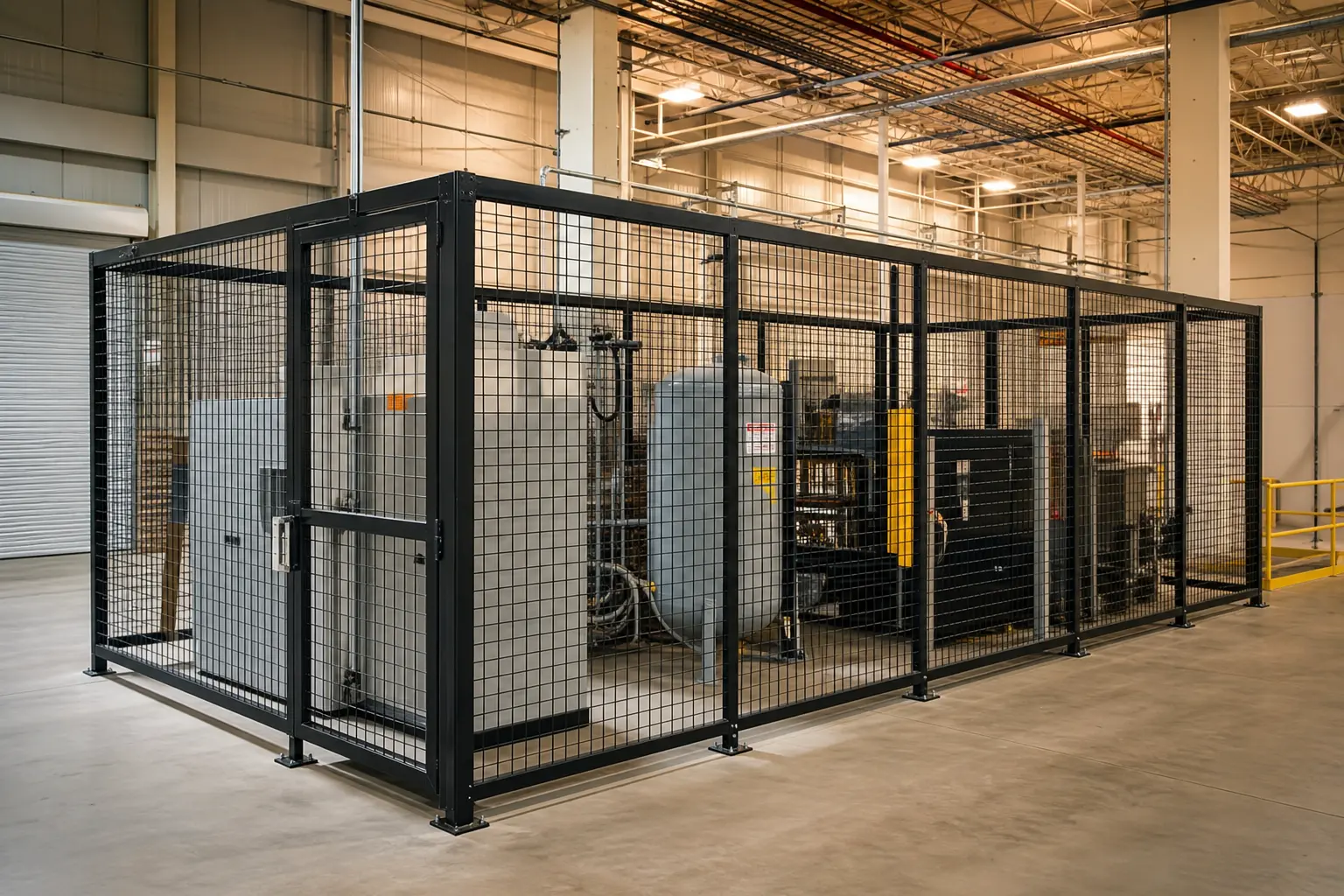
Backup generatorsand electrical transformers require secure perimeters for both theft prevention and safety. Cages keep unauthorized personnel away from high-voltage equipment while allowing maintenance access through lockable gates.

Telecom & Cell Tower Sites
Base station equipment at cell tower sites requires physical security to meet carrier requirements. Outdoor cages protect ground-mounted equipment cabinets, battery backups, and fiber interconnects.
Storage Yards & Laydown Areas
Contractorsand industrial operations use outdoor cages to secure equipment, materials, and tooling in laydown areas. Modular wire mesh enclosures create defined, lockable zones within a larger yard. See how an electrical contractor security cage combines shop, warehouse and yard enclosures around daily crew load-out.
Custom Outdoor Cage Features
- Camera mounting brackets: Integrated posts for security cameras
- Motion-activated lighting: Mountable to cage structure
- Signage panels: “Danger — High Voltage” or “No Trespassing” integrated into the cage
- Equipment pads: Raised concrete pads inside the cage for drainage
- Vehicle bollards: Prevent ram attacks at high-security sites
Need an Outdoor Security Cage?
MH-USA designs custom outdoor security enclosures for HVAC compounds, generator pads, telecom sites, and industrial yards. Galvanized steel construction rated for Western U.S. weather conditions.

Call (800) 326-4403 or request a site assessment

Why Choose Material Handling USA for Outdoor Security Cages: Weather-Resistant Equipment Protection
{
}
Material Handling USA brings over 30 years of experience to every security cage project. Our team has designed and installed thousands of security enclosures across warehouses, distribution centers, manufacturing plants, healthcare facilities, law enforcement agencies, and data centers throughout the Intermountain Westand nationwide.
Our Process
Every project begins with a thorough understanding of your requirements. We conduct on-site assessments (or virtual consultations for initial planning), capture detailed measurements, and discuss your security objectives, workflow needs, and budget parameters. Our engineering team creates custom CAD layouts showing exactly how your cage system will look and function — you review and approve the design before we proceed.
{

}
We source panels, doors, locks, and accessories from leading American manufacturers Products — the industry’s most trusted manufacturers. Both offer comprehensive product lines with rapid availability and proven quality. Our bulk purchasing relationships deliver competitive pricing that individual buyers can’t achieve on their own.
Professional Installation & Support
Our trained installation crews handle every aspect of cage assembly — from floor anchoring to door hanging to access control integration. We work around your schedule to minimize operational disruption. Every installation concludes with a formal inspection and documentation package. Post-installation, we remain available for adjustments, expansion, and ongoing maintenance support.
{
}
Serving the Intermountain West & Beyond
Headquartered in Salt Lake City, Utah, Material Handling USA provides direct service throughout Utah, Idaho, Colorado, Nevada, Arizona, Wyoming, and Montana. Nationwide projects are supported throughour network of installation partnersand direct-ship capabilities. Wherever your facility is located, we deliver the same quality, attention to detail, and customer service that has builtour reputation over three decades.
{
}
Request Your Free Quote
Ready to secure your facility? Contact Material Handling USA for a free, no-obligation consultation and quote. Our team responds within one business day with a preliminary assessment and next steps.
- Phone: (800) 326-4403 or (801) 328-8788
- Email: sales@mh-usa.com
- Online: Request a Quote
We look forward to helping you design the right security cage solution for your facility.
Frequently Asked Questions
How much do outdoor security cages: weather-resistant equipment protection cost?
Pricing depends on the size, configuration, wire gauge, door type, and accessories required for your specific application. Material Handling USA provides free, no-obligation quotes that include CAD layout design, material specifications, and professional installation costs. Contact us at (800) 326-4403 or email sales@mh-usa.com for a detailed estimate within 1–2 business days.

What is the installation timeline?
Most security cage projects follow a 2–3 week timeline from initial contact to completed installation. Week 1 covers site assessment and design. Week 2 handles order processing and material preparation. Week 3 is delivery and professional installation. Expedited timelines are available for urgent security needs — some projects can be completed in as little as 5 business days from initial contact.
Do you provide free site assessments?
Yes. Material Handling USA provides complimentary on-site measurementsand CAD layout design for all security cage projects. Our assessment includes detailed measurements, obstacle identification, workflow analysis, and a complete proposal with pricing. For projects outside the Wasatch Front, we can conduct virtual assessments using photosand measurements you provide.
Can security cages be customized?
Absolutely. While standard panel sizes handle most configurations, our custom security cage capabilities include non-standard dimensions, angled walls, multiple door types, height transitions, and integration with existing structures. Custom powder coat colors, galvanized finishes, and specialized hardware are also available. Our engineering team designs custom solutions that meet your exact specifications.
What warranty do security cages carry?
All security cages from Material Handling USA include manufacturer warranties covering defects in materialsand workmanship. our manufacturing partners both stand behind their products with comprehensive warranty programs. Our installation workmanship is warranted for one year, including a 90-day adjustment period where we return to tighten hardware and verify door alignment at no charge.
Do you serve locations outside Utah?
Yes. While headquartered in Salt Lake City, Material Handling USA serves the entire Intermountain West including Utah, Idaho, Colorado, Nevada, Arizona, Wyoming, and Montana with direct installation crews. Nationwide projects are supported throughour installation partner network and direct-ship capabilities. Contact us to discuss your project location.
Explore More Security Cage Solutions
Online Store
Shop at MaterialHandling-USA.com
Need barriers, access control, or secure storage? Shop online:
Lockers
Warehouse Equipment & Supplies
Browse security & access control products →