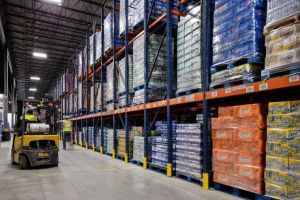
Proper evidence storage is one of the most critical — and often overlooked — responsibilities in law enforcement. A single mishandled piece of evidence can compromise an entire investigation, lead to case dismissals, or violate chain-of-custody requirements. Whether you’re building a new evidence room or upgrading an existing facility, this guide covers the design principles, storage systems, and best practices that keep evidence secure, organized, and court-admissible.
Why Evidence Storage Design Matters
Evidence rooms aren’t just storage closets. They’re controlled environments that must meet strict standards set by the International Association for Property and Evidence (IAPE), state regulations, and department accreditation bodies. The consequences of poor evidence storage include:
- Chain-of-custody breaks — Evidence that can’t be accounted for may be inadmissible
- Cross-contamination — DNA, biological, and chemical evidence requires separation
- Degradation — Improper climate control destroys biological samples, drugs, and electronics
- Theft or tampering — Unsecured facilities invite internaland external risks
- Audit failures — Departments face liability when evidence can’t be located
Core Elements of an Evidence Storage Facility
1. Secure Physical Perimeter
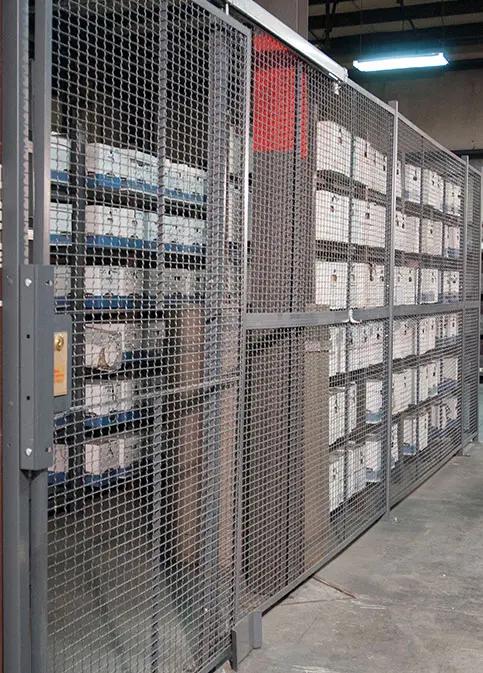
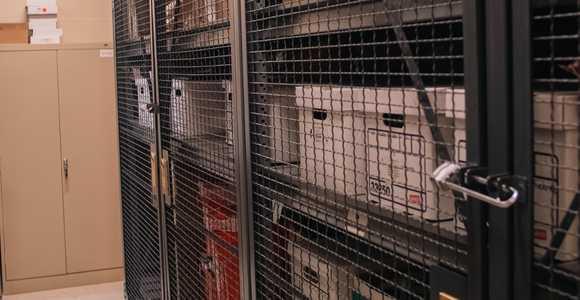
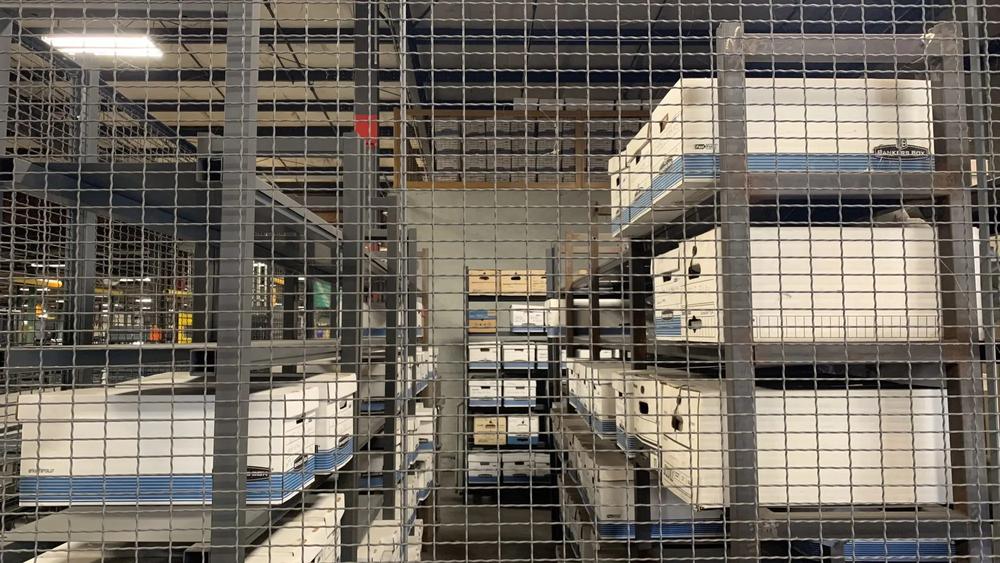
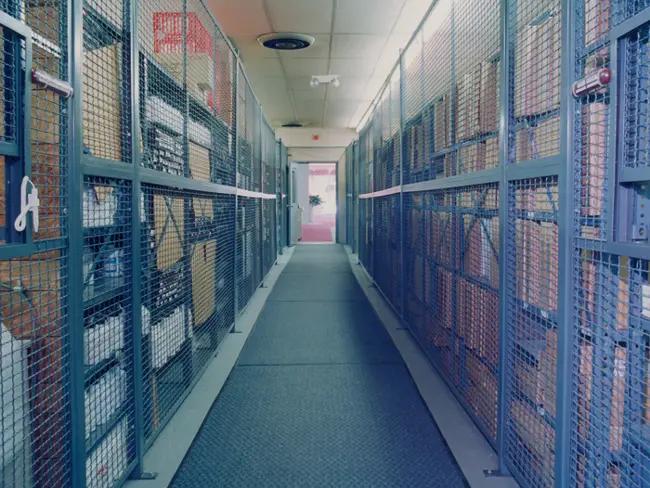
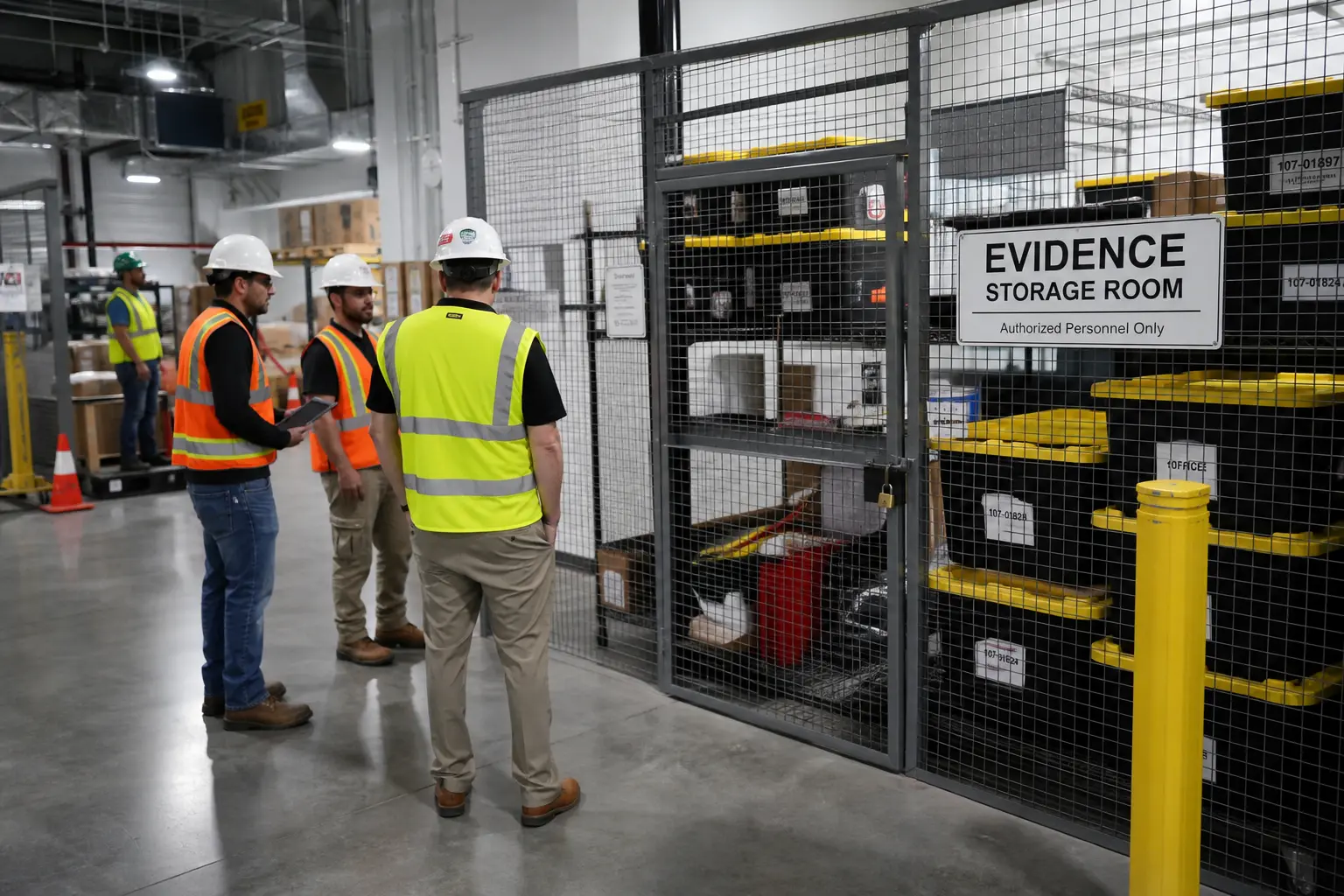
The foundation of any evidence room is its physical security. Wire mesh security cages built with heavy-gauge welded wire (10-gauge or heavier) provide floor-to-ceiling enclosures that prevent unauthorized access while maintaining visibility for security cameras. Unlike solid walls, wire mesh partitions allow airflow, sprinkler coverage, and visual monitoring — all critical for evidence rooms.
2. Climate-Controlled Zones
Different evidence types require different environments. A well-designed facility includes:
- General storage: 65–75°F, 30–50% relative humidity
- Biological evidence: Refrigerated (35–40°F) and freezer (-10°F) sections
- Narcotics/DEA vault: Climate-controlled with DEA-compliant security cages meeting 21 CFR 1301.72 standards
- Firearms: Low-humidity environment with individual weapon racks
- Electronics: Static-free, temperature-stable zones
3. Evidence Tracking Systems
Modern evidence rooms combine physical security with digital tracking. Barcode or RFID systems log every item as it enters, moves, or leaves the facility. Pair this with electronic access control locks that record who accessed which cage and when, creating an automated chain-of-custody log.

4. Segregated Storage Zones
Evidence should be separated by:
- Case status: Active investigations vs. adjudicated cases vs. pending disposal
- Evidence type: Biological, chemical, firearms, valuables, general
- Size: Small items in lockers, bulk items in larger enclosures
- Hazard level: Flammable, biological, or chemical hazards require dedicated areas
Evidence Storage Room Layout Best Practices
Intake & Processing Area
Design a dedicated intake zone outside the main evidence vault with pass-through service windows that allow officers to submit evidence without entering the secure area. This minimizes foot traffic and maintains the chain of custody from the moment evidence arrives.
Temporary Evidence Lockers
Install self-service evidence lockers in booking or intake areas for after-hours submissions. These one-way deposit lockers allow officers to secure evidence even when the evidence room is unstaffed. Only evidence technicians have access to retrieve items from the other side.

Long-Term Storage Configuration
For facilities storing thousands of items, maximize density with high-density mobile shelving systems inside security cages. Mobile shelving can increase capacity by 50–100% compared to static shelving, reducing the footprint needed for long-term storage while keeping everything within a secured, monitored enclosure.

Challenges of Physical Evidence Storage
Even well-designed evidence rooms face ongoing challenges:
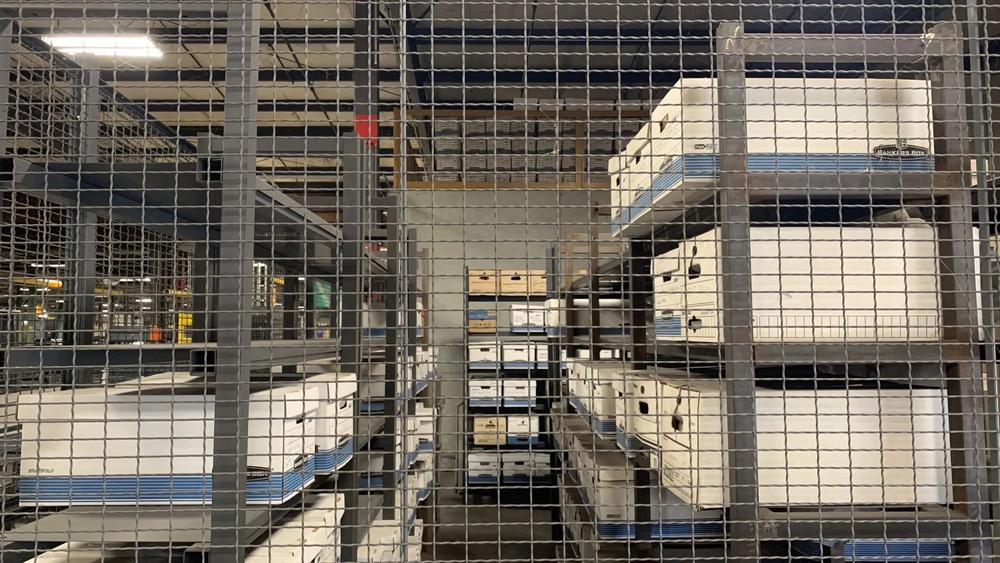
- Space constraints: Evidence accumulates faster than it’s disposed of. Plan for 15–20% annual growth.
- Retention policies: Without active disposition programs, evidence rooms overflow. Implement scheduled reviews.
- Staffing: Evidence technicians need training in handling, cataloging, and security protocols.
- Aging facilities: Older buildings may lack adequate HVAC, fire suppression, or structural support for dense storage.
- Budget limitations: Modular wire mesh partition systems offer a cost-effective alternative to full construction, allowing phased expansion as needs grow.
Evidence Storage Solutions: Wire Mesh vs. Traditional Construction
| Feature | Wire Mesh Cages | Traditional Walls |
|---|---|---|
| Install Time | 1–3 days | 2–6 weeks |
| Cost | $25–60/sq ft | $80–200/sq ft |
| Reconfigurable | Yes — modular panels | No — permanent |
| Camera Visibility | Full visibility through mesh | Requires interior cameras |
| Sprinkler Coverage | Unobstructed | Requires interior heads |
| Airflow | Natural circulation | Requires dedicated HVAC |
| Security Rating | 10-gauge welded wire | Drywall (vulnerable) |
Compliance & Standards
Key standards to follow when designing evidence storage:
- IAPE Standards: The gold standard for evidence management — covers layout, access control, climate, and procedures
- CALEA Accreditation: Requires documented evidence handling proceduresand secure storage
- DEA 21 CFR 1301.72: Specific vault requirements for controlled substances — steel construction, GSA-approved locks
- NFPA/IFC Fire Codes: Sprinkler coverage, egress requirements, hazardous material separation
Evidence Room Organization Ideas
- Color-coded zones: Use cage panels or floor markings to visually separate evidence types
- Vertical storage: Maximize ceiling height with tall shelving inside cages — especially for boxed/packaged evidence
- Dedicated returns shelf: A staging area inside the cage for items being checked back in
- Photo documentation station: A well-lit area near intake for photographing evidence before storage
- Purge scheduling board: Visual tracking for disposition-eligible cases
Getting Started
Whether you’re a small-town police department or a large metro evidence facility, the principles are the same: secure the perimeter, control access, maintain climate, and track everything. Security cages from MH-USA provide the physical backbone — modular, reconfigurable, and built to meet law enforcement standards.
Need Help Designing Your Evidence Room?
MH-USA works with law enforcement agencies across Utah, Idaho, Colorado, and the Western U.S. to design and install evidence storage systems that meet IAPE and DEA standards.
Call (800) 326-4403 or request a free consultation

Advanced Evidence Room Design Strategies
Beyond the basic requirements of secure storage, modern evidence rooms incorporate design strategies that improve operational efficiency, reduce liability exposure, and support long-term evidence preservation. These advanced approaches represent current best practices from IAPE-accredited agencies nationwide.

Environmental Control for Evidence Preservation
Different evidence types require different environmental conditions. Biological evidence (blood, DNA, tissue samples) requires refrigerated or frozen storage to prevent degradation. Temperature and humidity monitoring with alarm systems ensure conditions remain within acceptable ranges. Electronic evidence (computers, phones, storage media) requires static-free environments with controlled humidity to prevent data corruption. Paper documentsand photographs benefit from climate-controlled conditions that prevent mold, yellowing, and brittleness.
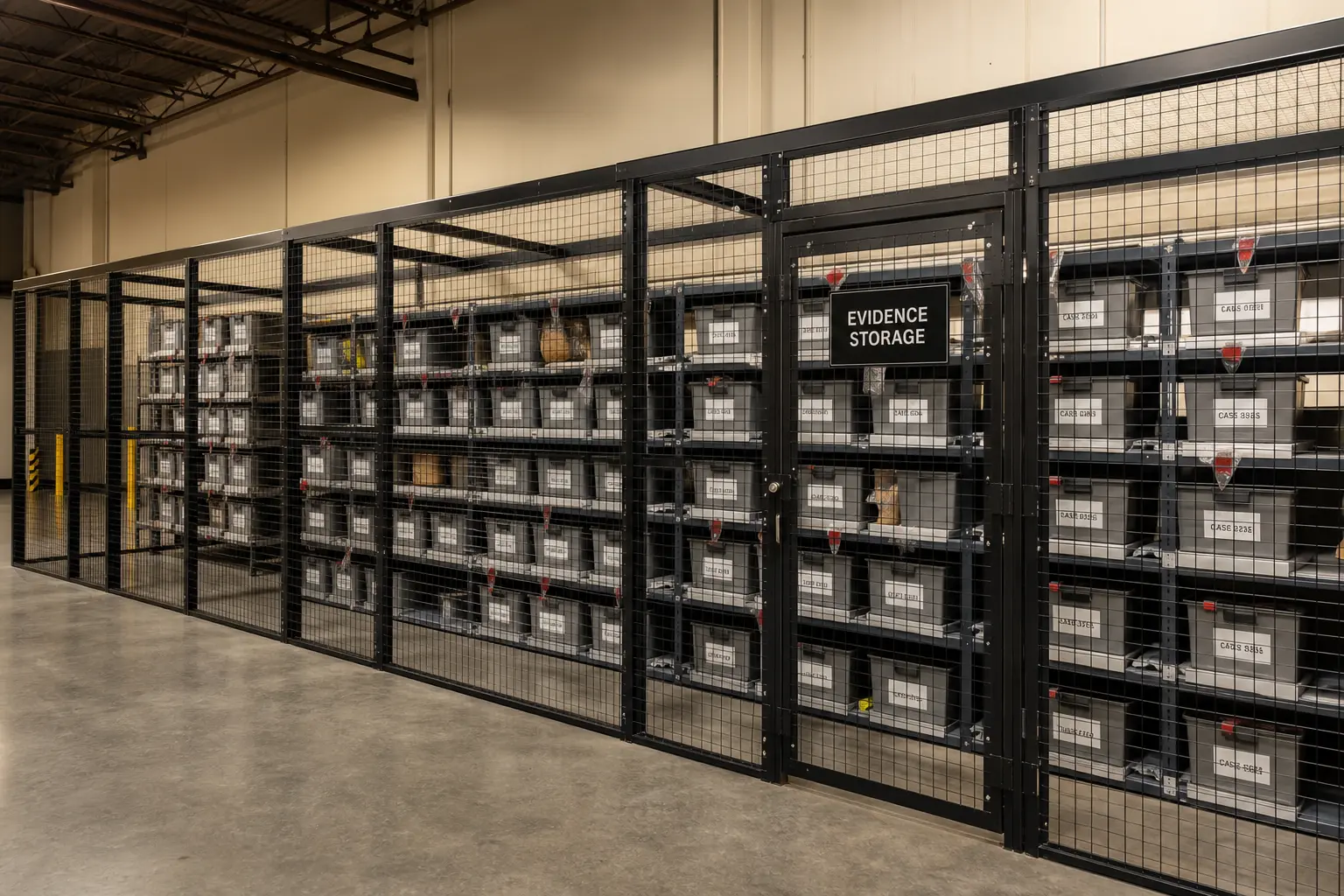
Wire mesh security cages in climate-controlled zones allow conditioned air to circulate throughout the enclosure while maintaining physical security. This is a significant advantage over solid-wall rooms that may create temperature and humidity variations within the evidence storage space.
Evidence Room Workflow Optimization
Efficient evidence rooms are designed around workflow patterns. The intake area should be positioned near the evidence room entrance with a service window and pass-through lockers for after-hours submission. The processing area — where evidence is cataloged, photographed, and barcoded — should be centrally located with adequate workspace and equipment access.
Long-term storage should be organized by case number, property type, or a hybrid system depending on agency size and evidence volume. High-frequency access items (active case evidence) should be positioned near the processing area. Cold case and long-term retention evidence can be stored in more remote cage sections with compact shelving to maximize capacity.

Digital Evidence Integration
The growing volume of digital evidence — body camera footage, cell phone extractions, computer forensics — requires integration between physicaland digital evidence management. Physical evidence rooms increasingly house digital evidence processing workstations within secure cages, ensuring that digital forensic work occurs in the same controlled environment as physical evidence handling. Network-connected workstations in evidence cages must have hardened cybersecurity to prevent unauthorized data access.
Disaster Recovery Planning
Evidence rooms must have disaster recovery plans addressing fire, flood, earthquake, and other natural disasters. Wire mesh cages maintain sprinkler coverage for fire suppression. Elevation strategies protect evidence from flooding in flood-prone areas. Backup power ensures access controland climate control systems operate during outages. Off-site inventory documentation ensures evidence can be accounted for even if physical records are lost.
Why Choose Material Handling USA for Evidence Storage Room Design: Best Practices for Law Enforcement
{
}
Material Handling USA brings over 30 years of experience to every security cage project. Our team has designed and installed thousands of security enclosures across warehouses, distribution centers, manufacturing plants, healthcare facilities, law enforcement agencies, and data centers throughout the Intermountain Westand nationwide.
Our Process
Every project begins with a thorough understanding of your requirements. We conduct on-site assessments (or virtual consultations for initial planning), capture detailed measurements, and discuss your security objectives, workflow needs, and budget parameters. Our engineering team creates custom CAD layouts showing exactly how your cage system will look and function — you review and approve the design before we proceed.
{
}
We source panels, doors, locks, and accessories from leading American manufacturers Products — the industry’s most trusted manufacturers. Both offer comprehensive product lines with rapid availability and proven quality. Our bulk purchasing relationships deliver competitive pricing that individual buyers can’t achieve on their own.
Professional Installation & Support
Our trained installation crews handle every aspect of cage assembly — from floor anchoring to door hanging to access control integration. We work around your schedule to minimize operational disruption. Every installation concludes with a formal inspection and documentation package. Post-installation, we remain available for adjustments, expansion, and ongoing maintenance support.
{
}
Serving the Intermountain West & Beyond
Headquartered in Salt Lake City, Utah, Material Handling USA provides direct service throughout Utah, Idaho, Colorado, Nevada, Arizona, Wyoming, and Montana. Nationwide projects are supported throughour network of installation partnersand direct-ship capabilities. Wherever your facility is located, we deliver the same quality, attention to detail, and customer service that has builtour reputation over three decades.
{
}
Request Your Free Quote
Ready to secure your facility? Contact Material Handling USA for a free, no-obligation consultation and quote. Our team responds within one business day with a preliminary assessment and next steps.
- Phone: (800) 326-4403 or (801) 328-8788
- Email: sales@mh-usa.com
- Online: Request a Quote
We look forward to helping you design the right security cage solution for your facility.
Frequently Asked Questions
How much do evidence storage room design: best practices for law enforcement cost?
Pricing depends on the size, configuration, wire gauge, door type, and accessories required for your specific application. Material Handling USA provides free, no-obligation quotes that include CAD layout design, material specifications, and professional installation costs. Contact us at (800) 326-4403 or email sales@mh-usa.com for a detailed estimate within 1–2 business days.
What is the installation timeline?
Most security cage projects follow a 2–3 week timeline from initial contact to completed installation. Week 1 covers site assessment and design. Week 2 handles order processing and material preparation. Week 3 is delivery and professional installation. Expedited timelines are available for urgent security needs — some projects can be completed in as little as 5 business days from initial contact.
Do you provide free site assessments?
Yes. Material Handling USA provides complimentary on-site measurementsand CAD layout design for all security cage projects. Our assessment includes detailed measurements, obstacle identification, workflow analysis, and a complete proposal with pricing. For projects outside the Wasatch Front, we can conduct virtual assessments using photosand measurements you provide.
Can security cages be customized?
Absolutely. While standard panel sizes handle most configurations, our custom security cage capabilities include non-standard dimensions, angled walls, multiple door types, height transitions, and integration with existing structures. Custom powder coat colors, galvanized finishes, and specialized hardware are also available. Our engineering team designs custom solutions that meet your exact specifications.
What warranty do security cages carry?
All security cages from Material Handling USA include manufacturer warranties covering defects in materialsand workmanship. our manufacturing partners both stand behind their products with comprehensive warranty programs. Our installation workmanship is warranted for one year, including a 90-day adjustment period where we return to tighten hardware and verify door alignment at no charge.
Do you serve locations outside Utah?
Yes. While headquartered in Salt Lake City, Material Handling USA serves the entire Intermountain West including Utah, Idaho, Colorado, Nevada, Arizona, Wyoming, and Montana with direct installation crews. Nationwide projects are supported throughour installation partner network and direct-ship capabilities. Contact us to discuss your project location.
Related Solutions
Explore More Security Cage Solutions
Online Store
Shop at MaterialHandling-USA.com
Shop lockersand secure storage solutions online:
Storage Cabinets
Browse 3,000+ locker options →