
AC Unit Security Cages for Commercial Condensers and HVAC Equipment
How businesses, schools, churches, property managers and utilities protect air conditioner condensers, heat pumps, mini-splits and rooftop units from copper theft and vandalism — cage types, sizing, airflow and service access, anchoring, and what the codes say.
Supplied nationwide from Salt Lake City — call (800) 326-4403.
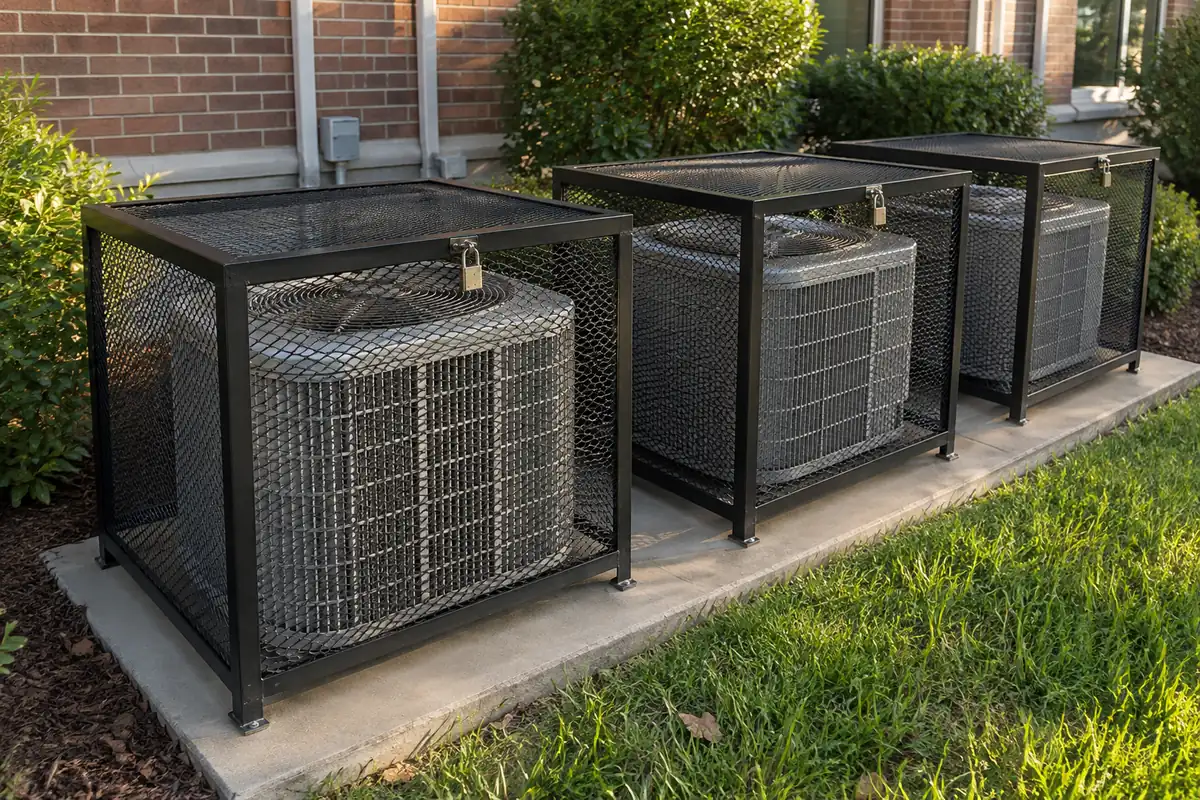
Copper theft
Stops coils and line sets being cut out
Open mesh
Keeps condenser airflow moving
Hinged lid
Technicians service without removing the cage
Anchored
Bolted to the pad, curb or wall
Why commercial AC units need a security cage
An air conditioner condenser sits outside, often behind a building where nobody is watching, and it is full of copper: the coil, the refrigerant line set and the electrical wiring. Thieves can strip a unit in minutes, and the loss is rarely the scrap value. Once a line is cut, the refrigerant charge escapes, the coil may be ruined, and the building loses cooling until a contractor can repair or replace the equipment. For a school, clinic, restaurant, data room or store, that downtime is usually the biggest cost.
An AC unit security cage is a lockable steel enclosure built around the condenser so it can still breathe and be serviced, but cannot be reached, cut apart or lifted away without a key. It is one of the most requested outdoor applications in our security cages range, and it works best when it is designed around the equipment first and the threat second. This guide covers the cage types, how to size one without starving the unit of air, how technicians get in, and the code points to check before you order.
What an AC cage protects against
- Copper and metal theft: coils, line sets, grounding and wiring cut out of the unit.
- Whole-unit theft: smaller condensers and mini-split units lifted off a pad or bracket.
- Vandalism: fins crushed, fan guards kicked in, disconnects switched off or panels opened.
- Accidental damage: mowers, snow removal, carts and vehicles striking the unit.
- Debris and access: keeps people, balls, bikes and trash off the top of the unit.
Types of AC unit security cage
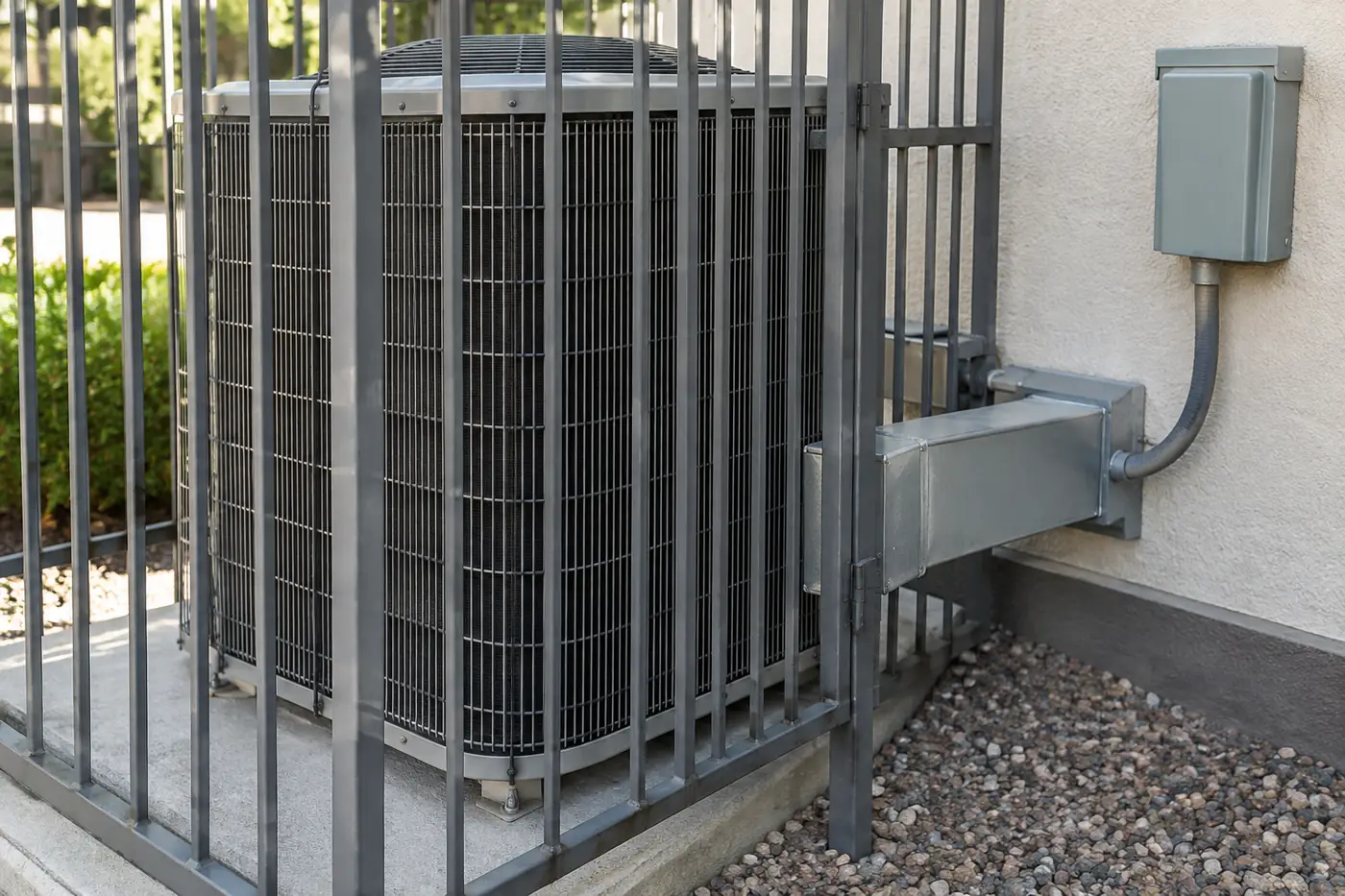
“AC cage” covers several quite different products. The right one depends on how many units there are, where they sit and how much access the service contractor needs:
| Cage type | Best for | Strengths | Watch for |
|---|---|---|---|
| Adjustable bar kit | One small condenser, light commercial or multifamily | Low cost, fast install, no measuring for fabrication | Size range and the strength of sliding joints |
| Fixed-size welded cage | Commercial split-system condensers and heat pumps on a pad | Stronger frame, sized to the unit, hinged service lid | Needs accurate unit dimensions and clearances |
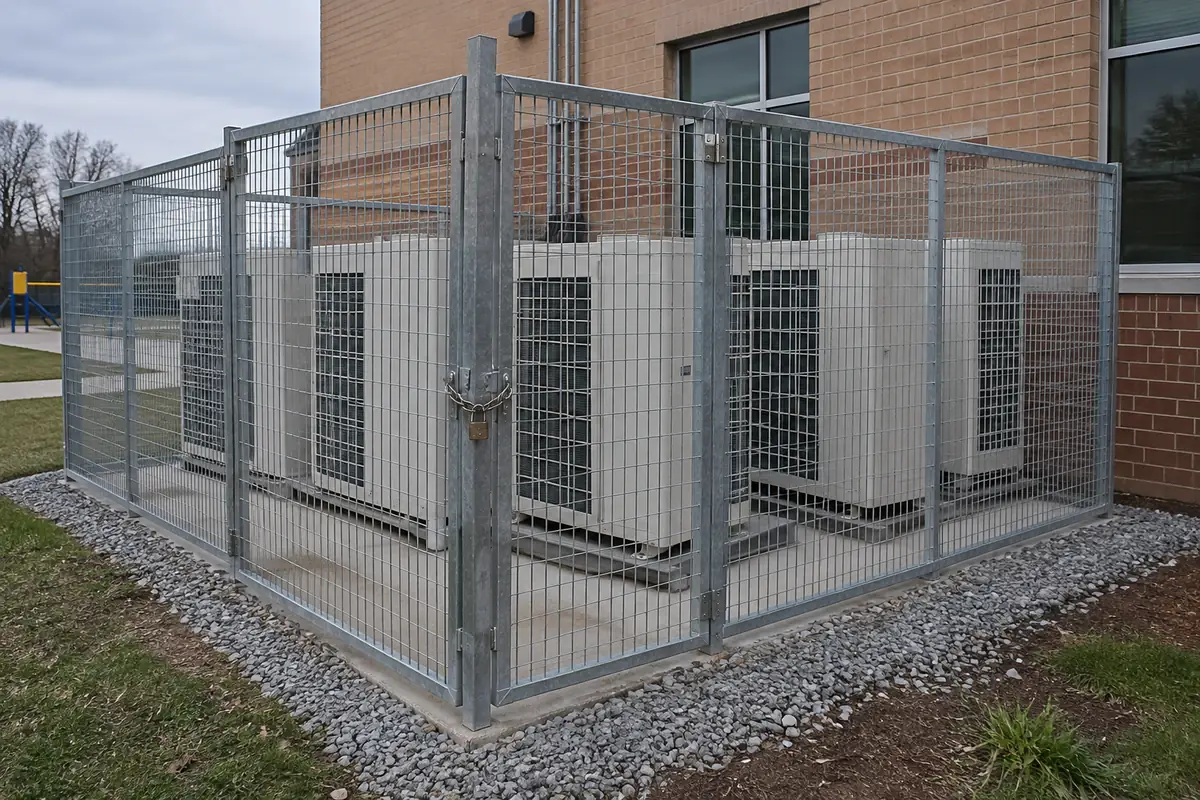
| Walk-in enclosure | Rows of condensers, VRF systems, schools, campuses and apartment buildings | One gate and lock for many units, room for technicians inside | Pad space, gate swing and drainage |
| Rooftop cage | Packaged rooftop units reachable from ladders, parapets or nearby structures | Protects without blocking the roof walkway | Roof penetrations and the roofing warranty |
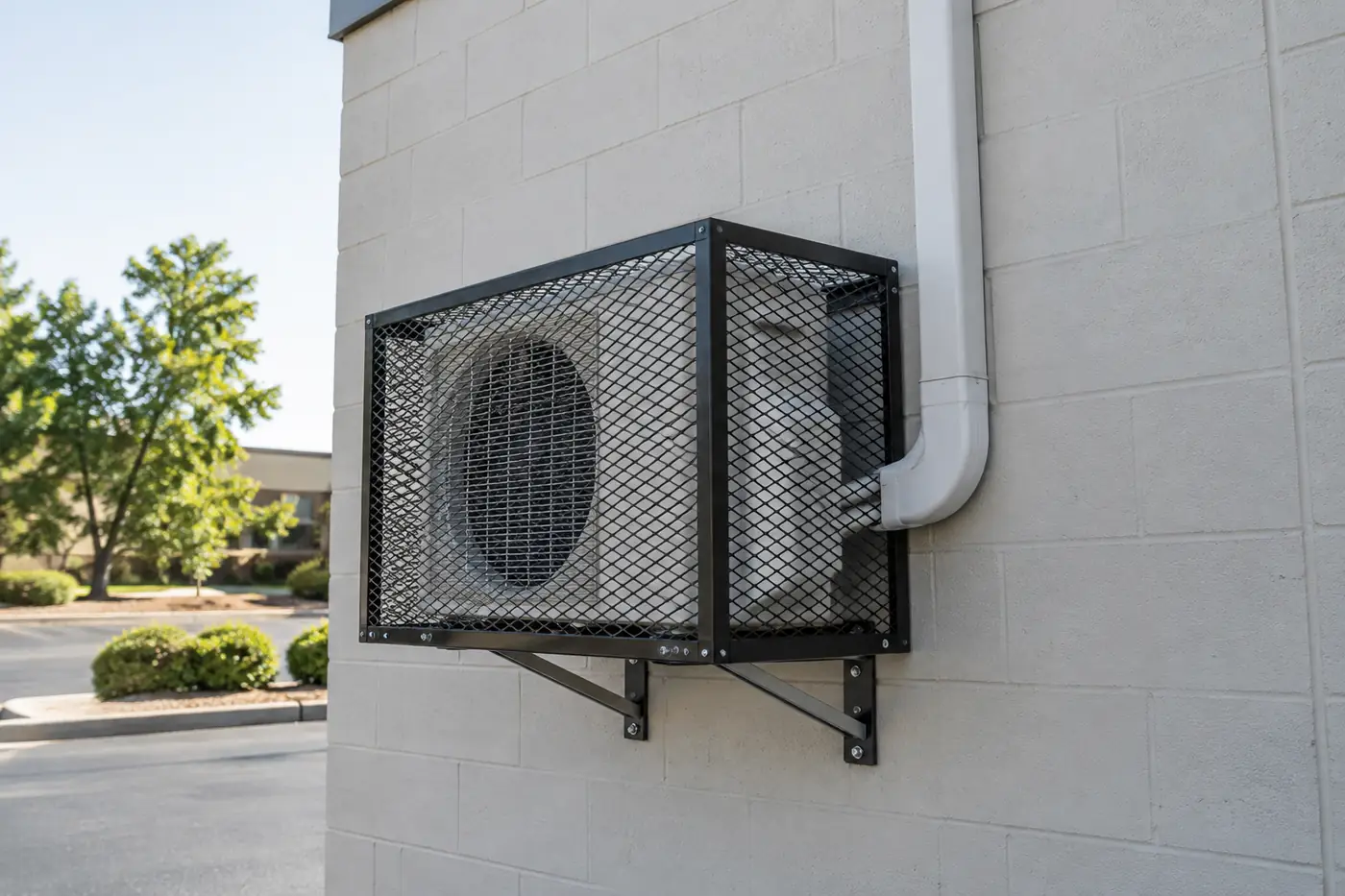
| Wall-mount cage | Ductless mini-split outdoor units on brackets | Covers the unit and bracket fasteners together | Wall material and bracket load |
Bar cages and welded wire mesh cages both work. Mesh gives a smaller opening and a more uniform look across a group of units; bars give the most open area for airflow. For the wider family of outdoor enclosures around generators, backflow preventers and electrical gear, see our outdoor security cages guide.
Where AC unit security cages are used
Schools, churches and campuses
Schools and houses of worship are empty for long stretches — nights, weekends and summer — and their condensers often sit in quiet side yards. Walk-in enclosures around a whole condenser bank are common here because one gate protects many units and the facilities team or HVAC contractor can still work inside without unlocking a dozen lids.

Rooftops on retail and industrial buildings
Packaged rooftop units are out of sight from the street, which is exactly why they get hit when a roof can be reached from a ladder, a loading dock canopy, an adjoining building or a parking structure. If your own roof access ladder is the easy way up, a lockable guard over its lower rungs closes that route. A mesh cage framed from the unit’s curb or a sleeper frame leaves the access doors, economizer hood and condenser section fully serviceable without fastening through the membrane where it can be avoided. Bring the roofing contractor into the plan before anything is attached to the deck.
Mini-splits and small commercial spaces
Ductless mini-split outdoor units are light, mounted on brackets, and easy to unbolt. A compact cage that encloses both the unit and its bracket fasteners, with the line-set cover protected up the wall, is the usual answer for small offices, telecom huts, guard booths and retail suites.
Other common sites include:
- Multifamily and property management: rows of condensers behind apartment buildings, townhomes and vacant units between tenants
- Restaurants, clinics and retail strips: condensers in rear service lanes and behind dumpster areas
- Vacant and construction properties: new equipment installed before a building is occupied — contractors often add a jobsite storage cage for materials too
- Utilities and telecom: equipment shelters and substations, alongside the yard cages in our electric cooperative project
- Mixed outdoor equipment: where gas cylinders sit near the HVAC pad, a purpose-built propane cylinder cabinet keeps them separate from the condenser cage
Sizing an AC cage without hurting the unit
A condenser works by pulling outdoor air across its coil and blowing it out of the top. A cage that sits too close, uses a mesh that is too fine, or has a solid lid can push hot discharge air back into the coil. That raises operating pressures, cuts efficiency and can trip the unit on hot days. The rule is simple: the cage must preserve the clearances the equipment manufacturer publishes, not just the unit’s footprint.
Measure
- Unit length, width and height, including the fan guard and any service valves or hail guards
- The manufacturer’s minimum side, rear and top clearances from the installation manual
- The pad size and condition, and how far the pad extends past the unit on every side
- Where the line set, electrical whip, condensate and disconnect sit
- Neighboring units, walls, fences and gates that limit how big the cage can be
Design for airflow
- Open bar or large-opening mesh on every coil face
- Open top over the fan discharge — avoid solid roofs on condensers
- Clearance between cage and coil at least equal to the manufacturer’s minimum
- No shade cloth, slats or privacy screening added to the cage later
- Room for snow and leaves to be cleared, and for drainage under the unit
If the published clearances are larger than the pad allows, the answer is usually a walk-in enclosure around the pad edge, or a bar cage with a higher open area, rather than squeezing a mesh box against the coil. When several condensers share a pad, a single enclosure also avoids the dead air pockets that form between individual cages.
Service access, locking and anchoring
Let the technician in
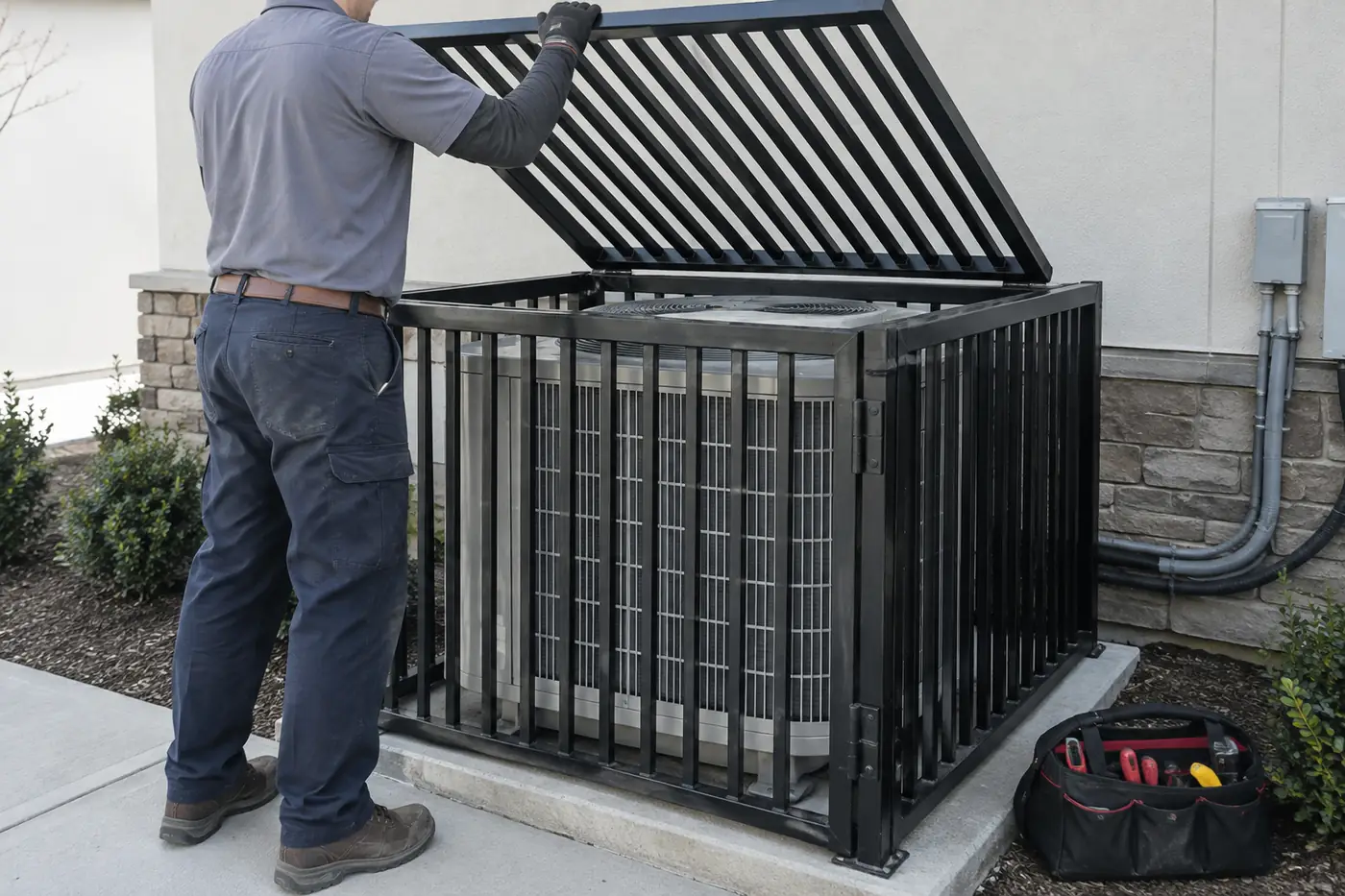
A cage that has to be unbolted every time the unit is serviced will eventually be left unbolted. Plan the service side first: a hinged top lid that props open, a full-width removable side panel, or on walk-in enclosures a gate wide enough for a technician, a vacuum pump and a recovery machine. Gates and lids should open clear of the unit’s service panels and accept a padlock or keyed lock that the HVAC contractor can be given access to.
Compare hinged, sliding and removable options on our security cage doors page and lock styles on security cage locks.
Anchor it to something solid
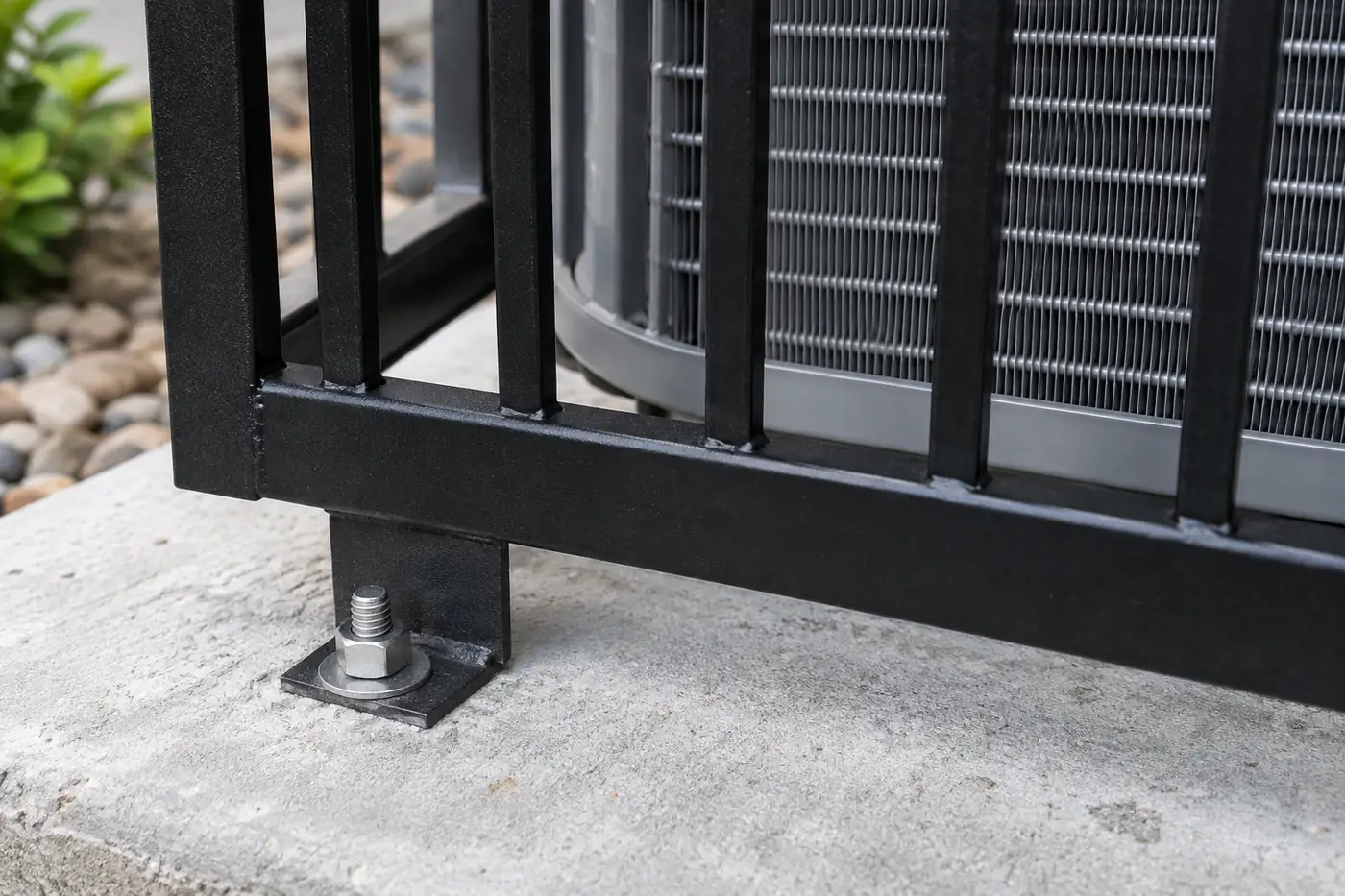
An unanchored cage is just a box that can be lifted off with the unit still inside. Ground cages are usually fastened to the concrete pad with expansion or wedge anchors through foot plates or a base angle; where the pad is too small, the cage can bear on its own footings. Fasteners should be tamper-resistant or placed inside the cage where they cannot be reached. Rooftop cages bear on the curb or a sleeper frame, and wall cages bolt through the bracket into the structure.
Our security cage anchoring guide covers anchor types and when to involve an engineer, and security cage installation explains how we install.
Protect the line set and disconnect
The refrigerant lines and wiring between the condenser and the building are the most common target, and they leave the cage on one side. A steel line-set cover or a cage extension that runs to the wall closes that gap. The electrical disconnect is the opposite case: it is usually best left outside the cage, or behind its own lockable door, so it can be reached quickly in an emergency without keys.
Codes and rules that affect AC cages
There is no national standard for AC security cages themselves, but the cage must not break the rules that apply to the equipment it surrounds.
Electrical working space. OSHA’s electrical standard, 29 CFR 1910.303(g)(1), requires sufficient access and working space to be provided and maintained about electric equipment so it can be operated and maintained safely, and says that working space may not be used for storage. In practice, design the cage so it does not crowd the disconnect or the unit’s electrical compartment, and confirm the layout against your local electrical code.
Refrigerant. When thieves cut a line, the refrigerant is lost and the repair falls under EPA’s refrigerant management rules. 40 CFR 82.154 says no person maintaining, servicing, repairing or disposing of an appliance may knowingly vent refrigerant, and that service must use certified recovery or recycling equipment. That is one reason a theft repair is slower and more expensive than replacing the copper, and why the service gate must leave room for recovery equipment.
Manufacturer instructions and local approvals. The condenser’s installation manual sets the clearances that keep the warranty valid. Some cities, homeowner associations and landlords also regulate fences and enclosures around equipment, and rooftop cages can affect a roof warranty. Check those before fabrication, not after.
How to buy an AC unit security cage
Photograph every unit
Take a photo of each side of every condenser, the pad, the line set and the disconnect, and note the make and model.
Pull the clearances
Find the manufacturer’s minimum side and top clearances in the installation manual for each model.
Choose the type
Individual cages for scattered units, a walk-in enclosure for a bank, curb-framed cages on roofs, wall-mount cages for mini-splits.
Plan access
Agree with your HVAC contractor on the service side, lid or gate, and how keys are shared.
Confirm approvals
Check landlord, roofing, HOA or local requirements, especially for rooftop and street-facing installations.
Fabricate and install
Cages are built to the unit and pad, finished for outdoor exposure, and anchored on site.
Pricing depends mostly on the number and size of units, bar versus mesh, the finish, and whether the job is ground, wall or roof. Our security cage cost guide explains the main cost drivers, and every AC cage we supply is a custom security cage built to the equipment. Galvanized or powder-coated steel are the usual outdoor finishes; galvanized holds up best where salt, irrigation or standing water are present. For cages fastened to a building wall rather than around a pad, see wall-mounted security cages.
For Intermountain sites, our Utah security cage team works out of Salt Lake City and handles measuring and installation locally; elsewhere we supply nationwide.
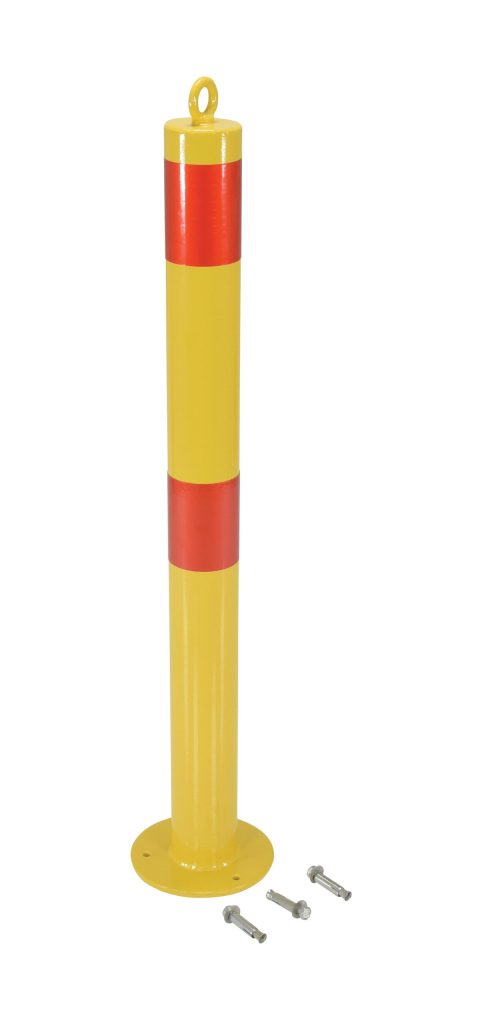
Shop Equipment Protection Bollards Online
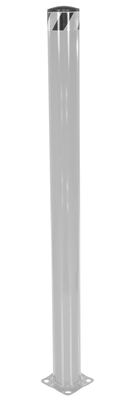
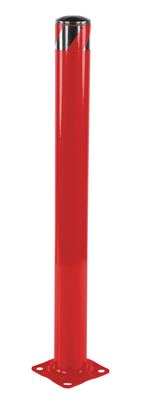
AC security cages are built to each unit, so they are quoted rather than sold off the shelf. Where condensers sit beside drive lanes, parking or loading areas, these steel bollards and guards stop vehicles, mowers and carts from reaching the pad — priced online.

Get a free quote
Tell us what you are storing, the room size and your timeline. A project specialist will follow up with layout options and pricing. Prefer to talk? Call (800) 326-4403.
AC Unit Security Cage FAQs
Does a security cage reduce AC efficiency?
Will a technician be able to service my unit?
How is an AC cage attached?
Should the electrical disconnect be inside the cage?
What is the difference between an AC cage kit and a custom cage?
Can you cage rooftop HVAC units?
Why is a stolen-copper repair so expensive?
Do you supply AC cages outside Utah?
Need security cages around your AC units?
Send us photos of each unit, the make and model, and the pad or roof it sits on. We will recommend the cage type and quote cages built to your equipment — supplied nationwide from Salt Lake City.