
Bike Storage Cages and Secure Bike Rooms
Wire mesh bike cages, locked bike rooms and high-density bike racks for apartments, offices and campuses — so bicycles come off balconies and out of hallways and into a space only residents or staff can open.
Supplied and installed nationwide from Salt Lake City — call (800) 326-4403.
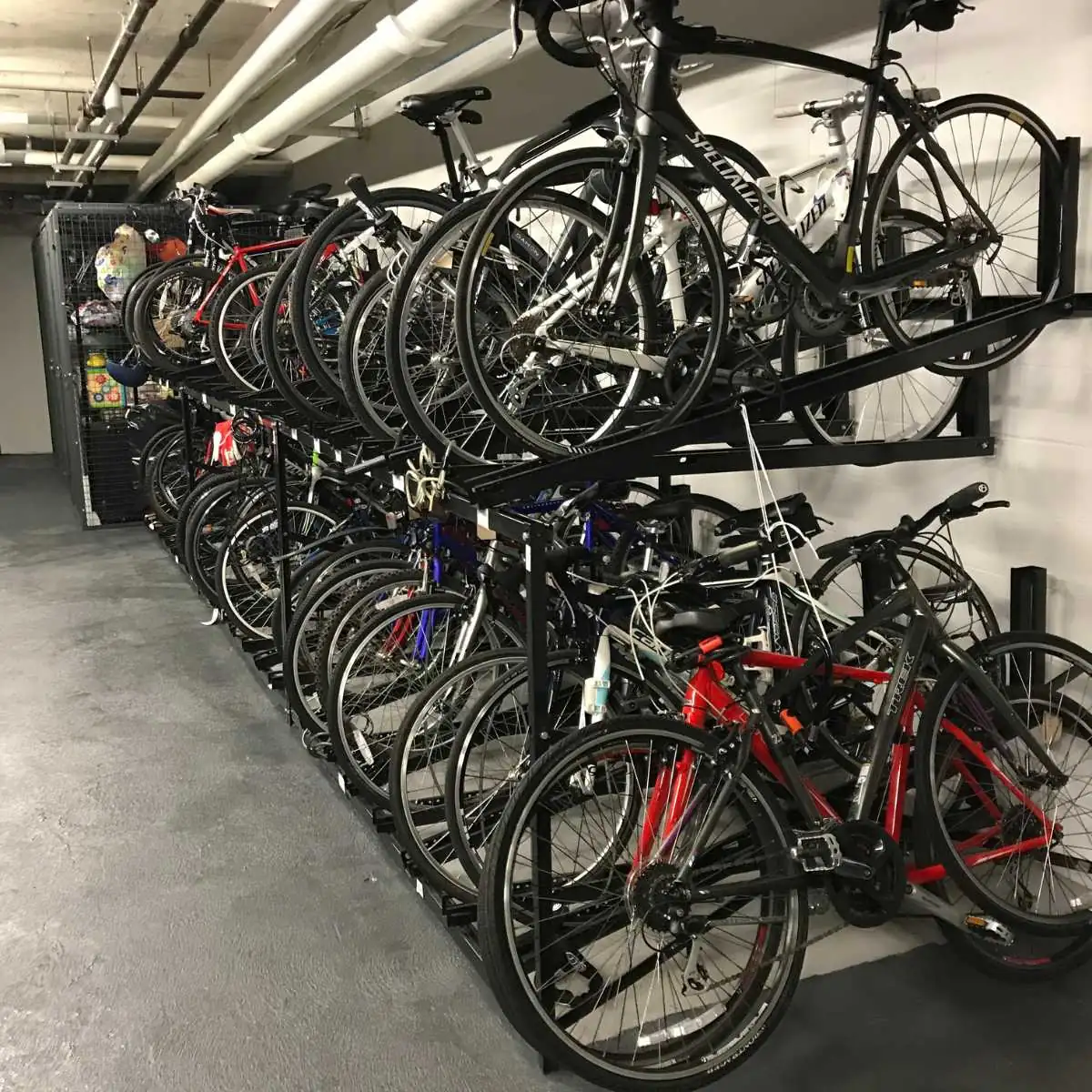
8–14 bikes
Per ~8 ft Bike Stacker run
2 tiers
Double the bikes per floor area
Wire mesh
See-through, sprinkler-friendly
Card or key
Room or individual locking
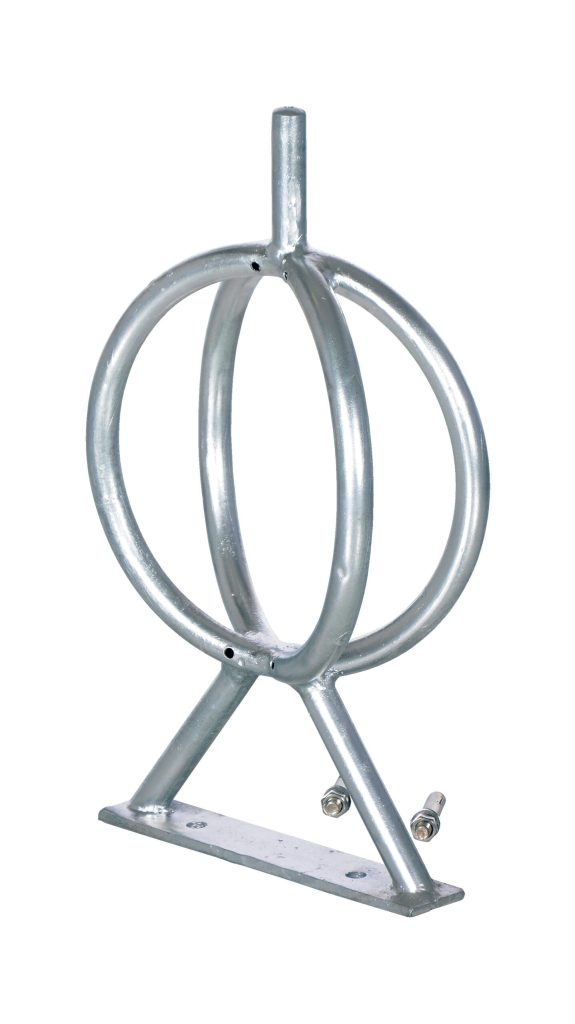
Shop Bicycle Racks and Shelters Online
Priced bike racks and covered bicycle shelters for outdoor or garage areas. Locked wire mesh bike rooms and cages are quoted to your space.

Why a bike storage cage beats a rack in the garage
An open bike rack in a parking garage keeps bikes tidy, but it does not keep them. A bike storage cage — a wire mesh security cage around the racks with a locked door — adds a second layer: thieves have to get through the enclosure before they ever reach a bike lock. Property managers use bike cages to get bicycles off balconies, out of elevators and away from hallway walls; employers use them to support cycling commuters.
Wire mesh suits the job. Residents can see their bike before they open the door, cameras see into the room, and the building’s lighting, ventilation and fire sprinklers keep working through the mesh.
Writing for residents? Our guide Get Bikes Off Your Balcony covers the tenant side — rules, options and what to ask a building manager. This page is for the owners, managers and facility teams who build the bike room.
Three common bike room layouts
Individual units use the same parts as wire mesh lockers and tenant storage lockers, so a building can mix a shared bike room with a few rentable lockers for residents who want their own space.
Racks inside the cage: Bike Stacker and wall riders
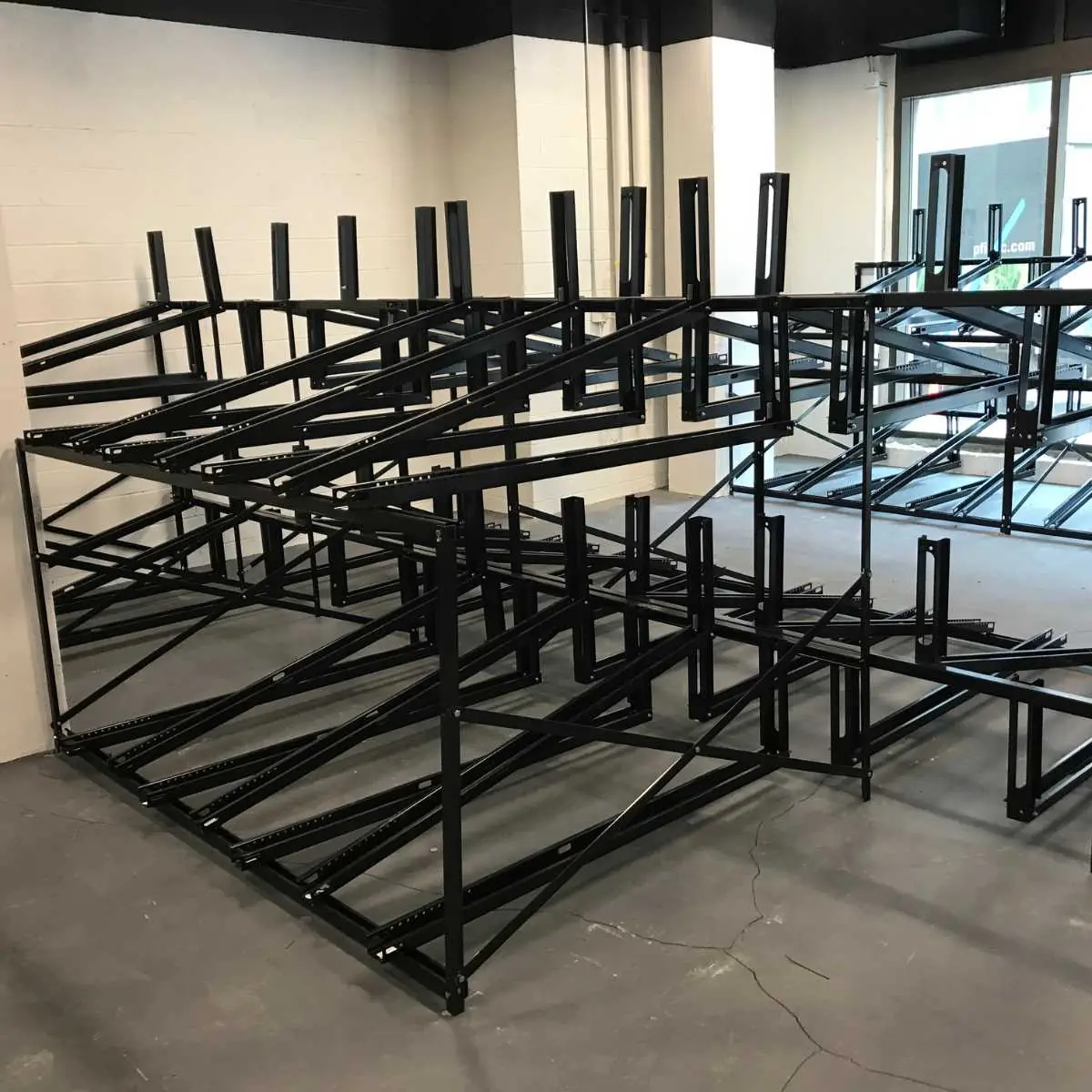
The cage sets security; the racks set capacity. Wire Crafters’ Bike Stacker is a double-tier rack built for condominiums, apartments and multi-family buildings. As published by the manufacturer:
- Stores 8 to 14 bikes in roughly 8 ft of space, depending on model
- Staggered, formed trays add clearance between bikes to prevent damage
- A tear-drop tire slot holds road, racing and mountain bikes; tandems do not fit
- Riders lock their bike to the steel tray; optional stop pins hold unusual bikes forward
Construction: trays are 16 gauge galvanized steel, uprights are 1/8 in. steel angle and horizontals are 14 gauge formed channel. The rack installs with standard hand tools.
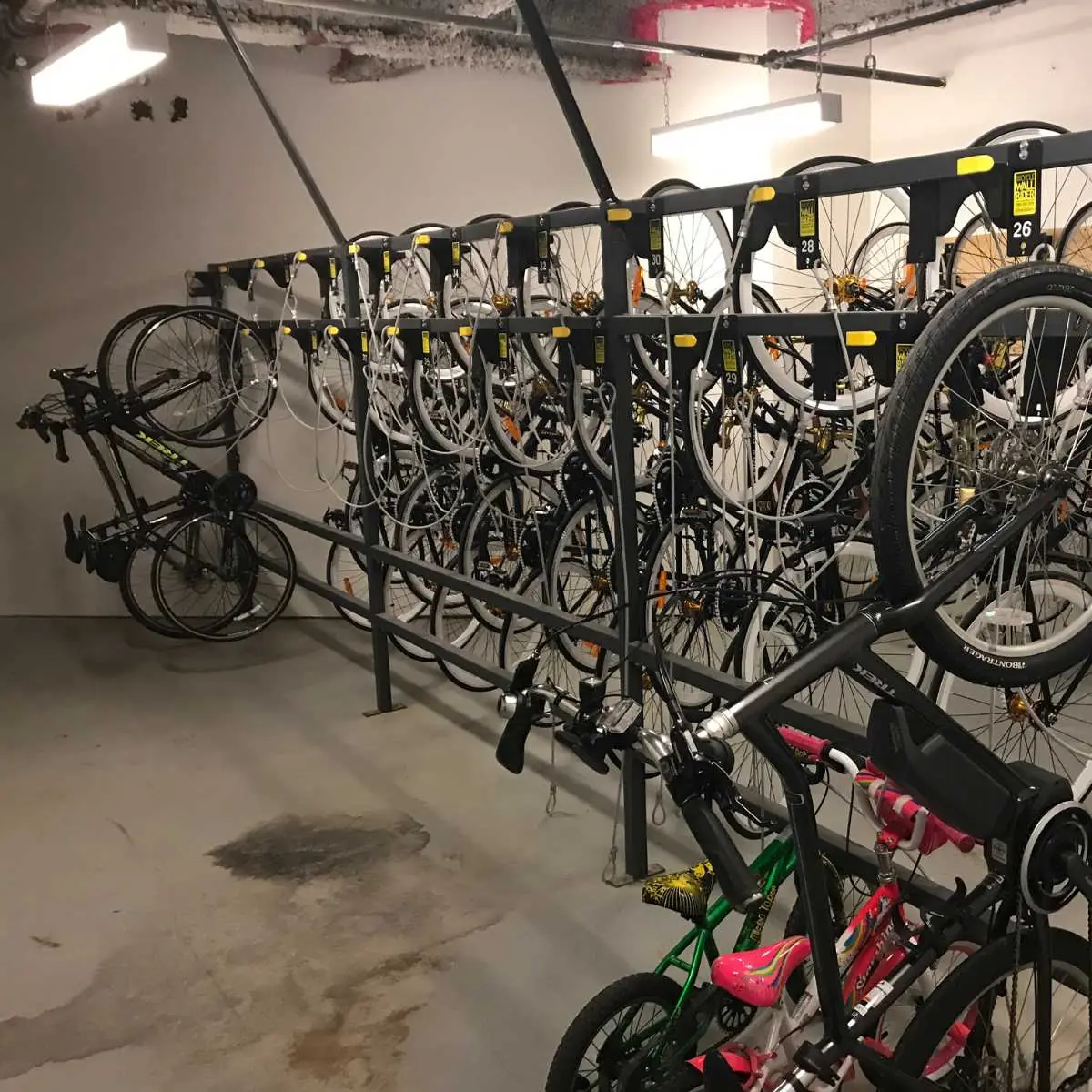
Wall-mounted vertical racks hang one bike per slot from the front wheel and suit narrow rooms where a two-tier rack will not fit. Mixing both types in one room is common: stackers along the long walls, vertical racks on short walls and columns.
Leave room for cargo bikes, trailers and e-bikes, which are heavier and longer than a standard bike and often do not fit upper tiers. Many buildings dedicate a floor-level zone to them.

Product photos courtesy of Wire Crafters, the Louisville, Kentucky manufacturer; MH-USA is an authorized Wire Crafters dealer.
Overhead bike lifts for multifamily bike rooms
When the bike room is full and the ceiling is high, the open space above everyone’s heads is the cheapest place to add more bikes. An overhead bike lift stores a full row of bikes against the ceiling, inside the same locked cage or room.
How an overhead bike lift works
Bikes hang by a wheel from hooks on a steel bar. The bar hangs from a motorized lift fixed to the ceiling structure. Lower it to waist height, hook a bike on or off, then hold the switch and the whole row goes back up to the ceiling. Residents never have to lift a bike over their heads, and the floor stays free for a two-tier rack, lockers or a repair stand.
Our partner Lift and Store has built overhead lifts since 1992 and reports more than 10,000 installations. The company rates standard lifts at up to 800 lb per 8-ft section, which is far more than a row of bikes weighs.

What to check before adding one
- Ceiling structure: an installer or engineer confirms the joists or slab can carry the lift.
- Clear height: check sprinklers, lights, pipes and garage door tracks above the row.
- Who runs it: controls are hold-to-run and can be keyed, so staff or approved residents operate the lift, not every visitor.
- Safety: the manufacturer lists a brake that holds the load at any height, a free-fall arrestor and aircraft-grade steel cables.
- Warranty and lead time: 5 years mechanical and 1 year electrical, and about six weeks to ship, according to Lift and Store.
We are an authorized Lift and Store dealer, so we can quote overhead lifts together with the cage, racks and lockers. If residents are storing bikes on their balconies today, our guide to getting bikes off apartment balconies covers the property-management side.
Locking and access for bike cages
- Keyed or padlock doors — simplest; works for small rooms with a short user list.
- Card readers and keypads — tie the bike room to the building’s access system so move-outs lose access without rekeying.
- Self-closing doors — keep the room from being propped open after the last user leaves.
- Solid kick panels — a sheet metal band at the bottom of the mesh stops wheels and pedals poking through and reaching tools.
Details on each option are on the security cage locks and access control and security cage doors pages. Electric locks should fail in a way your fire code official accepts for egress.
Planning a bike storage cage

Answer these first:
- How many bikes now, and how many if cycling grows? Plan for growth in the room you build.
- Who uses it — residents, employees, students — and how will access be granted and removed?
- Where does the route from the street reach the room without stairs?
- What share of bikes will be e-bikes or cargo bikes, and is charging allowed?
- Where are sprinklers, lights, drains and columns that the cage must clear?
Send a sketch
Room size, door location, columns and the number of bikes.
We lay it out
Rack type and count, aisle widths and the mesh enclosure on one drawing.
Confirm options
Doors, locks, finishes and any individual lockers.
Install
Racks and partitions are installed by our crews or yours.
Some common partition and rack sizes are in stock at select manufacturers, subject to confirmation. For budgets, see the security cage cost guide; for property-wide storage, the apartment and condo storage cage guide.
Bicycle shelters and bike rack shelters
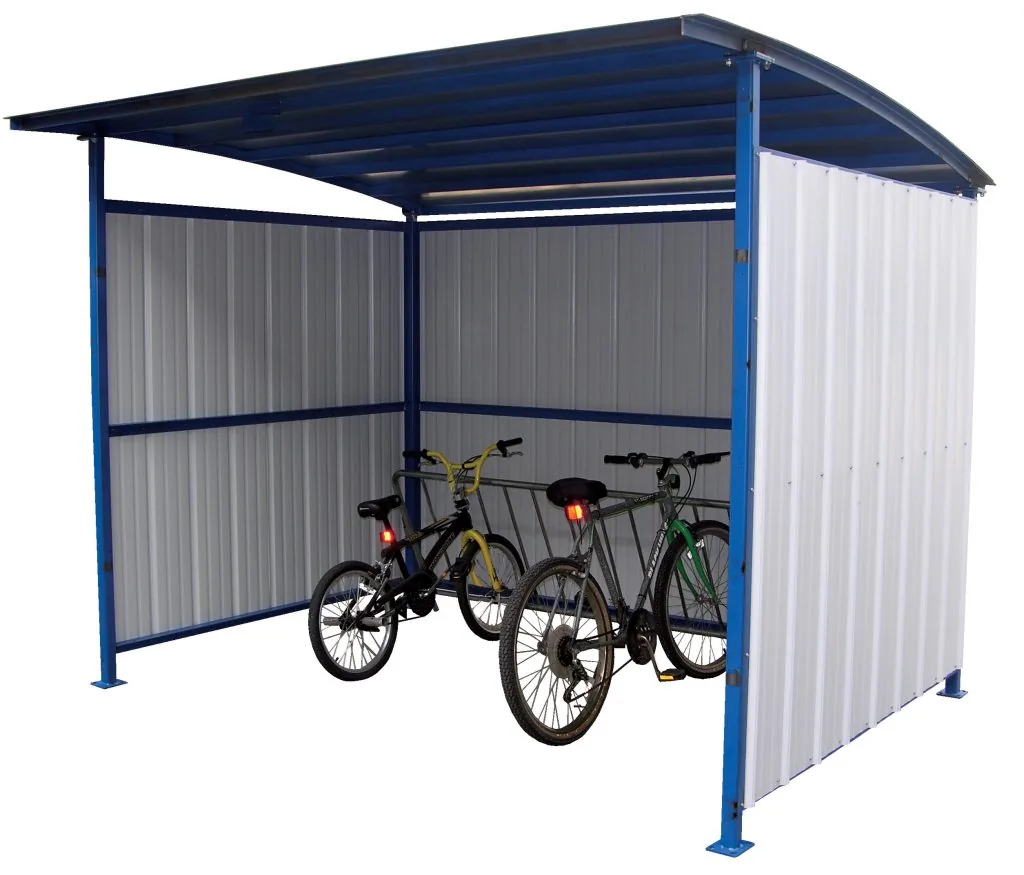
A bicycle shelter solves a different problem than a bike cage. A cage stops theft inside a building; a shelter keeps rain, snow and sun off bikes parked outside. Most commercial bike shelters are a steel frame with a roof and one or more clear or solid side panels, set over a row of racks on a concrete pad. A bike rack shelter is the same idea sized to cover an existing rack run.
We sell a steel Vestil Multi-Duty Bicycle Shelter, 120 in. online, with a painted or a galvanized finish. Vestil describes a steel perimeter frame built for harsh weather, a clear front panel and a back bench, with an estimated lead time of 40 working days. Pair it with a priced 10-position bike rack under the roof, or ask us to quote a covered rack run sized to your pad.
Larger architectural canopies, curved transit-style roofs and solar shelters come from specialty site-furnishing makers. If your project needs one of those, tell us the bike count and site plan and we will say plainly whether it is something we can supply or whether a site-furnishings dealer is the better fit.
Bike cage vs bike locker vs bicycle shelter
Property managers and facility teams usually compare three options. Each one fits a different rider, parking time and site. Use this table to narrow it down before you ask for a quote.
| Bike storage cage | Bike lockers | Bicycle shelter | |
|---|---|---|---|
| Where it goes | Inside a garage, basement or storage room | Indoors or outdoors, one bike per unit | Outdoors on a pad or sidewalk |
| Security | Locked room plus the rider’s own lock | Each bike in its own locked box | Weather cover only; bike locked to rack |
| Weather protection | Building protects it | Fully enclosed | Roof and partial walls |
| Bikes per footprint | High with two-tier or wall racks | Low: one bike per locker | Medium: one rack row |
| Best for | Residents and employees who park overnight | Transit riders and long-stay commuters | Visitors, students and short stays |
| Access control | Key, fob or card reader on one door | Key, coin or electronic lock per unit | None |
| How we supply it | Quoted, laid out and installed | Quoted (see below) | Priced shelter online or quoted |
Pick a cage when you have indoor space and many riders who park overnight. One locked door protects every bike, and racks inside can be stacked two high.
Pick lockers when each rider needs a private, fully enclosed space, often at transit stops or outdoor lots. They use the most floor area per bike.
Pick a shelter when most riders stay a few hours and the main need is weather cover. Many sites mix them: a shelter for visitors near the entrance and a locked bike room for residents or staff.
Bike lockers and bike locker manufacturers
Buyers searching for bike locker manufacturers are usually choosing between a few construction types. Knowing them makes quotes easier to compare:
- Steel or aluminum lockers: the most common commercial choice, with a door at one end and often a wedge shape so two lockers share one footprint
- Plastic or composite lockers: lighter and corrosion-resistant for coastal or wet sites
- Wire mesh bike lockers: individual mesh compartments inside a building, so staff can see what is stored
- Electronic or app-controlled lockers: rented by the hour or assigned to a rider, often at transit stations
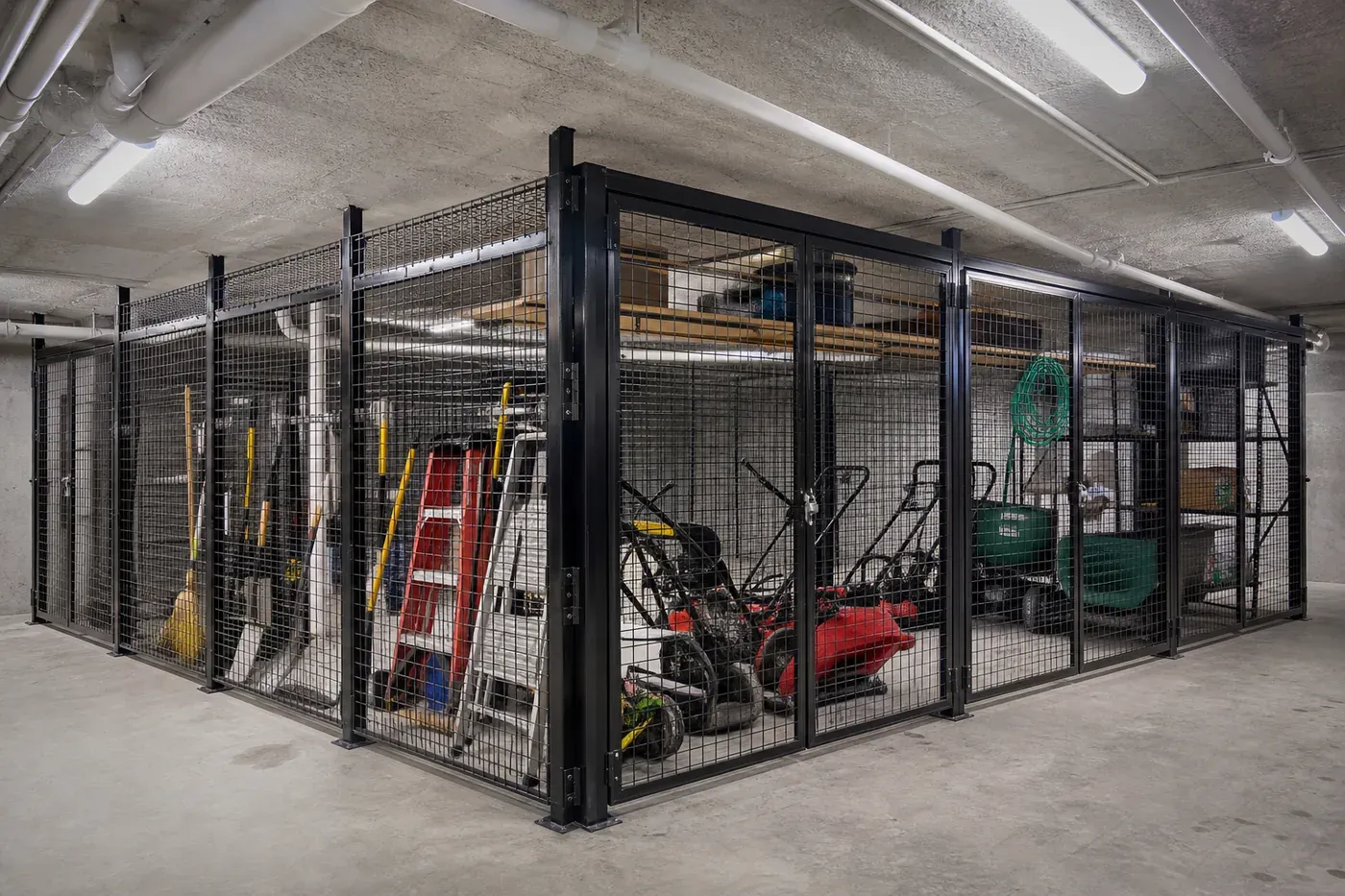
Inside a building, the same wire mesh partition panels used for bike cages can be built into rows of individual bike compartments, each with its own door and padlock hasp. That is often cheaper than freestanding lockers when you have a room to work with. Outdoor, transit-style electronic lockers are a specialty product; send us your rider count and we will tell you honestly whether we can source them for your site. Our lockers page covers the other locker lines we carry.
What to ask any bike locker or shelter supplier
- Footprint per bike, and clearance for the door swing or roll-in path
- Anchoring method and what the slab or pad needs
- Finish for your climate: powder coat, galvanized or stainless
- Lock type, who holds the keys or codes, and how a lost key is handled
- Lead time and whether installation is included
Get a free quote
Tell us what you are storing, the room size and your timeline. A project specialist will follow up with layout options and pricing. Prefer to talk? Call (800) 326-4403.
Bike Storage Cage FAQs
What is a bike storage cage?
How many bikes fit in a bike room?
Are wire mesh bike cages secure?
Can e-bikes go in a bike cage?
Do bike cages block fire sprinklers?
Is this the same as balcony bike storage?
What is the difference between a bike shelter and a bike cage?
Do you sell bicycle shelters?
Can a bike rack shelter cover our existing racks?
Are bike lockers or a bike cage better for an apartment building?
Are bicycle cages secure enough without individual locks?
Planning a bike room?
Send the room size and how many bikes you need to store. We will lay out the racks and the cage and quote both, supplied and installed nationwide.