Top Server Farm Cage Security Layout Ideas & Best Practices
Designing a secure and efficient server farm is more than just buying racksand running cables. The physical layout of your server cages is the firstand most critical line of defense against unauthorized access, environmental threats, and operational bottlenecks. A poorly planned layout can create security vulnerabilities, impede maintenance, and make future scaling a costly nightmare. This article moves beyond basic concepts to provide concrete, actionable server farm cage security layout ideas that you can implement in your facility.
We will explore a series of practical design strategies, each broken down into a step by step analysis. You will learn how to plan for everything from access controland airflow to compliance requirementsand modular expansion. To begin, understanding the broader environment of a secure data center is crucial for appreciating the context of server farm cage security. The principles that govern large scale facilities directly inform the specific cage layouts we will cover.
Whether you are building a new data hall or reconfiguring an existing space, this guide provides the tactical insights needed to make informed decisions. We will cover a range of options, from perimeter first layouts to advanced modular zoning and mantrap configurations. Each example includes strategic analysisand replicable methods to help you translate these ideas into a functional, secure, and scalable server environment. By focusing on smart layout design from the start, you protect your valuable assetsand ensure your infrastructure can support your organization's growth for years to come.
1. Perimeter First Access Control Layout
Among the most effective server farm cage security layout ideas, the Perimeter First Access Control model establishes a powerful defense in depth strategy. This design prioritizes hardening the outermost boundariesand creating graduated security zones. The core principle is simple: control who gets in at the earliest possible point and progressively increase security measures as they move closer to sensitive assets. This layout typically begins with a single or dual entry vestibule system that acts as a primary security checkpoint before anyone can access the main server cage floor.

This approach creates concentric layers of security, much like the rings of a castle's defenses. It is particularly valuable for organizations that must adhere to strict compliance standards like PCI DSS or NIST guidelines, as it provides a clear and auditable trail of access. Major data center operators, government facilities, and healthcare organizations managing patient data servers frequently use this layout to protect their most critical infrastructure.
Strategic Breakdown and Tactical Insights
This model's effectiveness lies in its structured, multi layered approach. Each layer serves a specific purpose, from deterrence at the perimeter to strict control at the core.
- Single Point of Entry: By funneling all traffic through a monitored vestibule, you eliminate uncontrolled access points. This area should be staffed or heavily monitored with high resolution cameras.
- Mantrap Implementation: A key feature is the use of a mantrap, a small space with two doors where the second door cannot be opened until the first has closed and credentials have been verified. This prevents tailgating and ensures only one authorized individual can pass through at a time.
- Role Based Zones: Inside the main area, the layout should position the most sensitive equipment furthest from the entry point. Access to these internal zones can be further restricted with additional badge readers or biometric scanners on individual cage doors.
Key Takeaway: The Perimeter First layout is not just about barriers; it is about creating a deliberate, auditable process. Every step a person takes, from the parking lot to the server rack, should be controlled and logged. This systematic approach is a cornerstone of a robust physical security posture. For facilities managers looking into the specifics of cage construction, understanding the options available for server cages design is a critical next step in implementing this layout.
2. Hot and Cold Aisle Zoning Strategy
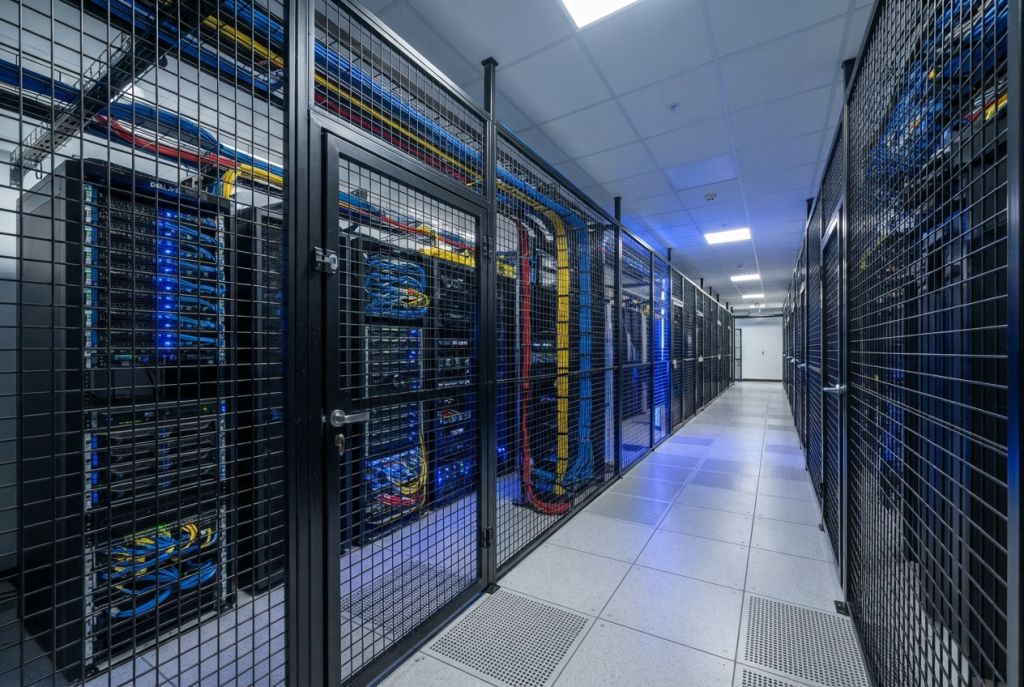
Merging thermal efficiency with physical security, the Hot and Cold Aisle zoning strategy is one of the most intelligent server farm cage security layout ideas. This design directly addresses two core data center challenges: managing heat generated by high density computing and controlling physical access to equipment. The layout separates hot equipment exhaust from cool air intake using containment structures, while the caging itself creates secure, partitioned zones. This approach involves using high density security caging with lockable doorsand roof panels to form complete enclosures around server rows, improving both cooling performance and access control.

This dual purpose layout is a staple in modern co location facilities, where isolating tenants' equipment is as critical as maintaining optimal operating temperatures. It is also essential for enterprise data centers, healthcare IT departments, and financial firms that need to secure specific systems for compliance or operational reasons. By integrating security directly into the climate management infrastructure, organizations can prevent unauthorized physical access while simultaneously lowering energy costs.
Strategic Breakdown and Tactical Insights
This model’s strength comes from its integrated design, where the caging serves both as a security barrier and a key component of the airflow management system.
- Climate and Access Synergy: The fundamental concept is to use physical barriers to control both people and airflow. Secure, perforated cage panels define the cold aisle, allowing cool air to flow to server intakes, while solid or sealed panels help contain and direct hot exhaust.
- Layered Aisle Security: Access to cold aisles, where equipment fronts are located, can be strictly controlled with card readers or biometric scanners on the cage doors. Hot aisles, containing the rear of the racks, can be designated as secondary access zones for maintenance staff, creating a two tiered access protocol.
- Modular for Scalability: A significant advantage is the use of modular cage panels. This allows facilities to expand or reconfigure contained pods as server density grows or technology evolves, without requiring a complete overhaul of the data center floor. For facilities managers planning such an implementation, reviewing the various Wire Crafters partitionsand cages available is a great starting point for understanding material options.
Key Takeaway: The Hot and Cold Aisle zoning strategy with secure partitioning is a powerful efficiency play. It transforms standard security caging into an active part of your HVAC system. The layout forces a disciplined approach to both equipment accessand thermal management, providing clear, auditable boundaries for security and measurable improvements in cooling performance.
3. Modular Cage Zoning by Tenant or Function
As a flexible and scalable option among server farm cage security layout ideas, Modular Cage Zoning by tenant or function offers a granular approach to data protection. This method involves creating distinct, physically separated zones using modular security cages, with each zone’s security measures corresponding directly to the sensitivity of the data or the function of the equipment it houses. This design allows organizations to manage multiple security domains within a single data center, optimizing both costand compliance by not over securing less sensitive assets.

This layout is a direct physical implementation of the zone based security models defined by standards like ISO/IEC 27001. It is widely adopted by multi tenant cloud providers, which must securely co locate data from countless clients with varying security needs. It is also essential for law enforcement, healthcare facilities, and government contractors who manage information at different classification levels within one facility. The reconfigurable nature of modular cages means the layout can adapt as data classificationsand operational needs change.
Strategic Breakdown and Tactical Insights
The power of this model comes from its precise alignment of security controls with asset value. It avoids a one size fits all approach, which can be both expensive and inefficient, by right sizing security for each data category.
- Function First Planning: Before any cages are installed, a thorough audit of tenants, departments, and equipment function is required. Assets must be categorized to determine the necessary level of protection for each zone.
- Tiered Access Controls: Security measures should be layered. For example, a "Restricted" zone might require biometric authentication and a mantrap, while an "Internal" zone may only need a standard badge reader. This tiered system ensures the highest security is applied where it matters most.
- Visualand Physical Separation: Use color coded cage panels or signage to provide clear visual cues for different zones. Ensure cable management and airflow systems maintain this separation to prevent accidental cross connections or bypasses.
Key Takeaway: Modular Cage Zoning is about building a security environment that reflects your data's actual risk profile. By matching security to sensitivity, you create an efficient, compliant, and highly defensible infrastructure. Facilities managers can explore the ultimate guide to server cages to better understand the materialand configuration options needed to build out these specific zones effectively.
4. Mantrap Entrancesand Secure Service Aisles
For facilities that require the highest level of physical security, the dual door mantrap with interlocked access is a fundamental design. This layout creates a small, secure chamber between an unsecured area and the protected server cage floor. The system functions with two doors that are electronically interlocked, ensuring only one can be opened at any given time. This configuration effectively eliminates tailgating, where an unauthorized person follows an authorized individual through a single door.
This method provides an inescapable checkpoint where credentials must be verified before proceeding. It is a critical component of many high security server farm cage security layout ideas, particularly in environments managing classified data or extremely high value assets. Government facilities, military installations, and top tier financial data centers frequently deploy mantraps as a non negotiable security layer to meet stringent compliance and operational security mandates.
Strategic Breakdown and Tactical Insights
The mantrap's value is rooted in its ability to isolate and verify individuals in a controlled space. It forces a deliberate, one person at a time entry protocol that is easy to monitor and audit.
- Forced Compliance: By design, the interlocked doors prevent personnel from holding the door for others or rushing through. Each person must present valid credentials independently.
- Secondary Authentication: The transitional space allows for multi factor authentication. An individual might swipe a badge at the first door and then be required to pass a biometric scan like a fingerprint or retina scan to open the second.
- Dwell Time Monitoring: The isolated chamber can be equipped with sensors to log how long a person remains inside. Security teams can configure alerts for unusually long dwell times, which might indicate a security issue or duress.
- Secure Service Aisles: Plan for dedicated service aisles that are also secured. This prevents maintenance bottlenecks where technicians cannot easily access the rear of racks for servicing, which can lead to unsafe workarounds that compromise security.
Key Takeaway: A mantrap transforms access control from a passive system into an active, enforced process. It creates a physicaland psychological barrier that reinforces the seriousness of the security protocol. For facility managers, specifying the right type of server cage specifications to integrate with a mantrap system is a crucial step toward building a truly secure environment.
5-Step Checklist for Planning Your Cage Layout
A successful server cage layout requires careful planning. Follow this checklist to avoid common pitfallsand ensure your design meets security, operational, and future growth needs.
-
Define Security Zonesand Access Tiers:
- Identify all equipment and data types.
- Classify them based on sensitivity (e.g., Public, Internal, Confidential, Restricted).
- Map employee roles to these zones to establish who needs access to what.
-
Plan Service Aislesand Access Points:
- Ensure adequate space around all cages for maintenance and equipment transport (36-48 inches is standard).
- Position doors to avoid blocking traffic or creating blind spots.
- Designate specific "hot" and "cold" aislesand control access to each accordingly.
-
Integrate Cooling and Power Infrastructure:
- Align cage layouts with your HVAC system to support efficient airflow (e.g., Hot/Cold Aisle Containment).
- Ensure cable traysand power distribution units (PDUs) are accessible without compromising cage security.
- Use sealed pass throughs for all cabling to maintain the secure perimeter.
-
Incorporate Monitoring and Surveillance:
- Plan camera placement to cover all cage doors, access points, and critical equipment with no blind spots.
- Integrate environmental sensors (temperature, humidity) inside cages for accurate monitoring.
- Ensure all monitoring systems are on a secure, isolated network.
-
Design for Scalability and Future Growth:
- Use a modular cage system that can be easily expanded or reconfigured.
- Leave designated "white space" on your floor plan for future cages or racks.
- Ensure your layout allows for the addition of more power and cooling capacity as density increases.
Common Cage Layout Goalsand Considerations
| Layout Goal | Key Design Consideration | Common Mistake to Avoid |
|---|---|---|
| Maximize Security | Implement layered defenses: perimeter, mantrap, cage-level access control. | Creating single points of failure; relying on only one type of lock or credential. |
| Optimize Cooling | Align cage layout with hot/cold aisle containment strategy. Use perforated panels for cold aisles. | Obstructing airflow with poorly placed solid panels or disorganized cabling. |
| Ensure Serviceability | Provide adequate service aisle clearance (at least 36 inches) around all cages. | Creating maintenance bottlenecks by placing cages too close together or against walls. |
| Enable Future Growth | Use a modular cage system and leave planned "white space" on the data center floor. | Building a rigid, fixed layout that cannot be easily expanded or reconfigured. |
| Meet Compliance | Separate tenants or functions into physically distinct, auditable zones. | Co-mingling different data classifications in the same unsecured area. |
| Improve Monitoring | Position cameras for full coverage of access pointsand use transparent panels for visibility. | Having surveillance blind spots or failing to monitor the environment inside the cage. |
Conclusion
Planning your server farm cage layout is a critical exercise that directly impacts your facility's security, efficiency, and scalability. As we have explored, effective design goes far beyond simply erecting barriers. It involves a strategic approach that integrates zoning, access control, serviceability, and future growth into a cohesive system. From implementing a perimeter first defense to designing for tenantsand functions, the right layout prevents security breaches, avoids costly maintenance bottlenecks, and ensures your infrastructure can adapt to future demands.
By following a structured process like the 5 step checklist, you can proactively address key considerations before they become problems. With equipment and material lead times becoming a significant factor in project timelines, finalizing your design early is more important than ever. It allows you to secure materialsand schedule installations, helping you avoid delaysand keep your project on track. A thoughtful approach to your server cage layout is one of the most valuable investments you can make in the long term resilience and integrity of your data center operations.
Ready to turn these ideas into a reality for your facility? The team at Material Handling USA specializes in providing free, no obligation layoutsand designs to help you visualize the most secure and efficient configuration. We offer high quality server cages with competitive pricing and the fastest shipping in the industry, ensuring your project stays on schedule and on budget. Request a Quote today or call our experts at 800-326-4403 to get started on your free design.
Frequently Asked Questions (FAQs)
What is the ideal aisle width for a server farm cage layout?
The ideal service aisle width is typically between 36 and 48 inches. This provides enough space for technicians to work comfortably, transport equipment on carts, and perform maintenance without creating a safety hazard or operational bottleneck. Always check local building codesand ADA requirements for specific minimums.
How do you plan a server cage layout for future expansion?
The best way to plan for expansion is to use a modular cage system and adopt a "white space" strategy. Design your initial layout on the floor plan but leave designated empty areas for future cages. A modular system of wire mesh partitions allows you to easily add or reconfigure walls as your needs grow, avoiding a complete and costly teardown.
What are the main differences between zoning by function and zoning by tenant?
Zoning by function separates equipment based on its role (e.g., networking, storage, compute), granting access to specialized teams. Zoning by tenant separates equipment based on ownership, which is common in co location data centers. Both use physical cages to create secure, isolated environments, but the access rules are based on different criteria.
What is a common pitfall in server cage layout design?
One of the most common pitfalls is neglecting serviceability. Designers often focus on maximizing rack density and forget to leave adequate space around the cages for maintenance. This creates bottlenecks, makes routine tasks difficult, and can lead to technicians bypassing security protocols to get their jobs done.
Why is physical separation of cages so important for compliance?
Physical separation provides clear, auditable proof that different data sets or tenant environments are isolated. For compliance standards like HIPAA, PCI DSS, and SOC 2, you must demonstrate that unauthorized parties cannot access sensitive data. Physically separate, locked cages are the most direct and defensible way to meet these requirements.
How does a mantrap improve server farm security?
A mantrap, or interlocked door system, prevents tailgating, which is a common way unauthorized individuals gain access. By forcing each person to authenticate individually in a contained space, it ensures only credentialed personnel can enter the secure area. It creates an undeniable audit trail for every entry.
Need Help With Your Project?
Our team provides free layout designs, competitive pricing, and professional installation across the United States.
Request a Free Quote → | Call (801) 328-8788
Who This Is For
Our server farm cage security layout ideas solutions are ideal for:
- Warehouse managers
- Facility planners
- Property managers
- Government coordinators
- Manufacturing managers
- Distribution operators