Ultimate Server Room Security Cage Guide
URL slug: server-room-security-cage
Meta title: Server Room Security Cage Guide for Secure IT Spaces
Meta description: Learn how to choose a server room security cage for airflow, access control, and growth. Request a quote or call for layout help today.
A lot of server room projects start the same way. A manager walks into the IT area, looks at a few racks full of expensive hardware, and realizes the only real barrier is a standard room door and a lock that too many people can open.
That setup may feel acceptable until access needs change, contractors enter the area, or part of the facility becomes shared space. At that point, a server room security cage stops looking like an optional add-on and starts looking like basic risk control. The right cage creates a defined perimeter around servers, switches, and network gear without sacrificing visibility or airflow. It also gives teams a cleaner path to controlled access, logging, and future expansion.
The Growing Need for Physical Server Security
Physical security gets overlooked because the primary focus is often on software, network controls, and uptime. But servers still sit in real rooms, inside real buildings, where people can touch them, unplug them, or damage them.

In shared facilities and colocation spaces, that risk gets more serious. Data center security cages provide a critical physical barrier in multi-tenant environments, using locked gates and layered controls such as key cards, biometric authentication, surveillance, alarms, and protected ceilings or flooring to keep access limited to authorized personnel only, as described in this overview of data center rack, cabinet, and cage design.
That matters for more than theft prevention. It also helps reduce accidental contact, cabling mistakes, and compliance headaches during audits.
Practical rule: If more than a very small group can physically reach your racks, you need another layer between the room and the equipment.
Managers also need to think beyond the cage itself. Good projects fit into wider building controls, visitor workflows, and alarm response. If you're reviewing the whole facility posture, it's worth looking at comprehensive building security solutions alongside your internal cage layout. For a closer look at theft prevention inside facilities, this guide on a security cage to avoid theft is also useful.
See How Modular Security Cages Work
A visual walkthrough helps most buyers faster than a spec sheet. This video embed shows the general concept of modular wire partition systems used to create secure controlled-access zones.
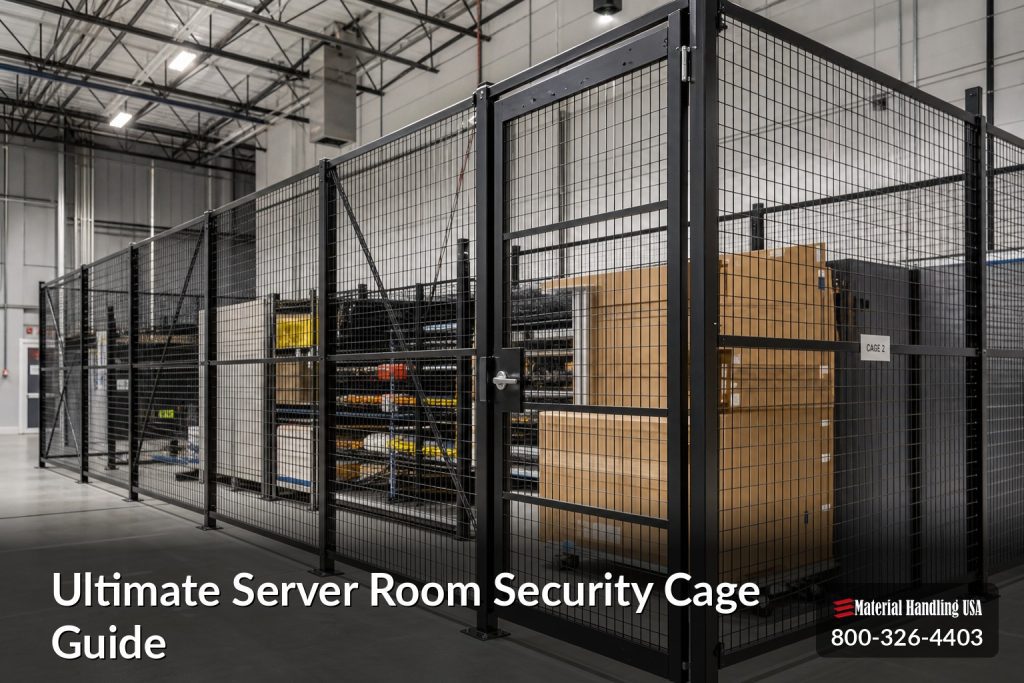
Caption: A modular wire mesh cage system shows how secure enclosures can be assembled inside an existing room without building full walls.
- Modular layout: Panels and doors can be arranged around existing rack footprints.
- Fast adaptation: These systems work well when your room already has finished walls, lights, and HVAC in place.
- Operational visibility: Wire mesh keeps sightlines open for inspection and monitoring.
Mini outline:
- 0:00 Overview of the modular cage concept
- 0:30 Panel and post construction
- 1:10 Door and lock options
- 1:45 Layout flexibility inside active facilities
See more videos on our channel
If you're evaluating panel systems, this page on wire mesh modular cages shows the type of enclosure commonly used for secure equipment areas.
{
“@context”: “https://schema.org”,
“@type”: “VideoObject”,
“title”: “Modular Security Cage Overview”,
“description”: “A look at how modular wire mesh security cages create controlled access areas inside existing facilities.”,
“thumbnailUrl”: “”,
“uploadDate”: “”,
“duration”: “”,
“embedUrl”: “[object Object]”,
“publisher”: {
“@type”: “Organization”,
“name”: “Material Handling USA”
}
}
What Is a Server Room Security Cage?
A server room security cage is a modular physical enclosure built around server racks or IT equipment inside a larger room, warehouse, office, lab, or data center. It creates a secure perimeter without requiring full conventional construction.

Server room security cages are modular, scalable solutions used in data centers for physical protection against theft and unauthorized entry, especially in shared colocation environments. Features like swinging doors with flexible locking mechanisms such as keyed locks, keypads, card readers, and biometrics ensure only authorized access and create audit trails that support compliance.
Why wire mesh is usually the right format
Wire mesh is common for a reason. It helps preserve airflow, keeps visual access open, and usually works better with existing room infrastructure than solid partitions.
A wire mesh server cage also makes practical operations easier:
- Cooling support: Air moves through the enclosure more freely than it would through many solid partition types.
- Visual checks: Staff can inspect racks, cable paths, and status lights from outside the cage.
- Adaptability: Panels can often be expanded or reconfigured as rack counts change.
For teams comparing in-house space with outsourced infrastructure, this overview of server hosting can help frame the broader decision about where equipment belongs and how much physical control you want to keep onsite.
Key Features and Configuration Options
The difference between a cage that works well and one that creates daily frustration usually comes down to configuration. Buyers should focus less on product labels and more on how the enclosure will behave in the room they already have.

Heavy-duty 10-gauge steel with welded frames can achieve UL 325 tamper-resistance, with a breach time exceeding 45 minutes for powered tools, and cages with biometric and CCTV layers have shown 99.7% intrusion detection rates in benchmark data from colocation providers, according to this review of top security features for colocation cages.
Material and panel construction
For a server equipment protection cage, frame strength matters. Thin materials can look fine on paper and still feel weak in daily use. Welded steel construction and secure panel attachment methods are better choices where access control is serious.
Look closely at:
- Mesh opening size: Smaller apertures are better for intrusion resistance.
- Fastener design: Concealed or protected hardware limits tampering.
- Panel rigidity: Stiffer panels hold alignment better over time.
Doors and locks
Door choice affects security and workflow at the same time. A cage that protects equipment but slows every service call will frustrate your IT team.
Common options include:
- Hinged doors for straightforward access and simple hardware
- Sliding doors where aisle space is tight
- Keyed locks for basic control
- Keypad or card access where staff turnover is higher
- Biometric access when you need tighter identity verification
A lockable server cage should match how people actually enter the space, not how the drawing looks on day one.
Ceiling and perimeter closure
A strong wall line doesn't solve overhead vulnerability. High ceilings, exposed structural areas, and open utility runs need extra attention. If the enclosure doesn't extend properly, the top becomes the weak point.
For buyers who need help sorting panel types, lock options, and custom layouts, WireCrafters enclosures and related cage systems are one route to review along with other modular partition options. If you want configuration help, Request a Quote, Contact Us, or Call (800) 326-4403.
Comparing Security Solutions for IT Equipment
Not every facility needs the same level of enclosure. Some need a full secure server room cage, while others are better served by cabinets or a dedicated room.
| Feature | Wire Mesh Security Cage | Locked Server Room | Locking Server Cabinet | Modular Partitioned Enclosure |
|---|---|---|---|---|
| Visibility | High | Low from outside room | Limited | Moderate to high |
| Airflow | Strong | Depends on room HVAC | Varies by cabinet design | Depends on materials used |
| Scalability | High | Lower once walls are fixed | Limited to cabinet count | High |
| Access control | Good to very high | Room level only unless layered | Per cabinet | Moderate to high |
| Installation speed | Fast | Slower | Fastest | Fast |
| Ideal use case | Shared rooms, data areas, future growth | Dedicated secure IT suite | Small equipment footprint | Flexible multi-zone spaces |
| Budget range | Moderate | Higher | Lower to moderate | Moderate |
A locking server cabinet works when you only need to protect a small number of devices. A locked room makes sense if the entire room is already dedicated to IT and can be tightly controlled. A modular server room cage usually lands in the sweet spot for buyers who need separation, airflow, and room to expand without full remodeling.
How to Plan Your Server Room Cage Project
Most problems with a data room security cage start before installation. Bad measurements, ignored obstructions, or poor coordination with HVAC and fire protection create expensive rework.

One issue gets missed often in rooms with extra height. An Uptime Institute report found that 28% of colocation breaches involved overhead access in facilities with high ceilings. Cages should extend fully to the structural deck or use a secure mesh ceiling in those conditions, as noted in this discussion of physical security cages for server rooms.
Start with the real footprint
Measure more than floor dimensions. You need clear notes on columns, conduit, lighting, cable trays, sprinklers, return air paths, and door swing.
A good planning sketch should show:
- Rack count and orientation
- Service aisle widths
- Door location
- Power and network entry points
- Any future rack positions
Match the cage to building systems
A server room wire mesh cage works best when it respects the systems already in the room.
Review these early:
- HVAC path: Make sure the enclosure supports the intended air path to the racks.
- Fire suppression: Confirm the cage design doesn't interfere with coverage or code requirements.
- Access hardware: Coordinate with existing badge or monitoring platforms if possible.
If you're pairing physical barriers with alarm, camera, or entry systems, a qualified security system installation service can be a useful planning partner on the electronic side.
Field note: The easiest cage to buy isn't always the easiest cage to service. Leave enough room for technicians, carts, ladders, and cabling work.
Use a short planning checklist
Here is a simple five-step checklist for buyers:
- Measure the full room and note overhead and floor obstructions.
- List every asset that needs to sit inside the enclosure now.
- Choose access control based on who enters, how often, and how entry is logged.
- Review airflow and fire protection before the layout is finalized.
- Leave room to grow so you don't rebuild the perimeter after the next equipment refresh.
For layout help, this guide to designing server cages is a good starting point. Material Handling USA also offers free layouts and designs with no obligation, which is useful when you need to compare several enclosure footprints before purchase. You can Request a Quote, Contact Us, or Call (800) 326-4403 for planning support.
Your Guide to a Secure and Scalable Solution
A well-planned server room security cage solves more than one problem at once. It creates a physical barrier, supports controlled access, preserves visibility, and keeps the room flexible as equipment needs change.

The strongest projects usually start before the buying decision. Teams that map the room carefully, account for airflow and fire systems, and plan for future racks avoid the delays that come from redesigning later. That also makes scheduling easier when demand for secure facility upgrades is already competing with other capital projects.
If you need a server cage enclosure, now is the right time to narrow the layout and feature set. Request a Free Quote or Contact Us for design help, availability, and configuration support. If you'd rather talk through the project directly, Call (800) 326-4403.
Frequently Asked Questions
Can a server security cage be installed inside an existing room
Yes. That's one of the main reasons buyers choose a modular enclosure. It can create a secure zone inside a finished room without building permanent walls.
Is wire mesh secure enough for server equipment
It can be, if the cage is properly specified. Construction quality, lock type, attachment method, and ceiling treatment matter more than the phrase "wire mesh" by itself.
Should I choose a cage or locking server cabinets
Choose cabinets if you only need to secure a small equipment footprint. Choose a full access controlled server cage when you need one perimeter around multiple racks, shared infrastructure, or room to expand.
Do I need a ceiling on the cage
Sometimes yes. In high-ceiling spaces or rooms with overhead access risk, a ceiling or full extension to the deck may be the safer design choice.
Can access control be added later
Often yes, but it's better to plan for it from the start. Door prep, wiring paths, and monitoring integration are easier when included in the original layout.
Will a cage hurt cooling performance
A wire mesh server cage is usually chosen because it supports airflow better than many solid barrier options. The layout still needs to respect the room's cooling strategy.
Can the layout be expanded later
In many cases, yes. That's one of the biggest advantages of a modular server room cage over permanent wall construction.
What should I send when requesting a quote
A room sketch, rough dimensions, rack count, desired door location, and any known access control needs are enough to start.
If you're comparing options for a server room security cage, Material Handling USA can help you review sizes, layouts, access options, and installation planning. For fast support, free quotes, and no-obligation design help, Request a Quote, Contact Us, email Sales@MH-USA.com, or Call (800) 326-4403.
Who This Is For
Our server room security cage solutions are designed for:
- Warehouse managers and operations directors
- Facility planners and engineers
- Property managers
- Government facility coordinators
- Manufacturing plant managers
- Distribution center operators
Common Applications
Warehouse & Distribution
Optimize storage capacity and material flow with server room security cage.
Manufacturing
Improve organization and efficiency with industrial-grade server room security cage.
Government & Military
Meet security and compliance requirements with certified server room security cage solutions.