
Electric Mobile Shelving Systems
Powered high-density storage — also called powered, motorized or compact shelving — mounted on carriages that move laterally on tracks or rails. Compact rows open one working aisle where it is needed, and Material Handling USA designs each system around the room, collection, floor, and operating requirements.
Free space analysis · Project-specific system design · Nationwide installation

What Is Electric Mobile Shelving?
Powered high-density storage systems that move entire shelving rows on floor-mounted rails, eliminating fixed aisles and dramatically increasing storage capacity in the same footprint.
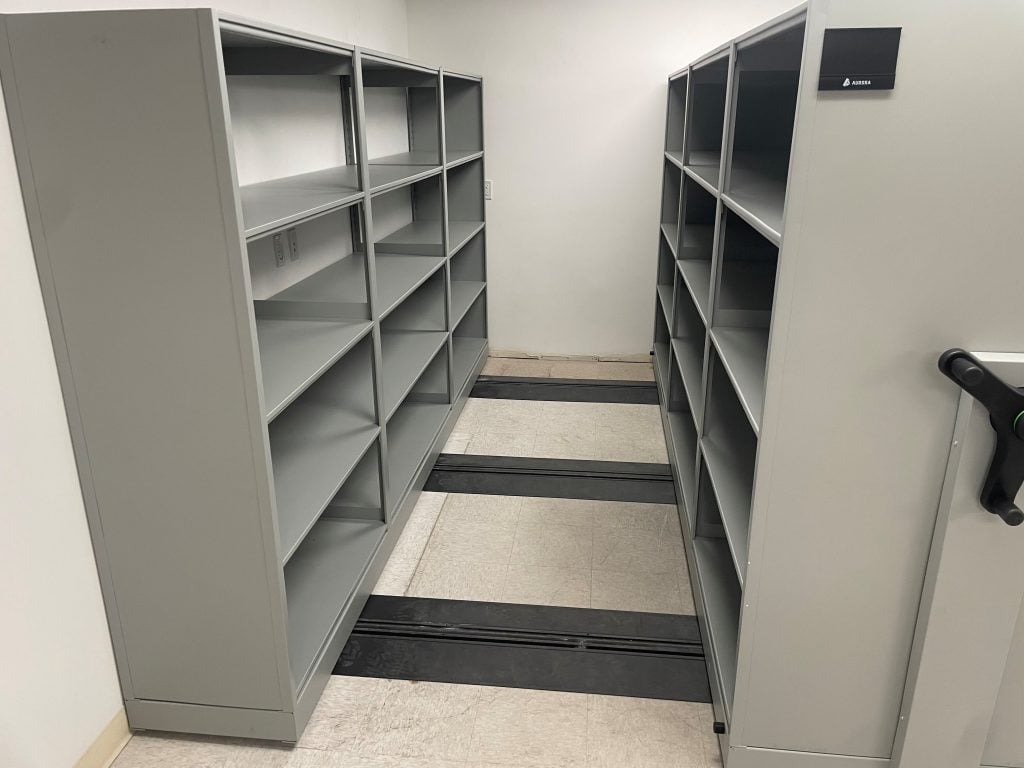
Electric mobile shelving systems — also called powered compact shelving, motorized shelving, or high-density mobile storage — mount standard shelving units onto motorized carriages that glide along floor-mounted rails. At the push of a button, entire rows of shelving compact together to eliminate wasted aisle space, then separate to create an access aisle only where and when you need it.
Unlike manual or mechanical-assist systems, electric mobile shelving uses integrated motors and electronic controls for effortless operation. Operators simply press a button on the end panel, use a touchscreen interface, or activate the system remotely. Safety features including infrared motion sensors, pressure-sensitive floor strips, and LED aisle lighting are standard on most electric systems.
The result depends on the starting layout: consolidating fixed aisles into one movable aisle can add shelving within the existing room or reduce the floor area needed for the same collection. MH-USA verifies the comparison from room dimensions, access requirements, obstructions, and the selected manufacturer before a capacity or return-on-investment claim is used for a project.
Electric vs. Mechanical vs. Manual Mobile Shelving
Choose the right drive system based on your load capacity, operator requirements, and budget.
| Feature | Electric (Powered) | Mechanical Assist | Manual (Hand-Crank) |
|---|---|---|---|
| Drive System | Integrated electric motors | Geared mechanical handle | Direct hand crank |
| Max Load per Carriage | Project-specific | Project-specific | Project-specific |
| Operation Effort | Push-button / touchscreen | Low effort with gear reduction | Moderate physical effort |
| Safety Features | Manufacturer- and model-specific; verify the selected system’s current safety package and applicable project requirements. | ||
| Best For | Frequent access and low-effort operation | Moderate access with geared assistance | Smaller systems where hand movement is appropriate |
| Accessibility | Project-specific: coordinate controls, forces, clear floor space, route, aisle, and applicable accessibility requirements. | ||
| Speed | Manufacturer-specific travel speed | Manual pace | Manual pace |
| Commercial comparison | Request a project-specific comparison after room, load, controls, rail, floor work, and installation conditions are defined. | ||
Types of Mobile Shelving
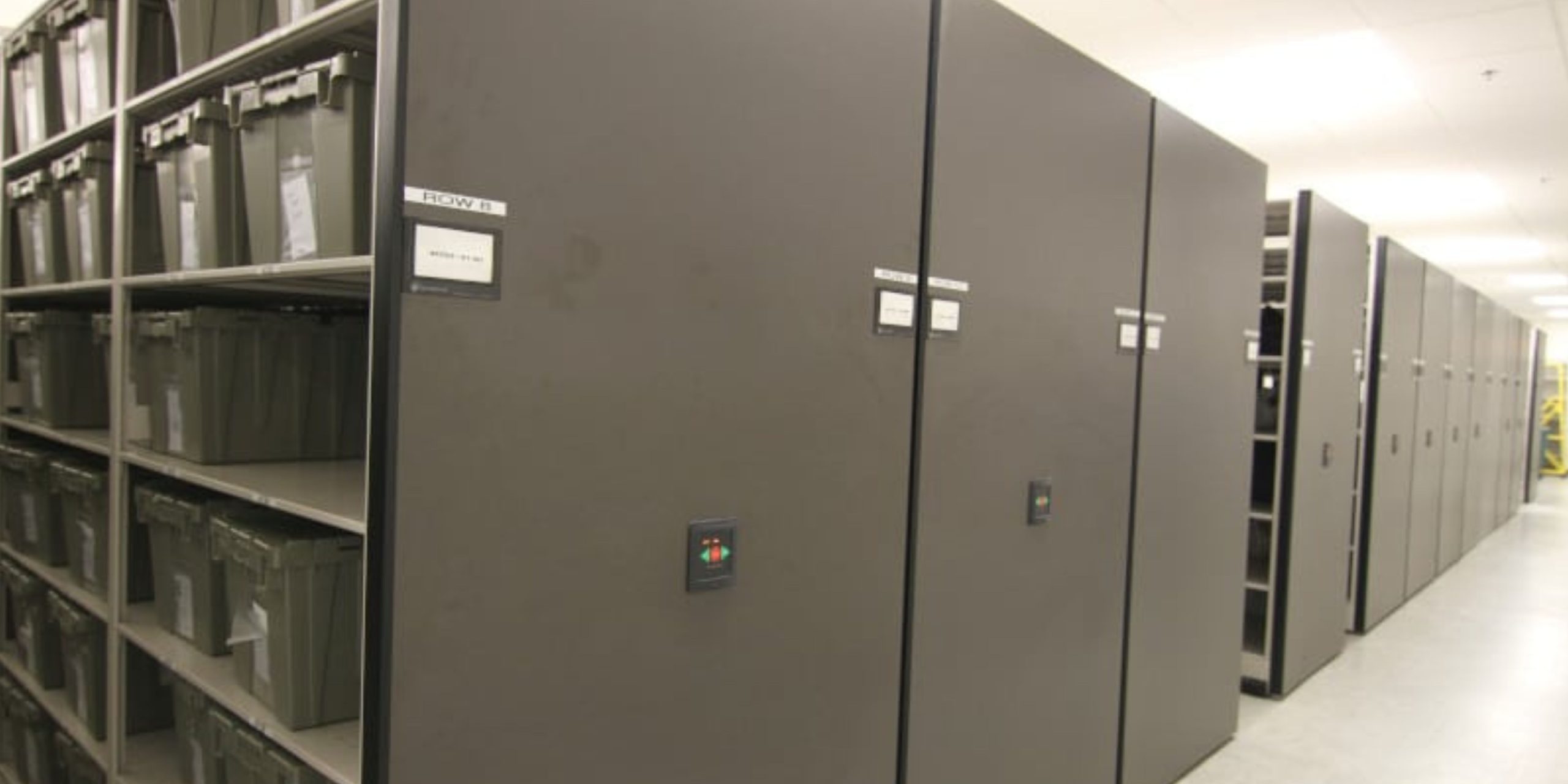
The same high-density principle, three different drive systems. These are systems we have installed — use them to picture what the controls look like day to day.


Powered, Electric, Motorized or Compact Shelving: One Product, Several Names
Buyers, architects and facility teams all describe this system differently. Here is how the words map, so you can be sure you are pricing the same thing.
Electric mobile shelving and powered mobile shelving are the same product: shelving ranges mounted on carriages that run on a track, driven by a motor and moved with a button, switch or keypad on the end panel. Motorized shelving systems, electric moving shelves and electric shelves are the same thing again in everyday language. In specifications and submittals the phrase is usually high-density mobile storage units, electrically assisted movement.
Compact shelving is the wider family. It means any shelving that gives up fixed aisles to gain capacity, whether the ranges are pushed by hand, turned with a mechanical-assist handle, or powered. So compact shelving includes electric mobile shelving, but not all compact shelving is powered. If the drive is still an open question, the comparison further up this page is the one to read.
Two words that are not interchangeable with any of the above: shelving on plain swivel casters, which does not compact a room, and mobile pallet racking, which is a much heavier forklift-served product with its own slab and aisle engineering. We keep that work on mobile pallet rack systems.
| What you searched or specified | What it means here | Where to go next |
|---|---|---|
| Electric mobile shelving, powered mobile shelving | Motor-driven carriages, control on the end panel | This page — controls, safety, floor and power below |
| Motorized shelving systems, electric moving shelves, electric shelves | Same powered product, everyday wording | This page |
| Electrically assisted movement | The specification wording for the same system | Specification package |
| Compact shelving, compact mobile shelving | Any aisle-eliminating shelving: manual, mechanical or powered | Drive comparison above, then the hub |
| High density shelving, top-track or floor-track density | The density formats themselves, powered or not | High density shelving |
| Mobile shelving, movable shelving, mobile shelving systems | The room-scale movable-aisle category | Mobile shelving hub |
| Mobile racking, mobile pallet racking | Forklift-served pallet loads on powered bases — a different product | Mobile pallet rack |
When powered is the right drive — and when it is not
Powered movement is worth paying for when the physical work of opening an aisle is real and repeated: long ranges, heavy record or supply loads, a room that is opened dozens of times a shift, or staff who should not be pushing a loaded carriage at all. It is also the drive that makes electronic access control natural, because the same controller that moves a range can require a code or card first.
It is the wrong answer when the room is small and quiet. A short run opened twice a week does not need a motor, a circuit, a commissioning visit and a service interval; a manual or mechanical-assist system will do the same job for less money and with fewer things to maintain. We quote the drives side by side from one layout so that trade-off is explicit rather than assumed, and we confirm every control, interlock and safety feature against the manufacturer’s current documentation for the exact system being proposed.
Whichever drive you choose, the room decides more than the motor does. Floor flatness and level, rail type, sprinkler and lighting coordination, aisle width for accessible use and the structure under the loaded system all shape the design. Those items are covered in depth on floor load requirements, recessed vs surface-mounted rail and accessible aisle planning.
Industries & Applications
Electric mobile shelving is used anywhere storage density, security, and fast access all matter at once. These are the environments we outfit most:

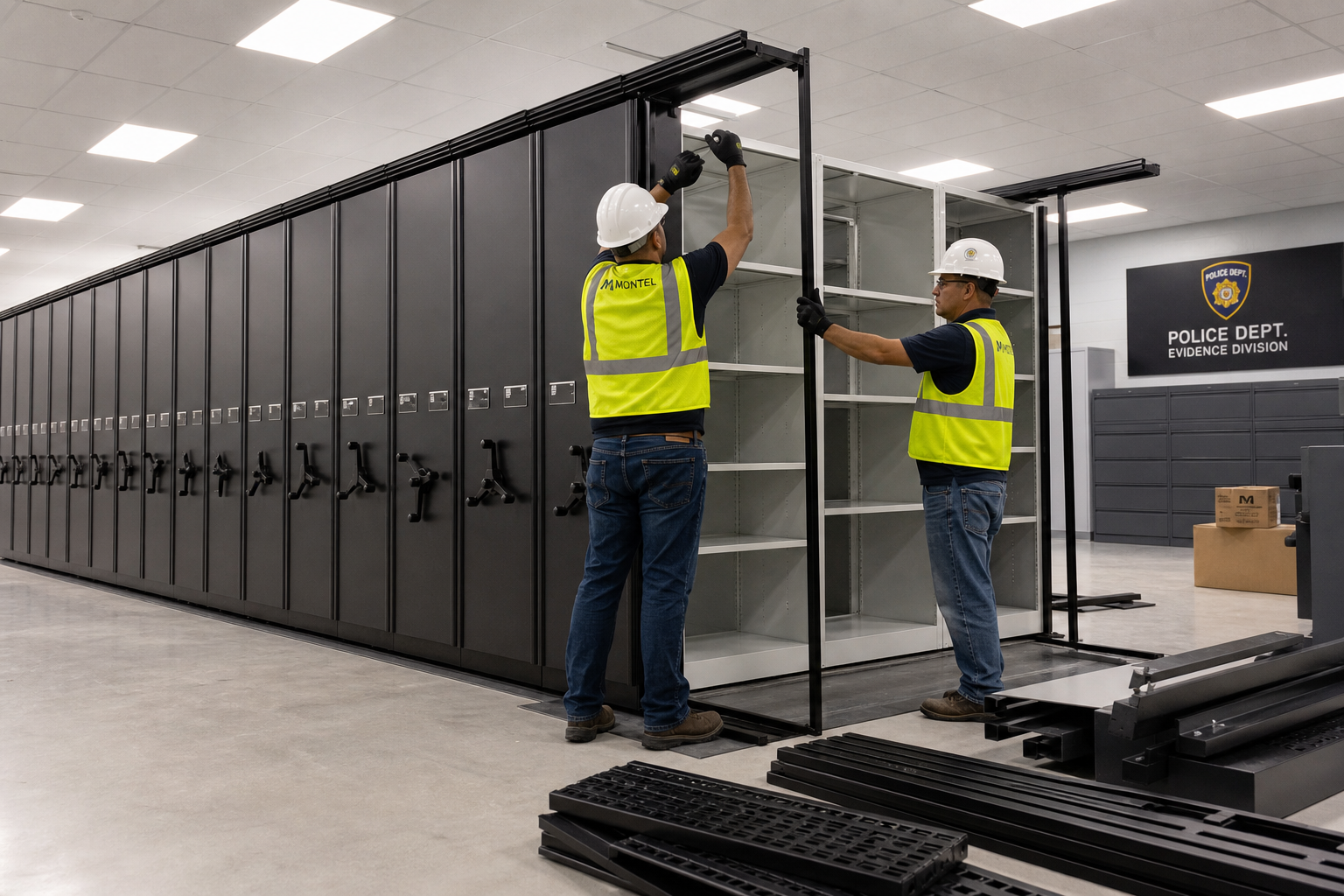
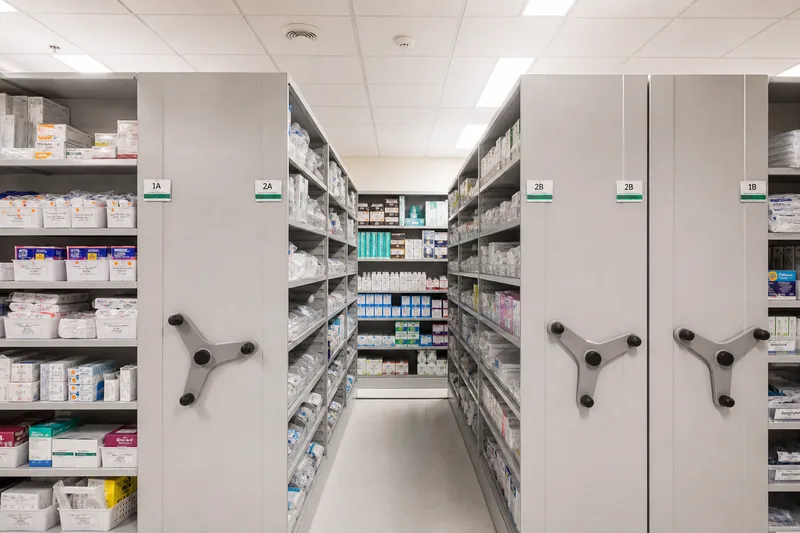
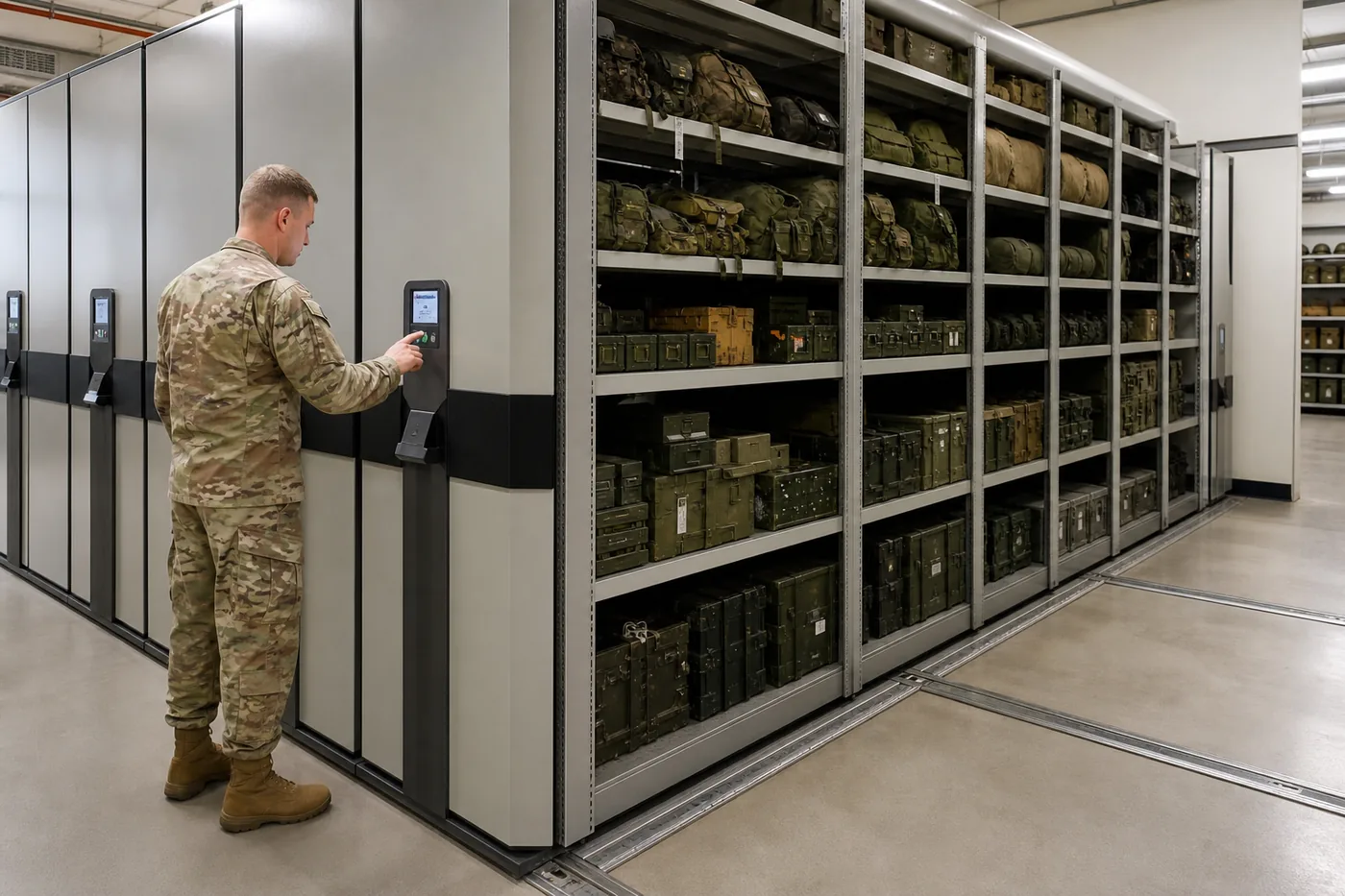
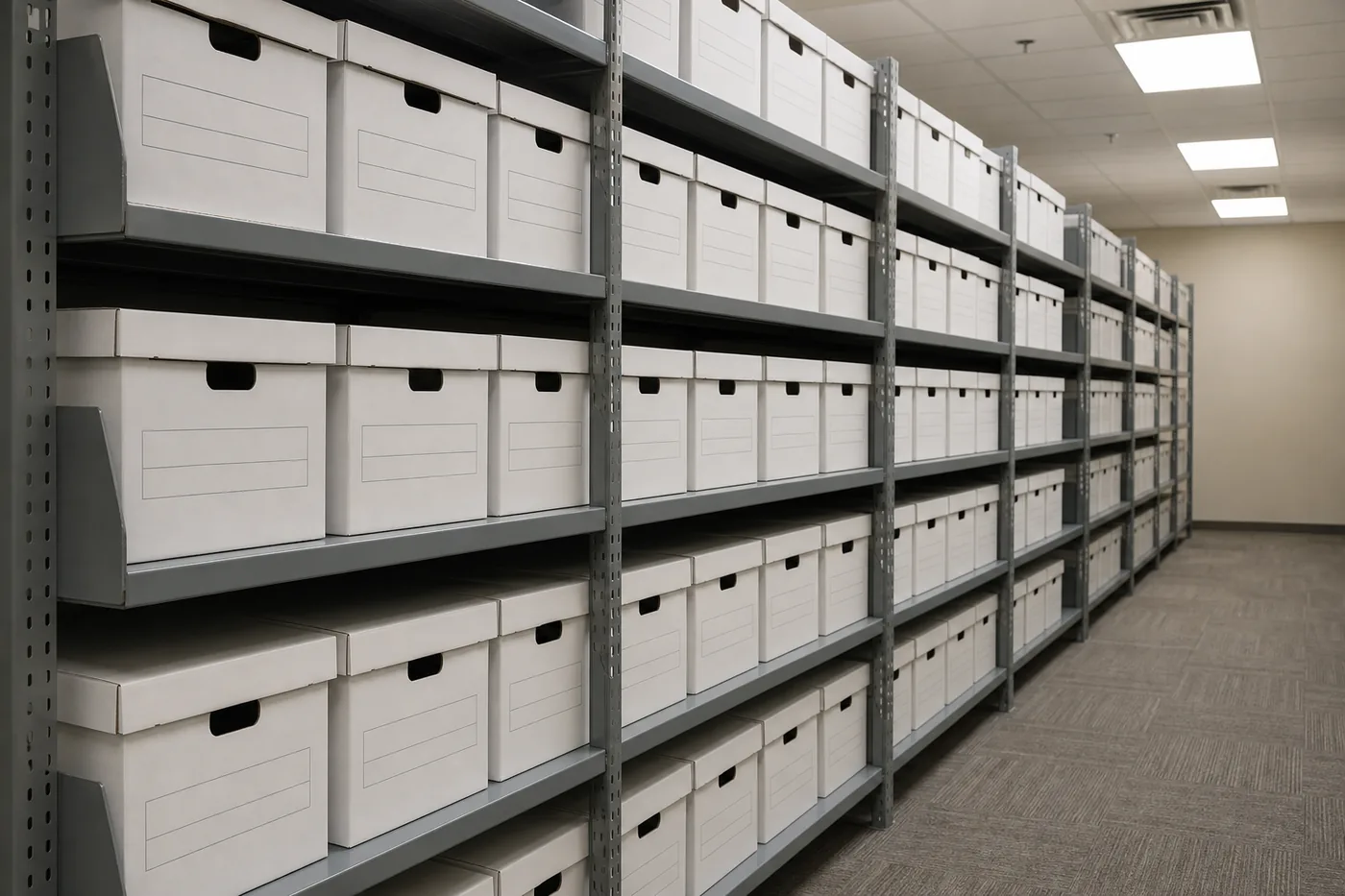
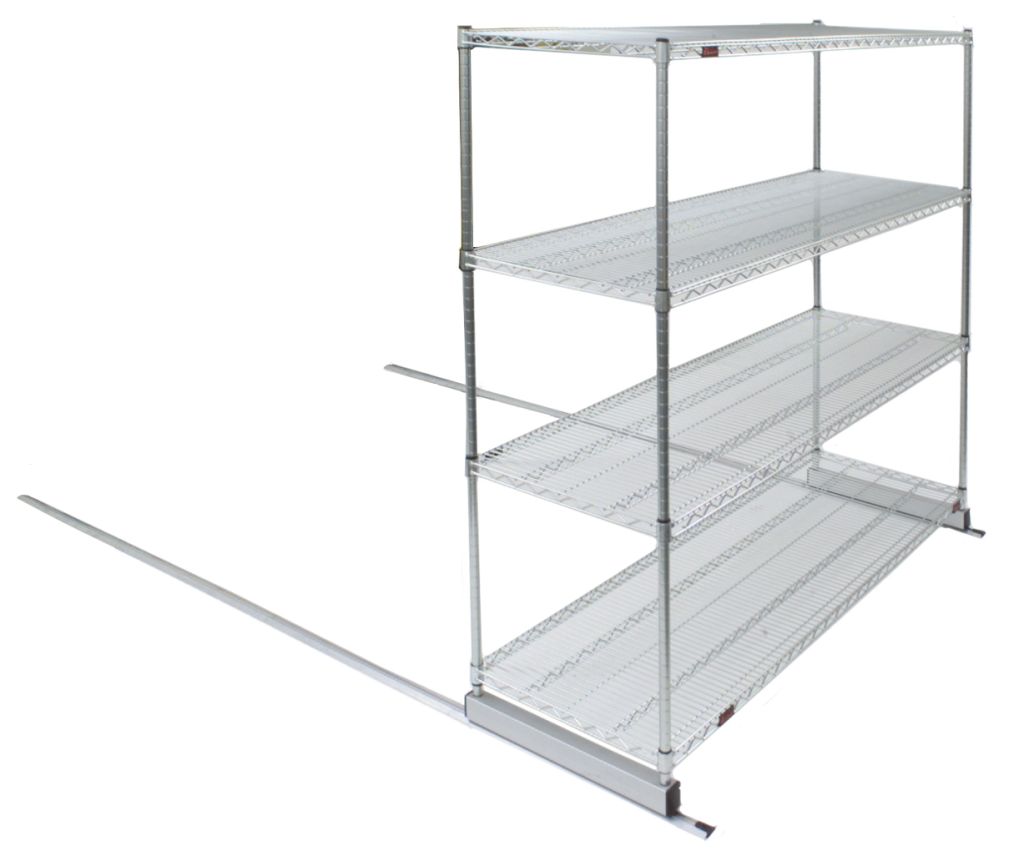
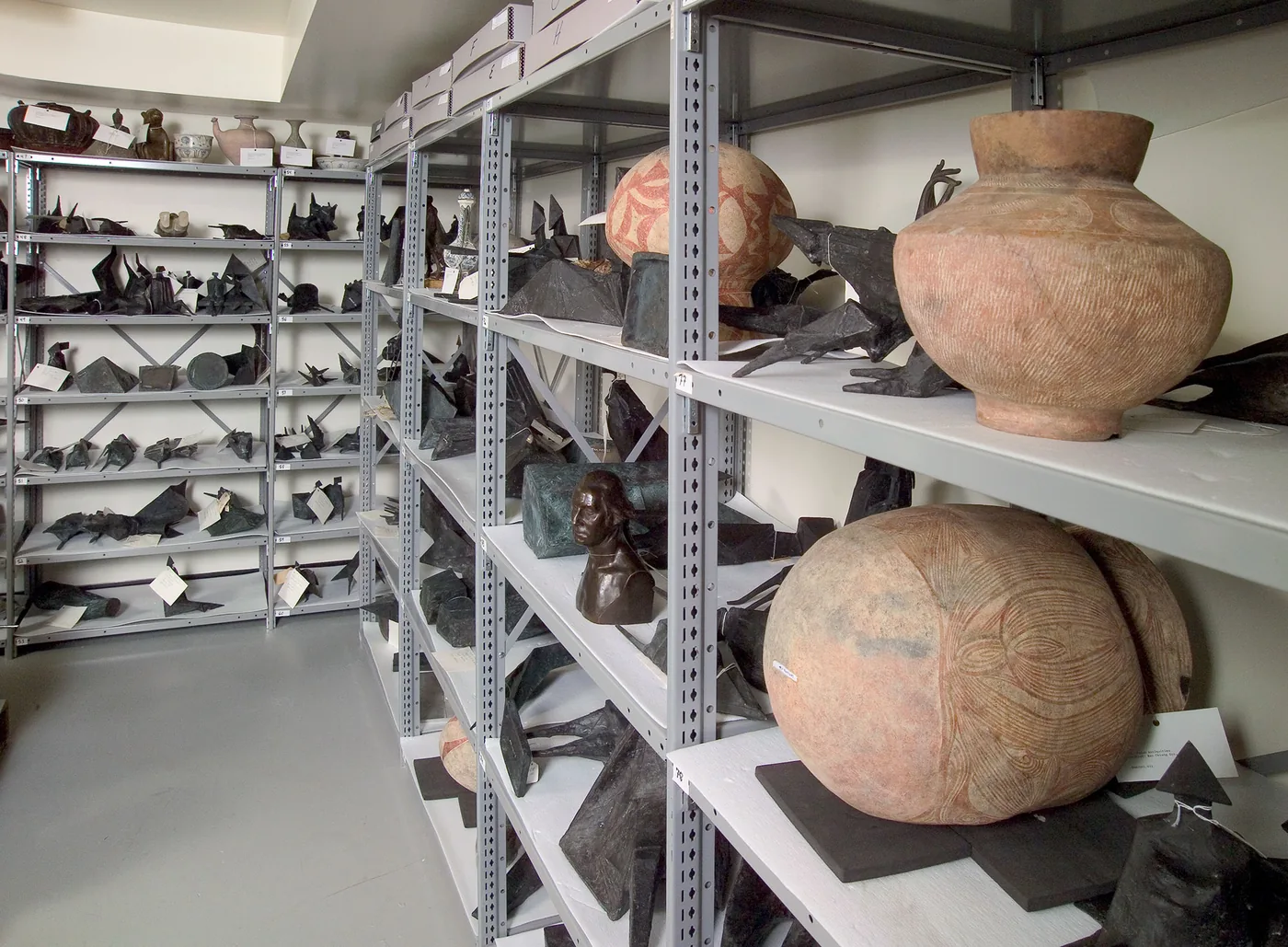

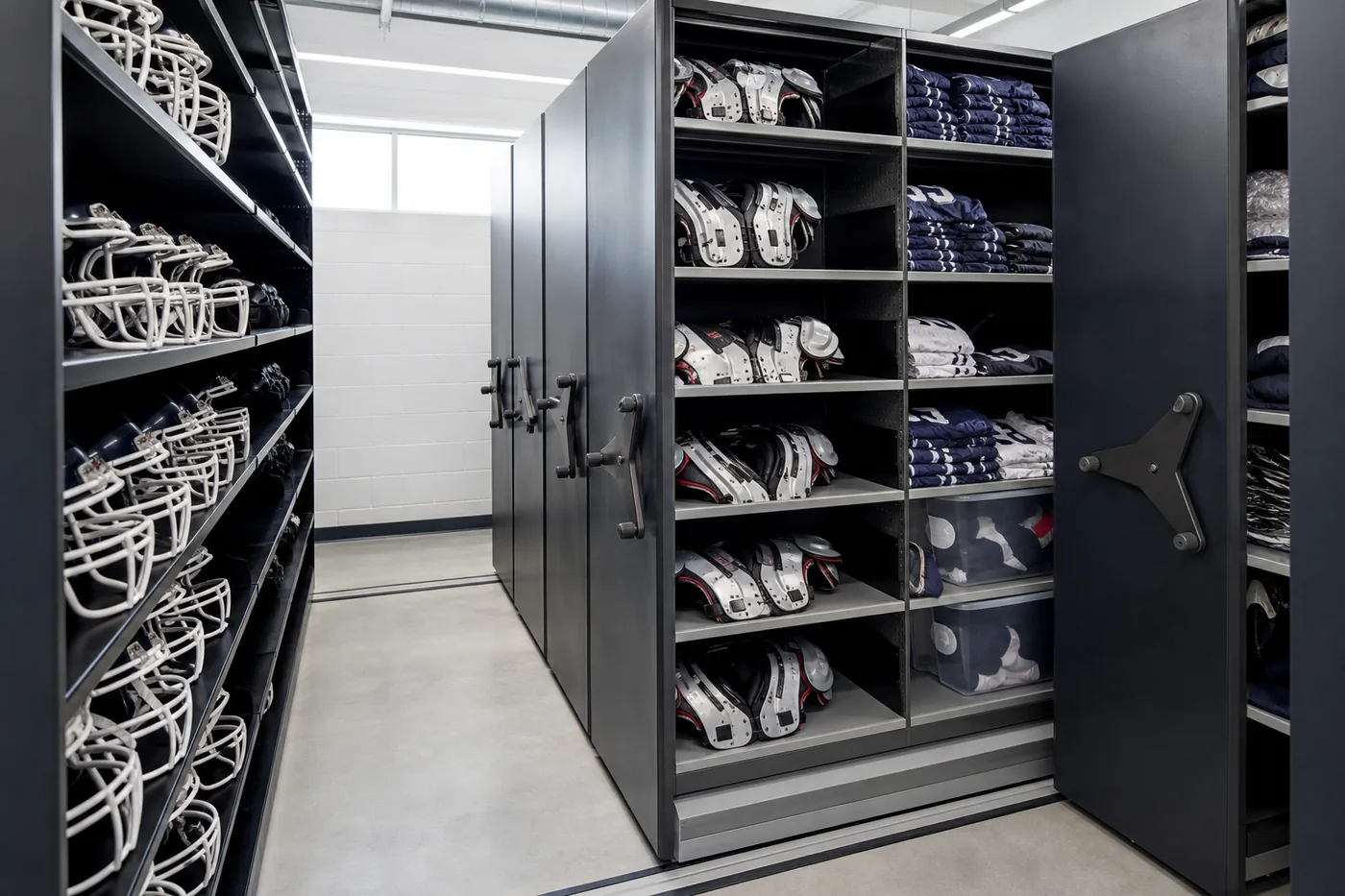
Every system is sized to the room, the load, and the access frequency. Share your floor dimensions and what you are storing, and we will model the capacity gain.
Featured Manufacturer: Aurora Storage Products
Industry leader in high-density mobile shelving, file storage, and evidence room solutions since 1901.
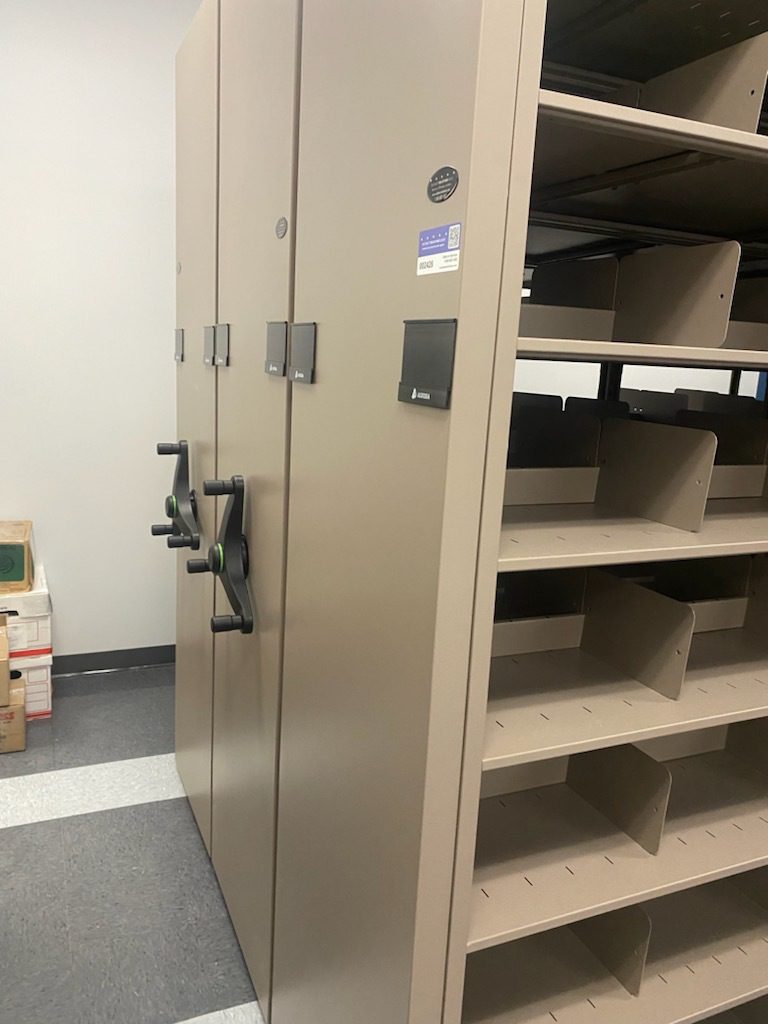
Aurora Storage Products (Richards-Wilcox Aurora) is the largest North American manufacturer of mobile shelving systems, with over 120 years of engineering expertise. As an authorized Aurora dealer, Material Handling USA offers their complete line of Aurora mobile shelving — electric, mechanical-assist, and manual systems.
Aurora Electric Mobile Shelving Features
- Quik-Lok™ shelving connections — tool-free assembly reduces installation time by up to 40%
- Times-2® rotary storage — double-sided rotating units that spin 360° for dual-access filing
- SafeGuard® safety system — multi-level infrared detection, floor-mounted pressure mats, and LED aisle indicators
- Side-to-side and end-to-end configurations — custom layouts for any space geometry
- Project-specific carriage capacities — selected after the stored load, range length, drive, wheel, rail, and floor requirements are confirmed
- Touchscreen controls — intuitive interface with PIN access, usage logging, and remote diagnostics
Aurora Product Lines for Mobile Storage
Aurora manufactures shelving for virtually every mobile storage application: 4-post shelving, wide-span industrial shelving, cantilever library shelving, art rack panels, and wire shelving — all engineered to mount on Aurora’s powered carriage systems. Their Pipp Mobile Storage brand offers specialized solutions for athletic, military, and government applications.
Key Benefits of Electric Mobile Shelving
Why organizations across every industry are switching from static shelving to powered mobile systems.
Recover Space by Consolidating Fixed Aisles
By consolidating the fixed aisles between shelving rows into one moving aisle, a powered system converts aisle area into storage. How much you recover depends on how many aisles the room has today, their widths and the obstructions in the space, so we calculate it from a measured layout of your room rather than quoting a single percentage.
Build ROI From the Actual Project
The financial case should use the project’s verified area comparison, local occupancy cost, construction alternatives, operational impact, and quoted system cost. MH-USA can help assemble those inputs, but the page does not promise a universal payback period.
Plan Accessibility Into the System
Push-button and touchscreen operation removes the physical effort of moving a loaded carriage, which makes powered systems the easiest drive to plan for accessible use. Accessibility is a design outcome, not a product feature: aisle width, control height and reach, thresholds and rail treatment all have to be planned deliberately for the room, and the applicable requirements are confirmed for the project. See accessible aisle planning.
Enhanced Security & Access Control
Electronic controls support PIN codes, key cards, and biometric access. Individual aisle locking, usage audit trails, and integration with building security systems provide accountability for sensitive materials — critical for evidence rooms, pharmacies, and classified storage.
Effortless Operation
Unlike manual or mechanical-assist systems, electric mobile shelving moves at the press of a button, with controlled acceleration and stopping. Travel speed varies by manufacturer and configuration and is taken from the documentation for the system quoted. The practical benefit is the same in every case: no one has to push a loaded carriage, which reduces fatigue in rooms that are opened all day.
Advanced Safety Systems
Modern electric mobile shelving includes multiple safety layers: infrared motion detection at aisle entrances, pressure-sensitive floor strips along aisle lengths, automatic stop on obstruction, LED aisle lighting, and audible motion warnings — all standard on Aurora and other leading systems.
Our Design & Installation Process
From initial consultation to final installation, Material Handling USA manages every step of your mobile shelving project.
Consultation
We review your space, inventory, access frequency, growth plans, and budget to determine the right system configuration.
Custom Design
Our engineers create detailed CAD layouts showing before/after capacity, aisle access patterns, electrical requirements, and rail placement.
Manufacturing
Systems are built to order. Manufacturing and installation schedules vary by manufacturer, system size, approvals, site conditions, and current production capacity; MH-USA confirms the schedule for each project.
Installation
Professional installation crews handle rail installation, carriage assembly, shelving mounting, electrical connections, safety system calibration, and operator training.
Ready to get started?Request a free design consultation or call (800) 326-4403 to discuss your project with a storage specialist.
What to Consider When Specifying Electric Mobile Shelving
Choosing the right mobile shelving system involves evaluating several factors specific to your facility and storage requirements. Here are the key considerations our design team reviews with every client:
Floor & Structural Requirements
- Floor geometry — rail alignment and leveling requirements come from the selected manufacturer. A field survey may identify grinding, leveling, or grout work.
- Floor structure — mobile carriages concentrate load at rails and wheels. A qualified structural professional must verify the slab and supporting structure from project-specific loads.
- Rail installation — surface-mounted or recessed (flush) rails. Recessed provides a smooth floor surface but requires saw-cutting concrete.
Electrical Requirements
- Power supply — voltage, circuit, disconnect, control, and emergency-operation requirements come from the selected powered system and must be coordinated with the electrical design.
- Battery backup — optional UPS systems maintain operation during power outages.
- Network connectivity — advanced systems support Ethernet/WiFi for remote monitoring and integration with building management systems.
Shelving & Load Configuration
- Shelving type — 4-post, wide-span, cantilever, wire, or specialty (art racks, lateral files). Must match your storage media.
- Stored load — document the current collection and future growth. The manufacturer selects carriage, wheel, drive, and rail capacities from the actual load schedule.
- Shelf depth — standard 12″, 15″, 18″, 24″, or 36″ deep shelving. Double-face (back-to-back) shelving doubles density per carriage.
Access & Security
- Aisle width — coordinate the clear aisle, turning space, route, stored media, operations, and applicable accessibility, fire, and building requirements.
- Access control — PIN, key card, biometric, or open access depending on security requirements.
- Seismic considerations — anchorage and restraint requirements are project- and jurisdiction-specific. Coordinate the selected system with the structural design and authority having jurisdiction.
Current Mobile Shelving Product Resources
Manufacturer literature, specifications, BIM, Revit, CAD, and planning files change over time. Request the exact system and format you need so MH-USA can confirm the current source, project fit, and redistribution path.
Request a current file through MH-USA
Use the Architect Specification Package, choose Mobile Shelving, then select “Request a specific file.” Include the manufacturer or product family, required format, project phase, and jurisdiction. We will send the appropriate resource or explain what must be produced for the project.
Related Storage Solutions
Electric mobile shelving is just one part of a comprehensive high-density storage strategy. Explore complementary products:
Looking for something broader than powered systems?
This page is the powered/electric drive. The generic category — mobile shelving, movable shelving and mobile shelving systems of every drive type — lives on our mobile shelving hub, and the density formats themselves (overhead top-track and floor-track) are covered on high density shelving. Manufacturer detail stays on the brand pages: Aurora, Datum and Pipp.
Frequently Asked Questions
Yes. Electric mobile shelving, powered mobile shelving, motorized shelving and electric moving shelves all describe the same product: shelving ranges on track-mounted carriages that are driven by a motor and moved with a control on the end panel instead of by hand or by a geared handle. We use “electric” on this page because that is what most buyers search for, but the specification word in submittals is usually “electrically assisted movement”.
Compact shelving is a broader term. It covers any shelving that removes fixed aisles, whether it is pushed by hand, moved with a mechanical-assist handle, or powered. Electric mobile shelving is the powered version of compact shelving. If you are comparing all three drives, this page is the right place; if you are planning the room as a whole, start at our mobile shelving hub, and for the density formats themselves see high density shelving.
When the ranges are long or heavily loaded, when the room is opened many times a day, when the same staff would otherwise move loaded carriages repeatedly, or when access needs to be controlled electronically. Short runs opened a few times a week rarely justify it. We price both options side by side from the same layout so the difference is visible before you decide.
A dedicated circuit and a disconnect located where the manufacturer’s current installation documentation requires, plus conduit routing that suits the rail layout. The exact voltage, circuit and control requirements come from the documentation for the specific system quoted and are coordinated with your electrician before installation — they are not the same for every manufacturer or configuration.
Sometimes, and it is a case-by-case review rather than a stock kit. It depends on the carriage line, its age, the rail arrangement, the available power and whether the manufacturer still publishes an upgrade path for that model. We check the current documentation before quoting an upgrade, and we will say so if replacement is the better value.
Electric mobile shelving is quoted from the room, stored load, shelving type, carriage length, rail and floor work, controls, safety package, electrical coordination, freight, and installation conditions. Send the room dimensions or floor plan for a project-specific proposal; MH-USA does not publish a generic per-foot price that may mislead early planning.
The gain depends on how many fixed aisles exist today, their widths, the room shape, range depth, obstructions, and required access. A track/rail layout usually consolidates multiple fixed aisles into one movable working aisle. Use the Free Mobile Shelving Space Analysis for a transparent geometry comparison, then have MH-USA verify the layout.
Safety packages vary by manufacturer and project. Depending on the selected system they may include aisle detection, sweeps, stops, warning indicators, locks, manual override, or access control. MH-USA verifies the current manufacturer documentation and applicable project requirements before specifying any feature or standard.
Maintenance follows the selected manufacturer’s current instructions and the installed controls, drives, sensors, rails, and environment. Keep tracks clear and establish the inspection and service interval during commissioning rather than assuming a universal schedule.
Potentially. Cold-room use requires a manufacturer configuration approved for the project’s temperature, moisture, corrosion, sanitation, and electrical conditions. MH-USA checks the current published operating range and component package before recommending a system.
Installation duration depends on system size, rail and floor work, electrical coordination, site access, approvals, and commissioning. MH-USA confirms a project schedule after the layout and site conditions are defined.
Capacity is selected from the stored load, range length, shelving, carriage frame, wheel and rail system, drive, and supporting floor. MH-USA develops the load schedule with the customer and manufacturer; a qualified structural professional verifies the slab and supporting structure where required.
Many shelving and cabinet families can be mounted on mobile carriages when the selected manufacturer supports the application. MH-USA verifies the shelving interface, dimensions, loads, carriage, drive, rail, floor, and access requirements before recommending a combination.
What Our Clients Say
Mobile shelving projects we designed and installed for government agencies, courts and professional firms.
“The team provided a highly professional service from start to finish.”
They were always available for meetings and questions — first in figuring out what system would work best for our needs, then by assessing how much shelving space would be required for our existing as well as future needs, and finally by ensuring the timely delivery and quality installation of the product.
Tate W. Curtis
Space Coordinator, United States Department of Agriculture
“The team was very supportive.”
They were extremely attentive in assessing our needs in Logan. They provided several plans to show us our shelving options.
Sharon L. Hancey
First District TCE, Administrative Office of the Courts
“We appreciated the courteous and professional manner of the installers.”
We have been using the system now for about six months and are happy to report that it has been a wonderful addition to our office. It is easy to operate, keeps our filing area neat and organized, and most importantly provides us with unlimited space for growth. We are completely satisfied with your product.
Julie Froff
Assistant Clerk, Third District Court
“They were also great to work with.”
The track and system Material Handling USA recently installed is working very well. Your installation people were able to adjust the tracks on the uneven floor in our storage space.
Nancy Herd
Human Resources Manager, Ray Quinney & Nebeker
Ready to Maximize Your Storage Space?
Contact Material Handling USA for a free design consultation. We’ll analyze your space, recommend the right mobile shelving system, and provide a detailed quote — all at no cost.