
Security Cages for Philadelphia Warehouses and Distribution Centers
Wire mesh security cages and partitions for Philadelphia-area warehouses, 3PLs, pharmaceutical distributors and food facilities, supplied and installed by MH-USA and our installation partners.
Talk with a specialist: (800) 326-4403 or sales@mh-usa.com
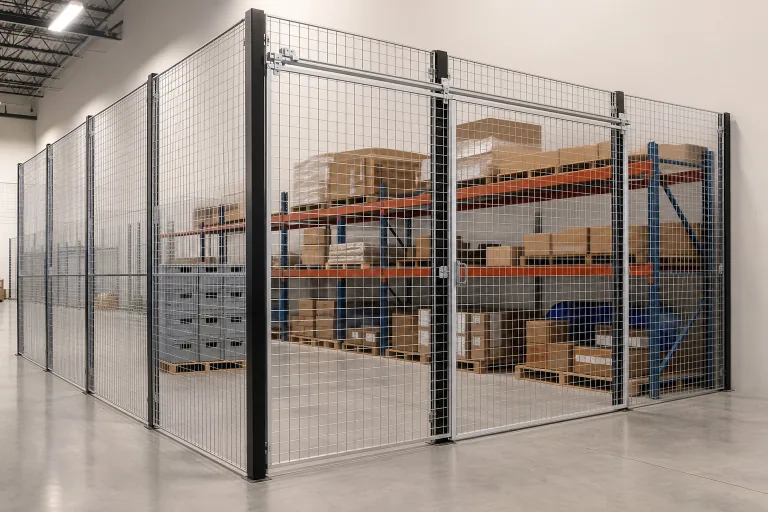
Shop Pre-Configured Wire Mesh Cage Kits Online
Standard-size welded wire cage kits, priced online, for smaller storage needs. Every kit still needs to be anchored to sound concrete — for tall, braced or engineered enclosures, request a quote with your building location and floor details.

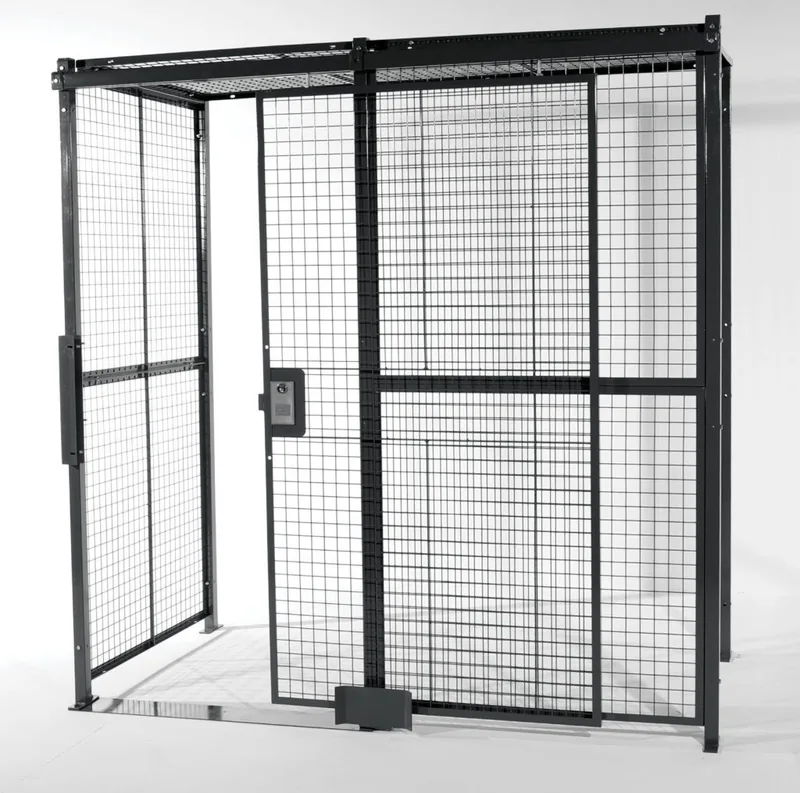
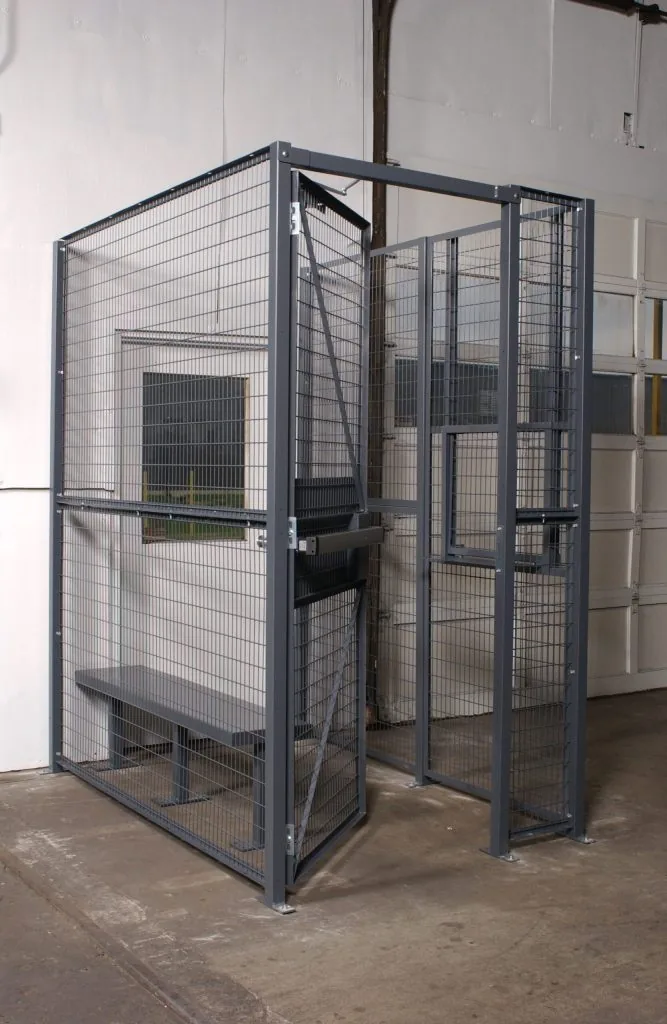
Prices are the current online prices. See all security cage kits · Need a custom size? Request a security cage quote.
Security cages for Philadelphia warehouses and facilities
The Philadelphia region is one of the densest distribution markets on the East Coast, from the I-95 corridor and the port to the warehouse parks in Bucks, Delaware and Montgomery counties and across the river in South Jersey.
We supply wire mesh security cages for those buildings and manage installation through our partner crews, with the same CAD layout and quote process we use at home in the Mountain West.
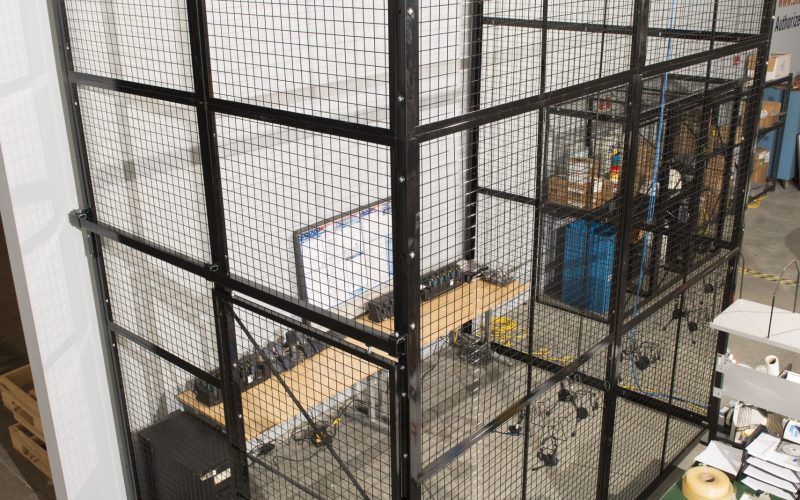
What we install in Philadelphia
Every system is modular steel wire mesh from manufacturers such as Wire Crafters and SpaceGuard, so it can be extended or reconfigured later.
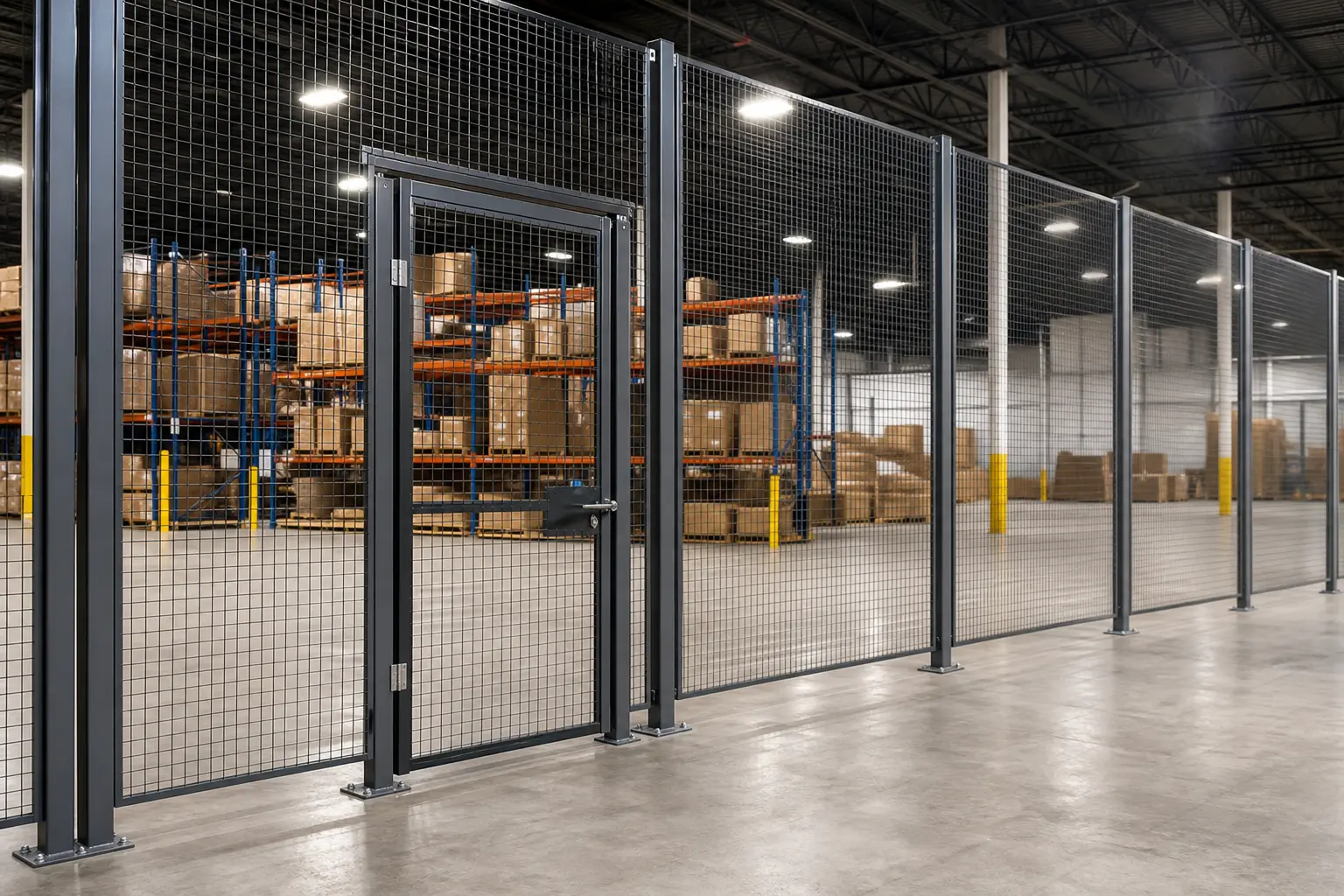 Wire mesh partitionsModular panels, posts and doors to divide any space.
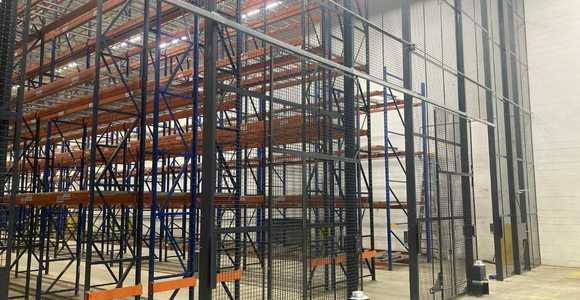 Warehouse enclosuresLarge cages for high-value stock, returns and client inventory.
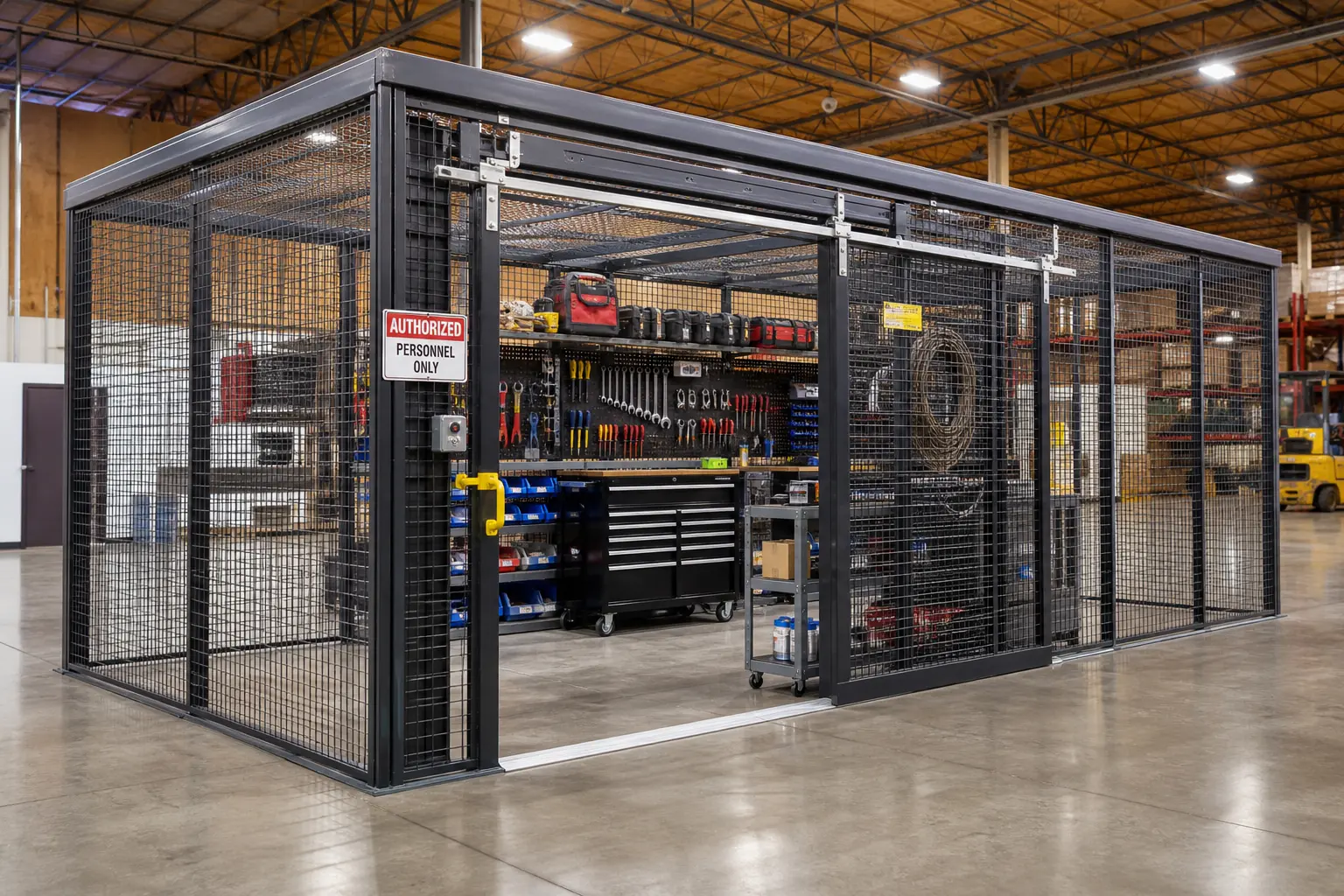 Tool cribsIssue cages with service windows for tools and MRO parts.
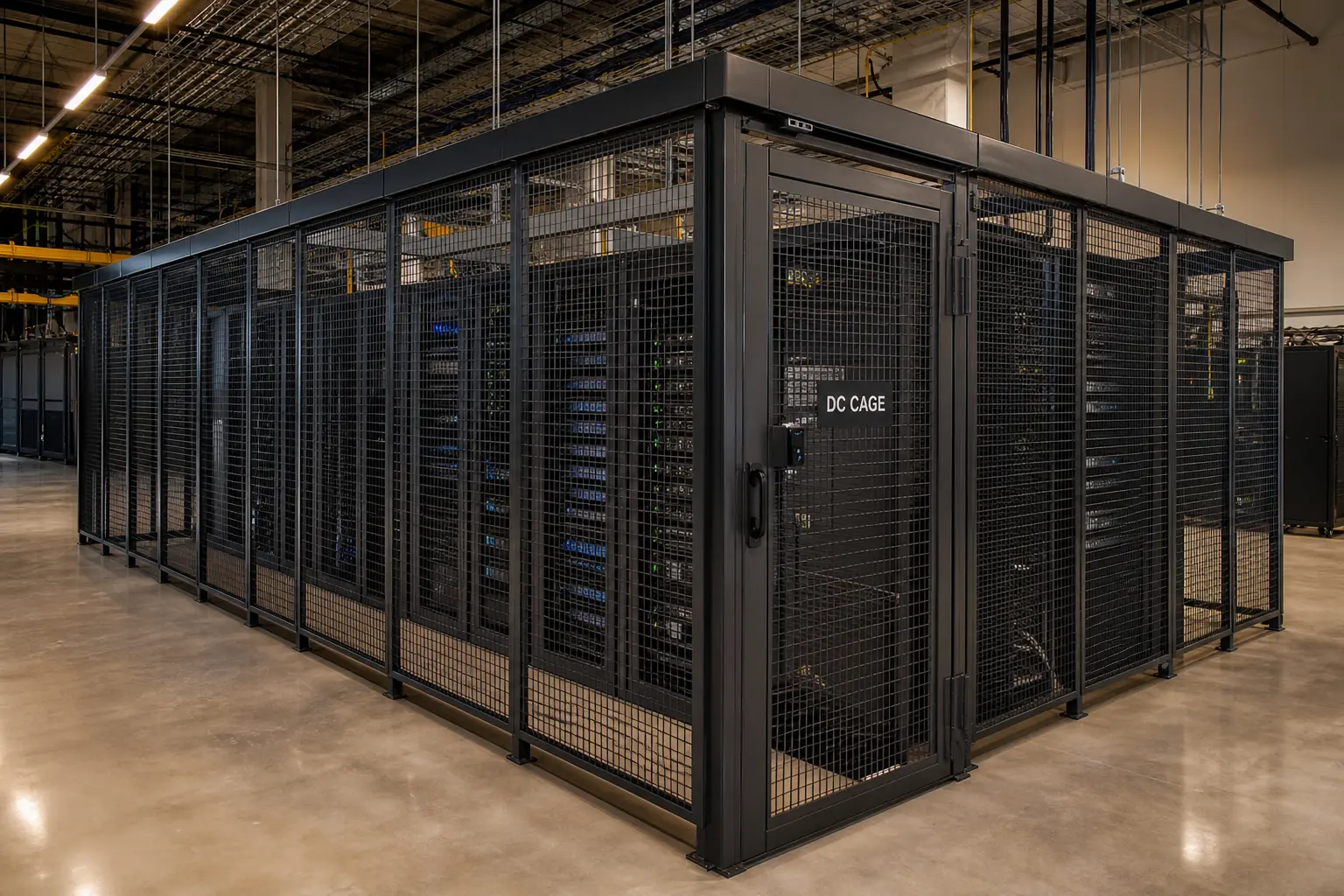 Server and data center cagesMesh cages for colocation and IT rooms.
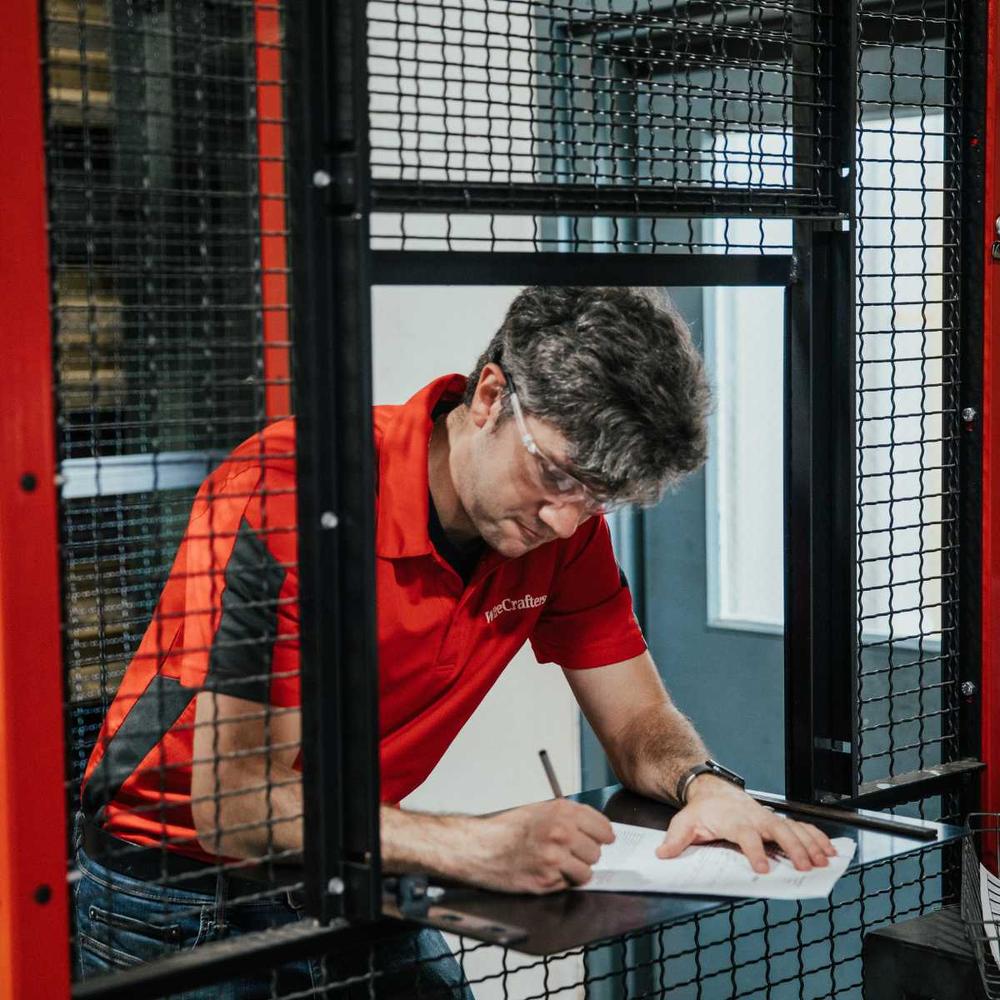 Driver access cagesKeep visiting drivers out of the warehouse.
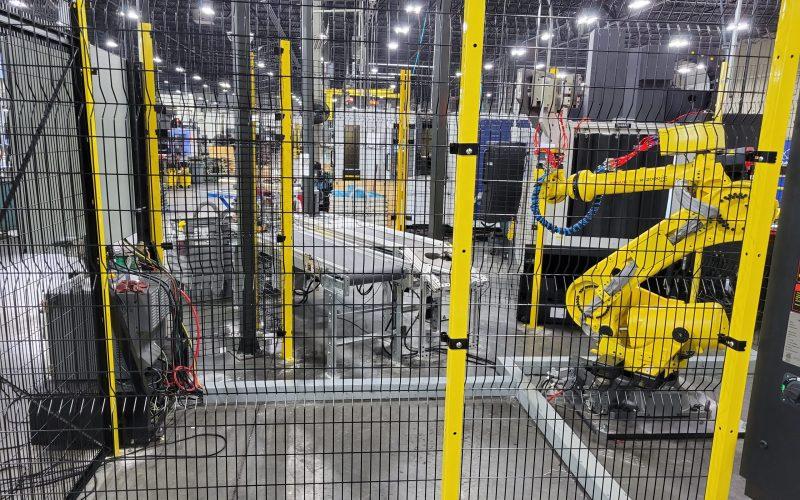 Machine guardingMesh guarding around robots and moving machinery.
Philadelphia industries we build security cages for
Pharmaceutical distribution
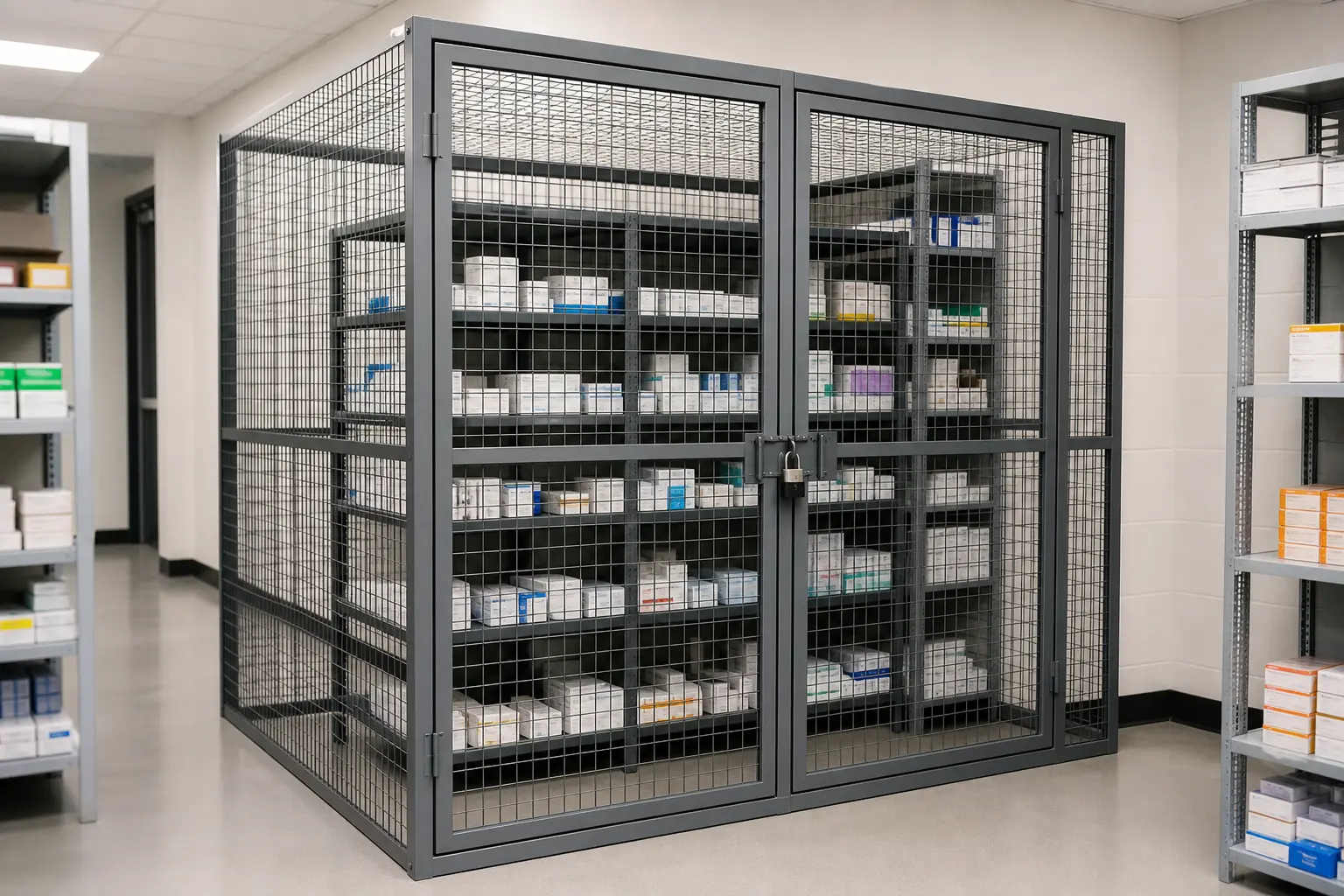
Distributors of Schedule III–V products use cages built to the DEA cage specification, with alarms and logged access.

3PL and e-commerce
Client inventory, returns and high-value SKUs get separated cages, often with sliding doors for forklifts.
Food and beverage
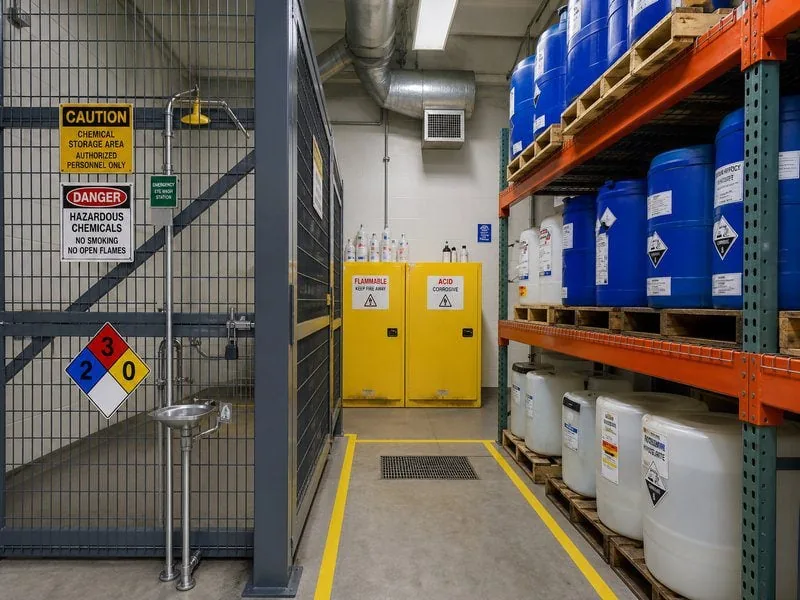
Food distributors and processors lock up chemicals, spare parts and alcohol while keeping visibility for audits.
Codes, permits and floors in Philadelphia
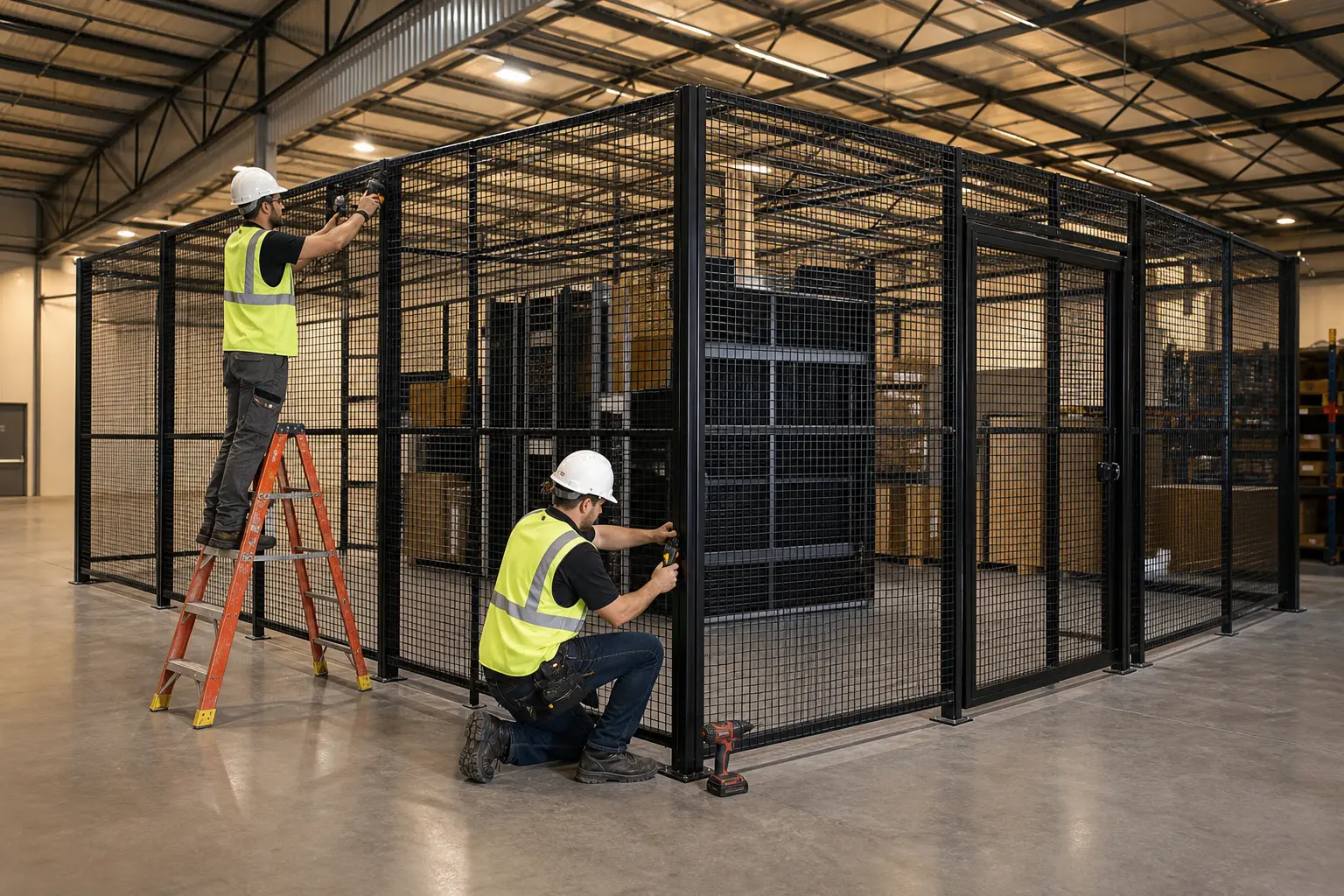
Philadelphia’s Department of Licenses and Inspections and suburban township code offices review tall partitions and anything attached to the structure, and fire marshals check sprinkler coverage under mesh ceilings. Older multi-story buildings in the city often have wood or thin concrete floors, so we confirm the floor before specifying anchors.
Whatever the jurisdiction, three things come up on almost every project: sprinkler coverage under any mesh ceiling, clear egress for anyone working inside, and anchoring to sound concrete. We address all three on the layout drawing.
Choosing doors, locks and ceilings
Doors: hinged doors for people and carts, double hinged or sliding doors for pallets and forklifts, and Dutch doors or service windows for issue counters.
Locks: keyed cylinders, padlock hasps, combination locks or card readers with an entry log. See our security cage locks guide.
Ceilings: add a mesh ceiling when people could climb over, or run walls tall enough that they cannot.

| Need | Typical choice |
|---|---|
| People-only storage | Single hinged door, keyed lock |
| Forklift access | Sliding or double door |
| Parts issue counter | Service window or Dutch door |
| Audited inventory | Card reader with entry log |
| Regulated product | Spec-built cage with ceiling and alarm |
How a Philadelphia security cage project runs
Site review
We visit or review photos, dimensions and clear height.
CAD layout
You see panel runs, doors and ceilings on a drawing before you commit.
Supply
Some common sizes are in stock at select manufacturers, subject to confirmation; custom runs are made to order.
Install
Most cages install in one to a few days once materials arrive.

To quote quickly, send a floor sketch or CAD file, clear height, door locations, what you need to secure and whether forklifts need access. Budget ranges per linear foot are on the security cage cost guide, and the pre-configured kits above are priced online for smaller needs. Installation details are on our security cage installation page.
Security cage options compared
Most buyers weigh a mesh cage against a few alternatives. Here is how they usually stack up for warehouse and facility storage.
| Option | Visibility | Reconfigure later | Typical use | Trade-off |
|---|---|---|---|---|
| Welded or woven wire partition | Full; mesh you can see and spray through | Yes, panels unbolt | Cages, cribs, rack enclosures | Needs anchoring to sound concrete |
| Chain link cage | Full | Difficult | Low-cost bulk storage | Fabric can be cut or pried; sags over time |
| Drywall or block room | None | No | Offices and vaults | Construction, permits and sprinklers inside |
| Lockable cabinets | Limited | Moves easily | Small parts and documents | Small capacity; no pallets |
| Pre-configured cage kit | Full | Yes | Standard 8×8 to 12×12 storage | Fixed sizes; still needs anchoring |
Open mesh is usually the best balance: inventory stays visible for counts and cameras, sprinkler water and light pass through, and the cage can move with your operation. Solid rooms make sense for records vaults or when the fire code or a regulation calls for them.
Security cage planning checklist
Answering these before you request a quote saves a round of revisions and gets you an accurate price the first time.
- Floor dimensions of the area and any columns inside it
- Clear height to the lowest obstruction (sprinkler pipe, lights, joists)
- Whether people could climb over the walls if there is no ceiling
- What goes inside: shelving, pallet rack or floor-stacked pallets
- How product moves in and out: people, carts, pallet jacks or forklifts
- Door count, sizes and which way they should swing or slide
- Lock type and who needs access, and whether you need an entry log
- Sprinkler, lighting and camera coverage inside the cage
- Slab type and condition, and any radiant heat or utilities in the floor
- Any regulation that applies: DEA, TTB, state cannabis or insurer requirements
- Whether you lease the building and need landlord approval for anchors
- Your target install date and working hours for the crew
Service area around Philadelphia
We supply and install security cages across the Philadelphia region, including:
- Philadelphia
- Bensalem
- Bristol
- King of Prussia
- Norristown
- Chester
- Essington
- Exton
- West Chester
- Allentown
- Bethlehem
- Cherry Hill, NJ
- Camden, NJ
- Swedesboro, NJ
- Logan Township, NJ
- Wilmington, DE
Projects elsewhere are handled from our Salt Lake City headquarters with our installation partners. Explore the full range on the security cages page.
Get a free quote
Tell us what you are storing, the room size and your timeline. A project specialist will follow up with layout options and pricing. Prefer to talk? Call (800) 326-4403.
Security Cages in Philadelphia: FAQs
Do you install security cages in Philadelphia?
How much does a security cage cost?
Does a security cage need a permit in Philadelphia?
How long does installation take?
Can forklifts get into the cage?
Can the cage be expanded later?
Need security cages in Philadelphia?
Send us your floor plan or a few photos and we will design a cage layout and quote for your facility.