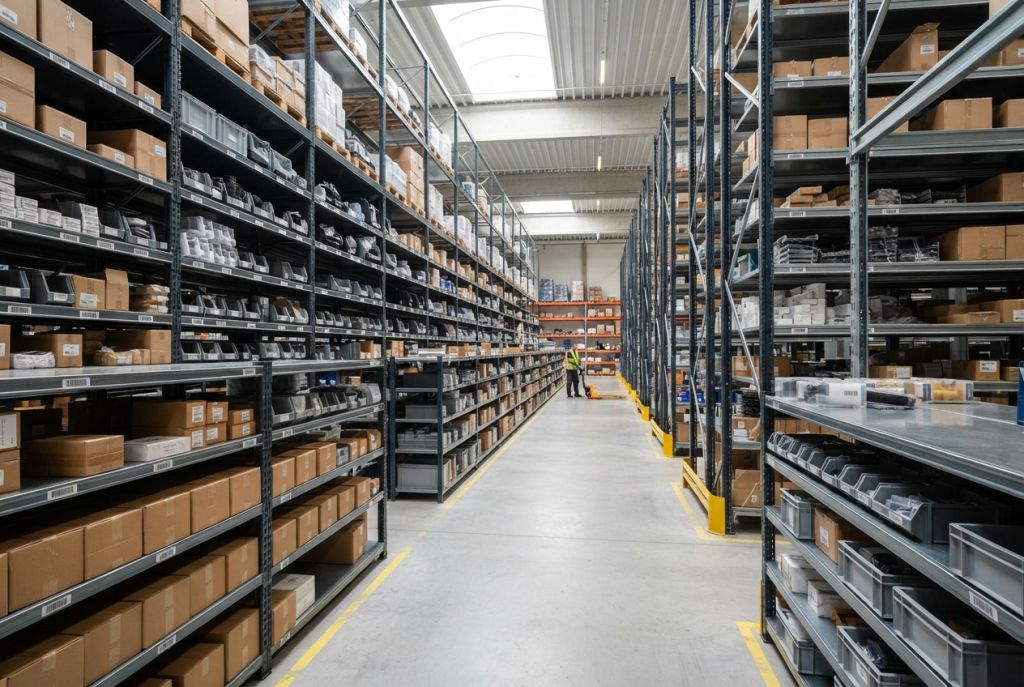
Valuable inventory usually doesn't start in a secure area. It ends up on an open shelf, near a packing station, beside a returns table, or in a maintenance corner that “just needs a temporary spot.” That's where shrink, mix-ups, and access problems start.
The best warehouse cage enclosure plans begin with three questions. What exactly needs protection, who should have access, and how will the enclosure fit the way your building already works. If you're benchmarking broader advanced warehouse security solutions, a cage should be treated as one layer in a practical access-control plan, not just a fenced-off corner. For warehouse-specific layouts and product options, start with warehouse security enclosures.
Warehouse Cage Enclosures How to Secure High Value Inventory and Restricted Areas
A good enclosure fixes more than theft risk. It gives a warehouse manager a defined control zone inside a larger building. That matters when tools disappear between shifts, customer-owned inventory needs separation, or returns pile up with no clear chain of custody.
A warehouse cage enclosure works best when it's specified around the process, not just the footprint. If people pick with carts, door width matters. If a forklift needs access, aisle approach matters. If the area stores electronics, records, chemicals, or restricted stock, visibility and controlled entry matter more than just adding mesh panels.
Practical rule: Don't start with panel size. Start with the workflow you need to protect.
The mistake I see most often is treating a cage like a simple commodity. It isn't. In a warehouse, the enclosure has to support inventory control, line-of-sight supervision, and everyday movement without creating a bottleneck. The right design turns an exposed area into an auditable one.
What Is a Warehouse Cage Enclosure
A warehouse cage enclosure is a secure, room-like area built inside an existing facility with wire mesh panels, posts, and lockable doors. It creates a controlled space without requiring full stud walls, drywall, or a separate building addition.
In practice, it is less like general fencing and more like an interior security partition system. The enclosure defines who can enter, what can be stored there, and how material moves in and out. That distinction matters in a working warehouse, where the best solution has to protect inventory without disrupting picking, replenishment, supervision, or fire protection planning.

The main advantage is adaptability. A cage enclosure can often use existing perimeter walls, columns, and slab space to reduce material cost and avoid building a fully enclosed room. That usually makes the project faster to install and easier to modify later if inventory levels, aisle widths, or access points change.
The trade-offs are straightforward:
- Visibility: Open mesh lets supervisors and cameras see inside, which helps with accountability and count verification.
- Airflow: Wire mesh allows ventilation and light to pass through more easily than solid construction.
- Controlled entry: Security depends on the door setup, lock type, panel height, and how the enclosure is positioned within the building.
A well-specified warehouse security cage balances those factors against daily use. More mesh openness improves sight lines and airflow, but security still depends on door control and layout discipline. Using an existing wall can lower cost, but only if that wall supports the access pattern and does not create a dead corner or traffic conflict.
That is what a warehouse cage enclosure really is. A security zone designed to fit the building you already have and the operation you need to control.
Where Warehouse Cage Enclosures Are Used
The most useful cage projects solve a specific warehouse problem. Sometimes that problem is theft. Sometimes it's disorganization. Sometimes it's keeping the wrong people out of a high-risk area.
A source summarizing Bureau of Labor Statistics data says the warehousing sector recorded 4.8 injuries per 100 full-time workers in 2024. That helps explain why secure enclosures are now part of warehouse planning for both loss prevention and restricted access control, as noted in this review of warehouse security cage applications.
High value inventory storage
Electronics, serialized parts, pharmaceutical stock, and customer-owned goods shouldn't sit in open racking if only a few people should touch them. A warehouse security enclosure creates a clear access point and a visible storage zone.
Mesh outperforms improvised solutions like chain barriers or taped-off corners. Staff can see product, verify counts, and supervise movement without leaving everything exposed.
Tool cribs and maintenance storage
Shared tools are expensive to replace and easy to misplace. A warehouse cage works well as a tool crib because it supports accountability without isolating the area from the rest of operations.
For maintenance teams, the enclosure should be sized around actual use. If carts roll in and out, leave space for staging. If long items or repair parts are stored inside, don't force the layout into a tight square that wastes wall length.
Returns, damaged goods, and quarantine areas
Returns areas go wrong fast when everyone can drop material anywhere. A caged zone helps separate pending inspection items, damaged goods, and inventory that shouldn't go back into pick stock yet.
This is one of the best uses for modular systems because these areas often change with seasonality and volume swings.
Restricted access employee areas
Some warehouse spaces need controlled entry even when they aren't strictly inventory storage. That can include maintenance supply rooms, records storage, IT hardware areas, or stock reserved for certain departments.
A secure enclosure should define who belongs in the space without cutting supervisors off from what's happening inside.
Wire Partition Enclosures vs Chain Link Storage Cages
Wire partitions and chain link both create a barrier, but they don't behave the same in an active warehouse. A wire partition enclosure usually gives you a cleaner fit, more rigid structure, and simpler reconfiguration. Chain link can make sense for some applications, but it often feels more like adapted fencing than a purpose-built indoor security system.
If you're comparing options for a more basic perimeter style, review these chain link storage cage configurations.
Comparison of Enclosure Types
| Feature | Wire Partition Enclosure | Chain Link Storage Cage |
|---|---|---|
| Typical use | Indoor secure storage and controlled access zones | Basic enclosed storage areas |
| Structure | Modular panel system with posts and hardware | Fence-style framework with chain link fabric |
| Appearance | More finished, more professional indoors | More utilitarian |
| Reconfiguration | Easier to expand, move, or reshape | Harder to modify cleanly |
| Visibility | Strong line-of-sight through mesh | Good visibility |
| Best fit | High value stock, tools, restricted zones | Lower-complexity storage separation |
Key Design Considerations for Your Enclosure
A warehouse cage enclosure should improve control without creating new building problems. That means the design has to work with fire protection, traffic flow, supervision, and daily use.
A practical design source notes that wire cage enclosures are preferred over solid walls because they maintain air circulation, sprinkler effectiveness, and line-of-sight for supervision and CCTV. The same guidance says you should verify slab thickness, sprinkler clearances, and egress requirements before installation, which is critical when reviewing security cage lock and enclosure planning options and overall layout strategy.

Visibility and airflow
Wire mesh is usually the right answer when managers need secure warehouse storage without losing sight lines. Cameras can still monitor activity. Supervisors can check conditions quickly. Air can still move through the space.
Solid walls might feel more secure on paper, but they often create supervision and fire protection complications that don't help the warehouse.
Access control and door choice
The door is where security and workflow meet. Swing doors are common, but they need clearance. Sliding doors can help where aisle space is tight. The right lock depends on who needs access and how often the area is used.
Building integration
Don't ignore the slab, sprinkler plane, and exit path. An industrial cage enclosure that blocks egress or interferes with overhead systems can create rework that costs more than the cage itself.
How to Plan Your Warehouse Cage Layout and Size
Start with the activity inside the enclosure. Will people pick cartons by hand, store expensive tools, hold customer inventory, or park rolling carts inside a secure zone. The answer should shape the footprint.
Then look at what the building already gives you. Existing walls, corners, and columns can sometimes reduce the amount of panel needed. In many warehouses, a three-sided design tied into an existing wall is more efficient than forcing a full four-wall enclosure into the plan.
Use this short planning sequence before you request a quote:
- Define the contents: What's being stored and how sensitive is it.
- Map access: Who enters, how often, and with what equipment.
- Check movement: Forklifts, carts, and pedestrian traffic need clear approach paths.
- Use existing features: Walls and corners can lower material needs when they fit safely.
- Plan for change: Leave room for inventory shifts, added shelving, or future expansion.
The best layout doesn't just fit the space. It fits the job happening in the space.
Checklist for Choosing the Right Cage Enclosure
A bad enclosure spec usually starts with one mistake. The buyer asks for a price on a standard cage size before deciding what the enclosure needs to stop, who needs access, and how the area will operate day to day.
In practice, cost shifts fast once the security level, roof requirement, door type, and panel layout are defined. A simple parts cage is one thing. A fully enclosed area with tighter access control, higher walls, or added ceiling panels is another. The price gap can be significant, so the scope has to be clear before anyone compares quotes. For a broader consumer-friendly perspective on access, monitoring, and protecting stored goods, this guide to protecting stored items is also a useful reference.

Five checks that improve the final specification
- Define the security objective: Loss prevention, controlled employee access, customer inventory separation, and compliance storage do not call for the same cage details.
- Set the access method early: A single swing door, double swing door, or forklift-friendly opening changes both cost and usable space inside the enclosure.
- Decide how much visibility you need: Wire mesh supports sightlinesand airflow. Tighter enclosures can improve control but may make supervision and sprinkler coordination harder.
- Review building conditions on site: Existing walls, columns, door clearances, sprinkler locations, and exit paths often determine what will fit without creating a traffic problem.
- Check how easily the enclosure can change later: If inventory mix, tenant needs, or internal processes may shift, modular panels usually make future reconfiguration less expensive.
The best checklist is not about features on a product page. It is about whether the cage will work with the facility you already have, without slowing picks, blocking aisles, or creating avoidable retrofit costs.
Common Security Scenarios and Solutions
Most buying mistakes happen when one layout gets applied to every problem. Different warehouse uses need different cage details.

Electronics storage
Electronics usually need strong visibility, controlled key access, and clean internal organization. A compact wire partition enclosure near receiving or high-value stock is often better than scattering product across open shelving.
Tools and maintenance items
A tool crib needs quick authorized access. If the team checks items in and out all day, the enclosure should support easy entry and clear internal shelving rather than maximum-density storage.
Customer-owned inventory
Segregation matters here. The enclosure should make it obvious what stock belongs to whom and reduce accidental mixing with house inventory.
Returns processing
Returns need containment more than maximum security in many facilities. A modular caged warehouse storage area gives operations a way to isolate product while keeping the zone visible.
Secure warehouse zones
Sometimes the right answer is not one small cage, but a larger warehouse security cage that defines a department-level restricted area for sensitive work, records, or controlled materials.
Practical comparison
| Cage type | Best use | Benefits | Planning notes |
|---|---|---|---|
| Small wire partition room | Electronics, records, serialized parts | Visibility, controlled access, compact footprint | Place near supervised traffic, not hidden corners |
| Tool crib enclosure | Shared tools and MRO supplies | Accountability and organized checkout | Size for shelving and cart movement |
| Segregated customer inventory cage | Third-party or owned-by-customer stock | Clear separation and cleaner audits | Label zones and allow count access |
| Returns or quarantine cage | Damaged, pending, or hold inventory | Prevents mix-upsand accidental restock | Leave staging space outside the door |
| Large restricted area enclosure | Employee-only secure zones | Controls broader access within warehouse | Review egress and traffic flow early |
Questions to Ask Before Your Consultation
A good cage consultation usually goes off track for one simple reason. The buyer brings square footage, but not the operating details that decide whether the enclosure will work once it is installed.
Start with the process inside the cage, not the panel count. A security enclosure for slow-moving records is specified differently than one used for daily picks, tool checkout, or returns that come in on carts. Door type, lock control, panel height, and the amount of clear space around the cage all depend on how people and equipment will use the area.
Bring clear answers to these questions:
- What needs to be secured: High-value inventory, tools, electronics, returns, chemicals, customer-owned stock, or a mix of materials.
- Who needs access: Named employees, supervisors only, multiple shifts, or outside service personnel.
- How the space will operate: Hand carry access, pallet jack traffic, cart movement, forklift entry, cycle counting, or frequent replenishment.
- What existing building features can be used: Perimeter walls, columns, overhead obstructions, sprinklers, aisles, and required exit paths.
- What level of visibility and airflow you need: Full sight lines for supervision and cameras, or more screening with tighter access control.
- How much change to expect later: Expansion, relocation, added shelving, or a different use after peak season.
That last point affects cost more than many teams expect.
If the operation may change, modular wire systems make sense because they can often be reconfigured instead of scrapped. That is one reason many facilities choose them over fixed construction, as shown in this overview of Explore MH-USA security cage solutions. The trade-off is that flexibility should be planned up front. Future panel reuse is easier when door locations, wall tie-ins, and layout geometry are thought through early.
Material Handling USA can use these answers to prepare layout and design options that are closer to the actual operating need, which usually leads to a more accurate quote and fewer revisions.
Frequently Asked Questions About Warehouse Cages
Can a warehouse cage enclosure be built using existing walls
Yes, often that's the smartest approach. If the building layout works and access stays secure, using one or more existing walls can reduce material costandsimplify the footprint. The design still has to preserve clear entry, visibility, and safe movement.
Is a wire partition enclosure better than a solid room
For many warehouse applications, yes. Wire mesh keeps sight lines open and supports airflow. That makes it a practical option for secure warehouse storage where supervisors, cameras, and warehouse systems still need visibility.
What should go inside a warehouse security cage
Common uses include high value inventory, tools, electronics, customer-owned goods, maintenance stock, records, returns, and restricted materials. The exact layout should match the process inside the cage, not just the inventory category.
How do I know what door style to choose
Think about aisle clearance and traffic. Swing doors are straightforward, but they need room to open. Sliding doors can help where space is tighter or where you don't want the door arc interfering with nearby movement.
Can the cage be changed later
In many cases, yes. Modular systems are often chosen because they can be adjusted, relocated, or expanded more easily than fixed construction. That's especially useful for seasonal storage, tenant changes, or warehouses still refining their internal layout.
Are warehouse cage enclosures only for theft prevention
No. They also help with organization, restricted access, separation of customer inventory, quarantine control, and safer zoning inside active facilities. In practice, many operations install them because open storage creates too many exceptions and too little accountability.
What information should I send when asking for a quote
A rough sketch, dimensions, photos of the area, what will be stored, who needs access, and whether carts or forklifts enter the space. Include any known building constraints such as nearby sprinklers, columns, walls, or exit routes.
Should I buy the biggest cage I can fit
Usually not. Oversizing can waste floor space and make the area harder to supervise. It's better to size the enclosure around actual storage, internal shelving, and movement needs, with enough flexibility for realistic change.
Start Designing Your Secure Warehouse Storage Solution Today
A cage that looks right on a quote sheet can still create problems on the floor. I see it happen when teams size the enclosure around a rough pallet count, then realize the door swings into a travel path, the nearest wall could have reduced panel costs, or the location blocks sightlines from the supervisor station.
Good results come from planning the enclosure as part of the building, not as a stand-alone product. Use existing walls where they help. Keep forklift and cart traffic clear. Leave enough visibility for supervision, but do not overexpose high-value stock if privacy matters. Check clearances, sprinklers, egress routes, and how people will access the space during a normal shift.
Early planning also makes pricing more accurate and installation easier to schedule. It is much easier to adjust a layout on paper than after floor space has been committed to racks, workstations, or staging lanes.
If you are comparing options, review security cages for warehouse applications. To discuss layout concepts, pricing, and lead times, email Sales@MH-USA.com, call 800-326-4403, or contact Material Handling USA directly.
A well-planned warehouse security enclosure should control access without slowing the operation that surrounds it. The right design gets that balance right from the start.
Related Resources