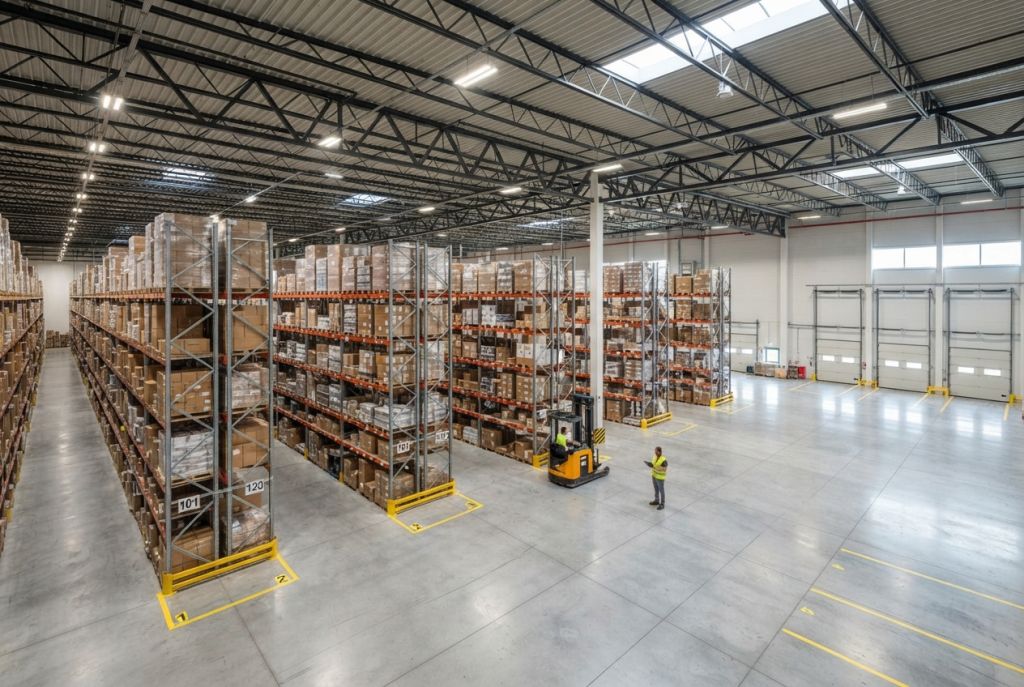
If you're dealing with dusty raw materials, inconsistent feed rates, or too many forklift trips between receiving, storage, and production, the problem usually isn't one piece of equipment. It's the flow. The best bulk material handling systems start with the path the material takes, then match conveyors, bins, and controls to that path so the system works as a whole.
Understanding Bulk Material Handling Systems
Most plant managers start looking at bulk material handling when one of three things happens. Production outpaces the way material is being moved. Labor gets tied up in repeated loading and transfer work. Cleanup, dust, and spillage start taking too much time.
Bulk material handling systems are the equipment and workflow used to move, store, meter, and stage loose materials such as powders, grains, pellets, flakes, aggregates, or other non-unitized product. In a manufacturing setting, that often means connecting receiving, bulk storage, in-process transfer, production feed, and packaging with a coordinated system instead of a patchwork of manual steps.
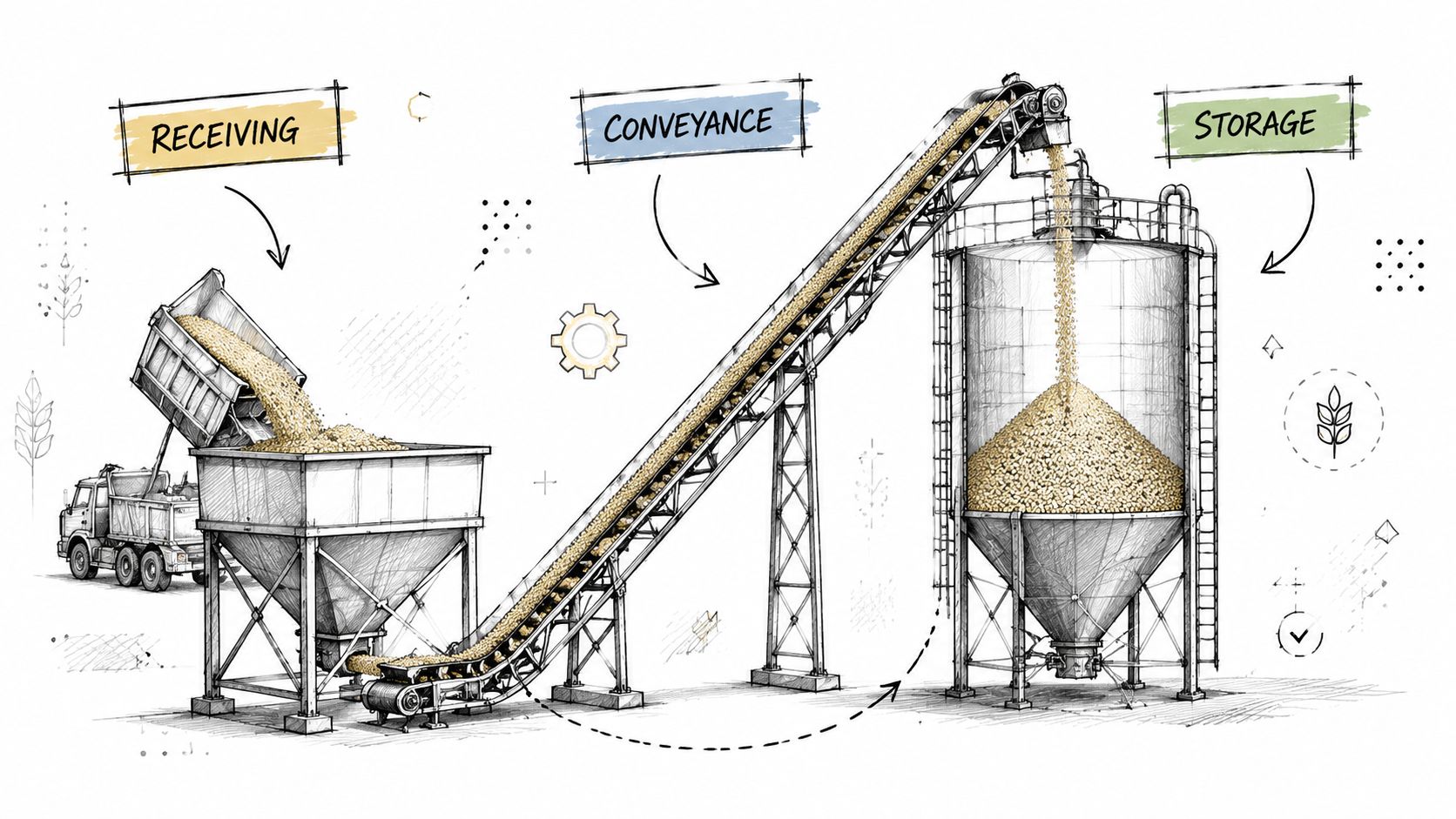
A simple setup might use a hopper, a belt conveyor, and a discharge bin. A more complete system can include feeders, transfer points, enclosed conveyors, surge storage, and controls that keep downstream equipment supplied at a steady rate.
Where these systems show up
These systems are common in facilities handling:
- Agricultural products such as grain, feed, seed, and similar dry materials
- Manufacturing inputs such as resins, additives, powders, and granules
- Construction-related materials such as aggregates and cement-like products
- Mining and mineral streams where material must be conveyed, staged, and discharged consistently
- Power generation and heavy industry where bulk flow and storage are part of the core process
The market size tells you this isn't a niche category. The broader bulk material handling equipment market surpassed USD 50.4 billion in 2025, and fixed or stationary systems accounted for 52% of revenue, which shows how often plants invest in permanent infrastructure rather than temporary workarounds, according to bulk material handling equipment market analysis from GM Insights.
Practical rule: If people are repeatedly lifting, shoveling, dragging, dumping, or rehandling the same material, there is usually a system problem hiding behind a labor problem.
What the system is supposed to do
A good system does more than move product from point A to point B. It should:
- Protect flow so upstream and downstream equipment stay in sync
- Reduce manual touches that add labor, dust, cleanup, and inconsistency
- Support storage and staging so production isn't starved when deliveries or process timing shift
- Make maintenance possible without creating impossible access points
- Fit the material instead of forcing a sticky, abrasive, fragile, or dusty product through the wrong equipment
For facilities comparing options across equipment categories, it's helpful to look at broader material handling solutions for industrial operations before narrowing into a final system concept.
Core Components and Equipment Options
Buying a conveyor without defining the rest of the system is how plants end up with expensive bottlenecks. Conveying, storage, feed control, and discharge all need to work together. The right mix depends on the material and the production sequence.
Bulk material conveying basics
Bulk material conveying usually falls into a few common equipment groups. Each solves a different problem.
- Belt conveyors are often used for horizontal movement or gentle incline transport where material needs a steady path and simpler maintenance access.
- Screw conveyors are useful where enclosed transfer, compact footprint, or controlled feed is important.
- Vibratory conveyors or feeders can help meter materialandsupport controlled movement for certain products.
- Pneumatic conveying is often considered when enclosed transfer and dust control are major concerns, though it brings its own design and maintenance trade-offs.
- Bucket elevators are often chosen when vertical lift is the main challenge.
If you're comparing options for line design, this overview of conveyor systems for industrial applications is a good reference point.
Bulk bins and storage solutions
Storage is often the site of overlooked failures. Plants focus on moving material, but not on where it waits between process steps.
Common bulk storage solutions include:
- Bulk bins for short-term holding, point-of-use supply, or staging near production
- Hoppers where controlled discharge matters more than long-term storage
- Silos for higher-volume reserve storage
- Surge bins to smooth out line interruptions and protect downstream equipment from starving
The right container depends on discharge behavior, available space, refill method, and how often the material must be cleaned out or changed over.
A bin that stores material well but discharges poorly will create more downtime than a smaller bin with reliable flow.
Comparing bulk material handling components
| Component | Best For Material and Use Case | Key Benefits | Planning Notes |
|---|---|---|---|
| Belt conveyor | Dry bulk material moving across longer horizontal runs | Simple continuous flow, gentle handling, easy visual inspection | Check incline limits, skirt design, and transfer point containment |
| Screw conveyor | Powders, granules, or enclosed transfer between nearby points | Compact footprint, enclosed path, controlled movement | Material buildup, wear, and cleanout access matter |
| Vibratory feeder | Metered feed into downstream equipment | Consistent feed, useful at transfer and dosing points | Match feeder behavior to material flow characteristics |
| Pneumatic conveying system | Enclosed transfer where dust containment is a priority | Reduced open exposure, flexible routing in some layouts | Material characteristics and maintenance access must be reviewed carefully |
| Bucket elevator | Vertical transport where floor space is tight | Uses vertical space efficiently | Needs proper loading, discharge, and service access |
| Hopper | Short-term receiving or discharge point | Directs material into the next process step | Hopper geometry must fit actual material behavior |
| Bulk bin | Local storage and staging near work areas | Improves material availability, reduces repeated handling | Refill method and discharge control should be planned together |
| Surge bin | Buffer between uneven process steps | Protects line continuity, steadier downstream feed | Size should reflect actual process variation, not guesswork |
| Silo | Higher-volume storage | Central reserve capacity, fewer refill interruptions | Requires careful siting, discharge planning, and access review |
What works and what doesn't
What works is selecting equipment around the actual material and the actual path through the building.
What doesn't work is choosing hardware first because it looks familiar, then trying to force sticky or inconsistent material through it later. That usually shows up as bridging, erratic flow, excessive cleanup, or too many operator interventions.
Designing an Efficient Workflow and Layout
The strongest systems are built on flow mapping, not product catalogs. Before choosing equipment, map every transfer, pause point, and handoff from receiving to production and then to packaging or outbound staging.
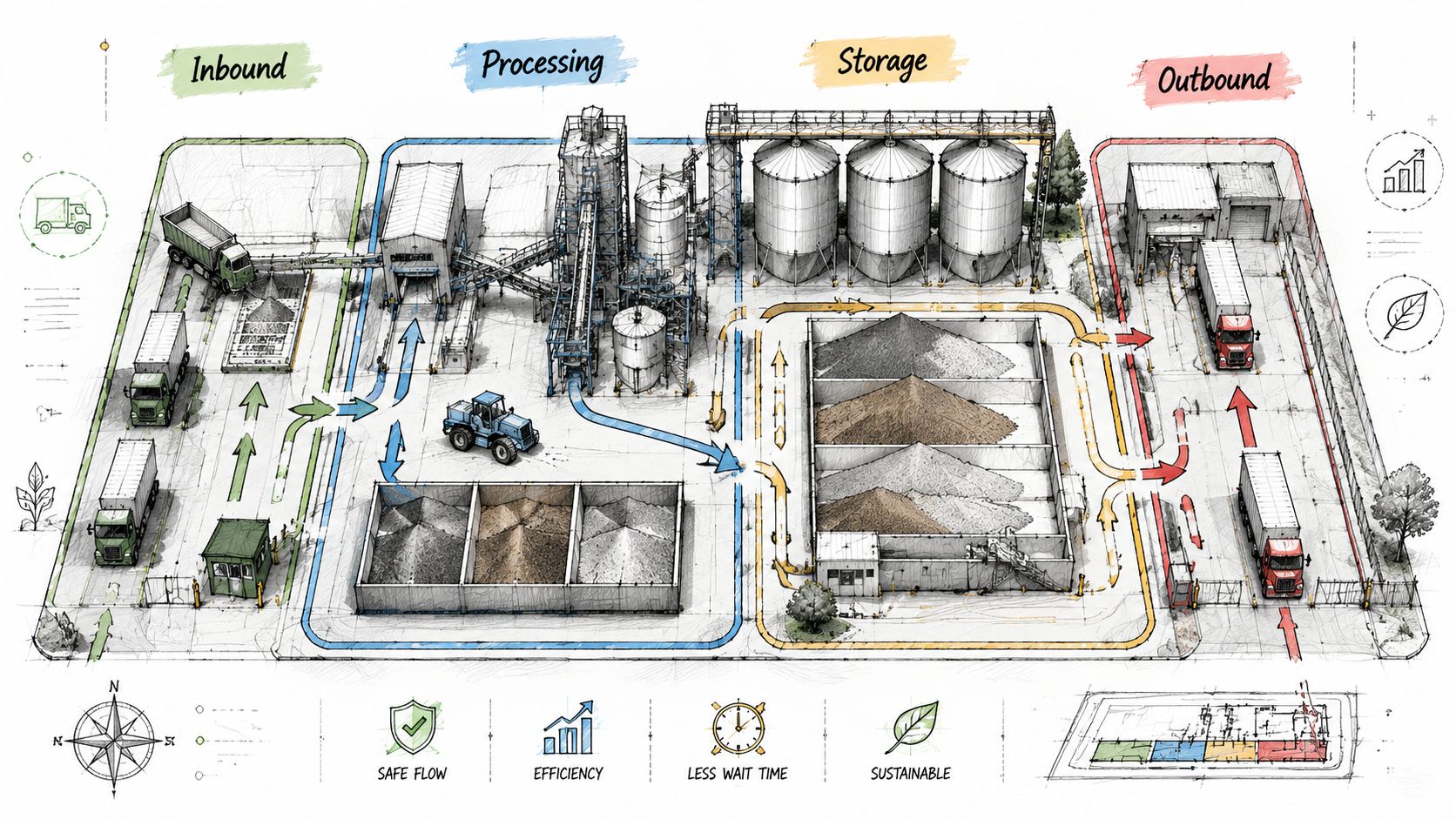
A proven workflow is to map each transfer step first, identify queue points and unnecessary handoffs, and then test alternate layouts with simulation before moving equipment. That process helps reduce transport distance, eliminate redundant transfers, and size buffers before installation, as described in this bulk material handling optimization workflow.
Start with the material journey
Use a simple sequence:
- Receiving. How does material enter the building?
- Initial storage. Where does it wait before use?
- Transfer to production. How many times is it touched?
- Metered feed. How is the line kept supplied?
- Intermediate staging. Where does material pause if the next process isn't ready?
- Packaging or outbound movement. How is the finished or semi-finished product moved next?
Hidden waste often arises. A short forklift trip done fifty times per shift is still a system issue.
Layout planning that prevents expensive rework
A workable layout needs more than equipment footprints on a drawing. It also needs room for operators, service access, cleanup, and future changes.
Check these early:
- Aisle and access space for people, forklifts, and maintenance tasks
- Transfer point location so cleanup doesn't become a daily battle
- Staging areas where production timing naturally varies
- Cleanout access for materials that cake, smear, or contaminate easily
- Future expansion paths so one added line doesn't force a full redesign
Route planning inside a plant isn't the same as transportation routing, but the logic is similar. The article on route optimization fundamentals from OnRoute is useful because it reinforces the same core idea. Fewer unnecessary moves usually mean less time, less labor, and less congestion.
Material behavior changes the layout
Flowability, particle size distribution, abrasiveness, and moisture sensitivity matter early. A layout that works for dry pellets may fail completely with a sticky powder. That's why the flow path and the material properties have to be reviewed together, not in separate conversations.
The Impact of Automation and Safety
Automation in bulk material handling doesn't have to mean a fully lights-out plant. In many facilities, it starts with replacing repeated manual carrying, shoveling, dumping, or repositioning with conveyors, feeders, bins, and more predictable transfer points.
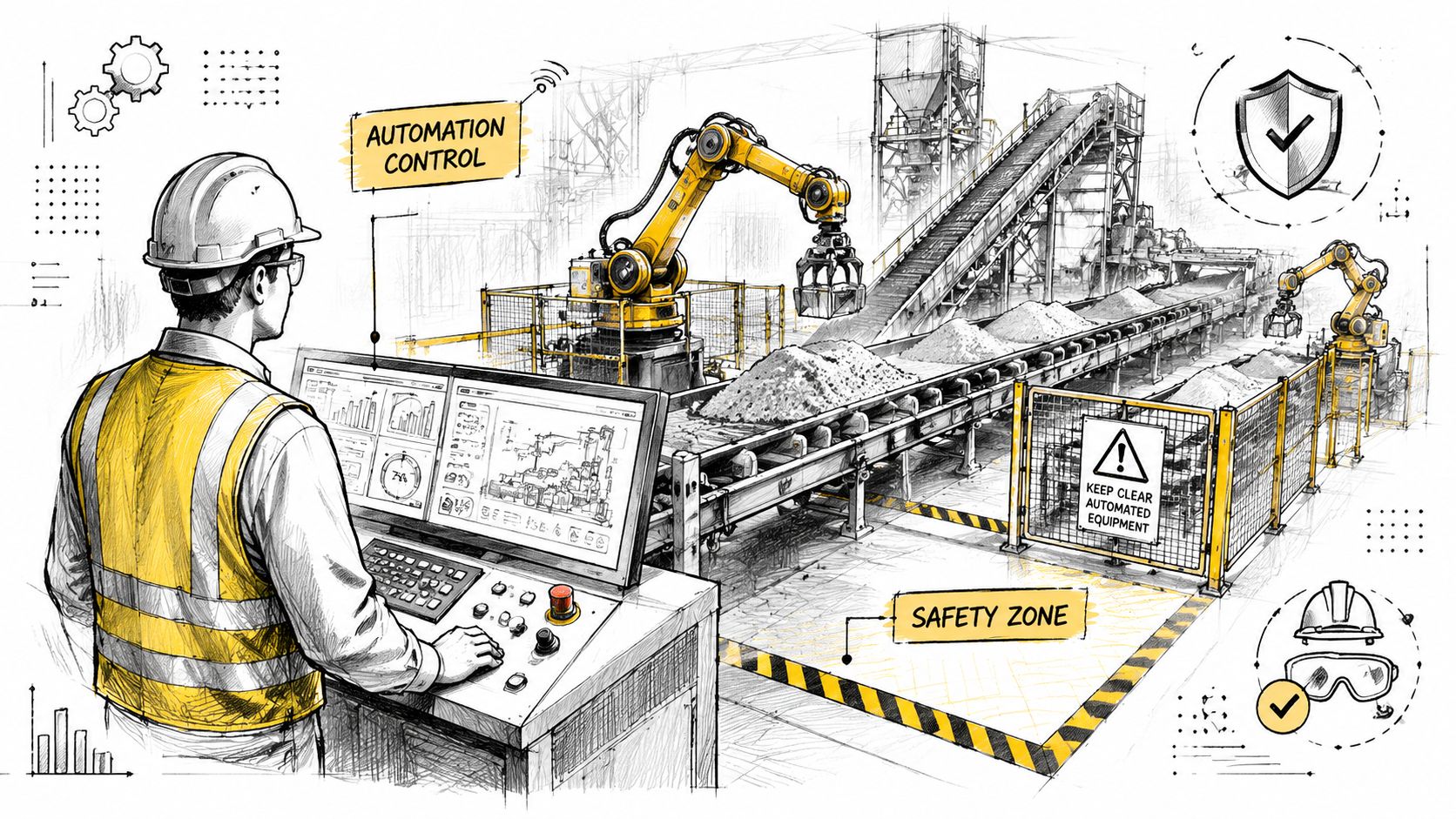
That matters for output, but it also matters for consistency. When operators stop spending time on repeated movement, the process becomes easier to monitor and easier to keep on pace.
Where automation helps most
Good automated material handling usually reduces:
- Manual transfer work between receiving, storage, and production
- Process interruptions caused by uneven feed
- Repeated rehandling of the same material
- Operator dependency at transfer points where flow should be controlled mechanically
Independent industry reporting says companies using modern integrated systems have achieved up to a 63% reduction in operational downtime and a 41% increase in overall productivity, according to Credence Research's bulk material handling system market report.
Safety, dust, spillage, and access
Most bulk material problems are operational firstandsafety-related soon after. Dust spreads. Spillage builds up. Hard-to-reach service points get ignored. Tight layouts make cleanup harder than it should be.
Good system design reduces manual movement, but it also reduces the number of places where material can escape the process.
Final design still depends on the material type, flow rate, equipment, facility layout, safety review, and local requirements. Electrical and control integration also need formal review under the standards that apply in your jurisdiction. If you're comparing how electrical standards are handled in other regions, this overview of Australian electrical wiring standards is a useful example of why compliance details always need project-specific review.
Facilities evaluating broader automation strategy may also want to review automated storage and retrieval systems where buffer storage, controlled movement, and system integration are part of the larger material flow picture.
Your Planning and Consultation Guide
A plant manager usually calls for help after the symptoms are obvious. The line starves even though raw material is in the building. Forklifts keep covering gaps between steps. Operators spend time waiting, cleaning up, or nursing flow problems instead of running production. At that point, the best next step is not pricing equipment. It is defining the system the plant needs.
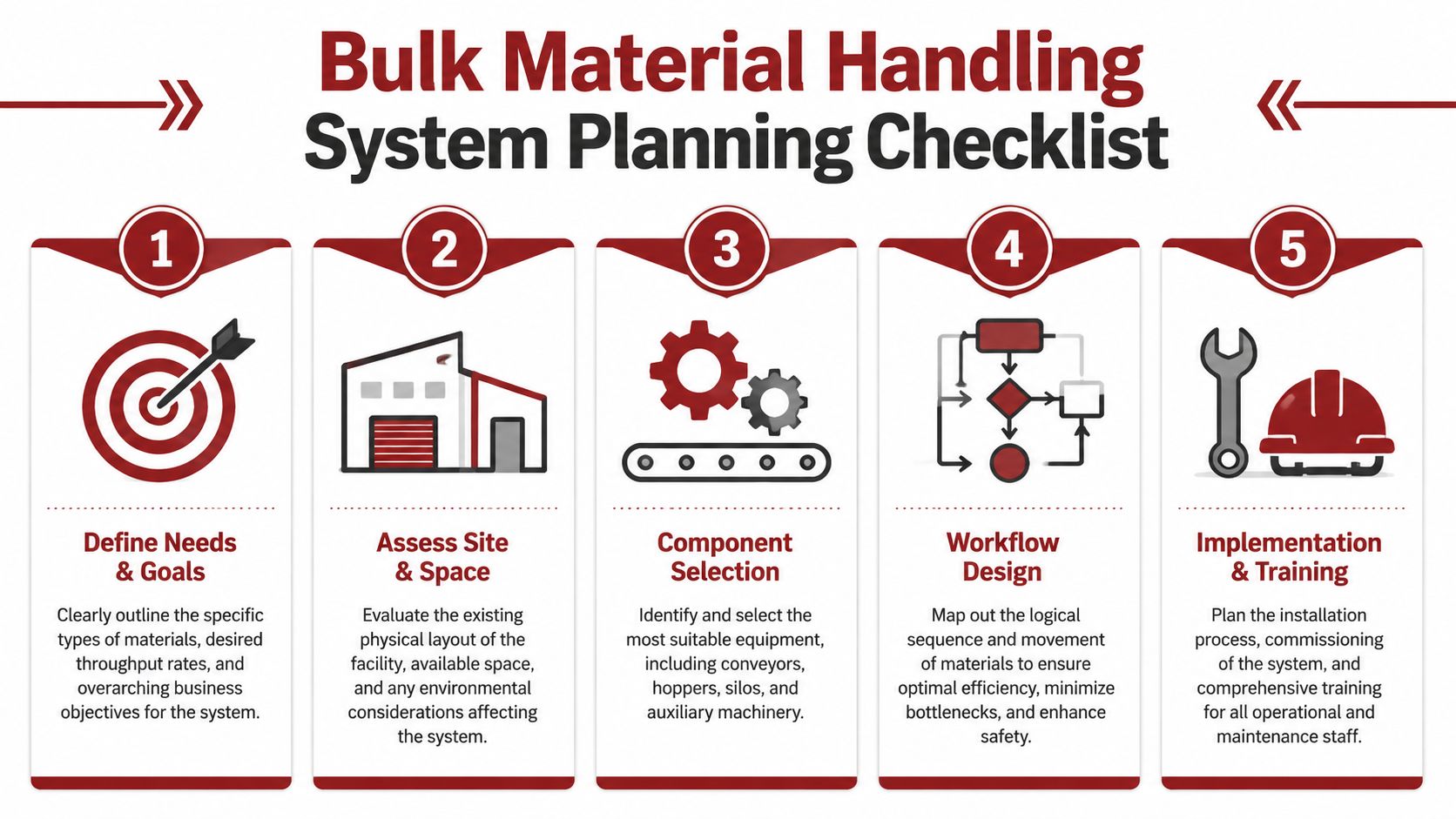
A useful consultation starts with plant facts. Material, flow path, operating targets, and layout constraints should be clear before anyone starts comparing conveyors, bins, feeders, or controls. That sequence matters. Plants that start with catalog pages often end up forcing equipment into a process that was never mapped properly.
Five step checklist for planning a bulk material handling system
-
Define the material clearly
Record particle size, bulk density, moisture, dust, abrasiveness, temperature, and whether the material packs, bridges, segregates, or degrades in handling. -
Map the process path
Follow the material from receiving to storage, transfer, metering, use, and discharge. Mark every elevation change, hold point, manual handoff, and recurring delay. -
Set the performance target
Decide what the system must do in practice. Common targets include stable feed, fewer interruptions, lower labor involvement, cleaner transfers, or higher hourly throughput. -
Review layout constraints
Measure the actual limits. Ceiling height, aisle width, structural support, utility locations, service access, and future expansion plans all affect what will fit and what will be maintainable. -
Match components to workflow
Select conveyors, hoppers, bins, feeders, and controls that support the planned material path. Good component choices follow the layout and process logic. They do not lead it.
Decision scenarios buyers run into
Several planning patterns come up again and again.
-
Manufacturing feed problem
The process equipment can run at rate, but upstream delivery is uneven. In that case, surge capacity and controlled feed usually matter more than conveyor speed. -
Packaging support issue
Material reaches packaging, but rate swings create stops and operator intervention. The fix is often better discharge control and intermediate storage sized to the line, not a larger conveyor. -
Assembly area supply challenge
Bulk inputs are available, yet operators still leave the workstation to replenish material. Point-of-use storage can cut travel time, but only if refill access is also planned. -
Raw material storage bottleneck
Material is on site, but reclaim is unreliable. Storage geometry, outlet design, and feeder selection tend to be key decision points. -
Production staging breakdown
Forklifts are acting as the transfer system between steps. That usually indicates the process needs a defined buffer and a planned handoff, not more lift truck traffic.
Questions to ask before requesting a consultation
A good supplier or integrator can help shape the design, but the most productive conversations start with a short list of clear answers:
- What material are we handling exactly
- Where does flow slow down or stop today
- How often is labor stepping in to move or correct material
- Which cleanup, dust, or spill problems consume the most time
- What feed rate or throughput does production require
- What space, access, and structural limits already exist
- Will the process need to scale or change later
Free, no-obligation design support is useful here because it helps the team test the layout, flow sequence, and equipment fit before capital is committed. Used well, that process is not a sales formality. It is an early design review that can expose bad transfer points, poor access, undersized buffers, and expensive assumptions while changes are still easy to make.
If your team is still sorting through conveyor choices, this guide to industrial belt conveyor systems can narrow the equipment discussion. For a broader systems view, review automated material handling solutions and compare those concepts against your actual material flow, layout, and staffing needs.
Frequently Asked Questions About Bulk Material Handling
How do you choose the right system for different material types
Start with the material itself. Size, weight, moisture, dust, abrasiveness, temperature, and flow behavior all affect the answer. Then match the equipment to the process path, feed requirement, and cleaning needs.
Are bulk material handling systems only for very large plants
No. Smaller facilities often benefit when repeated manual movement or poor staging is slowing production. The system may be simple, but it still needs to be planned as a system.
What are the most common causes of poor bulk flow
In practice, the main causes are usually poor material characterization, hidden bottlenecks, mismatched discharge design, and layouts with too many transfer points.
Can an existing plant be retrofitted
Usually, yes. Many projects involve fitting conveyors, bins, or hoppers into an existing layout. Retrofits work best when the team maps current flow accurately and protects access for service and cleanup.
What performance measures matter after installation
That depends on the goal. Common measures include material moved per hour, downtime, labor time, spillage, manual touches, and whether the line stays supplied without constant intervention.
How does automation improve safety
It can reduce repeated lifting, carrying, shoveling, and awkward manual transfer work. It can also create cleaner, more predictable transfer points when the equipment matches the material.
Are bulk bins enough on their own
Sometimes, but not always. Bulk bins solve storage and staging problems. They don't automatically solve poor feed control, transfer congestion, or bad layout.
When should a plant start planning
Earlier is better. Early planning usually means better layout choices, smoother installation sequencing, and fewer delays caused by trying to fit permanent equipment into a rushed design.
If your facility is weighing conveyors, bulk bins, or a more complete material flow upgrade, Material Handling USA can help you plan the right system before you buy. Get a material handling system consultation with free quotes, free layouts and designs with no obligation, competitive pricing, and fast shipping on quality products. To get started, Contact Us, Request a Quote, or call 800-326-4403. You can also email Sales@MH-USA.com to discuss your layout, workflow, and equipment options.