
Mobile Security Cages: Rolling Lockable Cages for Inventory, Evidence and Supplies
How warehouses, hospitals, evidence rooms, retailers and distribution centers use wire mesh security cages on casters — the main types, how to choose casters, doors and locks, and when a fixed, anchored cage is the better answer.
Supplied nationwide from Salt Lake City — call (800) 326-4403.
Lockable
Secured storage that moves with the work
Open mesh
Contents stay visible without opening the door
On casters
Brakes on two wheels hold it in place
Nationwide
Standard units online, custom cages by quote
What a mobile security cage is — and why buyers choose one
A mobile security cage is a lockable wire mesh enclosure built on casters. It holds goods on shelves behind a door that someone controls, the same way a fixed cage does, but it can be pushed to where the work is: from receiving to a stockroom, from central supply to a nursing unit, from a property room to an evidence vault, or from a pick area to a dock door. When it is not moving, it can be parked inside a larger locked room.
Mobile cages sit at the small end of the family of security cages. They are chosen when the thing that needs protecting is a moving batch of goods rather than a fixed area of the floor — high-value orders waiting to ship, a day’s supply of medical stock, sealed evidence on its way to storage, or a tray of returns waiting for a decision. This guide covers the main types, where each fits, how to specify one, and the situations where a rolling cage is the wrong tool.
What a rolling cage does well
- Secures goods in transit: stock stays locked between the stockroom, the floor and the dock, instead of riding on an open cart.
- Creates accountability: one door, one key holder, and one place to check contents against a list.
- Keeps contents visible: open mesh lets supervisors see what is inside without unlocking it.
- Uses space flexibly: cages can be parked in a corner, a corridor alcove or a locked room and rearranged as needs change.
- Needs no installation: most units arrive ready to assemble, with no anchoring or building work.

The main types of mobile security cage
The phrase covers several quite different products. Knowing which one you are looking at saves a lot of comparing apples with oranges:
| Type | Best for | Typical construction | Watch for |
|---|---|---|---|
| Mobile security shelving unit | Medical supplies, lab stock, food service, back-of-house goods | Wire shelving system with mesh panels and double doors; adjustable shelves | Shelf load rating and caster type; light-duty units are not built for forklift aisles |
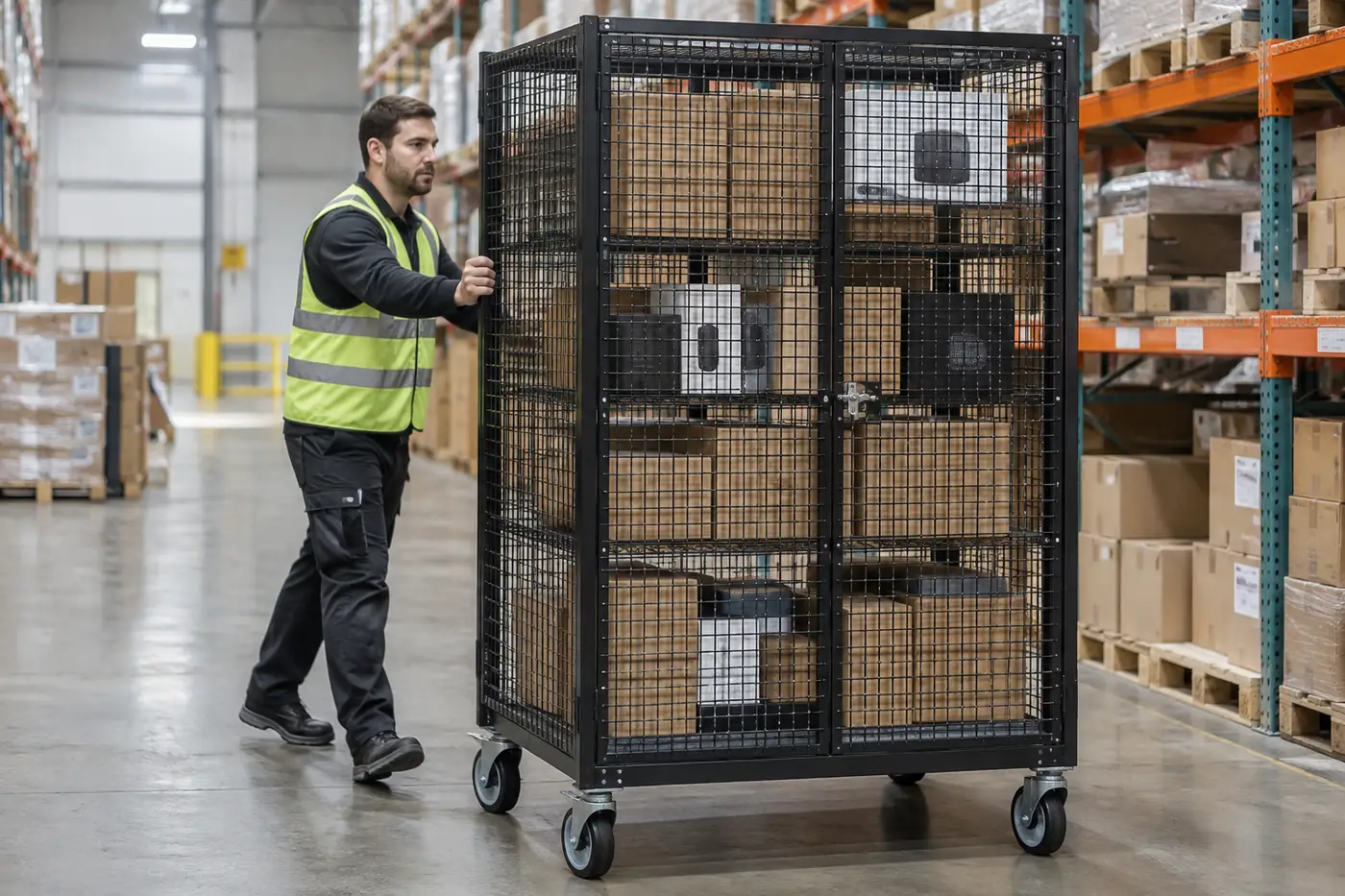
| Security truck / cage cart | Warehouse high-value orders, returns, parts and tools | Welded steel frame, welded wire mesh, push handle, heavy casters | Overall width through doors and elevators; weight when loaded |
| Lockable roll cage | Staging cartons at docks and moving stock to retail floors | Wire container, often nestable, with a lockable gate or lid | Whether it actually locks — many roll cages do not |
| Mobile mesh locker | Shift or per-person equipment issue | Multiple small doors on a wheeled frame | Compartment size; it is an issue point, not bulk storage |
For the shelving-style units, our Metro security shelving guide explains the Super Erecta security unit styles in detail. For fixed lockers built from the same mesh, see wire mesh lockers.
Where mobile security cages are used
Hospitals and clinics
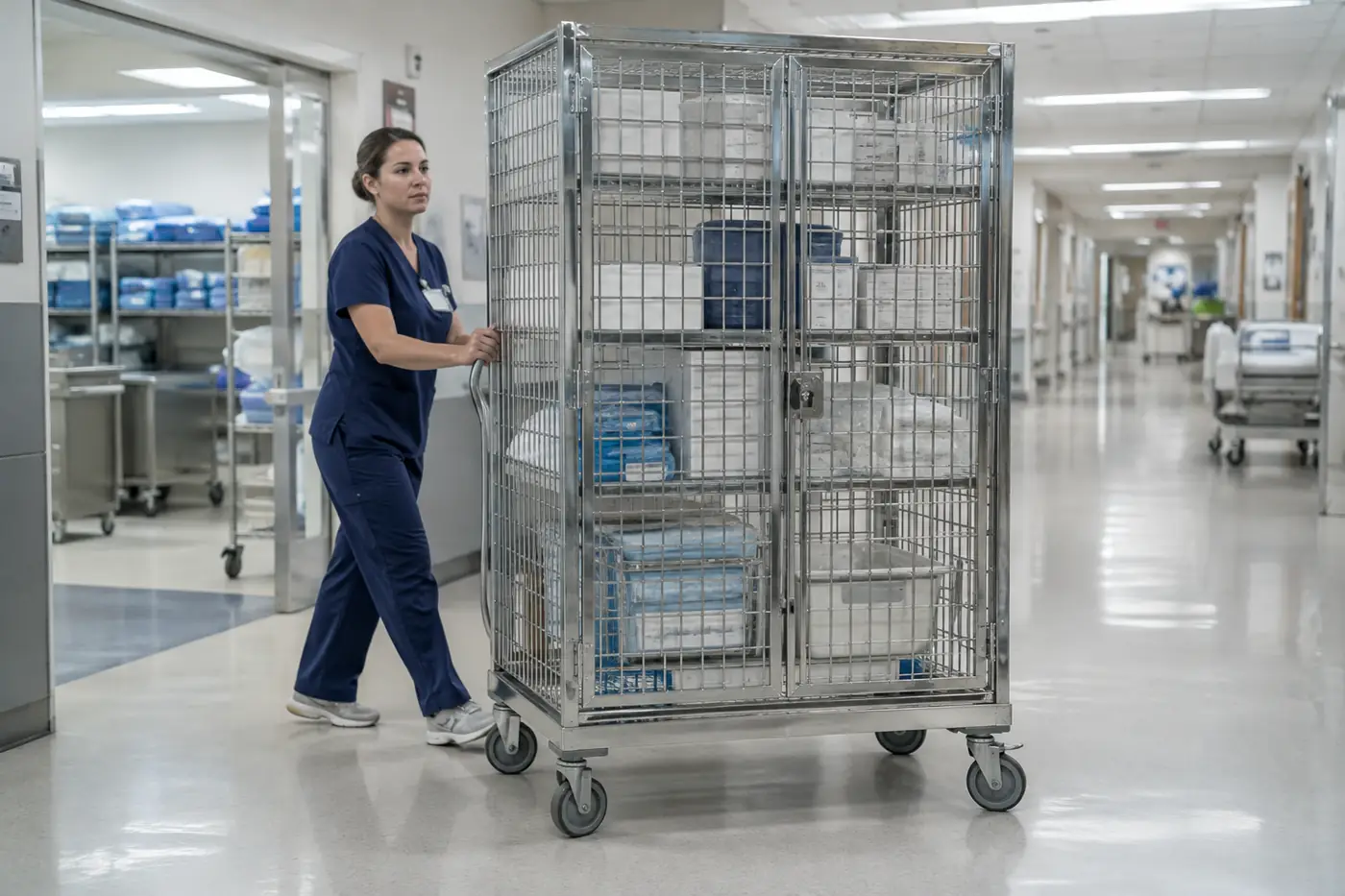
Central supply and materials management teams use mobile security units to move restocked supplies to nursing units and procedure areas, and to hold high-cost items — implants, specialty disposables, or anything that tends to walk — where only authorized staff can open them. Epoxy, polymer or stainless finishes suit areas that are cleaned often.
For a fixed supply cage in a hospital, see our Lakewood Ranch Medical Center hospital supply cage project.
Evidence and property rooms
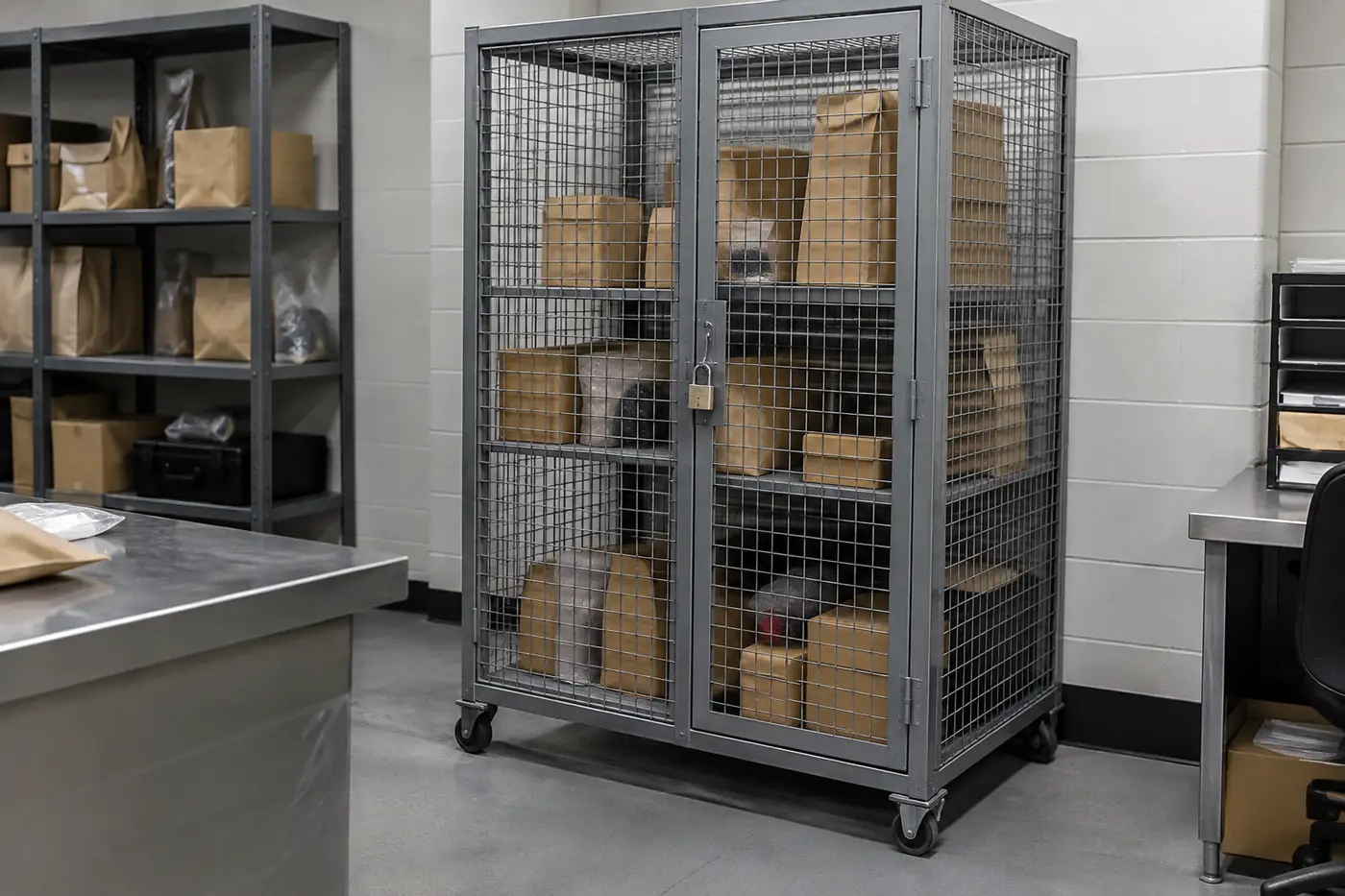
Law enforcement agencies use rolling cages to hold sealed evidence between intake and permanent storage, to stage items for court or destruction, and to move bulky property through a building without leaving it unattended. A cage with a hasp for a padlock or a keyed lock, kept inside the property room, adds a second locked layer during busy intake periods.
Our evidence cage guide covers fixed evidence enclosures and how they fit a property room.
Distribution centers and 3PLs
In warehouses, rolling cages carry high-value orders from a secured pick area to packing or a dock door, hold customer returns until they are inspected, and stage small, theft-prone parcels before a trailer is loaded. Lockable roll cages also move store orders onto retail floors without breaking the load.
For client-segregation cages in multi-client warehouses, see our 3PL warehouse security cages guide; for full enclosures, warehouse security enclosures.

Other common uses include:
- Hospitality and food service: liquor, wine and high-cost food stock moved between a storeroom and outlets — see our liquor storage cage guide for the fixed side
- Retail: electronics, cosmetics and other high-shrink stock held in the backroom and wheeled out for replenishment; our retail stockroom cage project shows the fixed version
- IT and asset teams: laptops and devices awaiting deployment, repair or disposal, as in our IT depot cage project
- Contractors and maintenance: tools and small equipment that follow a crew around a facility — our Quinlan Construction tool cage case study pairs a fixed tool room with rolling cages
- Labs, schools and venues: reagents and lab supplies, AV and event equipment, and anything shared between rooms
Mobile or fixed: which security cage do you need?
A rolling cage is the right answer far less often than buyers expect when they start out. Its weakness is the same as its strength: it moves. A locked cage on casters can be wheeled away with everything inside it unless it is parked somewhere that is itself secured. As a rule of thumb, use a mobile cage to protect goods while they move or for short periods, and a fixed, anchored cage to protect goods that stay put.
| Question | Points to a mobile cage | Points to a fixed cage |
|---|---|---|
| Does the stock travel during the day? | Yes — between rooms, floors or a dock | No — it is received, stored and issued in one place |
| How much needs securing? | A few shelves to one cart load | Pallets, rack bays or a whole area |
| Where is it overnight? | Parked inside a locked room or larger cage | In the cage itself |
| Is a regulation involved? | Usually only for convenience or internal control | Often — for example DEA cage specifications |
| Do several people need separate access? | Rarely; one door, one key holder | Often — multiple doors, zones or lockers |
The common answer: both
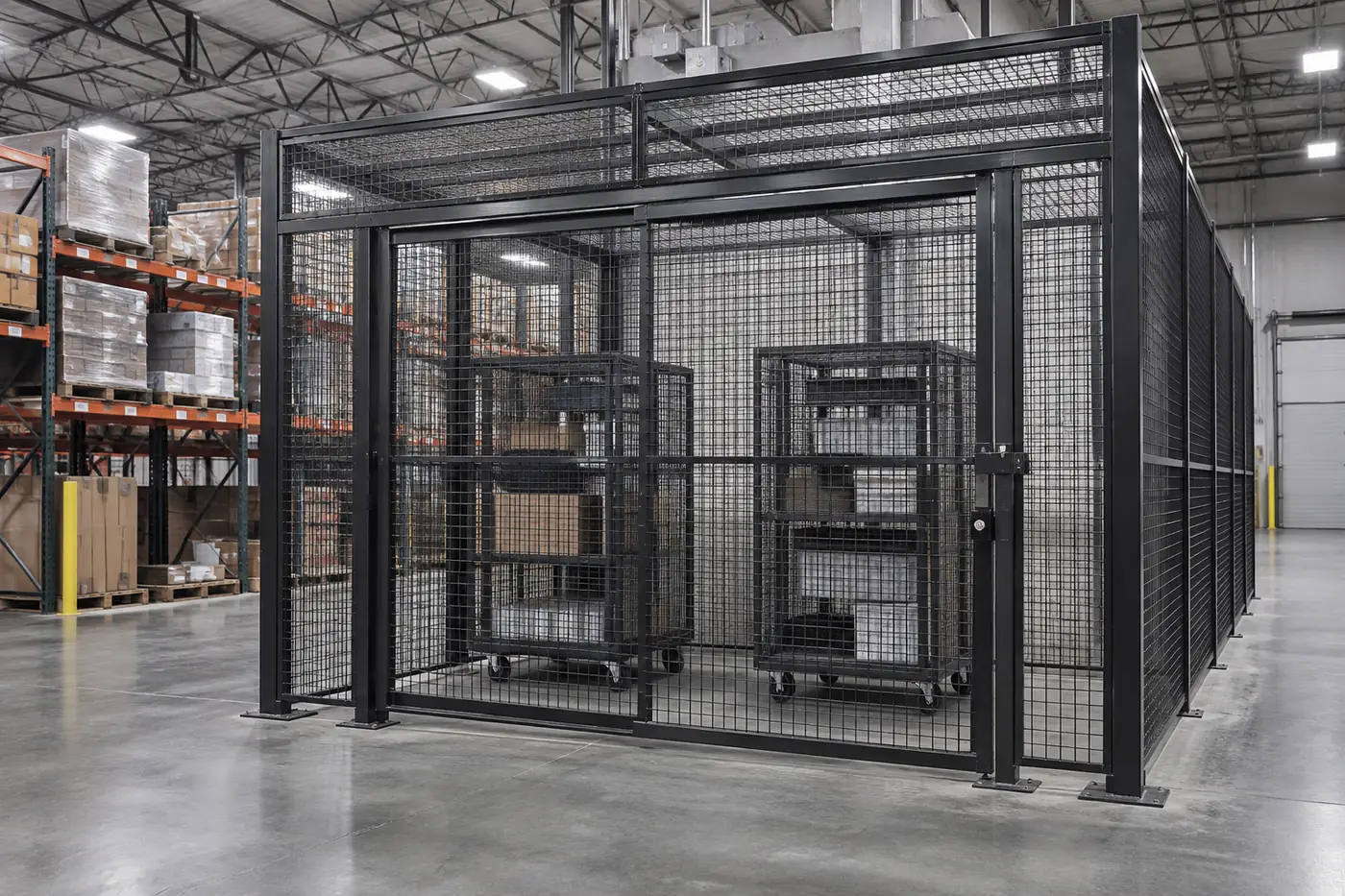
Many sites end up with a fixed cage as the secure home base and mobile cages as the way goods travel. The fixed enclosure holds overnight and bulk stock, and the rolling cages are loaded inside it, wheeled out for the shift and returned at the end of the day. That keeps one clear boundary to manage while still letting stock move.
If you are planning the fixed side, start with custom security cages or, for standard sizes, our lockable storage cage kits. Tool-heavy operations should also read about tool cribs.
How to choose a mobile security cage
Size, load and movement
- Measure the narrowest door, elevator and corridor turn on the route — the overall width and height of the cage, not the shelf size, decides whether it fits
- Add up the heaviest realistic load and compare it with both the shelf rating and the caster rating
- Check the floor: smooth sealed concrete, vinyl, carpet, ramps and dock plates all favor different wheel materials and sizes
- Decide whether a person pushes it, or whether it will be towed or moved by a pallet jack or forklift
Mesh, finish and shelves
- Chrome suits dry indoor storerooms; epoxy, polymer or stainless suit wet, cold or frequently cleaned areas
- Food service and healthcare buyers often look for NSF-listed units
- Adjustable shelves let one cage carry tall boxes one week and small cartons the next
- Solid shelf liners stop small items falling through wire shelves
Casters and brakes
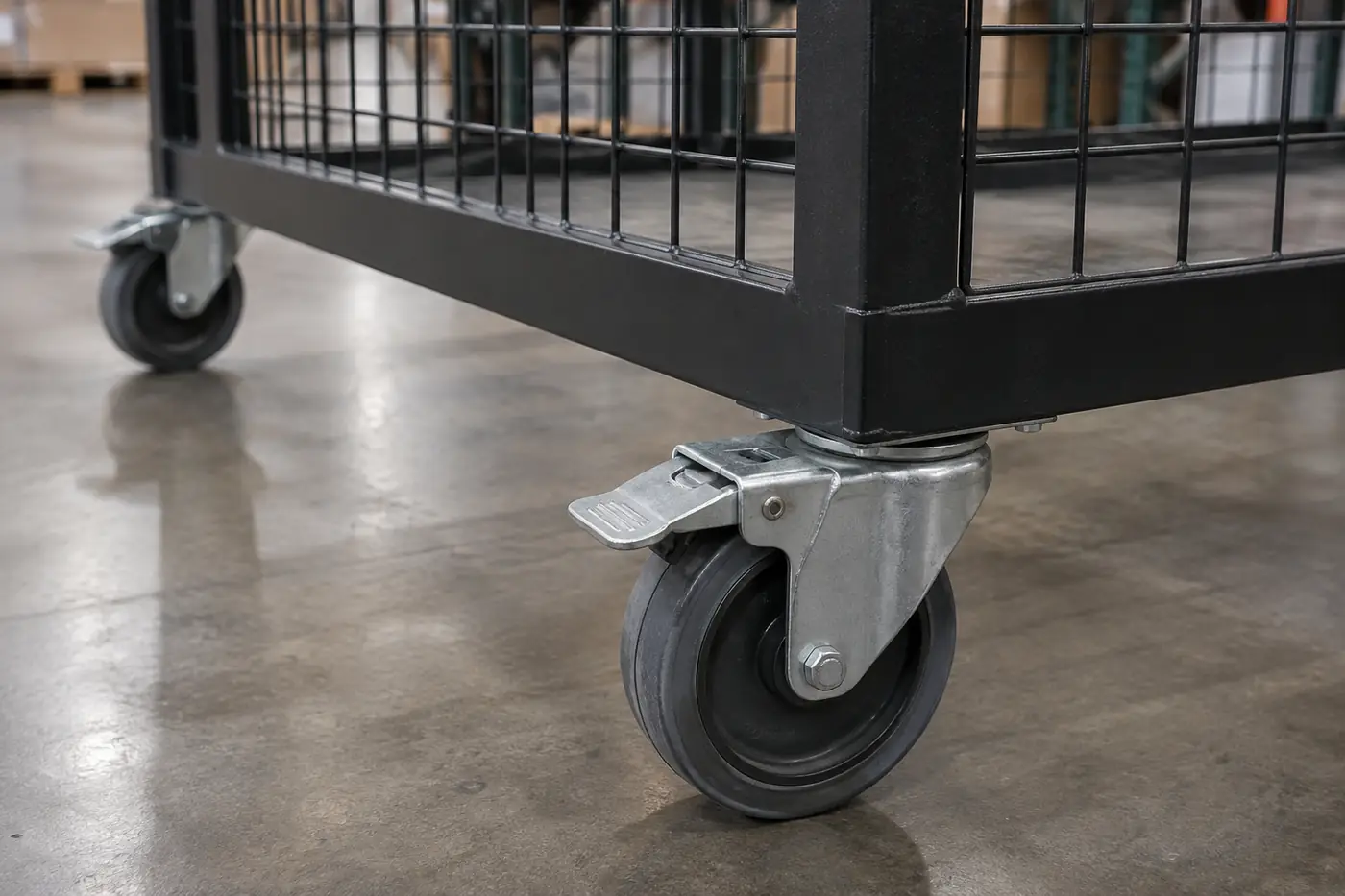
Most mobile security units use four swivel casters, or two swivel and two rigid casters for straighter tracking on long runs. Brakes on at least two wheels keep a loaded cage from drifting while it is being loaded or parked. Polyurethane wheels roll quietly and protect floors; larger diameters roll more easily over thresholds and expansion joints. Stem casters suit lighter shelving-style units; plate casters bolted to a frame suit heavier carts.
Caster choice is also a security choice: a cage that rolls effortlessly is easy for anyone to move, so plan where it is parked when nobody is with it.
Doors and locks
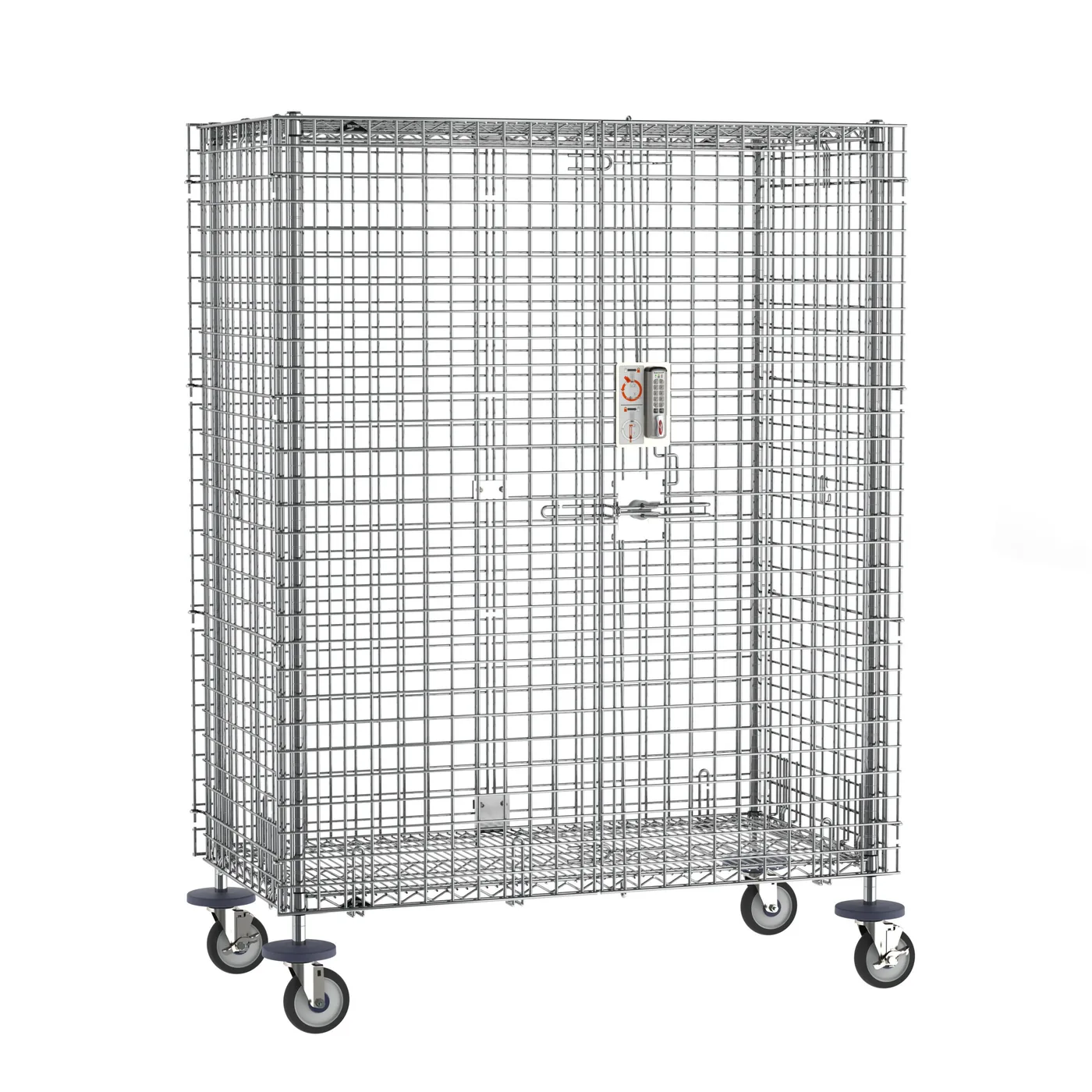
Double swing-out doors give full-width access to every shelf; sliding doors suit narrow aisles where a swing door would block traffic. Locking options on standard units range from a hasp for a padlock to keyed locks and, on some models, electronic PIN locks that let a supervisor change codes without re-keying. Door styles for fixed cages are compared on our security cage doors page, and lock and access options on security cage locks.
Rules and safety points that affect mobile cages
Most mobile cages are bought for internal control rather than to satisfy a regulation, but a few rules shape how they can be used.
Controlled substances. A rolling cage is not a DEA controlled-substance cage. For non-practitioners, 21 CFR 1301.72 describes a cage located within a building with walls of steel fabric on steel posts that are set in concrete or installed with lag bolts that are pinned or brazed, plus a ceiling, a qualifying door, locks and an alarm. The same section says a safe or steel cabinet weighing less than 750 pounds must be bolted or cemented to the floor or wall so it cannot be readily removed. A cage on casters meets neither description. If you store controlled substances, start with our DEA drug storage cages guide and confirm your plan with DEA.
Aisles and exits. OSHA’s general materials-handling standard, 29 CFR 1910.176, requires safe clearances where mechanical handling equipment is used and aisles kept clear of obstructions that could create a hazard. Its exit-route rule, 29 CFR 1910.37, says exit routes must be free and unobstructed and that no materials or equipment may be placed in an exit route, even temporarily. Mobile cages are easy to leave in the wrong place, so give each one a marked parking spot well away from exits, extinguishers and electrical panels.
Stability. Load heavy items on the lower shelves, keep the cage within its rated capacity, and set the brakes whenever it is parked or being loaded. Tall, narrow units loaded top-heavy can tip on ramps or when a caster catches a threshold.
Running mobile cages day to day
A rolling cage only reduces losses if it is managed like the fixed storage it replaces. We keep access-control discussion general here; the right arrangement for a specific facility is worked out privately with each customer.
- Number every cage and give each a home location, so a missing cage is noticed the same day
- Assign a responsible person or role for each cage and keep a current list of who holds keys or codes
- Park cages inside a locked room or a larger fixed cage when they are not attended
- Load and unload against a pick list, requisition or chain-of-custody record, not from memory
- Count high-value cages more often than open stock, and review access after staff changes or any unexplained variance
- Inspect casters, brakes, hinges and locks on a schedule; a cage that will not roll or lock gets left open
List what moves
Note what needs securing, how much of it, and the route it travels during a normal day.
Measure the route
Record door, elevator and corridor widths and any ramps or thresholds along the way.
Pick the type
Choose a shelving-style unit, a heavy cage cart, a lockable roll cage or a mobile locker based on load and use.
Choose the details
Select finish, shelves, casters, door style and lock to suit the environment and who needs access.
Plan the home base
Decide where cages park overnight — ideally inside a locked room or fixed cage.
Order and roll out
Order standard units online or request a quote for custom or mixed fixed and mobile systems.
For Intermountain customers, our Utah security cage team works out of Salt Lake City and can pair mobile units with a fixed cage, including installation and anchoring of the fixed side.
Shop Mobile Security Units Online
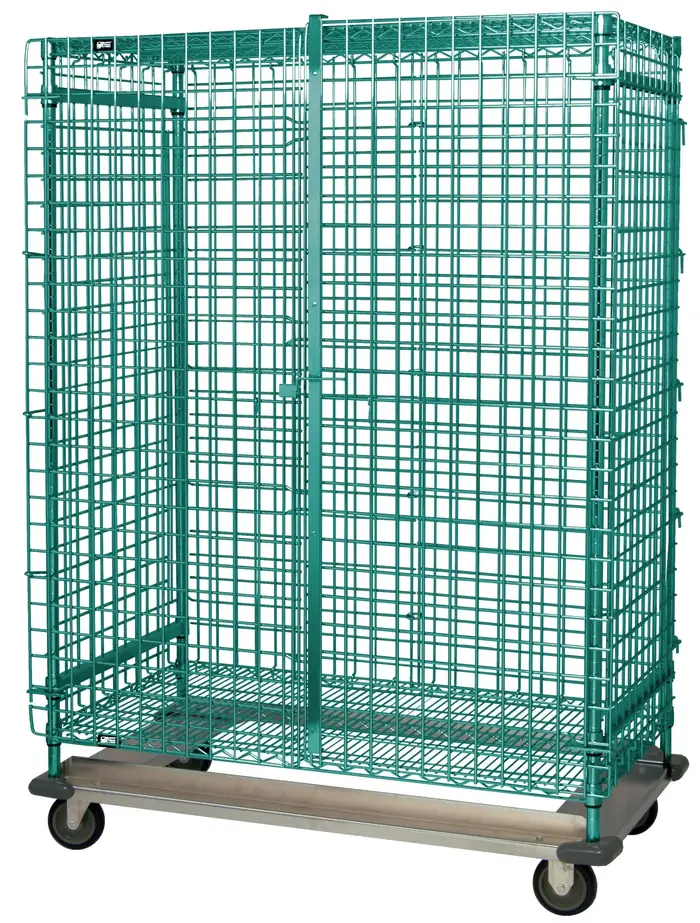
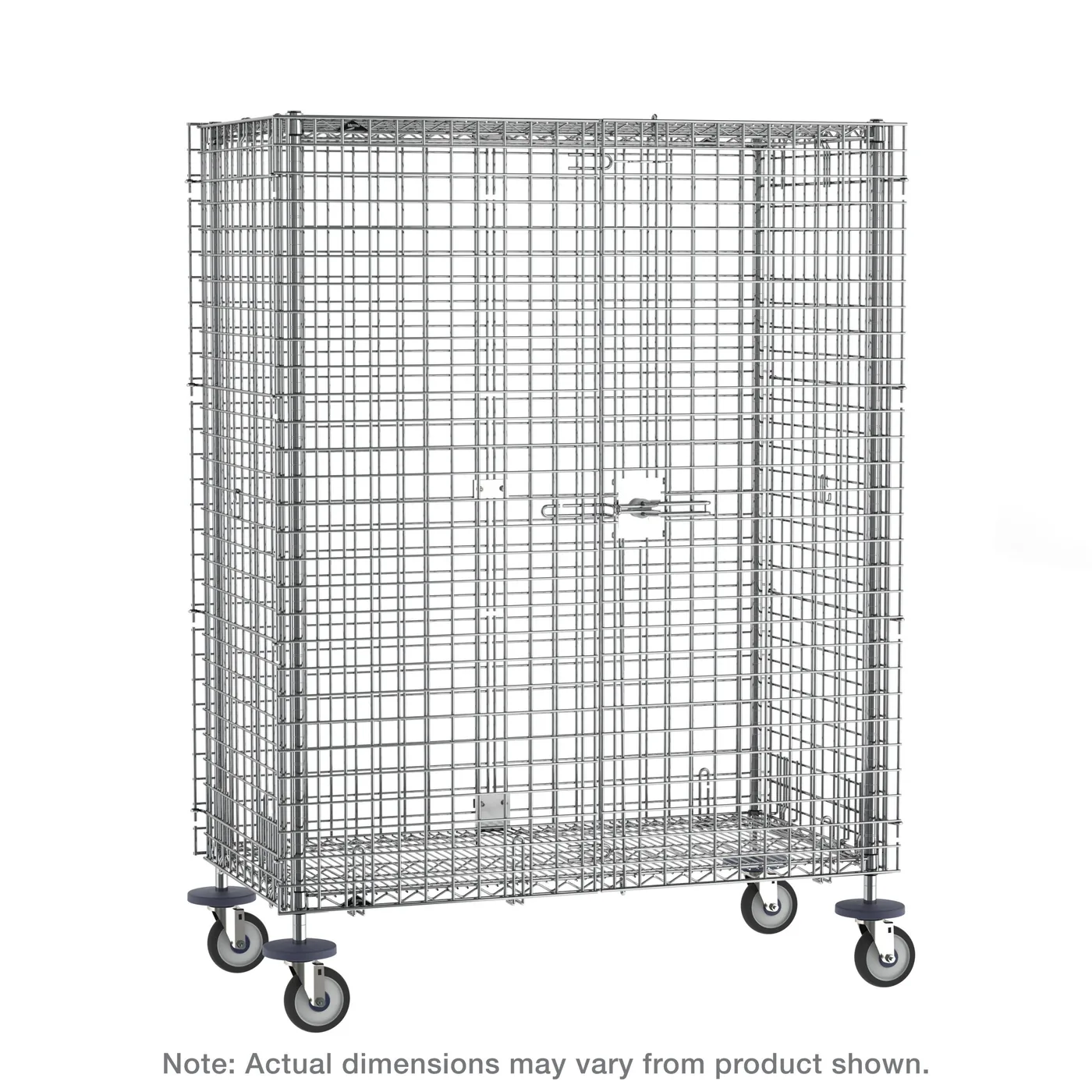
Lockable wire security units on casters, priced online — Metro Super Erecta and Quantum mobile security shelving in chrome and epoxy finishes, including an electronic PIN-lock model. For custom cage carts or a fixed cage to park them in, request a quote.

Mobile Security Cage FAQs
What is a mobile security cage?
Is a mobile security cage the same as a roll cage?
Can a mobile security cage be used for DEA controlled substances?
How do I stop someone wheeling the whole cage away?
What casters should a mobile security cage have?
Which finish is best?
Can I get a custom mobile cage?
Where can I park mobile cages safely?
Need mobile security cages, or a fixed cage to park them in?
Tell us what you need to secure, how it moves through your building and where it is stored overnight. We will recommend standard units or quote a custom mobile and fixed cage system — supplied nationwide from Salt Lake City.