
Metro Security Shelving & SlideSecure Units
Lockable wire and polymer shelving that keeps high-value stock, pharmacy supplies, liquor and records behind a door — stationary, mobile and SlideSecure sliding-door units compared, then designed and priced in the Metro Security Shelving Configurator.

4
Unit styles compared
2
Shelf platforms
1
Lock per unit
17
Metro online configurators
What Metro Security Shelving Is (and Is Not)
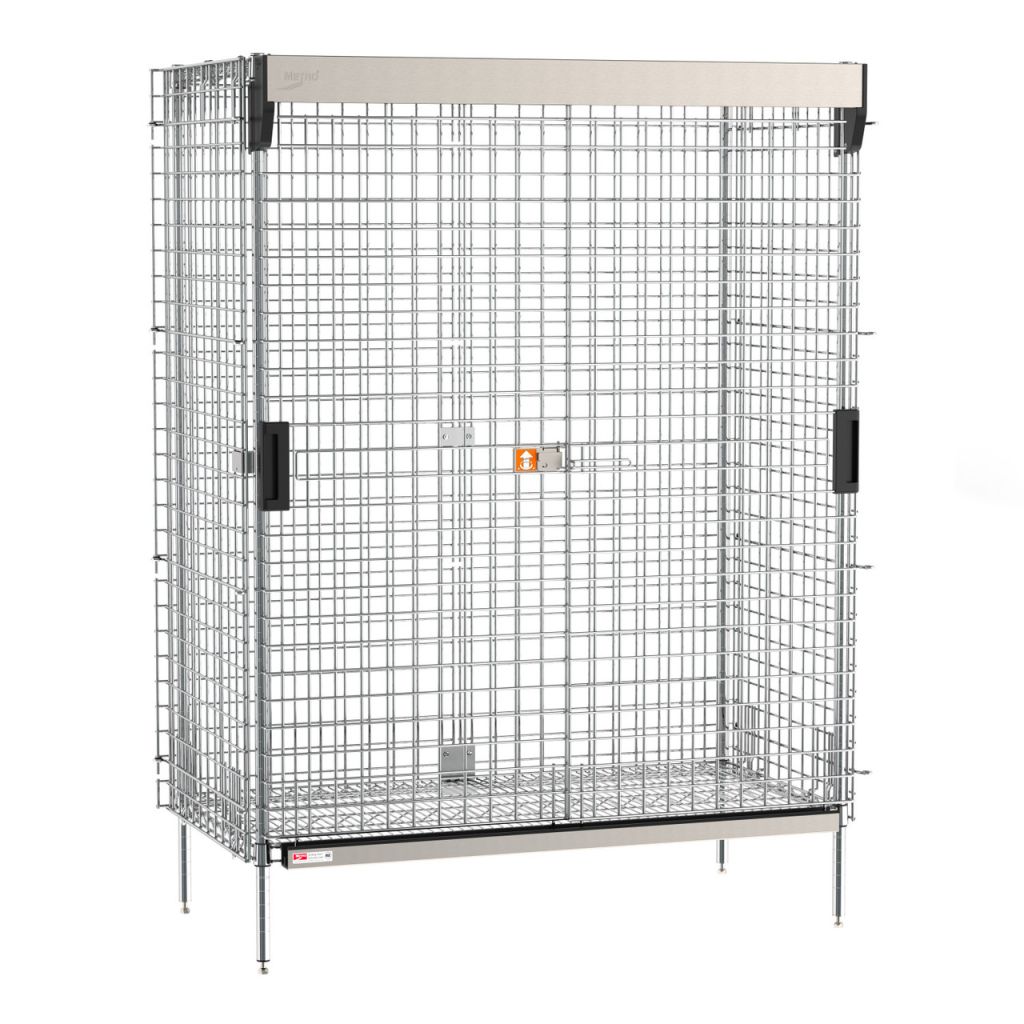
Metro security shelving is a shelving unit with its own lockable enclosure. Wire or polymer panels close in the sides, back and top, and a hinged or sliding door with a lock closes the front. The shelves inside are the same Super Erecta wire or MetroMax polymer shelves used on open Metro shelving, so the unit stores exactly like ordinary shelving — it just keeps people out when the door is locked.
That makes it a different product from a walk-in partition cage. A security cage builds a lockable room out of mesh panels and a door, and you put pallet rack or shelving inside it. A security shelving unit is the locked storage itself, sized to one or a few bays, and it can stand against a wall, sit in a stock room or roll on casters between departments. If you need to fence off a whole area, a server row or a tool crib, see our security cages page. If you need to lock up a shelf of product, this page is the right place.
We have planned Metro storage for hospitals, kitchens, labs and warehouses across the West from Salt Lake City since 1997. When you know the size and the door style, the Metro Security Shelving Configurator builds a valid unit and rates freight to your dock.
The Four Styles of Metro Security Unit
Almost every Metro security unit falls into one of four groups. Choosing the group first narrows the rest of the decisions quickly.
| Style | Door | Moves? | Typical use |
|---|---|---|---|
| Stationary security unit | Hinged wire door with lock | No, sits on leveling feet | Stock rooms, back-of-house, records |
| SlideSecure stationary unit | Sliding door panels with lock | No | Narrow aisles where a hinged door cannot swing |
| Mobile security unit | Hinged or sliding door | Yes, on stem casters | Moving locked stock between areas |
| qwikSLOT mobile security unit | Hinged door | Yes | Fast-assembly mobile storage on the qwikSLOT platform |
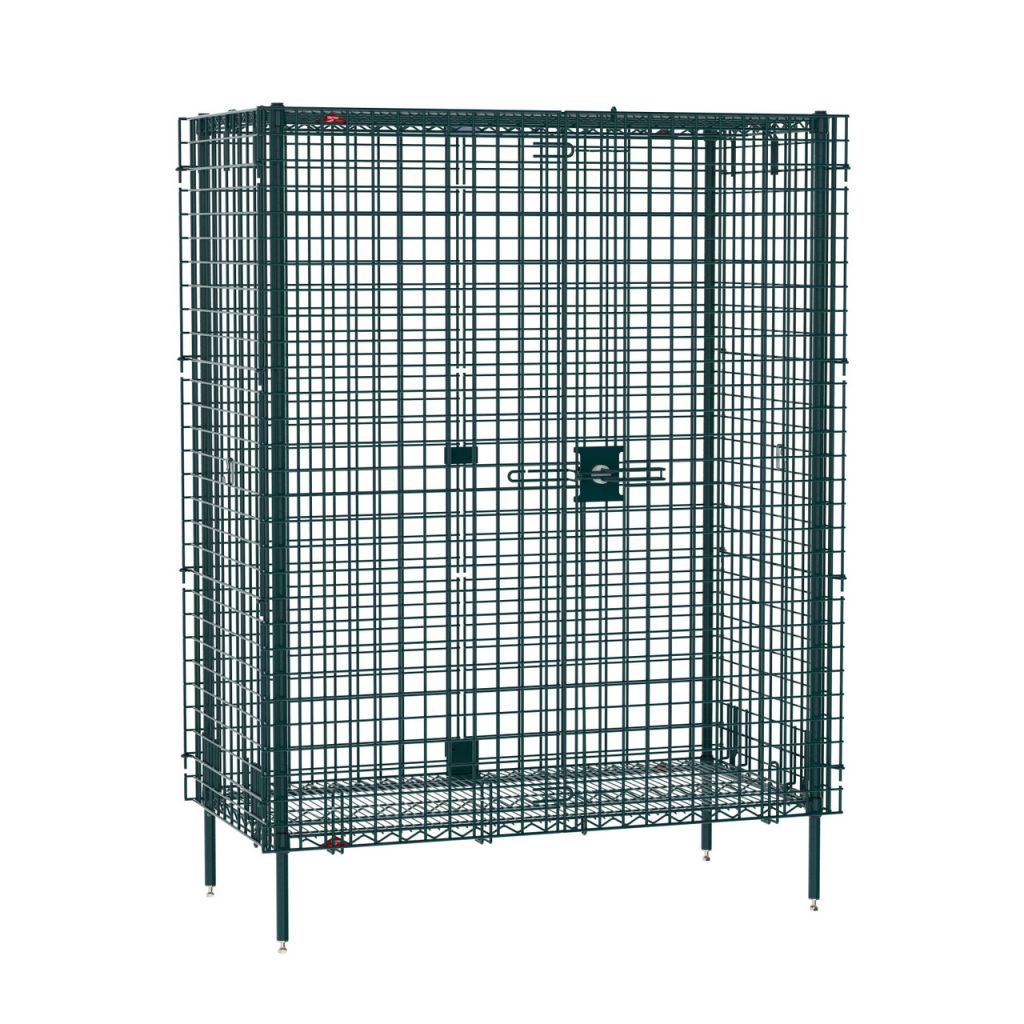 Stationary, green epoxyHinged door, fixed in place.
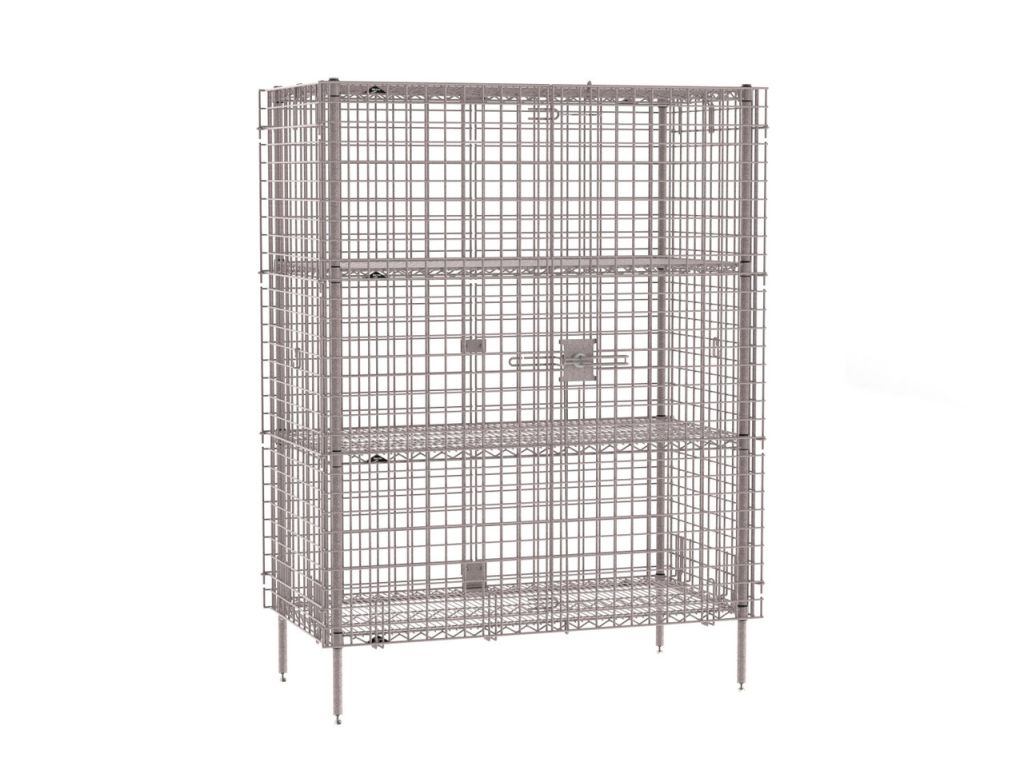 Stationary, gray epoxyNeutral finish for stock rooms.
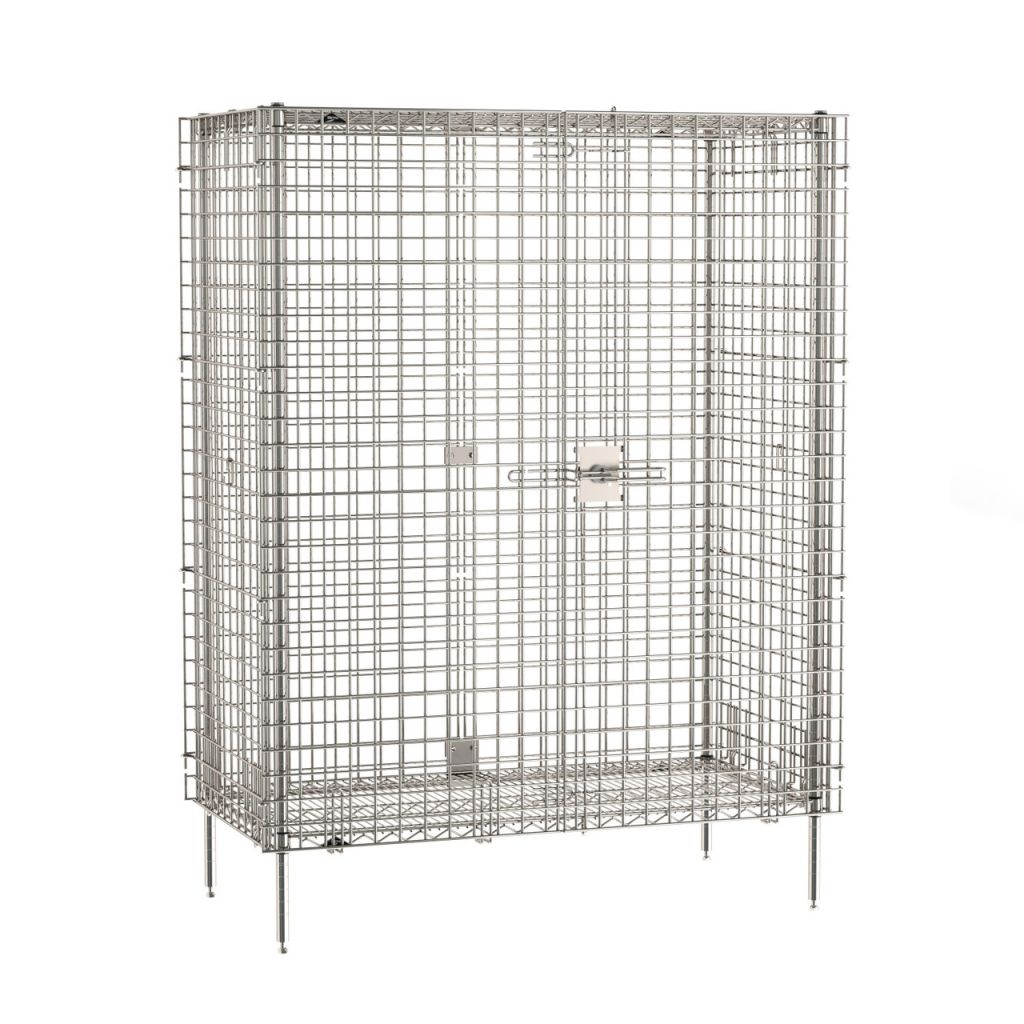 Stationary, stainlessFor wet or washdown areas.
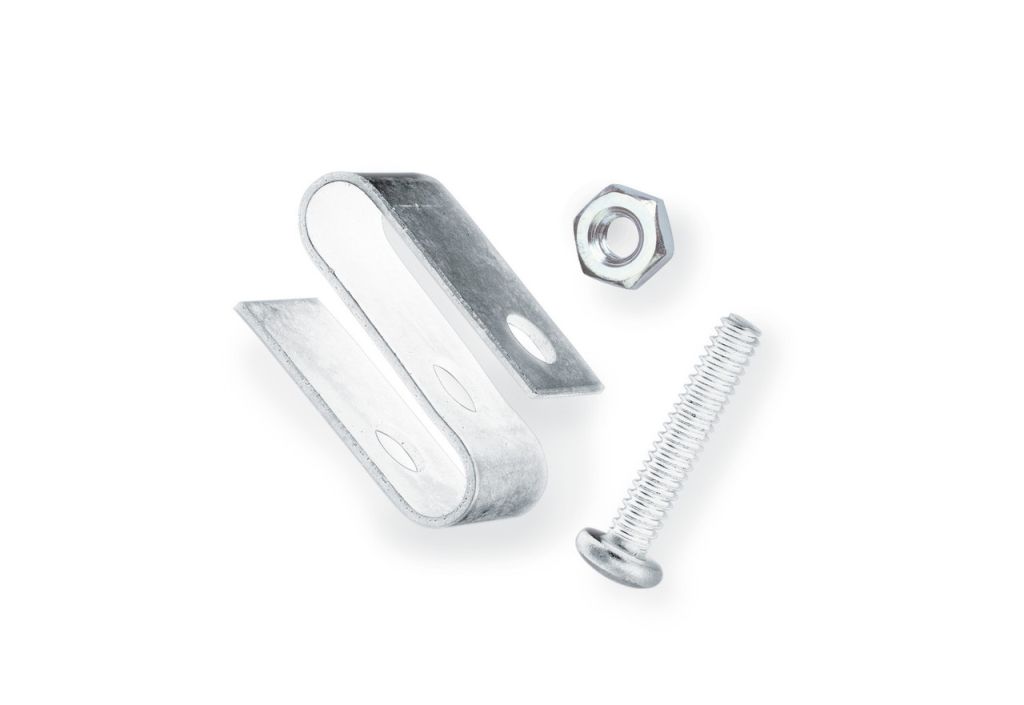 Security S hookAccessory for Super Erecta units.
 Mobile SlideSecureSliding doors on casters.
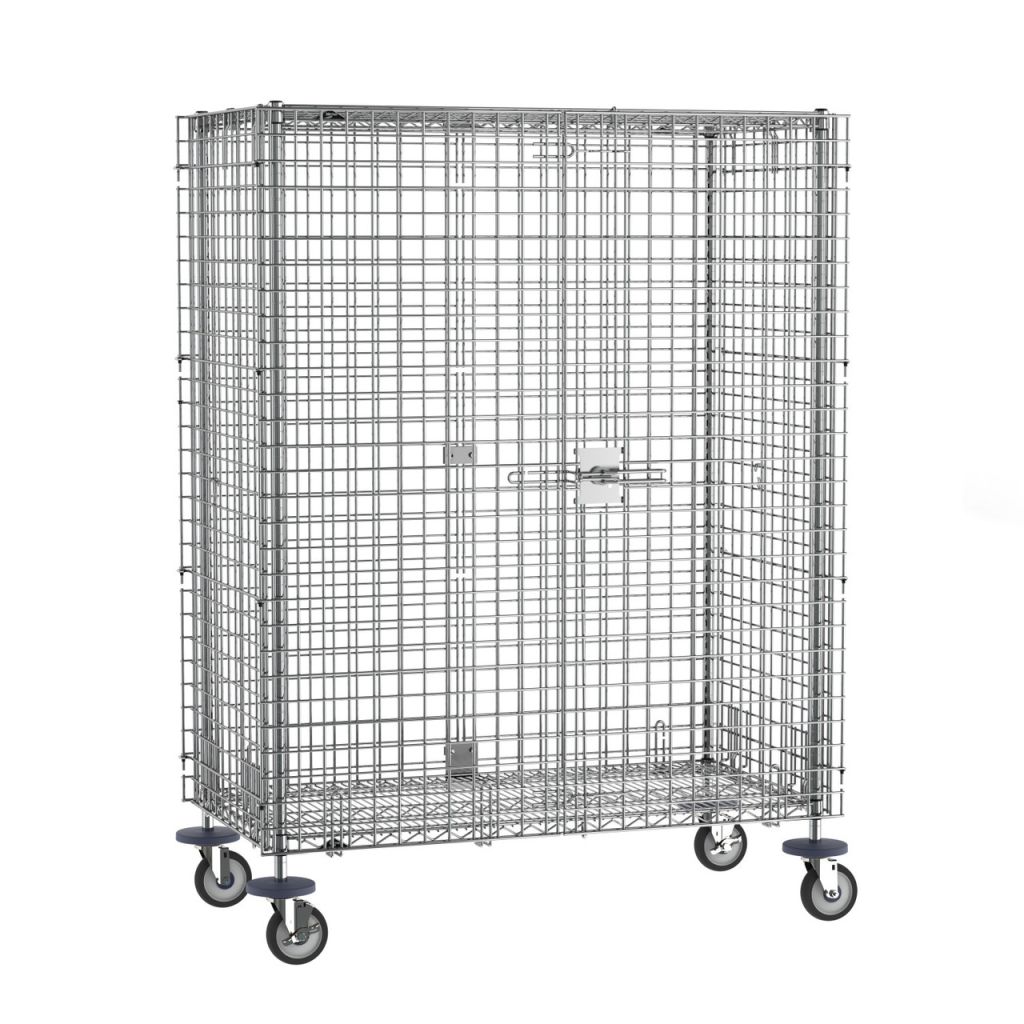 qwikSLOT mobileChrome mobile security unit.
Stationary units are the most common. They suit a back room where a set of shelves needs to be locked overnight, or a corner of a warehouse where returns, samples or small high-value parts are held. Mobile units add stem casters so the whole locked unit can be pushed to a loading dock, an event or another floor. Both can usually be ordered with hinged or sliding doors, and the configurator shows only the combinations that are valid for each size.
SlideSecure: Sliding Doors for Tight Aisles
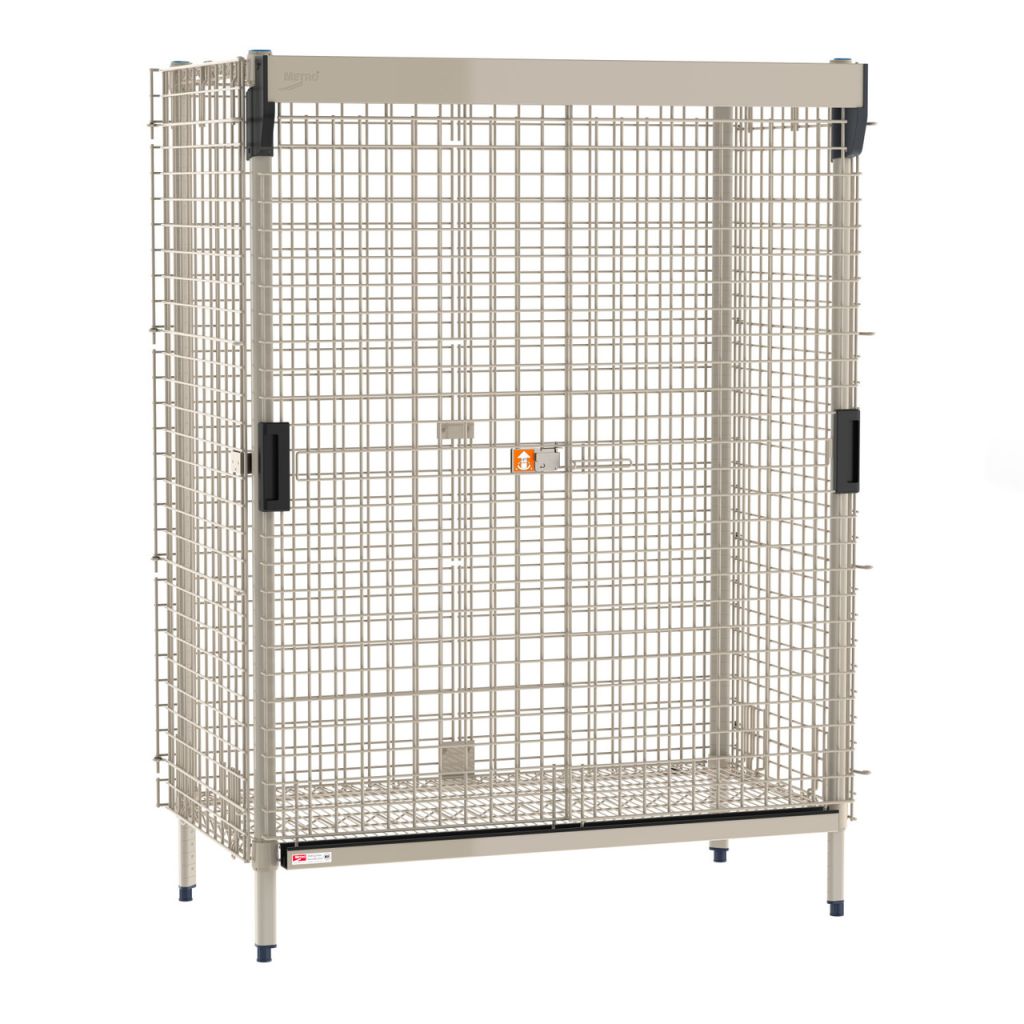
A hinged door needs clear floor in front of the unit to swing open. In a narrow stock-room aisle, a hallway alcove or a crowded kitchen, that space often is not there, or a door left open blocks traffic. SlideSecure replaces the hinged door with sliding door panels that move across the front of the unit, so opening it takes no aisle space at all.
Sliding doors also make it easy to open just one side of a wide unit while the other side stays closed. That is useful when one person is picking from the unit while another passes behind them. When both panels are closed, a single lock secures the unit. SlideSecure is offered on Super Erecta wire units in several finishes and on MetroMax polymer units; check the current spec sheet for the sizes available in each finish.
| Question | Hinged door | SlideSecure sliding door |
|---|---|---|
| Aisle space to open | Needs room for the door swing | None beyond the unit footprint |
| Access to full width at once | Yes, door opens fully | About half the width at a time |
| Best location | Open stock rooms and wide aisles | Narrow aisles, corridors, alcoves |
| Mobile option | Yes | Yes, on many sizes |
If you load bulky cases that are wider than half of the unit, a hinged door is easier. If the unit sits in a corridor or opposite another unit, SlideSecure usually wins. We ask about aisle width on every security-shelving quote for exactly this reason.
Mobile Security Units

A mobile security unit is a locked unit on stem casters. Hospitals use them to move restocked supplies from central supply to a floor without unlocking along the way. Caterers and hotels use them to bring liquor, linens or small wares to an event and lock them between services. Warehouses use them to stage returns or high-value orders at the dock until the carrier arrives.
Mobile units are usually built on mobile-ready posts with casters, with brakes on some casters so the unit stays put when parked. Keep heavy items on the lower shelves, push rather than pull, and check that doorways and elevators fit the unit before you order. Very tall mobile units can be top-heavy when loaded high, so we often suggest a shorter unit for anything that travels often.
 Stem caster stainless unitRolls between departments.
 MetroMax mobile unitPolymer shelves on casters.
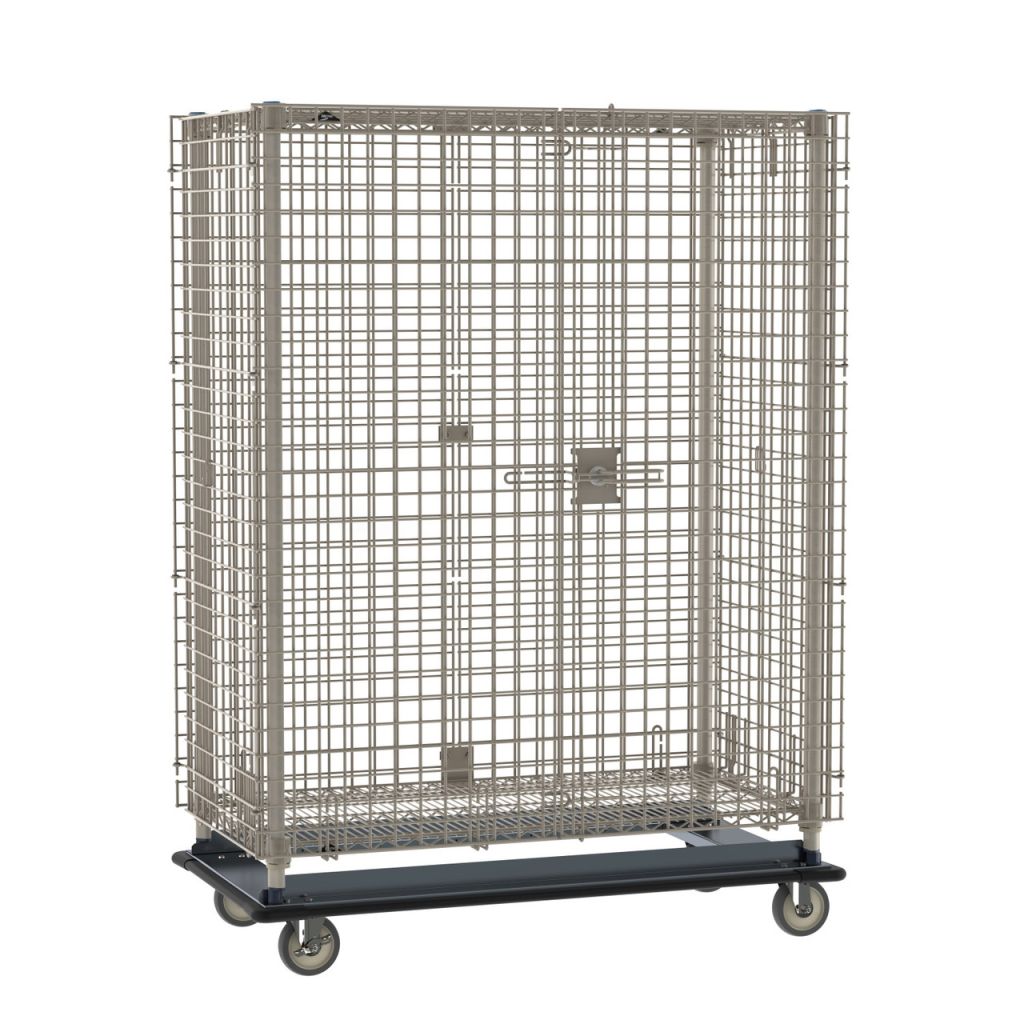 MetroMax heavy-duty mobileFor heavier loads.
 qwikSLOT heavy-duty mobileChrome, fast assembly.
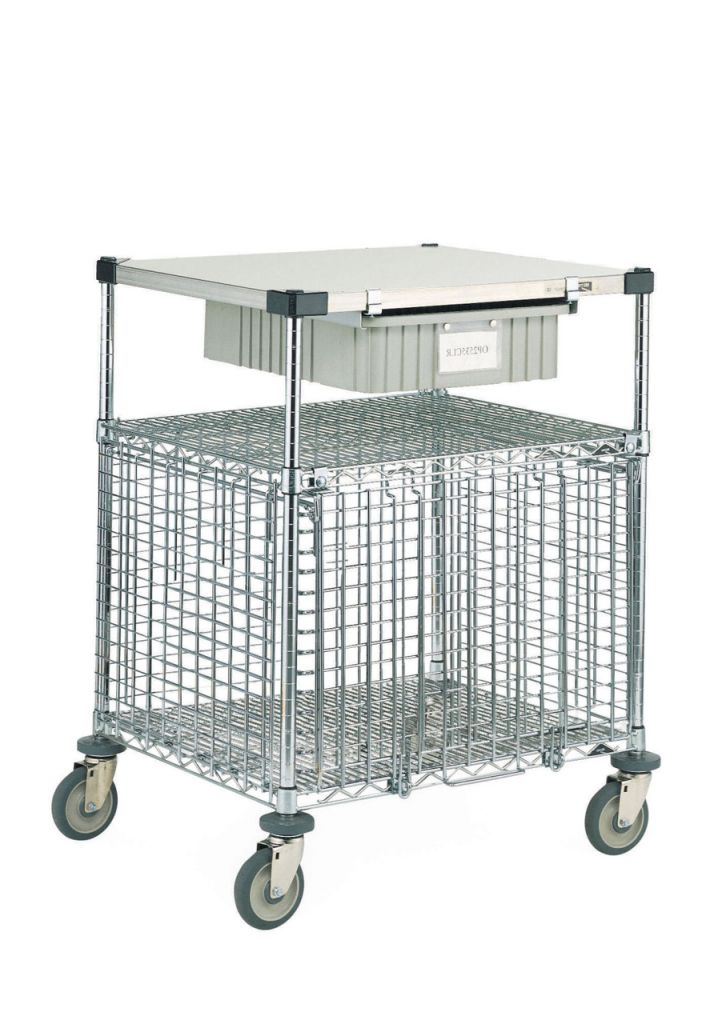 Lab security cartLocked transport for labs.
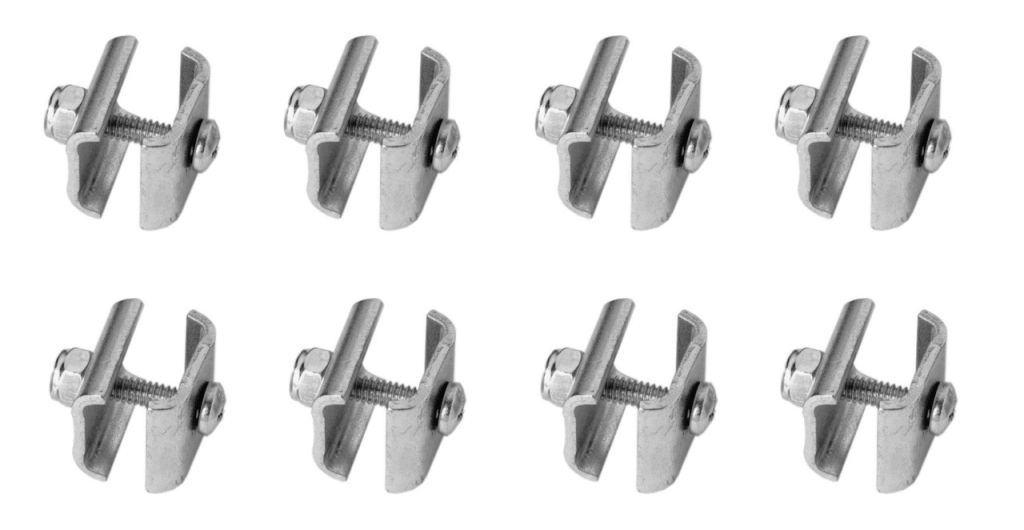 Enclosure hardware kitFits panels for mobile use.
Design & price it online: Metro Security Shelving Configurator
Choose stationary or mobile, hinged or SlideSecure, wire or MetroMax polymer, then pick width, depth, height and shelf count. The configurator checks the configuration, totals it and rates freight to your ZIP. Save and share the quote.
Design & Price It Online All Metro Configurators Call (800) 326-4403
Wire or Polymer, and Which Finish
The enclosure and the shelves share the same material choices as open Metro shelving, and the right answer depends on the room more than on the lock.
| Material | Where it fits | Notes |
|---|---|---|
| Chrome wire | Dry stock rooms, offices, records | Bright finish; not for damp or wet areas |
| Metroseal gray or green epoxy wire | Kitchens, coolers, general back-of-house | Corrosion-resistant coating for humid rooms |
| Stainless steel wire | Washdown, pharmacy and clinical areas | Highest corrosion resistance, highest cost of the wire options |
| MetroMax polymer | Wet, cold or frequently cleaned areas | Removable shelf mats lift out for washing |

For a liquor room or dry store, chrome or epoxy is usually enough. For a cooler, walk-in or anywhere condensation forms, epoxy or MetroMax polymer is a better choice because bare chrome can rust in constant moisture. Stainless is the choice for pharmacy, clinical and washdown areas where staff sanitise often. Our Metro wire shelving finishes guide compares chrome, epoxy and stainless in more detail, and the MetroMax vs Super Erecta comparison explains when polymer beats wire.
Where Metro Security Shelving Gets Used
| Setting | What is locked | Suggested unit |
|---|---|---|
| Hospital supply and pharmacy | Restricted supplies, high-cost consumables | Stainless or epoxy stationary unit; mobile unit for transport |
| Restaurant and bar | Liquor, wine, high-value proteins in a cooler | Epoxy or polymer unit; SlideSecure in narrow back halls |
| Hotel and catering | Linens, small wares, event liquor | Mobile unit with brakes |
| Warehouse and fulfillment | Small high-value SKUs, returns, samples | Chrome or epoxy stationary unit near packing |
| School and office | Electronics, records, AV equipment | Chrome stationary unit |
| Laboratory | Reagents, small instruments, controlled items | Lab security cart or stainless unit |
In each case the idea is the same: keep everyday stock on open shelving where it is fast to reach, and move only the items that need control into a locked unit nearby. That keeps the locked unit small, which keeps cost down and makes it easier to audit what is inside.
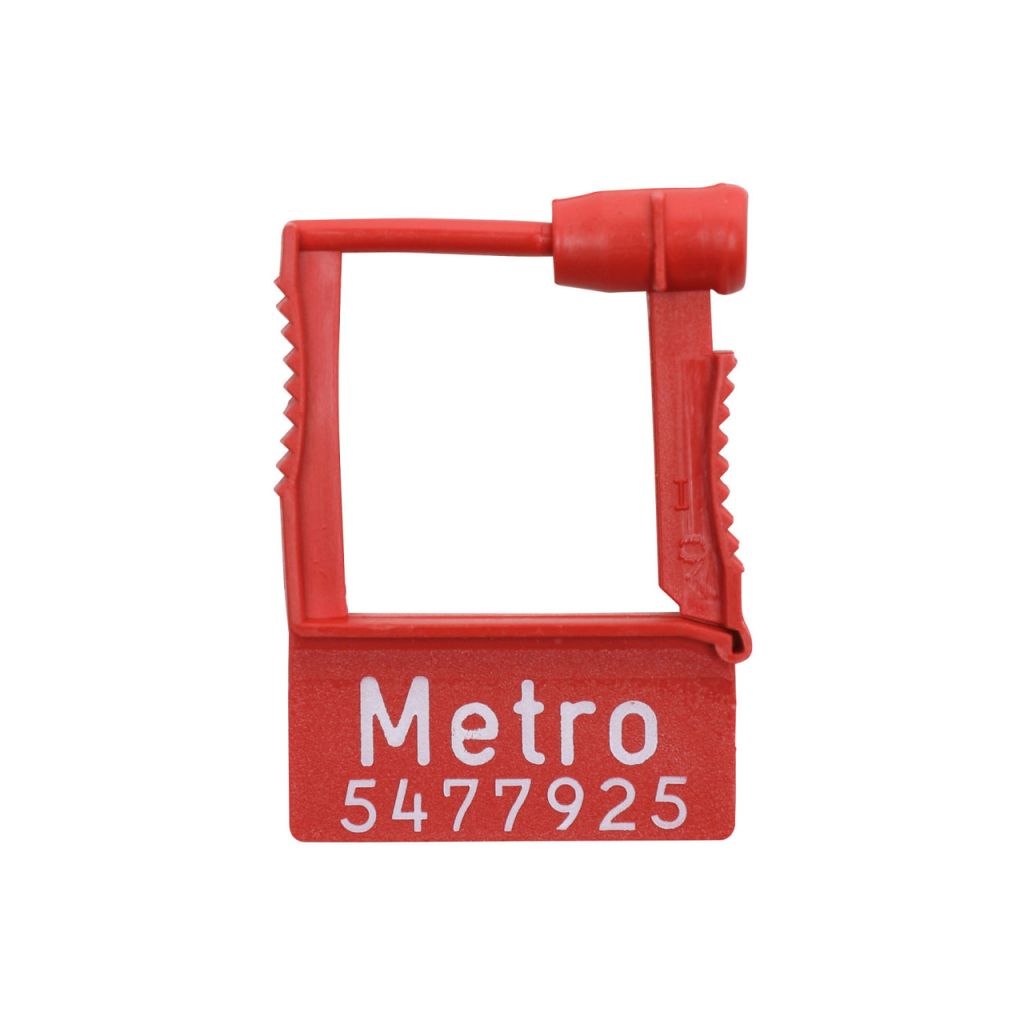 Plastic security sealsTamper evidence on carts and units in transit.
How to Size a Security Unit
- List what will be locked inside and the largest item or case size
- Pick a depth that fits the largest item with a little clearance; common Metro depths run from about 18 to 24 inches
- Pick a width that fits the wall or alcove, remembering hinged doors need swing room
- Choose a height that keeps the top shelf reachable for the shortest person who uses it
- Decide how many shelves you need inside; shelves adjust on the posts after assembly
- Decide stationary or mobile, and check doorways and elevators for mobile units
- Note any seismic restraint or anchoring requirement for your building
Load ratings depend on shelf size, material and whether the unit is stationary or mobile, so we confirm the current spec sheet for your exact configuration with every quote. Mobile ratings are usually limited by the casters, not the shelves.
Security Shelving vs a Security Cage vs a Locking Cabinet
| Option | Best when | Watch out for |
|---|---|---|
| Metro security shelving unit | You need one to a few bays of locked, visible, ventilated storage | Not a substitute for a fire-rated or high-security safe |
| Security cage or partition | You need to enclose a room, rack row or tool crib | Larger project, needs layout and installation |
| Steel locking cabinet | Contents should be hidden from view | No airflow; harder to see stock levels |
Wire security units let staff and auditors see stock levels without opening the door, and the open wire lets air move in coolers and dry stores. If contents must be hidden or the risk is high, combine a security unit with access control on the room, or choose a different product. We will tell you honestly if a unit is the wrong tool.
Assembly, Keys and Day-to-Day Use
Most Metro security units arrive flat-packed. Posts, shelves and enclosure panels assemble with basic tools, and the door is hung last so it can be adjusted to close square. Build the unit where it will stand, or build mobile units near the door they will leave through. Level stationary units on their feet before loading so the door closes and locks cleanly.
- Keep a record of who holds keys, and how many copies exist
- Lock the unit whenever it is unattended, even for a short time
- Load heavy cases on the lowest shelves and keep the top shelf for light items
- Leave a small gap behind cases so the door closes without pushing stock
- Label shelves so restocking does not need the door held open for long
- Clean wire and polymer shelves with mild detergent; avoid abrasive pads on epoxy
- Check casters and brakes on mobile units as part of routine maintenance
If the unit stores alcohol, pharmaceuticals or other regulated items, follow your own policy and any local rules on storage and access. A security unit is one part of that control, alongside logs, counts and limited key holders.
What to Send Us for a Quote
- What will be stored and roughly how heavy it is
- The space: width, depth and ceiling height, plus aisle width in front
- Stationary or mobile, and hinged or sliding door
- Room conditions: dry, humid, cold, wet or washdown
- Preferred finish: chrome, gray or green epoxy, stainless or MetroMax polymer
- How many units, and whether they should match existing Metro shelving
- Photos of the space if you have them
With those details we can confirm the right size and door style, check the finish against the room and make sure the unit fits through your doors. Or answer the same questions in the configurator and compare options yourself before you order.
Shop Metro Security Shelving Online
Buy select items directly from our online store, or request a quote for volume, custom sizes and freight-rated orders.
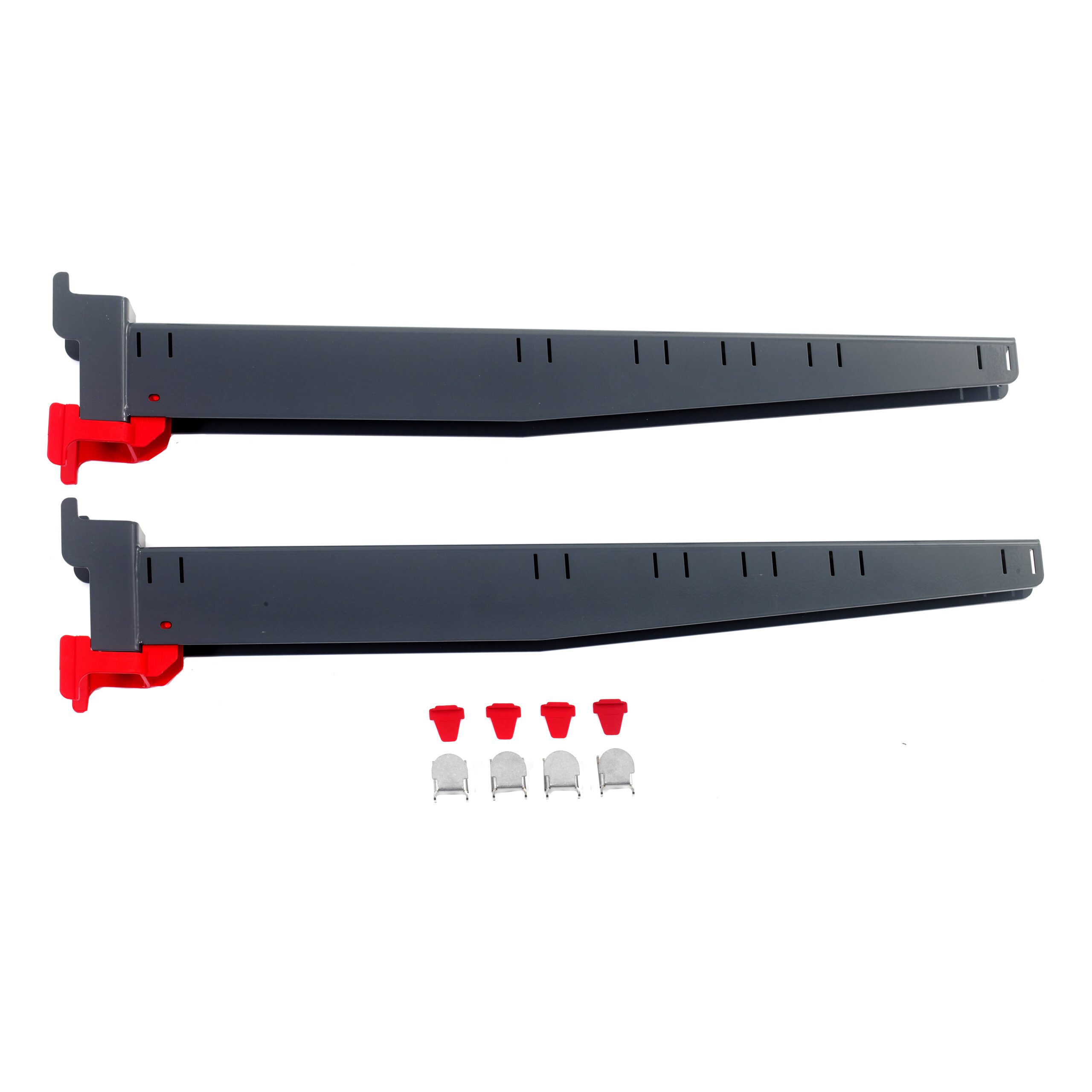
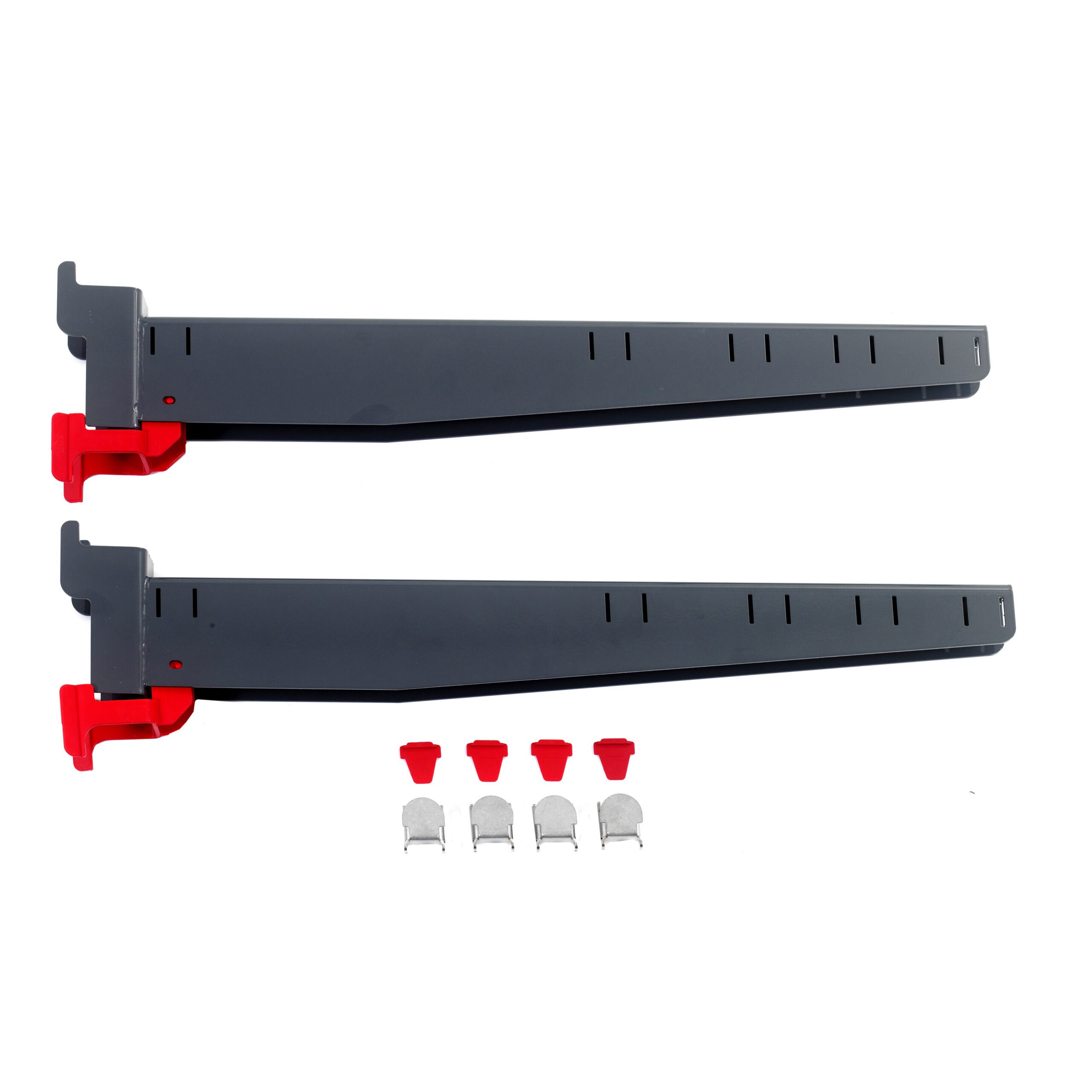

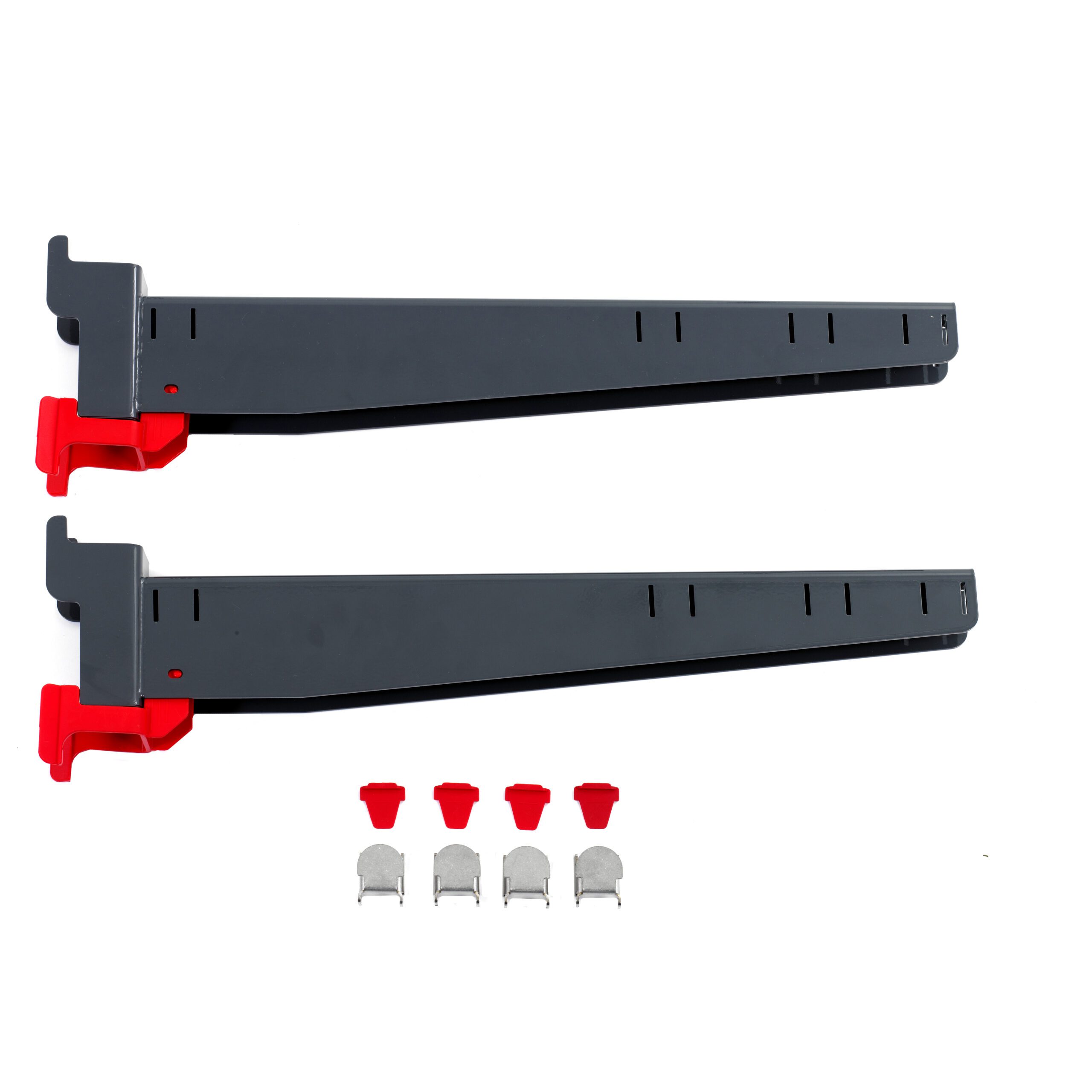
Compare finishes, starter and add-on units, carts and accessories on our main wire shelving page.
Get a free quote
Tell us what you are storing, the room size and your timeline. A project specialist will follow up with layout options and pricing. Prefer to talk? Call (800) 326-4403.
Metro Security Shelving FAQ
What is Metro security shelving?
What is SlideSecure?
Is security shelving the same as a security cage?
Can Metro security shelving be mobile?
Which finish should I choose for a cooler?
How much weight does a security unit hold?
Can I price a Metro security unit online?
Can I buy just the security doors for a Metro unit I already have?
Lock Up the Right Stock
Design it in the Metro Security Shelving Configurator or send us the space and what needs locking for a layout review. Call (800) 326-4403 or request a quote online.