
Warehouse Tool Cages and Mobile Security Cages for a Commercial Contractor
How a Front Range general contractor gave shared tools, gang boxes and rolling stock a home that survives the morning rush — with a fixed tool cage and mobile cages that follow the work.
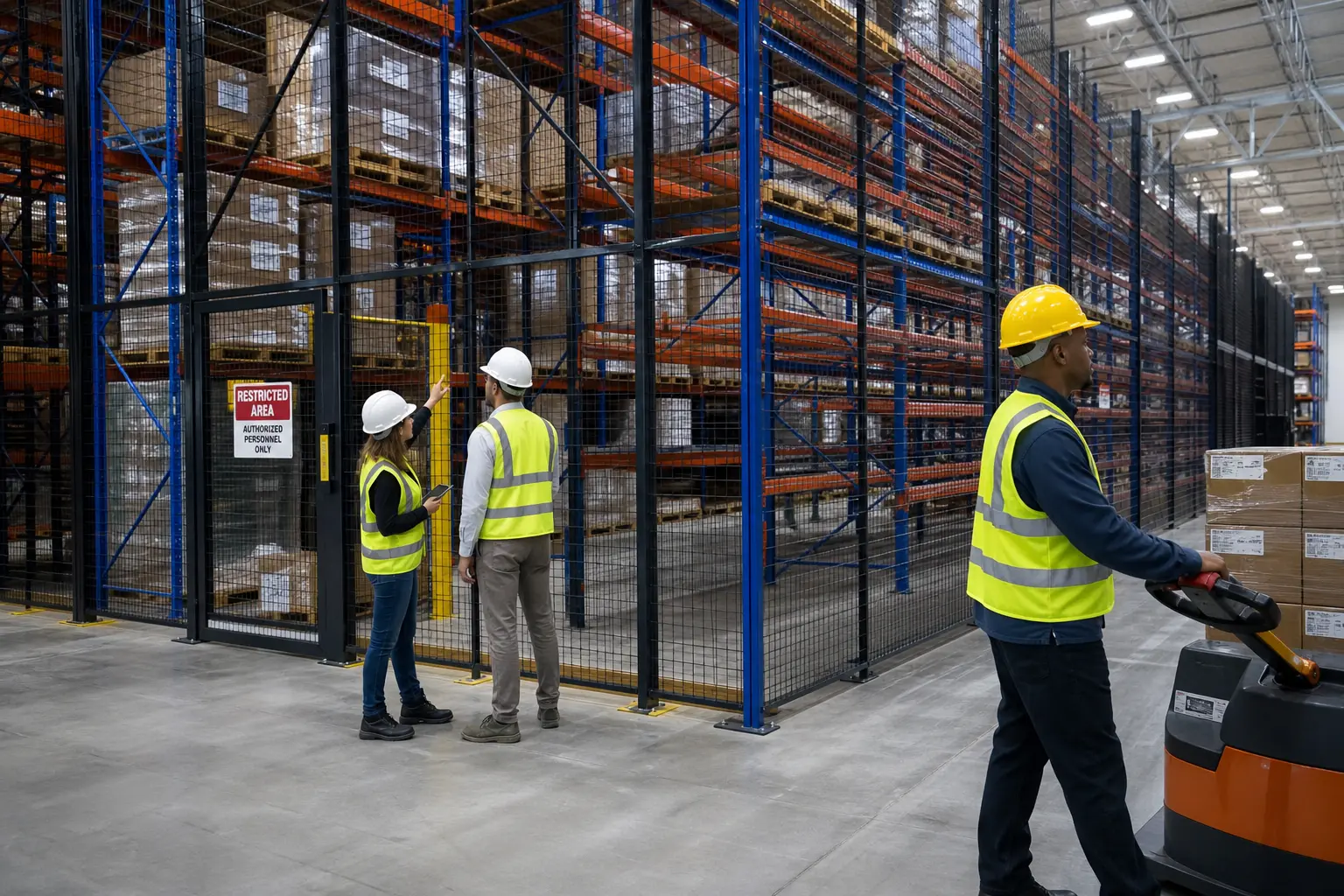
Boulder, CO
Quinlan Construction, commercial general contractor and construction manager
The problem
Shared tools spread between a yard, a warehouse and a dozen active jobs
The answer
A fixed tool cage plus mobile security cages that move with crews
Why it works
Tools have one address, and the address can roll
Tools do not get stolen so much as scattered
Quinlan Construction has built commercial and industrial work along Colorado’s Front Range since 1981, running general contracting, design-build, interior finish and facility support projects out of Boulder. Like most contractors of that size, its tool inventory does not live in one place. It lives in a warehouse, in a yard, in gang boxes on a dozen active jobs, and in the back of trucks.
That is a control problem before it is a security problem. The classic symptoms are familiar: a crew buys a fourth rotary hammer because the other three cannot be found; a laser level comes back from a job and gets set down wherever there is space; small tools disappear a few at a time and nobody can say when. The dollars add up quietly, and the schedule pays for it on the morning a crew leaves without the right equipment.
The fix that works for contractors is not one big locked room. It is a fixed tool cage in the warehouse for the things that stay, plus mobile cages that travel with a crew or a floor. That combination is why we treat tool storage as its own design problem within our security cage and wire partition systems rather than as a smaller version of a warehouse enclosure.
The fixed tool cage in the warehouse
The permanent enclosure is the base of the system. It holds what should not leave the building unless someone signs for it.
What goes inside: cordless tool fleets and batteries, powder-actuated tools and fasteners, survey and layout instruments, pipe and conduit tooling, specialty and rented equipment, attachments and consumable bits that vanish first.
What stays outside: bulk material, ladders, staging, anything bought by the hundred. If it costs more in door traffic than it does to replace, it does not belong in the cage.
Charging matters. Battery fleets need power inside the enclosure and airflow around the chargers. Plan circuits and shelf depth for the charging bank before the panels are set, not after.
Give it a counter. A service window or a short counter means the tool room can issue and receive without opening the whole enclosure to whoever is waiting.

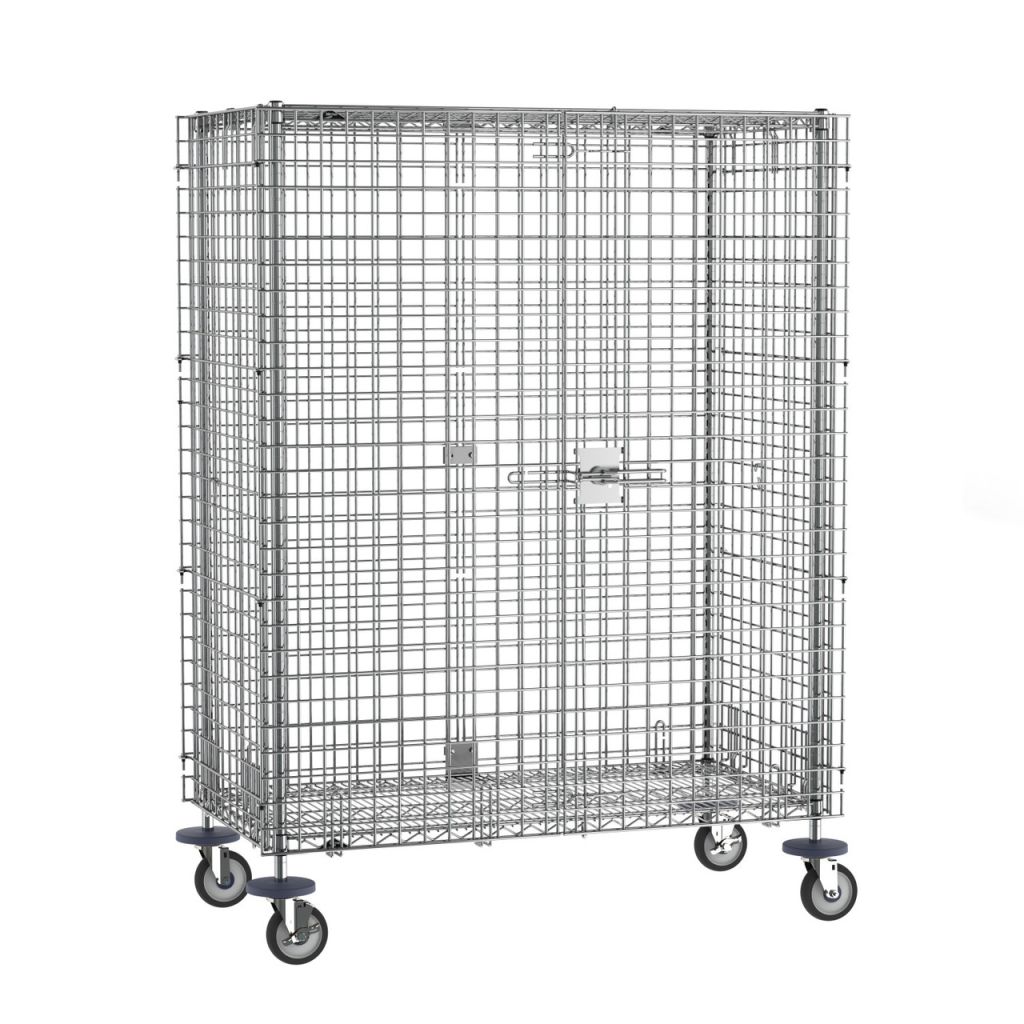
Mobile security cages that follow the work
A fixed cage only helps material that comes back to the building. On a project, tools live on a floor for weeks. That is where mobile security cages earn their place: enclosed, lockable shelving units on heavy-duty casters that roll into a freight elevator and park where the crew is working. Our guide to mobile security cages compares the main types, casters, doors and locks, and when a fixed cage is the better choice.
Why they beat a gang box. You can see what is inside without opening it, shelves keep small tools sorted instead of stacked, and one unit replaces a pile of boxes that nobody wants to carry up stairs.
Casters are the specification. Look for heavy-duty swivel casters with brakes and wheel material suited to the floor. Soft polymer wheels roll quietly on finished slab; harder wheels handle debris and rough concrete better.
Lock the unit, not the room. A hinged or sliding door with a padlock hasp or a keyless touchpad turns each cart into its own controlled space, which is what you want when the room it sits in is still under construction.
Weight and stability. Load capacity is per unit and per shelf. Concentrating heavy tools on a top shelf makes a tall unit unpleasant to move; keep mass low.
Fixed cage or mobile cage: which does what
Most contractors end up with both. The question is which items belong to which.
| Consideration | Fixed tool cage | Mobile security cage |
|---|---|---|
| Best for | Warehouse-based tools, spares, high-value instruments | Tools committed to one job, floor or crew |
| Capacity | Room-scale; sized in panel runs | Unit-scale; sized in shelves |
| Access control | Keyed, keypad or credentialed door hardware | Padlock hasp, cam lock or keyless touchpad |
| Moves? | Bolted framework can be reconfigured, not rolled | Rolls between floors and buildings |
| Anchoring | Anchored to slab | None — caster brakes hold it |
| Watch out for | Door bottleneck at shift change | Overloading, floor protection, elevator size |
A practical split: the fixed cage owns the fleet and the records; mobile cages own the working subset. When a job closes, the mobile unit rolls back, gets checked in against the list taped to its own door, and is restocked for the next site.
Layout, the issue window and the morning rush
Every contractor’s warehouse has the same peak: fifteen minutes when trucks are loading and everybody needs something at once. Cage layout either survives that or gets defeated by it.
Specifying the enclosure
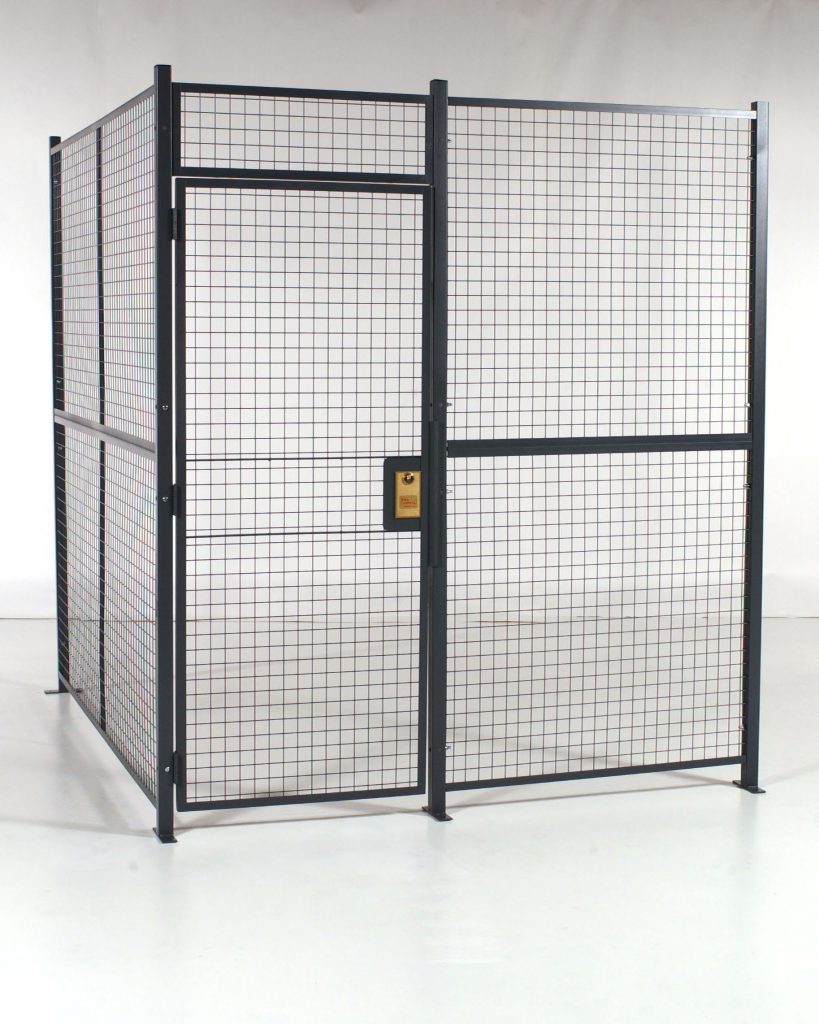
Tool cages are small enclosures that take heavy abuse. The specification differences that matter:
Mesh and frame. Standard welded or woven mesh panels in a bolted steel frame suit almost every tool room. Where carts and pallet jacks strike the base, a kick plate or a heavier bottom panel is worth the small premium.
Height. A partial-height enclosure is fine when the area is supervised. If the cage backs onto racking or anything climbable, take it full height with a mesh ceiling.
Doors. A single hinged leaf is the default. Use a sliding door where the aisle is narrow and a double leaf where pallets or mobile cages pass through.
Hardware. Keyed cylinders work for a two-person tool room. Keypads suit crews with rotating staff. Card readers are worth it when you need to know who was in the cage at 5:40 a.m.
Finish. Powder-coated steel indoors; galvanized where the enclosure sees weather in a yard or an unheated shop.

Anchoring, egress and sprinklers
Three practical constraints decide more cage layouts than budget does.
Anchoring. Fixed enclosures are anchored to the slab. Slab thickness, post-tensioned cables and seismic design category shape the anchor detail, and a leased building may carry landlord restrictions on drilling. Scan before you drill.
Egress. A cage must not block a required exit path or trap anyone inside. Doors on an egress route need hardware that releases from the inside without a key, and aisles have to keep their required clear width. OSHA sets the baseline in 29 CFR 1910.36 and 1910.37; the local building code and fire marshal have the final say.
Sprinklers. Adding a mesh ceiling or stacking storage inside an enclosure changes how a sprinkler system sees the space. NFPA 13 governs the design and the authority having jurisdiction applies it, so confirm the ceiling arrangement with your fire protection engineer.
Our cage installation guide covers anchoring and site coordination in more detail, including work in occupied buildings.
Making the tool room stick
Hardware is the easy half. The habits that make a tool cage work are simple and they have to be agreed before the panels arrive:
Installation and phasing
A tool cage of this size is normally a one- to two-day installation once the footprint is clear. The sequence that causes the least disruption:
| Step | What happens | What you need to decide first |
|---|---|---|
| Layout | Footprint chalked on the slab and walked with the tool room lead | Door position and swing |
| Anchoring | Posts set and anchored; the dusty, noisy phase | Slab scan, after-hours access |
| Panels and ceiling | Mesh installed and squared to the frame | Partial or full height |
| Door and hardware | Leaf hung, hardware fitted, any reader wiring pulled | Who controls credentials |
| Fit-out | Shelving, charging bank, counter, signage | Zone layout and labels |
Where the warehouse cannot pause, anchoring is scheduled after hours and the fit-out follows during normal days. Mobile cages need no installation at all — they arrive assembled or are built on site in under an hour.
Planning a tool cage for your own shop
Bring five things and we can size and quote an enclosure quickly:
1. A rough footprint. Wall lengths, column positions and where the loading door is.
2. What goes inside. Number of shelf bays, whether pallets enter, and the largest item that has to fit through the door.
3. Who needs in. Team size, shift pattern and whether you need a record of entry.
4. What is overhead and underfoot. Sprinkler heads, lighting, slab type and any landlord restrictions.
5. How many mobile units. Count active jobs, not crews — each site that holds tools overnight is a candidate.
If you are still deciding how big the fixed enclosure should be, the cage cost guide shows how size, height and door choice move the number.
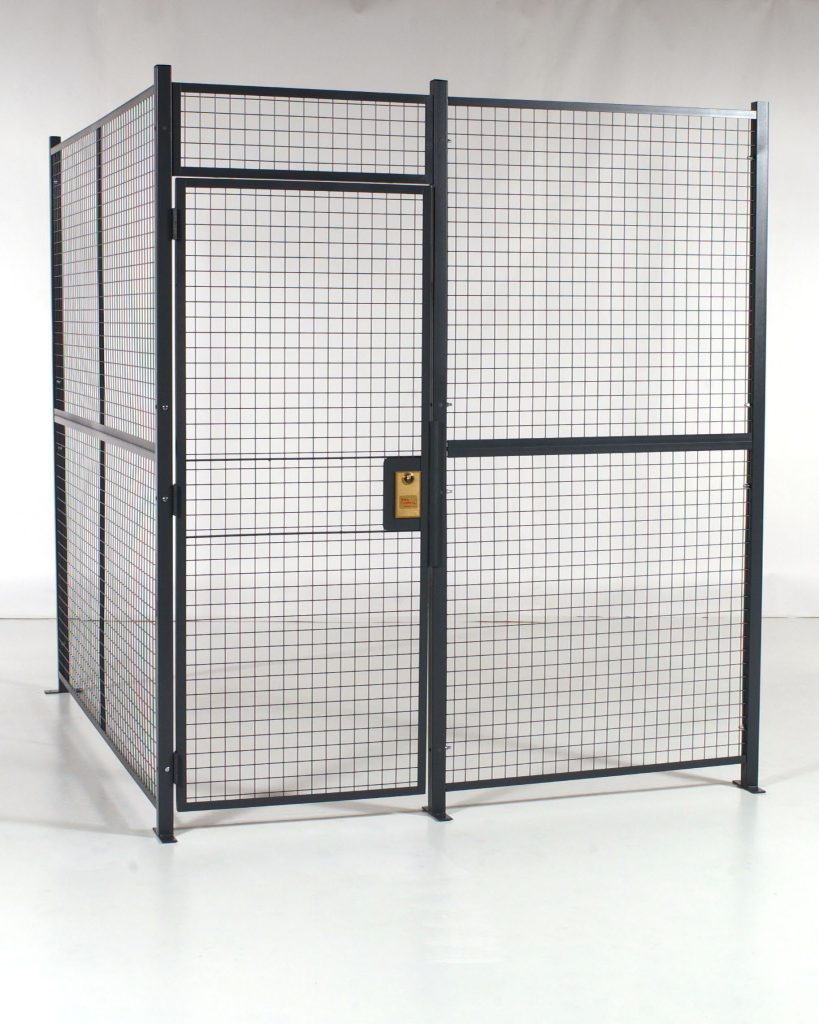
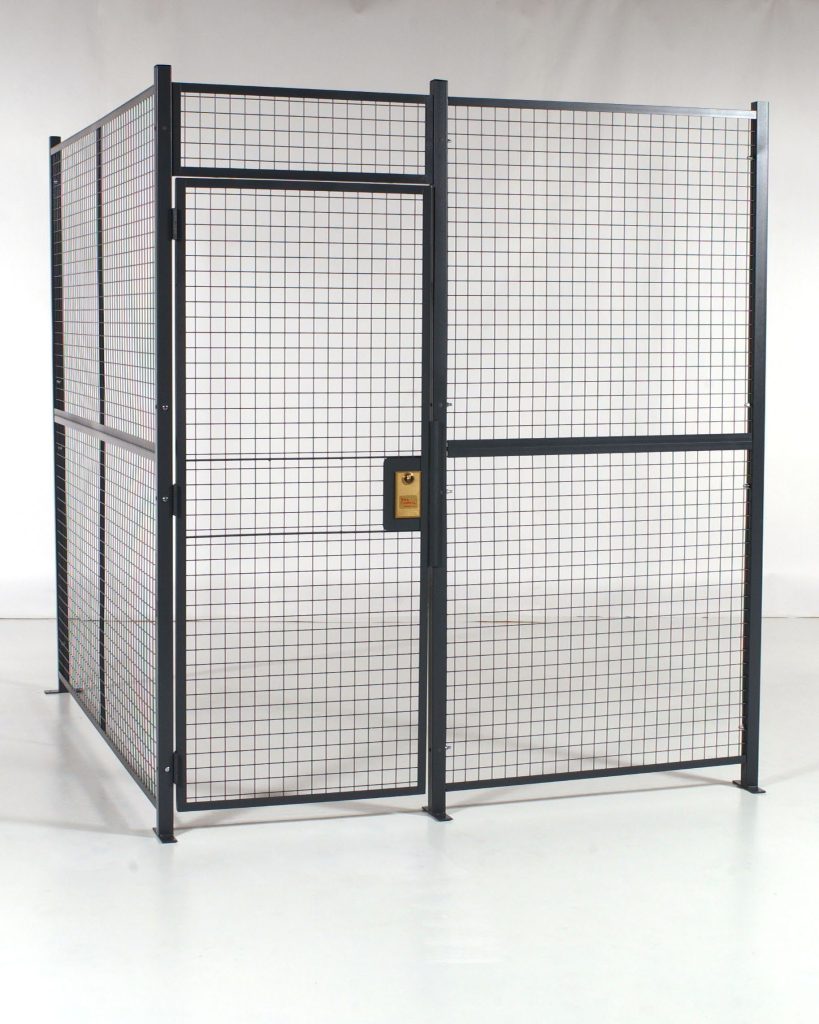
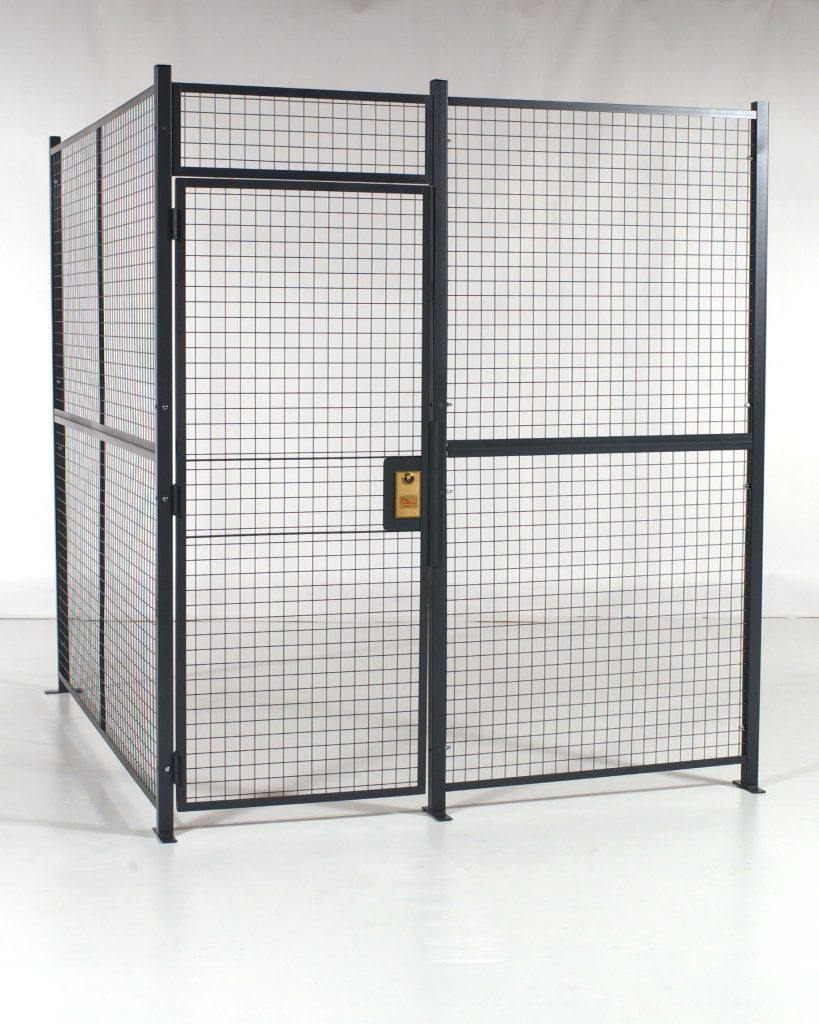
Shop Pre-Configured Wire Mesh Cage Kits Online
Standard-size welded wire cage kits, priced online, for smaller storage needs. Every kit still needs to be anchored to sound concrete — for tall, braced or engineered enclosures, request a quote with your building location and floor details.
Frequently asked questions
What is the difference between a tool cage and a tool crib?
Are mobile security cages strong enough for job site tools?
Can a tool cage go into leased warehouse space?
Do we need a mesh ceiling on a tool cage?
How do we handle battery charging inside the cage?
How quickly can this be installed?
Price a tool cage and mobile units together
Tell us what your crews carry and how many jobs run at once. We will size a fixed enclosure, recommend mobile cages to match, and quote both.