
Wire Storage Cages for a Retail Stockroom: The Good Feet Store Case Study
How a specialty retailer secures backroom stock, returns and transfers with a wire mesh enclosure — in a leased store where the stockroom is small, the staff turns over, and the back door is the busiest part of the building.
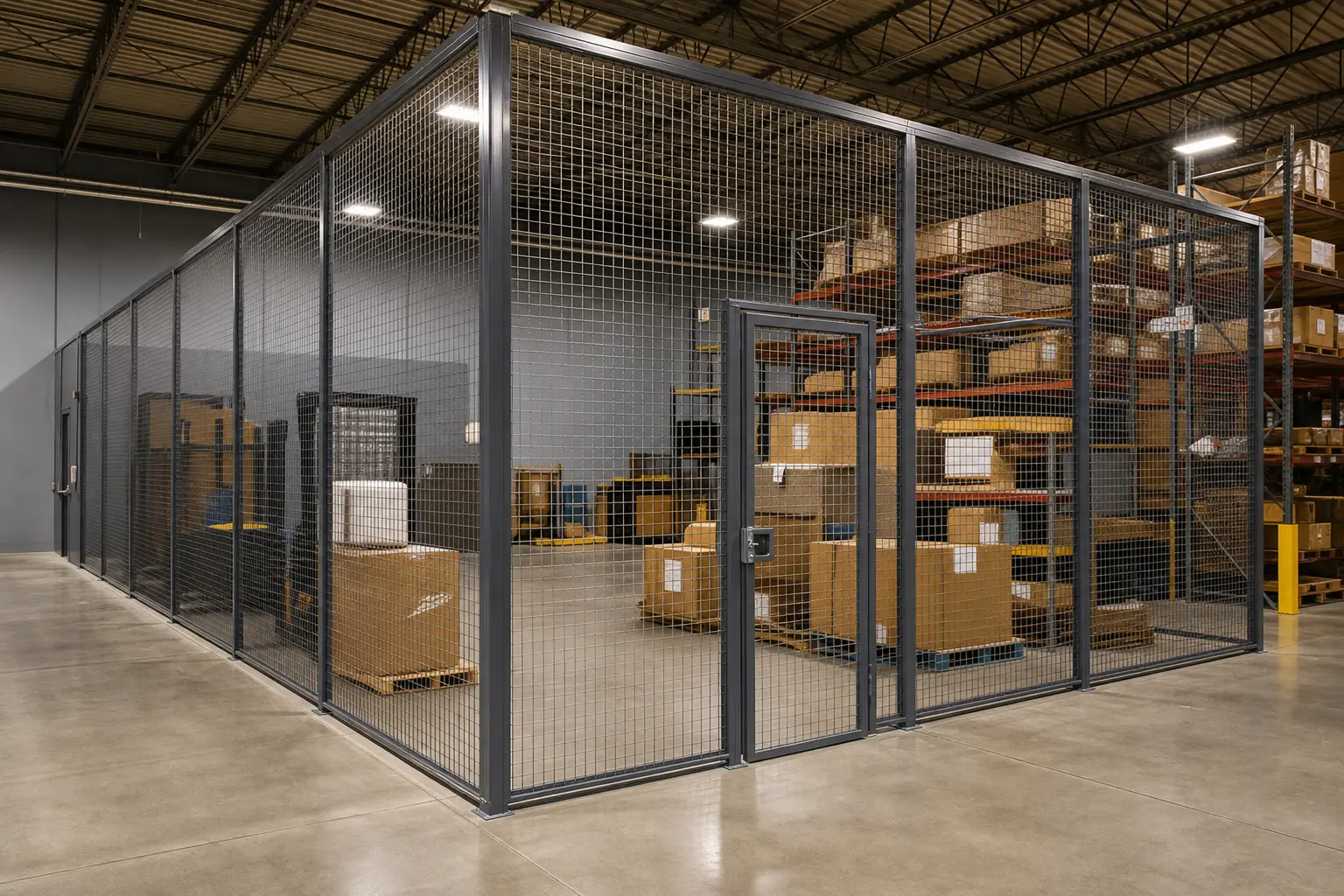
2019
Year Material Handling USA supplied wire mesh security cage product to The Good Feet Store
Retail
The Good Feet Store is a specialty retailer of personally fitted arch supports, founded in 1992
Backroom
Stockrooms, receiving and returns are where most retail inventory loss is created
Modular
Bolted wire panels suit leased retail space and store relocations
The project
The Good Feet Store is a specialty retailer of personally fitted arch supports. Founded in 1992 and headquartered in Carlsbad, California, the brand operates a large network of retail locations in the United States and abroad. Material Handling USA supplied wire mesh security cage product to the company in 2019.
This page sits under our security cage hub and describes a problem class — securing a retail stockroom with wire storage cages — rather than any one store. It contains no store layout, no dimensions, no inventory or sales detail, and no security specifics for this customer.
Retail loss prevention gets discussed as a sales-floor problem, and that is where the cameras point. The backroom is where the accounting actually breaks. Receiving, returns, transfers, damaged goods and staged stock all pass through a small room with a door to the alley, and most of those transactions are recorded by whoever happens to be standing there. The National Retail Federation’s security surveys consistently list locking cases and cages among the measures retailers rate effective, and in a specialty store the cage almost always belongs in the back, not the front.
Why the loss happens behind the sales floor
The busiest door has the least supervision. Deliveries, trash runs, breaks and smoke stops all use the back door. It is the one opening in the store that is regularly unlocked with nobody watching it.
Returns and transfers have no owner. Product waiting for a decision — returned, damaged, held for a customer, going to another store — is the category most likely to go missing, because no count is expected to match on any particular day.
Small stockrooms mix everything together. When staged transfers, backstock, supplies and personal belongings share three shelving units, nothing is clearly out of bounds.
Staffing turns over. Retail turnover means the person who knows the stockroom discipline changes several times a year. A physical boundary keeps working when the training does not.
The high-value fraction is small. In specialty retail, a modest share of items carries most of the exposure. Enclosing that fraction is inexpensive; enclosing the room is not usually necessary.
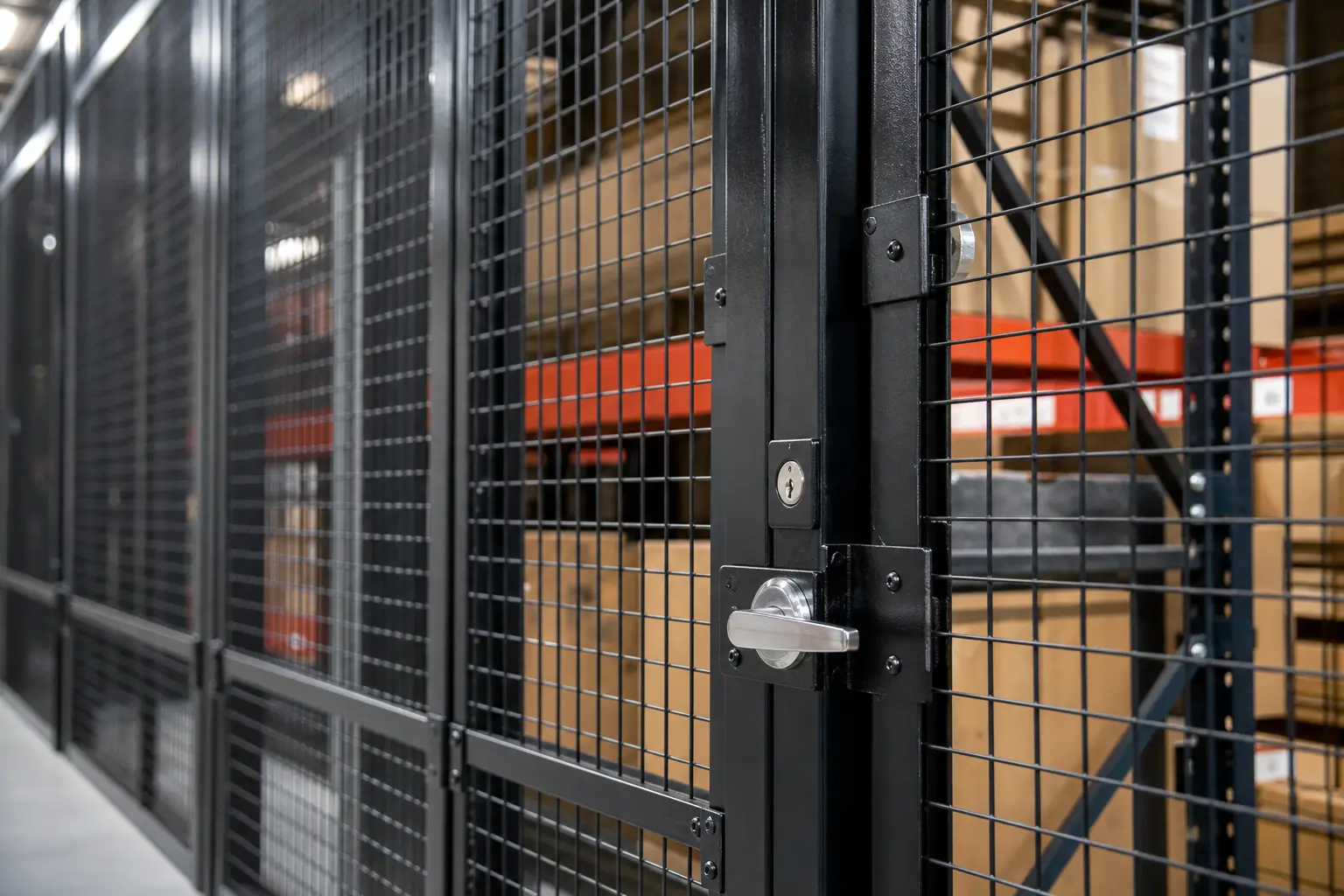
What goes inside a retail storage cage
The decision is not “secure the stockroom” but “decide what needs a boundary and who may cross it.” In a specialty store the list is short and specific:
Employee belongings should never be inside the secure area. Give staff separate lockers so the only reason to open the cage is a business transaction.
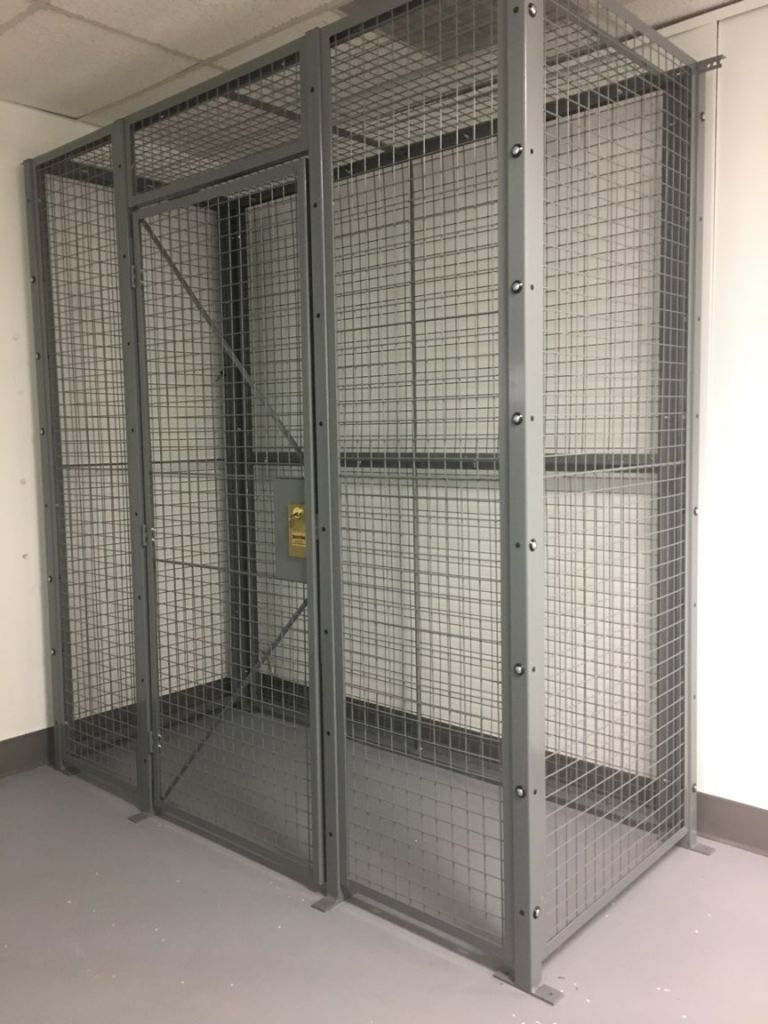
Where the cage goes in a small stockroom
Location decides whether the enclosure gets used or propped open. The patterns that work in a small backroom are consistent:
- Between receiving and the sales floor, not against the back door. A cage that blocks the delivery path gets left open every time a pallet arrives.
- Around the shelving, not around the room. Enclosing two or three existing shelving units usually protects the value at a fraction of the cost and floor area.
- In the line of sight of the office or camera. Mesh keeps the area visible, which is most of the deterrent value.
- Clear of exits, panels and fire equipment. Stockrooms are tight, and the required clear space in front of an exit, an electrical panel or an extinguisher is not negotiable.
- With a defined staging spot outside it. If there is nowhere legitimate to stage an inbound delivery, it will be staged inside the cage with the door open.
Where a store keeps overstock on pallet racking, enclosing the rack bays is often better than partitioning floor area — see pallet rack security enclosures. Where only a few square feet are needed, a wall-mounted enclosure may be enough.
Specifying a stockroom cage
Retail enclosures are specified for daily handling and appearance as much as for security. They sit in a low-ceilinged room, they are seen by staff every day, and they have to fit through a standard back door on install day.
| Decision | Typical retail answer | Why it matters |
|---|---|---|
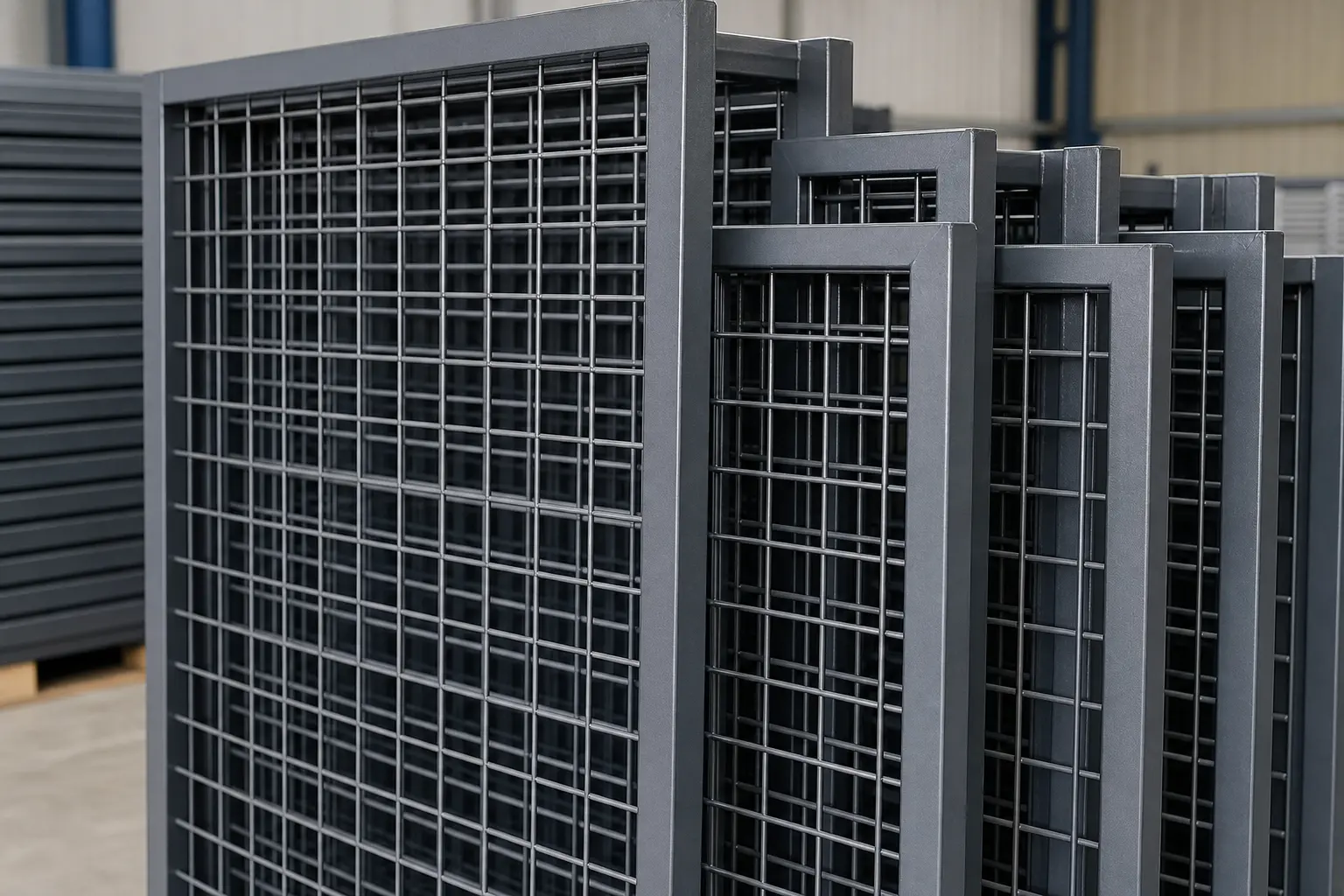
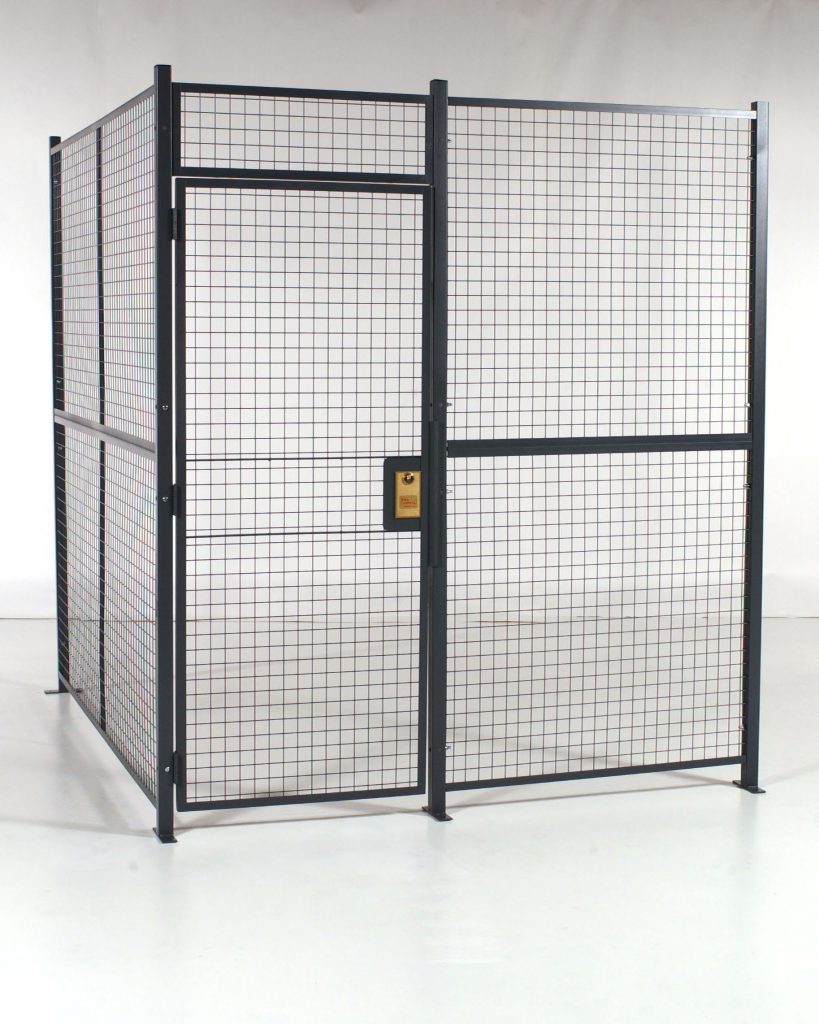
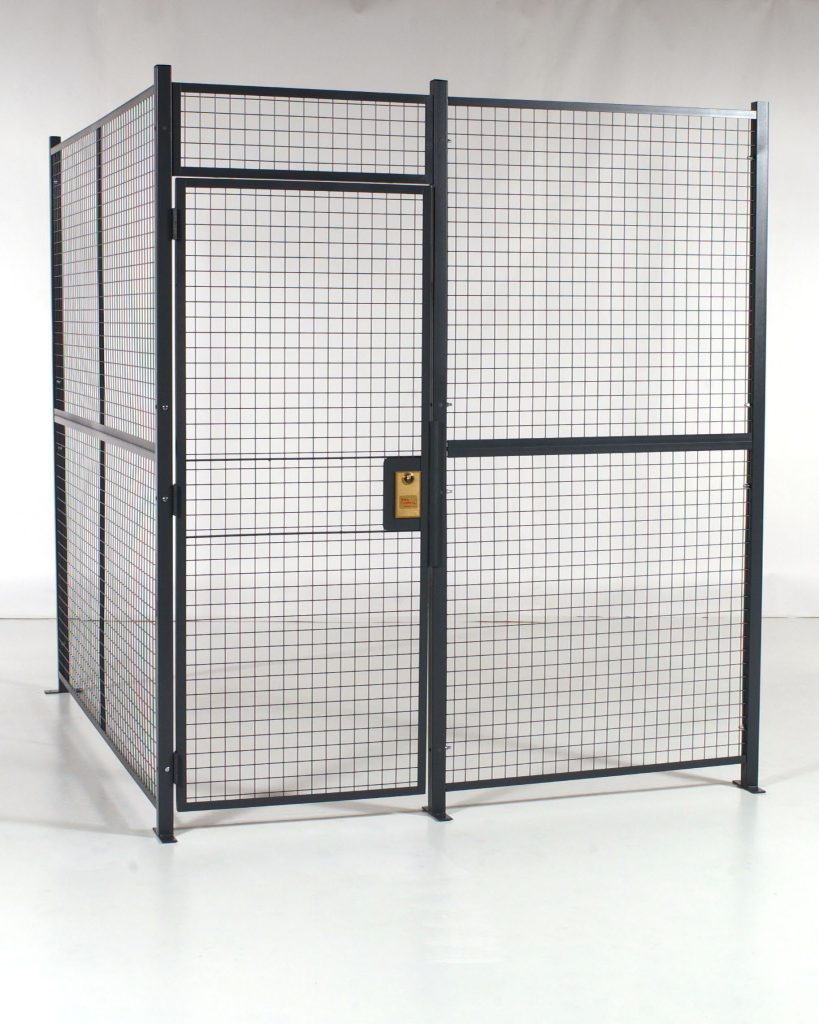
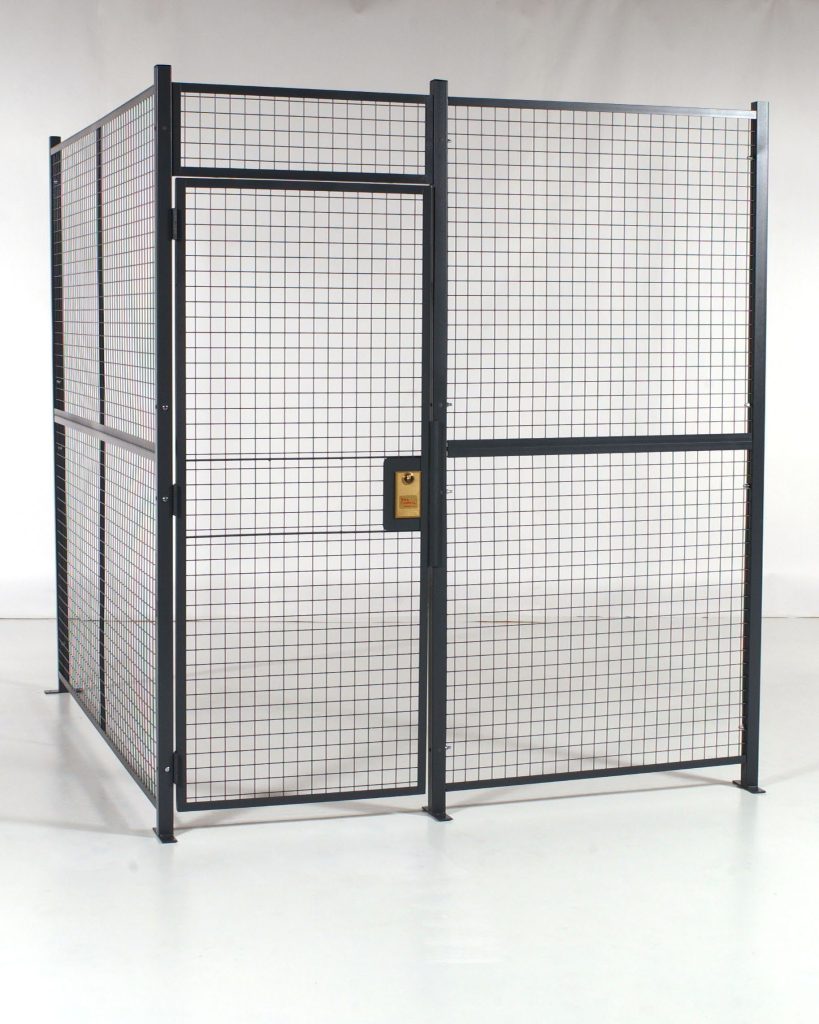
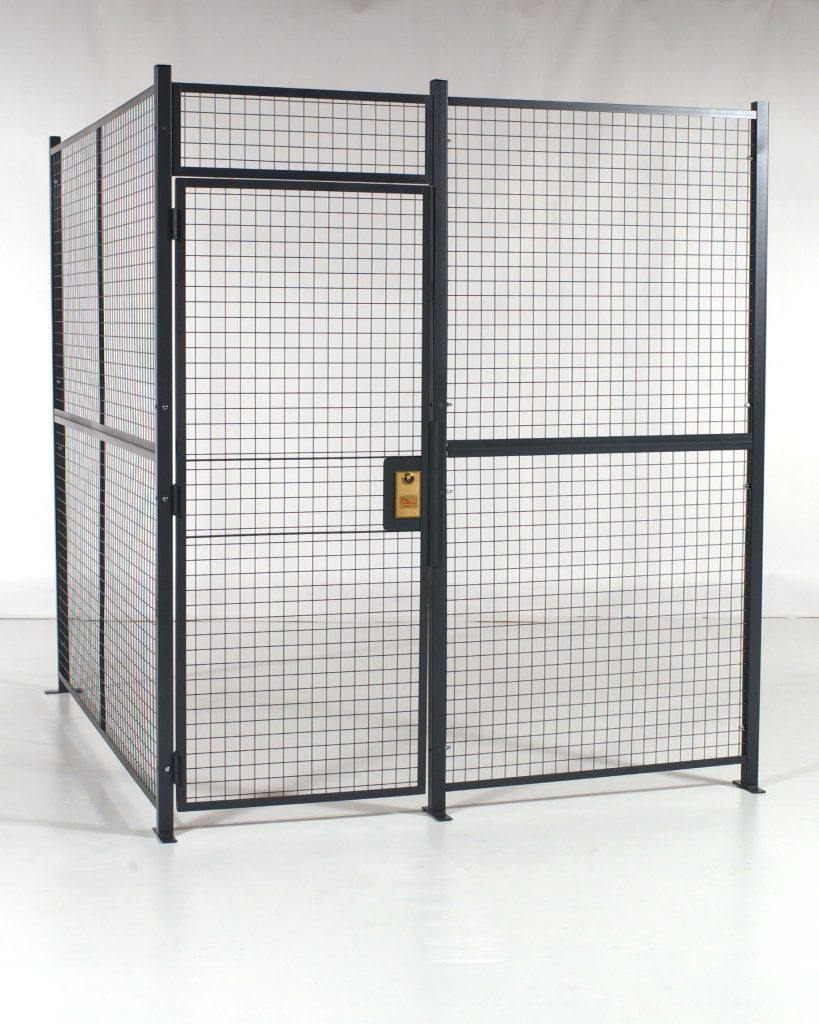
| Panel system | Bolted welded wire mesh panels in a steel frame | Modular, movable at lease end, and installs without altering the building |
| Mesh opening | Smaller openings where small, boxed goods are stored | Reach-through, not cutting, is the realistic risk in a stockroom |
| Height and top | Full height to the ceiling grid or a mesh top | A partial-height cage next to shelving can be climbed or reached over |
| Door | Single hinged door, or a sliding door where space is tight | A hinged door needs swing clearance a small stockroom often does not have |
| Lock | Keyed or keypad, with a short and documented access list | Control is only as good as the number of people who can open it |
| Finish | Standard powder coat, matched to the store’s back-of-house finish | Backrooms in leased space still get inspected by landlords and brand teams |
Mesh and gauge choices are compared on our wire mesh panel options page, and door and hardware options on our security cage doors page. For sizing, our sizing and measuring guide lists what to record before ordering.
Access, keys and accountability
A cage in a store is an accountability tool first and a barrier second. The questions worth answering before hardware is chosen:
Who can open it? The shorter the list, the more the enclosure is worth. In most specialty stores that means the manager and one or two designated leads per shift.
How are keys and codes managed? Shared keys and a code that never changes give the appearance of control with none of the accountability. Codes should change when staff change.
What gets recorded on the way out? If nothing is written down when stock leaves the cage, the enclosure only moves the problem. A simple log at the door usually improves count accuracy on its own.
Who audits it? A short, scheduled count of the caged categories — far more often than the full store count — is what turns the enclosure into data.
Whatever hardware is used, people inside must always be able to get out without a key, and the enclosure must never restrict the store’s required exit path.
Working inside a leased store
Almost every retail location is leased, which shapes the enclosure more than the security requirement does:
- Nothing structural changes. A bolted, freestanding wire enclosure is equipment, not construction, which is a large part of why mesh is specified in retail space at all.
- Anchoring may be limited. Some leases restrict drilling the slab. Stability can be designed into the layout with panel runs, returns and bracing instead — confirm the restriction at survey.
- It moves with the store. Panel systems dismantle and re-erect, so the enclosure follows a relocation rather than being written off at lease end.
- Sprinklers still govern. Adding a mesh top or dense shelving affects how water reaches storage below; the building’s fire protection design and NFPA 13 apply, and OSHA has addressed the familiar 18-inch clearance to sprinkler deflectors in its interpretation of 29 CFR 1910.159(c)(10).
- Egress is not negotiable. The rear exit route, its swing and its clearance stay clear regardless of how tight the stockroom is.
Installation, rollout and relocation
Store installs are short, but they happen in an occupied building with a trading floor on the other side of the wall.
For the wider picture of enclosing stock areas in warehouses and back-of-house space, see our warehouse security enclosures page.
Shop Pre-Configured Wire Mesh Cage Kits Online
Standard-size welded wire cage kits, priced online, for smaller storage needs. Every kit still needs to be anchored to sound concrete — for tall, braced or engineered enclosures, request a quote with your building location and floor details.
Frequently asked questions
What is a retail stockroom security cage?
Do wire storage cages actually reduce shrink?
How big does a store cage need to be?
Can a cage be installed in a leased store?
Should the cage have a mesh top?
Where should the cage not go?
Keyed lock or keypad?
Can the same enclosure be reused when a store relocates?
Secure the backroom, not just the sales floor
Material Handling USA designs, supplies and installs wire storage cages, stockroom enclosures and rack enclosures for retailers and multi-site rollouts nationwide.