
Aviation Parts Security Cages for MRO Shops and Repair Stations
How hangars, repair stations and aviation parts rooms use wire mesh security cages to keep serviceable, unserviceable, quarantined and customer-owned parts physically apart — and what FAA Part 145 actually asks for.
Supplied and installed nationwide from Salt Lake City — call (800) 326-4403.
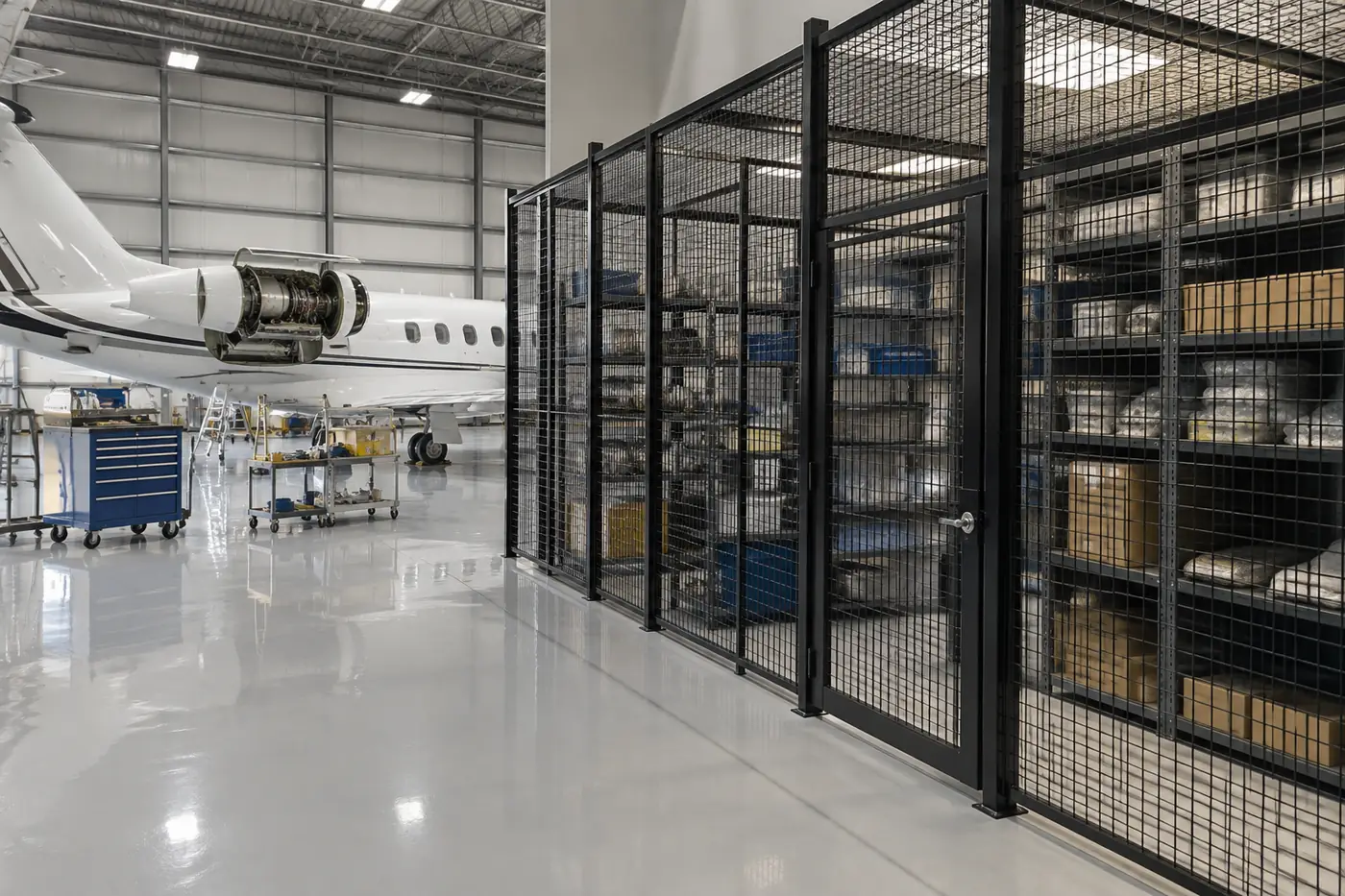
By status
Cages follow part condition, not just part number
Open mesh
Contents stay visible and sprinkler water passes through
Modular
Panels move when the shop or capability list changes
Nationwide
Layout, supply and install from Salt Lake City
Why aviation maintenance shops cage their parts
In most warehouses a part is either in stock or it is not. In an aviation maintenance shop the same part number can exist in four or five conditions at once: new and serviceable on the shelf, removed and waiting for repair, repaired and waiting for paperwork, rejected, or held because nobody can yet prove where it came from. Those conditions look alike to the eye. A removed starter and an overhauled starter sit in similar boxes, and a counterfeit fastener looks exactly like a good one.
That is why so many repair stations, hangars and aircraft parts rooms turn to wire mesh security cages and partitions. A cage turns a paper status into a physical boundary: parts that are not eligible for installation are behind a different door from parts that are. This guide explains how that works in practice, which status zones typically get their own enclosure, what the federal repair station rules say about segregation, and the hangar-specific issues to plan around. It is written for directors of maintenance, stores and inventory managers, quality managers and facility teams at repair stations, operators’ maintenance bases, FBO shops and component overhaul facilities.
What a cage does in an MRO parts room
- Separates condition: serviceable stock, unserviceable cores and quarantined parts each sit behind their own panels and door.
- Controls issue: parts leave stores through a door or window someone is responsible for, not off an open shelf.
- Protects high-value rotables: avionics, starters, wheels and other exchange units are easy to carry and expensive to lose.
- Supports audits: a customer, auditor or FAA inspector sees defined areas that match the stores procedures in your manual.
- Stays visible: open mesh lets supervisors see stock without opening every door.

What FAA Part 145 says about segregating parts
The housing and facilities rule for certificated repair stations, 14 CFR 145.103, does not mention cages by name. It sets outcomes. Among the facilities a repair station must provide, it lists sufficient work space and areas for the proper segregation and protection of articles during all maintenance; suitable racks, hoists, trays, stands and other segregation means for the storage and protection of articles undergoing maintenance; and space sufficient to segregate articles and materials stocked for installation from those articles undergoing maintenance, preventive maintenance or alterations. It also calls for ventilation, lighting and control of temperature, humidity and other climatic conditions sufficient for the work.
The FAA’s manual guidance fills in the stores side. Advisory Circular 145-9A expects the repair station manual to describe the stock room, how inventory is requisitioned for jobs and how shelf-life items are handled. It notes that articles deemed nonrepairable should be clearly identified and may need to be stored in a segregated area, and that parts in the store room need to be identified so they trace to an approved source. And for parts whose origin is in doubt, Advisory Circular 21-29D advises segregating suspect parts while their status is resolved with the supplier.
| Requirement or guidance | What it asks for | How a cage helps | What a cage does not do |
|---|---|---|---|
| 14 CFR 145.103(a)(2)(iv) | Space to keep stock for installation apart from articles undergoing maintenance | Serviceable stores in a dedicated enclosure, removed parts elsewhere | Decide what is serviceable — your inspection system does that |
| 14 CFR 145.103(a)(2)(iii) | Segregation means for storing and protecting articles in work | Mesh enclosures and rack bays for work-in-process components | Replace racks, stands or packaging that protect the part itself |
| AC 145-9A, tagging and identification | Status of any article easy to determine; nonrepairable parts segregated | Separate rejected or scrap cage behind its own door | Replace tags, work orders or records |
| AC 21-29D, suspected unapproved parts | Segregate suspect parts until resolved | Small quarantine cage with restricted access | Report or resolve the part — that is a quality function |
| 14 CFR 145.103(a)(2)(v) | Climate control sufficient for the work | Nothing directly; open mesh shares the room’s conditions | Control temperature or humidity for shelf-life materials |
Nothing here says a repair station must build a cage. Many small shops meet the segregation requirement with dedicated shelving, cabinets and clear tagging. Cages become the practical answer as volume, staff count, customer-owned inventory and part value grow — the point where an open shelf with a red tag is no longer a reliable barrier. For how cages fit other regulated programs, see our security cage regulations by industry guide.
The status zones that usually get their own cage
Plan the layout around part condition first, then size each zone by how much material flows through it. These are the zones we see most often in aviation parts rooms:
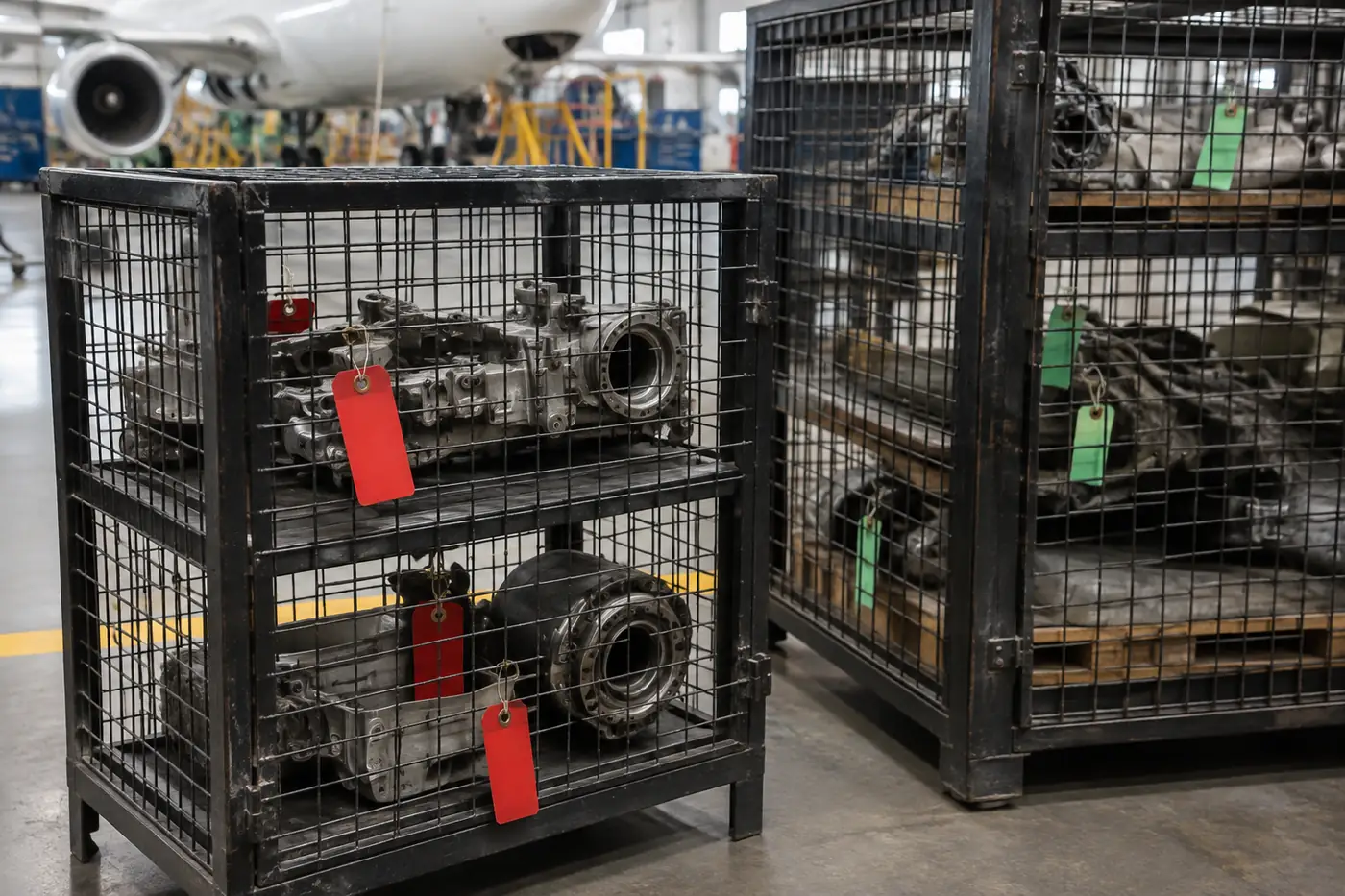
Quarantine: the smallest cage matters most
A quarantine or suspect-parts cage is rarely large, but it is the one enclosure whose failure has safety consequences. Place it away from the serviceable issue point so nothing is returned to the wrong shelf by habit, give it its own door, and limit access to the people your quality procedures name. Color-coded tags inside the cage still matter — the cage adds a physical boundary, it does not replace identification.
The same logic appears in other regulated industries; our medical device segregation project shows a quarantine-and-release layout outside aviation.
Cage types that fit hangars and parts rooms
Stores enclosure with an issue window
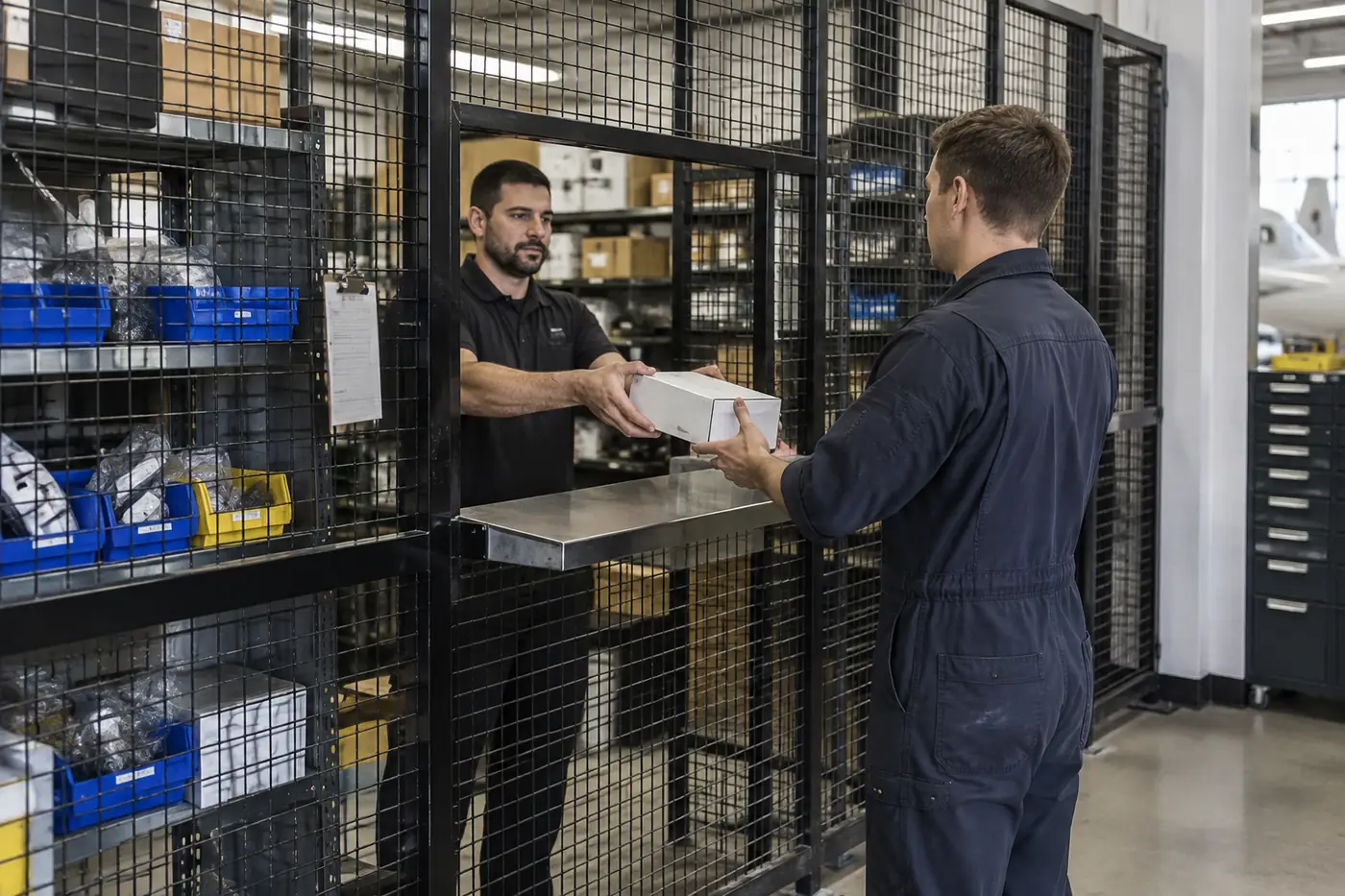
The classic aviation stores room is a full-height mesh enclosure around shelving, with a single personnel door and a pass-through window where mechanics request parts. The window keeps foot traffic out of stores, gives the clerk a natural point to check the work order and the part’s paperwork, and lets one person control issue for a whole shift.
Window styles, shelves and counters are compared on our security cage service windows page, and door options on security cage doors.
Rack-integrated enclosures for bulky stock
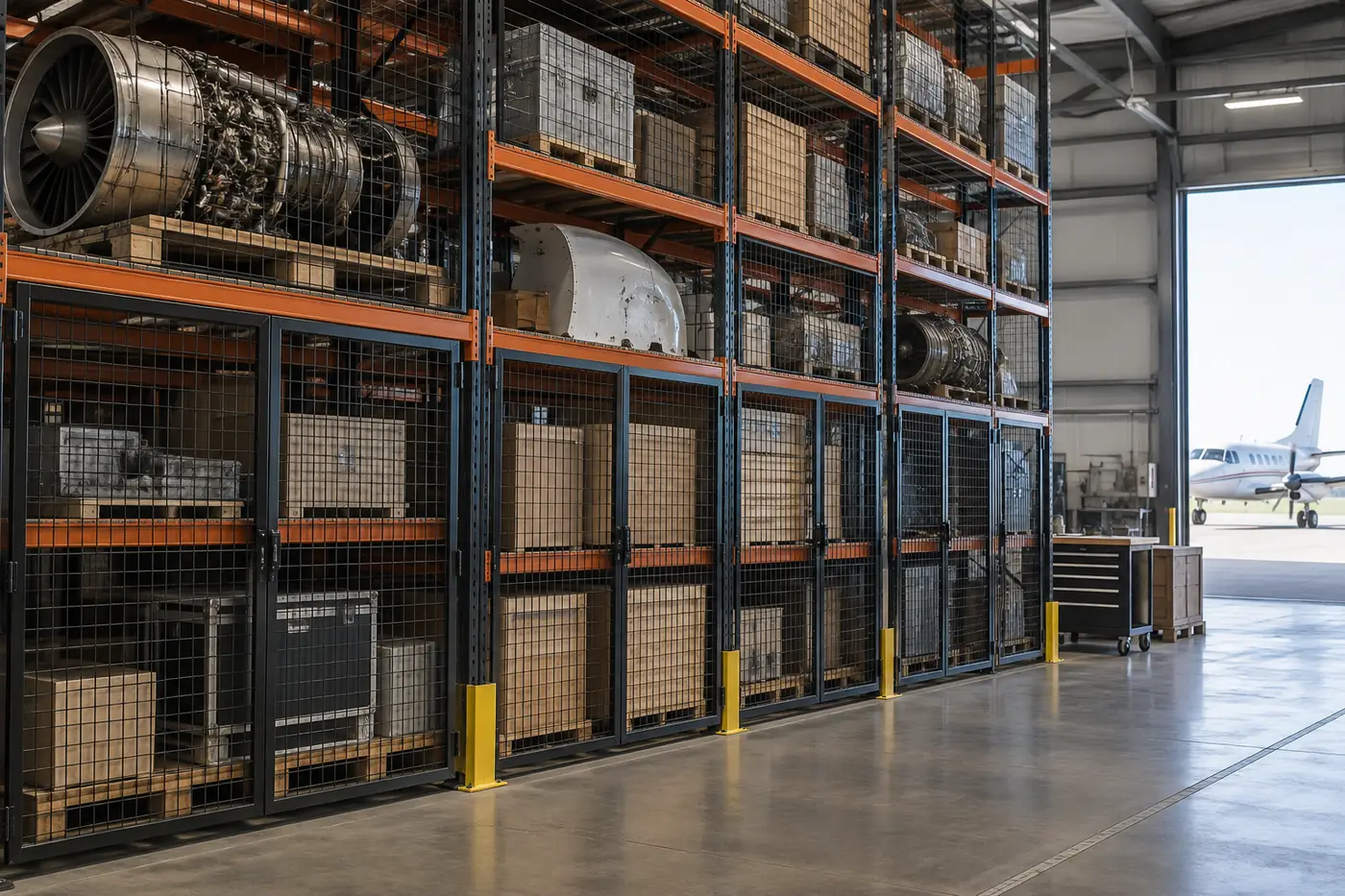
Wheel and brake assemblies, crated components and palletized consumables often live on pallet rack rather than shelving. Mesh back panels, end panels and locking doors can be fitted to selected rack bays so those items are secured without building a separate room. It is a common way to create an unserviceable or customer-property zone inside an existing parts warehouse.
See pallet rack security enclosures for how the panels attach, and wire mesh panel options for mesh and gauge choices.
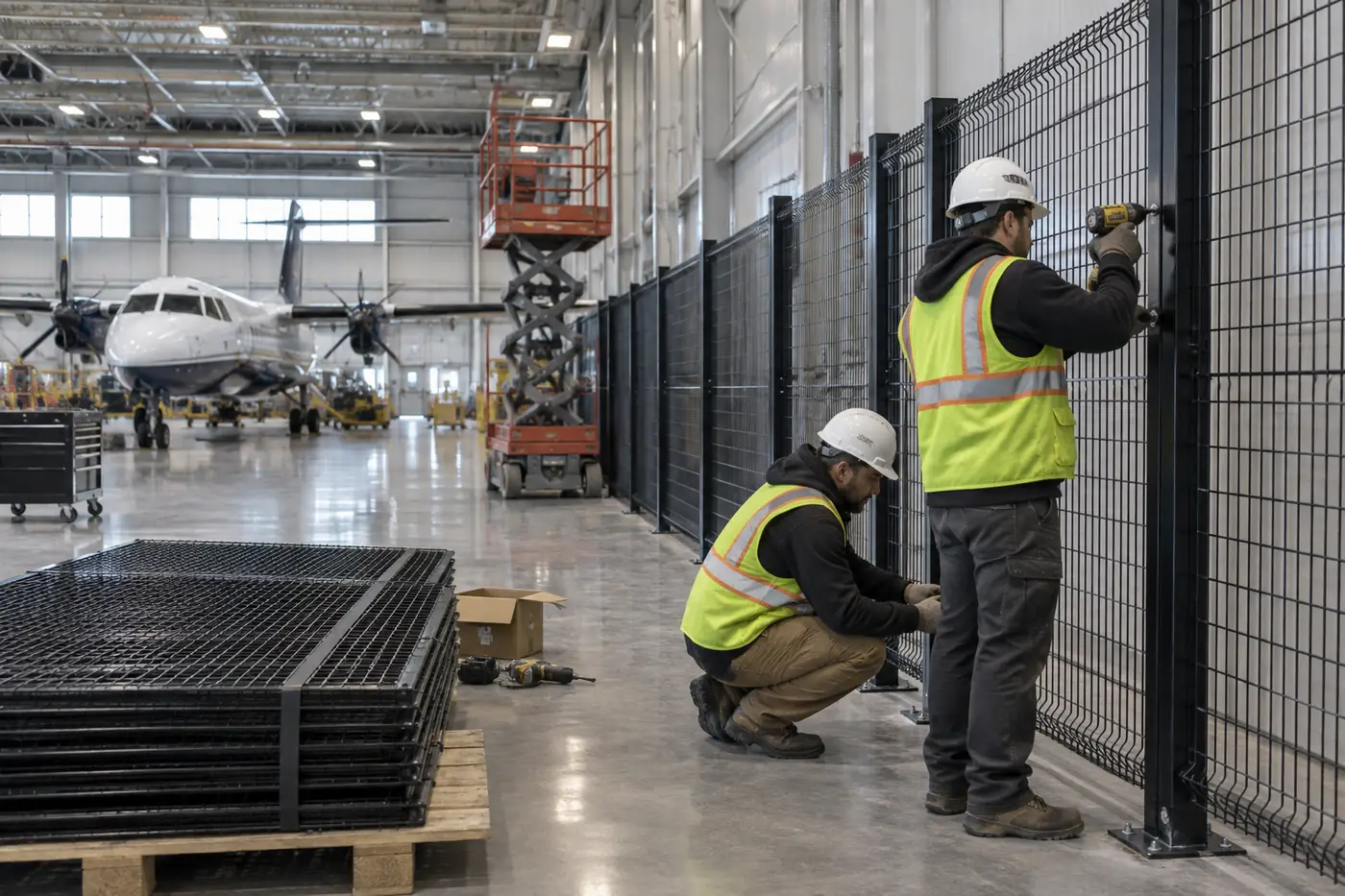
Other formats we supply for aviation work include freestanding wire mesh partitions that divide a hangar bay into a secured parts and tooling area, small quarantine cages, and tool crib enclosures for calibrated and special tooling. The storage inside the cage is a separate decision: dense shelving, vertical lift modules or pocket storage for small parts are covered on our aviation MRO parts storage and MRO depot maintenance storage pages.
Hangar and shop constraints to plan around
Aviation buildings add a few constraints that a general warehouse cage project does not face:
Fire protection and building
- Aircraft hangars often have specialized fire protection; keep cages clear of sprinkler heads, foam system components, detectors and their spray patterns, and confirm with the fire protection engineer before adding anything overhead
- A ceiling on a cage changes how sprinkler water reaches the contents — see security cage ceilings before adding one
- Keep exits, extinguishers, fire department connections and electrical panels outside every enclosure
- Anchor posts to sound concrete; tall runs may need bracing — our anchoring and seismic bracing guide covers the details
Maintenance operations
- Keep enclosures out of aircraft towing paths, wingtip clearances and ground-equipment lanes
- Loose hardware becomes foreign object debris; installers should collect offcuts and fasteners, and panels should be fully fastened
- Avionics work areas often run static-control programs; the cage separates parts but does not provide static protection — storage inside must suit the program
- Shelf-life and temperature-sensitive materials need the room’s climate control; mesh neither helps nor hurts that
There is one aviation-specific administrative step as well. Under 14 CFR 145.105, a certificated repair station may not make changes to the housing or facilities required by 145.103 that could significantly affect its ability to perform work under its certificate without written FAA approval. Rearranging stores is often routine, but whether a particular change qualifies is a question for your quality manager and your FAA principal inspector, not for your cage supplier. Plan that conversation early, and update the stock room description in your manual when the layout changes.
Access and traceability principles
A cage only enforces segregation if the doors are managed. We keep hardware discussion general here; the right access design for a specific facility is worked out privately with the customer.
Principles that hold up in audits
- Give each zone its own door, and never a door that opens from the quarantine cage into serviceable stores
- Name, in the manual, who may open each zone — stores staff for serviceable stock, quality staff for quarantine and rejected parts
- Issue parts against a work order at a single point, so every part leaving stores has a record
- Match physical cage locations to the location codes in your inventory or maintenance tracking system
- Review access lists when staff change, and after any discrepancy
Lock and access options are compared on our security cage locks page.

Government and defense maintenance organizations add their own property accountability rules on top of this. Our Robins Air Force Base project shows how a federal maintenance customer bought a cage and rack together through a solicitation.
Adding or reworking a parts cage
Map the flow
Trace a part from the receiving door through inspection, stores, issue, removal, repair and return or scrap. Each change of status is a candidate boundary.
Size each zone
Size by volume and part type — shelving, rack, bins or bulk — and leave growth room for new capabilities or fleet types.
Check the building
Confirm fire protection, exits, aircraft clearances and the slab before the layout is fixed.
Layout and quote
We produce a CAD layout with doors, windows and rack-integration parts and a line-item quote.
Approvals and manual
Your quality team decides whether FAA coordination is needed and updates the stock room description; building review runs in parallel where required.
Install and hand over
Our crews install and anchor the enclosure, clean up all hardware, and hand over keys or credentials to the people your procedures name.
Start from a sketch
A rough floor plan, photos of the area and a list of the zones you need are enough to begin. Lead times depend on the manufacturer and configuration, so start before a new contract, capability or audit date forces the schedule.
Sketch an enclosure in our security cage configurator, read how we handle security cage installation, measure with our sizing guide, or browse our wider aerospace material handling solutions and avionics and electronics storage. For Intermountain projects, our Utah security cage team works locally out of Salt Lake City.
Shop Pre-Configured Wire Mesh Cage Kits Online
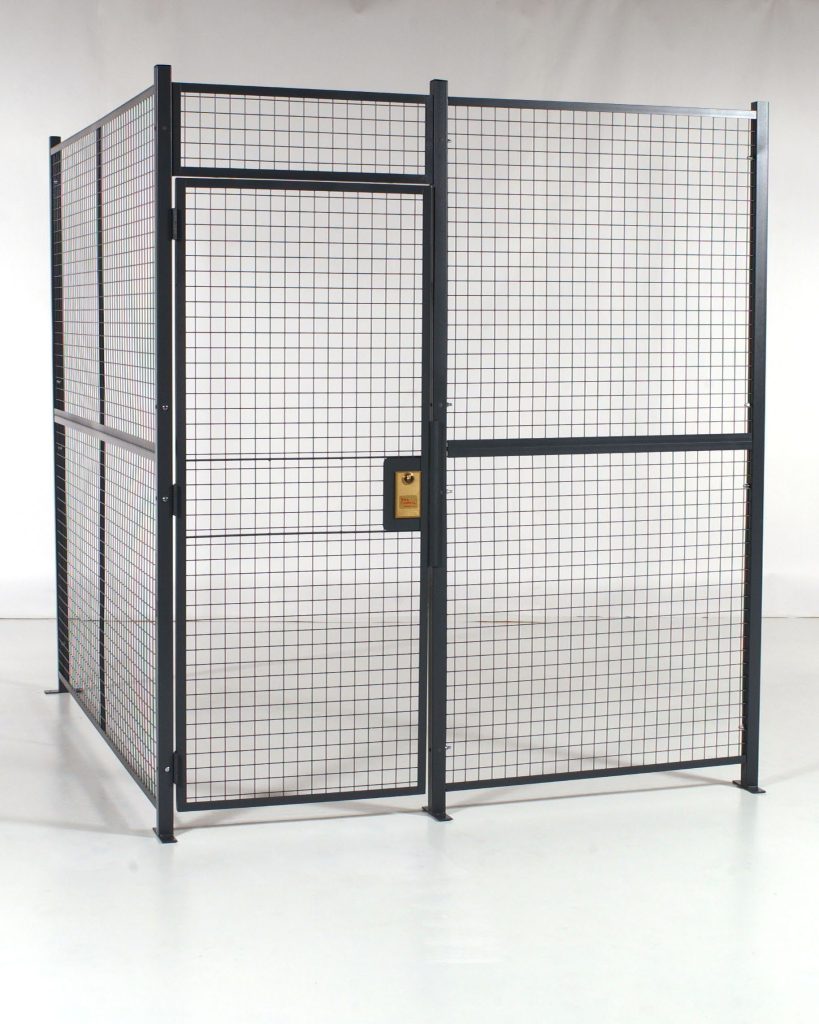
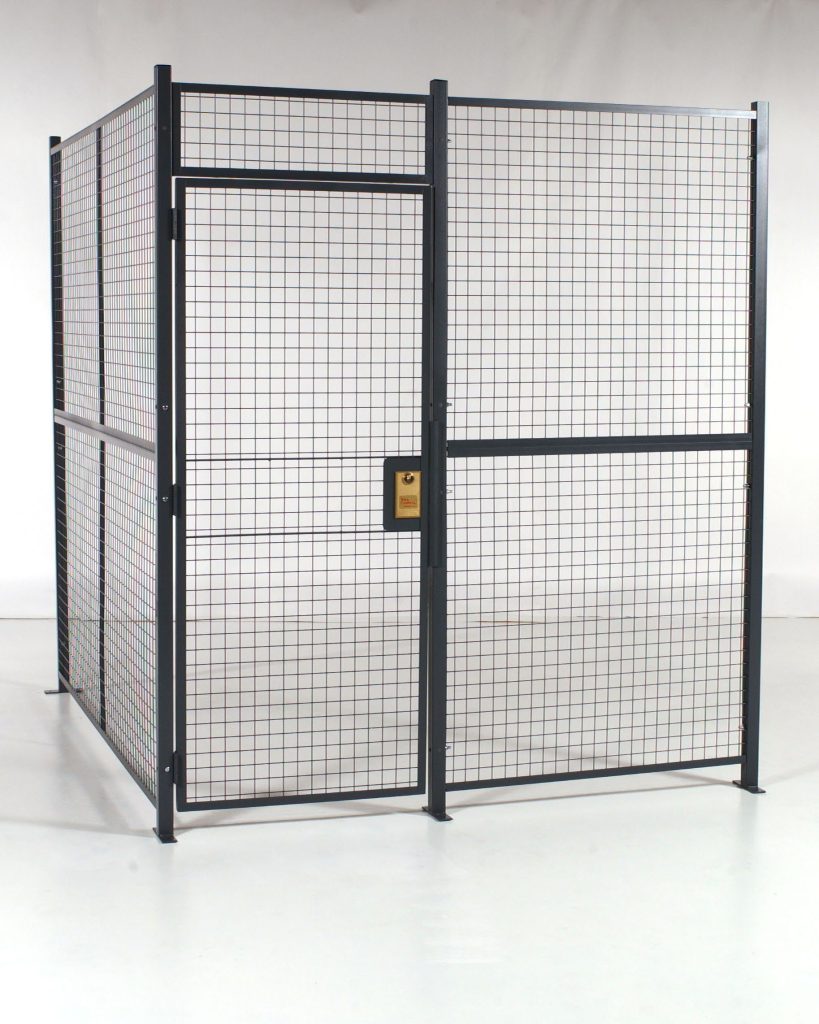
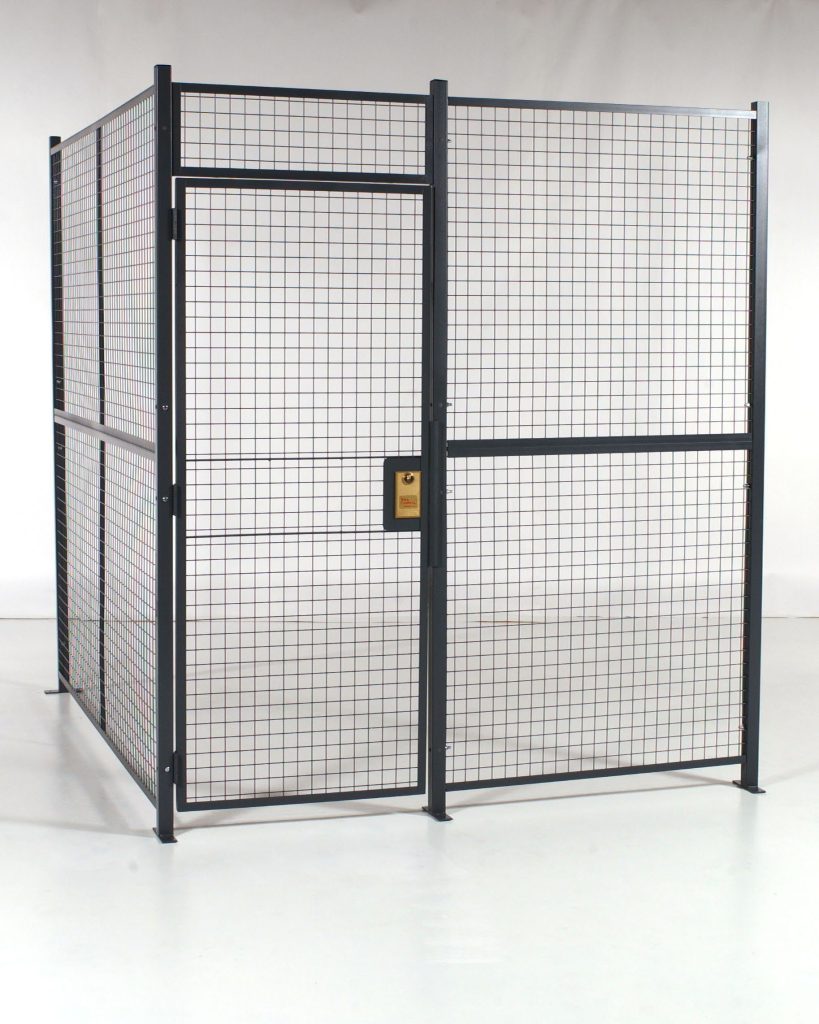
Standard-size welded wire cage kits, priced online — a quick way to create a small quarantine or customer-property cage. Every kit still needs to be anchored to sound concrete; for full stores enclosures with windows or rack integration, request a quote.
Get a free quote
Tell us what you are storing, the room size and your timeline. A project specialist will follow up with layout options and pricing. Prefer to talk? Call (800) 326-4403.
Aviation Parts Security Cage FAQs
Does FAA Part 145 require a security cage for parts?
What should be kept in a quarantine cage?
Should unserviceable and serviceable rotables share a cage?
Do we need FAA approval to add a parts cage?
Can a security cage go inside an aircraft hangar?
Is a wire mesh cage suitable for ESD-sensitive avionics?
Can you enclose existing pallet rack instead of building a stores room?
Does MH-USA install aviation parts cages outside Utah?
Planning a parts cage for your hangar or repair station?
Send the building location, a sketch of the area and the status zones you need. We will return a layout with doors, windows and rack enclosures and a line-item price — supplied and installed nationwide from Salt Lake City.