
Tire Rack Installation, Anchoring and Permits in Utah
Choosing the rack is half the job. In Utah, tire racks are usually tall enough to need a permit, they hold a commodity the fire code treats as high-hazard, and they stand in a seismic region. Here is how to get them permitted, anchored and installed without stalling the shop.

5′-9″
SLC permit threshold
8 ft+
Stamped engineering in SLC
6 ft
Tire high-piled trigger*
Every upright
Anchored to the slab
Why tire rack installs get stuck in Utah
Most tire rack projects that stall in Utah do not stall because of the rack. They stall because the order arrived before anyone asked three questions: does this need a permit, how will it be anchored, and what does the fire code say about storing tires at this height? A sectional tire rack bought online looks like shelving, so buyers reasonably assume it installs like shelving. At 8 or 10 feet tall, loaded with a commodity the fire code classifies as high-hazard, in a seismic region, it is treated as a structure.
This page walks through those three questions for tire shops, dealerships, fleet garages and tire warehouses in Salt Lake City and along the Wasatch Front. It sits under our Utah tire storage rack hub; for choosing the rack format itself, the national commercial tire storage racking guide compares every option.
The three questions to answer before ordering
1. Permit. How tall is the rack and what does your city require at that height?
2. Fire code. How high will the top of the tires be, how much floor area does the storage cover, and is the building sprinklered for it?
3. Anchoring. What is the slab, what anchor does the manufacturer or engineer call for, and are any runs tied to a wall or joined back to back?
Answer those first and install day becomes the easy part.
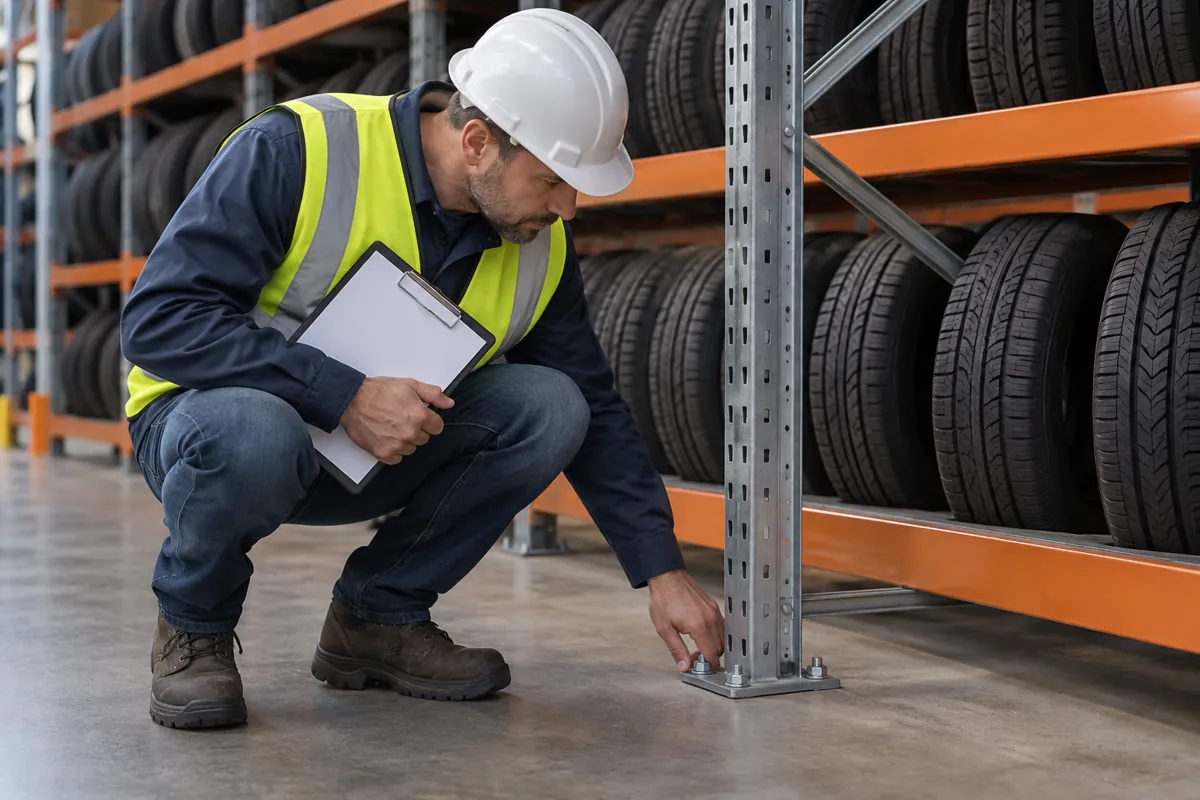
Permit thresholds: what Salt Lake City asks for, by rack height
Utah adopts a statewide construction code based on the International Building Code, which sends the design of steel storage racks to the ANSI MH16.1 rack standard and their seismic design to ASCE 7. Permits themselves are issued locally. Salt Lake City publishes one of the clearest sets of rules, in its racking permit design guidance, and it is a useful benchmark for the rest of the valley:
| Rack height | What Salt Lake City asks for | What it means for tire racks |
|---|---|---|
| Up to 5′-9″ | No building permit for the racking | Low counter or display units only; few working tire racks are this short |
| Over 5′-9″ to under 8 ft | Building permit, with the manufacturer’s installation details and specifications; no stamped plans or special inspection required by the building code | Short sectional tire racks and some quick-lube or dealership runs |
| 8 ft and taller | Building permit with structural plans and calculations stamped by a Utah-licensed structural engineer, seismic design to ASCE 7, and a special inspection agreement | Most shop tire racks (8 to 10 ft) and every pallet-rack tire installation |
For typical projects the city also asks for a site plan, a floor plan showing new and existing racking and fire-protection features, an egress plan, a racking plan with aisle widths, a full-height elevation showing the top of storage and sprinkler deflectors, and a description of the commodity and how it sits on the rack. Other cities set their own thresholds: Springville, for instance, requires an engineer’s stamp on racking 8 feet or taller. Ask your building department before you order, not after delivery.
The process is the same one we follow on every pallet rack permit and engineering project; the difference with tires is the fire-code question below.
Who can pull the permit
In Salt Lake City the racking permit can be taken out by a licensed general contractor, the owner or the equipment vendor. The fee is based on the project valuation, which counts the racks (new or used) plus the labor. If the project adds lighting or other electrical work, a separate electrical permit with a Utah-licensed electrician is needed.
The 6-foot rule: why tires reach fire-code limits sooner
The International Fire Code defines high-piled combustible storage as storage in racks or on shelves where the top of storage is more than 12 feet high. It then adds a second trigger: where the fire code official requires it, high-piled storage also includes certain high-hazard commodities, rubber tires among them, stored more than 6 feet high. Its commodity classification table lists rubber tires as high-hazard.
That second trigger is what catches tire buyers out. A 10-foot tire rack with tires near the top shelf can put the top of storage above 6 feet in almost any configuration. Salt Lake City’s guidance spells it out: the exemption for storage no higher than 12 feet applies only when nothing high-hazard is stored. Once high-piled rules apply, expect questions about:
- Top of storage and clearance: the elevation drawing shows the top shelf, the top of usable storage and the sprinkler deflectors, and the approved storage height is permanently marked on site.
- Floor area: the fire code requires an operational permit for more than 500 square feet of high-piled storage, aisles included.
- Arrangement: tires on the tread, on the side or on pallets are different arrangements for sprinkler design purposes, so the submittal states which one is used where.
- Shelf type and flue spaces: solid, slatted, wire or open shelving and the transverse and longitudinal flue spaces between loads are part of the review.
- Existing sprinklers: the system type, density and head type, usually with a photo of the hydraulic placard at the riser.
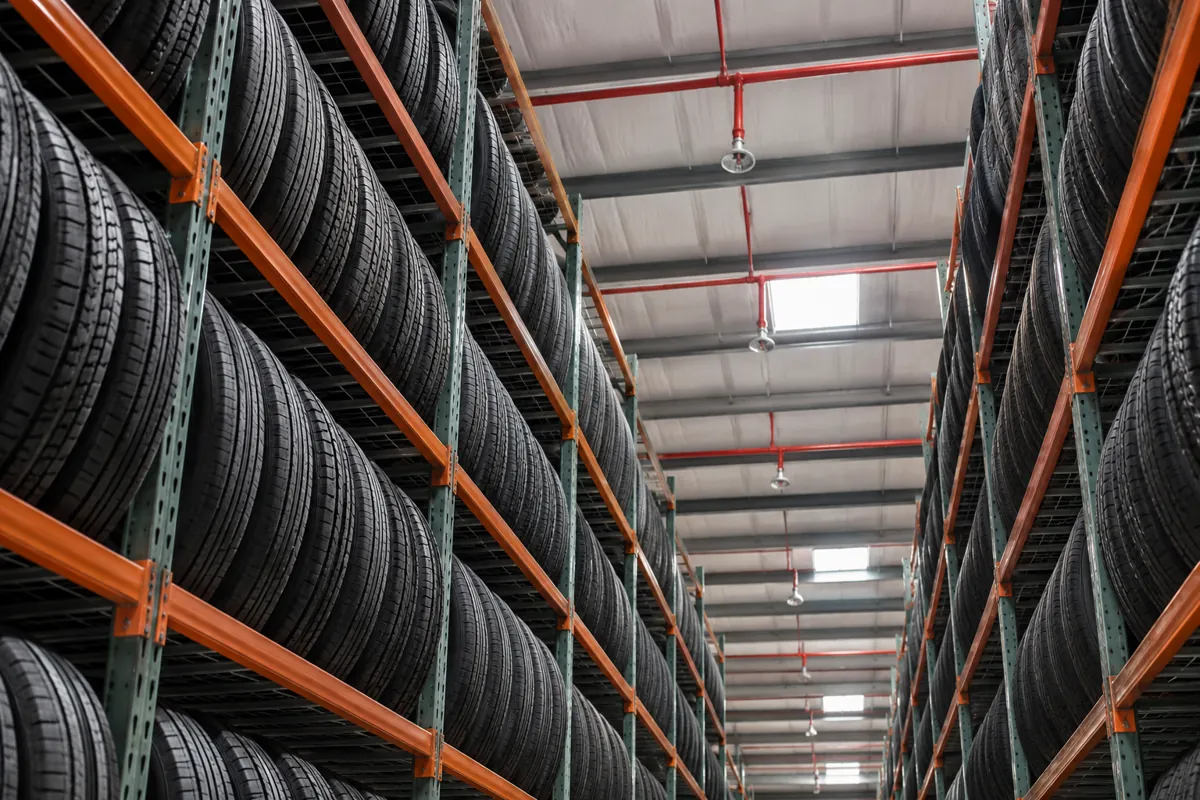
Small shops are not automatically exempt
The sprinkler standard has a narrow carve-out for small, incidental tire storage, but the fire-code height trigger still applies, and the building department and fire code official decide what your space needs.
That is why a tire shop back room, a dealership seasonal storage room or a fleet garage can end up reviewed as high-piled tire storage once the top of the tires passes 6 feet.
Confirm the currently adopted code edition and any local amendments with the fire code official and, where a sprinkler change is involved, a fire-protection engineer. We lay out racks to the approved storage height; we do not certify fire-code compliance.
Anchoring tire racks for Wasatch Front seismic conditions
Salt Lake City’s racking permit guidance has long noted that the entire city lies in Seismic Design Category D or E, and the same fault system runs the length of the Wasatch Front. A loaded tire rack is tall, narrow front to back and heavy at the top once the upper levels fill for the season, which is exactly the shape that needs a positive connection to the floor.
What a properly anchored tire rack looks like
Every upright anchored. Each base plate is fastened to the slab with the anchor type, diameter and embedment shown in the manufacturer’s instructions or the engineer’s calculations. Our rack anchor bolt page explains the common types.
Shimmed, not wedged. Steel shims under the base plate take out floor slope; scraps of wood or stacked washers do not.
Plumb after loading. ANSI MH16.1 limits out-of-plumb to 1/2 inch per 10 feet of height;
check it again once the tires are on.
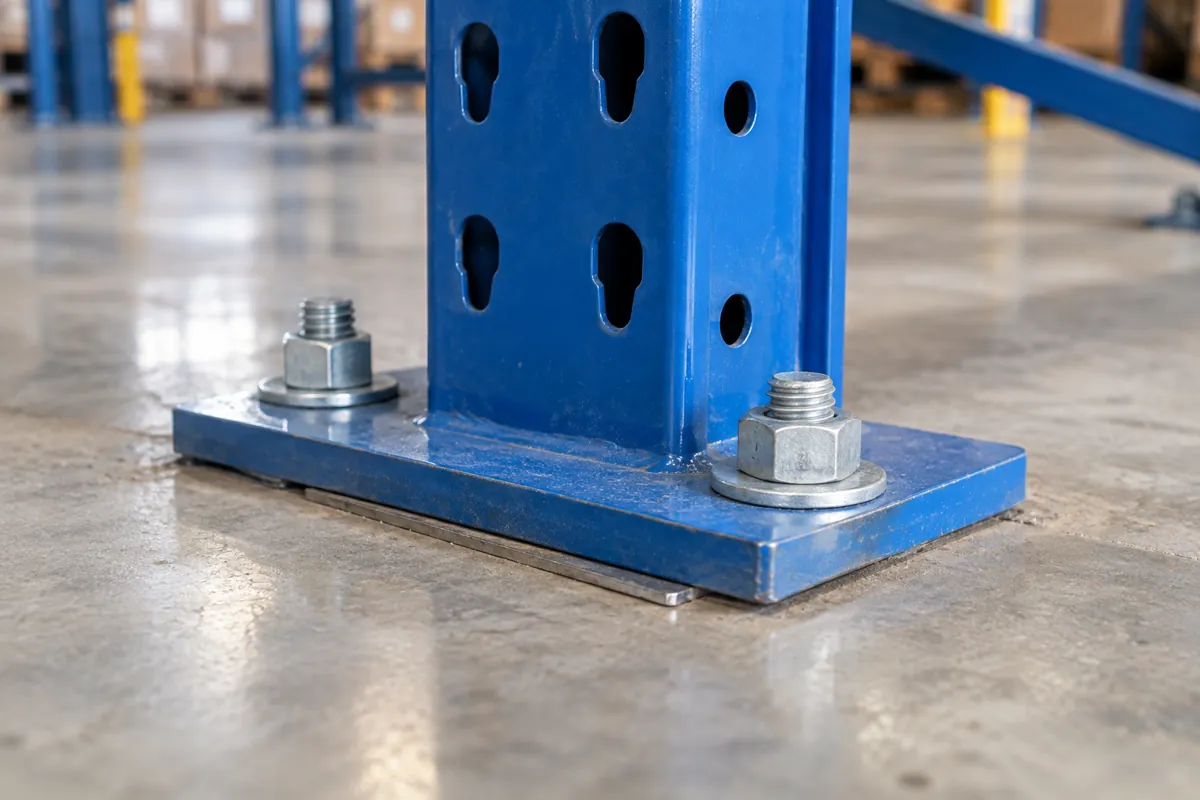
Start with the slab. Anchors are only as good as the concrete they sit in. Thin, cracked or heavily saw-cut floors, slab edges and old trench patches all change what an anchor can hold. Our concrete slab requirements guide covers what to check before drilling.
Heavy truck and commercial tires raise the stakes. Upper levels carrying truck or agricultural tires put far more weight high on the frame; those runs almost always land in the stamped-engineering band. Our heavy-duty truck tire storage racks page covers load and clearance in detail, and the pallet rack seismic compliance page explains how the engineering is done.
Rolling racks are the exception. Mobile tire racks on casters are moved, not anchored, so they stay low, use locking casters and are parked where they cannot roll into an aisle.
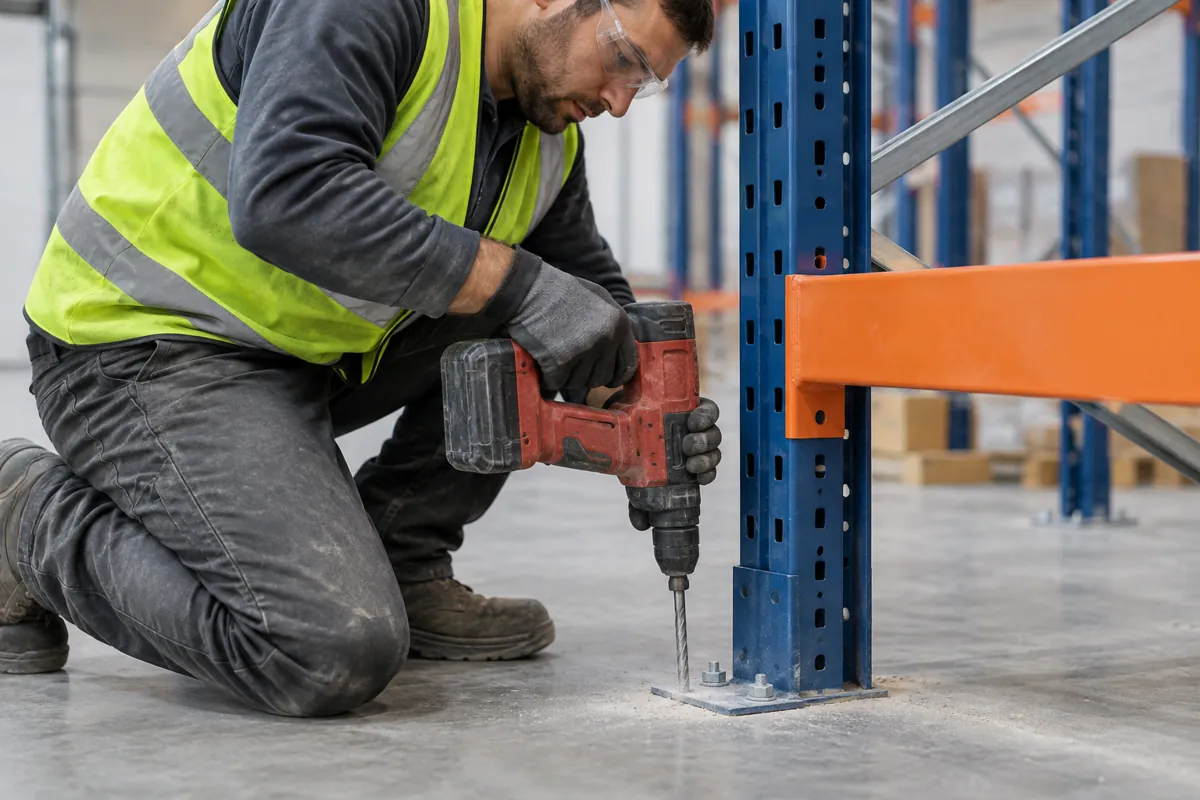 Drill through the base plateHoles are drilled through the plate’s anchor holes after the run is laid out and squared, then cleaned before the anchor goes in.
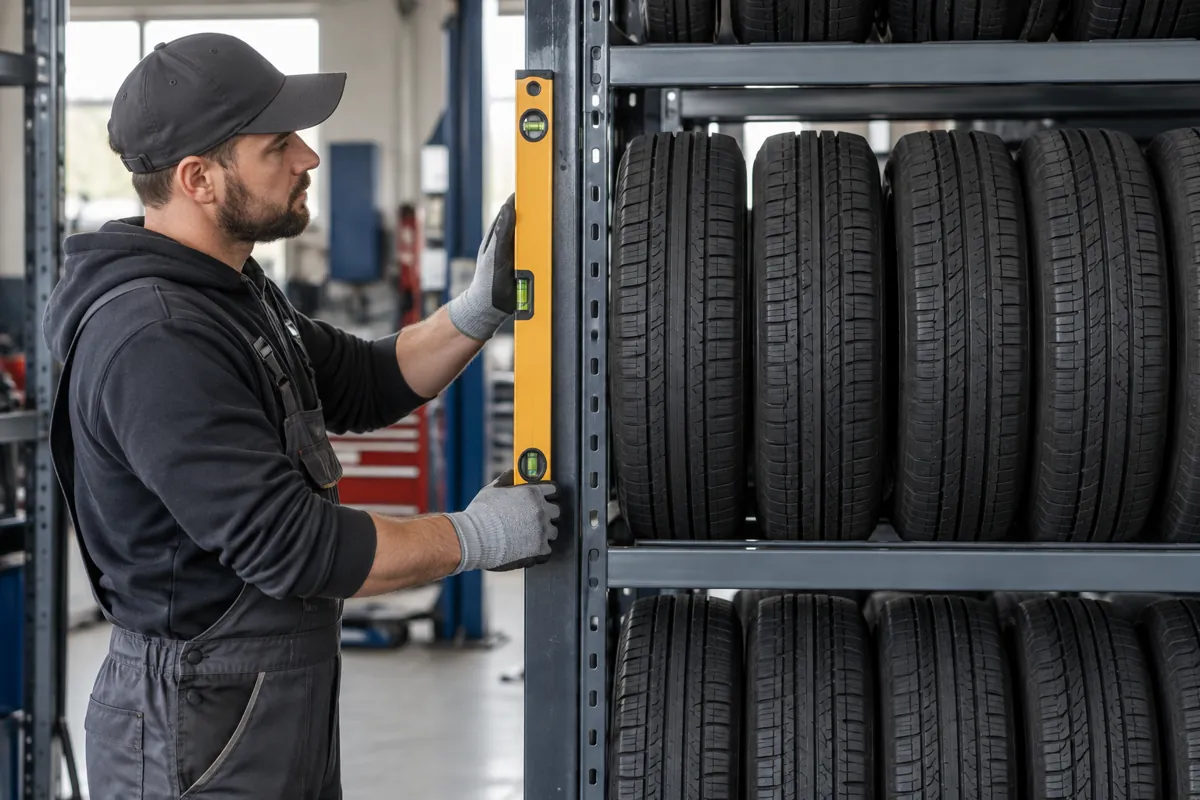 Check plumb, then check againUprights are plumbed and shimmed during assembly and checked again once the levels are loaded.
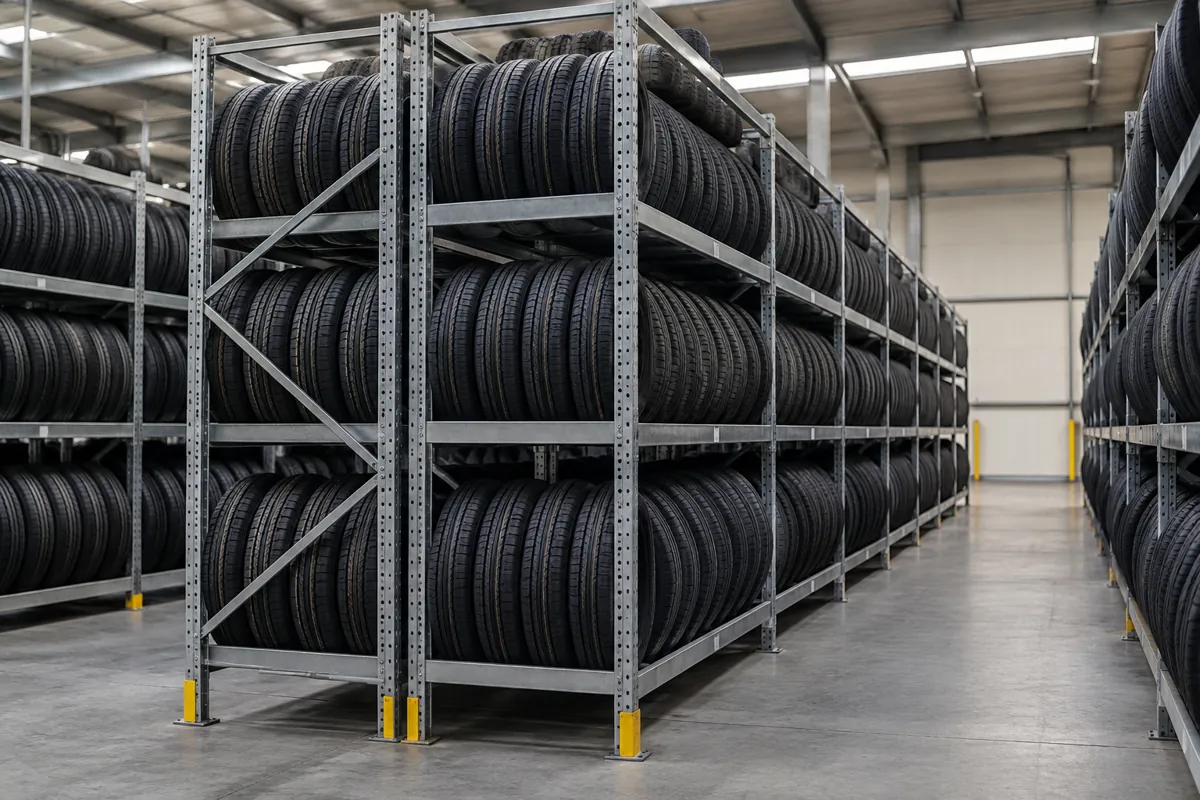 Join back-to-back runsDouble-row tire racks are tied together with row spacers so the pair acts as one wider, more stable frame.
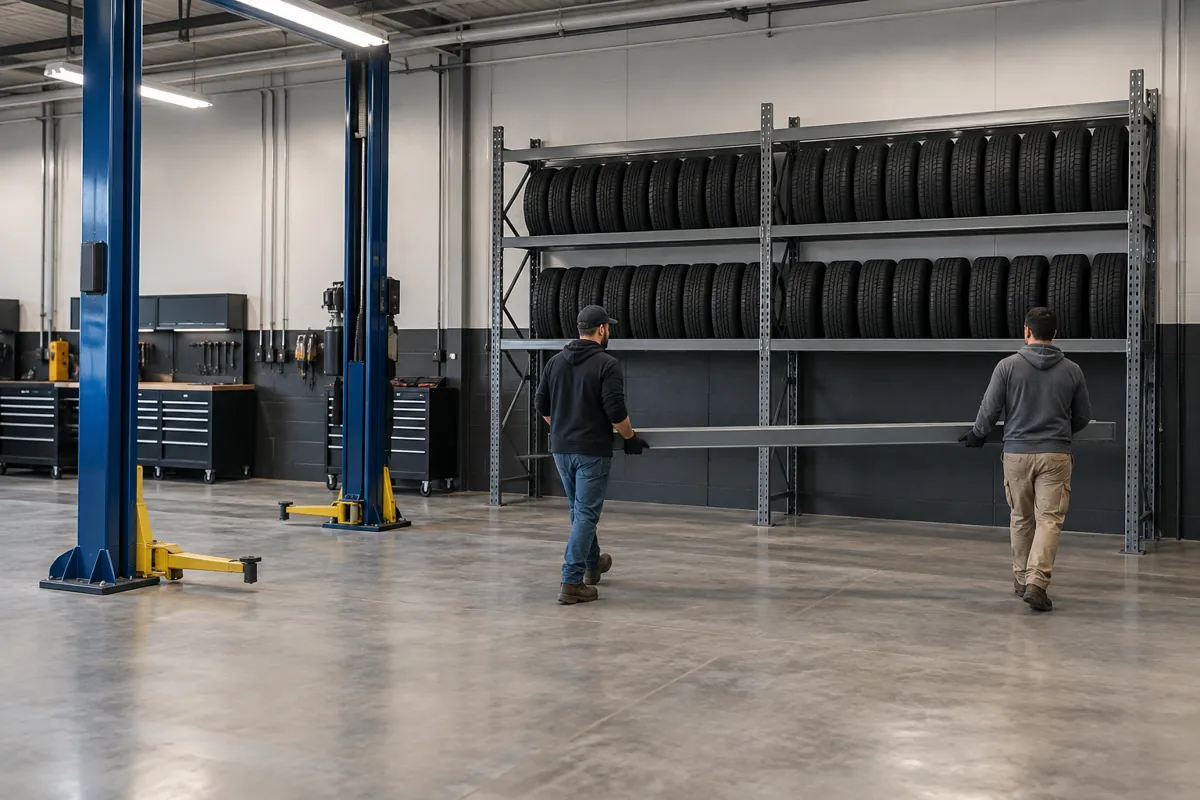 Build around the service scheduleSections go up after hours or on slow days so lifts and bays keep turning while the room is fitted out.
Install day in an operating tire shop, dealership or fleet garage
Most tire rack installs happen in buildings that cannot stop working. The sequence below keeps the service lanes open and the inspector happy.
Permit approved before release
Layout, elevations and, at 8 feet and above, the stamped calculations are submitted first. The order is released to ship once the building department has what it needs.
Delivery and staging
Uprights, beams and decking are staged outside the service lanes, in a parking stall or an empty bay, in the order they will be built.
Layout on the floor
Rack lines, aisle widths and clearances to doors, extinguishers and electrical panels are chalked on the slab and checked against the approved plan before a hole is drilled.
Assemble, anchor, shim and plumb
Frames go up in sections, beams are set at the approved levels, base plates are anchored and shimmed, and every upright is checked for plumb.
Inspection and storage-height marking
Special inspection where required, the building inspection, then the approved storage height is marked on the rack before the first tires go on.
Planning a tire rack install in Utah?
Send the room dimensions, ceiling and sprinkler height, the tire mix and the city the building is in. We will tell you which permit band you are likely in and lay out racks to fit before anything is quoted.
What inspectors flag on tire rack installations
These are the items that most often send a tire rack installation back for a second visit. All of them are cheaper to design out than to fix after the tires are loaded.
How installation differs by tire rack format
- Sectional tire shop racks (roughly 8 to 10 feet): starter and add-on bays bolted into a run,
anchored at every upright, usually in the stamped-engineering band in Salt Lake City. See
tire shop storage racks. - Pallet rack with tire decking: the same pallet rack systems we install
in every kind of Utah warehouse, engineered, anchored and special-inspected like any other storage rack, with the
tire arrangement stated for the fire reviewer. The tire warehouse and distribution center
page covers layouts. - Stackable and portable tire racks: not anchored, but stack heights and where they sit still
count toward top of storage and aisle space. See stackable tire racks. - Mobile tire racks on casters: no anchors, kept low, parked out of the egress path.
- Dealership seasonal storage rooms: often the tallest and fullest racks in the building, filled
in a few weeks each fall. Our BMW of Murray project shows a whole tire room planned from a
drawing.
Our pallet rack installation crews follow the same anchoring and inspection steps on tire projects as on any other pallet rack platform job; the difference is planning the permit and fire-code questions around a high-hazard commodity from day one.
What we will and will not tell you
We will lay out the racks, prepare the drawings and engineering package, coordinate the submittal and install and anchor to the approved plan. We will not tell you a permit is unnecessary or certify fire-code compliance; those determinations belong to your building department, the fire code official and, where a sprinkler change is involved, the fire-protection engineer of record.
Getting tire racks permitted and installed in Utah
The fastest projects start with four facts: the city the building is in, the room dimensions with ceiling and sprinkler heights, the tire mix by size at peak season, and whether the building is open during the work. With those we can tell you which permit band you are likely in, what the fire reviewer will want to see and what the approval step involves, before a rack is ordered.
For Utah tire projects by business type, including fleet and municipal garages and the Pull-N-Save salvage yard, start at our tire storage rack systems in Utah hub. For permitting and installation of other storage rack in the state, see Utah pallet rack, and for the national comparison of tire rack formats, return to the tire storage rack guide.
Shop Tire Storage Racks Online
These sectional tire racks can be ordered directly online. In Utah, check your city's permit threshold and anchoring requirements before installing; for engineered layouts, permit coordination and installation, request a quote.

Get a free quote
Tell us what you are storing, the room size and your timeline. A project specialist will follow up with layout options and pricing. Prefer to talk? Call (800) 326-4403.
Frequently asked questions
Do I need a permit to install tire racks in Utah?
When does a tire rack need stamped engineering in Salt Lake City?
Why do tires trigger fire-code requirements at lower heights than other products?
Do tire racks have to be anchored to the floor?
Can tire racks be bolted to the wall instead of the floor?
Who pulls the permit for a tire rack installation?
Can you install tire racks while our shop stays open?
Do you install tire storage racks across Utah?
Planning a tire rack install in Utah?
Send the city, room dimensions, ceiling and sprinkler height and your tire mix, and we will map the permit and anchoring steps before anything is quoted. Call 801-328-8788.