
Fleet and Municipal Garage Tire Storage Racks in Utah
City and county fleet garages, UDOT road sheds, school bus depots and transit shops store a wider range of tire sizes than any tire shop, and they all get re-shod in the same short window. Here is how to lay that out without losing an aisle to floor stock.
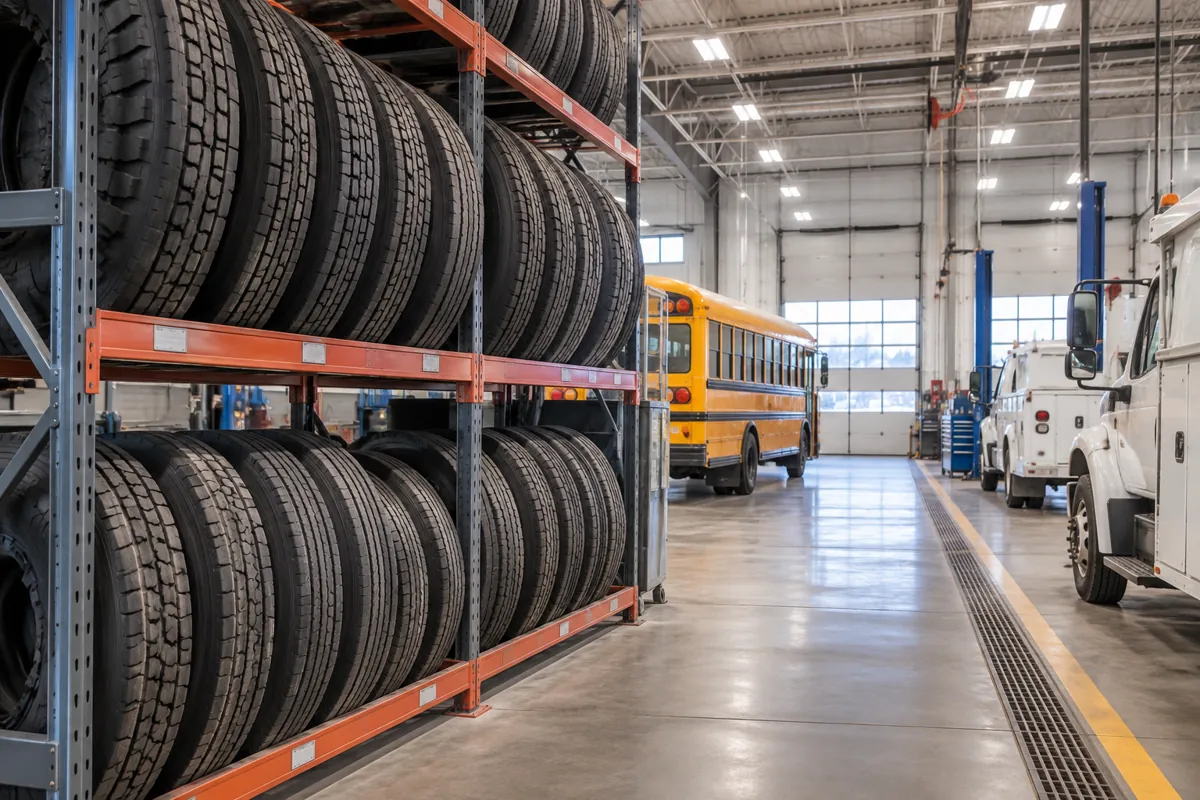
Mixed sizes
Sedan to single-axle
Seasonal peak
Winter/summer swap
Tread-up
Storage orientation
Tagged by unit
Not by department
One building, every tire in the fleet
A city or county fleet garage, a UDOT road shed, a school district bus depot and a transit maintenance shop all share the same storage problem: they hold tires for a mixed vehicle roster, not a retail size range. A sedan tire, a plow-truck tire and sometimes a bus tire can all be waiting in the same building at once, along with take-offs and the sets currently out of season. Utah’s climate adds the second half of the problem — a real winter tire changeover that concentrates a large share of the fleet’s tire population into a few weeks twice a year.
Treated as a single undifferentiated pile, that mix fills a garage fast and turns into floor stock beside the bay doors. Treated as bands by size and season, with racking pitched to each band and tagged by vehicle unit rather than department, the same population fits a defined footprint and stays out of the way of the work.
What usually goes wrong
One compromise level pitch. Averaging a plow-truck tire and a sedan tire onto the same shelf spacing wastes clear height everywhere and still crowds the heavy tires.
No aisle sized for the equipment. Once truck-size tires are involved, they are usually moved by pallet jack or forklift, and the rack footprint alone does not define the aisle that equipment needs.
Tracking by department instead of by unit. A “PD tires” pile is not a position; a set tagged to a specific unit number is.
Sizing for an average week. The changeover peak is the only week that matters for capacity.
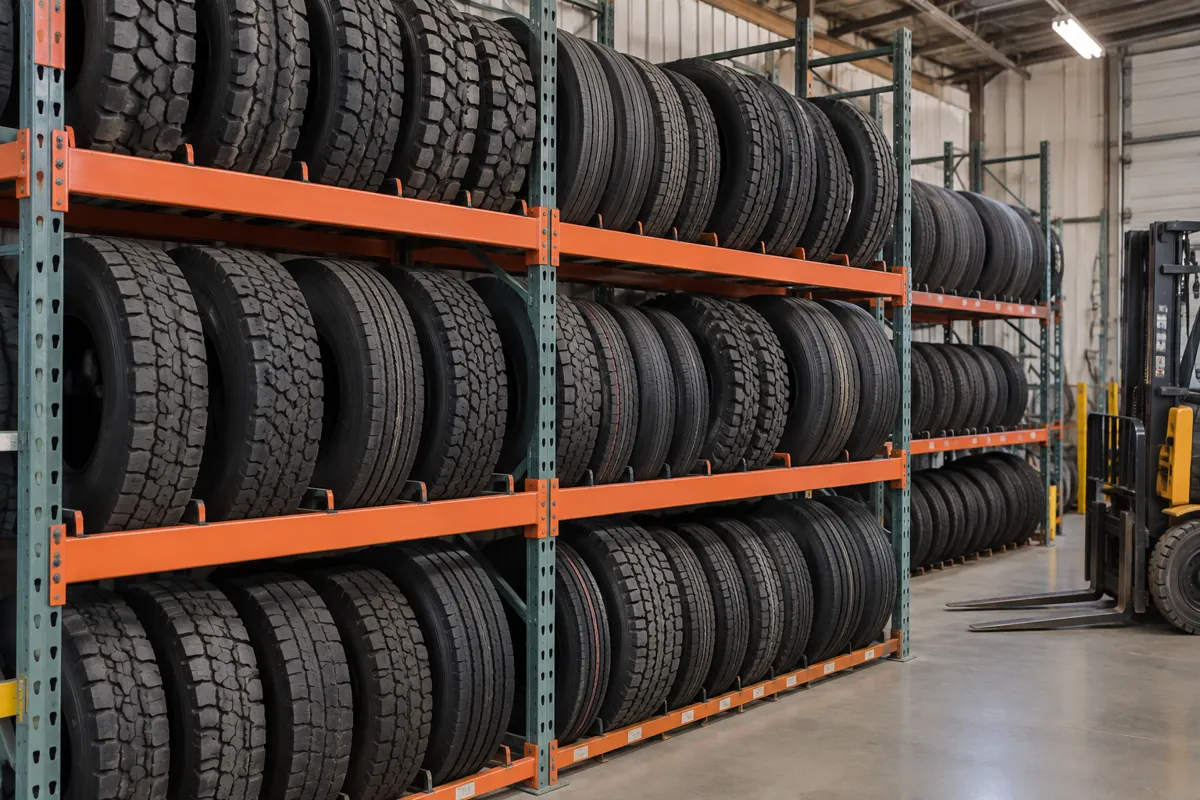
Shop Fleet Tire Racks Online
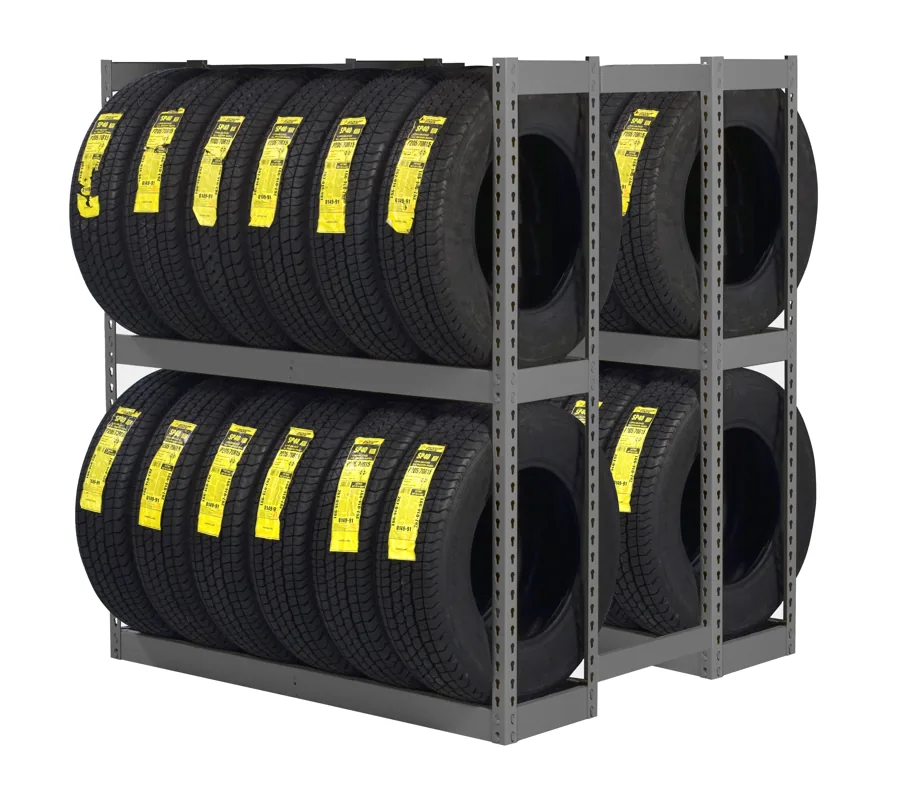
Genuine tire racks you can order online. Prices are current store prices for the lowest-priced in-stock starter unit in each line; add-on bays, other sizes and freight are in each category. Some common sizes are in stock at select manufacturers, subject to confirmation. Larger rooms on pallet rack are quoted.


Band the fleet before you plan the run
A mixed fleet garage is easier to size than it looks once the population is split into bands rather than treated as one number.
- Light-fleet tires. Sedans, SUVs and light pickups — the highest turnover band, best kept at working height near the bay they are fitted in.
- Medium and single-axle truck tires. Service trucks, box trucks and plow trucks. Heavier and wider; belongs on lower, wider-pitched levels handled by equipment, not by hand.
- Seasonal duplicate sets. Winter and summer/all-season sets for the same vehicles, which roughly doubles the tire count for whichever season is currently in the garage.
- Take-offs and scrap awaiting disposal. Give this population an explicit home and a standing removal schedule, or it becomes the pile that ends up in the aisle.
- Aisle and equipment path. Confirm what will actually move tires — hand truck, pallet jack, forklift — before fixing an aisle width; the equipment decides it, not the rack.
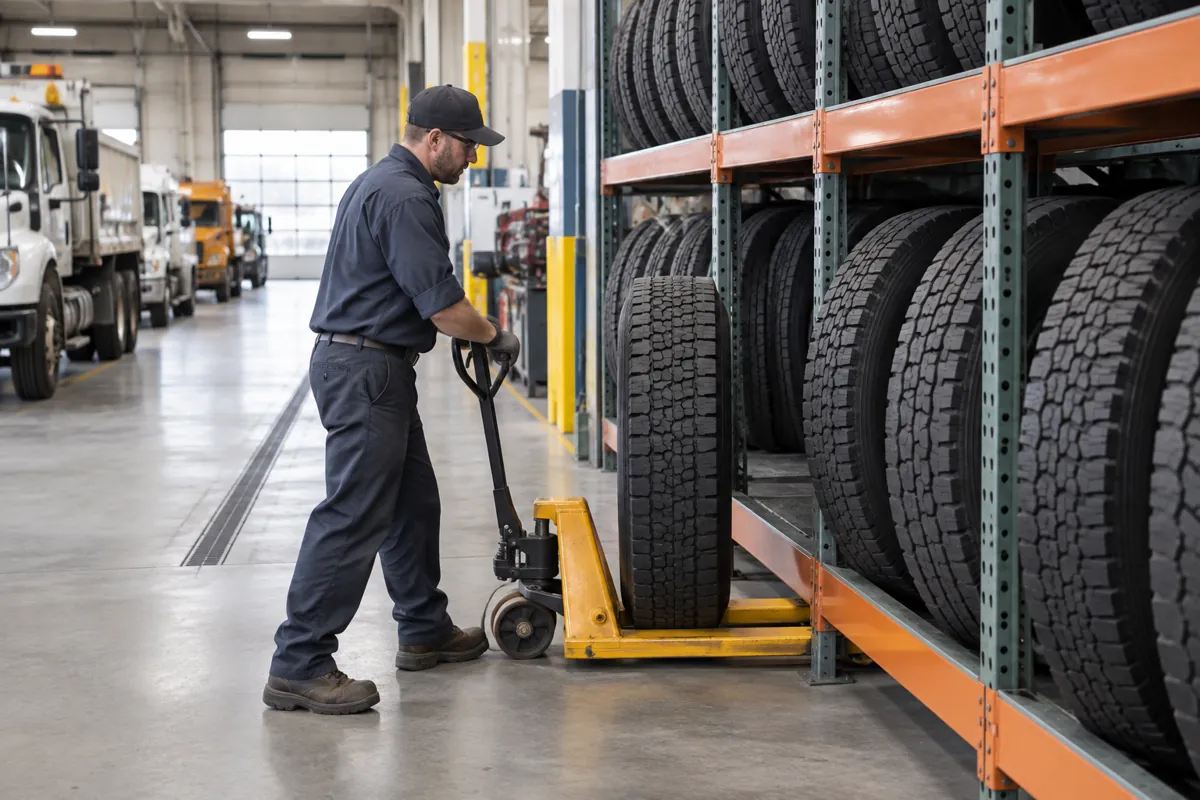
Pitch by band, not by average
Light-fleet band at working height, close to the fitting bay.
Truck/plow band lower, wider-pitched, on levels reachable by the equipment that handles them.
Off-season band can sit higher — it is only touched twice a year.
Levels stay bolted-beam, re-pitchable with hand tools, so a change in fleet mix does not mean new steel.
Specifying the run: a five-step method
The same method we use across this cluster applies here, adjusted for the wider size range and the seasonal peak: for the engineering side of oversized commercial tire loads specifically, see heavy-duty truck tire storage racks.
Count by band, at peak
List light-fleet, medium/truck and seasonal-duplicate populations separately, counted at the changeover peak rather than an average week.
Measure the widest and tallest tire per band
Two numbers per band. Truck and plow tires typically need both a wider level pitch and a deeper level than light-fleet sizes.
Fix the equipment aisle, then divide the wall
Confirm the aisle width your handling equipment needs before laying out bays; the aisle is fixed, the racking gets what is left.
Pitch levels per band; check the real overhead limit
Set each level from its band’s tallest tire plus handling clearance, and let the lowest overhead obstruction — lighting, doors, any overhead fire protection — set the top level.
Tag by unit number and set a removal schedule
Positions tracked by vehicle unit, not department, plus a standing schedule for take-offs. Without it, positions bought for stock quietly fill with orphaned tires.
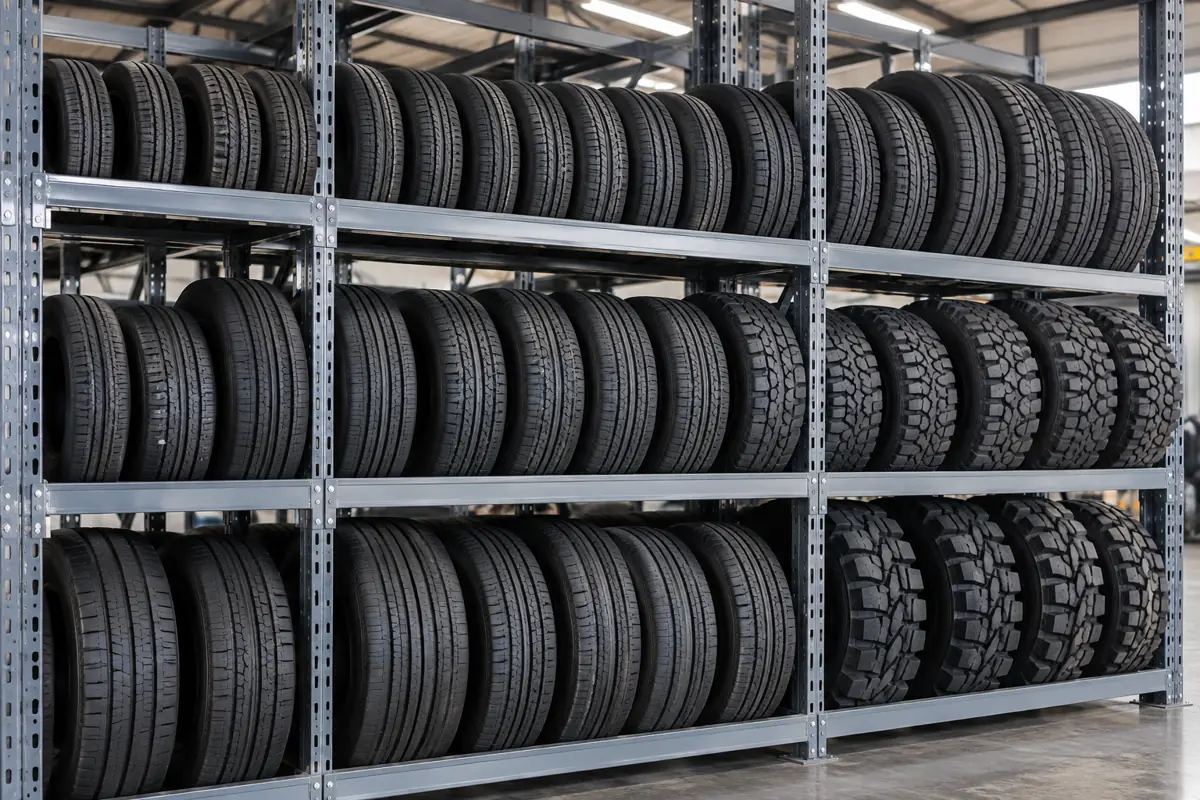 Bands, not an averageLight-fleet, medium/truck and seasonal-duplicate populations each get their own level pitch instead of one compromise spacing.
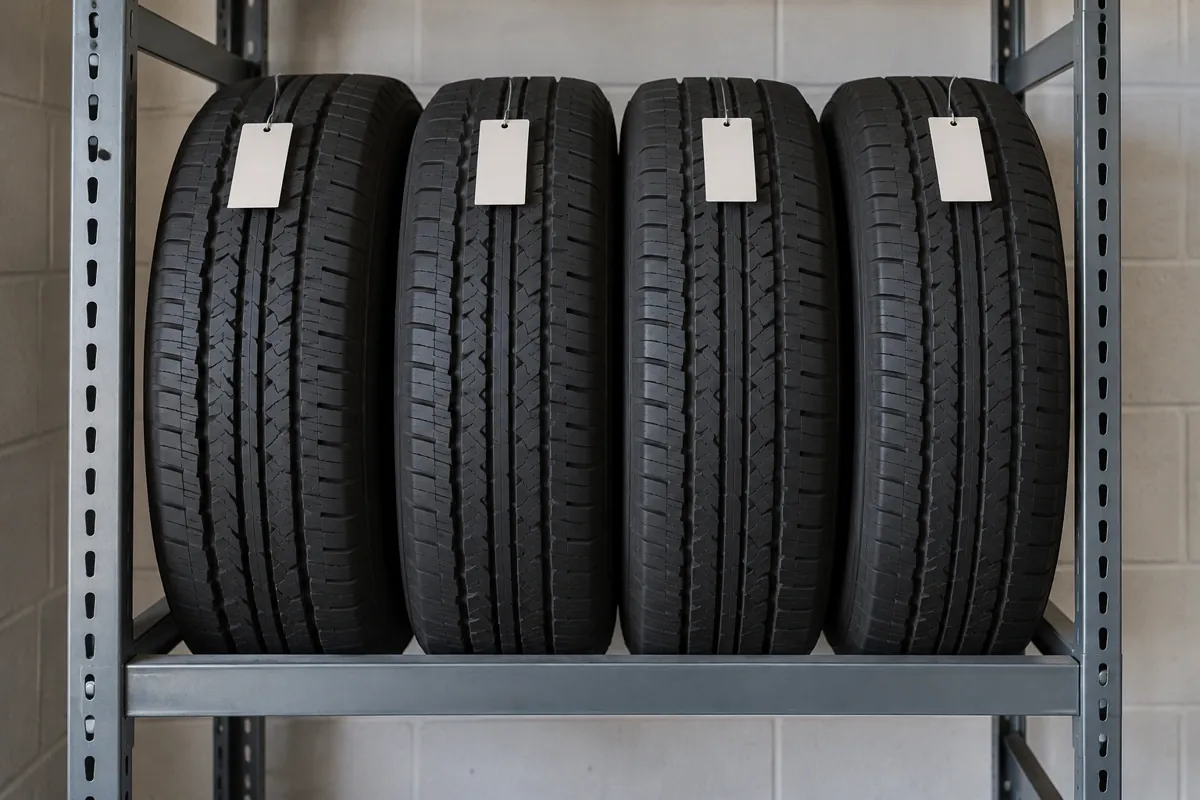 Tagged by unit numberA set tagged to a specific vehicle at intake stays a set. Splitting it across levels or leaving it untagged is how positions disappear.
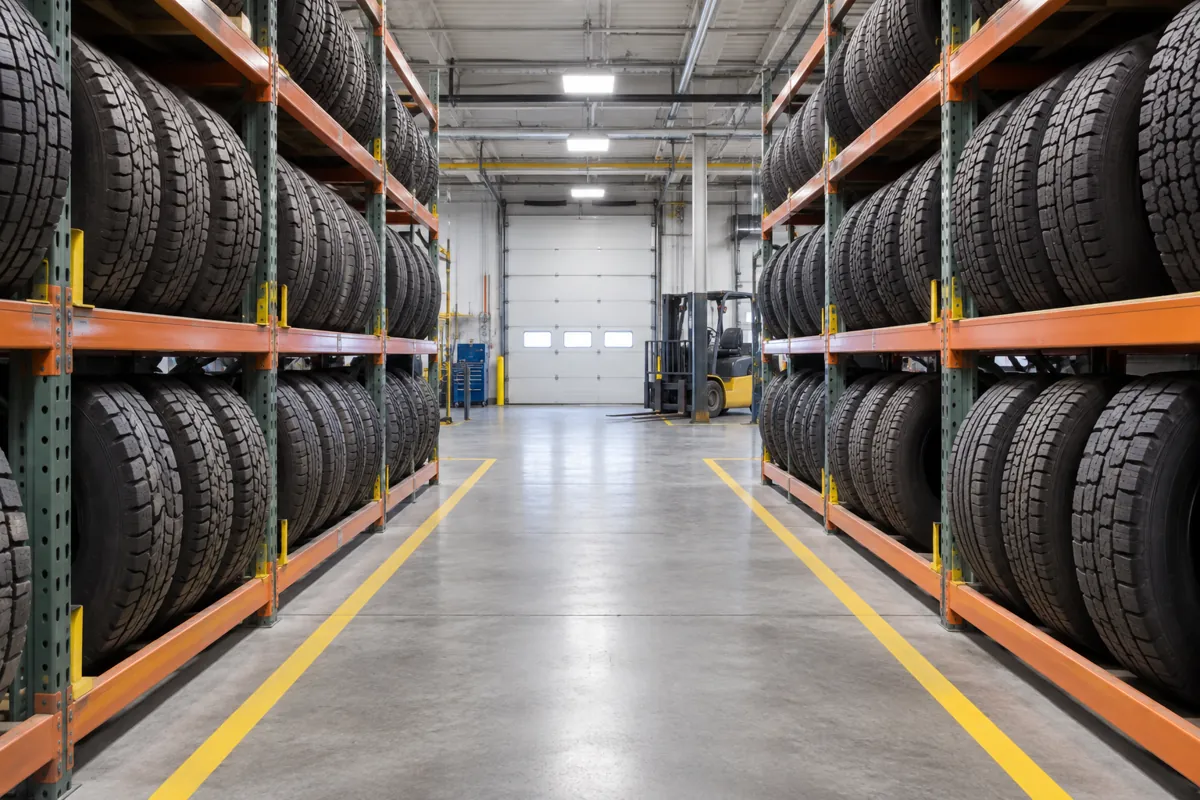 Aisle sized for the equipmentOnce truck or plow tires are involved, the aisle is set by the pallet jack or forklift that moves them, not by the rack footprint alone.
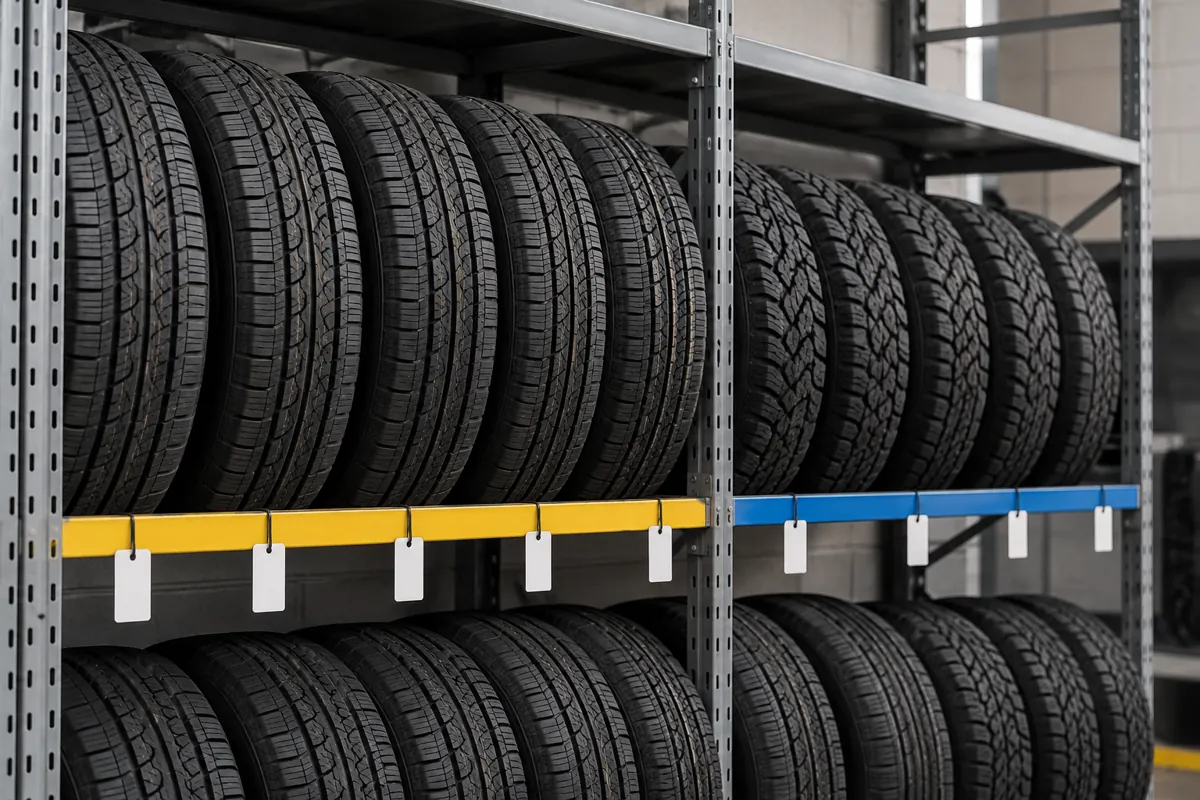 Sized for the changeover peakWinter/summer duplicate sets roughly double the population for a few weeks a year; that peak, not an average week, is what the run has to hold.
Utah’s changeover window is real capacity, not a one-time event
A studded or winter-tire program means two full sets per vehicle live in the building for part of the year. Sizing storage for the average week undercounts it every fall and every spring.
Planning storage for a mixed fleet garage?
Send your vehicle mix by band, the equipment that will move truck-size tires, and your usable wall length. We will lay out the run and pitch the levels before anything is quoted.
Which rack format fits a fleet garage
Most fleet and municipal garages need conventional selective racking pitched in two or three bands, on the same platform covered across the commercial tire storage racking hub.
- Fixed starter and add-on bays — the default for a mixed-band fleet run. Every
position directly picked, levels re-pitchable as the fleet mix changes. - Stackable tire racks — useful for absorbing the seasonal
duplicate-set surge without committing permanent bays sized for the peak. - High density tire storage — when the garage genuinely cannot hold
the mixed population and better bay planning will not close the gap. - Heavy-duty truck tire levels — where the fleet includes single-axle or larger
commercial tires; see the dedicated heavy-duty truck tire storage engineering page for load
and clearance considerations.
The parts, fluids and tools side of the same building is covered on our fleet and municipal garage parts storage page, and both sit on the same pallet rack platform so a single order can cover the whole garage.
Winter changeover is the stress test
Two short windows a year decide whether storage is adequate, because duplicate sets arrive faster than they leave.
Plan the surge separately. Portable or stackable racks that appear for a few weeks are often cheaper than permanent bays sized for the peak.
Tag on intake. An untagged set is a set nobody can release until someone goes looking for it.
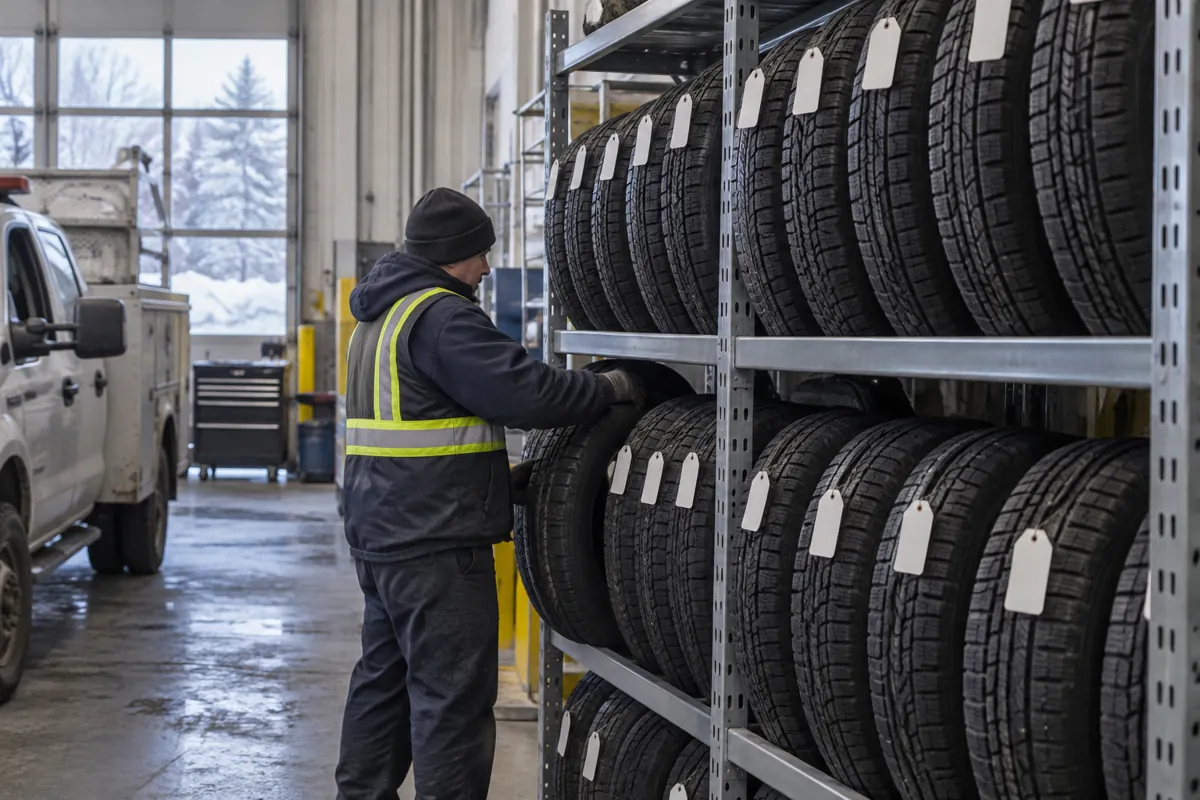
Installation, anchoring and housekeeping
A fleet garage aisle sees forklift and pallet-jack traffic a retail tire shop never does. None of the following is onerous, and all of it is cheaper designed in than retrofitted.
What we will and will not tell you
We will size the racking, band it to your actual fleet mix, pitch the levels and lay out the run against your real aisle and equipment. We will not certify that an arrangement is compliant in your building — that determination belongs to the fire protection engineer of record and the authority having jurisdiction.
Sizing storage for your Utah fleet garage
Whether the fleet is a dozen vehicles or several hundred, the inputs are the same: vehicle mix by band, usable wall length, the equipment that will move heavier tires, and your seasonal duplicate-set count. Send those and we will come back with a bay count, a level pitch per band and what the run actually holds — before there is a price attached to anything.
For the full Utah-specific hub, including dealership and service-station case studies, start at tire storage rack systems in Utah. For the nationwide technical comparison of every rack format, see the tire storage rack hub, and for the wider building’s needs, the pallet rack systems range.
Get a free quote
Tell us what you are storing, the room size and your timeline. A project specialist will follow up with layout options and pricing. Prefer to talk? Call (800) 326-4403.
Frequently asked questions
What makes fleet and municipal garage tire storage different from a tire shop?
How should a mixed light and heavy fleet size its tire racking?
Do we need a forklift aisle for fleet tire storage?
How does winter tire changeover affect the layout?
Should tires be tracked by unit number?
Can the same racking handle both tires and other fleet parts?
What do OSHA and NFPA actually require for a municipal tire storage area?
Do you have Utah experience with fleet and municipal facilities?
Planning tire storage for a fleet or municipal garage?
Send your vehicle mix by band, the equipment that moves heavier tires, and your usable wall length, and we will lay out the run and pitch the levels before anything is quoted. Call 801-328-8788.