
Luxury Dealership Tire Rack Storage in Murray, Utah: BMW of Murray
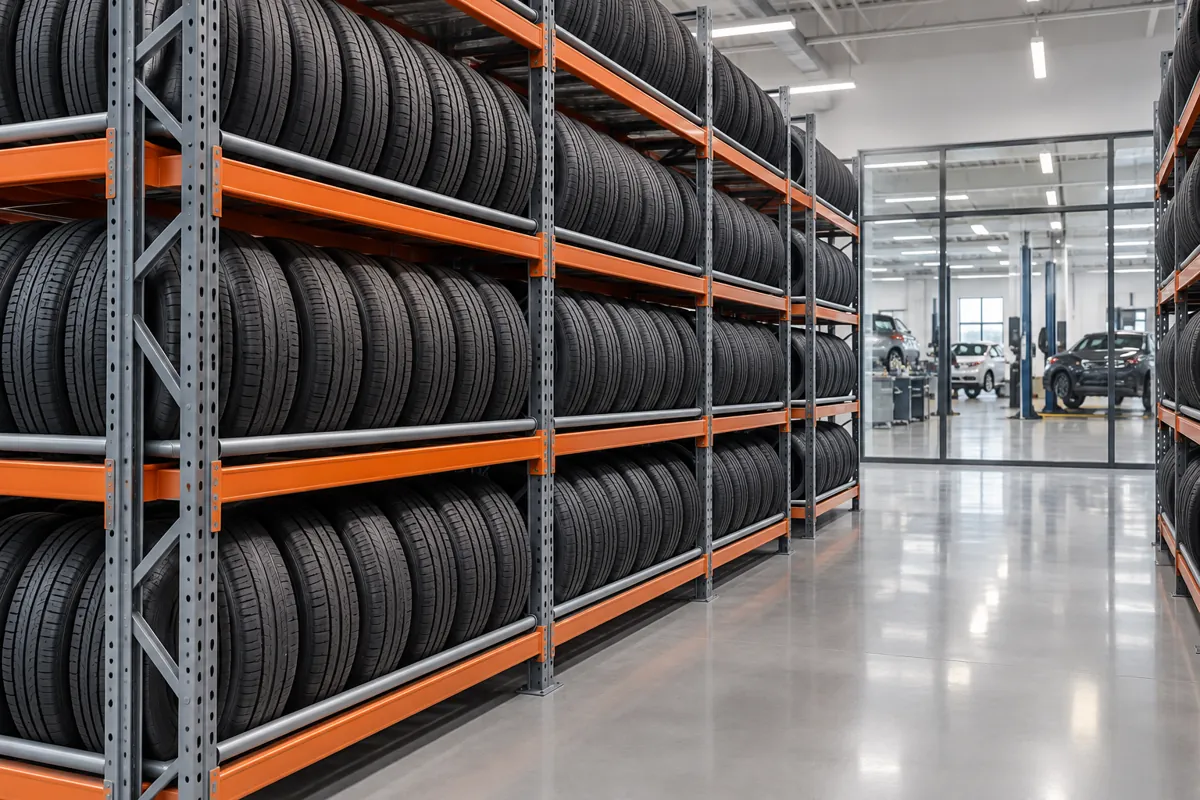
A franchise luxury dealership in Murray ordered 36 sections of three-level steel tire rack to fill a dedicated tire room. Here is what the records show, why premium tire sets change the storage brief, and how another dealership can plan a room the same way.
Murray, UT
Dealership location
36 sections
Three-level tire rack
12 runs
Three sections each
December 2021
Order placed
A full tire room for a Salt Lake County luxury dealership
BMW of Murray is a franchise BMW dealership in Murray, Utah, in the middle of Salt Lake County. Like every franchise store, its service department handles a steady flow of tires: replacement tires ordered for scheduled work, sets held for customers between seasons, and tires waiting for a vehicle that has not arrived yet. At a premium store those tires are expensive, often wide and low-profile, and frequently come as staggered or run-flat sets that must stay together.
In late 2021 the dealership asked our Salt Lake City team to equip a tire storage room from a layout drawing. The quote was prepared in November, the order closed in December 2021, and the resulting purchase covered thirty-six sections of three-level steel tire rack arranged as twelve runs of three sections, with foot plates under every upright and freight to the store. It is a useful example of planning a whole room at once rather than adding a few bays at a time.
The project sits on our Utah Tire Storage Rack hub next to two other dealership stories, Mark Miller Subaru in Salt Lake City and Markosian Auto in Tooele. For every system type and the engineering behind them, see the main commercial tire storage rack guide; the rack itself uses the same upright-and-beam logic as the heavier pallet rack systems we design for warehouses.
What the source documents establish
- Customer: BMW of Murray, a franchise BMW dealership in Murray, Utah
- Order: quoted November 2021 and recorded closed won in December 2021, with a customer quote, layout drawing, purchase order, customer invoice and supplier invoice on file
- Product: 36 sections of three-level steel tire rack (12 starters and 24 add-ons in two bay widths) and 96 foot plates, matched to the drawing
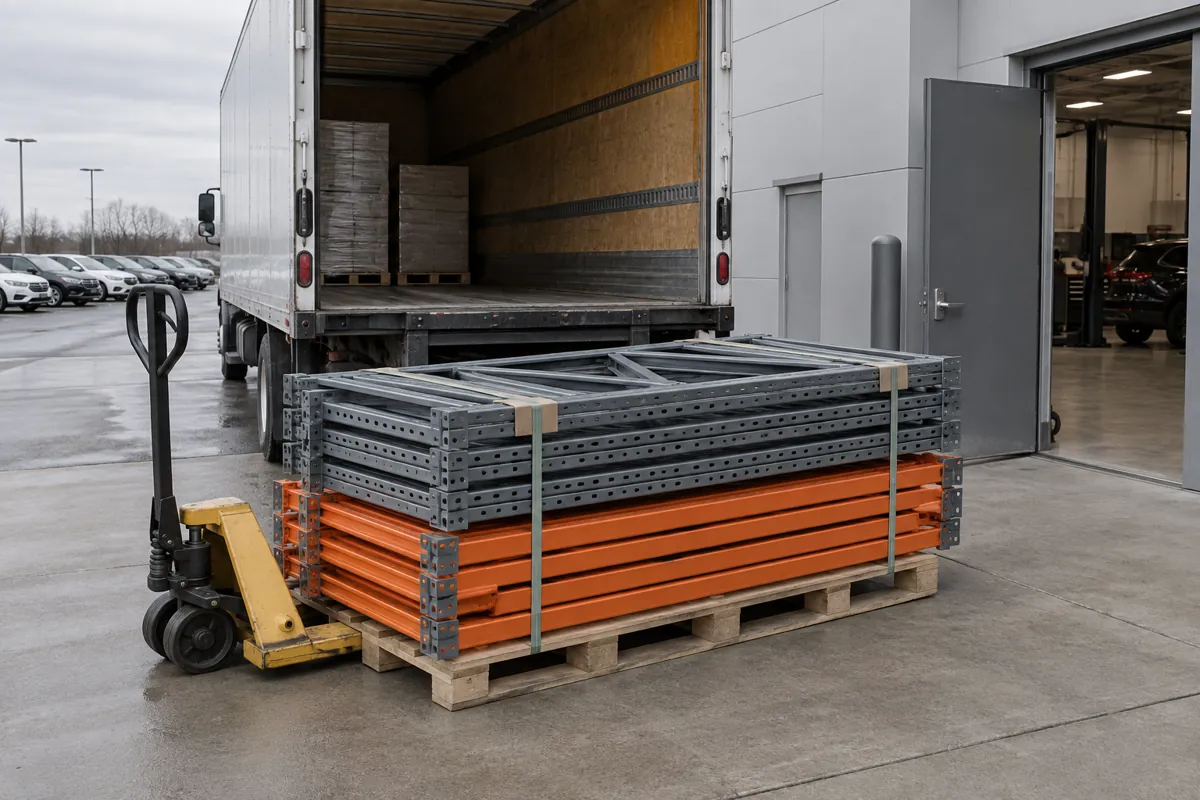
- Delivery: freight included; the supplier invoice shows every line shipped in full to the dealership address
- Scope limit: installation was offered as an option, but the invoice covers product and freight only, so no installation, capacity figure or customer statement is claimed here
We have left out prices, dimensions, the drawing, contact names and room details. A deal-specific mailbox search found only an internal accounting reference and no buyer correspondence, so the story is built from the CRM and document record.
Why premium dealership tires change the storage brief
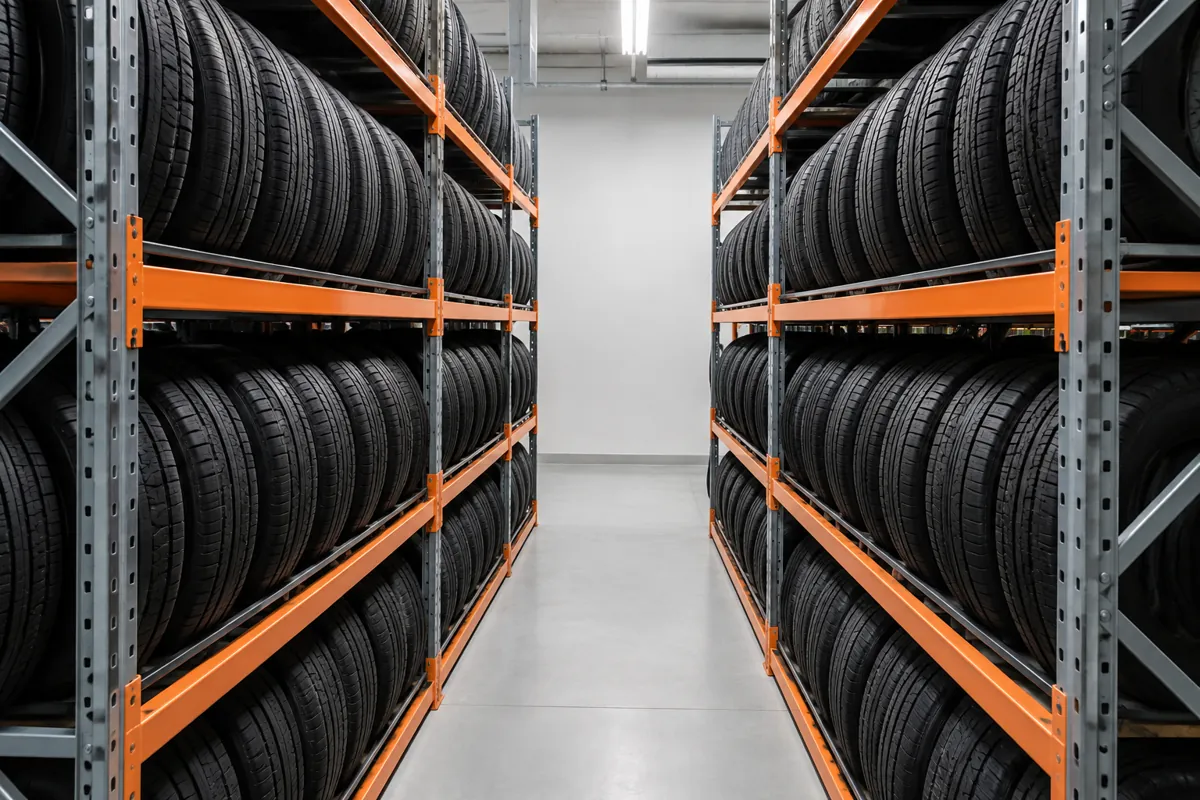
A general tire shop mostly stores new stock by size. A luxury franchise store holds several different tire populations at once, and more of them belong to a specific customer or a specific repair order. Our dealership tire storage guide walks through those populations in general; at a premium store three details carry extra weight.
- Staggered sets. Many performance models run a different tire size on the front and rear axles. A set is really two pairs, and the storage system has to keep both pairs together and labeled, or a technician pulls the wrong size.
- Run-flat and low-profile construction. Reinforced sidewalls make these tires heavier and stiffer than a comparable standard tire, and wide treads take more shelf length. Levels and load ratings need to be set to the heaviest sets actually on hand, not to an average passenger tire.
- High replacement cost. A damaged or misplaced premium tire is an expensive problem and an unhappy customer. Storage that keeps each tire upright, off the floor and in a known location is a service-quality decision as much as a space decision.
Store the set, not just the tire
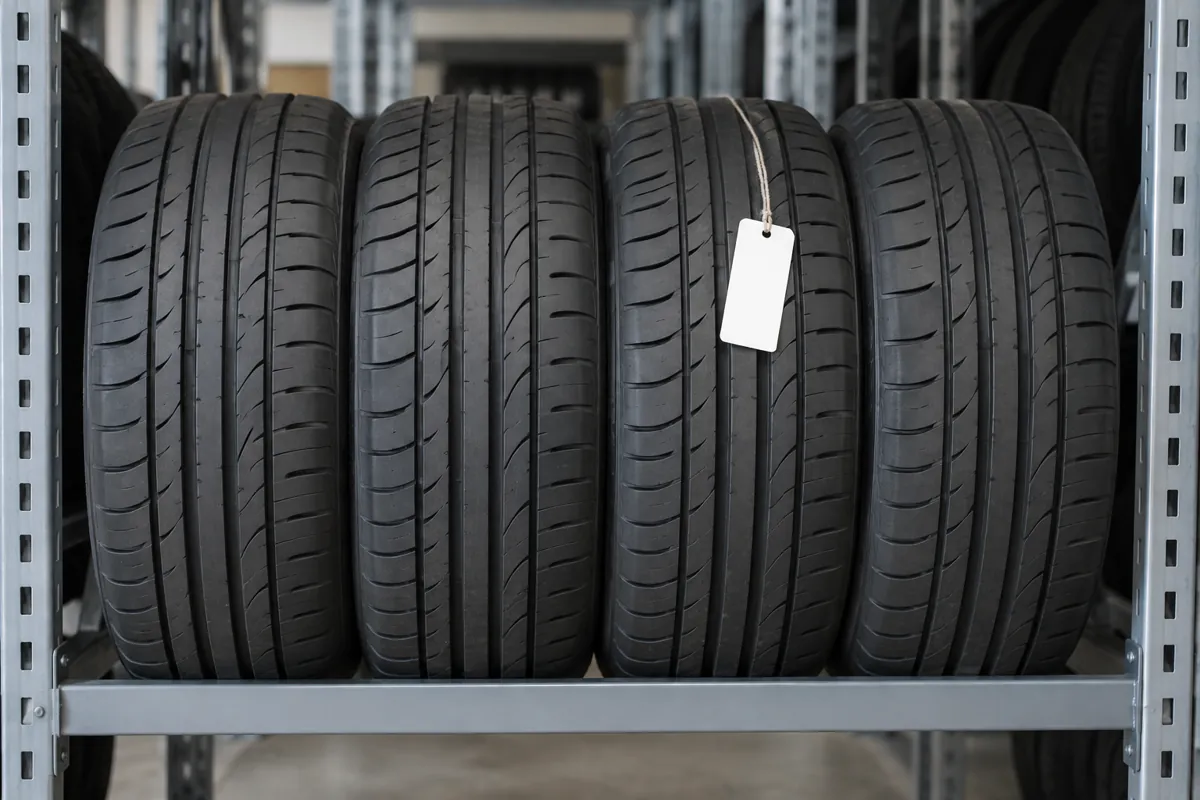
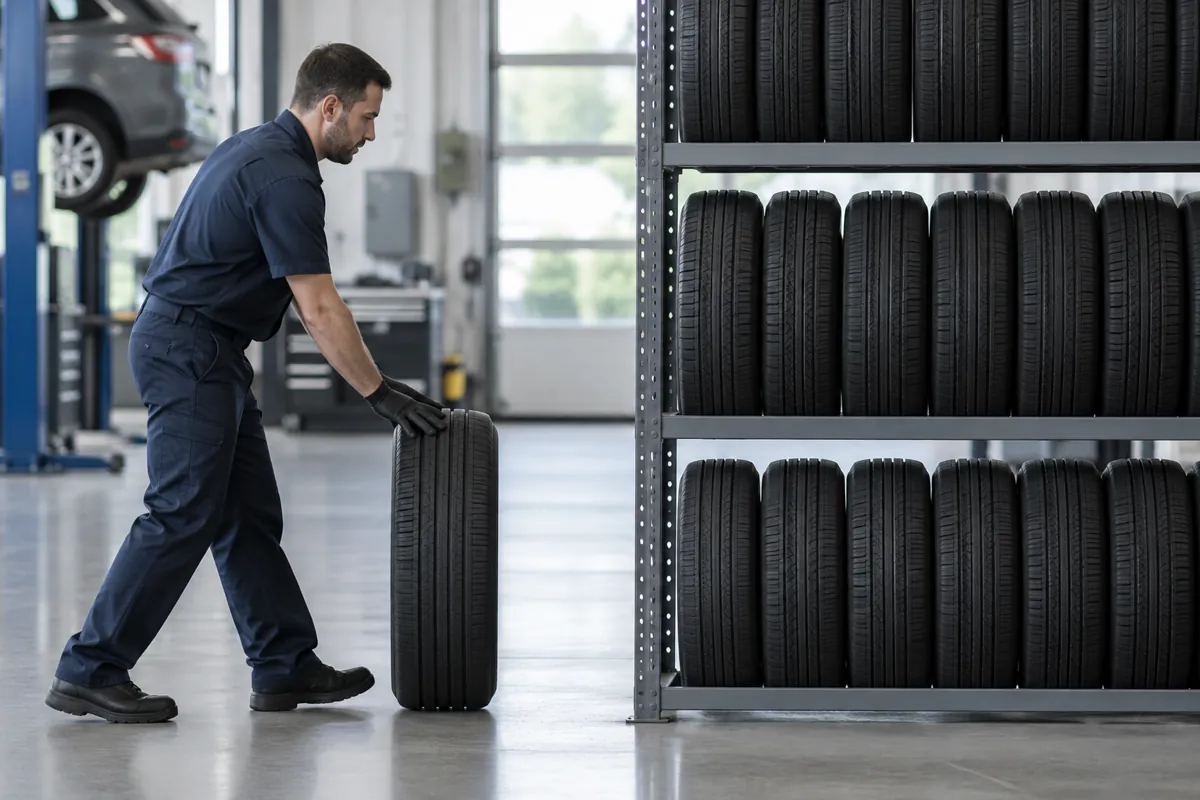
The simplest rule for a premium tire room is one set, one location. Assign each customer or repair-order set to a bay or a level, tag every tire with the same reference, and note front and rear sizes separately for staggered fitments. When the vehicle comes in, a technician walks to one spot and pulls four tires.
Three shelf levels per section make that practical: a set of four wide performance tires standing on the tread fills a level cleanly, and the bay number plus level letter becomes the storage address in the service system.
Planning the room from a drawing, not bay by bay
What makes this project different from a typical dealership order is scale and method. Instead of buying a few starter kits and adding bays when the floor fills up, the dealership had the room laid out first, and the order was written to match the drawing. Twelve runs of three sections each is a room-level decision: aisle positions, run lengths and the mix of bay widths were settled before a single frame shipped.
That approach has three practical benefits. The component list is exact, so nothing is left over or short on delivery day. Every run can use the same frame height and level spacing, which keeps the room consistent for technicians. And the aisles are planned around how tires actually move, from the receiving door to the rack and from the rack to the service bays, instead of whatever space remains after the last expansion.
Two bay widths in every run
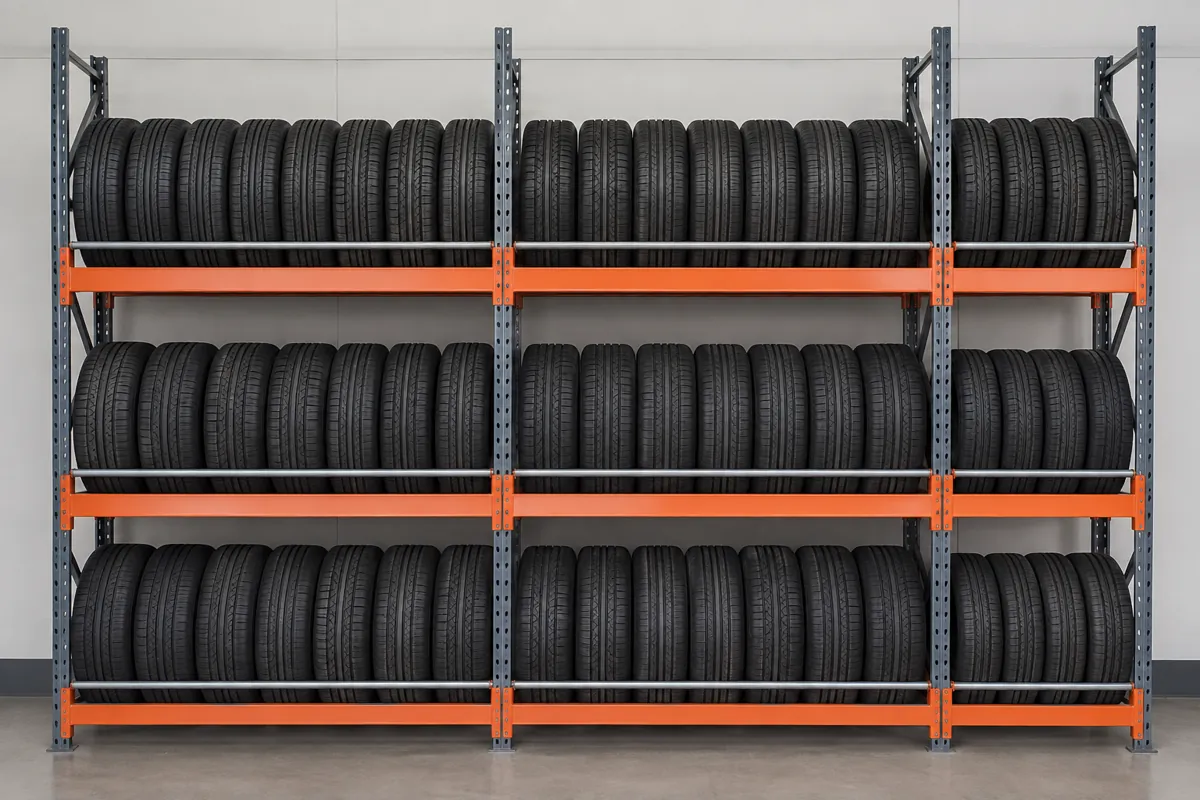
Each run on this order combines one starter section and two add-on sections, and the add-ons come in two widths: a full-width section and a shorter one. Rooms rarely divide evenly into a single bay width, so pairing full and short sections lets each run end where the wall or aisle requires while keeping the same frame depth, height and beam system throughout.
Starter sections carry two upright frames; add-on sections carry one and share the frame of the section beside them. That is why a run of three needs only four frames, and why the same room can be extended later with matching add-ons. The heavier version of this starter-and-adder logic is explained in our pallet rack planning resources.
| Room-planning decision | What to settle before ordering |
|---|---|
| How many tire populations? | Split new stock, customer seasonal sets, repair-order holds and wheel-and-tire assemblies, and give each a zone. |
| Run length and bay mix | Fit runs to the room with a combination of bay widths instead of forcing one width and wasting the end space. |
| Level spacing | Set levels for the tallest and widest tires in each zone, with the heaviest sets on the bottom level. |
| Aisle layout | Plan aisles for the path from receiving to rack to service bay, with cart or dolly clearance where needed. |
| Storage addressing | Number every bay and level so each set has an address that matches the service or inventory record. |
| Growth room | Leave space at the end of runs for add-on sections if the seasonal program grows. |
Seasonal changeover in a Utah service department
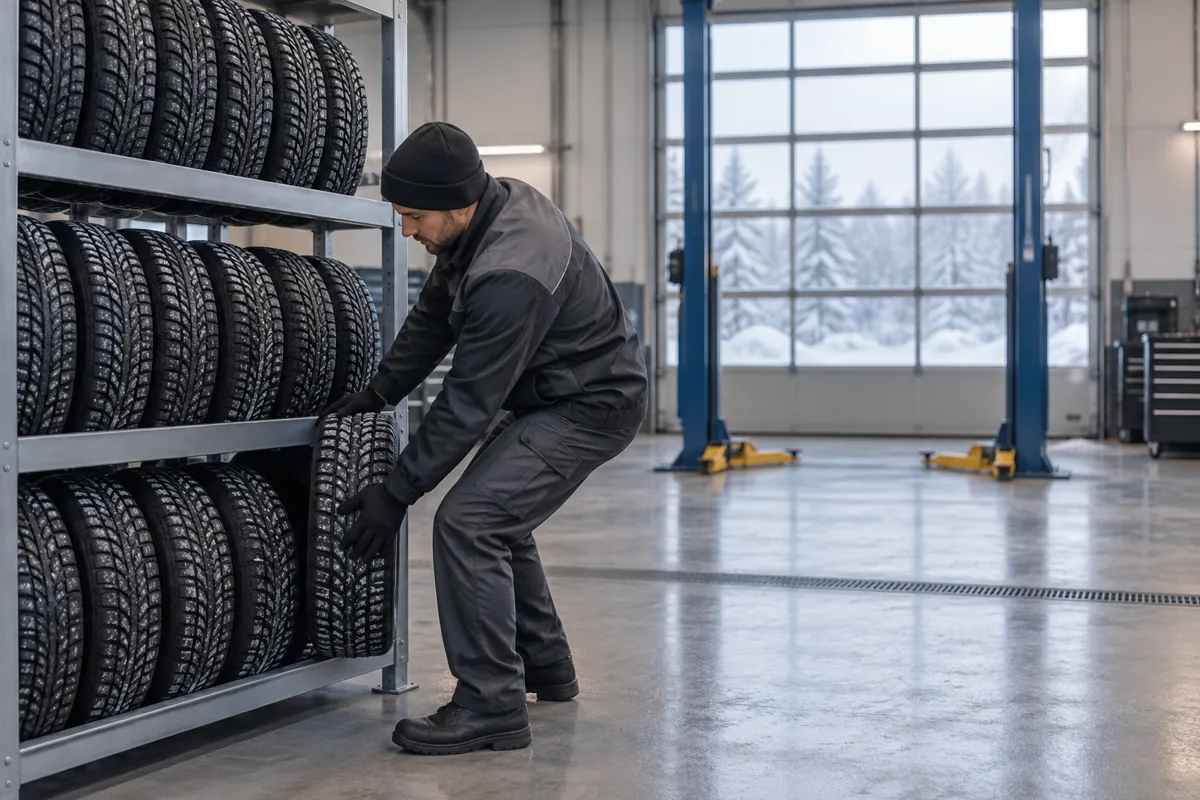
Salt Lake County winters push many drivers of performance and all-wheel-drive vehicles toward a dedicated winter set, and that creates a twice-a-year surge for a dealership that stores sets for its customers. In the fall, summer sets come off and need a home; in the spring the process reverses. A tire room sized for average inventory can overflow for several weeks at each changeover.
Planning for that surge is part of the room design. Decide how many customer sets the store will hold at peak, reserve whole runs for the seasonal program so it never mixes with new stock, and keep one or two sections near the service drive as a staging area for sets waiting to be mounted. For short-term overflow outside the room, portable stackable tire racks can absorb the peak without permanent floor space.
Mounted sets are a separate decision
Some premium customers store complete wheel-and-tire assemblies rather than tires alone. Assemblies are heavier and deeper, and the priority shifts to protecting the wheel finish. If a store offers that service, give assemblies their own levels or their own rack rather than mixing them into tire-only sections, and review the options in our tire and wheel assembly storage guide.
For this dealership, the records cover tire rack only; nothing in the documents describes a mounted-assembly program, and we have not assumed one.
Foot plates, anchoring and fire protection
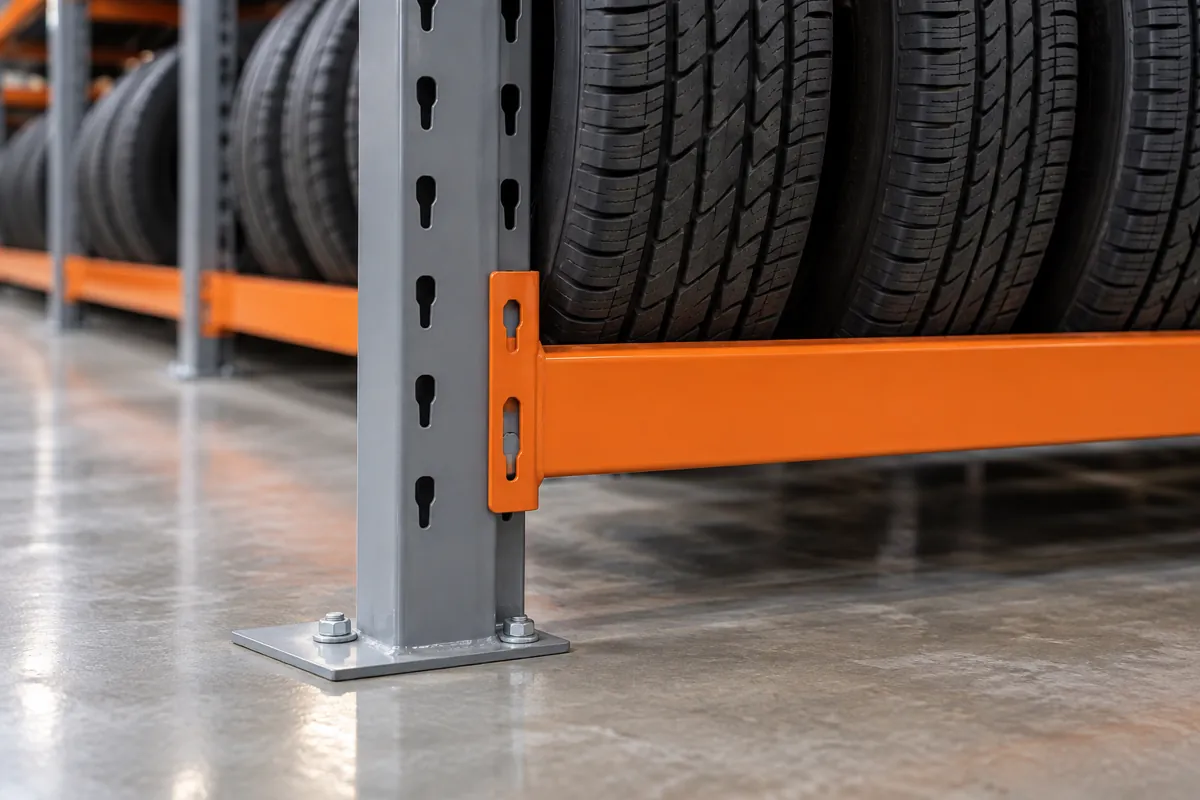
The order included a foot plate for every upright in the room, ninety-six in total. Foot plates spread each upright load onto the slab and give the frame a place to anchor. In a room where technicians roll heavy tires in and out all day, a rack should never rely on friction to stay in place, and Salt Lake County is a seismic region. Whether anchoring, a permit or an engineering review is required depends on rack height, load, configuration and local code, so have the supplier confirm the footing and anchor approach for the actual floor. Our Utah pallet rack page covers the local permitting and seismic questions in more detail.
OSHA’s materials-storage rule (29 CFR 1910.176) requires stored material to be stable and secure against sliding or collapse and requires aisles to be kept clear and in good repair. In a tire room that means no tires parked on the floor in front of a run, no leaning piles at the ends of aisles, and a defined path that stays open. Tire-industry storage guidance adds the product-care side: keep tires clean, dry, cool and out of direct sunlight, away from ozone sources such as electric motors and battery chargers, and rotate stock so the oldest leaves first.
Fire protection is a project decision
Fire and building codes treat rubber tires as their own storage commodity, separate from ordinary stock. Small incidental tire storage areas are handled differently from larger rooms, and the allowable arrangement, height and sprinkler design depend on the code edition adopted where the dealership operates, the size of the storage area, the building construction and the existing system. Confirm the current edition and local amendments with your fire-protection engineer and the authority having jurisdiction before finalizing the room, and keep a record of how much is stored and where.
Tire-room planning checklist for premium dealerships
Collect these inputs before asking for a layout or a quote. They separate a few bays along a wall from a full tire room, and they tell us whether standard sectional tire rack, a taller configuration or a denser system fits the store.
Count the populations
Estimate peak new stock, customer seasonal sets, repair-order holds and any mounted assemblies separately.
Measure the room
Wall and floor length, clear height, door positions, slab condition and any columns or equipment in the way.
Size for the heaviest sets
List the largest run-flat, staggered and light-truck sizes you hold so levels and ratings fit the real mix.
Draw the aisles
Map the path from receiving to rack to service bay and decide cart or dolly clearances.
Check the requirements
Ask about anchoring, seismic review and the fire-protection limits that apply to tire storage at your address.
Plan the addresses
Number bays and levels so every set has a location that matches the service record.
Stores that also need parts-room shelving or bulk storage for fluids and accessories can use the same upright-and-beam approach at heavier capacities through our pallet rack range, and the main Tire Storage Rack hub compares every tire-specific option, from sectional shelving-style rack to high-density systems.
Shop Tire Storage Racks Online
Standard sectional tire rack starters and add-ons in both bay widths used on this project, priced online. For a full tire room, taller runs or a layout drawing, request a quote.

Frequently asked questions
What did BMW of Murray order?
Did MH-USA install the rack?
Why would a dealership mix bay widths in one run?
How should a premium dealership store staggered tire sets?
Are run-flat and low-profile tires harder to rack?
Does a dealership tire room need anchoring in Utah?
What fire-code rules apply to a dealership tire room?
Planning a dealership tire room in Utah?
Tell us roughly how many tires and customer sets you hold at peak, the room you have available and how technicians move tires. We can lay out a room that fits your mix, and flag the anchoring and fire-protection reviews you will need.