
Tire Warehouse and Distribution Center Racking in Utah
Salt Lake City sits at the crossroads of I-15 and I-80, and several national and regional tire wholesalers run distribution centers on the west side of the valley for that reason. A tire DC is a pallet-in, piece-out building. Here is how to rack one so the reserve and the pick face each do their own job.
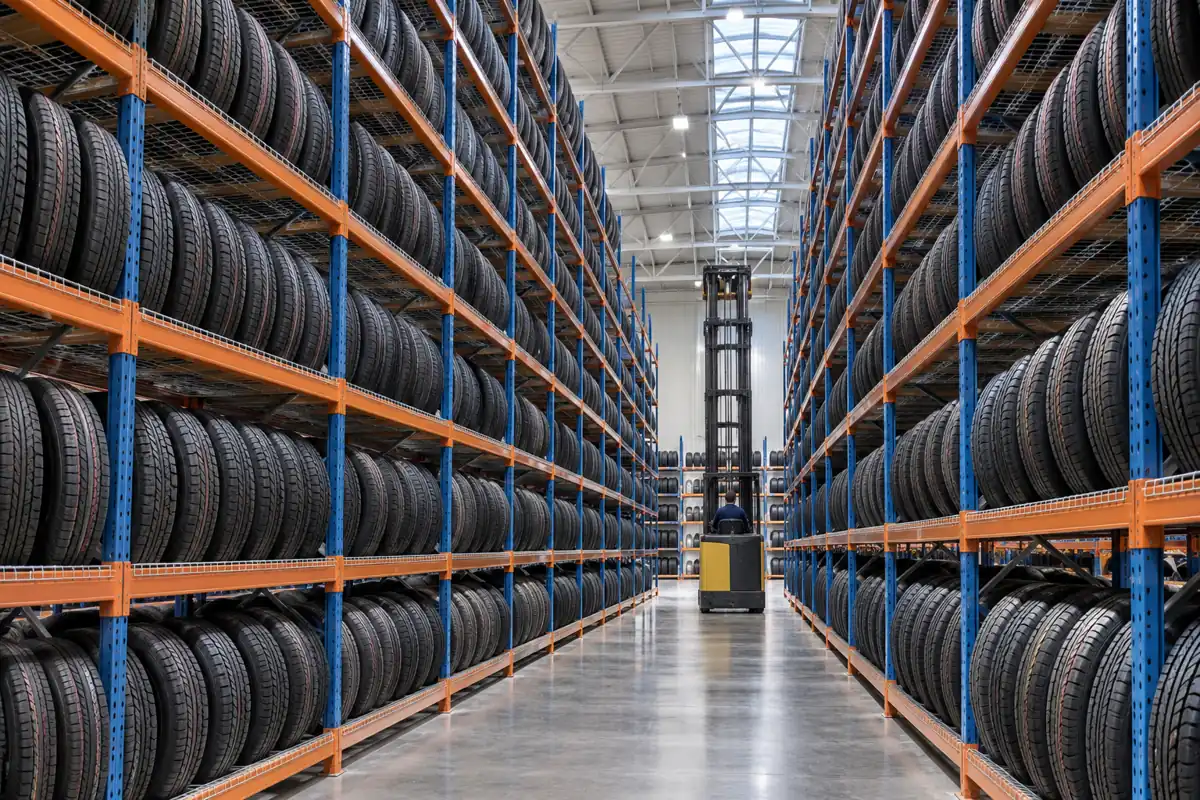
Pallet in
Piece out
Reserve + pick face
Two jobs, one platform
Tread-up, edge-on
Pick-face orientation
Anchored
Utah seismic region
Why a tire distribution center is not a big tire shop
A tire shop stocks a few hundred tires in the sizes it fits every week. A wholesale tire distributor or a dealer group’s central tire warehouse holds tens of thousands across passenger, light-truck, commercial and sometimes agricultural sizes, receives them by the trailer, and ships them a few at a time to route trucks and will-call customers. Salt Lake City’s position at the junction of I-15 and I-80 has made it a natural regional node for exactly that kind of operation, serving Utah, Idaho, Wyoming, Nevada and beyond.
That changes the storage brief completely. The building has to do two things that pull in opposite directions: receive and hold bulk, which wants pallet positions and forklift aisles, and pick single units fast, which wants a shallow face at hand height with every size visible. Rack the whole floor for one of those jobs and the other one ends up on the floor beside the dock. The commercial tire storage racking hub covers the engineering fundamentals; this page is about how they play out in a distribution building.
What usually goes wrong
One shelf type everywhere. Deep pallet levels where pickers work, or shallow tire levels where forklifts need to drop a pallet.
Slotting by size instead of velocity. A slow 15-inch size in the best pick face while the top mover sits at the far end of the building.
No home for the seasonal wave. Fall winter-tire receipts overflow into aisles that were clear all summer.
Rack that was never engineered for Utah. Unanchored uprights, no permit, no seismic review, discovered when the fire marshal or building inspector visits.

Design the building as pallet-in, piece-out
The clearest way to plan a tire DC is to follow one tire through it.
Receiving: trailer to pallet or conveyor
Tires arrive banded on pallets or loose-loaded floor to ceiling in a trailer. Loose loads are unloaded by hand onto an extendable conveyor or straight onto carts and palletized at the dock. The dock needs staging for that step before anything goes to a rack position.
Put-away: reserve levels by forklift
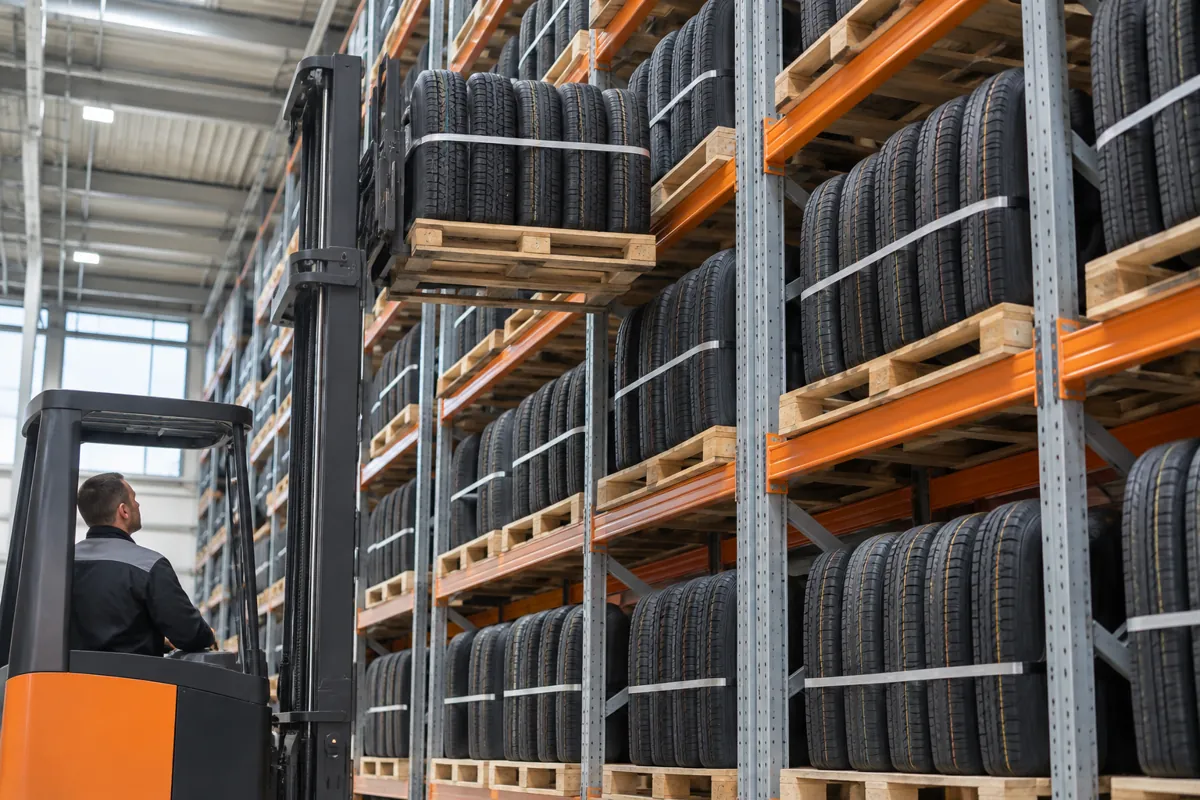
Banded pallets go to upper reserve levels on selective rack. These levels are sized to the pallet and the lift, not to the tire, and they hold most of the building’s inventory.
Replenishment: reserve to pick face
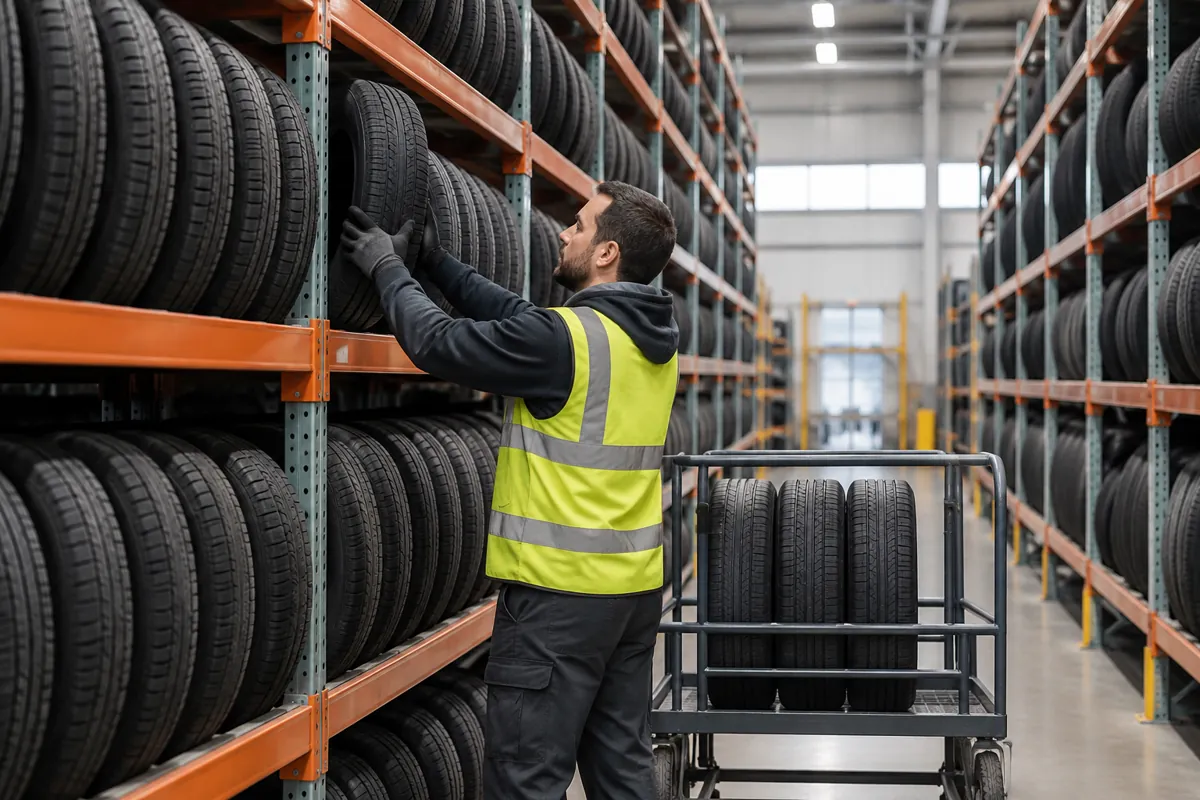
When a pick face runs low, a pallet comes down, is broken, and tires are stood on the tread in the face one deep. This is the step most layouts forget to give a path and a staging spot.
Picking: single units at hand height
Order pickers pull one, two or four tires per line onto carts or a conveyor. Faces should be shallow, edge-on to the aisle, at a height a picker can work without a ladder for the top movers.
Shipping: route trucks and will-call
Picked orders stage by route and load upright into box trucks. A will-call area for walk-in dealers often justifies a short run of dedicated tire rack right at the counter.
Reserve and pick face are two different racks
Reserve levels: pallet-sized beams and depth, pitched to the banded pallet height, reached by forklift or reach truck.
Pick-face levels: wire decking or tire rails, one row deep, pitched to the tallest tire in that size band, reached by hand.
Both hang on the same uprights. The only thing that changes is beam pitch and what sits on the beams, which is why the platform is selective pallet rack rather than a specialty system.
Slotting: velocity first, then size band
A tire distributor can carry thousands of size, brand and pattern combinations, and a small share of them make up most of the picks. Slotting is where a tire DC either runs or crawls.
- Rank every SKU by pick frequency over the last twelve months, then again for the winter and summer halves separately. The two lists will not match.
- Give the top movers the best faces: widest, at hand height, nearest the shipping dock. Slow sizes go to higher levels or the far end.
- Band by tire height, then pitch each band. Passenger, light-truck and commercial sizes each get their own level pitch so a tall band is not stealing clear height from a short one.
- Keep DOT date rotation honest. First in, first out matters for tires; a single-deep face that is replenished from the back or re-faced during replenishment keeps the oldest units in front.
- Re-slot twice a year around the seasonal swing instead of letting the October layout run through June.
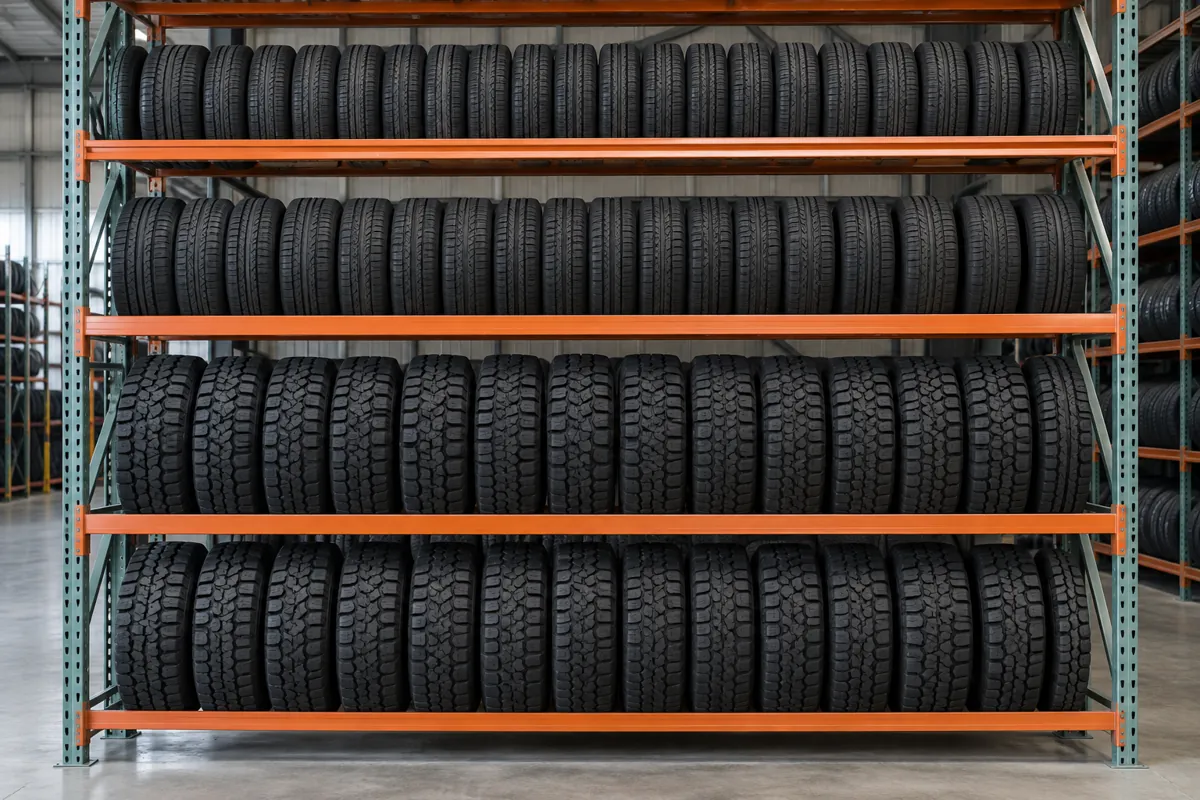 Pitch by size bandLower levels for taller light-truck and commercial sizes, upper levels for passenger sizes; nothing is pitched to an average tire.
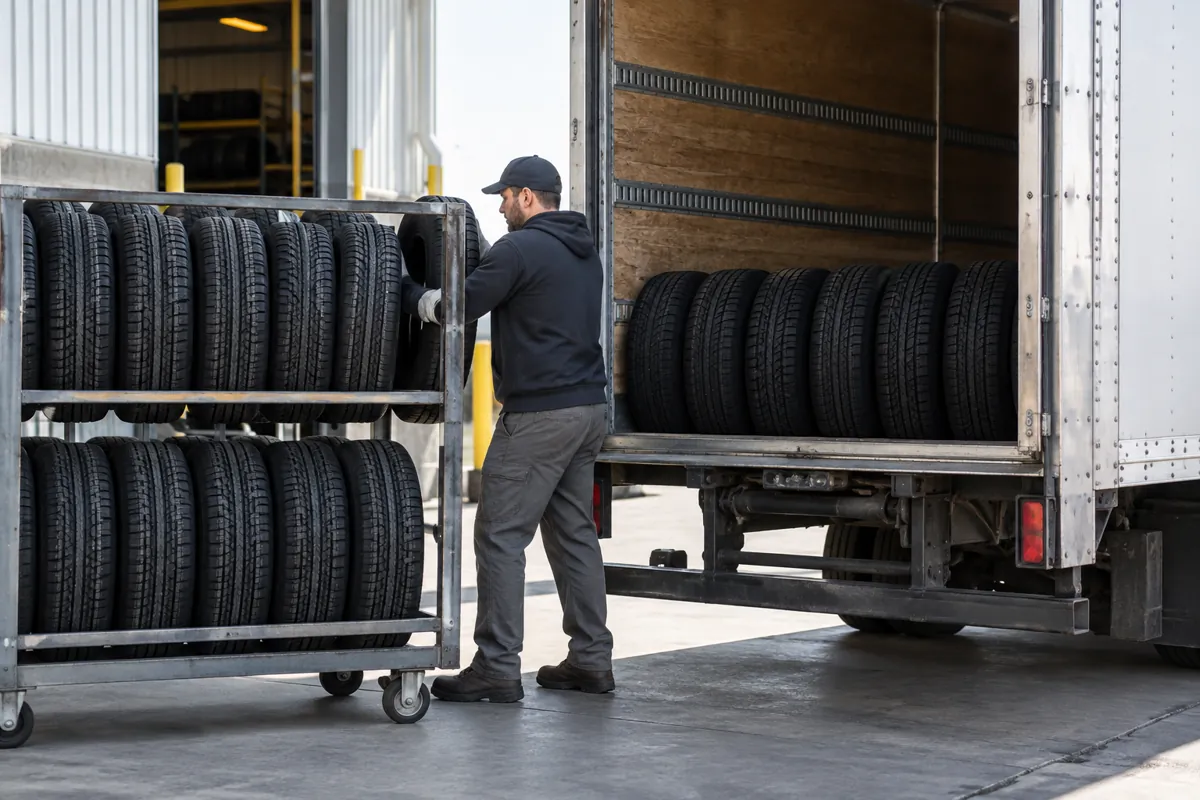 Pick to the route, not to the rackFaces are laid out so a route order can be picked in one pass toward the dock, then loaded upright into the truck in delivery order.
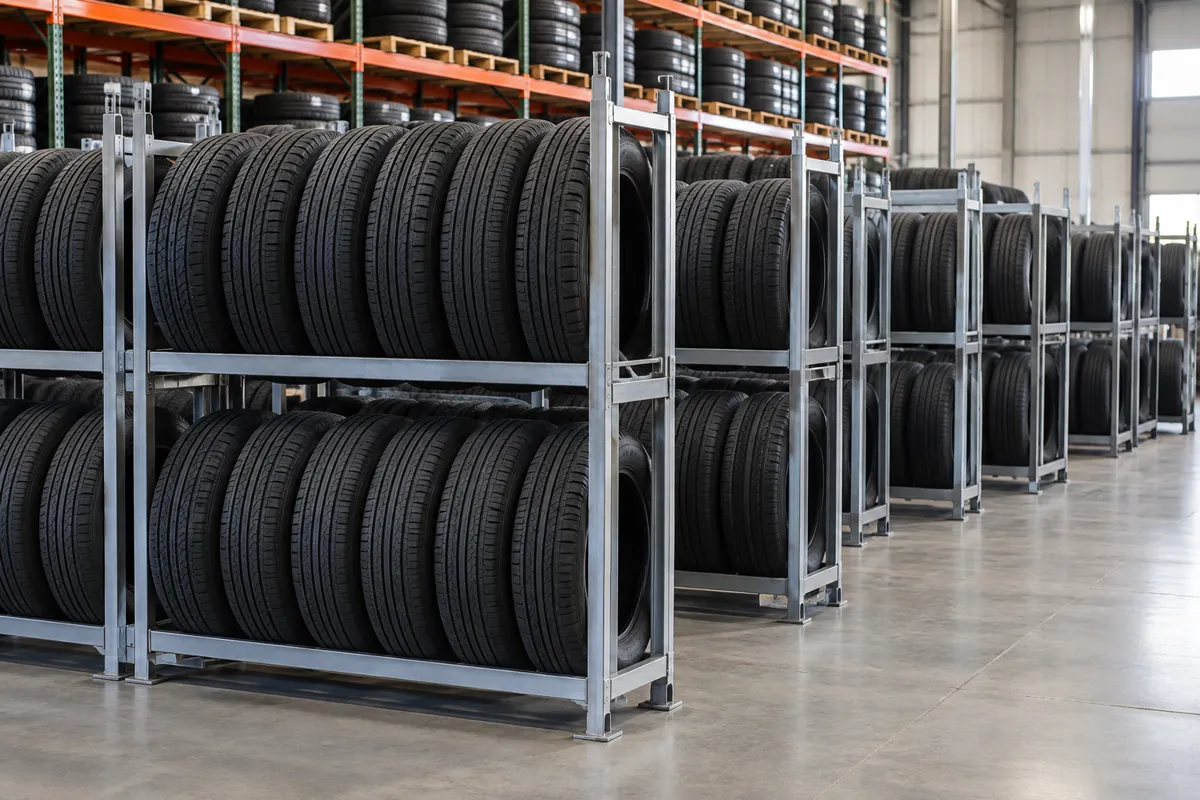 A planned home for the surgePortable stack racks or a marked floor block absorb the fall and spring receipts without putting tires in the aisle.
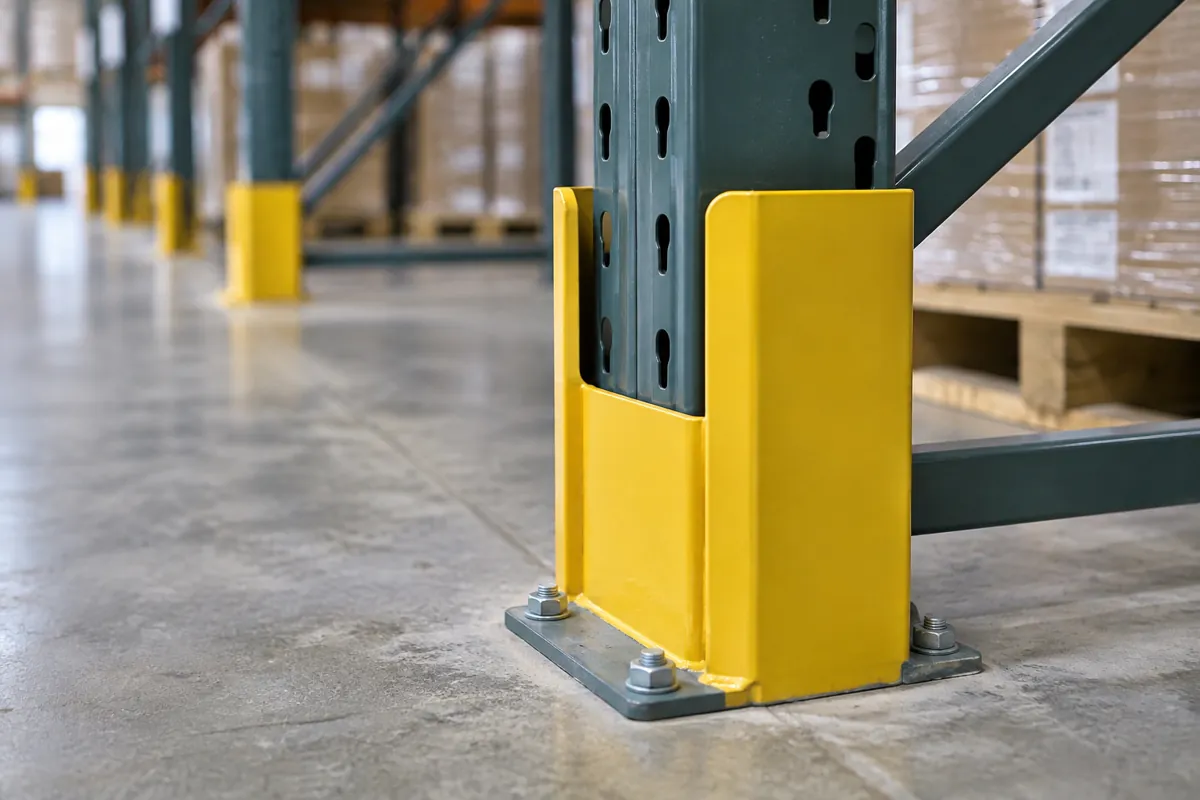 Anchored and protectedEvery upright anchored to the slab, column protection at aisle ends, and the permit and engineering Utah installations typically require.
Density has to be earned in the reserve, not the pick face
Deep-lane or very-narrow-aisle storage can raise reserve density substantially, but a pick face that is more than one tire deep slows every order. Our high-density tire storage page walks through the levers and the selectivity they cost.
Planning or re-racking a tire warehouse in Utah?
Send your tire count by size band at peak, how tires arrive, your order profile and building clear height. We will lay out reserve and pick levels, aisles and the surge plan before anything is quoted.
What is specific to Utah
Three things separate a tire warehouse in Salt Lake City, Ogden or Provo from the same building elsewhere.
The seasonal swing is large and sharp. Winter tires are a real product line along the Wasatch Front and in the mountain communities a Salt Lake distributor serves. Receipts concentrate in late summer and early fall, then again in spring as changeover sets return. Reserve capacity, replenishment labor and overflow space all have to be sized for that peak; the same seasonal pattern shows up at a smaller scale in our Utah fleet and municipal garage page and at the dealership level in the Mark Miller Subaru project in Salt Lake City.
Seismic anchoring and permitting. Utah’s population centers sit along an active fault zone. Pallet rack installed here is routinely anchored to the slab and, depending on height and load, requires a permit with stamped engineering from the local building department. Budget time for that in the schedule; a rack order that arrives before the permit is a rack order sitting on the dock.
A dry, high-elevation climate. Utah’s low humidity is kind to steel and to rubber, but the sun is not. Dock doors and skylights that throw direct sun onto stored tires, and electric motors near the pick face, are the two exposures worth designing around; the tire industry’s storage guidance favors cool, dry, dark storage away from ozone sources.
Palletized reserve, done properly
Rated for the pallet, not the tire. Reserve beams and decking carry the banded pallet weight;
a light passenger tire band and a commercial band are very different pallet loads.
Tires upright inside the band. Banded pallets should hold tires on the tread where the supplier ships them that way; flat-stacked pallets are a storage arrangement the fire code treats differently, so record which one you use.
Clear replenishment staging. A marked spot at the base of each pick aisle where a pallet can be broken without blocking the aisle.
Which rack formats belong in a tire DC
- Selective pallet rack for reserve and pick faces alike. The default platform, from the same
pallet rack range we ship to every other kind of distribution center in the region. - Stackable and portable tire racks for the seasonal surge, will-call staging
and any area the fire-protection design treats as temporary storage. - Heavy-duty levels for commercial and agricultural sizes, where a distributor carries truck,
bus or farm tires alongside passenger stock. The heavy-duty truck tire storage page covers load
and clearance considerations in depth. - A short run of dedicated tire rack at will-call, laid out like a
tire shop back room, for walk-in dealers picking a set while they wait. - Multi-level pick modules only when the SKU count and pick volume justify the structure and the
fire-protection review that comes with it; most Utah distributors are better served by a well-slotted single
level first.
Our pallet rack design service produces the layout, the beam schedule per band and the capacity calculation before a quote, so the reserve, the pick face and the surge plan are decided on paper rather than on the dock.
Installation, fire protection and housekeeping
A tire warehouse combines a high-hazard commodity with forklift traffic and a seismic region. None of the following is optional and all of it is cheaper designed in than retrofitted.
What we will and will not tell you
We will size the rack, band and slot it to your SKU mix, engineer and anchor it for Utah and lay out the reserve, pick face and surge areas against your real building. We will not certify that an arrangement meets the fire code in your building; that determination belongs to the fire protection engineer of record and the authority having jurisdiction.
Racking a tire warehouse in Salt Lake City, Ogden or Provo
Whether you are opening a new regional DC, taking over a building from another tenant or re-slotting a warehouse that has outgrown its layout, the inputs are the same: tire count by size band at peak, inbound format, order profile by route, building clear height and column grid, and the equipment you run. Send those and we will come back with a reserve and pick-face layout, a beam pitch per band and a surge plan before there is a price on anything.
For the rest of the Utah-specific material, including dealership, fleet and salvage-yard projects, start at tire storage rack systems in Utah. For the nationwide technical comparison of every format, see the tire storage rack hub, and for the wider building’s needs, our pallet rack systems.
Shop Tire Storage Racks Online
These sectional tire racks can be bought directly online for will-call areas, counters and small pick zones. For a full distribution-center layout on selective pallet rack, with reserve and pick levels, engineering and Utah installation, request a quote.

Get a free quote
Tell us what you are storing, the room size and your timeline. A project specialist will follow up with layout options and pricing. Prefer to talk? Call (800) 326-4403.
Frequently asked questions
What kind of racking does a tire distribution warehouse use?
Why is a tire DC a pallet-in, piece-out problem?
Should tires be stored on pallets or on the tread in the rack?
How do we slot tires by size in a distribution center?
How does the seasonal tire swing affect a Utah distributor?
Does Utah require pallet rack in a tire warehouse to be anchored and permitted?
What fire-code rules apply to a tire distribution warehouse?
Can you design and install tire warehouse racking in Salt Lake City, Ogden or Provo?
Planning tire warehouse racking in Utah?
Send your tire count by size band, inbound format, order profile and building dimensions, and we will lay out reserve and pick levels before anything is quoted. Call 801-328-8788.