
Home › Food & Beverage Storage Solutions
Food & Beverage Storage Solutions
Pallet racking, cold storage and freezer racking, heavy-duty mobile racking, flow lanes and sanitary shelving for food and beverage warehousing — designed, supplied and installed by MH-USA.

1997
Serving the West
50
States served
-20°F
Freezer-duty systems
800-326-4403
Talk to an engineer
Storage Built for the Way Food and Beverage Warehousing Actually Runs

Food and beverage warehousing is storage with a clock on it. Every pallet carries a date code, a lot number and a temperature it has to stay inside, and every location has to be cleanable, inspectable and reachable without an operator dragging a load past three other SKUs. A racking layout that would be perfectly good in a parts warehouse can quietly cost a food distributor thousands of cases a year in shrink, rework and mis-picks.
MH-USA designs and installs the storage systems behind food and beverage distribution centers, cold storage and freezer warehouses, ingredient and packaging rooms, co-packers and processing plants. That means pallet racking sized to real pallet weights, high-density systems that recover space you are already paying to refrigerate, flow lanes that enforce date rotation mechanically, and shelving and dunnage that a sanitation crew can actually clean around.
We have worked from Salt Lake City since 1997 and install nationwide, from the first capacity study through layout, seismic and permit drawings, installation and the rack safety inspection program that keeps the system in service.
Pallet Racking Systems for Food & Beverage Distribution Centers
Most food and beverage distribution centers are not one storage problem, they are three: a pick face that has to expose a lot of SKUs, a reserve block that has to hold volume tightly, and a fast-mover zone where product ships within days of arriving. Solving all three with one rack type is the most expensive mistake we get called in to fix.
 Selective Pallet RackOne pallet deep, every position reachable. The default at the pick face where SKU count matters more than density, and the easiest layout to re-slot when the product mix changes.
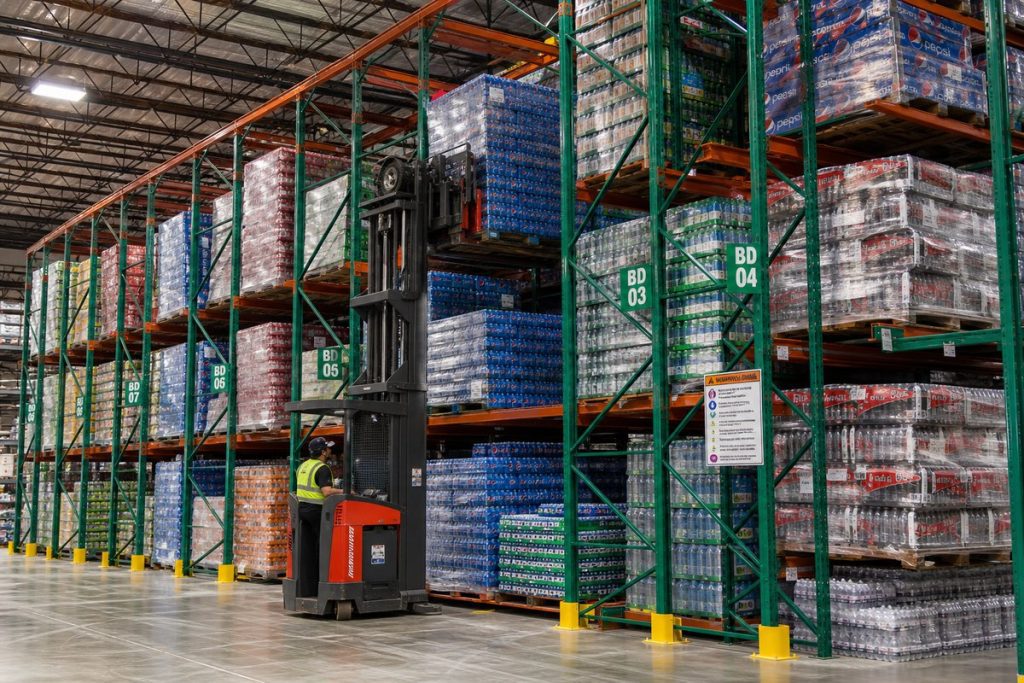 Double Deep RackTwo pallets deep with a reach truck. Roughly doubles storage per aisle for SKUs that ship in pairs of pallets, at the cost of some selectivity.
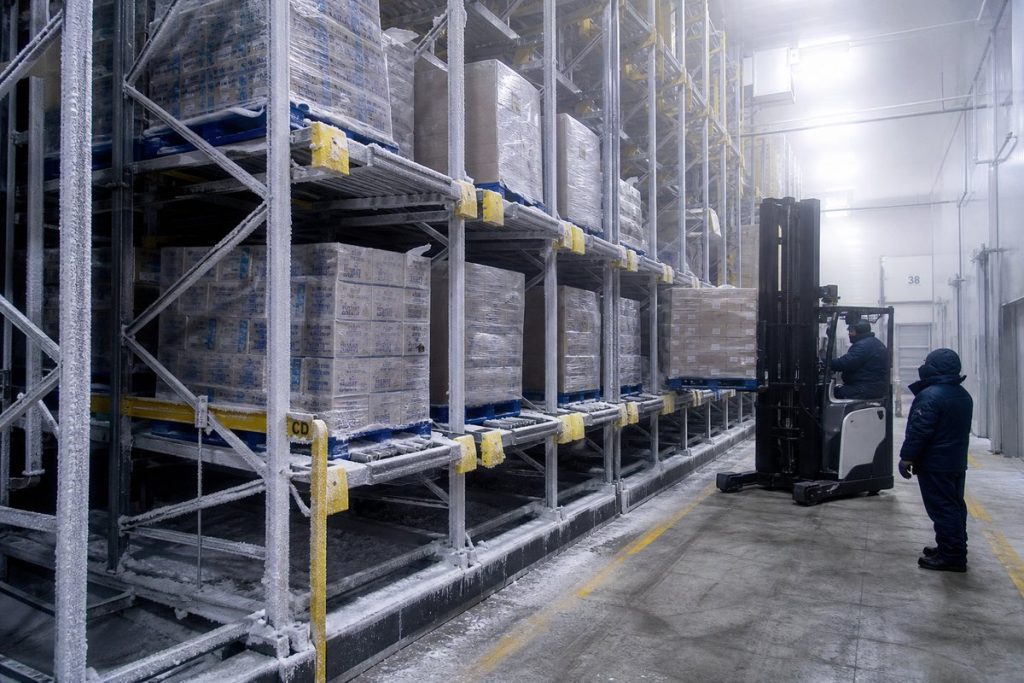 Pallet Flow RackLoad at the back, pick at the front, gravity does the rotation. The strongest mechanical answer to FIFO date rotation for coded product.
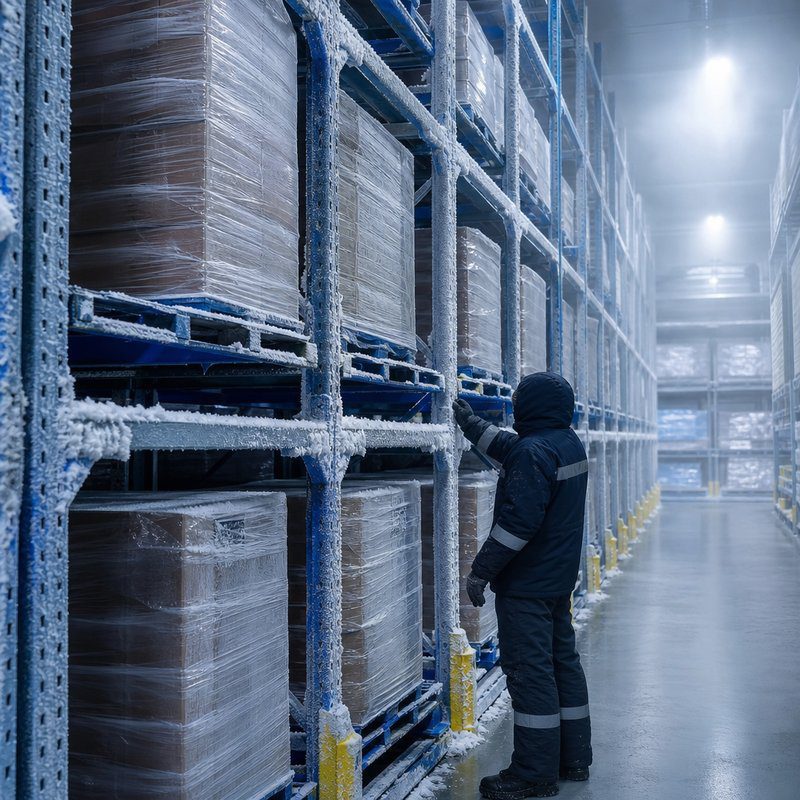 Push-Back RackTwo to six pallets deep on nested carts or spring rails, loaded and picked from one aisle. High density for LIFO-tolerant SKUs in coolers and freezers.
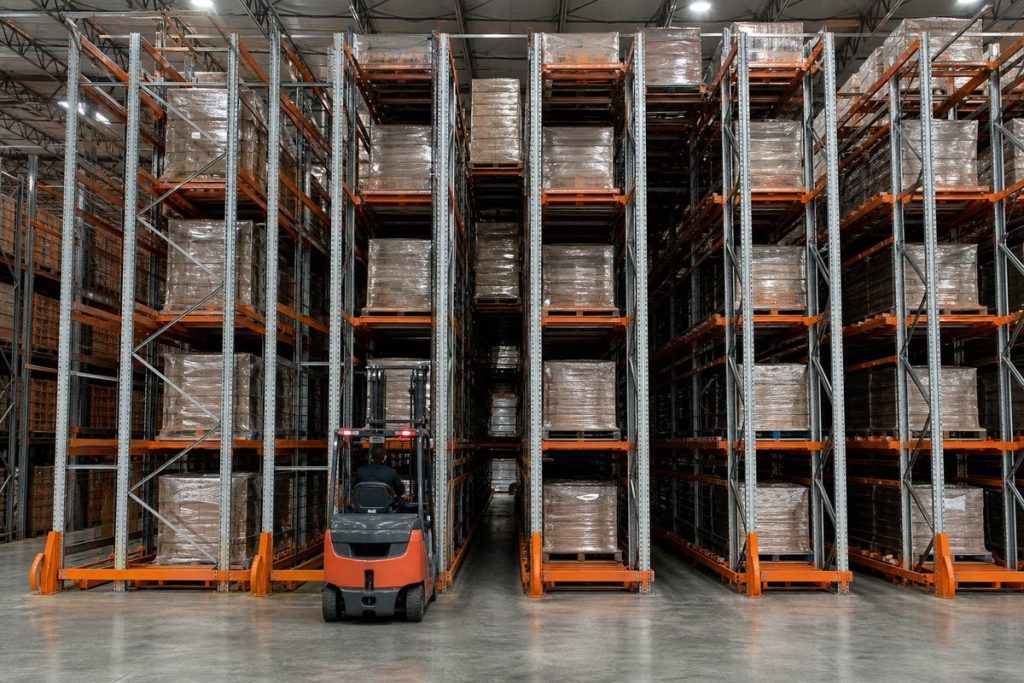 Drive-In RackForklifts drive into deep lanes. The densest fixed system for a small number of SKUs in very high volume — frozen commodity product is the classic fit.
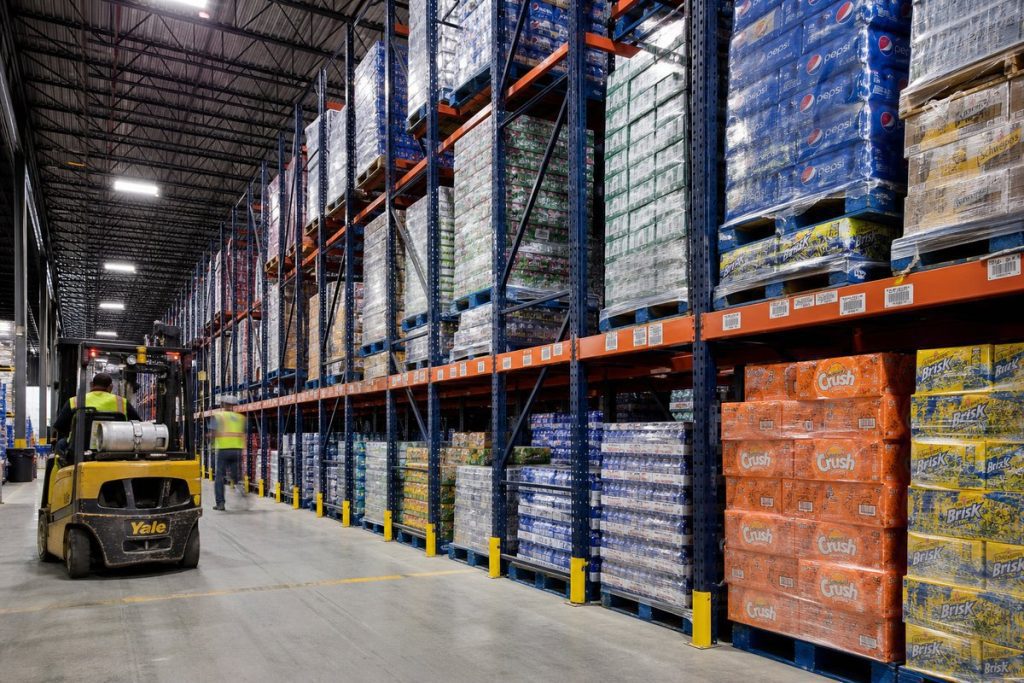 Structural Pallet RackHot-rolled channel columns and beams for heavy beverage pallets, freezer duty and aisles that take daily forklift contact.
Two numbers drive the choice: SKUs per pallet position, and days of supply on hand. A beverage DC with 300 SKUs and eight days of stock wants mostly selective rack and a few flow lanes; a frozen commodity operation with 40 SKUs and six weeks of stock wants drive-in or mobile racking. Bring us both numbers and the layout conversation gets short.
Heavy-Duty Mobile Racking for Cold Storage and Frozen Warehouses

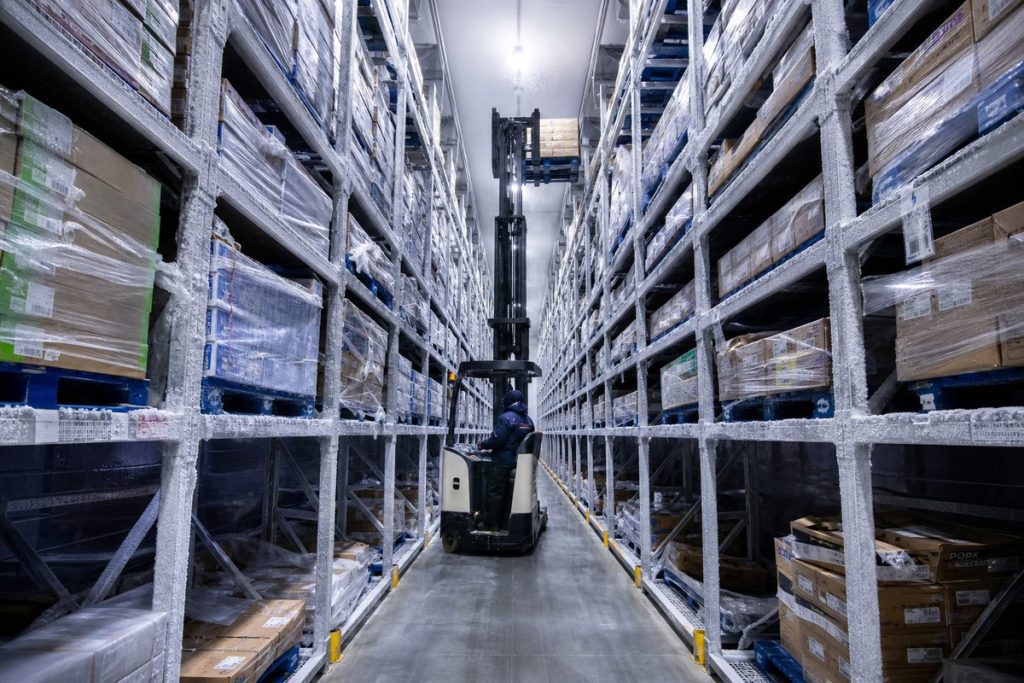
In a dry warehouse, an aisle costs you rent. In a freezer, an aisle costs you rent plus the refrigeration to keep that empty air at -10°F, twenty-four hours a day, forever. That is why heavy-duty mobile racking has become the default high-density answer in cold storage facilities and frozen warehouses: it converts aisle air into pallet positions without adding a square foot of refrigerated envelope.
The system is conventional pallet racking mounted on powered carriages running on floor rails. Instead of an aisle between every row, a block of rows shares one or two working aisles that open wherever the operator asks — from a panel, pendant or remote. When nobody is picking, the block closes and the building is nearly solid product.
The arithmetic is straightforward. In a conventional layout roughly a third to nearly half of the floor is aisle. Collapse that block down to a single shared aisle and most of that area comes back as storage. Operators typically see pallet capacity in the same footprint rise substantially, which is why mobile racking is so often compared directly against building or leasing more freezer space.

What Makes a Mobile Racking System Freezer Duty
- Low-temperature drive package — motors, gearboxes, bearings and lubricants rated for continuous sub-zero operation, not shop-temperature components installed in a freezer.
- Rail and track detailing — rails set flush and grouted so pallet trucks cross them cleanly, with provisions for heating or drainage where frost and ice can accumulate in the track.
- Slab and flatness — mobile carriages are far less forgiving of floor deviation than static rack. Freezer slabs also move as the building cycles, so flatness is surveyed before design and rails are shimmed to the survey.
- Sealed controls and safety — sealed enclosures, photo-eye and sweep-scan aisle protection, entry interlocks and emergency stops sized for a low-visibility, frost-in-the-air environment.
- Under-carriage cleaning access — sanitation has to be able to reach the floor under a closed block, so the design includes a cleaning position and a documented cleaning routine.
- Seismic and anchorage — the rails, not just the rack, carry the seismic load path. In the Intermountain West this drives the engineering on nearly every project.
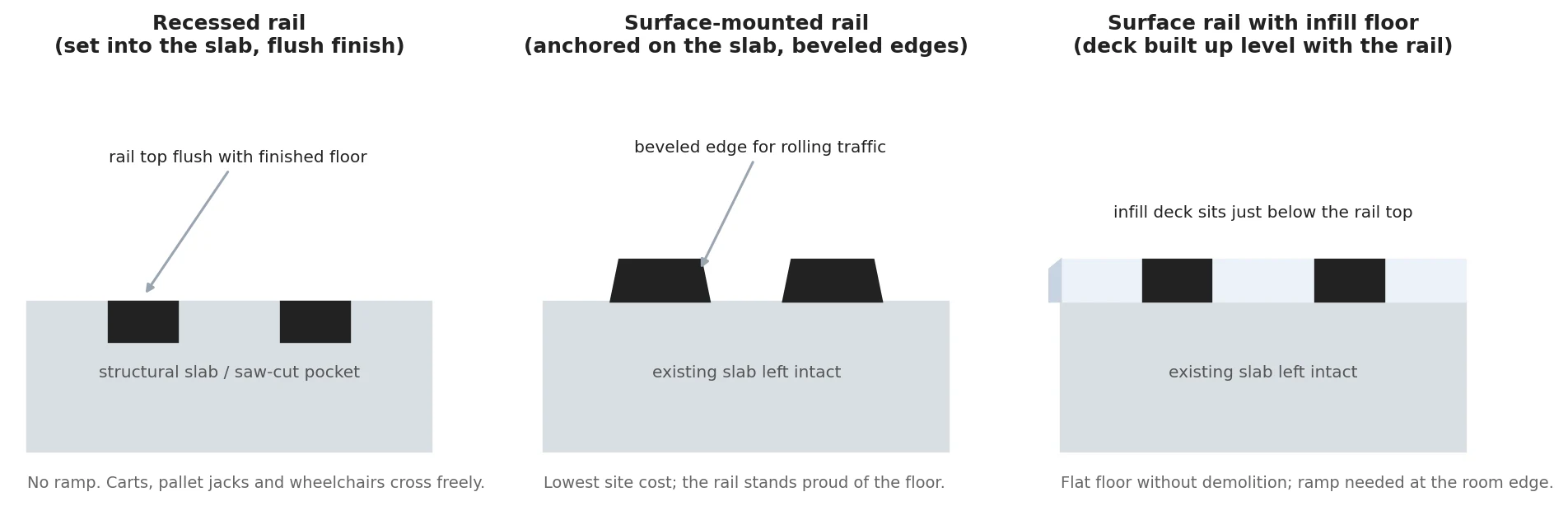
Recessed rail is the preferred detail in a food or beverage building: the traffic surface stays flush, which matters for pallet jacks, cleanability and keeping debris out of the track. Surface-mounted rail installs faster and suits an existing building where cutting the slab is impractical, but it adds a ramp the trucks cross.
The other decision is how many aisles stay open. A single open aisle gives maximum density and is right for reserve storage that is touched a few times a day. Two or three open aisles cost some capacity but let multiple operators work the block at once, which is what a shipping-driven cold storage operation usually needs during a pick window. We model the throughput before we lock the row count.
If your application is cases, totes and cartons rather than pallets, the same principle applies at a smaller scale with mobile shelving on rails.
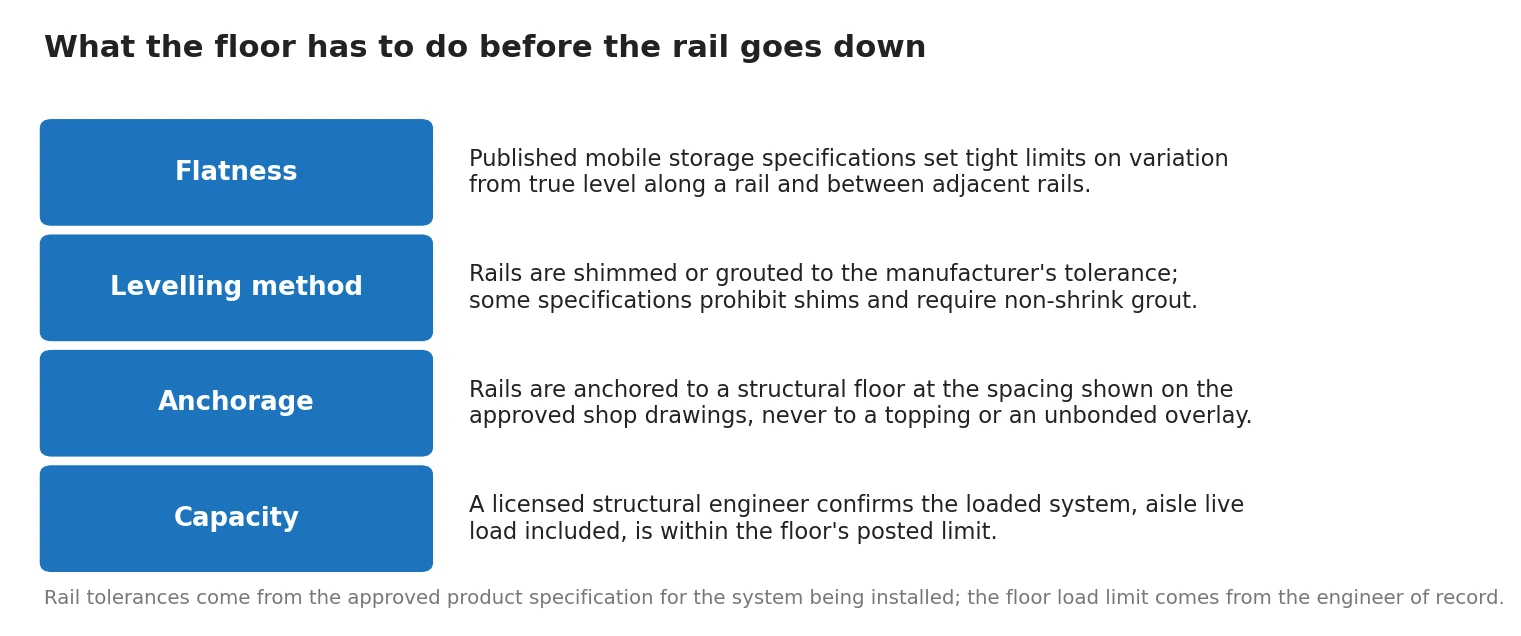
Before you price mobile racking, get a floor survey
Nearly every mobile racking budget problem traces back to the slab. A flatness survey of the freezer floor, taken at temperature, tells us whether the rails can be shimmed within tolerance or whether the slab needs work. It is a small cost that prevents the single largest change order on these projects.
Cold Storage and Freezer Racking: Condensation, Corrosion and Finish

Racking fails in cold storage for reasons that have nothing to do with load. It fails because moisture cycles on and off the steel every time a door opens, because a thaw room sits at the exact temperature where condensation never stops, or because a wash-down crew hits a coated upright with a hose at 180°F twice a week. Temperature alone is a poor guide to finish selection — moisture exposure is the real driver.
A hard-frozen room with dry air is often gentler on steel than a 34°F cooler. Blast freezer approach aisles, dock transitions, thaw rooms and wash-down areas are where standard finishes get consumed, and where a heavier coating, galvanized components or structural sections earn their cost.
The other cold storage constant is impact. Frost, gloved hands and low-visibility aisles mean uprights get hit. Column protectors, end-of-row guards and structural channel in the bottom bays are baseline in a freezer, not upgrades.
| Zone | Typical temperature | Main risk to the steel | What we usually specify |
|---|---|---|---|
| Dry ambient storage | Ambient | Impact and dust | Roll-formed selective rack, standard powder coat, column protection at aisle ends |
| Cooler / produce room | 33–41°F | Continuous condensation on cold steel | Heavier coating system or galvanized components, closed-tube or easily cleanable sections |
| Frozen storage | -10 to 0°F | Impact, frost build-up, low visibility | Structural or heavy roll-formed rack, guarded uprights, wide flue spacing |
| Blast freezer / approach | -20°F and colder | Severe thermal cycling and ice | Structural rack, galvanized or specialty finish, extra clearance for ice |
| Thaw / tempering room | 35–50°F, high RH | Sustained wet surfaces | Galvanized or stainless-clad components, sloped and drainable details |
| Wash-down zone | Ambient, hot water | Chemical and thermal attack on coating | Hot-dip galvanized or stainless components, no moisture-trapping details |

FIFO Date Rotation: Pallet Flow, Carton Flow and Push-Back
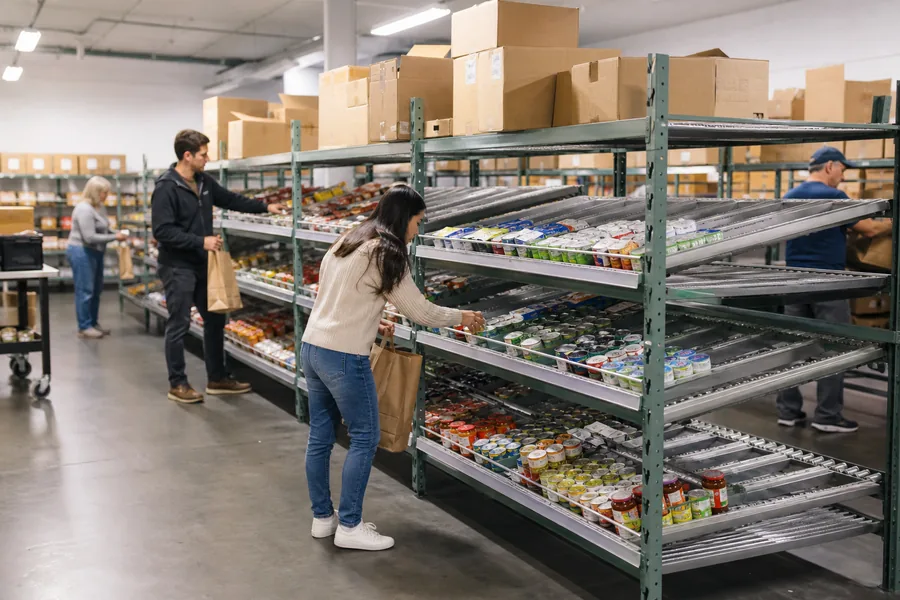
Date rotation is the one requirement that separates food and beverage warehousing from every other kind. If rotation depends on an operator remembering which pallet came first, it will eventually fail, and the failure shows up as expired product on a customer’s dock. Flow racking removes the decision entirely: the rack physically will not present anything but the oldest pallet.
Pallet flow loads at the back onto inclined roller or wheel lanes and picks at the front, so pallets index forward under gravity in the order they were loaded. It is the right system for high-volume, date-coded product and for cold storage where you want operators in the aisle for as little time as possible.
Carton flow does the same thing one case at a time for split-case picking. Wheel bed track such as SpanTrack supports the full carton footprint, which matters for soft, irregular food cases.
Push-back is LIFO, not FIFO, so it belongs on single-SKU lanes where every pallet in the lane carries the same date code. Used that way it gives you flow-like density with a much simpler installation.

Send us your pallet profile and SKU list
Give us pallet dimensions and weights, SKU count, days of supply, temperature by zone and your building’s clear height. We will come back with a layout, a pallet position count and a real capacity comparison between selective, high-density and mobile racking — including what each option does to your refrigerated cube.
Dry Storage, Ingredient and Packaging Rooms
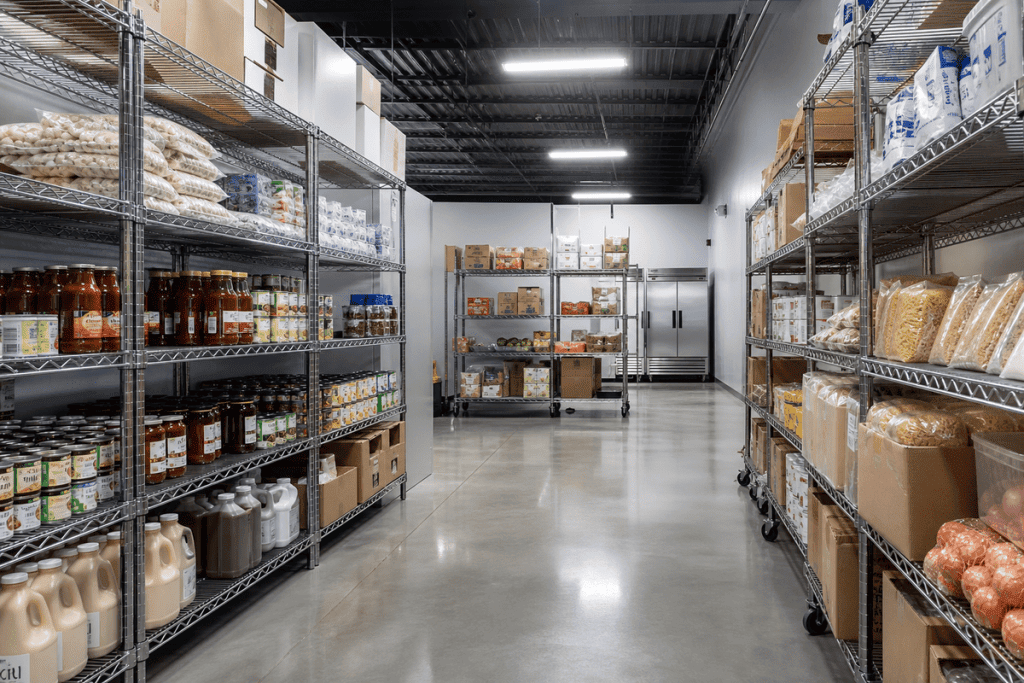
The dry side of a food operation is where storage design quietly determines how fast a production line can change over. Ingredient rooms hold sacks, drums, totes and minor ingredients that get staged by lot. Packaging rooms hold film, corrugate, labels and preforms in volumes that eat floor space faster than anyone plans for. Both need to be picked in lot order and both are subject to the same sanitation program as the production floor.
We typically build these rooms from a mix of pallet rack for full loads, boltless or wide-span shelving for cases and totes, cantilever rack for rolls of film and long stock, and solid or wire shelving for minor ingredients and staged kits. Bin and tote storage handles the small counts that otherwise end up in a corner on the floor.
The detail that pays for itself is slotting: lot-controlled locations, one SKU per location where the count allows, and a bottom level that is rack beam or dunnage, never product on the slab.
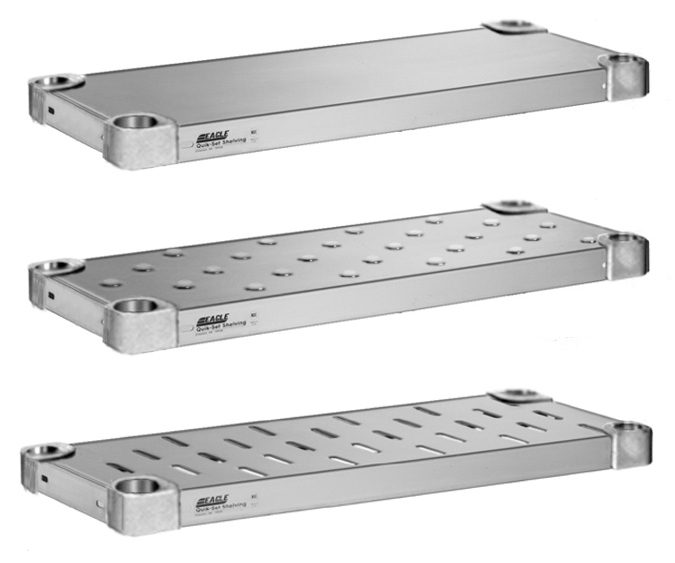
Solid and wire shelving both have a place. Wire keeps air moving over product; solid shelving carries heavier concentrated loads and stops powders falling through. In an ingredient room we usually mix the two by shelf level.
For the small-format shelving, carts and stainless storage that sit inside a plant or a back-of-house area rather than in the warehouse, see foodservice shelving and storage. If your shelving has to meet a sanitation listing, our sanitation-rated shelving guide explains how those listings work and how to specify to them. Listings are model-specific, so we confirm the status of each model in writing before you order.
Where an ingredient or packaging room needs to be conditioned, enclosed or separated from the plant, a modular in-plant building is usually faster and cheaper than construction.
Sanitation-Friendly Layouts, Dunnage and Floor Clearance
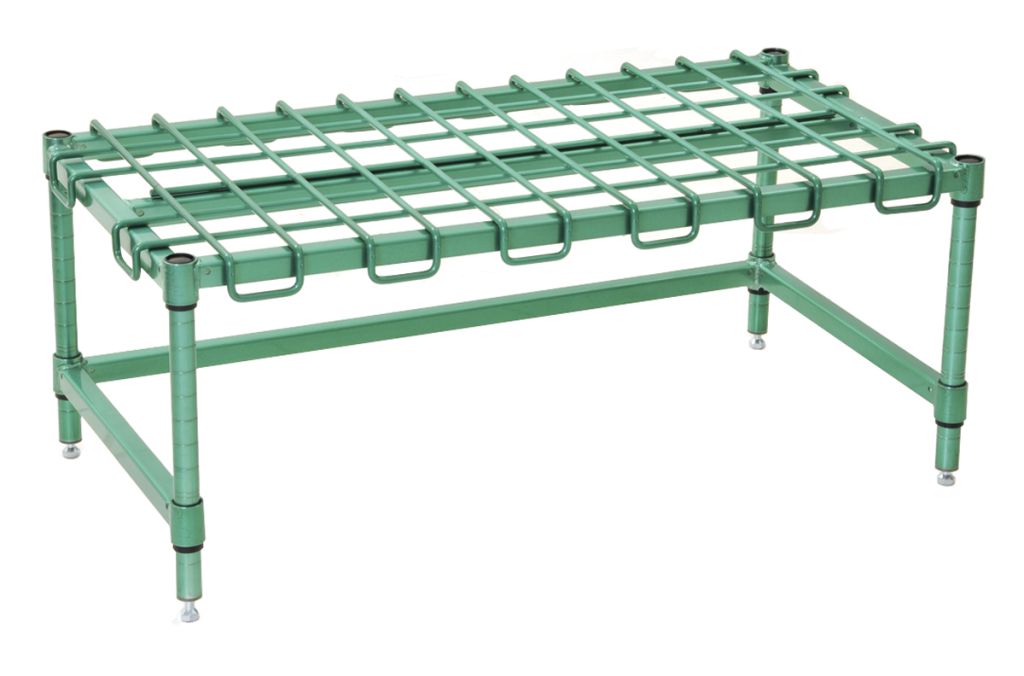
Every food and beverage storage layout gets graded twice: by operations on throughput, and by an auditor on whether the room can be cleaned and inspected. The second grade is the one that stops a shipment, and it is decided by details that cost very little at design time.
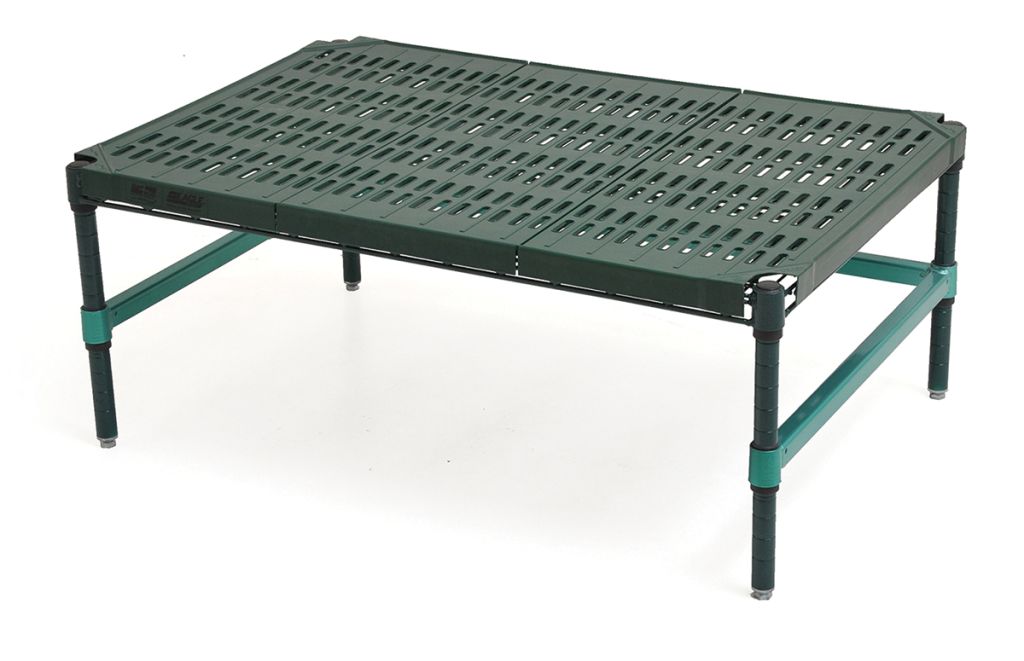
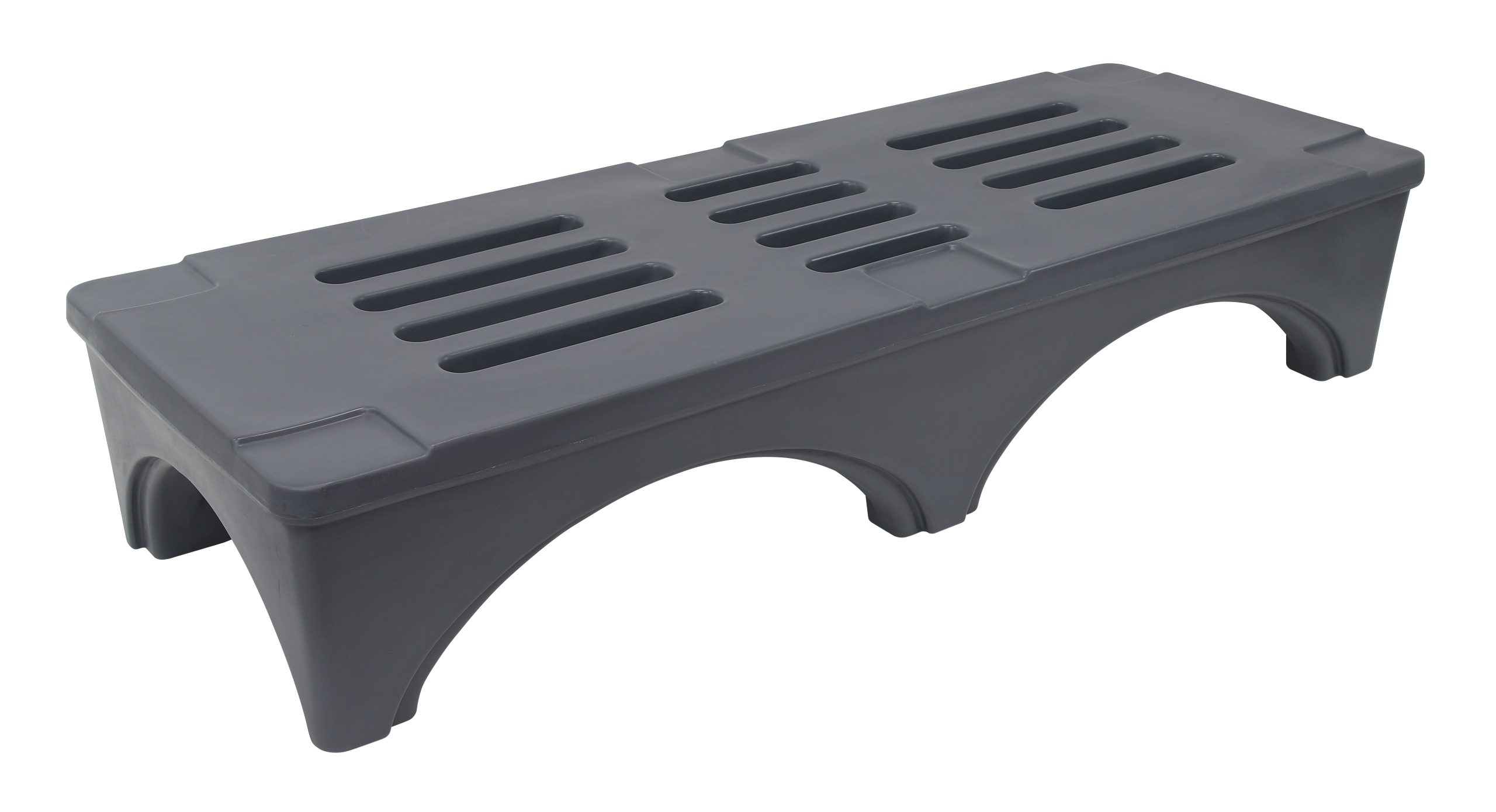
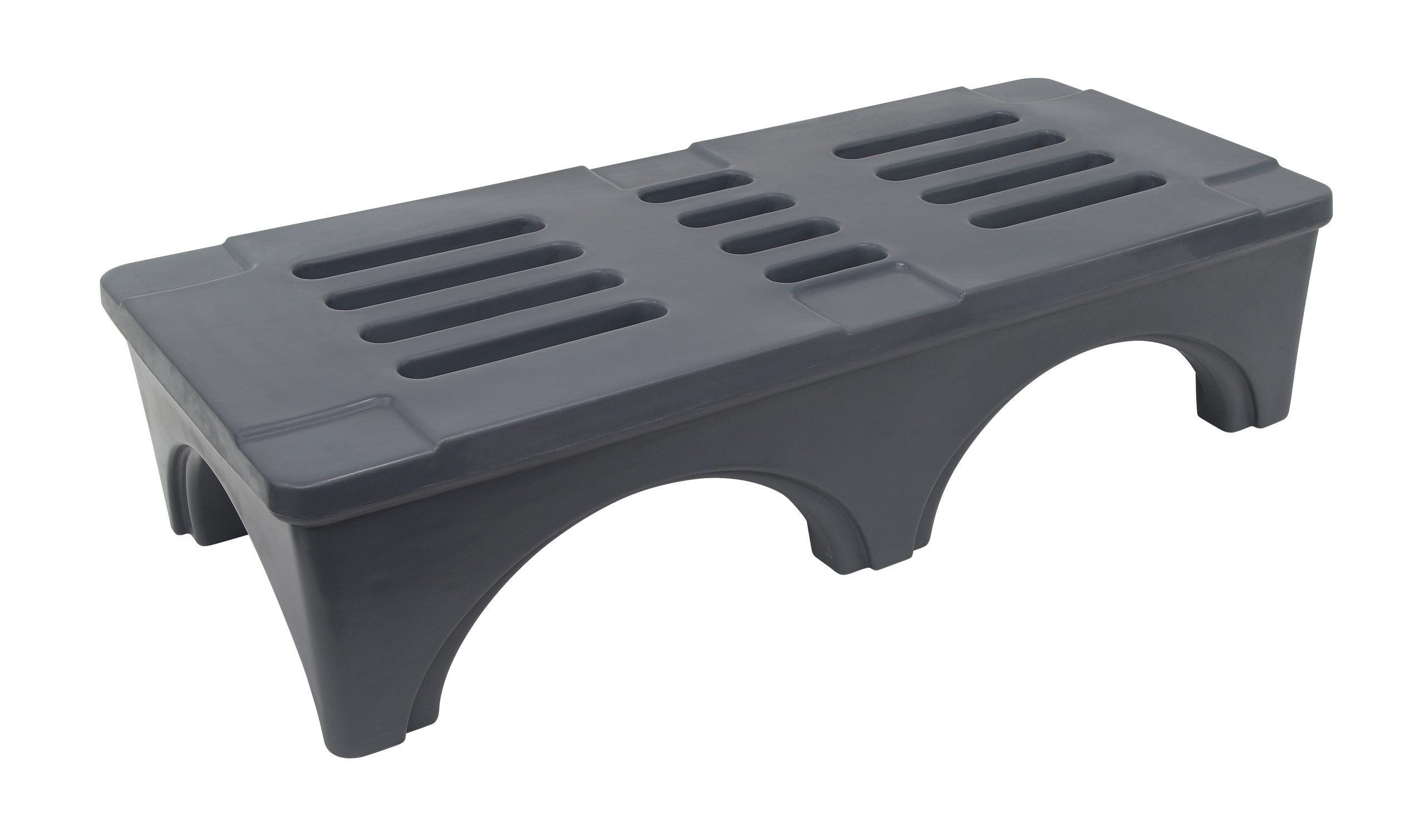
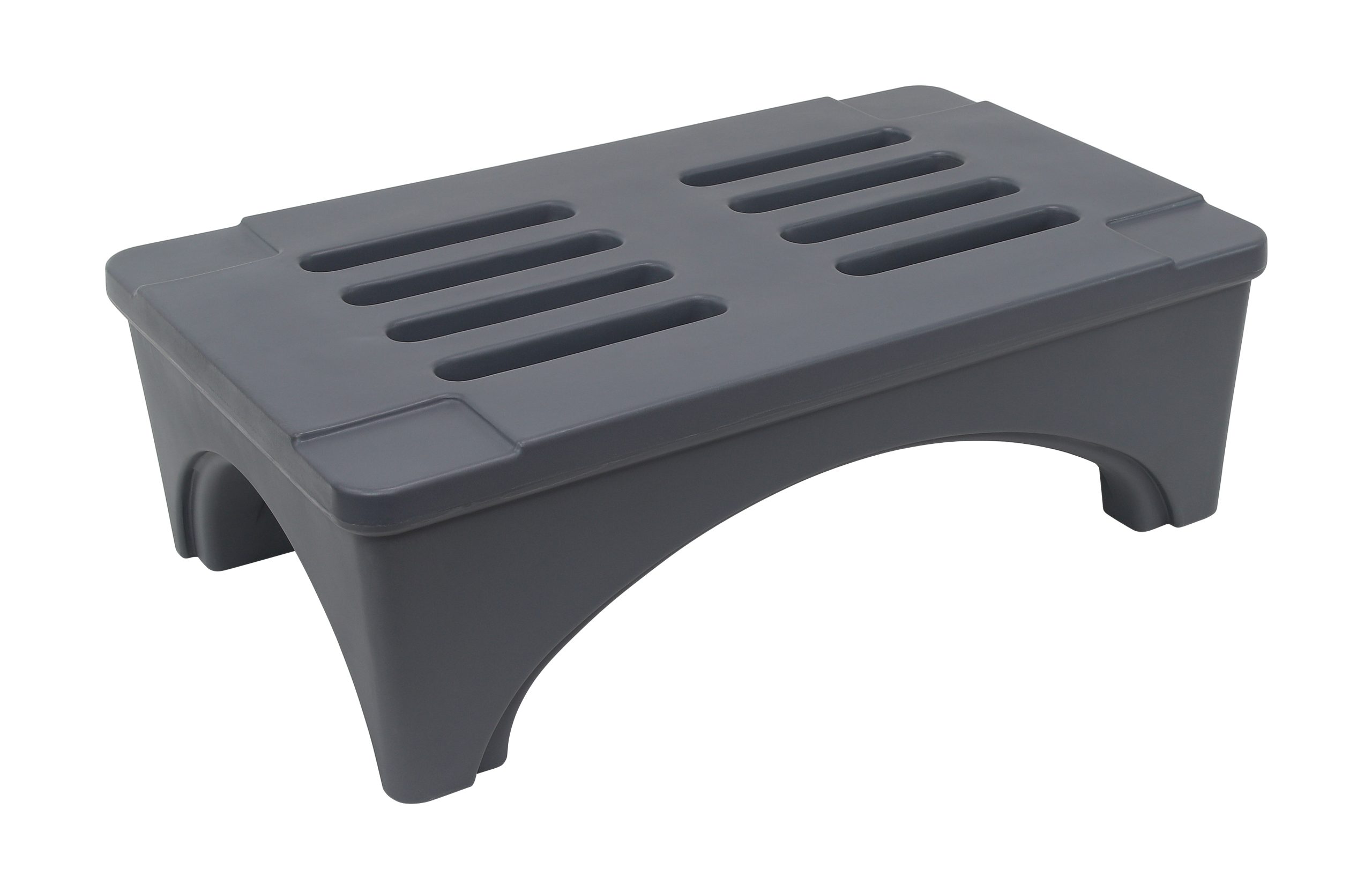
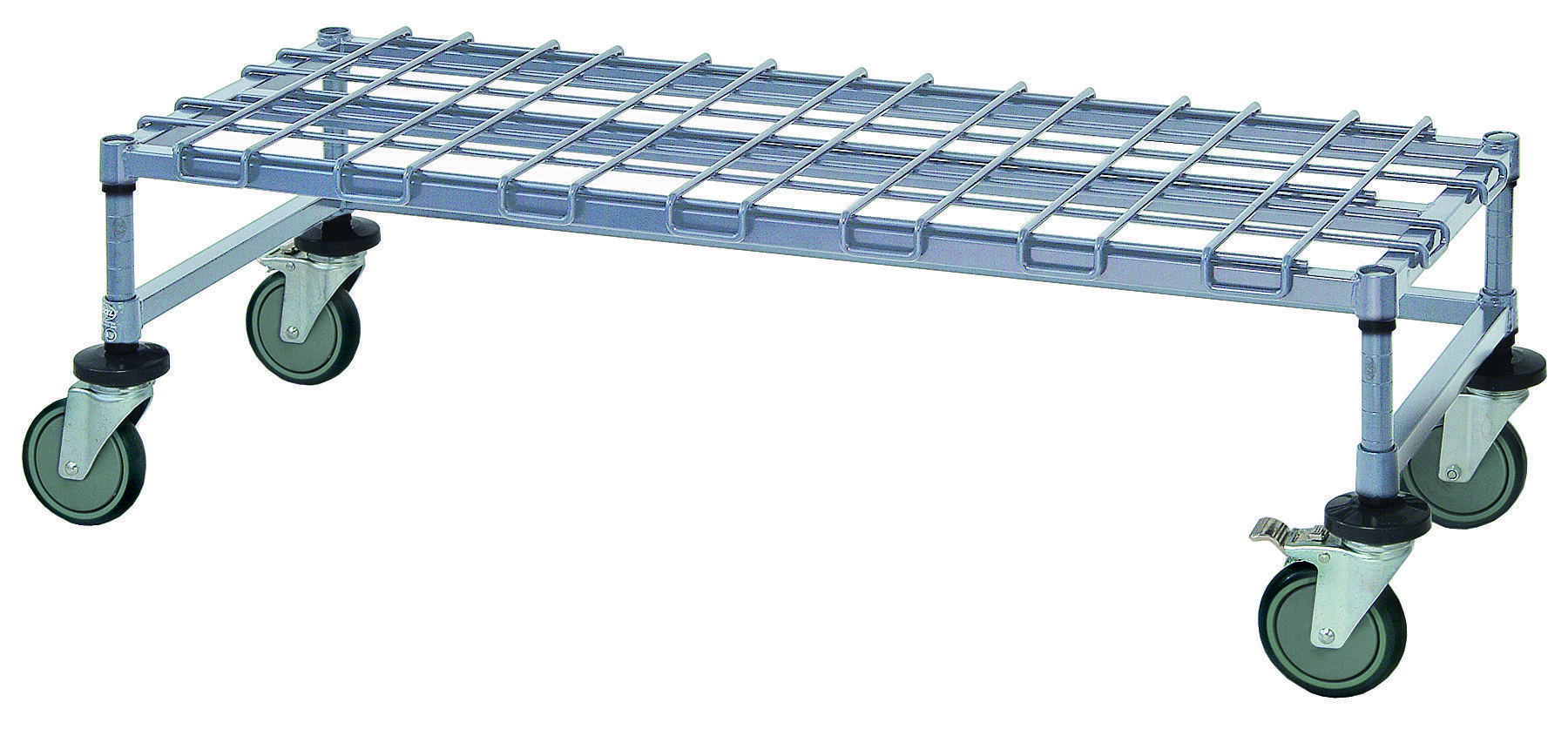
Nothing on the floor. Dunnage racks — wire, aluminum or polymer — hold sacked and cased product at a cleanable height, and a bottom rack beam does the same job for palletized loads. A maintained clear perimeter along walls gives sanitation access and makes pest activity visible instead of hidden behind a pallet. Rack uprights that sit slightly off the wall let a crew sweep and inspect behind them.
Cleanable details matter as much as clearance: avoid ledges that collect debris and choose shelf mats that lift out for washing rather than pans that trap water.

- Store product off the floor on dunnage or a bottom beam so floors can be cleaned and inspected — your sanitation program sets the exact dimension and we build to it.
- Keep a clear perimeter aisle at every wall so pest monitoring and cleaning can reach the whole envelope.
- Slot allergens and raw materials so they cannot be stored above ready-to-eat product; the rack layout should make the mistake physically hard.
- Give sanitation a cleaning position in mobile racking blocks and a written routine for reaching the floor under a closed block.
- Use lift-out polymer or wire mats where wash-down happens so mats can leave the room and go through a wash cycle.
- Keep documentation current — rack capacity plaques, load charts, layout drawings and the last rack safety inspection are all things auditors ask to see.
Comparing High-Density Storage for Food & Beverage
The table below is the shortlist we work from on most food, beverage and cold storage projects. Density figures are directional; the real numbers come out of a layout against your building and pallet profile.
| System | Rotation | Relative density | Best fit | Watch out for |
|---|---|---|---|---|
| Selective rack | FIFO by slotting and WMS | Baseline | High SKU count, pick faces, changing product mix | Aisle area is the largest single consumer of refrigerated cube |
| Double deep | FIFO with discipline | Higher | Paired-pallet SKUs, moderate SKU count | Requires reach trucks and gives up direct access to the back pallet |
| Push-back | LIFO | High | 2–6 deep lanes, one SKU and one date code per lane | Not appropriate where a lane mixes date codes |
| Pallet flow | True FIFO | High | Fast movers, date-coded product, cold storage | Lane design must match pallet quality; poor pallets hang up in lanes |
| Drive-in | LIFO | Very high | Few SKUs, very high volume, frozen commodity | Slow cycle times and higher impact exposure inside lanes |
| Mobile racking | FIFO or LIFO by design | Highest per square foot | Cold storage and freezer warehouses paying to refrigerate aisle space | Floor flatness, freezer-duty drives and throughput during peak pick windows |
| Carton flow / shelving | FIFO at case level | High for cases | Split-case picking, ingredient and packaging rooms | Lane pitch has to match your case size and weight |
Where We Work in Food & Beverage
 Beverage DistributionHeavy pallets, high turns and hard forklift traffic. Structural rack, flow lanes for fast movers and aisle protection that survives a route-truck schedule.
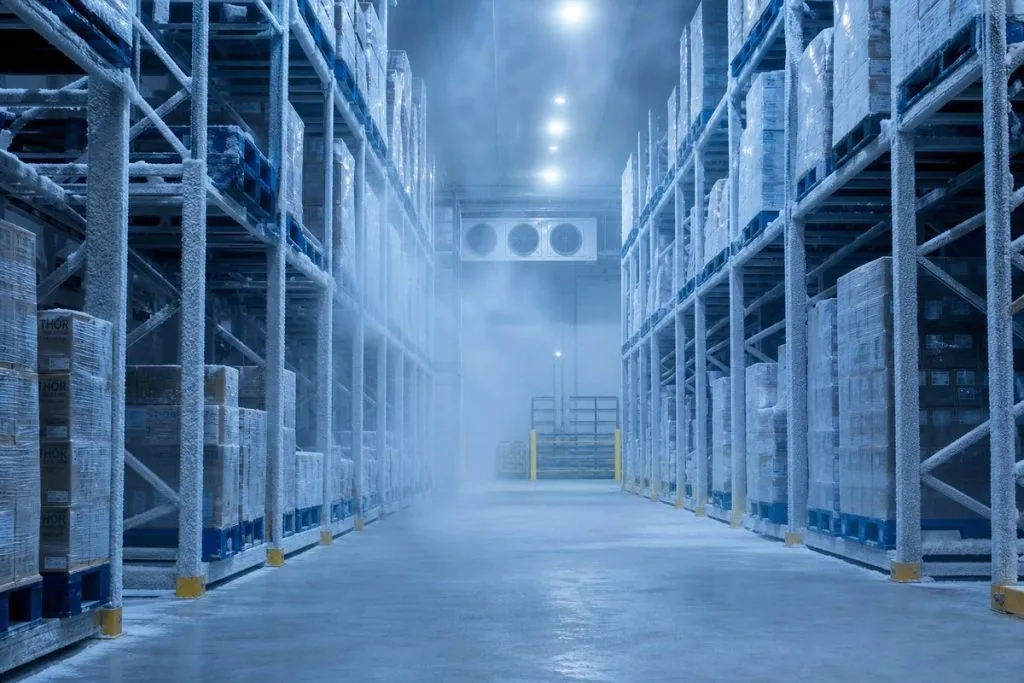 Cold Storage & 3PL FreezersMobile racking, drive-in and push-back blocks that raise pallet positions inside an existing refrigerated envelope instead of building a new one.
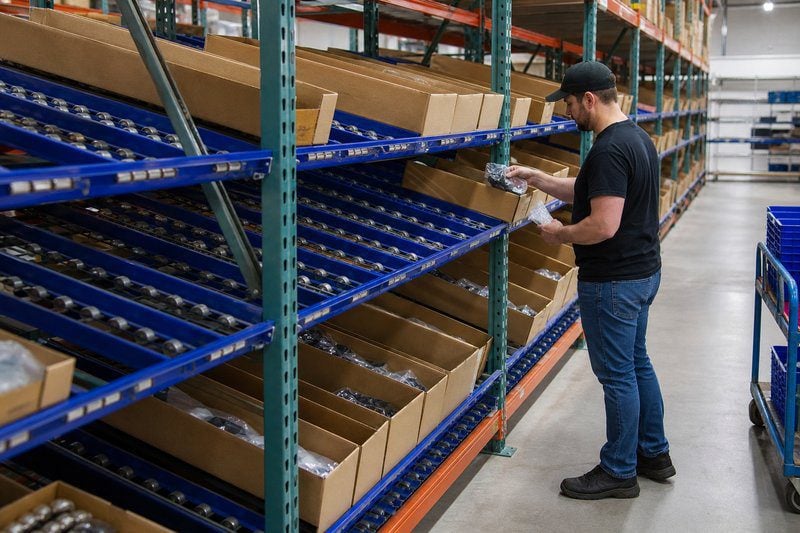 Food Distribution & FoodbanksCarton flow pick modules, selective rack and slotting built around date rotation and split-case picking.
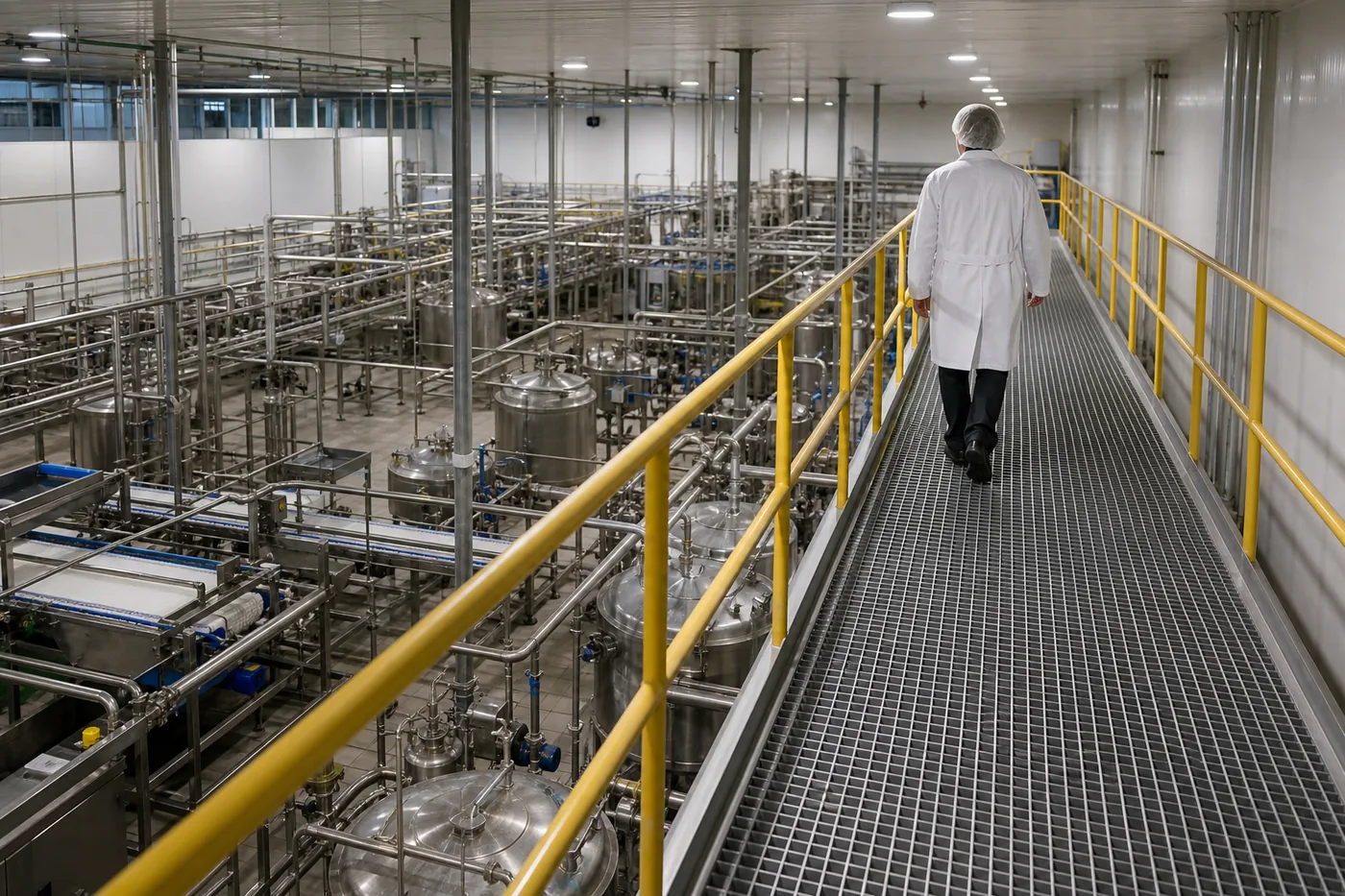 Processing & Co-Packing PlantsIngredient and packaging rooms, wash-down-tolerant storage and sanitary layouts that hold up in an audit.
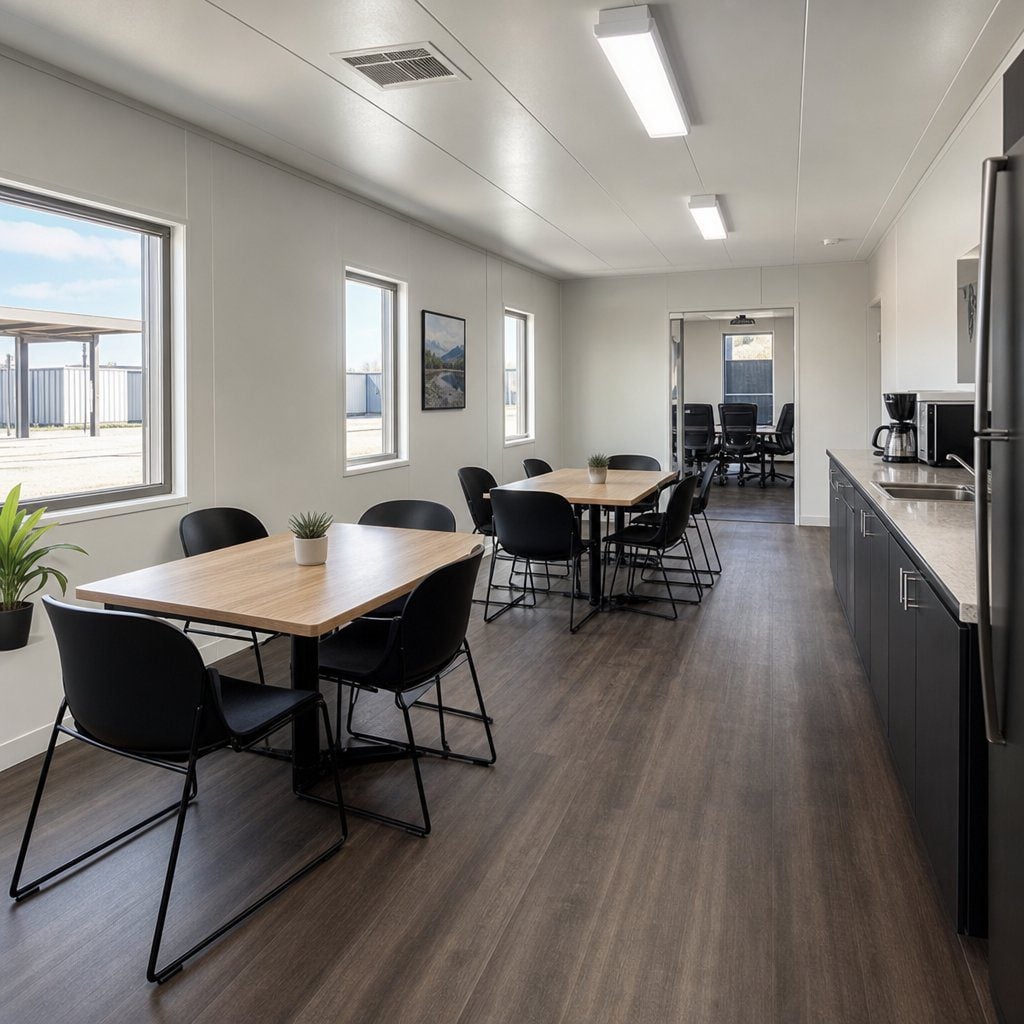 In-Plant Rooms & QA LabsModular buildings for QA labs, break rooms and conditioned storage inside an existing plant envelope.
 Produce & DairyShort shelf life, strict FIFO and cooler-grade finishes. Flow lanes and cooler racking specified for continuous condensation.
Shop Food Storage Racks & Shelving Online
Buy select items directly from our online store, or request a quote for volume, custom sizes and freight-rated orders.
Get a free quote
Tell us what you are storing, the room size and your timeline. A project specialist will follow up with layout options and pricing. Prefer to talk? Call (800) 326-4403.
Frequently Asked Questions
What racking is best for a food and beverage warehouse?
How does heavy-duty mobile racking work in a cold storage facility?
Can mobile racking run at freezer temperatures?
What finish should pallet racking have in a cooler or blast freezer?
How much floor clearance do I need under storage in a food warehouse?
Do you handle FIFO date rotation for coded product?
Do you also supply kitchen and foodservice equipment?
Does MH-USA install and inspect the racking?
Related planning resources: cold-storage mobile pallet racking.
Plan Your Food & Beverage Storage Project
Send us your pallet profile, SKU count and temperature zones. We will return a layout, a pallet position count and a quote — call (800) 326-4403.