
Home › Dunnage Racks
Dunnage Racks
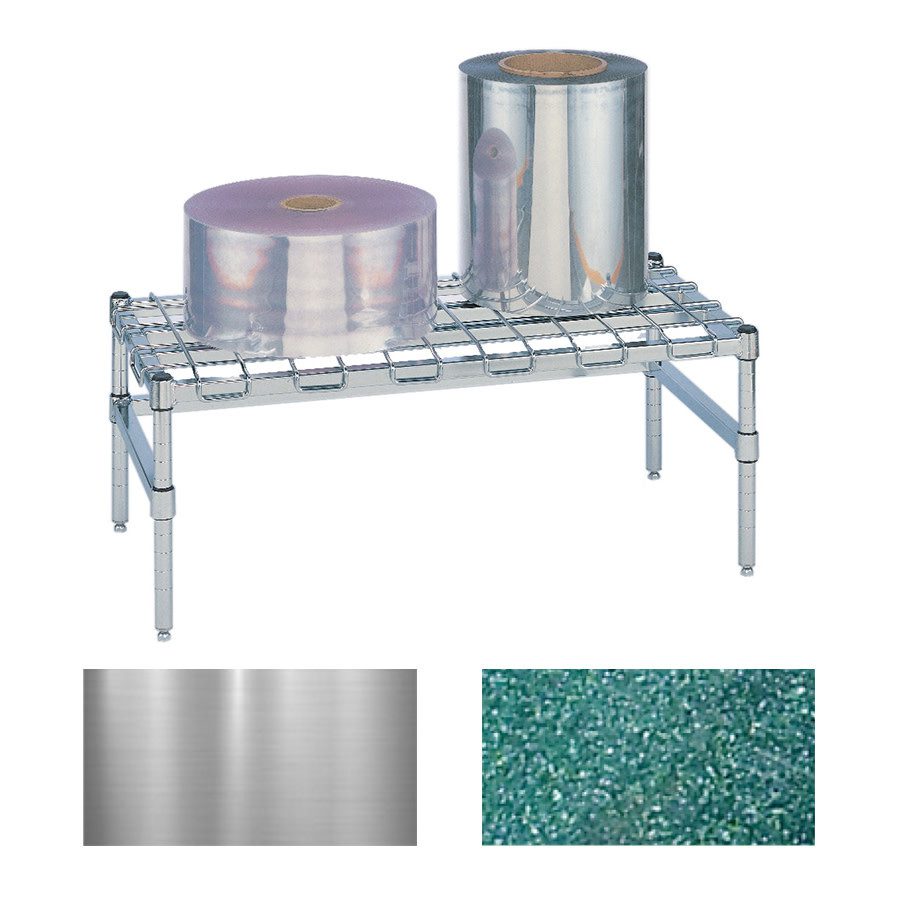
Off-the-floor bulk storage for coolers, freezers, dry stores and warehouses — polymer, aluminum, stainless steel and epoxy-coated steel dunnage racks, platforms and mobile units, specified and quoted by MH-USA.
12–18″
Typical off-floor height
24–60″
Standard rack widths
1997
Serving the Intermountain West
50
States shipped
What a Dunnage Rack Is — and Why Bulk Product Cannot Sit on the Floor
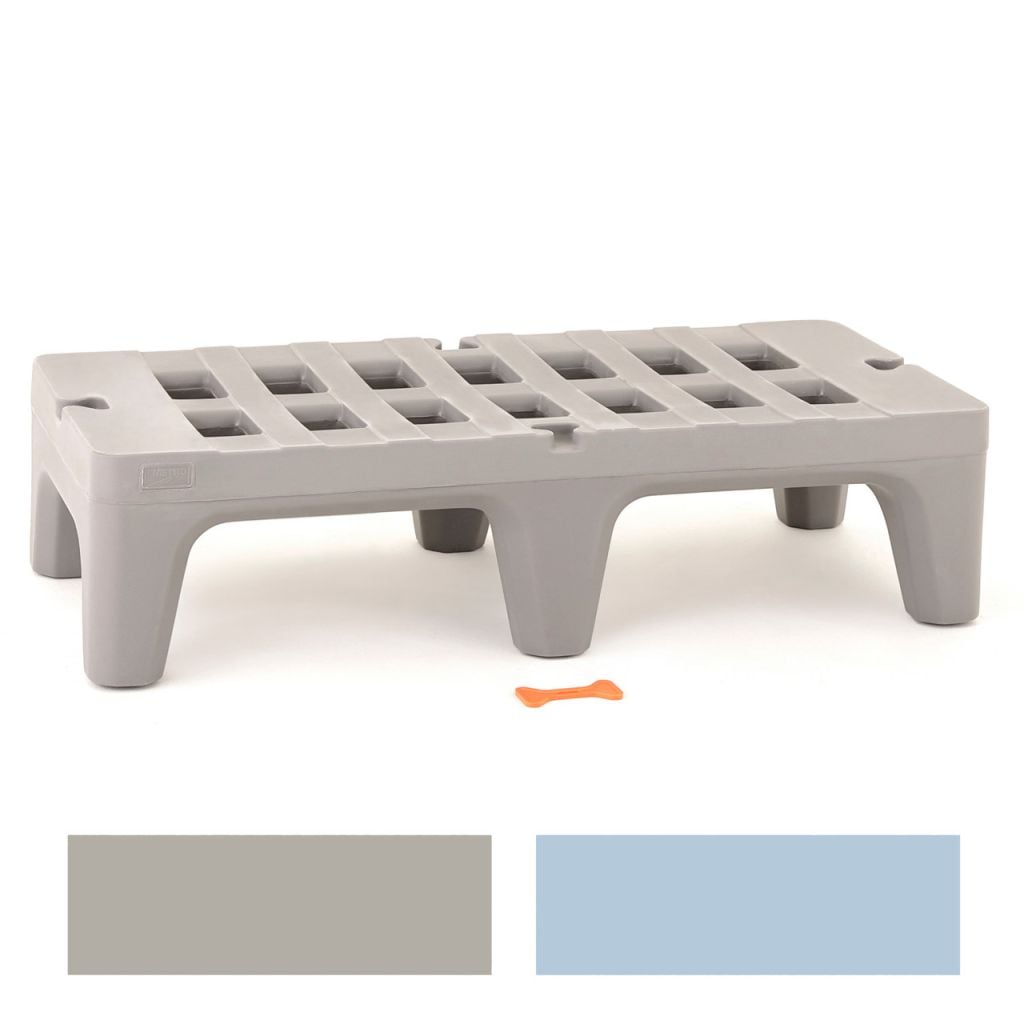
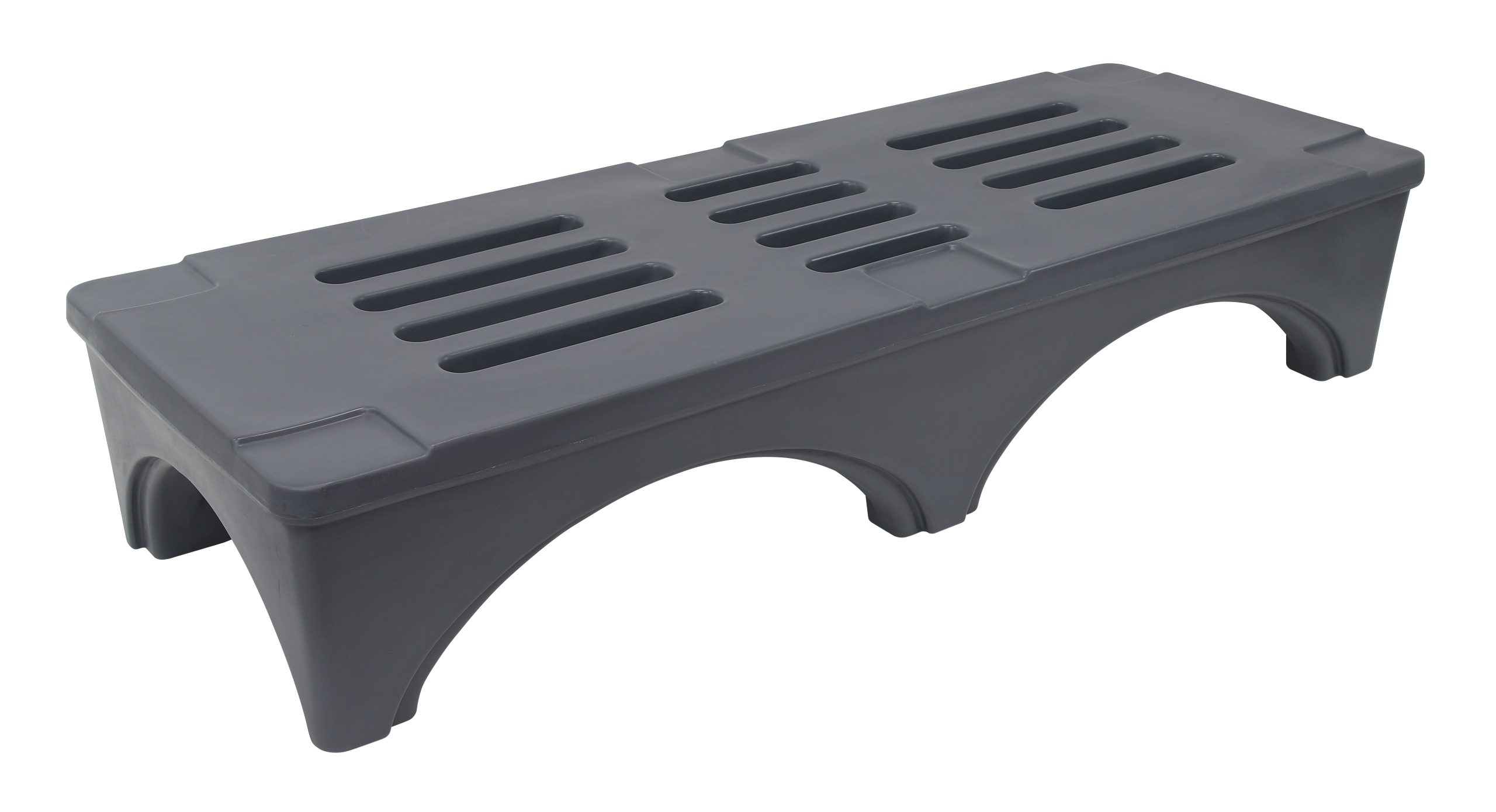
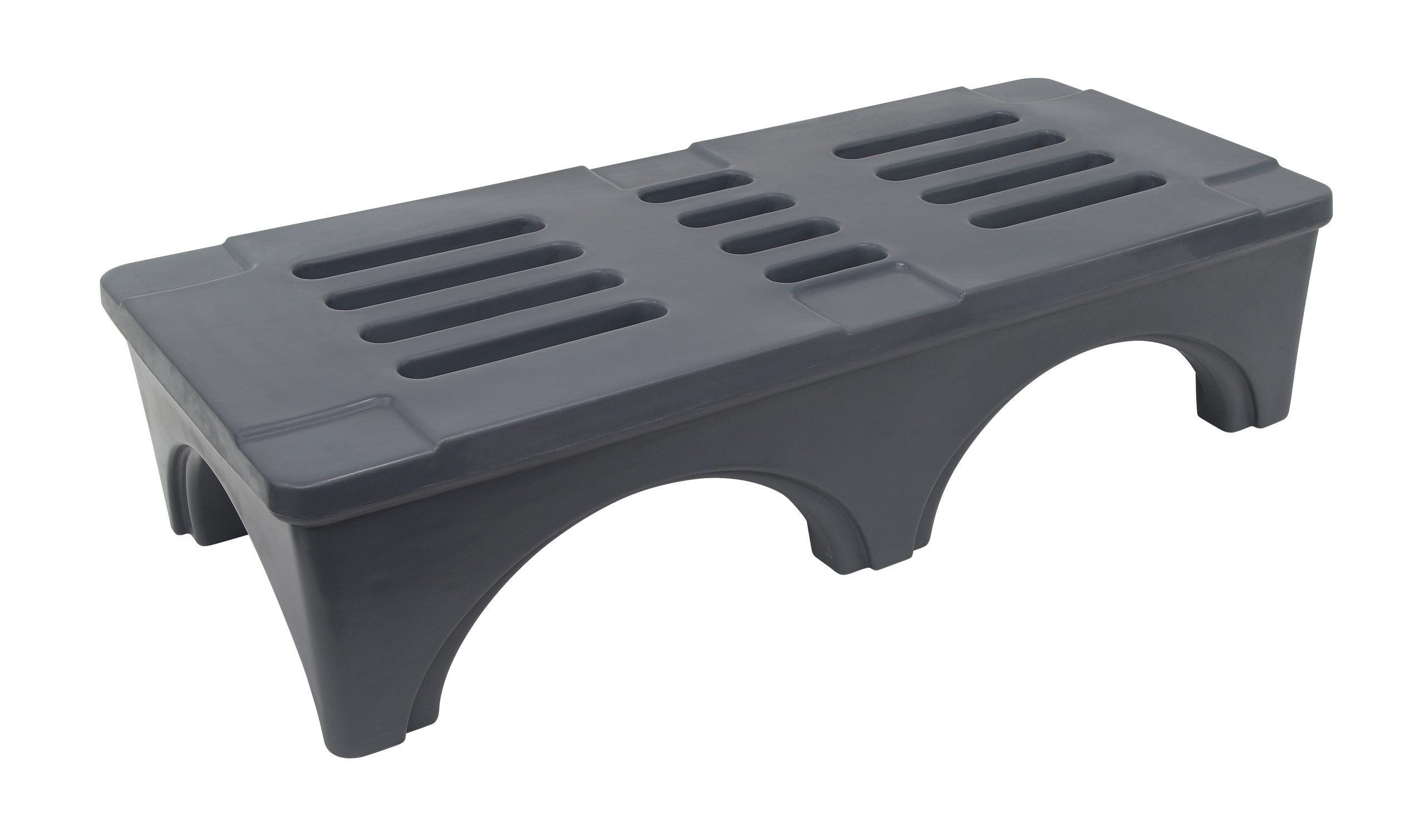
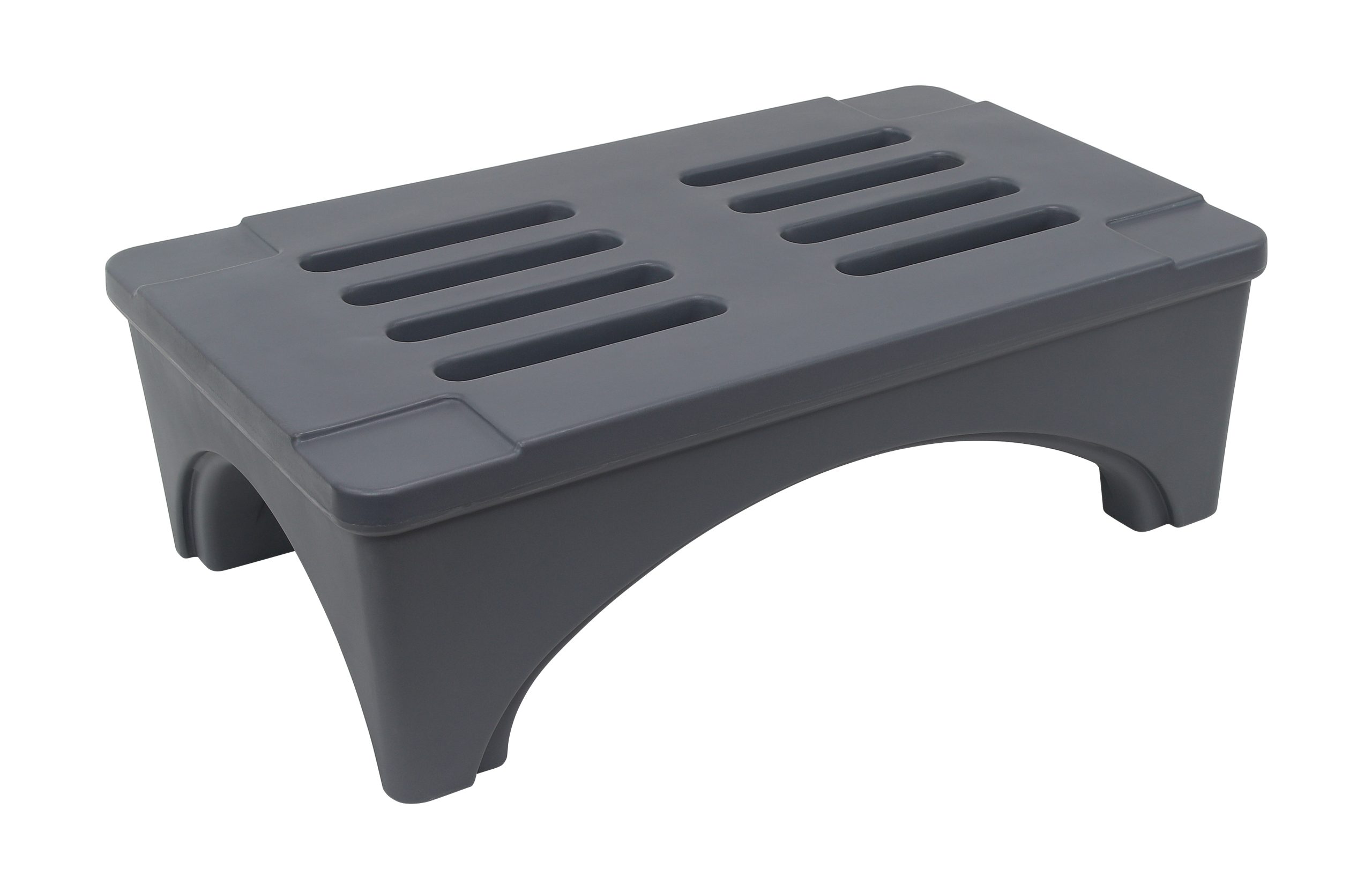
A dunnage rack is a short, heavy-duty platform on legs — usually 12 to 18 inches tall — built to hold bulk product off the floor. It is the equipment nobody specifies until an inspector points at 50-pound flour sacks on the cooler slab. Sacks, cases of canned goods, pails, drums, kegs, ingredient bins and bagged produce all end up on dunnage because they are too heavy or too awkward for a shelf.
The reasoning is practical. Floors in coolers, freezers, dry stores and warehouses get wet — condensate, defrost cycles, mop water, wash-down hoses. Product sitting on that floor wicks moisture, cardboard softens, paper sacks stain and tear. Worse, you cannot clean under it: debris and standing water collect in a strip you can only reach by unloading the whole stack, which means it never gets cleaned at all. That is what draws attention on a health department walkthrough, and what attracts pests.
Raising the load solves all of it at once: a mop or floor scrubber passes underneath, air moves around the product, spills drain and dry, and the pile stays visible and countable. General food-storage practice — and what inspectors in most jurisdictions expect to see — is bulk goods on a rack or platform rather than on the floor, with enough clearance to clean beneath. We describe what is customary; confirm what your own jurisdiction enforces.
MH-USA has laid out storage rooms from Salt Lake City since 1997 for restaurants, school districts, hospitals, distributors, breweries and food processors across the Intermountain West and nationwide. We represent Metro (InterMetro Industries, founded 1929 in Wilkes-Barre, Pennsylvania) along with other manufacturers, so we can put the right material under your product.
Dunnage Rack Materials and Where Each One Belongs
Material choice is set by the room: temperature, humidity, cleaning chemicals, load weight and whether the rack gets hosed down. Here is how the common families compare.
| Material | Best environment | Strengths | Watch out for |
|---|---|---|---|
| Polymer / composite | Walk-in coolers, walk-in freezers, wet prep rooms, breweries | No rust, unaffected by condensate and freeze-thaw cycles, warm to handle in a freezer, tops often break down for washing | Capacity is set by the frame, not the top — check the rated load and span |
| Aluminum | Dry stores, receiving areas, mobile and frequently relocated dunnage | Light for its strength, no rust, easy for one person to reposition | Softer than steel — drum edges and forklift contact will dent it |
| Stainless steel | Wash-down rooms, food processing, walk-in coolers and freezers, healthcare and lab storage | Best corrosion resistance in steel, takes aggressive chemicals and wash-down, heaviest ratings | Highest-cost material; verify the alloy for the chemicals in your room |
| Epoxy-coated steel | Humid dry stores, coolers, general back-of-house storage | Steel strength with a baked coating that resists humidity and mild corrosion | The coating is the barrier — chips from dropped drums should be touched up |
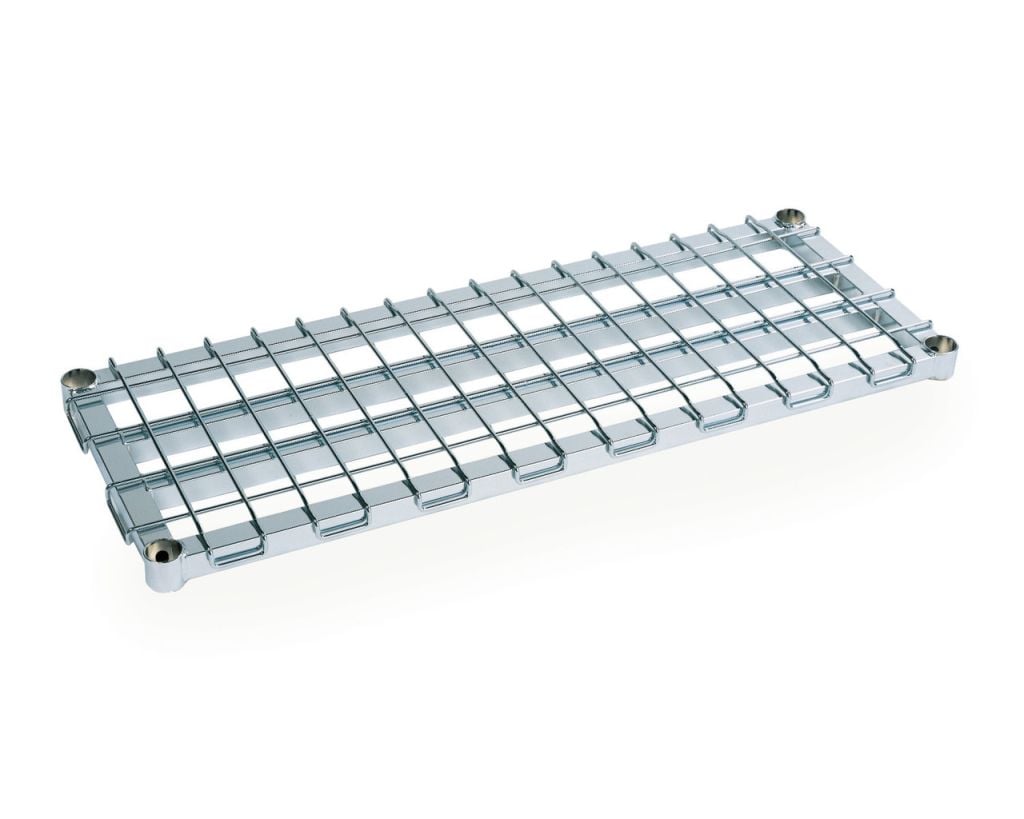
| Chrome-plated steel | Dry storage rooms only | Economical, strong, matches chrome wire shelving already in the room | Not for freezers, coolers or any wet area — moisture cycles will eventually lift the plating |
Choosing between them in practice
Cold and wet: start with polymer or stainless. Dry and heavy: epoxy-coated or chrome steel is usually the value answer. Lifted and repositioned by one person several times a week — beverage coolers, catering staging, mobile bars: aluminum earns its keep.
A detail that gets skipped: match the dunnage material to the shelving already in the room. Floor level is the wettest, hardest-used zone, so the dunnage should be at least as corrosion-resistant as the shelving above it — never less.
Slotted, Solid and Open-Grid Tops
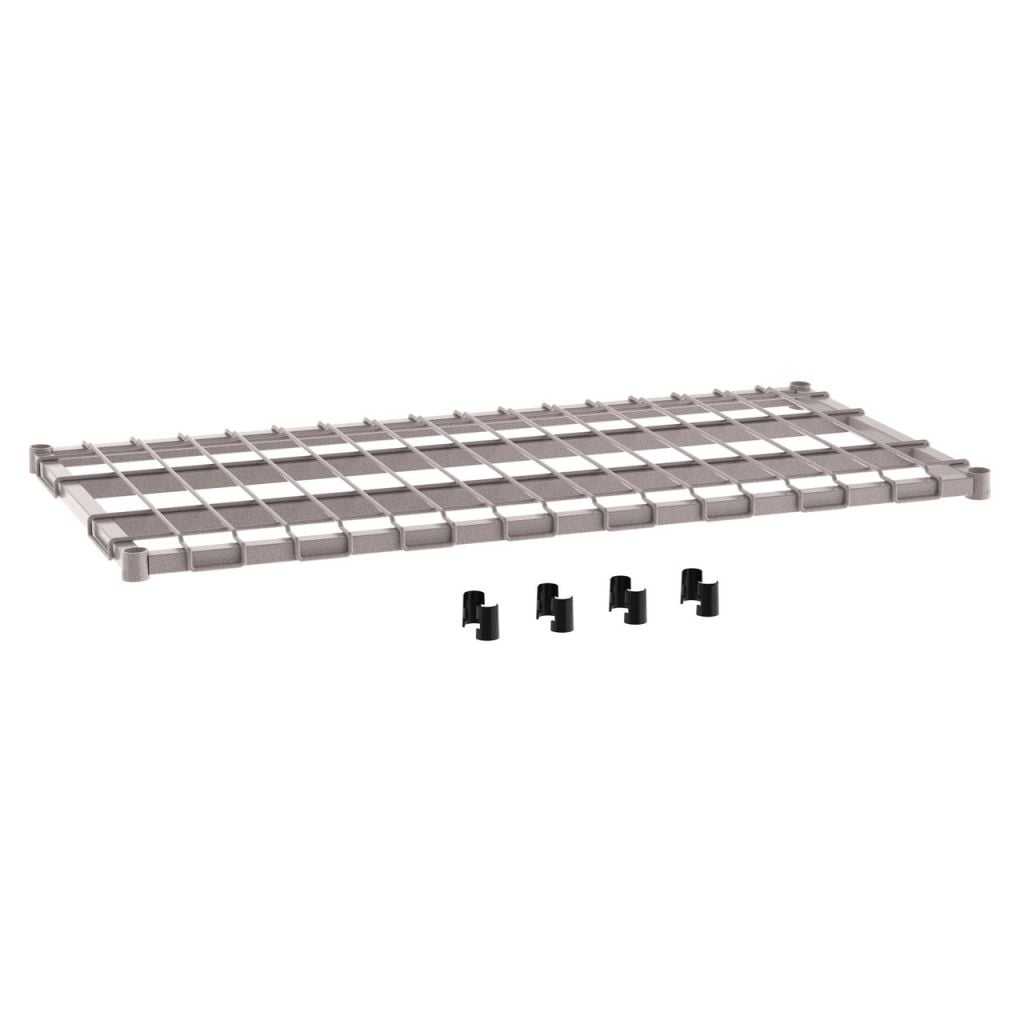
The top surface determines what you can safely set on the rack, how the load breathes and how fast it cleans. Three styles cover almost everything.
Open-grid and wire tops give the most airflow and fastest drainage — water and spills fall through to a floor you can squeegee, and cold air circulates around the load. They are the default in coolers and freezers. The trade-off is bearing area: narrow-base pails and soft-bottom items sag between the wires.
Slotted tops — parallel ribs or louvered slats — are the common middle ground: enough bearing surface to carry sacks and cases without bridging, enough open area to drain and ventilate. Most polymer and aluminum dunnage is slotted.
Solid tops support anything, including small containers and product that would fall through a grid. They also catch everything, so a solid top gets wiped down rather than rinsed through. Good under ingredient bins, small pails and packaged goods.
Airflow is a cooling issue, not just a cleaning one
Product stacked in a solid block on a solid surface holds its core temperature far longer than the same product on a ventilated top with air moving under it. If a cooler struggles to pull warm deliveries down, look at what the bulk product is sitting on before you look at the refrigeration.
Capacity Ratings, Honestly Explained
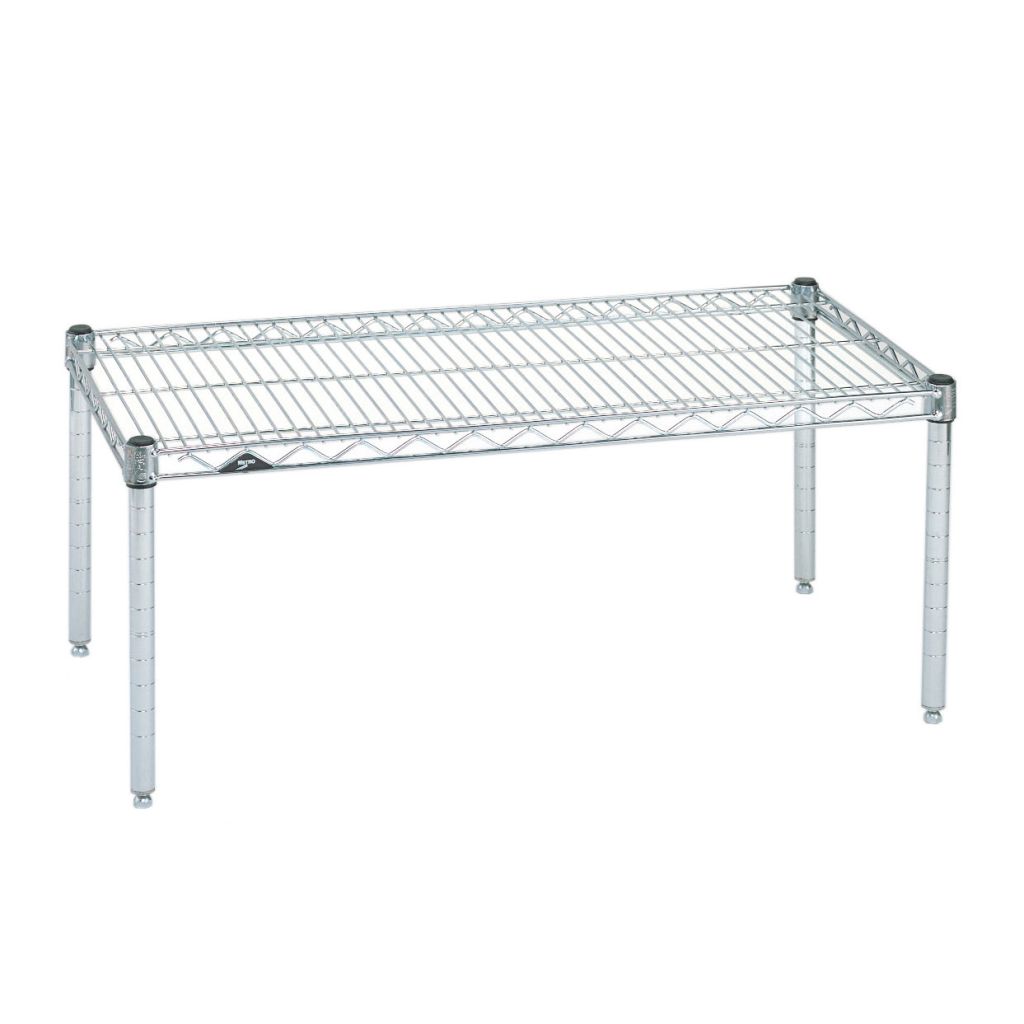
Every dunnage rack is published with a load rating, and that rating means one specific thing: a uniformly distributed load. The stated weight assumes it is spread evenly across the entire top of the rack. A 2,000 lb rating does not mean you can set a 2,000 lb concentrated load in the middle of a 60-inch rack. Concentrated in the center of the longest span, that same rack is carrying its worst-case bending moment and the safe number is dramatically lower.
Span drives everything. A 24-inch and a 60-inch rack built from identical components do not carry the same load, because the longer the unsupported distance between legs, the more the top deflects. That is why ratings are published per size, not per family — and why two shorter racks end to end usually beat one long rack.
Leg and foot design matters at the floor. Wide feet or skid-style legs spread the load into the slab and resist the racking motion of a sack dragged across the top. Small point feet concentrate load and can mark a coated floor. In wash-down rooms, look for feet you can clean around.
Mat and platform styles — low-profile grids close to the floor — are usually standard-duty, spread weight over more contact points, and suit lighter cased goods rather than drums or stacked sacks.
- Rate by the heaviest single item you will place on the rack, not by the average.
- Do not exceed the rating for the specific length you are buying — ratings vary by size within one family.
- For drums and kegs, verify the point-load capability, not just the distributed rating.
- Ask us for the published rating in writing for the exact model numbers on your quote.
Standard Sizes and How to Lay Out a Cooler
Dunnage is built on the same dimensional grid as commercial shelving, which is what makes a room plan cleanly. Standard widths are 24, 36, 48 and 60 inches; depths 20 to 24 inches; heights 12, 14 or 18 inches.
| Size | Depth | Typical use | Notes |
|---|---|---|---|
| 24″ wide | 20–24″ | Corners, short wall segments, drum or keg positions | Highest capacity per running foot |
| 36″ wide | 20–24″ | General bulk sacks, cases, pails | Most versatile single size in a small cooler |
| 48″ wide | 20–24″ | Long walls, high-turn bulk product | Matches the most common shelving unit width |
| 60″ wide | 20–24″ | Long runs of uniform cased goods | Check the distributed rating; avoid center loads |
| Mobile units | 24″ | Rooms cleaned daily, wash-down areas | Roll the load out to clean; brakes on two casters |
Laying out the room
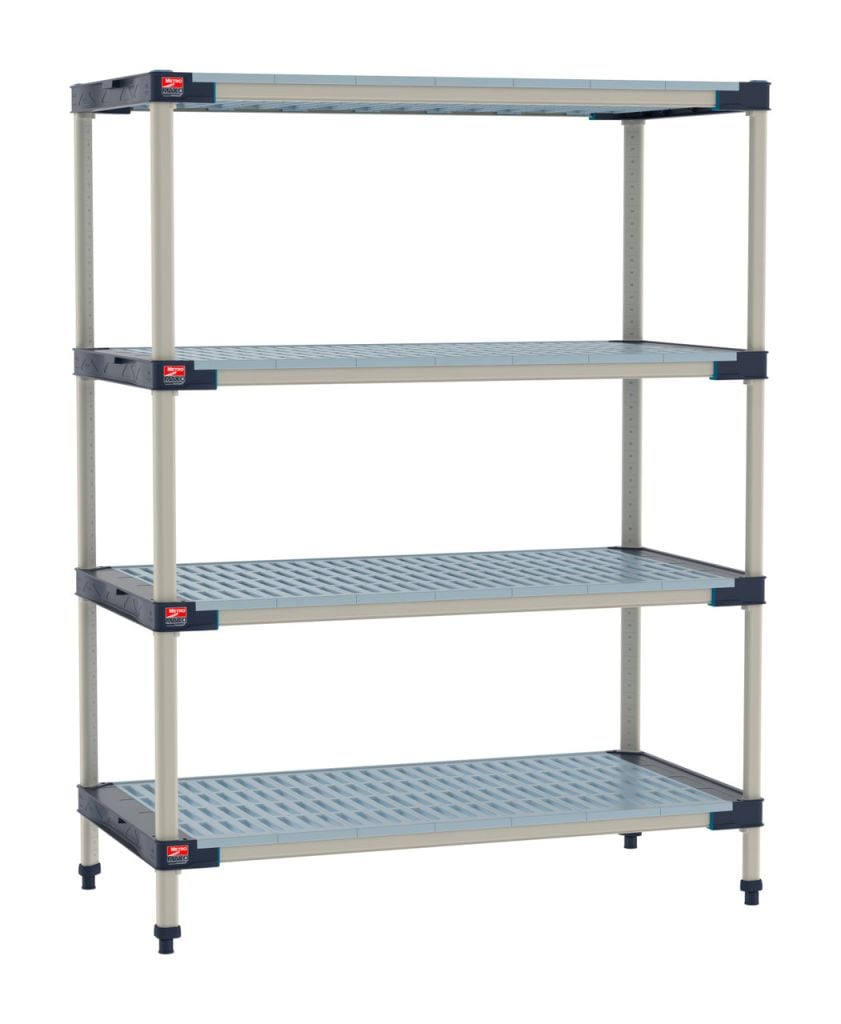
Start at the walls. In nearly every walk-in the effective plan is dunnage around the perimeter floor with shelving above it, so the full wall height works. Set the dunnage first — the bulk product on it is the widest thing in the room, so it defines the aisle — then place the shelving to match.
Keep the floor under the evaporator drip line clear, put the heaviest, highest-turn items — flour, sugar, oil, produce, kegs — nearest the door, and reserve the coldest corner for slow-moving backstock.
Measure the door before you order — a 60-inch rack that will not turn through a 36-inch walk-in door is a familiar, avoidable problem.
Mobile Dunnage, Kegs, Drums and Ingredient Bins
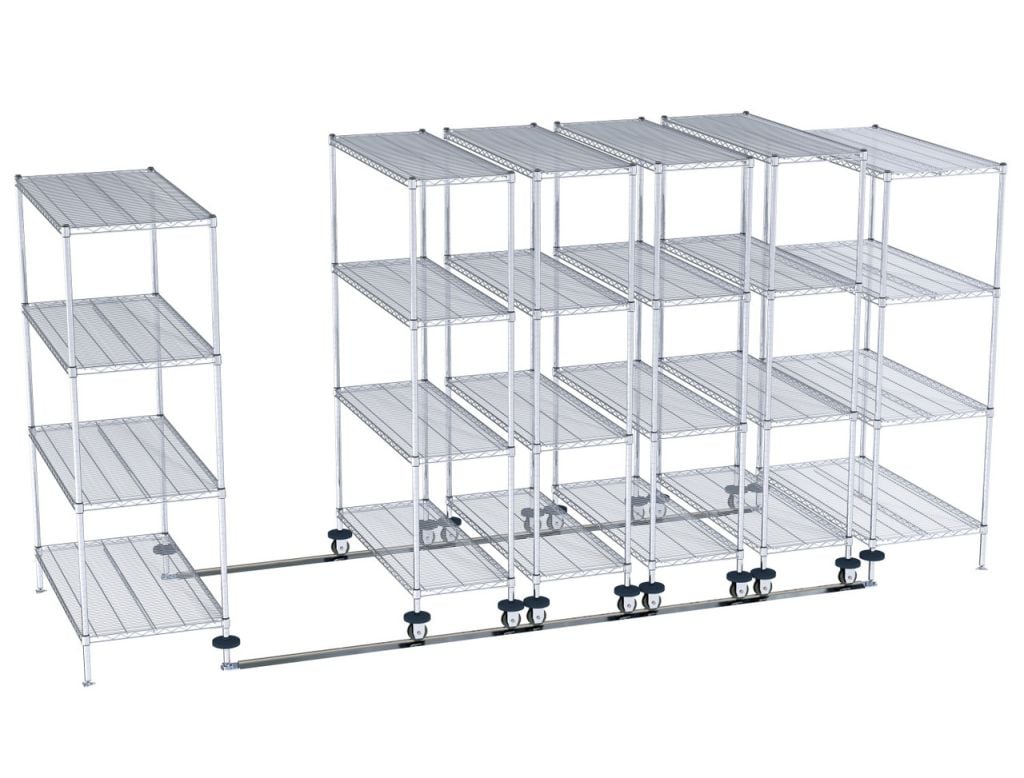
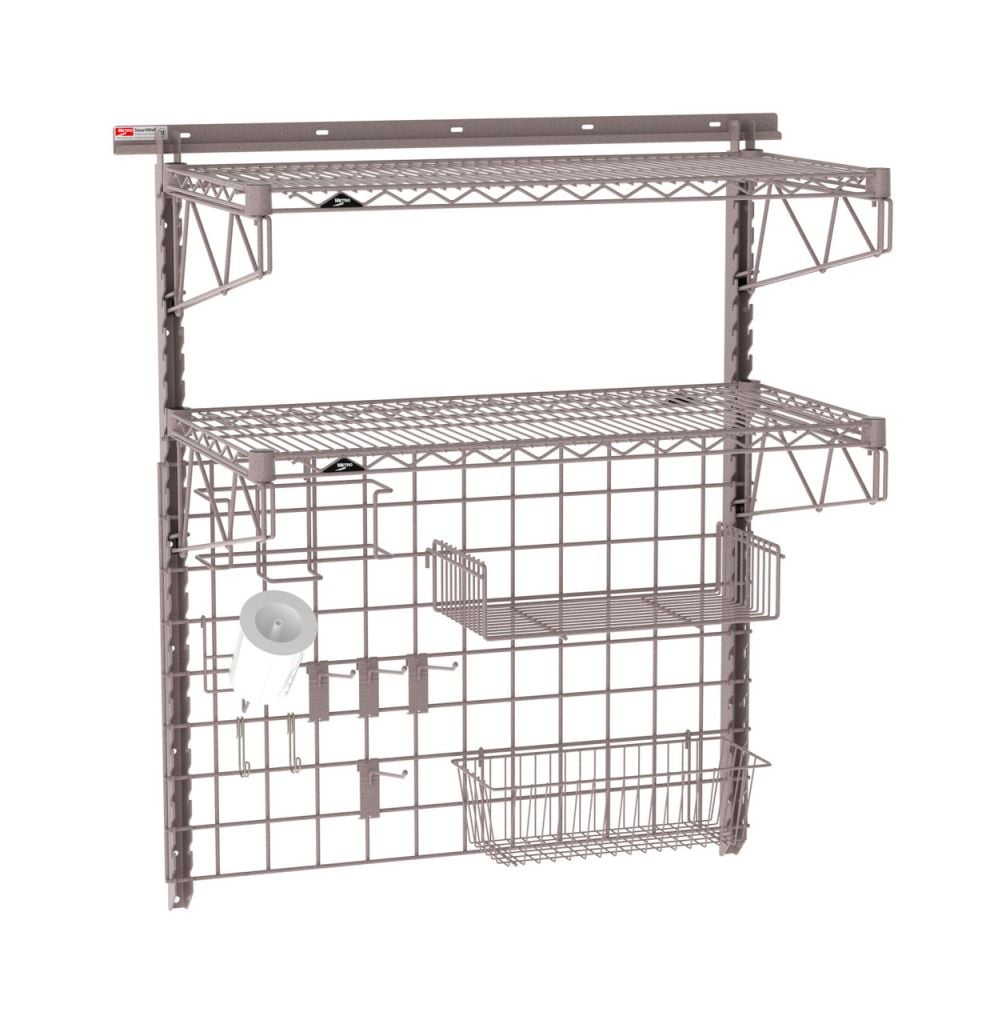
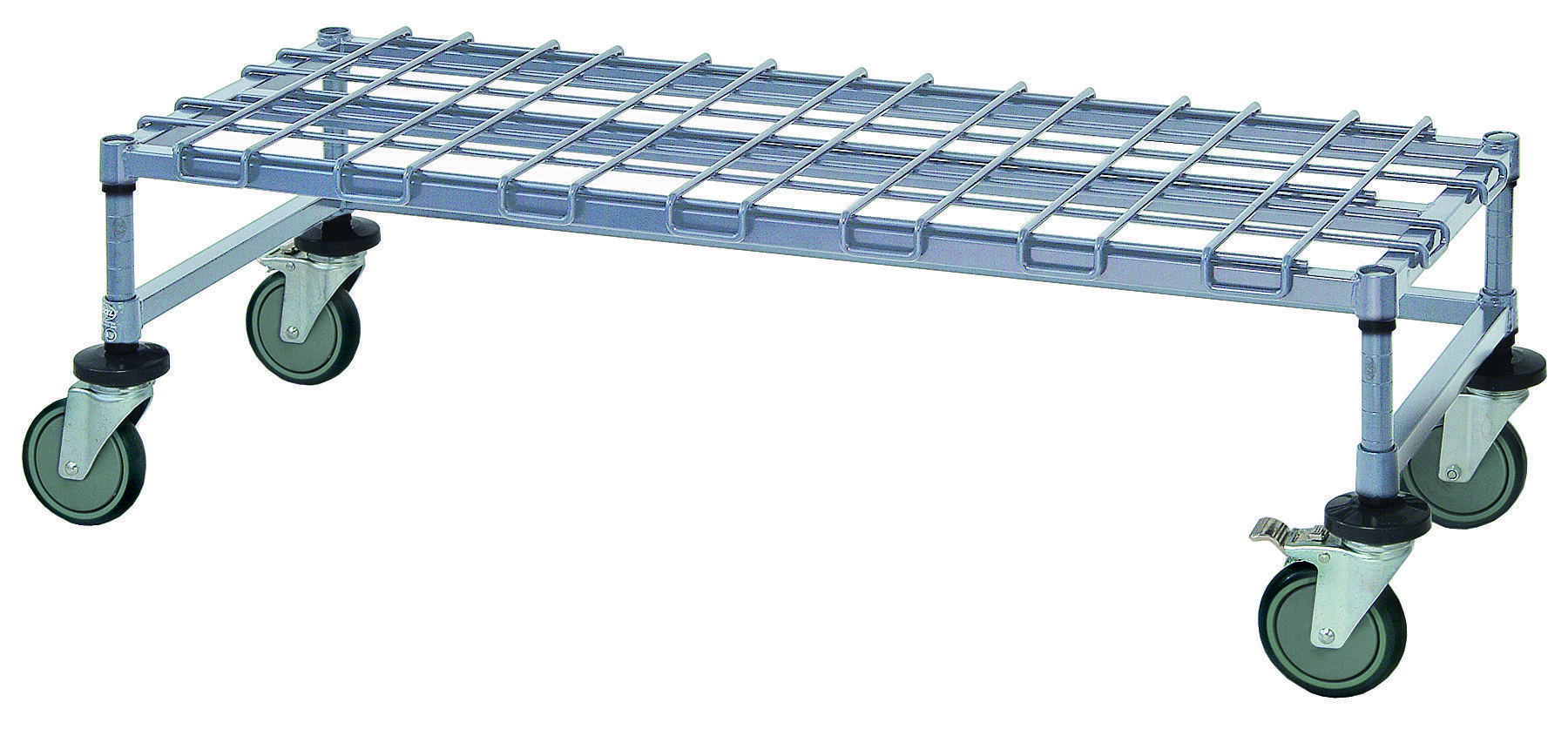
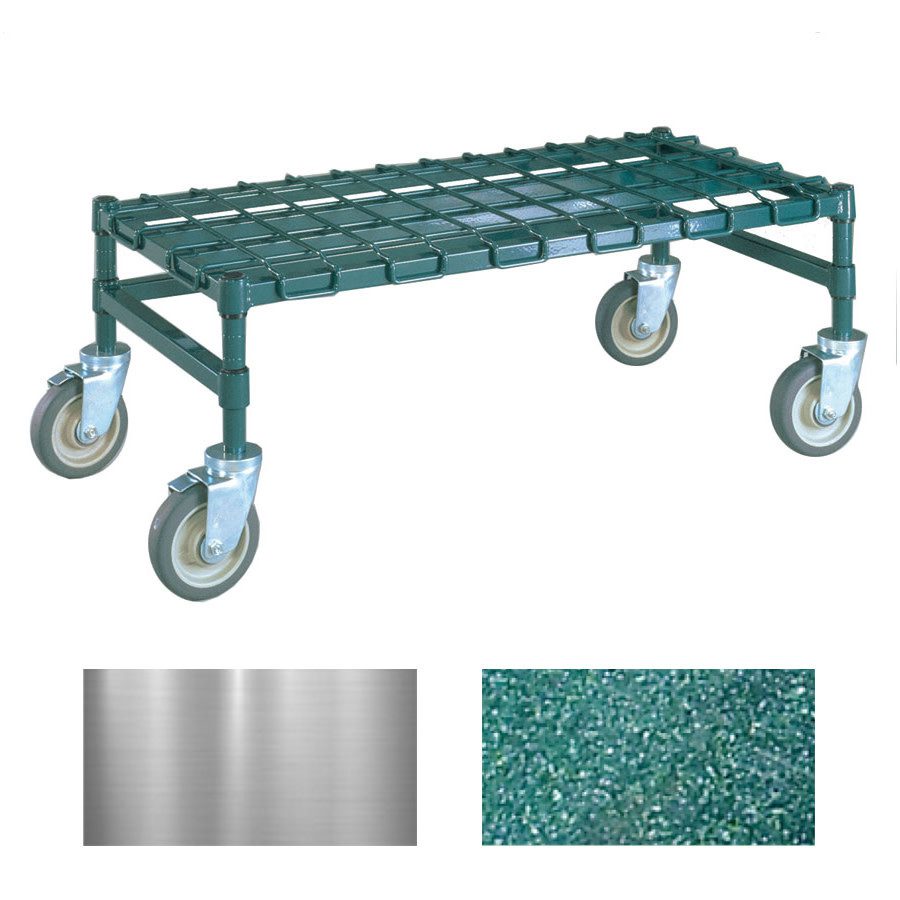 Mobile Dunnage on CastersCasters let a crew roll an entire loaded platform aside, clean the floor beneath it in seconds and roll it back. Specify brakes on at least two casters and a wheel tread that suits the floor.
 Keg and Beverage StorageKegs are heavy, round and unstable on a bare floor, and beverage coolers are wet coolers. Dunnage keeps the bottom chime out of standing water and makes rotating stock a roll rather than a lift.
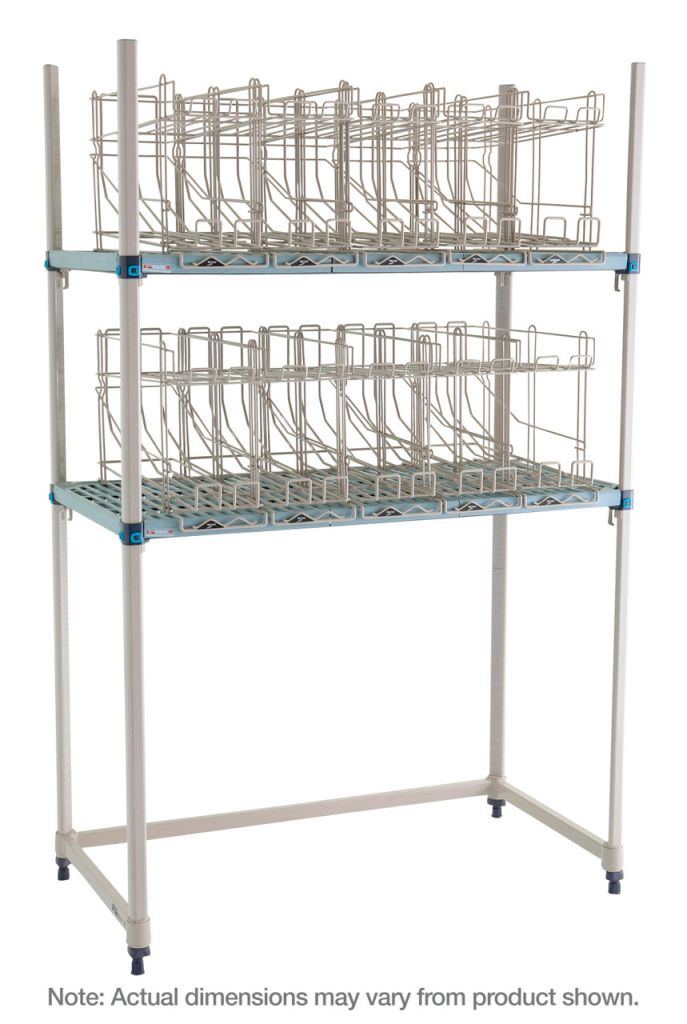 Canned Goods and Bulk CasesCases of #10 cans are the heaviest thing in most dry stores. Roll-under can racks and heavy dunnage carry that weight, keep cardboard off the floor and put stock rotation within reach.
 Ingredient Bins and Bulk ContainersFlour, sugar, rice and salt live in mobile ingredient bins that must not sit on the floor. Dunnage or a bin cart keeps them cleanable and easy to wheel to the mixer.
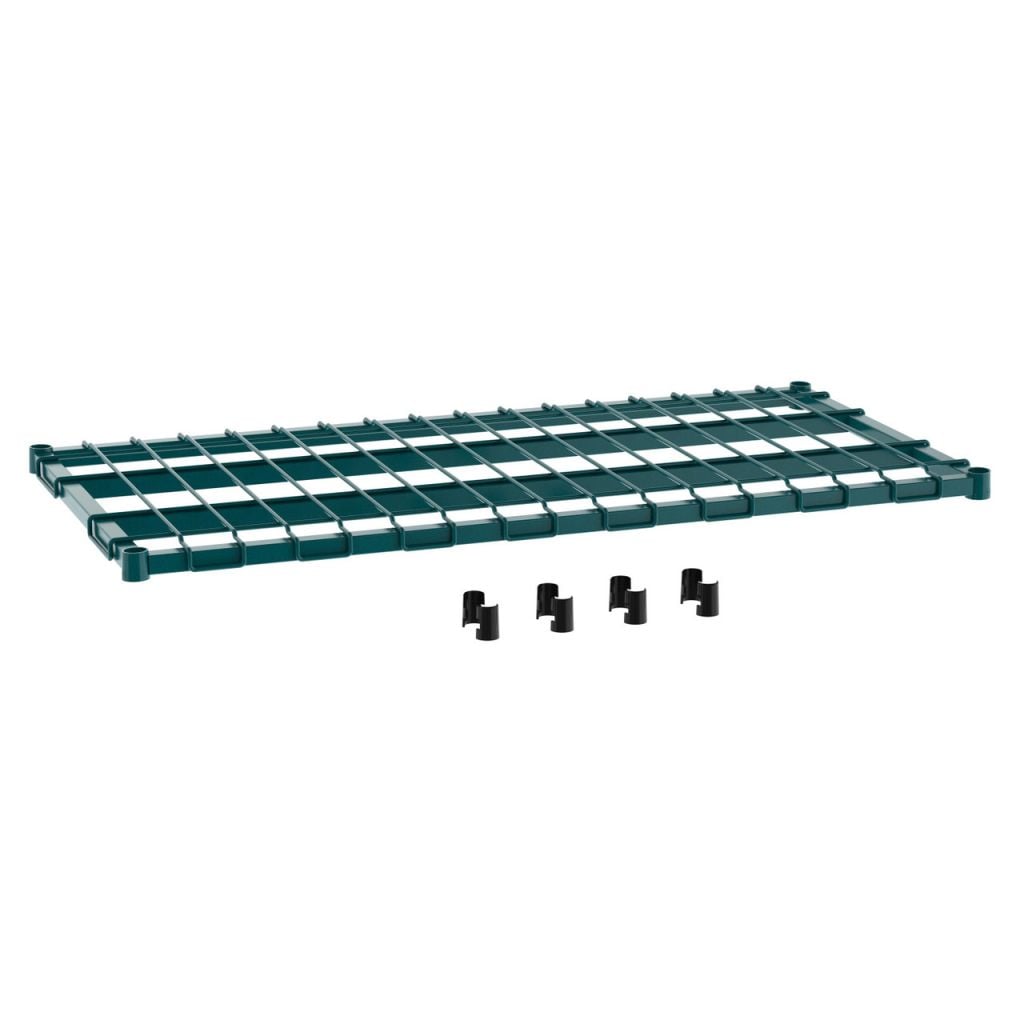 Drums, Pails and Bulk BinsOil drums, sanitizer pails and bulk bins need a wide, drainable surface with point-load capacity for a narrow base — confirm the concentrated-load rating, not just the distributed number.
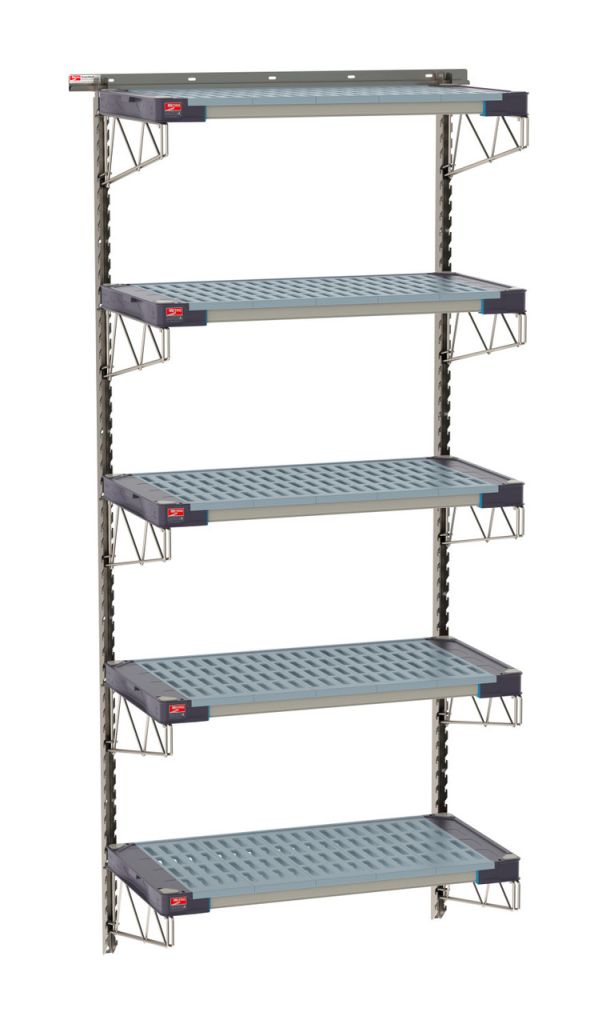
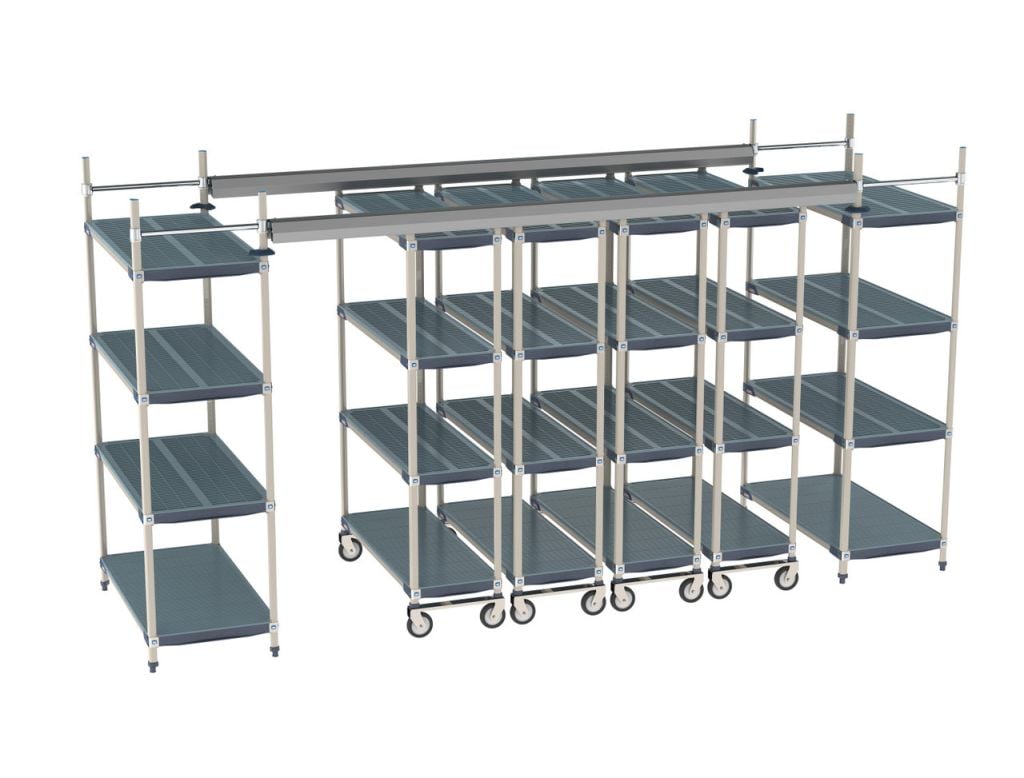 High-Density RoomsWhere floor space is the constraint, track-mounted shelving over a fixed dunnage base recovers aisle space while keeping the floor layer cleanable.
Cleaning, Drainage and Airflow in Practice

A dunnage rack only pays off if the floor underneath actually gets cleaned, so build it into the routine. In a room cleaned daily, mobile dunnage pays for itself in labor within a season — rolling a loaded rack aside takes seconds; unloading a fixed one takes twenty minutes nobody has.
For fixed racks the sequence is: unload, sweep and squeegee, wash around the legs and feet, wash the top and its underside, sanitize, dry, reload. Debris hides under the top surface and at the leg-to-frame joint — clean both deliberately.
Drainage is a design decision. Hosed rooms with floor drains want an open or slotted top in polymer or stainless so water runs through instead of pooling. Dry rooms are better served by a solid or slotted top that wipes clean.
Airflow deserves the same attention: leave a gap behind the load, keep the evaporator return path clear, and keep the space under the rack genuinely open — dunnage used as a second storage level defeats its own purpose.
Sanitation listings are model-specific
Models are available with NSF-listed options across the polymer, stainless and coated-steel dunnage families. Listings apply to a specific model and configuration, not to an entire product line, so we confirm the listing status of the exact models on your quote in writing before you order.
Dunnage Rack or a Low Shelf on Existing Shelving?
Worth asking before you buy: if shelving is already in the room, why not drop the bottom shelf to 14 inches and stack bulk on it? Sometimes that is right. Often it is not.
| Consideration | Dunnage rack | Low shelf on an existing unit |
|---|---|---|
| Load capacity | Standalone heavy-duty structure with the highest ratings in the room | Limited by the shelf rating and the post capacity of the whole unit |
| Depth for bulk | 20–24″ deep with an open frame that tolerates overhanging sacks | Constrained by unit depth and corner posts |
| Loading access | Open on all sides — slide a sack on from the aisle | Posts and the shelf above restrict the lift |
| Cleaning underneath | Clear open span; mobile versions roll away | Posts and feet interrupt the sweep path |
| Cost per position | One dedicated piece per floor position | Uses shelving you already own, if capacity allows |
| Best for | Sacks, drums, kegs, heavy cases, wash-down rooms | Light cased goods in a dry store with underused shelving |
The short rule: heavy, wet, round or awkward goes on dunnage; light, boxed and dry can live on a low shelf you already own. Never convert a bottom shelf into a bulk position without checking the shelf and post rating — overloading it loads the posts of the entire unit.
Send us your cooler or store room dimensions
Give us the room size, door width, product mix and cleaning frequency. We will return a dunnage and shelving layout, model numbers, published capacities and freight — and flag the sizes that will not fit through your door.
Dunnage Rack Sizing and Spec Checklist
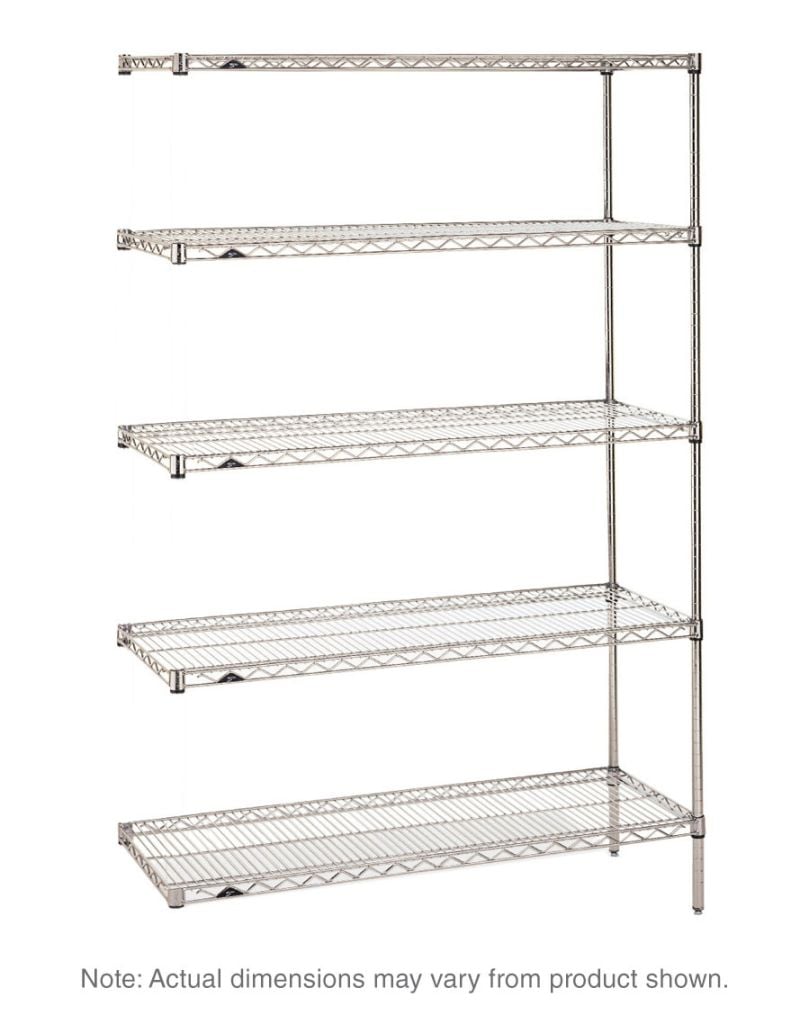
Work through this before you order. Every line represents an order we have seen go wrong.
- Room type and temperature — freezer, cooler, wet prep, dry store or warehouse; this sets the material.
- Wash-down or dry cleaning — hosed rooms push you to polymer or stainless with an open top.
- Heaviest single item and how it sits: sack, case, pail, drum, keg or bin.
- Total load per rack position, compared against the distributed rating for that exact length.
- Rack height — 12″, 14″ or 18″ — chosen around the cleaning tool that has to pass under it.
- Width and depth matched to the wall run and to the shelving already in the room.
- Top style — open grid, slotted or solid — matched to the product footprint and to drainage.
- Fixed or mobile, with caster tread and brake count decided if mobile.
- Door and corridor clearance for the assembled rack, measured, not estimated.
- Floor condition — coated, sealed, sloped to drain or soft — which drives foot style.
- Sanitation documentation required by your auditor or inspector, confirmed per model.
Shop Dunnage Racks Online
Buy select dunnage racks directly from our online store, or request a quote for volume orders, custom sizes and freight-rated shipments.
Related Storage Pages
- Food service material handling solutions — back-of-house storage and handling planning
- Foodservice shelving & storage — shelving, dunnage and dry storage equipment
- MetroMax polymer shelving — corrosion-free shelving for coolers and freezers
- Metro wire shelving — Super Erecta wire shelving systems
- Wire shelving — the general wire shelving category
- Stainless steel shelving — wash-down and high-sanitation shelving
- Food & beverage storage solutions — cooler, freezer and warehouse storage systems
- Metro shelving and storage — the manufacturer line we represent
- Contact MH-USA — talk to a storage specialist about your room
Manufacturers we quote
We represent Metro, the InterMetro Industries brand founded in 1929 in Wilkes-Barre, Pennsylvania, whose dunnage, wire, polymer and stainless lines cover most foodservice and processing rooms. We also quote dunnage from other manufacturers where the size, material or capacity fits better — including the polymer and wire dunnage stocked in our online store.
Dunnage looks like a commodity until the room is a blast freezer, the load is a 55-gallon drum, or an auditor wants documentation — then the specific model, material and rating is the whole job.
Design & price it online: Metro Dunnage, Pan & Basket Racks Configurator
Configure dunnage, pan, can and drying racks in our free Metro Dunnage, Pan & Basket Racks configurator — build the layout, see a full bill of materials and save or send the quote in minutes. Need a different Metro product? Browse all 17 tools in the Metro configurator hub.
Browse worktables, sinks, serving lines, pan racks and kitchen storage on our main commercial foodservice equipment page.
Dunnage Rack FAQs
How much weight can a dunnage rack hold?
How high off the floor should storage be?
Which dunnage material is best for a walk-in freezer?
How do you clean a dunnage rack?
What is the difference between a dunnage rack and a dunnage platform or mat?
What sizes do dunnage racks come in, and do they carry sanitation listings?

Get Dunnage Racks Specified and Delivered
Tell us the room, the product and how it gets cleaned. We will size the dunnage, match it to the shelving, confirm capacities in writing and get it on a truck. MH-USA has served the Intermountain West since 1997 and ships nationwide. Call (800) 326-4403 or use our quote request form.
Get Your Dunnage Rack Quote
Send your cooler, freezer or store room dimensions and product list. We will return sized model numbers, published capacities, lead times and freight.