
Walk-In Cooler Shelving
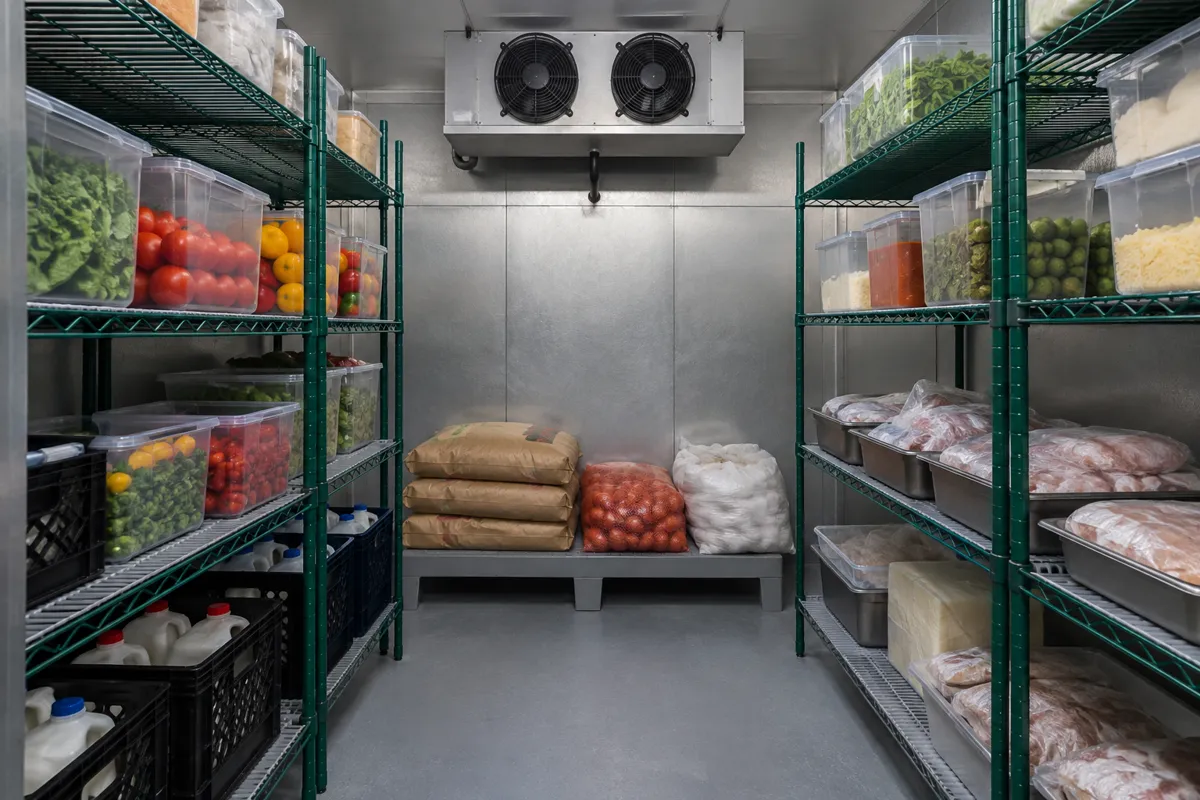
Rust-resistant walk-in cooler and freezer shelving in epoxy-coated wire, stainless steel and polymer, from Metro Super Erecta Pro and MetroMax to Quantum and dunnage racks for floor storage. NSF-listed models, sized to your box, quoted with freight and installed by MH-USA.
6"
Bottom shelf off the floor
800 lb
Per shelf, up to 48" long
Lifetime
MetroMax 4 / i rust warranty
NSF
Listed models
Shop Walk-In Cooler Shelving Online
Metro Super Erecta Pro and Metroseal epoxy units, MetroMax polymer carts and NSF dunnage shelves for cold rooms, priced in our online store. Fitting a whole box? Request a quote with your interior dimensions and we include freight.

What Makes Walk-In Cooler Shelving Different
Walk-in cooler shelving is wire shelving or polymer shelving built to survive cold, damp air. A cooler runs humid, the door lets in warm air that condenses on cold metal, and the product itself can be wet, salty or acidic. Metro sums up the job: the shelving needs strength, stability, abrasion resistance and rust protection, because heavy containers get dropped onto it all day.
Standard chrome shelving is made for dry rooms and will rust in a cooler over time. Cooler shelving uses epoxy-coated wire, stainless steel or polymer, usually with removable shelf mats that go through the dish machine.

What to look for
- A rust-resistant or rust-proof finish with a written warranty against rust and corrosion.
- NSF-listed construction for food storage; health departments expect cleanable, food-safe shelving.
- Open grid or wire shelves so cold air reaches every level.
- Removable mats that wash in a commercial dishwasher and protect the frame from abrasion.
- The right capacity for cases, tubs and sacks, with heavier dunnage storage at floor level.
Cooler Shelving Materials: Epoxy, Polymer and Stainless
Metro describes its cooler range as good, better and best. The labels are Metro’s, but the logic applies to any brand: the more polymer in the system, the less there is to rust.
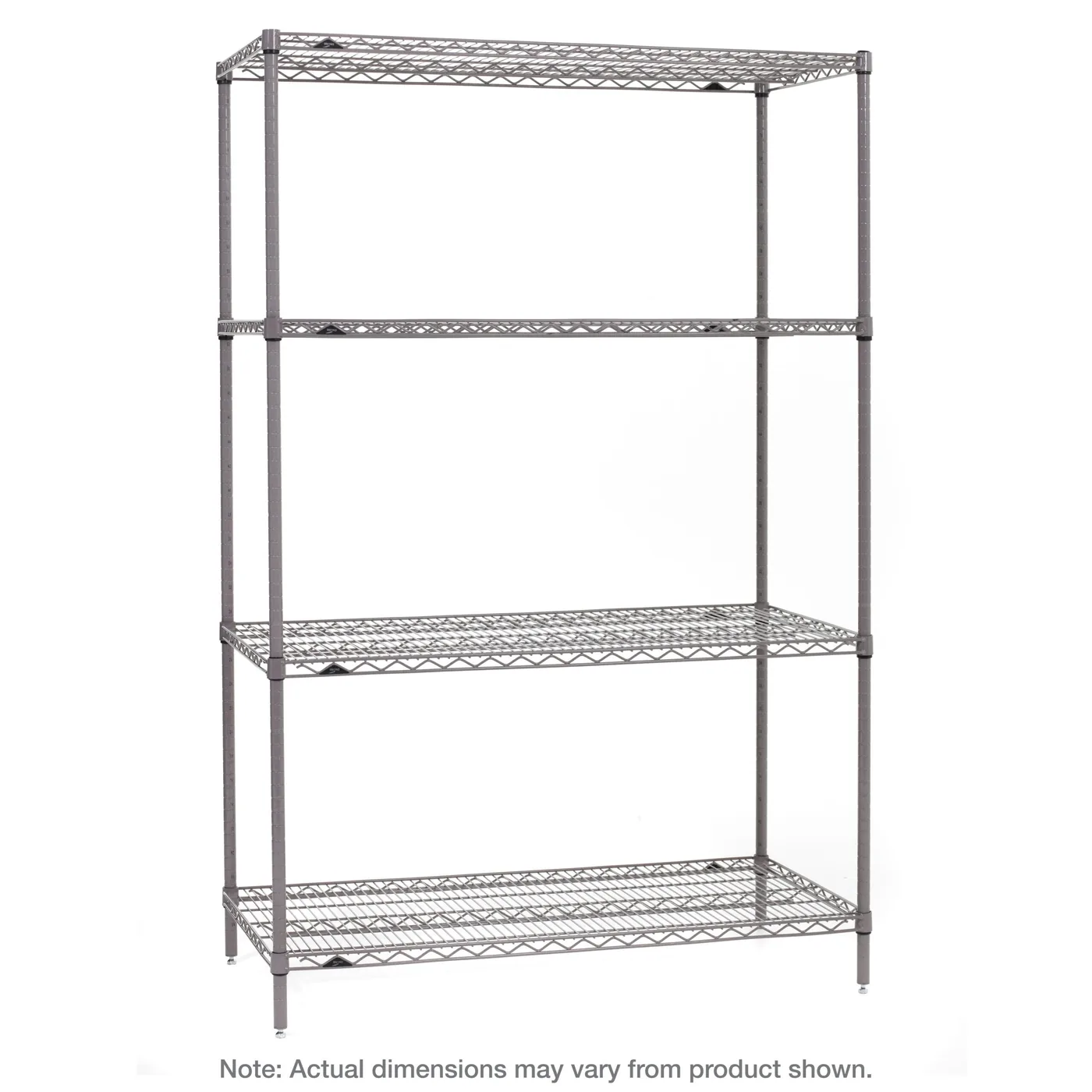
Epoxy-coated wire shelving
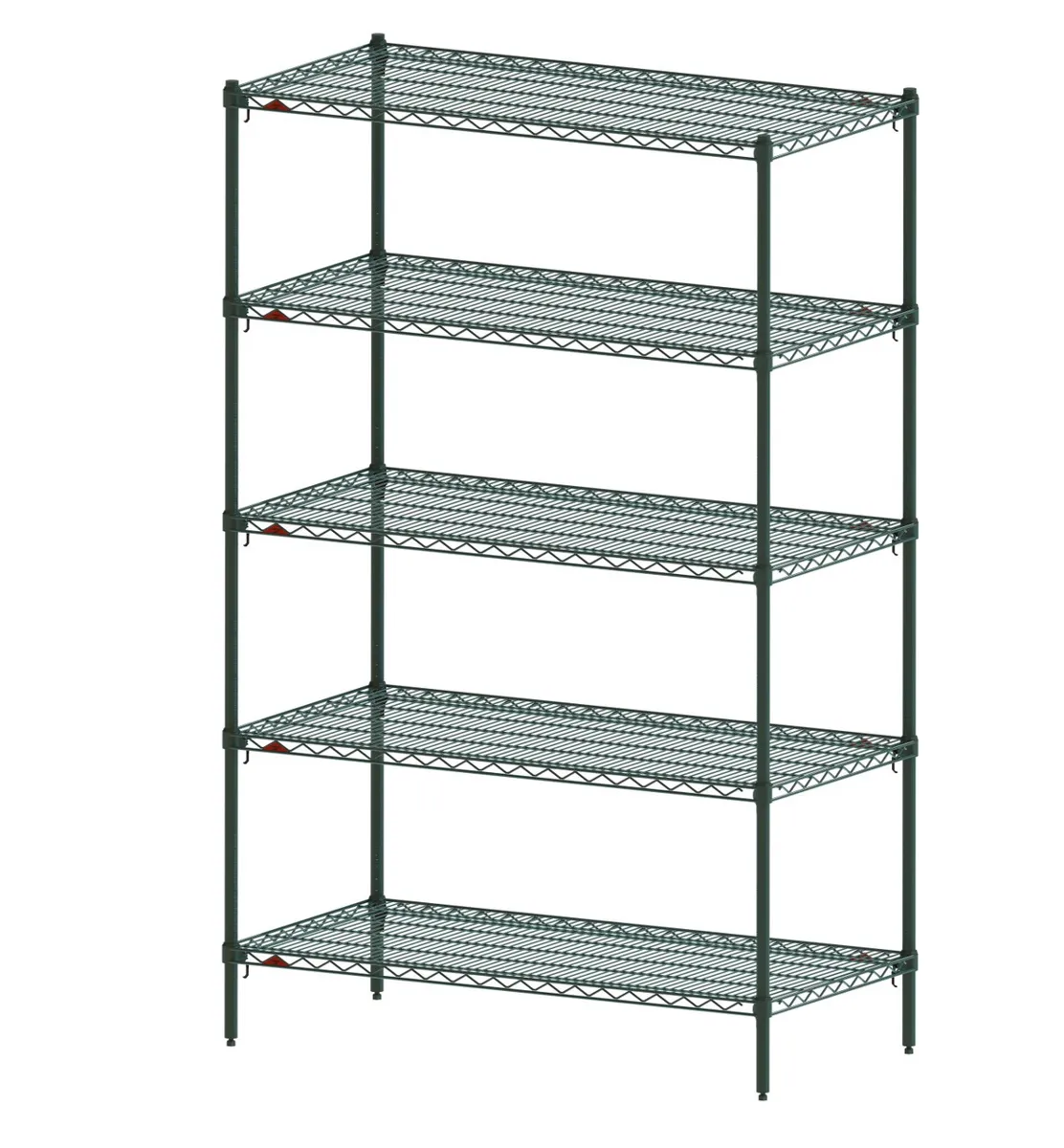
Epoxy-coated steel wire is the most common cooler shelving. Metro’s Metroseal coating uses two layers: one protects the steel from red rust and a hydrophobic epoxy top coat sheds water. Gray and green are the usual colors, and shelves adjust in 1" steps like chrome.
Super Erecta Pro adds removable polymer mats to Metroseal Green frames. Metro warrants the frames for 20 years and the posts for 15 years against rust and corrosion, and the polymer mats for life. Metro calls this its good option.
Photo: Metro (InterMetro Industries)

Polymer shelving
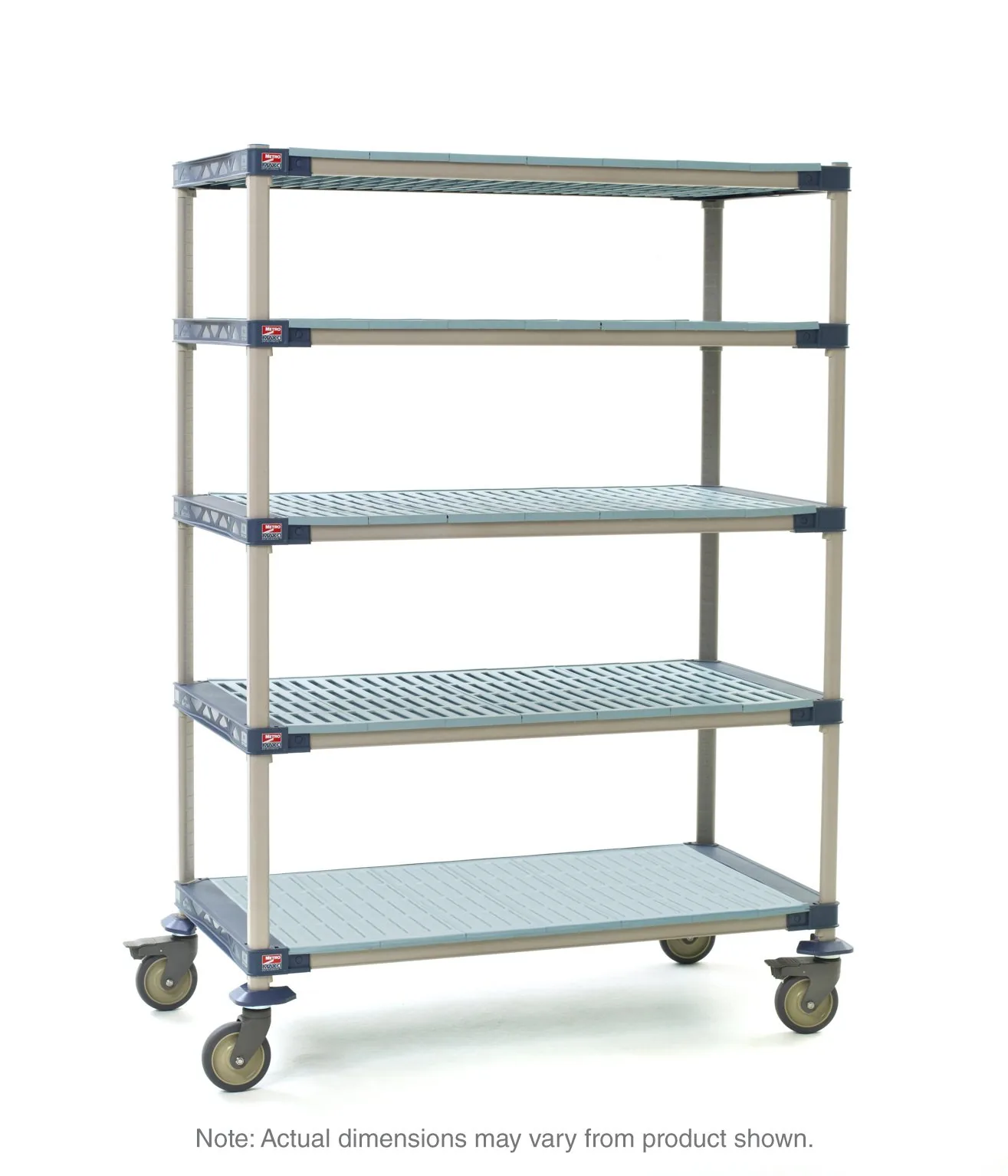
All-polymer shelving cannot rust. Metro rates MetroMax 4 and MetroMax i with a lifetime warranty against rust and corrosion and calls MetroMax 4 its best cooler choice. MetroMax Q pairs polymer mats with coated posts and frames under a 20-year rust warranty and is the better option. The open grid mats lift out for washing.
Compare the three lines on MetroMax i vs. Q vs. 4 or read the full MetroMax polymer shelving guide.
Photo: Metro (InterMetro Industries)
Stainless steel wire shelving
Stainless wire resists corrosion and handles washdown, which makes it common in food processing and clean areas. Metro points out that stainless is corrosion resistant but not rust-proof, and that it costs more, so it is rarely the most cost-effective choice for a standard restaurant cooler. Use it where chemicals, washdown or a spec require it. See stainless steel shelving.
Hybrid units such as Quantum’s plastic-mat wire shelving combine green epoxy frames with polymer mats, a similar idea to Super Erecta Pro.
Photo: Metro (InterMetro Industries)
Walk-In Cooler Shelving Compared
| Chrome wire | Epoxy wire | Epoxy + polymer mats | All polymer | Stainless wire | |
|---|---|---|---|---|---|
| Walk-in cooler | Not recommended | Good | Better | Best | Good, higher cost |
| Walk-in freezer | Not recommended | Good | Good | Good (check spec) | Good |
| Rust protection | Low in damp air | Coating protects steel | Frame coated, mats rust-proof | Cannot rust | Corrosion resistant, not rust-proof |
| Cleaning | Wipe only | Wipe down | Mats through dish machine | Mats through dish machine | Washdown |
| Example lines | Super Erecta chrome | Metroseal gray or green | Super Erecta Pro, Quantum plastic mat | MetroMax 4, MetroMax i | Super Erecta stainless |
Chrome is the right choice for the dry storage room next door, not the box itself; see chrome wire shelving for where it fits.

NSF wire shelving for food storage
Shelving that touches food storage should carry an NSF listing for food equipment. Most commercial cooler units from Metro and Quantum are NSF listed, and we confirm the listing for the exact model in writing. Your local health department sets the final rules, so we also keep the bottom shelf at least 6" off the floor, which matches the FDA Food Code’s floor-clearance rule for stored food. Learn more on our NSF-certified shelving page.
Walk-In Freezer Shelving
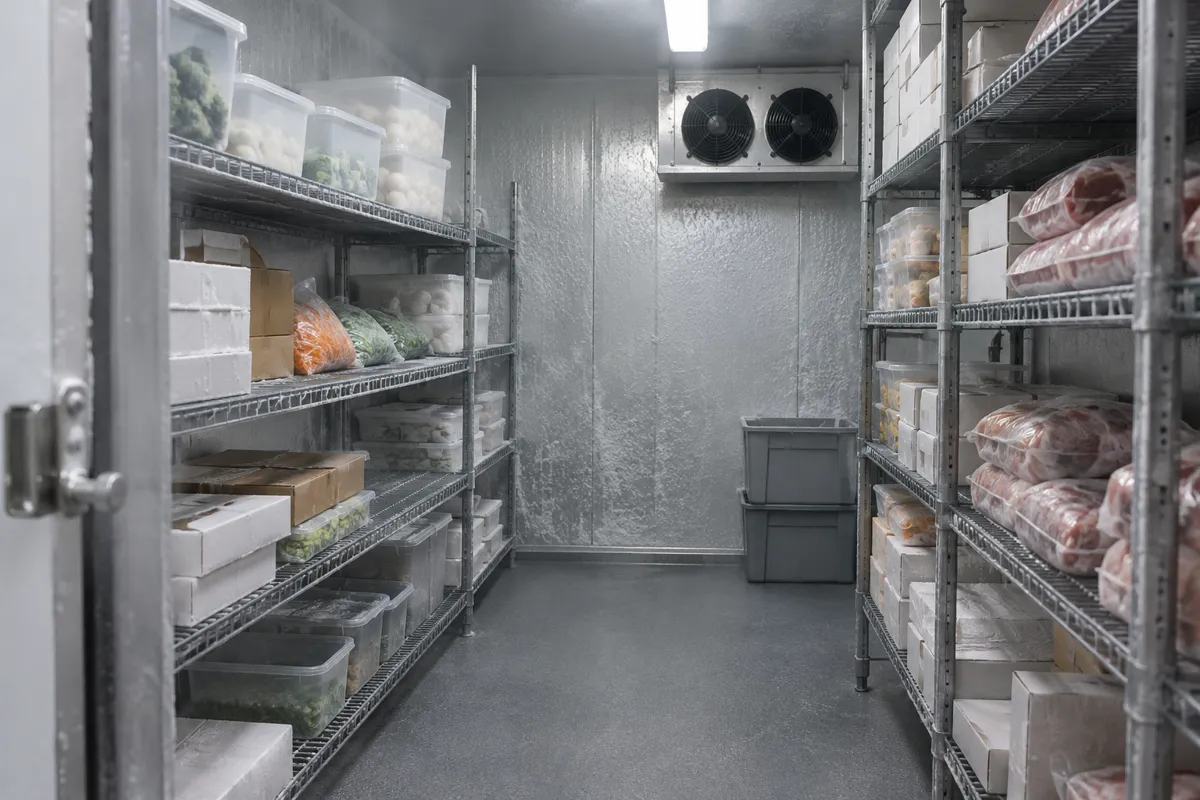
Freezers are colder and drier than coolers, but frost and door condensation still attack bare metal, and staff set heavy frozen cases down hard. Epoxy-coated wire and polymer systems both work in freezers; check the temperature rating on the spec sheet for any polymer line before ordering.
- Keep shelves open. Wire or open-grid shelves let cold air move around frozen product.
- Plan for gloves. Lower, wider shelves are easier to load in freezer gloves.
- Watch the floor. Ice and spills build up at floor level; dunnage racks and a 6" bottom shelf make cleaning possible.
- Use mobile units carefully. Casters must suit cold, wet floors.
Humidity, Condensation and Airflow
Shelving affects how well a walk-in holds temperature. The evaporator pushes cold air across the box, and solid walls of product stop it.
- Use open shelves. Wire and open-grid mats let air pass through every level. Avoid lining shelves with cardboard or solid sheets.
- Keep the evaporator clear. Do not stack product or tall shelving tight against the coil and fan; follow your refrigeration contractor’s clearance guidance.
- Leave a small gap at the walls. Air needs room to move behind product.
- Expect condensation near the door. Put the most rust-resistant shelving and the least sensitive product closest to the door.
- Wash mats on a schedule. Removable mats go through the dish machine; Metro builds Microban antimicrobial product protection into its cooler shelf surfaces to keep them cleaner between cleanings.
How to Lay Out Walk-In Cooler Shelving
Size the shelving to the box’s interior, not its outside dimensions. Measure panel to panel on every wall, then note the door width and swing, the evaporator location, light fixtures, drain lines and any floor ramp.
Measure the interior
Wall lengths, ceiling height, door opening and swing, evaporator and drain locations.
Choose depth by wall
18" or 24" deep on long walls; shallower on the back wall if the aisle is tight.
Pick a layout
One wall, L-shape or U-shape, with corner units joined by S-hooks so corners stay usable.
Add floor storage
Dunnage racks for heavy cases and sacks, kept off the floor and out of the aisle.
| Layout | Fits | Notes |
|---|---|---|
| One wall | Small or narrow boxes | Leaves a wide aisle for carts |
| L-shape | Square boxes with the door in a corner | Corner shared with S-hooks keeps the inside corner open |
| U-shape | Most restaurant walk-ins | Shelving on three walls, aisle down the middle, door wall clear |
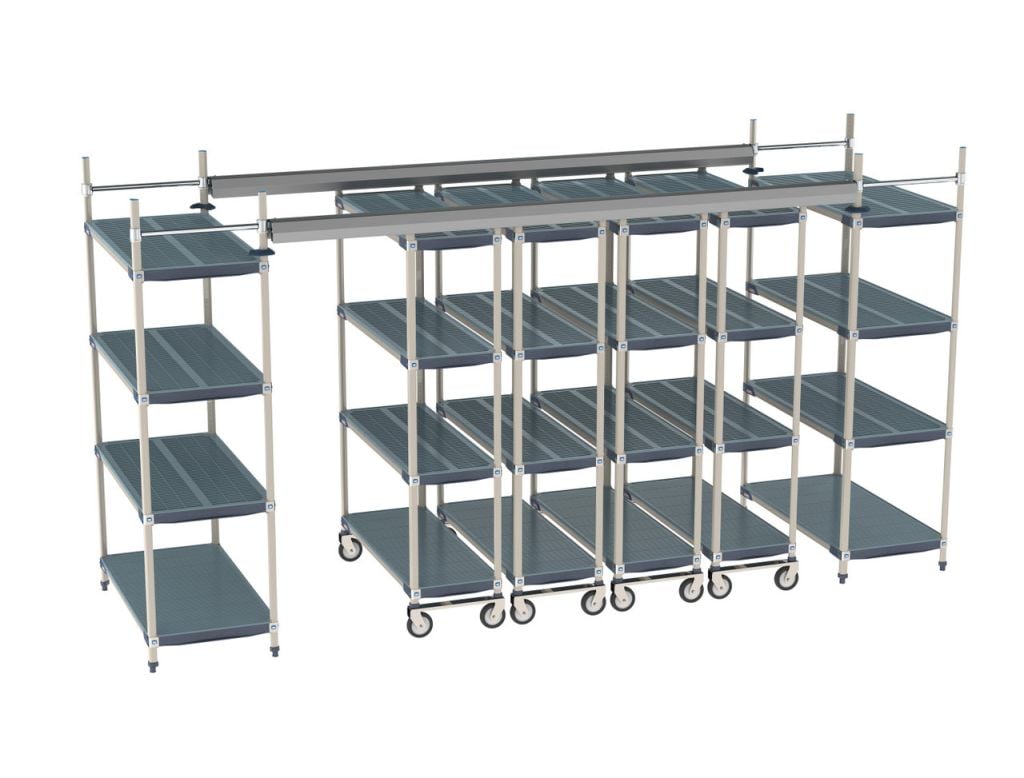
| High-density track | Medium and large walk-ins | Mobile units slide on track to remove extra aisles |
- Aisle width: leave room for a person carrying a full case, and more for carts or rolling racks.
- Shelf spacing: Metro allows up to 30" between shelves; set levels to the cases you stock.
- Heavy goods low: keep the heaviest cases on the lowest shelf or a dunnage rack.
- Raw below ready-to-eat: plan shelf zones so raw proteins sit below produce and prepared food, as your food-safety plan requires.
- Anchoring: ask the walk-in manufacturer before drilling insulated floor or wall panels.
What we need to quote: interior length, width and height, door width and which way it swings, where the evaporator and drain sit, what you store (cases, sacks, kegs, sheet pans) and whether the room is a cooler or freezer. A phone photo of each wall helps. We return a layout with shelf sizes, finishes and dunnage racks, plus a freight-included quote.
Our commercial kitchen shelving guide covers dry storage and kitchen zones around the walk-in, and the wire shelving installation guide covers assembly and leveling.
Dunnage Racks for Floor Storage
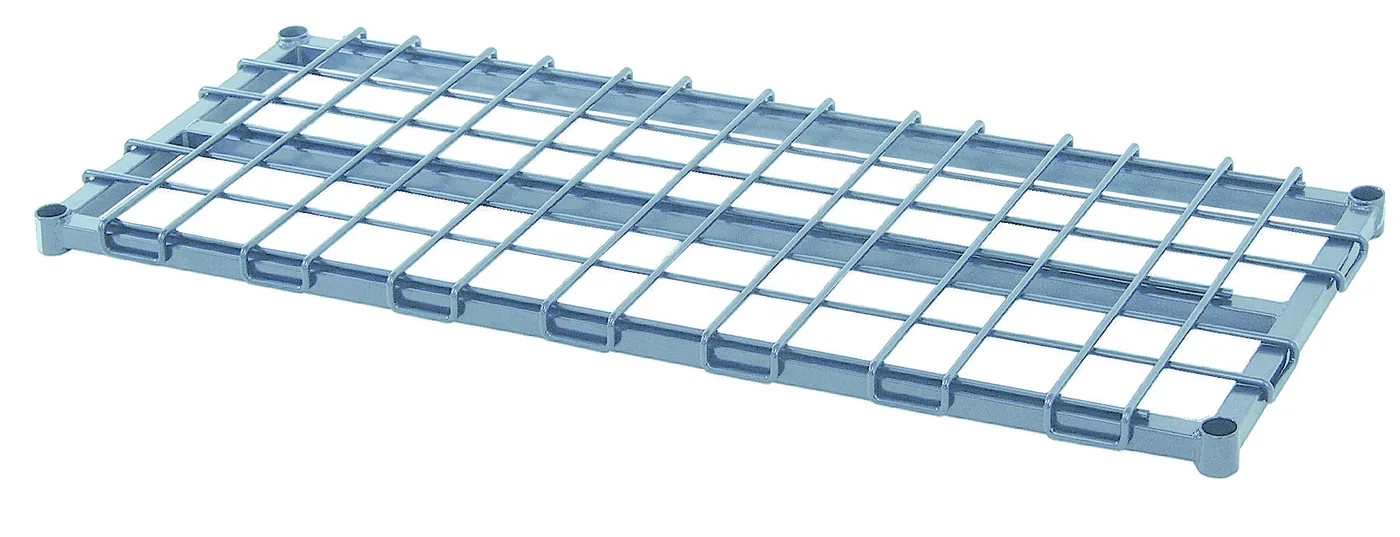
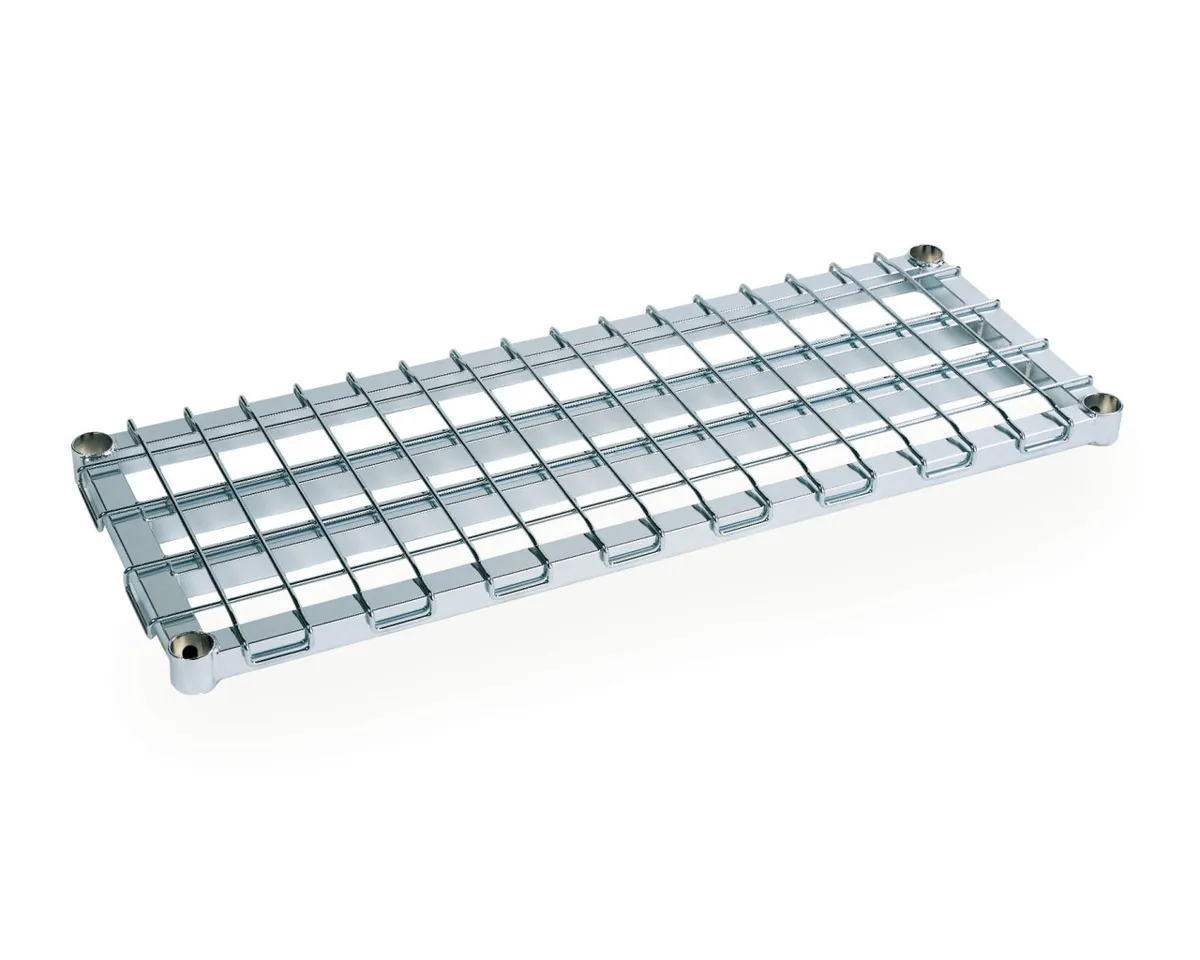
Heavy sacks, cases of drinks, kegs and tubs do not belong on the floor or on an upper shelf. A dunnage rack is a low, very strong platform that keeps them off the floor so staff can clean under them. Metro rates its Super Erecta dunnage shelves at 1,600 lb from 24" to 36" long, 1,300 lb at 42" to 48" and 1,000 lb at 60" and longer. The Quantum dunnage shelf in our store is rated 1,500 lb.
Polymer dunnage racks cannot rust and are easy to hose down; mobile dunnage racks roll out for cleaning. Sizes, materials and capacities are compared on our dunnage racks page.

 Polymer dunnage rackRust-proof, one-piece platforms that join together without tools.
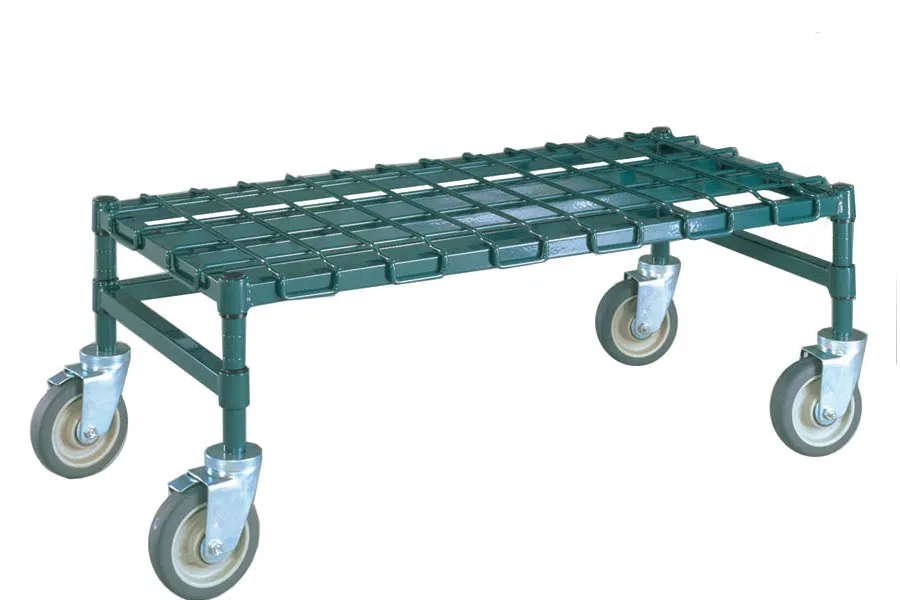 Mobile dunnage rackCasters let heavy floor stock roll out for cleaning.
Photo: Metro (InterMetro Industries)
Common Walk-In Shelving Mistakes, and How to Avoid Them
- Moving dry-room chrome into the cooler. It looks fine for a few months, then rust spots appear on welds and shelf edges. Buy a cooler finish from the start.
- Measuring the outside of the box. Panel thickness eats inches on every wall; units sized to the outside dimensions will not fit.
- Forgetting the door swing and evaporator. A unit that blocks the door or crowds the coil costs you access and cooling.
- Mixing brands in one run. Posts and sleeves that look alike may not lock together safely.
- Overloading long shelves. 60" and 72" shelves carry less than 48" shelves; put heavy cases on short spans or on a dunnage rack.
- No cleaning plan. Choose removable mats and casters or dunnage racks so the floor and shelves actually get cleaned.
Cleaning and care
Pull and wash shelf mats in the dish machine on a set schedule, wipe frames and posts with a mild detergent, and let everything dry before restocking. Inspect epoxy for chips where pans and tubs strike it, because exposed steel is where rust starts. Follow the manufacturer’s cleaning guidelines for each finish, and replace damaged mats or shelves rather than letting rust spread to the product.
Mobile and High-Density Cooler Shelving
Cooler space is expensive to build and run, so many kitchens put shelving on wheels or on track. Stem casters turn a unit into a cart that rolls out for floor cleaning or deliveries. Metro limits mobile Super Erecta units to three times the caster rating, no more than 1,000 lb, and sets lower height limits for mobile units.
For medium and large walk-ins, Metro’s high-density track systems let units slide so you keep one aisle instead of several; Metro says this can increase storage capacity by as much as 50%. See track shelving and Metro mobile shelving units.
Photo: Metro (InterMetro Industries)
Walk-In Cooler Shelving Brands
| Brand | Cooler and freezer lines | Learn more |
|---|---|---|
| Metro | Super Erecta Metroseal, Super Erecta Pro, MetroMax i, Q and 4, dunnage racks, high-density track | Metro wire shelving |
| Quantum Storage Systems | Green and gray epoxy wire, plastic-mat wire units, dunnage shelves and racks | Quantum Storage Systems |
| Eagle Group | Foodservice wire shelving and storage | Eagle Group |
| Nexel | Commercial wire shelving | Nexel shelving |
Posts, sleeves and shelves are not guaranteed to interchange between brands, so add to an existing cooler with the brand already in it.
Where We Install Cooler and Freezer Shelving
- Restaurants and commercial kitchens: produce, dairy and proteins in the walk-in. See commercial foodservice equipment.
- Schools, hospitals and senior living: large walk-ins where mats get washed daily.
- Grocery and convenience stores: backstock coolers and freezers behind the sales floor.
- Bars, breweries and catering: kegs and cases on dunnage racks, product on epoxy or polymer shelves.
- Floral, pharmacy and lab cold rooms: polymer or stainless shelving for wet, cold storage.
- Cold storage warehouses: for pallet-scale cold rooms, see cold storage warehouse solutions.
Get a free quote
Tell us what you are storing, the room size and your timeline. A project specialist will follow up with layout options and pricing. Prefer to talk? Call (800) 326-4403.
Walk-In Cooler Shelving FAQs
What is the best shelving for a walk-in cooler?
Can I use chrome wire shelving in a walk-in cooler?
What is the best shelving for a walk-in freezer?
How far off the floor should cooler shelving be?
Does walk-in cooler shelving need to be NSF certified?
How much weight can cooler shelving hold?
How do I organize a walk-in cooler?
What is a dunnage rack?
Can you fit shelving to my walk-in?
Fitting Shelving to a Walk-In Cooler or Freezer?
Send interior dimensions, the door location and a few photos for a free layout and a freight-included quote.