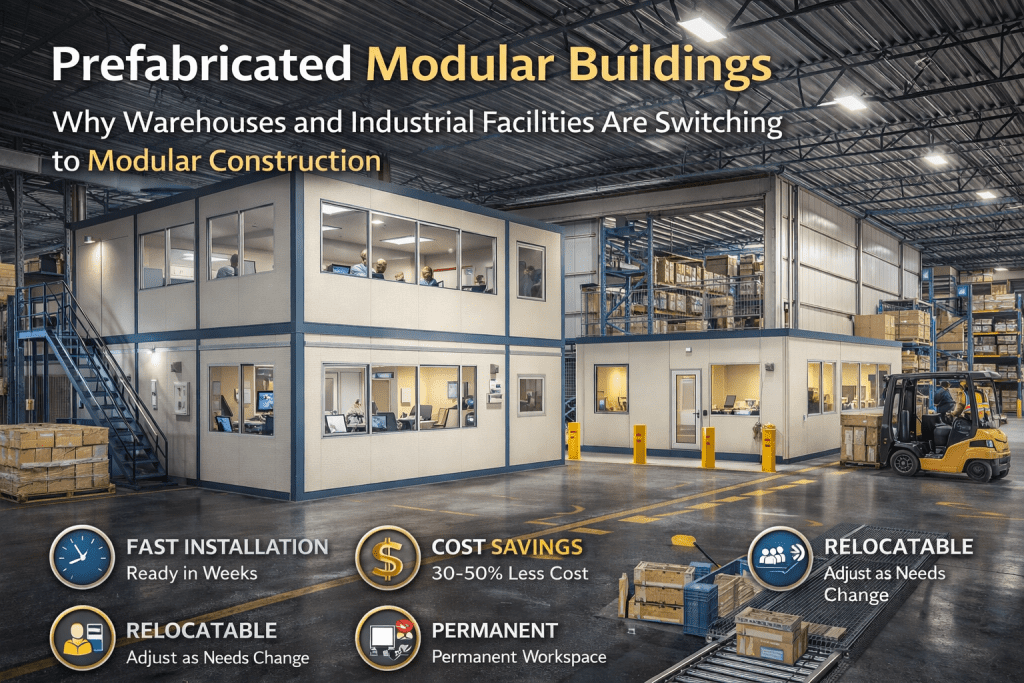
Why Warehouses and Industrial Facilities Are Switching to Prefabricated Modular Buildings
When your warehouse is bursting at the seams and you need office space yesterday, traditional construction isn’t the answer. Waiting months for permits, dealing with noisy contractors disrupting operations, and watching costs spiral out of control—there’s a better way.
Prefabricated modular buildings are transforming how industrial facilities create workspace. These factory-built structures install in weeks, not months, cost 30-50% less than conventional construction, and can move with your business as needs change.
Whether you need a supervisor’s office overlooking the production floor, a climate-controlled quality control lab, or a secure shipping office, modular construction delivers professional workspace without the traditional construction headaches.
What Exactly Are Modular Buildings?
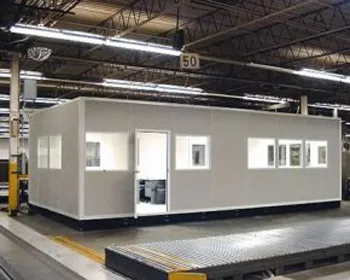
Modular buildings are prefabricated structures constructed in sections within a controlled factory environment, then transported to your site for quick assembly. Think of them as sophisticated, permanent-quality buildings built like LEGO blocks—each component is precisely manufactured, then assembled on-site.
Unlike temporary trailers or conventional stick-built construction, modular buildings offer the best of both worlds: the quality and durability of traditional buildings with the speed and flexibility of prefabricated systems.
How Modular Construction Works
The process is straightforward and efficient:
Factory Construction: Wall panels, floors, and ceilings are built in a climate-controlled factory with strict quality control. Each component includes wiring, insulation, and finished surfaces.
Transportation: Completed modules ship to your facility via truck, arriving ready for installation.
On-Site Assembly: Professional installers connect the modules using structural fasteners. Since 60-90% of construction happens off-site, installation typically completes in days rather than months.
Immediate Use: Once modules connect and utilities hook up, your building is ready for occupancy—often within 48 hours of delivery.
Watch: Time-Lapse of a Complete Modular Building Installation
See how fast a modular building actually goes up. This time-lapse video shows our installation team completing an entire modular office system in just hours—demonstrating the speed advantage that makes modular construction so appealing for businesses that can’t afford lengthy downtime.
Watch the complete installation process compressed into minutes—what would take months with traditional construction happens in a single day.
Key Components of Modular Building Systems
Every modular building includes these essential elements:
Insulated wall panels in various cores (polystyrene, mineral wool, or fire-rated options)
Structural steel framing that meets or exceeds building codes
Pre-installed doors and windows with weather-tight seals
Electrical systems including outlets, lighting, and breaker panels
HVAC options from through-wall units to full climate control systems
Roof systems designed to withstand wind loads up to 180 mph

Modular vs. Traditional Construction: The Clear Winner for Industrial Facilities
When facility managers compare construction options, modular buildings consistently outperform traditional methods across every important metric. Let’s look at the facts.
Comparison: Modular Buildings vs. Stick-Built Construction
| Factor | Modular Buildings | Traditional Construction |
|---|---|---|
| Construction Time | 30-50% faster with off-site fabrication and on-site assembly in days | Months of sequential on-site work with weather delays |
| Cost | Lower costs due to bulk material purchasing and reduced labor | Higher costs with on-site labor and potential budget overruns |
| Operational Disruption | Minimal—most work happens off-site, installation in hours | Major—noise, dust, crews, and equipment for weeks or months |
| Quality Control | Factory-controlled environment with consistent inspection | Variable quality depending on weather and crew skill |
| Flexibility | Relocatable, expandable, and reconfigurable as needs change | Permanent and fixed—changes require costly renovation |
| Tax Treatment | 7-year depreciation as equipment (Section 179) | 39-year depreciation as real property |
| Waste & Sustainability | Minimal waste with precision fabrication and recyclable components | Significant waste from on-site cutting and over-ordering |
The Speed Advantage
Time is money in industrial operations. Every day without proper workspace costs you in productivity and efficiency.
Modular buildings slash project timelines because construction happens simultaneously with site preparation. While your team prepares the foundation, the factory builds your office. Traditional construction can’t match this parallel workflow.
Additionally, modular installation happens quickly—often in a single day for smaller buildings or over a weekend for larger structures. This means zero to minimal disruption to your operations.
Cost Savings That Add Up
Modular construction saves money in multiple ways:
Lower Material Costs: Factory purchasing power means bulk discounts you can’t get with on-site construction.
Reduced Labor Expenses: On-site labor requirements are minimal since assembly replaces construction.
No Architect Fees: Pre-engineered systems eliminate the need for custom architectural work.
Faster ROI: The space becomes productive sooner, generating value immediately.
Tax Benefits: Section 179 allows 7-year depreciation versus 39 years for permanent structures.
Resale Value: Relocatable modules retain value—if needs change, you can sell or repurpose them.
For a typical 12′ x 40′ in-plant office, businesses typically save $15,000-$30,000 compared to conventional construction while getting their workspace operational months earlier.

Panel Types and Material Options for Every Application
Not all modular buildings are created equal. The panel core you choose dramatically affects performance, cost, and suitability for your application. Here’s what you need to know.
Modular Building Panel Comparison
| Panel Type | Best For | Key Benefits | Cost |
|---|---|---|---|
| Value Core (Polystyrene) | Standard offices, break rooms, basic workspace | Cost-effective, Class A fire rating, good insulation | $ |
| Fire-Rated (Mineral Wool) | Hazmat storage, control rooms, areas requiring fire separation | One-hour fire rating, superior sound dampening | $$ |
| Non-Combustible (Gypsum/Mineral Wool) | High-temperature environments, insurance requirements | Meets strictest fire codes, no steel skin required | $$ |
| Cleanroom Panels | Pharmaceutical, electronics, medical labs | Smooth non-shedding surfaces, integrates with HEPA filtration | $$$ |
| Exterior Steel Panels | Outdoor buildings, harsh environments | Weather-resistant, withstands 180 mph winds | $$ |
Standard Configuration Options
Material Handling USA offers flexible configurations to match your exact needs:
Wall Systems: 3-inch insulated panels in white, gray, or champagne with vinyl or steel finishes
Doors: 3′ x 7′ steel doors with optional half-glass or full-glass designs—hardware included
Windows: Picture windows (3′ x 4′) or horizontal sliders (36″ x 36″) with tempered safety glass
Ceilings: 22-gauge galvanized decking with suspended acoustical tiles for sound absorption
Electrical: Complete packages including junction boxes, breaker panels, switches, outlets, and fluorescent lighting—modular wiring available for easy reconfiguration
HVAC: Through-wall units, roof-mounted packages, or split systems sized for your space (9,000-18,000 BTU options)
Every system includes all framing, connecting hardware, and step-by-step installation documentation with detailed drawings.
Real-World Applications: How Leading Companies Use Modular Buildings
Modular buildings solve real problems for real companies. Here’s how businesses across industries are putting prefabricated structures to work.
Applications by Industry
| Industry | Common Applications | Key Requirements |
|---|---|---|
| Manufacturing | Supervisor offices, quality control labs, equipment enclosures, cleanrooms | Sound dampening, climate control, visibility to production floor |
| Warehousing & Distribution | Shipping offices, break rooms, mezzanine offices, security stations | Fast installation, minimal disruption, space efficiency |
| Aerospace & Defense | Secure parts storage, inspection rooms, control towers, multi-story offices | Fire rating, security features, code compliance, ballistic options |
| Automotive | Paint booths, machine enclosures, training rooms, oversight offices | Hazmat compliance, ventilation, temperature control |
| Government & Military | Guard houses, evidence storage, command centers, observation towers | GSA Schedule compliance, security features, rapid deployment |
| Healthcare & Pharmaceuticals | Cleanrooms, sterile storage, temperature-controlled labs | ISO cleanliness standards, HEPA filtration, smooth surfaces |
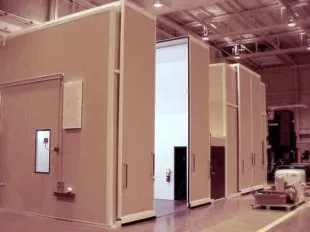
Success Story: Lockheed Martin
When Lockheed Martin needed additional secure storage for aerospace components at their facility, traditional construction wasn’t an option—timelines were too tight and operational disruption too risky.
Material Handling USA provided a two-story modular office system with one-hour fire-rated panels. The building included:
Ground floor secure parts storage with controlled access
Upper level oversight office with visibility to the entire work area
Climate control to protect sensitive components
Installation completed over a single weekend
The modular approach meant zero impact on ongoing defense contracts and immediate occupancy upon completion.
Success Story: Sensapure Manufacturing
Sensapure, a sensory technology manufacturer, faced excessive noise levels on their production floor. Supervisors struggled to communicate, and the lack of dedicated office space hurt productivity.
The solution? An elevated modular office on a mezzanine platform. This configuration:
Created 600 square feet of quiet office space above the production floor
Provided supervisors with a bird’s-eye view of operations
Left valuable floor space available for equipment and workflow
Installed in three days without shutting down production
Featured sound-dampening panels that reduced noise by 30 decibels
The ROI was immediate—supervisors could finally focus, and the company gained oversight capabilities they’d never had before.

Success Story: Kickstart Management
As a property management firm overseeing multiple industrial facilities, Kickstart Management needed flexible workspace solutions that could adapt as tenant needs changed.
They chose relocatable modular buildings because:
Buildings could move between properties as tenants changed
Installation happened between lease periods without delays
Professional appearance impressed prospective tenants
Modular construction qualified for faster depreciation
One 10′ x 20′ modular office has served three different facilities over four years—something impossible with conventional construction.
Success Story: Seal Source Distribution
Seal Source, an industrial sealing products distributor, faced a common challenge: their warehouse was expanding faster than their office space.
They needed a shipping office that could:
Sit directly adjacent to loading docks for coordination
Provide climate-controlled comfort in an unconditioned warehouse
Install without disrupting daily shipping operations
Expand later if distribution volumes increased
Material Handling USA delivered a pre-assembled 8′ x 12′ modular shipping office on a forkliftable steel base. The entire installation—from delivery to occupancy—took six hours.
Two years later, when Seal Source added a second shipping line, they simply ordered an adjacent module and connected it to the existing office in an afternoon.
Success Story: Merrick Engineering
When Merrick needed a CMM (Coordinate Measuring Machine) room for precision quality control, environmental requirements were strict:
Temperature maintained within 68-72°F
Humidity controlled to prevent measurement drift
Vibration isolation from surrounding production equipment
Class 10,000 cleanliness for optical measurements
A traditional cleanroom build would have cost $80,000 and taken four months. Material Handling USA’s modular cleanroom solution cost $42,000 and installed in three weeks.
The modular panels integrated seamlessly with HEPA filtration, precision HVAC, and vibration-dampening floor systems—all while maintaining the flexibility to expand if Merrick adds additional CMM equipment.
Common Modular Building Applications
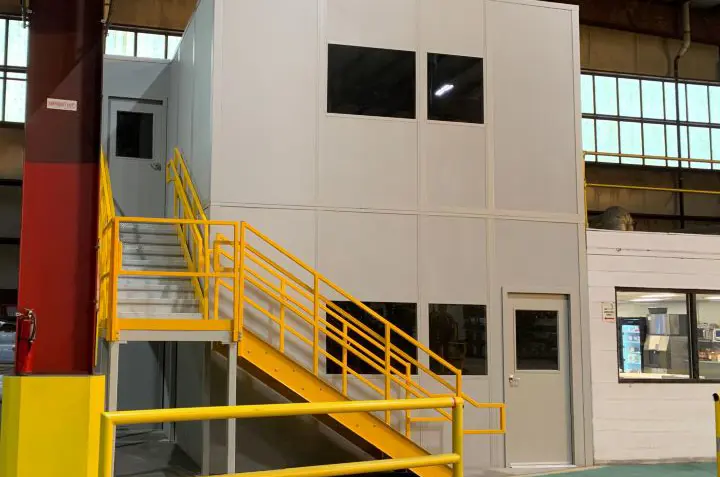
The versatility of modular construction means almost any enclosed space can be built faster and better with prefabricated systems.
In-Plant Offices
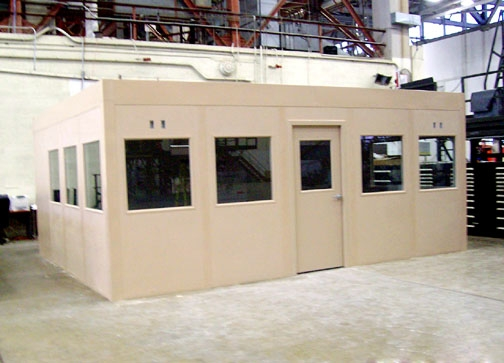
Perhaps the most popular application, in-plant offices create quiet, professional workspace right on the production floor. Supervisors stay close to operations while enjoying proper lighting, HVAC, and sound insulation.
Common configurations include:
Single supervisor offices (8′ x 10′ to 10′ x 12′)
Multi-room office suites with hallways and private offices
Conference rooms with windows overlooking production
Open-plan offices for teams working collaboratively
Windows can be positioned to provide visibility while maintaining privacy, and internal walls can be configured to create private offices, meeting rooms, or open collaboration areas.
Shipping and Receiving Offices
Loading dock areas need dedicated workspace for coordinating trucks, checking BOLs, and managing inventory. A shipping office positioned near dock doors:
Keeps shipping personnel close to incoming/outgoing freight
Provides climate control in otherwise unconditioned spaces
Creates secure areas for valuable freight documentation
Protects computers and printers from warehouse conditions
These offices typically measure 8′ x 12′ to 10′ x 16′ and can be positioned anywhere—even suspended above dock doors to maximize floor space.
Equipment Enclosures and Machine Rooms
When machinery is too loud, too dangerous, or requires environmental control, modular enclosures provide the solution:
Sound Enclosures: Contain noise from loud equipment like grinders, compressors, or generators. Sound-dampening panels can reduce external noise by 30-40 decibels.
Hazmat Storage: Special fire-rated buildings for flammable liquids, chemicals, or hazardous materials—complete with secondary containment, ventilation, and explosion-proof fixtures.
Temperature-Controlled Rooms: Precision HVAC maintains server rooms, battery storage, or temperature-sensitive processes within tight tolerances.
Control Rooms: Operators monitor processes from safe, comfortable control booths with windows providing visibility to equipment.
Cleanrooms and Quality Control Labs
Pharmaceutical, electronics, and precision manufacturing companies need controlled environments that meet strict cleanliness standards.
Modular cleanrooms achieve ISO Class 6 through Class 8 (Class 1,000 to 100,000) cleanliness levels through:
Smooth, non-shedding wall and ceiling surfaces
Integration with HEPA/ULPA filtration systems
Positive or negative pressure configurations
Sealed joints and specialized door systems
Integrated gowning areas and air showers
Because they’re modular, these cleanrooms can be expanded, reconfigured, or relocated as production requirements evolve—something impossible with stick-built cleanroom construction.
Break Rooms and Conference Rooms
Employee welfare matters. Modular break rooms create comfortable, quiet spaces where workers can truly relax:
Insulated from production noise
Climate-controlled for year-round comfort
Large enough for tables, seating, and kitchenette equipment
Positioned conveniently without consuming valuable production floor space
Conference rooms serve double duty—a quiet meeting space for teams while also functioning as training rooms, interview spaces, or customer meeting areas.
Guard Houses and Security Stations
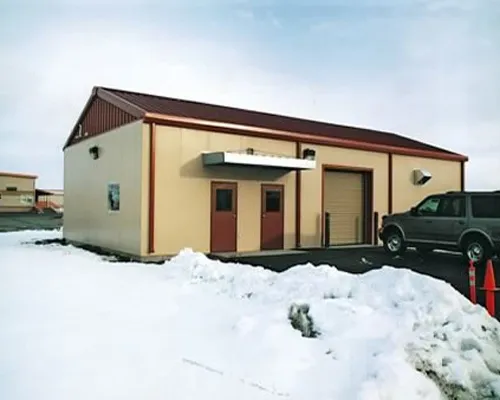
Facilities with controlled access need professional security checkpoints. Modular guard houses provide:
360-degree visibility with large windows on all sides
Climate control for comfortable 24/7 occupancy
Pre-wired for computers, communications, and surveillance equipment
Available in standard sizes (4′ x 4′ up to 8′ x 12′) or custom configurations
Many are pre-assembled on forkliftable bases for quick deployment and relocation. Some customers move guard houses seasonally or between job sites as security needs change.
For high-security applications, ballistic-rated guard houses with bullet-resistant panels and glass are available—meeting UL 752 standards for various threat levels.
Observation Towers and Elevated Platforms
When oversight requires elevation, modular construction offers:
Fire spotting towers for forestry and remote facilities
Observation platforms for correctional facilities
Range towers for military and law enforcement training facilities
Equipment operator cabins for crane operators or process oversight
These structures combine structural steel towers with modular office units positioned at the desired height—providing safe, weather-protected workspace with unobstructed views.
Storage Rooms and Secured Areas
Warehouses often need segregated storage for:
High-value inventory requiring controlled access
Evidence storage for law enforcement (with chain-of-custody tracking)
Parts cribs and tool storage with window service areas
Hazmat material storage meeting OSHA and EPA regulations
Modular construction creates these spaces quickly with proper security features—locked doors, limited access, and optional ceiling panels for complete enclosure.
Maximizing Vertical Space: Modular Offices on Mezzanines
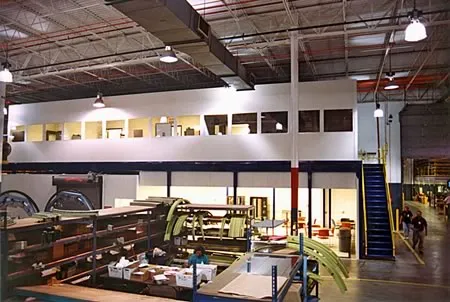
One of the smartest ways to add office space without sacrificing floor area is building upward. Structural steel mezzanines create a second level for modular offices, effectively doubling your usable square footage within the same footprint.
The Mezzanine Advantage
Mezzanine-mounted offices deliver multiple benefits:
Floor Space Preservation: The area beneath the office remains available for storage, equipment, or workflow—you don’t lose any working area.
Superior Oversight: Elevated offices provide supervisors with a bird’s-eye view of the entire operation, improving visibility and decision-making.
Better Space Utilization: High-ceiling warehouses (20+ feet) have wasted vertical space—mezzanines capture that volume productively.
Sound Separation: Elevating offices naturally distances them from floor-level noise, and when combined with sound-dampening panels, you achieve exceptional quiet.
Video: Real Modular Office on Mezzanine Installation
Watch this impressive installation showcasing how a complete modular office system integrates with a structural steel mezzanine. This real-world example demonstrates the space-saving benefits and professional results you can achieve by building upward instead of outward.
See a complete modular building installation on a mezzanine platform—maximizing vertical space while preserving valuable floor area for operations.

Design Considerations
When planning a mezzanine office installation:
Height Requirements: Most offices need 8′ to 10′ ceiling heights, so you’ll need 18-20 feet of total building height for comfortable two-level construction.
Access: Stair systems should meet IBC or OSHA codes depending on building classification—typically 42″ wide with closed risers and powder-coated railings.
Load Capacity: The mezzanine must support both the office weight and floor live load (typically 125-150 PSF for office use).
Below-Office Use: Consider what happens underneath—storage racks, workstations, or equipment? This determines column spacing and mezzanine design.
Material Handling USA engineers complete mezzanine systems to support modular offices, including structural calculations, column placement, decking, railings, and stair systems—all coordinated with the modular office specifications for seamless integration.
Video: Understanding Mezzanine Systems
Learn more about how mezzanine platforms work and the various applications for maximizing your warehouse vertical space. This video explains the engineering, design options, and load capacities that make mezzanines ideal for supporting modular offices.
Discover how mezzanine systems create additional usable space in your facility—perfect for offices, storage, or production areas.
For more information on mezzanine options and load capacities, visit our mezzanine systems page.
Solving Common Warehouse and Industrial Facility Challenges
Modular buildings aren’t just about adding space—they solve specific operational problems that traditional construction struggles with.
Problem: Excessive Noise Disrupts Office Work
The Challenge: Manufacturing and warehouse environments generate 80-95 decibels of continuous noise from machinery, forklifts, and material handling. Traditional open desks or partitions don’t provide adequate sound control.
The Modular Solution: Insulated modular walls with sound-dampening cores reduce interior noise by 30-40 decibels. A supervisor can conduct phone calls, hold meetings, or focus on computer work in comfort—all while positioned steps from the production floor.
Problem: No Dedicated Office Space in the Warehouse
The Challenge: Many warehouses were built purely for storage and material handling, with no consideration for administrative workspace. Workers make do with desks in corners or distant offices in separate buildings.
The Modular Solution: In-plant offices place supervisors, inventory managers, and shipping personnel exactly where they need to be—on the warehouse floor with visibility to operations—while enjoying proper lighting, HVAC, and professional workspace.
Problem: Need for Climate-Controlled or Clean Environments
The Challenge: Specific processes require controlled temperature, humidity, or cleanliness, but the larger facility is unconditioned or contaminated.
The Modular Solution: Modular cleanrooms and controlled-environment rooms create isolated microclimates within existing facilities. A food manufacturer can have a hygienic QC lab inside a production warehouse. An electronics distributor can maintain a clean assembly room within a dusty distribution center.
These modular controlled environments achieve ISO cleanliness ratings (ISO 6 through ISO 8) and maintain temperature within ±2°F—all integrated with HEPA filtration, precision HVAC, and smooth, washable surfaces.
Problem: Security and Access Control Issues
The Challenge: Large facilities struggle to secure high-value inventory, control entry points, or create separation between different security zones.
The Modular Solution: Modular walls with locking doors create secured storage rooms, evidence rooms, or parts cribs. For perimeter security, pre-assembled guard houses provide professional checkpoints at entry gates—some with ballistic protection for high-security environments.
Because modular buildings install quickly, security improvements happen in days rather than months—critical when theft, inventory shrinkage, or compliance issues demand immediate action.
Problem: Temporary or Changing Space Needs
The Challenge: Seasonal demand spikes, short-term projects, or evolving business needs make permanent construction impractical.
The Modular Solution: Relocatable modular buildings can be installed for as long as needed, then moved, sold, or reconfigured. A distribution center adds a temporary modular lunchroom during holiday peak season. A construction site uses a mobile office trailer during the build, then relocates it to the next project.
This flexibility transforms facilities from fixed assets into adaptable spaces that evolve with your business.
Understanding Panel Options: Matching Materials to Your Application
Choosing the right panel type ensures your modular building performs perfectly for its intended use. Here’s how to decide.
Value Core Panels: The Standard Choice
Polystyrene-core panels with vinyl-covered gypsum board provide excellent value for most applications:
Cost-effective for general office, break room, and conference room uses
Class A fire rating meets building codes for most applications
Good insulation (R-11) maintains comfortable temperatures with minimal HVAC
Easy maintenance with wipeable vinyl surfaces in white, gray, or champagne
These panels handle 95% of in-plant office needs and represent the best cost-to-performance ratio.
Fire-Rated Panels: When Safety Requirements Are Strict
One-hour fire-rated panels use mineral wool cores with mechanically-fastened type-X gypsum board:
One-hour fire rating tested and certified by independent agencies
Code compliance for areas storing flammable materials or requiring fire separation
Superior sound dampening compared to standard panels
Insurance benefits may reduce premiums in certain applications
Fire-rated panels are essential for hazmat storage, control rooms in high-temperature areas, and facilities with strict fire marshal requirements.
Non-Combustible Panels: The Ultimate Fire Protection
Gypsum-covered mineral wool panels provide the highest level of fire protection:
Non-combustible construction passes the most stringent fire tests
No steel skin required for even better fire performance
Insurance requirement compliance when carriers mandate non-combustible construction
High-temperature environment suitability near furnaces, ovens, or heat-generating equipment
These panels cost more but provide peace of mind in demanding applications where fire risk is elevated.
Cleanroom Panels: For Controlled Environments
Specialized panels for pharmaceutical, medical, and electronics applications:
Smooth, non-shedding surfaces won’t introduce particulates
Sealed construction integrates with HEPA filtration systems
Chemical-resistant finishes withstand repeated cleaning and disinfection
Available in various cleanliness classifications from ISO 6 to ISO 8
Cleanroom panels transform standard modular construction into certified controlled environments that meet FDA, ISO, and industry-specific regulations.

Multi-Story Construction: When You Need More Than One Level
Modular construction isn’t limited to single-story buildings. Two-story and three-story modular offices maximize space when floor area is constrained.
Two-Story Modular Offices
Common configurations include:
Ground floor for break rooms, storage, or conference areas
Upper level for private offices and administrative work
Stairwell with landings meeting IBC code requirements
Windows on upper level providing natural light and visibility
Two-story offices typically install on structural steel mezzanines engineered to support the additional weight of upper-level construction.
Three-Story Applications
For maximum vertical space utilization:
Aircraft hangars with multi-level observation and management offices
Large manufacturing plants creating vertical office towers
Distribution centers with ground-level operations offices and upper-level administrative space
These complex installations require careful engineering coordination between the mezzanine structure, stair systems, and modular office components—all services Material Handling USA provides as a complete package.

The Installation Process: What to Expect
Understanding how modular installation works helps you plan the project and prepare your facility.
Phase 1: Engineering and Design (1-2 Weeks)
After you provide basic requirements (size, location, features), Material Handling USA engineers create:
Detailed drawings showing floor plan, elevations, and specifications
Structural calculations and load requirements
Electrical layout and connection points
HVAC sizing and placement
Complete bill of materials
You’ll receive drawings for approval before manufacturing begins—this is your opportunity to request changes or adjustments.
Phase 2: Manufacturing (3-4 Weeks Standard)
Once you approve drawings, factory production begins:
Wall panels manufactured with precision tooling
Electrical systems installed and tested
Doors and windows fitted with all hardware
Surface finishes applied (painting or vinyl covering)
HVAC units tested for proper operation
Every component undergoes quality inspection before shipping—catching issues in the factory is far easier than fixing them on-site.
For customers with urgent timelines, Material Handling USA offers a 2-Day Quick Ship Program for standard value-line offices (8′ x 8′ to 20′ x 40′ with limited options). However, most customers benefit from the full custom design process that ensures their building perfectly matches their requirements.
Phase 3: Delivery and Installation (1-3 Days)
Installation timeline depends on building size and complexity:
Small Buildings (8′ x 10′ to 12′ x 20′): Typically install in 4-8 hours with a two-person crew
Medium Buildings (12′ x 24′ to 20′ x 40′): Usually complete in 1-2 days
Large or Multi-Story Buildings: May require 3-5 days depending on complexity
Installation includes:
Positioning and leveling the building
Connecting wall panels with structural fasteners
Installing doors, windows, and trim
Connecting electrical systems to your facility power
Installing and testing HVAC equipment
Final walkthrough and instruction on building features
Material Handling USA offers nationwide installation services, or for customers preferring to self-install, we provide on-site technical representatives to guide your team through the process.
Phase 4: Occupancy (Immediate)
Unlike traditional construction with lengthy punch lists and final inspections, modular buildings are ready for immediate use upon installation completion. Your team can move in furniture, equipment, and start working right away.
Government and GSA Compliance
Material Handling USA maintains GSA Schedule GS07F0186X, streamlining procurement for government agencies, military installations, and public entities.
Benefits of GSA Schedule Purchasing
No Competitive Bidding Required: GSA has already negotiated fair and reasonable pricing, eliminating lengthy bid processes.
Faster Procurement: Average government procurement takes 278 days. GSA Schedule orders average 15 days from request to award.
Pre-Approved Pricing: No need for price justification or fair-and-reasonable determinations—GSA has already done the work.
Compliance Assurance: Products meet federal specifications, safety standards, and quality requirements.
Simplified Ordering: Place orders directly with Material Handling USA or through GSA Advantage online catalog.
What’s Covered Under GSA Schedule GS07F0186X
Our GSA Schedule includes:
In-plant offices and modular buildings for storage and workspace solutions
Exterior buildings including guard houses and security structures
Professional facility solutions for government and military applications
Complete installation services including site prep and foundation work
Mezzanine systems and related warehouse equipment
Whether you’re a base commander needing a security checkpoint, a facilities manager adding warehouse office space, or an agency requiring secure storage, GSA Schedule purchasing provides the fastest path from requirement to completed installation.
For detailed GSA Schedule information and ordering guidance, contact our team at 800-326-4403 or Sales@mh-usa.com.
Customization Options: Building Exactly What You Need
While standard configurations suit most applications, many customers need specialized features. Material Handling USA handles custom requirements ranging from simple modifications to complex, purpose-built structures.
Common Customizations
Specialized Dimensions: Buildings in any length, width, or height—not limited to standard increments
Unique Door Configurations: Oversized doors for equipment access, overhead doors for drive-through capability, or double doors for wide openings
Window Placement: Custom window positions for specific visibility requirements or architectural preferences
Color Matching: Powder-coated steel in custom colors to match your facility’s existing color scheme
Integrated Systems: Built-in workbenches, shelving, communication systems, or specialized lighting
Ballistic Protection: Bullet-resistant panels and glass meeting UL 752 standards (Level 1 through Level 8)
Enhanced HVAC: High-capacity cooling, heating, humidity control, or air filtration beyond standard packages
Access Control Integration: Pre-wiring and mounting for badge readers, biometric systems, or security cameras
Specialty Applications
Beyond standard offices, Material Handling USA designs and builds:
Paint Booths: With explosion-proof fixtures, proper ventilation, and fire-rated construction
Machine Enclosures: Custom-sized to fit specific equipment with access doors, sound dampening, and integrated ventilation
Training Rooms: With A/V equipment, whiteboards, and seating configurations
Server Rooms: With precision cooling, raised floors, cable management, and redundant power
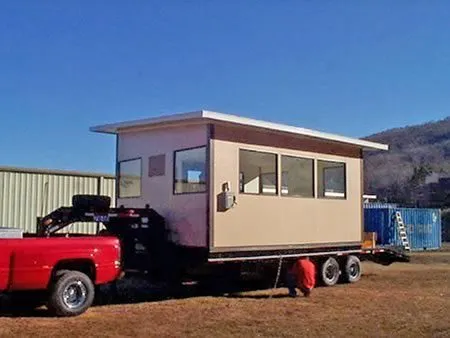
Mobile Units: Buildings on tandem trailers for relocation between job sites
Off-Grid Buildings: With solar power, battery backup, and independent operation capability
If you can describe it, we can engineer and build it.
Energy Efficiency and Sustainability
Modular construction inherently offers environmental advantages over traditional building methods.
Reduced Material Waste
Factory construction with precision cutting and bulk ordering generates 40-60% less waste than site-built construction. Excess materials remain in the factory for use on future projects rather than going to landfills.
Reusability and Relocation
Unlike permanent buildings demolished when needs change, modular structures disassemble and relocate to new sites or repurpose for different uses. This extends the lifecycle of building materials across multiple applications.
Energy-Efficient Operation
Insulated panels (R-11 to R-19) and tight-sealing construction create efficient thermal envelopes requiring less HVAC energy than comparable stick-built structures.
Properly sized HVAC systems (rather than oversized field-installed units) further improve operational efficiency, reducing ongoing energy costs.
Reduced Construction Impact
Off-site manufacturing concentrates construction activity in one location with optimized logistics. This eliminates:
Dozens of contractor vehicles traveling to your site daily
Diesel equipment idling for hours during construction
Material delivery trucks making multiple trips
Construction waste requiring disposal hauling
For companies with sustainability goals or LEED considerations, modular construction supports green building initiatives while delivering all the practical benefits of fast, cost-effective workspace.
Why Material Handling USA for Your Modular Building Project
With over 30 years of experience providing storage and construction solutions, Material Handling USA brings unmatched expertise to every modular building project.
Complete Project Management
We handle every aspect:
Engineering and Design: Custom drawings with structural calculations and specifications
Permitting Assistance: Help navigating local building codes and permit requirements
Manufacturing: Quality-controlled factory production with testing and inspection
Delivery Logistics: Coordinated shipping to meet your schedule
Professional Installation: Nationwide installation crews or technical support for self-installation
Post-Installation Support: Ongoing service and support for the life of your building
Industry Expertise
Our team understands the unique requirements of:
Manufacturing environments with noise, temperature, and space constraints
Warehouse and distribution operations requiring minimal disruption and fast timelines
Government and military facilities with security, compliance, and budget requirements
Healthcare and pharmaceutical companies needing cleanrooms and controlled environments
Automotive and aerospace industries with precision, quality, and safety standards
Quality You Can Trust
Every modular building meets or exceeds:
International Building Code (IBC) requirements for commercial structures
OSHA standards for workplace safety and egress
Fire marshal requirements with available fire-rated construction
ADA accessibility when required for public buildings
GSA specifications for government contracts
Buildings arrive with complete documentation including structural calculations, electrical schematics, and assembly instructions—everything needed for inspections and compliance verification.
Frequently Asked Questions
How long does a modular building last?
Modular buildings, when properly maintained, last as long as conventional structures—typically 20-30+ years. The steel framing, durable panel construction, and weather-resistant finishes ensure longevity. Regular maintenance (similar to any building) extends lifespan further.
Can modular buildings withstand harsh weather?
Yes. Exterior modular buildings are engineered for wind loads up to 180 mph and include weather-tight seals on all doors and windows. Snow load calculations and seismic requirements can be incorporated for specific geographic locations.
Do modular buildings look temporary or cheap?
Absolutely not. Modern modular buildings feature professional finishes indistinguishable from conventional construction. Vinyl panels, powder-coated steel, architectural windows, and thoughtful design create attractive, permanent-quality appearance.
What size buildings can you make?
There are essentially no limits. Standard buildings range from small 4′ x 4′ guard booths to large 40′ x 100′ multi-room office complexes. Buildings can expand through modular additions whenever you need more space.
Can modular buildings be expanded later?
Yes—this is one of modular construction’s greatest advantages. Additional wall panels connect to existing buildings, or entire new modules can be added. Because the system is inherently modular, expansion is straightforward and cost-effective.
What about permitting and building codes?
Modular buildings meet the same building codes as site-built structures. Material Handling USA provides engineered drawings and structural calculations for permit applications. Many jurisdictions have streamlined approval processes for prefabricated buildings.
Can I move the building if I relocate facilities?
Yes. Modular buildings disassemble, transport, and reassemble at new locations. This relocatability protects your investment—if you move, your building moves with you. Buildings can even be sold to recover capital investment if you no longer need them.
How do utility connections work?
Electrical connections typically tap into your facility’s existing panel with appropriate breakers. HVAC units can operate on standard 110V or 220V power. For exterior buildings, underground conduit may be required for code compliance. Material Handling USA coordinates with your electrician to ensure proper connections.
Do I need a special foundation?
Requirements vary by application. Small buildings on flat, level surfaces may require no foundation. Larger buildings typically need simple concrete pads or footings. Mezzanine-mounted offices use the mezzanine structure as their foundation. Our engineering team determines requirements for your specific installation.
Can you match my facility’s existing color scheme?
Yes. While standard colors (white, gray, champagne) cover most preferences, custom powder-coating in any color is available for steel components. This allows seamless integration with your facility’s architectural appearance.
Material Handling USA: Complete Solutions for Your Facility
Beyond modular buildings, Material Handling USA provides comprehensive material handling and storage solutions to optimize your entire facility. From pallet rack systems to mezzanines, wire partitions to industrial shelving, we’re your single-source partner for warehouse efficiency.
Video: Comprehensive Material Handling Solutions
Discover the full range of products and services Material Handling USA offers. This overview video showcases our complete capabilities—from initial consultation and design through manufacturing, delivery, and professional installation.
Learn how Material Handling USA delivers complete storage and workspace solutions tailored to your industry and operational needs.
Whether you’re planning a complete facility redesign or solving a specific space challenge, Material Handling USA has the products, expertise, and service to help you succeed.
Transform Your Workspace with Modular Construction
The case for modular buildings is clear: faster installation, lower costs, superior quality, and unmatched flexibility. Whether you need a simple supervisor’s office or a complex multi-story facility, prefabricated modular construction delivers professional workspace without the traditional construction headaches.
Material Handling USA has helped hundreds of facilities across manufacturing, warehousing, government, aerospace, and commercial industries solve their space challenges with modular solutions. Our experience ensures your project proceeds smoothly from initial concept to final occupancy.
Don’t let space constraints, budget limitations, or tight timelines prevent your business from having the workspace it needs to thrive.
Ready to Explore Modular Building Solutions?
Get Started Today:
📞 Call us at 800-326-4403 to speak with a modular building specialist
📧 Email Sales@mh-usa.com with your project details for a detailed quote
📅 Book a Zoom consultation: Schedule your convenient time here
📝 Request a quote online: Visit our contact page
Our team will work with you to:
Understand your specific space requirements and constraints
Recommend the optimal configuration for your application
Provide detailed drawings and specifications
Deliver accurate pricing with no hidden costs
Coordinate installation to minimize operational disruption
Download Additional Resources:
📄 Modular Buildings Product Catalog (PDF)
📄 In-Plant Offices Specifications (PDF)
Explore More Solutions:
🏢 Commercial Modular Buildings – Fast, Code-Compliant Construction
🔄 Relocatable Modular Buildings – Flexible, Reusable Solutions
⚡ Energy-Efficient Modular Buildings – Sustainable & Cost-Effective
📐 Modular Buildings Interior Specifications
🏗️ Structural Steel Mezzanines for Office and Storage
Material Handling USA—your partner for smarter, faster, better workspace solutions.